
Red Sox Interested In Corey Kluber
The starter-needy Red Sox are showing interest in free-agent right-hander Corey Kluber, per Jon Morosi of MLB.com. Kluber, who’s coming off an injury-wrecked season, could start throwing bullpen sessions this month after suffering a Grade 2 teres major strain, Morosi adds.
As a two-time Cy Young winner who fell on difficult times during the previous two seasons, the soon-to-be 35-year-old Kluber looks like an intriguing buy-low candidate. The former Indian missed almost all of 2019 after suffering a fractured forearm, and this past season’s shoulder problems with the Rangers limited him to one appearance and one inning. The Rangers then declined Kluber’s $18MM option for 2021 in favor of a $1MM buyout.
Despite Kluber’s recent hardships, it isn’t hard to see the appeal. The last time he was healthy, in 2018, Kluber fired 215 innings of 2.89 ERA/3.12 FIP ball with 9.29 K/9 and 1.42 BB/9. His 92 mph-plus fastball velocity hasn’t abandoned him since then, so it would be easy for any team to dream on Kluber returning to form on an affordable, short-term contract.
The Red Sox need all the help they can get in their rotation, as ace Chris Sale is still working back from Tommy John surgery and No. 2 Eduardo Rodriguez missed all of 2020 because of issues stemming from COVID-19 and myocarditis. Without those two around, Boston’s rotation sputtered to a 5.34 ERA/5.50 FIP. The team’s top healthy candidates slated to return include Nathan Eovaldi, Tanner Houck and Nick Pivetta, but no member of that trio has a track record that’s nearly as impressive as Kluber’s.
Latest On Rangers’ Infield
Elvis Andrus has been the Rangers’ everyday shortstop since he debuted in 2009, but those days are coming to an end. He’ll take on a utility role in 2021, while Isiah Kiner-Falefa will have an opportunity to become the Rangers’ starting shortstop, Evan Grant of the Dallas Morning News reports.
The 32-year-old Andrus has thrived at times, which led the Rangers to give him an eight-year, $120MM extension that kicked in during 2015, but his production has tumbled in recent seasons. Dating back to 2018, Andrus has batted a dismal .260/.306/.378 (73 wRC+) with 21 home runs and 39 stolen bases across 1,187 plate appearances. He’ll now play multiple positions in the rebuilding Rangers’ infield, where they have questions everywhere, including at second base. Rougned Odor has been Andrus’ longtime double-play partner, but his starting job also isn’t set in stone, Grant tweets.
The Rangers may want to jettison Andrus and Odor in trades, but it would be difficult to find takers for either. Andrus has another two years and $28MM left on his contract, while Odor’s deal includes two more seasons at $27MM (including a $3MM buyout for 2023). Those are steep commitments for players who have offered poor production for multiple seasons in a row. In Andrus’ case, Grant notes he has 10-and-5 rights, and his $15MM club option for 2023 would turn into a player option in the event of a trade. With those facts in mind, it will be that much more of a challenge for the Rangers to trade him.
Kiner-Falefa, like Andrus and Odor, has not hit much in the past few seasons. He came into the league in 2018 and has since batted .260/.319/.351 (75 wRC+) with eight homers and 18 steals in 846 PA. Kiner-Falefa has seen action at a handful of positions, though, and he even earned an American League Gold Glove Award for the work he did at third base in 2020. The Rangers are hopeful the 25-year-old’s value will increase at short, though it’s unclear who will start for the team at third. It’s “likely” they’ll pick up a third baseman on a one-year deal in free agency to help bridge the gap to prospect Josh Jung, according to Grant.
Royals Designate Carlos Sanabria
The Royals have designated right-hander Carlos Sanabria for assignment, per Alec Lewis of The Athletic. His roster spot will go to newly signed left-hander Mike Minor.
It wasn’t a long run on the Royals’ 40-man roster for Sanabria, whom they claimed via waivers from the Astros at the end of October. The hard-throwing Sanabria was once a prospect of some note with the Astros, and he threw 66 2/3 innings of 2.84 ERA ball with 11.6 K/9 and 5.4 BB/9 between the High-A and Double-A levels in 2019.
Sanabria’s performance was enough to earn him a chance in the majors in 2020, but the 23-year-old didn’t get a significant opportunity to establish himself. He threw two innings of two-run ball before the Astros cut him loose, and now the Royals could see him head elsewhere after just a few weeks in the organization.
Royals Sign Mike Minor
DEC. 1: It’s a two-year, $18MM guarantee with a $13MM club option or a $1MM buyout for 2023, Passan tweets. It will become a mutual option if the Royals trade Minor, Jon Heyman of MLB Network reports (via Twitter). The deal includes salaries of $7MM for 2021 and $10MM for 2022, and Minor could make an extra $50K for 180 and 200 innings pitched in both seasons, according to Rosenthal (on Twitter).
NOV. 29: The Royals have agreed to a deal with southpaw Mike Minor, The Athletic’s Ken Rosenthal reports (Twitter link). The contract will become official when Minor passes a physical. Minor is represented by Jet Sports Management.
ESPN.com’s Jeff Passan reports that it is a multi-year pact between the two sides, with MLB.com’s Mark Feinsand adding that the contract is for two years. This tops MLBTR’s prediction of a one-year, $6MM contract for Minor, and he is now the first free agent of the 2020-21 offseason to sign a multi-year contract. We’ve already seen a fair bit of action within the pitching market, though Robbie Ray (Blue Jays), Charlie Morton and Drew Smyly (both Braves) all signed one-year deals, and Marcus Stroman (Mets) and Kevin Gausman (Giants) accepted one-year qualifying offers to remain with their former teams.
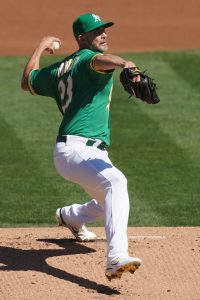 This will be Minor’s second time in a Kansas City uniform, as the left-hander previously pitched for the team in 2017. Minor actually signed with K.C. on a two-year deal prior to the 2016 season, though he missed all of 2016 recovering from the shoulder problems that also caused him to miss all of 2015. After those two lost years, Minor excelled in a relief role in 2017, posting a 2.55 ERA, 4.00 K/BB rate, and 10.2 K/9 over 77 2/3 innings out of the Royals’ bullpen.
From there, Minor went on to sign a three-year, $28MM free agent deal with the Rangers and resumed his career as a starter, displaying much of the same solid form that made him a valued member of the Braves’ rotation from 2010-14. Minor posted a 3.84 ERA over 365 1/3 innings in 2018-19, even finishing ninth in AL Cy Young Award voting during the 2019 campaign.
2020 was a much tougher experience for Minor, however, as he posted a 5.56 ERA, 3.10 K/BB rate, and 9.8 K/9 over 56 2/3 innings with the Rangers and Athletics, joining Oakland on a deal at the trade deadline. A career-high 15.7% home run rate was part of Minor’s problem, and his hard-hit percentage jumped from 30.4% in 2019 to 40.4% in 2020.
While Minor’s overall Statcast picture wasn’t pretty, he still boasted an elite fastball spin rate that put him in the 97th percentile of pitchers. ERA predictors were also a bit more sympathetic to Minor’s performance in 2020, with a 4.64 FIP, 4.50 xFIP, and 4.20 SIERA.
With those silver linings, Minor’s generally solid track record, and their prior relationship with Minor in mind, the Royals clearly felt comfortable in making a two-year commitment to a pitcher who turns 33 in December. The Royals haven’t had a winning record since their World Series-winning 2015 season, though GM Dayton Moore has stated that he expects his team to be competitive in 2021, perhaps indicating that the Royals are planning to turn the corner from their latest rebuild.
Minor will now join Danny Duffy as the veteran staples of the K.C. rotation, with Brad Keller entering his fourth MLB campaign and youngsters Brady Singer and Kris Bubic looking to build off respectable rookie seasons. Jakob Junis and Carlos Hernandez are also on hand as depth options, and noted prospects Daniel Lynch and Jackson Kowar are also likely nearing their big league debuts, so the Royals have quite a few interesting rotation options on hand. MLB.com’s Jeffrey Flanagan also raises the intriguing possibility that Minor could be a fallback plan for the Royals at closer, since Minor performed well as a ninth-inning option for Kansas City in 2017.
Photo courtesy of USA Today Sports Images
Howie Kendrick Intends To Play In 2021
Veteran Howie Kendrick intends to suit up for his 16th Major League season and perhaps more, as Kendrick tells The Athletic’s Britt Ghiroli (Twitter links) that he is hoping to play “at least” one more year. Kendrick implied via an Instagram post earlier this month that he was planning to return, and he told Ghiroli that he had already received some interest on the free agent market.
The Nationals declined their end of a $6.5MM mutual option on Kendrick’s services for 2021, instead paying him a $2.25MM buyout. The decision wasn’t too surprising in the wake of an unremarkable year for the 37-year-old, who hit .275/.320/.385 over 100 plate appearances for Washington in 2020. Kendrick was hampered by a hamstring injury and two lost weeks of Summer Camp preparation due to COVID-19 quarantine.
Barring another deal between Kendrick and the Nats, those numbers could end Kendrick’s tenure in the District on something of a down note, though his overall time with the team was a huge success. Kendrick hit .316/.361/.511 over 808 PA in a Nationals uniform since first joining the team in July 2017, twice re-upping on free agent contracts. This stint was highlighted, naturally, by Kendrick’s NLCS MVP performance in 2019, and his two-run homer in the seventh inning of Game 7 of the World Series that put Washington ahead for good as the club captured its first championship.
With this much recent success in mind, Kendrick wasn’t ready to end his career given the abbreviated nature of the 2020 season. He said last fall that he was originally intending to retire if 2020 had been a normal season, but “to think you would end on a year like this … it is a tough one.”
The “professional hitter” tag has often been applied to Kendrick over his 15 seasons with the Nationals, Phillies, Dodgers, and Angels, as he has delivered a .294/.337/.430 career slash line and been an above-average (109 wRC+ and OPS) offensive performance for much of that time. Beginning his career as a second baseman, Kendrick has also evolved into a versatile defensive asset, able to be plugged in at first base, third base, and even corner outfield duty as well as continued work at the keystone. Though Kendrick played only first base and DH last season, he told Ghiroli that it doesn’t matter to him whether or not the National League once again institutes the designated hitter in 2021.
NL West Notes: Padres, Cubs, Porter, D’Backs, Oberg
With Mike Clevinger now sidelined for the 2021 season due to Tommy John surgery, the Padres‘ need for starting pitching is more pronounced, and the San Diego Union-Tribune’s Kevin Acee writes that the club is considering a range of rotation possibilities. This includes the very top of the free agent market, as “the Padres have let the agent for Trevor Bauer know they’d like to be kept apprised as his market evolves.” San Diego has also “spit-balled” the concept of trying to acquire Blake Snell from the Rays, as Tampa Bay is reportedly open to dealing the former AL Cy Young Award winner.
Other potential targets could include Japanese righty Tomoyuki Sugano (who will be posted this offseason) and possibly the Rangers’ Lance Lynn, who the Padres looked into acquiring at the trade deadline. Acee isn’t certain, however, whether the Padres have re-engaged with the Rangers about Lynn any more recently. While there is a certain amount of basic front office due diligence attached to the Padres’ interest in any of these pitchers, the fact that San Diego is at least open to major moves like a big expenditure on Bauer or trading a significant prospect package to land Snell is certainly indicative that the Padres are willing to think big as they look to contend in 2021.
More from the NL West…
- Diamondbacks assistant GM Jared Porter “is the heavy favorite” to become the Cubs‘ next general manager, according to The Athletic’s Sahadev Sharma (subscription required). Newly-minted Chicago president of baseball operations Jed Hoyer has stated that he wants to make an external hire for the GM job in order to bring a fresh viewpoint into the Cubs’ front office, though Porter is still a known quantity, having previously worked with Hoyer in both Chicago and Boston. Other speculative general manager possibilities for the Cubs include another Diamondbacks AGM in Amiel Sawdaye, as well as former Marlins president of baseball ops Michael Hill.
- The Diamondbacks had a busy offseason last year, and general manager Mike Hazen “wouldn’t anticipate that type of a splash” this winter since “the majority of the work we did last offseason was for multiple years,” Hazen told The Athletic’s Zach Buchanan (subscription required). Many of those roster moves didn’t pan out during a last-place season for the team, but while Hazen said the Snakes are examining how and why they performed as they did in 2020, the smaller sample size of the shorter season is a factor in evaluation: “One of the lasting questions that we all have was what was real about the 60 games.” In terms of potential offseason needs, Hazen cited relief pitching, a right-handed hitting outfielder, and possibly third base, though Hazen is confident of a bounce-back year from Eduardo Escobar.
- Scott Oberg has begun a throwing program, The Athletic’s Nick Groke reports (Twitter link), as the Rockies right-hander is making his way back from undergoing thoracic outlet syndrome surgery in September. The hope is that the TOS surgery will finally solve the blood clotting issues that have plagued Oberg throughout his career, as he has undergone multiple procedures in the past. Oberg didn’t pitch at all in 2020, leaving Colorado without an important piece of its bullpen. In 2018-19, Oberg posted a 2.35 ERA, 3.29 K/BB rate, and 9.0 K/9 over 114 2/3 innings.
Mets “Deep In Talks” With Trevor May
The Mets and right-hander Trevor May “are deep in talks” about a potential contract, MLB.com’s Anthony DiComo reports (Twitter link). “This is not a done deal, but there is smoke,” DiComo writes, indicating that the negotiations may be in a rather advanced stage. As noted by The Athletic’s Tim Britton, May and Mets pitching coach Jeremy Hefner have a good relationship, dating back to Hefner’s previous position as the Twins’ assistant pitching coach.
The 31-year-old May has quietly been one of the more effective relievers in baseball over the last three seasons, posting a 3.19 ERA, 4.03 K/BB rate, and 12.2 K/9 over 113 innings (in 113 games) for the Twins since the start of the 2018 season. This performance came on the heels of a Tommy John surgery that cost May all of the 2017 campaign, though his durability since his return would seem to answer any questions about his arm condition.
May’s hard-contact numbers trended upwards in 2020, and his 1.9 HR/9 was a career high. Those were more or less the only blemishes on another solid season for May, as ERA predictors (2.74 xFIP, 2.38 SIERA) drastically outperformed his actual 3.86 ERA. May’s 14.7 K/9 was also a career best, and he has continued to steadily increase fastball velocity. Since returning from Tommy John surgery, May has added over two miles of velocity to his average fastball, going from 94.1 mph in 2018 to 96.4mph last season.
Signing May would represent the first big free agent strike for the Mets under the Steve Cohen/Sandy Alderson regime, as the club has been linked in rumors to seemingly just about every big name on the market. May’s addition would be a boost to a Mets bullpen that was inconsistent through 2020, and May would seemingly slot right in as the primary setup man for closer Edwin Diaz.
Offseason Outlook: Miami Marlins
Even the game’s largest Covid-19 outbreak couldn’t derail the Marlins’ Cinderella season, as the Fish surprised the league with a 31-29 record and went on to topple the Cubs in the Wild Card round of this year’s expanded postseason format. With a slew of young talent bubbling up to the Majors, newly minted general manager Kim Ng will be aiming to bring the club back to October baseball in 2021.
Guaranteed Contracts
- Starling Marte, OF: $12.5MM through 2021
- Corey Dickerson, OF: $9.5MM through 2021
- Miguel Rojas, SS: $5.5MM through 2021 (includes $500K buyout of 2022 club option)
Arbitration-Eligible Players
Note on arb-eligible players: this year’s arbitration projections are more volatile than ever, given the unprecedented revenue losses felt by clubs and the shortened 2020 schedule. MLBTR contributor Matt Swartz, who developed our arbitration projection model, used three different methods to calculate different projection numbers. You can see the full projections and an explanation of each if you click here, but for the purposes of our Outlook series, we’ll be using Matt’s 37-percent method — extrapolating what degree of raise a player’s 2020 rate of play would have earned him in a full 162-game slate and then awarding him 37 percent of that raise.
- Jesus Aguilar – $3.9MM
- Jorge Alfaro – $1.7MM
- Brian Anderson – $2.2MM
- Adam Cimber — $800K
- Garrett Cooper – $1.5MM
- Yimi Garcia – $1.4MM
- Ryne Stanek – $800K
- Richard Bleier – $1.1MM
Option Decisions
- Exercised $12.5MM club option on OF Starling Marte
- Declined $4MM club option on RHP Brandon Kintzler (paid $225K buyout)
Free Agents
- Kintzler, Francisco Cervelli, Matthew Joyce, Brad Boxberger, Adam Conley
Much of the Marlins’ surprising success in 2020 can be attributed to the team’s enviable collection of young pitching. Right-handers Sandy Alcantara, Pablo Lopez, Elieser Hernandez and Sixto Sanchez each gave strong performances, with Alcantara and Lopez soaking up the most innings. Alcantara, Lopez and Hernandez are all locked into next year’s rotation, manager Don Mattingly said after the Marlins’ postseason run ended. Sanchez’s omission from the mix may surprise some, given his strong rookie effort, although he’ll surely have the opportunity to cement his spot in Spring Training.
Behind that quartet of righties is a mix of intriguing but still unproven arms. Righty Jordan Yamamoto had some success in 2019 but was clobbered in 2020. Prospects Nick Neidert, Braxton Garrett and Trevor Rogers all struggled in small samples of work as well. Veteran righty Jose Urena is out of the mix after yesterday’s DFA, although that’s hardly a surprise given that he stood out as one of the game’s likelier non-tender candidates. The Marlins have some intriguing yet-to-debut options (e.g. Edward Cabrera), but their pitching depth was thinned out a bit when they sent Caleb Smith and Humberto Mejia to the Diamondbacks in this August’s Starling Marte trade.
Beyond Alcantara and Lopez, Marlins starters have at best limited track records of MLB success. Even Hernandez, whom Mattingly proclaimed as a member of the rotation, pitched just 25 2/3 solid innings in 2020; in 2018-19, he posted an ERA north of 5.00. The youth and years of team control are obviously appealing, but the Marlins would still be well served to bring in a veteran both to help mentor the staff and to provide some stable innings. Names like Rick Porcello, Martin Perez and south Florida native Mike Fiers are all available if the team’s priority is dependable innings, and there are plenty of interesting names looking for bouncebacks from injured seasons (e.g. James Paxton, Jose Quintana, Corey Kluber).
With Kintzler and Boxberger both returning to the market, the Marlins will have some work to do to round out their bullpen. Miami could’ve retained Kintzler at a seemingly reasonable $4MM price point, but there were quite a few solid reliever options declined this year. Perhaps the hope is that recently acquired righty Adam Cimber, another ground-ball specialist, can provide similar production at a fraction of the rate. Miami picked him up from the Indians in exchange for cash, and he’s projected to earn $800K via arbitration. Even with Cimber aboard, it’s likely that the Marlins will talk to Kintzler about coming back at a lower price than his option would have guaranteed.
More intriguing bullpen options will become available after the non-tender deadline. The Marlins seem likely to again look for affordable veteran help to complement their in-house options, particularly with an unsettled mix at the back of the ‘pen. Two offseasons ago, the Marlins did quite well on a low-cost, one-year deal with Sergio Romo. Last winter, it was Kintzler. It seems reasonable to expect a similar approach this time around, even with a new GM at the helm.
Turning to the offense, the Marlins have plenty of intriguing youngsters on the cusp of Major League readiness, but struggles behind the plate could lead the club to look outside the organization for upgrades. Jorge Alfaro was a key piece of the trade that sent J.T. Realmuto to Philadelphia — along with the aforementioned Sanchez — but he’s yet to solidify himself as the team’s long-term replacement for Realmuto. In two years as a Marlin, Alfaro has a .256/.306/.410 batting line, and both his offense and defense took marked steps back in 2020. By the time the playoffs rolled around, Miami was starting the light-hitting Chad Wallach over Alfaro.
Miami doesn’t figure to spend particularly aggressively in free agency. A Realmuto reunion is off the table, but any of the market’s second-tier options — James McCann and Yadier Molina headline the group — could seemingly fit into the budget for a team whose current payroll projection check in shy of $60MM now that Urena no longer factors into the mix. Additional trades or non-tenders could yet lower that mark.
The trade market could offer myriad other possibilities. Many Marlins decision-makers have Yankees roots and are familiar with Gary Sanchez. There’s bound to be speculation about the Cubs moving Willson Contreras as they look to cut costs. MLBTR’s Mark Polishuk recently explored the reasons that San Diego might move Francisco Mejia. The Blue Jays have a glut of catchers on their 40-man roster.
Looking up and down the rest of the lineup, the needs aren’t as palpable. The outfield should be more or less set with Corey Dickerson’s contract locking him into left field and Starling Marte set to return as the primary center fielder. Garrett Cooper hit well in 2020, but if he falters in right field, the Marlins are rife with corner-outfield alternatives; any of Jon Berti, Monte Harrison, Harold Ramirez, Magneuris Sierra, Jesus Sanchez or Lewis Brinson could earn an increased role there.
If somehow that entire bunch struggles, the club could always consider moving third baseman Brian Anderson back to right field. Between Berti, Miguel Rojas, Isan Diaz and Jazz Chisholm, the Fish should be able to cover third base, shortstop and second base even if Anderson is needed in the outfield. It’s possible the Marlins still bring in a versatile veteran infielder, if only so they have the option of allowing both Diaz and Chisholm to continue to develop in Triple-A without compromising their bench mix.
Over at first base, the Marlins got a big rebound performance out of Jesus Aguilar and will surely tender him a contract after he raked at a .277/.352/.457 clip with eight long balls in 216 trips to the dish. Should he sustain an injury or see his 2019 struggles recur, the Marlins could turn things over to Cooper or dip into the farm and call on prospect Lewin Diaz to get an earnest look at first base.
Given the wealth of young options in both the infield and the outfield, a major addition at any position other than catcher seems unlikely. Minor league depth signings and a veteran bench piece to add to either the infield or outfield mix — possibly both, if the target is someone like old friend Enrique Hernandez — make plenty of sense for the Marlins. However, this is a club whose collection of position players simply needs some time to audition for the front office.
The pitching side of things presents a bit more of an opportunity for some veteran pickups, but again, there are several key young players in place and others who are ready for a chance to show they belong in the conversation as long-term building blocks.
Had there been a traditional season with expected revenue streams and ample time for said young players to get their feet wet in the Majors and upper minors, the Marlins’ outlook might be a bit different. They’d have a better sense of who is and who isn’t vital to their long-term competitiveness and would perhaps have a better idea of where they need to spend in the long run. Given that they remarkably don’t have a single guaranteed dollar on the books for the 2022 season, the Marlins might have been considered a dark horse to again splash around with some notable free-agent spending.
That doesn’t seem as likely now with a year of zero revenue and with so many young questions to be answered. Still, that blank slate on the 2022 payroll is worth bearing in mind both as the 2021 trade deadline approaches and as next offseason looms. If the organization’s younger options aren’t cutting it, this is a team with such a wide-open financial outlay that they could take on salary either via trade or (next winter) free agency. The Fish have reached the point where they’ll look to rise from NL East cellar dweller to a legitimate threat in what could be the game’s most competitive division race for several years to come.
Tommy Pham Recovering From Wrist Surgery
Padres outfielder Tommy Pham underwent surgery to repair a a tear of the triangular fibrocartilage complex in his left wrist at some point in the past couple of months, Ken Rosenthal of The Athletic reports. The specific timing of the procedure remains unclear. The Padres did not announce the surgery at the time it was performed.
Pham, according to Rosenthal, is already lifting weights but has yet to swing a bat since undergoing this latest surgery. He had surgery on the same wrist back in August after suffering a fractured hamate bone when he was hit by a pitch, and he also underwent surgery after a frightening incident in early October wherein Pham was stabbed in the lower back. The Padres announced at the time that Pham was in “good condition” following that surgery, and Pham now tells Rosenthal that this latest wrist procedure has improved his grip strength.
A third surgery and, more importantly, Pham’s recovery from said procedure are all the more noteworthy given that the 32-year-old outfielder is up for arbitration for the final time this offseason. The Padres have until tomorrow evening to determine whether they’ll tender a contract to Pham, whom they acquired alongside Jake Cronenworth last winter in a trade that sent Hunter Renfroe, top prospect Xavier Edwards and minor league infielder Esteban Quiroz to the Rays.
Pham struggled to the worst performance of his career in San Diego, slashing just .211/.312/.312 through 125 plate appearances. Of course, if the current wrist issue was bothering him during the season and impacting his grip strength, that would of course explain the downturn at the plate — at least to some extent. Pham’s track record is quite strong — evidenced by a .284/.381/.475 slash in 410 games from 2017-19 — and a healthy Pham would make for an appealing bounceback candidate.
However, that same track record calls Pham’s future with the Padres into question, as it’s also the reason that he earned $7.9MM in arbitration this past season. Pham could see a nominal uptick from that rate in the arb process, and he would at least be a candidate to simply repeat that salary in 2021. Given the uncertainty surrounding his health, however, he stands out as a potential non-tender candidate prior. If the Padres don’t plan to tender a contract to Pham, then they’ve likely already been shopping him in recent days and will continue to do so in the hours leading up to tomorrow night’s deadline.
St. Paul Saints To Become Twins’ Triple-A Affiliate
The Twins are moving their Triple-A club about 1000 miles closer to home, as La Velle E. Neal III of the Minneapolis Star Tribune reports that they’ll soon announce the St. Paul Saints as their new top affiliate. The Saints had been a member of the independent American Association since 2005 and the now-defunct independent Northern League for 13 years prior to that.
It’s a huge boost for the Twins, who for the past 18 seasons have housed their Triple-A club with upstate New York’s Rochester Red Wings. (The Red Wings have already announced a new partnership with the Nationals.) Rather than a cross country flight to send a player on a minor league rehab assignment or to call up a fresh arm, the Twins will now be looking at a mere 11-mile drive from Minneapolis’ Target Field to St. Paul’s CHS Field. Their Triple-A club will benefit from modern facilities as well, given that CHS Field opened just over five years ago, in May 2015.
In addition to a vastly more convenient home for their Triple-A club, the Twins will also have a new Double-A home. Taylor Eldridge of the Wichita Eagle reported yesterday that the Wichita Wind Surge will no longer be the Triple-A affiliate for the Marlins and will instead drop down to the Double-A Texas League, serving as the Twins’ new affiliate. The Twins’ Double-A affiliate had previously been the Pensacola Blue Wahoos.
The move is sure to be a point of frustration for many in the city, as Eldridge details. The Wind Surge had yet to play a game in the newly constructed Riverfront Stadium, which had been built as part of a bid to bring Triple-A baseball back to Wichita for the first time in four decades.