
Nationals Announce NLDS Roster
The Nationals have officially announced their 25-man roster for their National League Division Series matchup against the Dodgers. Game 1 is tonight, with Patrick Corbin taking the hill for the Nats in his first-ever postseason game, while Walker Buehler will make the start for Los Angeles.
Right-handed pitchers
- Daniel Hudson
- Tanner Rainey
- Fernando Rodney
- Anibal Sanchez
- Max Scherzer
- Stephen Strasburg
- Hunter Strickland
- Wander Suero
- Austin Voth
Left-handed pitchers
- Patrick Corbin
- Sean Doolittle
Catchers
Infielders
Outfielders
There isn’t much changeover from the Nats’ roster for the NL Wild Card game. Catcher Raudy Read and outfielder Andrew Stevenson didn’t get the call for the NLDS, as Washington opted to add pitching depth in the form of Voth and Suero. The latter is particularly notable, as Suero has posted virtually identical numbers against both left-handed and right-handed hitters over his 119 career innings, giving D.C. some extra protection (beyond only Doolittle) against the Dodgers’ lefty swingers.
The relief corps naturally stands out as the biggest question facing the Nats, given the bullpen’s season-long struggles. Since there are only 11 pitchers total on the NLDS roster, it stands to reason that the Nationals will continue to use something of a mix-and-match approach in the series, though obviously not to the same extent as the wild card game (when Strasburg relieved for Scherzer). Despite his relief outing on Tuesday, Strasburg is still expected to start Game 2, though no official announcement has yet been made. Sanchez is the only other starting candidate, and he could potentially be used in Game 4, or more likely will be deployed as a long man throughout the series.
Dodgers Announce NLDS Roster
The Dodgers have announced their 25-man NLDS roster, which will kick off with Walker Buehler facing Nationals lefty Patrick Corbin in Los Angeles tonight. They’ll carry a total of 12 pitchers and 13 position players. Here’s the full breakdown:
Right-handed pitchers
- Pedro Baez
- Walker Buehler (Game 1 starter)
- Kenley Jansen
- Joe Kelly
- Kenta Maeda
- Dustin May
- Ross Stripling
Left-handed pitchers
Catchers
Infielders
Outfielders
With the Dodgers more than perhaps any other team, the classification of “infielders” and “outfielders” is somewhat subjective. The Los Angeles organization has compiled an enviable collection of defensively versatile players, leaving manager Dave Roberts ample opportunity for creative lineup construction and in-game maneuvers. Each of Hernandez, Bellinger and Taylor, in particular, could be utilized in the infield or in the outfield — with Taylor and Hernandez both capable of playing nearly any spot on the roster.
Smith’s emergence as the team’s primary option behind the plate, paired with the veteran Martin’s still-excellent defensive skills, pushed Opening Day catcher Austin Barnes off the postseason roster. Martin is set to become a free agent at season’s end, meaning Barnes could be back in the fold as a backup option to Smith next year, but Smith’s .253/.337/.571 batting line and 15 home runs through his first 196 big league plate appearances point to him being the top option moving forward.
On the pitching side of the coin, the omission of impressive rookie right-hander Tony Gonsolin will come as a surprise to some. The 25-year-old debuted with great success this past season, pitching a total of 40 innings with a 2.93 ERA and a 37-to-15 K/BB ratio. But the Dodgers opted to carry May, another impressive rookie, and the veteran swingman Stripling to round out their collection of right-handed arms.
Kolarek, meanwhile, was an under-the-radar deadline pickup who thrived in a brief sample with the Dodgers. The former Tampa Bay Ray allowed just a run on nine hits and two walks with nine strikeouts in 11 1/3 innings with the Dodgers, but even beyond that 0.77 ERA, the most eye-catching number he posted was a ridiculous 73.5 percent ground-ball rate as a Dodger. In all, he’s totaled 55 innings in the Majors this year and compiled a 3.27 ERA with 7.4 K/9, 2.6 BB/9 and a 66.3 percent grounder rate while holding opposing lefties to a pathetic .178/.221/.262 batting line.
Mets Fire Mickey Callaway
The Mets announced Thursday that they have fired manager Mickey Callaway. The decision comes two-thirds of the way through a three-year deal for the former Indians pitching coach, who compiled a 163-161 record in his two seasons as the Mets’ skipper.
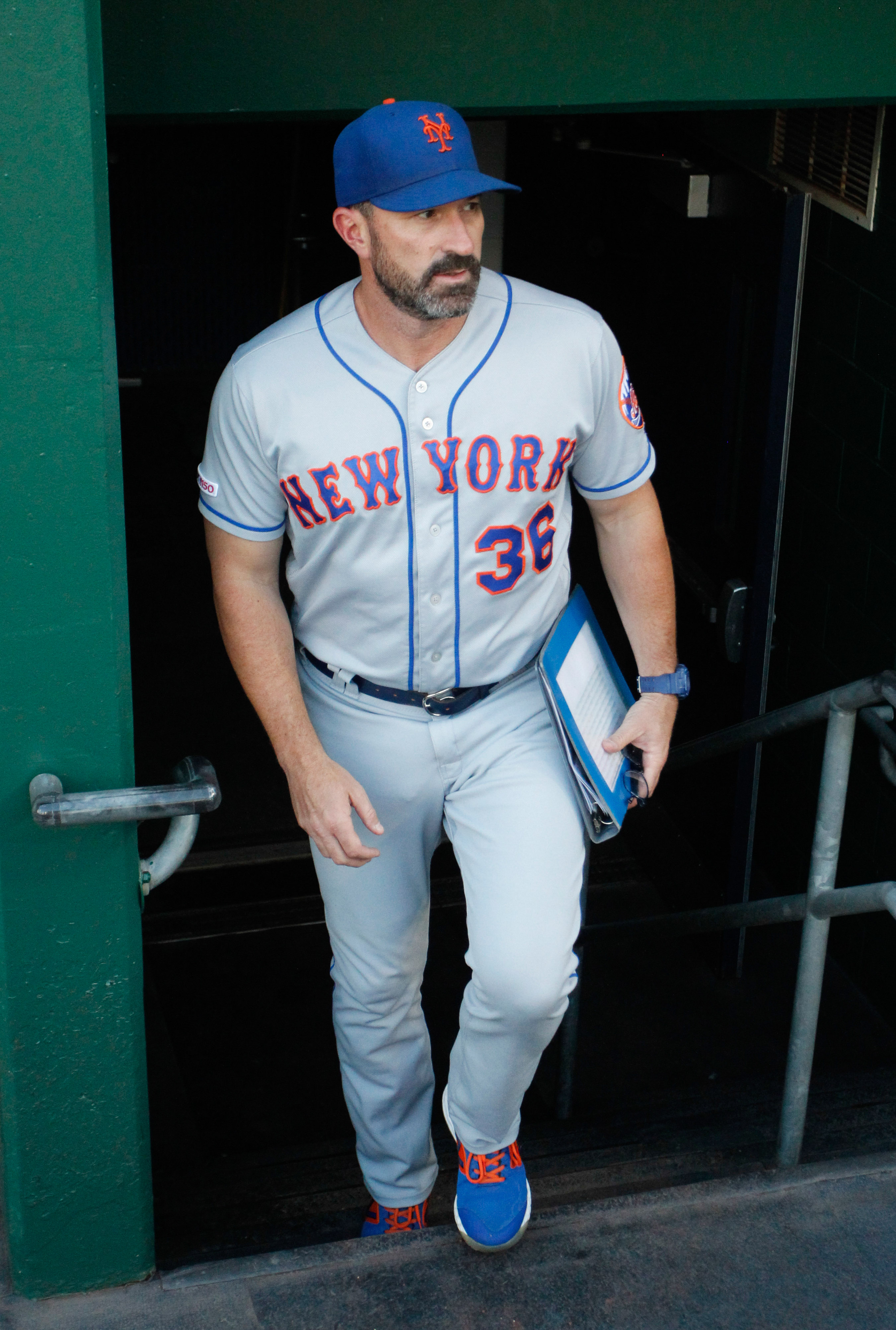
“We want to thank Mickey for his consistent work ethic and dedication over the last two seasons and I’m certain these characteristics will serve him well in his next opportunity,” Mets general manager Brodie Van Wagenen said in a statement accompanying today’s press release. “A decision like this is never easy, however, we believe it is in the best interest of the franchise at this time.”
Callaway’s departure from the Mets creates a seventh managerial vacancy throughout the league, as two managers (Kansas City’s Ned Yost and San Francisco’s Bruce Bochy) have opted to retire while Callaway joins Brad Ausmus (Angels), Andy Green (Padres) and Clint Hurdle (Pirates) as managers who were fired despite having time left on their current contracts. The Cubs, meanwhile, opted not to re-sign Joe Maddon after the expiration of his contract.
Generally speaking, the Mets have underperformed in each of the past two seasons, although injuries and roster construction missteps by a pair of different front-office regimes have obviously contributed to the team’s consecutive playoff misses. The 2019 season proved to be particularly tumultuous, as the team got out to an awful start and found itself 10 games under .500 at the time of the All-Star break. A torrid run to open the second half thrust the Mets back into the Wild Card mix, however, and although a Cinderella second half didn’t prove to be in the cards, the Mets improbably finished the season ten games above the .500 mark — good for third place in the division.
Along the way, however, there was no shortage of discord. Stories about Noah Syndergaard‘s preference to pitch to Tomas Nido leaked out into the public eye, while Callaway made numerous conflicting statements about usage restrictions on embattled closer Edwin Diaz. Callaway himself came into a particularly negative spotlight for cursing out a reporter in the clubhouse and subsequently refusing to apologize for his actions the next day — only to then seemingly be forced into doing so by the organization a short time later. Former Mets left-hander Jason Vargas had to be physically restrained during that particular altercation, and the entire incident obviously did not sit well with Mets’ higher-ups.
Of course, things aren’t always as they seem in the public eye, either. The New York Post’s Mike Puma reports, for instance, that Callaway’s early insistence on saving Diaz for the ninth inning and refusing to use him for more than three outs was a “direct order” from COO Jeff Wilpon. But, Puma also details some player feelings on Callaway’s communication skills and his lack of hands-on instruction with the pitching staff (despite a half decade building a reputation as one of the game’s better pitching coaches in Cleveland).
Regardless of one’s thoughts on Callaway and whether he deserved to stay or go, it’s become increasingly difficult to ignore the near-constant state of turmoil surrounding the Mets as an organization in recent years. From myriad reports about the Wilpon family’s habitual involvement in nearly every aspect of the club (e.g. Diaz’s usage) to the repeated vague and conflicting medical updates provided under former manager Terry Collins, to the aforementioned Vargas debacle this past summer, a general sense of chaos seems to permeate the organization each year. While one could argue that a strong, veteran voice is needed to command the respect of both the clubhouse and ownership, it’s also fair to wonder whether some seasoned managers would prefer not to be caught up with the drama.
CC Sabathia Not On Yankees’ ALDS Roster
The Yankees have yet to formally announce their full roster for their upcoming Division Series matchup with the Twins, but manager Aaron Boone announced today that veteran left-hander CC Sabathia will not be a part of the mix (Twitter links via Meredith Marakovits and Jack Curry of the YES Network).
Sabathia has been dealing with a shoulder issue and underwent a cortisone injection, but he hasn’t bounced back to the point where the team considers him an option to this pont. He could potentially factor into the ALCS roster if the Yankees advance beyond the ALDS. With Sabathia off the roster, the Yankees will go to a rotation featuring James Paxton in Game 1, Masahiro Tanaka in Game 2 and Luis Severino in Game 3. They’ll rely on that trio and an exceptionally deep bullpen, which Boone says he’ll be “aggressive” in deploying.
A full roster won’t be released until the Yankees need to formally release it (tomorrow morning), though Boone also indicated that Edwin Encarnacion is “expected” to be on the roster. The slugger hasn’t appeared in a game since Sept. 12 thanks to an oblique injury, but he’s apparently made sufficient progress that he’ll be an option in the best-of-five series that’ll kick off at Yankee Stadium tomorrow evening.
Depending on how the postseason plays out, then, it’s possible that Sabathia’s scoreless outing of relief against the Rays on Sept. 24 — the lone relief appearance of his illustrious 19-year career — could mark the final time he ever sets foot on a Major League mound. Even if the Yankees do advance to the ALCS, there’s no guarantee that Sabathia would be a part of the team’s pitching staff for that best-of-seven series. And, obviously, if the Yankees’ season comes to an end within the next week, Sabathia will head into retirement and take his first official steps toward Cooperstown a bit sooner than he or the organization had hoped.
Cardinals Announce NLDS Roster
The Cardinals have announced their roster for their National League Division Series showdown against the Braves, which kicks off in about six hours when Game 1 starter Miles Mikolas squares off against lefty Dallas Keuchel in Atlanta. Here’s their full roster:
Right-handed pitchers
- John Brebbia
- Jack Flaherty (Game 2 starter)
- Giovanny Gallegos
- Ryan Helsley
- Dakota Hudson
- Carlos Martinez
- Miles Mikolas (Game 1 starter)
- Daniel Ponce de Leon
- Adam Wainwright
Left-handed pitchers
Catchers
Infielders
Outfielders
Notable absences from the roster include right-handers Michael Wacha and John Gant. Wacha has long been a fixture on the Cardinals’ pitching staff but suffered a mild shoulder strain in his final outing of the season — a performance that could prove to be his final game as a Cardinal. The 28-year-old will become a free agent at season’s end, and his up-and-down season ultimately came to a close with middling end results: a 4.76 ERA, 7.4 K/9, 3.9 BB/9 and a 48 percent ground-ball rate in 126 2/3 innings. Wacha was twice demoted to the bullpen but returned to a starting role in each instance. The Cardinals could, of course, explore a reunion this winter, but they have a solid trio in Flaherty, Hudson and Mikolas — to say nothing of Carlos Martinez and perennial wild card Alex Reyes. They’ll also surely consider another deal with Wainwright, if the venerable rotation workhorse wishes to continue playing. Even if the Cards do seek a starter this winter, they may prefer more stability than Wacha can offer.
As for Gant, he opened the season as perhaps the Cardinals’ most reliable reliever, but his 2019 campaign took a sharp turn for the worst in late June. The 27-year-old, acquired in the 2016 swap that sent Jaime Garcia to the very organization the Cardinals will face in this series, carried a sub-2.00 ERA past the midpoint of June. He was torched for four runs in a third of an inning on June 23, however, and seemingly never regained his form. Gant allowed runs in 14 of his final 30 appearances this season, pitching to a 7.11 ERA the rest of the way. He pitched a total of 41 innings through the Cardinals’ first 74 games but logged just 25 1/3 frames from that point forth despite never landing on the IL or being optioned to the minors.
It’s also of note that the 24-year-old Arozarena has cracked the postseason roster. A fairly high-profile signing out of Cuba a few years back, Arozarena split the majority of the season between Double-A and Triple-A, where he posted huge numbers at both levels. He appeared in only 19 games in the Majors as a September call-up, though, and totaled a mere 23 plate appearances in that time. The Cards could’ve opted to bring Tyler O’Neill along to provide some pop off the bench, but they’ll instead opt for Arozarena’s superior speed and defensive versatility, as he’s capable of playing all three outfield spots.
As for the rest of the Cardinals’ rotation beyond Mikolas in Game 1 and Flaherty in Game 2, it’s a bit up in the air. Manager Mike Shildt indicated that Hudson is tentatively in line to start Game 3 but will also be available in relief in Games 1 and 2. If he does come out of the bullpen, Wainwright would get the nod in Game 3 with Hudson potentially starting the fourth game depending on when and how he is used (link via Anne Rogers of MLB.com).
Braves Leave Julio Teheran Off NLDS Roster
TODAY: The Braves have formally announced the full roster. In addition to the moves previously announced, the club nailed down a few other spots. Darren O’Day and Josh Tomlin got the nod in the bullpen over other options that included Julio Teheran, Anthony Swarzak, Jerry Blevins, Kyle Wright, and Bryse Wilson.
YESTERDAY: Braves manager Brian Snitker announced today that the team has decided not to carry Julio Teheran on its roster for the National League Divisional Series. MLB.com’s Mark Bowman was among those to cover (Twitter links). The action gets underway tomorrow, with the Braves squaring off against the NL Central-champion Cardinals.
The Atlanta organization elected not to carry an extra starter, preferring instead to operate with a deeper bench. Left-handed-hitting outfielder Rafael Ortega got the surprise nod for that spot, with Austin Riley also being left out of the picture. Veteran righty Josh Tomlin nabbed a final bullpen spot.
While the Braves did not formally release a full roster list, we can surmise the remainder of the picture:
Right-handed pitchers
- Mike Foltynewicz (game 2 starter)
- Shane Greene
- Luke Jackson
- Chris Martin
- Mark Melancon
- Mike Soroka (game 3 starter)
- Josh Tomlin
- Darren O’Day
Left-handed pitchers
- Dallas Keuchel (game 1 starter)
- Max Fried
- Sean Newcomb
Catchers
Infielders
Outfielders
Snitker indicated that the team decided to carry an extra bench piece in large part because of the absences of Charlie Culberson, Johan Camargo, and Ender Inciarte, who might’ve been entrusted to broader roles. That pushed Teheran out of the picture, leaving Fried as the fourth starter if one is needed.
There’s clearly a real possibility that Teheran’s last appearance in a Braves uniform was his final one. He could still be called upon if the Braves advance to the NLCS and have slightly different needs. And it’s still plenty possible that the organization will elect to pick up Teheran’s $12MM option for 2020 — even if only to trade him on to another club.
It’s also potentially telling to see Riley left home in favor of Ortega. There’s little question Riley has a future in the organization; the latter was chosen primarily because he’s a left-handed hitter who balances out the options for Snitker. But it’s still notable that Riley wasn’t able to push his way into the postseason plans. It remains to be seen whether the Braves will enter the offseason planning to hand the third base (or a corner outfield) job to Riley for 2020.
Van Wagenen To Speak With Callaway Before Managerial Decision
The Mets continue to mull their next steps after falling short in 2019, but it seems some decisions will come down soon. GM Brodie Van Wagenen is slated to chat with skipper Mickey Callaway today before reaching a final decision on who’ll run the dugout next year, per Joel Sherman of the New York Post.
MLBTR readers are ready to see Callaway depart, but the team has taken its time deciding. The skipper has one year left on a three-season pact. With several other organizations already making firm calls on their own managers, the Mets are on the clock. They also now have a bit of a better idea of what alternatives might be out there.
That it isn’t seen as a cut-and-dry decision is now obvious. Otherwise, the plug would already have been pulled. And perhaps that’s a reasonable stance. Callaway did enjoy the confidence of Van Wagenen and ownership all year long. He rewarded the decision not to fire him in the middle of the season — our readers were out for blood then, too — by overseeing a strong performance down the stretch. It wasn’t enough, but the front office can’t reasonably have expected more under the circumstances.
The decision on Callaway is obviously of great importance to the organization. But it’s also one that shouldn’t be allowed to distract from the many other challenges facing Van Wagenen and company. It remains to be seen how the club will address its needs after having already dedicated significant resources to building out a roster that wasn’t quite good enough in the just-completed campaign.
Three Needs: Cincinnati Reds
We’re continuing with our “Three Needs” series, in which we take a look at the chief issues to be addressed for clubs that have fallen out of contention. We’ll now turn to a Reds club that has its eyes fixed on returning to the postseason. Having already pulled off a surprising mid-season strike for veteran righty Trevor Bauer, the Reds will be looking to add a few more key pieces this winter.
1. Take Heed Of Other Teams’ Ramp-Up Difficulties
When fans hear Cincinnati baseball ops chief Dick Williams speak of riding a bigger payroll to the postseason, they surely have flashbacks to the team’s recent 2010-13 inflection point. But they should shudder at the thought of what came before (nine-straight losing campaigns) and after (six straight) that four-season stretch. Williams and co. must work not only to get back to the promised land, but to create a sustainable (or at least more swiftly recoverable) means of doing so.
As they ponder the possibilities, the Reds need to be mindful of the recent experiences of the NL-rival Rockies and Diamondbacks — two clubs that have historically occupied similar tax brackets while dealing with the challenges of offensively charged home parks. While the Colorado organization successfully cracked the postseason code for two-straight seasons, its ramped-up free-agent spending — especially, on multiple veteran relievers — didn’t deliver the hoped-for impact. The Rockies have rather swiftly found themselves in a tight payroll spot. Before that, the Snakes slammed the pedal to the floor a bit too hard — the Shelby Miller trade and Zack Greinke signing — and veered right off course.
We’re not suggesting the Reds shouldn’t be excited to fling open a window of contention. But the club needs to measure its moves carefully, especially since it already parted with touted prospect Taylor Trammell in the Bauer swap. Running up payroll for a single season isn’t necessarily a problem, but the club can ill afford multiple, hefty, unproductive contracts like those the Rockies have accumulated. And it will be even more wary of Arizona-like over-exuberance that could cost a rare chance at an extended period of competitiveness.
Precisely how to navigate things will depend upon the opportunities that arise. But the Reds can look to some other National League clubs for guidance. The Braves (Josh Donaldson, Dallas Keuchel) and Brewers (Yasmani Grandal) both cashed in with expensive, one-year deals. Had they fallen flat, the clubs would simply have shrugged and moved on. If the Reds are to place a longer-term bet, it probably shouldn’t come in a bidding war on a veteran reliever. Last year’s acquisition and extension of Sonny Gray would be hard to replicate, but spreading the cost over a slightly longer term (as the Rangers have with Lance Lynn and Mike Minor) could give the team a shot at landing a high-quality player at an affordable price.
2. Pursue Upside Up The Middle
It just so happens that the Reds are less-than-settled in the middle infield. Jose Iglesias turned in a solid campaign but is a free agent. Jose Peraza can be tasked with a utility role but not trusted as a regular. The club controls the rights to Freddy Galvis, but he should be a reserve on a contender. Nick Senzel is uber-talented and capable of playing center field or second base, so there’s some flexibility to work with for the Reds. There’s at least a sturdy floor behind the dish, but the defensively renowned Tucker Barnhart doesn’t have much of a bat.
This may be the place for the Reds to strike. On the one hand, the upcoming open market isn’t laden with great possibilities. There are quite a few guys that have at times been solid or better middle infielders, but it’s awfully light on players that appear to be present-talent true regulars. And the center field market is barren. But that also reflects the fact that many teams are already settled in these areas. And there are some intriguing options, including the aforementioned Grandal as well as old friend and bounceback candidate Didi Gregorius. It’s far from clear what’ll be available via trade, but there could be some awfully appealing names dangled. The pie-in-the-sky trade candidates are Francisco Lindor and Marcus Semien, who can’t be ruled out entirely given their respective organizations’ long-view strategies. It’s much easier to envision Starling Marte coming available, and he’d be quite an interesting target with two cost-controlled seasons left on his deal. Jackie Bradley Jr. and Ender Inciarte are among the potentially available players that are somewhat interesting but lower-ceiling possibilities.
Yep, the Reds still need to bear in mind the issues raised in item #1 above. An all-in strategy to go for Semien without an extension in place would likely not be wise. But if the Cincinnati club is going to go past its comfort zone a bit, it ought to be on a player who not only has a sturdy anticipated performance floor but also carries some real star potential. There are relatively few options, so they might need to be explored early. If nothing comes available at a reasonable price, the Reds can pivot to the many affordable options while seeing if anything has fallen through the cracks (Yasiel Puig???) in other areas.
3. Don’t Forget Pitching Depth
Yeah, the Reds got really nice output from their rotation this year and picked up Bauer to help lead the charge in 2020. And they have clear need to improve up the middle and/or with a new outfield bat. But this team could easily get in trouble if it doesn’t allocate some resources to protect the pitching staff, especially with Great American Ball Park as the backdrop.
Here’s the thing to bear in mind when you start thinking about whether and how the Reds can build off of 2019: they are unlikely to enjoy such phenomenal pitching health. Aside from Alex Wood, who returned for seven starts after missing much of the season, the club’s starters were more or less always available when scheduled. And the relief corps received voluminous contributions from its best arms: Amir Garrett made 69 appearances; Robert Stephenson and Raisel Iglesias each cracked sixty innings; Michael Lorenzen threw 83 1/3 frames.
While the Reds might not feel a need to chase improvement in the pitching staff, they ought to be relatively aggressive with spending 2020 cash on depth arms. There are a range of possibilities — the acquisition of a volume swingman, risking a bit of payroll space on a few durable veteran relievers, targeting optionable arms on waiver claims — but the overarching approach must build in some contingencies. Not doing so carries significant risk. Early-season pitching additions can be exceptionally pricey and it’s a long time to wait til the trade deadline when you’re trying to break back into the postseason.
Picking Favorites In The NLDS Matchups
So far, MLBTR’s readers are 2-for-2 in picking favorites, having nailed the NL and AL Wild Card matches. Are we on to something here or is it just sample-size luck? It’s a fun exercise in any event, so let’s do it again for the two National League Division Series matchups that are kicking off this evening.
The Braves and Cardinals get things rolling with a game 1 duel between Dallas Keuchel and Miles Mikolas. On paper, this is a tight series. Both teams feature exceptional veteran first basemen (Freddie Freeman vs. Paul Goldschmidt) and dueling young aces (Mike Soroka vs. Jack Flaherty). The Braves have the flashiest single star player in Ronald Acuna Jr., but the Cardinals feature a broad and deep array of talent. Plus, the Braves are dinged up, having lost several key contributors and dealt with late-season health issues for Freeman and Acuna. While the Atlanta organization will call upon contributions from a variety of players added during the course of the 2019 season — including a trio of relief acquisitions and a trio of veteran position players acquired after the trade deadline — the Cards are rolling with a roster that didn’t feature any major outside, mid-season supplementation.
Who ya got? (Poll link for app users.)
Which Team Has The Advantage?
-
Braves 66% (4,599)
-
Cardinals 34% (2,337)
Total votes: 6,936
It’s hard not to like the Dodgers’ chances at a third-straight World Series appearance, but in baseball the margins are thin and the bounces of the ball can be fickle. The reward for the outstanding pole-to-pole work from the Los Angeles club is a match with a talent-laden Nats team. These two clubs turned in an absolute barn-burner when they met in the NLDS in 2016. Both rosters feature star hitters, quality depth pieces, rotation aces, and …. highly questionable high-leverage relievers. That’s a formula for theatrics. If there’s a single clear advantage for one team, it’s probably the Dodgers’ far superior pitching depth, with the relief unit expected to be bolstered by several starting-capable hurlers. But there’s still a path for the Nats — if their three staff aces can fend off the Dodgers’ deep and balanced lineup and minimize the exposure of the ever-tottering D.C. bullpen.
Which team has the advantage? (Poll link for app users.)
Which Team Has The Advantage?
-
Dodgers 77% (5,016)
-
Nationals 23% (1,485)
Total votes: 6,501
Mariners Rumors: Gordon, Mallex, Santana, Pitching
The Mariners were among the majors’ most active teams last offseason as general manager Jerry Dipoto began executing a plan to “re-imagine” his roster. With the club now on the heels of a 68-win season, Dipoto has indicated it’s in for a much more modest winter this time around. However, that doesn’t mean the trade-happy Dipoto won’t consider parting with a couple of veterans still on the roster, as Ryan Divish of the Seattle Times writes.
Last winter was absolutely packed with trades for Dipoto, who shipped out Robinson Cano, Edwin Diaz, James Paxton, Jean Segura and Mike Zunino, among others. He has since parted with other established veterans in Edwin Encarnacion and Jay Bruce, who each joined the Mariners amid their blockbuster-filled offseason a year ago.
All of Dipoto’s wheeling and dealing has left the Mariners with just three players (second baseman Dee Gordon, third baseman Kyle Seager and left-hander Yusei Kikuchi) on guaranteed contracts. But Gordon is the only member of the trio who looks like a real trade candidate, Divish observes. Seager did enjoy a bounce-back campaign after a rough 2018, though he’s also a soon-to-be 32-year-old who’s owed $37MM over the next two seasons. Worse, his contract includes a clause that could make a trade an impossibility. As Divish covered last December, Seager’s $15MM club option for 2022 will become a player option if the Mariners deal him. In all likelihood, he’d exercise that option.
Like Seager, Kikuchi’s not going anywhere, having joined the M’s as their prized, big-money free-agent signing just last winter. Kikuchi went through a rough rookie season in 2019, but Seattle continues to regard him as a key long-term piece.
Gordon, meanwhile, looks superfluous to the club’s cause. Moving him would open up everyday second base duty for Shed Long, who was a bright spot for the Mariners in his first taste of the majors this year. The problem is that Gordon is still owed a guaranteed $14.5MM (including a $1MM buyout for 2021), which is an unpalatable amount when considering the 31-year-old’s recent output. The light-hitting Gordon has been a replacement-level player in each of the past two seasons, according to WAR. So, it’s probable that finding a taker for Gordon would require the Mariners to eat a portion of his contract. They’d “likely” pay half of his remaining money, per Divish, though it’s unclear whether that would be enough on their end. After all, there are several similarly or more productive veteran second basemen slated to reach free agency next month, and none of them should require sizable commitments.
Along with Gordon, outfielders Domingo Santana and Mallex Smith represent other potential trade candidates for Seattle, according to Divish. Dipoto acquired those two last winter, hoping they’d emerge as long-term building blocks, but both players disappointed this year. Thanks in part to elbow problems, Santana’s offensive production fell off a cliff as the season progressed. He also ranked as one of the majors’ worst outfielders, finishing with minus-17 Defensive Runs Saved and a minus-16.1 Ultimate Zone Rating (minus-16.1). Smith looked like a breakout center fielder for the Rays in 2018, but despite his 46 stolen bases this year, he only rated as a replacement-level producer.
The Mariners would be selling low on Santana’s last two years of arbitration eligibility and Smith’s three, but it’s possible they already have replacements on hand. Mitch Haniger and Kyle Lewis figure to be their main corner outfielders for next season. Smith could still occupy center if he’s still on the team, though Braden Bishop, Jake Fraley and an outside pickup may all be in the mix for that spot, Divish relays. They’ll line up behind an infield consisting of Seager at third, J.P. Crawford at short, Gordon or Long at second and Austin Nola at first. The 29-year-old Nola didn’t make his major league debut until mid-June, but it appears he’ll stick around after hitting .269/.342/.454 with 10 home runs 1.5 fWAR in his first 267 trips to the plate in the bigs. He could hold down first until the promotion of prospect Evan White, which Divish suggests is sure to happen by midseason at the latest. Elsewhere on offense, Daniel Vogelbach is in line to reprise his DH role, Dylan Moore is the front-runner for a utility job and the productive Omar Narvaez and Tom Murphy are due to return behind the plate.
As for areas the Mariners actually could look to add to this winter, Dipoto cited pitching – both starters and relievers – as a need. It’s unclear just how much the Mariners will be willing to spend on a starter(s) to slot in with Kikuchi, Marco Gonzalez, Justus Sheffield and possibly Justin Dunn, though it seems doubtful they’ll be spending near the top of the market. In the case of the bullpen, Dipoto said the Mariners will be seeking “opportunity buys.” Dipoto took the same route last offseason when he signed Hunter Strickland, Cory Gearrin, Zac Rosscup and R.J. Alaniz to cheap contracts.
Odds are the Mariners won’t do anything this offseason that could realistically vault them into contention by 2020. With that in mind, chances are high they’ll increase their playoff drought to 19 years next season. However, thanks to the young talent the Mariners have collected (much of which joined the organization last winter), Dipoto believes they’re on the right track.