
Big Hype Prospects: Alvarez, Muller, Ruiz, Naylor, Westburg
Our coverage of in-the-news prospects continues. A couple signings and the Sean Murphy trade give us plenty of fodder to chew upon. The Braves did an excellent job of converting unneeded role players into a premium upgrade. We’ll touch on several of the former-Braves now enjoy new homes with the Athletics and Brewers.
Francisco Alvarez, 21, C, NYM (MLB)
(AA/AAA) 495 PA, 27 HR, .260/.374/.511
The Mets continue to fortify their Major League roster, building out a resiliency of depth they’ve lacked for… the entirety of my living memory. The Mets have always been a club of “just enough,” a formula that rarely works in a 162-game season with extended playoffs.
The addition of catcher Omar Narvaez to veterans James McCann and Tomas Nido seemingly gives New York the opportunity to promote Alvarez if and when they believe he is ready for a regular starting role. That could be immediately out of Spring Training or later in the season. Cynically, it’s worth noting the Mets might gain an extra season of club control by holding Alvarez back until late April. Due to his age, there’s appeal to such an approach.
The recently-turned 21-year-old had a brief cup of coffee to finish 2022. He flashed trademark power, discipline, and a tendency to whiff. At this early stage of his career, he might be a tad too disciplined – a common issue for precocious, discipline-oriented sluggers. Minor league pitchers are exploitable in ways Major Leaguers are not. A second stint in Triple-A – where he compiled 199 plate appearances with a 121 wRC+ – could help him to add a touch of targeted aggression to his approach. Otherwise, he risks carrying over-30 percent strikeout rates early in his career. The tools are there for more acceptable whiff rates. Even without that adjustment, he profiles as an above average hitter.
Then there’s the matter of defense where some of his mechanics are a tad unconventional. This is made necessary by his stocky build. He doesn’t squat as deeply into his crouch as most catchers. Without runners on base, he uses a kneeling approach. There are questions about his blocking (when kneeling) and pitch-framing (when squating). Even his arm, which is at least 60-grade, could play down if opponents correctly guess when he squats and kneels.
Kyle Muller, 25, SP, OAK (MLB)
(AAA) 134.2 IP, 10.63 K/9, 2.67 BB/9, 3.41 ERA
The highest-rated prospect dealt by the Braves in the Sean Murphy trade, Muller has performed well against Triple-A competition for two straight seasons. With the Braves contending and enjoying considerable rotation depth, Muller hasn’t received many opportunities in the Majors. In total, the southpaw has made 12 appearances, 11 starts, for a total of 49 innings with a 5.14 ERA. Muller has a four-pitch repertoire. Three pitches grade out as average or better. His changeup is considered a platoon pitch. His ascent has been slowed by poor command. Although his low walk rate last season seems a positive development, none of the contacts I reached out to believe his command has truly improved. As of now, he profiles as an inefficient fifth starter or high-upside reliever.
Esteury Ruiz, 23, OF, OAK (MLB)
(AA/AAA) 541 PA, 16 HR, 85 SB, .332/.447/.526
The other notable prospect in the Murphy swap, Ruiz had a season to remember in the minors. Neither the Padres nor Brewers gave him many opportunities in the Majors despite rostering him for a considerable chunk of the season. All told, he attempted 102 steals and succeeded 86 times (84.3%) over a total of 576 plate appearances. With new rules on the way, Ruiz could find himself among the stolen base leaders if he hits enough to merit a starting role.
That last detail is in doubt. Despite incredible minor league numbers last season, a half dozen public scouting reports all point to a reserve role. The Athletics undoubtedly hope experience will unlock at least a second-division starter upside – as they attempted with Cristian Pache last season. While he’s drawn some (very) lazy comps to Alfonso Soriano for his combination of power and speed, Ruiz’s hit tool is suspect. He’s shown an ability to work counts and avoid strikeouts, but he seems to do this at the expense of exit velocity. As such, his power plays down in games since he’s so rarely taking his best swing.
Bo Naylor, 22, C, CLE (MLB)
(AA/AAA) 510 PA, 21 HR, 20 SB, .263/.392/.496
Between the lost 2020 season and a terrible 2021 campaign, Naylor found himself entering last year with much to prove. He recovered his prospect panache by adjusting his swing mechanics and now profiles as the Guardians catcher of the future. He even made eight plate appearances for Cleveland, though he went hitless with five strikeouts. The defense-oriented Guardians opted to bring in Mike Zunino on a one-year, $6MM deal to bridge the gap.
Naylor has rare speed for a backstop. The last catching prospect to display similar wheels was Daulton Varsho. The last such catcher to stick at the position as a longterm starter was J.T. Realmuto. Naylor’s defense doesn’t draw rave reviews, but it’s merely below average. A scout I questioned believed he can be an average defender. Cleveland’s preference for elite defensive catchers might lead to a position switch for trade for Naylor. I keep thinking back to Varsho, an acceptable but unexceptional catcher who turned into a gold glove center fielder almost overnight.
Jordan Westburg, 23, SS, BAL (MLB)
(AA/AAA) 622 PA, 27 HR, 12 SB, .265/.355/.496
One of my beats last year was with an Orioles blog, Baltimore Sports and Life. At the end of the season, there were two schools of thought regarding the Orioles 2023 middle infield. One group (including me), advocated for signing one of the four free agent shortstops, moving Gunnar Henderson to third base, and using Jorge Mateo and Ramon Urias at second base until prospects arrived. Others were ready to hand the keys directly to Westburg (or the next guy below) and save the budget for one of the top pitchers on the market.
Baltimore GM Mike Elias opted for Door #3, choosing to ink Adam Frazier on a one-year rebound contract eerily reminiscent of the deal handed to Rougned Odor prior to last season. While Frazier won’t truly block Westburg or others, his presence will help delay the need to promote them. Nevertheless, Westburg is seemingly ready. He spent most of last season in Triple-A where he posted a 129 wRC+. As a hitter, he’s a well-rounded pile of 50-grades. He might be going down a Willy Adames-like path – not a household name but better than a typical core performer. He’s a tad stretched defensively on the left side of the infield, but he should be an above average defender at the keystone. While there’s utility risk here, it’s a premium version of it – in the same way that Chris Taylor, Tommy Edman, and Jake Cronenworth are “utility men.”
Four More
Joey Ortiz, BAL (23): One of my favorite Peripheral Prospects, Ortiz isn’t all that highly rated nationally. The Orioles love him. He’s contact-oriented and gets to more game power than you might expect based on his size. He’s trained as a utility man who profiles as a plus defensive second baseman and acceptable elsewhere. He might just beat Westburg to the Majors. Ortiz is already on the 40-man roster.
Jeter Downs, BOS (24): When the Red Sox acquired Downs in the Mookie Betts trade, he was an up-and-comer with impressive minor league stats. With Boston, he developed a serious swinging strike problem – and a commensurate 30 percent strikeout rate. Questions about his hit tool predated the trade, but this outcome feels like a total developmental failure. Now in DFA limbo, Downs looks like somebody another org might be able to salvage.
Freddy Tarnok, OAK (24): It’s been a slow burn for Tarnok who has long profiled as a future big leaguer even without flashing standout skills. He has a four-pitch repertoire, but his secondaries need further refinement. The short path to the Majors is via the bullpen where his velocity might play up. Oakland can afford to be patient.
Royber Salinas, OAK (21): The last notable prospect acquired by Oakland for Murphy, Salinas has starter caliber stuff and poor command. The instinct among evaluators is to move him to relief and watch him take off. He’s entering his Rule 5 evaluation year which could force the Athletics hand.
Braves Acquire Sean Murphy, Brewers Acquire William Contreras In Three-Team Trade
The Braves, Brewers and A’s have agreed to a three-team blockbuster that will see each team get a new catcher with nine players involved in total. The full trade is as follows:
Braves get catcher Sean Murphy, giving up Kyle Muller, Royber Salinas, Justin Yeager, Freddy Tarnok, Manny Piña and William Contreras.
Brewers get William Contreras, Joel Payamps, Justin Yeager, giving up Esteury Ruiz.
A’s get Kyle Muller, Esteury Ruiz, Freddy Tarnok, Royber Salinas and Manny Piña, giving up Sean Murphy and Joel Payamps.
The deal is official, with the clubs all making announcements.
This move finally brings an end to a trade saga that has been going on for about a year now. After the 2021 season, the A’s leaned hard into a rebuild that saw them trade away Matt Olson, Matt Chapman, Sean Manaea and Chris Bassitt before Opening Day, with Frankie Montas getting flipped at the 2022 deadline.
Murphy was widely seen as the next to go for a number of reasons. Firstly, he just crossed three years of MLB service time in 2022 and will now be making higher salaries via arbitration. MLBTR contributor Matt Swartz projected that Murphy will jump to $3.5MM in 2023 with two further bumps before reaching free agency after 2025. Secondly, the A’s received a highly-touted catching prospect from Atlanta in the Olson deal in Shea Langeliers. He had an excellent season in Triple-A and carried himself well in a 40-game debut in the majors. Given all those factors, it seemed more and more likely that the A’s would hand the job over to Langeliers and trade Murphy for improvements elsewhere on the roster.
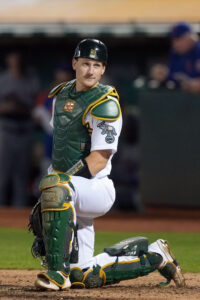
By taking this path, the A’s are parting with one of the best catchers in the game. The 28-year-old Murphy has 330 games in the big leagues under his belt thus far and has performed well in just about every facet of the game. He’s hit 46 home runs and has a combined batting line of .236/.326/.429. That production leads to a wRC+ of 116, indicating he’s been 16% above the league average hitter and even further ahead of the average catcher, since they generally come in a bit lower than others. He also took a step forward at the plate in 2022, striking out in just 20.3% of his plate appearances after being above 25% in his career prior to that.
Defensively, Murphy gets rave reviews as well. Since the start of 2020, he’s posted 13 Defensive Runs Saved behind the plate, a number that places him in the top 10 in the league. FanGraphs’ framing metric gives him a 19.5 in that timeframe, the third-highest such tally. Those all-around contributions have allowed him to produce 10 wins above replacement in those three seasons, according to FanGraphs, second among all MLB catchers with only J.T. Realmuto ahead of him.
Taking all that into consideration, it’s hardly surprising that Murphy garnered plenty of interest around the league. The Diamondbacks, Astros, Cubs, Guardians, Twins, White Sox, Red Sox, Rays, and Cardinals were some of the teams connected to him at various points in recent months. It was reported about a week ago that the Braves were getting close to acquiring him but president of baseball operations Alex Anthopoulos shot down those reports, saying that he didn’t anticipate a trade. That was either a bluff or something drastically changed in the past week since Atlanta have now indeed closed the deal. This is now the third huge deal Anthopoulos has negotiated with the A’s, though David Forst has since taken over baseball operations from Billy Beane. He acquired Josh Donaldson when he was working for the Blue Jays and has now nabbed Olson and Murphy for the Braves.
Atlanta always seemed a curious fit for Murphy given that they already had three viable catchers on the roster in Contreras, Piña and Travis d’Arnaud. They have cleared out that logjam and acquired Murphy in one fell swoop by including two of those catchers in the deal. On the surface, it seems that the club was keen to swap out Contreras for Murphy as a way of improving behind the plate. However, since the A’s seem set to give Langeliers a shot, it’s possible they were less interested in Contreras, which necessitated Milwaukee’s involvement.
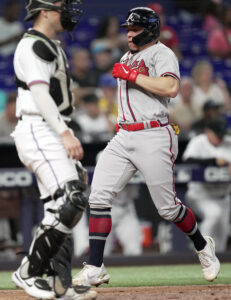
That’s not to say that Contreras isn’t an exciting young catcher in his own right. It’s just that, as mentioned, Murphy is one of the best in the game. Contreras will now join his older brother Willson Contreras, who recently signed with the Cardinals, in the NL Central. The younger Contreras has gotten into 153 games in his career so far, hitting 28 home runs and producing an overall batting line of .260/.338/.471 for a wRC+ of 121. His defensive work isn’t as highly rated as his bat, but he’s still quite young, turning 25 later this month. Even with subpar defense, he’s produced 2.5 fWAR in his brief career thus far, meaning any developments in that department would make him tremendously valuable. It had been recently reported that the Brewers were interested in catching upgrades, but since the club has been paring back a tight payroll, they never seemed like candidates for a big free agent splash. Instead, they’ve acquired a young backstop who has yet to reach arbitration eligibility and has five years of club control remaining. The club has also added a couple of depth arms in Payamps and Yeager.
For the A’s, it’s been reported that they have been prioritizing MLB-ready talent in their trade talks and they have achieved that here. Muller, 25, has appeared in each of the past two major league seasons, logging 49 innings so far. He has an unimpressive 5.14 ERA in that time, but he’s fared much better in the minors. He’s made 40 Triple-A starts in the past two years and has a 3.40 ERA, 28.4% strikeout rate and 9.2% walk rate. Baseball America recently ranked him the top prospect in Atlanta’s system.
Ruiz has spent most of his career in the Padres’ system but he went to the Brewers in the Josh Hader trade last year. He has some MLB experience, having played in 17 games this year between the two clubs. In 114 minor league games, he hit .332/.447/.526 while stealing 85 bases in 114 games. BA has not yet published their list of top Milwaukee prospects for this offseason, but Ben Badler of BA tweets that Ruiz was going to be in the #8 slot.
Tarnok also has very limited MLB experience, with 2/3 of an inning on the books so far. He threw 106 2/3 innings in the minors this year with a 4.05 ERA, 27.2% strikeout rate and 9.6% walk rate. He ranked #9 on the BA list of top Atlanta prospects. Piña is a 35-year-old veteran who is likely to serve as insurance in case Langeliers struggles or needs some veteran guidance. He signed a two-year, $8MM deal with Atlanta but required season-ending wrist surgery in May. He’ll earn $4.5MM in 2023 with a $4MM club option for 2024 with no buyout.
The one prospect who isn’t likely to help the big league club immediately is Salinas. He turns 22 in April and split the most recent season between Single-A and High-A. He posted a 3.55 ERA over 25 starts with a huge 37.6% strikeout rate but a 13.5% walk rate. Baseball America recently placed him #7 on their list of Atlanta prospects.
The Braves were facing a challenge in the NL East despite having won the division in five straight seasons. The Mets and Phillies have been been spending wildly to upgrade for the coming season. The Mets have added Justin Verlander, Kodai Senga, José Quintana and David Robertson, in addition to re-signing Brandon Nimmo and Edwin Díaz. The Phillies have signed Trea Turner, Taijuan Walker and Matt Strahm. The Braves were going to face a challenge in keeping up with that pace since they were nearing the luxury tax. As is his wont, Anthopoulos has turned to the trade market to make his upgrades. The club still has a question mark at shortstop, with Dansby Swanson having departed for free agency. They could always bring him back though they reportedly haven’t been talking much this offseason. After this trade, the club’s CBT figure is at $229MM, per Roster Resource, just shy of the $233MM luxury tax threshold for next year.
For the Brewers, they’ve parted with an outfield prospect they just acquired but have added an exciting young catcher, something they would be challenged to do in free agency with their payroll constraints. For the A’s, they have parted with yet another established major leaguer, adding to the list of quality players they’ve sent out the door. In exchange, they’ve brought in one veteran backstop and four young players that they hope can be a part of forming the next competitive core in Oakland.
Talkin’ Jake of Jomboy Media first reported that the Braves, Brewers and A’s were lining up on a deal, as well as the involvement of Contreras (Twitter links). Jeff Passan of ESPN first reported Murphy going to the Braves, as well as the involvement of Piña and the eventual final deal. Robert Murray of FanSided first mentioned Ruiz and Tarnok (Twitter links). Joel Sherman first mentioned Payamps and Yeager on Twitter. Kiley McDaniel first had Muller’s name on Twitter.
Images courtesy of USA Today Sports.
Every Team’s Initial September Call-Ups
Each season as the calendar flips to September, we see a flurry of transactions around Major League Baseball. Active roster sizes jump from 26 to 28 for the season’s final month, with teams permitted to bring up no more than one additional pitcher. We’ve already covered a host of transactions with 40-man roster implications throughout the day at MLBTR. Here’s a full round-up of teams’ initial September roster moves.
American League West
Houston Astros:
- Selected contract of RHP Hunter Brown
- Selected contract of C Yainer Diaz
- Corresponding moves: IF Niko Goodrum and RHP Peter Solomon designated for assignment
Los Angeles Angels:
- Selected contract of OF Ryan Aguilar
- Selected contract of RHP Zack Weiss
- Corresponding moves: OF Steven Duggar and INF Jose Rojas designated for assignment
Oakland Athletics
- Selected contract of LHP Ken Waldichuk from Triple-A Las vegas
- Recalled OF Cody Thomas from Triple-A Las Vegas
- Corresponding move: RHP David McKay designated for assignment
Seattle Mariners
- Reinstated LHP Matthew Boyd from 60-day injured list
- Recalled OF Taylor Trammell from Triple-A Tacoma
- Corresponding moves: None required
Texas Rangers
- Selected contract of RHP Jesus Tinoco from Triple-A Round Rock
- Recalled OF Nick Solak from Triple-A Round Rock
- Corresponding move: Transferred RHP Josh Sborz to 60-day injured list
American League Central
Chicago White Sox
- Recalled OF Adam Haseley from Triple-A Charlotte
- Recalled RHP Matt Foster from Triple-A Charlotte
- Corresponding move: None required
Cleveland Guardians
- Recalled SS Ernie Clement from Triple-A Columbus
- Reinstated RHP Cody Morris from 60-day injured list
- Corresponding move: Designated RHP Anthony Castro for assignment
Detroit Tigers
- Recalled 1B Spencer Torkelson from Triple-A Toledo
- Selected contract of INF Ryan Kreidler from Triple-A Toledo
- Corresponding move: Transferred RHP Rony Garcia to 60-day injured list
Kansas City Royals
- Selected contract of RHP Daniel Mengden from Triple-A Omaha
- Recalled OF Nate Eaton from Triple-A Omaha
- Corresponding move: None required
Minnesota Twins
- Added LHP Austin Davis (previously claimed off waivers from Red Sox) to active roster
- Selected contract of OF Billy Hamilton from Triple-A St. Paul
- Corresponding move: Transferred OF Trevor Larnach to 60-day injured list
American League East
Baltimore Orioles
- Selected contract of 1B Jesus Aguilar from Triple-A Norfolk
- Recalled LHP DL Hall from Triple-A Norfolk
- Corresponding move: Designated INF Richie Martin for assignment
Boston Red Sox
- Recalled C Connor Wong from Triple-A Worcester
- Selected contract of RHP Eduard Bazardo
- Corresponding moves: None required
New York Yankees
- Recalled SS Oswald Peraza from Triple-A Scranton/Wilkes-Barre
- Activated INF Marwin Gonzalez from paternity list
- Corresponding moves: None required
Tampa Bay Rays
- Reinstated RHP Matt Wisler from the 15-day injured list
- Recalled INF Jonathan Aranda from Triple-A Durham
- Corresponding moves: None required
Toronto Blue Jays
- Recalled RHP Casey Lawrence from Triple-A Buffalo
- Added OF Bradley Zimmer (claimed off waivers from Phillies this week) to active roster
- Corresponding moves: None required
National League West
Arizona Diamondbacks
- Selected contract of IF Wilmer Difo from Triple-A Reno
- Reinstated RHP Keynan Middleton and LHP Kyle Nelson from 15-day injured list
- Corresponding move: Designated RHP Noe Ramirez for assignment
Colorado Rockies
- Recalled INF Alan Trejo from Triple-A Albuquerque
- Recalled RHP Chad Smith from Triple-A Albuquerque
- Corresponding moves: None required
Los Angeles Dodgers
- Reinstated LHP Clayton Kershaw from 15-day injured list
- Recalled 3B Miguel Vargas from Triple-A Oklahoma City
- Corresponding moves: None required
San Diego Padres
- Recalled INF Matt Beaty from Triple-A El Paso
- Recalled RHP Reiss Knehr from Triple-A El Paso
- Corresponding moves: None required
San Francisco Giants
- Selected contract of recently-acquired OF Lewis Brinson
- Recalled IF David Villar from Triple-A Sacramento
- Corresponding move: Outrighted LHP Jonathan Bermudez to Triple-A Sacramento
National League Central
Chicago Cubs
- Selected contract of RHP Jeremiah Estrada from Triple-A Iowa
- Recalled INF David Bote from Triple-A Iowa
- Corresponding move: Transferred Wade Miley from 15-day injured list to 60-day injured list
Cincinnati Reds
- Selected contract of 2B/3B Spencer Steer
- Selected contract of RHP Fernando Cruz
- Corresponding moves: Transferred INF Mike Moustakas and RHP Jeff Hoffman from 10-day injured list to 60-day injured list
Milwaukee Brewers
- Recalled RHP Luis Perdomo from Triple-A Nashville
- Recalled OF Esteury Ruiz from Triple-A Nashville
- Corresponding moves: None required
Pittsburgh Pirates
- Recalled RHP Johan Oviedo from Triple-A Indianapolis
- Recalled OF Calvin Mitchell from Triple-A Indianapolis
- Corresponding moves: None required
St. Louis Cardinals
- Selected contract of OF Ben DeLuzio from Triple-A Memphis
- Recalled RHP James Naile from Triple-A Memphis
- Corresponding moves: None required
National League East
Atlanta Braves
- Reinstated IF Orlando Arcia from 10-day injured list
- Added recently-claimed RHP Jesse Chavez to active roster
- Corresponding moves: None required
Miami Marlins*
- To recall OF Bryan De La Cruz
- To recall RHP Jeff Brigham
- Corresponding moves: None required
New York Mets
- Selected contract of INF Deven Marrero from Triple-A Syracuse
- Recalled RHP Adonis Medina from Triple-A Syracuse
- Corresponding move: Designated RHP Connor Grey for assignment
Philadelphia Phillies
- Selected contract of RHP Vinny Nittoli from Triple-A Lehigh Valley
- Recalled C Donny Sands from Triple-A Lehigh Valley
- Corresponding moves: None required
Washington Nationals
- Recalled C Tres Barrera from Triple-A Rochester
- Recalled RHP Mason Thompson from Triple-A Rochester
- Corresponding moves: None required
*Marlins moves reported by Jordan McPherson of the Miami Herald (Twitter link)
Brewers Trade Josh Hader To Padres
After years of rumors, the Brewers have finally traded All-Star closer Josh Hader, sending him to the Padres in a stunning deadline blockbuster. The two teams announced Monday that Hader is on his way to San Diego in exchange for the Padres’ own closer, Taylor Rogers, as well as righty Dinelson Lamet, pitching prospect Robert Gasser and outfield prospect Esteury Ruiz. In order to clear a 40-man roster spot, Milwaukee transferred reliever Miguel Sanchez from the 15-day to the 60-day injured list.
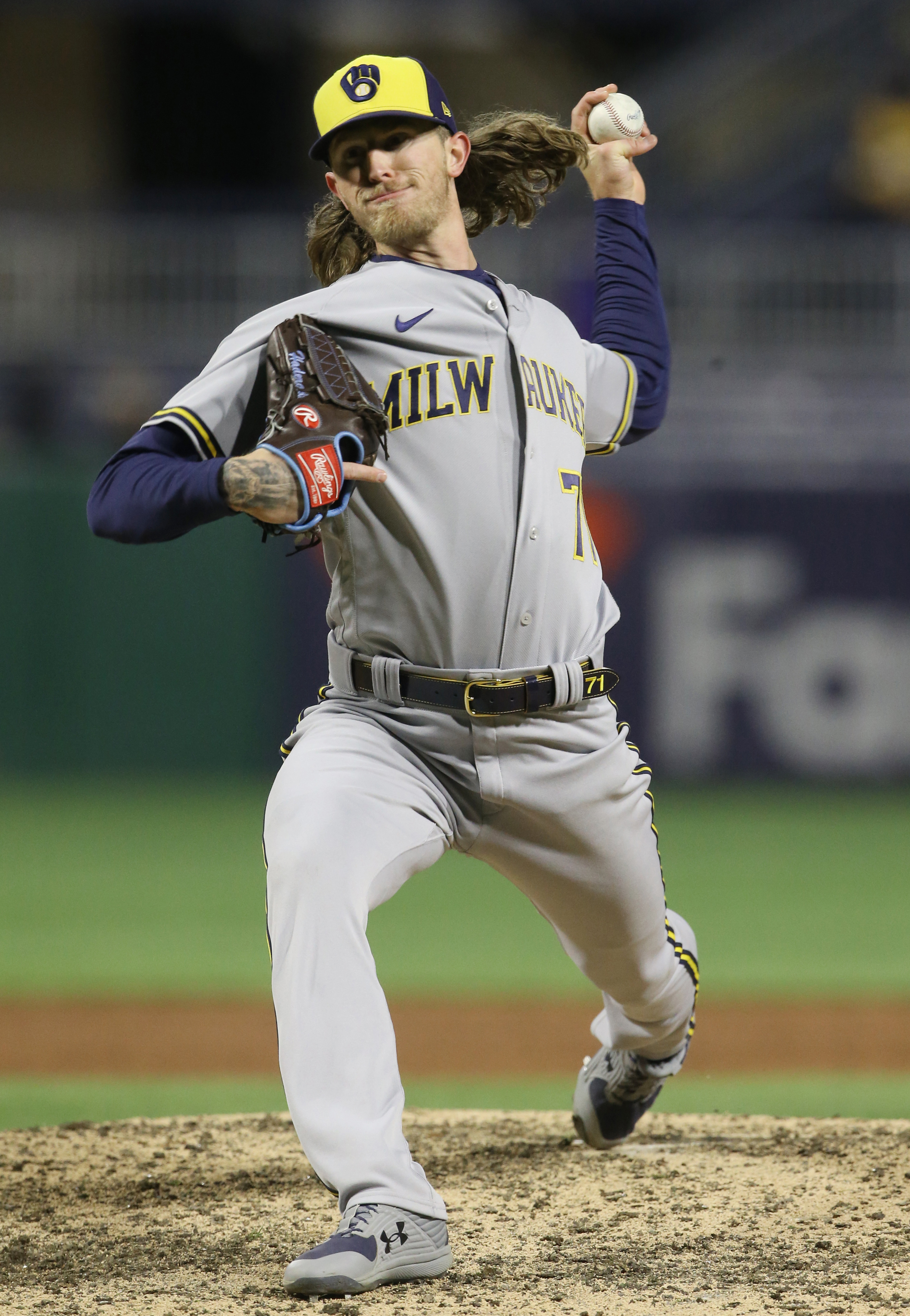
It’s a massive get for the Padres, and while it’s a genuine surprise to see Milwaukee move its closer while holding a three-game lead in the National League Central, the reasoning behind the trade is fairly straightforward. Hader’s $11MM salary figures to jump north of $15MM next season in his final year of club control, and a generally budget-conscious Brewers club may not be willing to dedicate $15-17MM to a single reliever when that represents such a notable portion of the overall payroll.
The Brewers, of course, could have held Hader into the winter and made him available at that point, but the allure of landing Hader for multiple postseason pushes undeniably allowed them to seek a higher price right now. To that end, they’re acquiring a closer of their own in Rogers, who — like Hader — has struggled of late but has an excellent track record spanning several seasons. Milwaukee also adds a high-octane arm in Lamet, albeit one that’s been plagued by injuries, and two of the Padres’ top ten prospects in Gasser and Ruiz, which breathes some much-needed life into a farm system that has generally not been considered among the sport’s strongest.
It’s the sort of trade we’re accustomed to seeing smaller-payroll clubs like the Rays and Guardians make with regularity: cash in a coveted player’s trade value when he has multiple seasons of club control and simultaneously backfill that spot on the roster with other big league help. It’s an immediate downgrade on the roster overall, but this type of simultaneous buy-and-sell tightrope act has been one of the keys to Tampa Bay, Cleveland and even Milwaukee itself remaining competitive despite rarely being able to spend top-of-the-market money.
“The players we are receiving in this trade help ensure that the future of the Milwaukee Brewers remains bright while not compromising our desire and expectation to win today,” Brewers president of baseball operations David Stearns said in a statement announcing the deal. “This mix of present Major League talent and high-level prospects furthers our aim to get as many bites of the apple as possible and, ultimately, to bring a World Series to Milwaukee. Trading good players on good teams is difficult, and that is certainly the case with Josh. We also recognize that to give our organization the best chance for sustained competitiveness, to avoid the extended down periods that so many organizations experience, we must make decisions that are not easy.”
Hader, 28, is sitting on a career-worst 4.24 ERA, though that mark was inflated by an uncharacteristic pair of consecutive meltdowns earlier this month, wherein he was tagged for a staggering nine earned runs in one-third of an inning. Outside that pair of disastrous outings, Hader has a 1.87 ERA in 33 2/3 innings. He didn’t even allow a run this season until June 7 and has punched out a massive 41.8% of his opponents against an 8.5% walk rate.
Dating back to Hader’s 2017 debut, no one in baseball has topped his enormous 44.1% strikeout rate — nor have they come especially close to doing so. (Craig Kimbrel is second at 40.6%.) Hader’s 2.48 ERA in that time is eighth-best among 309 qualified relievers, and no one has topped his 19.5% swinging-strike rate.
The name who trails Hader in that massive swinging-strike rate — now-former teammate Devin Williams — may have something to do with today’s trade as well. The Brewers surely wouldn’t have been as comfortable moving Hader were it not for Williams’ own breakthrough as one of the sport’s most dominant relief pitchers. Armed with a lethal changeup (nicknamed the “Airbender”), Williams ranks fourth in strikeout rate (39.9%), second in swinging-strike rate (18.6%) and second in ERA (1.94) among that same subset of qualified relievers just mentioned with regard to Hader.
There’s certainly an argument to be made that Milwaukee should have simply kept Hader and trotted out that dominant duo throughout the rest of the season and the forthcoming playoff run, but the blend of high-upside, immediate replacements (Rogers, Lamet) and the long-term value of adding a pair of well-regarded prospects to the system proved too alluring for Stearns, GM Matt Arnold and the rest of the Milwaukee staff.
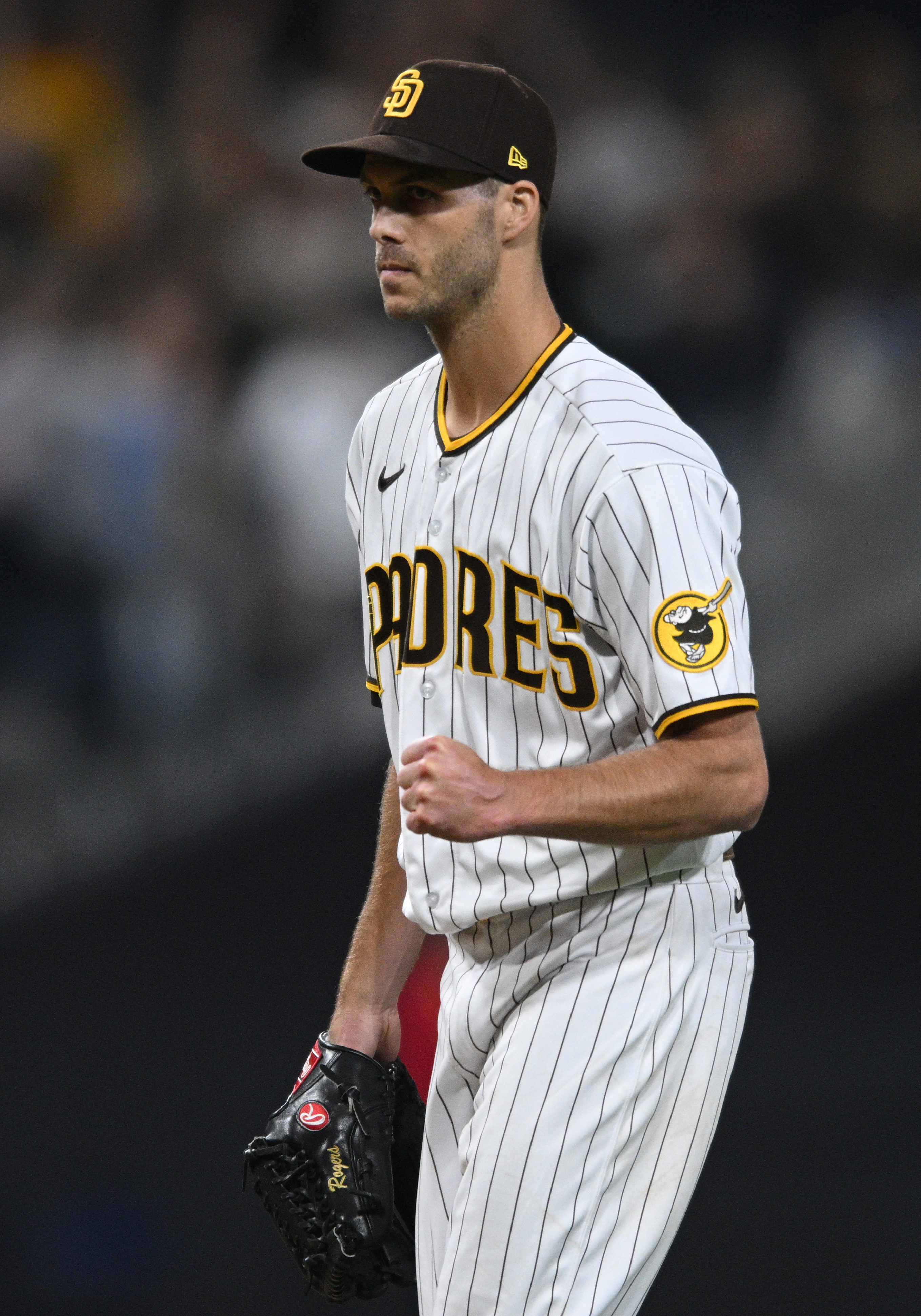
Turning to that collection of newly acquired talent, the Brewers will surely hope that Rogers can shake off the recent slump that has plagued him over the past two months. Rogers, from 2018-21 with the Twins, wasn’t far behind Hader on the list of the sport’s best left-handed relievers. He worked 197 2/3 frames during that time, pitching to a 2.91 ERA with a 31.2% strikeout rate, a 4.9% walk rate and 50 saves. A torn tendon in his pitching hand cut last season short for Rogers, however, and he was shipped from the Twins to San Diego on the eve of Opening Day this year.
Rogers took to his new environs brilliantly, pitching to a dominant 0.44 ERA with a 23-to-4 K/BB ratio through his first 20 1/3 innings. Since that time, however, he’s been clobbered for an 8.14 ERA in a nearly identical sample of 21 innings. Rogers still has an exceptional 25-to-5 K/BB ratio over that ugly stretch, however, and he’s only allowed one home run along the way. He’s been dogged by a sky-high .429 average on balls in play during this slump, but it’s still hard to overlook a stretch that has seen Rogers surrender runs in 13 of his past 22 appearances.
Still, Rogers’ track record is alluring, and perhaps the Brewers have their own idea about how to the lefty can get back on track. He’s a free agent at season’s end, making Rogers a pure rental — but he’s an ultra-affordable one, as the Twins covered all but $700K of his salary in that trade to the Padres.
Lamet, meanwhile, is another huge upside arm on whom the Brewers are buying low. The flamethrowing righty was a Cy Young candidate in the shortened 2020 season but went down with a biceps injury late that season and missed a significant portion of the 2021 campaign due to forearm strains.
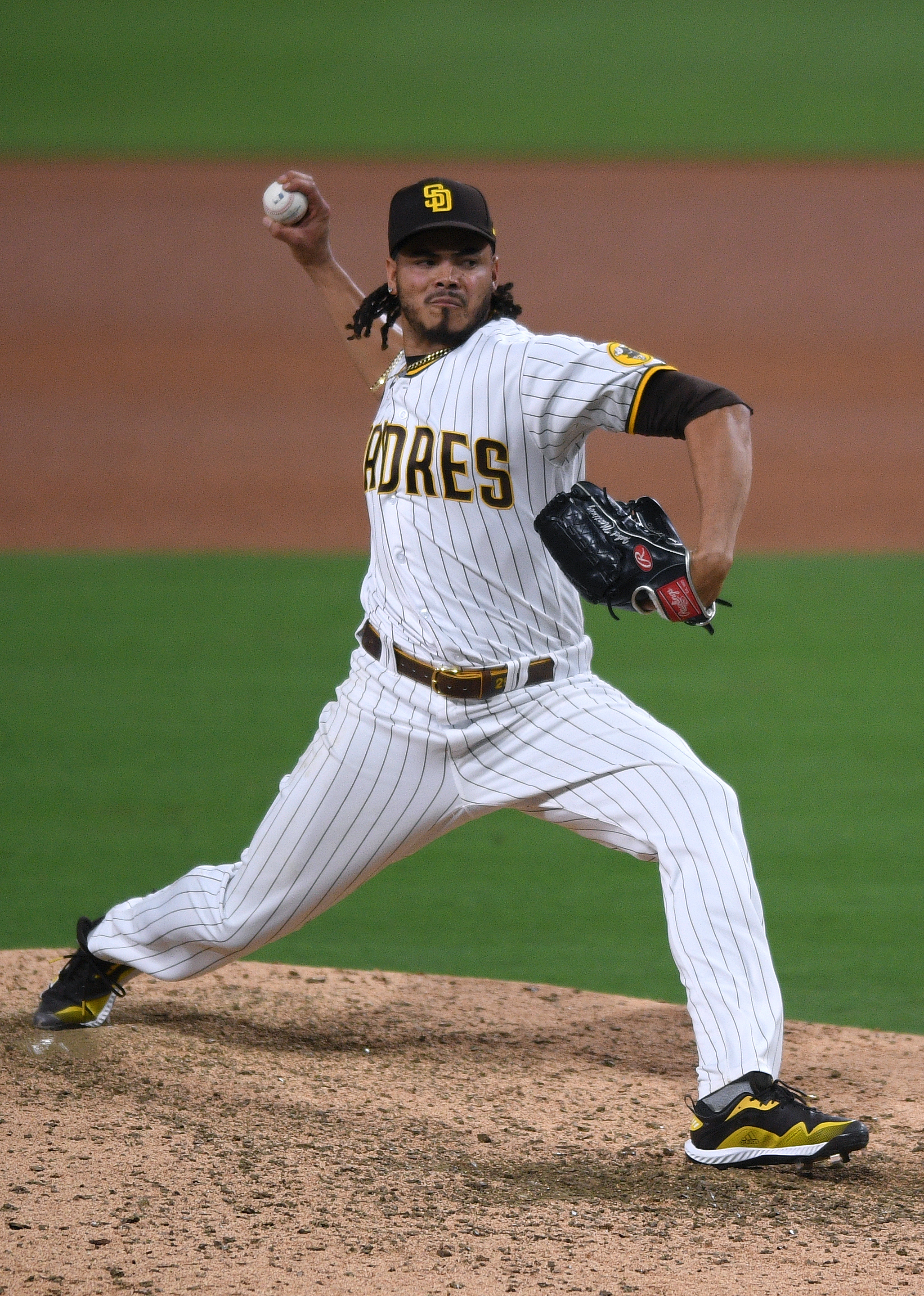
Lamet has yielded 13 earned runs in just 12 1/3 Major League innings this season, but he’s been dominant in Triple-A (0.77 ERA in 11 2/3 frames). His fastball, which averaged 97 mph in 2020, is down to an average of 95.3 mph this year. There are obviously plenty of red flags with Lamet, but if he can recapture anything resembling his 2020 form (2.09 ERA, 34.8% strikeout rate, 7.5% walk rate) while coming out of the Milwaukee bullpen, he’d be a formidable addition to the relief corps both this year and next, as he’s arbitration-eligible once more before free agency in the 2023-24 offseason.
Both Gasser and Ruiz were among the Padres’ top 10 prospects and will now also join the Brewers’ top 10. Gasser, 23, was the No. 71 overall pick in the 2021 draft and has held his own in the rotation with the Padres’ Class-A Advanced affiliate this season. In 90 1/3 innings, he’s notched a 4.18 ERA but a far more impressive 3.27 FIP, thanks largely to a gaudy 30.5% strikeout rate and a sharp 7.4% walk rate. Somewhat amusingly, Gasser doesn’t rely on velocity to find success but rather plus command and a plus breaking ball. Baseball America tabs his fastball in the 90-93 mph range and calls Gasser a high-probability fourth starter — one who could move quickly through the minors. He could be an option in the Milwaukee by late in the 2023 season and certainly by the 2024 campaign.
Ruiz, meanwhile, is an immediate option for the Brewers in center field. He’s already made his big league debut, and while he’s just 6-for-27 through his first few games, he obliterated Double-A pitching (.344/.474/.611 in 232 plate appearances) and Triple-A opposition so far in 2022 (.315/.457/.477 in 142 plate appearances). Ruiz, incredibly, has stolen 60 bases in just 77 minor league games this year and has already picked up the first of what should be quite a few big league steals as well. Add in average or better raw power, and it’s easy to see why Milwaukee was enamored of him — particularly given the team’s need in center field.
Ruiz isn’t a true center fielder and only moved to the outfield on a full-time basis last season after struggling as an infielder, but BA’s scouting report on him notes that he’s already making decent jumps and reads as he learns center field on the fly. Strikeouts were an issue for Ruiz earlier in his career, but he’s punched out at just a 17.4% clip in the minors so far this season and has reportedly made some changes to his approach and swing that have improved upon his bat-to-ball abilities.
Of course, it’s far from common to see a division-leading team part with one of the game’s best players at his position midway through the season, but the entire gambit for the Brewers is an upside play that could net them comparable production in 2022 and considerable long-term value thereafter.
For the Padres, it’s a pure short-term play with the goal of putting together a powerhouse postseason pitching staff. It’s also surely not the only move San Diego president of baseball operations A.J. Preller will make between now and tomorrow’s deadline. He managed to add Hader without having to surrender any of the organization’s very top-end prospects — e.g. Robert Hassell III, C.J. Abrams, Jackson Merrill, James Wood, Luis Campusano — all of whom could be used as firepower to bring in a sizable pitching or outfield upgrade (e.g. Frankie Montas, Juan Soto).
It bears mentioning that the acquisition of Hader likely puts the Padres over the luxury tax threshold, even with Lamet’s salary going back to Milwaukee. That only serves as a further portent for significant dealing from Preller & Co., though. In all likelihood, the Padres are just getting started, and we shouldn’t expect this to be the only move of note for the Brewers either.
Ken Rosenthal of The Athletic first reported that the Brewers were close to a trade of Hader. Jeff Passan of ESPN reported that Hader was going to the Padres in exchange for Rogers, Lamet, Gasser and Ruiz (Twitter links).
Big Hype Prospects: Meyer, Pratto, Ruiz, Greene, Cowser
This week in Big Hype Prospects, we’ll check in with a few recent and upcoming promotees along with a smattering of others.
Five Big Hype Prospects
Max Meyer, 23, SP, Marlins
AAA: 58 IP, 10.09 K/9, 2.95 BB/9, 3.72 ERA
Meyer is poised for his first taste of the Majors on Saturday, just ahead of the All-Star Break. As MLBTR’s Anthony Franco explored at the time his promotion was announced, the northpaw has made short work of minor league opponents at all stops. His ascent has not been without caveat. Some commentators worry about his ability to hold down a rotation role in the Majors for three reasons. The first is easiest to dismiss as unnecessary fretting. At 6’0’’, Meyer is slightly undersized which can presage an inability to tolerate 180-inning workloads. That said, there are plenty of “short” pitchers in baseball history, most notably Pedro Martinez.
The second and third issues are a bit more worrisome. They tie together, too. Meyer’s fastball command isn’t as sharp as his walk rates suggest. He’s gotten away with using it in the zone in the minors, but he could run into some trouble in the Majors. He relies almost exclusively on his fastball and an elite slider, a combination which often portends a future in the bullpen. That said, lower caliber pitchers like Brad Keller and Brady Singer have managed mid-rotation quality results with the same repertoire. We’ve also seen a few others like Spencer Strider thrive this season while using a different two-pitch repertoire.
Nick Pratto, 23, 1B, Royals
AAA: 337 PA, 17 HR, 8 SB, .240/.373/.484
Like many of his power-hitting Major League colleagues, Pratto got off to a slow start this season before eventually finding his stride. The Royals have promoted him for a series in Toronto in which they’ve infamously left 10 players south of the Canadian border. As such, his debut might be short-lived.
Pratto is a classic patient, left-handed slugger in the mold of Kyle Schwarber. Like the upcoming Home Run Derby participant, Pratto runs a mid-teens walk rate while striking out in around 30 percent of plate appearances. He makes up for so little contact by punishing those with which he does connect. Nearly half of his batted balls are flies and over 20 percent of those leave the yard. Per a home run calculator I’ve developed, Pratto projects for 33 home runs per 600 plate appearances. While he’s shown a willingness to run, he has below average speed. Like Schwarber, Pratto will probably be a volatile performer whose carrying trait is slugging.
Esteury Ruiz, 23, OF, Padres
AA: 232 PA, 9 HR, 37 SB, .344/.474/.611
AAA: 142 PA, 4 HR, 23 SB, .315/.457/.477
Ruiz draws his hype from our friends in the fantasy baseball realm where his combination of power and speed could make him one of the most celebrated players in the game. From a real-world perspective, there are a lot of things that could go wrong. Starting on defense, he only has about a year of experience as an outfielder. His routes can be inconsistent or even circuitous. Fortunately, he has enough speed to recover while he learns the position. Speed doesn’t guarantee eventual mastery as an outfield defender. Roman Quinn is similarly fleet and still takes baffling routes to the ball at times.
Scouts also worry about his hit tool. Prior to this season, Ruiz had consistently below-average plate discipline. He struggled with swinging strikes, strikeouts, and consistency of contact. Notably, he’s produced 13.9 percent walk and 17.4 percent strikeout rates this season across two levels. His swinging-strike rate has also improved. Perhaps a more selective approach has yielded better contact results (I’m still awaiting comment from my sources). Regardless, speed is his carrying trait. Nabbing 60 bases (69 attempts) in 374 plate appearances is seriously impressive work.
I’m reminded of Michael A. Taylor, an outfielder who, at his peak, occasionally hit for power, often stole bases, but never quite made enough contact to stick as a regular. He’s carved out a nice career based on gold glove caliber center field defense. As noted above, Ruiz will need to improve considerably to match Taylor on defense. The raw tools are there.
Riley Greene, 21, OF, Tigers
MLB: 109 PA, 1 HR, 1 SB, .255/.358/.340
Greene’s prospect eligibility will soon expire. His first taste of the Majors has yielded mixed results. On the one hand, he’s effectively working counts. His 21.1 percent strikeout and 7.9 percent swinging-strike rates exceed even the wildest hopes for his early-career performance. The swinging-strike rate, in particular, is a marked divergence from expectations.
On the other hand, Greene is supposed to be a power hitter. With just one home run, three doubles, and a triple to his name, he’s been one of the most punchless batters since his debut in mid-June. Only 19 players have a lower ISO over that span – mostly names like Geraldo Perdomo, Myles Straw, and Steven Kwan.
Better times likely await ahead. Greene is making consistent hard and barreled contact. It’s also encouraging to see him make adjustments. He’ll need to continue to do so to correct for the biggest flaw in his profile – an over-50 percent ground ball rate. While he’s currently using a shift-proof all-fields approach, he’s the kind of hitter who could benefit from a more pull-centric profile.
Colton Cowser, 22, OF, Orioles
High-A: 278 PA, 4 HR, 16 SB, .258/.385/.410
AA: 53 PA, 3 HR, 1 SB, .308/.491/.615
In a crowded Orioles system, a lot of attention is paid to Adley Rutschman, Gunnar Henderson, Grayson Rodriguez, and DL Hall. However, Cowser is also a Top 50-caliber prospect who is quickly working his way towards a big league debut in early 2023. With a patient approach, good rate of contact, and a swing geared for high BABIPs, Cowser profiles as a top-of-the-lineup force. He produces premium line-drive rates while using an all-fields approach. A left-handed hitter, he won’t be as penalized by the new dimensions at Camden Yards as his right-handed hitting teammates. Yet, since he hits to all fields, he’ll still use the spacious left field pasture to splash doubles.
If Cowser has a shortcoming, it’s that he doesn’t consistently get to in-game power. As mentioned, his swing skews to low-angle contact. He produces plenty of well-hit balls, but his game is mostly geared around reaching base. In today’s MLB, you never know when a player will make an adjustment that unlocks another gear, but it’s not strictly necessary in Cowser’s case. The Orioles have plenty of mid-lineup bats penciled into their future lineups. However, they could use a leadoff hitter who works counts and jumps on mistakes in the zone.
Five More
Michael Massey, Royals (24 years old): Another temporary beneficiary of the Royals’ roster triage, Massey isn’t technically a hyped prospect. However, my best scouting resource has been talking him up for a full year as a future regular. While it isn’t the most exciting profile, he skews to line drive and “fliner” contact which helps him to run high BABIPs while also regularly hitting for extra bases. The elevated BABIP will be necessary if he’s to be an above average hitter – his plate discipline and contact skills are slightly below average. Defensively, he profiles as a utilityman who fits best at second base.
Eury Perez, Marlins (19): With Shane Baz returning to the injured list due to an ominous elbow sprain, Perez is the last truly elite pitching prospect (Baz, Daniel Espino, and Grayson Rodriguez) left standing. The Marlins are carefully managing his workload – both by holding him to around 20 batters faced per appearance while using him every seven or eight days. He’s carved through Double-A competition and could probably more than hold his own in the Majors. He’s only 19 years and three months old, so Miami is taking the long view with his development.
Jordan Walker, Cardinals (20): Walker has yet to appear in this column for two simple reasons. His performance hasn’t merited effusive praise or words of caution. As one of the youngest players in Double-A, he’s batting .302/.392/.476 with seven home runs and 15 steals while demonstrating good strike zone judgment and a batted ball approach based around liners and ground balls. His light-tower power is handicapped by hitting too many grounders. It’s not a death blow to his presumed future as a top slugger. Aaron Judge, Giancarlo Stanton, and Vladimir Guerrero Jr. are among the notable power hitters who skew to low-angle contact.
Mick Abel, Phillies (20): With the usual caveats about injury, Abel will be one of the most-hyped pitching prospects this time next year. He’s performed well though not exceptionally at High-A this season, producing a 4.23 ERA with 10.50 K/9 and 3.95 BB/9. Recently, he’s struggled with both home runs and walks. The Phillies have allowed him to pitch surprisingly deep into his starts. He often faces 24 or more batters, which is more than the average big leaguer. This workload has been mitigated with extra rest between starts.
Brayan Rocchio, Guardians (21): Since a four-hit, two-homer game at the end of June, Rocchio is batting .452/.500/.833 over his last 46 plate appearances. In his second stint at Double-A, he’s noticeably improved upon his walk and strikeout rates. He’s beginning to track as a shortstop whose defensive and offensive prowess will remind Guardians fans of Francisco Lindor. Including last season, he now has 506 plate appearances at Double-A. A promotion to Triple-A is almost certainly imminent.
Padres Select Esteury Ruiz
6:00pm: The Padres have announced the selection of Ruiz. To create space on the active roster, Rooker was optioned. To make room on the 40-man roster, Robert Suarez was transferred to the 60-day IL. Suarez will now be ineligible to return until 60 days from his initial IL placement, which was June 7. That means he can rejoin the club August 6.
5:25pm: Padres manager Bob Melvin has announced to reporters, including AJ Cassavell of MLB.com, that outfielder Esteury Ruiz is in tonight’s lineup. Ruiz wasn’t on the club’s full 40-man prior to today, meaning a corresponding move of some kind will be required.
Ruiz, 23, began his career in the Royals organization but came to the Padres in the 2017 trade that sent Trevor Cahill and a couple of other pitchers to Kansas City. Since then, he’s gotten the attention of prospect evaluators, appearing on Baseball America’s list of top Padre farmhands in 2018 and 2019. He slid off that list in subsequent years, but he’s forced his way back on with an outstanding showing here in 2022, coming in at #13 on the most recent update. The most recent list at FanGraphs placed him at #25.
Both outlets note that Ruiz has long tantalized with his power-speed combo, but that mounting strikeouts dampened the enthusiasm as he rose through the minor league ranks. In 2018, he struck out 28.6% of the time in A-ball, which he followed up with a 26.6% rate in High-A in 2019.
However, he’s overhauled his approach at the plate in recent years with very encouraging results. Last year, at Double-A, he got his strikeouts down to a much more tenable 20.7%. This year, between Double-A and Triple-A, he’s made further strides, getting his rate down to 17.4%. That’s helped him produce an incredible .333/.467/.560 line on the year for a 167 wRC+. He’s also already racked up 60 stolen bases on the year in just 77 games.
Though he was an infielder in his earlier years, the Padres have been gradually transitioning him to more outfield work, with his last infield appearance coming back in 2019. The Friars have been looking for answers on the grass all season long, with injuries and underperformance hurting their outfield corps. Wil Myers, Jurickson Profar and Matt Beaty are all currently on the injured list. Nomar Mazara has fared well in one spot, but Trent Grisham has slumped this year to a wRC+ of 81. The club has also leaned on depth options like Jose Azocar and Brent Rooker without anyone taking a strong hold on a job. Now they will turn to Ruiz and see if he can translate any of his eye-popping minor league numbers up to the big leagues.