
Mets Plan To Activate J.D. Davis This Weekend
After spending more than two months on the injured list, third baseman/outfielder J.D. Davis will be activated by the Mets in advance of Friday’s game, reports Mike Puma of the New York Post (Twitter link). He’s on the 60-day injured list, so a corresponding move will be required.
Davis, 28, will bring plenty of offensive punch back to the Mets lineup and presumably slot back into the mix at the hot corner and in the corner outfield mix. He was out to a massive .390/.479/.610 start through 48 plate appearances. Since being acquired by the Mets in the 2018-19 offseason, Davis has posted an outstanding .295/.377/.491 batting line and swatted 30 long balls in 730 plate appearances.
Glovework is an issue with regard to Davis, who made three errors in his first 13 games at third base this season and carries an overall career mark of -21 Defensive Runs Saved there in just 864 innings. The Mets have been connected to potential third-base upgrades even with Davis on the mend, and he has ample experience in left field plus a bit at first base, so it’s possible he could bounce around the diamond or find a more permanent home at another position. Utilityman Jonathan Villar has been spending considerable time at third base in Davis’ absence, but he’s not exactly a premium defensive option himself.
Wherever he ends up playing, Davis showed on his minor league rehab assignment that he looks plenty ready to return to the big leagues. He logged 13 games with the Mets’ top affiliate in Syracuse and posted a .306/.457/.667 batting line with three home runs and four doubles in 46 plate appearances. Given that the Mets rank 23rd in the Majors in runs scored and 24th in wRC+ over the past month, Davis’ bat will be a welcome addition to the batting order.
D-backs Outright Nick Heath
Outfielder Nick Heath, whom the Diamondbacks designated for assignment earlier in the week, has cleared waivers and been assigned outright to Triple-A Reno, according to the club. Arizona originally acquired Heath from the Royals earlier this year in a trade that sent minor league righty Eduardo Herrera to the Kansas City organization.
Heath, 27, draws 70 and 80 grades on the 20-80 scouting scale for his pure speed, but he struggled considerably at the plate with the Diamondbacks in a limited sample this year and with the Royals in 2020. Through 57 plate appearances in the Majors, Heath carries only a .146/.255/.188 line with a 36.8 percent strikeout rate.
Things have gone a bit better for Heath in Triple-A, where he’s posted a .289/.385/.434 line in 91 plate appearances this year. The extraordinarily hitter-friendly environments in Triple-A, however, render that production about four percent better than league-average, by measure of wRC+. That matches Heath’s output in 97 Triple-A plate appearances with the Royals back in 2019. Overall, Heath is a career .268/.351/.366 hitter in parts of five minor league seasons. He’s only hit 15 minor league home runs, but his 17 triples and 167 steals (in 208 attempts — an 80.3 percent success rate) highlight his impressive speed.
Mariners Release Shane Carle
The Mariners have released right-hander Shane Carle from his minor league contract, as was first indicated on the Triple-A Transactions log at MLB.com. He’s once again a free agent and can sign with any club.
Carle’s stay with the M’s proved quite brief, as he signed there not even two weeks ago. He tossed a pair of shutout frames for the organization’s Triple-A affiliate in Tacoma before being sent back out to the market. That came on the heels of a nice run with the Reds’ top affiliate in Louisville, where Carle held opponents to six runs in 15 2/3 frames. All told, the 29-year-old has pitched to a 3.06 ERA in 17 2/3 innings while striking out 19.7 percent of his opponents against a 6.6 percent walk rate.
It’s been a couple years since we’ve seen Carle in the Majors. He was a solid member of the Atlanta bullpen in 2018, tossing 63 1/3 innings with a 2.86 earned run average, although there was reason to be skeptical of that number. Carle’s 16.6 percent strikeout rate and 10.4 percent walk rate were both markedly worse than the league average, and he benefited from a low homer-to-flyball rate (4.2 percent) as well as some good fortune on balls in play (.258). Carle generally limited hard contact well in ’18, but it’s difficult to maintain that level of run prevention with sub-par strikeout and walk percentages — particularly in the absence of an elite ground-ball rate.
Carle’s 2019 season represented a notable step back, as he yielded 10 runs in 9 1/3 MLB frames while also pitching to a 5.62 ERA through 40 innings of Triple-A ball between the Braves and Rangers organizations. That shaky showing in 2019 notwithstanding, Carle has pitched well enough with a pair of Triple-A affiliates in 2021 that he could well draw interest from a third organization looking to stockpile some depth.
Cardinals Notes: Hudson, Reyes, Hicks
The Cardinals have been without right-hander Dakota Hudson all season after the right-hander underwent Tommy John surgery late last September, but the 26-year-old revealed on Instagram last night that he’s progressed to facing live hitters (hat tip: Jeff Jones of the Belleville News-Democrat, on Twitter). Hudson is working out at the team’s Spring Training facility, per Jones, who adds that there’s a “slim but real chance” he could return to the team late in the 2021 season.
That’d make for one of the quicker Tommy John returns we’ve seen in recent years. Hudson had has operation on Sept. 28, 2020, and we’ve increasingly seen pitchers take closer to 14 months to return. Of course, even if Hudson were to return, he likely wouldn’t be an option for the Cardinals until the final few weeks of the season. Any innings from Hudson would be a bonus, and it’s worth noting that we don’t know what type of role he’d have if he indeed made it back. It’s feasible the Cards would want to limit his pitch counts, so fans shouldn’t bank on Hudson stepping in and salvaging what’s been an injury-decimated starting staff.
A few more notes on the Cardinals’ pitching staff…
- Alex Reyes has stepped up as an All-Star closer for the Cards in 2021, delivering on the potential that has long made him one of the game’s most prized pitching prospects. However, the right-hander tells Rick Hummel of the St. Louis Post-Dispatch that he’d still like the opportunity to pitch out of the rotation in 2022. The 26-year-old Reyes has pitched to a minuscule 1.52 ERA and gone 20-for-20 in save chances this season, although his sky-high 18.2 percent walk rate still leaves plenty of room for improvement. This year’s 41 1/3 innings are also the most Reyes has thrown in a single season since 2016, as injuries have decimated the early phases of his career. Reyes totaled just 87 innings combined from 2017-20. The Cardinals control him via arbitration through 2023.
- Manager Mike Shildt cast some doubt on Jordan Hicks‘ recovery timeline in his latest update on the injured righty (via Zachary Silver of MLB.com). Hicks only recently resumed playing catch, and a full return to baseball activities isn’t particularly close, it seems. Silver notes that Schildt indicated that it “remains to be seen” whether Hicks will make it back to the roster in 2021 at all. Hicks hit the injured list in early May with inflammation in his elbow, but additional testing led to an injection that shut him down entirely for a period of six weeks. The 24-year-old, who underwent Tommy John surgery in 2019 and opted out of the 2020 season for health concerns (diabetes), has thrown 10 innings in 2021. He’s allowed six runs on five hits and 10 walks with 10 strikeouts. Like Reyes, he’s controllable through the 2023 campaign.
Ian Anderson Getting Shoulder Examined
The Braves don’t need any more injuries than they already have, but right-hander Ian Anderson told reporters after his latest start that he felt some tightness in his shoulder that he’s going to have checked out (link via Gabe Burns of the Atlanta Journal-Constitution). Manager Brian Snitker suggested to reporters that Anderson could land on the injured list after undergoing some tests tomorrow.
Anderson, 23, hasn’t matched his brilliant rookie season from 2020, but he’s still given the Braves 96 innings of 3.56 ERA ball with a 24.3 percent strikeout rate and a 9.7 percent walk rate. Those 96 frames rank second on the team behind Charlie Morton, the team’s only other starter who has not yet required an IL stint in 2021. Anderson walked a career-worst five batters in his most recent outing and has walked 15.2 percent of his opponents through three July starts — nearly double the 8.6 percent rate he’d recorded across 15 prior starts. He’s also tossed three wild pitches in July after throwing only two all season prior.
The rotation was expected to be a strength for the Braves heading into the season, but it’s been a more middle-of-the-pack unit, ranking 14th in ERA (4.05), 11th in innings pitched (461 2/3), 13th in strikeout percentage (23.9) and 19th in walk rate (8.4 percent). Injuries have been a major factor in those rankings and in the Braves’ lackluster showing overall. As with any team that is slowed by injury woes, health (or lack thereof) isn’t the sole factor, but it’s hard to overlook the Braves’ mounting number of issues.
Atlanta won’t get a single inning out of Mike Soroka in 2021 and recently lost superstar Ronald Acuna Jr. to a torn ACL. Starting catcher Travis d’Arnaud went down early with a torn ligament in his thumb. Lefty Max Fried has twice landed on the IL (hamstring strain, blister), and many of the team’s promising young arms are banged up as well. Righty Huascar Ynoa looked to be on his way to a breakout — at least until he broke his hand after punching the dugout bench following a poor outing. Twenty-five-year-old hurlers Tucker Davidson (forearm) and Touki Toussaint (shoulder) are both on the 60-day IL, too.
The end result is a 44-45 record and a third-place standing in the division through the season’s first half. Thankfully for the Braves, the rest of the division is also floundering for various reasons, leaving them just four games back from the lead. That leaves the team a chance to fight back into the mix, although losing Soroka and Acuna for the season are potentially backbreaking injuries that’ll make it extra difficult to right the ship. And with the NL West being stacked up with three of the game’s best records, the Braves are seven back in the Wild Card race, which makes their cleanest path to the playoffs a divisional crown.
Mariners Designate Will Vest For Assignment
The Mariners announced Monday that they’ve designated right-hander Will Vest for assignment in order to open a spot on the roster for lefty Yusei Kikuchi, who has been reinstated from the Covid-related injured list.
Vest, the Mariners’ pick in December’s Rule 5 Draft, was selected out of the Tigers organization and had a nice run with the Mariners early in the season. The 26-year-old pitched to a 1.38 ERA in 13 innings in April, albeit with shakier K-BB numbers, and kept his ERA at a respectable 4.03 through the end of May.
Since the calendar flipped to June, however, it’s been increasingly tough for the Mariners to trust Vest. He’s tallied 12 2/3 frames in that time and surrendered 14 runs on 18 hits and eight walks with 11 strikeouts. Overall, he’s tossed 35 innings for the Mariners and been roughed up to the tune of a 6.17 earned run average with a 17.3 percent strikeout rate and an 11.5 percent walk rate.
Were the Mariners playing the way that many onlookers expected, it might be easier for them to continue dedicating a roster spot to Vest for the balance of the season. Doing so would’ve given the Mariners his long-term contractual rights. However, Seattle is five games over .500 and is only three and a half games out of a Wild Card spot. The seven-game gap they’re facing in the division is a bit tougher to surmount, but the Mariners are at least on the periphery of the postseason picture and will have a harder time finding opportunities for a pitcher who cannot be optioned and has looked increasingly overmatched.
Vest will now be placed on outright waivers and, if he clears, must be offered back to the Tigers organization. If a team does claim Vest, he’ll retain his Rule 5 status for the balance of the season.
Poll: Who Will Win The 2021 Home Run Derby?
A busy week for Major League Baseball kicked off Sunday with the Futures Game during the day and the first 36 picks of the 2021 MLB Draft in the evening. It’ll continue with Day Two of the draft today and the annual Home Run Derby this evening.
Tonight’s eight-player field consists of top seed Shohei Ohtani, followed (in order of MLB’s seeding) by Joey Gallo, Matt Olson, Salvador Perez, Pete Alonso, Trey Mancini, Trevor Story and Juan Soto. One half of the bracket will see Ohtani/Soto and Perez/Alonso in first-round matchups, while the other half will see Gallo/Story and Olson/Mancini. We’ll take a very brief look at each participating slugger’s season to date (sorted by their first-round matchup) before opening up polls on who fans are rooting for and who they expect to take home the trophy.
- Shohei Ohtani, RHP/DH, Angels: Ohtani has been the talk of baseball in 2021, leading MLB with 33 home runs while also pitching to a 3.49 ERA with a 30.7 percent strikeout rate on the mound.
- .279/.364/.698, 33 home runs
- 93.7 mph average exit velocity, 119 mph max exit velo, 26 percent barrel rate
- Juan Soto, OF, Nationals: Soto hasn’t matched his 2019 power output, but he’s the youngest entrant in the field and has been one of baseball’s elite hitters from the moment he homered in his first big league at-bat back in 2018.
- .283/.407/.445, 11 home runs
- 92.6 mph average exit velo, 115.3 mph max, 10.8 percent barrel rate
—
- Joey Gallo, OF, Rangers: After a slow start, Gallo looks well on his way to another 40-homer season. He’s hitting .308/.479/.838 with 15 home runs since June 4.
- .239/.402/.522, 24 home runs
- 92.4 mph average exit velo, 115.1 mph max, 19.6 percent barrel rate
- Trevor Story, SS, Rockies: Story will take the field hoping for an upset win that could serve as something of a Coors Field farewell with the trade deadline and free agency looming.
- .249/.323/.442, 11 home runs
- 90.7 mph average exit velo, 110.2 mph max, 9.2 percent barrel rate
—
- Salvador Perez, C, Royals: The seven-time All-Star gets better with age. He’s ripped 32 home runs in just 519 plate appearances dating back to the beginning of the 2020 campaign.
- .275/.300/.501, 21 home runs
- 93 mph average exit velo, 114.2 mph max, 14.3 percent barrel rate
- Pete Alonso, 1B, Mets: Alonso will defend his 2019 title — there was no 2020 Home Run Derby — in the midst of a hot streak. Eleven of the Polar Bear’s 17 big flies have come since Memorial Day weekend.
- .250/.328/.478, 17 home runs
- 92.7 mph average exit velo, 117.1 mph max, 15.7 percent barrel rate
—
- Matt Olson, 1B, Athletics: Since 2017, the underrated Olson leads all full-time first basemen with 126 home runs, and he’s on pace to top his career-high mark of 36.
- .282/.371/.567, 23 home runs
- 92 mph average exit velo, 115.3 mph max, 14.4 percent barrel rate
- Trey Mancini, 1B/OF, Orioles: That Mancini was able to return to the field at all after being diagnosed with Stage 3 colon cancer in early 2020 is remarkable; a derby win would be a feel-good story for baseball fans everywhere.
- .256/.331/.460, 16 home runs
- 88.5 mph average exit velo, 113.9 mph max, 12.9 percent barrel rate
Who do you want to see win the 2021 Home Run Derby? (Link to poll for app users)
Who do you WANT to win the Home Run Derby?
-
Shohei Ohtani 29% (4,206)
-
Pete Alonso 24% (3,503)
-
Trey Mancini 15% (2,240)
-
Joey Gallo 12% (1,815)
-
Juan Soto 6% (807)
-
Matt Olson 5% (788)
-
Trevor Story 4% (634)
-
Salvador Perez 4% (548)
Total votes: 14,541
Who do you think will win the 2021 Home Run Derby? (Link to poll for app users)
Who do you think WILL win the Home Run Derby?
-
Pete Alonso 31% (3,288)
-
Shohei Ohtani 28% (3,019)
-
Joey Gallo 20% (2,168)
-
Matt Olson 6% (606)
-
Juan Soto 5% (499)
-
Trey Mancini 4% (458)
-
Trevor Story 4% (406)
-
Salvador Perez 2% (242)
Total votes: 10,686
White Sox Release Adam Eaton
The White Sox announced Monday morning that outfielder Adam Eaton has been granted his unconditional release. He’s now a free agent available to any other team for the prorated league minimum.
Eaton, 32, returned to Chicago on a one-year, $7MM contract this past winter after spending four years with the Nationals and winning a World Series there. He’d struggled through a tough showing during last summer’s shortened 60-game schedule, but Eaton was productive in his other three years with the Nats, hitting .288/.377/.425 in 1133 plate appearances from 2017-19. The Eaton reunion wasn’t the big outfield splash for which ChiSox fans were pining early in the offseason, but it was a reasonable enough roll of the dice at an affordable price considering Eaton’s generally strong track record.
Things (obviously) didn’t go according to plan for either Eaton or the White Sox, however. While he got out to a great start in the season’s first 15 games (.268/.379/.482 in 66 plate appearances), Eaton’s production cratered not long after. From April 20 through the time he was designated for assignment on July 7, he mustered only a .173/.262/.286 batting line with a sky-high (by his standards) 27.4 percent strikeout rate; entering the season, Eaton carried a career 16.8 percent punchout rate and had never fanned in more than 19 percent of his plate appearances during a single season.
While Eaton’s contract contained an $8.5MM club option for the 2022 campaign (which carries a $1MM buyout), that option buyout is now the responsibility of the White Sox, along with the remaining $3.1MM on Eaton’s contract. He’ll again be a free agent at season’s end. A new team that signs him will owe him the prorated league minimum — about $252K from now to season’s end. That sum would be subtracted from the roughly $4.1MM the Sox still owe him.
As for the White Sox, they’ll continue leaning on an outfield mix that currently features Brian Goodwin, Billy Hamilton, Adam Engel, Gavin Sheets, Andrew Vaughn and Leury Garcia. Slugger Eloy Jimenez, however, will have his minor league rehab assignment transferred to Triple-A Charlotte tomorrow, according to the team, further signaling that his return isn’t too far off.
Jimenez began his rehab assignment with Class-A Advanced on Friday and can be on rehab for up to 30 days — or until the Sox deem him ready for a big league return. He’s been out for the entire season so far after rupturing a pectoral tendon during Spring Training and undergoing subsequent surgery. Center fielder Luis Robert, meanwhile, is still expected back later this summer after suffering a Grade 3 strain of his hip flexor at the end of April. The Sox could still pursue outfield upgrades in the 18 days leading up to the trade deadline, but the positive progress of Jimenez can only make them feel a bit better about their internal outlook.
Padres Appear Set For (Another) Active Trade Deadline
The Padres, by most measures, are a solid offensive club. San Diego ranks tenth among MLB teams in total runs scored (428) and in wRC+ (101). They’re 13th in team batting average, eighth in team on-base percentage and 13th in slugging percentage. Throw out the pitching staff to focus only on position players, and they jump to 11th in average, sixth in OBP, 11th in slugging and sixth in wRC+. There’s room for improvement, but the lineup isn’t some kind of fatal flaw for this club.
Despite a mostly solid offense, however, general manager A.J. Preller suggested he’ll be looking for areas to bolster the lineup in the coming weeks (link via AJ Cassavell of MLB.com). Preller, while noting that some players on his club have enjoyed “real good performances” so far in 2021, noted that the group as a whole has yet to “click” in the same manner it did in 2020. “Those will be the things we’ll be talking about over the next couple weeks,” Preller told the Padres beat this weekend.
It’s certainly not an impassioned declaration that major changes are coming, but it’s notable this time of year when any top decision-maker publicly cites potential areas of improvement. Preller didn’t list a specific position of focus, but looking up and down the lineup, there are a few spots that are obviously of greater need than others.
Chief among them is at first base, where Eric Hosmer is again in the midst of an underwhelming showing at the plate. The 31-year-old is hitting .266/.323/.375, which isn’t egregiously poor but is still below league average (95 wRC+). In right field, Wil Myers is hitting .253/.330/.428, which is solidly above-average, but his bat faded after a monster showing during the season’s first month.
Meanwhile, Austin Nola has missed most of the season on the injured list, which has contributed to the Padres having one of baseball’s least-productive catching units in the game. The bench is also thin. Offseason multi-year deals for Ha-Seong Kim and Jurickson Profar have yet to pay dividends, and the Friars continue to dedicate a roster spot to the out-of-options Jorge Mateo despite the fact that he’s only tallied 88 plate appearances in 52 games (with a .195/.241/.280 batting line). Nola recently embarked on a rehab assignment, so the Padres may have some hope for reinforcements behind the plate sooner than later.
The rest of the Padres’ lineup has been excellent. Tommy Pham has shaken off a slow start and rebounded with a .301/.402/.526 showing in his past couple hundred plate appearances. Trent Grisham has continued his 2020 breakout, as has Jake Cronenworth. Manny Machado is hitting .267/.345/.479 with 15 home runs, and Fernando Tatis Jr. has clubbed 28 home runs while slashing .286/.364/.686. None are going to be displaced by a trade acquisition, barring some sort of injury.
It’s worth noting that Myers has been swinging a better bat over the past couple weeks as well, but inconsistent production has been a recurring theme throughout the life of his contract extension in San Diego. A player capable of splitting time between the outfield corners and first base would make plenty of sense for San Diego, as would a utility option that could at least be expected to provide something resembling average production.
This morning, Dennis Lin of The Athletic once again links the Padres to Rangers slugger Joey Gallo, noting that Gallo’s ability to play first base is part of his appeal for San Diego. The Rangers’ asking price on Gallo, however, is characterized as “daunting” and can only have increased after Gallo has become the poster boy for offense in the post-Spider Tack crackdown; since June 4, Gallo is hitting .308/.479/.838 with 15 long balls in 121 plate appearances.
Gallo surely isn’t the only potential trade target who could contribute at first base and in the outfield corners, of course. The Cubs are widely expected to shop Kris Bryant now that they’ve shifted to a deadline seller, and Baltimore’s Trey Mancini has been a possible trade candidate all season. The Marlins’ Adam Duvall is primarily an outfielder but has a few hundred innings of first base experience.
The list of potential offensive needs on its own would position the Padres as a potential feature team at this year’s deadline, but that’s only the beginning of their needs. Starting pitching was expected to be a strength for this club, but Padres starters are a more middle-of-the-pack unit than the dominant one expected after a series of flashy offseason pickups.
Blake Snell hasn’t pitched up to expectations, and Joe Musgrove has tailed off a bit after a dominant start. Yu Darvish is skipping a well-deserved All-Star nod to nurse a back injury that recently landed him on the injured list. Young Ryan Weathers just departed the team’s first-half finale with a leg/foot injury. Adrian Morejon had Tommy John surgery earlier in the year. And as Lin points out, top prospect MacKenzie Gore is back at the team’s Spring Training complex for further work on his mechanics after a rough start to the season in Triple-A.
While Weathers hasn’t technically been placed on the IL yet, the only healthy starters on the Padres’ roster at the moment are Musgrove, Chris Paddack and the recently promoted Reiss Knehr. Considering the veritable embarrassment of riches with which the Padres entered the season, from a rotation standpoint, it’s a bit remarkable to suggest they’ll be in the market for more starters at the deadline — but that indeed appears to be the case.
Preller indicated to Lin and others that the first steps in patching the rotation would be internal promotions (e.g. Knehr), but the GM also acknowledged that he and his staff will “keep talking to clubs” to see what’s out there in terms of upgrades. There’s no indication that payroll or the luxury tax would be any sort of issue, but it’s at least worth noting that after so many gaudy acquisitions in recent years, the Friars are sitting about $6MM shy of the $210MM threshold.
A year ago, the Padres were baseball’s most active deadline team, striking deals for Mike Clevinger, Austin Nola, Austin Adams, Mitch Moreland and Jason Castro. Preller followed that up with a trade-happy offseason as well, scooping up Darvish, Snell and Musgrove in an effort to create a dominant rotation that could pair with a deep lineup.
Given all that activity, it probably wouldn’t be a surprise to see yet another whirlwind trade season from Preller even with a healthy rotation and a fully operational lineup. However, the broad slate of setbacks on the starting staff and some uneven performances at first base, in right field and off the bench leave the Padres with a wide variety of paths to improve this club. And history tells us that Preller isn’t likely to sit back and hope his organizational depth will save the day.
The Best Fits For Nelson Cruz
As the Twins’ miserable season has continued, there’s been increasing talk of them operating as a deadline seller over the next three weeks. Nearly every contender will ask about Jose Berrios. There’s been speculation about the availability of Taylor Rogers. Josh Donaldson has been connected to the Mets. Michael Pineda is a pending free agent who could help quite a few rotations.
Over the course of the next few weeks, though, Nelson Cruz will be one of the highest-impact trade candidates to monitor. The seemingly ageless slugger is having yet another excellent season, slashing .299/.372/.553 (147 wRC+) with 18 home runs, 11 doubles and his first triple since 2018. Cruz’s 18.8 percent strikeout rate is the lowest it’s been since 2010. He just celebrated his 41st birthday, but he remains one of the game’s top threats at the plate.
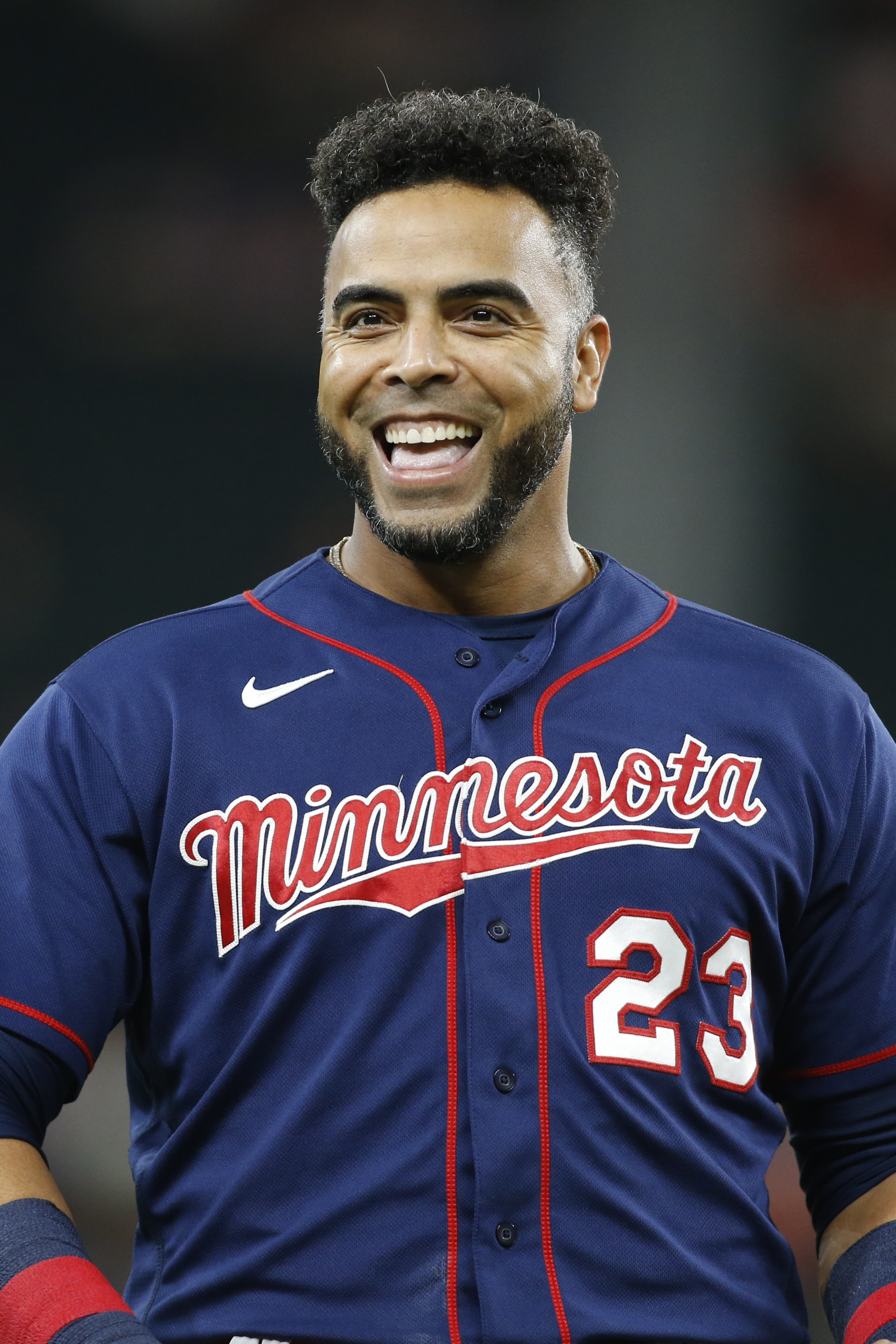
Cruz is a free agent at season’s end, playing out the 2021 campaign on a one-year, $13MM contract. As of this writing, there’s about $6MM remaining to be paid out on that pact. By the time the deadline rolls around, Cruz will be owed about $4.5MM for the remainder of the season.
A bat of Cruz’s caliber will surely be in demand, but perhaps not to the extent one would imagine at first glance. As a pure designated hitter, he’ll face a more limited market than most trade candidates.
A National League club could technically acquire Cruz to DH during interleague play and serve as a vastly overqualified pinch-hitter, but it’s unlikely anyone is going to put Cruz in the outfield with any regularity. He hasn’t played an inning of defense since 2018 and has just 54 innings in the field since the conclusion of the 2016 campaign. It’s hard to ever fully rule something out as front offices get increasingly creative, but it seems overwhelmingly likely that if Cruz is moved, it’ll be to an American League club.
Of course, not all 14 American League clubs will be in play. None of the Rangers, Royals, Tigers or Orioles are in contention. The Angels aren’t going to displace Shohei Ohtani from the DH slot, nor will the Astros do so with Yordan Alvarez. The Yankees have Giancarlo Stanton serving as a primary DH. The Red Sox are enjoying the heck out of a resurgent J.D. Martinez campaign. The Indians have Franmil Reyes, and the Twins may not want to ship Cruz to a division rival anyhow.
On that note, it’s worth pointing out that there’s a decent fit with the AL Central-leading White Sox. Yermin Mercedes faded considerably after a torrid start to the season and was optioned to Triple-A this week. But the Sox have Eloy Jimenez on a rehab assignment, and he’s likely to see at least some time at DH as he eases back into the mix after surgery to repair a ruptured pectoral tendon. It’s also generally hard to imagine the Twins trading Cruz to the White Sox in order to help the South Siders seal up a division title for which Minnesota originally hoped to contend.
There are a few clubs that seem like the clearest fits if the Twins move Cruz. Here’s a look at what each of these teams has received from the DH spot in its lineup in 2021, followed by a more thorough look at the potential fit.
- Athletics: .220/.289/.381, 88 wRC+
- Rays: .226/.314/.411, 103 wRC+
- Blue Jays: .240/.321/.429, 104 wRC+
- Mariners: .237/.320/.421, 108 wRC+
Athletics: No contender in the American League could use a DH upgrade more than Oakland. Their offseason signing of Mitch Moreland has resulted in a .238/.286/.388 batting line through 175 plate appearances to date. As a team, the A’s rank 12th in MLB with 394 runs scored — 94 fewer runs than the MLB-leading Astros, whom Oakland happens to be chasing in the division.
The question with the A’s, as always, is one of payroll capacity. For most of this past offseason, it looked as though the A’s wouldn’t spend much of anything on the 2021 roster. Their late signings of Moreland, Sergio Romo, Yusmeiro Petit and Trevor Rosenthal boosted payroll up to $86MM — still well below the league average but not quite the threadbare levels seen in Pittsburgh, Baltimore, Tampa Bay and Cleveland. Whether ownership would dish out another several million to rent Cruz for two-plus months remains to be seen, but even if the salary is deemed steep, the A’s could always pay a little more in terms of prospect capital in order to get Minnesota to cover some (or all) of the contract.
Rays: The financial element is perhaps even more notable with the Rays, who are currently operating on just a $62MM payroll. Tampa Bay also has a better in-house option than Oakland in the form of Austin Meadows. The 26-year-old Meadows can and has played some corner outfield this season, but the Rays have more defensively gifted options in Kevin Kiermaier, Manuel Margot, Randy Arozarena and Brett Phillips.
Meadows has been the club’s primary designated hitter this year, logging 53 percent of the the Rays’ total DH plate appearances. On the whole, Meadows has been a productive hitter with a .243/.335/.485 batting line, 16 home runs, 23 doubles and a triple. However, he’s been mired in a down stretch at the plate, batting .231/.300/.374 over the past month. Cruz is an upgrade even over Meadows at his absolute best, but the Rays’ “need” for Cruz feels less acute than that of the Athletics.
Blue Jays: Adding Cruz to a lineup that already features Vladimir Guerrero Jr., Bo Bichette, George Springer and Marcus Semien doesn’t really feel fair. Bringing Cruz into the fold would likely push Randal Grichuk back into a fourth outfielder role behind Springer, Lourdes Gurriel Jr. and Teoscar Hernandez. Early in the year, it would’ve been difficult to justify taking at-bats from Grichuk. He got out to a blistering start, batting .289/.322/.497 through the first two months. Since the calendar flipped to June, however, Grichuk is hitting .220/.244/.423 with a 29.1 percent strikeout rate in 127 plate appearances.
The Jays’ priority to this point has been the bullpen, and that will likely continue to be a point of focus for general manager Ross Atkins. That said, it never hurts to further strengthen an already potent lineup. If the prospect price for Cruz is to the Jays’ liking, they’re one of the few AL clubs that is both contending and has an easy path to carve out regular at-bats for the Boomstick. Unlike the A’s and Rays, money shouldn’t be an issue for them.
Mariners: A Cruz reunion tour with an unexpected contender in Seattle would make for a fun story for the final months of the season. Seattle is far from a postseason lock, but the Mariners are four games over .500 and just three and a half games out of a Wild Card spot. Much of the focus surrounding the Mariners has been on whether they’ll trade Mitch Haniger, but if they continue their hot streak — they’re 15-7 over their past 22 games — this is a club that could actually look to add some pieces.
The focus for Seattle would probably be on more controllable players who can help in 2022 and beyond. Starting pitching, in particular, will be the Mariners’ primary desire — as manager Scott Servais suggested this week. But if the Mariners can acquire Cruz without paying a price they feel will compromise a very promising long-term outlook, he’s a sensible upgrade. The move would be overwhelmingly popular with fans, and the Mariners have taken a potpourri approach at designated hitter this year anyhow. Ty France leads the team with an even 100 plate appearances as a DH, but he could be slotted into the lineup regularly at first base/second base for the balance of the 2021 campaign.