
Mariners Select Vinny Nittoli, Place Justin Dunn On Injured List
TODAY: Dunn’s MRI didn’t reveal any structural damage, but he does have a shoulder strain. (Ryan Divish of the Seattle Times was among those to report the news.) Dunn will be shut down from throwing for two weeks.
JUNE 18, 5:12 pm: As expected, the Mariners formally announced Nittoli’s selection. Reliever Yohan Ramirez has been recalled from Tacoma, while catcher Jose Godoy was optioned and Dunn was placed on the 10-day IL to create active roster space. Lewis was transferred to the 60-day IL to open a 40-man roster spot for Nittoli.
9:18 am: The Mariners on Friday will select the contract of right-hander Vinny Nittoli from Triple-A Tacoma, reports ESPN’s Jeff Passan (via Twitter). The move, which will require a corresponding 40-man transaction, marks the culmination of an eight-year journey to the big leagues for Nittoli — a 25th-round pick back in 2014 who turned 30 over the winter. The Mariners do have a pair of 60-day IL candidates in outfielder Kyle Lewis and first baseman Evan White, so either could be transferred over from the 10-day IL to accommodate Nittoli on the 40-man roster. White’s rehab from a hip strain was halted this week due to a setback.
It also appears likely that the M’s will place right-hander Justin Dunn on the 10-day injured list. The 25-year-old righty exited last night’s start after two shutout innings due to shoulder discomfort. Ryan Divish of the Seattle Times reported after the game that Dunn was headed for an MRI and could be placed on the IL for precautionary reasons, even if that imaging came back clean.
Nittoli was a senior sign by the Mariners out of Xavier University and spent three years solid but unremarkable numbers against younger competition in the lower levels of Seattle’s system. He was cut loose and spent the next two years pitching for the St. Paul Saints — then an independent club in the American Association — and for los Aguilas de Mexicali in the Mexican Winter League. Nittoli split the 2019 season between the Double-A affiliate for the Blue Jays and the Triple-A affiliate for the D-backs. He was set to spend the 2020 season in the Jays’ minor league ranks, but he wasn’t included in last summer’s 60-player pool following the resumption of play in the summer.
The well-traveled righty returned to the Mariners on a minor league deal over the winter, and he’s turned heads thus far in Tacoma. In a league that is once again seeing enormous levels of offensive output, Nittoli has held opponents to seven runs on 14 hits and five walks with 26 strikeouts in 18 innings out of the bullpen. The 3.50 ERA may not sound like much, but it ranks 37th in the entire league (min. 10 innings), and Nittoli is also fifth in Triple-A West with a 2.95 FIP and ninth with a 35.6 percent strikeout rate. It’s a small sample, of course, but his performance thus far has been strong.
As for Dunn, he’s out to a nice start in 2021 himself, having logged a 3.75 ERA through 50 1/3 frames. Location remains an issue for the righty, which was never more apparent than in his season debut when he walked eight batters in 4 2/3 frames. Since that woeful outing, Dunn has righted the ship with 45 2/3 innings of 3.55 ERA ball. He’s punched out 23.5 percent of his opponents in that time, and his 10.7 percent walk rate, while still north of the league average, is at least passable.
If Dunn indeed lands on the injured list, this would be his second such stint owing to shoulder discomfort. Dunn spent 10 days on the shelf with shoulder inflammation earlier this month and has only made two appearances since returning. It’s perhaps telling that he yielded five runs in three innings in the first of those two starts before exiting after two frames in last night’s effort.
The Pirates Have One Of The Best Bullpen Chips On The Trade Market
There are plenty of clichés about the usefulness of a closer on a rebuilding and/or last-place team, and for the most part they hold true. Locking down victories on the path to 100 losses — even if you’re doing your job well — often goes somewhat overlooked. A high-leverage reliever on a team that has few high-leverage chances isn’t going to get much national love.
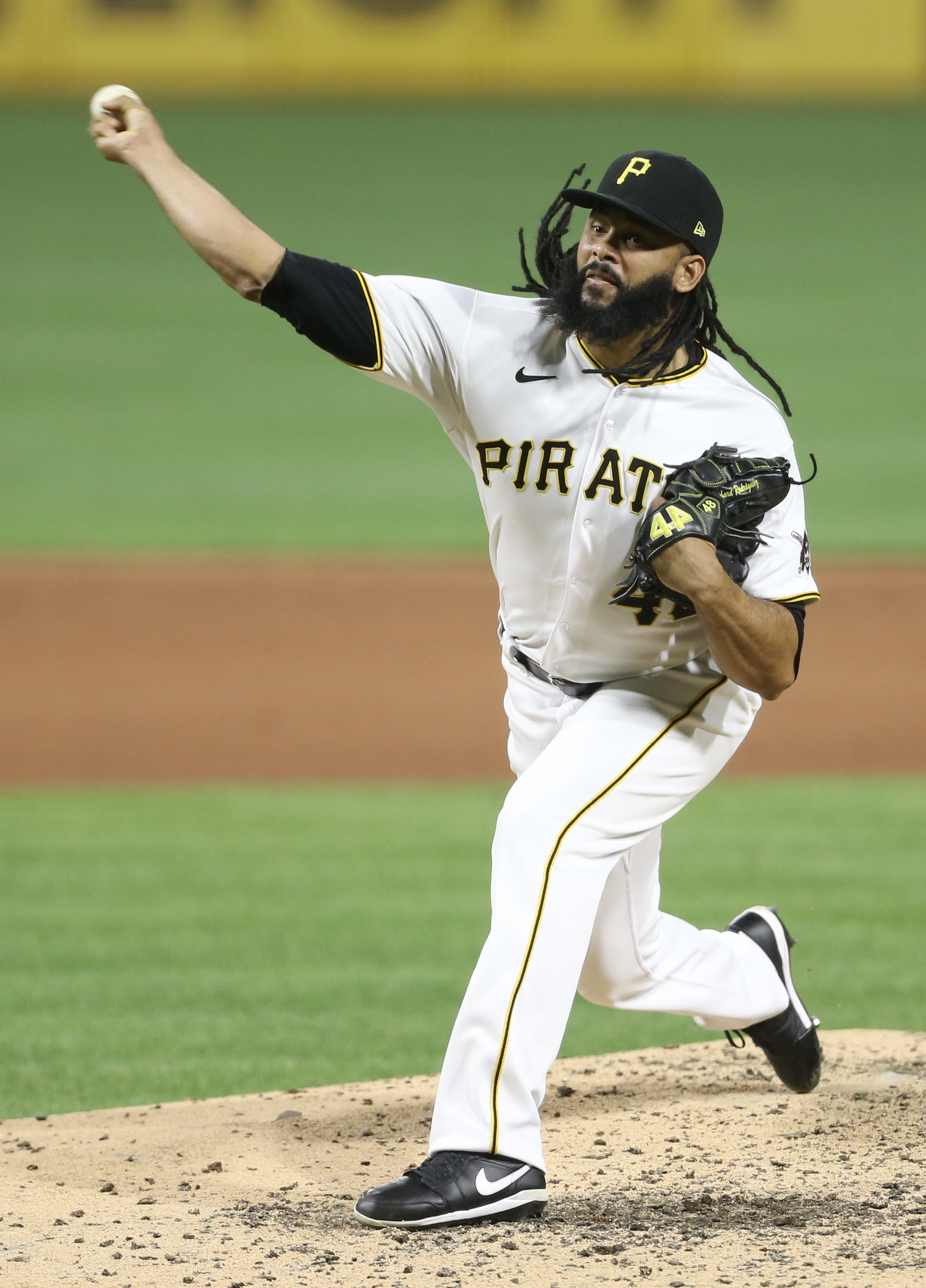
This time of year, however, they should get plenty of love around the league as contending clubs look to bolster their relief corps. Enter relatively anonymous Pirates closer Richard Rodriguez, who has solidified himself as one of the most effective relievers in the game over the past few seasons.
Rodriguez, 31, is nowhere near the top of the saves leaderboard in MLB or even in just in the National League, which isn’t much of a surprise given the Pirates’ 23-44 record. He’s only had nine save chances all season, and he’s converted seven of them. He’s sitting on a 1.71 ERA through 26 1/3 innings so far in 2021, and dating back to his Pirates debut in 2018, he has a 2.83 ERA in 184 1/3 frames.
Of course, teams in 2021 aren’t going to be particularly wowed by a shiny ERA or a player’s save total/save percentage. Rodriguez shines in other areas, however. His 21.1 percent strikeout rate in 2021 is the lowest it’s been in parts of four seasons in Pittsburgh, but he’s also sporting a career-best 3.2 percent walk rate and has yet to hit a batter in 2021. It’s also important to note that while his punchouts are down in ’21, Rodriguez has shown in the past that he can miss bats in bunches.
Rodriguez whiffed 31.5 percent of his opponents in 2018 and a whopping 36.6 percent in 2020. In both of those seasons, Rodriguez threw his breaking ball roughly one in four times and his four-seamer the other 75 percent of the time. So far in 2021 — as was the case in 2019 — he’s throwing roughly six times as many heaters as breaking ball. Fewer sliders, fewer strikeouts — but also fewer walks.
The strikeout rate is rather pedestrian this year, but that’s in large part because Rodriguez has excelled at inducing mediocre contact with his fastball that he hasn’t much needed to lean on his swing-and-miss breaking ball. Opponents have only “barreled” two balls against Rodriguez all season, per Statcast, and what he’s lacking in punchouts he makes up for with harmless infield fly-balls. A pop-up to the infield is nearly every bit as productive as a strikeout; for a pitcher’s purposes, they’re both effectively automatic outs.
So far in 2021, Rodriguez has induced seven pop-ups to the infield — tied for fifth-most among all MLB relievers. The four pitchers ahead of him have pitched an average of 7 1/3 more innings than Rodriguez this year. (Again, being a high-leverage reliever on a team that doesn’t get high-leverage opportunities can limit your workload.) Statcast pegs Rodriguez’s average opponents’ launch angle at 25.5 degrees — fifth-highest among relievers — due to the number of balls that are skied against him. This isn’t a new phenomenon either; dating back to 2019, Rodriguez is tied for 12th among relievers in pop-ups induced. Six of the names ahead of him on the list have more innings pitched.
Rodriguez’s fastball isn’t overpowering, sitting at 93.4 mph on average, and it doesn’t miss bats in droves despite being a high-spin offering. But that high spin rate and his willingness to work in the upper portion of the zone (or above it) helps to generate those pop-ups and the occasional whiff. Spin rate is an increasingly dubious term these days, as the league cracks down on the use of illegal foreign substances, but there’s been no noticeable drop in Rodriguez’s spin since the league began warning of sanctions. Rodriguez has ranked among the league leaders in fastball spin since 2018, and his most recent outing, in fact, saw his four-seamer reach its highest spin-rate mark of the season (2680 rpms). Either he’s brazenly and blatantly still using some form of substance, or he simply has a more innate ability to spin the ball than most pitchers.
Taken in totality, Rodriguez is a high-leverage reliever with a solid fastball, a breaking ball that misses bats (but isn’t always needed), some of the best control of any reliever in the game, and what appears to be a repeatable ability to generate infield flies. All of that on its own would be appealing, but then there’s the matter of his contractual status and remaining club control.
Rodriguez is in his fourth full season with the Bucs and will finish out the year just north of four years of MLB service time. That gives him two years of remaining club control beyond the 2021 season. He’ll be up for a raise via arbitration in both of those years, but the Pirates’ lack of leverage opportunities for him will actually work to his detriment (and to a new team’s favor) in that regard. This is only Rodriguez’s first full season as a closer for the Pirates, and his limited chances this year have left him with all of 12 career saves. That lack of saves left his first-year arbitration salary at a highly manageable $1.7MM, and it’ll likely limit his raises in 2022 and 2023 — particularly if an acquiring team puts him back into a setup role.
In other words, the Pirates this summer can market two and a half years of control over a pitcher who has quietly been one of the NL’s most effective relievers since 2018, and those two and a half seasons ought to come at a combined price in the $7.5MM to $9MM range. Even in an extreme scenario where a new team plugged Rodriguez into the ninth inning and he went on to lead the league in saves, he’s starting from a low enough point that the price would remain eminently reasonable.
There are going to be plenty of high-profile relievers on the market this summer. Many will throw harder than Rodriguez, more consistently miss bats than he does, and have more saves/holds than he’s amassed on a persistently cellar-dwelling Pirates club. But there are few relievers with this type of track record at such an affordable price point and with multiple years of control remaining beyond the 2021 season.
Obviously, the former Pirates’ front office regime made its fair share of missteps. There’s a reason the Buccos are in the position they’re in, after all. But the signing of Rodriguez as a minor league free agent after he was cast off by the Astros and Orioles alike is a move that deserves praise. It’s also a move that has left new GM Ben Cherington and his staff one of this summer’s most appealing trade candidates.
Orioles Designate Chance Sisco For Assignment
1:40pm: The Orioles announced that Sisco has indeed been designated for assignment. The move was necessary to open a spot on the roster for right-hander Thomas Eshelman, whose contract has been selected from Triple-A Norfolk. Eshelman will take the place of lefty Bruce Zimmermann and start tonight’s game for the O’s, while Zimmermann is headed to the injured list due to tendinitis in his left biceps.
1:07pm: The Orioles have designated former top catching prospect Chance Sisco for assignment, reports Roch Kubatko of MASNsports.com (Twitter link). They’ll now have a week to trade him or attempt to pass him through outright waivers.
Sisco, 26, was a second-round pick back in 2013 and quickly played his way into top prospect status. Sisco raked at every stop through his first few minor league seasons, and Baseball America ranked him among the sport’s 70 best prospects in both 2017 and 2018. His 2016 season, in particular, was an impressive run through Double-A Bowie and Triple-A Norfolk, as Sisco combined to bat .317/.403/.430 with a 12.3 percent walk rate against a 17.7 percent strikeout rate. The O’s called Sisco up for a look late in the 2017 season, and he responded with a 6-for-18 showing that included a pair of homers and a pair of doubles. He looked very much like the organization’s catcher of the future.
That began to change in 2018, when Sisco received his first extended look at the MLB level. He played in 63 games for Baltimore that season and logged 184 plate appearances with just a .181/.288/.269 output to show for it. Sisco’s numbers improved to .211/.345/.389 in 2019-20, but he’s struggled mightily so far in 2021 both in the big leagues and down in Norfolk.
Sisco had a nice showing with Triple-A during the 2019 season, but he hasn’t consistently produced even at the sport’s top minor league level. He’s batting .205/.327/.341 through 52 plate appearances in Norfolk this season and carries an overall .264/.352/.421 slash there in parts of five seasons.
Those struggles have become more problematic as Sisco has gotten older and been unable to improve his ability to control the running game. Baseball America noted back in 2018 that Sisco would likely need “perfect footwork” to be a passable thrower from behind the dish, given bottom-of-the-scale pop times as he attempted to throw out runners on the bases. To his credit, he went 6-for-9 in thwarting thieves at the MLB level this season, but he’s also 1-for-16 in that department in Norfolk this year and has a career 21 percent caught-stealing rate in the minors.
Further complicating matters for Sisco is that he’ll be out of options next spring, meaning he’d need to either make the big league roster or go unclaimed on waivers. With his current struggles pushing him down the depth chart, that lack of future flexibility likely contributed to today’s decision to remove him from the 40-man roster.
Sisco’s status as a one-time top catching prospect who can be optioned for the remainder of the year could well hold appeal to another club, either via a small trade or a waiver claim. The most plausible scenario for him to remain with the Orioles beyond the current season would be one where he clears waivers and is later selected back to the MLB roster, but given today’s move, it may be likelier that another club takes a chance on the former top prospect.
With Sisco now in DFA limbo, the only catchers on the Orioles’ 40-man roster are Pedro Severino and light-hitting Austin Wynns. The club has an experienced option in Norfolk in the former of former Rays catcher Nick Ciuffo, but the organization’s hope at the position clearly shifted to Adley Rutschman the moment he was selected with the top pick in the 2019 draft. The switch-hitting Rutschman has utterly obliterated Double-A pitching thus far in 2021, hitting at a .287/.421/.554 pace with ten homers and five doubles through 171 plate appearances in what is typically a pitcher-friendly environment.
It’s not implausible that Rutschman could crack the Majors this season, although rebuilding clubs like the Orioles often seek to delay the arrival of their top prospects in order to gain an additional year of club control. Calling Rutschman up this season, or at any point in the first two weeks of the 2022 campaign, would give the Orioles’ control over him through the 2027 season. Waiting to call him up until 15 days of the 2022 season have elapsed would push that path to free agency back into the 2028-29 offseason.
Rangers Claim Shaun Anderson, Designate Tyson Miller
The Rangers announced Friday that they’ve claimed righty Shaun Anderson off waivers from the Twins and designated fellow right-hander Tyson Miller for assignment in order to open a spot on the 40-man roster.
The waiver claim brings a quick Twins tenure for Anderson to a close and shines a spotlight on a now-regrettable swap that saw Minnesota send outfielder LaMonte Wade Jr. to San Francisco in exchange for Anderson over the winter. At the time, the Twins looked to be dealing from a position of depth and taking a shot on a reliever with a tantalizing slider, but the Twins have been beset by outfield injuries this season and gotten nothing from their end of that exchange. Wade, meanwhile, has batted .257/.350/.443 in an admittedly small sample of 81 plate appearances for the Giants while missing some time with an oblique injury.
Anderson, 26, has been clobbered for 12 runs (nine earned) on 13 hits and five walks with eight punchouts in 8 2/3 innings out of the Twins’ bullpen so far in 2021. A quadriceps strain and a blister issue on his pitching hand have limited him to just four big league appearances and five outings in Triple-A. He’s been sharp in the minors, firing six scoreless innings with five punchouts and three walks.
The Rangers will be the fourth organization for Anderson, originally a third-round selection of the Red Sox back in 2016. He went from Boston to San Francisco via the Eduardo Nunez trade and had a rough showing, mostly out of the rotation, in 2019 before a more intriguing 2020 performance. Anderson tossed 15 2/3 frames last year and fanned 27 percent of his opponents while recording a gaudy 39.7 percent whiff rate on his slider.
The Twins surely hoped they’d be able to pass Anderson through waivers based on his injuries and rough showing in the big leagues so far. Doing so would’ve allowed them to keep him in Triple-A while reallocating his 40-man spot. Had Minnesota not been hit so hard by the injury bug this season, perhaps the club would’ve been able to avoid trying to pass Anderson through waivers at all, but the loss of the right-hander is yet another ramification of the team’s injuries and generally poor showing in 2021.
As for the 25-year-old Miller, he only joined the Rangers a couple weeks back via a waiver claim out of the Cubs organization. The 2016 fourth-rounder at one point was considered to be one of the better arms in a thin Cubs minor league system, but he’s limped to a 7.26 ERA in 57 Triple-A frames between 2019 and 2021.
Miller made two appearances for the Cubs last year, allowing three runs on two hits and three walks without a strikeout in five innings against the Cardinals. Miller has multiple minor league options remaining, so he could pique the interest of another pitching-hungry club. Texas has a week to trade him or attempt to pass him through outright waivers.
Mariners Sign Alen Hanson
The Mariners have agreed to a minor league deal with utilityman Alen Hanson, per an announcement from their player development department. Hanson, a client of Daniel Szew’s L.A. Sports Management, will report to Triple-A Tacoma.
Hanson, 28, signed a similar deal with the Mariners prior to the 2020 season, though that arrangement was impacted by the lack of a minor league season in 2020. He’ll now return to the Mariners and give them some depth both around the infield and in the outfield.
The last big league appearance for Hanson came with the 2019 Blue Jays, for whom he posted a .163/.229/.163 slash in a small sample of 48 plate appearances. That marked Hanson’s fourth season with some big league time, as he’s also had stints with the Pirates, White Sox and Giants.
At one point, Hanson was considered one of the top prospects in the game. Baseball America rated him as a Top 75 prospect in 2013-14, while MLB.com had him ranked among the game’s 100 best farmhands each year from 2013-15. Unfortunately for Hanson and for the Pirates, who signed and developed him, the results have never been there at the MLB level.
Hanson did rack up 30 extra-base hits in a career-high 310 plate appearances for the 2018 Giants, but his overall .232/.266/.368 line in 625 plate appearances as a Major Leaguer has been lacking. He’s had better results in the upper minors and has logged at least 180 innings at every position on the field other than first base, catcher and pitcher, so he’ll give the M’s some depth at multiple spots.
Pirates Rule 5 Pick Jose Soriano Undergoes Tommy John Surgery
TODAY: Soriano underwent Tommy John surgery yesterday, Tomcyzk told the Pittsburgh Tribune-Review’s Kevin Gorman and other reporters.
JUNE 10: The Pirates selected right-hander Jose Soriano out of the Angels organization with the top pick in last December’s Rule 5 Draft, knowing at the time he still required several months of rehab following 2020 Tommy John surgery. The hope was to get some innings out of Soriano at some point this summer, but Pirates director of sports medicine Todd Tomcyzk told reporters yesterday that Soriano has new damage in his pitching elbow (Twitter link via the Pittsburgh Post-Gazette’s Mike Persak). Another surgery is now possible.
It’s a discouraging outcome for the 22-year-old Soriano, who is now nearly 16 months removed from that 2020 Tommy John procedure. He’d progressed his rehab to the point where he’d been cleared to pitch in minor league games as a ramp-up to his MLB debut, but based on his results, it’s clear that something was amiss. Soriano appeared in two games, the first of which included three shutout innings with one hit, no walks and five punchouts. In his second outing, Soriano faced 10 batters but was clobbered for seven runs on five hits and three walks while only recording two outs.
[Related: 2020 Rule 5 Draft Results | April Update On Rule 5 Draftees]
Entering the season, Soriano was ranked as the Pirates’ No. 18 prospect at Baseball America, No. 22 at FanGraphs and No. 24 at MLB.com. He’s praised as a hard-throwing righty with potential closer upside thanks to an upper-90s heater that can touch triple digits and a power curveball. His 2019 season in A-ball showed off plenty of that upside (2.55 ERA, 26 percent strikeout rate, 52.8 percent grounder rate) but also underscored one of the most pressing red flags in the righty’s outlook (15 percent walk rate).
The new injury casts doubt on whether Soriano will pitch for the Pirates in 2021 — or at all. He’s already on the 60-day injured list, so the Bucs can keep him there until season’s end without any ramification, even if he undergoes another surgery. When the offseason rolls around, however, they’d need to determine whether they want to carry Soriano throughout the winter in hopes of getting some innings from him in 2022. Soriano would retain his Rule 5 status into next season, meaning he still couldn’t be optioned to the minors until spending at least 90 days on the active roster.
If at any point the Pirates decide to cut bait, Soriano would be placed on waivers before being offered back to the Angels, who would not need to carry him on the 40-man roster.
GM: Braves Can Add Payroll At Trade Deadline
During a wide-reaching interview that any Braves fan will want to check out in its entirety, Atlanta general manager Alex Anthopoulos confirmed to Jeff Schultz of The Athletic that he’s been told by ownership he’ll have the ability to “add payroll at the deadline.”
It’s common for teams to leave room for in-season maneuvering when making their offseason transactions, but this sort of direct acknowledgment from a baseball operations leader is still of note — particularly on the heels of an offseason where virtually every club in the game had to work with more budgetary constraints than usual. The Braves were no exception, as they spent heavily to address the rotation and to re-sign Marcell Ozuna but appeared to be on a rather strict budget beyond those moves. The bullpen went largely unaddressed, though the team did ultimately bring Shane Greene back into the mix on an affordable one-year deal in early May.
There’s a vast array of directions the Braves can choose to go as they look to bolster the roster, though as with most clubs, they’re likely several weeks away from making any actual transactions. Sellers often prefer to wait until the market has more competition, and the Braves themselves right now probably want to take more time to evaluate the roster. Atlanta is five games out of first place at the moment and three games under .500. They’ll presumably operate as a buyer, given the generally underwhelming performance of the entire NL East, but a prolonged losing streak could send them in another direction, of course.
It’s also quite likely that the Braves want to gather more information on internal reinforcements before spending what still figures to be a limited amount of available resources. To that end, Anthopoulos notably reveals that he’s optimistic the Braves will get each of Mike Soroka, Travis d’Arnaud and Huascar Ynoa back at some point in the month of August.
The general assumption has been that Ynoa, who fractured his hand after punching the bench in the dugout after a poor outing, would make his way back in the season’s second half. But that hasn’t at all been clear regarding d’Arnaud and particularly regarding Soroka. The veteran d’Arnaud has been out since May 1 after tearing a ligament in his thumb that required surgery.
Soroka, meanwhile, opened the year on the injured list while wrapping up rehab from the Achilles tear that limited him to just three starts in 2020. But he felt some discomfort in his right shoulder that slowed his rehab, and once he ramped up in earnest, he experienced discomfort in his surgically repaired Achilles tendon, which prompted exploratory surgery. Anthopoulos declined to go into much detail but noted that the Braves received “good news” on the right-hander.
With d’Arnaud out, young William Contreras has stepped up with a .240/.313/.460 showing in 112 plate appearances. His bat has cooled since a hot start, but that production tops the output from d’Arnaud in the season’s first month. Of course, the veteran was brilliant for Atlanta in 2020 — the first season of a two-year, $16MM deal.
If the team feels confident that Soroka, d’Arnaud and Ynoa can return at some point in August, that could lessen any temptation to allocate some of the prospect capital and financial resources to rotation upgrades or catching help. That’d make the bullpen and the outfield far likelier targets for outside additions. Braves relievers have a collective 4.77 ERA, which ranks fifth-worst in the Majors. Atlanta outfielders, as a group, rank 10th in the Majors with a 104 wRC+ at the plate, but nearly all of their production has come from Ronald Acuna Jr. Non-Acuna Braves outfielders are batting a combined .215/.294/.356.
The trade market out to feature various outfield and bullpen options — you can peruse our initial Top 40 trade candidate list for some ideas — but Anthopoulos generally hasn’t been shy about making upgrades on the trade market in the past. With the Braves, he’s made midseason deals to acquire Greene, Chris Martin, Adam Duvall, Kevin Gausman, Darren O’Day, Brad Brach and Mark Melancon. Last year was an unusually quiet deadline for Anthopoulos, but the Braves had a rather comfortable division lead and may not have wanted to expend many resources with only one month of games post-deadline and with an expanded playoff field.
Again, we’re probably weeks away from the Braves or any other club beginning to pursue truly meaningful additions to the roster — a reality Anthopoulos himself acknowledges while discussing a generally open-minded approach to this year’s deadline. The whole interview, which also covers Freddie Freeman, some early thoughts on Contreras’ play and myriad other roster issues, is well worth a full look. But the general takeaway that the Braves will have some financial leeway is an important one, particularly at a time when many other teams won’t have that luxury.
The Yankees, Astros and Red Sox, for instance, are all within $4MM of the luxury-tax barrier. The division-rival Phillies are just shy of $5MM away from the $210MM threshold, while the Padres clock in at about $6MM from the tax line. The Indians and Reds both made substantial payroll cuts over the winter; it’s not yet clear how much (if any) additional salary they’ll be willing to take on.
We likely won’t know the extent to which Atlanta can increase its bottom line. Anthopoulos, like an GM or team president, would never directly tip his hand. However, the very presence of extra resources and the fact that they’re nowhere near the luxury barrier ought to give them some advantage when looking to pry veterans away from other clubs.
Matthew Boyd Exits Start Due To Triceps Issue
10:50pm: Tigers manager A.J. Hinch tells reporters in his postgame session that Boyd felt something abnormal in his triceps during the third inning (Twitter link via Cody Stavenhagen of The Athletic). They’ll know more following an additional wave of tests tomorrow, but Hinch suggested a cautious approach is likely to be taken.
9:25pm: Tigers lefty Matthew Boyd is being evaluated after exiting tonight’s start during the third inning with what the team is terming “left arm discomfort,” per a club announcement. Boyd signaled into the dugout for a trainer to come out after 2 1/3 innings of work against the Royals tonight (video link).
While the hope is that he’ll avoid any notable injury, the departure of such an obvious trade candidate this time of year is plenty notable. Boyd has pitched quite well thus far in 2021, bouncing back from an awful 2020 season to post a 3.44 ERA through his first 70 2/3 innings. His 19.6 percent strikeout rate is his lowest since 2017, but Boyd’s 6.4 percent walk rate is also the second-best mark of his career (narrowly trailing a 6.3 percent mark from 2019).
Boyd, 30, was a popular target on the trade market a couple years back, but the Tigers had more than three years of control over him at that point and opted to hold on with the hope of extracting a better offer at some point down the road. Unfortunately, Boyd took a step back in 2019 and then had the worst year of his career in 2020, so that opportunity has yet to present itself.
At this point, the Tigers control Boyd for just one more year after the current season, making him perhaps one of the likeliest players in all of baseball to be dealt — assuming he’s healthy. He’s earning a reasonable $6.5MM salary in 2021 and has been more effective than ever before against right-handed opponents, in part due to an increase in the use of a changeup that has generally befuddled opposite-handed opponents.
Opposing hitters are batting just .224/.246/.343 in the 69 plate appearances Boyd has finished off with a changeup, and the pitch itself has generated a 29 percent whiff rate, per Statcast. Entering play tonight, Boyd had thrown just two changeups to lefties all season but 244 to right-handers; he threw just 187 changeups in a similar workload last season and only 182 over the course of 32 starts in 2019.
Even if the discomfort proves minor enough that Boyd doesn’t miss an outing, his performance and health from this point forth will obviously be all the more important to monitor for those who closely follow the trade market. There’s still a bit more than six weeks to go until the July 30 deadline, so if Boyd shakes off the current ailment and continues at his previous pace in the weeks leading up to the deadline, this will be a quickly forgotten blip on the radar. If he requires a lengthy absence or sees an immediate dip in his results in the coming weeks, there will be obvious implications for the Tigers that extend well beyond their 2021 win-loss record.
Twins Place Michael Pineda On Injured List
The Twins announced Monday that they’ve placed righty Michael Pineda (right elbow inflammation) and infielder/outfielder Rob Refsnyder (hamstring strain) on the 10-day injured list. In a pair of corresponding moves, they’ve reinstated Kenta Maeda and Luis Arraez from the injured list. Center fielder Byron Buxton has not yet been activated, though Betsy Helfand of the St. Paul Pioneer Press tweets that he traveled with the team to Seattle, which suggests a return is near.
The loss of Pineda is notable on multiple levels. The big righty has been one of the Twins’ few effective starters so far in 2021. He also stands out as one of the more obvious trade candidates on the roster for a disappointing Minnesota club that looks more and more likely to sell veteran pieces as the summer wears on.
Pineda, 32, was terrific for the first two months of the season, pitching to a 2.62 ERA with a 26.7 percent strikeout rate and a 6.8 percent strikeout rate. However, Pineda had one start pushed back this month, and he exited another — his most recent outing — with elbow discomfort after just four innings. He’s followed up that terrific April/May run with a three-start stretch that has seen him total just 11 1/3 innings while yielding 10 runs.
On the whole, Pineda still has plenty respectable numbers. He’s accumulated 56 innings on the year and posted a 3.70 earned run average with a 22.1 percent strikeout rate, a 6.5 percent walk rate and a 38.1 percent ground-ball rate. That type of production would help to bolster just about any rotation in baseball, and given that Pineda is playing out the second season of a two-year, $20MM contract, his salary is manageable enough for the majority of contenders. The Twins may not want to commit to selling just yet, but at 26-39 and 15 games back of the division lead, that’s the likeliest outcome.
Refsnyder, 30, was a pleasant surprise for an injury-ravaged Twins club. The journeyman utilityman signed a minor league deal over the winter but unexpectedly gave the Twins a .321/.371/.500 batting line in 62 trips to the plate before going down with his own injury. He’s taken on a good bit of the workload in center field while Buxton has recovered from a hip flexor strain.
In Maeda and Arraez, the Twins will be getting back a pair who were expected to play significant roles on a division contender. Maeda finished runner-up to Shane Bieber in last summer’s Cy Young voting, but he hasn’t looked right at all this season.
In nine starts before landing on the injured list with a groin injury, he pitched to a 5.27 ERA that was nearly double last season’s 2.70 mark. Maeda’s strikeout rate plummeted from 32.3 percent last year to 20.5 percent in 2021, while his walk rate has jumped from four percent to 5.8 percent. Most problematically, he’s given up home runs at the highest rate of his career (1.90 HR/9). Time will tell whether the stay on the IL can get the righty back on track.
Arraez, meanwhile, got out to a blistering start but saw his bat go ice-cold for several weeks before injuring his shoulder on a slide into second base. The versatile Arraez hit .331/.390/.429 with more walks than strikeouts in 487 plate appearances from 2019-20, but that output has slipped to .278/.358/.333 so far in 2021.
Marlins Move Brian Anderson To 60-Day IL, Select Luis Madero
=The Marlins are set to select the contract of right-hander Luis Madero from Triple-A Jacksonville and transfer third baseman Brian Anderson to the 60-day injured list to create space on the 40-man roster, reports Jordan McPherson of the Miami Herald (Twitter link). Miami will also place infielder Jose Devers on the 10-day injured list due to a right shoulder injury.
It’s a tough blow for a Marlins club that has been reeling in recent weeks, due in no small part to the loss of Anderson. On the day Anderson made an early exit due to what was eventually revealed to be a left shoulder subluxation, the Marlins were 23-24. They’ve gone 6-12 in the 18 games since, and while the absence of Anderson obviously isn’t the only reason, it’s a primary factor. The 28-year-old got out to a slow start in 2021 but has long been one of the Marlins’ top bats and was one of the hottest hitters in the NL at the time of his injury.
The move to the 60-day injured list means that Anderson will now be ineligible to return before late July. (The 60-day term of the stint refers to his initial placement on the IL — not the date on which the player is transferred to the 60-day list.) A timeline in that range has begun to look increasingly likely, particularly after MLB.com’s Christina De Nicola tweeted earlier today that Anderson has still not been cleared to begin hitting after three weeks on the the injured list.
Miami’s primary options at the hot corner in Anderson’s absence have been Jon Berti and Isan Diaz, and that pairing will likely continue to hold down the fort on a banged-up Marlins club that effectively has an entire infield — Anderson, Miguel Rojas, Devers and Garrett Cooper — on the injured list. They’re thin on additional options in the upper minors, though both Luis Marte and Eddy Alvarez have gotten quick looks from the Marlins over the past year. (Either would need to be added back to the 40-man roster.)
Madero, 24, made his big league debut with the Fish earlier this season but has already gone unclaimed on waivers once, which removed him from the 40-man roster at the time (hence today’s need for a 40-man transaction).
Madero at one point ranked within the top 20 prospects in the Angels organization, per both Baseball America and FanGraphs, but his stock has tumbled since that time. That’s due largely to being rocked for a 5.72 ERA in 89 1/3 frames of a pitcher-friendly Double-A environment back in ’19, but Madero’s work in Triple-A with the Marlins this year has been sharp: 23 2/3 innings of 2.28 ERA ball, albeit with fairly pedestrian strikeout (23.6) and walk (9.2) percentages.