
James Shields Will Not Exercise Opt-Out Clause
White Sox right-hander James Shields will not opt out of the remaining two years of his contract, tweets SB Nation’s Chris Cotillo. Much like last night’s official report on Yoenis Cespedes planning to opt out of his deal, this news was widely expected, as Shields’ considerable 2016 struggles made it extremely unlikely that he’d forgo the remaining $44MM on his contract in search of a new deal.
Shields, 35 in December, was one of the marquee free agents of the 2014-15 offseason on the heels of a strong two-year run with the Royals and a four-year platform during which he averaged 233 innings of 3.17 ERA ball to go along with 8.0 K/9 and 2.3 BB/9. That lengthy stretch of excellence led to a four-year, $75MM contract originally signed with the Padres. That deal afforded him the right to opt out after his first two seasons in search of a larger contract, but Shields’ decline seemingly began the moment the 2015 season opened.
While his 2015 campaign was respectable, Shields’ numbers took a hit, as he logged a 3.91 ERA with 3.6 BB/9 and 1.5 HR/9. He still managed to clear 200 innings that year, though, and he averaged well over a strikeout per inning, giving some optimism that he could rebound in 2016. Instead, Shields struggled through the worst season of his career this year, logging a 5.85 ERA with 6.7 K/9, 4.1 BB/9 and a 40.4 percent ground-ball rate in 181 2/3 innings. Each of those numbers, including his innings total, was a career-worst for Shields dating back to his first full big league season in 2007. Further complicating matters was a fastball that averaged just 90.4 mph — a continuance in his velocity’s decline and almost certainly a factor in his stunning susceptibility to home runs (1.98 HR/9).
Shields actually got off to a solid start to the season and had a 3.06 ERA as late in the year as May 25, but he was shelled for 10 runs in 2 2/3 innings on Memorial Day. That brutal outing didn’t deter the White Sox from swinging a trade to acquire Shields and a hefty amount of cash to offset some of his contract shortly thereafter. The Sox sent righty Erik Johnson (who recently underwent Tommy John surgery) and minor leaguer Fernando Tatis Jr. to the Padres in exchange for Shields and about $31MM, which covered more than half of the $58MM he was still owed at the time of the trade.
At the time, the White Sox were in first place in the American League Central thanks to a hot start but were in need of some stable innings behind Chris Sale and Jose Quintana in the rotation. Highly touted young lefty Carlos Rodon was inconsistent early in the season, and right-hander Mat Latos was released in early June when he tanked after a strong start to the year. However, Shields was unable to function even as an innings eater in his new environs. He did have a nice seven-start stretch from late June through late July (2.11 ERA in 47 innings), but his overall work with the South Siders resulted in a 6.77 ERA in 114 1/3 innings.
The $31MM that the Padres included to facilitate the deal makes the White Sox’ remaining commitment to Shields a bit easier to stomach, as they’ll pay him $10MM in each of the next two seasons and will also be on the hook for the $2MM buyout of his 2019 option. While that’s certainly not an enviable financial obligation, it shouldn’t be entirely ruled out that Shields can rebound to at least eat up innings at the back of the Chicago rotation. The Sox aren’t paying him like the front-line pitcher he once was and don’t need him to perform as such, either, given the presence of Sale, Quintana and a seemingly improving Rodon ahead of Shields in starting mix. While it certainly seems likely that the Sox will shop Shields’ contract around this winter, it goes without saying that he’s a difficult piece to move, so the team’s best bet may simply be to hope for a better performance in 2017. If he can return to even his 2015 level of performance, he’d justify the $10MM that the Sox have committed to him in each of the next two seasons. If, however, 2017 brings more of the same, it wouldn’t be surprising to see Shields cut loose entirely.
AL Central Notes: Holland, Rondon, White Sox
Though he wouldn’t comment on the possibility of an offseason reunion, Royals GM Dayton Moore spoke highly of former Kansas City closer Greg Holland last week, writes Rustin Dodd of the Kansas City Star. “Greg Holland is one of the very best and most talented relief pitchers that I’ve been around,” said Moore of the free-agent righty. “The success of our bullpen is a direct correlation to his toughness and his competitive spirit. So we admire him as a person and a pitcher.” Holland didn’t sign anywhere this year after undergoing Tommy John surgery last October, and Dodd outlines the potential obstacles that stand in the way of a reunion, again mentioning the Royals’ potential payroll crunch as well as uncertainty surrounding Holland’s health. A low-cost one-year deal with Luke Hochevar could also be pursued, Dodd writes, though Hochevar is coming off surgery to alleviate thoracic outlet syndrome. Dodd also lists young righty Josh Staumont as a potential bullpen darkhorse for the Royals at some point in 2017.
More from the AL Central…
- If the Tigers elect not to pick up Francisco Rodriguez‘s $6MM option next season, Bruce Rondon could be first in line for the closer’s role, per Anthony Fenech of the Detroit Free Press. GM Al Avila praised Rondon last week, and as Fenech notes, his 2.97 ERA in some ways masks how dominant he was to finish out the year. The 25-year-old Rondon’s ERA topped out at 5.68 last year (on July 19), but he tossed 23 2/3 innings of 1.52 ERA ball with a 31-to-8 K/BB ratio over his final 25 games of the season. It still strikes me as surprising that there’s even a question when it comes to Rodriguez’s option, though. While K-Rod no longer even averages 90 mph on his heater and struggled in September, he still finished the year with a 3.24 ERA, 8.0 K/9, 3.2 BB/9 and a career-best 54.7 percent ground-ball rate to go along with 44 saves. Additionally, that $6MM option comes with a hefty $2MM buyout, so the Tigers are really only making a $4MM decision on Rodriguez. That seems like a no-brainer given the fact that comparable relief arms figure to sign for considerably more in free agency this winter. If nothing else, he’d have some trade value if the Tigers picked up the option and moved him to another club. (They’d also potentially save the $2MM they’d pay him via a buyout that way.)
- Former big league infielder Chris Getz spoke to reporters, including the Chicago Tribune’s Colleen Kane, about his new role as director of player development for the White Sox over the weekend. Kane writes that Getz knew he wanted to move onto the front office track upon wrapping up his playing career even in the final years that he was active. The former ChiSox draftee considers the city and organization his home and is excited to return: “The relationships I was able to build, it was something that will always be in my heart, something that always will be in my DNA,” he explained before continuing to discuss his new position. “…It is carrying out the vision of the scouts. It’s a commitment by both the player and staff members to create an environment for (each) player to reach their ceiling.”
How Much Will Jose Abreu Earn In 2017?
Three years ago, the White Sox signed Cuban slugger Jose Abreu to a franchise-record six-year, $68MM contract. Abreu kicked off his MLB career with a monster 2014 campaign, winning Rookie of the Year and finishing fourth in the MVP voting. His offensive production has declined steadily since then, but still remains above average. Now, Abreu is presented with an important decision that will impact his future earnings. Within five days of the conclusion of the World Series, Abreu and his agents must decide whether he will opt out of his existing contract and into MLB’s arbitration system — a right that is afforded to him via a clause in that six-year pact. (Note: Dodgers outfielder Yasiel Puig finds himself in a similar situation, albeit coming off a weaker year. His situation will be addressed separately from Abreu here at MLBTR.)
If Abreu keeps his current contract, he will earn $34MM from 2017-19. That includes salaries of $10.5MM in 2017, $11.5MM in 2018, and $12MM in 2019. Abreu’s agents must determine whether their client can do better in arbitration, without the luxury of a precedent for a situation like this.
Abreu’s baseline 2016 salary, for the purposes of arbitration, appears to be $11.66MM. That figure is calculated by taking his $10MM signing bonus, dividing it by his six-year term, and adding it to his $10MM salary from 2016. That’s a critical difference, as arbitration paydays are based largely off of the previous year’s salary. However, there is some gray area in this all-important baseline figure, and the Collective Bargaining Agreement does not provide clarity. First, does it make sense to divide the signing bonus by six years, even when Abreu is opting out of the last three? An agent could argue for dividing the bonus by three years, setting Abreu’s 2016 salary at $13.33MM. Second, even if the six-year term is used, the Players Union tends to calculate net present value on the signing bonus, which could put Abreu’s 2016 salary around $11.88MM.
The White Sox will surely argue against interpretations that assign Abreu a higher number for his 2016 salary. I think they would agree that for the purposes of establishing an arbitration baseline, he earned $11.66MM this year, unless there is something in the contract that calls for the exclusion of the signing bonus in determining his 2016 salary.
Is there any argument to be made that based purely on statistical merit, and not prior salary, Abreu should earn more than $11.66MM in 2017 through arbitration? Nope. Abreu seems to be in the range of Giancarlo Stanton‘s first three years, which earned him $6.5MM for his first arbitration year in 2014. Even with inflation, Abreu wouldn’t get past $11.66MM.
Since Abreu “deserves” a salary well below $11.66MM through arbitration, can the White Sox argue for cutting his salary? Using the maximum allowable cut of 20 percent, the team could theoretically argue for a $9.33MM salary for Abreu for 2017. However, salary cuts are extremely rare in the arbitration process, so much so that MLBTR’s automated model doesn’t even consider them. Ian Stewart‘s pay cut in 2012, after an awful season, is not relevant here. So I think the worst case scenario for Abreu if he opts into arbitration is getting a repeat of that $11.66MM salary for 2017. That would be a win for him, since his contract would otherwise pay him $10.5MM in 2017.
Can Abreu actually score a raise for 2017, beyond the $11.66MM baseline, though? It’s possible, especially once appearances come into play. It would look bad for the White Sox to try to cut Abreu’s salary for 2017, but it also might not look great to the public if they suggest he does not deserve a raise. Do you think Rick Hahn would try to explain all of the above to White Sox fans, in justifying an argument against giving Abreu a raise? Abreu’s agent, on the other hand, can feign mock outrage to the media that the White Sox don’t think a cornerstone player such as Abreu, with a .299 average, 91 home runs, and 308 RBI in three seasons, deserves a raise. The White Sox could consider giving Abreu $12MM or more to save face.
Abreu gains upside by opting into arbitration. He’s still in his prime, and he plays in a hitters’ ballpark. Abreu could put up strong baseball card numbers in the coming seasons, maybe even reversing his declining power trend. Even just normal Abreu performance, combined with token arbitration raises each year, could earn him $40-45MM from 2017-19, instead of the $34MM his contract would have paid.
Abreu’s downside, on the other hand, is limited. I don’t think a salary cut at any point is likely, so he could simply get repeat salaries three times and still come out with $35MM for 2017-19. The one risk factor would be in the White Sox non-tendering him after the 2017 or ’18 season, in which case he’d become a free agent. The White Sox would only do so if his performance truly cratered, and even then, Abreu would make back most or all of the lost earnings in free agency.
Ultimately, I do expect Abreu to opt into MLB’s arbitration system, and I believe he’ll get a salary of about $12MM for 2017.
Rule 5 Roundup
We’re just a few months away from this winter’s Rule 5 draft, so it makes sense to take a look back and see how things shook out from the 2015 selections. Several organizations found useful players, even if the most recent class didn’t include an Odubel Herrera-esque breakout sensation. Some of the most recent draftees have probably locked up MLB jobs again for 2017, though others who stuck on a major league roster all year may head back to the minors for further development. (Once a player’s permanent control rights have been secured, his new organization is free to utilize optional assignments as usual for future years.)
Here’s a roundup of the 2015 draft class with the 2016 season in the books:
Keepers
- Tyler Goeddel, OF, kept by Phillies from Rays: The 23-year-old struggled with the aggressive move to the big leagues, carrying a .192/.258/.291 batting line in 234 trips to the plate, but showed enough for the rebuilding Phillies to hold onto him all year long.
- Luis Perdomo, RHP, kept by Padres (via Rockies) from Cardinals: It didn’t look good early for Perdomo, but he showed better after moving to the rotation and ended with a rather promising 4.85 ERA over twenty starts. Though he struggled to contain the long ball, and only struck out 6.4 per nine, Perdomo sported a nifty 59.0% groundball rate on the year.
- Joey Rickard, OF, kept by Orioles from Rays: After opening the year with a bang, Rickard faded to a .268/.319/.377 batting line on the year but held his roster spot in Baltimore. He ended the season on the DL with a thumb injury, though, and may end up at Triple-A for some added seasoning.
- Joe Biagini, RHP, kept by Blue Jays from Giants: The only Rule 5 pick to appear in the postseason, Biagini was a great find for Toronto. He ended with 67 2/3 innings of 3.06 ERA pitching, with 8.2 K/9 and 2.5 BB/9, and now looks like a potential fixture in the Jays’ relief corps.
- Matthew Bowman, RHP, kept by Cardinals from Mets: Bowman rounds out a trio of impressive relievers. He contributed 67 2/3 innings with a 3.46 ERA and 6.9 BB/9 against 2.7 BB/9 to go with a monster 61.7% groundball rate.
Retained By Other Means
- Deolis Guerra, RHP, re-signed by Angels (who selected him from Pirates) after being outrighted: Guerra was in an unusual spot since he had previously been outrighted off of the Bucs’ 40-man roster when he was selected, meaning he didn’t need to be offered back. Los Angeles removed him from the major league roster and then brought him back on a minor league deal, ultimately selecting his contract. Though he was later designated and outrighted by the Halos, Guerra again returned and largely thrived at the major league level, contributing 53 1/3 much-needed pen frames with a 3.21 ERA on the back of 6.1 K/9 against just 1.2 BB/9.
- Jabari Blash, OF, acquired by Padres (who acquired Rule 5 rights from Athletics) from Mariners: Blash’s intriguing tools weren’t quite ready for the majors, but San Diego struck a deal to hold onto him and was surely impressed with his showing at Triple-A. In his 229 plate appearances there, Blash swatted 11 home runs but — more importantly — carried a .415 OBP with a much-improved 66:41 K/BB ratio.
- Ji-Man Choi, 1B, outrighted by Angels after Orioles declined return: The 25-year-old scuffled in the bigs but was rather impressive at the highest level of the minors, where he walked nearly as often as he struck out and put up a .346/.434/.527 slash with five home runs in 227 plate appearances.
Returned
- Jake Cave, OF, returned from Reds to Yankees: After failing to crack Cinci’s roster out of camp, Cave impressed at Double-A but slowed at the highest level of the minors (.261/.323/.401 in 354 plate appearances) upon his return to the New York organization.
- Evan Rutckyj, LHP, returned from Braves to Yankees: Sent back late in camp, the 24-year-old struggled in limited action on the Yanks’ farm after missing most of the season with elbow issues.
- Josh Martin, RHP, returned from Padres to Indians: In his first attempt at Triple-A, Martin posted 66 frames of 3.55 ERA pitching with 8.2 K/9 against 3.1 BB/9.
- Daniel Stumpf, LHP, returned from Phillies to Royals: Slowed by a PED suspension, Stumpf was bombed in a brief MLB stint with the Phils but dominated at Double-A upon his return to K.C., posting a 2.11 ERA with 11.0 K/9 and 1.7 BB/9 in 21 1/3 innings.
- Chris O’Grady, LHP, returned from Reds to Angels: Sent back in late March, O’Grady compiled a 3.48 ERA over 95 2/3 innings in the upper minors, though he performed much better as a Double-A starter than he did as a Triple-A reliever.
- Zack Jones, RHP, returned from Brewers to Twins: The 25-year-old was out with a shoulder injury for most of the year, and ended up being sent back to Minnesota in late June, but has shown swing-and-miss stuff when healthy.
- Blake Smith, RHP, returned from Padres to White Sox: Smith ended up making a brief MLB debut upon his return to Chicago, but spend most of the year pitching well at Triple-A Charlotte, where he ran up a 3.53 ERA in 71 1/3 innings with 9.5 K/9 against 3.0 BB/9.
- Colin Walsh, INF, returned from Brewers to Athletics: After struggling badly in his major league stint with the Brewers, Walsh went to Oakland’s Triple-A affiliate and put up a .259/.384/.388 bating line over 245 plate appearances.
AL Notes: Blue Jays, Indians, LCS, White Sox
Toronto is in an 0-2 ALCS hole at the hands of Cleveland, leading Blue Jays right fielder Jose Bautista to imply Sunday that his club is up against both the Indians and the series’ home plate umpires. “All you gotta do is look at the video and count how many times [Indians pitchers have] throw pitches over the heart of the plate,” he told Mike Vorkunov of USA Today. “It hasn’t been many. They’ve been able to do that because of the circumstances – that I’m not trying to talk about because I can’t. That’s for you guys to do but you guys don’t really want to talk about that either.” In response to Bautista’s claim, Mike Gianella of Baseball Prospectus (Twitter link) reviewed PITCHf/x data and concluded that home plate umps Laz Diaz and Jim Wolf called balls and strikes pretty evenly for both teams during the series’ first two games. Conversely, Mark Simon of ESPN.com writes that the Indians have had a clear advantage with respect to the strike zone. TruMedia shows that Indians pitchers have gotten strike calls at a 7.4 percent higher rate than average during the series, according to Simon. On the other hand, Blue Jays pitchers are at 1.8 percent lower than average.
As we wait for Monday’s Game 3 in Toronto, here’s more from around the AL:
- The White Sox will name Chris Getz their director of player development during the upcoming week, reports Scott Merkin of MLB.com. The 33-year-old Getz will take over for Nick Capra, who is now the White Sox’s third base coach. Getz was a major league second baseman from 2008-14, including parts of two seasons with the White Sox. The South Siders selected Getz in the fourth round of the 2005 draft.
- If the Indians end up advancing to the World Series, what already seems like an untouchable bullpen could add another weapon in Danny Salazar. The injured right-hander – out since early September with a forearm strain – threw a simulated game Sunday after rejoining the Indians in Toronto, per Jordan Bastian of MLB.com. Salazar, who had been throwing in Arizona, is “doing pretty good,” said manager Terry Francona. “He’s not back yet where he’s throwing all his pitches or letting it go 100 percent. I think if we ask him to do that, he might be reaching right now. We’ve been pretty vocal about [how] the first priority is getting him back healthy.”
Cafardo’s Latest: Red Sox, White Sox, Hanigan, Papelbon, Miller, Bard, Marlins
Here’s the latest notes column from Nick Cafardo of the Boston Globe, with a particular focus on how the Red Sox will be targeting DH, the bullpen and the rotation as their three main areas of need this offseason…
- Acquiring Chris Sale would be a major rotation upgrade for the Red Sox, and since they had discussions with the White Sox about the star southpaw this summer, talks could be revisited in the offseason. Cafardo figures Boston would have to give up Jackie Bradley Jr. (who the White Sox have long liked) and at least one of top prospects Yoan Moncada or Rafael Devers to land Sale; Chicago could also ask for Eduardo Rodriguez as part of the trade package. It would be a heavy price to pay, though the White Sox are obviously going to shoot for the moon if they explore dealing their ace, who is both one of the game’s best pitchers and one of its best bargains thanks to his team-friendly contract. The Red Sox would have Andrew Benintendi take over for Bradley in center field, while left field would presumably be handled by some combination of Chris Young, Brock Holt, Blake Swihart. If not dealt, Moncada would also be in the mix for both 2017 and as a long-term answer.
- Beyond those three big areas, catcher is also something of a question mark for the Red Sox. Boston seems to be looking at a tandem of Sandy Leon and Christian Vazquez behind the plate in 2017, which would indicate an $800K buyout of Ryan Hanigan‘s $3.75MM club option for the coming season. Leon had a huge breakout at the plate but rather came back to earth over the last six weeks of the season, while Vazquez has yet to show any ability to hit Major League pitching.
- There’s still a chance the Red Sox could reunite with Jonathan Papelbon, as Cafardo figures the team will again check in with the veteran reliever. Papelbon drew interest from several teams (including Boston) after being released by the Nationals last summer, though he didn’t sign anywhere. There hasn’t been much Papelbon news in the last several weeks, so it’s unknown what the former closer’s plans are for 2017.
- In his sole year as Red Sox manager, Bobby Valentine wanted to use both Andrew Miller and Daniel Bard out of the bullpen. Miller was turning to relief pitching after failing to catch on as a starter, and he went to become one of the game’s best relievers. Bard was already a bullpen star for the Sox, though both he and the front office wanted to transition to starting pitching. That move proved disastrous for Bard, as he developed severe control problems that have curtailed his career. He last pitched in the bigs in 2013 and has since bounced around the minors with four different organizations.
- Marlins management will soon meet with club owner Jeffrey Loria to decide on the team’s offseason plans, which were thrown into disarray in the wake of Jose Fernandez‘s tragic death. Miami was in need of pitching even with Fernandez in the fold, and this winter’s very thin pitching market could leave the team unable to augment its impressive lineup. Cafardo notes that rumors of the Marlins reloading the farm system by trading Giancarlo Stanton have swirled for years, though with Fernandez gone, Stanton may have become even more of a cornerstone piece for the club.
Heyman’s Latest: ChiSox, Santana, Cozart, Rockies, Davis, Brewers, Smith
Jon Heyman of Fan Rag gives his odds on the postseason and provides a host of interesting information in his latest notes column. Here are a few highlights:
- While there’s been some turnover in the White Sox‘ dugout, as bench coach Rick Renteria has moved up to manager as a replacement for the departing Robin Ventura, changes to the field staff don’t figure to impact pitching coach Don Cooper, per Heyman. In fact, the South Siders have actually made an extension offer to their well-respected pitching coach, who is on the brink of entering his 16th season at that post.
- While it’s hardly a surprise, Heyman notes that the Indians will exercise their $12MM option on Carlos Santana. For a player with a .259/.366/.498 with a career-high 34 homers, that decision was a no-brainer, even for a typically cost-conscious club like Cleveland.
- The Rockies quietly made a run at Cincinnati’s Zack Cozart prior to the non-waiver trade deadline, knowing that Trevor Story, whose last game came on July 30, was ailing and could miss the remainder of the season. Talks continued into August, per Heyman, but Cozart’s own injury issues arose and made a deal more difficult. It’d have been interesting to see the Rox land Cozart, as he’d have once again become a trade chip for them in the offseason with Story expected to be ready to go for the 2017 season. While talks don’t seem likely to be revisited this winter, the note is another reminder that Cozart is a desirable trade chip for the Reds, who also had a near-swap that would’ve sent Cozart to the Mariners on Aug. 1. Heyman also reminds that longtime GM/president Walt Jocketty will step into an adviser role this winter, leaving GM Dick Williams as the top decision-maker in Cincinnati’s baseball ops department.
- Sticking with the Rockies, Heyman chronicles the rift that grew and eventually became irreconcilable between now-former manager Walt Weiss and GM Jeff Bridich. Per the report, there was a near-total breakdown of communications between the two. Weiss expressed concern with owner Dick Monfort — who was seemingly preparing to give Weiss a two-year extension and tried to convince him to stay. But the skipper didn’t believe that the two leaders could co-exist, and Monfort ultimately stuck with his GM.
- Tigers owner Mike Ilitch was serious about pursuing slugger Chris Davis in free agency last winter — so much so that he was willing to guarantee something approaching $200MM, says Heyman. Newly-installed GM Al Avila, however, recommended that the team take another course. Though Davis has been reasonably productive, he hasn’t produced at the levels that earned him his ultimate contract — a $161MM deal with the Orioles.
- As the Brewers‘ brass has suggested, Heyman says that the team is not inclined to utilize Jonathan Villar at third base. With Orlando Arcia seemingly set for his first full season at short, that may well mean that Villar is destined to shift over to second base. If that’s the case, it’s not clear just what role Scooter Gennett will have. The 26-year-old is entering his first season of arbitration eligibility after a posting a below-average .263/.317/.412 batting line in his 542 plate appearances in 2016.
- Meanwhile, the Brewers may not be sold on the idea of tendering Chris Carter a contract. While the team has suggested he’s expected back, Carter’s 41 homers also make him a good bet to earn a rather significant arbitration raise.
- The Mariners appear to be “leaning toward” picking up a $7MM option over outfielder Seth Smith. Smith, 34, isn’t quite an everyday player, but has received over 400 plate appearances in each of his two campaigns in Seattle. This year, he hit .249/.342/.415 with 16 home runs, just under his overall career marks. At $7MM, the M’s would be getting Smith for something like the going annual rate for a fourth outfielder, while limiting its commitment to a single season.
White Sox Outright Jacob Turner
The White Sox have outrighted right-hander Jacob Turner to Triple-A, per a club announcement. That move leaves the organization with one open 40-man spot at present.
Though he is still just 25 years of age, the once-touted Turner has still not shown signs of reaching his former promise. He wasn’t terribly effective even at the Triple-A level, and was bombed for a 6.57 ERA over 24 2/3 major league innings.
Neither were the peripherals terribly promising. Opposing hitters made hard contact on nearly 40% of the balls they put in play against Turner. He ended with just 6.6 K/9 against a messy 5.8 BB/9 and sported a 26.3% home run-per-flyball rate to go with his more-promising 51.2% groundball rate.
White Sox Replace Robin Ventura With Rick Renteria
The White Sox have officially announced that bench coach Rick Renteria will replace Robin Ventura as their manager. Daryl Van Schouwen of the Chicago Sun-Times was the first to report the move. The White Sox had a meeting with Ventura last night, at which he intended to resign, according to USA Today’s Bob Nightengale (Twitter link).
[RELATED: Three Needs: White Sox]
“Rick is incredibly well respected within the game as one of the top baseball men,” said GM Rick Hahn in a statement (via Colleen Kane of the Chicago Tribune on Twitter). “He is a knowledgeable teacher of the game who loves to develop players and spends hours watching video looking for any nuance that gives us an edge. He is well respected within the clubhouse, and his ability to communicate in English and Spanish is a real plus as he interacts with our players.”
Nightengale reported Wednesday that the White Sox were hoping to re-sign Ventura, whose contract would expire at season’s end, if he wanted to return. But Ventura is content to move on, per Van Schouwen, who adds that the 49-year-old’s relationship with the organization is “amicable” and devoid of hard feelings.
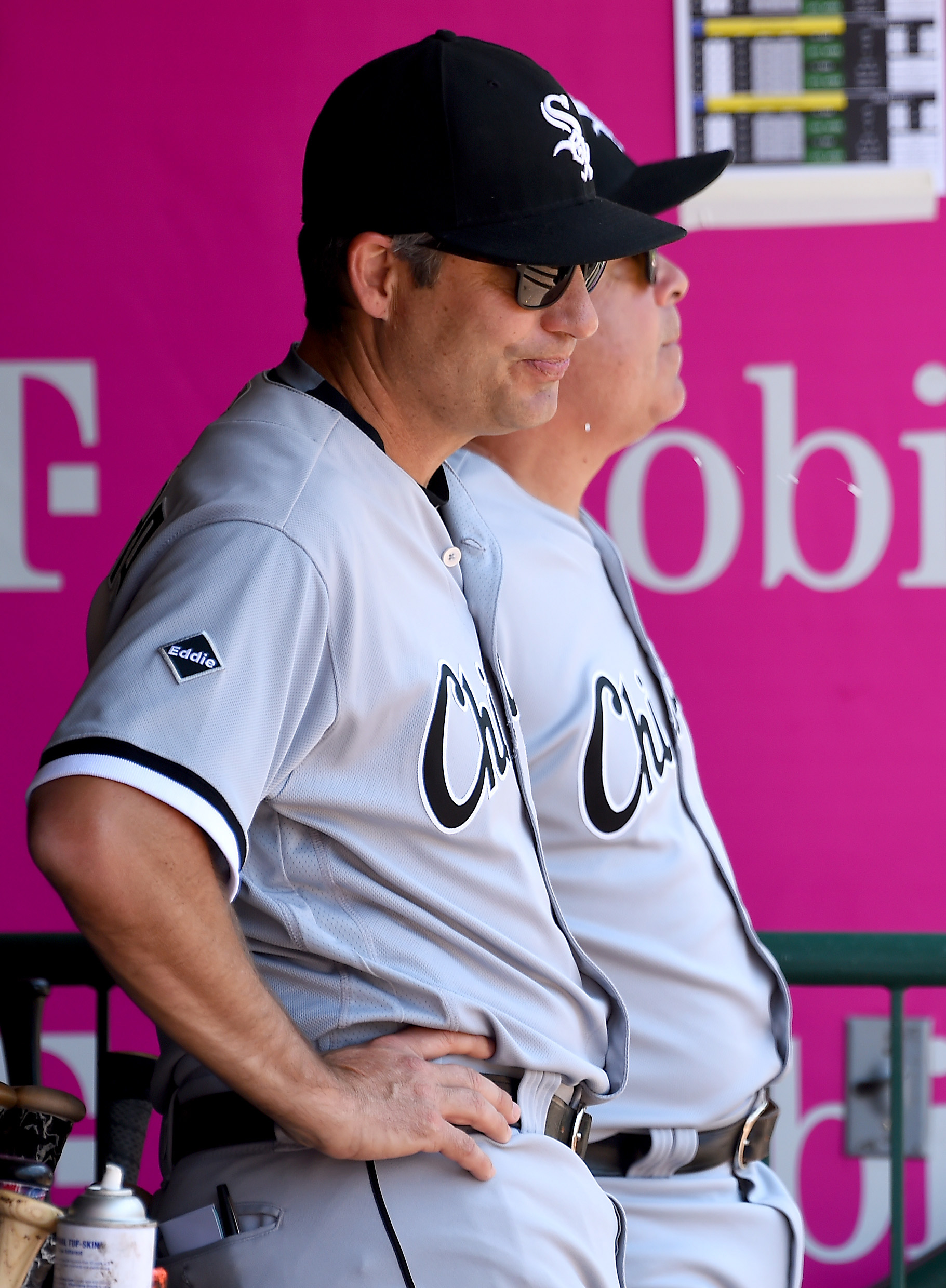
Ventura, a former third baseman who spent the majority of his 16-year major league career with the White Sox, took over their dugout in 2012. Unfortunately for Ventura and the club, his stint as its manager hasn’t been nearly as successful as his playing days were, though it’s not as if Ventura has been given excellent rosters during his five years as Chicago’s skipper.
Under Ventura, the White Sox have gone 375-433 with only one above-.500 campaign and no playoff berths, thereby extending their postseason drought to eight years. The Ventura-led Sox got off to an excellent start this year with a season-best 24-12 mark on May 13, but they’ve gone just 54-71 since and now own the American League’s fifth-worst record (78-83).
In Renteria, the White Sox have someone with previous managerial experience in the city of Chicago. Renteria oversaw a rebuilding Cubs team that finished 73-89 in 2014, and the 54-year-old has drawn praise this season from Ventura and other White Sox coaches, notes Van Schouwen. Renteria is also a fluent Spanish speaker, which is an obvious asset.
“He’s just a good baseball guy,’’ Ventura said of Renteria. “You see the work he puts in, all the little things he does and [what he can do for] our Latin guys. His interaction. He does a lot of stuff people don’t see. Gets there early, does video work. It’s been great.’’
While the White Sox are set to move forward with Renteria, it remains unknown which approach they’ll take during the offseason. A rebuild is possible, it seems, as left-handers Chris Sale and Jose Quintana would command enormous returns if the Sox were to trade one or both. However, owner Jerry Reinsdorf is reportedly reluctant to take that route, meaning Renteria could be at the helm of a team that aims to end its lengthy skid next season.
Kane was first to note (via Twitter) that Ventura had confirmed he would not return as the White Sox’ manager. FOX Sports’ Jon Morosi tweeted that the White Sox planned to announce Renteria as their manager on Monday.
Photo courtesy of USA Today Sports Images.
White Sox Notes: Ventura, Williams, Reinsdorf
Here’s the latest from the south side of Chicago…
- Robin Ventura was rumored to be done as the White Sox manager, and he confirmed it with reporters (including MLB.com’s Scott Merkin) after today’s game. “I just feel it’s the right time. It’s more of a personal decision than anything,” Ventura said. “I love being here. The organization means a lot to me. You can go as hard as you can and really the only thing you know is how you conduct your business and how you treat people. I’m good with that. Talking to [general manager] Rick [Hahn] through September, you just realize right now is the right time to do it and you need somebody else.”
- White Sox executive VP of baseball operations Kenny Williams is not stepping down from his position, WSCR 670’s Bruce Levine reports (Twitter link). Williams was promoted to his current role in October 2012 after a twelve-year stint as the White Sox general manager.
- The somewhat awkward handling of Ventura’s final days as manager is a sign that the White Sox need to settle on a clear chain of command within the organization, ESPN’s Buster Olney opines in his latest column for ESPN.com subscribers. Sox owner Jerry Reinsdorf, who Olney calls “the most loyal boss in baseball,” needs to set a clear direction about whether or not the team is rebuilding or in go-for-it mode. It would also help solve some of the front office miscommunication by firmly establishing whether Williams or GM Rick Hahn is in charge of baseball operations.