
Dodgers, Trea Turner Avoid Arbitration
The Dodgers have avoided arbitration with star shortstop Trea Turner, settling on a $21MM salary, reports Mark Feinsand of MLB.com (Twitter link). That marks the highest arbitration settlement of any player in this year’s class so far.
That’s not to say it’s an especially surprising figure. Turner always looked likely to land one of the top numbers of any arb-eligible player. Not only is he one of the sport’s best players, he’s headed into his fourth year of arbitration after qualifying as a Super Two in 2018. Turner settled for $13MM with the Nationals last offseason, and he’ll get an $8MM bump this year.
Still, that $21MM mark checks in a bit higher than anticipated. MLBTR contributor Matt Swartz projected the star infielder at $19.8MM entering the offseason. He earned the bump after putting up a .328/.375/.536 line with 28 homers and 32 steals between the Dodgers and Nats. That .328 average earned him his first career batting title.
Turner will return to shortstop after kicking over to second base in deference to Corey Seager down the stretch last year. With another typical season, he’d hit the market as perhaps MLB’s top free agent next offseason.
Dodgers Sign Kevin Pillar To Minor League Deal
The Dodgers have signed veteran outfielder Kevin Pillar to a minor league contract, per a club announcement. Pillar, a client of All Bases Covered Sports Management, will head to Major League Spring Training and vie for a roster spot. He’d earn a $2.5MM base salary upon making the club, tweets MLB Network’s Jon Heyman.
Pillar, 33, is a veteran of nine big league seasons who’ll hope to work his way into the outfield mix in Los Angeles. He spent the 2021 season with the Mets, batting .231/.277/.415 with 15 home runs, 11 doubles, a pair of triples and four stolen bases (in seven tries) through 347 trips to the plate. That was the fifth team in the past three seasons for Pillar, who’s begun to bounce around the league a bit after a lengthier run in Toronto to begin his career.
A former 32nd-round pick of the Blue Jays (2011), Pillar debuted just two years after being drafted. He saw sparing action in 2013-14 before settling in as a fixture in center field with the Jays from 2015-18. Pillar was Toronto’s primary center fielder for that span of four years, batting a combined .263/.301/.401 while regularly showing off his penchant for highlight-reel diving grabs.
For the bulk of his career, Pillar had the power, speed and certainly the defensive chops to offset a perennially low walk rate that tamped down his on-base percentage each year. From 2015-17, in particular, Pillar was a defensive juggernaut, racking up a ridiculous 52 Defensive Runs Saved with a 24.3 Ultimate Zone Rating. Pillar was snubbed in Gold Glove voting more than once in that stretch, and by 2018, the reckless abandon with which he played the outfield perhaps began to take its toll. His defensive metrics in center quickly went south in 2018, and by 2019 the Jays had designated him for assignment.
Pillar has since spent time in San Francisco, Colorado, Boston and Queens. Over the past three seasons, he’s batted .256/.293/.433 (90 wRC+) with 42 home runs and 23 steals. He’s been better against left-handed pitching in that time, as one would expect for a right-handed hitter, posting a .279/307/.499 batting line. Pillar’s average sprint speed has dipped a bit in recent years, though, and Statcast suggests that his initial jump on fly-balls has also slowed as he’s progressed into his 30s. He’s still posted solid defensive marks in the corners, however.
On the whole, Pillar isn’t the dynamic highlight-reel machine that he was during his peak with the Jays, but he’s a decent bat against left-handed pitching who has some pop against righties and can play all three outfield spots (even if he’s below average in center at this point). That’s a nice bench player for a contending club, but the Dodgers have a crowded outfield mix as it it. Beyond the starting trio of Mookie Betts, Cody Bellinger and AJ Pollock, L.A. also has versatile superutility man Chris Taylor and infielder/outfielder Matt Beaty as outfield options. Top infield prospect Gavin Lux has begun to see time in the outfield as well, and the Dodgers also invited outfielders Stefen Romero and Jason Martin to spring training after signing them to minor league deals.
Dodgers To Sign Danny Duffy
March 19: Jon Heyman of MLB Network provides the details on the contract, with Duffy making $3MM this year. Next year’s option is valued at $7MM but can be increased based on Duffy’s performance this year. Duffy will add $500K by pitching in 5, 10 and then 15 games in 2022, as well as for throwing 5, 10 and 15 innings, a total of $3MM, increasing the value of the option to $10MM. If that option were to be picked up, Duffy could earn an extra $6MM in incentives next year: $750K for reaching each tier of 100, 110, 120 and 130 innings pitched, as well as $1MM for reaching each of 140, 150 and 160 frames.
March 17: The Dodgers continue to bolster their roster via free agency, reportedly agreeing to terms on a one-year deal with Danny Duffy. The contract, which is pending a physical, also contains a club option for the 2023 season. Duffy is an ACES client.
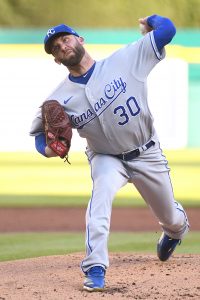
It marks a return to Southern California for the left-hander, whom the Dodgers acquired from the Royals in advance of last summer’s trade deadline. Duffy, unfortunately, never could take the field in Dodger blue. At the time of the trade, he was on the injured list with a flexor strain in his forearm. The hope had been that he could return late in the season for a club that was obviously headed to the playoffs, but that proved not to be. He suffered a setback in early September and was shut down for the year.
That setback will prevent him from making his team debut for at least a few more months. After the season, Duffy told Andy McCullough of the Athletic he underwent surgery to repair the flexor tendon in October. As of the time of that early-December conversation, Duffy was targeting a June return to a big league mound. He conceded it was likely he’d work in relief this year as a means of keeping his innings in check before lengthening back out into a rotation role in 2023 and beyond.
Whatever role he takes on, a healthy Duffy figures to be a boon to the Dodgers pitching staff. Before his 2021 season was derailed, the 33-year-old was off to a nice start with the Royals. He’d worked 61 innings with a stellar 2.51 ERA. His peripherals weren’t quite so superlative, but he posted quality strikeout and walk numbers (25.8% and 8.7%, respectively) and owned a capable 4.14 SIERA.
Prior to last summer’s trade, Duffy had spent his entire career with Kansas City. A former third-round draftee, he cemented himself as a valuable member of the rotation by their pennant-winning 2014 season. Over a four-year run from 2014-17, he pitched to a 3.47 ERA/3.87 FIP in 612 innings. That included 136 2/3 frames of 4.08 ERA ball for the World Series-winning club in 2015.
Beginning in 2018, Duffy’s production began to tick downward. His walk and home run rates both increased, and he posted an ERA north of 4.00 in each season. His fastball velocity, which had averaged nearly 96 MPH at his peak, dropped to a bit more than 92 MPH by 2019-20. Last season, before he went down with injury, Duffy’s arm speed bounced back somewhat. His heater came in at 93.7 MPH on average, and Duffy’s swing-and-miss rates saw a corresponding spike. Last year’s 13.6% swinging strike rate was a personal high, more than two percentage points above the league mark for starters.
That intrigued the L.A. front office enough they traded for him last summer, and their interest is apparently continued. That Duffy won’t be ready until midseason is less of a concern for the Dodgers than it might be for other clubs around the league, since Los Angeles looks as good a bet as any to be playing meaningful games late in the year. Even if he’s forced to work in relief, Duffy could be a valuable option for skipper Dave Roberts down the stretch and into potential postseason play. For his career, he’s held opposing left-handed hitters to a meager .218/.277/.318 line. That could make Duffy a particular weapon if leveraged into more favorable match-ups in shorter stints.
Specific terms of the deal aren’t yet known, although the presence of the club option would seem to give Los Angeles further long-term upside. The Dodgers signed Jimmy Nelson, himself rehabbing from elbow surgery, to a one-year deal with a 2023 option earlier this week. Duffy presumably secured a loftier guarantee than Nelson’s $700K salary, but the pacts follow a similar logic of giving the Dodgers a shot at a late-season run from a talented but currently injured hurler with the chance to keep him in the fold for a second season.
The Dodgers have been aggressive in recent days as they look to cement themselves as the team to beat in the National League. They reunited with Clayton Kershaw last week, then agreed to terms with Freddie Freeman on a six-year contract last night. Those deals pushed the team’s 2022 luxury tax tab north of $277MM, in the estimation of Jason Martinez of Roster Resource. Because they exceeded the CBT last season, the Dodgers will be subject to escalating fees as a second-time payor. They’ll be taxed at a 30% rate for every dollar spent between $230MM and $250MM, a 42% clip on overages between $250MM and $270MM, a 75% rate on overages between $270MM and $290MM and a 90% tax on all expenditures north of $290MM.
Mark Feinsand of MLB.com first reported the Dodgers and Duffy were nearing agreement. Robert Murray of FanSided reported they had reached an agreement on a one-year deal with a 2023 option, which Fabian Ardaya of the Athletic specified was a club option.
Image courtesy of USA Today Sports.
Dodgers Sign Freddie Freeman
March 19: The year-by-year breakdown of Freeman’s contract have come in, per Robert Murray of FanSided (via Twitter). The deal breaks down evenly over the six years, with Freeman set to make $27MM every season from 2022 through 2027. The deal includes $7MM of deferred money in 2022-24, and $12MM deferred in 2025-27.
March 18: The Dodgers have made the signing official, announcing that Freeman signed a six-year contract through the 2027 season. Mark Feinsand of MLB.com reports (on Twitter) that $57MM of the $162MM guarantee is being deferred, to be paid between 2028-40. Feinsand suggests that brings the real present value of the contract closer to $140MM.
March 16: The Dodgers are adding another star, reportedly agreeing to terms with Freddie Freeman on a six-year, $162MM contract. The Excel Sports Management client finds the sixth guaranteed year he’d been seeking, setting himself up to bolster an already loaded lineup.
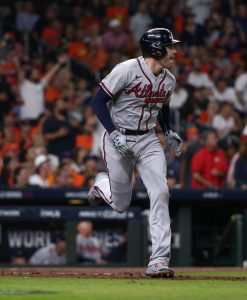
Los Angeles finished tied for third as a team in wRC+ last season (excluding pitchers), with their collective .251/.339/.446 mark checking in 13 percentage points above the league average offense. Only the Astros and Giants fared better, while L.A. was tied with the Blue Jays. They’ve lost Corey Seager to free agency this winter, but Freeman steps right into the void as a left-handed, middle-of-the-order bat for manager Dave Roberts.
One could argue Freeman’s even an offensive upgrade over Seager, who himself is one of the best hitters in the game. Freeman has been a consistently excellent bat, not having posted a wRC+ lower than 132 in any season since 2013. That run has earned him five All-Star nods, three Silver Slugger Awards and six top ten finishes in NL MVP balloting.
Freeman has remained at the top of his game over the past few seasons. He obliterated opposing pitchers to the tune of a .341/.462/.640 line during the 60-game season in 2020. Among qualified hitters, only Juan Soto fared better by measure of wRC+, and Freeman earned a resounding victory in that year’s Senior Circuit MVP balloting. It was never realistic to expect him to repeat that kind of otherworldly performance over a full schedule, but he returned to his metronomically consistent ways in 2021.
Over the course of the season, Freeman appeared in 159 games and tallied 695 plate appearances of .300/.393/.503 hitting. He popped 31 homers, drew walks at a robust 12.2% clip and only struck out in 15.4% of his trips to the plate. Freeman began the year with a relatively pedestrian start by his lofty standards, but he got scorching hot from June onwards. Over the season’s final four months, he raked at a .329/.404/.520 clip. That production helped carry the Braves to their fourth straight division title, and Freeman picked up where he left off when the lights were brightest. He posted an OPS of .996 or better in all three playoff rounds, helping Atlanta to their first World Series title since 1995.
Coming off that championship, many expected Atlanta would strike quickly to ink the career-long Brave to another deal. Freeman and the club had already lined up on an extension once, a February 2014 eight-year pact that guaranteed him $135MM and delayed his first trip to the open market by five years. The Braves maintained they had interest in keeping Freeman in the fold, but the first baseman’s desire for a sixth year quickly became a stumbling block.
Atlanta, which had made Freeman a qualifying offer at the start of the offseason, reportedly put forth a five-year proposal in the $135MM range. It’s believed they eventually nudged the guarantee around $140MM, but the organization seemed opposed to putting a sixth year on the table. Freeman turned 32 years old in September, and Braves brass apparently had real reservations about guaranteeing him a notable salary through his age-37 campaign.
Throughout the lockout, industry chatter picked up that Freeman and the Braves might be heading their separate ways. That became all but official when Atlanta struck a deal to acquire A’s star Matt Olson on Monday afternoon, then signed him to a $168MM extension the next day. Freeman penned a farewell to his former teammates, coaches and the Atlanta fanbase on Instagram this afternoon.
It’s not hard to see the Braves reasoning for letting Freeman walk. Olson is more than four years younger, so his extension only takes him through his age-35 season. There’s real risk in committing to any player into his late 30’s, and that’s particularly true given that Freeman needs to continue to hit at a very high level to be an elite player. He’s a solid defensive first baseman but unlikely to be a perennial Gold Glove winner into his mid-30’s.
Recent six-plus year contracts for free agents at the position haven’t been particularly fruitful. Each of the past four deals of six-plus years for first basemen — the Padres’ eight-year Eric Hosmer agreement, the Orioles’ bringing back Chris Davis on a seven-year pact, Prince Fielder’s nine-year contract with the Tigers, and the Angels’ ten-year investment in Albert Pujols — turned out to be missteps for the club.
Of course, that’s not to say Freeman’s deal with Los Angeles will end the same way. It’s shorter than those precedents, for one, and Freeman has a much more consistent track record than either Hosmer or Davis did at the time they signed their deals. There’s essentially nothing to nitpick in his offensive profile. Freeman doesn’t chase many pitches, and he makes plenty of contact on offerings both inside and outside the strike zone. He posts high-end exit velocities and hard contact rates annually. As is the case with most left-handed hitters, he’s better against right-handed pitching. Yet Freeman’s career .266/.348/.436 mark against southpaws demonstrates he’s more than capable of holding his own without the platoon advantage.
Even after the Braves dropped out, a few teams remained involved in the running for his services. The Red Sox, Blue Jays and Padres were superficially tied to Freeman in recent days, but it seems the surprising Rays may have proven one of the Dodgers strongest challengers in the end. Juan Toribio of MLB.com tweets that Tampa Bay made a “strong push” throughout the process, but L.A.’s willingness to acquiesce on the sixth year proved a deal-breaker.
It’s a return to Southern California for Freeman, an Orange County native. In addition to the financial and geographical appeal, he’ll step into a lineup that’s among the best in recent memory. It’s conceivable the Dodgers will roll out an Opening Day lineup consisting of Freeman, Mookie Betts, Trea Turner, Max Muncy, Justin Turner, Will Smith, Chris Taylor, Cody Bellinger and AJ Pollock. Betts, Freeman and Bellinger are each former league MVP’s. Eight of those nine players have garnered at least one All-Star selection; the one player who hasn’t yet gone to the Midsummer Classic, Smith, is among the top handful of catchers in MLB.
The Dodgers have assembled a similarly star-studded pitching staff, and the construction of this kind of roster required a sizable investment from ownership. Los Angeles blew past all three luxury tax tiers last season, incurring nearly $33MM in fees. They’re in line for another huge expenditure this year.
The exact financial structure of Freeman’s deal isn’t yet known, but contracts’ average annual values are used for luxury tax purposes anyhow. Adding $27MM to that mark pushes the 2022 CBT tab north of $277MM, in the estimation of Jason Martinez of Roster Resource. Because they exceeded the CBT last season, the Dodgers will be subject to escalating fees as a second-time payor. They’ll be taxed at a 30% rate for every dollar spent between $230MM and $250MM, a 42% clip on overages between $250MM and $270MM, a 75% rate on overages between $270MM and $290MM and a 90% tax on all expenditures north of $290MM.
In addition to the financial cost, the Dodgers will take on some non-monetary penalties for signing a player who had rejected a qualifying offer. Because they paid the luxury tax last year, they’ll lose their second-highest and fifth-highest picks in the upcoming draft and be stripped of $1MM in international signing bonus space. The Braves, as a team that neither received revenue sharing nor paid the luxury tax, will receive a compensatory pick after Competitive Balance Round B in the upcoming draft. Those selections typically fall in the 70-75 overall range.
That pick will be little consolation to Braves fans disheartened by Freeman’s departure, although that the organization replaced him with a hometown star of their own in Olson should soften the blow. Even when it became clear he’d be leaving Atlanta, however, there were presumably many Braves fans hoping he’d wind up somewhere other than L.A.
Freeman moves on from the reigning World Series winner to join the team he played an instrumental role in defeating in last year’s NL Championship Series. His departure from the defending champs to sign on with what appears to be MLB’s best team adds plenty of intrigue to what’ll be an entertaining battle for control in the National League.
Jon Morosi of MLB.com first reported the Dodgers and Freeman were making progress on a deal that would guarantee $150+MM. Ken Rosenthal of the Athletic reported the sides were discussing a six-year deal in the $160MM range. Kiley McDaniel and Jeff Passan of ESPN reported Freeman and the Dodgers were in agreement on a six-year, $162MM contract.
Image courtesy of USA Today Sports.
Dodgers Sign Tyler Anderson
The Dodgers continue to add to their roster, announcing this evening they’ve agreed to terms with Tyler Anderson on a one-year deal. It’s reportedly an $8MM guarantee that also contains an additional $500K in incentives if he exceeds 100 innings next season.
Anderson was one of the better remaining options in a free agent rotation market that has been mostly picked through. The southpaw is coming off a decent season split between the Pirates and Mariners, in which he combined for a 4.53 ERA over 167 innings. Anderson only averaged a bit more than five innings per start, but he took the ball 31 times and was generally successful with regards to keeping his team in games. He allowed three or fewer earned runs in all but five of his outings.
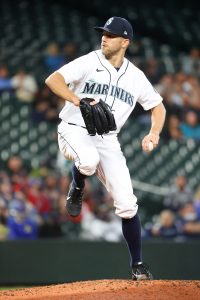
Signed by Pittsburgh to a $2.5MM guarantee last offseason, he settled in as perhaps the most reliable member of the Bucs’ starting staff. Over 18 outings, Anderson worked 103 1/3 frames with a 4.35 ERA. He was an obvious trade candidate as an impending free agent on a rebuilding team. After a reported agreement with the Phillies fell through due to concerns about the medical evaluation of one of the prospects involved, the Pirates pivoted and flipped him to Seattle for prospects Carter Bins and Joaquin Tejada at the deadline. Anderson spent the final couple months with the M’s, performing alright until a nine-run blow-up against the Angels tanked his overall numbers.
Anderson isn’t the most overpowering arm on the market. His fastball averaged 90.6 MPH last season, and he struck out a below-average 19.1% of opposing hitters. Yet he was adept at getting opponents to chase pitches outside the strike zone, and his mediocre strikeout percentage belied a solid 11.5% swinging strike rate. That’s partially because batters swung so often against him — among pitchers with 100+ innings, only Michael Wacha had a higher opponents’ swing rate — but Anderson nevertheless generated more whiffs per swing inside the strike zone than the average starter.
In addition to getting opponents to frequently chase, Anderson threw pitches in the zone at a higher-than-average rate. Those contributed to keep his walks down, as he doled out free passes at just a 5.4% clip. He’s been a low-walk arm throughout his career, and he’s posted an ERA between 4.37 and 4.55 in each of his last three seasons (excluding a 2019 campaign in which he was limited to five starts by left knee issues). A fly-ball pitcher, Anderson has been prone to the home run ball throughout his career. He also generates his fair share of pop-ups, though, and he’s typically adept at avoiding hard contact.
Anderson has started all but four of his 117 MLB appearances. He’ll presumably join the back-of-the-rotation mix in Los Angeles, joining offseason signee Andrew Heaney, David Price and Tony Gonsolin among the options for Dave Roberts. Walker Buehler, Julio Urías and Clayton Kershaw will be the top three options from the outset of the season. Trevor Bauer remains on the roster, but his paid administrative leave was recently extended through April 16.
The $8MM guarantee only adds to an ever-mounting payroll in Los Angeles. The Dodgers now have an estimated $282MM in actual payroll, according to Jason Martinez of Roster Resource. Their luxury tax ledger is up to $284MM, just $6MM shy of the highest tier of penalization.
Because they exceeded the CBT last season, the Dodgers will be subject to escalating fees as a second-time payor. They’ll be taxed at a 30% rate for every dollar spent between $230MM and $250MM, a 42% clip on overages between $250MM and $270MM, a 75% rate on overages between $270MM and $290MM and a 90% tax on all expenditures north of $290MM.
Robert Murray of FanSided first reported the Dodgers and Anderson had agreed to a deal. Fabian Ardaya of the Athletic reported it was a one-year pact. Jeff Passan of ESPN reported the $8MM guarantee, while Jon Heyman of the MLB Network was first with the incentives.
Image courtesy of USA Today Sports.
Rays Acquire Luke Raley From Dodgers
The Rays and Dodgers agreed to a deal this afternoon, announcing that corner outfielder Luke Raley has been traded to Tampa Bay. Los Angeles is acquiring pitching prospect Tanner Dodson in return. In order to clear space on the 40-man roster, the Rays placed Yonny Chirinos on the 60-day injured list.
Raley made his major league debut this past season. He didn’t perform well over his first 72 plate appearances, striking out 25 times while drawing just a pair of walks. The 27-year-old has a much better minor league track record, as he’s hit .289/.367/.489 in five minor league campaigns since being drafted in the seventh round in 2016. That includes a .297/.384/.553 showing over 456 plate appearances in Triple-A.
A lack of defensive value has limited Raley’s prospect appeal, but he’s ranked near the back half of the Dodgers’ top 30 farmhands for the past few seasons in the estimation of Baseball America. The outlet credits Raley with big raw power, albeit with some trepidation about an aggressive approach at the plate. Tampa Bay isn’t the only other organization who has tried (and succeeded) in prying Raley away from the Dodgers. The Twins acquired him from Los Angeles at the 2018 trade deadline in exchange for Brian Dozier. Minnesota sent him back to L.A. a year and a half later in the three-team Mookie Betts/Kenta Maeda trade.
Raley is affordable and can step right into the big league mix for Tampa Bay. He still has a minor league option year remaining, so the Rays needn’t carry him on the active roster. Yet he’ll bolster the organizational depth and could see a more immediate path to playing time if Tampa Bay pulls the trigger on an Austin Meadows trade. Recent reports have indicated the Rays are considering shipping Meadows elsewhere.
The move clears a spot on the 40-man roster for the Dodgers, who have signed each of Jimmy Nelson, Danny Duffy and Freddie Freeman in recent days. They’ve devoted just one immediate roster spot to that trio — Los Angeles purposefully waited to finalize Freeman’s deals until after signing Duffy and Nelson so they could put both pitchers on the 60-day injured list — but they’ve also agreed to terms with Tyler Anderson. They’ll need to clear another roster spot to accommodate Anderson’s arrival.
In addition, Los Angeles picks up Dodson, whom the Rays selected 71st overall in the 2018 draft. A two-way player at Cal, he continued to work in both capacities early in his professional career. Scouts have long questioned how much offensive upside he’d have due to a lack of raw power, though, and he’s worked primarily off the mound in recent years. He tallied just 30 plate appearances in High-A last season but worked 56 1/3 innings as a reliever.
Between High-A Bowling Green and Double-A Montgomery, Dodson combined for a 3.20 ERA. He struck out a solid 26.3% of opponents against a 9.5% walk rate. The Rays declined to add him to their 40-man roster to protect him from the Rule 5 draft (which never ended up taking place) this offseason. He didn’t appear among Baseball America’s top 30 organizational prospects this winter, but Eric Longenhagen of FanGraphs wrote in January 2021 that his low-mid 90s fastball and slider could make him a viable big league reliever.
Chirinos, meanwhile, hasn’t pitched since undergoing Tommy John surgery in August 2020. The righty fractured his elbow last year, a setback that was always expected to prevent him being ready for Opening Day. Precisely when he might return isn’t clear, but he’ll miss at least the first two months of this season.
Jeff Passan of ESPN first reported the terms of the trade.
Dodgers Re-Sign Jimmy Nelson
MARCH 17: Nelson receives a $700K salary in 2022, reports Jon Heyman of the MLB Network (on Twitter). The club option is valued at $1.1MM and contains possible performance bonuses.
MARCH 15: Right-hander Jimmy Nelson appears to be back with the Dodgers, as he’s in their clubhouse this morning, tweets Pedro Moura of the L.A. Times. Fabian Ardaya of The Athletic tweets that a locker for Nelson is set up. Nelson signed a one-year, Major League contract with a club option that covers the 2023 season, tweets Ardaya.
It’s not clear whether Nelson, a CAA client, is back on a minor league deal or whether he inked a big league deal. If it’s the latter, it’d presumably grant the Dodgers control over Nelson’s 2023 season as well, given that he’s unlikely to pitch for most of the current season. Nelson had Tommy John and flexor repair surgery last August, which should sideline him for the vast majority or the entirety of the upcoming 2022 season.
When healthy, Nelson was a powerhouse in the L.A. bullpen. In 29 innings of relief, Nelson posted a 1.86 ERA while punching out 37.9% of the 116 batters he faced. The former Brewers righty averaged 94 mph on his heater and logged a hefty 14.9% swinging-strike rate during that brief run. It was a notable turnaround from an ugly 2019 campaign that saw Nelson post a near-7.00 ERA in a similar sample of innings while attempting to mend from a notable injury.
Early in his career, Nelson looked well on his way to establishing himself as a key member of the rotation in Milwaukee. From 2015-17, he made 91 starts, tallied 532 innings and notched a collective 4.08 earned run average. Nelson’s 2017 season, in particular, had the makings of a potential high-end starter. In 175 1/3 frames that year, Nelson posted a 3.49 ERA with a big 27.3% strikeout rate against a tiny 6.6% walk rate.
Unfortunately, however, Nelson suffered a torn labrum and a partially torn rotator cuff while sliding into second base in an early September game during that 2017 season. He underwent surgery to repair that shoulder — a procedure that wiped out not only his final month of the ’17 season but his entire 2018 campaign. Nelson returned to the Brewers in 2019 but was limited to just 22 innings by an elbow injury. Milwaukee non-tendered him following the season.
It’s a disheartening sequence of major injuries that have clearly derailed the career of a highly talented hurler. Nelson will spend the bulk of the 2022 season rehabbing, but by the time he makes it back to the mound, he’ll be 33 years old with just 51 total MLB innings under his belt since injuring that shoulder as a 28-year-old. Hopefully, Nelson will be able to put the ongoing arm issues behind him, as it’s clear that when he’s healthy enough to take the hill, he can be an impact part of a big league bullpen.
Trevor Bauer’s Administrative Leave Extended Through April 16
TODAY: Bauer’s administrative leave has been extended another month, through April 16 (Jorge Castillo of The Los Angeles Times was among those to report the news.) The timing ensures that Bauer will miss at least the first week of the regular season.
MARCH 11: Trevor Bauer has been placed on a week-long administrative leave by the league, as first reported by MLB Network’s Jon Heyman (Twitter links). The leave will run from March 13 to March 19, and Bauer also won’t report to the Dodgers’ Spring Training camp prior to the 13th. Major League Baseball is still considering whether or not to issue a suspension to Bauer, as per the MLB/MLBPA’s Joint Domestic Violence, Sexual Assault and Child Abuse Policy.
Bauer has been on paid administrative leave since July, shortly after a woman in California made allegations of sexual assault and had a temporary ex parte restraining order filed against Bauer. In February, the L.A. County District Attorney’s Office announced that criminal charges weren’t being pursued against Bauer, as “After a thorough review of the available evidence, including the civil restraining order proceedings, witness statements and the physical evidence, the People are unable to prove the relevant charges beyond a reasonable doubt.”
As per the MLB/MLBPA’s joint policy, the league can still issue a suspension even in the absence of criminal charges, as has been the case with most of the suspensions filed since the policy was first introduced in August 2015. Commissioner Rob Manfred has the broad authority to issue suspensions of any length or severity, and suspended players can appeal to an arbitration panel if they disagree with the commissioner’s decision. It is expected that Bauer will indeed appeal any suspension levied against him.
Beyond the case in California, reports also surfaced this past summer of a previous ex parte temporary civil stalking protection order granted to a woman in Ohio against Bauer in June and July of 2020. This protection order was in regards to another alleged incident that took place involving Bauer and the woman in 2017, when Bauer was a member of the Indians.
The league hasn’t interviewed Bauer since July, according to USA Today’s Bob Nightengale. While the league’s investigation has now been ongoing for over eight months, it seems as though both the lockout and the pending decision from the L.A. County D.A.’s Office led to the delay. That said, it still isn’t clear when exactly the league may render its own judgement on a possible suspension.
Latest On Freddie Freeman’s Market
It’s been apparent since the Braves acquired and extended first baseman Matt Olson that Freddie Freeman is likely headed elsewhere in free agency, but Freeman made that all but official this afternoon when he thanked Braves fans and bid them and the organization farewell on Instagram this afternoon.
“…Thank you from the bottom of my heart,” wrote Freeman. “It has been a blast to have you cheer for me and I hope I was able to bring smiles to a lot of your homes over the years. I gave everything I had day in and day out and I hope you guys saw that as well. Although our time has come to an end, I look forward to seeing and playing in front of you all again. When that time comes, I hope you remember all the wonderful memories we made together. I love you Braves Country! Champions Forever!”
It’s not clear whether Freeman’s message is a portent for an agreement with a new team or simply an acknowledgement that the first chapter of his storied career has drawn to a close. Several possible landing spots for the 2020 NL MVP have dried up in the past few days, as the Braves not only essentially replaced him with Olson, but the Yankees struck up a deal to bring Anthony Rizzo back to the Bronx.
Reports recently have suggested that Freeman remains of interest to the Dodgers, Red Sox, Rays and Padres, although each destination comes with its own reasons for some degree of skepticism. Freeman has reportedly sought a six-year deal that would carry him through his age-37 season, and the Dodgers tend to prefer higher annual salaries and shorter terms than that six-year target. To that end, USA Today’s Bob Nightengale wrote this week that L.A. is “believed” to have offered a four-year deal to Freeman that includes a sizable annual value.
Looking to Freeman’s other reported suitors, the Padres have spent more than a year trying to move Eric Hosmer, who still has four years and $59MM remaining on his contract. As explored more in depth here at MLBTR yesterday, it’s difficult to see that deal coming together without several other pieces falling into place first.
The Red Sox have been comfortable exceeding the luxury tax in the past, but they opted not to do so and have at pair of interesting young first base/designated hitter types already in Bobby Dalbec and prospect Tristan Casas. It’s doubtful that either would stand in the way of Boston signing a player of Freeman’s caliber, but the luxury tax concerns present a more feasible roadblock. Still, SNY’s Andy Martino tweeted this morning that the Yankees believe their archrivals’ interest in Freeman is sincere.
As for the Rays, their interest is said to be real but also comes with the most obvious hurdles of the bunch. Tampa Bay’s payroll is perennially among the lowest in the sport, and while the long-term books are exceptionally clean (as noted when first examining their reported offer), a free agent of Freeman’s caliber heading to Tampa is entirely without precedent. It was a surprise several years ago to see the Rays reel in Charlie Morton on a $30MM guarantee that spanned two seasons; Freeman could command an annual salary in that range over a longer term. MLB Network’s Jon Heyman tweeted this morning that Tampa Bay has remained “aggressive” in its surprising pursuit of Freeman, but an actual deal between the two parties would still register as one of the largest free-agent surprises ever.
The lack of obvious suitors for a massive five- or six-year commitment and the recent decisions by the Braves and Yankees to move on has created a sense among some executives in the game that Freeman’s camp overplayed its hand, Jim Bowden of The Athletic tweets. That’ll be determined by Freeman’s ultimate contract, of course, but his path to the massive contract that once appeared to be a given looks a bit less clear now than it did when the Yankees and Braves were still in the market for his services.
A’s Claim Sheldon Neuse Off Waivers
The Athletics announced that infielder Sheldon Neuse has been claimed off waivers from the Dodgers. Neuse has been in DFA limbo since December 1, as the Dodgers designated him for assignment just before the lockout started.
It’s a reunion of sorts for Neuse and the A’s, as Neuse has spent much of his pro career in the Oakland organization. A second-round pick for the Nationals in the 2016 draft, Neuse was part of the three-player package (along with Jesus Luzardo and Blake Treinen) sent to Oakland in the July 2017 trade that brought Sean Doolittle and Ryan Madson to D.C. The Athletics then dealt Neuse to Los Angeles as part of a four-player swap in February 2021.
A pretty well-regarded prospect during his time in the minors, Neuse has a .291/.349/.459 slash line over 1446 career plate appearances at the Triple-A level. Neuse has played mostly as a third baseman but has also seen a lot of time at both middle infield positions and a handful of games as a first baseman and corner outfielder. There is some irony that Neuse is returning to the A’s on the same day that Oakland traded Matt Chapman to the Blue Jays, as Chapman’s presence at third base was one of the reasons the Athletics experimented with Neuse at other positions.
With the A’s now shifting into at least some kind of rebuild mode, it could open the door for Neuse to get a longer look at the big league level. He hasn’t hit much in limited action, with a .207/.236/.314 slash line in 127 PA (61 with the Athletics in 2019 and 66 with the Dodgers last season).