
Brewers’ Nick Mears Garnering Trade Interest
The Brewers are getting calls about right-handed reliever Nick Mears as teams around the league look for under-the-radar bullpen help, per Ken Rosenthal and Will Sammon of The Athletic. Milwaukee has also gotten plenty of interest in closer Trevor Megill and ace Freddy Peralta this winter. There’s no indication the Brewers are especially motivated to part with any of the bunch.
Mears, 29, landed with the Brewers ahead of the 2024 trade deadline in a deal sending pitchers Bradley Blalock and Yujanyer Herrera back to the Rockies. An undrafted free agent signed by the Pirates following the 2018 draft, Mears was traded to the Rockies for Connor Joe, claimed off waivers by the Rangers and reclaimed by the Rockies before settling into a bullpen role in Denver during that 2024 campaign.
At the time of the trade, Mears had an ERA in the mid-5.00s but had shown quality swing-and-miss ability. He struggled to a 7.30 ERA down the stretch in Milwaukee, but the Brewers kept him for the 2025 season anyhow. Mears rewarded that faith by breaking out as a solid setup arm.
In 56 2/3 innings this past season, Mears notched 16 holds and a save while pitching to a 3.49 earned run average. The 6’3″, 217-pound righty scaled back his fastball usage and ramped up his slider usage with the Brewers. He actually struck out fewer hitters in 2025 than in 2024 but continued to post terrific swinging-strike and opponents’ chase rates. Mears has also dramatically improved his command as a Brewer; after walking more than 12% of his opponents in parts of two seasons with the Rox, he’s issued a free pass to only 5.8% of his opponents with the Brew Crew.
Mears is under club control through the 2027 season. MLBTR contributor Matt Swartz projects a modest $1.6MM salary for the well-traveled righty after that 2025 breakout. Given that modest salary expectation, there’s little to no financial incentive for the Brewers to move him. However, Milwaukee is always open-minded about trading players as they inch closer to free agency. Mears has the potential to be an important piece of manager Pat Murphy’s late-inning relief corps this season, but he could also fetch a modest prospect if the Brewers feel confident that they can weather his loss.
Megill, Abner Uribe, Grant Anderson, Jared Koenig and Aaron Ashby all pitched to earned run averages of 3.23 or better in 2025 — each of them with a better-than-average strikeout rate. No one from that group walked more than Anderson’s 9.7% of opponents, so there aren’t many command issues with the quintet, either. Lefties Rob Zastryzny and DL Hall logged solid ERA marks as well, albeit with less impressive strikeout and walk rates. The Brewers also have 26-year-old Craig Yoho, who posted video-game numbers in the upper minors this season, as well as a plethora of young starters who could move to relief roles due to the depth in the system (e.g. Tobias Myers, Coleman Crow).
Notably, Mears is one of just two out-of-options relievers the Brewers have (in addition to Zastryzny). That fact could make him slightly easier to pry loose than some of his optionable bullpen counterparts, who inherently provide more flexibility to a Brewers team that often takes an all-hands-on-deck approach to its pitching usage and regularly shuffles up the lower-leverage portion of its relief corps. Time will tell whether the depth they possess ultimately leads to a trade, of course, but Mears is at least a name for fans of payroll-conscious clubs in need of bullpen help to keep in the back of their minds.
Mets, Yankees Among Teams Inquiring On Brewers’ Trevor Megill
Though much of the trade chatter surrounding the Brewers will focus on ace Freddy Peralta, who’s a free agent following the season, Joel Sherman of the New York Post reports that closer Trevor Megill is drawing interest from an even wider number of clubs. That includes the Yankees and Mets, per the report.
Megill, 32, popped up as a speculative trade candidate last month after Brandon Woodruff accepted his one-year, $22.025MM qualifying offer. That decision pushed the Brewers’ payroll up to its currently projected $135.5MM, per RosterResource, which would stand as the highest Opening Day total in franchise history.
There’s no indication that Milwaukee needs to shed salary now — they wouldn’t have made the QO to Woodruff had they been wholly unwilling to risk him accepting — but the budget has obviously tightened since he decided to forgo the open market. In the aftermath of that trade, both president of baseball operations Matt Arnold and owner Mark Attanasio publicly indicated that Woodruff accepting his QO and any decision on whether to trade Peralta (or other veterans on notable salaries) were separate issues. The fact that Milwaukee tendered contracts to its entire arbitration class, including a borderline non-tender candidate in Jake Bauers, supports that thinking.
Still, the Brewers are perennially open-minded when it comes to trading established veterans as they inch closer to free agency. They traded Josh Hader when he had one and a half seasons of club control left. Corbin Burnes and Devin Williams were traded in the offseason prior to their final years of club control. Stretching further back, the Brewers traded Jonathan Lucroy when he was a year and a half from free agency, too. Listening on someone like Megill, who’ll be a free agent after the 2027 season and is projected by MLBTR contributor Matt Swartz to earn $4.2MM in 2026, is par for the course.
It’s also plenty understandable that the flamethrowing Megill would be drawing widespread interest. Not only is he controllable for two more seasons and projected for a relatively bargain salary — he’s also quietly established himself as one of the more overpowering relievers in the game.
The Brewers acquired Megill in a heist of a deal with the Twins early in the 2023 season, sending a player to be named later to Minnesota, who’d designated Megill for assignment after one season. The Twins had claimed him off waivers following a DFA by the Cubs the offseason prior. Chicago had previously selected him from the Padres in the Rule 5 Draft. Suffice it to say, Megill’s path to being a high-end reliever was anything but direct.
That’s precisely where he finds himself now, though. Since landing in Milwaukee, Megill has bumped what was already plus-plus velocity, climbing from an average of 98.1 mph on his four-seamer to 99.2 mph this past season. He’s dropped his earned run average in four consecutive seasons, culminating in last year’s sterling 2.49 mark.
In 128 innings with the Brewers, Megill touts a 2.88 ERA (2.99 SIERA, 2.62 FIP). He’s fanned an outstanding 31% of his opponents and done so while showing average command, evidenced by an 8.2% walk rate. He’s prone to hard contact in the air when opponents do connect — 91 mph average exit velocity (93.6 mph in the air), 40.2% hard-hit rate, 44.4% fly-ball rate — but Megill also boasts a big 14% swinging-strike rate and an opponents’ contact rate of just 71.5% in three years as a Brewer. (League average is just under 77%.) He’s also saved 50 games, including 30 in 2025.
Megill missed time late in 2025 with a flexor strain, which could complicate trade talks, but he returned prior to the end of the season and then fired four sharp innings in the playoffs (one run on three hits and a walk with five strikeouts). He’s allowed one run in 7 1/3 playoff innings over three seasons in Milwaukee, totaling a 12-to-1 K/BB ratio along the way.
Two years of Megill at what would amount to something in the $10-11MM range (depending on the scope of next winter’s arbitration raise) would be a raucous bargain. In free agency, he’d command more than that total per year — likely over three or four years. It’s the sort of surplus value and the general price range that should command interest from all walks of postseason hopefuls.
The Mets are an obvious fit, given president of baseball operations David Stearns’ ties to the Brewers organization. Stearns had already stepped aside as president of baseball operations at the time Megill was acquired, but he was still serving as an advisor to the aforementioned Arnold, who’d been his top lieutenant prior to that advisor shift. The Mets have already signed Williams — another former Brewer — on a three-year, $51MM contract. The bullpen remains a work in progress, however. Each of Tyler Rogers, Ryne Stanek, Gregory Soto and Ryan Helsley became a free agent at season’s end. Lefty A.J. Minter is on the mend from lat surgery. Reed Garrett and Tylor Megill — Trevor’s younger brother — will miss all of 2026 after undergoing UCL surgery (the former in October, the latter in September).
It’s a similar story across town in the Bronx. The Yankees lost Clay Holmes to free agency last offseason and saw Williams and Luke Weaver hit the open market this winter. Mark Leiter Jr. and Ian Hamilton were non-tendered. The top end of Aaron Boone’s bullpen is a bit more established than that of counterpart Carlos Mendoza over in Queens, but the Yankees are surely in the market for multiple bullpen arms to complement David Bednar, Fernando Cruz, Camilo Doval and Tim Hill.
For clubs like the Mets, Yankees and other luxury-tax payors, Megill ought to hold extra interest. Both New York clubs are perennial residents in the top bracket of luxury penalization. They’re paying anywhere from 95% to 110% taxes on incoming additions. Getting Megill would “only” cost them a total of $8-9MM — plus whatever prospects are deemed necessary for the Brewers to part with him.
To emphasize once more, there’s no clear indication Megill (or Peralta) will actually change hands. The Brewers will understandably set a high asking price for either. They just tallied the best record in the National League and lost very few players in free agency. They’ll also get a full year out of the new-and-improved Andrew Vaughn (.308/.375/.493 in 64 games with Milwaukee) and can count on more innings from Woodruff (64 2/3 innings in 2025). Milwaukee has to be considered the division front-runner and a threat to make a deep playoff run. If they part with Megill and/or Peralta, it’ll very likely be for younger, affordable big leaguers who can be controlled for a much longer term — or at the very least for high-end prospects who could be subsequently spun into more controllable big league help.
Jacob Misiorowski Extension Talks Reportedly Yet To Gain Traction
Right-hander Jacob Misiorowski set the league on fire when he debuted in early June. The early returns for the lanky fireballer were so impressive that he earned an All-Star bid after just five games in the big leagues. Securing Misiorowski long-term is likely a priority for the Brewers, but those discussions haven’t gone too far at this point, per Curt Hogg of the Milwaukee Journal Sentinel. Hogg mentioned extension talks between the parties “have not occurred with any real momentum yet.”
Misiorowski tossed five hitless innings against St. Louis in his June 12 debut. He followed it up with a quality start against the Twins, and then five scoreless innings in a win over the Pirates. Misiorowski stumbled for the first time against the Mets (five earned runs in 3 2/3 innings), but bounced back by striking out 12 Dodgers. The 23-year-old pitched a scoreless inning in the All-Star game, earning a hold. A few rough appearances out of the All-Star break led to a 4.36 ERA for the season, though his 3.56 SIERA suggests he was more effective than that mark.
Extending Misiorowski is not without risk, considering his relatively light workload history and high-powered arsenal. The righty has accrued 233 2/3 innings in the minors since getting drafted in 2022. He added 66 innings in the majors this year. Misiorowski’s 129 1/3 innings between Triple-A and the big leagues in 2025 were a career high as a professional by more than 30 innings.
Misiorowski’s fastball averaged over 99 mph with the Brewers. His slider sat at a blistering 94.1 mph, while his changeup, if you can call it that, averaged 92.3 mph. The exceptional velocity on all of his offerings is part of the reason Misiorowski is effective, but busting the radar gun on every pitch can lead to a higher chance of injury.
Misiorowski won’t be arbitration-eligible until 2029. It’s tough to nail down what a potential extension would look like, given his lack of experience. The top contract handed out to a pre-arbitration pitcher is the six-year, $75MM deal Atlanta gave Spencer Strider back in 2023. Strider already had 134 big-league innings under his belt when he got the extension, including a dominant 2022 campaign that saw him post a 2.67 ERA with a 38.3% strikeout rate across 31 appearances. Eury Perez profiles similarly to Misiorowski from a talent and risk perspective, and he’s already had extension discussions with the Marlins. However, even at 22 years old, Perez has put up nearly three times as many MLB innings as Misiorowski.
With the Brewers reportedly worried about payroll, locking down Misiorowski at a discounted rate as soon as possible would be desirable. If he delivers a full season in the rotation with close to the results he had in 2025, the price is only going to go up. Hogg mentioned Milwaukee is “definitely willing to talk,” but that doesn’t mean they’ll be able to get on the same page with Misiorowski and his representatives.
Photo courtesy of Kirby Lee, Imagn Images
Brewers Reportedly Concerned About Payroll
The Brewers are concerned about their 2026 payroll, according to reporting from Will Sammon, Ken Rosenthal and Katie Woo of The Athletic. The reporters then wonder if this will lead the Brewers to more seriously consider trading right-hander Freddy Peralta.
Milwaukee extended a $22.025MM qualifying offer to Brandon Woodruff at the end of the season. Even though he had big health questions marks, MLBTR predicted he could land a three-year, $66MM deal in free agency, even with the QO attached. However, Woodruff decided to accept.
That’s a bit of a double-edged sword for the Brewers. On the one hand, it strengthens their 2026 rotation. Woodruff missed all of 2024 and most of 2025 but was fantastic when on the bump this year. He made 12 starts, pitching 64 2/3 innings with a 3.20 earned run average, 32.3% strikeout rate and 5.4% walk rate. He finished the season on the injured list with a lat strain but is expected to be healthy for the start of 2026.
The downside is that Woodruff is now taking up a huge chunk of the budget and puts the Brewers in an unusual spot. Woodruff becomes just the second Brewer in franchise history to be making at least $20MM annually. The other is Christian Yelich, who is making $26MM annually through 2028, in addition to a $6.5MM buyout on a 2029 mutual option.
Milwaukee generally runs a payroll a bit north of the century mark. RosterResource estimated that they finished last year at $123MM. With Woodruff’s new deal on the books, they are projected for $136MM next year.
The roster is already in pretty good shape, considering this is a team that led the majors with 97 wins in 2025. With Woodruff’s return, they haven’t lost any major contributors to free agency. Still, all teams want flexibility to make offseason moves and it’s possible the Brewers are too rigid at the moment. Trading Woodruff isn’t an option as players who accept a QO can’t be dealt without their consent until June 15th.
Even before Woodruff accepted the QO, Peralta was a speculative trade candidate. That’s because the Brewers have a history of trading their best players before they become free agents. Recent examples include Josh Hader, Corbin Burnes and Devin Williams. Peralta is slated for free agency after 2026. However, the Brewers don’t always go down that road. They held Willy Adames until he became a free agent, for instance. Peralta is only owed $8MM next year, so it’s not like trading him could lead to massive cost savings.
But that $8MM figure would at least get the Brewers closer to last year’s payroll. On top of that, Peralta has enough value to bring back usable players to upgrade other parts of the roster. Arguably, Peralta is not as good as Burnes was when the latter was dealt. However, Burnes was going to make almost twice as much in his final year before free agency. He and the Brewers agreed to a salary just north of $15.6MM before he was traded to the Orioles. The financial difference could lead to Peralta having roughly the same trade value now as Burnes did at that time.
Flipping Burnes to Baltimore allowed the Brewers to receive Joey Ortiz, DL Hall and a Competitive Balance Round A draft pick. Ortiz and Hall were borderline top 100 prospects at the time and both had already reached the majors. It’s therefore possible to imagine the Brewers looking to flip Peralta to save a bit of money while also simultaneously allowing them to address other parts of the roster without having to spend on free agents.
In that scenario, the Brewers could theoretically still have a good rotation, even without Peralta. If healthy, it would be fronted by Woodruff. It’s possible that Jacob Misiorowski takes a step forward and becomes a front-of-rotation guy. Quinn Priester, Chad Patrick, Logan Henderson, Robert Gasser, Tobias Myers and others would be in the mix as well.
For what it’s worth, Brewers owner Mark Attanasio and president of baseball operations Matt Arnold both downplayed the idea that Woodruff’s signing would lead to a Peralta trade. Per Sammon and Rosenthal last week, both Attanasio and Arnold said the two things were “independent decisions” and expressed excitement about the rotation with Woodruff in it. Of course, if the Brewers were thinking about trading Peralta, it wouldn’t help their leverage to publicly admit it.
If Peralta is out there, it’s possible that the Brewers could benefit from the market conditions. It was generally expected that Joe Ryan and Pablo López would be available this winter but Twins president of baseball operations Derek Falvey downplayed the idea earlier this month. The Marlins were also expected to make Sandy Alcantara and Edward Cabrera available but the Fish reportedly need to add payroll rather than subtract. Sonny Gray has already been traded to the Red Sox and one prominent free agent has already come off the board with the Blue Jays agreeing to a deal with Dylan Cease. There are still some good arms out there but Peralta is far cheaper than the best free agents, which could make him attractive to big spenders and lower-payroll clubs alike.
Photo courtesy of Michael McLoone, Imagn Images
Brewers Re-Sign JB Bukauskas
The Brewers have inked righty JB Bukauskas to a minor league deal, reports Matt Eddy of Baseball America. Bukauskas had a non-roster invite to Spring Training with Milwaukee last season, but missed the entire year with a lat injury. It’s the same issue that cost him much of the 2024 campaign.
Bukauskas has been in the Brewers’ organization since April 2023, when the club claimed him off waivers from Seattle. He tossed six scoreless innings out of the bullpen that season, but missed time with neck and finger injuries. Bukauskas allowed just one earned run over six frames to open the 2024 season, then went down in mid-April with a lat injury that ended his season. Milwaukee designated him for assignment at the end of the year, which he accepted.
Houston took Bukauskas with the 15th overall pick in 2017. Injuries limited him to 17 appearances over his first two professional seasons. Bukauskas reached Double-A for his final start of 2018. He remained at the level in 2019, posting a 5.25 ERA across 20 appearances (14 starts). The Astros shipped Bukauskas, Corbin Martin, Josh Rojas, and Seth Beer to the Diamondbacks at the trade deadline for Zack Greinke.
Bukauskas debuted for Arizona in 2021. He struggled to a 7.79 ERA in 17 1/3 innings out of the bullpen. Bukauskas’ 4.50 xFIP and 4.49 SIERA suggest he pitched better than his ERA would indicate. He missed time with a flexor strain midway through that year, then went down with a shoulder injury ahead of the 2022 season. He made 23 minor league appearances that year. Arizona designated Bukauskas for assignment at the end of the 2022 campaign, and Seattle scooped him up. Bukauskas made a single appearance with the Mariners in 2023, allowing one earned run over an inning.
The 29-year-old Bukauskas has an ERA over 5.00 in his brief time in the big leagues, but his pedigree and minor league results could give Milwaukee hope that he could contribute in the bullpen if he manages to stay healthy. Bukauskas has a 3.35 ERA with more than a strikeout per inning across 76 career appearances at Triple-A.
Photo courtesy of Michael McLoone, Imagn Images
National League Non-Tenders: 11/21/25
Every National League team has officially announced their non-tender decisions. It was a quiet evening in terms of subtractions, with only the Rangers parting with any marquee players. All players who were non-tendered are free agents without going on waivers. A few teams dropped pre-arbitration players from the back of the 40-man roster. It’s possible they preferred not to expose them to waivers and are hopeful of re-signing them to non-roster deals.
Here’s a full list of today’s activity in the NL, while the American League moves are available here. All projected salaries are courtesy of MLBTR contributor Matt Swartz.
- The Braves announced that right-handers Alek Manoah and Carson Ragsdale were not tendered contracts. Both had been acquired earlier in the offseason via waivers, and both are now free agents. Manoah was projected to earn $2.2MM. Ragsdale was not arb-eligible.
- The Brewers tendered contracts to their entire arbitration class, per Adam McCalvy of MLB.com.
- The Cardinals chose not to tender contracts to lefty John King, catcher Yohel Pozo and righty Sem Robberse, Derrick Goold of the St. Louis Post-Dispatch reports. Jorge Alcala, who was designated for assignment earlier this week, was also non-tendered, John Denton of MLB.com adds. King and Alcala were both projected for a $2.1MM salary. The others were not arb-eligible.
- The Cubs non-tendered catcher Reese McGuire, per ESPN’s Jesse Rogers. He hit .226/.245/.444 through 140 plate appearances in a backup catcher role and was arb-eligible for the final time. He’d been projected to earn $1.9MM. Right-hander Eli Morgan, who was projected to earn $1.1MM, was also non-tendered, according to MLB.com’s Jordan Bastian.
- The D-backs non-tendered left-hander Tommy Henry, who’d already been designated for assignment, and right-hander Taylor Rashi. Neither was eligible for arbitration. They tendered contracts to their entire arb class.
- The Dodgers did not tender a contract to closer Evan Phillips, reports Ken Rosenthal of The Athletic. He was only under club control for one more season and projected for a $6.1MM salary but underwent Tommy John surgery in June. Dodgers righty Nick Frasso, who was not arb-eligible and finished the season on the 60-day IL, was also non-tendered, per Fabian Ardaya of The Athletic.
- The Giants non-tendered left-hander Joey Lucchesi, reports Jon Heyman of the New York Post. Lucchesi pitched to a solid 3.76 ERA with a below-average 18.8% strikeout rate and strong 7.3% walk rate in 38 1/3 innings and had been projected for a $2MM salary. San Francisco also non-tendered catcher Andrew Knizner, who was designated for assignment this afternoon when the Giants acquired Joey Wiemer from Miami.
- The Marlins tendered contracts to all of their eligible players, per Isaac Azout of Fish On First.
- The Mets are non-tendering right-hander Max Kranick, according to Will Sammon of The Athletic. Kranick, 28, posted a 3.65 ERA in 37 innings with the Mets this year. It was his first big league opportunity since a five-inning cameo with the Pirates back in 2022. Kranick’s season came to an abrupt end back in July due to flexor tendon repair surgery. Southpaws Jose Castillo and Danny Young were also non-tendered, Sammon adds. Young had Tommy John surgery back in May. Castillo was a waiver claim who pitched for four different teams in 2025.
- The Nationals tendered contracts to their entire roster, per a team announcement.
- The Padres announced that lefty Omar Cruz and righty Sean Reynolds were non-tendered. Neither was arbitration-eligible. They tendered contracts to every member of their arbitration class.
- The Phillies non-tendered righties Michael Mercado and Daniel Robert, neither of whom was arbitration-eligible. They’re both free agents. The Phils tendered contracts to all of their arb-eligible players otherwise.
- The Pirates non-tendered outfielders Alexander Canario and Ronny Simon, as well as righties Colin Holderman and Dauri Moreta. All four were designated for assignment earlier in the week. Holderman was projected for a $1.7MM salary and Moreta for $800K. The others weren’t arb-eligible.
- The Reds announced that catcher Will Banfield and right-handers Carson Spiers and Roddery Munoz were not tendered contracts. They’re all free agents. None of the three were arbitration-eligible, but by non-tendering them rather than designating them for assignment, Cincinnati bypasses the need to place them on waivers and can try to quickly re-sign any of the bunch to minor league deals, if the Reds are so inclined.
- The Rockies non-tendered first baseman Michael Toglia, the team announced. He’d been designated for assignment earlier in the week, making today’s non-tender all but a formality.
Players Avoiding Arbitration: 11/21/25
The deadline for teams to tender contracts to arbitration-eligible players is this afternoon at 4pm CT. Throughout the day, we’ll surely see a handful of arb-eligible players agree to terms with their clubs to avoid a hearing.
These so-called “pre-tender deals” usually, although not always, involve players who were borderline non-tender candidates. Rather than run the risk of being cut loose, they can look to sign in the lead-up to the deadline. Those salaries often come in a little below projections, since these players tend to have less leverage because of the uncertainty about whether they’ll be offered a contract at all.
Under the 2022-26 collective bargaining agreement, players who sign to avoid an arbitration hearing are guaranteed full termination pay. That’s a change from prior CBAs, when teams could release an arb-eligible player before the season began and would only owe a prorated portion of the contract. This was done to incentivize teams and players to get deals done without going to a hearing.
All salary projections in this post come via MLBTR contributor Matt Swartz. This post will be updated throughout the day as deals are announced and/or reported. Salary figures are from The Associated Press unless otherwise noted.
- The Astros signed right-hander Enyel De Los Santos to a one-year deal and outfielder Taylor Trammell to a split deal, per Brian McTaggart of MLB.com. Per Chandler Rome of The Athletic, De Los Santos gets $1.6MM, plus a $100K bonus if he appears in 60 games, while Trammell $900K if in the majors and $500K in the minors. They were projected for $2.1MM and $900K respectively.
- The Athletics announced that they have signed right-hander Luis Medina and left-hander Ken Waldichuk to one-year deals. Medina gets $835K, while Waldichuk comes in at $825K.
- The Braves announced that they have signed infielder Vidal Bruján, infielder Mauricio Dubón, outfielder Eli White and left-handers Joey Wentz and José Suarez for the 2026 season. Bruján’s deal was announced as a split contract; he’ll make $850K in MLB and $500K in the minors. Dubon will make $6.1MM, per Jon Heyman of The New York Post, right around his $5.8MM projection. Suarez gets $900K, per Ari Alexander of 7 News, below his $1.5MM projection. White and Wentz also get $900K salaries.
- The Brewers announced that they have signed first baseman Jake Bauers for 2026. He’ll make $2.7MM, per Jon Heyman of The New York Post. He was projected for $2MM.
- The Giants have agreed to a one-year deal with right-hander JT Brubaker, per Justice selos Santos of Mercury News. He commands a $1.82MM salary.
- The Guardians have agreed to one-year deals with outfielder Nolan Jones, catcher/designated hitter David Fry and right-hander Matt Festa, per Zack Meisel of The Athletic. In a follow-up, Meisel also provides the salary figures. Jones will make $2MM, Fry $1.375MM and Festa $1MM. They were projected for $2MM, $1.2MM and $1MM respectively.
- The Mets and outfielder Tyrone Taylor have agreed at $3.8MM, per Mark Feinsand of MLB.com, right around his $3.6MM projection.
- The Nationals announced they have signed catcher Riley Adams to a one-year deal. It’s a split deal that pays $1MM in the big leagues and $500K in the minors.
- The Orioles and right-hander Félix Bautista have agreed to a $2.25MM contract, reports Mark Feinsand of MLB.com. He was projected for $2.1MM.
- The Padres announced they signed catcher Luis Campusano to a one-year deal. He’ll make $900K next year, per Dennis Lin of The Athletic. He was projected for $1MM.
- The Phillies have agreed to a split deal with catcher Garrett Stubbs, reports Matt Gelb of The Athletic. Stubbs will make $925K in the majors and $575K in the minors. The major league salary is an exact match for his projection. The Phils announced that they also signed catcher Rafael Marchán. He’ll make $860K, per Todd Zolecki of MLB.com. He was projected for $1MM.
- The Rangers announced they signed outfielder Sam Haggerty to a one-year deal. It’s a $1.25MM contract.
- The Rays and right-hander Cole Sulser have settled at $1.05MM, per Marc Topkin of The Tampa Bay Times. Sulser was projected for $1.2MM. According to the AP, it’s a split deal that pays at a $600K rate in the minors.
- The Reds and left-hander Sam Moll have agreed at $875K, per Jon Heyman of The New York Post. He was projected for $1.2MM. His 2026 deal also has $150K in potential incentives — $50K each for 45, 55 and 65 appearances.
- The Royals and infielder Jonathan India agreed to an $8MM deal. You can read more about that in this post.
- The Tigers and infielder/outfielder Matt Vierling agreed at $3.225MM, per Jon Heyman of The New York Post. He was projected for $3.1MM. Detroit signed right-hander Beau Brieske at $1.1575MM, per Heyman, right around his $1.3MM projection. The Tigers signed catcher Jake Rogers at $3.05MM, per Evan Petzold of the Detroit Free Press, right around his $2.9MM projection.
- The Twins signed right-hander Justin Topa to a one-year, $1.225MM deal. MLBTR covered that earlier in this post. The Twins turned down a $2MM club option for Topa, giving him a $225K buyout instead, but he remained under club control via arb. Between the buyout and next year’s salary, he’ll collect $1.45MM. Darren Wolfson of KSTP reported Topa’s 2026 salary. Aaron Gleeman of The Athletic adds that the guarantee is broken down into a $1MM salary in 2026 followed by a $225K buyout on a $5MM mutual option. The buyout can rise to $300K via unspecified incentives.
- The White Sox announced that they have agreed to terms on a $900K deal with outfielder Derek Hill. He was projected for $1MM.
- The Yankees and infielder Oswaldo Cabrera have agreed to a $1.2MM contract, per Jack Curry of Yes Network, an exact match for his projection. The Yanks have also signed right-hander Clarke Schmidt to a $4.5MM deal, per Robert Murray of FanSided, right around his $4.9MM projection.
Photo courtesy of William Liang, Imagn Images
Brandon Woodruff Accepts Qualifying Offer
Brandon Woodruff has accepted the one-year, $22.025MM qualifying offer from the Brewers. The team confirmed that he’ll back for another season after an excellent but injury-shortened 2025 campaign.
Woodruff is one of four players who’ll opt for the strong one-year salary over exploring the market for a multi-year deal. Trent Grisham, Shota Imanaga and Gleyber Torres also accepted the QO. Woodruff and Grisham are the most surprising, as it was expected that they’d each command multi-year deals despite being attached to draft compensation.
Those players have had the past two weeks to survey the market. Perhaps they didn’t find the level of robust interest for which they’d hoped. It’s also possible that they preferred to stay with their current teams and are hopeful of using the QO as a springboard to hammering out an extension later in the offseason. That could be the case with Woodruff, a career-long Brewer who is headed into the eighth full season of his career.
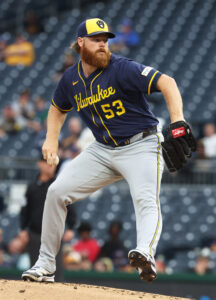
A two-time All-Star, Woodruff has been among the best pitchers in MLB for most of that time. He has posted a sub-4.00 ERA in each season aside from his eight-start rookie year. Woodruff has allowed 3.10 earned runs per nine in 142 career appearances. He finished top five in Cy Young balloting in 2021 and posted a combined 2.82 ERA in 38 starts between 2022-23.
Woodruff missed a good chunk of the latter season with shoulder inflammation. That proved an unfortunate precursor to a few years of arm woes. Woodruff made it back in the second half of the ’23 season, but he revealed at the end of the year that he was headed for a capsule repair in his throwing shoulder. That immediately wiped out his 2024 campaign.
Milwaukee declined to tender him a one-year arbitration contract with the lost year looming, but the sides circled back on a two-year deal that guaranteed $17.5MM. Woodruff indeed missed the entire first season and started this year on the injured list as well. He had a couple fluky setbacks on his minor league assignment. An ankle tweak in May and a comebacker off his throwing elbow in June kept him off the big league roster until the week before the All-Star Break.
Woodruff made his long awaited return in the second week of July. He could not have pitched much better despite the layoff. He reeled off 64 2/3 innings of 3.20 ERA ball over 12 outings. Woodruff picked up quality starts in half those appearances while striking out 32.3% of opposing hitters against a 5.4% walk rate. Among starters with 50+ innings pitched, he ranked fifth in strikeout percentage and had the fourth-highest difference between his strikeout and walk numbers.
Excellent as that performance was, he didn’t look quite the same as he had before the surgery. His 93 MPH average fastball speed was down a couple ticks from the 95-96 MPH range at which he worked in 2023. It didn’t impact his production but is perhaps a slight red flag. More concerning was the possibility of Woodruff’s shoulder not holding up for the entire season. That came true at the worst possible time, as he was shut down just before the start of the postseason after suffering a moderate lat strain during a between starts bullpen session.
The Brewers made it to the NL Championship Series in his absence. Woodruff was not able to make it back and had reportedly not resumed throwing, so he almost certainly would have been unavailable if they’d gotten to the World Series. The Brewers were confident enough in next season’s health outlook to make the qualifying offer. Woodruff returns as the second-highest paid player on the roster after Christian Yelich, who’ll make $26MM per season ($4MM deferred annually) for another three years.
Under the CBA, accepting the qualifying offer is akin to signing a major league free agent contract. That means Woodruff cannot be traded without his consent until June 15, 2026. The Brewers would not have made the QO if they weren’t willing to have him take up a significant chunk of the payroll, even if the front office believed he’d probably decline and find a multi-year contract elsewhere. Woodruff will be back as one of the top two starters in Pat Murphy’s rotation. He cannot be tagged with another QO in his career and will hit free agency unencumbered by draft compensation after next season, barring an extension. He’ll be entering his age-34 campaign.
While Woodruff isn’t getting traded, this could impact the front office’s decision on Freddy Peralta. He’s headed into the final year of his contract on a bargain $8MM salary. The Brewers would have no shortage of suitors if they made Peralta available. President of baseball operations Matt Arnold said last week that they’ll consider offers out of due diligence but certainly weren’t eager to deal him.
Milwaukee has $68.525MM committed to Yelich, Woodruff, Peralta, Jackson Chourio and Aaron Ashby. MLBTR contributor Matt Swartz projects their arbitration class to cost around $32MM. They’re at roughly $100MM before accounting for another $10-12MM in minimum salaried players to fill out the roster. They opened this season with a player payroll around $115MM, and they paid $16MM in option buyouts for Woodruff, Jose Quintana and Rhys Hoskins at the beginning of the offseason.
The Brewers should have some extra money in the coffers after their NLCS run. It’s hard to imagine they would’ve made the QO if Woodruff accepting would really strain them financially. Still, his return could give them more freedom to entertain offers on Peralta now that they know they’ll have at least one veteran anchor atop the staff either way.
If Peralta stays, he and Woodruff will be co-aces for another season. Quinn Priester and Jacob Misiorowski are going to be in the middle of the rotation. Chad Patrick, Logan Henderson, Tobias Myers and Robert Gasser could battle for spots at the back end. The Brewers tend to add a cheap free agent starter or swingman at the tail end of the offseason, so a smaller depth pickup could still be on the way.
Ken Rosenthal of The Athletic first reported that Woodruff was accepting. Image courtesy of Charles LeClaire, Imagn Images.
Brewers Sign Eddys Leonard To Minor League Deal
The Brewers have added infielder Eddys Leonard on a minor league deal, reports Adam McCalvy of MLB.com. The pact includes an invitation to spring training.
Leonard will now join his fourth organization in the past four seasons. He spent last year in Atlanta’s minor league system. The Braves signed him in late March after he was released by the Tigers. Leonard elected minor league free agency last week.
The Dodgers signed Leonard as an international free agent in 2017. MLB.com ranked Leonard eighth among LA’s prospects back in 2022. He had posted a massive 145 wRC+ across two minor league levels in 2021.
Los Angeles designated Leonard for assignment midway through the 2023 season. They eventually worked out a trade with Detroit. Leonard slashed .302/.374/.530 in 40 games with Triple-A Toledo. Injuries limited him to 82 games in 2024. Leonard was a slightly above league-average hitter when available that season.
Leonard hit 20 home runs and added 11 steals across 494 plate appearances with Triple-A Gwinnett this past season. He played primarily in the infield with the Stripers, making six starts at first base, 28 starts at second base, 35 starts at third base, and one start at shortstop. He also made 32 starts at DH and one in right field. Leonard mostly played shortstop early in his career, but has bounced around the diamond in recent seasons.
Photo courtesy Junfu Han, Imagn Images
Poll: Should The Brewers Trade Freddy Peralta?
Seemingly every season, one of the Brewers’ top players is involved in the rumor mill. Whether it’s Corbin Burnes or Devin Williams, the Brewers’ consistent ability to compete combined with a shoestring budget leave them with an assortment of quality players who will naturally pop up in trade rumors as they near the end of their windows of team control with the club. This year, the next star up to be discussed is right-hander Freddy Peralta.
Peralta, 29, may not be on the same level of star power as someone like Burnes but he’s still an exciting pitcher in his own right. Since joining Milwaukee’s rotation full time in 2021, Peralta has been among the game’s most reliable starters with a 3.30 ERA and 3.65 FIP across 738 1/3 innings of work. He’s struck out an impressive 29.6% of his opponents in that time while walking 9.0%, and he actually enjoyed a career year this season as he posted a 2.70 ERA in 176 2/3 frames and finished fifth in NL Cy Young award voting.
It goes without saying that Peralta is the sort of pitcher that literally any rotation in baseball could benefit from adding, even if he isn’t a “true ace” on the level of Burnes or someone like Tarik Skubal of the Tigers. The quality of Peralta’s arm is already enough to make him an attractive trade candidate by himself, and with teams like the Red Sox and Mets known to be in the market for pitching help this winter, there’s plenty of enticing young talent the Brewers could try to land in exchange for the right-hander’s services.
The fact that he’ll make just $8MM in 2026 should only serve to increase his market, with teams like the Padres facing financial constraints and clubs that typically put together lower overall budgets like the Orioles and Rays not necessarily being forced out of the bidding by financial considerations. The Giants, Braves, and Blue Jays are among a number of clubs known to be on the hunt for starting pitching help this winter as well, so it’s easy to see a robust market forming if Milwaukee decides to dangle Peralta.
All of that makes it very easy to see why the rumor mill has suggested a Peralta trade could be on the horizon this winter. Between the Burnes (Joey Ortiz) and Williams (Caleb Durbin) trades, the entire left side of the infield that took Milwaukee to the NLCS this year as acquired by shipping a talented pitcher on an expiring contract to the AL East during the offseason. The argument can very easily be made for the team to try to repeat history, locking down a controllable piece or two who could fill a hole somewhere on the roster while leaning on the team’s ever-expanding group of young arms to make up for the gap left by Peralta’s departure. Jacob Misiorowski, Quinn Priester, Chad Patrick, Logan Henderson, Tobias Myers, and Robert Gasser could all be in the mix to start games for the Brew Crew next year, to say nothing of players like Aaron Ashby and DL Hall who currently pitch out of the bullpen.
With all that being said, the Brewers’ front office has thrown some cold water on the trade rumors for the time being. President of baseball operations Matt Arnold recently indicated that he expects Peralta to remain a Brewer in 2026. While it would be a bit of a departure from their usual model to keep Peralta, it wouldn’t be totally unprecedented. The club kept Willy Adames in the fold until he walked in free agency last winter and simply issued him a qualifying offer to recoup draft capital when he signed in San Francisco. They could certainly look to take a similar path with Peralta, particularly given the fact that they no longer have another proven high-end arm to fall back the way they did when they traded Burnes.
Additionally, Peralta’s $8MM salary wouldn’t open up new possibilities financially the way a trade of someone making more money like Burnes did, as $8MM is often the sort of money second-division hitters and bullpen pieces make in today’s free agent market. There’s also nothing stopping Milwaukee from reversing course at the deadline if the team doesn’t meet expectations in the first half. Though after a year where they posted the best record in baseball, that outcome seems fairly unlikely.
Arguably, this all means that the decision on whether or not to trade Peralta should come entirely down to the sort of return the Brewers can get for him. If multiple big-league ready and potentially impactful pieces are available, as was the case when they landed Ortiz and Hall from the Orioles in exchange for Burnes, then perhaps that’s worth weakening the front of the rotation. If the right-hander isn’t valued that highly by the market, however, it could be the case that Milwaukee is better off going the same route they did with Adames and keeping their star player in the fold for his walk year.
How do MLBTR readers view Peralta’s trade candidacy? Should Milwaukee trade him this winter to keep their perennial contention machine well-stocked? Or should they hold onto him and try to build on one of the best seasons in franchise history with him in the fold? Have your say in the poll below:
How Should The Brewers Handle Freddy Peralta This Winter?
-
Listen to offers, but only trade him for a haul of impact talent. 55% (2,890)
-
Trade him to improve the offense and lean on younger arms. 23% (1,243)
-
Keep him to maximize the odds of a World Series in 2026. 22% (1,164)
Total votes: 5,297