
The Cardinals’ Outfield Carousel
No doubt you’ve heard it said that the Cardinals have gone through quite a few outfielders in recent years. That puts it mildly. The organization is now awaiting the readiness of top prospect Dylan Carlson, with hopes that he’ll not only blossom into a star but bring some long-term stability.
Churning through players isn’t necessarily a bad thing. Every deal is an opportunity, of course. But it’s quite remarkable how much turnover the Cards have had over the past five seasons. Teams play around 1400 innings a year … over seven thousand frames have been played in that span by the St. Louis team, but no single outfielder has come close to appearing in half of them.
Here’s a log of the players who have come and gone (or who remain on hand). They’re ordered by the number of innings played in the outfield, with all statistical accumulations provided for only the seasons in question (2015-19).
Dexter Fowler (2017-19)
- Originally acquired: Signed five-year, $82.5MM free agent contract
- Output: 2,720 1/3 total OF innings; .233/.335/.410 (97 OPS+)
- Outcome: Still on roster
Stephen Piscotty (2015-17)
- Originally acquired: 2012 1st round draft pick
- Output: 2,588 2/3 total OF innings; .268/.346/.438 (109 OPS+)
- Signed six-year, $33.5MM extension
- Outcome: Traded to Athletics for Yairo Munoz, Max Schrock
Tommy Pham (2015-18)
- Originally acquired: 2006 16th round draft pick
- Output: 2,535 2/3 total OF innings; .271/.365/.463 (121 OPS+)
- Outcome: Traded with international bonus money to Rays for Justin Williams, Genesis Cabrera, Roel Ramirez
Randal Grichuk (2015-17)
- Originally acquired: Acquired with Peter Bourjos from Angels for David Freese, Fernando Salas
- Output: 2,529 total OF innings; .249/.297/.488 (107 OPS+)
- Outcome: Traded to Blue Jays for Dominic Leone, Conner Greene
Marcell Ozuna (2018-19)
- Originally acquired: Acquired from Marlins for Sandy Alcantara, Magneuris Sierra, Zac Gallen, Daniel Castano
- Output: 2,395 1/3 total OF innings; .262/.327/.451 (106 OPS+)
- Outcome: Declined qualifying offer; Signed with Braves as free agent
Harrison Bader (2017-19)
- Originally acquired: 2015 3rd round draft pick
- Output: 2,013 total OF innings; .236/.320/.393 (90 OPS+)
- Outcome: Still on roster
Jason Heyward (2015)
- Originally acquired: Acquired with Jordan Walden from Braves for Shelby Miller, Tyrell Jenkins
- Output: 1,268 1/3 total OF innings; .293/.359/.439 (117 OPS+)
- Outcome: Declined qualifying offer; signed with Cubs as free agent
Jose Martinez (2016-19)
- Originally acquired: Acquired from Royals for cash considerations
- Output: 1,199 1/3 total OF innings; .298/.363/.458 (119 OPS+)
- Outcome: Traded with Randy Arozarena and comp balance pick to Rays for Matthew Liberatore, Edgardo Rodriguez, comp balance pick
Matt Holliday (2015-16)
- Originally acquired: Acquired from Athletics for Brett Wallace, Clayton Mortensen and Shane Peterson; subsequently signed seven-year, $120MM free agent contract
- Output: 1,139 1/3 total OF innings; .259/.350/.442 (113 OPS+)
- Outcome: Signed with Yankees as free agent
Brandon Moss (2015-16)
- Originally acquired: Acquired from Indians for Rob Kaminsky
- Output: 586 2/3 total OF innings; .231/.311/.466 (106 OPS+)
- Outcome: Signed with Royals as free agent
Tyler O’Neill (2018-19)
- Originally acquired: Acquired from Mariners for Marco Gonzales
- Output: 552 1/3 total OF innings; .258/.307/.454 (101 OPS+)
- Outcome: Still on roster
Jon Jay (2015)
- Originally acquired: 2006 2nd round draft pick
- Output: 496 2/3 total OF innings; .210/.306/.257 (56 OPS+)
- Outcome: Traded to Padres for Jedd Gyorko and cash
Peter Bourjos (2015)
- Originally acquired: Acquired with Randal Grichuk from Angels for David Freese, Fernando Salas
- Output: 476 2/3 total OF innings; .200/.290/.333 (70 OPS+)
- Outcome: Claimed by Phillies
Jeremy Hazelbaker (2016) –
- Originally acquired: Signed to minor-league deal as free agent
- Output: 402 1/3 total OF innings; .235/.295/.480 (104 OPS+)
- Outcome: Claimed by Diamondbacks
Yairo Munoz (2018-19)
- 212 total OF innings
- Released
Magneuris Sierra (2017)
- 137 1/3 total OF innings
- Traded to Marlins with Sandy Alcantara, Zac Gallen, Daniel Castano for Marcell Ozuna
Kolten Wong (2016)
- 106 total OF innings
- Still on roster (primarily INF)
Tommy Edman (2019)
- 82 2/3 total OF innings
- Still on roster (primarily INF)
Lane Thomas (2019)
- 81 2/3 total OF innings
- Still on roster
Randy Arozarena (2019)
- 43 2/3 total OF innings
- Traded with Jose Martinez and comp balance pick to Rays for Matthew Liberatore, Edgardo Rodriguez, comp balance pick
Mark Reynolds (2015)
- 42 total OF innings
- Departed via free agency
Matt Adams (2017)
- 34 1/3 total OF innings
- Traded to Braves for Juan Yepez
Adolis Garcia (2018)
- 30 1/3 total OF innings
- Traded to Rangers for cash considerations
Others receiving OF playing time:
- Aledmys Diaz (2017) – 9 innings; since traded
- Pete Kozma (2015) – 7 innings; since departed via free agency
- Drew Robinson (2019) – 5 1/3 innings; since released
- Jedd Gyorko (2017) – 2 innings; since traded
Assessing Brodie Van Wagenen’s Trades
If you’re an MLBTR fan, then you know we’ve recently been asking readers to evaluate the trade histories of various high-ranking executives (or former execs) from around Major League Baseball. We’ve already polled you on Diamondbacks GM Mike Hazen, recently fired Astros president Jeff Luhnow, Brewers president of baseball ops David Stearns, Angels GM Billy Eppler, Rockies GM Jeff Bridich, Tigers GM Al Avila, Braves GM Alex Anthopoulos, Blue Jays GM Ross Atkins, Mariners GM Jerry Dipoto, Phillies GM Matt Klentak, Dodgers president of baseball operations Andrew Friedman, Rays GM Erik Neander and ex-Red Sox front office leader Dave Dombrowski.
It’s now time to go to New York and check in on the trades that GM Brodie Van Wagenen, a former agent, has swung since the team persuaded him to switch careers after the 2018 season. Considering he has only been on the job for two years, Van Wagenen’s body of work isn’t particularly large, but it’s one that’s sure to elicit some strong opinions (minor deals omitted; full details at transaction link)…
2018-19 Offseason
- Acquired 2B Robinson Cano and RHP Edwin Diaz from Mariners for OFs Jarred Kelenic and Jay Bruce, RHPs Anthony Swarzak and Gerson Bautista, and $20MM
- Acquired OF Keon Broxton from Brewers for RHPs Bobby Wahl and Adam Hill and 2B Felix Valerio
- Acquired INF/OF J.D. Davis and INF Cody Bohanek from Astros for 2B Luis Santana, OF Ross Adolph and C Scott Manea.
- Acquired RHP Walker Lockett and INF Sam Haggerty from Indians for C Kevin Plawecki
2019 Season
- Acquired RHP Wilmer Font from Rays for RHP Neraldo Catalina
- Acquired RHP Marcus Stroman from Blue Jays for LHP Anthony Kay and RHP Simeon Woods Richardson
2019-20 Offseason
- Acquired OF Jake Marisnick from Astros for LHP Blake Taylor and OF Kenedy Corona
(Poll link for app users)
Grade Van Wagenen's trades
-
C 35% (2,066)
-
D 31% (1,835)
-
F 18% (1,058)
-
B 14% (833)
-
A 2% (100)
Total votes: 5,892
That Time The Yankees Pursued Craig Kimbrel
Possessing an excellent closer is one of the many things the Yankees have become known for over the years. There was Dave Righetti, Goose Gossage and Sparky Lyle decades back. And then there was John Wetteland, who was on the mound when the Yankees won the World Series in 1996. He formed a dominant late-game tandem with Mariano Rivera, who soon became the Yankees’ closer and evolved into perhaps the greatest reliever ever – someone who consistently shut opposing offenses down for almost 20 years. Now, the Yankees have yet another game-ending force in Aroldis Chapman, a two-time member of the team since it first acquired him in December 2015. But months before the Yankees swung a trade for Chapman, they went after another of the top closers in history in Craig Kimbrel.
Leading up to the trade deadline on July 31, 2015, the Yankees were said to be among the teams in hottest pursuit of Kimbrel, then a member of the Padres. New York held a six-game lead in the American League East at that point, thanks in part to the wonderful work of relievers Andrew Miller, Dellin Betances and Justin Wilson, but it wanted yet another bullpen weapon in Kimbrel. Then 27 years old, Kimbrel was fresh off an all-world run with Atlanta and in his first season in San Diego.
The Padres landed Kimbrel the previous offseason with the goal of pushing for contention, but the team instead endured more struggles. That wasn’t the fault of Kimbrel, who enjoyed yet another fine season. Despite interest from teams like the Yankees – who were reportedly unwilling to trade then-prospects Luis Severino, Aaron Judge and Greg Bird for the reliever – Kimbrel wound up spending that entire year with the Padres. They went on to win just 77 games, while the Yankees lost their division lead to the Blue Jays after the deadline and were ultimately knocked out of the wild-card round by the Astros (another team that looked into Kimbrel before the deadline).
The fact that the Kimbrel talks between the Yankees and Padres fell apart turned out to have a major impact on those two teams and more clubs. In November 2015, the Padres found a taker for Kimbrel in the Yankees’ hated rival, the Red Sox, who got him for a prospect package consisting of outfielder Manuel Margot, shortstop Javier Guerra, infielder Carlos Asuaje and lefty Logan Allen. Nobody from that group has made a significant on-field impact for the Padres (the jury’s out on Guerra, who’s now a reliever), but they did flip Margot for an outstanding bullpen arm in Emilio Pagan this past offseason. Prior to then, the Padres shipped Allen to the Indians last summer as part of a three-team trade that netted them high-end outfield prospect Taylor Trammell.
For their part, it’s fair to say the Red Sox would make the Kimbrel trade again. He was an integral part of their bullpen from 2016-18, all of which were playoff seasons and the last of which ended in the club’s most recent World Series championship. The Red Sox bettered the Yankees in each of those regular seasons with three straight AL East titles, but they elected to let Kimbrel (now a Cub) exit via free agency in 2019.
Speaking of the Cubs, they’re another team that has felt some impact from the Kimbrel non-trade between the Padres and Yankees. Having failed to reel in Kimbrel, the Yankees picked up Chapman from the Reds in December 2015. Chapman didn’t cost the Yankees that much (second baseman Tony Renda and righties Rookie Davis and Caleb Cotham) because he was facing domestic violence allegations at the time. He served a 30-game suspension for that to begin the 2016 campaign. Then, with the Yankees not looking like a real threat to compete for a title, they sent Chapman to the Cubs in a deal for Gleyber Torres around that summer’s deadline.
Four years later, Torres is a standout middle infielder and an irreplaceable member of the Yankees’ lineup. He’s missed in Chicago, but Chapman did help them to their first World Series in 108 years a few months after they acquired him. As the saying goes, flags fly forever. Chapman returned to the Yankees in free agency during the ensuing offseason, though. And Kimbrel’s now a member of the Cubs, who signed him to a three-year, $43MM contract that hasn’t gone their way thus far. Where would he and Chapman be right now had the Yankees traded for Kimbrel a half-decade ago? Nobody can say for sure, but it’s one of the many interesting questions to ponder in this what-if scenario.
Flashback: The Spring 2014 Contract Spat Between Max Scherzer & The Tigers
In the 2013-14 offseason, the Tigers were still riding high. Despite some postseason disappointments, the organization had run off three-straight AL Central titles and seemed poised for more. It also had a slate of big-time veterans coming ever closer to free agency.
The top priority, it seemed, was emergent ace Max Scherzer. He had seemingly supplanted Justin Verlander as the top dog on one of the best rotations in recent memory. But free agency beckoned at the end of 2014, Scherzer’s age-29 season.
You may recall that the Tigers ended up making a major long-term deal … but not with Scherzer. (No doubt we’ll write more on that one at some point soon.) Instead, club and player ended up engaging in a somewhat terse exchange of statements to the press at the end of camp, setting the stage for Scherzer’s ultimate departure.
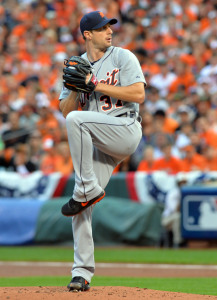
After showing so much tantalizing ability over the years, the former first-round draft pick finally put it all together in 2013. Scherzer spun 214 1/3 innings of 2.90 ERA ball, racking up 10.1 K/9 against 2.4 BB/9 and leading the league with a 0.970 WHIP. Scherzer not only nabbed his first All-Star appearance, but secured his first Cy Young Award.
The Tigers spent big and went for it under long-time owner Mike Ilitch, with veteran exec Dave Dombrowski swinging deals from the GM seat. Pursuit of an extension with Scherzer was inevitable.
Trouble was, Scherzer had taken his time turning into a complete pitcher. By the time the team was ready to place its bet on his future, he had ample leverage. And he had the game’s foremost lever puller running his negotiations: super-agent Scott Boras, long known for bringing his top clients to the open market.
Early-offseason moves freed some payroll availability; Dombrowski told MLBTR’s Zach Links the flexibility would make a Scherzer extension “more possible.” The sides were able to line up on a record-setting arbitration raise, which seemed generally promising. Scherzer indicated that he’d like to reach agreement on a deal to stay in Detroit for the long run.
And then came … a truly bizarre, late-spring exchange. We’ve occasionally seen teams issue statements when negotiations with a superstar fail to culminate in an agreement. But rarely are they so transparently salty as the one the Tigers unfurled …
“The Detroit Tigers have made a substantial, long-term contract extension offer to Max Scherzer that would have placed him among the highest paid pitchers in baseball, and the offer was rejected. As we have reiterated, it has been the organization’s intent to extend Max’s contract and keep him in a Tigers uniform well beyond the 2014 season. While this offer would have accomplished that, the ballclub’s focus remains on the start of the upcoming season, and competing for a World Championship. Moving forward there will be no further in-season negotiation and the organization will refrain from commenting on this matter.”
Well, then! Boras, naturally, responded. He wasn’t quite so spiteful, but certainly landed his own well-placed shot that left no doubt as to his views on the equal standing of the bargaining parties:
“Max Scherzer made a substantial long-term contract extension offer to the Detroit Tigers that would have placed him among the highest-paid pitchers in baseball, and the offer was rejected by Detroit. Max is very happy with the city of Detroit, the fans and his teammates, and we will continue negotiating with the Tigers at season’s end.”
So it seemed both sides had made their offers; neither proved amenable to further compromise. It emerged that the Tigers’ best offer was a match of the extant comparable of record: the six-year, $144MM Cole Hamels extension with the Phillies. The warring statements drew mixed reactions from the pundit class, but the consensus was that this number was never particularly likely to budge Boras and Scherzer.
Rather than bowing to worry over the season separating him from free agency, Scherzer took out an insurance policy. He was nearly as good in 2014 as he was in the season prior, landing a fifth-place Cy Young finish, obviating the need for that policy, and setting the stage for a proper bidding war. While there was indication at times that the Tigers remained involved, the team showed tepid interest and was not a finalist when push came to shove.
Scherzer, of course, signed a huge contract with the Nationals. Though the face value of $210MM didn’t account for deferrals, it handily topped the prior Tigers offer. Perhaps it was just as well for the Detroit organization. While the club was successful again in Scherzer’s final year, it crumbled in 2015, with Dombrowski stunningly departing after the trade deadline. Then again, Scherzer’s ongoing dominance made even that monster contract a relative bargain. Had the Tigers gone higher in their extension offer and managed to secure his services for the long haul, Scherzer would’ve been a nice trade chip to cash in and jump-start the rebuild.
Photo courtesy of USA Today Sports Images.
Revisiting Dave Dombrowski’s Red Sox Trades
Dave Dombrowski’s ousting as general manager of the Tigers back in 2015 was a stunner throughout the baseball world. Just days after orchestrating a rare deadline sell-off for the AL Central powerhouse — David Price and Yoenis Cespedes were both shipped out in deals that netted Matthew Boyd and Michael Fulmer, respectively — Dombrowski was cut loose.
Most expected that Dombrowski, one of MLB’s most respected front-office figures, would another job in short order… but probably not as quickly as he ultimately did. Barely two weeks after being dismissed in Detroit, Dombrowski was named president of baseball operations for the Red Sox — a move that prompted general manager Ben Cherington to step down less than two years after his club had won a World Series.
As it turned out, Dombrowski’s tenure in Boston would closely mirror that of Cherington’s; his time in charge was relatively brief, and he was gone not long after winning a World Series. Less than year after capturing a championship in 2018, Dombrowski got the boot.
Let’s take a look back at Dealin’ Dave’s trade history in Boston…
2015 Season
- Acquired LHP Luis Ysla from the Giants in exchange for OF Alejandro De Aza and cash
2015-16 Offseason
- Acquired RHP Craig Kimbrel from the Padres in exchange for SS Javy Guerra, OF Manuel Margot, LHP Logan Allen and 2B Carlos Asuaje
- Acquired RHP Carson Smith and LHP Roenis Elias from the Mariners in exchange for LHP Wade Miley and RHP Jonathan Aro
2016 Season
- Acquired 2B/3B Aaron Hill and cash from the Brewers in exchange for RHP Aaron Wilkerson and INF Wendell Rijo
- Acquired INF/OF Michael Martinez from the Indians in exchange for cash
- Acquired RHP Brad Ziegler from the D-backs in exchange for RHP Jose Almonte and OF Luis Alejandro Basabe
- Acquired LHP Drew Pomeranz from the Padres in exchange for RHP Anderson Espinoza
- Acquired LHP Fernando Abad from the Twins in exchange for RHP Pat Light
2016-17 Offseason
- Acquired RHP Tyler Thornburg from the Brewers in exchange for 3B Travis Shaw, 2B/SS Mauricio Dubon and RHP Josh Pennington
- Acquired LHP Chris Sale from the White Sox in exchange for 2B/3B Yoan Moncada, RHP Michael Kopech, OF Luis Alexander Basabe and RHP Victor Diaz
- Acquired 2B Josh Tobias from the Phillies in exchange for RHP Clay Buchholz
2017 Season
- Acquired INF Eduardo Nunez from the Giants in exchange for RHPs Shaun Anderson and Gregory Santos
- Acquired RHP Addison Reed from the Mets in exchange for RHPs Gerson Bautista, Jamie Callahan and Stephen Nogosek
- Acquired OF Rajai Davis from the Athletics in exchange for OF Rafael Rincones
2017-18 Offseason
- Acquired C Mike Ohlman from the Rangers in exchange for cash
- Acquired OF Ramon Flores from the D-backs in exchange for cash
2018 Season
- Acquired RHP Josh Taylor from the D-backs as PTBNL for SS Deven Marrero
- Acquired RHP Nathan Eovaldi from the Rays in exchange for LHP Jalen Beeks
- Acquired 2B Ian Kinsler from the Angels in exchange for RHP Ty Buttrey and LHP Williams Jerez
2018-19 Offseason
- Acquired RHP Colten Brewer from the Padres in exchange for 2B Esteban Quiroz
2019 Season
- Acquired OF Marcus Wilson from the D-backs in exchange for C/OF Blake Swihart and $500K international bonus slot
- Acquired RHP Andrew Cashner and cash from the Orioles in exchange for OF Elio Prado and INF Noelberth Romero
—
We’ll revisit Dombrowski’s trade histories with other clubs in separate posts, but the question for now: How do MLBTR readers grade Dombrowski’s work as the Red Sox’ baseball ops boss? (Link to poll for Trade Rumors mobile app users.)
Grade Dave Dombrowski's trade history as Red Sox president:
-
B 37% (2,957)
-
C 32% (2,577)
-
D 13% (1,029)
-
A 13% (1,012)
-
F 5% (409)
Total votes: 7,984
Interested in how other GMs hold up under this exercise? We’ve covered Diamondbacks GM Mike Hazen, recently fired Astros president Jeff Luhnow, Brewers president of baseball ops David Stearns, Angels GM Billy Eppler, Rockies GM Jeff Bridich, Tigers GM Al Avila, Braves GM Alex Anthopoulos, Blue Jays GM Ross Atkins, Mariners’ GM Jerry Dipoto, Phillies’ GM Matt Klentak, Dodgers’ president of baseball operations Andrew Friedman and Rays GM Erik Neander as well.
How The Delayed Season Impacts The Indians
All 30 big league clubs are waiting to see whether a 2020 season will be played at all, but assuming a season is able to take place in some capacity, the prolonged delay will impact some clubs more than others. We’ve already examined the potential effects for the Yankees, Angels, Phillies, Athletics and Twins. Today, we’ll turn to Minnesota’s likeliest challenger in the AL Central, the Indians.
For every roster, the hiatus most obviously affects injured players. The delay gives currently them more time to recover, and Cleveland has a few who fit that bill. That’s most notable for a pair of right-handed starters.
Veteran Carlos Carrasco had been nagged by inflammation in his throwing elbow during Spring Training. While Carrasco fortunately avoided structural damage, president of baseball operations Chris Antonetti had cast doubt on his chances of being ready for a March 26 Opening Day. Cleveland hadn’t provided a firm timetable for his projected return, but the issue seemed relatively minor. Presumably, the 33-year-old would now have a much better chance at being in the season-opening rotation if baseball resumes.
That’s also true of staff ace Mike Clevinger. The hard-throwing righty underwent knee surgery in mid-February, which was expected to sideline him for six to eight weeks. Nothing has trickled out on the status of his recovery since, but we’re in the middle of that timetable now. Assuming Clevinger’s progressing as had been expected, he seems likely to be ready to ramp back up if the season gets going.
It’s even possible we see hard-throwing righty Emmanuel Clase in the season-opening bullpen. That wasn’t true prior to the shutdown when Clase went down for eight to twelve weeks at the end of February with a strain in his back. Owner of a 100 MPH cutter, Clase was the primary return from the Rangers in the Corey Kluber deal (along with getting Kluber’s $17.5MM salary off the books). If healthy, he’ll likely be an integral part of Terry Francona’s relief unit.
That’s a trio of potential impact arms who could see a greater portion of the season for Cleveland than had been initially anticipated. And simply by introducing more randomness, a shortened season probably increases their odds of upsetting the reigning division champs in Minneapolis. Yet the threat of a cancelled season looms as large for the Indians as any team in MLB.
Enter Francisco Lindor. The face of the franchise is two years from free agency. If it never becomes possible for MLB to return in 2020, Lindor will pick up another year of service time by virtue of having logged a full year in 2019. Extension talks, which have never seemed all that likely to come to fruition, were tabled even before the MLB moratorium. A cancelled season would be one fewer year for Cleveland fans to ‘enjoy‘ the presence of one of the game’s most talented, charismatic players. Regardless of whether a season is played, Lindor’s name would surely be bandied around in trade rumors next offseason unless an extension is reached. Cleveland fans won’t want to hear it, but there’s now seemingly a possibility he’s played his final home game there.
Fortunately, much of the roster is under team control for 2021. If the 2020 season is ultimately cancelled, the Cleveland front office could bring back the entire starting rotation and eight members of the starting lineup, as projected by Roster Resource. (Only second baseman César Hernández, an offseason signee, isn’t controlled beyond this season). Yet Lindor’s status already looms large for the franchise; if the season were wiped away, it’d only become more pressing.
Rebound Candidate: Blake Snell
Right off the top, I’ll acknowledge the term ‘rebound candidate’ is a bit strong to describe Blake Snell. Even looking only at bottom line results, Snell’s 2019 season was serviceable. He logged a 4.29 ERA in 107 innings over 23 starts; Baseball Reference, which emphasizes run prevention in its WAR calculation, pegged Snell at a decent 1.4 wins above replacement.
There’s no question, though, it marked a step back from his otherworldly 2018 results. That year, he tossed 180.2 innings while allowing fewer than two earned runs per nine. That league-best run prevention translated to 7.1 bWAR. Looking solely at the results, it’d be easy to conclude Snell took a massive step back last season.
Every team now looks beyond a pitcher’s mere run prevention (or win-loss record, where Snell also regressed dramatically). Looking deeper, the southpaw looked a lot like his 2018 self last year. His average fastball velocity dropped about half a mile per hour, but he still sat 95.89 MPH, per Brooks Baseball. No other left-handed starter threw harder. His spin rates across the board remained consistent 2018 to 2019, as did his arm slot. On the whole, Snell was working with the same raw stuff that enabled his 2018 dominance.
Admittedly, retaining his stuff from the year prior doesn’t automatically mean he was as effective. But on a micro level, Snell looked every bit as dominant. His 2019 strikeout rate (33.3%) was up nearly two percentage points from the year before (31.6%). His walk rate (9.1%) in each year was identical. Most importantly, Snell’s 17.7% swinging strike rate ranked #1 among all MLB starters (minimum 60 innings). The names just behind him are a who’s who of the game’s top arms: Gerrit Cole, Max Scherzer, Justin Verlander, Luis Castillo, Jacob deGrom.
Nor was this a case of a pitcher with dominant strike zone metrics who got bombed when hitters did make contact. Snell’s 88 MPH average exit velocity and 32% hard contact rate allowed were league average, generally the same level of contact quality he surrendered in 2018. Snell’s opponents’ BABIP rose over .100 points between 2018-19, but there’s nothing to suggest he got any more hittable. (He did surrender a few more line drives last season, but large changes in line drive rate don’t tend to stick year to year). It just seems that more batted balls dropped in; if even a league average amount of those batted balls find gloves moving forward, he should again be one of the league’s toughest pitchers to score against.
If a 2020 season is ultimately played, Snell looks more than capable of contending for another Cy Young. He had a precautionary cortisone shot in his throwing elbow in February, but at last check he was feeling ‘fine.’ Assuming the layoff allows him to reemerge at full health, Snell looks on track to reclaim his spot as one of the league’s best pitchers.
GM Trade History: Rays’ Erik Neander
The small market Rays have long been proactive on the trade market. That’s been the club’s preferred method of fielding competitive rosters while maintaining one of the league’s lowest payrolls. That can sometimes require moves unpopular with the fan base, although like any team, the Rays have had their fair share of wins (and a few losses).
Since the Rays promoted Erik Neander to GM in 2016, the front office has been active as ever on the trade market. We’ll look back at the GM’s trade history (excluding the most minor swaps) over that time, with a full breakdown of each at the included links. With two of Neander’s former top lieutenants now running AL rivals (Chaim Bloom in Boston and James Click in Houston), it’ll be fascinating to see how the club proceeds once they’re again able to make transactions.
2016-2017 Offseason
- Acquired OF Mallex Smith, LHP Ryan Yarbrough, and INF Carlos Vargas from Mariners for LHP Drew Smyly
- Acquired RHP José De León from Dodgers for INF Logan Forsythe
- Acquired C Jesús Sucre from Mariners in exchange for cash considerations.
2017 Season
- Acquired SS Adeiny Hechavarría from Marlins for RHP Ethan Clark and OF Braxton Lee
- Acquired RHP Chaz Roe from Braves for cash or player to be named later
- Acquired RHP Sergio Romo from Dodgers for cash or a player to be named later
- Acquired LHP Dan Jennings from White Sox for 1B Casey Gillaspie
- Acquired 1B Lucas Duda from Mets for RHP Drew Smith
- Acquired RHP Steve Cishek from Mariners for RHP Erasmo Ramírez
- Acquired RHP Tobias Myers from Orioles for INF Tim Beckham
2017-2018 Offseason
- Acquired RHP Curtis Taylor from Diamondbacks for RHP Brad Boxberger
- Acquired INF Joey Wendle from Athletics for C Jonah Heim
- Acquired INF Christian Arroyo, OF Denard Span, RHP Stephen Woods, and LHP Matt Krook from Giants for 3B Evan Longoria and cash considerations
- Acquired 1B C.J. Cron from Angels for INF Luis Rengifo
- Acquired INF Jermaine Palacios from Twins for RHP Jake Odorizzi
- Acquired LHPs Anthony Banda and Colin Poche from Diamondbacks for Steven Souza Jr., INF Nick Solak from Yankees (Diamondbacks also traded INF Brandon Drury to Yankees for RHP Taylor Widener)
- Acquired RHP Daniel Hudson, INF Tristan Gray, and cash considerations from Pirates for OF Corey Dickerson
2018 Season
- Acquired RHPs Andrew Moore and Tommy Romero from Mariners for OF Denard Span and RHP Alex Colomé
- Acquired 1B Ji-Man Choi from Brewers for INF Brad Miller and cash consideratiosn
- Acquired LHP Jalen Beeks from Red Sox for RHP Nathan Eovaldi
- Acquired C Michael Pérez and RHP Brian Shaffer from Diamondbacks for RHP Matt Andriese
- Acquired cash or a player to be named later from Phillies for C Wilson Ramos
- Acquired RHP Tyler Glasnow, OF Austin Meadows, and RHP Shane Baz from Pirates for RHP Chris Archer
- Acquired OF Tommy Pham and international bonus pool money from Cardinals for OF Justin Williams, LHP Genesis Cabrera, and RHP Roel Ramirez
- Acquired RHP Matt Seelinger from Pirates for SS Adeiny Hechavarría
2018-2019 Offseason
- Acquired C Mike Zunino, OF Guillermo Heredia, and LHP Michael Plassmeyer from the Mariners for OF Mallex Smith and OF Jake Fraley
- Acquired 3B Yandy Díaz and RHP Cole Sulser from Indians in three-team trade sending 1B/OF Jake Bauers to Indians and $5MM to Mariners (Mariners also traded 1B Carlos Santana and $6MM to Indians; Indians traded DH Edwin Encarnación and Competitive Balance draft pick to Mariners)
- Acquired RHP Emilio Pagán and Competitive Balance Round A draft pick from Athletics, RHP Rollie Lacy from Rangers in three-team trade sending LHPs Brock Burke and Kyle Bird and RHP Yoel Espinal to Rangers (Rangers also traded INF Jurickson Profar to Athletics; Athletics traded SS Eli White and international bonus pool money to Rangers)
- Acquired RHP Oliver Drake from the Blue Jays for cash considerations
2019 Season
- Acquired C Travis d’Arnaud from Dodgers for cash considerations
- Acquired RHP Peter Fairbanks from Rangers for INF Nick Solak
- Acquired INF Eric Sogard from Blue Jays for two players to be named later
- Acquired outfielder Ruben Cardenas and $250K of international bonus pool space from Indians for RHP Hunter Wood and IF Christian Arroyo
- Acquired 1B Jesús Aguilar from Brewers for RHP Jake Faria
- Acquired OF Niko Hulsizer from Dodgers for LHP Adam Kolarek
- Acquired RHPs Nick Anderson and Trevor Richards from Marlins for RHP Ryne Stanek and OF Jesus Sanchez
2019-2020 Offseason
- Acquired OF Hunter Renfroe and SS Xavier Edwards from Padres for OF Tommy Pham and INF/RHP Jake Cronenworth
- Acquired 1B/OF José Martínez and OF Randy Arozarena from Cardinals for LHP Matthew Liberatore, C Edgardo Rodriguez, and a Competitive Balance Round B draft pick
- Acquired OF Manuel Margot and C Logan Driscoll from Padres for RHP Emilio Pagán
- Acquired cash considerations from Reds for RHP José De León
- Acquired 1B Brian O’Grady from Reds for cash considerations
How would you grade Neander’s wheeling and dealing as the Rays’ baseball ops head? (Link to poll for mobile app users)
Grade Erik Neander's Rays Trades:
-
A 44% (1,829)
-
B 43% (1,783)
-
C 10% (409)
-
D 2% (66)
-
F 2% (63)
Total votes: 4,150
Interested in how other GMs hold up under this exercise? We’ve covered Diamondbacks GM Mike Hazen, recently fired Astros president Jeff Luhnow, Brewers president of baseball ops David Stearns, Angels GM Billy Eppler, Rockies GM Jeff Bridich, Tigers GM Al Avila, Braves GM Alex Anthopoulos, Blue Jays GM Ross Atkins, Mariners’ GM Jerry Dipoto, Phillies’ GM Matt Klentak, and Dodgers’ GM Andrew Friedman as well.
MLBTR Originals: 3/30/20 – 4/5/20
Even with the baseball world shut down, MLB Trade Rumors is still covering any breaking news from around the game, while also exploring some broader topics. Here’s the roundup of the week’s original content from the MLBTR staff….
- “What one piece of advice would you give to a college student who hopes to work in baseball operations one day?” Tim Dierkes’ question was answered by ten of baseball’s top-ranking front office executives, in an insight into what might be the best ways to land a job with a Major League team.
- Jeff Todd’s daily YouTube video updates looked back at a pair of major trades in Padres history — the April 2015 acquisition of Craig Kimbrel from the Braves, and the June 2016 deal that sent James Shields to the White Sox for a then-relatively unheralded infield prospect named Fernando Tatis Jr. Jeff’s other topics this week included a look back at his picks in the MLBTR free agent prediction contest, and rating the trade histories of White Sox GM Rick Hahn and Diamondbacks general manager Mike Hazen.
- Hahn was also one of the front office bosses profiled this week as part of the GM Trade History series, where readers can grade each executive’s trading prowess. This week, Jeff Todd, Connor Byrne, and Steve Adams covered eight different presidents of baseball operations/general managers — Hahn, the Blue Jays’ Ross Atkins, the Braves’ Alex Anthopoulos, the Dodgers’ Andrew Friedman, the Mariners’ Jerry Dipoto, the Padres’ A.J. Preller, the Phillies’ Matt Klentak, and the Tigers’ Al Avila.
- One of the biggest trades Dipoto and Hazen swung over their respective front office tenures came in November 2016, when the Diamondbacks acquired Ketel Marte and Taijuan Walker for Jean Segura, Mitch Haniger, and Zac Curtis. Connor Byrne broke down the many ripple effects from that fascinating swap.
- While we’re looking back at past transactions, some other notable past deals were revisited this week. Connor Byrne explored the Cardinals’ ill-fated signing of Greg Holland in March 2018, as well as the January 2017 trade between the Reds and Marlins that resulted in Luis Castillo coming to Cincinnati. Since we just passed the anniversary of Elvis Andrus‘ extension with the Rangers, Mark Polishuk looked at how that contract was faring five years into its duration.
- The Offseason In Review series continued, with this week’s entries covering the winter business of the Rangers, Giants, and Reds.
- Steve Adams focused the Rookie Radar on some AL East and NL Central youngsters who could be immediate contributors if the 2020 season gets underway.
- Speaking of young talent, how about a little Prospect Faceoff action? This week’s matchups included Luis Robert vs. Jo Adell, Gavin Lux versus Wander Franco, Jesus Luzardo against MacKenzie Gore, Joey Bart taking on Adley Rutschman, and Casey Mize battling Nate Pearson.
- Why was Yasiel Puig the last major free agent left without a new team? Connor Byrne examines the question by breaking down the outfielder’s 2019 numbers.
- The Rockies haven’t had much recent success in free agency, as Connor Byrne looks at how the club hasn’t gotten any return on its last eight signings of more than $10MM in guaranteed money.
- Orioles outfielder Anthony Santander could be ready for a breakout season, George Miller writes. Steve Adams also looks at a pair of other players in our Breakout Candidate series — Braves southpaw Max Fried and Mariners righty Austin L. Adams.
- As complete games become more of a rarity in baseball, the four consecutive complete games tossed by White Sox starters in the 2005 ALCS stands out as an even more incredible feat today as it did over 14 years ago. TC Zencka revisits that signature achievement from the World Series-winning club.
- The threat of a heavily-shortened or completely canceled 2020 season would be a particularly huge blow to teams built to win now, as Steve Adams and Connor Byrne observe in their looks at how the delayed season impacts the Twins and Athletics.
Transaction Retrospection: Elvis Andrus’ Extension
Contract extensions have been a key part of Jon Daniels’ team-building strategy over his 14+ years as the Rangers’ general manager, and the richest of those extensions was completed seven years ago today. Elvis Andrus agreed to an eight-year, $120MM contract that also contains a $15MM vesting option for the 2023 season.
The new deal began with the 2015 season, which would have been Andrus’ first free agent year. Andrus was already signed to a previous extension — a three-year/$14.4MM pact for the 2012-14 seasons, which were Andrus’ three arbitration years — and thus Texas needed to make a sizeable investment to keep Andrus off the open market. As MLBTR’s Steve Adams noted at the time of the deal, “Scott Boras has managed to secure the largest extension ever for a shortstop in terms of new money,” which was perhaps a necessary step given that Boras usually advises his clients to test free agency. (In fact, the Andrus deal has been cited for years as one of the relatively few examples of a Boras Corporation client signing a long-term extension that covers free agent seasons.)
At the time of the deal, it’s quite possible the Rangers felt they would ultimately be on the hook for only the first four years (and $62MM) of the extension. Andrus had opt-out clauses after both the 2018 and 2019 seasons, and as deep as a week into the 2018 campaign, he looked like a strong candidate to exercise that first clause given his improved offensive production in 2016-17. However, a fractured elbow cost Andrus two months of the 2018 season and he never really got on track after the injury, thus informing his decision to stick with Texas in 2019.
Last season, Andrus just flat-out struggled, hitting .275/.313/393 (76 wRC+, 78 OPS+) over 648 PA, with a career-low 5.2% walk rate and a major lack of quality contact, as per his Statcast numbers. In the wake of that poor season, Andrus again chose to pass on his opt-out clause, leaving Texas owing the shortstop $43MM through the 2022 campaign and now not really knowing what to expect from Andrus performance-wise over those three seasons.
Such risks are baked into any extension, of course, and it’s worth noting that Andrus’ hitting potential was a question mark even back at the time of his 2013 deal. Though he had been a highly-touted prospect (Baseball America ranked Andrus as the 19th-best prospect in the sport prior to the 2008 season) during his time in the Rangers’ farm system, Andrus’ minor league numbers weren’t overly impressive. Even at the big league level, he hit only .275/.342/.353 over his first 2591 MLB plate appearances.
That said, 2012 marked Andrus’ best offensive showing to date, as he hit .286/.349/.378 over 711 PA and reached the AL All-Star roster for the second time in his career. And, it’s unfair to say that Andrus wasn’t a valuable offensive player early in his career, considering that his solid average and OBP were augmented by superb speed and baserunning. Combine these skills with a solidly above-average glovework at shortstop, and it’s easy to see why Texas felt comfortable making a long-term bet on Andrus’ future.
Had that extension not been signed, Andrus would have been a 26-year-old free agent hitting the free agent market in the 2014-15 offseason. There wasn’t much in the way of premium middle infield talent available that winter, so even though Andrus didn’t do a ton to elevate his stock over the 2013-14 seasons, his young age and hints at further productivity could have still potentially led to a nine-figure contract. An Andrus free agent deal could have been something of a forerunner to Jason Heyward‘s deal with the Cubs a year later, with a team choosing to pay a premium for a 26-year-old, non-elite offensive player based on their overall skillset and future breakout potential. Heyward had a much better hitting track record than Andrus, so the shortstop wouldn’t have gotten anywhere near the $184MM and eight years Heyward got from the Cubs, though it isn’t a reach to guess that a team could have given Andrus a six-year commitment.
Though it isn’t known whether Andrus will be able to get back on track in 2020 (if there is a season) or beyond, the uncertainty of the back end of his deal doesn’t mean the extension was a mistake for the Rangers. As per Fangraphs, Andrus has already delivered $85.8MM worth of value over the first five years of the contract, surpassing the $77MM he has earned in real-life money. Andrus was a major contributor to the Rangers’ AL West titles in 2015 and 2016, and while he has never matched his offensive peaks of 2016 and 2017, his sheer durability has also been a big point of value — the fractured elbow is the only significant injured list stint of Andrus’ entire career.
Indeed, that wayward pitch from Keynan Middleton (on the second-last at-bat of a 7-2 Angels win over the Rangers on April 11, 2018) might end up being the real what-if moment of Andrus’ tenure with the Rangers. Had Andrus gone on to match his 2016-17 numbers in an uninterrupted 2018 season, he would surely have opted out of his contract and, even in the slow-moving 2018-19 free agent market easily topped the four years and $48MM left on this Texas deal. In such a scenario, the critics currently bemoaning the Andrus extension would probably have then been criticizing Daniels for negotiating an opt-out clause into the deal in the first place.
Andrus is a notable question mark for a Texas team that is looking to turn things around after three losing seasons. While the 2020 season could end up being a wash, getting one more solid year out of Andrus in 2021 or 2022 could be enough to mark down the extension as a win for the Rangers in the eyes of the general fanbase. Even if 2019 is the beginning of end for Andrus as a productive regular, he has still done enough over the course of his contract to make it a decent return for the Rangers, even if that hoped-for leap into superstardom for Andrus never happened.