
Why I Chose My Agency: Aramis Ramirez
Brewers third baseman Aramis Ramirez has received MVP votes in five different seasons. The accomplished slugger spoke to MLBTR today about why he chose his agent, Paul Kinzer of Kinzer Management Group.
On when he first came into contact with Kinzer:
After I played in the New York-Penn League in 1996, I met him in the Dominican and at the time I didn't have an agent, so he was my first agent and my only one.
On whether other agents had tried to talk to him:
A couple of guys when I was playing in the New York-Penn League in my first year in '96, they approached me, but I wasn't really into it. I was just concentrating on baseball. I wasn't worrying about an agent, I was just in A ball, so it wasn't my main thing. Then I met Paul in the Dominican and he seemed like a real honest guy and I signed with him.
On the decision to go with Kinzer, and their relationship:
He had a couple of Dominican players back then, good friends of mine, Neifi Perez and Enrique Wilson. They both told me he was great, and I trusted them. There was a Dominican guy too that worked for him, Abraham Mejia, that I knew since I was 14 or 15.
We have a real good relationship, he's like a father to me. He was the best man at my wedding. It's not a business relationship between me and Paul. It's more like a friendship, a father/son thing. We've been together for so long…he loves my family, I love his, and we always keep in touch besides business stuff.
On recommending Kinzer to other players:
I have in the past. I don't really like that, but if there is a guy that doesn't have an agent, or a young player, I recommend him. I did with [Starlin] Castro when he was coming up. I told Paul he has to go to the complex and sign this kid, he was going to be good.
On his level of involvement in multiyear contract discussions prior to free agency:
I was very involved. That was between me and Paul. Even though he was with a big company before, it was only me and him. He kept me updated every single moment, and I want to be. It was my future and I want to know what's going on.
On the contract clauses with the Cubs that allowed Ramirez to void:
That was his idea all along, and it worked out well. We did it in Chicago a couple of times and that was a good job on his part.
On Wasserman Media Group parting ways with Kinzer last year, and how that affected him:
I don't really have a relationship with them. To me Paul is my agent, and I know he was with that company, but I guess it didn't work out. I'm sticking with Paul no matter what, he's my agent. It wasn't the company — Paul is my agent, and he has been my whole career. He let me know right away when they were going through the process of separating, and I told him it was not going to affect my relationship with him.
On how the free agent process unfolded after the 2011 season:
I just let him work. I always tell him that I will do my job on the field, he's got to do his job outside the field. He kept me updated, anytime a team called, or we have to go meet somebody. When I was a free agent a year ago we had to go to L.A. and meet a couple of teams out there. He just kept me updated every single step.
Other entries in the Why I Chose My Agency Series include David Wright, Matt Holliday, Jay Bruce, Jeremy Affeldt, and Adam Wainwright.
MLBTR Originals
A look back at the original reporting and analysis found on MLBTR this past week:
- Steve Adams presented another Transaction Retrospection with a look back at the Cubs' acquisition of Matt Garza.
- The Why I Chose My Agency series continued with B.J. Rains speaking with Adam Wainwright about his agent Steve Hammond.
- Ben Nicholson-Smith finished the offseason review of the AL East by profiling the Blue Jays and Red Sox, while Tim Dierkes began the NL East offseason review with the Braves and Marlins.
- Ben asked MLBTR readers how the Yankees should fill the void created by injuries to Curtis Granderson and Mark Teixeira. Only 32% of you believe GM Brian Cashman should stand pat and rely upon internal options.
- Tim asked MLBTR readers how much the Angels should have paid Mike Trout. Just under 43% of you would have renewed the AL Rookie of the Year and MVP runner-up for $1MM or more.
- Zach Links asked MLBTR readers whose 2014 option will vest and more than 29% of you predict Jamey Carroll will be a Twin again next year.
- Ben hosted the weekly live chat.
- Zach gathered the best the baseball corner of the web had to offer in Baseball Blogs Weigh In.
- Here's the schedule for MLBTR's roster of regular features and exactly what to expect from them.
MLBTR Originals
A look back at the original reporting and analysis found on MLBTR this past week:
- MLBTR continued its six-week series examining the arbitration process from the player's persepective with B.J. Rains' profile of Jeff Mathis' experience with the Angels.
- Steve Adams inaugurated a new MLBTR series called Transaction Retrospection with his look at last year's Andrew Bailey–Josh Reddick trade.
- The Why I Chose My Agency series continued with Tim Dierkes discussing Matt Sosnick and Sosnick Cobbe Sports with Jay Bruce, B.J. Rains speaking with David Wright about the Levinson brothers and ACES, and Dave Pond doing likewise with Jeremy Affeldt about Mike Moye and Moye Sports Associates, Inc.
- Ben Nicholson-Smith reviewed the offseason of the Rays, Orioles, Yankees.
- Tim asked 17 top front office executives what one piece of advice they would give a high school student hoping for a career in baseball operations.
- MLBTR was the first to learn Bobby Cassevah elected free agency after being outrighted by the Angels and was the first to report the right-hander signed a minor league deal with the Rockies and will report to Major League Spring Training.
- Tim updated the list of 2015 MLB free agents and provided his analysis of the class.
- Zach Links examined the players with 2014 vesting options and how they can be exercised.
- Ben asked MLBTR readers which of the seven teams with fewer than 70 wins in 2012 will improve the most in 2013. Nearly 39% of you believe the Indians will be this year's bounceback team. None received more votes than the Marlins, Astros, and Rockies combined.
- Five players signed nine-figure contracts this offseason and Mark Polishuk asked MLBTR readers which one will best live up to the investment. You were split between Evan Longoria (36%) and Felix Hernandez (34%).
- Zach asked MLBTR readers whether the Yankees will be able to lower their payroll to avoid the luxury tax in 2014. More than 63% of you believe they will exceed the $189MM threshold.
- Tim outlined the various options available to the Yankees in their quest to replace Curtis Granderson.
- Ben listed the teams with open 40-man roster spots.
- Zach revisted the notable transactions from March 2012.
- Ben hosted the MLBTR live chat this week.
- Zach put together the best of the baseball blogosphere in Baseball Blogs Weigh In.
Why I Chose My Agency: Jay Bruce
Reds right fielder Jay Bruce is a longtime client of Sosnick Cobbe Sports. I spoke with Jay Monday night about his agency choice.
How he first came into contact with Sosnick Cobbe Sports:
I spoke with some guys from around Beaumont, Jason Tyner and Kevin Millar, they told me I should start speaking with advisors [prior to the 2005 draft]. First guy on that list was Toby Trotter from Sosnick Cobbe Sports. And this was before all the hoopla started, all the big games and national scouting combines. They were one of the first groups to come in. I was a little bit under the radar. I met with Toby, and everything about him pretty much added up to me to a guy I wanted to work with.
On being advised by the Boras Corporation prior to Sosnick Cobbe:
I also interviewed ACES and the Boras Corporation. Everyone knows who Scott Boras is. Boras is known for having the biggest players in the game, the most heralded players in the game. Being a 17 or 18-year-old naive high school student, I went with the name. A couple of months before the draft, a lot of scouts came up to me at the Texas Scouting Association game, and told me, "We just want to let you know that you are probably cutting out a third to half of the teams in baseball by choosing Scott Boras." I started thinking about it, and I went home, talked to my parents, and they said, "You have to go with your gut. If baseball is what you really want to pursue out of high school, then you probably need to re-evaluate your choice." I thought about it, and I'm still kind of ashamed to this day, my mom called Jim Pizzolatto [his contact at the Boras Corporation] and let him know that I was going to switch agencies. I still see Jim sometimes and we're very cordial, and I don't think there's any hard feelings.
On why Boras didn't work for him:
This is no slight on Scott at all or anything that they did, because they are one of if not the best at doing their job for their players. It wasn't anything necessarily that they did wrong, but I wanted to take a different approach to the way I "marketed" myself, because they didn't want me hitting for any scouts, they didn't want me filling out any information, they were really really pushing me to go to college. Some guys, that works great for. But I wanted to give myself the chance to be drafted as highly as I could, and they didn't need to push me to go to college, because had I not gotten drafted in the first round out of high school, I was going to college. I signed a letter of intent to go to Tulane University, and I was going to honor that. I had no problem going to college.
It was just not as open of a relationship as I would have liked. They just didn't seem like the way that I wanted to represent myself, they didn't sit well with me. I like talking to people, I like really giving people the impression of myself, from myself. I like people to know what they're getting. They want to keep the distance with high schoolers, I think, between the scouts and the player. Which for a lot of guys, it works, but I just wanted to give myself the opportunity to make the best impression I could on all these people. They never did anything wrong to me, but I just decided to go back to Sosnick Cobbe. They made the best impression, and they were straightforward. It became a relationship that kind of transcended business a little bit. A lot of people don't like to mix business with friendship, but if I can trust someone that I consider a friend, I can trust them to do business.
On how Matt Sosnick retained Jay's business after Toby Trotter left the agency:
After the draft, I was in the airport going to instructional league. Toby and Matt called me up. Toby said "Hey Jay, I just want to let you know that I'm leaving the agency." He had prayed a lot about it and decided he wanted to do something else. Matt said, "I want to let you know that I am going to be the guy you deal with now." If it wasn't for Matt being on the phone, I probably would have switched agencies and been done with it.
He made me feel like I was a priority. Matt was on the phone and made it an easy decision for me, and that was the true start of what I consider a great relationship both on and off the field. That showed how Matt is as a person. That means a lot to me. He takes a genuine interest in my family and really goes beyond the job description. That's important to me, but it's not important to some people and I completely respect that. I really value my relationship with Matt, and he's also done a great job, so it works out. I definitely understand that if he didn't do a great job for me and we were friends, it would be a little tougher to move on or even have that conversation. I consider him a friend, but he does an unbelievable job with contract negotiations.
On the six-year, $51MM extension Bruce signed with the Reds in 2010:
I was interested in getting something worked out. It kind of became more of a trend, teams locking guys up. I talked to Matt, and he had pretty amicable talks with the Reds. Matt has a very good understanding as far as the numbers and comps and stuff like that. He did a good job and communicated with the Reds well and was really up front with them and let them know I wanted to get something done. The Reds were accommodating as well. Matt relayed what I wanted to them and we got the deal done.
I signed the contract extension with the Reds, and Matt provided the information that allowed me to make a decision that I felt was right. Matt does a good job of providing information that allows you to make a decision on your own, and that's something that I really like.
On Jay's relationship with Matt and the agency:
The personal side of it is as important to me as the business. I enjoy working with him as a person and I enjoy our relationship as friends, too. Anyone who has talked to Matt knows, he's an incredibly bright human being. He provides me a lot of perspective on things that otherwise I might not even really know about. I think over the years we've created a relationship with a very open line of communication. Over the years he's been an open book and so have I. There's no beating around the bush.
I wasn't just a number, and that was huge to me. That's how I conduct my life. It's an extension of yourself. If people deal with Sosnick Cobbe Sports, and they know that I deal with them, I want them to say, "Oh, that's Jay Bruce's agency. I can see why.
On big vs. small agencies:
A lot of times, the agent and the player don't have much of a relationship outside the business part of it. And if you don't have a contract, there's really not a ton the agent does. They facilitate endorsement deals, but as far as the day-to-day stuff, there's really not a ton to talk about. I never talked to Scott Boras when I had them. If you take the baseball part out of it and think about small companies vs. big corporations, there's more personal service at a small company. I think quality at the smaller agencies has probably gotten much better over the years because the information available to them now is a lot more than it was.
It's hard to go away from the big agencies. It's hard to not go with the proven names of the industry. I'm glad that I gave Matt and those guys a chance and I'm glad that they sought me out as well. I couldn't have asked for anything more.
Check out our first entry in the Why I Chose My Agency series, where Matt Holliday discussed his relationship with Boras.
GMs Advise Students With Front Office Aspirations
It's an email that lands in the MLBTR inbox often: an ambitious high school student dreams of being a Major League GM one day, and asks us for advice. I decided to ask a bunch of people who would know: current GMs and assistant GMs. Top execs from 17 teams responded to MLBTR's query: What one piece of advice would you give to a high school student who hopes to work in baseball operations one day?
Get around the game as much as you can. There's no substitute for watching and talking baseball. You've got to love the game enough to want the lifestyle that comes with it, and the family sacrifices on the back end. Play as long as you can, go to as many games at all levels as possible, talk to whomever you come across, and read what you can. The market is increasingly flooded with job applicants with analytical backgrounds. The way to differentiate yourself is your feel for the game, and your people skills — a good education and analytic skill set aren't enough. – Jon Daniels, Rangers General Manager
Play baseball until someone tears the jersey off your back. - Dan Duquette, Orioles Executive Vice President, Baseball Operations
1. Read mlbtraderumors.com daily. 2. Play as long as you can. 3. Watch as many games as you can. To tie points #2 and #3 together, I do think it is important to learn by watching and playing…not just studying the game. - Josh Byrnes, Padres Executive Vice President, General Manager
Follow your passion. As much as anything these jobs are a way of life that often require both resiliency and unconditional love of the game. In the end all types of skill sets and backgrounds work – but those that are rooted in true passion for the game are those that will last the longest. – Jerry Dipoto, Angels General Manager
Study hard! If you are a player, study the game and players. Seek out experienced coaches and managers, to learn to evaluate players and teams. Spend time with scouts to understand how they evaluate and what is important to them in their position. Study the use of analytical data to combine with your baseball knowledge. If you do not play, study the game and statistics. A statistical background will help you get in the door for an interview. In today’s front office, it’s a prerequisite. Go to as many games as possible, ask your high school coach if you can be the team assistant. Experience the game as closely as possible. You need to know the common language of the game to increase your credibility. Overall, understand that a career in baseball is a constant learning experience and the game changes. Be open-minded to learn throughout your career. - Bill Geivett, Rockies Sr. Vice President – Major League Operations
It’s like anything else in life: prepare in case the opportunity comes, but do not assume or expect anything will happen. There is no magical formula to find work in baseball operations and there are so many qualified individuals who don’t get opportunities. I think if you ask anybody who works in baseball operations they will tell you that luck, even in the form of just being in the right place at the right time, played a big part in their career. The key is to put yourself in the best position possible and be prepared so that if fortune smiles upon you that you are able to make the most of that opportunity. – John Coppolella, Braves Assistant General Manager
MLBTR Originals
A look back at the original reporting and analysis found on MLBTR this past week:
- MLBTR began a six-week series examining the arbitration process from the player's persepective with B.J. Rains' profile of Kyle Lohse's arb experience with the Twins.
- MLBTR started a second series: Why I Chose My Agency. The Cardinals' Matt Holliday spoke with B.J. Rains about why he engaged the services of Scott Boras and the Boras Corporation.
- Mark Polishuk examined the market for Kyle Lohse.
- Ben Nicholson-Smith listed the oldest $100MM players.
- Steve Adams sees 2013 as a make or break year for Josh Johnson.
- Mark wrote Tim Lincecum has been a huge part of the Giants' recent past and his 2013 season will likely determine if he is part of the team's future.
- Ben charted the service time considerations for the top prospects in baseball.
- Zach Links analyzed how often vesting options are exercised using the past three years as a sample.
- Ben asked MLBTR readers which 90-win team from 2012 will disappoint in 2013. More than 56% of you believe either the Orioles or Yankees will take that step backwards.
- Marlins outfielder Juan Pierre told MLBTR correspondent B.J. Rains it was a no-brainer for him to return to Miami and winning will help the front office heal all wounds in South Florida.
- Ben hosted this week's chat.
- Zach compiled this week's edition of Baseball Blogs Weigh In.
- Want the latest rumors for your favorite team? Check out MLBTR's team-by-team links for Facebook, Twitter, and RSS pages and feeds.
MLBTR Originals
A look back at the original reporting and analysis found on MLBTR this past week, as pitchers and catchers reported to the various training camps throughout Arizona and Florida:
- Tim Dierkes previewed next offseason's class of free agents with the first installment of MLBTR's 2014 Free Agent Power Rankings series.
- Tim listed the players on 40-man rosters who have less than five years service time and are out of minor league options.
- Ben hosted this week's live chat.
- Zach Links assembled the best of the baseball blogosphere for you in Baseball Blogs Weigh In.
- Here's the schedule for MLBTR's roster of weekly features and exactly what to expect from them.
- There are many ways to enjoy MLB Trade Rumors. Here's a refresher on how to use MLBTR.
MLBTR Originals
A look back at the original reporting and analysis found on MLBTR this past week:
- Tim Dierkes wrote the new draft pick compensation system is superior, but a qualifying offer is a major drag on the leverage of good-but-not-great free agents.
- MLBTR was the first to report right-handed reliever Mike MacDougal will throw for interested teams in Tempe on Tuesday.
- Ben Nicholson-Smith examined the top ten free agent contracts for starting pitchers this offseason.
- Ben noted an increase in the number of contract extensions given this winter which did not extend the amount of team control over the player.
- Steve Adams asked MLBTR readers which was the best transaction by the A's this offseason. More than 41% of you believe GM Billy Beane's best move was acquiring Chris Young from the Diamondbacks.
- Daniel Seco asked MLBTR readers which team had the most disappointing offseason. There was a near even split between the Rangers (31%), Marlins (29%), and Yankees (25.5%).
- Ben listed the remaining arbitration cases.
- Zach Links revisted the notable transactions from February 2012.
- Ben hosted the weekly live chat.
- Zach gathered the best the baseball corner of the web had to offer in Baseball Blogs Weigh In.
Avoiding The Qualifying Offer
Pitchers and catchers are due to report this weekend for some teams, yet two of MLBTR's top ten free agents remain unsigned in Michael Bourn and Kyle Lohse. Part of the delay is owed to the master of slow-playing free agency, Scott Boras. However, another major factor for both players is that they received and turned down qualifying offers in November.
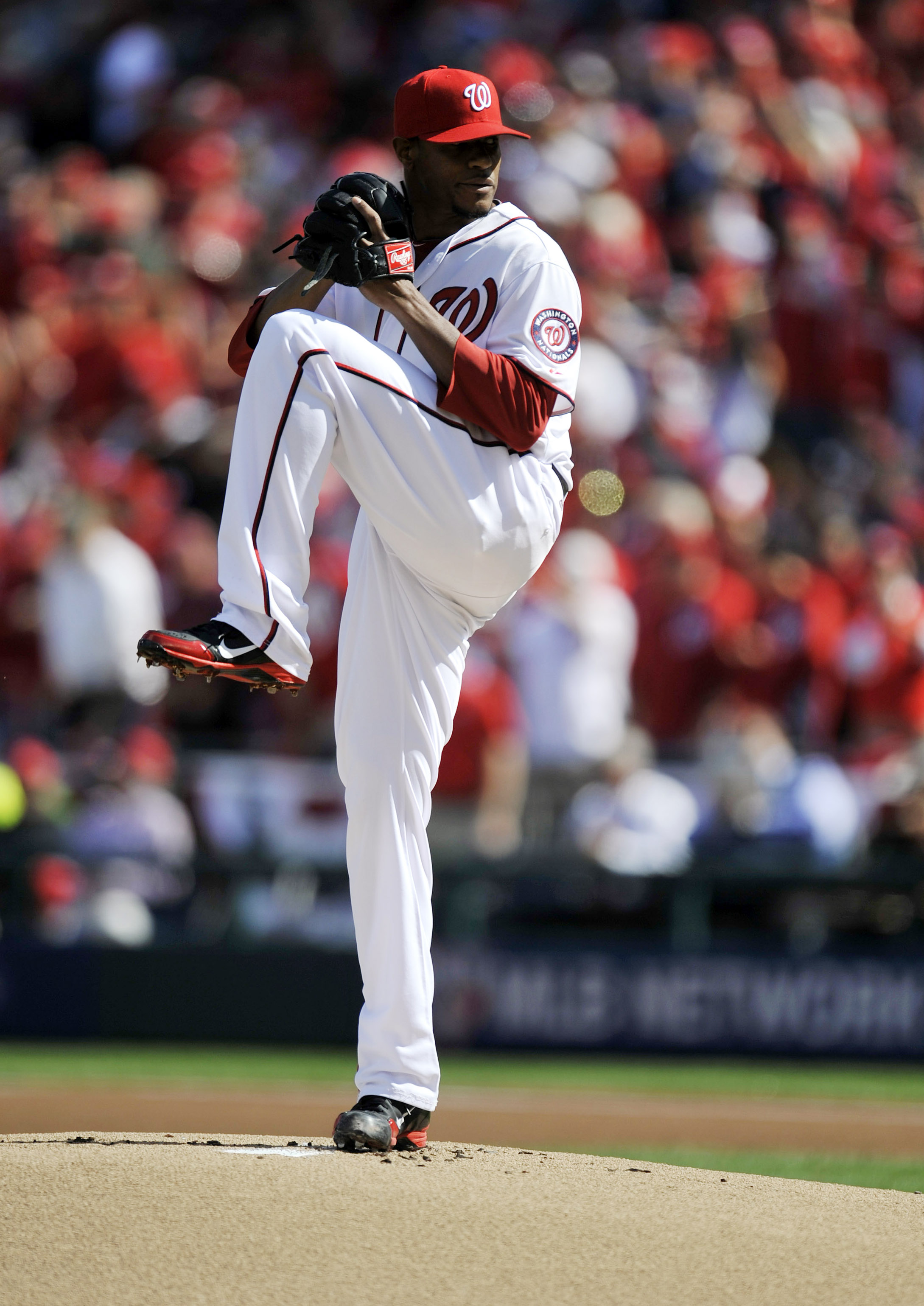
Under baseball's new collective bargaining agreement, teams had the ability to tender their free agents a guaranteed one-year "qualifying offer" that is equal to the average salary of the 125 highest-paid players from the most recently completed season. For the 2012-13 offseason, that amount was $13.3MM. Only nine players were deemed worthy of such offers by their teams: Bourn, Lohse, Josh Hamilton, Hiroki Kuroda, Adam LaRoche, David Ortiz, Rafael Soriano, Nick Swisher, and B.J. Upton. All nine players turned down the offer in search of more lucrative contracts.
Any team signing one of these nine free agents, outside of their own, was required to forfeit its highest available draft pick, with the first ten picks protected. Kuroda and Ortiz avoided the issue by re-signing quickly in November, and while LaRoche eventually re-signed with the Nationals in January, draft pick compensation did seem to affect his market. Swisher and Soriano ultimately signed smaller-than-expected contracts as well. Higher-caliber players such as Hamilton and Upton seemed unaffected.
Many of our top 20 free agents were able to avoid qualifying offers. Zack Greinke, Anibal Sanchez, Shane Victorino and Ryan Dempster skirted the issue by virtue of midseason trades, which make a player ineligible to receive a qualifying offer. In a January radio interview with Tim McKernan, Jim Hayes, and Doug Vaughn of The Morning After, Lohse referred to this as a "get out of jail free card" for Greinke and Sanchez.
Other top 20 free agents, such as Edwin Jackson, Angel Pagan, Mike Napoli, and Torii Hunter, simply didn't receive qualifying offers from their former teams. Jackson ultimately signed the largest contract of these players, a $52MM pact with the Cubs that basically guarantees him a qualifying offer-type salary over four seasons. The Nationals, who stood to receive a draft pick in the supplemental first round had Jackson declined a qualifying offer to sign elsewhere, elected to move on instead. Jackson's agent, Greg Genske of The Legacy Agency, preferred not to speculate on the Nationals' decision, but told MLBTR, "We were delighted to see that they didn't offer him a qualifying offer, because we know this: it's certainly not going to hurt him to not have the draft pick compensation attached to him." The Cubs ran parallel pursuits of Jackson and Sanchez, and it's no coincidence the rebuilding team zeroed in on pitchers who would not require the forfeiture of their second round draft pick.
If signing a free agent does require the forfeiture of a first or second round draft pick, how much does it matter to potential suitors? It's team-specific, explained Genske, who said, "I think that most of the teams that are in on the top-tier free agents are really focused on winning now. So I think they're less inclined to be concerned about that draft pick and even the bonus pool money associated with it." In Victorino, Dempster, and Napoli, the Red Sox signed three top 20 free agents who did not come with draft pick compensation attached. GM Ben Cherington explained to MLBTR, "We have to consider the cost of giving up a pick, as draft picks are valuable, and so it's part of the acquisition cost for a free agent attached to a draft pick. But there are cases we will consider giving up a pick for the right player. This offseason many of our targets didn't require that, but it was a secondary benefit, not the driving factor in our pursuit." One NL exec I spoke to seemed less concerned about potentially losing a draft pick, saying, "If we really want the player and feel he can make the difference for us in having a championship club – or building toward a championship club – it’s not a significant factor. Look, we all like picks and prospects, but even among the top 50 prospects in the game more than half of them never make it."
Lohse, our tenth-ranked free agent, clearly feels draft pick compensation dragged down his market, telling McKernan, Hayes, and Vaughn, "Losing the pick, it's obviously kind of a big deal for teams, but they also lose about 30% of the money they can spend on the draft, so that definitely handcuffs them when it comes to signing other people." Lohse hit on one major difference between losing a draft pick now versus under the old CBA: the team also loses the MLB-allotted slot money associated with that pick. And unlike previous offseasons, a team can't go over slot elsewhere in the draft to make up for a lost pick.
What can an agent do to avoid Lohse's plight? Perhaps agents will push impending free agents to be more open to waiving their no-trade clauses midseason, in hopes of snagging that "get out of jail free" card. One strategy, allowed under the old CBA, was to negotiate a clause into a free agent contract that stipulated the team could not offer arbitration after the season. This type of agreement is outlawed in the new CBA "whether implied or explicit, either orally or in writing," with potentially steep penalties. A bold agent could legally sidestep draft pick compensation in one way: convince the client to sit out the first two months of the season and sign after the June draft. Otherwise, the agent is left to explore the unlikely scenario of a sign-and-trade loophole. It should also be noted that the Mets are currently lobbying MLB for an exception that would lessen the blow for teams with bottom-ten records whose first-round draft pick was pushed out of the protected top ten.
Lohse admitted he's biased, but wondered in the interview if "the rules could use a little tweaking [to] figure out a way to make it a little more fair." The NL exec with whom I spoke doesn't find the current system unfair, noting that "the great thing about qualifying offers was that only elite players received them." Cherington also feels we're better off now, telling MLBTR, "I think the new rules are more equitable..it's less likely that a player's market will be affected by being attached to a pick. The intent is to provide some compensation to teams who lose the most impactful free agents to free agency particularly those who a team has invested in over time." Genske feels the same from the agency side, telling me, "You take a lot of the people out of the [draft pick compensation] system altogether, which is helpful for players, and you've limited some of the arbitrary nature as as to what the compensation is going to be for a particular free agent."
The bottom line: the new draft pick compensation system is superior, but a qualifying offer is a major drag on the leverage of good-but-not-great free agents. For such players, perhaps teams that place a lower value on draft picks will become the most coveted destinations, so that qualifying offers can be avoided.
Photo courtesy of USA Today Sports Images.
MLBTR Originals
A look back at the original reporting and analysis found on MLBTR this past week:
- Ben Nicholson-Smith participated in the conference call announcing Martin Prado's four-year, $40MM contract extension with the Diamondbacks and reported Prado was surprised by his inclusion in the Justin Upton trade, but is happy to be in Arizona.
- Ben explained the basics of the arbitration process.
- Mark Polishuk asked MLBTR readers what will be the terms of Michael Bourn's next contract. Just over 44% of you believe Bourn will have to settle for a one-year deal in the neighborhood of $12-15MM.
- Ben asked MLBTR readers whether the Padres should extend Chase Headley and more than 70% of you would do so.
- Zach Links asked MLBTR readers which remaining player on MLBTR's Top 50 Free Agents list will sign next. More than 41% of you believe it will be Joe Saunders (#25).
- Daniel Seco asked MLBTR readers whether the Rangers have done enough this offseason and an overwhelming 85% of you believe they haven't.
- MLBTR was the first to learn Cardinals prospect Oscar Taveras switched agents leaving Melvin Roman for Rob Plummer.
- Ben hosted the MLBTR live chat this week.
- Zach compiled this week's edition of Baseball Blogs Weigh In.