
Giants To Sign Carlos Rodon
March 14: Rodon’s opt-out clause is contingent on him pitching at least 110 innings this season, tweets Mark Feinsand of MLB.com. If Rodon does not throw at least 110 innings in 2022, he will not be able to opt out of the contract’s second season.
March 11, 3:21pm: Rodon will earn $21.5MM in 2022 and $22.5MM in 2023, tweets USA Today’s Bob Nightengale.
3:07pm: The Giants have reached a two-year, $44MM deal with left-hander Carlos Rodon, reports ESPN’s Jeff Passan. Rodon, a client of the Boras Corporation, can opt out of the contract after the first year of the deal. Susan Slusser of the San Francisco Chronicle reported shortly beforehand that Rodon was “very much in play” for the Giants.
The 29-year-old Rodon is arguably the top starter on the market at this point after a breakout 2021 season. The former No. 3 overall pick returned from a series of injury-marred seasons to turn in the finest performance of his career, dominating the American League for much of the season. Through late July, Rodon was one of the favorites for the Cy Young Award, having pitched to a sparkling 2.14 ERA with a sensational 36.6% strikeout rate against a 6.8% walk rate.
Rodon overwhelmed the Astros on July 18, pitching seven innings of scoreless, one-hit ball and racking up 10 punchouts. That, however, would be the last time the southpaw pitched more than five innings in an outing. Rodon lasted just four frames and allowed four runs in each of his next two starts. He rebounded to dominate a stripped-down Cubs team that had traded away most of its lineup, tossing five shutout innings with 11 strikeouts on Aug. 7.
Rodon then hit the injured list with shoulder fatigue, returned on Aug. 26, and went on to make only five starts over the regular season’s final 39 days. He reached 80 pitches in just one of those five appearances, and his fastball sat at a greatly diminished 93.2 mph in that time. Rodon was still effective in that time (2.35 ERA in 23 innings), but his strikeout rate was down to 27.2% — still strong, but not quite elite.
Heading into the postseason, Rodon’s status was a question mark, though he was ultimately included on the ALDS roster and deemed good to go for a Game 4 appearance. Rodon came back out slinging his fastball in the upper 90s, but he lasted just 2 2/3 innings in a game that would eventually result in Chicago being bounced from the playoffs.
On the whole, Rodon finished out the regular season with a 2.37 ERA, a 34.6% strikeout rate and a 6.7% walk rate in 132 2/3 innings. He ranked among the league leaders in terms of swinging-strike rate, opponents’ chase and overall strikeout rate. Statcast generally felt that Rodon’s breakout ERA was legitimate, pegging him for an “expected” 2.68 ERA in addition to a .189 expected opponents’ batting average and .316 expected slugging percentage.
As if the late-season shoulder woes weren’t troublesome enough, though, further questions surrounding Rodon’s health emerged after the White Sox opted against issuing him an $18.4MM qualifying offer. The fact that the team that knew Rodon best wasn’t comfortable with a one-year deal even after a season of that caliber cast serious doubt on the status of his shoulder. Earlier this morning, however, SNY’s Andy Martino tweeted that the medicals on Rodon were “actually very good,” citing multiple teams who’d looked into the southpaw. Clearly the Giants agree to an extent, as they saw fit to promise Rodon more than double what he’d have received upon signing a qualifying offer. Because Rodon did not receive the QO, the Giants won’t have to surrender any draft picks to sign him — and the White Sox won’t receive any compensation for his departure.
Rodon’s contract may have two guaranteed years, but it’s essentially a more modern version of the oft-seen one-year “pillow” contract. If he remains healthy and pitches well, Rodon will be a lock to opt out of the contract in search of a nine-figure guarantee heading into what would be his age-30 season in 2023. (And, depending on whether MLB and the MLBPA agree to an international draft by July 25, he may not have to face a qualifying offer next winter.) If not, he’ll still have the safety net of a weighty salary for the 2023 season — after which he’d have another bite at the free-agent apple.
The signing isn’t without its risk for the Giants. Beyond Rodon’s late-season shoulder troubles, the left-hander had simply never performed anywhere near this level prior to the 2021 season. This is the type of performance that both the White Sox and their fanbase hoped for when Rodon was drafted No. 3 overall and immediately ranked as one of the sport’s best pitching prospects. However, Rodon was more of a third or fourth starter for the bulk of his career in Chicago, pitching to a 4.01 ERA through 494 1/3 innings from 2015-18. Along the way, he dealt with a litany of injury troubles, ranging from minor issues like a wrist strain to more severe problems in his shoulder (which required surgery in September of 2017) and in his elbow (which required Tommy John surgery in May of 2019).
Red flags aside, this type of short-term, high-annual value structure is one with which Giants president of baseball operations Farhan Zaidi is quite comfortable. Zaidi, the former Dodgers general manager, pursued arrangements of this type often in Los Angeles, and since moving to the Giants he’s had a clear preference to avoid long-term contracts — even if it means paying a higher annual premium. Under Zaidi, the Giants haven’t given out a contact of more than three years in length to any free agent, and it was reported early in the offseason that the team was disinclined to pursue players expected to command nine-figure deals.
Notably, Rodon’s $22MM annual rate of pay is a match with that of now-former Giants righty Kevin Gausman in Toronto, but Gausman commanded a five-year pact. Gausman has a greater track record of durability, of course, but Rodon certainly has the ability to match or even exceed Gausman’s production, provided he can remain on the mound.
Rodon becomes the fourth and presumably final rotation addition for the Giants this winter. Four of San Francisco’s five starters — Gausman, Anthony DeSclafani, Alex Wood and Johnny Cueto — reached free agency at season’s end, leaving only budding ace Logan Webb as a lock for the ’22 rotation. The Giants have since re-signed both DeSclafani (three years, $36MM) and Wood (two years, $25MM) while also adding veteran righty Alex Cobb (two years, $20MM).
Some additional depth could always be brought in behind that quintet, as there’s little in the way of experience behind them. Out-of-options right-hander Tyler Beede is likely ticketed for a long relief role and is the sixth man up on the depth chart, but the other names on the Giants’ 40-man roster (e.g. Sammy Long, Sean Hjelle, Kervin Castro) are either light on experience or haven’t pitched in the Majors at all. San Francisco has Corey Oswalt in camp on a minor league deal, but the front office hasn’t exactly loaded up on depth options to cover rotation innings in the event of an injury. Given that each of Rodon, Wood and Cobb have extremely lengthy injury histories, some additional veteran stability would be prudent.
That said, with Webb and Rodon now forming a formidable one-two punch and a trio of strong mid-rotation options behind them, the Giants have the potential for one of the better staffs in the National League. The Giants still have work to do and seem likely to find some punch to add to the lineup in the coming days/weeks, but the rotation is in good shape and, unlike last season’s unit, can potentially remain in place for at least one year beyond the upcoming campaign.
Twins Showing Interest In Trevor Story
12:15pm: Story has already turned down at least one nine-figure offer from a team that wanted him to change positions, tweets MLB Network’s Jon Heyman. Story’s strong preference has been to remain at shortstop — a desire that the Twins can clearly accommodate if they’re comfortable with Story’s price tag.
12:30am: The Twins have completed a whirlwind series of trades over the past 36 hours, shipping out Mitch Garver, Josh Donaldson, Isiah Kiner-Falefa (briefly acquired for Garver) and prospect Chase Petty (their top pick from last summer’s draft) while acquiring Sonny Gray, Gio Urshela, Gary Sanchez and a pair of pitching prospects. It’s a dizzying gambit, but it’s quite likely that Minnesota is only getting started. That frenzy cleared roughly $41MM from the Twins’ books, and their 2022 payroll is at a projected $94MM presently — about $40MM shy of their franchise-record.
One area the Twins could look to spend some of the money saved in that Donaldson swap is back at shortstop, where they briefly filled a need via the acquisition of Kiner-Falefa before sending him to the Yankees in tonight’s Donaldson blockbuster. To that end, Dan Hayes of The Athletic reports that the Twins have been in touch with the representatives for free-agent shortstop Trevor Story.
That Kiner-Falefa’s time with the Twins proved to be only a day was surely music to the ears of Story’s agents. The Yankees had made clear that they planned to eschew a big-name signing at shortstop, instead preferring a more short-term bridge to top prospects Anthony Volpe and Oswald Peraza. The trade of Kiner-Falefa not only gives the Twins a potential opening at shortstop — though it should be noted that Urshela can handle that position if needed — but also freed up some additional money to spend.
Looking past the $94MM projected on their 2022 books, the Twins only have about $39.5MM in guarantees on the 2023 ledger. They’ll quite likely pick up the $12MM option on the newly acquired Gray, but even still, that leaves ample room for another weighty salary — particularly since Minnesota will have a fairly light arbitration class in 2023. By the time 2024 rolls around, the Twins have less than $20MM in guaranteed money on the books. Again, that number will jump due to arbitration and, more notably, the $10MM and $10.5MM options they hold on Max Kepler and Jorge Polanco. Even with those contracts, a Story-sized salary could easily be accommodated.
The 29-year-old Story had something of a disappointing season overall, as an elbow issue impacted him at the plate and dragged down his throwing ability in the field. That said, Story’s .251/.329/.471 slash and 24 home runs in 595 plate appearances were still solid, and he has a track record of strong production on both sides of the ball. Dating back to 2018, he’s a .281/.348/.532 hitter with 107 home runs and 85 steals in 2166 plate appearances. Hitters who call Coors Field their home tend to have pronounced splits that draw the ire of skeptics, but Story has been about 17% better than league average with the bat since ’18 even after weighting for his home park (117 wRC+).
Defensively, Story’s 2021 was something of a mixed bag. Both Defensive Runs Saved (+9) and Ultimate Zone Rating (+3.6) felt he was characteristically strong with the glove, but Statcast’s Outs Above Average pegged him at a career worst mark of minus-7. Outside of that one OAA mark, though, Story has a sterling defensive reputation and the gaudy metrics to match. He ranks seventh in all of Major League Baseball, regardless of position, with 69 Defensive Runs Saved dating back to 2016. His 15.4 UZR in that time isn’t quite so dominant but still ranks 41st among all big leaguers, and OAA feels he’s been a strong defender outside of 2021 (+18 dating back to 2016).
As previously alluded to, Minnesota needn’t necessarily feel obligated to make a big splash at shortstop. Urshela can man the position at a satisfactory level, and they have minor leaguer Jose Miranda, who exploded into top-100 prospect territory with a massive .344/.401/.572 showing between Double-A and Triple-A in 2021. Miranda is knocking on the door to the big leagues as it is, and his best position is widely considered to be third base. That said, there’d be little harm in getting him a further look in the Majors, and the depth afforded by having each of Urshela, Story, Polanco, Miranda and Luis Arraez would be enviable.
Whether Story ultimately lands in Minnesota, the Twins will apparently be involved in the bidding to an extent. The largest free-agent contract the Twins have ever given out was Donaldson’s four-year, $92MM contract, and Story could well topple that mark this winter, wherever he signs. With Donaldson off the books, Byron Buxton signed to a seven-year/$100MM contract and a generally clean payroll slate after the ’23 season, Minnesota can afford to make a splash on just about any free agent that’s left on the market. That doesn’t make them any kind of lock to ultimately sign Story or another big-ticket free agent, but the Twins are making things interesting after laying largely dormant prior to the lockout.
Phillies To Sign Brad Hand
9:46am: The Phillies and Hand are in agreement on a one-year deal that will guarantee him $6MM, reports ESPN’s Jeff Passan. Hand is represented by Jet Sports Management. It’s a straight one-year deal with no options and no incentives to boost the salary, MLBTR has learned.
9:20am: The Phillies are in talks with free-agent lefty Brad Hand, tweets MLB Network’s Jon Heyman. He’d be the third notable addition to the Phils’ bullpen so far this offseason, joining likely closer Corey Knebel (who signed before the lockout) and righty Jeurys Familia, who agreed to terms on Saturday.
Hand, 32 next week, is a three-time All-Star but is in need of a rebound campaign after struggling through a lackluster showing between the Nationals, Blue Jays and Mets in 2021. Signed by Washington to a one-year, $10.5MM last winter, Hand posted a solid 3.89 ERA with the Nats, albeit with a greatly diminished 23.1% strikeout rate.
Things went awry for Hand following a July trade to the Blue Jays, as the lefty never really found his footing in Toronto. Hand was scored upon in five of his 11 appearances with the Jays, ultimately yielding 10 runs (seven earned) on 13 hits and three walks in just 8 2/3 innings. Hand wound up being designated for assignment in August and claimed by the Mets, where he turned things around to an extent: seven runs (four earned) on a dozen hits and five walks with 14 strikeouts in 13 1/3 innings.
All told, hand’s 2021 season concluded with a respectable 3.90 ERA that was a ways north of the combined 2.70 ERA he logged during a 2016-20 stretch that was punctuated by three All-Star nods. Last year’s 21.9% strikeout rate was far and away his lowest since moving to the bullpen on a full-time basis in 2016, and his 9.4% walk rate was the second worst mark Hand has posted since that conversion to relief work. It wasn’t all bad news for Hand, as his average fastball velocity rebounded to 93.3 mph after dipping to 91.5 mph in 2020; from 2016-19, Hand averaged 93.4 mph on his fastball, so last year’s mark is right in line with Hand’s velocity from his peak performance.
Hand would join the aforementioned Knebel and Familia in occupying a late-inning role in Joe Girardi’s bullpen. He’d also give the Phils a third lefty option alongside fireballing Jose Alvarado and waiver claim Ryan Sherriff. Right-handers Seranthony Dominguez, Sam Coonrod, Connor Brogdon and Nick Nelson are among the options who could round out the relief corps if a deal to bring Hand into the fold ultimately does come to fruition. The Phillies currently project for a payroll around $200MM, and they’re well south of the new $230MM first tier of luxury-tax penalization.
Yankees Acquire Josh Donaldson, Isiah Kiner-Falefa, Ben Rortvedt From Twins For Gary Sanchez, Gio Urshela
The Bronx Bombers’ quiet offseason has come to an abrupt end, as the Yankees and Twins have combined on a blockbuster of a five-player deal. Third baseman Josh Donaldson, infielder Isiah Kiner-Falefa, and catcher Ben Rortvedt are all heading to the Yankees, while the Twins will pick up catcher Gary Sanchez and infielder Gio Urshela. The $50MM still owed on Donaldson’s contract is being entirely absorbed by the Yankees, as per MLB.com’s Mark Feinsand. To create space on their 40-man roster, New York placed reliever Zack Britton on the 60-day injured list.
Donaldson has a five-team no-trade clause, though it isn’t known if the Yankees were one of the five clubs on his list, or if he waived his clause to head to New York. The Yankees will pay a $2MM assignment bonus due to the trade, and in being moved, the $16MM club option on Donaldson for 2024 now becomes a mutual option with a $6MM buyout, rather than an $8MM buyout.
This gigantic deal creates a shakeup on the rosters of both clubs, and ends Kiner-Falefa’s Minnesota tenure after just one day. The Twins only acquired Kiner-Falefa from the Rangers for Mitch Garver on Saturday, but now the former Gold Glover has been flipped as part of a much bigger deal that sees the Twins move a major salary off their books. Another flip doesn’t appear to be forthcoming, as The Athletic’s Ken Rosenthal says the Twins plan to use Sanchez behind the plate.
After a winter of speculation about how the Yankees would address their infield, the Bronx Bombers have now installed Donaldson as their new everyday third baseman and Kiner-Falefa as their new shortstop. (New York was linked to IKF earlier this winter, so the team has finally landed him even after his brief stopover in Minnesota.) DJ LeMahieu may float between first and second base, sharing time with Gleyber Torres at the keystone and Luke Voit at first base. The DH spot is also a possibility to give at-bats to players, depending on how much outfield time Giancarlo Stanton can handle.
All this to be said, we certainly can’t rule out the Yankees making yet another big splash, since the team has been linked to both Freddie Freeman and Matt Olson to address first base. If either of those players are obtained, Voit would certainly look like an immediate trade candidate, and even dealing LeMahieu or Torres could be a possibility depending on what direction the Yankees wish to take.
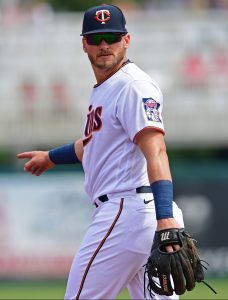 Donaldson is no stranger to the AL East, having enjoyed some of his best years (including his 2015 MVP season) while playing with the Blue Jays from 2015-18. The 36-year-old’s production hasn’t declined much since those years in Toronto, as while injury concerns have cropped up as Donaldson has gotten deeper into his 30s, Donaldson is still a dangerous bat. The third baseman hit .247/.352/.475 with 26 homers over 543 PA with the Twins last season, and continued to post his usual elite-level hard-contact and walk rates.
Defensive metrics are mixed on Donaldson’s third base glovework, but New York is hoping that Kiner-Falefa can pick up any defensive slack on the left side of the infield. The winner of the AL Gold Glove Award as a third baseman with Texas in 2020, Kiner-Falefa has also been impressive over 1498 career innings shortstop in the view of the Defensive Runs Saved (+14) and UZR/150 (+1.7) metrics, though the Outs Above Average metric (-7) was very down on his shortstop glovework in 2021. The Fielding Bible ranked Kiner-Falefa third among all shortstops in their voting for the 2021 season.
Kiner-Falefa is controlled through two more arbitration seasons, thus essentially making him a bridge to what the Yankees hope will be their shortstop of the future. All winter long, New York has reportedly resisted getting into the hunt for the top tier of the free agent shortstop market due to the team’s belief in star prospects Anthony Volpe and Oswald Peraza. With Peraza maybe approaching his MLB debut as early as this season and Volpe perhaps coming by 2023, the Yankees wanted to retain flexibility at shortstop rather than lock themselves into a ten-year commitment to a Carlos Correa or a Corey Seager.
Rortvedt is the least famous of the five names involved in the swap, and he hit only .169/.229/.281 over his first 98 PA in the majors, all with Minnesota last season. While Rortvedt has hit better in the minors, he isn’t expected to be another Sanchez at the plate, as the Yankees seem to intend Rortvedt to platoon with Kyle Higashioka in something of a defense-first tandem. Given all the other pop in New York’s lineup, focusing on glovework behind the plate seems like a fair tradeoff, particularly since Sanchez’s defense has been a topic of controversy for years amongst Yankees fans. Again, it isn’t out of the question that the aggressive Yankees could make another move to add a more proven veteran to the catching mix.
Payroll-wise, the Yankees take on Donaldson’s $50MM, the projected $4.9MM for Kiner-Falefa’s 2022 salary, and Rortvedt’s minimum salary. Urshela’s $6.55MM salary for 2022 and Sanchez’s projected $7.9MM salary come off the books, leaving the Bombers with a luxury tax number of roughly $242.7MM (according to Roster Resource). This is well over the new $230MM tax threshold but under the “second tier” of $250MM that would trigger a stiffer financial penalty for the Yankees. The club made a point of ducking under the luxury tax line in 2021 and thus resetting its clock, so the Yankees would only have to pay a first-timer penalty of 20 percent on the overage for every dollar spent between $230MM and $250MM.
The savings are much more profound for the Twins, who get Donaldson off their books and have now freed up some longer-term payroll space. According to SKOR North’s Darren Wolfson (Twitter link), the Twins didn’t pick up Kiner-Falefa with the intention of immediately moving him again, yet the club was ultimately swayed at the Yankees’ offer to take all of Donaldson’s contract.
This isn’t to say that Minnesota is necessarily looking to tear down the roster, as much of Donaldson’s 2022 salary space has now been filled by Sanchez, Urshela, and even Sonny Gray, acquired earlier today from the Reds. After spending just under $100MM on payroll in 2021, the Twins have around $94.2MM on the books for 2022 at the moment, giving them more space for other moves if they even approach their $125MM-$131MM full season payrolls from the 2018-19 seasons.
Owner Jim Pohlad said last summer that the Twins wouldn’t be rebuilding, and while it seems as though the Twins are still firmly planning to contend in 2022, they’ve created more maneuverability for themselves in landing Sanchez (one remaining year before free agency) and Urshela (two years of control). Should things go south for the Twins in 2022 as they did in 2021, therefore, the team may be able to more cleanly pivot towards moving players at the trade deadline, and perhaps at that point consider a larger-scale rebuild.
It wasn’t long ago that Sanchez was seen as a key to the Yankees’ future, breaking out with huge power numbers that seemed to put him next in the long line of big-hitting Bronx catchers. However, Sanchez has produced average-to-mediocre numbers in three of the last four years, leading to speculation this past fall that Sanchez could even be a non-tender candidate. Clearly, hanging onto the catcher proved worthwhile for the Yankees, as they were able to make him a big trade chip in this major swap.
Between his defensive issues and his evolution into a three-true-outcomes type of player, it remains to be seen if Sanchez can find a fresh start in Minneapolis. He wouldn’t be the first player to blossom outside of the New York pressure cooker (his new teammate Gray is a prime example), and Sanchez still provides strong power and on-base numbers. Sanchez still makes plenty of hard contact, but just making that contact has been a persistent issue, as Sanchez has been one of the game’s more strikeout-prone hitters for five seasons running.
Assuming the Twins do indeed plan to keep Sanchez, he’ll pair with Ryan Jeffers (a more defensive-minded catcher) as Garver’s replacement. Elsewhere in the infield, a situation that seemed settled with Kiner-Falefa’s addition is now once again thrown up in the air.
While Urshela has some experience as a shortstop, it seems much more likely that he’ll take Donaldson’s spot at third base, as the hot corner is Urshela’s usual position and he has shown himself to be a very solid defender. Urshela basically came out of nowhere to post huge numbers for the Yankees in 2019 and 2020, quickly making himself an infield regular amidst several injuries to New York’s roster during the 2019 campaign.
However, Urshela ran into some health issues himself this past season, missing time amidst a COVID-19 outbreak in the New York clubhouse and then a left hamstring strain. This could explain Urshela’s dropoff to a modest .267/.301/.419 slash line and 14 home runs over 442 PA, while his walk and strikeout rates plummeted from their 2020 levels.
The Twins are obviously counting on rebounds from both of their new players, and there is some obvious upside to the club’s plan. Should Sanchez and Urshela return to their 2019 form, that will be more than make up for the loss of Donaldson’s bat. The scope of this deal would seem to hint that at least one notable follow-up move will be coming, as the Twins now again need to address a shortstop void that Kiner-Falefa had seemingly filled. Jorge Polanco could move back to shortstop in a pinch but the Twins prefer him as a second baseman going forward.
Since Urshela can at least handle shortstop on a part-time basis, the Twins could also opt to land another third baseman, thus allowing for an Urshela/Polanco timeshare at shortstop and a Polanco/Luis Arraez split at second base. Daniel Robertson and Tim Beckham are also in camp on minor league deals for further infield options, and infield prospect Jose Miranda‘s big 2021 season has put him on the verge of his MLB debut.
ESPN’s Jeff Passan (Twitter link) was the first to report that Donaldson and Kiner-Falefa were being dealt to the Yankees, while MLB Network’s Jon Heyman reported that Sanchez and Urshela were going to Minnesota. The Athletic’s Ken Rosenthal (via Twitter) reported Rortvedt’s inclusion in the trade.
Photo courtesy of USA Today Sports Images
Nationals To Sign Nelson Cruz
The Nationals have reached an agreement to sign designated hitter Nelson Cruz to a one-year deal worth $15MM, according to Ken Rosenthal of The Athletic. He notes that the contract includes a mutual option for 2023.
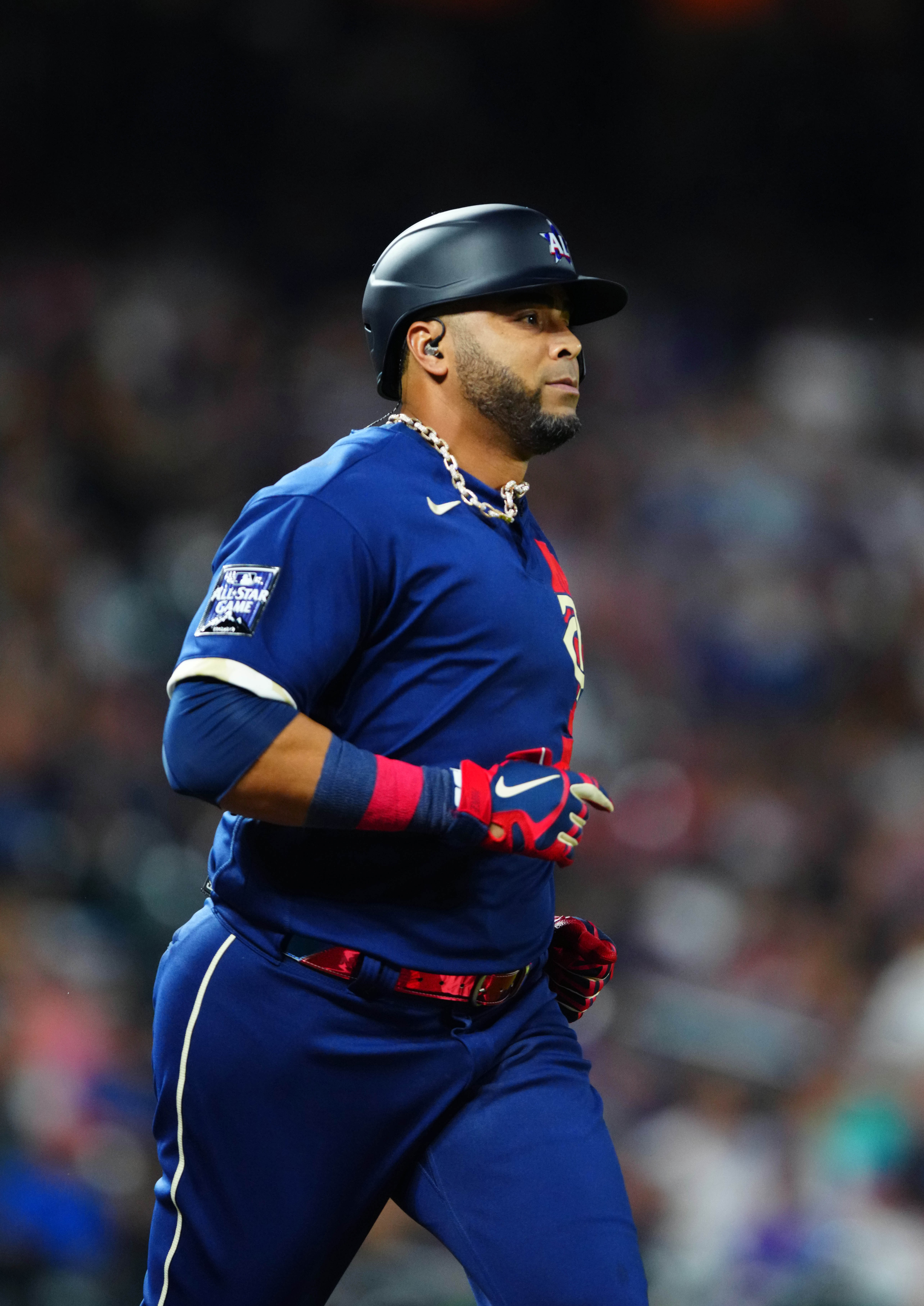
Cruz has been one of the best pure bats in baseball for over a decade, as he has posted a wRC+ of at least 106 each season since 2008, and a wRC+ of at least 122 in each season since 2013. Despite that, his market has increasingly been limited to American League teams due to his defensive limitations. The last time he played more than five games in the field was 2016, and the last time he played the outfield at all was 2018, though he did play one game at first base in 2021. With the new CBA expanding the designated hitter to the National League, that doubled the slugger’s market, perhaps making him the primary beneficiary of the rule change.
This incredible production has all occurred despite Cruz being one of the oldest players in the league, as he’ll turn 42 in July. The slugger had a mixed season last year, as he had a line of .294/.370/.537 and a wRC+ of 141 with the Twins, but after being traded to the Rays, slashed .226/.283/.442, wRC+ of 96. Despite that limited production down the stretch, the overall line on the season was still strong: .265/.334/.497, wRC+ of 122.
In their first full season with a full-time designated hitter, the Nationals have chosen to eschew the common plan of rotating various players through the spot for rest. They’ll instead turn to Cruz as a 30+ home run bat in the middle of their lineup. A heart of the order featuring Juan Soto, Josh Bell, and Cruz could be fearsome indeed.
Once the lockout ended, rumors started flying about Cruz’s potential destination, with the Dodgers, Padres, Brewers, and Braves considered finalists earlier today. Cruz wound up choosing a dark horse suitor in the Nationals, returning to a National League club 17 years after his brief debut with Milwaukee. Cruz’s $15MM salary is a $2MM increase from the amount he received from the Twins about a year ago.
Last year, after signing Kyle Schwarber to a one-year, $10MM deal and seeing him make the All-Star team, the Nats shipped him to the Red Sox for righty Aldo Ramirez, who is now the team’s 12th-ranked prospect according to Baseball America. If the Nationals aren’t in contention as the 2022 trade deadline approaches, Cruz could allow for a similar gambit.
Nationals GM Mike Rizzo oversaw something of a reboot last summer, as the club shipped off Schwarber, Max Scherzer, Trea Turner, Brad Hand, Jon Lester, and Daniel Hudson at the trade deadline. Even with Cruz in tow, the club’s competitive balance tax payroll sits around $150MM, which would mark the team’s lowest since 2013. Though the Nationals’ primary offseason need was thought to be pitching, thus far Rizzo has only made minor additions in Steve Cishek, Anibal Sanchez, Erasmo Ramirez, and Aaron Sanchez.
Dodgers Re-Sign Clayton Kershaw
Clayton Kershaw is staying put, as the Dodgers announced he’s re-signed on a one-year contract. The deal reportedly guarantees him $17MM and contains incentives based upon his number of appearances. The Excel Sports Management client will earn $1MM for reaching each of 16, 20, 22, 24 and 26 appearances next season. He’d also receive a $1.5MM bonus in the event he wins the Cy Young Award next season, with a $500K finish for a second or third-place finish.
It’ll be Kershaw’s fifteenth season in Dodger blue, as the future Hall of Famer returns to the only organization he’s ever known. The front office allowed him to hit free agency for the first time this offseason, but team executives consistently maintained they’d love to keep him in the fold.
Very early in the offseason, it became apparent that the Dodgers and Rangers were the favorites for his services. The 2014 NL MVP didn’t tip his hand publicly about where he was leaning, but Texas and L.A. each had their respective positives. The Rangers offered the Highland Park native a chance to play near his hometown, in addition to the opportunity to reunite with Texas manager Chris Woodward, who’d previously served as a coach with the Dodgers. Yet Los Angeles offered organizational familiarity and a more immediate path to postseason play.
Kershaw is obviously among the greatest pitchers in franchise history, and it stands to reason the Dodgers would’ve wanted to keep him around for legacy purposes alone. He’s claimed five ERA titles, posting a sub-3.00 mark in eleven of his last thirteen seasons. He’s a three-time Cy Young award winner and finished in the top five in NL balloting each season between 2011-17. The veteran southpaw has led the league in strikeouts on three occasions and was a key contributor on the 2020 World Series winning team.
Yet there’s little question the Dodgers — again one of the top on-paper contenders in the league — also were motivated to bring him back because they believe he’ll still be an effective pitcher in 2022. The 33-year-old (34 next week) is no longer the undisputed best pitcher in the sport, but he was still among the top performers on a rate basis last season. Last year’s 3.55 ERA was his highest since his 2008 rookie campaign, but it’s nevertheless solid run prevention. And Kershaw’s peripherals were better, right among the top of the league.
Kershaw struck out a lofty 29.5% of batters faced while walking a minuscule 4.3% of opponents. His 16.7% swinging strike rate was a personal best, the number one mark in the league among pitchers with 100+ innings. He finished sixth in strikeout/walk rate differential (25.2 percentage points) and fifth in SIERA (3.10). Few other starters were that productive on a pitch-by-pitch basis, although Kershaw was limited to 121 2/3 innings and 22 starts by a late-season health scare.
The southpaw missed two months between July and September due to inflammation in his elbow/forearm area. He returned to make a few starts but dealt with renewed discomfort in his final regular season outing. That forced him to undergo a season-ending platelet-rich plasma injection, although he avoided surgery and has generally been expected to be a full-go for the start of the upcoming campaign.
Presuming his physical comes up clean, the Dodgers will install Kershaw back into a key rotation role. They’re in a better position than most teams to weather any potential concerns regarding his workload, given the depth on the roster. Walker Buehler and Julio Urías are at the top of the rotation, while David Price, Tony Gonsolin and offseason signee Andrew Heaney could all factor in at the back end. Dustin May could make a midseason return from May 2021 Tommy John surgery. It’s unclear whether Trevor Bauer will face a suspension from MLB, but he remains on the roster at present.
It’s an enviable group, and a top trio of Buehler, Urías and Kershaw could again be a nightmare for opposing offenses in a short postseason series. Yet it’s not out of the question the Dodgers keep trying to add there; they showed at last summer’s deadline in acquiring Max Scherzer they’re never afraid to pursue elite talent if the opportunity presents itself.
The $17MM guarantee will push the Dodgers’ payroll commitments — including projected salaries for arbitration-eligible players — to around $245MM, in the estimation of Jason Martinez of Roster Resource. They opened last season in the $248MM range, although the midseason acquisitions of Scherzer and Trea Turner pushed that figure up substantially.
Los Angeles’ luxury tax number (which is determined by summing contracts’ average annual values rather than real salaries) now sits right around $250MM. That’s $20MM north of the new collective bargaining agreement’s base threshold and right at the first surcharge marker. Los Angeles is all but certain to pay the luxury tax for a second straight year. Because they’ll be a repeat payor, the Dodgers would be subject to a 30% tax on every dollar spent between $230MM and $250MM; they’ll be taxed at a 42% rate for expenditures between $250MM and $270MM. As the club showed last season in blowing past all three thresholds, though, that’s not a concern for ownership in certain circumstances.
Kershaw’s return to L.A. no doubt will come as a disappointment to the Rangers, who had made no secret of their affinity for him. Texas has been among the most aggressive clubs this offseason, signing Corey Seager, Marcus Semien and Jon Gray in a pre-lockout frenzy, but the rotation is very light on certainty. Kershaw would’ve immediately stepped in as the Rangers’ top arm and a veteran voice for their younger starters. With him off the board, it’s possible Texas looks for more affordable stopgap options for the rotation — on deals similar to this afternoon’s $4MM reunion with Martín Pérez.
Kershaw and Carlos Rodón were quite arguably the final two top-of-the-rotation starters available in free agency coming into the day. Kershaw returns to L.A., while Rodón agreed to terms on a two-year pact with the archrival Giants. Yusei Kikuchi and Zack Greinke are the only currently-healthy unsigned starters who made MLBTR’s pre-offseason Top 50 Free Agents. With the top of the market now picked through, rotation-needy teams figure to turn to trade candidates who might offer mid-rotation or better production. The Reds and A’s are generally expected to make impact starters available over the coming weeks.
Ken Rosenthal of the Athletic first reported Kershaw was returning to the Dodgers on a one-year deal. Jon Heyman of the MLB Network was first to report the guarantee and the presence of incentives. Robert Murray of FanSided reported the incentive structure.
Image courtesy of USA Today Sports.
Twins Acquire Sonny Gray From Reds
The Reds and Twins are in agreement on a deal headlined by right-hander Sonny Gray, moving from Cincinnati to Minnesota, per Bobby Nightengale of the Cincinnati Enquirer (via Twitter). Along with Gray, the Twins will receive minor league right-hander Francis Peguero. In return, the Reds will acquire the 26th overall selection of the 2021 draft, right-hander Chase Petty. Both teams have announced the deal, making it official.
This deal has the potential to shake up both central divisions. The Twins, for their part, look much improved with the addition of Gray, and they might not be done adding starters, per MLB Network’s Jon Heyman (via Twitter). With Kenta Maeda out after undergoing Tommy John surgery, the rotation was easily the Twins’ biggest area of need moving forward.
Although the Twins bottomed out last year, which led to the sell-off of a number of high-profile names, much of the talent that took them to the playoffs in 2019 and 2020 remains. Gray represents a pseudo replacement for the biggest departure, Jose Berrios, who was traded to the Blue Jays in July. Though Berrios was a homegrown star – and he’s four and a half years younger than Gray – in the short term, the 32-year-old Gray is certainly capable of holding the line in what was once Berrios’ rotation spot.
Twins president of baseball operations Derek Falvey praised Gray for a makeup that’s “off the charts,” mentioning his ability to “anchor the rotation” and set an example for younger starters, per this video clip from Phil Miller of the Star Tribune. The player, the personality, and the two years of team control made Gray a natural target for this Twins’ squad.
Berrios is the broader talent of the two, but one could argue that Gray is a better fit for this particular Twins roster because of the versatility his contract affords them. Despite a $1MM bump to his contract because of the trade, tweets Nightengale, Gray’s 2022 salary still clocks in at a mere $10.7MM. Furthermore, the Twins now hold an affordable $13MM club option for 2023. That’s plenty economical for a rotation arm coming off a 3.3 rWAR/2.4 fWAR output over 135 1/3 innings spanning 26 starts.
Given the contract, the Twins can flip Gray again if they crater as they did in 2021, but if the club proves to be more competitive, Gray figures to be one of the reasons why. His strikeout numbers were down a touch from his career norms, down to a still-solid 27.0 percent strikeout rate, but his walk rate also improved to 8.7 percent, and there’s little reason to think he can’t continue to be a solid mid-to-front-end arm.
Gray should be helped by moving from the Reds’ uneven defense to a fairly well-equipped defensive unit in Minnesota. If Byron Buxton stays healthy, and Josh Donaldson can avoid an age-related decline at third, the Twins ought to catch their share of baseballs, especially with Isiah Kiner-Falefa taking over at short.
In terms of the wider impact on Minnesota’s roster, the rotation doesn’t have much else in the way of sure things. Randy Dobnak was signed to a low-risk, long-term contract last winter, but the 27-year-old struggled mightily in 2021 and didn’t end up spending much time in the rotation. Dylan Bundy had a similar kind of year for the Angels. The 29-year-old has a longer track record, but no less uncertainty. Joe Ryan, are Bailey Ober are likeliest to fill out the middle of the rotation, with Lewis Thorpe and Griffin Jax also competing for an opportunity. That’s not a unit to set your hair on fire, but it’s getting closer.
The Twins, of course, not only get the most established arm in the deal, but they’re also getting Peguero, a 24-year-old reliever out of the Dominican Republic who finished last season in High-A. Peguero isn’t close to the prospect that Petty is, but he’s a flyer nonetheless who at least has a chance of becoming a late-inning bullpen arm. Peguero posted a 4.96 ERA over 32 2/3 innings last year, striking out 36 batters in 32 2/3 innings, picking up six saves.
Taking the aerial view, the AL Central continues to get more competitive. The Tigers and Twins have both made strides to challenge the White Sox, who had a relatively clear path to a division title in 2021. Whether this will be enough to get the Twins back to their 2019-20 level remains to be seen.
On the other side, the Reds step further away from their short-lived identity as a free-spending all-out contender for the NL Central crown. The Reds spent aggressively to end their playoff drought prior to the 2020 season, and they succeeded in that measure, making the expanded playoffs as a 31-29 wild card team. They were shut out in their two playoff games, however. They actually improved by winning percentage in 2021, finishing the year with 83 wins, but out of the playoff money.
It’s tough to imagine the 2022 Reds doing even that well after subtracting Gray and Wade Miley from the rotation. Miley, of course, they gave away for nothing, letting division rival Chicago claim him off waivers. Miley may be a 35-year-old coming off a career year, but it still seems relatively short-sighted to let go of a starter who just posted a 5.9 rWAR season without netting even a lottery pick in return.
For Gray, at least, the Reds aren’t walking away empty-handed. Petty is a live-armed righty who can hit triple digits on the radar gun. As the Twins’ top draft pick in the 2021 draft, he comes with plenty of upside, but he’s also just a month out from turning 19. His future, therefore, comes with a wide range of potential outcomes. If nothing else, the Reds accomplished the goal of cutting money from their payroll while adding to the farm system.
Petty was the 7th-ranked prospect in the Twins’ system, per Baseball America, which marks both his fastball and slider as potential 70-grade offerings. He was starting games for the Twins and would continue to do so in 2022, but they saw Petty’s most likely future to be that of a “back-end reliever,” per The Athletic’s Dan Hayes (via Twitter). BA, similarly, writes that “Petty’s upside is significant, but his specific player demographic is inherently risky and he’ll need plenty of time to develop.”
The variability built into Petty’s future might make this trade a tough pill to swallow for Reds’ fans. In the short term, it’s fair to wonder if this deal drops the Reds behind even the Cubs in the overall hierarchy of the NL Central. They are firmly behind the Cardinals and Brewers, and still firmly ahead of the Pirates.
The coming weeks will tell a lot about how the Reds view this deal. If they are entering a full-blown rebuild, rumors about the availability of Luis Castillo and Tyler Mahle will continue to swirl. If, however, the Reds view this deal as a calculated re-balancing of the books – in the vein of how leadership pitched the Raisel Iglesias trade last winter – the Reds might still have enough talent leftover in the rotation to hang around the NL Central race.
At this point, however, they will be relying on a relatively unproven collection of arms after Castillo and Mahle. It’s hard to see where the rotation can build on last year’s success without Gray and Miley unless Hunter Greene quickly emerges as a frontline arm. Vladimir Gutierrez held his own last year, but he’ll need to take another step forward to be anything more than a back of the rotation arm.
There is time left this offseason for the Reds to shift the narrative, but for the time being, this move will further the perception of the Reds as a cost-conscious also-ran more concerned with lowering payroll than truly competing. Critics will lump this deal in with the Iglesias and Tucker Barnhart trades as evidence of their penny-pinching. The Barnhart deal is defensible because of the presence of Tyler Stephenson, but the Iglesias deal ended up hurting the club more than they anticipated in 2021. If the rotation falls off as many expect it will, the Reds will have a hard time selling this move as an example of roster savvy.
Mets Acquire Chris Bassitt From A’s
The Mets have acquired right-hander Chris Bassitt from the Athletics in a deal now officially announced by both teams ESPN’s Jeff Passan was the first to report that Bassitt was on the way to New York, while Joel Sherman of The New York Post reported Oakland will receive right-handed pitching prospects J.T. Ginn and Adam Oller in return for the 33-year-old All-Star.
Bassitt had been tabbed as one of the likelier players to be switching teams this offseason, as he had only one year of arbitration control remaining (at a projected $8.8MM salary) before free agency, and the A’s were known to be looking to cut payroll. With the Mets searching for further pitching upgrades, Bassitt seemed like a logical target for New York to add to a rotation that also saw Max Scherzer come to Queens prior to the lockout.
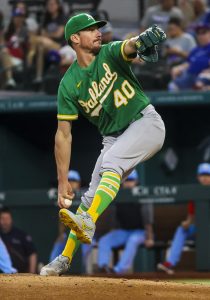 With Scherzer and Jacob deGrom atop the rotation, Bassitt will slot right alongside Taijuan Walker and Carlos Carrasco in what is now looking like one of baseball’s better rotations if everyone is healthy. Granted, that is a big if, given how deGrom and Carrasco each missed big chunks of the 2021 season due to injury, and even Scherzer battled a dead arm during the postseason.
Bassitt himself had a major injury scare last August when he was hit in the face with a line drive and needed surgery to repair facial fractures. After a rather remarkable recovery, Bassitt even returned to the mound for two abbreviated starts after spending over a month on the injured list. That comeback capped off a very impressive season for Bassitt, who has been a solid performer for most of his seven MLB seasons, and quietly been one of baseball’s better pitchers over the last two years.
After an eighth-place finish in AL Cy Young voting in the abbreviated 2020 season, Bassitt continued his fine form over 157 1/3 frames in 2021, resulting in a tenth-place spot in the AL Cy race and his first All-Star berth. Bassitt posted a 3.15 ERA, 25% strikeout rate, and 6.1% walk rate, as well as some very strong hard-hit ball numbers. Not known for his high velocity or big spin rates, Bassitt has a five-pitch mix that has generally done a good job of keeping hitters off-balance.
These are some very solid numbers for a No. 3 starter, and it provides the Mets with some front-of-the-rotation caliber pitching should deGrom, Carrasco, or any other pitchers miss time. Adding Bassitt also lengthens the pitching mix as a whole, as the Mets can now deploy Tylor Megill and David Peterson primarily as spot starters, Triple-A depth, or even long relievers depending on the team’s needs.
Between Bassitt and free agent signings Starling Marte and Mark Canha, there is a distinct shade of Oakland green-and-gold coming to the 2022 Mets roster. Mets team president Sandy Alderson has longstanding ties to the A’s organization, of course, working as Oakland’s GM from 1983-97 and then returning to the organization as an adviser in 2019-20 before the Mets brought Alderson back when Steve Cohen took over the franchise.
It is quite possible that tonight’s trade could be the first of many for Billy Beane and company over the next few weeks, depending on just how far the A’s go with their latest selloff. While the club has always resisted a complete teardown in Beane’s long tenure, such prominent names as Sean Manaea, Matt Olson, Matt Chapman, and Frankie Montas could also potentially be heading out the door. Manaea is entering his final year of team control, while Olson/Chapman/Montas each have two remaining seasons of arbitration eligibility.
In reloading the roster, the A’s have added a pair of new arms. Ginn is the highest-touted of the duo, ranked fifth by MLB Pipeline and sixth by Baseball America on their lists of the Mets’ top 30 prospects. A second-round pick in the 2020 draft, the Mississippi State product had a 3.03 ERA over 92 combined innings with New York’s A- and high-A affiliates in 2021. It was a solid performance for Ginn’s first pro season, and perhaps even more impressive considering that Ginn was returning from Tommy John surgery in early 2020. Ginn has a quality fastball (usually in the low 90s but has reached into the 95-97mph range) and sinker, plus he generates a lot of ground balls.
As noted by Newsday’s Tim Healey, with Ginn now on his way to the Athletics, the Mets have now parted ways with five of their six players selected in the 2020 draft — the last amateur draft under the purview of former Mets GM Brodie Van Wagenen. Fifth-rounder Eric Orze is the last player remaining, as Ginn, Pete Crow-Armstrong (for Javier Baez), Isaiah Greene (for Carrasco and Francisco Lindor), and Matthew Dyer (for Rich Hill) were all traded in high-profile deals, while Anthony Walters was released.
Oller was originally a 20th-round pick for the Pirates in 2016, and his career includes stints in indy ball and the Australian Baseball League as well as minor league stretches with the Bucs, Giants, and (for the 2021 season) Mets. A starter for the bulk of his minor league career, Oller has a 4.05 ERA over 380 1/3 career innings on the farm, and he reached both the Double-A and Triple-A levels for the first time in 2021. It stands to reason that the 27-year-old could serve as some rotation depth for the A’s this season, as a big league-ready arm that can step in for some starts should a need arise (via injury or more trades).
Photo courtesy of USA Today Sports Images
White Sox To Sign Joe Kelly
7:57pm: Kelly’s deal also contains a club option for 2024, Joel Sherman of the New York Post tweets. The total value of the deal is $17MM in guaranteed money.
6:19pm: The White Sox have signed right-hander Joe Kelly to a two-year deal, according to USA Today’s Bob Nightengale (Twitter link). The signing will become official when Kelly passes a physical. Kelly is represented by the ACES agency.
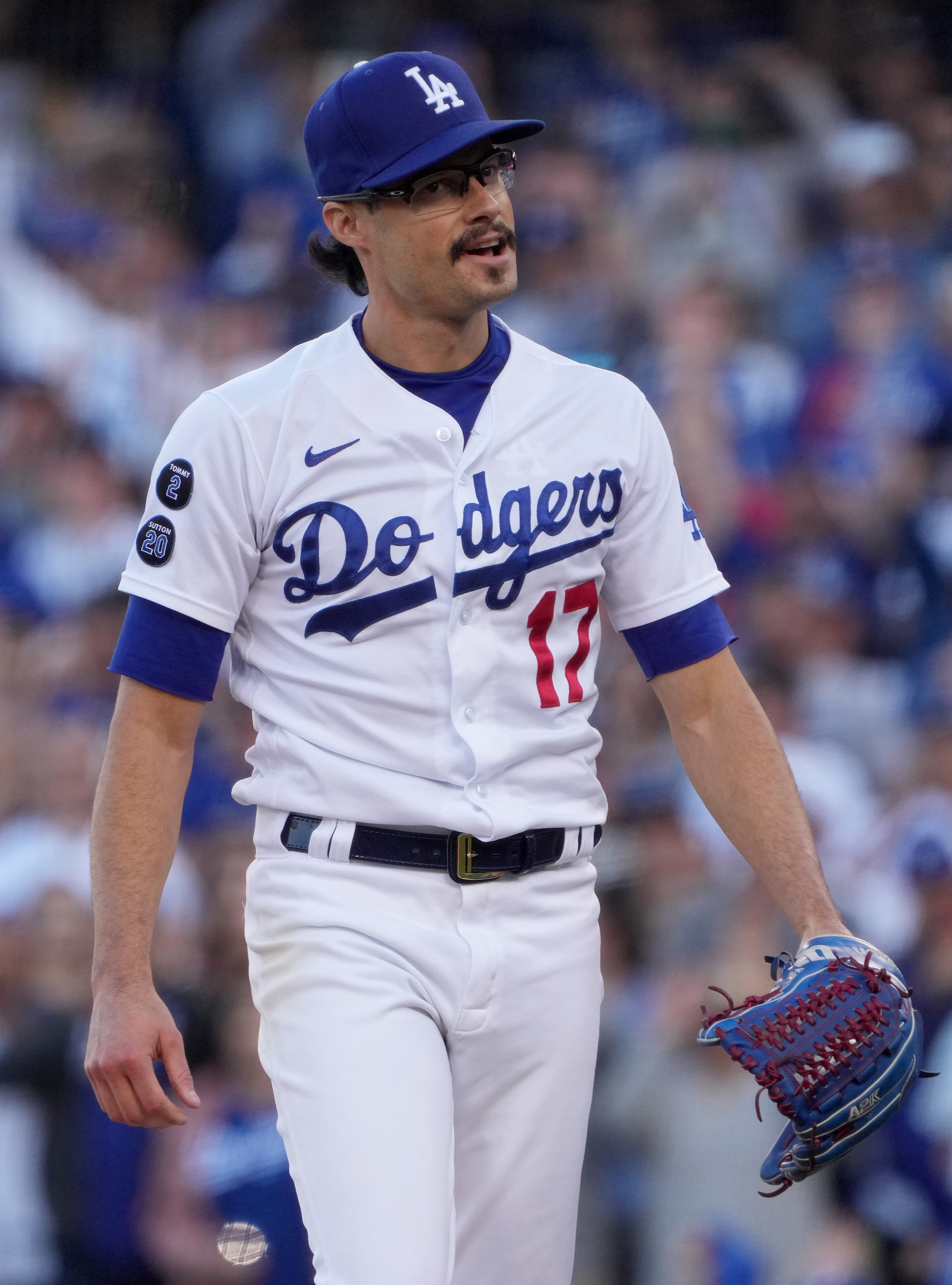
The White Sox are a somewhat surprising suitor for Kelly, having inked Kendall Graveman to a three-year, $24MM deal prior to the lockout. They’re also on the hook for a combined $29MM in 2022 for Liam Hendriks and Craig Kimbrel. Aaron Bummer is under contract as well, and Garrett Crochet may also work out of the bullpen. MLB.com’s Scott Merkin notes that the Kelly signing “could indicate a Kimbrel trade on the horizon, but White Sox are not just giving away Kimbrel.”
Kelly, 33, typically rates as one of the game’s hardest-throwing relievers, though every year more relievers are able to average 98 miles per hour as he does. In his three years with the Dodgers, Kelly boosted his strikeout rate, hitting 27.5% in 44 innings in 2021. In recent years, his control has generally fallen into the acceptable range of issuing free passes to 8% of batters. Kelly also posted a healthy 58.9% groundball rate last year, helping him allow only three home runs on the season.
Kelly played a key role for the Red Sox in the 2018 postseason, allowing one earned run in 11 1/3 frames. Kelly switched sides after helping the Red Sox beat the Dodgers in the World Series, as Los Angeles signed him to a three-year, $25MM deal with a club option for 2022.
Kelly put up an unspectacular 2019 season for the Dodgers. He memorably earned a five-game suspension in the shortened 2020 season, also spending time on the shelf with shoulder inflammation before again helping his club win the World Series, though with not the same impact as he had for Boston. Kelly quietly underwent shoulder surgery that offseason, leading to a May 7 season debut in ’21. Kelly went on the COVID-IL in August of ’21, and later saw his season come to a close as he exited Game 5 of the NLCS with biceps tightness.
Faced with a $12MM club option or a $4MM buyout, the Dodgers chose the buyout. Though Kelly suggested mutual interest in a Dodgers reunion last month, he’ll instead join the White Sox bullpen. Kelly ranked seventh in the Dodgers’ bullpen in leverage index in 2021. Among those ranked ahead of him (used in more crucial situations), Kenley Jansen remains a free agent and Corey Knebel has signed with the Phillies. Blake Treinen, Alex Vesia, and Brusdar Graterol are holdovers, with Daniel Hudson joining as a free agent prior to the lockout. Tommy Kahnle is expected to pay some dividends after signing a two-year deal in December 2020 less than five months after undergoing Tommy John surgery.
Kelly told 570 LA Sports at that time that he would “definitely be ready for the start of the season” after his NLCS biceps injury. The White Sox, widely expected to trade Kimbrel, have thus far only added a pair of right-handed relievers to their bullpen. Right around the same time tonight, the White Sox also bolstered their infield with the signing of Josh Harrison.
Photo courtesy of USA Today Sports Images
Phillies To Sign Jeurys Familia
The Phillies are in agreement with reliever Jeurys Familia, pending a physical, reports Robert Murray of FanSided (Twitter link). It’s a one-year, $6MM guarantee for the ACES client, reports Mike Puma of the New York Post (Twitter links). The deal also contains an additional $1MM in possible incentives.
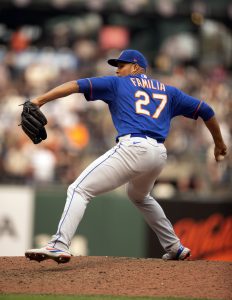
Familia has a solid track record throughout his ten-year MLB career. He owns six seasons with at least 20+ innings of sub-4.00 ERA ball, including a three-year peak when he was one of the top late-game arms in baseball. Familia was a dominant option for the Mets from 2014-16, including a league-best 51-save 2016 campaign. The righty’s strikeout rates were good but not elite; instead, he thrived on racking up ground-balls at a massive clip.
Since that prime, Familia’s performance has fluctuated. He followed up a solid 2018 showing with a rocky campaign. Familia’s run prevention in 2020 (3.71 ERA in 26 2/3 innings) was alright, but his strikeout and walk numbers that year were dismal. His ERA ticked up a bit to 3.94 last season, but Familia’s K/BB rates were better. He punched out an impressive 27.5% of opponents; his 10.3% walk rate remained a bit high, but it marked a notable improvement over the prior year’s 15.8% mark.
As he has throughout his career, Familia did a nice job keeping the ball on the ground. Last year’s 51% rate wasn’t at his peak levels, but it’s still far above the 43.1% league average for bullpen arms. That’s no doubt of appeal to a Philadelphia team that plays in one of the league’s most hitter-friendly home ballparks. Familia’s home run rate spiked a bit last season, but he’s traditionally been excellent at keeping the ball in the yard.
He was also one of the hardest throwers remaining on the free agent market. Familia averaged 97.3 MPH on his heater last season, and he’ll give skipper Joe Girardi another power arm he can rely upon late in games. It’s possible the 32-year-old even picks up some save opportunities. He’s worked in the middle innings over the past few seasons, but he’d obviously shown himself capable of having success in the ninth earlier in his career. At present, fellow offseason signee Corey Knebel seems the favorite for saves, but the Phils didn’t promise him the closer’s role when they added him before the lockout. If Girardi prefers to use Knebel in high-leverage work earlier in games, Familia could be an option to pick up some ninth-inning time.
Of course, it’s also possible the Phillies make another bullpen pickup or two in the coming weeks. Philadelphia’s troubles holding leads in recent years have been well-documented. Last year, Phillie relievers tied with the Nationals for the league lead in blown saves (34). The Phils have seen Héctor Neris and Archie Bradley hit free agency (Bradley remains unsigned), leaving Connor Brogdon as the only returning bullpen arm who tossed 20+ innings with a sub-4.00 ERA.
The Phillies created a spot on the 40-man roster this evening by placing left-hander JoJo Romero on the 60-day injured list. The 25-year-old underwent Tommy John surgery last May; given the timeline of that procedure, it’s no surprise he’ll miss at least the first two months of the season.
Image courtesy of USA Today Sports.