
Orioles Acquire Andrew Kittredge From Cubs
The Orioles have reunited with Andrew Kittredge, as the team announced that the right-hander has been acquired from the Cubs in exchange for cash considerations. While not mentioned in the Orioles’ press release, it can be assumed that the O’s will be exercising Kittredge’s $9MM club option for the 2026 season rather than swinging a trade for the reliever just to buy him out for $1MM.
Last January, Kittredge came to Baltimore for the first time when he signed a one-year deal worth $10MM in guaranteed money — a $9MM salary for 2025, and the $1MM in buyout money. A debridement procedure in his left knee delayed Kittredge’s 2025 debut until late May, but he was in fine form afterwards, and he became an obvious trade candidate when the O’s fell out of contention. The result was a deal to the Cubs at the trade deadline, with Baltimore netting infield prospect Wilfri De La Cruz in return.
Kittredge’s overall numbers were even better in Chicago after the trade, and he made five appearances for the Cubs in the postseason. For 2025 as a whole, Kittredge posted a 3.40 ERA and a superb set of advanced metrics. His 30.8% strikeout rate and 5.3% walk rate each sat in the 92nd percentile of all pitchers, his 49.2% grounder rate was far above average, and his 41.6% chase rate was the best of any pitcher in baseball.
Today’s trade means that the Orioles have now gotten Kittredge and De La Cruz in their organization, plus they saved roughly $2.8MM in salary when the Cubs took on the remainder of Kittredge’s 2025 salary. Had everything gone to plan for Baltimore this season, the team surely had an eye towards exercising Kittredge’s club option anyway, so they’ll now get to make that decision after all and address a bullpen need.
Felix Bautista will miss most or all of the 2026 season recovering from shoulder surgery, plus Kittredge was one of several relievers dealt away by the Orioles at the deadline. Even with Kittredge’s contributions, Baltimore’s bullpen was one of the weakest in the league in 2025, and rebuilding the relief core seems to be one of the club’s top priorities this offseason.
From the Cubs’ perspective, passing the buck (literally and figuratively) on Kittredge’s club option seems like an unusual move. While Kittredge is entering his age-36 season and Chicago has traditionally been wary about overspending on relief pitching, $9MM seems like a fairly safe investment given how well Kittredge performed in 2025. The Wrigleyville bullpen was quite solid this year, yet since many names from that group are free agents, exercising Kittredge’s club option would’ve been a way for the Cubs to partially solidify things early in the winter.
Since Shota Imanaga‘s three-year club option was also declined by the Cubs earlier today, quite a bit of projected money has now been cleared off the team’s books between Imanaga and Kittredge. As per RosterResource, Chicago has an estimated 2026 payroll of roughly $148.3MM and a luxury tax number of $164MM — well below their $206.4MM payroll and $227.3MM tax figure from 2025. While Wrigleyville fans have a right to be concerned over how much ownership is willing to spend, this situation could mean that the Cubs are making room for a bigger-ticket acquisition or two this offseason.
Shota Imanaga Becomes Free Agent
Left-hander Shota Imanaga has become a free agent, according to a report from Jesse Rogers of ESPN. The Cubs declined their three-year, $57MM club option on Imanaga’s services for 2026-28, and Imanaga subsequently declined his $15MM player option for 2026.
It’s an outcome that would’ve seemed unthinkable just a few months ago. Signed out of Japan to a deal that was on paper a four-year, $53MM contract during the 2023-24 offseason that had the aforementioned complex option structure set to kick in after the 2025 campaign, Imanaga was nothing short of sensational for Chicago in his first year as an MLB pitcher last year. In 29 starts, he pitched to a 2.91 ERA with a 25.1% strikeout rate across 173 1/3 innings of work that earned him an All-Star appearance and a fifth-place finish in NL Cy Young award voting last year.
While that strong rookie campaign seemed to portend a long stay near the front of Chicago’s rotation for Imanaga, things started to unravel this year. Early in the season, he managed to get strong results despite shoddy peripherals, with a 2.82 ERA through eight starts despite a 4.59 FIP and a strikeout rate that had plummeted to just 18.8%. His season was abruptly put on hold by a hamstring injury that cost him nearly two months, and when he returned his strikeout rate continued to dip. He did manage to fire off seven scoreless innings with five strikeouts during his first start after the All-Star break, but from there he began a downward spiral where his results started to match his lackluster peripherals.
From July 25 through the end of the season, Imanaga made 12 starts where he surrendered a 5.17 ERA with a 5.42 FIP across 69 2/3 innings of work. His strikeout rate actually recovered a bit during this stretch, creeping back up to 23.2%, but he allowed an eye-popping 20 home runs in that stretch. Imanaga has always had trouble with the long ball, and even in his excellent 2024 campaign he allowed the tenth-most homers among qualified starters. This year, his 31 homers allowed were the fourth-most in all of baseball despite him pitching just 144 2/3 frames. That’s fewer innings than anyone else in the top 20 besides Tyler Anderson, who allowed 28 homers in 136 1/3 innings of work.
In spite of his lackluster season, a poll of MLBTR readers on September 10 suggested that more than 91% believed the Cubs should exercise his club option. From that point onward, what seemed at the time like a borderline call became more clear as he posted an 8.04 ERA in his final three regular season starts before posting an 8.10 ERA in the postseason and ultimately being passed over for a winner-take-all Game 5 start against the Brewers in the ALDS despite him being on regular rest. By that time, this outcome seemed far more likely. MLBTR’s Tim Dierkes took a guess at Imanaga’s future in our Offseason Outlook coverage of the Cubs on October 22, and settled on the sides both declining their options and Imanaga heading into free agency.
From the Cubs’ perspective, moving on from Imanaga is understandable for a handful of reasons. By picking up his option, the Cubs would be counting on Imanaga to rebound into at least mid-rotation form for his age-32, -33, and -34 seasons. That might not seem like a bad bet to make, but it’s worth noting that Wrigley Field is notoriously fickle in terms of park factors thanks to the wind. In 2024, when Imanaga was at his best with the Cubs, Wrigley suppressed home runs at the fifth-highest rate in all of baseball according to Statcast. This year, that inverted to make the Friendly Confines the 11th-friendliest ballpark in baseball to home run hitters.
Perhaps Imanaga will be able to return to form elsewhere, particularly if he signs in a park with more consistent homer-suppressing tendencies, but it’s not hard to see why the Cubs wouldn’t want to commit to him long-term given that reality. That doesn’t necessarily rule out the possibility that he’ll return to the Cubs at all; Rogers reports that it’s not yet clear if Chicago intends to extend Imanaga the qualifying offer. Recouping draft pick compensation for Imanaga if he departs would surely be attractive to the Cubs, and him accepting the QO may be preferable to having kept him on a three-year deal at a lower annual cost due to the short-term nature of the arrangement. With that said, the market has plenty of mid-rotation or better starters available this winter, and the Cubs might prefer to not risk Imanaga accepting the offer so they can reallocate those dollars to a starter they feel better fits their roster.
White Sox Exercise Club Option On Luis Robert Jr.
The White Sox are bringing Luis Robert Jr. back into the fold for 2026. Jesse Rogers of ESPN reports that the team is exercising its club option over the center fielder. Robert will make $20MM in 2026, rather being paid a $2MM buyout and heading into free agency. The White Sox hold an additional $20MM club option over him for the 2027 season.
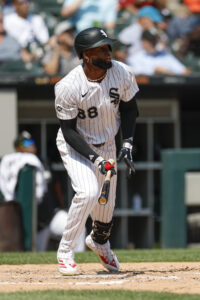
This was always the expected course of action once the White Sox opted not to trade Robert at the trade deadline. General manager Chris Getz has only reinforced that thinking in the months since, stating on multiple occasions that he expects the oft-injured center fielder to be a part of his club moving forward.
Two years ago, when the South Siders were in the earlier stages of their rebuild, Robert seemed like a potential big-ticket trade chip. His 2023 campaign was excellent. Robert made the All-Star team, garnered down-the-ballot MVP votes and won a Silver Slugger after raking at a .264/.315/.542 clip with 38 home runs. He also swiped 20 bags in 24 tries and played plus defense in center field.
At that point, the Sox had two guaranteed years remaining on Robert’s $50MM extension, plus a pair of club options. They didn’t deem any offers that offseason sufficient, and Robert was retained heading into the 2024 campaign. The next two years proved to be something of a worst-case scenario. Robert slashed a combined .223/.288/.372 in 856 plate appearances over the past two seasons and endured multiple trips to the injured list, missing time with a hip flexor strain and a pair of hamstring strains.
The hope heading into 2025 was that a healthier season would build trade value for Robert ahead of the deadline. He had perhaps the worst stretch of his career for the season’s first two-plus months but caught fire in early June. That sparked some trade interest, but not to the point that interested teams were willing to part with top-tier prospect talent. The Sox, not wanting to sell low on a player with All-Star, borderline MVP upside, held onto Robert. He posted middling offensive numbers in August before a hamstring strain late in the month ended his season.
Bleak as Robert’s overall season numbers were, he did post a solid .274/.335/.458 batting line (118 wRC+) with nine home runs, a 19.7% strikeout rate and a 7.6% walk rate in his final 198 trips to the plate. That’s a ways off his 2023 peak, but if Robert could manage that level of performance moving forward, he’d be a fine value at his $20MM price tag. Of course, that’s a colossal “if,” given both his frequent trips to the injured list and the awful 658 plate appearances he logged from Opening Day 2024 through early June 2025.
Robert’s name could well come back up in offseason trade chatter, but it’s hard to imagine the Sox moving him after hanging onto him at the deadline. Offers in July apparently weren’t appealing enough to make a move, and Robert’s .256/.287/.409 post-deadline production and subsequent season-ending hamstring strain didn’t do anything to boost his value.
Assuming Robert indeed heads to spring training as the center fielder for the ChiSox, he currently projects to be flanked by veterans Andrew Benintendi and Mike Tauchman. The Sox would love to find a way to move on from the final two years of Benintendi’s ill-fated five-year, $75MM contract, but that’s not likely unless they simply release him. Tauchman, like Robert, wasn’t moved at the deadline — but he’s a 34-year-old veteran coming off a solid enough season that an offseason trade is possible.
If Robert can turn in a big first half next year, it’s feasible that he could still command a notable trade return. There will always be injury concerns, but few center fielders possess such a dynamic set of raw tools. Center field upgrades are in short supply at any point of the calendar, and a $20MM price tag on both his 2026 season and 2027 option will look plenty reasonable if he’s healthy and productive next summer. There are a lot of ifs, and it’s certainly a risk to pick up his option, but the White Sox have virtually no money on the books and can afford to once again roll the dice on him bouncing back, even if it’s arguable that they should’ve taken the best return available in July and moved on entirely.
Braves Name Walt Weiss New Manager
The Braves have a new manager and it’s an internal hire. The club announced today that Walt Weiss is the club’s new skipper. Weiss has been the club’s bench coach for many years but now gets a chance to take on a bigger role. Weiss reportedly signed a three-year contract with an option for 2029.
Weiss, 61, played in the majors from 1987 to 2000. The final three seasons of his playing career were spent in Atlanta. After hanging up his spikes, he pivoted into other roles with the Rockies, first as a special advisor to the front office. He then moved into the manager’s chair and was the skipper in Colorado for four years, beginning in 2013. The club had a losing record in all four of those campaigns, finishing each with between 66 and 75 wins, before Weiss resigned.
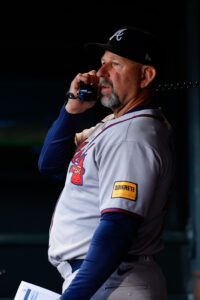
Going into the 2018 season, Atlanta hired Weiss to the bench coach position, working as top lieutenant to manager Brian Snitker. That was actually a few days before it was reported that Alex Anthopoulos would be the club’s new front office leader. Atlanta had been rebuilding for the previous few years but they emerged as contenders in that 2018 campaign. They went 90-72, their first of what would eventually be six straight National League East division titles. They won the World Series in 2021.
After the 2022 season, Weiss got some reported interest from the Marlins for their managerial vacancy, though he turned down an interview request. He stayed in Atlanta, continuing to work under Snitker. Snitker announced about a month ago, just before his 70th birthday, that he would not be returning for another season as manager. The club kept their managerial search pretty close to the vest, leading mostly to speculation about who might replace Snitker.
Weiss will now be tasked with turning the club around after a rough patch. After those aforementioned six straight division titles, they slipped to second place and a Wild Card berth last year. Here in 2025, they dropped all the way down to 76 wins and a fourth-place finish.
Expectations will continue to be high, as there is still a lot of talent on the roster. The poor results in 2025 involved several notable injuries and a PED suspension for Jurickson Profar. The club still has a core featuring Ronald Acuña Jr., Matt Olson, Austin Riley, Chris Sale and many others. President of baseball operations Alex Anthopoulos will surely look to bolster the club for a return to form in 2026.
Anthopoulos has surely gotten to know Weiss well over the past eight years and feels he is the man to skipper the club back to greatness. What remains to be seen is if Weiss will shake up the coaching staff, but hiring a new bench coach to replace himself should be one item on the to-do list.
David O’Brien of The Athletic reported the three-year deal with the option. Photo courtesy of Charles LeClaire, Imagn Images
Astros Receive PPI Pick For Hunter Brown’s Top Three Cy Young Finish
The Baseball Writers Association of America is announcing the finalists for the 2025 awards tonight. Astros right-hander Hunter Brown is one of the American League Cy Young finalists, alongside Tarik Skubal of the Tigers and Garrett Crochet of the Red Sox. Since Brown was eligible for the Prospect Promotion Incentive, the Astros will receive an extra pick after the first round of the 2026 draft.
The 2022-2026 collective bargaining agreement between MLB and the MLBPA introduced measures to try to reduce service time manipulation. Previously, teams would often hold their top prospects down in the minors until a few weeks into the start of a season, thus gaining an extra year of club control over the player.
Under the new CBA, if a player is on two of the three top 100 prospect lists from Baseball America, ESPN and MLB Pipeline, then his club promotes him early enough in a season to earn a full service year, that player becomes PPI eligible. If the player wins Rookie of the Year or finishes in the top three of Cy Young or MVP voting in his pre-arbitration seasons, he earns the club an extra draft pick. Each player can only earn a club one extra pick total.
Brown got called up to the majors late in 2022 but maintained rookie status going into the following season, featuring prominently on top prospect lists. The Astros haven’t optioned him to the minors since then, so he’s been a mainstay on their roster for the past three full seasons. By being up for the full 2023 season, he became PPI eligible.
He has been PPI-eligible for the past three years but he didn’t receive any awards votes in 2023 or 2024. Here in 2025, he made 31 starts for Houston, logging 185 1/3 innings. He allowed only 2.43 earned runs per nine. His 28.3% strikeout rate, 7.8% walk rate and 48.1% ground ball rate were all above average.
He will likely finish third in the voting behind Skubal and Crochet but it’s enough for the Astros to get a bonus pick in 2026. That’s a nice bonus for them, as the club’s farm system isn’t especially well regarded at the moment.
Julio Rodríguez, Corbin Carroll and Gunnar Henderson each earned their clubs bonus picks by winning Rookie of the Year. Bobby Witt Jr. didn’t win Rookie of the Year but earned the Royals an extra pick by finishing in the top three of MVP voting in 2024. Drake Baldwin is a finalist for National League Rookie of the Year in 2025 and can net Atlanta an extra pick if he ultimately wins the award.
Photo courtesy of William Purnell, Imagn Images
Brewers Exercise Option On Freddy Peralta; Brandon Woodruff Declines Option
The Brewers announced several roster moves on Monday. The team picked up the $8MM option on righty Freddy Peralta. Right-hander Brandon Woodruff declined his mutual option, while Milwaukee has declined its end of catcher Danny Jansen‘s mutual option. Righty Coleman Crow has been added to the 40-man roster.
Peralta agreed to a five-year, $15.5MM extension ahead of the 2020 season. The deal bought out his remaining years of arbitration and included club options for 2025 and 2026. Milwaukee picked up the $8.1MM option last season and will do so again this year.
The decision to pick up Peralta’s option comes as no surprise after the 29-year-old led the National League in wins and recorded a career-best 2.70 ERA in 2025. He reached career highs in starts (33) and innings (176 2/3) while leading a pitching staff that ranked second in ERA during the regular season.
Peralta began his big-league tenure in a versatile role, bouncing between starting and relieving over his first three seasons. His fastball-led approach generated strikeouts at an elite rate, though he struggled with control. Peralta entered the rotation full-time in 2021. He pitched to a 2.81 ERA over 28 outings and earned his first All-Star bid. Right shoulder inflammation cost Peralta a chunk of 2022, but he’s been healthy since then, topping 30 starts and 165 innings in each of the past three seasons.
Woodruff declined his end of a $20MM mutual option, though the club might’ve done the same given his health struggles in recent years. He had been a fixture in the Milwaukee rotation alongside Peralta, but injuries have limited him to 23 starts since 2023. Shoulder inflammation cost Woodruff three months in 2023 and ultimately led to surgery that offseason. He missed the entire 2024 campaign and the first half of the 2025 season. Woodruff returned in July and delivered a dozen strong starts, posting a 3.20 ERA with an elite 32.3% strikeout rate. His velocity wasn’t at its pre-injury levels, but he was missing bats like he did at his peak.
Unfortunately, Woodruff was bitten by the injury bug once again in September. A lat strain ended his season in late September. The 32-year-old will head into free agency with a solid track record of performance, but a shaky healthy history. The flashes of dominance over this past season, as well as his past success, could be enough to garner a multi-year deal. Woodruff is a two-time All-Star who finished fifth in Cy Young voting in 2021.
Milwaukee acquired Jansen in a July trade with Tampa Bay. He hit well in 25 games with the Brewers, slashing .254/.346/.433. Jansen provided some catching depth for Milwaukee as they tried to ease the defensive load on William Contreras, who was playing through a fractured finger. Contreras has been one of the most durable catchers in the league over recent seasons, so picking up the $12MM option on Jansen likely wasn’t necessary. The Brewers can find a cheaper alternative to fill in for Contreras whenever he hits the bench or serves as DH.
Crow joined the organization in a December 2023 trade that sent Adrian Houser and Tyrone Taylor to the Mets. He posted a strong 2.51 ERA over 10 starts with Double-A Biloxi this year, earning a promotion to Triple-A. He was knocked around in two appearances with the Sounds before going down with a right flexor strain that did not require surgery. Getting added to the 40-man roster today is likely to prevent him from becoming a minor league free agent.
Lucas Giolito Declines Mutual Option
Red Sox right-hander Lucas Giolito has declined his end of a $19MM mutual option, reports Alex Speier of the Boston Globe. He’ll be paid a $1.5MM buyout and return to the open market in search of a new opportunity. The Red Sox will have the right to make him a $22.025MM qualifying offer, as Giolito has not previously received a QO in his career.
Giolito signed a two-year, $38.5MM deal with the Red Sox on the heels of a disappointing platform with the White Sox. He’d posted excellent results from 2019-21 and cemented himself as one of the sport’s most durable starters before logging back-to-back ERAs near 5.00 in 2022-23. Giolito, 32 next July, had hoped to bounce back in Boston and take an opt-out in his contract last offseason.
Instead, the clock struck midnight on the durable right-hander’s arm. He tore the UCL in his pitching elbow during spring training 2024 and didn’t pitch a single inning inning that year. Giolito naturally forwent the opt-out in his contract and returned to Boston for the 2025 season. He stumbled out of the gate, struggling so badly that for a few starts it looked like his entire two-year contract would go down as a bust. By early June, he had an ERA north of 6.00 through seven starts.
Giolito rebounded in terrific fashion, however. Beginning with six shutout innings against the Rays on June 10, he took off on an extended hot streak. From June 10 through season’s end, Giolito posted a 2.51 ERA in 111 1/3 innings. His 20.3% strikeout rate and 9.7% walk rate in that stretch were both worse than average, and his .244 average on balls in play showed plenty of good fortune. Even with some expected regression in his ERA, Giolito looked like a solid mid-rotation starter who’d take a place in Boston’s postseason rotation — at least until the next roadblock arose.
On Sept. 29, manager Alex Cora announced that Giolito was dealing with an elbow issue and would not be on the team’s roster in the Wild Card round of postseason play. The next day, the team indicated that Giolito was unlikely to return at all in 2025, regardless of how deep the Sox advanced in the postseason field. While his surgically repaired UCL was intact, the veteran righty was hobbled by flexor irritation and a bone issue in his elbow.
The Sox had a $14MM club option on Giolito for the 2026 season that they might still have exercised even after the elbow troubles, but when he completed his 140th frame of the season — Giolito totaled 145 innings overall — that option vested instead as a $19MM mutual option. Players tend to make the first call with regard to mutual options, and Giolito is seemingly confident enough in his health that he’ll turn down a net $17.5MM to once again test free agency.
His decision to decline the mutual option also forces the Red Sox into a decision on whether to issue a qualifying offer. They exceeded the luxury tax line in 2025, so they’d only net a compensatory pick after the fourth round of the 2026 draft if Giolito declined and signed elsewhere. That minimal compensation, coupled with more elbow troubles for Giolito, might be enough for the Sox to forgo extending a QO in the first place. If they do, however, Giolito will again have a decision to make — this time on a sum that clocks in a bit over $3MM north of his prior option price. Add in the buyout he’s owed for declining, and a QO could at least net him $4.525MM over the value of the option he declined today.
With Giolito headed toward the market — or at least somewhat up in the air — the Sox project for a rotation including Garrett Crochet, Brayan Bello and a handful of question marks. Top prospects Payton Tolle and Connelly Early impressed late in the season but only have a handful of MLB starts between them. Kutter Crawford missed the entire season due to knee and wrist injuries (the latter of which required surgery). Patrick Sandoval didn’t pitch in 2025 after signing a two-year deal on the heels of his 2024 UCL procedure, but he’ll be in the mix next year. Tanner Houck had Tommy John surgery in August and is likely a nonfactor in 2026.
Given all the uncertainty in the ‘pen, the Sox are expected to pursue rotation help this winter. That could include a reunion with Giolito, but there are plenty of options for them to peruse on both the free agent and trade markets.
Ha-Seong Kim Opts Out Of Braves Deal
Middle infielder Ha-Seong Kim is opting out of his deal with the Braves, reports Jon Heyman of The New York Post. He passes on a $16MM salary to return to the open market.
It’s a disappointing but not entirely unexpected development for Atlanta. The Braves claimed Kim off waivers from the Rays at the beginning of September. They weren’t competing but hoped to lock in their starting shortstop for the ’26 season. They instead wound up taking on the remaining $2MM of Kim’s 2025 salary for the final month of a lost season.
Maybe that’ll still turn out to be a worthwhile decision. President of baseball operations Alex Anthopoulos said in September he hoped that getting Kim acclimated with the Atlanta organization and clubhouse would give them a leg up even if the infielder decided to head back to free agency. They’ll certainly make an effort to bring him back, but Nick Allen is atop the depth chart at shortstop for the time being.
For the second straight winter, Kim hits free agency with significant questions. He had an outside shot at a nine-figure deal over the 2024-25 offseason until he suffered a labrum tear in his right shoulder in August. Kim required season-ending surgery, leading the Padres to decline to issue him a qualifying offer. He signed a two-year deal with the Rays that guaranteed $29MM and allowed him to retest the market after one year.
Kim’s rehab from the shoulder procedure carried into July. He’d wind up going back on the injured list twice more as he battled lower back issues. Those stints were brief, but his time in Tampa Bay consisted of 24 games with a .214/.290/.321 batting line. It’s certainly not what the Rays wanted for what amounted to nearly $11MM on their part. They were happy to shed the contract in the final month, getting them off the hook for the ’26 option.
The brief stint in Atlanta was a little more encouraging. Kim played 24 games with the Braves. He hit three homers with a .253/.316/.368 slash in 98 trips to the plate. That included a 10-game hit streak in the middle of September, though he recorded only two hits in 25 plate appearances in the final week of the season. He concluded with a .234/.304/.345 line across 191 trips to the plate.
Kim’s camp nevertheless feels he’ll be able to find a multi-year contract that is preferable to the $16MM option. They’ll be aided by the lack of middle infield alternatives on the open market. Assuming Trevor Story doesn’t opt out of the two years and $55MM remaining on his contract with Boston, Kim would be the second-best free agent shortstop after Bo Bichette.
He’ll hit the market without any draft compensation, as the Braves are not permitted to make a qualifying offer because he changed teams midseason. Kim could try to max out on a three-year deal or look for another two-year pact with an opt-out similar to the one he got from Tampa Bay. His old team in San Diego could look for a shortstop to push Xander Bogaerts back to second base. The Giants, Tigers, Royals, Pirates and Brewers are other clubs that look for help at one or both middle infield positions.
Pete Alonso Opts Out Of Mets Contract
Pete Alonso has officially opted out of his contract with the Mets, reports Jon Heyman of the New York Post. He declines a $24MM player option and heads back to free agency.
Alonso announced that he’d be doing this as soon as the season ended. There was never much intrigue anyhow. Last offseason’s two-year pillow deal was always designed to get him back to the market this winter. He collected $30MM for the first season — a $10MM signing bonus and $20MM salary — and now takes another shot at finding the long-term deal that didn’t materialize last winter.
The five-time All-Star should be better positioned this time around. He’s coming off a .272/.347/.524 showing with 38 home runs and an NL-leading 41 doubles across 709 plate appearances. Alonso’s 2024 had been a relative down season by his standards, as he’d hit .240/.329/.459 with 34 round-trippers. Last winter also saw his market dragged down by the qualifying offer. That’s not on the table this time. The collective bargaining agreement prevents a player from receiving more than one QO in his career.
Alonso will slot behind Kyle Schwarber and probably NPB superstar Munetaka Murakami as the best power bats in the class. He’s atop the list of free agent first basemen, which also includes Josh Naylor, Ryan O’Hearn, Luis Arraez, Josh Bell, Paul Goldschmidt and Rhys Hoskins. There’ll be teams that prefer Murakami as a first baseman rather than at third base, which has been his primary home with the Yakult Swallows in Japan. Another NBP corner infielder, Kazuma Okamoto, is also coming over via the posting system.
Alonso’s opt-out is one of three resolved option decisions for the Mets so far. Edwin Díaz is also opting out, while A.J. Minter exercised his $11MM player option as he works back from lat surgery. They’re still awaiting official word from Frankie Montas, but he’s obviously going to lock in his $17MM player option after undergoing elbow surgery in August. The Mets could simply release Montas at that point to open a roster spot, but there’s no escaping the money. The team still has to decide on options for Brooks Raley ($4.75MM or a $350K buyout) and Drew Smith ($2MM).
Cody Bellinger Opts Out Of Yankees’ Deal
Outfielder Cody Bellinger has opted out of his contract with the Yankees, reports Jon Heyman of the New York Post. Bellinger had one year and $25MM remaining on his deal. He’ll take the $5MM buyout instead.
Bellinger signed a three-year, $80MM contract with the Cubs ahead of the 2024 season. The deal included opt-outs after each year. Bellinger did not opt out after 2024. He was traded to the Yankees for Cody Poteet that offseason. Chicago also sent cash in the deal, paying $2.5MM of Bellinger’s 2025 salary and another $2.5MM that will now go toward the $5MM buyout.
Bellinger bounced back from a pedestrian season with the Cubs to post a strong 2025 in New York. The friendly confines of Yankee Stadium helped the lefty launch 29 home runs, his most since his 2019 NL MVP season. Bellinger slashed .272/.334/.480 while also grading out as a strong defender.
The standout season in the Bronx made Bellinger’s opt-out decision an easy one. He’ll hit the market as a 30-year-old still capable of playing all three outfield positions and first base. His camp is likely looking for at least a five-year commitment with an asking price above $100MM. Bellinger is not eligible to receive a qualifying offer, since he received one from the Cubs following the 2023 season. The Yankees can’t extend the QO and will not receive compensation if he signs with another team.
Bellinger joins Alex Bregman and Pete Alonso as top bats entering the market after opting out of their current contracts. His next foray into free agency is likely to be more fruitful than his previous attempts. After a pair of injury-plagued years, the Dodgers cut him loose following the 2022 season. Bellinger latched on with the Cubs on a one-year deal for 2023. He earned NL Comeback Player of the Year honors, but the market remained skeptical. Bellinger returned to the Cubs on the aforementioned three-year deal, and didn’t perform well enough in 2024 for an opt-out to be a logical choice. Chicago’s acquisition of Kyle Tucker made a trade seem inevitable, and New York was able to acquire him for a minimal return.
New York’s outfield could look quite different in 2026. Bellinger is joining Trent Grisham in free agency, leaving the Yankees with Aaron Judge, Jasson Dominguez, and then plenty of question marks. Top prospect Spencer Jones is a candidate to earn a job next season. The young lefty could provide the power/speed element that New York would be losing with the Bellinger departure. Grisham is a candidate to receive a qualifying offer, and the roughly $22MM could be enough to entice him back after a career-high 34 home runs.