
Mariners Acquire Tyler Anderson From Pirates
The Mariners have picked up one of the more notable starting pitchers on the trade market, announcing they’ve acquired left-hander Tyler Anderson from the Pirates. Two prospects — catcher Carter Bins and right-hander Joaquin Tejada — are headed back to Pittsburgh. To create 40-man roster space for Anderson, Seattle designated infielder Jake Hager for assignment.
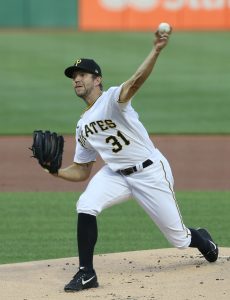
It’s a surprising turn of events after the Phillies were reportedly on the verge of acquiring Anderson this afternoon. That potential deal fell through after Pittsburgh expressed concern about the medical review of one of the prospects expected to be involved. Now, Anderson is on his way to the Pacific Northwest instead.
Seattle has reportedly been in the market for starting pitching over the past couple weeks. The Mariners have been hit hard by injuries, thinning out the rotation depth. The reunion with James Paxton lasted less than two innings before the southpaw blew out and required Tommy John surgery. Justin Dunn has been out for over a month due to a strain in his throwing shoulder, while Justus Sheffield is sidelined by both a flexor strain in his forearm and an oblique issue. Depth options Ljay Newsome and Nick Margevicius have been out for months and don’t seem likely to return this season.
Acquiring Anderson will add some stability behind Yusei Kikuchi, Logan Gilbert, Marco Gonzales and Chris Flexen. The southpaw’s numbers aren’t eye-popping, but he’s a dependable back-of-the-rotation option. Anderson has stayed healthy all year and taken the ball 18 times, totaling 103 1/3 innings. He’s worked to a 4.35 ERA/4.42 SIERA, production that’s generally in line with his past work for the Rockies and Giants.
Anderson’s a control specialist. He’s long been a quality strike-thrower, and he’s issued walks to a career-low 5.8% of opponents this season. Limiting free passes is key for Anderson, a fly-ball pitcher who doesn’t punch out too many batters. His 20.0% strikeout rate is a few points below the 23.1% leaguewide mark for starting pitchers, although his 11.6% swinging strike rate is actually marginally better than average.
In addition to his serviceable production, Anderson’s an eminently affordable pickup. He signed a one-year, $2.5MM contract with the Pirates over the winter. Just over $900K of that sum remains to be paid through season’s end. The 31-year-old is again slated to hit free agency this winter, so he’s a pure rental pickup for Seattle.
The decision to acquire an impending free agent might raise some eyebrows among fans. After all, the Mariners traded top reliever Kendall Graveman to the division-leading Astros for Abraham Toro this evening, a move that didn’t go over well in the Seattle clubhouse. The notion that the Graveman trade suggested the Mariners were punting on the 2021 season was always too simplistic, though.
General manager Jerry Dipoto told reporters in the aftermath of the Graveman – Toro swap that the front office had more moves in the works. Even independent of future acquisitions, the Mariners front office might simply have seen the value of four additional years of control over Toro — a well-regarded young infielder who’s already at the major league level — as too good to forego with Graveman headed for free agency in a few months. Modern front offices have become increasingly flexible in their trade deadline approaches, more willing to balance their short and long-term goals rather than definitively bucket themselves as “buyers” or “sellers.”
That’s particularly true of teams like the Mariners. Seattle’s surprisingly worked their way into the thick of the playoff picture, entering play tonight just one game back of the Athletics for the second Wild Card spot in the American League. They’ve outperformed most preseason expectations and their underlying record estimators, though, leaving some question about their ability to stick in the race for the stretch run. With that in mind, it makes sense for the Mariners to continue to look for long-term value while making smaller acquisitions with a 2021 playoff push in mind.
Seattle picked up Hager off waivers from the Brewers last month. He’s spent his tenure in the organization with Triple-A Tacoma, hitting .214/.294/.469 across 109 plate appearances. In all likelihood, he’ll find himself on outright waivers within the next seven days.
The appeal for the rebuilding Pirates is rather obvious. Pittsburgh signed Anderson with the hope that he’d pitch well enough to be flipped for young talent midseason, and that’s exactly how things played out.
Bins, 22, was an 11th-round draft choice out of Fresno State in 2019. He’s hit well in the low minors over his two-plus professional seasons, reaching Double-A for the first time this month. Entering the season, Baseball America and FanGraphs each rated Bins the #29 prospect in the Seattle system. Both outlets praised his raw power and surprising athleticism for a catcher. Swing-and-miss concerns led both BA and FanGraphs to project Bins as a likely #2 backstop.
Tejada, 18, signed with Seattle out of Panama for $200K during the 2019-20 international signing period. Ben Badler of Baseball America wrote at the time that Tejada had seen his velocity spike into the low-90’s. He’s a low-level lottery ticket who made his professional debut this season in the Dominican Summer League.
As for the Phillies, they’ll now have to turn their attention elsewhere before Friday afternoon’s trade deadline. The hope had been that Philadelphia could acquire Anderson to fortify the back of the rotation. Presumably, that’ll continue to be the priority now that he’s no longer available.
Jeff Passan of ESPN was first to report the two sides were nearing agreement on an Anderson trade. Ken Rosenthal of the Athletic reported the deal had been completed. Ryan Divish of the Seattle Times was first to report the Pirates were receiving a pair of prospects — including Bins — while Jason Mackey of the Pittsburgh Post-Gazette first reported Tejada’s inclusion.
Reds Acquire Luis Cessa, Justin Wilson From Yankees
In a surprise transaction, the Yankees announced they’ve traded relievers Luis Cessa and Justin Wilson to the Reds in exchange for a player to be named later. Cincinnati designated Ashton Goudeau and Edgar García for assignment to open 40-man roster space.
The appeal for the Reds is in the addition of Cessa, who was a dependable bullpen arm throughout much of his time in the Bronx. The right-hander is capable of working multiple innings and has been an effective pitcher over the past few years. Since the start of the 2019 campaign, Cessa has tossed 141 innings of 3.64 ERA/4.34 FIP ball. He’s been even more effective this season, working to a career-best 2.82 ERA over 38 1/3 frames.
Cessa doesn’t have the bat-missing stuff of most relievers. His 19.3% strikeout rate is well below the 24.5% league average for bullpen arms, and his swinging strike rate is similarly underwhelming. That’s basically been true throughout Cessa’s entire big league tenure, though, and he’s found a fair amount of success by throwing strikes and avoiding especially damaging contact. The 29-year-old is inducing ground balls at a massive 56.8% clip this year, and Statcast shows he’s been among the top twenty percent of pitchers in suppressing opponents’ average exit velocity, hard contact and barrels.
While the Reds don’t look particularly likely to make the playoffs in 2021, the acquisition of Cessa gives Cincinnati a potential multi-year piece for a bullpen that has been one of the league’s worst this year. The 29-year-old is earning just $1.05MM this season (less than $400K of which remains to be paid), and he’s controllable through 2023 via arbitration. With the Reds no doubt hoping to contend in 2022 (and not yet giving up hope of a late push this season), picking up an affordable, long-term bullpen piece holds obvious appeal.
Wilson has a long track record of productivity, but he’s in the middle of a disappointing campaign. The southpaw put up an ERA below 4.00 each season from 2017-20, but he’s only managed a 7.50 mark through 18 frames so far this year. Wilson’s velocity has gone backwards, and his typically lofty strikeout rate has plummeted to 18.1%. Given their own bullpen struggles, Cincinnati figures to give him an opportunity to right the ship, but it’s likely the Reds agreed to take on Wilson’s salary to incentivize the Yankees to part with Cessa.
New York signed Wilson over the winter to a somewhat complex contract. The southpaw is making $2.85MM this year (about $1MM of which remains). He has a $2.3MM player option for next season. If he declines, Cincinnati would hold a $7.15MM club option ($1.15MM buyout) on his services. Given Wilson’s struggles this year, it seems he’d be trending toward exercising his player option — but doing so would entitle the Reds to a 2023 club option worth just $500K north of that year’s league minimum salary.
Goudeau bounced around waivers throughout last offseason. He now seems likely to wind up back on the wire after making five MLB appearances for the Reds this year. He’s tossed 31 innings across eight appearances (five starts) with Triple-A Louisville, working to a 4.65 ERA with a below-average 16.1% strikeout rate. García has also spent most of the campaign with the Bats. He’s been quite good in Triple-A but hit hard over his five big league outings.
From the Yankees perspective, the deal frees some payroll space and clears a pair of spots on the 40-man roster. In addition to getting themselves off the hook for Wilson’s 2022 player option, New York shaves around $1.4MM off their luxury tax ledger in 2021. With the Yankees just a few million dollars shy of the $210MM threshold, the extra breathing room could enable the front office to pursue upgrades before Friday’s trade deadline. Ken Rosenthal of the Athletic (Twitter link) suggests New York could look around the league for bullpen and/or shortstop additions, with a particular focus on left-handed bats.
At Least Eight Teams In The Mix For Max Scherzer
As many as eight clubs are in the mix for Nationals ace and three-time Cy Young winner Max Scherzer, per Jayson Stark of The Athletic (Twitter link). The Dodgers, Giants, Padres, Red Sox, Rays, Blue Jays, Astros and Mets are all interested, according to Stark, who adds that the Yankees also inquired but were told Scherzer isn’t likely to waive his no-trade rights for a move to New York. That meshes with recent reporting from SNY’s Andy Martino, who wrote earlier this afternoon that Scherzer wouldn’t approve a trade to the Mets (nor would the Nationals be keen on dealing their ace to the current division leaders).
MLB.com’s Mark Feinsand reported earlier in the day that Scherzer preferred a West Coast club, though MLB Network’s Jon Heyman adds that the ostensible West Coast preference is more about Scherzer wanting to go to a team with a chance to win in 2021 and beyond. Scherzer prefers to go to “a team he could stay with” on a possible extension, per Heyman. Agent Scott Boras indicated as much earlier in the summer, although at the time Boras suggested an extension might be necessary in order for Scherzer to waive his no-trade protection at all. That no longer seems to be the case, but as evidenced by Scherzer’s unwillingness to go to a New York club, the no-trade rights can help him choose his eventual landing spot.
If the Nats are to ultimately trade Scherzer, tweets Ken Rosenthal of The Athletic, the team’s preference is to do so within the next 48 hours. Doing so would leave ample time to sort through the no-trade obstacles and any potential compensation for waiving those rights (e.g. alterations to deferrals, taxes, etc.).
That said, a trade taking place prior to Thursday’s game would put an acquiring team in a tough spot. Scherzer was scratched from his weekend start due to a triceps issue and is set to return to the mound Thursday. A recent MRI came back clean, and any team acquiring Scherzer would obviously have access to the results from that imaging and other testing. Still, a clean MRI may not inspire as much confidence as seeing Scherzer go out and actually perform. If interested clubs prefer to wait until Scherzer has taken the mound, there’d be fewer than 24 hours between the conclusion of Thursday’s start and Friday afternoon’s deadline.
Any trade involving Scherzer is going to be financially complicated, but looking at Stark’s list of interested parties, there are a few particularly complex scenarios. The Dodgers are already into the final luxury-tax bracket, meaning they’d pay a 62.5 percent overage penalty on any additional money added to the books. For Scherzer, whose remaining luxury hit clocks in at roughly $10.03MM post-deadline and $10.49MM as of this writing, that’d mean paying between $6.27MM and $6.56MM on top of the approximately $12.2MM he’s still owed in actual 2021 salary. (Luxury tax is calculated based on a contract’s average annual value, but Scherzer’s backloaded contract comes with a $35MM salary in 2021 — albeit with much of that sum deferred.)
The Padres are reportedly just above the luxury tax threshold, but are still considering moves that could take them back under that line. A Scherzer acquisition, however, would push them well above the mark. That’s also true of the Astros and the Red Sox, who are both within just a few million of the $210MM threshold. The Rays, of course, have an entirely different sort of financial obstacles to consider (namely, their perennially cellar-level payroll). The Jays and Giants, as teams with deep pockets and no real luxury concerns of which to speak, ostensibly represent the “cleanest” fits of the bunch.
That’s not to say that the Dodgers, Padres, Astros, Rays or Red Sox shouldn’t be considered legitimate contenders for Scherzer. (Although if Scherzer is hoping to stay with the club that acquires him, the low-payroll Rays are an admittedly tough fit.) Most clubs this summer have voiced some iteration of a “we’d exceed the threshold for the ‘right’ player” stance. It’s hard to imagine a player who fits that billing more than a bona fide ace and three-time Cy Young winner who has a 2.92 ERA in 49 1/3 postseason innings with the Nats since 2016. But with the Nats theoretically negotiating with a rapidly ticking clock, any complicated financial elements of a deal are magnified.
Trea Turner Tests Positive For COVID-19
Nationals star shortstop Trea Turner has tested positive for COVID-19, the team announced. Turner was removed from this evening’s game against the Phillies in the first inning after the result came in. Fellow infielder Luis Garcia is likely to be recalled from Triple-A Rochester to replace Turner on the active roster, reports Jesse Dougherty of the Washington Post (Twitter link).
It’s a shocking development for a player who recently surfaced in trade rumors. Upon Turner’s mid-game exit, plenty of speculation emerged about a potential deal being in the works. Instead, his removal is a result of a positive test.
Placement on the COVID IL doesn’t come with a minimum stint, although the fact that Turner tested positive suggests he’s likely to miss at least ten days while quarantining. Players on the injured list can still be traded, so tonight’s news doesn’t entirely eliminate the possibility of a midseason deal.
That always seemed a bit unlikely, though, given Turner’s star play and the Nationals’ desire to compete again in 2022 (and perhaps to not throw in the towel on the 2021 season). Uncertainty about his health status only figures to complicate any trade talks, casting even more doubt on the possibility of Turner changing teams by Friday.
Obviously, Turner’s health is of paramount importance. The Nationals haven’t offered further comment beyond the news of his positive test result, but it’s notable that Turner felt well enough to take the field tonight before his positive test became known to the organization.
Mariners, Astros Swap Kendall Graveman For Abraham Toro In Four-Player Trade
In a rare and rather stunning swap between a pair of division rivals who are both in contention, the Mariners have traded closer Kendall Graveman and recently designated-for-assignment righty Rafael Montero to the Astros in exchange for young infielder Abraham Toro and veteran righty Joe Smith, according to both clubs. The trade is even more eye-opening when considering that the two clubs are gearing up to play each other in the second game of a three-game set tonight.
Trading Graveman at all registers as a moderate surprise, given the Mariners’ recent climb in the standings and stated desire to improve the 2021 roster. To see him traded to the division-leading Astros while the two squads are playing one another is downright jarring. That said, Graveman is a free agent at season’s end, and in Toro, the Mariners are acquiring five seasons of control over an infielder who has been considered one of Houston’s more promising young prospects for the past few years.
In speaking to the media about the trade, Seattle general manager Jerry Dipoto plainly acknowledged that as a standalone transaction, it’s a head-scratching move. But Dipoto also emphasized some patience, suggesting this move is but one of a sequence of trades designed to improve the Mariners’ chances both in 2021 and over the long-term down the road (Twitter thread via MLB.com’s Daniel Kramer). Dipoto suggested a subsequent trade or trades could come together as soon as tonight or in the coming days, but it seems as though this is but one of a series of moves for which the Mariners are angling; time will tell just how the moves look when judged in their totality.
Toro, 24, hasn’t yet pieced things together in limited big league action, but he’s decimated Triple-A pitching (.392/.497/.600 in 33 games) and posted strong numbers in pitcher-friendly Double-A settings (.282/.369/.468 in 148 games). The switch-hitting Toro provides the Mariners with a possible long-term option at third base, but he’s also logged considerable time at second base — another area where the Mariners have been known to be seeking help. That long-term fit isn’t likely to matter much to the clubhouse, however, and Divish rather unsurprisingly tweets that the decision to trade Graveman to their top division rival was not well-received among Seattle players.
That’s understandable on Seattle’s end, given just how dominant Graveman has become since transitioning to the bullpen late in the 2020 season. The former Athletics starter has bounced back from an injury-lost 2019 season to emerge as one of the American League’s more effective relievers. In 33 innings this season, Graveman has pitched to a 0.82 ERA with a 28.1 percent strikeout rate, a 6.6 walk rate and a 53.9 percent ground-ball rate. Dating back to his shift to the bullpen in 2020, he’s compiled 43 innings of 1.47 ERA ball.
Graveman is likely all the more appealing to the luxury-conscious Astros because of his affordable salary. He’s playing on a one-year, $1.25MM contract. Incentives have already boosted that base salary by $400K, and the contract overall contains a total of $3MM in reachable incentives. That said, $1.5MM of those are tied up in games finished, and manager Dusty Baker has already indicated that Ryan Pressly is likely to continue as his closer. Graveman could still collect six more stray games finished to reach his first of three would-be $500K bonuses tied to games finished, but it’s unlikely he reaches the 30 and 40 games finished needed to unlock the next pair of $500K bonuses. In all, the contract will likely top out paying him somewhere in the range of $2.65MM based on incentives tied to days on the roster, games finished and total innings pitched.
Montero’s inclusion in the trade is likely a pure accounting measure. The combined salaries of Montero and Graveman ought to clock in somewhere in the same ballpark as Smith’s $4MM salary and luxury-tax hit, though depending on the status of Graveman’s incentives, the Astros could come out either a bit ahead or a bit behind where they were previously projected.
Montero opened the season as the closer in Seattle but struggled early and has been mired in a catastrophic slump of late, yielding 16 runs in his past 11 innings. The ‘Stros may have their own ideas on how to help a reliever who was quite good with the Rangers in 2019-20 right the ship, but Montero’s inclusion doesn’t appear to be a key part of the swap. At best he’s a roll of the dice, and at worst he’s a financial counterweight who could be cut loose quickly if his struggles persist.
The same is largely true of Smith, who opted out of the 2020 season after signing a two-year deal in Houston and has been clobbered for a 7.48 ERA in 21 2/3 innings this year. Some of that has been attributable to a sky-high .413 batting average on balls in play, but Smith is sporting a career-low strikeout rate, a grounder rate that’s well off his peak levels and has also been quite homer-prone. As with Houston and Montero, perhaps the Mariners have an idea or two about how to get the veteran righty back on track, but the trade is much more about Graveman and Toro than about the struggling relievers accompanying those two players.
Ryan Divish of the Seattle Times first tweeted that Toro and a reliever were going to the Mariners in exchange for two players. MLB.com’s Brian McTaggart provided the full context on the trade.
Stephen Strasburg To Undergo Thoracic Outlet Surgery
Nationals righty Stephen Strasburg will undergo surgery to alleviate neurogenic thoracic outlet syndrome, manager Dave Martinez announced to reporters Tuesday (Twitter link via MASNsports.com’s Mark Zuckerman). The procedure will end his season, and the Nationals’ hope is that he can be ready for the start of the 2022 campaign. Martinez’s announcement was a bit more specific than most announcements on TOS surgery, but for those wondering, “neurogenic” thoracic outlet syndrome is the most common of three variations of the ailment, per the Mayo Clinic.
It’s yet another health setback for one of the game’s most talented but also most oft-injured pitchers. Strasburg’s 2020 season also ended with surgery — that one to alleviate carpal tunnel syndrome — and he’ll now head into the 2022 campaign with just 26 2/3 innings under his belt since signing a franchise-record seven-year, $245MM contract as a free agent in the 2019-20 offseason.
Thoracic outlet surgery is more ominous than the more-common Tommy John surgery, as pitchers generally have a much worse track record in returning from TOS operations. That said, Strasburg need look no further than D-backs righty Merrill Kelly to find a recent example of a pitcher who has come back from a TOS procedure as good as ever (arguably better, in Kelly’s case). Former Royals/Padres/Mets righty (and current Rangers GM) Chris Young also attributed TOS surgery to saving his career. Other success stories include former Cardinals hurlers Chris Carpenter and Jaime Garcia.
On the other side of the coin, TOS has proven quite difficult to bounce back from for a number of pitchers around the league. Matt Harvey is the most well-known example, but we’ve also seen thoracic outlet syndrome derail the careers of Tyson Ross, Phil Hughes and Nate Karns, among many others. Chris Archer‘s return from thoracic outlet surgery in 2021 hasn’t gone well, as he pitched just 4 1/3 innings for the Rays before going down with a forearm issue.
Every case is unique to the pitcher in question, of course, so historical precedent only tells us so much. Strasburg is still signed another five years, so the Nats will need to hold out particularly strong hope that he’s able to work back from this and return to something approximating his prior levels of performance. He and Patrick Corbin are both locked into hefty salaries in 2022, and the Nats will also have Joe Ross, Austin Voth, Erick Fedde and Paolo Espino as in-house rotation options. Still, Max Scherzer is set to reach free agency this winter — and could be traded this week — and Strasburg’s health is again up in the air; long-term starting pitching help seems likely to be a focal point for the Nationals both this winter and in the hours leading up to Friday afternoon’s trade deadline.
Max Scherzer Open To Waiving No-Trade Rights
3:45pm: Scherzer would not approve a trade to the Mets, reports SNY’s Andy Martino, nor would the Nationals be open to trading Scherzer to the current NL East leaders.
8:41am: If Scherzer is to waive his no-trade clause, the right-hander “strongly prefers the West Coast,” a source tells MLB.com’s Mark Feinsand. This would naturally favor the Giants, Padres, and Dodgers, while such AL West clubs as the Angels, Athletics, or Mariners couldn’t be ruled out.
July 27, 7:34am: The Athletic’s Ken Rosenthal has some details on Scherzer’s complex contract situation, as Scherzer’s deal contains a lot of deferred money. The roughly $11.8MM remaining of Scherzer’s $35MM salary for 2021 is entirely deferred until 2028, so a new team wouldn’t have to pay that money out for seven years. However, Scherzer’s luxury tax number would be around the $10MM mark, which is certainly a factor for teams trying to avoid a tax payment. Scherzer has another $7.5MM in signing bonus money due this September, but Rosenthal notes that this bonus payment “is solely the Nationals’ obligation.”
July 26: Nationals ace Max Scherzer has been one of the most intriguing trade candidates in baseball as the Nationals have slid down the standings following a scorching month of June, but a trade surrounding him is also complicated for myriad reasons. He’s being paid $35MM in 2021 and has more than $100MM in deferred money still owed to him from 2022-28. The Nationals, historically, do not operate as sellers under general manager Mike Rizzo. Scherzer has full no-trade protection as a 10-and-5 player (10 years of MLB service, the past five with the same team). Additionally, agent Scott Boras has previously suggested that Scherzer would require some type of incentive (e.g. a contract extension) in order to waive those rights.
It would seem that at least one of those major hurdles, however, is surmountable. Jesse Dougherty of the Washington Post reports (via Twitter) that Scherzer is open to being traded and would not invoke his 10-and-5 rights for the sole purpose of remaining with the Nationals. However, Scherzer could use that full no-trade protection as a way to have a say in his ultimate destination if the Nats are presented with offers from multiple clubs.
It’s not yet clear whether the Nationals are going to legitimately make Scherzer available, although a weekend sweep at the hands of a 34-64 Orioles club couldn’t have helped convince Rizzo and his staff that the Nats need to operate as a buyer. Rizzo said just under a week ago that he was approaching the deadline with a both a “buy” and “sell” mindset, remaining open to all possibilities depending on how his team played. The implication was that with a strong showing, the Nats would act as they tend to do under Rizzo: make at least incremental upgrades in an effort to push toward the postseason.
That hasn’t happened, however. The Nats are 1-4 since those comments from Rizzo, including the sweep in Baltimore, and the fact that the Nationals had to slow Stephen Strasburg‘s throwing program down once again only adds another negative element to the equation. Washington now finds itself eight games below .500, seven and a half back of the division lead and 11 out in the Wild Card hunt. The generally feeble nature of the NL East and the top-heavy trio of contenders in the NL West mean that the only path for an NL East club to reach the postseason is likely via a division title. FanGraphs gives the Nats a 1.4 percent chance of making the playoffs; PECOTA is only marginally better, at an even 2.0 percent.
If the Nats do indeed make Scherzer available, he’d (obviously) be the best starting pitcher on a market that is lacking in impact arms. The three-time Cy Young winner and eight-time All-Star, who turns 37 tomorrow, has pitched to a 2.83 ERA with a brilliant 35.1 percent strikeout rate and a 6.1 percent walk rate in 105 innings this season. He’s had one astonishing meltdown that the Padres and Daniel Camarena will never forget, wherein Scherzer allowed 12 percent of the runs he’s yielded all season on one pitch to a just-called-up relief pitcher. Outside of that night, Scherzer has allowed 26 runs in 101 1/3 innings of work (2.31 ERA). He’s held opponents to two or fewer runs in 14 of his 18 starts.
It’s also worth noting that Scherzer had his Saturday start against the Orioles scratched due to discomfort in his right triceps. The injury popped up when he was taking batting practice, not pitching and Scherzer has already said publicly that he plans to make his next start. He underwent an MRI that came back clean, and (via MASNsports.com’s Mark Zuckerman), manager Dave Martinez said Scherzer’s bullpen session today went as planned. Assuming he feels fine tomorrow, he’d be in line to start Thursday’s game for the Nationals — their final game prior to Friday afternoon’s trade deadline.
Twins Place Taylor Rogers On Injured List
July 27: The Twins announced that Rogers has been placed on the 10-day IL with a left middle finger sprain. Right-hander Beau Burrows is up from Triple-A St. Paul to take his spot on the active roster.
While players on the injured list can technically still be moved, this would seem to all but ensure that Rogers won’t be traded prior to Friday’s deadline.
July 26, 11:55pm: Rogers will undergo imaging on his hand tomorrow to determine the extent of the issue, manager Rocco Baldelli told reporters (Twitter link via Helfand).
10:47pm: Twins closer Taylor Rogers exited Monday night’s game against the Tigers with a sprained middle finger on his pitching hand, the team announced to reporters (Twitter link via Betsy Helfand of the St. Paul Pioneer Press). Rogers threw five pitches, missing his spot badly on the fourth offering and checking his left hand. His fifth pitch then sailed a few feet wide of the strike zone, at which point Rogers called to the dugout and quickly departed with the training staff.
This time of season, any injury to a prominent player on a non-contending club is of note. Rogers is hardly considered a lock to be traded — he’s controlled through the 2022 season via arbitration — but the Twins have already begun to turn their eye toward 2022 and beyond, trading Nelson Cruz to the Rays last week. Rogers, Jose Berrios and Michael Pineda are among the team’s other trade candidates, though any sort of IL trip for Rogers would likely preempt a trade.
It’s been another strong season for Rogers, a former 11th-round pick who has gone from minor league starter, to solid middle reliever, to an All-Star reliever in recent years. Rogers debuted with the Twins in 2016 and quickly settled in as a solid arm, but his career took off upon adding a slider to his arsenal in midway through the 2018 campaign. Over the past four seasons, Rogers has pitched to a 2.91 ERA with an excellent 31.2 percent strikeout rate against a tiny 4.9 percent walk rate. This year’s 35.5 percent strikeout rate is a career-high.
Hard-throwing lefties who miss bats and limit walks at premium rates are hard to come by — particularly when they can keep both righties and lefties in check, as Rogers can. The Twins aren’t punting on their 2022 season by any means, but it’s feasible that other clubs could put together a strong enough package that they’d be tempted to part ways with Rogers. He’s playing on a $6MM salary and ought to see a nice raise via arbitration this winter, so a trade could bring in some near-MLB help and save the team some money to spend in free agency over the winter.
It remains to be seen whether Rogers will ultimately require an IL stint, but the mention of a sprain indicates some form of ligament stretching/tearing in Rogers’ finger, which is rather ominous. Every situation is unique, of course, but Cleveland righty Aaron Civale exited a June outing under similar circumstances and has yet to return to the mound.
Nats Receiving Strong Interest In Trea Turner
TODAY: Beyond Turner, the Nationals are willing to at least discuss trading anyone besides Juan Soto, according to Dan Federico (Twitter link).
JULY 26: It’s been less than a week since Nationals GM Mike Rizzo spoke about how his team’s play leading up to the deadline would determine whether the front office would operate as buyers or sellers. The Nats have gone 1-4 since those comments, including a loss to the last-place Marlins and a three-game sweep at the hands of the Orioles in Baltimore.
There’s no indication yet that the Nationals are on the brink of a broad-reaching sell-off, but Chelsea Janes of the Washington Post reports that the Nationals are receiving “a lot” of interest in All-Star shortstop Trea Turner and have not firmly ruled out moving him (Twitter thread). It goes without saying that the Nats would need an overwhelming return in order to part with Turner, who is still owed about $4.82MM of this year’s $13MM salary and is controlled via arbitration through the 2022 season.
Broadly speaking, one would think that the 28-year-old Turner is an extension candidate more than a trade candidate, given the Nationals’ perennially high payroll, recent World Series victory and general “win-now” mindset. However, MLB Network’s Peter Gammons tweeted today that Nationals ownership doesn’t have plans to green-light a long-term extension with Turner.
Absence of an extension doesn’t necessarily mean that a trade of Turner is a foregone conclusion, of course. The Nationals will in all likelihood be aiming to contend in 2022, regardless of how their 2021 campaign plays out, and Turner would be a central figure in those efforts. But it’s also certainly possible that for a player of Turner’s caliber, the Nats could extract multiple near-MLB pieces and/or controllable young big leaguers who could both deepen the roster for the 2022 season and set them up nicely in the long run.
Turner, the No. 13 overall pick back in 2014, has established himself as one of MLB’s best all-around talents dating back to a breakout 2016 campaign. He’s a .301/.356/.489 hitter 92 home runs and 190 stolen bases in that time and, in deserving fashion, finally nabbed his first All-Star nod in 2021. Turner is batting .319/.367/.521 this season and entered play leading the National League with 199 total bases on the season. No one has swiped more bases than Turner since the start of the 2016 season, and FanGraphs ranks him 20th among all position players in wins above replacement in that span.
If Turner indeed were to hit the market, it’d be a major shakeup to a fairly limited crop of available infielders. Fellow shortstops Trevor Story and Javier Baez are the most notable player available, though neither is having a great year at the plate. Other (non-shortstop) possibilities include Jonathan Schoop, Eduardo Escobar, Whit Merrifield and Asdrubal Cabrera. Story has reportedly received some interest as a possible outside-the-box option in center field, and Turner could hold similar appeal — particularly since he’s actually played 387 innings of center field in the big leagues. (Story has played only shortstop in the Majors.)
The market for infield help is still developing — as is the trade market in general, despite the deadline’s proximity — but the Mariners, Brewers, Mets, Reds, White Sox, A’s have all been linked to infield upgrades (not necessarily at shortstop). The Padres, who originally drafted Turner, seem to be in on virtually every big name that hits the market, regardless of whether their roster presents a clear fit.
The Turner rumblings come at the same time as reports that Max Scherzer is at least open to waiving his 10-and-5 no-trade rights. While that doesn’t definitively signal the organization has made up its mind to sell this week, but it’s only natural to think that after slipping in recent weeks — or at least failing to gain much ground — hopeful buyers are beginning to circle and gauge the asking prices should the Nats eventually wave the white flag on 2021. Rizzo himself last week said that if the Nats do become sellers, “everything will be on the table, I would think.”
Top 60 Trade Candidates
The week of the 2021 MLB Trade Deadline is upon us! We’ve seen a handful of deals thus far — Nelson Cruz to the Rays, Rich Hill to the Mets, Adam Frazier to the Padres, Joc Pederson to the Braves — but most of the market’s top names are still waiting to learn their fate. The stage is set for a chaotic few days of deal-making.
As always, this list is loosely ordered in terms of both likelihood of being traded and value to an acquiring club in a trade. Rental players are inherently going to carry less long-term value but are generally likelier to be moved by virtue of their impending free agency. Those who aren’t qualifying offer candidates are particularly likely to be flipped elsewhere. Some of those names will outrank more impactful players with a lower likelihood of being dealt.
It’s all subjective and debatable, and that’s part of the fun of the whole exercise. No one’s here for preamble, so let’s dive right into the list!
1. Max Scherzer, RHP: The Nationals are 1-5 since GM Mike Rizzo said his team’s upcoming play would determine his deadline approach, including a sweep at the hands of the Orioles and a crushing walk-off loss to one of the teams they’re directly chasing in the NL East: the Phillies. The Nats are 8.5 back in the division and 11.5 back in the Wild Card hunt. Now, the Washington Post’s Jesse Dougherty reports that Scherzer is open to trades and would waive his 10-and-5 no-trade rights. Scherzer’s enormous contract and deferred money still make a trade complicated to sort out, and he’s dealing with what seems to be a minor triceps issue. He’s slated to start Thursday, the day before the deadline. It seems quite possible that’ll be his Nats farewell.
2. Kris Bryant, 3B/OF/1B, Cubs: At the time of our last Top Trade Candidate list, the Cubs looked like they’d have no choice but to hold onto Bryant. However, their stay atop the NL Central is a distant memory following a catastrophic losing streak and president Jed Hoyer’s acknowledgment that his team will operate as a seller. This was probably the direction the front office envisioned all along after trading Yu Darvish this winter, and Bryant’s resurgent season has likely bolstered his value considerably. He can help clubs with outfield or corner infield needs, and his .269/.356/.500 slash would be a boost to the heart of any order. With a $19.5MM salary in 2021, however, Bryant could be a tough financial pill for some teams to swallow.
3. Craig Kimbrel, RHP, Cubs: The first year-plus of Kimbrel’s time in Chicago made the team’s three-year investment in the All-Star closer look regrettable, to say the least. But the now-33-year-old Kimbrel has engineered a rebound so impressive that next year’s $16MM club option now looks like a potential bargain. Kimbrel has been better than ever in 2021, pitching to a 0.49 ERA with a superlative 46.7 percent strikeout rate and a 9.5 percent walk rate in 36 2/3 innings. The salary might limit his market, but deep pocketed clubs should all have interest in Kimbrel, who very suddenly has a good bit of trade value.
4. Starling Marte, OF, Marlins: If the Marlins truly only offered a player of Marte’s caliber three years and under $40MM on an extension, it’s hard to believe they were ever serious about extending him. Regardless, with those efforts now in the rear-view mirror, Marte is one of the best and likeliest players to be traded. He’s enjoying one of his best seasons ever at the plate — arguably his best — playing good defense and running more than he has since 2018 (21-for-24 in stolen bases). He’s a rental, and not an especially cheap one with a $12.5MM salary ($4.37MM owed post-deadline), but few players represent a larger potential upgrade.
5. Jon Gray, RHP, Rockies: Playing on a one-year, $6MM contract, Gray is one of the best and likeliest rental starters to change hands. The Rockies won’t issue him a qualifying offer, but he’s a solid enough rotation piece that the bulk of contenders in the game would consider him a decisive upgrade. Not every team would view him as a surefire postseason starter, but he’s an upgrade over nearly any club’s fourth/fifth starters.
6. Michael Pineda, RHP, Twins: Every contender could use an arm like Pineda to help deepen the rotation, and if he’s healthy, he could even be a playoff rotation option for some clubs. He’s missed a bit of time with elbow inflammation this year but returned from the IL to toss five innings of one-run ball against the White Sox. He’ll be owed $3.5MM post-deadline and has an overall 3.86 ERA, 21.5 percent strikeout rate and 5.4 percent walk rate. This is what solid deadline rentals look like.
7. Trevor Story, SS, Rockies: Story is only listed below Gray because the Rockies know they can at least get a compensatory draft pick if they make him a qualifying offer, which creates the slight chance they’ll simply hold him. That still seems unlikely, however, as Story won’t be re-signing in Colorado and is one of the best bats available on a thin trade market for infield upgrades. He isn’t having a great season, but Story’s track record alone will create interest.
8. Tyler Anderson, LHP, Pirates: The Bucs signed Anderson to soak up some starts in the first half and, ideally, move him for a modest deadline return. With 103 1/3 innings of 4.35 ERA ball spread across 18 starts, Anderson has done just that. If you throw out a nine-run meltdown in Atlanta, the ERA plummets to 3.93 in his 17 other starts. Anderson doesn’t miss tons of bats, but he’s shown excellent control while generally limiting hard contact. He won’t be a headline-grabbing addition, but for a team looking to affordably stabilize a back-of-the-rotation carousel, Anderson and his $2.5MM base salary ought to be appealing.
9. Kyle Gibson, RHP, Rangers: The latest “surprise” three-year rotation signing by the Rangers to have turned into a bargain, Gibson is durable, effective and affordable. Among pitchers controlled beyond the 2021 season, Gibson is the likeliest to be traded. It should be noted that he’s had a trio of poorly timed rough outings, but no team was going to believe he’d sustain the sub-2.00 ERA he carried into July anyhow. He’s earning $8MM next year, and most contending clubs would be pleased to plug him into the middle of the rotation.
10. Richard Rodriguez, RHP, Pirates: He’s not overpowering from a velocity standpoint, but Rodriguez has outstanding command and the ability to miss bats in bunches when he’s throwing his breaking ball at higher levels than he has in 2021. Rodriguez has a 2.98 ERA, 27.2 percent strikeout rate and 6.5 percent walk rate dating back to 2018. He’s earning just $1.7MM in 2021 and controlled two more years via arbitration. Any club looking for bullpen help should have some level of interest.
11. Joey Gallo, OF, Rangers: Gallo’s name has been on the trade market on and off for a few years now, but with free agency squarely in sight after the 2022 season and the Rangers rebuilding, this is his value’s apex. Gallo is a premium corner outfield defender with a ridiculous 19.3 percent walk rate and 24 home runs. Gallo went on a tear beginning in early June, though his bat has cooled in his past few games.
12. Jose Berrios, RHP, Twins: Berrios is one of the best arms on this summer’s market, but the asking price is accordingly exorbitant. The Twins are reported to be seeking a pre-arb Major League player and multiple top 100 prospects to part with their top starter. That’ll be a tough price to pay for any rival team, but you can hardly blame Minnesota for asking, given the dearth of available starters and the Twins’ aspirations to be competitive again as soon as 2022.
13. Merrill Kelly, RHP, D-backs: Kelly isn’t a lock to be traded, given an extremely affordable $5.25MM club option for 2022. However, with so many teams looking for rotation help and simultaneously trying to duck the luxury tax, his affordable contract and steady production make him plenty appealing. Kelly had a dismal first month of 2021 as he returned from thoracic outlet surgery, but he’s quickly begun to look like one of the better success stories from that operation in recent memory. In his past 18 starts, Kelly owns a 3.79 ERA (3.59 FIP) with a 21.7 percent strikeout rate and 5.5 percent walk rate.
14. Eduardo Escobar, 3B/2B, D-backs: Reports of an on early, on-the-verge-of-completion deal to the White Sox proved to be overstated, as other clubs jumped into the fray and slowed the pace of negotiations. But an Escobar trade is more a matter of “when” and “where” than “if.” A free-agent-to-be on baseball’s worst team, the switch-hitting Escobar will take his 22 homers and multi-positional ability to a new team before month’s end.
15. Jonathan Schoop, 1B/2B, Tigers: One of baseball’s hottest hitters since Memorial Day, Schoop is playing on a one-year, $4.5MM contract and is on pace for his best power output since his 32-homer 2017 campaign. Since June 1, Schoop has ripped a dozen homers while hitting .335 and slugging just shy of .600. There’s some sentiment out there that a meager return in a trade might not be enough for the Tigers to part with Schoop as A.J. Hinch looks to help shift to a winning culture in the clubhouse. Still, he’d make sense for clubs who covet a right-handed-hitting infielder.
16. Trea Turner, SS, Nationals: GM Mike Rizzo has gone on record saying that if the team goes into sell mode, that “anything is on the table, I would think.” Trading Turner would be immensely difficult for the Nats, both due to his general excellence and the team’s perennial win-now mindset. But MLB Network’s Peter Gammons reported this week that ownership doesn’t seem incline to extend Turner, and the 2021 season has largely slipped away from the Nationals. This would take an enormous return, but what might’ve seemed like fantasy a week ago is now relatively plausible. The Washington Post’s Chelsea Janes reported last night that interest in Turner is quite strong.
17. Whit Merrifield, 2B/OF, Royals: A perennial entrant in the July rumor extravaganza, Merrifield is reported to be “more” available than he was in years past. Of course, he was completely off limits in 2018 and almost entirely off limits in 2019, so that’s not a high bar to clear. Merrifield’s bat is coming around after a slow month of May, and he’s leading the league in steals. His contract is eminently affordable and keeps him under club control through 2023. The Royals are trying to win now, so they’ll want MLB-ready pieces in return. A trade still seems like a long shot.
18. Zach Davies, RHP, Cubs: Davies owns a respectable 4.30 ERA through 21 starts for the Cubs in 2021. That’s where most of the good news ends, however, as Davies is sporting a 15.5 percent strikeout rate against a career-worst 11.9 percent walk rate and is averaging fewer than five innings per start. The 3.5 percent differential between his strikeout rate and walk rate ranks dead last among qualified starters (by a wide margin). Davis is durable and was much better than this in 2019-20, but his lackluster results and $8.625MM salary will prevent the Cubs from getting too much in return.
19. C.J. Cron, 1B, Rockies: Cron signed a minor league deal that carried just a $1MM base salary, and he’s provided a nice return on that modest investment by the Rox. He’ll be a free agent at season’s end. There are plenty of clubs that could use a cheap rental either at first base/designated hitter or just as a right-handed bat off the bench. Cron, as usual, has held his own against righties and decimated left-handed pitching.
20. Cesar Hernandez, 2B, Indians: Cleveland is nine games back in the division and five back from a Wild Card spot. They’re certainly not out of postseason contention, but with Shane Bieber and Aaron Civale sidelined, they’re sending out Zach Plesac and a collection of rookies in the rotation. Their odds don’t look great at the moment. Hernandez is on an affordable $5MM salary with a $6MM option for 2022. That option could mean he simply stays put, but Hernandez could appeal to clubs looking for affordable infield help.
21. Daniel Bard, RHP, Rockies: Bard has thrown 65 2/3 innings since making his remarkable return to the Majors last season and has posted a 3.86 ERA with a 27.2 percent strikeout rate and 10.2 percent walk rate in that time. He’s been the Rockies’ go-to option in the ninth inning for much of that time. The 36-year-old is actually controlled into 2022 via arbitration, so he could hold more appeal than many of the run of rental relievers to follow immediately.
22. Ian Kennedy, RHP, Rangers: Kennedy is the quintessential veteran relief rental. He’s having a resurgent season for a last-place Rangers club that inked him to a no-risk minor league deal over the winter. This type of scenario is why rebuilding teams sign players like Kennedy. His days in Texas are numbered. (Well, unless the Astros acquire him.)
23. Ryan Tepera, RHP, Cubs: Make all the “MVP” jokes you like after last year’s tenth-place vote — Tepera is pitching the best ball of his career in 2021. The 33-year-old’s strikeout rate is down a bit from 2020 (34.8 percent to 30.3 percent), but his walk rate has improved by six percent as well. Tepera has one of the best ground-ball rates of his career, one of his best homer-to-flyball rates and is sporting a 2.91 ERA. He’s also earning just $800K. You want an affordable rental reliever? Here’s your guy.
24. Daniel Hudson, RHP, Nationals: This is arguably the best Hudson we’ve ever seen. He’s striking out a career-high 38.5 percent of opponents against a career-best 5.7 percent walk rate. The 34-year-old’s 2.27 ERA is one of the best marks on this list, and he’s currently pitching high-leverage innings for a Nationals club that is eight games back in the NL East and 11 back in the Wild Card hunt. It’s looking likelier and likelier that Washington bites the bullet and moves some veteran players.
25. Mychal Givens, RHP, Rockies: An impending free-agent reliever with a solid track record in the midst of another quality season, Givens is an obvious trade candidate for the Rockies as they look to sell veteran pieces. He’s earning $4.05MM in 2021, and while his strikeout rate isn’t where it was at its peak, it’s not too far off. Givens has a sub-3.00 ERA while pitching his home games at Coors Field and will be owed $1.42MM post-deadline.
26. Joakim Soria, RHP, D-backs: With a 2.70 ERA and a 16-to-3 K/BB ratio in 13 1/3 frames over the last month, Soria has begun to right the ship at the best possible time for the Snakes. He’s a proven veteran reliever playing on a one-year $3.5MM deal for MLB’s worst team. It’d be a shock if he still pitched for the D-backs come July 31.
27. Yimi Garcia, RHP, Marlins: Garcia, 31 next month, has had a generally solid season but has seen a pair of recent hiccups boost his ERA by nearly a whole run. He’s still sitting in the mid-3.00s with a slightly below-average strikeout rate and above-average control. He has a 3.17 ERA in 113 2/3 innings dating back to 2019 and is pitching on a $1.9MM salary.
28. Hansel Robles, RHP, Twins: Robles might’ve looked a bit more appealing before a recent stretch that’s seen him surrender 10 earned runs in 9 2/3 frames, but as a hard-throwing reliever with late-inning experience, he’s still a candidate to change hands. Robles walks too many and has recently given up a few untimely long balls, but his overall body of work this season has been serviceable — particularly considering his $2MM salary.
29. Brad Hand, LHP, Nationals: Hand is a big name whose performance probably doesn’t quite align with his reputation among fans. It’s worth remembering that he went unclaimed on waivers at the end of the 2020 season when any team could’ve had him for $10MM. He eventually topped that by a measure of $500K in free agency, but most clubs seemingly weren’t keen on paying him at this rate less than a year ago. Now, he’s sitting on his worst strikeout rate since moving to the bullpen (23 percent) and his highest walk rate (9.8 percent). His fastball has bounced back from a 2020 dip, but Hand isn’t quite the trade chip for a reeling Nats team that some would expect based on his name value. Last night’s blown save in a pivotal game for the Nats couldn’t have helped his stock.
30. Bryan Shaw, RHP, Indians: It’s been a nice rebound year for Shaw in many ways. He’s sporting a sub-3.00 ERA with a career-high 27.6 percent strikeout rate. He’s also walking more hitters than ever before, however, and his 48.6 percent grounder rate is down about six percent from his peak. Walking 15 percent of your opponents is going to give some teams pause, but Shaw is playing on a $1MM salary, so those with luxury concerns might overlook the spotty control and focus on the salary. Again, the Indians could just hold onto all their potential trade pieces, but they’re a long shot for the playoffs and Shaw will generate interest.
31. Javier Baez, SS, Cubs: Yet another Cubs rental, Baez is one of the game’s flashiest defenders and has long been a fan favorite in Chicago. His free-swinging ways have worsened in 2021, though, as he’s punching out in nearly 37 percent of his plate appearances and sitting on a lowly .287 OBP. Baez’s power offsets that to an extent (22 home runs, .239 ISO, 105 wRC+), but he’s chasing more than ever and making contact at his worst rate since his rookie season. While some hitters have improved since the league came down on pitcher substance usage, Baez’s numbers have gotten worse. He also suffered an apparent foot/leg injury Sunday, though he sure didn’t look to hobbled when ripping last night’s walk-off hit.
32. Anthony Rizzo, 1B, Cubs: Rizzo is hitting better than he did in 2020, but he’s still a good way from his peak form. A .248/.346/.441 batting line is comfortably above league average (114 wRC+), but it’s a far-cry from the borderline-MVP level of offense Rizzo has produced in the past. He’s making $16.5MM in 2021, so while he’s a big name with a big track record, he might not carry the trade value some would expect.
33. Caleb Smith, LHP, D-backs: Smith was pitching quite well for Arizona, but his numbers ballooned after the Dodgers ambushed him for nine runs in his final start of the first half. He’s still carrying a 4.61 ERA with an above-average strikeout rate, but that ERA was at 3.45 prior to his Dodgers encounter. Smith will soon turn 30, and while he doesn’t have great command, he misses plenty of bats and has two years of control remaining beyond the current campaign. He’s also earning just $1.465MM in 2021, so he’s a possible target for teams with luxury concerns.
34. Adam Duvall, OF, Marlins: Duvall, 33 in September, is playing his usual game — big power, dismal OBP, good corner-outfield defense. An OBP in the .280 range isn’t going to appeal to modern front offices (hence his offseason non-tender and subsequent one-year deal), and his uncharacteristic struggles against lefties in 2021 don’t help his value. Still, a club looking for some right-handed pop and a nice glove in the corners could have interest. Duvall has a mutual option that’s unlikely to be exercised by both parties — all mutual options are — but he’s also controllable another year via arbitration.
35. Jesus Aguilar, 1B, Marlins: Aguilar has been rock-solid since joining the Marlins in the 2019-20 offseason, clubbing 25 homers with a 117 wRC+ in 148 games. He’ll be due one more raise on this year’s $4.35MM salary before reaching free agency post-2022, and the Marlins might look to cash in on his success right now. They could pursue a more affordable replacement this winter or turn to one of multiple in-house alternatives.
36. Michael A. Taylor, OF, Royals: Taylor isn’t a star, but there aren’t many center fielders available this summer. A .244/.302/.357 batting line isn’t much to look at, but MAT is a lights-out defender in center with a little pop and some speed. He’s also on a $1.75MM deal, making him a nice fourth-outfield target for a team looking to upgrade its bench.
37. Josh Harrison, 2B/3B/LF, Nationals: Harrison hasn’t stopped hitting since the Nats signed him back in 2020. He’s appeared in 120 games and tallied 438 plate appearances while batting .282/.357/.408 with eight homers, 21 doubles and six steals. He’s playing on a $1MM base salary and can handle multiple infield positions as well as the outfield corners. If the Nats sell, Harrison is a pending free agent who several clubs would be happy to add to their bench mix.
38. Asdrubal Cabrera, INF, D-backs: A reasonably productive 35-year-old veteran on a one-year, $1.75MM deal with MLB’s worst club? That’s pretty much the definition of a trade candidate. Cabrera isn’t a shortstop anymore, but he can play the other three infield slots. He’s a switch-hitter with a roughly average offensive line in 2021. He might not be an impact addition to starting lineup, but Cabrera is a solid bench pickup for a contender.
39. David Peralta, OF, D-backs: This hasn’t been Peralta’s best year, but he was an above-average bat each season from 2017-20 — including a 30-homer, career year in 2018. Peralta is hitting the ball on the ground and popping up a bit more often now, which hasn’t helped his output, but he’s a generally solid corner-outfield bat on a reasonable contract. He’s earning $8MM this year and $7.5MM in 2022 (that number will increase to $8MM with 150 days on an active roster in ’21). Peralta hit .290/.348/.471 in more than 1800 PAs from 2017-20.
40. Robbie Grossman, OF, Tigers: Signed to a two-year, $10MM deal this past winter, Grossman has given the Tigers some power, speed and a strong walk rate. His BABIP is down this season, but that’s largely because he’s hitting fly-balls at a career-high rate. This version of Grossman is a low-average, high-OBP switch-hitter with some value on the bases (12 steals) and average corner outfield defense. The return in a trade probably wouldn’t be huge, so the Tigers could easily hold onto him.
41. Taylor Rogers, LHP, Twins: Rogers recently had a four-run meltdown that pushed his ERA back into the mid-3.00s, but he’s sitting on a career-best 35.5 percent strikeout rate against a tiny 4.8 percent walk rate. His 50 percent ground-ball rate is well above the league average, he has closing experience, and he’s effective against both lefties and righties alike. He’s also controlled into 2022. There aren’t many more desirable relievers out there this summer. Rogers was set to appear higher on this list, but last night’s apparent finger/hand injury makes a trade less likely.
42. Dylan Floro, RHP, Marlins: Another Marlins reliever, Floro is a weak-contact specialist with strong ground-ball numbers and a passable but below-average strikeout rate. He’s walking an abnormal number of hitters in 2021 but is generally solid in that regard. He’s controlled two more seasons, but that didn’t stop Miami from trading Adam Cimber to the Jays earlier this summer.
43. Paul Fry, LHP, Orioles: Fry has quietly stepped up as a solid lefty in the Baltimore ‘pen. He isn’t a well-known name, which happens when you’re throwing late innings on a last-place club, but Fry carries a 3.24 ERA dating back to last year. His 31.4 percent strikeout rate is a career-high. Fry won’t be arb-eligible until this winter and is controllable through 2024.
44. Jose Cisnero, RHP, Tigers: Cisnero went nearly five years between MLB appearances, pitching in Mexico and in the Dominican Winter League before the Tigers pulled him back into affiliated ball. It’s been an underrated move that has paid considerable dividends, as Cisnero has given them 107 1/3 innings of 3.44 ERA ball with a 26.9 percent strikeout rate against a 10.1 percent walk rate. The 32-year-old is playing on a $970K salary, is controlled two more years beyond 2021, and is averaging 97.1 mph on his heater this year.
45. Tyler Duffey, RHP, Twins: Duffey hasn’t looked like the dominant reliever he was in 2019-20, as his K-BB numbers have gone in the wrong direction. That said, he’s earning just $2.2MM in 2021 and, after giving up three runs in an inning of work back on May 20, has given up a combined three earned runs in his last 22 innings. The K-BB downturn won’t sit well with some clubs, but Duffey is a solid reliever who another team might dream on a bit when looking at his brilliant 2019-20 output.
46. Caleb Thielbar, LHP, Twins: While he’s controlled through 2024, Thielbar is also a 34-year-old whom the Twins plucked out of indie ball after a five-year absence from MLB prior to the 2020 season. He’s returned to the bigs with 57 1/3 innings of 3.45 ERA ball and a 29.7 percent strikeout rate. As a hometown guy who went through an odyssey to get back to the Majors, Thielbar is a feel-good story in Minnesota, but he’s also a cheap, controllable lefty in his mid-30s. The Twins would surely consider cashing in if someone made a decent offer.
47. Raisel Iglesias, RHP, Angels: Iglesias is fourth among qualified relievers with a 1.92 SIERA and fifth with a 34.8 K-BB%. He’s punching out more hitters than ever before while showing some of the best command of his career. If the Angels fall further back than their current five-game deficit in the Wild Card standings between now and Friday’s deadline, Iglesias would shoot up this list in a hurry. Every contending club would want him.
48. Alex Cobb, RHP, Angels: A lot of the Angels’ pitching acquisitions in recent years haven’t panned out, but Cobb has worked out brilliantly. The move puzzled many onlookers at the time, myself included, but Cobb has rebounded with 77 2/3 innings of 3.82 ERA ball, a career-best 25.7 percent strikeout rate, an 8.0 percent walk rate and a big 53.8 percent grounder rate. The O’s are paying most of his salary, so he’s only owed about $1.75MM post-deadline.
49. Andrew Heaney, LHP, Angels: A 5.32 ERA isn’t going to drum up much interest among fans, but teams are going to look at Heaney’s 20.5 K-BB% and several other secondary markers when evaluating him. Heaney misses bats in droves and will only be owed about $2.38MM post-deadline. He’s a free agent at season’s end. It’s easy to see someone rolling the dice on the strikeout and walk tendencies….that is, if the Angels sell.
50. Charlie Morton, RHP, Braves: Speaking of “…if they sell” teams and their starting pitchers, Morton is the most appealing rental arm on a Braves club that is five back in the division and eight back in the Wild Card. Atlanta’s next five games are against the division-leading Mets. A big showing will likely embolden the Braves to make some more additions, but if the Mets take the majority of these games or even sweep them, Morton and other Braves could find themselves on the block. Morton, who’s being paid $15MM in 2021, has a 3.65 ERA overall and a 2.40 mark since mid-June.
51. Drew Smyly, LHP, Braves: It’s a similar story with Smyly, Atlanta’s other one-year rotation pickup for the 2021 season. He got out to a rocky start but has a strong 2.76 ERA since late May. He’s only averaging five innings per start and is on an $11MM contract, but Smyly would be a logical target for contending clubs if the Braves fall to the Mets in decisive fashion this week.
52. Willson Contreras, C, Cubs: Contreras isn’t an impending free agent like most other Cubs on this list and can be controlled into ’22 more affordably than Kimbrel, so there’s less of a “need” for Chicago to deal him. He’s in the midst of a fine season, however, and there aren’t many starting-caliber catchers who could change hands this summer. He’ll draw interest, both as an immediate upgrade and as a potential gamechanger for a team in 2022.
53. Kyle Hendricks, RHP, Cubs: Signed through 2023 with a club option for the 2024 season, Hendricks would be one of the best arms on the market if the Cubs seriously entertain moving him. There’s no urgency for them to do that, however, and trading Hendricks would send a much different message than dealing impending free agents like Bryant, Baez, Rizzo and the already-traded Joc Pederson. Hendricks is owed $14MM in each of the next two seasons and can be kept for a third season on a $16MM option ($1.5MM buyout). The Cubs aren’t actively shopping him, it seems, but that doesn’t mean he couldn’t be had in the right deal.
54. Trey Mancini, 1B/OF, Orioles: He hasn’t produced at quite the same level as in 2019, but Mancini looks every bit the part of a middle-of-the-order threat in his return from last year’s cancer diagnosis. Trading him wouldn’t sit well with fans and might not go over well in the clubhouse. Mancini is the heart of the team, and his return from stage three colon cancer has been a bright light in an otherwise ugly Orioles season. Teams will be calling on Mancini, who’ll be one of the better bats available, but as several former GMs explained in talking with The Athletic’s Dan Connolly last month, it’s a difficult spot for Mike Elias and his staff in Baltimore.
55. John Means, LHP, Orioles: Speaking of tough Orioles decisions, earlier this year it looked like Means would draw as much interest as any starter in the game. Means missed six weeks with a shoulder strain, however, and hasn’t been sharp since his return (nine runs in 11 2/3 innings). There’s no way the O’s would trade three and a half years of Means for anything less than a haul, but his recent injury and a pair of wobbly starts in his return might make that hard to come by. It’d be a surprise if teams didn’t at least try over the next few days, but Means felt like a long shot in the first place because of that remaining club control, and now the odds feel even slimmer.
56. Max Kepler, OF, Twins: Kepler’s name has popped up in connection with the Yankees recently, and other clubs would surely have interest because of the affordable five-year, $35MM contract extension he signed a few years back. Kepler had a poor start to the season, but he’s hitting .263/.325/.579 with seven homers in July, boosting his season line to .219/.305/.458. He’s an impact defender in right field who can also handle center. Outfield is a position of depth/strength for the Twins, so perhaps they’d move him if they could get controllable pitching back — but the price would likely be high.
57. Bryan Reynolds, OF, Pirates: It’d take something overwhelming for the Bucs to move four-plus years of Reynolds when he’s already set a new career-best in home runs and is sitting just shy of .400 in the OBP column. Reynolds has the look of a foundational piece, and at the very least, the Pirates know that his value would be just as great this offseason or next summer. There are so many contenders looking for outfield help — center, in particular — that GM Ben Cherington will allow himself the opportunity to be overwhelmed. However, it seems likelier that Reynolds will stay put.
58. Cedric Mullins, OF, Orioles: Mullins isn’t likely to be moved, but he’s on the list because of A) the impact he’d bring to a new club, B) the demand for center fielders and C) the lack of quality options out there. Baltimore GM Mike Elias won’t be inclined to move Mullins, but a team could certainly try to overwhelm him. Elias’ former team, the Astros, is looking for a center fielder. The Phillies, Mets, Giants and Yankees have all been connected to center field help. Other teams with corner needs figure to have keen interest here, too. Mullins has played like a legitimate superstar and has four years of control after 2021, though, so the asking price would be almost comical.
59. German Marquez, RHP, Rockies: Marquez and the aforementioned Berrios will draw the most interest among controllable arms, but manager Bud Black said earlier this summer that the Rox have already told Marquez he won’t be traded. A Godfather offer could always change that thinking, but if the organization promises a player he’s staying put and he’s ultimately moved anyway, that’s not going to sit well with current players or during future free agent/extension negotiations. Black isn’t the GM, but that was as strong an on-record statement as you’ll see from someone of his status.
60: Eric Hosmer, 1B, Padres: The Padres are reportedly discussing creative scenarios to get the remainder of Hosmer’s eight-year, $144MM contract off the books. It was a head-scratching contract at the time, and Hosmer has gone on to provide league-average offense in his three-plus years in San Diego. This won’t be an easy one to move, but it’s hard to blame them for looking into the possibility. (Ditto Wil Myers, if they go that route.)
Notable Names to Watch on the Injured List
Ketel Marte, OF/2B, D-backs
Byron Buxton, OF, Twins
Matthew Boyd, LHP, Tigers
Michael Fulmer, RHP, Tigers
Garrett Cooper, 1B/OF, Marlins:
Danny Duffy, LHP, Royals
Kyle Schwarber, OF, Nationals
Nick Castellanos, OF, Reds
Colin Moran, 1B, Pirates
Others to Watch
Cubs: Jake Arrieta, Dan Winkler, David Bote, Matt Duffy, Jake Marisnick
D-backs: Tyler Clippard, Kole Calhoun, Madison Bumgarner, Josh Reddick, Noe Ramirez
Indians: Eddie Rosario, Roberto Perez, Austin Hedges
Mariners: Mitch Haniger, Kendall Graveman
Marlins: Richard Bleier, Anthony Bender, Anthony Bass, John Curtiss
Nationals: Jon Lester, Josh Bell, Gerardo Parra
Orioles: Cole Sulser, Matt Harvey, Tanner Scott, Anthony Santander
Pirates: Jacob Stallings, Chris Stratton
Reds: Tucker Barnhart, Luis Castillo, Sonny Gray, Tyler Mahle, Tyler Naquin
Royals: Carlos Santana, Andrew Benintendi, Greg Holland, Mike Minor
Tigers: Jose Urena, Daniel Norris, Derek Holland
Twins: Josh Donaldson, Andrelton Simmons, J.A. Happ, Alex Colome, Kenta Maeda
Yankees: Clint Frazier, Gary Sanchez, Miguel Andujar, Zack Britton, Aroldis Chapman, Gleyber Torres