
Cubs Trade Andrew Chafin To A’s
The A’s have made their first upgrade of deadline season, acquiring veteran left-handed reliever Andrew Chafin from the Cubs in exchange for minor league outfielder Greg Deichmann and minor league right-hander Daniel Palencia, per a club announcement.
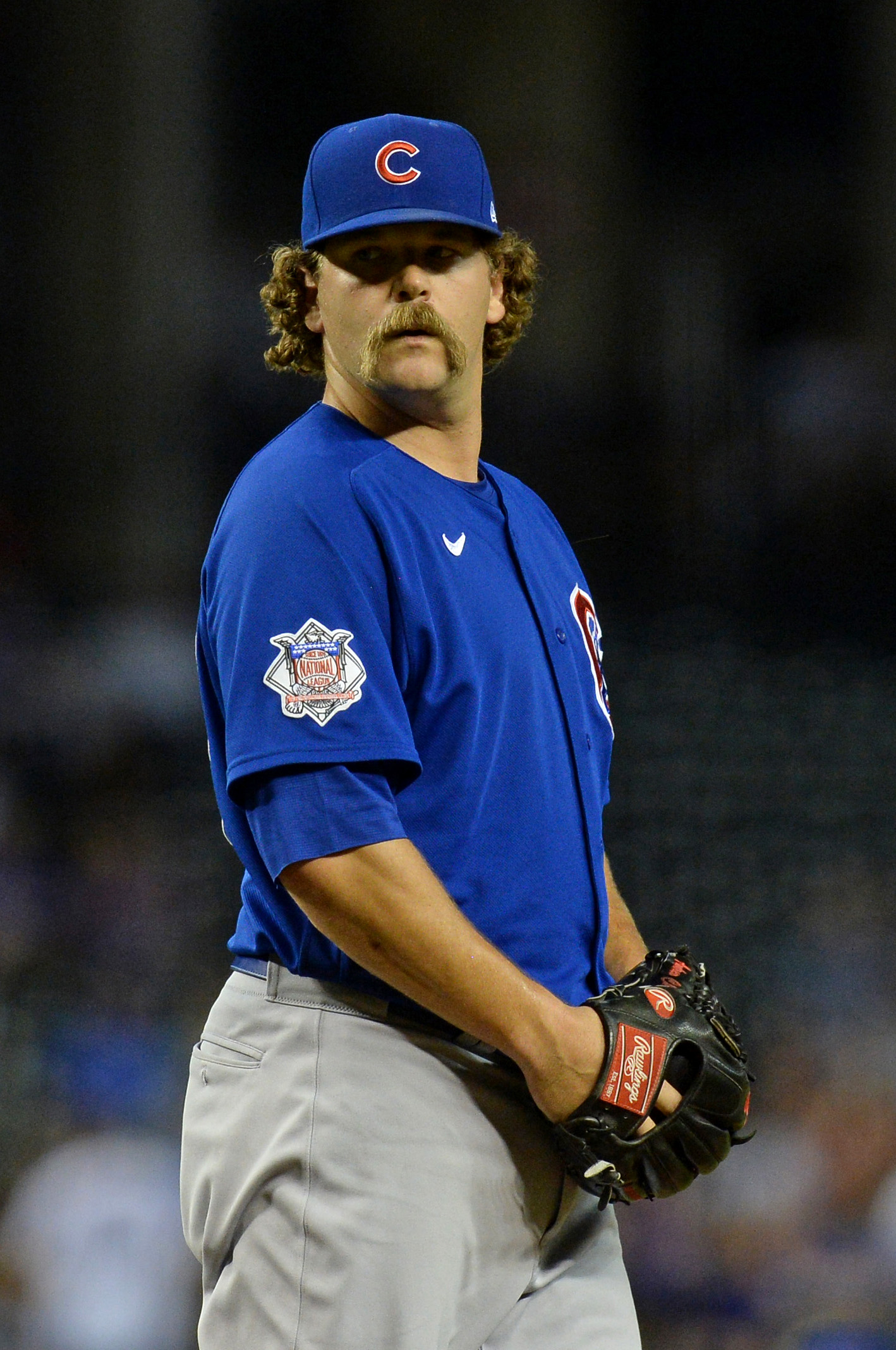
Chafin, 31, inked a one-year, $2.75MM deal over the winter. It contains a $5.25MM mutual option for the 2022 season ($500K buyout), though it’s exceedingly rare for both parties to pick up their side of a mutual option. Generally speaking, if the team exercises their end of a mutual option, it’s because the player has performed well enough to make that price a bargain, which prompts the player to decline and return to free agency. If the player picks up his half, it’s usually due to poor performance or injury, and the team will subsequently decline its half. More often than not, mutual options are simple accounting measures. The A’s likely view him as a rental reliever for the remainder of the season, though the option technically creates the chance that he’ll return.
The Cubs have consistently taken a frugal approach to their offseason bullpen construction in recent years, but Chafin is one of their better low-cost signings. The longtime D-backs lefty has a 2.06 ERA with a 24.7 percent strikeout rate, an eight percent walk rate and a 50 percent ground-ball rate in 39 1/3 innings. It’s the best season of what has quietly been a solid career for Chafin, who carries a 3.14 ERA and strong 24.9 percent strikeout rate through 314 innings at the big league level.
Oakland relievers rank tenth in the Majors with a collective 3.78 ERA and 12th with a 4.16 FIP, and adding Chafin will only further strengthen an already solid group. There’s value beyond simply adding another effective arm, though. Jake Diekman has been the only consistent left-handed presence in manager Bob Melvin’s bullpen, so adding Chafin to the bunch will give the A’s an easier time matching up late in games. Athletics relievers also have the second-lowest combined strikeout percentage of any bullpen in MLB (20.6 percent), and Chafin will give them a solid boost in that department.
From a payroll standpoint, the A’s are only on the hook for about $835K of Chafin’s remaining base salary, although there are other factors to consider. The mutual option comes with a $500K buyout, and Chafin’s deal also comes with $500K worth of incentives that are fairly easy to unlock. He can earn a quartet of $125K bonuses based on games pitched, beginning with his 50th appearance of the season. Chafin, who has pitched in 43 games already, would then earn an additional $125K for each of his 55th, 60th and 65th appearances of the year.
Deichmann is a solid get in a deal for a rental reliever, as he’s a largely MLB-ready prospect enjoying a strong 2021 season in Triple-A. The 2017 second-rounder ranks ninth among Oakland farmhands at FanGraphs and at MLB.com, and he’s currently batting .300/.432/.449 (127 wRC+) in 257 plate appearances with Las Vegas.
There have been concerns about his bat-to-ball skills in the past — understandably so after he whiffed at a 34.1 percent clip in Class-A Advanced in 2018 — but Deichmann’s 23 percent punchout rate so far in Triple-A is the lowest of his career. Those strikeouts are also part of the expected package for a player with this type of pop; FanGraphs’ Eric Longenhagen pegs Deichmann’s raw power at a 70 (on the 20-80 scale), but he’s yet to unlock that prodigious power in games. Deichmann’s career-high in home runs is 11, and he’s connected on four so far in 2021. It’s worth noting that he’s had some injuries that might’ve impacted that, including a broken hamate bone and a shoulder injury sustained on a diving catch (link via MLB.com’s Jim Callis).
Palencia, 21, signed as an amateur free agent out of Venezuela in 2020 and has only recently made his professional debut. He’s tossed 14 1/3 innings for the Athletics’ Low-A affiliate in Stockton, yielding 11 runs on 17 hits, six walks and three hit batters with 14 strikeouts. FanGraphs pegs him 12th in the Oakland system, noting that his plus fastball and above-average breaking ball impressed in a short look this spring before he was sent out of camp. Obviously, with last year’s scratched minor league season and the fact that Palencia only signed in early 2020, scouts haven’t gotten long looks at him, though the Cubs clearly saw enough to pique their interest despite some rough surface-level numbers in Stockton.
MLB.com’s Mark Feinsand had first indicated that the Cubs were closing in on a trade involving Chafin (Twitter link). Ken Rosenthal of The Athletic reported the A’s were the second team and that Deichmann was going back to Chicago (Twitter links). The Chicago Tribune’s Meghan Montemurro first reported Palencia’s inclusion.
Eloy Jimenez Activated From Injured List
The White Sox have officially activated outfielder Eloy Jimenez from the 60-day injured list, according to a team announcement. Infielder Jake Burger was optioned to Triple-A to open up room on the roster.
Jimenez required surgery after suffering a ruptured left pectoral tendon near the end of Spring Training, and he will now return at the shorter end of his initial four-to-five month recovery timetable. He began a minor league rehab assignment earlier this month and has already banked 12 games in the minors to make up for all the lost time. Luis Robert also began a rehab assignment this week, after Robert went on the injured list in May with a hip flexor strain.
Chicago has built a commanding lead in the AL Central even without Jimenez and mostly without Robert, as the White Sox have thrived due to excellent starting pitching and a lineup that is still one of the best in baseball. A mix of somewhat unheralded veterans and youngsters have filled in admirably for Jimenez, Robert, and other injured White Sox like Nick Madrigal and (more recently) Yasmani Grandal. Rookie Andrew Vaughn has become a fixture in left field, and La Russa said that Vaughn will remain in the lineup as either a left fielder or DH, possibly splitting time at the two positions with Jimenez.
Over his first two MLB seasons, the 24-year-old Jimenez did nothing but mash, hitting .276/.321/.527 with 45 home runs over 730 plate appearances. Jimenez finished fourth in AL Rookie Of The Year voting in 2019 and he won a Silver Slugger last year as he helped lead the White Sox into the postseason. With the AL Central title looking like a distinct possibility for 2021, Chicago’s chances of taking another step forward in the playoffs will look a lot better with Jimenez, Robert, and (eventually) Grandal all back in the mix, besides what other acquisitions might be in the works at the trade deadline.
Padres Acquire Adam Frazier
The Padres have acquired one of the most sought-after players on the trade market, picking up second baseman Adam Frazier in a four-player swap with the Pirates. Infielder/outfielder Tucupita Marcano, outfielder Jack Suwinski, and right-hander Michell Miliano are the prospects heading to Pittsburgh in the deal, and the Pirates are also sending $1.4MM along with Frazier to San Diego. The deal became official Monday afternoon.
It’s the first big move of deadline season for Padres general manager A.J. Preller, who is no stranger to splashy moves and is pushing to get his team first to the NL West title and then deeper into October. While a number of pitching injuries would very well result in some arms being added between now and July 30, Preller recently indicated that a bat was also on his shopping list.
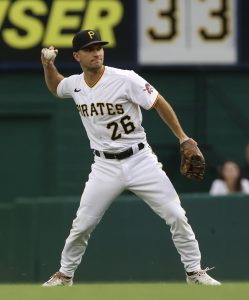
Frazier is enjoying the best season of his seven-year MLB career, hitting .324/.388/.448 with four home runs over 428 plate appearances for the Bucs in 2021. There is some possibility for regression, as Frazier’s .359 BABIP has helped make up for some very low hard-contact numbers, and his .337 xwOBA is well below his .368 wOBA. However, even that xwOBA is still above average, and Frazier somewhat makes up for that lack of hard contact by making a lot of contact in general — fitting the Padres’ model as a player who rarely strikes out.
Frazier is a left-handed hitter, and while the Padres generally lean more to the right side of the plate, Frazier might supplant another left-handed hitting regular in Eric Hosmer. The hot-hitting Jake Cronenworth could slide from second base to take over from Hosmer as the regular first baseman, opening the door for Frazier to become the new everyday second baseman. Since Frazier also has experience as a corner outfielder, he could move into the grass to spell Tommy Pham or Wil Myers, giving San Diego even more positional flexibility.
Since Frazier also has one more year of arbitration eligibility remaining, he’ll be able to help the Padres for both this year’s playoff race and throughout the 2022 season. Frazier was earning $4.3MM this season, so the $1.4MM sent from Pittsburgh will cover most of his remaining salary for 2021, which helps the Padres stay under the $210MM luxury tax threshold.
There was little doubt that the rebuilding Pirates were going to move Frazier by the deadline, given that his strong season only enhanced his trade value. Pittsburgh fans expecting multiple top-100 type prospects may be disappointed by the return, though it’s worth noting that Frazier has been more solid than outstanding during his career, with an even 100 OPS+ and wRC+ over his first six big league seasons. Nevertheless, the Bucs did add three notable prospects to add to GM Ben Cherington’s overhaul of the farm system.
Marcano is the only member of the prospect trio with any MLB experience, appearing in 25 games for San Diego this season and posting a .485 OPS over 50 plate appearances. An international signing from Venezuela in 2016, the 21-year-old Marcano is ranked by MLB Pipeline as the fifth-best prospect in the Padres’ deep farm system, while Baseball America has him in the eighth spot.
The Pirates valued Marcano highly enough that they were willing to include the $1.4MM to the Padres, Rosenthal reports, while other Frazier bidders like the Mariners weren’t asking for any money back in a proposed trade. Heyman adds that the Padres weren’t willing to discuss Marcano back when San Diego and Pittsburgh worked out the Joe Musgrove trade last winter.
There’s plenty to like about the versatile Marcano, who has played mostly second base during his pro career but has also seen a lot of time at third base, shortstop, and both corner outfield slots. At worst, Marcano seems like he’ll have a future as a utilityman, and he could well become a regular due to his excellent contact skills at the plate. Marcano does lack some power, and while he possesses plus speed, BA’s scouting report notes that he will need to improve his baserunning instincts. Marcano skipped Double-A entirely and made his Triple-A debut this year, hitting .272/.367/.444 with six home runs in 199 PA.
Neither Suwinski or Miliano appeared in the top-30 Padres prospect rankings for either Pipeline or Baseball America, but both youngsters have put themselves on the map in 2021. Suwinski was a 15th-round pick for the Pirates in 2016, and hadn’t hit much in his first pro seasons before exploring for a .269/.398/.551 slash line and 15 home runs over 267 PA at Double-A San Antonio. As noted by BA’s Matt Eddy, Suwinski has been doing this despite hitting in a pitcher-friendly home ballpark, though he’ll be moving to another pitcher-friendly location in the Pirates’ Double-A affiliate in Altoona. Suwinski has experience at all three outfield positions, and is just a few days away from his 23rd birthday.
The 21-year-old Miliano has a 6.11 ERA over 94 1/3 innings in San Diego’s farm system, getting to high-A ball this season. Miliano has given up a lot of hits (84) and, troublingly, almost as many walks (78) over his four seasons, but the Pirates were surely intrigued by his ability to miss bats. The right-hander has a 31.74% strikeout rate in the minors, and that number includes an absurd 44.44% rate over 25 2/3 innings at A-level Lake Elsinore this year.
ESPN.com’s Jeff Passan (Twitter link) was the first to report that the Padres had acquired Frazier. FanSided’s Robert Murray reported that the Pirates were getting three prospects, with The Athletic’s Ken Rosenthal and Dennis Lin identifying Marcano and Suwinski and ESPN.com’s Kiley McDaniel identifying Miliano. Kevin Acee of the San Diego Union-Tribune tweeted that the Padres were getting cash back in the trade, with MLB Network’s Jon Heyman specifying the $1.4MM figure.
Photo courtesy of USA Today Sports Images
Twins, Byron Buxton Unable To Reach Extension
The Twins and franchise cornerstone Byron Buxton have been unable to come to terms on a contract extension, increasing the likelihood of a full-scale sell-off before Friday’s trade deadline. The Athletic’s Ken Rosenthal and Dan Hayes report that the Twins’ initial offer was for $73MM over seven years with an unspecified number of incentives. The Twins “increased the guarantee slightly,” but not enough to come to a long-term agreement. The final guarantee increased to $80MM, tweets The Athletic.
The end result here is not surprising, given the muddled valuation process for a talent like Buxton. When he’s at his best, he’s one of the best players in the game, a five-tool player capable of anchoring a first-division lineup on both sides of the ball from a premium position. The injury concerns, however, have limited his contributions and saddled him with a tricky long-term risk profile.
This season perfectly illustrated the dichotomy of Buxton as a team-building asset. In 27 games, he made 110 trips to the plate and accrued an insane 2.7 fWAR with a .369/.409/.767 line, good for a 217 wRC+. But 27 games of MVP-caliber production from Buxton wasn’t enough to keep the Twins anywhere near contention. They currently have a 0.0% chance to make the playoffs, per Fangraphs.
Buxton went on the injured list with a hip strain from May 7th to June 16th, by which point Minnesota’s shot at the playoffs was already slim to nil. He was back for less than a week before breaking his hand and returning to the injured list. Because he’s still out, there’s very little chance that the Twins might move Buxton now.
Instead, they’ll wait for the offseason and re-evaluate. Even just one season of a healthy Buxton ought to pique the interest of a few teams around the league who might be willing to take a chance on keeping him healthy.
The question now is whether Minnesota’s inability to lock up Buxton long-term will push them to be more aggressive in offloading assets like Jose Berrios and Taylor Rogers. Both are under team control through 2022, like Buxton. Both are key cogs in a potential contender in 2022, like Buxton.
With Nelson Cruz already gone and the rest of the present-day roster not looking much like a contender, the Twins may already doubt their chances to battle an increasingly indomitable White Sox team next season.
If Berrios ultimately gets moved in the next week, we’ll know the Twins’ thoughts about next season. If he stays, the Twins may be preparing for one final run with Berrios and Buxton under contract. Either way, it’s looking increasingly likely that Buxton’s long-term future resides somewhere other than Minnesota — where he can tantalize and frustrate a different fanbase.
Rays Trade Rich Hill To Mets
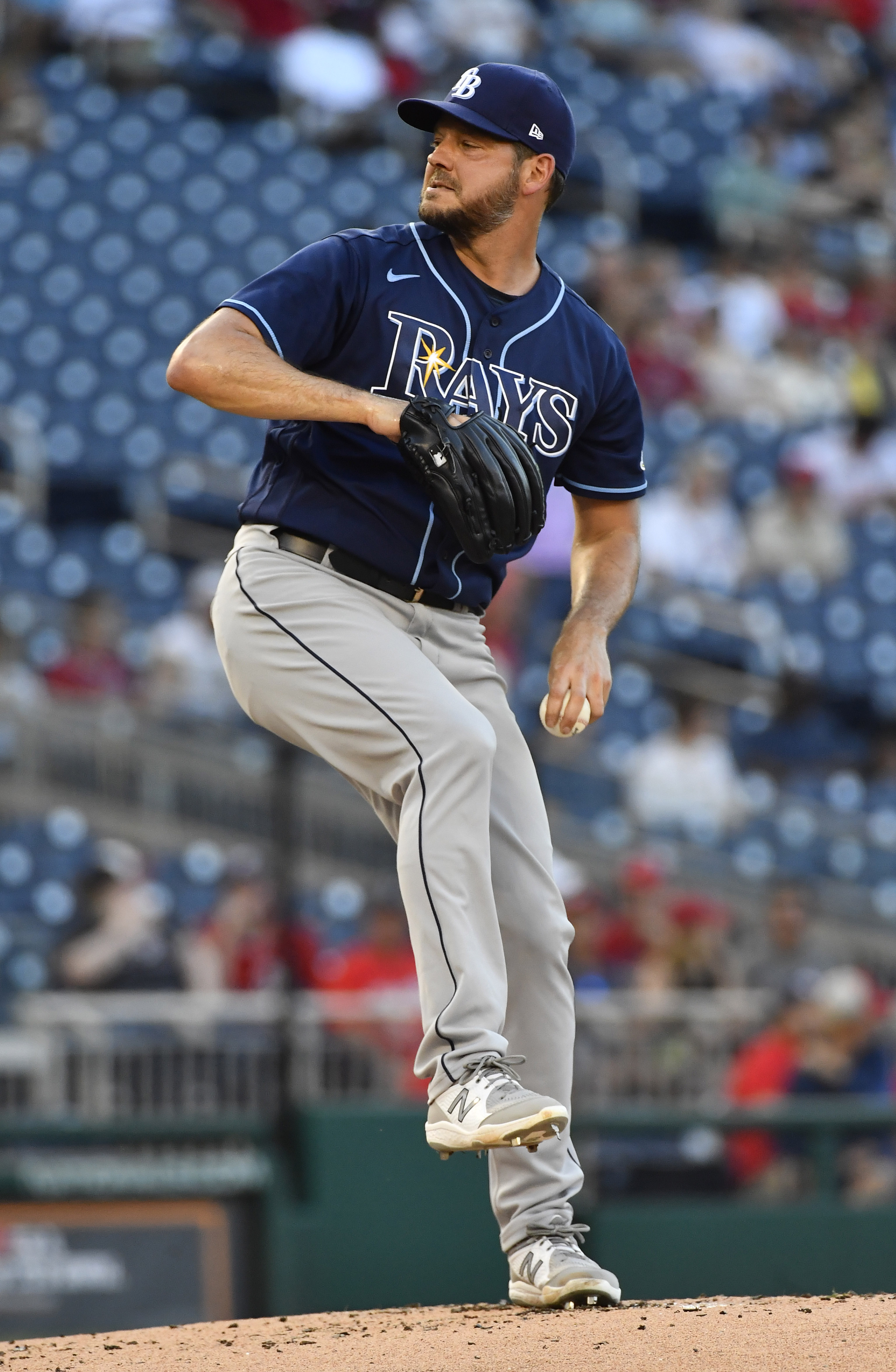
The Mets, in dire need of some rotation help, have found some of the rotation depth they’ve been seeking. The team announced Friday that it has acquired lefty Rich Hill from the Rays in exchange for minor league catcher/infielder Matt Dyer and veteran right-hander Tommy Hunter (who is currently on the injured list). Right-hander Robert Stock, out with a hamstring strain, was transferred to the 60-day injured list in order to open a spot on the Mets’ 40-man roster.
The swap will come as a surprise to many, given the Rays’ place in the standings and last night’s acquisition of Nelson Cruz, but it serves as another reminder that in today’s game, many clubs can’t be simply boxed into strict “buyer” or “seller” categories.
Hill, 41, has pitched to a 3.87 ERA through 95 1/3 innings so far in 2021, but he’s also struggled rather considerably since mid-June. In his past seven starts, he’s tallied just 33 1/3 innings and yielded 20 runs on 34 hits and 16 walks. Seven of those hits have left the yard, and Hill’s 28 strikeouts (19.3 percent) in that time represent a pretty pronounced decline.
Overall, Hill is sitting on a 5.40 ERA and 5.25 SIERA since June 12. As the New York Post’s Joel Sherman observes (Twitter link), he’s seen his spin rates drop considerably in the aftermath of MLB’s crackdown on foreign substances. I’d add that it may not be coincidental that Hill began incorporating a changeup (ideally a low-spin offering) into his pitch mix in early June. The 41 changeups he’s thrown over his past eight starts are already the most he’s thrown in a season since 2009.
Despite his recent struggles, Hill gives the Mets a much-needed veteran arm to plug into the back of an ailing rotation — one with more upside and a much greater track record than recent options they’ve tried. New York has yet to receive an inning from Carlos Carrasco or Noah Syndergaard in 2021, and depth options like Joey Lucchesi, Jordan Yamamoto and Thomas Szapucki are all sidelined through season’s end. Ace Jacob deGrom hit the injured list recently due to a forearm issue, and fifth starter David Peterson is out with an oblique strain.
With all of those injuries piling up, the Mets have leaned heavily on righties Marcus Stroman and Taijuan Walker, who’ve both exceeded expectations and pitched brilliantly so far in 2021. Young righty Tylor Megill has also fared well in his first five big league outings, but the Mets had a clear and pressing need to get some sort of stability into the rotation. Hill can provide that, and if he can return to his prior levels of production it could prove a difference-making move for the Mets.
From the Rays’ vantage point, it’s possible that Hill had simply fallen out of favor as one of the organization’s preferred rotation options. Tampa Bay has Ryan Yarbrough, Shane McClanahan, Luis Patino, Michael Wacha and Josh Fleming as alternatives on the big league roster, and there are several depth options behind them in Triple-A (including ballyhooed righty Shane Baz). It’s also eminently possible that the Rays will add another name of note to the rotation over the next week as they load up to chase the Red Sox in a competitive AL East title picture.
Hunter’s inclusion in the swap is seemingly as a financial counterweight to Hill. The New York Post’s Mike Puma recently indicated that it was doubtful Hunter, who has been out since May with a back strain, would be able to return in 2021. Hunter’s $2.25MM salary is a bit lighter than Hill’s $2.5MM salary, so the Rays are saving a fairly nominal $99K by agreeing to take on his contract in return.
The Rays do come away with an interesting prospect in the 23-year-old Dyer, whom the Mets selected in the fourth round of the shortened 2020 draft. Dyer has spent the season with the Mets’ Class-A affiliate and shown some concerning swing-and-miss tendencies (30.9 percent strikeout rate), but he’s also walked at a high clip and shown good power. He’s hitting .194/.329/.452 with seven homers, seven doubles, a pair of triples and six steals, and Dyer has spent time at catcher (65 innings), at first base (80 innings), at third base (66 innings) and in right field (18 innings) so far this season.
Baseball America’s scouting report on Dyer prior to last year’s draft suggested that he had a plus arm, average sped and the potential to be an average or better defender at as many as five positions, including catcher, which sounds like a player tailor-made for the Rays organization. This year’s strikeout concerns underscore that he’s far from a sure thing to hit enough to realize that potential, but he’s a somewhat interesting name to add to the system in return for a struggling pitcher on an expiring contract.
While it’s not a trade many would’ve expected to see come together today, there’s some sense to it for both sides. The Mets are plugging a hole in their rotation with a veteran arm who’ll practically be free from a financial standpoint, while the Rays are turning to younger options on the starting staff and acquiring a super-utility lottery ticket while dealing from a position of depth.
MLB.com’s Anthony DiComo first reported (via Twitter) that the two sides had engaged in discussions regarding Hill. Fansided’s Robert Murray reported that a deal was close. Jon Heyman of MLB Network first reported an agreement had been reached. Joel Sherman of the New York Post reported the other players involved in the deal (Twitter links).
Nationals Backing Down Stephen Strasburg’s Throwing Program
July 23: The Nats are now backing down Strasburg’s throwing program after continued discomfort in his neck, Martinez announced to reporters (Twitter link via MASNsports.com’s Mark Zuckerman). It’s possible he’ll see another specialist before the team determines next steps.
July 17: Stephen Strasburg has encountered a setback in his recovery from nerve irritation in his neck, as the Nationals righty continued to feel discomfort in his neck while pitching a simulated game on July 9. As manager Davey Martinez told The Washington Post’s Jesse Dougherty and other reporters, Strasburg threw on flat ground prior to tonight’s game, and also threw on Friday.
The fact that Strasburg is still throwing is a good sign, and perhaps indicative that this latest issue could ultimately end up being pretty minor. That said, Strasburg was placed on the injured list on June 2, and it doesn’t bode well that he is still feeling soreness after over six weeks. It isn’t clear when Strasburg’s recovery might kick back into higher gear (such as a minor league rehab assignment), as Martinez made it clear that the team wants to fully correct the injury problem. “When Stephen comes back, I want him to come back and finish the season on the mound and not have this recurrence again,” Martinez said.
Between this absence and an earlier IL stint due to shoulder inflammation, Strasburg has tossed only 21 2/3 innings this season. Due to Strasburg being sidelined by carpal tunnel syndrome for much of the 2020 season, he has pitched only 26 2/3 total frames since the start of the 2020 campaign, and since the right-hander inked a seven-year, $245MM free agent contract to return to Washington.
While Strasburg is far from the only Nats player to be waylaid by injuries over the last two seasons, his contract and his importance to the starting rotation make him stand out as a particular reason why the Nats have had trouble stringing wins together since their 2019 World Series victory. A five-game losing streak has now dropped the D.C. squad to 42-48 for the season, and while things remain close in the NL East, more losses could potentially send the Nationals pivoting towards selling some veterans at the trade deadline.
Reds Place Nick Castellanos On 10-Day IL, Release Jose De Leon
The Reds announced Friday that right fielder Nick Castellanos has been placed on the 10-day injured list, retroactive to July 20. Castellanos revealed earlier this week that a CT scan found a microfracture in his right wrist. Cincinnati also placed lefty Amir Garrett on the paternity list. Right-hander Vladimir Gutierrez and infielder Alejo Lopez were recalled from Triple-A in a pair of corresponding moves. Meanwhile, right-hander Jose De Leon, who was designated for assignment earlier in the week, was released.
There’s never a good time for an injury to a team’s best hitter, but Castellanos’ absence will come at a particularly critical time for the Reds, who have seven straight games against divisional opponents leading up to next Friday’s trade deadline. The Reds have lost five of their first six games coming out of the All-Star break, including a sweep at the hands of the first-place Brewers. They’re currently six and a half games back of both the division lead and the second Wild Card spot in the National League.
Suffice it to say, a strong run for the Reds over the next week could embolden the front office to act as buyers in an effort to push for a postseason berth. A particularly poor showing could have the opposite effect. The Reds will now have to make this pivotal push without their most dangerous hitter; Castellanos, who leads the NL in batting average and doubles, is batting .329/.383/.582 through 368 plate appearances.
Cincinnati is also without slugger Mike Moustakas, infielder/outfielder Nick Senzel and three of its best relievers: Tejay Antone, Lucas Sims and Michael Lorenzen. The fact that Garrett is being placed on paternity leave for the next three games against the Cardinals only further thins out the bullpen. The Reds are fortunate that neither the Cubs nor the Cardinals have been playing particularly well in their own right, however, so there’s still a chance for them to make up some ground and the final pre-deadline run.
As for De Leon, the 28-year-old former top prospect will now be free to sign with any club. The former Dodgers and Rays farmhand saw his development slowed by injuries, most notably Tommy John surgery, and has yet to develop into the high-quality MLB arm that scouts envisioned in his younger days.
The Reds acquired De Leon from Tampa Bay in exchange for cash last year. Since the swap, he’s whiffed 43 of the 126 batters he’s faced in the Majors (34.1 percent), but he’s also been clobbered for 29 runs. Control has been a problem, as evidenced by a 17.6 percent walk rate and a pair of hit batters in that time.
Mariners Interested In Adam Frazier
The Mariners are known to be on the lookout for infield upgrades, and Ken Rosenthal of The Athletic reports (via Twitter) that Seattle is currently in active pursuit of infielders who are controlled beyond the 2021 season — including Pittsburgh’s Adam Frazier. The Pirates are obvious sellers, and the widespread expectation is that Frazier will likely be traded between now and next Friday’s 4pm ET deadline.
Frazier, 29, is in the midst of the finest season of his solid career. His 413 plate appearances are the fourth-most in Major League Baseball, and he’s turned in a robust .327/.390/.453 batting line with four home runs, 27 doubles, four triples and five stolen bases. Frazier’s 10.9 percent strikeout rate is the fifth-lowest among 137 qualified big league hitters. He’s also tied for the game’s fifth-best contact rate (88.4 percent) and has the game’s seventh-lowest swinging-strike rate (5.4 percent).
It’s true that Frazier has benefited to an extent from some good fortune on balls in play; this year’s .363 BABIP is a career-high. However, even with some regression in that department, Frazier would likely still be enjoying a career year by virtue of that career-low strikeout rate. Statcast pegs his “expected” batting average at .297, after all, and he’s still walking at a respectable eight percent clip while swinging and missing less than ever before. He may not sustain this level of output, but he’s made his rough 2020 season look particularly fluky.
Frazier’s value goes beyond his contributions at the plate, too. His defense at second base has drawn plus ratings in Defensive Runs Saved and Outs Above Average for his career, and he’s also an above-average left fielder by virtually any measure.
The Mariners surely see Frazier as a potential upgrade at second base, where they’ve received a collective .198/.267/.345 output so far in 2021. That’s a disastrous output no matter how you frame it, but it’s actually been far worse as of late; that combined effort includes 69 very strong plate appearances from Ty France, who’s slashed .293/.391/.483 while playing second base. France, however, has been playing more first base lately. Non-France Mariners second basemen in 2021 are hitting just .178/.239/.317 on the season.
As such, it’s no surprise to see Frazier among the Mariners’ targets. He’s playing the year on a $4.3MM salary and is controlled through 2022 via arbitration. That’s a key distinction for the Mariners, who are seven games back in the AL West and four and a half games back of a Wild Card spot. They’re aiming to stock up for a bit of a long-shot postseason run in 2021, but adding players who can help next year when their young core is more established (and likely after some offseason spending) is sensible.
It stands to reason that if Seattle is looking into Frazier, then general manager Jerry Dipoto has also gauged the asking price on Royals All-Star Whit Merrifield, who has again seen his name surface on the summer rumor mill. Dipoto is never afraid to make deals and will likely be checking in on a number of controllable, longer-shot trade candidates as the deadline approaches.
Cleveland Indians To Change Name To Cleveland Guardians
The Indians announced in a video package on Twitter this morning that their new franchise name will be the Cleveland Guardians. It was reported last night that a decision had been reached and an announcement could be forthcoming. The name change will formally go into effect after the 2021 season.
The franchise announced early last July that a name change was under consideration, and by December it had become clear that the organization would move forward with a new name in the near future. The team selected “Guardians” from a list of nearly 1200 initial possibilities and has provided some insight into its selection process in conjunction with today’s announcement.
The new “Guardians” moniker is a nod to the eight sculptures along Cleveland’s Hope Memorial Bridge, referred to as the “Guardians of Traffic.” The name has been among the reported favorites for some time now. Others that were popular speculative possibilities included the Spiders (a callback to the late-1800s Cleveland baseball franchise) and the Rocks or Rockers (a nod to the Rock & Roll Hall of Fame).
It’s not the first name change in franchise history — far from it — but it is the first in more than a century. The franchise was founded as the Grand Rapids Rustlers in 1894 and very briefly changed its name to the Lake Shores upon moving to Cleveland in 1900. After a series of one-year stints for Lake Shores, Bluebirds and Broncos, the team renamed itself the “Naps” — after star infielder Nap Lajoie — from 1903-1914.
The “Indians” moniker has been in place since that time. There were inklings of change on the horizon long before the announcement of a forthcoming name change. The organization phased out the former “Chief Wahoo” logo from its caps, jerseys and official merchandise beginning in 2019, and talks about potential names and/or branding changes predate that logo’s departure by several years.
“We are excited to usher in the next era of the deep history of baseball in Cleveland,” owner/chairman Paul Dolan said Friday morning in a press release announcing the change. “Cleveland has and always will be the most important part of our identity. Therefore, we wanted a name that strongly represents the pride, resiliency and loyalty of Clevelanders. ‘Guardians’ reflects those attributes that define us while drawing on the iconic Guardians of Traffic just outside the ballpark on the Hope Memorial Bridge. It brings to life the pride Clevelanders take in our city and the way we fight together for all who choose to be part of the Cleveland baseball family. While ‘Indians’ will always be a part of our history, our new name will help unify our fans and city as we are all Cleveland Guardians.”
Rays Acquire Nelson Cruz
With just over a week before the trade deadline, the Rays have made a big move in acquiring slugger Nelson Cruz from the Twins as part of a four-player swap. Cruz and minor league righty Calvin Faucher will head to Tampa, while Minnesota will pick up right-handers Joe Ryan and Drew Strotman.
With the Twins in the midst of a nightmare season, Cruz became a natural trade chip, as the 41-year-old slugger can be a free agent this winter. Cruz re-signed with Minnesota last offseason on a one-year, $13MM contract, and Cruz has roughly $4.87MM remaining in owed salary.
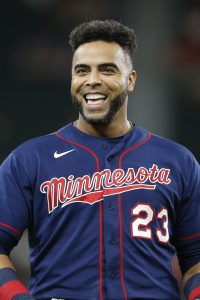 There was no announcement made of cash considerations being involved, so it appears as though the Rays will be taking on all of Cruz’s remaining salary. This is no small matter for a Rays team that always has an eye on the budget, and even with Cruz now in the fold, the club’s payroll is still under the $67MM threshold. Tampa Bay can (and likely will) make other moves before the July 30 deadline that could move some other dollars off the books, but as it stands, the Cruz deal is a sign that Rays ownership is willing to stretch a bit financially to bolster a team that looks like a contender to return to the World Series.
Despite Cruz’s age and seeming lack of defensive value, his bat has remained so dangerous that even some National League teams were reportedly including him in trade considerations, with an eye towards deploying Cruz in the outfield for the first time since 2018. While the Rays’ penchant for roster maximization could lead to Cruz getting at least a bit of time in the outfield, it’s a very safe bet that he’ll slot in as Tampa’s new everyday DH, bringing some big-time pop to a lineup that is solid overall but middle-of-the-pack in terms of power.
Austin Meadows had received the bulk of Tampa’s DH at-bats, though Meadows now looks to move into the outfield mix with Randy Arozarena, Kevin Kiermaier, Brandon Lowe, and (when he returns from the IL) Manuel Margot. Lowe can also be utilized at second base, and between any other injuries or even trades that might emerge, the Rays shouldn’t have much issue in finding enough playing time to keep everyone fresh and ready for another postseason push.
Cruz will suit up for the sixth different team over what has been a very impressive 17-year career. Named to his seventh All-Star team just this season, Cruz is showing no signs of slowing down, hitting .294/.370/.537 with 19 homers over 346 plate appearances in 2021. This production is actually a dropoff from the .308/.394/.626 slash line he posted over 735 PA for Minnesota in 2019-20, but “decline phase” doesn’t really seem like an applicable description.
Neither Ryan and Strotman are in the upper crust of Tampa prospects, though MLB Pipeline did have them solidly ranked (Ryan 10th, Strotman 17th) on their list of the Rays’ best minor league talents. Both are starting pitchers with solid performances at Triple-A this season, and it wouldn’t be surprising to see their make their Major League debuts before 2021 is finished. Since the Twins are looking to return to contention next year, landing two big league-ready arms will help their rotation depth, considering Michael Pineda and J.A. Happ are both free agents this winter (and either could be moved before July 30.
Ryan is 25 years old and was a seventh-round pick for the Rays in the 2018 draft. He cracked Baseball America’s top 100 list (at 98th) prior to the 2020 season, and Ryan has continued his rise up the ladder by posting a 3.63 ERA over 57 innings at Triple-A Durham this year. At all levels, Ryan has been great at missing bats (36.65% strikeout rate over 217 minor league IP) and avoiding walks (6.05% walk rate), thanks in large part to an excellent four-seamer. MLB Pipeline’s scouting report isn’t as enamored with his other pitches, but Ryan’s slider did merit a 55 grade on their 20-80 scouting scale.
The 24-year-old Strotman was a fourth-rounder in the 2017 draft, though his pro career has been limited to 179 innings thanks to the canceled 2020 minor league season and a Tommy John surgery that kept him out of action for big chunks of the 2018 and 2019 campaigns. The Rays saw enough from Strotman that they added him to their 40-man roster last winter to protect him from the Rule 5 Draft, and Strotman has looked solid in posting a 3.39 ERA over 58 1/3 Triple-A innings this year. His walks have increased as he has moved up the minor league ladder, topping out at an unimpressive 13.15% walk rate at Triple-A this year. Pipeline notes that command has been a strength for Strotman in the past, however, and the right-hander’s fastball, cutter, and slider are all ranked as above-average to plus pitches.
Faucher is the other name in the deal, a 25-year-old righty who has struggled in his first taste of Double-A baseball, posting a 7.04 ERA with six homers and 24 walks in 30 2/3 innings this season. After consistently posting big strikeout numbers earlier in his minor league career and in college (at UC Irvine), the hard-throwing Faucher has continued that trend with a 27.63% strikeout rate amidst his difficulties this season.
ESPN.com’s Jeff Passan (Twitter link) was the first to report that the Rays were acquiring Cruz, while Marc Topkin of the Tampa Bay Times (Twitter links) was the first to report that it was a four-player deal also involving Strotman.
Photo courtesy of USA Today Sports Images