
Latest On Universal DH, Expanded Playoffs
The Major League Baseball Players Association rejected the league’s most recent proposal to implement a universal designated hitter, The Athletic’s Ken Rosenthal reported this morning in a larger, broad-reaching look at the issues facing the two parties. MLB offered up a universal DH and a willingness to rule in favor of two players on a pair of service time grievances, per Rosenthal, but in exchange they sought an agreement on expanded playoffs, the implementation of a pitch clock and a Spring Training trial run with electronic strike zones, among other elements.
The lack of clarity on whether there will be a DH in the National League next season continues to serve as a major impediment for teams and for some free agents alike. Nelson Cruz and Marcell Ozuna, in particular, can’t fully get a grasp on their markets until they know whether the NL will carry a DH. Meanwhile, NL teams are left to build a lineup and a roster without knowing whether they’ll have a spot for an extra hitter.
The MLBPA clearly doesn’t view the addition of a designated hitter in the National League to be as advantageous to its side as the expansion of playoffs is to the league. That’s plenty understandable, given that most clubs no longer employ expensive, dedicated designated hitters and that the expansion of playoff teams would create far more revenue for the league than for its players.
Rosenthal notes that MLB’s latest offer included an extra $30MM or so to be divided up among players — up from $50MM in 2020’s expanded field — but team-side revenues would increase on a much greater basis. Under the traditional structure (i.e. pre-2020), players’ postseason shares are tied to gate revenue, while teams collect 100 percent of television revenues. Last year, in the absence of fans, players agreed to an expanded, 16-team playoff field that saw $50MM of television revenues divided among players.
From the players’ vantage point, postseason expansion is a double-edged sword. A greater chance to play in October could very well be appealing, but there are likely some who (like many fans) worry about “watering down” the field. Of greater concern is the manner in which postseason expansion could also impact free agency. The league would surely argue that increasing the field will motivate borderline clubs to spend more on the open market, thus making it a win for the players.
However, the opposite effect could also play out as well; if the bar to reach the postseason is lowered, some clubs won’t feel as compelled to spend for an extra couple of wins to push themselves over the top. The margin for error is much greater when nearly half (or even more than half) of the teams in the game qualify for postseason play than it is when only a third of clubs do. That’s especially true when at any given point, there are a handful of teams tanking and actively doing everything they can not to win games.
At the end of the day, there’s a substantial disconnect between the extent to which the league and the union feel the universal DH will benefit players. The MLBPA knows that playoff expansion, and the associated revenues, is a massive bargaining chip to leverage in current talks and in the looming talks for a new CBA. That seems too large a concession to make in exchange for the universal DH — particularly because the commissioner’s office also wants a DH implemented in the National League.
Rob Manfred has continually sought to increase in-game action, and considering the fact that pitchers posted a combined .128/.160/.162 batting line with a 44 percent strikeout rate in 2019, swapping them out for a competent hitter would help with that goal. Of course, many traditionalists abhor the very notion of the designated hitter and are overwhelmingly against its implementation in the National League, but at this point it feels like an inevitability — whether that implementation comes in 2021 or in 2022.
As labor lawyer Eugene Freedman (who recently chatted with MLBTR’s Tim Dierkes about the CBA) points out on Twitter, the very framing of this scenario as a negotiation is somewhat misleading. The two sides already have an agreement in place in the form of the 2016-21 CBA, and the union is under no obligation to renegotiate that agreement simply because the league is now making a push for an expanded postseason format.
The MLBPA’s latest rejection doesn’t mean that the two sides won’t eventually agree to something, of course. The league is obviously very motivated to expand the upcoming postseason field and grow its postseason revenues, so perhaps they’ll put together a more enticing offer. We saw in 2020 that the two sides are willing to come back to the table at the last minute, as 2020’s expanded postseason format was agreed upon about three hours prior to the first pitch being thrown on Opening Day.
Yankees Trade Adam Ottavino To Red Sox
1:15pm: The teams have announced the trade.
11:45am: In an ultra-rare swap between AL East rivals, the Yankees have reportedly traded right-hander Adam Ottavino to the Red Sox in exchange for cash or a player to be named later. Boston will receive Ottavino and minor league right-hander Frank German from the Yankees in a move that amounts to a salary dump for the Yanks and the purchase of pitching prospect and a bullpen rebound candidate for the Red Sox.
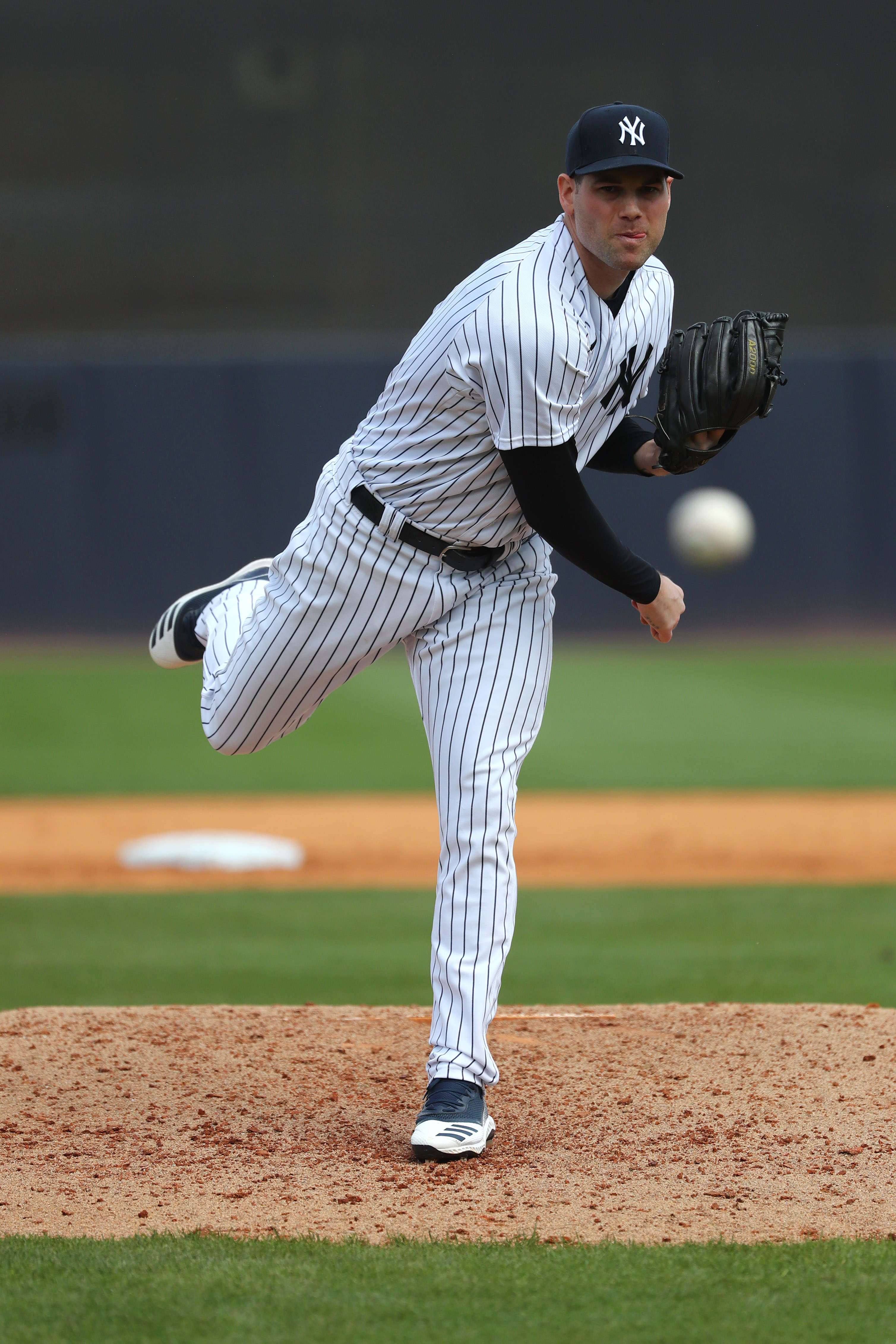
After acquiring Jameson Taillon from the Pirates and agreeing to terms with DJ LeMahieu and Corey Kluber, the Yankees found themselves with roughly one million dollars separating them from the tax threshold, per Roster Resource’s Jason Martinez. Ottavino came with a $9MM luxury hit by virtue of the three-year, $27MM free-agent deal he signed two years ago, and the Yankees will now shave the bulk of that sum from their luxury obligations. ESPN’s Buster Olney reports that they’re sending $850K to the Red Sox as part of the deal, so the Yankees are freeing up $8.15MM of luxury breathing room.
That space will prove vital, given ownership’s apparent mandate that the front office stay under the tax threshold. The Yankees have recently spoken to Brett Gardner‘s camp about a reunion, and the club could yet be in the hunt for affordable rotation depth even after adding Kluber and Taillon. Both are coming off injury-ruined 2020 seasons, after all, and the rest of the team’s rotation comes with similar workload concerns.
The trade between the two teams is the first in six and a half years, when they swapped Stephen Drew and Kelly Johnson in 2014. MLB.com’s Mark Feinsand points out that this is only the second trade that Yankees GM Brian Cashman has ever made with his organization’s top rival.
While finances are the clear driving factor in this trade, it’s unlikely the Yankees would’ve made the move had Ottavino not struggled through a dismal showing in last year’s shortened season. The 35-year-old appeared in 24 games but totaled just 18 1/3 innings of work, yielding a dozen runs on 20 hits and nine walks with 25 punchouts in that time. Ottavino’s 5.89 ERA was his highest since debuting as a rookie with the Cardinals back in 2010, although fielding-independent metrics were more bullish on his work (3.52 FIP, 3.62 SIERA).
Control has never been a strong point for Ottavino, but he dropped his walk rate from 13.8 percent in 2017-19 to 10.6 percent last year. It’s easy to call his ERA a result of a sky-high .375 average on ball in play, but Ottavino’s struggles appeared to be more than a function of simple bad luck. In spite of his improved control, the right-hander’s strikeout rate dipped a bit (31.5 percent to 29.4 percent), and Ottavino yielded hard contact at a career-high rate (90.6 mph average exit velocity; 50 percent hard-hit rate). Ottavino was a high-quality reliever as recently as 2018-19 between the Rockies and Yankees, however, when he logged a combined 2.19 ERA and 33.8 percent strikeout rate through 144 innings of work.
Boston surely hopes that Ottavino will return to form, but the Sox are also using available payroll flexibility to add a pitcher who isn’t viewed as being too far from MLB-ready. The 23-year-old German was a fourth-round pick out of college and a late riser on draft boards in 2018, as Eric Longenhagen wrote last year at FanGraphs. German added muscle to a projectable frame between his junior and senior years of college and saw his velocity spike late in the 2018 NCAA season. He’s continued to add velocity in pro ball, per Longenhagen, though there are concerns about his secondary offerings. MLB.com previously ranked German 24th among Yankees prospects, so he’ll settle somewhere into the middle tiers of the Red Sox’ rankings now.
In many ways underscores, this unexpected trade speaks to how both clubs view Boston’s chances of competing in 2021. If the Red Sox genuinely expected to compete for a division title, would they help the Yankees by giving them further payroll space to operate underneath the tax threshold? And if the Yankees viewed the Red Sox as a threat, would they risk sending a talented reliever — albeit one in need of a rebound — to their nemesis? The optics of a revitalized Ottavino playing a key role in a Red Sox bullpen that marches to the postseason would be brutal for the Yankees.
That’s not to write off the Red Sox entirely, of course. There’s still a very talented core group of players in Boston, but the team’s chances of contending in 2021 are largely dependent on a number of unknown elements breaking their way. The Sox don’t yet know how Chris Sale will look in his return from Tommy John surgery, for instance, nor are they certain what they can expect from Eduardo Rodriguez after he missed the 2020 season due to Covid-19 and a subsequent myocarditis diagnosis. Key lineup pieces like J.D. Martinez and Andrew Benintendi are in search of their own rebounds after downturns in 2020, and the Sox lack proven options at first base, in the back of the rotation and the back of the bullpen. Ottavino merely adds another question mark to that lengthy list.
Lindsey Adler of The Athletic first reported (via Twitter) that Ottavino had been traded to Boston. The New York Post’s Joel Sherman added details on the other elements of the swap.
Yankees Acquire Jameson Taillon
12:49PM: The trade has been officially announced by both teams.
11:35AM: The Yankees have worked out a deal to acquire right-hander Jameson Taillon, Jason Mackey of the Pittsburgh Post-Gazette reports. The Pirates will receive four prospects in return. ESPN.com’s Jeff Passan (Twitter link) reports that the minor leaguers in question are right-handers Miguel Yajure and Roansy Contreras, infielder Maikol Escotto and outfielder Canaan Smith.
Multiple reports broke yesterday that a Taillon trade was nearing completion, with the Yankees emerging as the favorites to land the 29-year-old. According to Mackey, “at least three clubs” submitted offers for Taillon, but it was indeed New York who eventually landed the right-hander.
 Taillon joins a Yankees rotation that is headlined by Gerrit Cole, and otherwise has a lot of upside but an equal number of question marks. Corey Kluber has two AL Cy Young Awards on his resume but also has barely pitched in two seasons due to injuries, Luis Severino won’t return from Tommy John surgery rehab until midseason, Domingo German didn’t pitch in 2020 due to a domestic violence suspension, and the likes of Jordan Montgomery, Deivi Garcia, Clarke Schmidt or Michael King are lacking in MLB experience.
Taillon is himself not exactly a sure thing, as he didn’t pitch in 2020 (and threw only 37 1/3 innings in 2019) due to Tommy John surgery. This was the second TJ procedure of Taillon’s career, following an earlier surgery during his days as a star prospect in Pittsburgh’s farm system. While there is risk involved in the acquisition, the Yankees are betting that Taillon is healthy and can match or surpass the form he has showed over his 466 career innings.
Drafted second overall in 2010, Taillon has posted a 3.67 ERA, 21.5K%, and 15.5K-BB% over his Major League career. While not a big strikeout pitcher, Taillon has a mid-90’s fastball, strong control, the ability to keep the ball on the ground (career 48.2% grounder rate) and does a good job of limiting hard contact.
The other important numbers from the Yankees’ perspective were two (as in the number of years of team control remaining over Taillon) and $2.25MM, which is what Taillon is set to earn in 2021. The Yankees are known to be looking to stay under the $210MM luxury tax threshold and reset their tax penalties to zero, so there is added value for the team in acquiring a potential No. 3 or even a No. 2 starter at such a low financial cost. According to Roster Resource‘s projection, the Yankees are now less than a million dollars under the $210MM mark, so some creativity will be required if the team is going to make any more additions.
Contreras and Yajure were also both on the 40-man roster, so the Yankees have now opened spots up for Taillon and for one of Kluber or DJ LeMahieu, whose signings have yet to be officially announced by the team.
For the Pirates, this is the latest big move of a rebuild that has already seen Joe Musgrove and Josh Bell dealt in respective trades with the Padres and Nationals this winter. There was no pressing payroll concern surrounding Taillon, but since the Bucs look to be more than two years away from contending, it made sense for the team to shop the righty now rather than risk an injury setback or poor performance from Taillon during the season.
For Musgrove, Bell, and now Taillon, the Pirates have added 11 young players to their organization via the three trades. Similar to the Musgrove deal with San Diego, Pittsburgh received a larger package of prospects rather than a singular blue-chip talent, but it would be incorrect to say that the Pirates opted for quantity over quality. Yajure (#15), Contreras (#19) and Smith (#21) were all ranked on MLB.com’s list of the top 30 prospects in the New York farm system.
Yajure made his Major League debut in 2020, posting a 1.29 ERA over seven relief innings while recording eight strikeouts and five walks. Control wasn’t really a problem for Yajure over his minor league career, with only a 5.9BB% to go along with a 2.47 ERA and 20.8K% over 291 2/3 innings. The 22-year-old also had a knack for keeping the ball in the park, with only 10 homers allowed during his minor league career.
Yajure started 54 of 61 minor league outings, and MLB Pipeline’s scouting report says he “has a high floor as a likely No. 4 or 5 starter.” He could be a candidate for action in the Pirates’ rotation this season, but since he has yet to pitch at the Triple-A level, Yajure will probably begin the year in the minors.
Contreras, 21, was a product of the 2016 international draft class and has yet to pitch beyond the A-ball level, but he has a 3.25 ERA over 249 1/3 innings, starting 47 of 50 games. There is some doubt as to whether or not Contreras will stick as a starter or be moved to the bullpen, according to MLB Pipeline, since he doesn’t record many strikeouts (20.1K%) and is “a flyball pitcher without much life on his fastball.” Both his fastball and changeup receive a 55 on the 20-80 scouting scale, however, and his fastball averages in the 92-95mph range with some quality spin rate.
Smith was a fourth-round pick in the 2017 draft, and the 21-year-old has already shown an aptitude for getting on base. Smith has hit .280/.389/.426 over 936 plate appearances in his young career, reaching as high as the A-ball level in 2019. His left-handed swing doesn’t have much loft, as per Pipeline, but his slugging percentage did jump upwards to .465 in 2019. Smith has played mostly left field and is an average defender overall, and he has shown good skill as a baserunner in stealing 21 bases in 28 chances despite average speed.
An international signing out of the Dominican Republic, the 18-year-old Escotto hit .315/.429/.552 over 218 PA in Dominican Summer League action in 2019. Baseball America ranked Escotto 27th on their list of Yankees prospects, citing his “compact swing” and “solid plate discipline” and also describing him as a plus runner and plus defender. Escotto played mostly second base in the DSL but also saw action as a third baseman and shortstop.
Photo courtesy of USA Today Sports Images
Astros Sign Jason Castro
TODAY: The contract breaks down as a $2MM signing bonus, then $2.5MM salaries in both 2021 and 2022, Chandler Rome of the Houston Chronicle reports (Twitter link). For every 10 games played as a catcher next season, Castro will add another $250K to his 2022 salary.
JAN. 22: The Astros have announced the signing.
JAN. 21, 8:42am: USA Today’s Bob Nightengale tweets that the contract will guarantee Castro a total of $7MM. Castro can earn up to an additional $2MM based on time spent behind the plate in 2021, tweets ESPN’s Jeff Passan.
8:25am: Chandler Rome of the Houston Chronicle reports that Castro’s contract is actually a two-year deal.
8:01am: The Astros have agreed to a one-year contract with free-agent backstop Jason Castro, Ken Rosenthal and Jake Kaplan of The Athletic report (via Twitter). The ISE Baseball client’s contract is pending a physical.
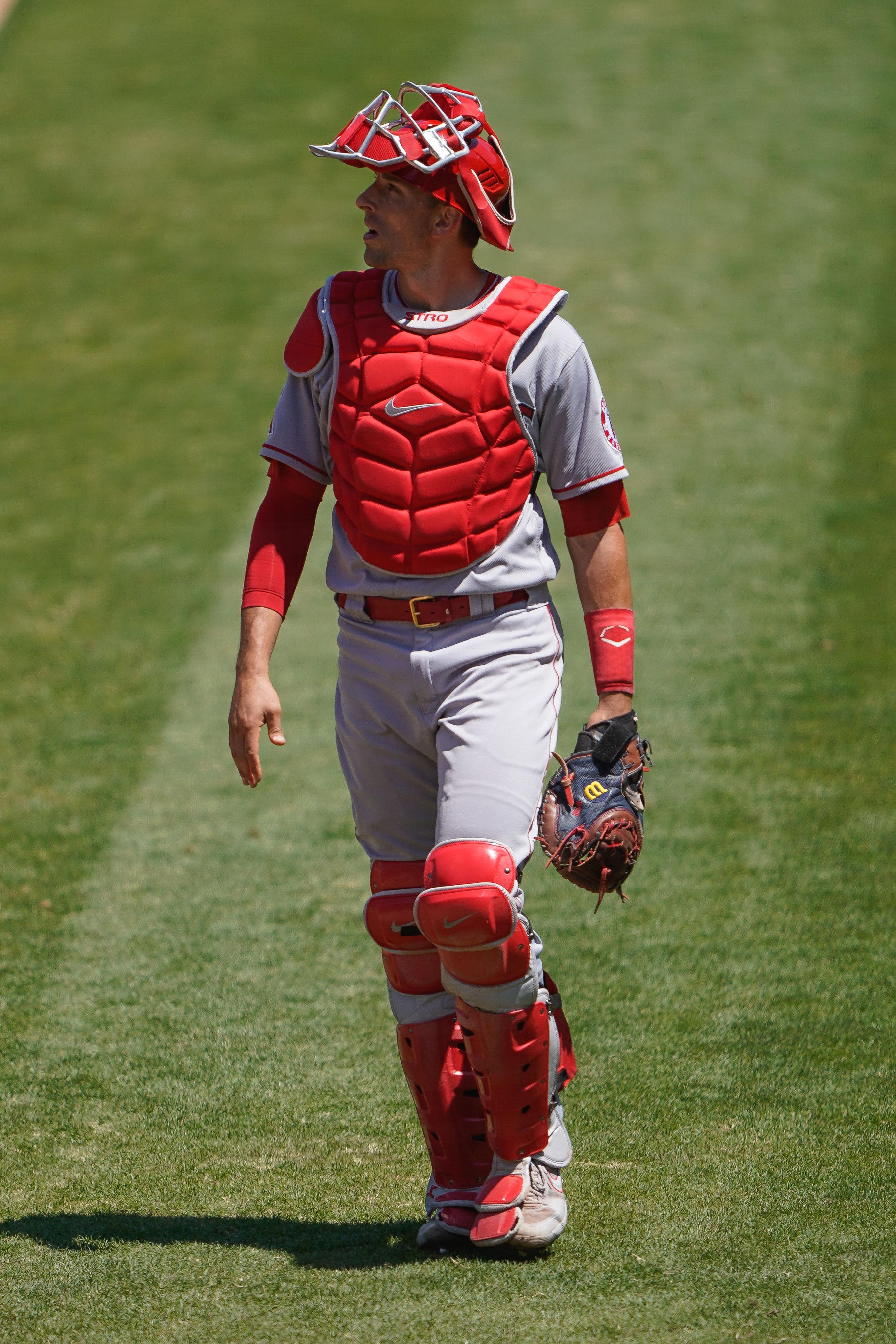
The two sides were originally reported to be in talks late in December, but those negotiations slowed as Castro continued to survey the market. Along the way, the Cubs and the Tigers (managed by Castro’s former skipper, A.J. Hinch) emerged as potential alternatives. Now, however, a physical is all that stands in the way between Castro and a return to the organization that originally selected him with the No. 10 overall draft pick out of Stanford back in 2008.
Castro, 33, has been away from the Astros for four seasons — most of that time spent with the Twins organization. Minnesota signed Castro to a three-year, $24.5MM contract after the 2017 season due largely to his superlative pitch-framing skills and his knack for drawing walks at the plate. He had a solid 2017 season as the Twins’ primary backstop but missed nearly all of the 2018 campaign due to meniscus surgery. He returned in 2019 to have another productive year while splitting time evenly with breakout catcher Mitch Garver.
That strong showing from Garver in ’19 likely convinced the Twins they could move on, and Castro landed in Anaheim on a one-year deal with the Angels. He struggled at the plate in a tiny sample of 92 plate appearances between the Angels and the Padres, who acquired him prior to the Aug. 31 trade deadline this past summer.
All in all, Castro has batted .224/.322/.389 in 848 plate appearances since leaving the Astros — numbers that fall roughly in line with his career .230/.312/.390 batting line. He’s unlikely to ever hit for a high average due to his strikeout tendencies, but Castro has a career 10.1 percent walk rate (11.7 percent over the past four years) and has a bit of pop in his bat (.164 ISO, 26 homers, 43 doubles from 2017-20).
Defensive aptitude has been the driving factor behind Castro’s value in the market, though he’s been closer to average with the glove as he’s moved into his mid-30s and had to deal with the effects of that 2018 knee surgery. Castro has been just about average in terms of throwing out base thieves in the four years since leaving Houston, but his framing numbers have dropped off a bit, more recently, he’s struggled with regard to blocking pitches in the dirt. Of course, it’s also possible that as he further distances himself from that knee operation, he’ll regain some of his prior form.
In his return to Houston, Castro figures to pair with the right-handed-hitting Martin Maldonado behind the dish, giving manager Dusty Baker the opportunity to play matchups with a pair of solid defenders. Kaplan tweets that a straight platoon isn’t likely — Maldonado will start more often — although at least from an offensive standpoint, such an idea wouldn’t be a bad one. Castro is a career .195/.262/.291 hitter against lefties but a much-improved .242/.328/.421 hitter against righties. Maldonado, meanwhile, carries a 33-point gap in his OPS against lefties over righties (and a nine-point gap in his wRC+). He’s just a .213/.288/.353 career hitter against righties.
Houston may not generate huge offensive output from its pair of backstops. That’s true of most clubs throughout the league, however, and most pairings don’t have the sound defensive track records that both Castro and Maldonado possess. Besides — catchers, on the whole, have been about 10 to 15 percent worse than a league-average hitter over the past four years, so the ‘Stros can certainly live with the level of offense provided by Castro and Maldonado if both play defense at their typically steady levels.
Blue Jays Sign George Springer
TODAY: The Blue Jays have officially announced the signing. Sportsnet.ca’s Shi Davidi (via Twitter) also has a full breakdown of the contract, which includes an eight-team no-trade clause. Springer receives a $10MM signing bonus, a $22MM salary in 2021, $28MM in 2022, then $22.5MM each year from 2023-26. There is also a $150K bonus if Springer wins an MVP award, as well as $50K bonuses for other achievements like a Gold Glove, Silver Slugger, World Series MVP Awards, or an All-Star selection.
JANUARY 19, 9:58pm: It’s a six-year, $150MM pact, Jon Heyman of MLB Network tweets.
9:54pm: The Jays and Springer have a deal, pending a physical, Jeff Passan of ESPN tweets.
9:36pm: The Blue Jays and free-agent outfielder George Springer are closing in on an agreement, per Joel Sherman of the New York Post. Brendon Kuhn of Blue Jays Nation first reported the two sides had a contract in place, pending a physical. Springer is a client of Excel Sports Management.
This is a monumental pickup for the Blue Jays, who have been in on virtually every big name this offseason as they seek to improve their roster off a playoff campaign in 2020. The Jays had largely come up short until Tuesday, but that’s going to change with the addition of Springer.
It would be difficult to do much better on the open market than Springer, a three-time All-Star who thrived as a member of the Astros from 2014-20. Springer took 3,567 plate appearances as an Astro and batted .270/.361/.491 (134 wRC+) with 174 home runs. He helped the team to a pair of pennants and a World Series championship in the process. Springer was outstanding in the playoffs with the Astros, evidenced by his 19 home runs – the fourth most in the history of the postseason.
As a result of his success in Houston, MLBTR predicted when the offseason began that Springer would ink a five-year, $125MM contract in free agency. The Blue Jays and Mets seemingly showed more interest in the 31-year-old than anyone else this winter, and New York did offer around $120MM to $125MM over six years, according to Mark Feinsand of MLB.com. However, Springer is taking the higher proposal – a record deal for the Jays – and heading north to join a burgeoning Toronto team that will have to overcome the Rays and Yankees in the American League East.
Springer figures to take over in center field for Toronto, which started Randal Grichuk for most of 2020 but has never seemed content with him at the position. The Springer pickup may help lead to the end of the Grichuk-Blue Jays union, as the team has Lourdes Gurriel Jr. and Teoscar Hernandez as corner outfield options, and it may not be done adding. According to both Ken Rosenthal of The Athletic and Heyman, another former Astro – Michael Brantley – is a possibility for the team in free agency. Brantley is friends with Springer and would provide Toronto yet another big bat. “There’s legit legs” regarding a Brantley-Toronto agreement, and the club’s “very open to it,” Scott Mitchell of TSN tweets.
The Springer signing will have draft-related ramifications for both the Blue Jays and Astros in 2021. Because Houston gave Springer an $18.9MM qualifying offer (which he rejected), the team will receive a fourth-round pick as compensation for his departure. For signing Springer, Toronto will surrender the No. 54 overall pick in next summer’s draft and $500K in international bonus pool money. The pick probably isn’t going to do much to make up for Springer’s exit for the Astros, though, and the Jays likely aren’t upset to lose the selection and pool money in exchange for one of baseball’s best outfielders.
Photo courtesy of USA Today Sports Images.
Nationals Re-Sign Ryan Zimmerman
TODAY: The Nats officially announced Zimmerman’s return. USA Today’s Bob Nightengale tweets that Zimmerman’s contract contains a full no-trade clause.
JANUARY 22: The Nationals are bringing back longtime cornerstone Ryan Zimmerman on a one-year deal worth $1MM, reports USA Today’s Bob Nightengale (Twitter link). Zimmerman opted out of the 2020 season but said last month that he hoped to play again in 2021. The Washington Post’s Barry Svrluga adds that Zimmerman’s deal is still pending a physical and carries incentives to boost his that affordable base salary. Zimmerman is a client of CAA Sports.
Zimmerman, who turned 36 in September, has been a member of the Nats organization since they took him fourth overall in the 2005 draft. He was the first pick the franchise made after relocating from Montreal, and Zimmerman has certainly lived up to the selection. Zimmerman debuted in his draft year and has since put together a .279/.343/.475 line with 270 home runs in 7129 plate appearances. The former third baseman (who’s now a first baseman) also has a pair of All-Star nods on his resume and was part of the Nationals’ only World Series-winning team in 2019.
At present, there’s no path to everyday at-bats for “Mr. National,” given the team’s December acquisition of Josh Bell and the current lack of a universal designated hitter. Zimmerman, though, could certainly form a platoon with the switch-hitting Bell, who has historically been much better from the left side of the dish. Bell is a career .271/.360/.485 hitter as a lefty but just a .232/.315/.410 batter from the right side of the dish. Zimmerman, meanwhile, has clobbered lefties throughout his 15-year MLB career: .311/.390/.527.
That said, many still expect that MLB and the MLBPA will agree to keep the designated hitter in the National League between now and Opening Day, which would obviously open up more at-bats for Zimmerman, be it as a DH himself or at first base while the defensively challenged Bell slides into the DH spot.
Angels Sign Jose Quintana
JAN. 22: The Angels have announced the move.
JAN. 19: The Angels have an agreement with free-agent left-hander Jose Quintana, pending a physical, Ken Rosenthal of The Athletic reports. It’s a one-year, $8MM contract for the Wasserman client, per Tim Brown of Yahoo Sports.
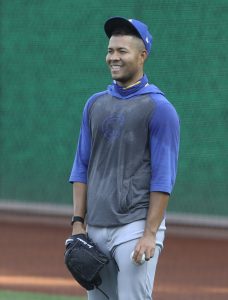
Quintana was one of the most accomplished innings eaters available in free agency, as the 31-year-old has thrown 1,495 frames of 3.73 ERA/3.99 SIERA ball between the White Sox and Cubs since his career began in 2012. Of course, a good portion of Quintana’s career has been spent with Angels manager Joe Maddon, who was the Cubs’ skipper when the southpaw pitched for the club from 2017-19. Maddon was with the Angels last season, when Quintana missed most of the year with thumb problems. He totaled just one start and 10 innings in his final season in Chicago.
Last year’s injury issues look like an anomaly for Quintana, who entered the season with seven straight campaigns of 170-plus innings. That’s the type of durability the Angels have lacked in recent years. They’ve battled a litany of injuries in their rotation en route to six straight seasons without a playoff berth, but a healthy Quintana may help turn their fortunes around in 2021.
Along with Quintana, the Angels are set to feature Dylan Bundy, Andrew Heaney and Griffin Canning in the top four of their rotation next season. Two-way player Shohei Ohtani and Jaime Barria also figure to collect plenty of starts for the club, though new general manager Perry Minasian might not be done addressing that part of the Angels’ roster.
Photo courtesy of USA Today Sports Images.
Twins Sign J.A. Happ
Jan. 22: Happ’s deal has been formally announced by the Twins. Their 40-man roster is now up to 37 players.
Jan. 20, 4:22pm: Happ will earn $8MM, Jon Heyman of MLB Network tweets.
4:00pm: The Twins and free-agent left-hander J.A. Happ have reached a one-year agreement, pending a physical, according to Jeff Passan of ESPN. Happ is a client of Rogers Sports Management, LLC.
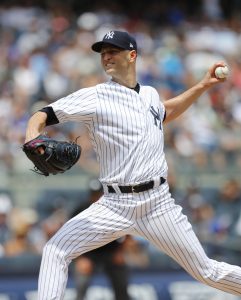
Minnesota will be the seventh different organization for Happ, who spent time with the Phillies, Astros, Blue Jays, Mariners, Pirates and Yankees from 2007-20. The well-traveled 38-year-old has put together a solid career in the majors, where he owns a 3.98 ERA/4.21 SIERA and a 20.9 percent strikeout rate against an 8.4 percent walk rate through 1,741 1/3 innings.
For the most part, Happ’s numbers last year as a Yankee aligned with his career totals. He put up 49 1/3 frames of 3.47 ERA ball with a 21.4 percent strikeout rate and a 7.7 percent walk rate, also averaging about 91 mph on his fastball. He was also somewhat of a Statcast favorite, as he ranked better than average in several of its categories and recorded a .270 expected weighted on-base average against that outdid the .280 wOBA hitters logged when facing him. However, the 4.53 SIERA that Happ notched does count among the worst of his career.
Based on what he has done to this point, Happ should be a respectable back-end starter for the Twins, who have seen 2020 rotation members Jake Odorizzi and Rich Hill reach free agency since the offseason opened. The back-to-back AL Central champions now have Happ set to slot in behind Kenta Maeda, Jose Berrios and Michael Pineda in their starting staff.
From a payroll vantage point, Happ puts Minnesota just north of $100MM on the books in 2021. That’s still about $30MM shy of where they would’ve been in 2020, prior to the league-wide prorating of salaries, so there’s still room for the Twins to add. The organization’s priority has been squarely focused on Nelson Cruz for much of the winter, though the 40-year-old slugger has been hoping for a two-year deal and is waiting until there’s definitive word on the universal DH before making any decisions.
The Twins could still make further moves to bolster the starting staff between now and Opening Day, but at the moment, Randy Dobnak looks like the front-runner to serve as their No. 5 starter. Lefty Devin Smeltzer is also on hand as a fifth-starter candidate, and prospects Jhoan Duran and Jordan Balazovic aren’t far behind in the upper minors.
Photo courtesy of USA Today Sports Images.
Hank Aaron Passes Away
Baseball has sadly lost another all-time great, as Tim Kephart of CBS46 in Atlanta reports that Hall of Famer Hank Aaron has passed away at the age of 86.
One of the greatest sluggers in Major League history, “Hammerin’ Hank” stood atop MLB’s all-time home run leaderboard with 755 round-trippers until being passed by Barry Bonds earlier this century. The Hammer is still the all-time leader in runs batted in (2297) and total bases (6856) and, in the eyes of many fans, will forever be considered the game’s true home run king.
Named to an astonishing 21 All-Star teams, Aaron was a sensation from the moment he arrived on the scene in the Majors as a 20-year-old rookie in 1954. He finished fourth in Rookie of the Year voting that year and would win an MVP Award just three seasons later — one of the countless accolades accumulated over the course of a historic 23-year career. Aaron batted .305/.374/.555 with 755 home runs, 2297 RBIs, 624 doubles, 98 triples, 240 stolen bases and 2174 runs scored during a legitimately legendary career. Along the way, he won two batting titles, three Gold Gloves, and a World Series ring with the ’57 Braves. He led his league in home runs, doubles and RBIs four times apiece.
Aaron was the model of consistency, durability and excellence, annually ranking among the game’s elite in nearly every major offensive category while rarely missing a day on the field. From his age-21 season in 1955 to his age-37 campaign in 1971 — all of them All-Star seasons — he averaged 153 games played and maintained an astonishing .315/.379/.574 output at the plate in spite of that Herculean workload.
Great as Aaron’s career on the field was, his legacy is rooted in far more than those mere numbers. Aaron overcame intense racism, hate mail and death threats as he closed in on breaking Babe Ruth’s all-time home run record of 714 — a hallowed mark in its own right that many thought would never be surpassed. His courage, perseverance and grace throughout the ordeal has served as an inspiration to countless fans.
Aaron’s charitable works following his remarkable career, chronicled here by the National Baseball Hall of Fame’s Matt Rothenberg, include the founding of the Chasing the Dream Foundation and the Boys & Girls Clubs of America’s 44 Forever program, as well as millions of dollars donated to the Morehouse School of Medicine in Atlanta. Aaron also donated his entire collection of baseball artifacts to Cooperstown and encouraged others do to the same.
The words “icon” and “iconic” are thrown around too often in today’s vernacular, and yet both seem to fall shy of describing Aaron’s status within the sport’s history. The name “Hank Aaron” is emblematic of greatness and will forever be woven into not only into the tapestry of baseball’s rich history but into the history of the country itself. We at MLBTR extend our condolences to Aaron’s family, friends, loved ones, former teammates and legions of fans around the world. Rest in peace, Hammer.
Blue Jays Sign Kirby Yates
JANUARY 20: The Jays have announced the signing.
JANUARY 19, 7:54pm: Yates will receive a $5.5MM guarantee with up to $4.5MM in performance bonuses, Ben Nicholson-Smith of Sportsnet reports.
7:50pm: It’s “expected” Yates will get a one-year, $8.25MM deal with incentives, Rosenthal tweets.
4:31pm: The Blue Jays and free-agent reliever Kirby Yates have agreed to a contract, pending a physical, Ken Rosenthal of The Athletic reports. Jon Heyman of MLB Network tweeted earlier Tuesday that the two sides were nearing a deal. Yates is a Beverly Hills Sports Council client.
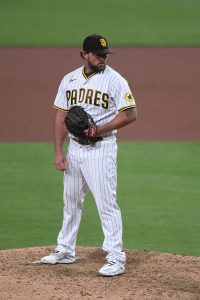
This could be an enormous pickup for the Blue Jays’ bullpen, but it will depend on how well Yates bounces back from the bone chips in his right elbow that limited him to 4 1/3 innings last year. Yates was arguably the premier reliever in the majors during the prior two years, in which he combined for 123 2/3 innings of 1.67 ERA pitching with a 32.7 K-BB percentage that ranked third among relievers during that span. Yates also racked up 53 saves then, including an NL-high 41 in 2019, and earned the lone All-Star nod of his career.
The Padres likely could not have imagined Yates experiencing the type of success he enjoyed in their uniform after claiming him off waivers from the Angels early in 2017. It wasn’t the first underdog experience for the 33-year-old Yates, a former undrafted free agent who failed to establish himself with the Rays and Yankees earlier in his career.
Now, if a deal between him and Toronto comes to fruition, Yates will return to the AL East to join bullpen that ranked near the bottom of the majors (24th) with a 4.71 ERA last season. The Blue Jays have since seen relievers Anthony Bass, Ken Giles and Wilmer Font reach free agency, though only Bass was an effective part of their bullpen a season ago. Giles entered last year as the club’s closer before dealing with serious injury issues of his own, but Yates may take his place during the upcoming season if he’s healthy. Regardless, Yates joins fellow righty Tyler Chatwood as the second notable bullpen addition Toronto has made this week.
Photo courtesy of USA Today Sports Images.