
Blue Jays Acquire Steven Matz
9:15pm: The teams have announced the deal.
8:35pm: The Blue Jays and Mets are closing in on a swap that would send lefty Steven Matz to Toronto, per Jeff Passan of ESPN.com (via Twitter). Robert Murray of Fansided tweeted that a trade between the clubs was coming; Michael Mayer of Metsmerized had tweeted that a Matz move was in the works.
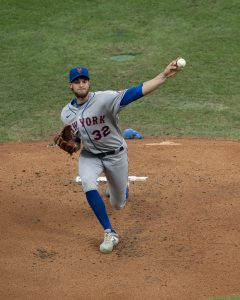
Three right-handed pitchers will head back to New York in the arrangement: Josh Winckowski, Sean Reid-Foley, and Yennsy Diaz. (Via Murray, on Twitter, and Ben Nicholson-Smith of Sportsnet.ca, also via Twitter.)
Matz, 29, is due $5.2MM after agreeing to avoid arbitration. He will qualify for free agency after the 2021 campaign. The Mets obviously determined they could better allocate that salary for other needs. Whether it’ll be part of a big payout to lure Trevor Bauer remains to be seen; there’s still no reason to believe anything is imminent on that front.
While he has at times featured as a high-quality big-league starter, Matz has had his share of difficulties of late. The Long Island native wraps up a six-year run with the Mets having thrown 579 2/3 innings of 4.35 ERA ball.
While Matz made thirty starts apiece in 2018 and 2019, arm issues were a recurring problem. He spent time on the injured list in 2020 and ended the campaign with a brutal 9.68 ERA in just 30 2/3 frames of action.
That unfortunate short-season effort came with a few bright spots. Though Matz surrendered a ton of hard contact, he also managed a career-best 25.4% strikeout percentage while delivering his sinker at an average of 94.5 mph.
Clearly, the Jays believe Matz still possesses the necessary physical tools to deliver a good number of useful innings. He’ll likely have a chance to battle for a rotation spot in camp, though the team could also plan to use him in a swingman or even pure relief capacity.
The Mets will get some reward for deciding to tender Matz a contract. None of the three arms acquired come with high-grade prospect billing, but each will have a chance to contribute in the near term.
Both Reid-Foley and Diaz have debuted in the majors, meaning they also occupy 40-man roster spots (albeit with options remaining). The former threw 71 2/3 innings of 4.40 ERA ball over three seasons with the Jays, carrying a suboptimal 76:48 cumulative K/BB ratio. Diaz has just one appearance to his name, but turned in a solid showing at the Double-A level in 2019.
As for Winckowski, he’s still due for further seasoning. The 22-year-old reached the High-A level in 2019. Over 127 1/3 total frames that year, he turned in a sturdy 2.69 ERA. Winckowski will (again) be eligible for the Rule 5 draft after the 2021 campaign.
Mets Have Made Offer To Trevor Bauer
JANUARY 27: Martino has a bit more information on the Mets’ offer (Twitter link). The deal would run no more than four years, with Bauer picking up at least one opt-out opportunity. There’s still no indication that the Mets are anything more than one of several suitors at this point.
It’s no surprise that the New York org dangled this sort of relatively unorthodox scenario to Bauer. He’s obviously willing to entertain all sorts of contractual approaches and different teams may prefer any number of different structures. It’ll ultimately be interesting to learn (to the extent it ends up being publicly reported) just how many variations Bauer will ultimately have to choose from.
JANUARY 26: The Mets’ interest in Trevor Bauer has reached the point that they’ve made a formal offer to the right-hander, reports SNY’s Andy Martino (via Twitter). However, despite a report from USA Today’s Bob Nightengale indicating that the Mets have put forth a record-setting annual value in their offer, each of Martino, MLB Network’s Jon Heyman and MLB.com’s Mark Feinsand report that the Mets do not have an offer that strong on the table.
Nightengale has since walked back the AAV portion of his report but further tweeted that a Mets source “confirmed” they’ve made a formal offer to Bauer (obviously, at a non-record-setting rate). Mike Puma of the New York Post tweets that the offer was formally put on the table “weeks ago,” so it obviously has not been strong enough to push Bauer toward a deal. That said, the first definitive indication of an offer being made to Bauer is of some note.
The current AAV record is held by Gerrit Cole, whose nine-year contract with the Yankees pays him an average of $36MM per year. There’s been plenty of speculation on the possibility of Bauer eclipsing that mark but on a shorter-term arrangement. MLBTR’s own Tim Dierkes took a look at whether Bauer and agent Rachel Luba would have a legitimate case for seeking such a deal earlier this winter, concluding that a record AAV offer would likely need to come in at four or fewer years in total length. That topic has proven quite polarizing, with many onlookers pointing to Cole’s superior track record and consistency. However, as Tim explored, teams are typically willing to pay substantial premiums in terms of AAV if it limits the overall length of a contract.
Bauer hasn’t closed the door on any contract structure since his free agency began. As recently as 2019, the right-hander insisted he’d only sign one-year contracts upon reaching the market, playing out his career in mercenary-esque, year-to-year fashion. He’s softened that stance this winter, as both he and Luba have voiced an openness to longer-term deals. The potential for opt-out provisions to be baked into any multi-year agreement could certainly impact negotiations as well.
Ultimately, there’s no way of knowing whether a short-term deal with a record annual rate would prove enticing enough for Bauer — if any team is even willing to make such an offer in the first place — or whether he’d prefer the security of a longer-term pact at a lower price point. The answer there is quite likely dependent on the team making the offer. Bauer has stressed on his YouTube channel that he’s seeking a “partnership” with a win-now team that will support his desire to grow his brand on social media and have an “honest” conversation about him pitching every fourth day. The Mets, Angels and Blue Jays have all been linked to Bauer in recent weeks, and other pitching-needy teams are surely at least keeping tabs on his market.
Yankees Sign Corey Kluber
JAN. 27: The Yankees have made the Kluber signing official.
JAN. 15, 7:49pm: It’s a one-year, $11MM pact, Bob Nightengale of USA Today reports. That comes in just a bit south of MLBTR’s one-year, $12MM prediction.
7:37pm: It’s a done deal, pending a physical, Mark Feinsand of MLB.com tweets. Kluber will earn upward of $10MM, per Jon Heyman of MLB Network.
7:27pm: The Yankees are finalizing a contract with free-agent right-hander Corey Kluber, according to Jeff Passan of ESPN.com (Talkin Jake first reported the deal). Details aren’t known yet. Kluber is a client of Jet Sports Management.
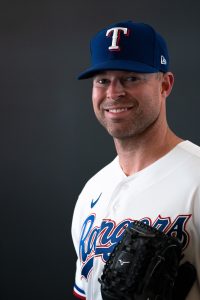
After a couple of quiet months, the Yankees have certainly been active on Friday. Hours before the Kluber news came down, they made major progress toward re-signing star second baseman DJ LeMahieu for six years and $90MM. The 34-year-old Kluber won’t pull in that type of contract, but as a two-time American League Cy Young winner, he’s clearly a high-profile pickup for a Yankees team in need of help in their rotation.
During his peak years in Cleveland from 2014-18, Kluber averaged about 218 innings per season and combined for a stellar 2.85 ERA/2.99 SIERA with a 28.5 percent strikeout rate and a paltry 5.2 percent walk rate. There was no reason to expect a drop-off heading into 2019, but Kluber hasn’t been the same since then. He threw 35 2/3 innings in the first few weeks of that season and was tattooed by opposing offenses, who totaled 23 earned runs on 44 hits and 15 walks (38 strikeouts) against Kluber before he succumbed to a fractured right forearm on May 1. That proved to be Kluber’s final outing with Cleveland, which traded him to the Rangers for reliever Emmanuel Clase and outfielder Delino DeShields in December 2019.
Texas was banking on a rebound effort from Kluber, but it essentially received no contributions from him. He threw just one inning in his first start last season before exiting with shoulder tightness, and Kluber never took the mound again for the Rangers. The Rangers then declined Kluber’s $18MM option for 2021 in favor of a $1MM buyout, making him a free agent. That left Kluber to try to prove to clubs he was back to health, and he made that effort Wednesday with a showcase that the majority of major league teams attended. Kluber’s fastball topped out around 90 mph during that session, down a bit from his typical 91-92 range but not enough to scare away the Yankees.
Now that he’s on his way to the Bronx, Kluber will continue to work with Yankees director of health and performance Eric Cressey, who – as Joel Sherman of the New York Post notes – has been overseeing the former ace’s shoulder rehab. Kluber is also quite familiar with Yankees pitching coach Matt Blake, Cleveland’s ex-pitching coordinator and assistant director of pitching development.
The Yankees entered the offseason facing the potential loss of veteran righty Masahiro Tanaka, who remains a free agent. Reports have indicated the Yankees have not been aggressive in trying to re-sign Tanaka, so Kluber could end up as his replacement. At the moment, he’s a lock to be part of a season-opening rotation led by ace Gerrit Cole. The Yankees should get Luis Severino back from February 2020 Tommy John surgery at some point, though he probably won’t be ready to begin the season. So, barring other acquisitions, Deivi Garcia, Jordan Montgomery, Domingo German, Clarke Schmidt, Michael King and Jhoulys Chacin look as if they’ll be among those vying for starting jobs behind Cole and Kluber during the spring.
Photo courtesy of USA Today Sports Images.
Yankees Re-Sign DJ LeMahieu
JAN. 27: The Yankees have announced LeMahieu’s six-year deal. It includes full no-trade protection for the first two seasons and then limited no-trade rights for the next four, Bob Nightengale of USA Today tweets. As Nightengale points out, because LeMahieu will have 1o-and-5 rights following 2023, the Yankees won’t be able to trade him after that without his permission. He’ll earn $15MM in each season of the contract, Jon Heyman of MLB Network tweets.
JAN. 15, 9:10am: It’ll be a six-year, $90MM contract for LeMahieu when finalized, as was first reported by Pat Ragazzo (Twitter link). The $90MM overall guarantee isn’t particularly surprising, but it is indeed an eye-opener to see that sum come over a six-year term rather than five or even four years.
That LeMahieu agreed to a lengthier pact is a boost for the Yankees, as the associated $15MM luxury hit will “only” put the team at about $195MM in terms of 2021 luxury-tax obligations. That leaves the club with as much as $14-15MM of space before reaching the $210MM luxury barrier.
8:52am: The Yankees’ preference was indeed to drive down the luxury-tax hit by lengthening the contract, tweets Bowden, though the precise length of the deal still isn’t clear.
8:17am: The Athletic’s Jim Bowden tweets that LeMahieu’s contract will be more than four years in length. That makes a five-year deal seem likeliest, barring an unexpected six-year arrangement at a comparable total but lower annual rate that is designed to lessen the luxury hit for the Yankees.
7:04am: After a months-long staredown, the Yankees are closing in on a new contract with second baseman DJ LeMahieu, reports Jon Morosi of MLB.com (via Twitter). Terms of the potential agreement aren’t yet known, but the deal could be completed as soon as today, per Morosi. LeMahieu is represented by Wasserman.
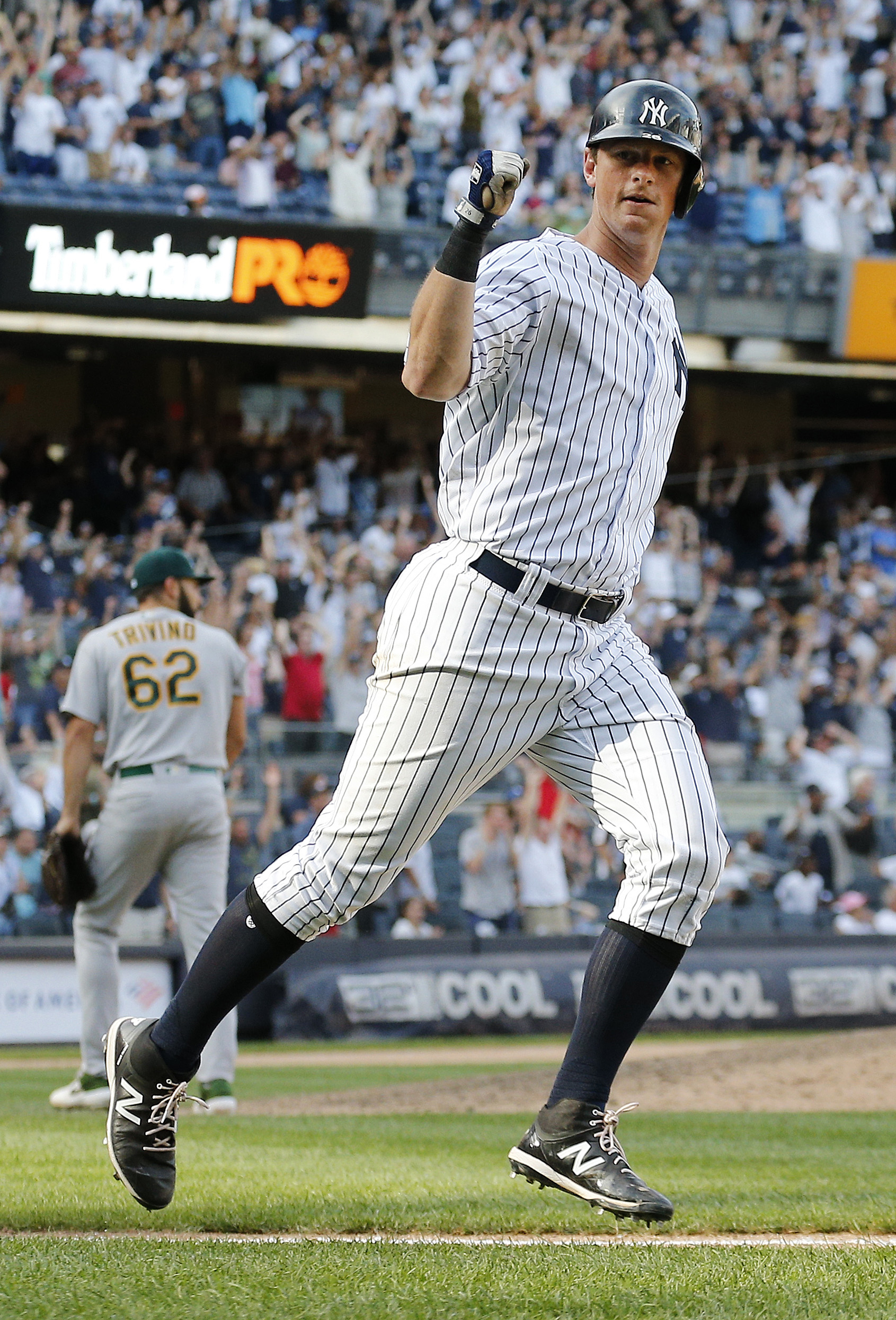
LeMahieu, 32, has been the Yankees’ top priority all season. General manager Brian Cashman acknowledged as much a couple of weeks back, but the club has also seemingly been letting LeMahieu explore his options on the open market rather than emulating the Yankees of old and simply writing him a blank check up front. The interest between the two parties was mutual, and it’s long been apparent that the Yankees would have the opportunity to match any offer LeMahieu received elsewhere. The impending reunion will surely come at a loftier price than his initial deal, which proved to be a bargain; reports have recently suggested that LeMahieu has been looking to top Josh Donaldson‘s four-year, $92MM contract — ideally on a five-year arrangement.
The focus on LeMahieu is more than understandable for the Yankees, who looked like an oddball fit for the longtime Rockies second baseman two years ago when he inked a two-year, $24MM contract to come to the Bronx. The Yankees already boasted a relatively full infield, but injuries and LeMahieu’s immediate, career-best production quickly thrust him into regular work in manager Aaron Boone‘s lineup. The versatile LeMahieu logged action not only at second base but also at the infield corners, emerging not only as the Yankees’ most productive hitter in that time but as a bona fide MVP candidate in the American League.
During his two seasons in New York, LeMahieu has turned in an outstanding .336/.386/.536 batting line — including a superhuman .364/.421/.590 line in 2020’s truncated season. That .364 showing marked the second time in his career that LeMahieu has led the league in average — he won a batting title with the 2016 Rockies as well — but he’d never put together this type of power until landing in New York. Yankee Stadium proved to be the perfect fit for LeMahieu, who leads the Majors in opposite-field home runs over the past couple of seasons after fully taking advantage of his new home park’s short porch in right field.
That’s not to diminish LeMahieu’s production with the Yankees, of course. He remains one of the toughest players in all of baseball to strike out thanks to his superlative bat-to-ball skills, and LeMahieu has upped his hard-hit rate and exit velocities since his days at Coors Field. LeMahieu’s 12.7 percent strikeout rate is the seventh-lowest in all of baseball among qualified hitters over the past two seasons, and he has the eighth-lowest swinging-strike rate of any player in the Majors in that time.
A reunion with the Yankees means that LeMahieu will remain the primary second baseman, with Gleyber Torres reprising his role at shortstop. There’s been plenty of question about Torres’ ability to develop into a strong or even average defender at shortstop after a pair of seasons punctuated by miscues, but the club has publicly expressed confidence that Torres is up to the challenge.
LeMahieu and Torres, then, will be penciled in as the Yankees’ double-play tandem for the foreseeable future, with Gio Urshela and Luke Voit holding down the infield corners. That still leaves former Rookie of the Year runner-up Miguel Andujar without a clear path to everyday at-bats, though he still has a minor league option remaining and can also be worked in as an oft-used bench piece seeing time at third, first and in left field.
The fit in the lineup was always obvious, but the fit into the Yankees’ budget was another question. The Yanks, of course, have deeper pockets than just about any team in the league, but after last year’s franchise-record level of spending — the Yankees’ $108MM prorated payroll was larger than several teams’ full-season payroll would have been — owner Hal Steinbrenner has reportedly been intent on lowering the team’s payroll and dipping beneath the $210MM luxury tax threshold.
The potential free-agent departures of J.A. Happ, James Paxton, Brett Gardner and Masahiro Tanaka help to drive down that bottom line, as did Tommy Kahnle‘s non-tender, but it’s been apparent for months that the Yankees weren’t going to look to replicate the aggressiveness that brought Gerrit Cole to New York on an MLB-record deal for a pitcher. Even without a single addition, the Yankees were projected just shy of $181MM in terms of luxury-tax obligations, per Roster Resource’s Jason Martinez, and adding a likely $20MM+ salary for LeMahieu will eat up anywhere from two-thirds to three-quarters of the space that separates the Yankees and that competitive balance tax threshold.
The Yankees are still in need of some rotation depth even after signing Cole last winter. Luis Severino is expected back from Tommy John surgery but will clearly have his workload monitored. The same is true of righty Domingo German, who’ll be returning from a lengthy suspension under MLB’s domestic violence policy. Jordan Montgomery, top prospects Deivi Garcia and Clarke Schmidt, righty Mike King and swingman Luis Cessa are among the other options for Boone, but it’s clear that some veteran innings would prove quite beneficial.
Barring a trade to shed some payroll, however, it’s tough to see a way for the Yankees to both retain Tanaka and limbo underneath the luxury-tax bar. That reality, and some recent comments from Tanaka himself, have fueled speculation that the 32-year-old righty could return to Japan, leaving a considerable void on the Yankees’ starting staff. There are plenty of veteran options to be had on more affordable deals and various trade options to pursue, of course, and Cashman’s focus now seems likely to shift to solving that puzzle.
Padres Re-Sign Jurickson Profar
JAN. 27: Bob Nightengale of USA Today has the full breakdown of the deal, which is now official: Profar will earn a $3.5MM salary and a $2.5MM signing bonus next season; 2022 includes a $6.5MM player option or a $1MM buyout; 2023 features a $7.5MM player option or a $1MM buyout; and Profar has a $10MM mutual option or a $1MM buyout for 2024. He’ll earn another $350K every time he’s traded.
JAN. 22: 10:32am: Profar’s contract contains an opt-out clause after each of the first two seasons, tweets MLB Network’s Jon Heyman.
10:02am: The Padres have agreed to re-sign infielder/outfielder Jurickson Profar on a three-year, $21MM contract, reports ESPN’s Jeff Passan (via Twitter). Profar is represented by the Boras Corporation.
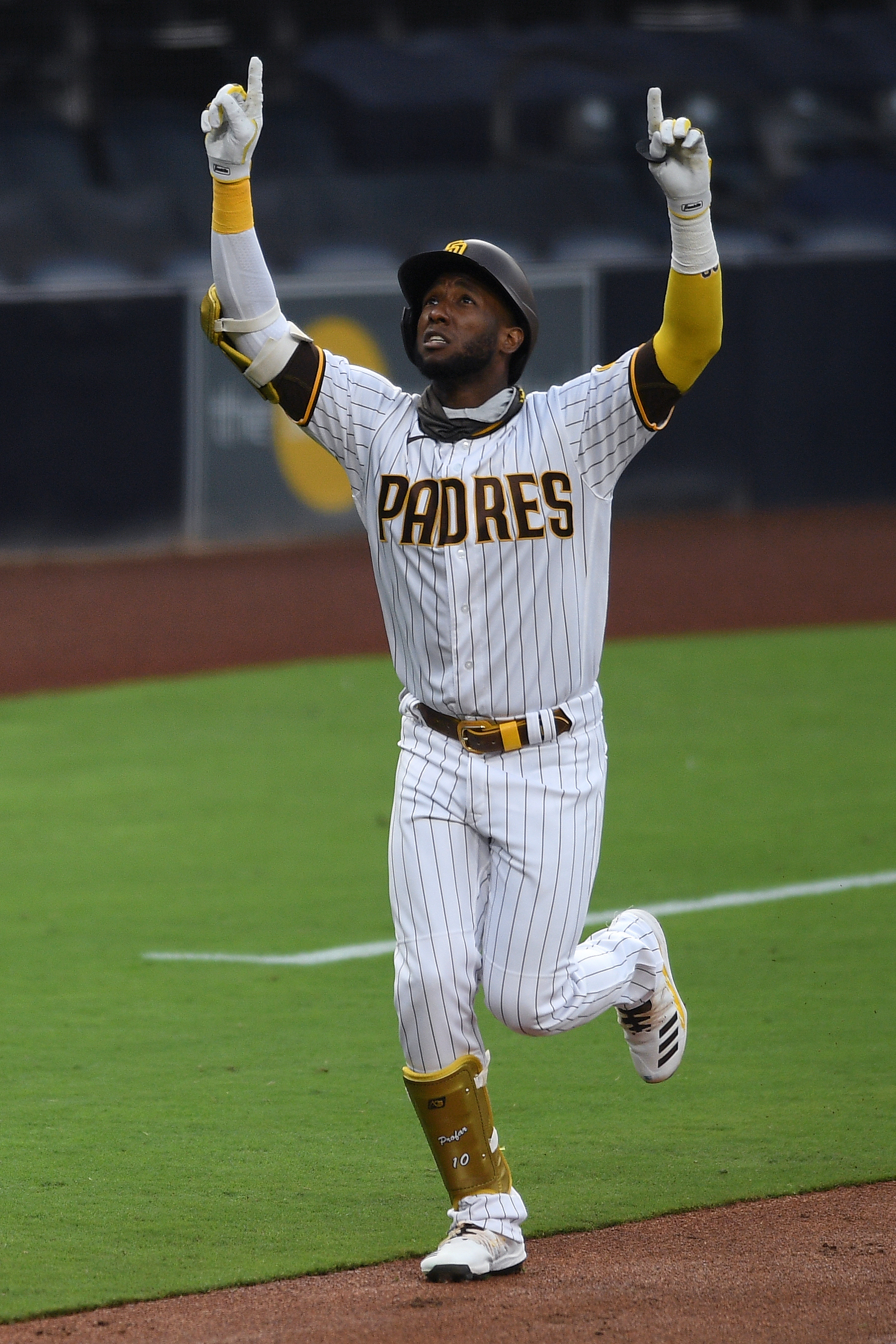
A new deal with Profar marks the latest strike in an ultra-aggressive winter for the Padres, who have already acquired Blake Snell, Yu Darvish and Joe Musgrove on the trade market in addition to signing Korea Baseball Organization superstar Ha-Seong Kim on a four-year deal. Kim’s ability to bounce around the infield and support the trio of Manny Machado, Fernando Tatis Jr. and Jake Cronenworth at any position likely means that Profar is again ticketed for more work on the outfield grass than in the infield, although his versatility will allow him to be deployed virtually anywhere skipper Jayce Tingler sees fit.
The three-year term on the Profar deal registers as a bit of a surprise, though the Padres had some competition for the soon-to-be 28-year-old. The Royals were known to have interest in Profar, and MLB Network’s Jon Heyman tweets that the Red Sox “tried hard” to sign Profar before he ultimately returned to San Diego.
The 2020 season was Profar’s first with the Padres, who acquired him last winter in a deal with the A’s. Profar got out to a disastrous start to the season but rode a sizzling hot streak over the final three-plus weeks of the season to finish out the year with a .278/.343/.428 batting line.
Profar’s season is representative of the difficulty in evaluating players on the heels of such a short year; the end results look solid, but it also should be noted that as late into the season as Aug. 27, Profar was batting .181/.291/.319. That was surely a cause of some concern for some clubs, as was the fact that Profar ranked in the 23rd percentile or worse in terms of exit velocity, hard-hit rate and barrel rate, per Statcast.
That said, Profar was clearly still a fairly in-demand free agent. That’s plenty understandable given that back in 2013, he was regarded as the consensus No. 1 prospect in all of baseball. Profar rocketed through the Rangers’ system after being signed as an amateur out of Curacao, making his MLB debut at just 19 years old in the final weeks of the 2012 season. Unfortunately for both him and for the Rangers, a pair of shoulder injuries led to multiple surgeries, wiping out two full years of development.
Profar never established himself as a regular in Texas, struggling to find playing time behind a veteran infield that included the likes of Adrian Beltre and an in-his-prime Elvis Andrus. Profar had an above-average year at the plate in 2018 as a utility player but still found himself traded to Oakland that winter — a match that didn’t pan out whatsoever. The A’s picked up Profar in hopes that he could solidify second base for his remaining two years of team control, but he battled a borderline case of the yips that resulted in a slew of throwing errors and batted just .218/.310/.401 in 139 games. Oakland traded him to San Diego after that lone year.
Three-year deal notwithstanding, Profar is in many regards still something of a project. The 2020 and 2018 seasons are the only two years he’s ever been at least average at the plate, and as this past season showed, he’s yet to find much consistency at the dish. That said, it was Padres general manager A.J. Preller who was running the Rangers’ international scouting operations when Profar originally signed as a 16-year-old. Based on not only the surprising size of the contract but also the multiple opt-out provisions, Preller seemingly remains a firm believer that Profar can match or exceed last year’s composite output.
That said, the inclusion of the two opt-out clauses effectively saps any upside for the Padres in this contract. If Profar reverts to his ways as a light-hitting utility piece without a position where he’s a true plus defender, the Friars will be on the hook for the full $21MM. If he, at any point, performs at an above-average level, he’ll surely head back to the open market in search of a larger deal — especially given his relative youth. The best outcome for the Padres would be for Profar to rake in 2021 and head back to market, and this contract structure is essentially a $21MM bet that that’ll be the case.
The Padres were already projected to open the season with a roughly $167MM payroll prior to their new deal with Profar. That would’ve been a franchise-record in its own right, but Friars ownership will continue to buck the common trend of shedding payroll taken by most clubs this winter, instead spending at new levels in their effort to dethrone the Dodgers, who have won eight consecutive division titles and, of course, toppled the Rays in the 2020 World Series. The $7MM annual value on Profar’s deal also pushed the Padres to more than $177MM in luxury-tax obligations.
Nationals Sign Jon Lester
The Nationals have added another well-known veteran to an already experienced pitching staff, announcing Wednesday that they’ve agreed to a one-year contract with left-hander Jon Lester. The ACES client will reportedly earn $5MM on a one-year deal for the upcoming season. The Nationals’ 40-man roster is now at 38 players.
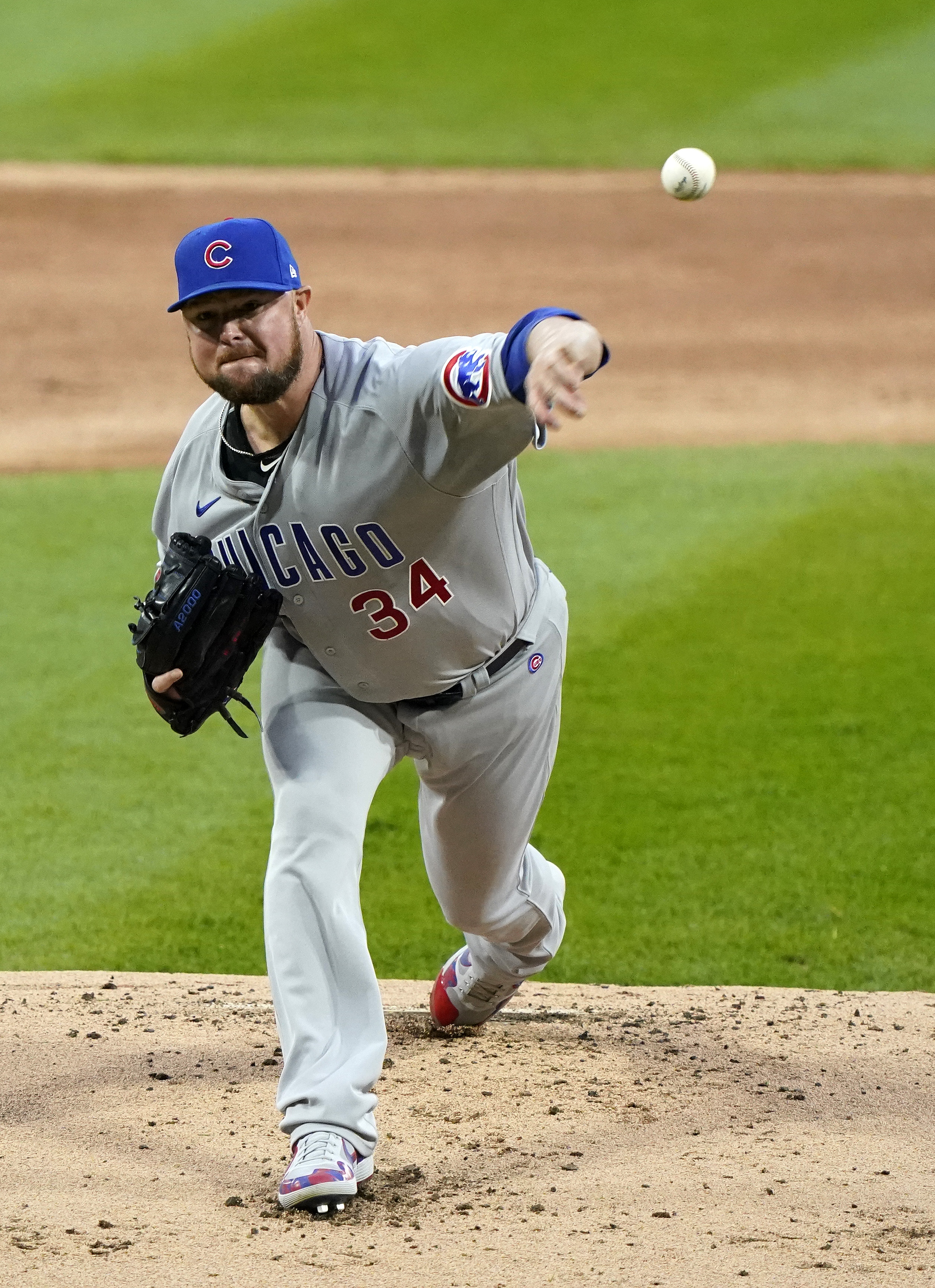
Washington becomes the fourth organization for Lester, a 37-year-old who was previously with the Red Sox, Athletics and Cubs. Lester was especially impactful as a member of the Sox and Cubs, with whom he combined to win three World Series championships and pick up five All-Star appearances.
Lester spent the previous six seasons in Chicago, where he largely lived up to the $155MM deal he signed before 2015, but his production fell off during his last two years in their uniform. After he combined for a 4.64 ERA/4.62 SIERA in 232 2/3 innings during that span, the Cubs let Lester reach free agency earlier this winter, turning down his $25MM option for next season in favor of a $10MM buyout.
While Lester expressed interest in remaining with the Cubs after they allowed him to become a free agent, there haven’t been reports of serious talks between him and the team since then. Bruce Levine of 670 The Score tweets that the Cubs did make an offer to Lester, but it was “nowhere near” the still-modest $5MM sum he’s promised on his deal with the Nats. By signing in D.C., Lester will be reunited with Dave Martinez, who served as Joe Maddon’s bench coach in Chicago prior to being named Nationals manager.
Nationals general manager Mike Rizzo said earlier in the offseason he wanted to add a starter to the back of the team’s rotation, and Lester gives him a durable veteran to add to the mix. The Nats have an enviable top three in Max Scherzer, Stephen Strasburg and Patrick Corbin, but the rest of their rotation looks somewhat questionable with Joe Ross, Erick Fedde and Austin Voth as possibilities to earn roles in 2021.
Granted, after posting a 5.16 ERA/5.02 SIERA over 61 frames last year, Lester might not prove to be part of the solution, but the Nats are surely counting on Lester to be more of a veteran innings eater than the staff ace that he was at his peak. It’s possible the Nationals will continue to add to this mix with some non-roster veterans who can provide competition for Ross, Fedde, Voth and other in-house rotation options.
From a payroll vantage point, the recent additions of Lester and lefty reliever Brad Hand bump the Nats up to about $199MM in 2021 salary and about $195MM in terms of luxury-tax obligations, per Roster Resource’s Jason Martinez. That leaves the Nats with about $15MM of leeway to pursue further additions while still remaining south of the $210MM luxury-tax barrier.
Ken Rosenthal and Jon Greenberg first reported that the two sides were in talks. The Chicago Sun Times’ Russell Dorsey added that a deal was close, and ESPN’s Jeff Passan tweeted that a deal was in place. USA Today’s Bob Nightengale and 670 The Score’s Bruce Levine added financial details.
Orioles Sign Freddy Galvis, Designate Chris Shaw
Another shortstop comes off the board. The Baltimore Orioles have signed shortstop Freddy Galvis to a one-year contract, the team announced. The Rep 1 Baseball client will receive $1.5MM with a $250K bonus if he is traded, per Jon Meoli of the Baltimore Sun (via Twitter). There is not an option for a second year. First baseman/outfielder Chris Shaw was designated for assignment in order to open a roster spot for Shaw, per the club.
Galvis takes over at short for the recently-traded Jose Iglesias, another veteran whom the Orioles signed in free agency. Galvis has long been a starting shortstop in MLB, from his early days with the Phillies to last season with the Cincinnati Reds. He also played for the Blue Jays and Padres in his nine-year career. Durability has been a strength for Galvis. He achieved the rare-for-this-era achievement of appearing in all 162 games in back-to-back seasons with the Phillies in 2017 and Padres in 2018.
Last season with the Reds, Galvis slashed .220/.308/.404 with seven home runs, 8.2 percent walk rate, 18.9 percent strikeout rate and 90 wRC+. The switch-hitting Galvis is largely considered a solid defensive option up the middle. By measure of Statcast’s outs above average, however, Galvis may wield an elite glove. Though he registered -3 OAA in the shortened 2020 season, he finished 8th among shortstops in 2019 with 11 OAA and tied for third with Andrelton Simmons and Francisco Lindor in 2018 with 12 OAA.
Galvis won’t help the Orioles a ton with his bat. He routinely logs below-average hard hit rates, barrel rates, and walk rates. He does a pretty good job of putting the ball in play, however, and his power has jumped a notch with .178 ISO and .184 ISO the past two seasons. He’s also not a burner, finishing in the 28th percentile by sprint speed in 2020. For the Orioles, however, they’ll hope Galvis provides defensive support to their young pitching staff and leadership in the clubhouse. Should he prove productive, he could also serve as a trade chip at the deadline, a possibility for which both player and team are clearly aware, given the trade clause in his contract.
Shaw’s time with the O’s, meanwhile, will apparently prove quite brief. Baltimore claimed him off waivers from the Giants back in late November, and he’ll now very possibly be exposed to waivers a second time. The 27-year-old was once the 31st overall draft pick by the prior San Francisco front-office regime, and he has a solid-looking .280/.328/.538 slash line in about 1000 plate appearances of Triple-A ball. Shaw, though, also has a 30 percent strikeout rate in Triple-A and hasn’t hit well at all in 82 big league plate appearances. The O’s have a week to trade him, release him or attempt to pass him through waivers themselves.
No Players Elected To Hall Of Fame
There were no players who received the 75 percent vote threshold necessary for election into the Hall of Fame. Curt Schilling, Barry Bonds, and Roger Clemens came closest to achieving the necessary vote total, but they ultimately fell short. Schilling came the closest with 71.1% of the vote (16 votes shy), while Scott Rolen saw the biggest year-over-year jump. There were 14 blank ballots. With less than five percent of the vote, Aramis Ramirez, LaTroy Hawkins, Barry Zito, A.J. Burnett, Michael Cuddyer, Dan Haren, Nick Swisher, and Shane Victorino will fall off the ballot. The full results are here.
Controversy surrounded this year’s ballot in particular because it was considered a weaker overall class of first-time nominees. That meant that the holdovers took center stage, a group largely comprised of players with character issues and controversy at the heart of their Hall of Fame cases, namely Schilling, Bonds, Clemens, and Omar Vizquel. For Schilling’s part, in a letter that he wrote to the Hall of Fame (and later shared on Facebook), he has requested that his name be removed from the ballot next season. Ken Rosenthal of MLB Network reports that he does not have the ability to simply remove his name from the list, nor does the Hall of Fame – though the Hall of Fame committee responded to say they would consider Schilling’s request.
The induction ceremony will still take place on July 25, 2021. Last year’s induction ceremony was postponed because of the pandemic, so last year’s class of Derek Jeter, Larry Walker, Ted Simmons and the late Marvin Miller will hopefully be inducted during that July ceremony, though much still hangs in the balance as far as the pandemic is concerned.
Nationals Sign Brad Hand
12:05PM: Hand will receive $4MM of his salary in 2021, according to The Athletic’s Jim Bowden (Twitter link). The other $6.5MM will be deferred, and paid to Hand over the three-year span of 2022-24.
10:39AM: The Nationals have continued an increasingly busy offseason, announcing on Tuesday that they’ve signed lefty Brad Hand to a one-year contract. The Jet Sports client will reportedly receive a $10.5MM salary for the upcoming season and will again be a free agent next winter.
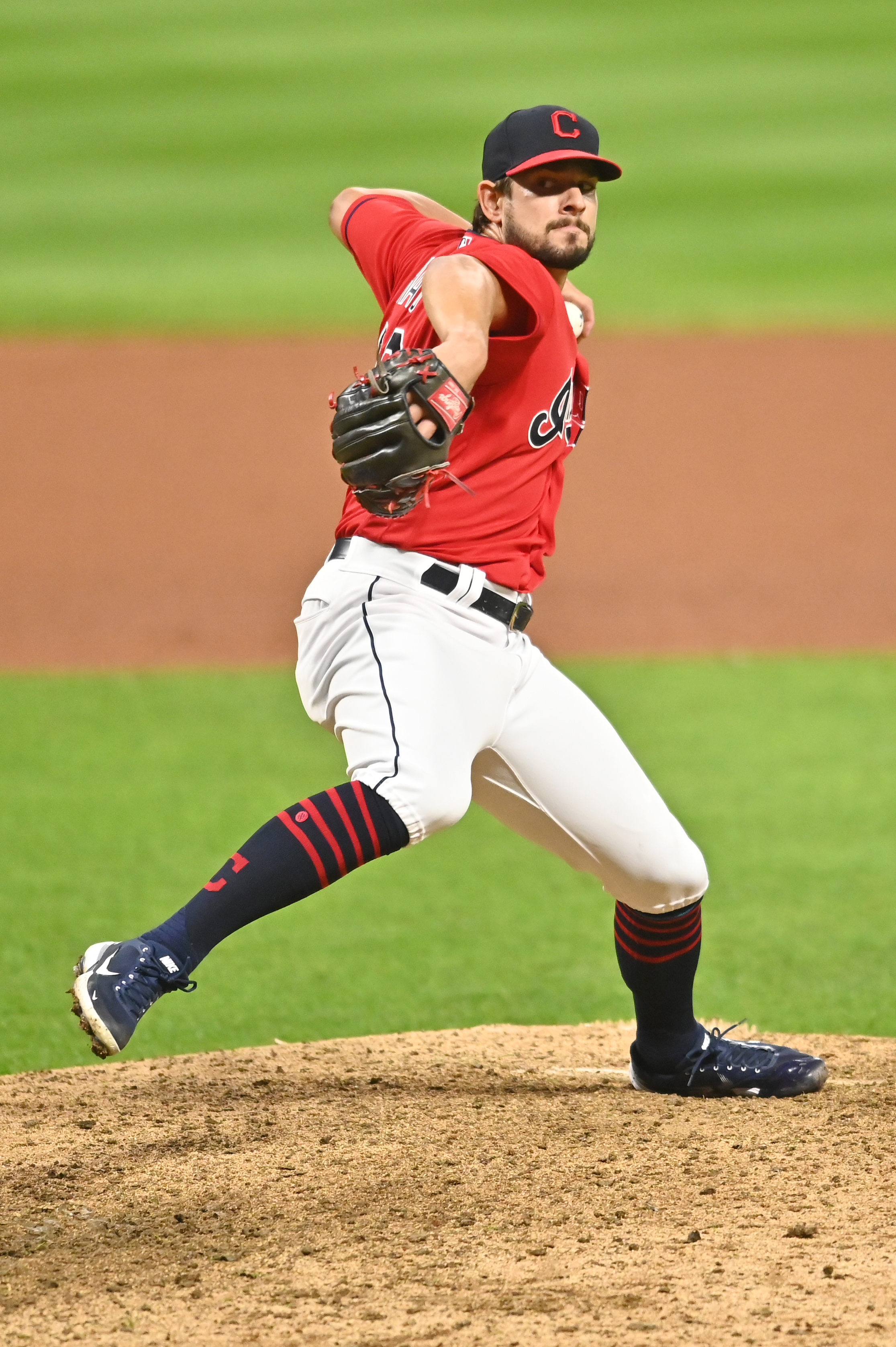
Hand, 30, has been one of the league’s best relievers over the past five seasons. He broke out with the Padres in 2016 immediately after being claimed off waivers from the Marlins. San Diego traded him to the Indians midway through the 2018 season, where he continued to shine. In two-plus seasons in Cleveland, Hand pitched to a 2.78 ERA over 107 relief innings with a stellar combination of strikeouts (34.8%) and walks (7.9%).
Despite that consistent run of success, the Indians made the decision to decline a $10MM option on Hand’s services for 2021 after last season. Before paying Hand a $1MM buyout, Cleveland placed him on outright waivers in the hope another club would claim him and exercise the option (thus saving them the cost of the buyout). All thirty teams passed on the opportunity to bring in Hand at that $10MM price point.
In the long run, though, Hand makes out a bit better than he would have had Cleveland (or any other team) simply exercised the option. In addition to picking up the aforementioned buyout money, Hand winds up guaranteed an extra $500K in 2021 salary. Of course, teams have a better understanding of their payroll outlooks now than they did last October. The free agent market, while extremely slow, has also been a bit more favorable than many expected on the heels of a 2020 season without gate revenue.
While Hand’s results haven’t tailed off at all, his velocity has fallen rather precipitously over the past couple seasons. Hand averaged a solid 93.8 MPH on his fastball as recently as 2018. That mark fell to 92.7 MPH the following season and was down to 91.4 MPH last year. His swinging strike rate, too, was down notably in 2020. From 2016-19, Hand reliably got whiffs on around 13% of his pitches each season. Last year, that rate was down to a slightly below-average 10.5%.
Despite Hand’s dip in velocity, it’s easy to see the appeal for Washington. The Nationals’ bullpen has been a persistent problem for years. Last season was no exception, as Washington relievers ranked 23rd in the league in ERA (4.68) and 22nd in SIERA (4.46). Longtime closer Sean Doolittle is now a free agent, leaving very little in the way of proven left-handed relievers on the roster. It remains to be seen whether Hand will take over the ninth inning, as he generally had in Cleveland, or if manager Dave Martinez plans to use Hand in high-leverage spots in the middle innings and let Daniel Hudson close.
After signing Hand, Washington’s projected payroll is up to $199MM, per Roster Resource. That’s a $12MM increase over last season’s figure (prior to prorating), so it’s not clear whether or to what extent ownership will greenlight further spending. The Nationals’ luxury tax ledger sits just below $196MM, Roster Resource estimates, $14MM shy of the first tax threshold.
Jon Heyman of MLB Network fist reported that the two sides were close to a deal (Twitter link). Jeff Passan of ESPN first reported the agreement was in place (Twitter link).
Astros Re-Sign Michael Brantley
JAN 25: The Astros have announced the deal, per Chandler Rome of the Houston Chronicle (via Twitter).
JAN 21: The Astros have reached a two-year, $32MM agreement with free-agent outfielder Michael Brantley, Mark Berman of Fox 26 reports. Brantley is a client of Excel Sports Management. It’s a done deal, Bob Nightengale of USA Today tweets.
That Brantley is returning to Houston is stunning, as just hours ago it appeared he would join friend and former Astros outfielder George Springer in Toronto. However, in the wake of reports suggesting Brantley would head north, a Toronto official shot down the notion that the club had a deal with him. The Blue Jays did indeed have interest in the 33-year-old Brantley, but they couldn’t close the deal for reasons that aren’t yet known. As a result, it appears Brantley will spend a third consecutive season with the Astros.
This is the second straight two-year, $32MM contract Brantley, formerly with Cleveland, has inked with Houston. The previous deal worked out for both sides, as Brantley earned his fourth All-Star nod in 2019 and has combined for a stellar .309/.370/.497 line with 27 home runs over 824 plate appearances during his run with the Astros. Thanks to his continued success, MLBTR ranked Brantley as the game’s 13th-best free agent at the beginning of the offseason and predicted he would land a two-year, $28MM pact.
With Brantley staying in Houston, the team has addressed a key need in its outfield, where it opened the offseason with major questions. The Astros were at risk of losing all of Brantley, Springer and Josh Reddick on the open market (Reddick is still a free agent). Now, though, they have two corner spots spoken for with Brantley and Kyle Tucker. It’s not yet clear who will replace Springer in center, and it’s certainly worth noting that Brantley may not be an optimal solution as an everyday outfielder anymore. Brantley has dealt with serious injuries in the past, and he missed time last year with a quad issue. When healthy, Brantley appeared in left field in just 19 of 46 games, spending the rest of his season at designated hitter. That spot won’t be available to Brantley on a regular basis in 2021 if offensive standout Yordan Alvarez returns to health after undergoing surgeries on both knees last August.
Losing out on Brantley may be a significant disappointment for the Blue Jays, but they’re not devoid of talent in the outfield and at DH. Springer, Teoscar Hernandez, Lourdes Gurriel Jr. and Randal Grichuk give the team a strong outfield quartet on paper, though adding Brantley obviously would have made the Jays even more formidable after they earned a playoff berth in 2020.
Photo courtesy of USA Today Sports Images.