
Trea Turner To Undergo MRI Due To Hamstring Strain
4:17pm: Turner is slated to undergo an MRI tomorrow, according to a report from Scott Lauber of The Philadelphia Inquirer. Turner told reporters (including Lauber) that he hopes his current ailment proves to be milder than the hamstring strain he suffered last year that sidelined him for six weeks, but an exact timeline won’t be known until his test results come back.
2:58pm: Phillies shortstop Trea Turner made an early departure during the seventh inning of today’s game with the Marlins due to what the Phils announced as a right hamstring strain. A throwing error from Miami shortstop Otto Lopez allowed Turner to reach base, but Turner immediately left the field and headed into the Phils’ dugout, and was replaced by pinch-runner Edmundo Sosa.
Manager Rob Thomson will provide more of an update in his postgame meeting with reporters, but it surely looks like Turner is heading for the injured list. The only question now is the severity of the strain, and whether or not Turner’s availability for the playoffs is now in question. Philadelphia entered today’s action with a healthy seven-game lead in the NL East, and with the second-best record of the division leaders, the Phillies would receive a first-round bye if the postseason began today. Securing the bye gains even greater importance for the Phils if Turner needs a few more days to recover.
Losing Turner would be another huge blow to a Phillies roster that will already be without ace Zack Wheeler for the playoff run. Turner has been not just Philadelphia’s best all-around player but one of the top players in all of baseball in 2025 — his 6.5 fWAR ranks fourth in the league, topped only by Aaron Judge, Cal Raleigh, and Bobby Witt Jr.
Turner launched his 15th home run of the season today, and the shortstop is now hitting .305/.356/.458 over 637 plate appearances. On top of his 125 wRC+ and 36 stolen bases (in 43 attempts), perhaps the biggest story of Turner’s season is his enormously improved glovework. After posting subpar defensive metrics across the board in 2023-24, Turner has quieted whispers about a possible move to the outfield by delivering +16 Outs Above Average and +2 Defensive Runs Saved from the shortstop position.
Durability has also been a big part of Turner’s production, as he has missed just three of Philadelphia’s games all season. Sosa is the only other player who has gotten any time at shortstop this year, and while the utilityman is a decent replacement, naturally he brings a lot less than Turner in terms of overall productivity. Bryson Stott could also handle some shortstop in a pinch, and Otto Kemp could be called up from the minors to then provide more infield depth if Sosa is taking on more of an everyday role. Star shortstop prospect Aidan Miller is having a big season at Double-A, but it doesn’t seem too likely that the Phils would have Miller bypass Triple-A and toss him into the pressurized environment of a pennant race.
The pickings are slim in terms of external help, as any player acquired off a big league roster isn’t eligible for postseason play. The Phillies can only trade for minor leaguers who haven’t yet appeared either in the Show or on a 40-man roster in 2025, or they can pick up players via the waiver wire. If a team wants to shed some money off the books by designating a shortstop for assignment, the Phils might be more inclined to make a claim if Turner will miss significant time.
Davey Johnson Passes Away
Longtime Major League manager and infielder Davey Johnson passed away on Friday at age 82. A four-time All-Star during his 13-year playing career, Johnson went on to manage five different teams over 17 seasons as a manager, capturing a World Series with the Mets in 1986.
Breaking into the majors with the Orioles in 1965, he emerged as Baltimore’s everyday second baseman the following year, and finished third in AL Rookie of the Year voting. Johnson also won his first World Series ring that same season, adding a second with the Orioles in 1970. Such superstar teammates as Brooks Robinson, Frank Robinson, and Jim Palmer drew most of the headlines during this golden age of Orioles baseball, but Johnson provided excellent glovework (three Gold Gloves) and above-average offense while locking down the keystone.
Johnson delivered one more All-Star season with the Braves in 1973, hitting 43 home runs in what stood as the single-season record for a second baseman until Marcus Semien went yard 45 times with the 2021 Blue Jays. Johnson’s production then declined in 1974, and he spent the 1975-76 playing in Japan with the Yomiuri Giants. It was something of a tumultuous two-year run that saw Johnson fight through some injuries to ultimately help the Giants reach the 1976 Japan Series, and Johnson then returned to the majors for his final two MLB seasons with the Phillies and Cubs in 1977-78.
Regarded as a future manager even early in his career, Johnson indeed turned to minor league managing almost immediately after retiring as a player, and started managing in the Mets’ farm system beginning in 1981. This led to a promotion as the Mets’ big league skipper in 1984, and Johnson immediately led New York to a string of five straight seasons with at least 90 wins. This excellent run included a pair of NL East titles in 1986 and 1988, highlighted by the 108-win team in 1986 that remains the most recent Mets club to capture a World Series title.
Things eventually soured between Johnson and Mets GM Frank Cashen, leading to Johnson’s firing in 1990. This essentially set the tone for the rest of Johnson’s managerial career — he would lead a team to success, yet would be dismissed relatively quickly due to clashes with ownership or upper management. Johnson’s next four stints as a skipper saw him never stay with a team for longer than three seasons, even though Johnson had a sub-.500 record in just one of his eight final full seasons as a manager.
For instance, Johnson’s feud with infamous former Reds owner Marge Schott saw Johnson dismissed after the 1995 season, even though he led Cincinnati to the NL Central title and a NLDS victory over the Dodgers that remains the Reds’ most recent postseason series win. Johnson then returned to his old stomping grounds and led the Orioles to postseason appearances in both 1996 and 1997, but even winning AL Manager of the Year honors in 1997 didn’t smooth over a dispute between Johnson and O’s owner Peter Angelos.
Johnson managed the Dodgers to a 163-161 record in 1999-2000, marking the only time Johnson didn’t lead a team to at least one postseason berth as a manager. He spent much of the next decade managing in international baseball, while also working for the Nationals in a consulting role (beginning in 2006) that paved the way for his final managerial job in 2011, when Johnson took over as interim skipper following Jim Riggleman’s resignation. Johnson was made the full-time skipper following that initial year in Washington, and won NL Manager of the Year honors for leading the Nats to their first NL East crown in 2012. Johnson was 70 years old during his final season in Washington, however, and the Lerner family didn’t view him as a long-term manager, so Johnson retired after an 86-win season in 2013.
Known for his brash personality, Johnson’s outspoken ways may have hurt him in terms of keeping steady employment, yet it certainly aided his ability to manage a clubhouse. Johnson was viewed as being somewhat ahead of his time in terms of running a team, being one of the first skippers to use some analytics to help in formulating his game plans. A mathematics major during his college days, Johnson’s reputation for using analytics to gain an edge on the field earned him the ironic nickname of “Dum-Dum” from his Orioles teammates.
Johnson’s career managerial record was 1372-1071 over parts of 17 seasons. His resume as a player includes 136 homers and a .261/.340/.404 slash line over 1435 games and 5465 plate appearances during his 13 MLB seasons, good for a 112 wRC+. Though Johnson has fallen short of Hall of Fame induction on multiple veterans’ committee ballots, his overall body of work in baseball would certainly seem worthy of Cooperstown, and it can be argued that Johnson could deserve a HOF nod based on his managerial work alone.
We at MLB Trade Rumors express our condolences to Johnson’s family, friends, and peers.
Mets Option Kodai Senga
The Mets announced Friday that right-hander Kodai Senga has been optioned to Triple-A Syracuse. Catcher Francisco Alvarez has been reinstated from the injured list. New York also optioned catcher Hayden Senger and activated righty Wander Suero, whom they claimed off waivers yesterday.
Senga’s five-year, $75MM contract stipulated that he needed to consent to being optioned at any point, meaning he gave his approval for the move. It’s obviously a bit surprising at first glance to see a former Rookie of the Year runner-up with a 3.02 ERA optioned to Triple-A, but the Mets have been mulling this move in recent weeks as Senga’s struggles have mounted. He’s pitched to a bleak 6.56 ERA over his past eight starts and lasted only 35 2/3 innings in that time. He’ll bite the bullet and head to the minors as he looks to get back on track before the Mets’ overwhelmingly likely trip to the postseason.
SNY’s Andy Martino reports that the decision to option Senga doesn’t appear to have strained the relationship between player and team. He was included in multiple discussions on the possibility and ultimately “felt respected by the process and consented without issue,” per Martino.
The demotion for Senga coincides with the expected promotion for pitching prospect Brandon Sproat, who’ll reportedly make his major league debut when he starts Sunday’s game against the Reds. He’ll join a youth movement in a rotation that currently includes fellow top prospects Nolan McLean and Jonah Tong. That trio of rookies will join David Peterson, Clay Holmes and the also-struggling Sean Manaea as the Mets’ starters for the time being.
Senga has to spend at least 15 days in the minors and can only be recalled sooner if it’s to replace an injured player on the roster. The Mets surely want him to get multiple Triple-A starts to try to get back on track anyhow, but his results in Syracuse will determine whether he’s back to rejoin the rotation in the final week or so of the regular season — and in the playoffs.
While the recent struggles are notable, it bears mentioning that Senga started the 2025 campaign in excellent fashion. Through his first 13 starts, he posted an exceptional 1.47 earned run average, albeit with less-impressive rate stats (23.9% strikeout rate, 10.6% walk rate) and some more skeptical grades from metrics like SIERA (4.28) and FIP (3.25). A hamstring strain sent Senga to the injured list in mid-June, and while he tossed four shutout innings in his return to the big leagues just under one month later, his struggles began immediately thereafter.
If Senga were still feeling the effects of that hamstring injury, he’d likely have been placed on the injured list rather than optioned. However, it’s possible that he developed some bad mechanical habits while compensating for that injury. He’s displayed uncharacteristically poor command since the All-Star break, walking 13% of his opponents (plus another two plunked batters) and yielding an average of 2.02 homers per nine innings pitched. Prior to his hamstring injury, he’d walked 10.7% of his career opponents and surrendered just 0.81 homers per nine frames.
There are no real service time or salary implications with Senga’s demotion. He’s guaranteed the full freight of that $75MM sum regardless, and his contract stipulates that he become a free agent at its conclusion, even though he’ll have under six years of major league service time. Sending him to Syracuse doesn’t alter his window of control with the team — it merely provides him a lower-stakes environment to try to get back to his All-Star form.
The other side of today’s notable slate of transactions will see the astonishing return of Alvarez. The Mets’ catcher had been one of baseball’s hottest hitters since mid-July but tore a ligament in his thumb while sliding into second base. That injury occurred less than three weeks ago, and his health troubles were compounded when Alvarez suffered a broken pinky finger upon being hit by a pitch on his minor league rehab assignment.
That damaged thumb ligament will require offseason surgery, but Alvarez will remarkably gut out both of those injuries as he tries to help his club down the stretch. Alvarez, like Senga, was optioned to the minors earlier this summer amid some pronounced struggles but returned with a vengeance, hitting .323/.408/.645 in 71 plate appearances before his injury. He went just 4-for-19 with eight strikeouts in 21 plate appearances during his rehab stint, though he did belt a grand slam in his final minor league game prior to today’s activation.
NPB’s Kazuma Okamoto, Tatsuya Imai Expected To Be Posted For MLB Teams
7:34pm: Jon Heyman of The New York Post writes that Okamoto and Imai are indeed both expected to be posted this offseason.
12:24pm: Every offseason, a handful of high-profile players from Japan’s Nippon Professional Baseball and the Korea Baseball Organization in South Korea either reach true free agency or are made available to MLB teams by way of the posting system. We already know that slugging third baseman Munetaka Murakami (NPB’s Yakult Swallows) and steady right-hander Kona Takahashi (NPB’s Seibu Lions) will be posted this winter. Breakout infielder Sung Mun Song (KBO’s Kiwoom Heroes) is hoping to be posted for big league clubs as well. ESPN’s Jeff Passan reports this morning that Yomiuri Giants third baseman Kazuma Okamoto and Seibu Lions righty Tatsuya Imai are also hoping to be posted by their clubs and make the jump to Major League Baseball.
The hope of being posted is notable, but that also does not guarantee either player will be available to North American clubs this winter. Yakyu Cosmopolitan — a terrific source for English-speaking fans with an interest in Japanese baseball — points out that NPB’s Giants are a typically anti-posting club who rarely make their stars available to MLB teams. Okamoto is the Giants’ captain. The Lions are more amenable to posting players, but they’ve already agreed to post Takahashi. Posting two members of their rotation would be difficult, but YC notes that Imai would be a true free agent after the 2026 season. The Lions could lose him for nothing in the 2026-27 offseason anyhow.
Okamoto turned 29 in June. He’s a six-time All-Star and two-time Gold Glove winner who’s thrice led NPB in home runs. He missed more than three months of the current season after injuring his elbow in a collision at first base, but he’s healthy again and is batting .304/.385/.585 with 11 homers, 13 doubles, a triple and nearly as many walks (10.2%) as strikeouts (11.2%) in 196 plate appearances. Okamoto averaged 34 homers per season from 2018-23, “slipped” to 27 last year, and is now homering at the third-best rate of his career (once every 17.8 plate appearances).
Okamoto has been on the radar of MLB scouts for several years now, but if the Giants are going to post him, this will be the time to do it. Like Imai, he’ll have the requisite nine years of service to become a true free agent after the 2026 season. That hasn’t stopped the Yomiuri club from holding onto stars in the past. However, if Okamoto is set on eventually making a move to North America, the Giants’ decision boils down to posting him now and reaping a notable sum via the posting system or allowing him to walk with no compensation next winter.
The right-handed-hitting Okamoto played primarily third base early in his NPB career, but he’s seen significant time at first and has a handful of starts in the outfield corners as well. Okamoto has split his time between the corners this year but was primarily a first baseman in 2024. Sports Info Solutions credited him with the Fielding Bible Award as NPB’s best defender at first base in 2024, and Passan suggests that some MLB teams feel he’s better suited at first than at third.
Eric Longenhagen of FanGraphs agrees, labeling Okamoto as a “likely first-base-only defender” in the majors but crediting his plus power and consistent ability to pull the ball with authority. Longenhagen notes that, as is the case with most NPB hitters, there are questions about Okamoto’s ability to hit big league fastballs. The average NPB fastball is around 91 mph, compared to this year’s 94.4 mph average four-seamer in MLB (via Statcast). Longenhagen writes that Okamoto’s numbers against heaters greater than 94 mph “fall off a cliff.” It’s a valid concern, though the counter is always that a hitter could potentially adapt to better velocity when seeing it more frequently. That uncertainty will be baked into eventual price of a free agent contract if Okamoto is posted.
Even if Okamoto is limited to primarily playing first base, he’s a good defender there by all accounts. He has plus power, improving contact skills and draws plenty of walks. Since settling in as a regular in his age-22 season, Okamoto is a .276/.360/.524 hitter with an average of 39 homers per 162 games played. He currently has a career-low strikeout rate and the second-best ISO (slugging minus batting average) of his career. If he’s posted, there will surely be multi-year interest from MLB clubs.
Imai’s possible addition to the market is arguably even more intriguing, given the heavy price teams are willing to pay for prime-aged pitching. The 5’11” righty won’t turn 28 until next May. He’s in the midst of a career-best season, sporting a comical 1.50 ERA with a 28.8% strikeout rate and 6.7% walk rate in 143 2/3 innings. Dating back to the 2022 season, Imai boasts a sensational 2.10 earned run average. Passan notes that the right-hander sits 95 mph with his heater and tops out at 99 mph, giving him the sort of power arsenal that’s quite rare in NPB.
An ankle injury held him to nine games back in 2022, but Imai has topped 130 innings in three seasons since and is averaging seven innings per start for a second consecutive season. He’s on pace for back-to-back seasons of more than 170 innings. (Bear in mind that the NPB season is 144 games, not 162 as in MLB, and Japanese pitchers typically only start once per week.) Imai currently ranks seventh in NPB in innings pitched, and the six names ahead of him all have at least one extra start over him. He’s averaged more innings per start than all but one of those pitchers ahead of him on that leaderboard.
Passan writes that he polled more than a dozen scouts and front office executives on the type of contract Imai could command, with estimates ranging from $80MM on the low end to nearly $200MM on the high end. He’ll be three years older than Yoshinobu Yamamoto was when he landed his precedent-setting $325MM contract with the Dodgers but two years younger than Shota Imanaga was when he signed a four-year, $53MM deal that now looks like a bargain for the Cubs (and still will even after Chicago picks up an option to push the deal to $80MM over five years).
If Imai is posted, he’ll join Dustin May and Michael Soroka as free agent starters heading into their age-28 seasons. Imai would have considerably more earning power than either, as big league teams will pay a premium for his power arsenal and the allure of the unknown. Based on Imai’s age, arsenal and recent track record, there’s a chance that he could be the highest-paid pitcher of the entire free agent class this winter — if the Lions eventually choose to make him available.
For those in need of a refresher, the MLB-NPB posting system allows Japanese teams to post their players for all 30 MLB teams at their discretion. Players that are 25 or older and have six-plus years of experience can sign major league contracts for any length and any amount. When a player is posted, that opens a 45-day window for him to negotiate with any and all interested MLB clubs.
When a deal is reached, the MLB team must pay a posting/release fee to the player’s former NPB club. That sum is equal to 20% of the contract’s first $25MM, 17.5% of the next $25MM and 15% of any money thereafter. That sum comes in addition to the contract. Any down-the-road earnings (e.g. club options, performance bonuses, etc.) are also factored in once they become guaranteed. For instance, if Imai were to sign a $125MM contract with an eventual club option for $25MM, his MLB team would owe the Lions an additional $3.75MM (15%) upon exercising that club option.
Shelby Miller Likely Headed For Tommy John Surgery
3:00pm: Miller spoke with the Brewers beat in the dugout today and suggested that a second Tommy John procedure is likely (video link via Todd Rosiak of the Milwaukee Journal-Sentinel). The veteran righty effused praise for the Brewers organization and said he’d be on hand to support the club however he can. Asked about the possibility of this being a potential career-ending injury, Miller said there’s “no doubt” in his mind that he can come back — likely in 2027 — and continue to pitch effectively, but that’ll be a conversation he has with his family when he’s further down the road.
Notably, the right-hander acknowledged that surgery was mentioned as a possibility when he was on the injured list with the D-backs. That would have been an internal brace and flexor repair, but a full UCL replacement now seems like it could be on the table. The Brewers surely knew of that possibility at the time of the swap (hence the purely financial cost of acquisition), but that doesn’t make his loss any less impactful.
Fans will want to check out Rosiak’s full five-minute video clip, as Miller provides a wealth of candid quotes on his career, his current mindset, his injury, his time with the Brewers and more.
2:12pm: The Brewers announced Wednesday that they’ve placed right-hander Shelby Miller on the 60-day injured list due to a sprained ulnar collateral ligament in his right elbow. The 34-year-old exited a game earlier this week after telling manager Pat Murphy that he’d felt a “pop” in his elbow, and it seems he’s encountered a worst-case scenario. Milwaukee has selected the contract of righty Joel Payamps to take Miller’s spot on the 40-man roster and in the big league bullpen.
The Brewers haven’t specified whether Miller will undergo Tommy John surgery or an internal brace procedure, but surgery is the most common outcome when pitchers suffer UCL sprains. If Miller does require Tommy John surgery, it’d be the second time in his career. He also underwent Tommy John surgery back in 2017 while pitching with the Diamondbacks.
Losing Miller is another notable blow for a Milwaukee bullpen that is also without closer Trevor Megill (flexor strain), lefty DL Hall (oblique strain) and righty Grant Anderson (ankle tendinitis). The Brewers acquired Miller at the trade deadline, knowing there were some health risks. He was on the injured list with a forearm strain at the time. Perhaps in a reflection of that uncertainty, Milwaukee effectively purchased Miller rather than sending any prospects to the D-backs; they took on the remainder of Miller’s deal and $2MM of the roughly $7MM still owed to injured starter Jordan Montgomery — a free agent at season’s end.
Miller has pitched 9 2/3 innings with the Brewers and sports an unsightly 5.59 ERA, though that’s a bit misleading. Prior to the outing when he felt that “pop,” he’d pitched in 10 games with the Brewers and held opponents scoreless in eight of them. The main blemish was a three-run hiccup against the Bucs on Aug. 13, but generally, Miller had been strong: a 3.72 ERA with a 14-to-4 K/BB ratio in those 9 2/3 frames. He was tagged for two runs without recording an out in what will go down as his final appearance of the season, however, and he’ll close out the 2025 campaign with a 2.74 ERA, 10 saves and nine holds in 46 innings.
In place of Miller, the Brewers will take another look at the veteran Payamps. The 31-year-old righty was a rock-solid bullpen arm for the Brew Crew in 2023-24, pitching a combined 129 2/3 innings with a 2.78 ERA, a 26.1% strikeout rate, a 6.7% walk rate, a 42.6% ground-ball rate and just 1.04 HR/9. He saved nine games along the way and piled up 48 holds between those two excellent seasons.
Payamps got out to a miserable start in 2025, however, allowing 17 runs in his first 18 1/3 innings of work. The Brewers designated him for assignment and placed him on waivers. His $2.995MM salary made it easy to pass him through outright waivers, and Payamps has shown signs of righting the ship with Milwaukee’s top affiliate in Nashville. His numbers are somewhat skewed thanks to a six-run meltdown in his third-most-recent appearance, on Aug. 23, but Payamps carried a tidy 3.04 ERA into that outing and has bounced back with a pair of perfect frames during which he punched out five of his six opponents.
Overall, Payamps has a 4.73 ERA in 26 2/3 innings, with a disproportionate amount of the damage against him coming in that Aug. 23 hiccup. He’s posted a sharp 30-to-6 K/BB ratio with Nashville and allowed only two home runs. If he’s back to his 2023-24 form, or even 80-90% of the way there, Payamps could be an impactful bullpen addition for the final few weeks of the regular season — and perhaps even into the postseason if he shows well enough.
Red Sox To Place Roman Anthony On Injured List
Red Sox outfielder Roman Anthony exited yesterday’s game due to soreness in his left oblique. He’ll be placed on the 10-day injured list, manager Alex Cora revealed in a radio appearance on WEEI today. Chris Cotillo of MassLive.com reported not long beforehand that Anthony was likely to be placed on the IL and that the Sox would recall utilityman Nick Sogard from Triple-A Worcester to take his spot on the roster.
Cora didn’t provide a timetable for Anthony specifically, speaking instead in general terms while pointing out that oblique strains often take four to six weeks to heal. Obviously, there’s a chance that Anthony’s regular season is over.
It’s terrible timing for the Red Sox (not that there’s a “good” time to lose a player of Anthony’s caliber). Boston is 2.5 games back of the division-leading Blue Jays in the American League East. They’re veritable playoff locks by now, but the Red Sox have a real chance of moving to the top of the division and potentially securing a bye through the first round of postseason play. Attempting to do so without Anthony will make that task far more daunting.
Since making his big league debut on June 9, Anthony has been Boston’s best offensive performer. Through 303 plate appearances, he’s hitting .292/.396/.463 with eight homers, 18 doubles, a triple, a 13.2% walk rate and four stolen bases (in five tries). The resulting 138 wRC+ indicates that Anthony has been 38% better than an average hitter at the plate. Among Red Sox hitters, only newcomer Nathaniel Lowe has a better mark, and that comes in a sample of just 41 plate appearances.
Further complicating matters for the Sox is that Anthony will join Wilyer Abreu on the injured list. He’s been out since mid-August with a calf strain and doesn’t appear close to a return. Cora said just last night that Abreu has yet to even resume running (link via the Boston Globe’s Tim Healey). That leaves Jarren Duran and Ceddanne Rafaela in two of the three outfield spots, and a rotating cast of characters to mix and match in the third. Masataka Yoshida, Rob Refsnyder, Nate Eaton and the aforementioned Sogard are among the possibilities. Yoshida has played the field just four times this year after offseason shoulder surgery.
It’s possible Anthony heals abnormally quickly and is back on the field before season’s end, but based purely on the history of oblique injuries in recent years, it’s far likelier that he won’t be ready to return until the postseason is underway. The Red Sox will have to hope that they’re still alive when Anthony is cleared to return, and even then, he might need to jump right back into the mix after a lengthy layoff and without the benefit of a true minor league rehab assignment. At the very least, they’ll hope to have Abreu back by that point, but Boston’s outfield look far less formidable now than it did three weeks ago.
Lourdes Gurriel Jr. Diagnosed With Torn ACL
The Diamondbacks announced today that right-hander Taylor Rashi and infielder Connor Kaiser have been recalled from Triple-A Reno. In corresponding moves, they have optioned Juan Burgos to Reno and placed outfielder Lourdes Gurriel Jr. on the 10-day injured list with a torn right ACL.
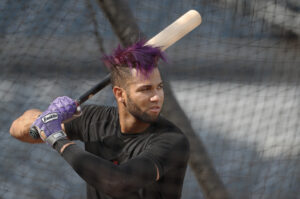
It was apparent that Gurriel was injured last night. He and center fielder Blaze Alexander were both chasing a ball in the gap. Gurriel hopped to avoid his teammate but then collapsed on the ground in obvious pain. He eventually had to be carted off, unable to properly put weight on his leg.
Today’s diagnosis is obviously awful for both Gurriel and the Snakes. They haven’t announced an expected timeline but a torn ACL can often require something close to a year of recovery before the player is back to full strength. Gurriel will certainly miss the remainder of this season and a notable chunk of 2026 as well.
Gurriel was initially acquired ahead of the 2023 season alongside Gabriel Moreno, as part of the trade which sent Daulton Varsho to the Blue Jays. Gurriel was an impending free agent at the time but re-signed after one good season in Arizona. He returned via a three-year, $42MM pact with a club option for 2027 and an opt-out chance for him after 2025.
Triggering the opt-out wasn’t especially likely. He is only hitting .248/.295/.418 this year, with that line translating to a 94 wRC+. However, he does have 19 home runs and it’s possible the overall lack of production is due to a .254 batting average on balls in play. That’s well below this year’s .291 league average and Gurriel’s personal career rate of .305.
His decision would have effectively come down to whether he felt he could beat one year and $18MM. His current contract pays him $13MM next year, with a $5MM buyout on the $14MM club option for 2027. Perhaps a hot finish could have made him think about walking away from that money but it’s a moot point now. Since he’s going to miss some amount of next year, he’ll surely forgo his opt-out chance.
For the Diamondbacks, this adds to their 2026 body count well before the season has even begun. Corbin Burnes required Tommy John surgery in June and will therefore miss most or perhaps all of the upcoming campaign. Tommy Henry, Blake Walston, A.J. Puk and Justin Martínez also underwent UCL surgeries this year and are facing lengthy absences. Now Gurriel adds another name to the list.
Those other names are all pitchers while Gurriel subtracts a key part of the club’s outfield mix. Without him, the 2026 outfield consists of guys Corbin Carroll, Alek Thomas, Jake McCarthy, Jorge Barrosa and Alexander. Carroll is a star but it’s a questionable group after that. Thomas is in his fourth season and has good defensive grades but he hasn’t hit. McCarthy has shown occasional flashes of competency at the plate but his good seasons may have been fuelled by BABIP luck and he’s been awful this year. Alexander is having a nice run right now but he strikes out a lot and has only recently moved from the infield to the outfield. Barrosa has just 58 big league plate appearances and hasn’t impressed yet.
Going into the winter, the Diamondbacks have a lot to do. Given their injuries, deadline trades and impending free agents, they need to remake almost their entire pitching staff. They have question marks at the infield corners after trading Josh Naylor and Eugenio Suárez at the deadline. Those spots could be filled by guys like Jordan Lawlar and Tyler Locklear but neither is a lock yet. Gurriel could have been a solid regular on next year’s team but now there’s one more thing on the to-do list.
Photos courtesy of Charles LeClaire, Arianna Grainey, Imagn Images
Braves Claim Ha-Seong Kim From Rays
The Braves have claimed infielder Ha-Seong Kim off waivers from the Rays, according to announcements from both clubs. Ken Rosenthal of The Athletic reported the claim prior to the official announcements. Atlanta transferred Austin Riley to the 60-day injured list to open a 40-man spot. Riley is done for the season following core surgery.
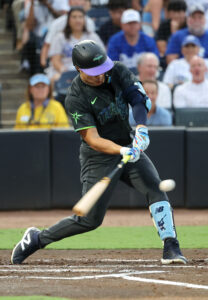
It wasn’t previously reported that Kim was on waivers, but it seems the Rays quietly put him out there to try to shed his contract. Atlanta obliged, so the Rays will get out from under that deal. Tampa signed him to a two-year, $29MM pact in the winter. He is making $13MM this year, with just under $2MM left to be paid out. The second year is a $16MM player option.
That deal was the Rays betting on Kim being able to play at his usual level after shoulder surgery finished his 2024 campaign. Over the 2022 through 2024 seasons with the Padres, Kim had slashed .250/.336/.385 for a 106 wRC+. He had stolen 72 bases in that span and received strong grades for his defense at second base, third base and shortstop. FanGraphs credited him with 10.5 wins above replacement for that three-year span.
With the surgery, he was expected to be on the injured list to start 2025, which dampened his market. Some argued he was trending towards a nine-figure deal before he got hurt. Instead, he opted for the short-term, opt-out structure. Ideally, it would have worked great for both sides. If Kim had bounced back to his previous levels of performance, he could have taken the shortstop job in Tampa and then opted out. At that point, the Rays could have given him a qualifying offer and received compensation as he returned to the open market in search of a larger guarantee.
It has not played out that way. He was initially reinstated from the IL in early July. Since then, he has twice gone back on the IL due to back problems. Around the IL stints, he has played in 24 games and produced a measly .214/.290/.321 line.
Given that performance and the injury absences, it’s possible that Kim is trending towards triggering his player option. That would have put $16MM on Tampa’s books for next year. That’s not a massive sum and the Rays have very little committed to next year’s club, but they are also dealing with plenty of uncertainty.
Due to the hurricane damage to Tropicana Field, they have had to move to George Steinbrenner Field, normally a minor league facility. That move has undoubtedly led to a lot of unforeseen costs and presumably less revenue than usual. Work is still being done to get The Trop ready for 2026 and it’s unclear how that will play out. On top of all that, the franchise is actively being sold and it’s unclear what sort of payroll the new owners will give the front office as they focus on building a new stadium.
It seems they preferred to let Kim go and save some money as opposed to keeping him around and hoping for better results next year. They are 5.5 games out of a playoff spot. They are not totally buried but are likely happy to save the remainder of the money, due to those big-picture questions. They will use the remainder of the regular season to continue giving reps to shortstop prospect Carson Williams. He was promoted when Kim’s most recent IL stint started just over a week ago. Williams has big questions about his penchant for strikeouts but he clearly has power and is considered a strong defender.
Atlanta, however, is in a very different situation. They normally run one of the larger payrolls in the league. They came into 2025 seemingly hoping to duck under the competitive balance tax. Back in February, chairman Terry McGuirk said the club still had some powder dry for in-season moves.
This year has turned into a nightmare season for the club. Due to several injuries and a PED suspension for Jurickson Profar, they fell behind their competitors and were never able to recover. They currently have a 62-75 record and are 11 games back of a playoff spot.
President of baseball operations Alex Anthopoulos has been using that dry powder to try to start working on the club’s 2026 comeback season. He acquired Tyler Kinley from the Rockies ahead of the deadline and claimed Jake Fraley off waivers from the Reds. Kinley is making $3MM this year and has a $5MM club option for next year. Fraley is making $3.125MM and will be due a raise via arbitration for 2026, his final season of club control.
Claiming Kim is a similar move but with larger numbers. As mentioned, Kim is making $13MM this year and will make $16MM next year. It’s theoretically possible that Kim gets hot down the stretch and opts out. That would make this claim go for naught, but the club would only lose a bit of money in that scenario. Presumably, they are hoping Kim decides to trigger his option and stay, so it seems they think $16MM is a fine price for betting on a bounceback next year.
It’s an interesting gambit for their middle infield, a situation that MLBTR’s Steve Adams recently took a close look at, in a post for Front Office subscribers. Atlanta has had Nick Allen at shortstop this year. He’s a strong defender but is essentially the worst hitter in the majors by a noticeable margin. Among guys with at least 400 plate appearances this year, Allen’s 53 wRC+ is dead last. Ke’Bryan Hayes is second-last on that list, with a 67 wRC+. Getting another shortstop and bumping Allen into a bench role seemed like a key thing on the to-do list for next year.
However, the offseason options weren’t going to be great. Bo Bichette is going to be the top free agent but Atlanta hasn’t really spent a lot in free agency lately. Under Anthopoulos, their biggest expenditure on the open market has been $65MM for Marcell Ozuna. With Bichette possibly trending towards something in the $150-200MM range, it didn’t seem like Atlanta would be the favorite to land him. Trading for someone like Trevor Story or Javier Báez may have been possible but it’s unclear if their respective clubs would make them available and they come with concerns of their own.
Rather than wait around and deal with the offseason uncertainty, Atlanta seemingly preferred to simply grab Kim now. That adds $16MM to next year’s books but they have some financial flexibility opening up. Ozuna and Raisel Iglesias are both impending free agents. Each of them individually are making $16MM this year, the same salary that Kim is set to make next year, assuming he doesn’t return to free agency.
Rosenthal notes that Kim is ready to come off the IL. That means Atlanta can use the final few weeks of the season to get a look at him. It seems they are hoping that Kim looks good but decides to trigger his option, therefore solving their shortstop question for next season.
In addition to this claim, the Rays announced that right-hander Kevin Kelly has been recalled and outfielder Richie Palacios reinstated from the 60-day injured list. Those are their two September call-up moves, with Palacios taking the 40-man spot vacated by Kim.
Photo courtesy of Robert Edwards, Kim Klement Neitzel, Imagn Images
Jason Adam Likely Headed For Season-Ending Quad Surgery
10:12pm: Kevin Acee of The San Diego Union-Tribune writes that Adam will undergo season-ending surgery if a follow-up MRI confirms the initial diagnosis. The hope is that he’ll be able to return some time around the beginning of the 2026 season.
9:42pm: Padres reliever Jason Adam has been diagnosed with a tendon rupture in his left quad, manager Mike Shildt tells reporters (including Dennis Lin of The Athletic). Shildt didn’t specify a recovery timeline or whether surgery will be required. It’s nevertheless difficult to imagine Adam will be back this season.
Adam was carted off the Petco Park mound during this evening’s loss to the Orioles (video via Talkin’ Baseball). Gunnar Henderson hit a chopper up the middle. The ball was a little behind the right-handed Adam, who naturally pulls toward first base on the follow-through in his delivery. Adam appeared to try to plant and change direction to field the ball when his left leg gave out. The injury had some similarities to the one suffered by Giants starter Landen Roupp, who hurt his knee (coincidentally also in San Diego) while trying to dodge a comeback line drive two weeks ago.
Both pitchers end up being carted off the field. Roupp got relatively good news, as he escaped structural damage — though he did suffer a bone bruise that’ll likely end his season. Adam’s injury unfortunately seems more serious. It’ll also be a much more significant development on the playoff picture. The Friars trail the Dodgers by 2.5 games in the NL West. They’re in possession of the National League’s second Wild Card spot and six games clear of the top non-playoff team.
Adam was a journeyman depth reliever throughout his 20s. He suffered a gruesome left ankle fracture while with the Cubs’ Triple-A affiliate in 2021. It was remarkable that he got back on a mound just four months later. Adam had a breakout showing with the Rays the following season. He has been one of the best and most durable relievers in MLB over the past four years.
Since the start of 2022, Adam ranks sixth in the majors with 262 appearances. His 2.04 earned run average is fourth among relievers with 100+ innings in that stretch (trialing Emmanuel Clase, Brusdar Graterol and Félix Bautista). Only Tyler Rogers and Bryan Abreu have more holds, and Adam has also collected 24 saves in that time.
Adam has continued to produce since the Padres acquired him from Tampa Bay at the ’24 trade deadline. He took a 1.81 ERA and above-average 26% strikeout rate into tonight’s appearance. He’s the team leader in holds (29) and relief innings (64 2/3). Only closer Robert Suarez has entered in higher leverage situations on average. Losing Adam will be a big hit in the postseason, though the Padres still have an enviable group of back-end arms. The Mason Miller deadline swing takes on added importance. Suarez remains an asset in the ninth inning, while Adrian Morejon and Jeremiah Estrada are high-end setup arms.
The Padres have Adam under arbitration control for one more season. He’ll be due a decent raise on this year’s $4.8MM salary if they tender him a contract. That’d remain a bargain if he were healthy, but it’d be a tougher call if this injury winds up threatening a chunk of his 2026 season. That prognosis won’t be clear until the organization provides a return timeline. The Padres could lose Suarez to an opt-out clause this winter, and it’s possible they plan to give Miller a look as a starting pitcher next spring.
Mariners Promote Harry Ford, Release Donovan Solano
With rosters expanding from 26 to 28 today, the Mariners announced that they have selected catcher Harry Ford and right-hander Luke Jackson. They also recalled infielder Leo Rivas. In corresponding moves, they designated right-hander Sauryn Lao for assignment and released infielder Donovan Solano.
Ford, 22, is widely considered one of the top catching prospects — and top 100 overall prospects — in the industry. The former first-rounder has spent the whole season in Triple-A Tacoma, where he’s done nothing to dissuade that line of thinking. In his first 97 games and 458 plate appearances at the Triple-A level, Ford has turned in a terrific .283/.408/.460 batting line (125 wRC+). He’s homered 16 times, swiped seven bags and walked nearly as often (16.2%) as he’s struck out (19.2%).
There are natural questions about Ford’s long-term fit on a roster that also includes 2025 AL MVP candidate Cal Raleigh. The Mariners’ franchise catcher signed a six-year extension last offseason and has obviously substantially elevated his profile since putting pen to paper on that contract. The M’s could roster both catchers and rotate them between the catching and designated hitter spot. Having two catchers with that type of offensive potential would be a clear advantage, though there’ll likely be plenty of offseason attempts to pry Ford from the Mariners’ grasp. Seattle president of baseball operations Jerry Dipoto is never one to shy away from bold trades, so he’ll presumably at least consider dealing from strength, if it addresses other areas of need.
For the time being, however, Ford will get his feet wet and bolster the Mariners’ catching depth while they chase down what looks like a very, very likely playoff berth. The Mariners currently trail the Astros by two games in the American League West but have a 2.5-game lead over the Rangers for the final Wild Card spot. Both the Houston and Texas rosters have recently been hit with several key injuries, while Seattle has remained generally healthy and also added some key lineup upgrades at the July trade deadline (Eugenio Suarez and Josh Naylor, most notably).
Jackson, 34, has spent the bulk of the season with the Rangers but also tossed 4 2/3 innings for the Tigers. He’s pitched to a 4.54 ERA in 39 2/3 innings overall. Once a key member of the Atlanta bullpen, Jackson was a rock in manager Brian Snitker’s 2021 bullpen as the Braves won the World Series. He tossed 63 2/3 innings with a 1.98 ERA, 26.8% strikeout rate, 11% walk rate and 31 holds. His elbow gave way the following spring, however, and Jackson missed all of 2022 following Tommy John surgery.
In three years since returning from surgery, Jackson’s results haven’t matched his pre-injury levels. He’s logged a combined 126 innings of 4.36 ERA ball. His strikeout rate is down to 23.6% in that time (and just 16.1% this year), while his walk rate climbed to nearly 12% (13.8% in 2025). Jackson’s average fastball is also down more than a mile per hour from his pre-surgery form.
Even with those red flags, he’ll get a look in the Seattle bullpen down the stretch. Jackson has plenty of experience in postseason races and high-leverage settings. That experience and his overall track record could prove beneficial for the M’s if he can get his command back on track. Jackson isn’t going to be thrust into ultra high-leverage spots anyhow, so he really only needs to function as a serviceable middle reliever.
Solano signed a one-year, $3.5MM deal over the winter. He had a dreadful start but heated up in the summer. However, Solano was signed due to his typically strong production against lefties — but struggled uncharacteristically versus southpaws (.181/.212/.245). He hit .348/.403/.478 in 77 plate appearances versus righties, but that was buoyed by a .407 BABIP he’s not likely to sustain. And, with the addition of Naylor as an everyday option at first base, the need for a short-side platoon bat at first base (who was unexpectedly struggling versus the lefties he was signed to help with) apparently ran out.
Lao, 26, made his big league debut this season but has only pitched 3 1/3 innings in the majors. He’s been tagged for three runs with a 4-to-1 K/BB ratio in that short sample. The rest of his season has been spent in Tacoma, where he’s pitched to a 3.13 ERA with a 25.9% strikeout rate and 6.7% walk rate in 69 innings of relief.
Lao, a former Dodger farmhand who signed as a minor league free agent last offseason, has averaged 93.5 mph on his four-seamer and 92.9 mph on his sinker in Triple-A. He’s also mixed in a mid-80s slider and upper-80s changeup. He has multiple minor league option years remaining and will now hit the waiver wire, where he’ll be made available to all 29 other clubs.