
Mets Name Carlos Beltran Manager
The Mets have officially named Carlos Beltran their next manager. He’ll reportedly earn approximately $3MM over the guaranteed three-year term, with a club option to follow.
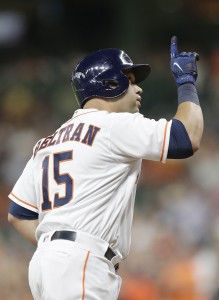
If indeed a deal is ticked and tied, it’ll launch a fascinating new chapter in Mets history. Beltran, a recently retired former Mets star who left the organization on less-than-pleasant terms, will pair up with ever-interesting sophomore GM Brodie Van Wagenen as the club does battle in a tough NL East.
Beltran, 42, had previously interviewed for the Yankees’ managerial opening that went to Aaron Boone. While he missed on that gig, Beltran joined the Bronx-based organization’s front office as a special advisor. That experience ended up functioning as a transition time for Beltran, who’ll now get back in uniform.
When last he donned Mets duds, Beltran was still a star-level performer. Though there were indications of sore feelings when he departed via trade in the middle of the 2011 season, things worked out well enough for the Queens denizens. Beltran hit well enough over the first half of that year — his final of a seven-season contract — to return a highly valuable player in the form of Zack Wheeler. While we likely won’t get the interesting optic of Beltran removing Wheeler from games — the righty is expected to receive a qualifying offer but decline it in favor of the open market — that swap still makes for an interesting reference point.
Beltran shouldn’t have any problems commanding respect in the clubhouse and with the media. He’s a rightly revered figure in the game and will likely check into Cooperstown during his time as the Mets skipper — so long as his tenure at the helm of the dugout is longer than that of his predecessor. Mickey Callaway came from quite a different place when he entered the gig, but did finish with a flourish over the final two-thirds or so of the 2019 campaign. That wasn’t enough to save his job.
The expectations will be lofty for Beltran’s debut campaign, at least within the organization. It’s postseason or bust for Van Wagenen and co., particularly after doubling down on the existing core slate of players at the 2019 trade deadline. It is difficult to fully assess the odds of the club cracking the postseason for the first time since 2016, given that we don’t yet know just what the roster will look like when camp breaks early next year. As we explored recently, the organization faces some obvious obstacles to improving the on-field product it will entrust to Beltran.
Sid Rosenberg of TalkRadio 77 WABC had the first word on Twitter. Anthony DiComo of MLB.com independently reported the news (via Twitter). Marly Rivera of ESPN (via Twitter) reported the deal structure, with Bob Nightengale of USA Today (Twitter link) covering the salary.
Photo courtesy of USA Today Sports Images.
Chapman Hopes For Extension With Yankees, Will Otherwise Exercise Opt-Out Clause
Yankees closer Aroldis Chapman is pursuing an extension but otherwise plans to utilize the opt-out clause in his five-year contract, per MLB Network’s Jon Heyman (Twitter link). A decision on that opt-out provision is due tomorrow, leaving his representatives at Magnus Sports with a small window to work out a new deal. (Although, presumably, the two sides have already been in contact well before today’s report.)
Chapman, 32 in February, has two years and $30MM remaining on the five-year, $86MM pact he inked prior to the 2017 season. In the event that an extension isn’t reached, the Yankees will surely issue him a $17.8MM qualifying offer, which he’ll reject in order to head into free agency. (That much is evident based on logic and common sense; if Chapman is to walk away from $30MM over the next two seasons, he’d certainly decline less than that on a one-year term even if it included a relatively small bump in terms of yearly salary.)
At 32, another five-year deal for Chapman won’t be there in free agency. Realistically, a three-year deal seems like the most plausible outcome whether it manifests with the Yankees tacking an extra year onto his current deal (as they did with CC Sabathia several years ago) or via an open-market agreement. Chapman’s $86MM guarantee is still a record among relief pitchers, but he’d have the opportunity to set another new record on the open market by taking aim at Wade Davis‘ precedent-setting annual salary ($17.33MM). Anything north of $52MM over a three-year term — or even something like $36MM over a two-year term — would give Chapman the relief pitcher records in both total guarantee and AAV.
Chapman’s on-field performance in 2019 was arguably the best of any of his three full seasons under his current deal. He tossed 57 innings — his most since signing — and worked to a pristine 2.21 ERA with averages of 13.4 strikeouts, 4.0 walks and just 0.47 home runs allowed per nine innings pitched. That home-run rate is particularly impressive given his hitter-friendly home parks (and several others in the AL East) as well as the league-wide homer spike with this year’s superball. Chapman racked up 37 saves in 2019, marking his seventh 30-save season in the past eight years.
It’s true that Chapman doesn’t throw as hard as he used to. But while he’s no longer averaging 100.4 mph on his heater, this season’s 98.4 mph average still ranked as the sixth-highest among the 458 relievers who tossed at least 10 innings. In all, he’s given the Yankees 158 2/3 innings of 2.61 ERA ball with 91 saves, 14.0 K/9 and 4.3 BB/9 over the first three years of the deal (including two All-Star nods). He’s added on another 16 1/3 innings of 1.65 ERA ball with a 29-to-7 K/BB ratio in the postseason, though this year’s final impression — a series-ending, walk-off homer to Jose Altuve — wasn’t a favorable note on which to end that otherwise strong run.
Some may point to Craig Kimbrel as evidence that Chapman should be wary of venturing into free agency as a reliever with a qualifying offer attached to his name, but Kimbrel should rather serve as a lesson in the importance of managing expectations. If Chapman goes to market seeking a record-setting guarantee over five or six years, as Kimbrel apparently did, then he’ll indeed have his share of troubles. If he’s seeking out a more palatable four- or three-year pact, he could have an easier time, as was the case with the aforementioned Davis two winters ago when he signed his own record deal in Colorado. Even Kimbrel himself ultimately landed a strong three-year deal worth a prorated $43MM when he ultimately did put pen to paper.
Indians Exercise Kluber’s Option, Decline Options On Kipnis, Otero
TODAY: The moves are now official, as per the Associated Press. Kluber’s option was exercised, while the Indians bought out Kipnis and Otero.
OCTOBER 2: Indians president of baseball operations Chris Antonetti announced at the beginning of today’s meeting with the media that the team intends to exercise its $17.5MM club option on right-hander Corey Kluber (Twitter link via Ryan Lewis of the Akron Beacon-Journal). The Indians are planning to decline their $16.5MM option on second baseman Jason Kipnis in favor of a $2.5MM buyout, however, and they’ll also decline righty Dan Otero‘s $1.5MM option in favor of a $100K buyout.
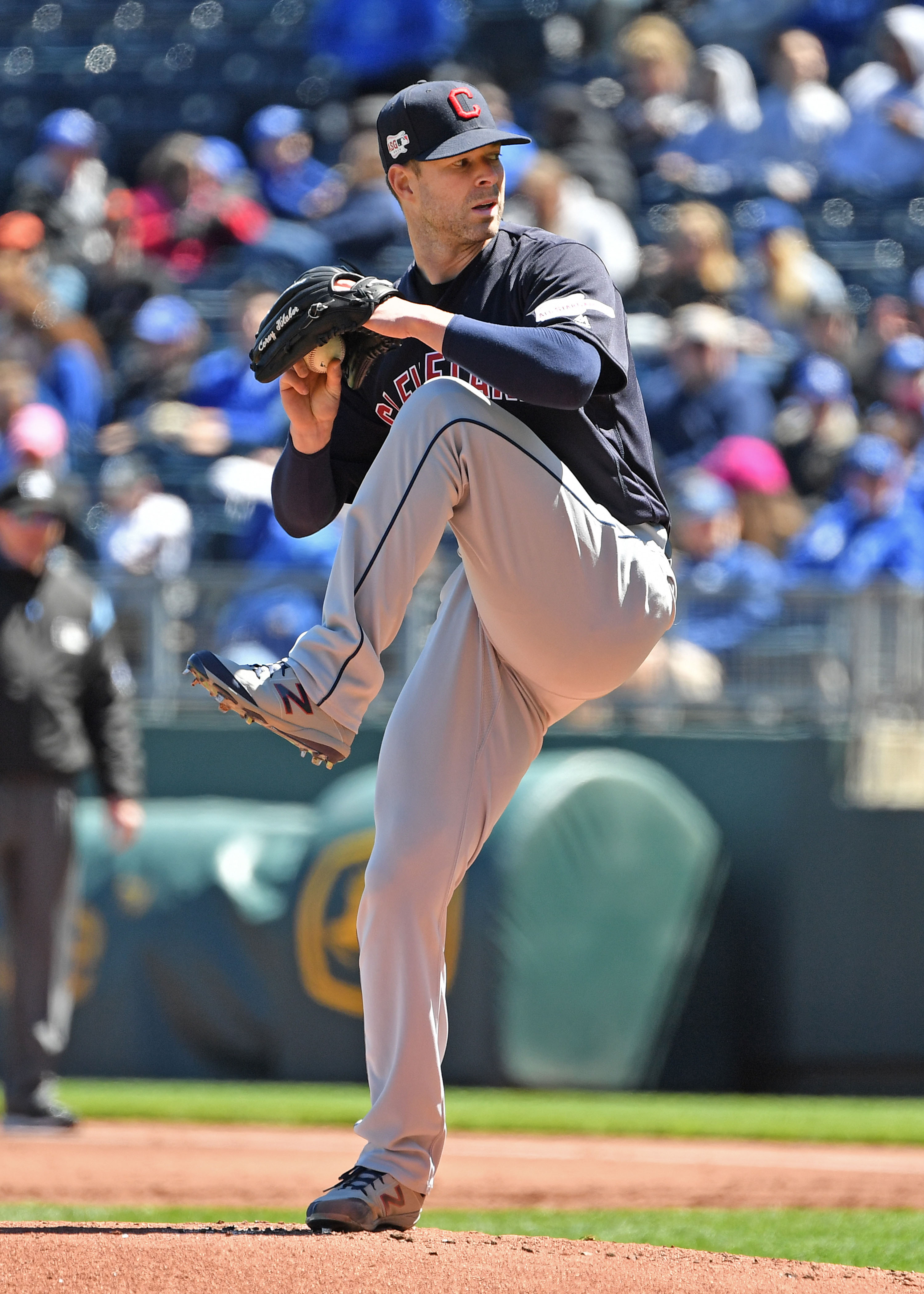
Although the 2019 season was a disaster for Kluber, it was never plausible that the Indians would move on from the two-time AL Cy Young winner. Kluber’s 2019 season was truncated by a forearm fracture suffered when a comeback line-drive struck him back in May. He missed nearly three months of the season and, when he was nearing a return, sustained an oblique injury that ultimately ended his year.
Even when healthy, Kluber turned in an alarming 5.80 ERA in 35 2/3 innings. However, he was plagued by a lofty .370 average on balls in play and a low 63.8 percent strand rate (career 74.7 percent), both of which seemed due for regression. His average fastball velocity was down a bit from his 2018 totals, but a look at Kluber’s readings through the beginning of May in 2018 reveals a 91.7 mph average fastball that aligns with his 91.6 mph average in 2019. Put another way: there was minimal evidence to suggest that Kluber is suddenly on a decline of this magnitude just one year after his fourth Top 3 Cy Young finish in five seasons.
Perhaps if he’d been due to become a free agent after the 2020 season, the organization would’ve given slightly more consideration to moving on (doubtful), but Kluber’s contract contains an $18MM option for the 2021 season. The Indians have been working to pare back their payroll since the beginning of last offseason, but there’s no realistic scenario in which they shy away from a $16.5MM decision on Kluber — he’d have been owed a $1MM buyout regardless — that comes with a similarly priced option for an additional season.
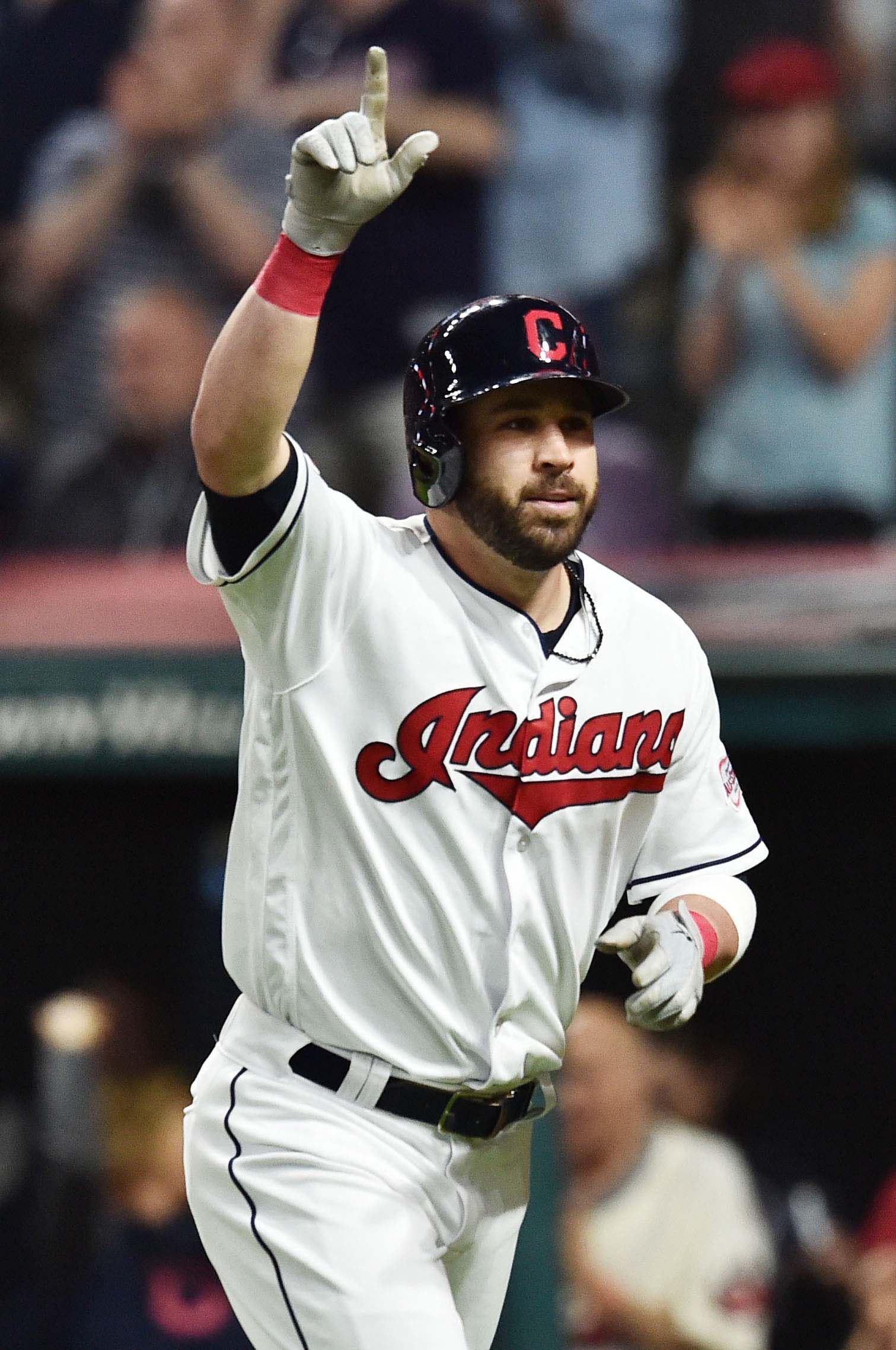
In the case of Kipnis, the decision was similarly straightforward. Although he briefly ranked among the game’s best second baseman, the now-32-year-old Kipnis (33 on April 3) hasn’t had an above-average season at the plate since 2016. Over his past 1485 plate appearances, he’s managed just a .236/.305/.403 batting line (86 OPS+). Add in the fact that his season ended with a fractured hamate bone that required surgical repair, and Kipnis surely saw the writing on the wall.
Lewis tweets that the team is still open to a reunion with Kipnis at a lower price, but that will depend on the level of interest expressed by other teams. Given the number of second base alternatives both in free agency and on the trade market, it’s quite possible that Kipnis will eventually have to settle for a one-year deal, so perhaps a reunion shouldn’t be ruled out. Kipnis does have a bit of experience in the outfield, which could enhance his appeal to new clubs, but he’s graded out poorly in his limited work away from second base.
It’s similarly unsurprising to see the team move on from Otero, despite the affordable nature of his option. He’ll turn 35 this February and has seen a sharp decline of his own since a brilliant run in 2016-17. Otero gave the Indians 130 2/3 innings of 2.14 ERA ball with a 95-to-19 K/BB ratio and only eight homers allowed in that ’16-’17 peak, but he’s been rocked for a 5.09 ERA with 18 home runs in 88 1/3 innings since that time. Otero still possesses superlative control, as he’s averaged less than one walk per nine innings pitched over the past two seasons, but he’s also seen his sinker dip to an average if 89.5 mph.
As far as the coaching staff is concerned, manager Terry Francona announced that the team has dismissed bullpen coach Scott Atchison but will retain the rest of his staff for the 2020 season (Twitter link via Zack Meisel of The Athletic).
Rangers Acquire Welington Castillo
The Rangers have acquired catcher Welington Castillo and international draft bonus pool money from the White Sox in exchange for minor league outfielder and corner infielder Jonah McReynolds, as per Rangers executive VP of communications John Blake (Twitter link). Texas has also outrighted left-hander Jesse Biddle and outfielder Zack Granite to Triple-A, with Biddle first being reinstated from the 60-day injured list.
The Rangers will get $250K in international bonus funds, as per Evan Grant of the Dallas Morning News (Twitter link), which seems to have been the team’s real incentive for the trade. Texas is expected to decline Castillo’s $8MM club option and instead pay him a $500K buyout.
In essence, the White Sox decided to save that $500K of Major League payroll in favor of giving up $250K in international money. It could be that the Sox also simply decided McReynolds was of more interest to them than any other prospects who might arise on the international market.
Castillo became expendable in Chicago after he hit only .209/.267/.417 over 251 PA in 2019, losing playing time to James McCann in the process. This comes on the heels of a 2018 season that saw Castillo post some respectable numbers (94 OPS+, 96 wRC+) for a catcher over 181 PA, though that year was marred by an 80-game PED suspension.
While the $8MM salary was too rich for the Rangers’ liking, it wouldn’t be a total surprise to see the team have an interest in Castillo at a lower price. While Castillo struggled at the plate last year, his numbers still represent an improvement over what the current Texas catching corps (Jeff Mathis, Jose Trevino, Isiah Kiner-Falefa) produced in 2019. Then again, the Rangers could also choose to stand pat at catcher since they have several other areas to address this winter.
McReynolds, who turns 24 in December, was a 13th-round pick for the Rangers in the 2016 draft. He has a .217/.285/.322 slash line over 637 PA in his first four pro seasons, the last three of which have been spent at low A-ball. He has played all over the diamond as a professional, though spent much of 2019 focused on third base and first base.
Yankees Decline 2020 Option On Edwin Encarnacion
The Yankees announced Thursday that they’ve declined their $20MM option on first baseman/designated hitter Edwin Encarnacion. He’ll instead be paid a hefty $5MM buyout and enter the free-agent market.
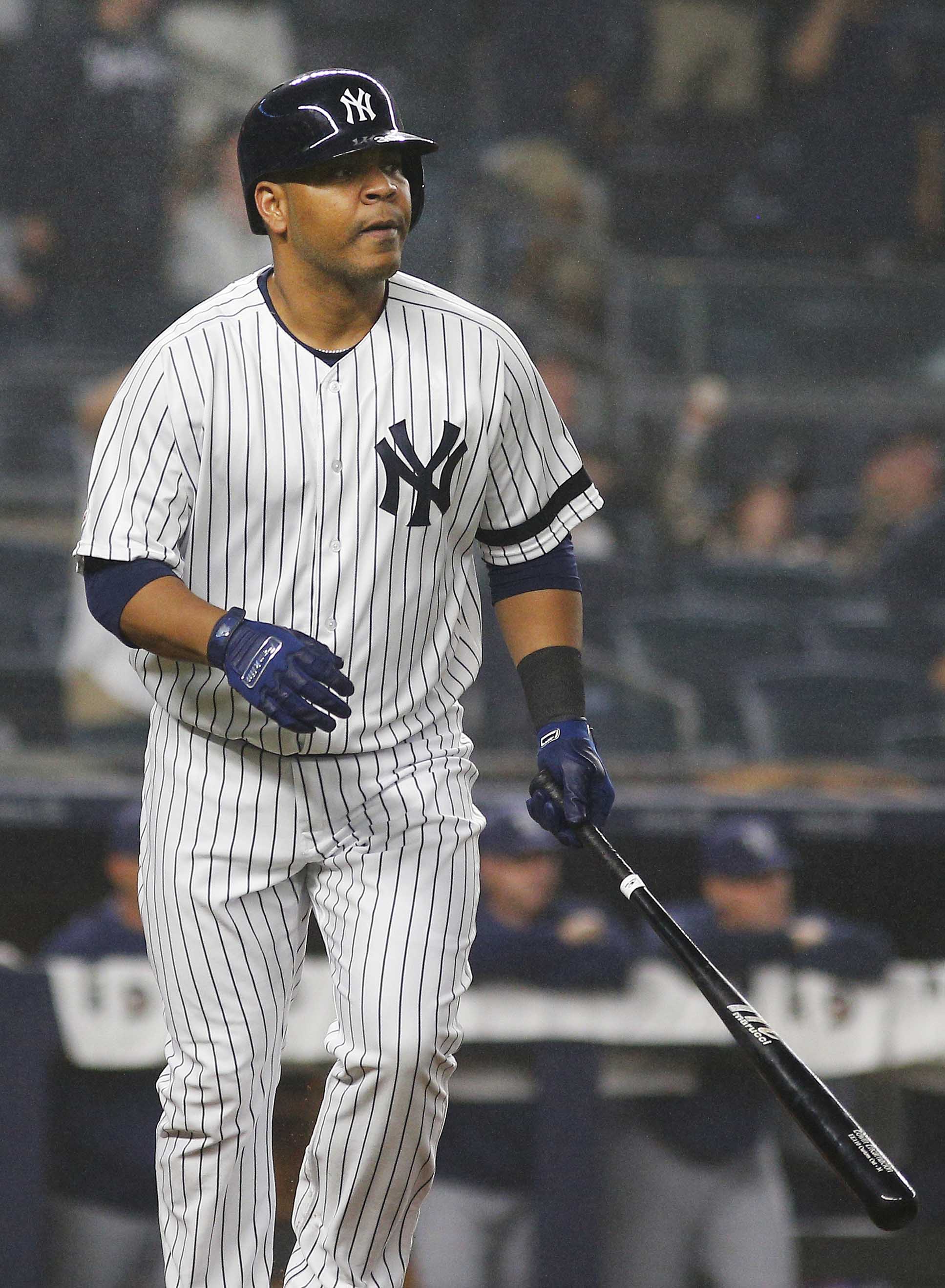
This has long been viewed as the likeliest outcome; while the size of the buyout at least created a plausible scenario where the Yankees could deem a net $15MM decision worthwhile, doing so would’ve meant tacking on a $20MM luxury tax hit from day one of the offseason. The Yankees would’ve also been paying Encarnacion at an extremely premium rate, as that $20MM salary and net $15MM decision both would’ve topped the $14.3MM guarantee that Nelson Cruz secured in free agency a year ago.
Encarnacion, 37 in January, showed minimal signs of slowing down at the plate in 2019. While he did miss time owing to a wrist fracture and an oblique issue, he turned in a strong .244/.344/.531 batting line with 34 home runs and 18 doubles in just 486 plate appearances. The veteran slugger also slightly pared back his strikeout rate (22.8 percent in 2018, 21.2 percent in 2019) while enjoying a modest uptick in walk rate (10.9 percent in ’18, 11.9 percent in ’19). Pedestrian batting average aside, Encarnacion’s knack for getting on base and his enormous power made his 2019 offensive contributions about 30 percent better than that of a league-average hitter by measure of OPS+ (132) and wRC+ (129).
Even as he’s progressed into his late 30s, Encarnacion has been a consistent middle-of-the-order force. However, the lack of win-now teams with a clear DH opening around the league do somewhat cloud his market. The Astros (Yordan Alvarez), Angels (Shohei Ohtani/Albert Pujols), Athletics (Khris Davis), Twins (Nelson Cruz) and Red Sox (J.D. Martinez) all have their DH spots largely set. Encarnacion could technically fit with the Indians, but they’re unlikely to spend at a high level — particularly not on a DH when they already acquired Franmil Reyes back in July.
The White Sox and Rays stand out as a pair of hopeful contenders who could find DH work for Encarnacion, and a lower-cost deal with the Yankees shouldn’t be expressly ruled out. If Encarnacion is open to signing with a rebuilding team, perhaps a Blue Jays reunion would make some sense. Alternatively, if a team views him as a viable option at first base over the course of a full season, some NL clubs and perhaps an AL club or two (e.g. Twins) would factor into his market.
Even with Encarnacion off the books in the Bronx, the Yankees still have a hefty $204MM committed to next year’s payroll (including projected arbitration salaries and that $5MM buyout). As currently constructed, the Yankees are already projected to be over the luxury tax line. With Encarnacion back on the market, they’ll now likely look to a combination of Luke Voit, Greg Bird and Mike Ford at first base, with the others joining Aaron Judge and Giancarlo Stanton in a rotation through the DH spot,
Royals Name Mike Matheny Manager
The Royals announced Thursday that they’ve hired Mike Matheny as the 17th manager in club history. It’s not exactly a surprise, given that Matheny has been rumored to be the likely successor to Ned Yost since joining the Royals organization as a special advisor to GM Dayton Moore last offseason. Matheny replacing the recently retired Yost has looked all the more like a fait accompli with the Kansas City organization opting not to interview any external candidates for the position.
“Our entire organization is delighted to announce and celebrate the hiring of Mike Matheny,” Moore said in a statement announcing the hiring. “Every department has had the pleasure to work and interact with him this past season. Through this interaction, it became very clear to our leadership team that Mike is the obvious person to lead our baseball team. Mike Matheny is a passionate leader with strong virtues, intelligence, and a relentless commitment to help players reach their full potential.”
Matheny, 49, spent 13 seasons as a big league catcher with the Brewers, Blue Jays, Cardinals and Giants and was hired to manage in St. Louis following the 2011 season despite a lack of coaching/managerial experience. Matheny took the reins from retiring Hall of Fame skipper Tony La Russa, inheriting a roster that had just won the 2011 World Series.
St. Louis went on to post a winning record in each of Matheny’s six full seasons as a manager and even had a 47-46 record when he was fired midway through the 2018 campaign. In all, he posted a 591-474 record in St. Louis and was at the helm for three consecutive NL Central titles from 2013-15. Matheny’s 2013 Cardinals advanced to the World Series before falling to the Red Sox in six games, and the 2014 Cards made it as far as the NLCS before falling victim to the Giants’ “even year” dynasty that captured World Series titles in 2010, 2012 and 2014. The 2015 Cardinals won 100 games but were bounced in the NLDS by the division-rival Cubs.
The Cardinals didn’t make the postseason again under Matheny, who was ousted by the organization in a radical shakeup near the midpoint of the 2018 season. For all of his success in terms of wins and losses, Matheny also drew criticism for his bullpen management and an aversion to modern data trends. He was known as a manager who rode the “hot hand” frequently — often at the expense of providing consistent playing time to younger players. Shortly before his 2018 dismissal, reports of clubhouse strife between veterans and rookies emerged, although then-rookie right-hander Jordan Hicks quickly downplayed them when asked by reporters.
At the time of his firing, the Cardinals were a game above .500 but also looked to be in danger of missing the postseason for what would be a third consecutive season. That hadn’t happened in 20 years in St. Louis, giving the organization understandably higher expectations than most organizations throughout the league — particularly in the era of the ever-trendy rebuild.
Those standards won’t apply in Kansas City — at least not in the early stages of Matheny’s tenure. The Royals are still in the midst of what looks to be a lengthy rebuilding process and aren’t expected to return to contention until at least 2021, if not the 2022 season. Rather, Matheny’s focus with his new club will be on helping to develop young players and helping them to maximize their potential at the MLB level.
Rising talents like Adalberto Mondesi, Jorge Soler and Hunter Dozier will join steady veterans such as Salvador Perez and Whit Merrifield as the top players on a 2020 roster that will ideally see several top prospects graduate from the minors for their first taste of MLB action. Pitchers Brady Singer, Jackson Kowar and Daniel Lynch could all debut this coming season, as could outfielder Khalil Lee. The 2020 season will also be a pivotal year for former prospects like Nicky Lopez, Bubba Starling and Brett Phillips, who’ve had some experience in the big leagues but have yet to establish themselves.
Jeffrey Flanagan of MLB.com first reported that Matheny was being hired (via Twitter).
2019-20 Offseason Calendar
Baseball’s offseason calendar largely flows from the end of the World Series. Last night’s thrilling game seven, in which the Nationals prevailed over the Astros, also served as a starting point for several key dates.
Today
- Eligible players officially file for major or minor-league free agency
November 4
- End of “quiet period” during which teams have exclusive negotiating rights with their free agents
- Deadline to issue qualifying offers ($17.8MM) to eligible free agents
- Deadline to exercise or decline options and opt-outs (unless sooner by operation of contract; Stephen Strasburg & Aroldis Chapman reportedly must decide by November 2)
November 11-14
- General Manager Meetings (Scottsdale, AZ)
November 14
- Deadline for qualifying offer recipients to accept or reject
November 20
- Deadline for adding Rule 5-draft eligible players to 40-man roster
December 2
- Non-tender deadline
[RELATED: MLBTR Arbitration Projections]
December 9-12
- Winter Meetings (San Diego, CA)
December 12
- Rule 5 Draft
January 10
- Deadline to exchange arbitration filing figures if agreement has yet to be reached
February 3-21
- Arbitration hearing period
Mid-February
- Spring Training commences
March 26
- Opening Day
Padres Hire Jayce Tingler As Manager
Oct. 28: The Padres have announced the signing of Tingler to a three-year contract.
“Jayce has extensive experience in virtually every aspect of coaching, player development and baseball operations, and our entire group believes that he’s the right person to lead our talented roster,” general manager A.J. Preller said within today’s press release. “His multi-faceted skill set, combined with his ability to develop talent and help players reach their potential at the Major League level, were key factors in his selection as our manager. We are excited for Jayce to build upon the foundation we’ve laid in San Diego as we set our sights on October baseball.”
Oct. 24: The Padres are set to hire Jayce Tingler away from the Rangers as their new manager, Jeff Passan of ESPN reports (via Twitter). Tingler, 38, is currently the Major League Player Development Field Coordinator on skipper Chris Woodward’s staff.
By all indications, this hiring promises to be a pivotal one. The Padres are, after all, an organization wrapping up a decade largely spent in rebuild, with the recent front office regime led by general manager A.J. Preller struggling to field a competitive roster despite several big-money roster reinforcements and a farm system generally regarded as one of the game’s best.
Andy Green was tabbed as Preller’s choice for the managerial seat in 2016 following Bud Black‘s dismissal midway through an ill-fated 2015 campaign, but Green’s tenure in San Diego produced just a 274-366 record. Recent indications had pointed toward Ron Washington and Tingler — two former Preller associates from his time with the Rangers — being the final two candidates, but it appears that the Padres will go with the younger of those two options.
Indeed, the 38-year-old Tingler becomes the second-youngest manager in the majors, behind only Rocco Baldelli of the Twins. Baldelli’s early success in the managerial seat — as well as the success experienced by young managers like Alex Cora and AJ Hinch — demonstrates that a grey beard is hardly a job requirement when it comes to major league managing, but that certainly doesn’t mean Tingler is a conventional candidate. Tingler is neither a garlanded former big leaguer nor an up-the-ranks minor league manager, but a little-known former minor leaguer with a wide range of on-field and front office experience.
Tingler spent time as a skipper at the Rookie and Dominican Summer League levels before being named as Texas’ minor league field coordinator from 2012-14. He served as a coach on the staff of Jeff Banister in 2015 and 2016 before entering the front office as an assistant GM in 2017. Tingler served as bench coach for interim manager Don Wakamatsu at the end of 2018 and interviewed to be Rangers manager that offseason (he was ultimately passed over in favor of the aforementioned Woodward). More recently, Tingler has been serving as manager of the Leones del Escogido of the Dominican Winter League.
The Padres went 70-92 in their final season under Green’s command in 2019, following an offseason that saw them add third baseman Manny Machado on a club-record 10-year, $300MM deal. As Passan notes in a follow-up tweet, Tingler’s bilingual skills likely were an asset for him throughout the hiring process, as the club has several near- and long-term players for whom Spanish is a first language (link). Adrian Morejon, Michel Baez, Luis Urias, Fernando Tatis Jr., Manuel Margot, Dinelson Lamet, Francisco Mejia, and Luis Patino represent just a small sampling of the numerous young players in the Padres organization hailing from the Carribean, South America or Mexico, as Preller’s Latin American scouting emphasis continues to have a surface-level impact on the San Diego pipeline.
Red Sox Name Chaim Bloom Chief Baseball Officer
Oct. 28: The Red Sox have announced the hiring via press release.
“We believe Chaim is exactly the right person to lead the Boston Red Sox baseball operation based on a number of attributes we sought in this process,” owner John Henry said in a statement. “We had done exhaustive work narrowing down candidates. That work led us to Chaim, who was the first executive invited to Boston for an interview. He made a strong impression on all of us and validated our initial research that he was the one to lead our baseball operation.
“We particularly want to thank Raquel Ferreira, Brian O’Halloran, Eddie Romero and Zack Scott for their extraordinary leadership over the past two months in guiding our baseball operation forward without missing a beat and ensuring we had a very strong start to this offseason.”
Oct. 25, 4:54pm: Brian O’Halloran will be promoted from assistant general manager to general manager, per MLB.com’s Mark Feinsand (Twitter link).
4:01pm: The Red Sox have “finalized” an agreement to bring aboard Chaim Bloom as their next baseball operations chief, according to Joel Sherman of the New York Post (via Twitter). Bloom will take the title of chief baseball officer, Mark Feinsand of MLB.com tweeted. Financial details remain to be seen.

It’s a fascinating hire for the Boston organization, which cut loose veteran exec Dave Dombrowski late in a disappointing 2019 season. Though Dombrowski helped deliver a World Series title, ownership decided it wanted a new direction — and went on to steer into a decidedly new-school course by hiring Bloom.
The Red Sox certainly got an up-close look at Bloom’s handiwork with the Rays. His Tampa Bay outfit ran past the 2018 World Series champs, pacing them by a dozen games despite carrying a payroll into the season that was barely more than a quarter of the war chest deployed by the Sox.
Boston’s last run with an analytically minded front-office leader didn’t end quite as hoped, with the Ben Cherington-built rosters delivering gloom as much as glory. But the allure is obvious. One of Bloom’s predecessors in Tampa Bay, Andrew Friedman, has since moving to Los Angeles shown convincingly that an efficiently managed large budget can produce perennial high-end performance at a profit-minded price.
It was a rather tidy hiring process for the Red Sox, who trusted a four-person executive team with many notable decisions this winter while lining up Bloom for the job. No doubt the organization already knew at least its general direction with the hiring. Bloom long seemed a clear possibility, particularly after narrowly missing on a few top baseball ops gigs last winter. The 36-year-old comes with an impeccable resume and widespread respect in the industry. Interestingly, he was the only outside candidate to interview for the post, per MLB.com’s Mark Feinsand (via Twitter).
Bloom will jump into an organization that already has a built-out, modern front office infrastructure. No doubt he’ll tweak the organization to suit his preferences, but this isn’t a fixer-upper situation. That’s also the case on the roster, which features the sort of talent that … well, the kind that won a World Series just one year ago.
There’ll be plenty of work to do for Bloom and his new charges, right out of the gates. He’s not going to blow things up or drop the bottom out of the payroll. But there are plenty of clear signs that the organization will task the new baseball ops head with paring salary — which means making some tough choices about who stays and who goes.
One big question will be answered without input from Bloom and the Sox: the status of J.D. Martinez, who can opt out of his contract. Good as he is, the club surely would love to regain a whole lot of financial flexibility in one fell swoop. Otherwise, Bloom will need to look hard to some of its spendier pieces — Jackie Bradley Jr., perhaps even Mookie Betts — as trade candidates.
It doesn’t appear that Bloom will have much free capital to work with to add talent. But that’s precisely the challenge he was brought in to take on. Bloom will be working to fill needs — on the right side of the infield and in the bullpen, at a minimum — in a creative manner. Fortunately, there are loads of veteran free agent options in both areas, many of whom figure to be had for relatively low cost. And Bloom will no doubt take a long look at other cost-efficient possibilities. If he does a particularly good job of supplementing an immensely talented core that could still rise back up, a return to serious contention in 2020 cannot be ruled out.
Photo courtesy of USA Today Sports Images.
Pirates Fire General Manager Neal Huntington
9:18am: The Pirates have announced Huntington’s dismissal.
“I greatly appreciate Neal’s dedication to the Pirates organization and our city over the past 12 seasons,” owner Bob Nutting said in a press release. “His time with the Pirates should always be remembered for ending a long stretch of futility and bringing Postseason baseball back to Pittsburgh.”
The Pirates “will pause” their search for a new manager while seeking out a new GM, per Nutting. Assistant general manager Kevan Graves will serve as interim GM while the club looks for a replacement for Huntington.
Mackey further tweets that the decision to move on from Huntington was driven by Nutting (as opposed to incoming president Travis Williams). Nutting informed Huntington of the decision yesterday.
8:15am: The Pirates have already dismissed their manager and two of their coaches in addition to parting ways with team president Frank Coonelly, but they’re not done with changes yet. Jason Mackey of the Pittsburgh Post-Gazette reports that Pittsburgh will also announce the dismissal of general manager Neal Huntington later today (Twitter link).
Huntington, 50, is one of the sport’s longest-tenured executives, having been hired at the conclusion of the 2007 season. His ousting represents perhaps the final step in a total overhaul of the organization that began when manager Clint Hurdle was fired on the final day of the season. Like Hurdle, Huntington had two years remaining on his contract.
The parallels between Hurdle’s firing and today’s firing of Huntington don’t stop with the pair’s contractual status, however. Both dismissals were preceded by public assertions to the contrary; Hurdle told The Athletic’s Rob Biertempfel that he’d received assurance of his 2020 return just days before being let go, and Huntington is now out the door a month later despite a clear vote of confidence from owner Bob Nutting.
“While we felt it was time to make a change at the managerial level, I strongly believe that Neal Huntington and the leadership team that he has assembled are the right people to continue to lead our baseball operations department,” Nutting said in a press release announcing the decision to move on from Hurdle. The extent to which Huntington’s departure is tied to incoming president Travis Williams isn’t clear, but the move is nevertheless a glaring contradiction to Nutting’s end-of-season assessment of his front office.
That the move comes with the organization’s managerial search now well underway is all the more confusing; one would imagine that an incoming GM would want say over who’s writing out the lineup card on a daily basis, but unless the plan is to put that search on hold, the Pirates are much further along in that process than in the process of naming a new GM. And, presumably, Huntington has been involved in all of the interviews conducted to this point.
Huntington took over the Pirates at a time when Jason Bay, Freddy Sanchez and Adam LaRoche were among the club’s most notable names and ushered in a new era at PNC Park, turning over the roster and developing stars such as Andrew McCutchen, Starling Marte and Gerrit Cole. But despite qualifying for three consecutive postseasons (2013-15), Huntington and his staff never saw the club win an NL Central title or advance beyond the National League Division series. It’s now been four full seasons since the Pirates’ last playoff berth, and the 2019 season was a particularly disheartening year. Pittsburgh finished with a 69-93 record, falling to last place in the division.
There’s been no shortage of criticism over recent moves made by the Pirates, with the trade that brought right-hander Chris Archer to Pittsburgh among the more widely panned deals in recent memory. Huntington agreed to part with longtime top prospects Austin Meadows and Tyler Glasnow in addition to highly regarded pitching prospect Shane Baz. The move was designed to bring an affordable, high-end starter with three-and-a-half seasons of club control to Pittsburgh, but Archer has struggled in the Steel City while Glasnow and Meadows now look like foundational pieces for the Tampa Bay organization.
Of course, the very fact that Archer is so affordable could very well be what prompted him to hold such appeal to Huntington and his staff in the first place. Pirates ownership has only thrice green-lighted a payroll north of $90MM, constantly leaving the front office scrambling to find bargains and patch together rosters with rebound candidates and the leftovers of the free-agent market. Without the type of annual payroll constraints they face, perhaps Huntington & Co. wouldn’t have been so drawn to Archer in the first place. There’s no way to know for sure, however, and the end result still speaks loudest of all.
Other recent moves have been more of a mixed bag. The trade that sent McCutchen to San Francisco brought Rookie of the Year candidate Bryan Reynolds and reliever Kyle Crick to Pittsburgh. The trade of Cole to Houston in that same 2017-18 offseason netted six years of a useful rotation piece in Joe Musgrove, but the others in that swap (Colin Moran, Michael Feliz and Jason Martin) have yet to bring much value to the Pirates. As with the Archer trade, finances were a major consideration in both the McCutchen and Cole trades; it was clear at the time of the moves that neither would fit into the Pittsburgh budget any longer despite a lack of additional spending.
Pittsburgh’s reluctance to spend, in fact, was concerning enough to the union that the MLBPA brought their concerns to the Commissioner’s Office and requested an investigation of how the team allotted its funds from revenue sharing. The league responded with a statement that it had no such concerns regarding the Pirates organization.
Such payroll restrictions will persist for whoever is hired to run the club’s baseball operations outfit moving forward. Owner Bob Nutting has never indicated any plans to sell the team. The Pirates recently extended their television contract with AT&T SportsNet, but terms of the deal remain unclear. Their previous agreement was one of the least-lucrative contracts in the game, though, and whatever increases in annual rights fees are included in the new deal will be baked into the contract in the form of gradual increases. In other words, a payroll hike in the near future doesn’t seem likely.
To the contrary, it feels more likely that the Bucs will instead be looking to shed payroll this winter. As I noted in previewing the club’s offseason a few days ago, this seems like the ideal time to market Marte to other clubs, and it’s worth wondering whether the Pirates would look to deal Archer as well after a disappointing season and a half (and with an increase in his salary looming). Problematic setup man Keone Kela is also a candidate to be shipped out.
All of those roster decisions will be at the forefront of the offseason questions facing whoever takes over Huntington’s now-vacant chair at the PNC Park offices. For the time being, Nutting and Williams will be frantically trying to assemble a new front-office staff and field staff as they look to usher in a new era of Pirates baseball. That process will very likely linger into the offseason, although with the Pirates unlikely to play for any notable free agents anyhow, perhaps a late entry into the market won’t really be an issue.