
Rays Extend Brandon Lowe
TODAY: Tampa Bay has announced the deal. It could top out at $49MM in total value if both options are exercised and all incentives are reached, Marc Topkin of the Tampa Bay Times reported.
YESTERDAY: The Rays have agreed to a six-year, $24MM contract extension with infielder/outfielder Brandon Lowe, reports Ken Rosenthal of The Athletic (via Twitter). The contract contains a pair of club options that would buy out a pair of would-be free-agent seasons as well. Lowe is a client of the Bledsoe Agency.
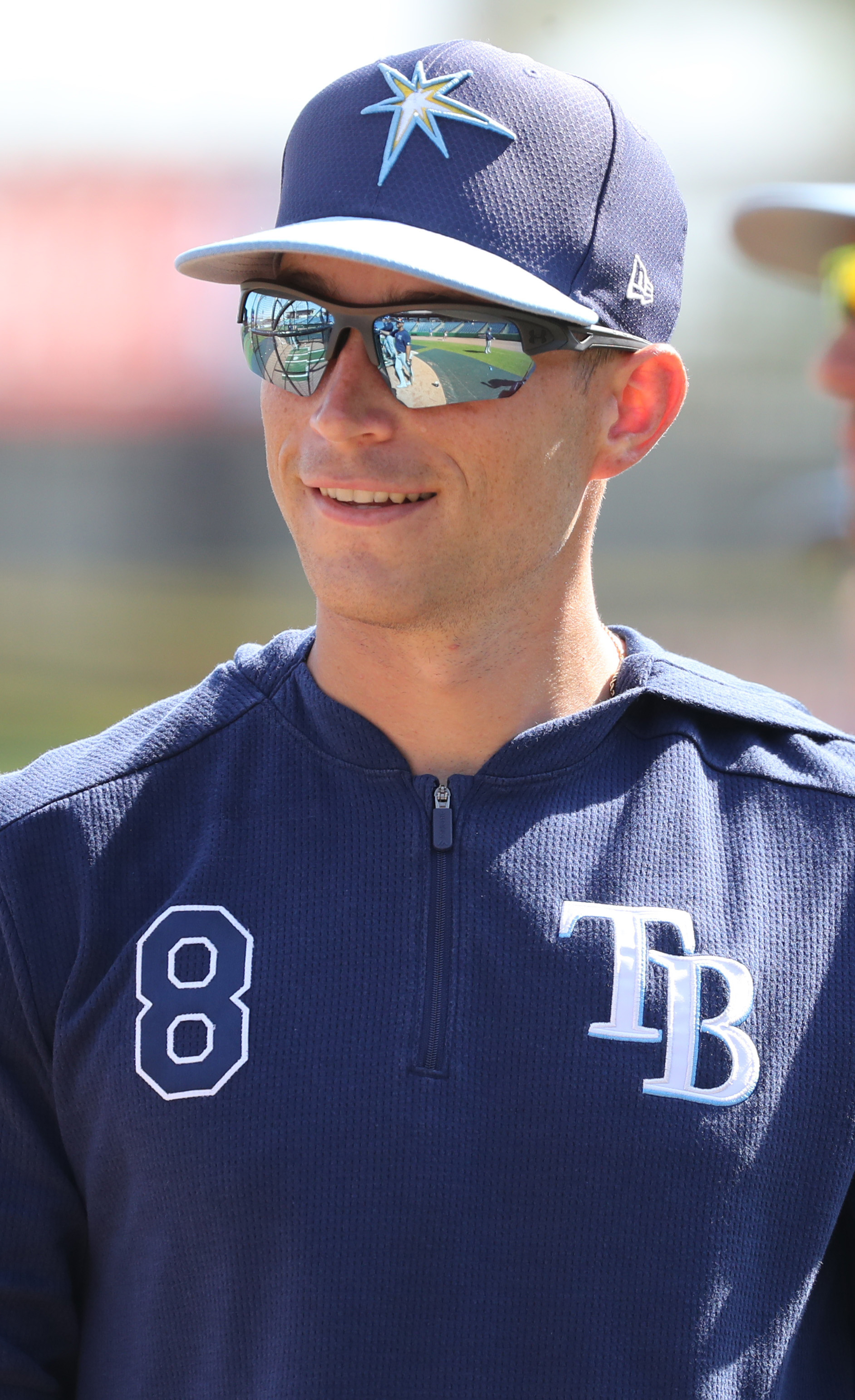
Lowe has just 43 games of Major League experience under his belt but is widely regarded as one of the Rays’ most promising prospects. Baseball America rated him as the game’s No. 93 prospect this offseason, while Eric Longenhagen and Kiley McDaniel of Fangraphs ranked him 46th overall.
The early returns on Lowe in the Major Leagues were relatively promising. The 2015 third-rounder reached the Majors for the first time at the age of 23 and batted .233/.324/.450 with six home runs, six doubles, a pair of triples and two stolen bases (in three attempts). Context-neutral metrics like OPS+ (112) and wRC+ (113) felt his bat was 12 to 13 percent better than that of a league-average hitter when adjusting for league and home park.
Lowe’s 25.6 strikeout rate was likely a bit higher than the Rays would prefer, but he showed power and drew walks at a 10.8 percent clip in his first crack at MLB opposition. That production came on the heels of a sensational .297/.391/.558 slash between Double-A and Triple-A, creating further optimism that Lowe can be an integral part of the Rays moving forward.
Defensively, Lowe has spent the bulk of his career as a second baseman, though he got his feet wet with more than 500 innings of work in the outfield corners last season (between the Majors and minors). Scouting reports have generally projected him as a potentially average defender at second, though he’s considered to be more of a bat-first player.
It’s unusual but not unheard of for teams to lock up players with such minimal MLB experience, and the Rays in particular have done so in past years with both Evan Longoria and Matt Moore. Lowe’s deal will line up identically to the Phillies’ six-year, $24MM deal with Scott Kingery — a contract signed before Kingery even played an MLB game.
There’s certainly risk to committing to a player so early in his professional career, but the $24MM risk is one all the more worth taking for a low-payroll club like the Rays that typically has a great deal of difficulty hanging onto quality players as their arbitration earnings increase. For Lowe, he could potentially have earned more over the course of his three arb seasons — and the option years are sure to be at an affordable rate — but the allure of locking in a sizable guaranteed payday when his first arbitration season is still three years away is understandable. If both of the club options on the deal are ultimately exercised, he’ll reach free agency a few months after his 32nd birthday.
Lowe now joins Kevin Kiermaier as the only Rays players to be guaranteed anything beyond the 2020 season. Charlie Morton, set to earn $15MM in both 2019 and 2020, is the only other player whose contract for the 2020 season is guaranteed at the moment. Of course, given the Rays’ wealth of young talent, it’s quite likely that they’ll explore further extension possibilities between now and Opening Day.
Michael Fulmer To Undergo Tommy John Surgery
TODAY: Fulmer will indeed undergo the procedure, he tells reporters including Evan Woodberry of MLive.com (via Twitter).
YESTERDAY: Tigers righty Michael Fulmer has received a recommendation that he undergo Tommy John surgery, Anthony Fenech of the Detroit Free Press reports on Twitter. He’d stand to miss the entire 2019 season and in all likelihood a portion of the 2020 campaign as well.
Fulmer’s medical status has been a bit of a mystery of late, but this news comes as a surprise. He had been shut down recently, purportedly to work on mechanical issues tied to his recovery from last season’s knee surgery, but obviously was dealing with something else entirely. Fulmer had shown a worrying loss of velocity this spring after turning in a subpar, injury-marred 2018 campaign.
It’s not yet certain that Fulmer will go under the knife, but that seems to be far and away the likeliest outcome. Per the Tigers, both a team doctor and noted surgeon Dr. James Andrews have already recommended that Fulmer receive a full replacement of his ulnar collateral ligament.
This is hardly the news anyone wanted for Fulmer, who reached his 26th birthday just days ago. Fortunately for the righty, he already agreed to a $2.8MM salary for the coming season. On the bright side for the club, they won the arbitration hearing and thus avoided a larger payout.
In all likelihood, the Tigers will end up paying Fulmer that $2.8MM both this season and next, while hoping he’ll be able to contribute by the middle of the 2020 campaign. Fulmer is controllable in 2021 and 2022 as well. His earning power in those years will depend upon what he’s able to do in ’20; it’ll unquestionably be diminished by the lengthy absence.
The Detroit organization has thus far centered its rebuilding effort on young pitching, with a series of interesting arms moving up through the ranks. It seemed through his first two seasons in the majors that Fulmer might be a veteran anchor for the next great Tigers staff — or, instead, a big trade chip who’d reel in loads of young talent.
That outlook already changed last year, as Fulmer struggled to a 4.69 ERA in 132 1/3 innings. During his excellent debut campaign and solid follow-up effort, Fulmer’s unexciting strikeout numbers were explained away by some. The line was that his overpowering arsenal and ability to induce weak contact made it unnecessary for Fulmer to rack of Ks. The narrative shifted over the course of the 2018 season. Even as hard contact rose (39.5%), his groundball rate (44.2%) and home run suppression (1.29 per nine innings, 14.5% HR/FB rate) dove despite steady 96 mph velocity readings on his fastball.
Perhaps Fulmer would have found his way back to being a high-quality starter had he not encountered knee issues that ultimately resulted in a meniscus procedure. The connection between that joint, his reduced velo this spring, and his problematic elbow isn’t completely clear, but it certainly seems plausible that all are interrelated. He’ll now have a lengthy absence to work through the varying health issues. If all goes well, Fulmer could return to be a quality hurler once more.
Yankees Sign Gio Gonzalez
The Yankees have bolstered their pitching depth in a substantial way, adding veteran left-hander Gio Gonzalez. General manager Brian Cashman announced to reporters Tuesday that Gonzalez has passed his physical and reported to camp (Twitter link via MLB.com’s Bryan Hoch). Rather stunningly, the contract is a minor league deal that reportedly comes with a $3MM base salary in the Majors and pays Gonzalez an additional $300K per start (topping out at $12MM). He can also opt out of the contract on April 20.
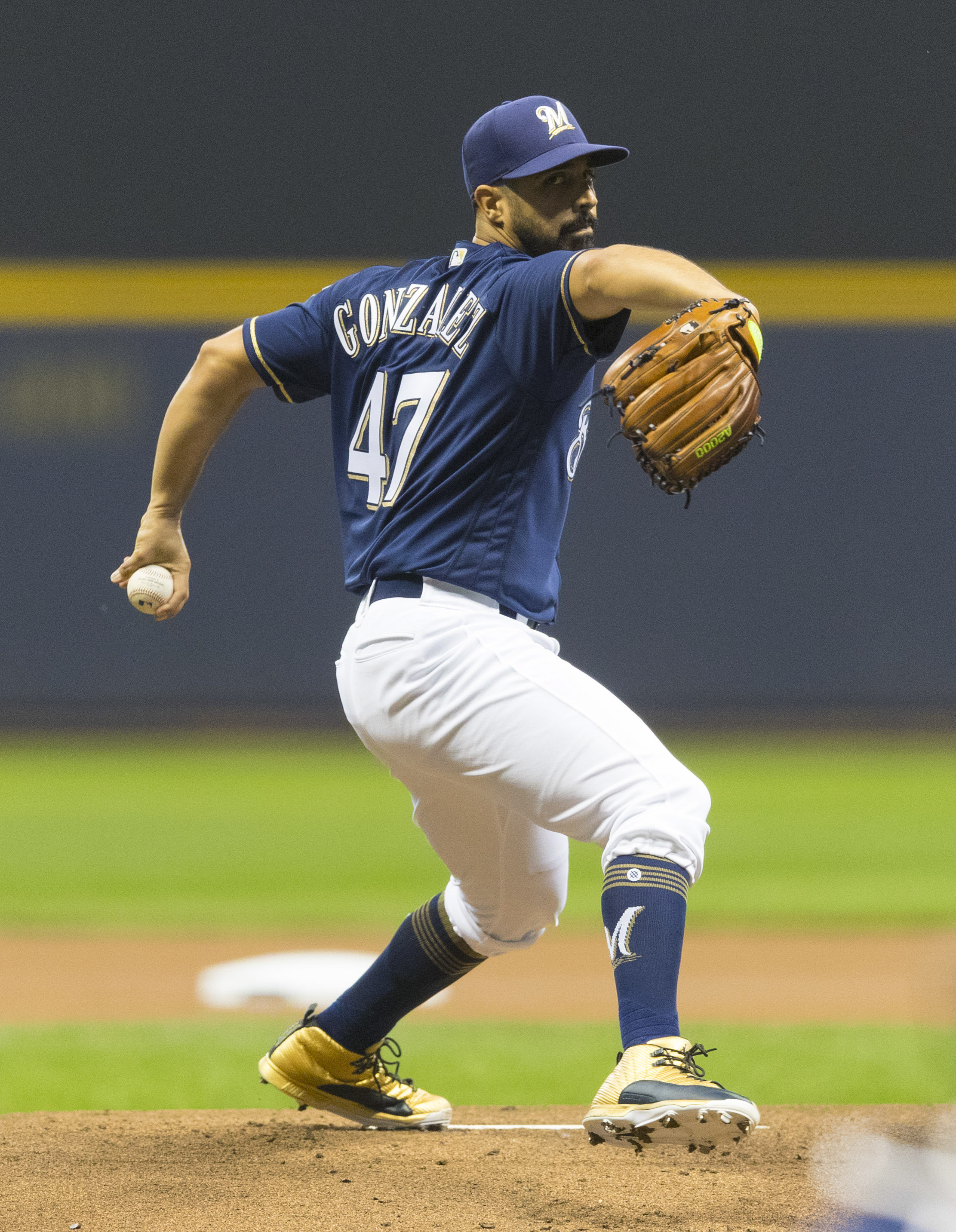
This outcome was hard to foresee when the market opened. While Gonzalez hardly seemed likely to break the bank, he’s an accomplished, still-useful, exceptionally durable starter. MLBTR graded him the 27th-best free agent available and predicted a two-year, $24MM contract.
As it turns out, many mid-level free-agent starters have failed to land that second promised year. And Gonzalez will still need to earn his way onto the MLB roster. Even if he makes it, he’ll be playing on a base rate of pay that lags a long list of other rotation pieces that signed this winter.
Gonzalez, 33, was long a highly valuable starter with the Athletics and Nationals. While he was often chided for inconsistency on a start-by-start basis, he was one of the steadiest hurlers in the majors in the aggregate for a lengthy span. Between 2010 and 2017, Gonzalez threw over 1,500 innings of 3.41 ERA ball, only once failing to make thirty starts in a season.
As recently as 2017, Gonzalez was capable of a sub-3.00 ERA, 200+ inning campaign. Even then, his peripherals reflected a decline in his stuff. Over the past two seasons, Gonzalez’s fastball has sat just over the 90 mph line. He still generated a 9.5% swinging-strike rate last year, right at his career average, but surrendered more hard contact and more home runs than he did in his prime.
Despite the downturn, Gonzalez remained a sturdy MLB hurler in 2018. He contributed 171 frames and ended with a 4.21 ERA. Gonzalez struggled in two postseason outings but provided the Brewers with five useful starts down the stretch after a late-season trade.
While his earning upside was always going to be limited by his age and reduced repertoire, it’s hard to fathom this outcome. It’s certainly possible that other teams offered guaranteed deals with less overall earning capacity. Even that’s unclear at this point, though.
The Yankees, it seems, don’t necessarily even plan to utilize Gonzalez to fill in while Luis Severino works back from his injury issues. Per the New York Post’s Joel Sherman (Twitter links), the club seems inclined to rely upon a trio of young hurlers — Luis Cessa, Domingo German, Jonathan Loaisiga — before turning to Gonzalez. That could certainly change before the opt-out date. But it’s notable that the deeply established southpaw will evidently be working just to obtain an MLB opportunity, particularly with so many teams preparing to rely upon untested pitchers at the outset of the season.
It also remains to be seen just when Gonzalez will even be ready to join the Yankees’ rotation. Manager Aaron Boone said Tuesday that Gonzalez made 80 pitches in a simulated game just yesterday and could appear in the Yankees’ Grapefruit League game on March 23 (Twitter link via Hoch). He still isn’t likely to be ready for the season opener, though, which point to an early April debut, at the earliest.
Jon Heyman of MLB Network reported the sides were close to a deal (via Twitter). Sherman reported that it was a minor league pact (Twitter link), while The Athletic’s Ken Rosenthal added financial details (via Twitter). Heyman added further details regarding the contract’s heavy slate of incentives (via Twitter).
Indians Sign Carlos Gonzalez
MARCH 19: The deal has now been announced.
MARCH 16, 6:31pm: It’s a minor league deal that includes an early April opt-out date, Bob Nightengale of USA Today tweets. The contract comes with a $2MM major league salary and $1MM in incentives, per Heyman.
6:16pm: The Indians are closing in on a deal with free-agent outfielder Carlos Gonzalez, according to Jon Heyman of MLB Network. Jorge Urribarri first reported the connection.
Prior to Saturday, it had been a quiet few months for Gonzalez, a Boras corporation client who seemingly hasn’t drawn much serious interest since he reached free agency last November. The 33-year-old is coming off a mostly successful tenure in Colorado, though, having batted .290/.349/.516 with 227 home runs and 118 stolen bases over 5,069 plate appearances since 2009 – his first season with the Rockies. The three-time All-Star has typically fallen short outside of the hitter-friendly confines of Coors Field, however, evidenced by his .323/.381/.592 lifetime slash at home against a .251/.307/.420 showing on the road. Moreover, the left-handed Gonzalez has underwhelmed against same-sided pitchers, who have held him to a .261/.297/.434 mark.
It was more of the same in 2018 for Gonzalez, who slashed a decent .276/.329/.467 with 16 homers in 504 PAs but did most of his damage at home and against right-handed pitchers. Meanwhile, CarGo was a mixed bag in upward of 1,000 innings in right field, where he recorded a woeful DRS (minus-eight) but a strong UZR (4.8) and a respectable Outs Above Average mark (one). Historically, Gonzalez has performed well in the outfield, as shown by his 16 DRS and 26.2 UZR in 1,271 career appearances.
Gonzalez, who was with the Diamondbacks and Athletics prior to his Rockies stint, is now joining his fourth major league organization. Even though Gonzalez didn’t land a guaranteed deal with the Indians, he still may have a realistic shot to crack their roster early in the season. The outfield has been a glaring weakness in Cleveland for a while, after all, yet the club didn’t make any major additions to it before signing Gonzalez; further, the Indians lost Michael Brantley, Lonnie Chisenhall, Brandon Guyer and Melky Cabrera in free agency, and Bradley Zimmer is still on the mend from July 2018 shoulder surgery. As a result, the Indians are projected to open the season with the unspectacular Leonys Martin–Jake Bauers–Tyler Naquin–Jordan Luplow quartet, which seems to leave room for Gonzalez to work his way back to the majors in short order.
Photo courtesy of USA Today Sports Images.
MLB, MLBPA Announce Single Trade Deadline, Changes To Roster Size
10:10am: The league and Union have formally announced the changes. A full rundown of the new rules is available, but here’s a more concise overview:
Effective Immediately
- There will be no trades after July 31. August trade waivers have been eliminated, though players can still be placed on and claimed from outright waivers, as they would throughout the rest of the year.
- All-Star voting will still be conducted by fans online, but the top three players at each position, in each league, will now participate in an All-Star Election Day. The top three vote-getters at each position, in each league, (top six in the case of outfielders) will receive bonus payments.
- The Home Run Derby will now come with $2.5MM of prize money, including a $1MM prize for the winner.
- The maximum number of mound visits per game will be reduced from six to five.
- Commercial breaks between innings are reduced to two minutes in length for all games.
- The MLB and MLBPA will form a “Joint Committee” to discuss further issues and rule changes.
Effective Beginning in 2020
- The standard roster size in regular season games and postseason games will increase from 25 to 26 players. Beginning on Sept. 1, roster size will expand further to a 28-player maximum (as opposed to the current 40). A maximum number of pitchers will be designated by the Joint Committee. (Passan reported that the league has proposed no more than half a team’s players can be pitchers.)
- Position players are only eligible to pitch in extra innings or when a team is leading or trailing by seven or more runs. Certain position players may be designated as “two-way players,” but to be eligible, they’ll need to have accrued at least 20 innings pitched and started 20 games as a position player/designated hitter in the current season or the preceding season (including at least three trips to the plate in each of those lineup appearances).
- A pitcher must face at least three batters per appearance unless he is removed due to injury or the half-inning in which he is pitching ends before three batters have come to the plate.
- The minimum length of stay for pitchers who are optioned to the minors or placed on the injured list will increase from 10 days to 15 days. This change is still “subject to input” from the newly formed Joint Committee.
Nationals Sign Tony Sipp
March 14: The Nats have formally announced the deal, and Sipp has reported to camp. Because they already had an open 40-man spot after releasing Solis, no corresponding move was necessary to accommodate the addition of Sipp.
March 13: The Nationals have a deal in place with free agent reliever Tony Sipp, according to Jon Heyman of MLB Network (Twitter links). It’s a one-year, $1.25MM contract that includes a $250K buyout on a $2.5MM mutual option, per reports from Jesse Dougherty of the Washington Post (Twitter links) and Ken Rosenthal of The Athletic (Twitter link).
Sipp, a 35-year-old southpaw, bounced back in the results department last season after two rough campaigns in Houston. He finished 2018 with 38 2/3 innings of 1.86 ERA pitching over 54 appearances — quite an improvement over the 5.33 ERA he had maintained over his prior 81 frames. As Sipp’s low innings tallies suggest, he has been used primarily as a left-on-left specialist. That also means the earned runs outcomes probably aren’t the best means of measuring his usefulness on the hill.
Looking beneath the hood, Sipp has generally maintained solid K/BB numbers throughout his career. In five years in Houston, he carried 9.9 K/9 against 3.2 BB/9 and rarely strayed too far from those means. The difference between his good and bad years, more than anything else, has been his ability to limit the long ball. Sipp hit his stride in Houston when he improved upon early-career problems in that regard, then slipped when he allowed more than two dingers per nine innings in those ugly 2016-17 seasons. Last year, only a single opposing hitter left the yard against him.
Though that surely isn’t sustainable — a 2.6% HR/FB rate is sure to rise — it shows that Sipp was able to adjust. He still has the same underlying stuff and ability that led the ‘Stros to give him a three-year deal in the 2015-16 offseason. Last year, he maintained a 13.7% swinging-strike rate and maintained a fastball in the 92 mph range, both of which are at or above his career levels. The Statcast numbers were quite promising: hitters entering the box against Sipp maintained a meager 22.1% hard-contact rate and mustered only a .258 wOBA that actually lagged expectations (.252 xwOBA) based upon contact quality.
Sipp is likely to be deployed primarily as a southpaw specialist in D.C. He held opposing left-handed hitters to an anemic .188/.263/.294 batting line last year after finally dealing with the gopher ball infestation. Over his career, though, Sipp has actually maintained quite neutral platoon splits. Through about a thousand plate appearances each against left-handed and right-handed hitters, the former group carries a .308 wOBA and the latter a .311 mark.
It’s a bit difficult to pinpoint just what allowed Sipp to regain his effectiveness. A re-aligned release point is certainly notable; perhaps it enabled deeper changes (sequencing? tunneling?) to boost the effectiveness of his repertoire. Poor competition in a stratified American League and lower-leverage usage were surely also factors, though it’s fair to note that Sipp ended up with a career-best 1.24 win-probability added and was ultimately called upon to pitch in three ALCS contests.
The Nats probably aren’t expecting premium results from Sipp, given the late-stage signing and meager guarantee. But it’s an easy risk to take on a player who can reasonably be expected to represent an upgrade over the just-released Sammy Solis. The club avoided all but a sixth of the $850K arb deal it had in place with Solis, which accounts for about half of the new obligation. Sipp will serve as a LOOGY and middle relief option for the Washington club, boosting a bullpen depth chart that has its fair share of questions.
Photo courtesy of USA Today Sports Images.
White Sox Option Eloy Jimenez To Triple-A
In what has been a widely anticipated move, the White Sox announced Wednesday that they’ve optioned top outfield prospect Eloy Jimenez to Triple-A Charlotte. The move was one of nine spring cuts by the ChiSox, who also optioned out top pitching prospect Dylan Cease, catcher Seby Zavala and outfielder Micker Adolfo.
Jimenez, 22, is not only considered to be among the game’s premier prospects but is also largely believed to be ready for MLB action. The Dominican-born slugger obliterated Double-A and Triple-A pitching in 2018, posting ridiculous slash lines of .317/.368/.556 and .355/.399/.597 at those respective levels.
Jimenez’s demotion will stand out as one of the more blatant examples of service time manipulation this spring, as the decision to send him to Triple-A is surely motivated more by the desire to gain an extra season of club control over the player rather than to further his development. This year’s regular season is 186 days long, and a player would gain a full season of MLB service by spending 172 of those days at the MLB level (be it on the active roster or the injured list). In other words, by keeping Jimenez in the minors for just 15 days, the Sox will be able to control him for seven seasons as opposed to the six seasons for which they’d control him by bringing him to the Majors to open the year.
It’s a maddening and counter-intuitive side effect of a system that has prompted pundits, players, agents and fans to call for change. For a team in the White Sox’ situation — unlikely to contend this season but optimistic that their ongoing rebuild is nearing the finish line — it makes perfect sense from a business standpoint to trade two weeks of Jimenez in a noncompetitive season for a full extra year of control over a potential premium player. For Jimenez, however, the current structure of service time and free agency delays his path to his most significant potential payday, while the fans are asked to accept that their team won’t bring the 25 best players in camp north to open the season. It’s a system in which there’s arguably no true winner, as the even White Sox’ front office will surely face a negative wave of backlash from fans and onlookers.
For the time being, Jimenez will be asked to continue honing his skills in the minors. Perhaps the Sox will opt not to call him up on the very first day on which he’d fall a year shy of big league service, using the delay as a means of further claiming that the move was a developmental decision rather than one driven by service time. It’s likely that they’ll point to Jimenez’s .154/.154/.346 slash in Spring Training as justification of the move, though few would find it plausible that 26 spring plate appearances are more indicative of MLB readiness than the 456 PAs during which Jimenez laid waste to minor league pitching in 2018. Furthermore, the move would surely have happened regardless of his performance; the White Sox, after all, declined to give Jimenez a September call-up in 2018 despite his aforementioned mastery of minor league pitching and despite the fact that he was already on the 40-man roster.
Regardless of the specific timing, it seems quite likely that Jimenez will be in the Majors very early in the 2019 campaign. Cease and the others who were sent out aren’t as far along in their development and will be on a more uncertain timeline to the big leagues.
To be fair to the White Sox, they’re far from the only club to take this route. The Braves held back Ronald Acuna‘s promotion to the Majors last season under similarly dubious circumstances, while others who’ve been subject to this form of service time manipulation include Kris Bryant and Maikel Franco (among many others). It was a foregone conclusion that the Blue Jays would send Vladimir Guerrero Jr. down to the minors in the exact same fashion, though Guerrero’s recent oblique injury actually gave the Toronto organization a legitimate reason to do so.
Royals Sign Martin Maldonado
March 11: The Royals have announced the signing. To make room on the 40-man roster, Perez has been placed on the 60-day injured list.
March 9: The Royals are in agreement with free agent catcher Martin Maldonado on a one-year, $2.5MM contract, per the Athletic’s Ken Rosenthal (via Twitter). Maldonado can earn up to $1.4MM in incentives. The deal is pending a physical.
This union was destined ever since the Royals lost starter Salvador Perez for the season to Tommy John surgery. The Royals were left with only Cam Gallagher and Meibrys Viloria atop their depth chart, which easily would have been the most inexperienced duo in the league. The Maldonado signing likely gives Viloria more time to season in the minors, as he had not appeared above High-A before getting 29 plate appearances with the Royals last season.
While Maldonado has a good chance of becoming a trade chip before the end of July – he’s a good one, one of the most accomplished defensive backstops in the game, and he should help buoy a young Royals staff.
As MLBTR’s own Steve Adams wrote just two days ago: “That Maldonado remains unsigned has seemed an oddity in recent weeks; while he’s unequivocally a below-average hitter, the 32-year-old is also among the game’s premier defenders at his position. As I noted about three weeks ago when Maldonado was linked to the Mariners, the 2016 Gold Glover ranks third among all active catchers in Defensive Runs Saved dating back to the 2012 season, trailing only Buster Posey and Yadier Molina — each of whom has caught at least 2000 more innings than Maldonado in that span. He’s also a perennially strong pitch framer with a career 38 percent caught-stealing rate, including a ridiculous 49 percent mark in 2018 (17-for-35).”
Considering the prevalence of time shares at the catching position these days, it was indeed surprising that it took Maldonado so long to find a home. With the Brewers, Angels and Astros, he has a career batting line of .220/.289/.350, but that shouldn’t have been much of a deterrent in an ecosystem that lacks elite offensive production from the catching spot. Playing devil’s advocate here, Maldonado’s 0.9 fWAR in 2018 places him tied for 25th among catchers last season, on par with names like Matt Wieters and Nick Hundley, both of whom had to settle for minor league deals this winter. Maldonado was rumored to have received a two-year, $12MM offer from the Astros early in the winter, but according to his former agent Scott Boras, they never received a formal offer from Houston, per MLB Network’s Jon Heyman (via Twitter).
Interestingly, the deal comes just a few days after Maldonado switched representation, hiring Dan Lozano of the MVP Sports Group. Maldonado had spent just a few months (since August) with the Boras Corporation. Still, it appears this contract was put in place before the switch, as Boras will collect commission on the deal. Rosenthal (via Twitter) quotes Boras as saying, “The Kansas City deal was in place and finalized without us knowing Maldonado had switched agents.”
Diamondbacks Sign Adam Jones
The Diamondbacks have officially inked a contract with veteran outfielder Adam Jones. It’ll reportedly come with a $3MM guarantee on a one-year term.
The contract also contains $2MM in incentives. He’ll receive $250K upon reaching 250 plate appearances and every fifty thereafter, maxing out with 600 trips to the plate.
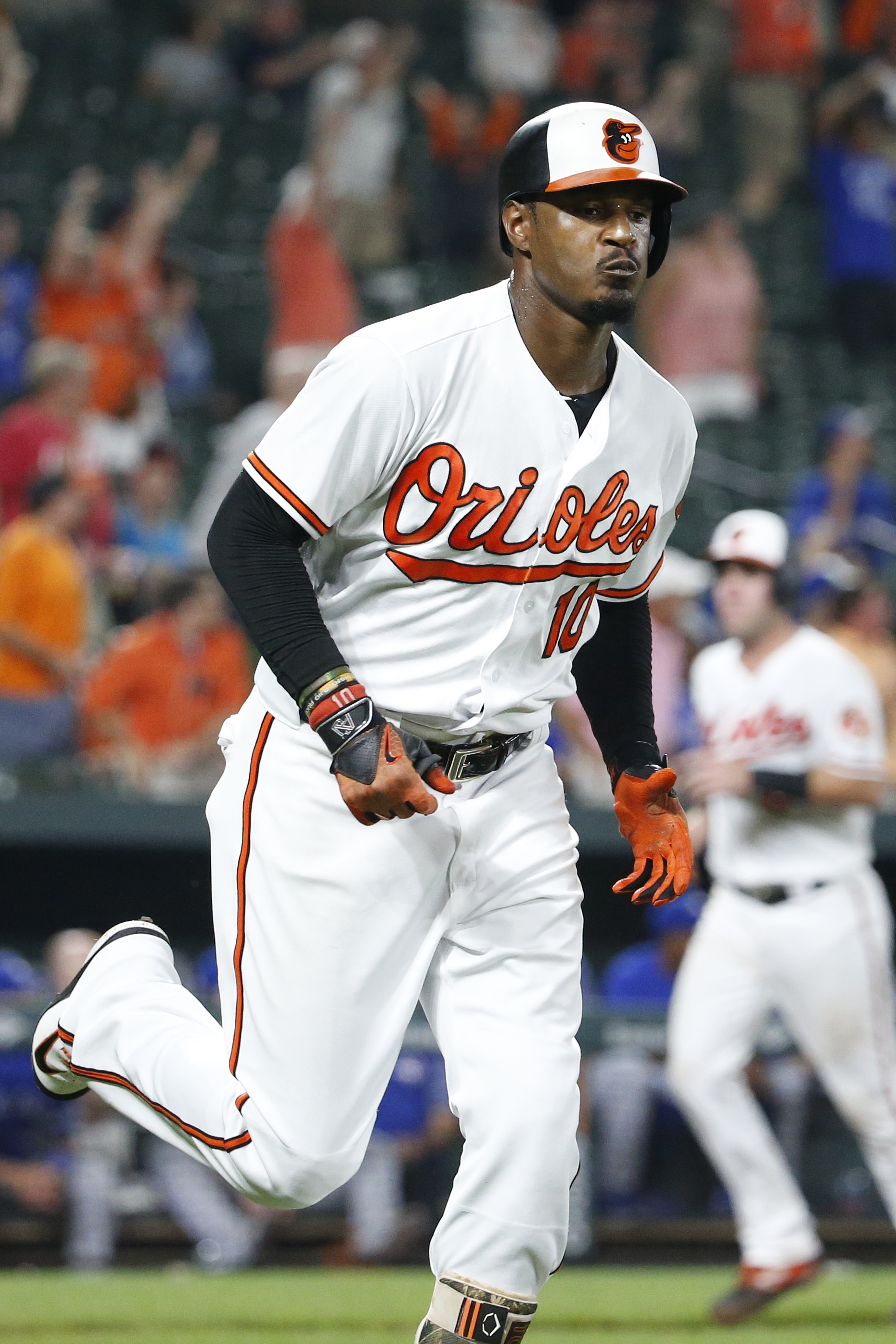
After 13 years with the Orioles, Jones’ first venture into the free agent market was a slow one, at least in terms of public reports. The Mets were known to have interest in Jones’ services, while the Orioles and Indians were involved in Jones’ market to at least some minor extent, albeit on seemingly a much more limited basis. MLB Network’s Jon Heyman (via Twitter) notes that Arizona had interest in Jones in a short-term contract earlier in the offseason, so it’s quite possible that other mystery teams made quiet overtures to Jones’ representatives at CAA Sports. Still, Jones had become something of a poster child for the difficulties faced by many veteran players (even a widely-respected figure like Jones) in the much quieter free agent marketplace of the last two offseasons.
Of course, it has been a while since Jones has exhibited the form that led to five All-Star appearances in his prime. The 33-year-old has only been roughly a league-average offensive player (103 OPS+, 101 wRC+) over the last three seasons, as Jones hit .277/.315/.440 with 70 homers over 1920 plate appearances. Jones’ center field defense also steeply declined — since the start of the 2016 season, Jones was last among all qualified center fielders in UZR/150 (-11.3), and second-last in Defensive Runs Saved (-40).
Interestingly, Jones now moves to a team that could still deploy him in center field on a semi-regular basis. With A.J. Pollock off to the Dodgers in free agency, the D’Backs were working out Ketel Marte as a potential center fielder, with the newly-signed Wilmer Flores available for the bulk of playing time at second base if Marte indeed shifted to the outfield. This could yet end up being Arizona’s preferred scenario, with Marte still seeing most of the center field action, with Jones available to play center on days when Marte is at second base. Jones could also spell left fielder David Peralta against some left-handed starters, given Peralta’s career-long struggles against southpaws. Arizona was in need of more outfield depth, as Jarrod Dyson could potentially miss Opening Day due to an oblique injury.
Fox Sports 1 analyst Dontrelle Willis (Twitter link) reported the signing, with ESPN.com’s Jeff Passan tweeting the money. USA Today’s Bob Nightengale (Twitter link) and Jon Heyman of MLB Network (Twitter link) had incentives details.
Out Of Options 2019
The following 40-man roster players have less than five years service time and are out of minor league options. That means they must clear waivers before being sent to the minors. I’ve included players on multiyear deals. This list was compiled through MLBTR’s helpful sources.
Angels
- Cam Bedrosian, RHP
- Kaleb Cowart, 2B/3B/RHP
- Luis Garcia, RHP
- Noe Ramirez, RHP
- Hansel Robles, RHP
- Kevan Smith, C
Astros
- Aledmys Diaz, INF/OF
- Tony Kemp, 2B/OF
- Brad Peacock, RHP
- Max Stassi, C
- Tyler White, 1B/3B/DH
Athletics
- Aaron Brooks, RHP
- Robbie Grossman, OF
- Liam Hendriks, RHP
- Chris Herrmann, C/OF
- Frankie Montas, RHP
- Josh Phegley, C
- Jurickson Profar, SS/2B/3B
Blue Jays
- Randal Grichuk, OF
- Dalton Pompey, OF
Braves
- Jesse Biddle, LHP
- Charlie Culberson, 2B/SS/3B/OF
- Sam Freeman, LHP
- Kevin Gausman, RHP
- Luke Jackson, RHP
Brewers
- Jesus Aguilar, 1B
- Junior Guerra, RHP
- Corey Knebel, RHP
- Erik Kratz, C
- Hernan Perez, 2B/3B/OF
- Manny Pina, C
- Eric Thames, 1B/OF
Cardinals
- John Gant, RHP
- Mike Mayers, RHP
- Miles Mikolas, RHP
- Chasen Shreve, LHP
Cubs
- Mike Montgomery, LHP
Diamondbacks
- Silvino Bracho, RHP
- Socrates Brito, OF
- Zack Godley, RHP
- Matt Koch, RHP
- T.J. McFarland, LHP
- John Ryan Murphy, C
- Christian Walker, 1B/OF
Dodgers
- Yimi Garcia, RHP
Giants
- Hanser Alberto, 2B/3B/SS
- Sam Dyson, RHP
- Trevor Gott, RHP
- Alen Hanson, 2B/OF
- Steven Okert, LHP
- Chris Stratton, RHP
- Mac Williamson, OF
Indians
- Trevor Bauer, RHP
- Max Moroff, 2B/3B/SS
- Tyler Olson, LHP
- Kevin Plawecki, C
- Neil Ramirez, RHP
- Danny Salazar, RHP
Mariners
- Shawn Armstrong, RHP
- Roenis Elias, LHP
- Marco Gonzales, LHP
- Kristopher Negron, 2B/OF
- Zac Rosscup, LHP
- Domingo Santana, OF
- Hunter Strickland, RHP
- Sam Tuivailala, RHP
- Daniel Vogelbach, 1B/DH
Marlins
- Jorge Alfaro, C
- Austin Brice, RHP
- Adam Conley, RHP
- Tayron Guerrero, LHP
- Rosell Herrera, 2B/OF
- Dan Straily, RHP
- Jose Urena, RHP
Mets
- Keon Broxton, OF
Nationals
- Matt Grace, LHP
- Justin Miller, RHP
- Pedro Severino, C
Orioles
- Dylan Bundy, RHP
- Miguel Castro, RHP
- Renato Nunez, 3B
- Jonathan Villar, 2B/SS/3B
- Mike Wright Jr., RHP
Padres
- Greg Garcia, 2B/SS
- Bryan Mitchell, RHP
- Kirby Yates, RHP
Phillies
- Aaron Altherr, OF
- Jose Alvarez, LHP
- Cesar Hernandez, 2B
- Adam Morgan, LHP
- Hector Neris, RHP
- Roman Quinn, OF
Pirates
- Elias Diaz, C
- Erik Gonzalez, SS/2B
- Nick Kingham, RHP
- Jacob Stallings, C
- Felipe Vazquez, LHP
Rangers
- Connor Sadzeck, RHP
Rays
- Ji-Man Choi, 1B/DH
- Wilmer Font, RHP
- Tommy Pham, OF
- Chaz Roe, RHP
Red Sox
- Heath Hembree, RHP
- Brian Johnson, LHP
- Sandy Leon, C
- Blake Swihart, C
- Christian Vazquez, C
- Brandon Workman, RHP
Reds
- Curt Casali, C
- Amir Garrett, LHP
- Robert Stephenson, RHP
- Matt Wisler, RHP
Rockies
- Tom Murphy, C
- Scott Oberg, RHP
- Chris Rusin, LHP
- Raimel Tapia, OF
Royals
- Brian Flynn, LHP
- Brian Goodwin, OF
- Terrance Gore, OF
- Jorge Lopez, RHP
- Adalberto Mondesi, SS/2B
- Jorge Soler, OF/DH
Tigers
- Matthew Boyd, LHP
- Buck Farmer, RHP
- John Hicks, C/1B
- Mikie Mahtook, OF
- Drew VerHagen, RHP
Twins
- Ehire Adrianza, SS/2B/3B
- Tyler Austin, 1B/DH/OF
- C.J. Cron, 1B
- Max Kepler, OF
- Matt Magill, RHP
- Trevor May, RHP
- Adalberto Mejia, LHP
- Blake Parker, RHP
- Jorge Polanco, SS
- Michael Reed, OF
White Sox
- Manny Banuelos, LHP
- Alex Colome, RHP
- Leury Garcia, OF
- Juan Minaya, RHP
- Jose Rondon, 2B/SS
- Yolmer Sanchez, 2B/3B
Yankees
- Luis Cessa, RHP
- Tommy Kahnle, RHP
- Gary Sanchez, C