
Nationals Acquire Derek Norris
The Nationals have dealt for catcher Derek Norris from the Padres, per a club announcement. Righty Pedro Avila will head to San Diego in return.
It’s a homecoming of sorts for Norris, who was once a well-regarded prospect in the D.C. system before being shipped to Oakland in the deal that landed Gio Gonzalez. Now, he joins righty A.J. Cole in finding his way back to the Nationals organization via trade.

Norris never suited up at the major league level with the Nationals, but he’ll surely do so in 2017. The organization was looking for a replacement for Wilson Ramos to pair with incumbent reserves Jose Lobaton and Pedro Severino. Odds are that the organization is planning some form of timeshare, presumably featuring Norris against left-handed pitching while Lobaton (a switch-hitter) gets the bulk of his time against righties. Severino still has options and will likely begin the year at Triple-A.
Washington will obviously tender Norris a contract, and can expect to pay him in the neighborhood of a projected $4.0MM arbitration salary. He can be controlled for one more season via the arbitration process.
The move almost certainly spells the end of Ramos’s tenure in D.C. In conjunction with the new deal just given to Lobaton, it likely also means that the Nats won’t chase free agent Matt Wieters or an alternative option behind the dish.
In Norris, the Nationals are taking a gamble on a return to form offensively. The 27-year-old posted an anemic .186/.255/.328 batting line over 458 plate appearances last year for San Diego, though he did manage to tie a career high with 14 home runs. But he was a near-average hitter in the season prior, and carried a strong 115 OPS+ in the 2013-14 seasons with the Athletics. As we noted in reviewing the organization’s offseason outlook, Norris seemed a reasonable candidate to roll the dice on given this year’s weak crop of available receivers.
The concern with Norris isn’t so much that he had a rough year — after all, his .238 BABIP figures to improve — but that his approach has eroded rather drastically. In his heyday with the A’s, Norris drew walks at about a 12% clip while striking out in around a fifth of his plate appearances. Both numbers have moved in the wrong direction in San Diego, though; last year, he posted a 7.9% walk rate (improving upon his 6.3% from the year prior) and jumped up to a 30.3% strikeout rate. Norris is both chasing pitches out of the zone and swinging and missing far more often than he had previously. Despite the anemic BABIP last year, he did post a career-best 34.4% hard-hit ratio and put the ball on a line as much (21.9%) as he ever had previously.
While the Nationals would surely love to see improvement with the bat, that’s not the only basis for the move. Norris has turned into one of the game’s better pitch framers (2016; 2015) after previously rating poorly in that area. And he rates as approximately average in other defensive areas. Plus, Norris can add some value with his legs, as he swiped nine bags last year and made an above-average overall baserunning contribution.
For the Padres, parting with Norris opens the door for top prospect Austin Hedges behind the dish. Though Christian Bethancourt remains on hand as a reserve, he has been dabbling in the idea of becoming a part-time pitcher, and certainly does not profile as anything like a regular.
The Friars also add an interesting arm in the 19-year-old Avila. A native of Venezuela, he has shown some swing-and-miss ability in the lower minors. At the low-A level in 2016, Avila ran up a solid 3.48 ERA over 93 frames across twenty starts, with 8.9 K/9 against 3.7 BB/9. As Baseball America’s Kyle Glaser writes, the young righty has a slight frame and lacks a huge heater, but makes up for that with a solid three-pitch mix and “an excellent feel to pitch.” He did end the year with an injury of some kind, the details of which remain unknown.
Photo courtesy of USA Today Sports Images.
Nationals, Pirates Accelerating Talks On Andrew McCutchen
DEC. 2: Talks between the Nationals and Pirates have continued into the morning, tweets Stephen J. Nesbitt of the Pittsburgh Post-Gazette. The Pirates have been breaking down video footage of Nationals prospects this morning, he adds. The Nats remained “in the lead” for McCutchen as of late last night, per MLB Network’s Jon Morosi (on Twitter), though Morosi notes that the Rangers have been in contact with the Pirates about McCutchen as well.
DEC. 1: The Nationals and Pirates have “ramped up” their negotiations on a possible deal involving star center fielder Andrew McCutchen, Jayson Stark of ESPN.com reports. There are indications that the Nats would like to wrap up an agreement today; it seems the club may well non-tender shortstop Danny Espinosa if it adds McCutchen.
The connection between McCutchen and Espinosa involves Trea Turner, who could play either center or short. If Washington adds a new option in the outfield, Turner would surely move to his accustomed shortstop position, and the Nats would apparently not be interested in retaining Espinosa at a projected $5.3MM salary. (He could, of course, be traded.)
We’ve heard some chatter about possible pieces involved between these clubs, which reportedly explored a deal over the summer but couldn’t quite reach an agreement. The Bucs are said to be eyeing top outfield prospect Victor Robles, but it remains unclear whether the Nationals have any willingness to part with him. Stark notes that young, MLB-level pitchers such as Joe Ross and Reynaldo Lopez would hold appeal to Pittsburgh as well, and both (along with several other possibilities) certainly could be in play.
The Nationals would presumably utilize McCutchen in center, where he has long played in Pittsburgh. There were newfound questions about his ability to stick there after metrics panned his work in 2016, though perhaps Washington would only need to commit to him in center for a single season. Still, McCutchen isn’t quite as appealing an asset in a corner position, particularly given the risk that he doesn’t bounce back after a .256/.336/.430 year at the plate.
McCutchen also isn’t particularly cheap. With $14MM coming to him next season and a $14.5MM option for 2018, he’s hardly expensive. And that’s a pittance if he can return to his former superstar form. Having just turned 30, McCutchen represents a reasonable risk for a high-spending contender like the Nationals, though just how much willingness the team has to part with major young assets to take that chance remains to be seen.
Braves Acquire Jaime Garcia
6:04pm: Both teams have announced the trade via press release.
5:20pm: The Braves have been one of the most active teams of the offseason thus far, and that continued on Thursday as the team reportedly struck a deal to acquire veteran lefty Jaime Garcia from the Cardinals in exchange for minor league infielder Luke Dykstra and young right-handers John Gant and Chris Ellis.
[Related: Updated St. Louis Cardinals Depth Chart and Atlanta Braves Depth Chart]
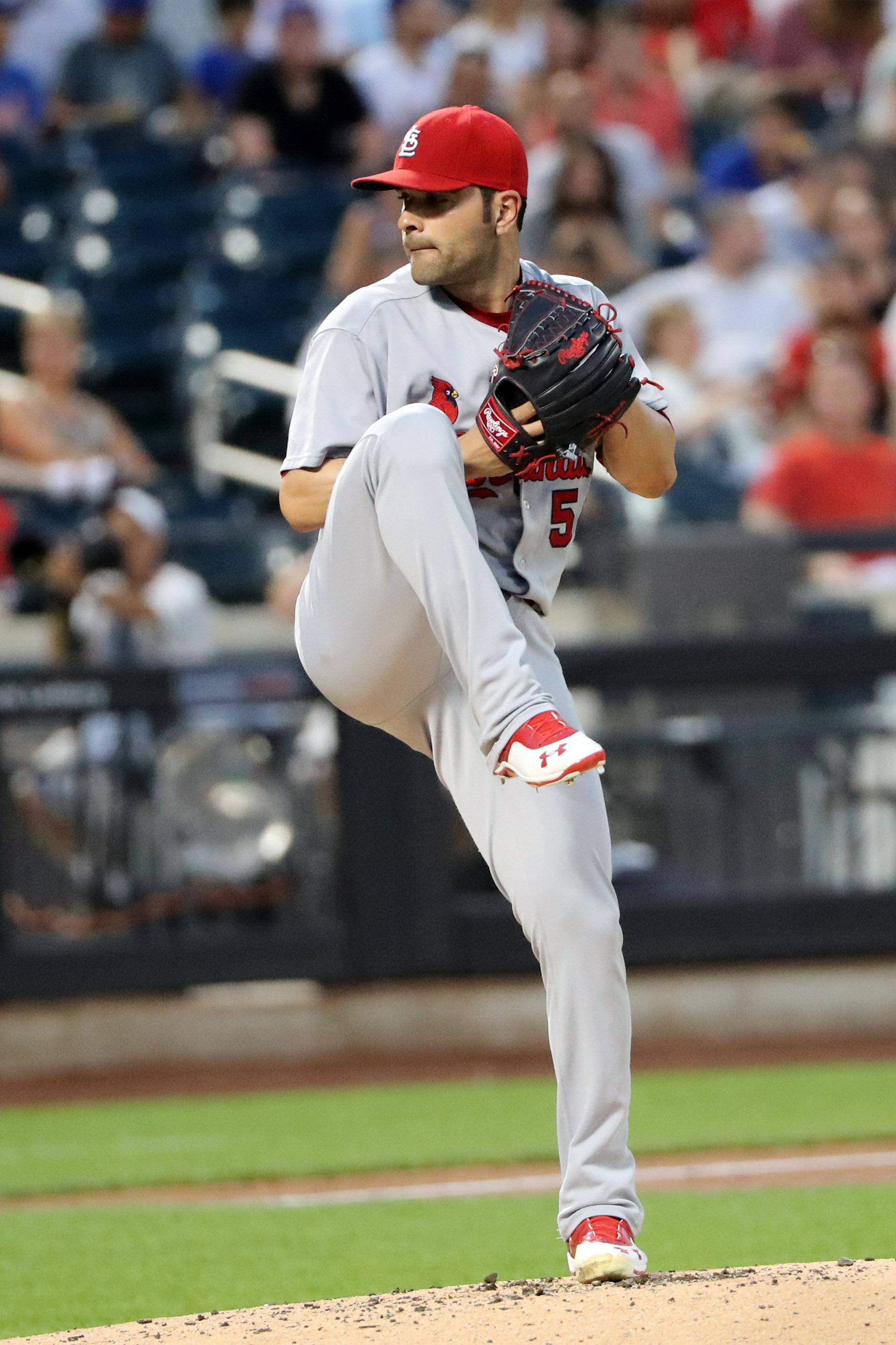
Garcia, 30, has long been a steady member of the Cardinals’ rotation but struggled a bit in 2016, working to a career-worst 4.67 ERA with 7.9 K/9, 3.9 BB/9 and a very strong 56.7 percent ground-ball rate in 171 2/3 innings. He’s controllable only through the 2017 season, as the Cardinals exercised his $12MM option at season’s end. Despite the fact that St. Louis picked up that option, though, trading Garcia has long seemed like a highly plausible outcome. The Cards already have Carlos Martinez, Adam Wainwright, Mike Leake and Alex Reyes in the fold in addition to right-handers Michael Wacha and Lance Lynn returning from injuries.
As for the Braves, Garcia will be the third veteran arm they’ve added to their rotation already this winter. He’ll join fellow newcomers Bartolo Colon and R.A. Dickey in the Braves’ rotation behind right-handers Julio Teheran and Mike Foltynewicz. Like Colon and Dickey, Garcia is a one-year commitment that can function as a reasonable stopgap to upper-level arms in the Braves system like Sean Newcomb while also give young righties Aaron Blair and Matt Wisler, who have struggled in the Majors, additional time to develop in Triple-A.
Despite Garcia’s 2016 struggles, he’ll bring to the Braves a career 3.57 ERA with 7.3 K/9, 2.6 BB/9 and a 56.5 percent ground-ball rate in 896 innings as a Major Leaguer. Shoulder injuries have limited him throughout his career, and he missed time with a groin strain as well in 2016, but he’s averaged 151 innings in 2015-16 and made a total of 50 starts in that time.
While the Braves have been connected to Chris Sale and other front-of-the-rotation names in trade chatter, the addition of Garcia lessens the chances of that hope becoming a reality for Atlanta fans, though it doesn’t eliminate the possibility. Both Mark Bowman of MLB.com and Ken Rosenthal of FOX Sports note (Twitter links) that the Braves still intend to pursue front-line starters. The rotation certainly looks full at the moment, but it’s possible that as a young right-hander with a fair bit of MLB experience under his belt, Foltynewicz himself could be added to a trade package to help bring in a significant upgrade (though that’s merely speculation).
Each of Ellis (No. 17), Gant (No. 21) and Dykstra (No. 29) appeared on MLB.com’s midseason list of the Braves’ Top 30 prospects. Ellis, who turned 24 in September, was acquired with Newcomb in last year’s Andrelton Simmons trade. The former third-rounder posted a strong 2.75 ERA in 78 innings at the Double-A level this year, averaging 7.0 strikeouts against 4.0 walks per nine innings before moving up to the Triple-A level. He struggled in 67 2/3 innings with Triple-A Gwinnett, though, working to a 6.52 ERA. He did register an improved 8.6 K/9 mark, though he also averaged 6.9 walks per nine innings there as well. MLB.com’s report on Ellis notes that he has the size, strength and repertoire to become a No. 4 starter with three average to above-average offerings but slightly below-average command.
Gant, also 24, was acquired from the Mets in the 2015 Kelly Johnson/Juan Uribe trade and made his MLB debut last year, totaling 50 innings with a 4.86 ERA. Gant logged 49 strikeouts against 21 walks with a 42.1 percent ground-ball rate. He also worked to a 4.18 ERA with better than a strikeout per inning in 56 Triple-A innings. Jonathan Mayo and Jim Callis of MLB.com call Gant’s fastball, changeup and curveball each an average offering but also note that he has a tremendous feel for pitching. Nonetheless, they peg his ceiling as a back-end starter, albeit one that could conceivably join the Cardinals’ staff immediately out of Spring Training if necessary.
Dykstra, the son of former Mets/Phillies outfielder Lenny Dykstra, is a 21-year-old middle infielder that the Braves plucked with their seventh-round pick back in 2014. He went through his second stint in the Class-A South Atlantic League in 2016, hitting .304/.332/.363 with no homers and seven stolen bases in 81 games. Callis and Mayo call him a fringe defender with an average arm and note the he hasn’t shown any power to this point in his career, but his hit tool draws strong marks — and that skill is reflected in his career .300/.335/.385 batting line through parts of three minor league seasons.
ESPN’s Mark Saxon first reported that Garcia had been traded to the Braves. FanRag’s Jon Heyman reported (on Twitter) that three prospects were going to St. Louis in exchange. Joel Sherman of the New York Post reported that Dykstra and Ellis were in the deal (Twitter link). SB Nation’s Chris Cotillo reported Gant was the third piece (Twitter link).
Photo courtesy of USA Today Sports Images.
Marlins Sign Edinson Volquez
Adding rotation depth has been a known priority for the Marlins this offseason, and on Thursday they announced the signing of one of the most durable arms on the free agent market, Edinson Volquez, to a two-year deal. Volquez, a Wasserman client, will reportedly receive a $22MM guarantee — $9MM in 2017 and $13MM in 2018 — with his new team.
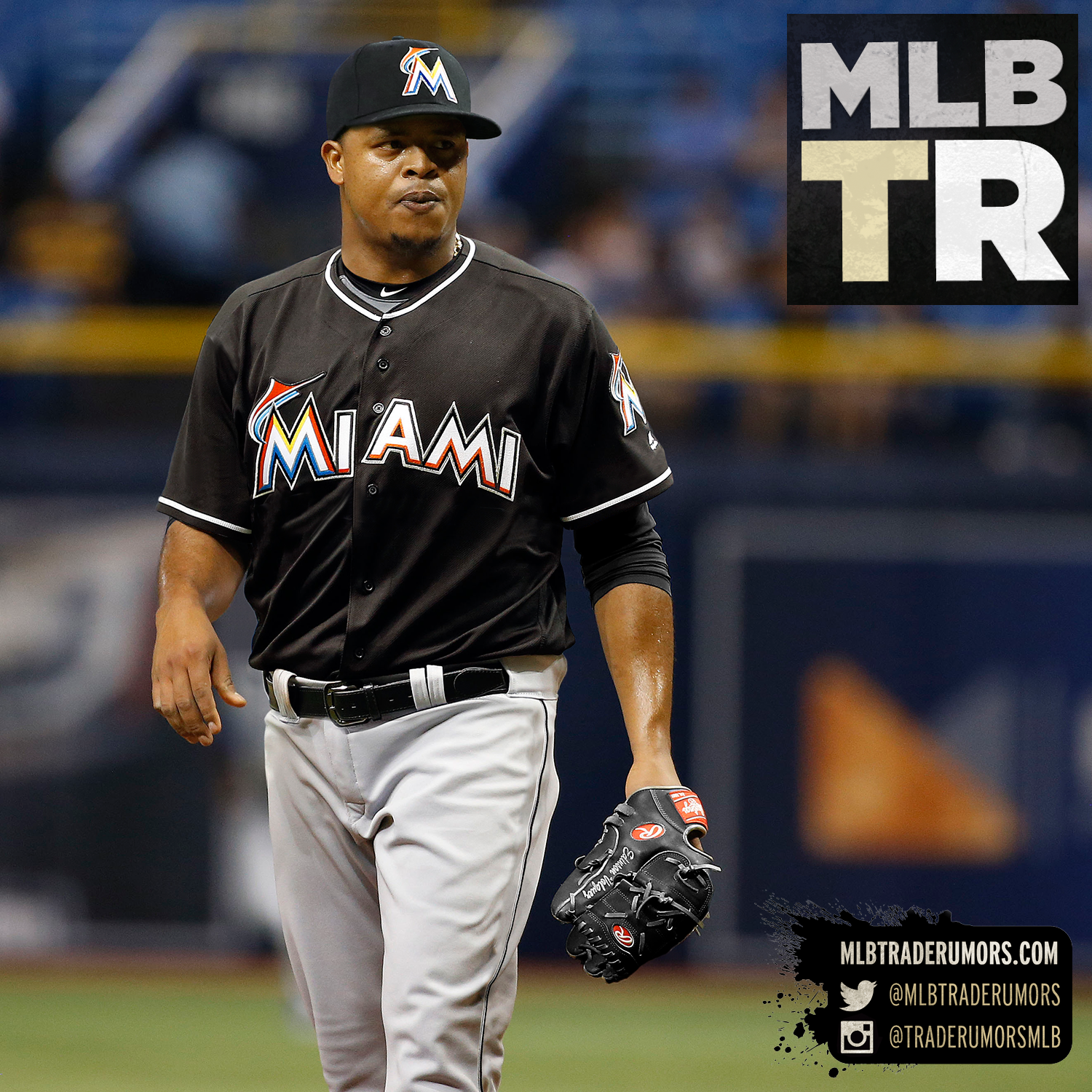
Volquez hit the open market when he declined his end of a $10MM mutual option with the Royals. Reports had at various times suggested that Kansas City might make him a $17.2MM qualifying offer, and alternatively that they’d pay a $3MM buyout rather than picking up their side of the option. Neither of those outcomes came to pass, however, as Volquez saw better opportunities on the open market.
[RELATED: Updated Marlins Depth Chart]
Indeed, he now seems justified in his confidence. With Jeremy Hellickson taking a QO to stay with the Phillies, especially, the market was starved for innings. That set the stage for another solid payday for Volquez, who’ll earn slightly more this time around than he did in his prior two-year pact with the Royals (in which he was promised $20MM, though he forewent the final $3MM of that.)
The 33-year-old Volquez didn’t turn in a terribly productive 2016 season, as he ended up with a 5.37 ERA after struggling through the final four months of the year. But he did rack up 189 1/3 innings and made more than thirty starts for the fifth consecutive campaign.
Durability was clearly the biggest feather in Volquez’s oft-changing hat. He has provided an average of 187 frames annually to the Padres, Dodgers, Pirates, and Royals since the start of 2012. Despite nearing his mid-thirties, the Dominican native has also continued to show good velocity, averaging better than 93 mph with his fastball last year.
While the overall platform campaign was hardly promising, Volquez did largely maintain his typical peripherals. He doesn’t strike out batters at the same pace he did earlier in his career, but with 6.6 K/9 and 3.6 BB/9 he managed about the same results in the strikeout and walk departments as he did in the prior two seasons, when he carried a cumulative 3.30 ERA. And Volquez continues to generate groundballs at a solid rate, inducing grounders on 51.2% of the balls put in play against him in 2016.
For Miami, adding useful innings was a key pursuit this winter. Volquez certainly meets that need, though it remains to be seen whether the organization will continue to look into higher-upside arms on the trade market. Notably, Marlins pitching guru Jim Benedict was with the Pirates when Volquez put up a strong bounceback year in 2014, so perhaps Miami has reason to believe that pairing will pay dividends.
Clark Spencer of the Miami Herald reported the two-year deal on Twitter, with his colleague Barry Jackson providing financial details (Twitter link). SB Nation’s Chris Cotillo tweeted that the agreement was in place and added the annual breakdown on Twitter.
Athletics Sign Matt Joyce
The Athletics announced on Wednesday that they’ve signed free agent outfielder Matt Joyce to a two-year contract, which will reportedly guarantee him $11MM in total. Joyce will earn $5MM in 2017 and $6MM in 2018.
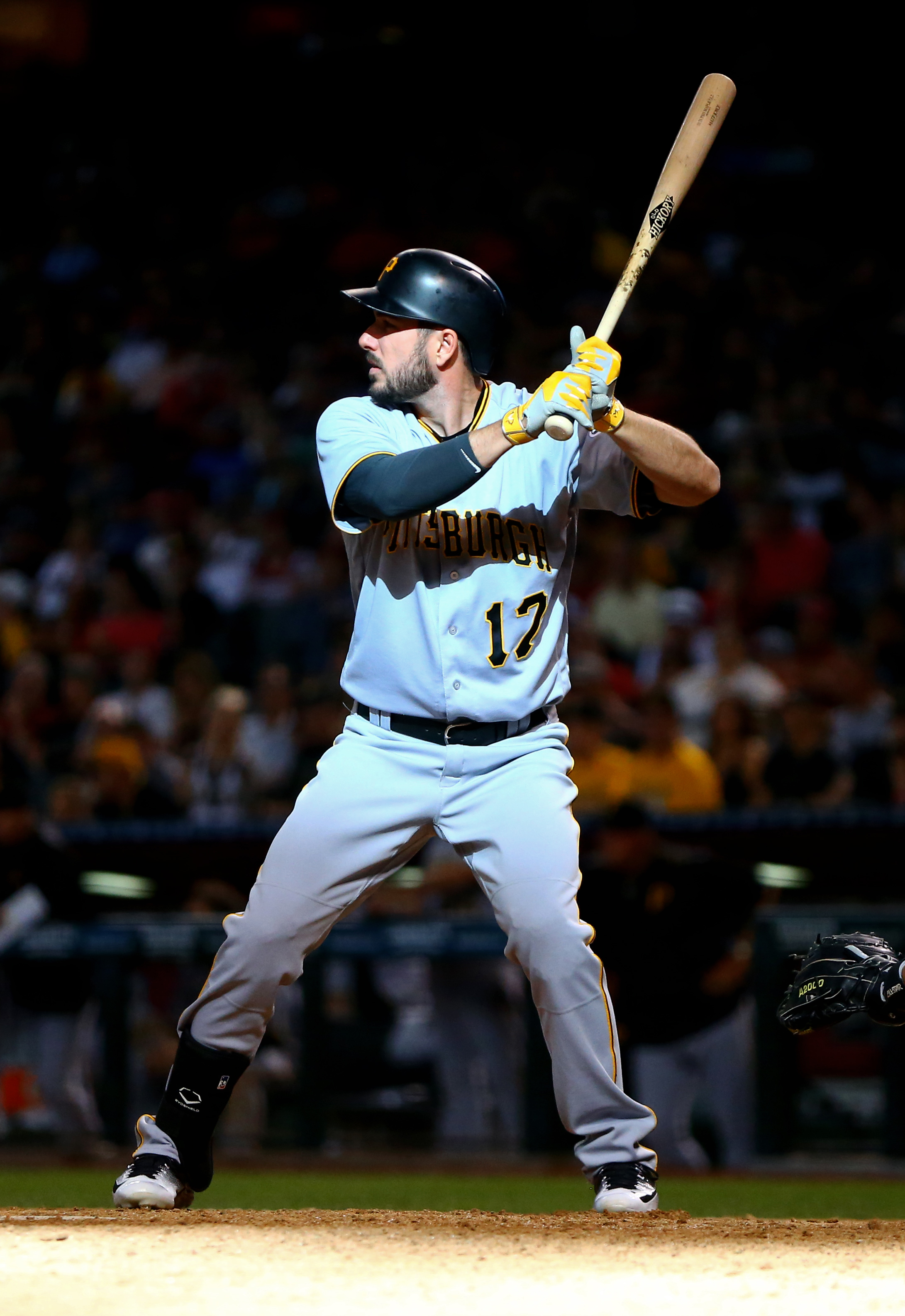
The 32-year-old Joyce spent the 2016 campaign with the Pirates and rebounded nicely from a terrible 2015 season with the Angels. In 293 plate appearances with Pittsburgh, the ACES client batted .242/.403/.463 with 13 homers, 10 doubles and a triple. Joyce has long struggled against left-handed pitching and was shielded from southpaws accordingly with Pittsburgh.
[Related: Updated Oakland Athletics Depth Chart]
Oakland, a team that is known as one of the game’s most aggressive users of platoons, figures to deploy Joyce in a similar fashion. Joyce is a career .185/.265/.310 hitter against southpaws but has hit righties at a solid .252/.353/.449 clip. Though he’s never been a standout defender, his career ratings in both left field and right field (per Defensive Runs Saved and Ultimate Zone Rating) hover right around average.
For the A’s, Joyce fills a much-needed spot on the team’s outfield depth chart. The A’s entered the offseason with Khris Davis as their primary left fielder (though he could profile better as a designated hitter), but little else in the way of certainty on the outfield grass. Brett Eibner, Jake Smolinski and Matt Olson were among Oakland’s primary outfield options prior to the agreement with Joyce, who now figures to receive a fairly sizable chunk of playing time between the two corner spots. He could potentially form a platoon with the right-handed hitting Smolinski in one of the corners, but it stands to reason that Joyce is merely the first of what will be multiple outfield additions for president of baseball operations Billy Beane and general manager David Forst this winter.
Ken Rosenthal of FOX Sports reported the agreement and the terms (via Twitter). FanRag’s Jon Heyman tweeted the annual breakdown.
Photo courtesy of USA Today Sports Images.
Braves Sign Sean Rodriguez
After acting quickly to add some stable innings to their rotation early this offseason, the Braves have bolstered their bench by signing infielder/outfielder Sean Rodriguez to a two-year deal, the team announced on Wednesday (confirming last week’s reports of his signing). Rodriguez will reportedly receive a guaranteed $11MM in the form of a $1.5MM signing bonus and annual salaries of $5MM in the 2017-18 seasons.
[Related: Updated Atlanta Braves Depth Chart]
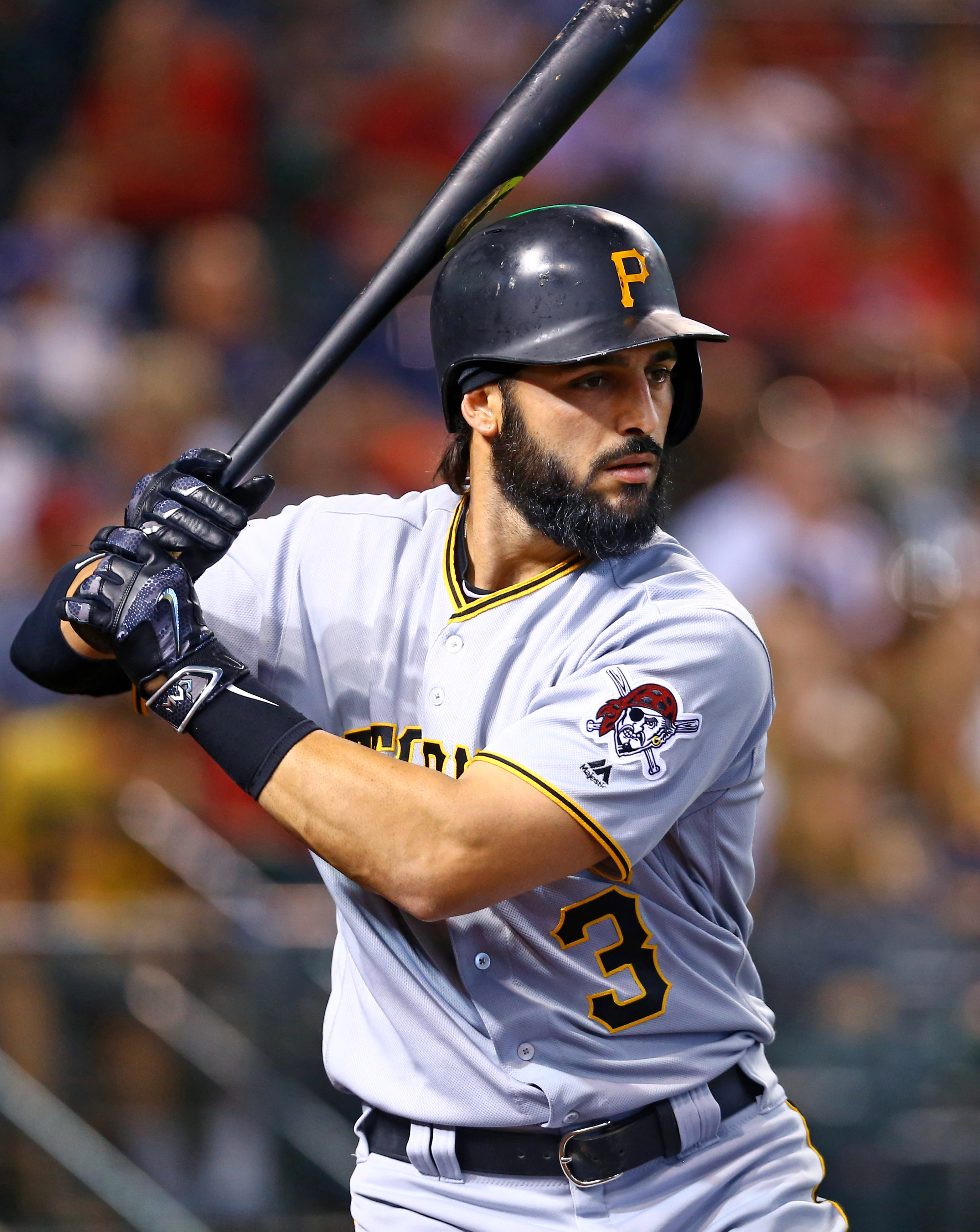
Rodriguez, 32 next April, enjoyed a career year with the Pirates in 2016, hitting .270/.349/.510 with a career-best 18 home runs in 342 trips to the plate. A versatile right-handed hitter, Rodriguez spent more than 100 innings at shortstop, second base, first base and in the corner outfield, and he’s also no stranger to playing third base, with 652 Major League innings at the hot corner under his belt. Defensive metrics typically rate Rodriguez as an above-average contributor at second base and passable at the infield and outfield corners.
Rodriguez may not have one set position where he fits as a starter in Atlanta, but he could still play four to five times per week by spelling others and giving manager Brian Snitker a platoon option at multiple positions. Rodriguez will give the Braves a right-handed complement to Jace Peterson at second base while Ozzie Albies recovers from an elbow fracture and continues his development in the minor leagues. He can also see some action in right field against tougher lefties if the Braves want to limit Nick Markakis‘ appearances against southpaws on the heels of a .243/.303/.309 line against lefties. At third base, meanwhile, Adonis Garcia is the favorite for playing time but has just 761 MLB plate appearances (with a 95 wRC+) and will turn 32 next spring. Rodriguez can act as a safety net at the hot corner as well, and his ability to play all over the diamond will give the team an experienced fill-in at virtually any position other than center field or catcher in the event of an injury.
While Rodriguez himself doesn’t come with an especially consistent track record, he’s been above or near the league average in three of the past four seasons, per OPS+, and most of his year-to-year fluctuations at the plate have come against right-handed opponents. Dating back to the 2012 season, he’s hit lefties at a solid .243/.334/.404 clip. And it’s fair to note that, while he enjoyed a lofty .344 BABIP last year, he did so with a lofty 43.1% hard-hit rate that was sixth-best in all of baseball among players with at least 300 plate appearances. Those numbers are hardly dominant, but given his modest salaries, Rodriguez need only perform as a sturdy bench option to for Atlanta to find good value in this deal.
Ken Rosenthal of FOX Sports first reported the agreement (Twitter link). FanRag’s Jon Heyman provided the financial breakdown (also on Twitter).
Photo courtesy of USA Today Sports Images.
Mets Re-Sign Yoenis Cespedes
After two consecutive offseasons of anxiously awaiting to learn whether Yoenis Cespedes would return to their team, Mets fans can rest assured that the star slugger won’t be going anywhere anytime soon. The Mets announced on Wednesday that they’ve re-signed Cespedes to a four-year contract that reportedly comes with a full no-trade clause and guarantees Cespedes a total of $110MM. Cespedes will reportedly be paid $22.5MM in the coming season, followed by consecutive $29MM paydays, and then a $29.5MM hit for 2020. The team has called a 5pm ET press conference at Citi Field to announce Cespedes’ new contract.
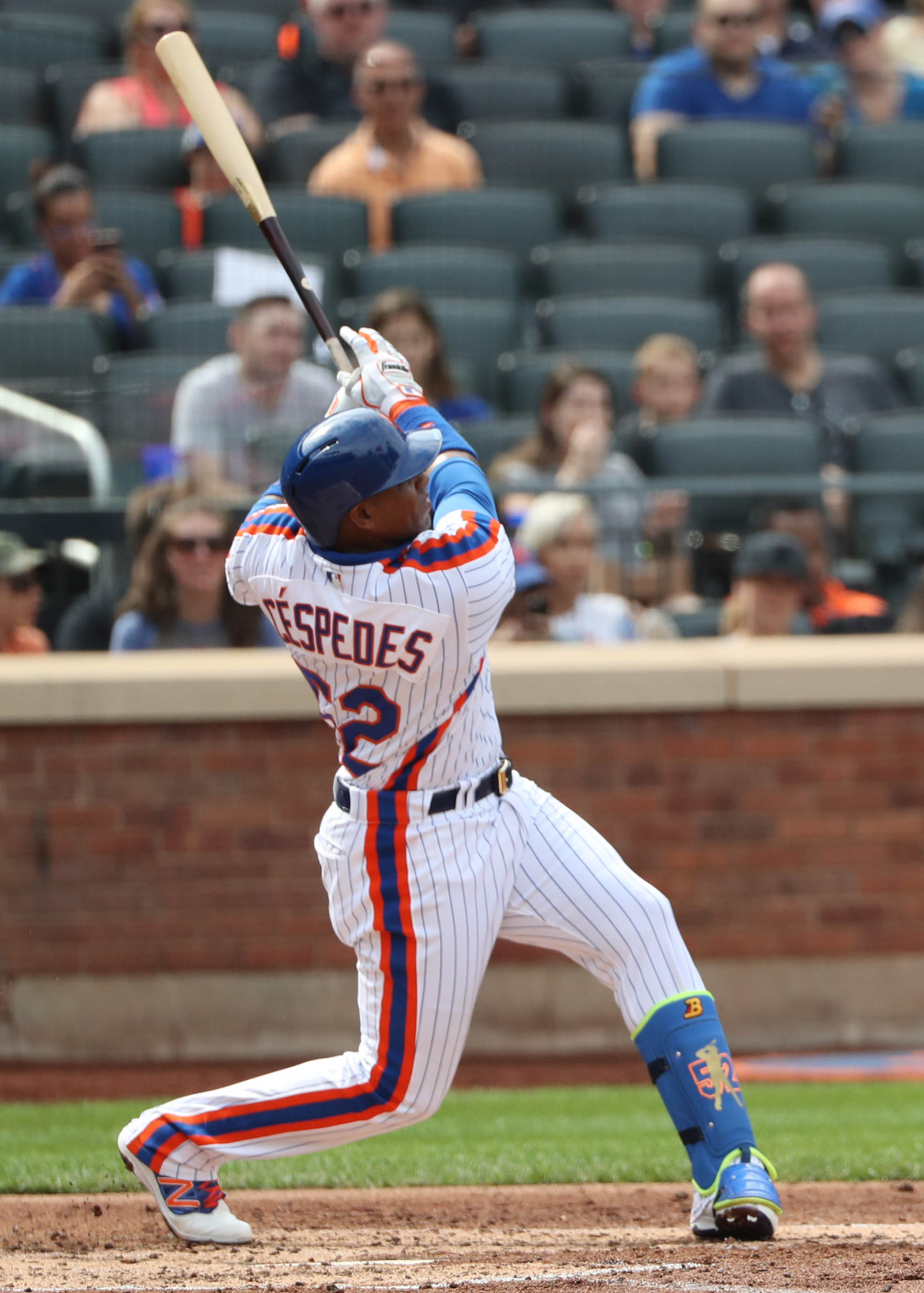
While the move doesn’t rate as a major surprise, the timing and the size of the deal are. Both sides were said to be seeking resolution by the end of the upcoming Winter Meetings, but evidently ended up striking an early deal. While Cespedes had a reasonable argument to command six guaranteed seasons, and seemed a good bet at least for five, he’ll end up taking a relatively short pact — albeit at a hefty average annual value of $27.5MM. MLBTR had predicted that Cespedes would earn $125MM over five seasons this winter.
[RELATED: Updated Mets Depth Chart]
Though he was rather clearly the best single free agent available this winter, it was never entirely clear what other organizations would join New York in pursuit. The Astros did end up as “serious bidders,” per ESPN.com’s Buster Olney (Twitter link), though it’s not clear whether Houston appealed to Cespedes as a destination. Certainly, both he and the Mets were interested in a reunion after one-and-a-half fruitful seasons together. The veteran slugger may not have found better opportunities elsewhere — at least, perhaps, not in preferred locales — but it’s notable that he did not at least await some further market development before putting pen to paper. Ongoing CBA uncertainties may have played some role, and it’s fair to recall that Cespedes did not exactly have an optimal trip through free agency the last time around.
Last winter, of course, Cespedes undertook a drawn out process before agreeing to return to New York on a three-year, $75MM deal. While he reportedly had larger offers elsewhere, at least nominally, that package was likely the best available. In particular, it gave him the chance to opt out this winter and re-enter the market after earning $27.5MM for his 2016 season. With another big season on his resume, he did just that, and was able to secure a much larger fortune in his next contract.
Though Cespedes didn’t quite maintain his torrid late-2015 work, his offensive output last year was a near match for his overall 2015 effort. Put those seasons together, and he has contributed 1,219 plate appearances of .286/.340/.537 hitting with 66 home runs. That’s about one-third more productive than the average offensive performer leaguewide.
Notably, the 31-year-old Cuban managed to repeat his impressive .251 isolated slugging mark from the prior year while also nearly doubling his walk rate to 9.4%. His strikeouts held steady at around one-fifth of his plate appearances. Combined, that made Cespedes an average (or slightly better) hitter in terms of plate discipline, which perhaps bodes well for his ability to adapt as his reflexes slow as he moves through his thirties.
Cespedes also thrived when he put the ball in play, limiting his soft contact and barreling up the ball a personal-best 39.3% of the time (per Fangraphs). He again produced home runs on nearly twenty percent of the fly balls he put in play — about 50% better than league average. Most of his power comes to the pull side, though Cespedes does spray liners around the diamond.
While he was death to lefties in 2016, putting up an OPS north of 1.000, Cespedes doesn’t really carry worrying platoon splits. Indeed, he’s still plenty productive against right-handed pitching; last year, when facing same-handed hurlers, he batted a quality .266/.329/.510. For his career, there has been virtually no difference in his output depending upon pitcher handedness, though he’s much more prone to draw a free pass when he has the platoon advantage.
In the field, Cespedes continued to draw very strong ratings for his work in left. That largely offsets the demerits he took for time spent in center. He split his innings about evenly between those positions, which explains why his overall defensive ratings tanked compared to 2015. Certainly, it would have been better for his market (and the Mets) if Cespedes was truly capable of manning a quality center field, but his bat plays just fine in the corner and he continues to earn plaudits there with the glove.
Cespedes didn’t provide any reason to believe he’s anything less than a quality defender in left, but there was at least one hint of a downturn in his athleticism. Perhaps in part due to the quad problems, he was more above-average than great in his accustomed corner position, representing a slight tick down from prior years. And for the first time in his career, Fangraphs’ BsR metric regarded Cespedes as a (very slightly) below-average overall baserunner. He stole only three bags, marking a personal low, and didn’t provide the kind of solid value on the bases that he had previously. It’s only a nitpick, and may be mostly attributable to the hamstring injury he dealt with in the middle of the year, but it’s a factor to consider given the march of time.
At the plate, it’s hard to find any recent areas for complaint, though the track record isn’t flawless. It remains to be seen, for instance, whether Cespedes will continue to exhibit the improved plate discipline that he managed in 2016. And while his past two campaigns have been excellent, he was underwhelming in the two that came before, posting a cumulative .251/.298/.446 batting line. In those years, his productivity was sapped by 45.6% and 48.0% flyball rates, which likely suppressed his batting average. It’s fair to note that his flyball rate crept forward again in 2016 (to 41.4%), and also that his additional walks serve to set a higher on-base floor — if he can maintain that approach.
For New York, the biggest piece of business of the winter is now out of the way. But it’s likely not a plug-and-go arrangement for the team. The team now has three notable, left-handed-hitting corner outfield options who’ll need to be accounted for: Jay Bruce is on the books for $13MM, Curtis Granderson is set to earn $15MM, and youngster Michael Conforto also in the mix. Though the right-handed-hitting Juan Lagares remains a factor in center, he’d best be used as a platoon piece, and it’s not clear who might join him up the middle. Trading Bruce seems likely at this point after his underwhelming half-season in New York, though perhaps Granderson or Conforto could be moved instead under the right circumstances. And that leaves unaddressed the question of which lefty will share time in center.
Tim Brown of Yahoo Sports first reported on Twitter that there was increasing optimism of a deal. Ken Rosenthal of FOX Sports reported that there was an agreement in place (via Twitter). Jeff Passan of Yahoo Sports added the financial terms (Twitter link), and FanRag’s Jon Heyman added the yearly breakdown (Twitter link). Joel Sherman of the New York Post tweeted that Cespedes also received a full no-trade clause.
Photo courtesy of USA Today Sports Images.
Twins Sign Jason Castro
The Twins announced on Wednesday that they’ve signed free-agent catcher Jason Castro to a three-year, $24.5MM contract, as was initially reported last week. Minnesota, one of the rare teams that discloses financial details of signings themselves, announced that the deal is slightly front-loaded, with Castro set to earn $8.5MM in 2017 and $8MM in both 2018 and 2019. The team’s 40-man roster is now full following the signing of Castro, though they’ll presumably vacate one spot in advance of next week’s Rule 5 Draft, when they have the first overall selection.
Castro, 29, drew strong early interest in a market that featured few immediate, near-regular catching options. With Wilson Ramos carrying a second ACL tear with him into free agency, Castro’s standing was significantly improved — as was that of other top options such as Matt Wieters, Kurt Suzuki, and Nick Hundley.
[Related: Updated Minnesota Twins Depth Chart]
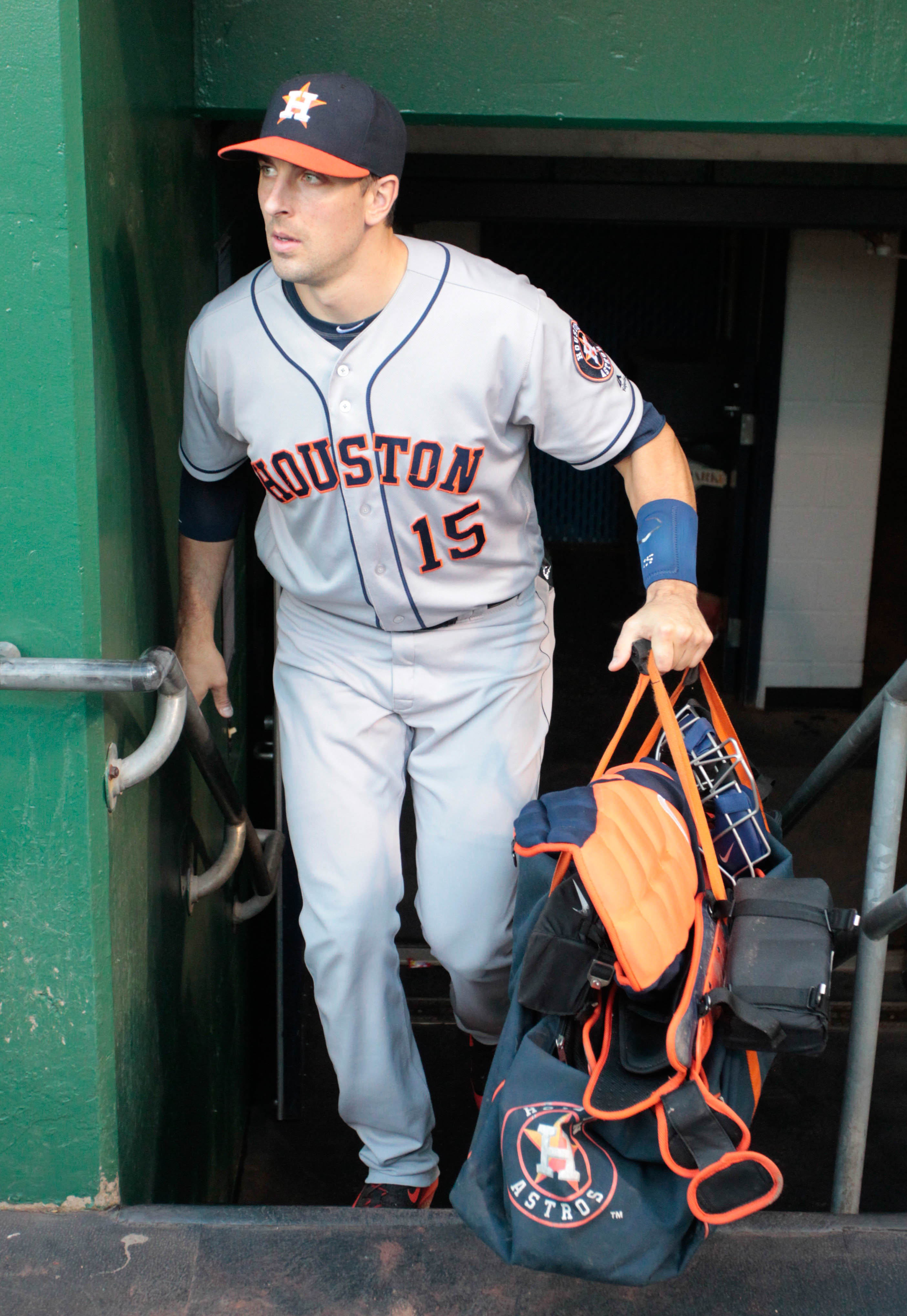
Age was undoubtedly a factor that worked in Castro’s favor, but he also intrigued with his blend of left-handed power and reputation as a framing guru. Though he has never returned to his breakout 2013 levels of production at the plate, and is deficient in the on-base department, Castro has hit double-digit home runs in each of the last four seasons and has historically posted approximately league-average power (in terms of isolated slugging).
In the defensive department, Castro has consistently rated as one of the game’s best at winning borderline strikes for his pitchers (by measure of both StatCorner and Baseball Prospectus). Though he’s average in other regards behind the plate, that leaves Castro as a top-quality run preventer, at least if one accepts the more aggressive assessments of pitch framing’s capacity to impact run expectancy.
There are plenty of limitations to his game, too, of course. Most notably, Castro carries only a .215 batting average and .291 OBP over the past three seasons. There’s a lot of swing and miss to his game (32.7% strikeout rate last year), though he can take a free pass and just boosted his walk rate to a career-best 12.0% in 2016.
With proper platoon usage, though, those problems can perhaps be offset. Castro hit just .149/.237/.241 last year when facing southpaws, but posted a much more useful .231/.331/.426 slash over his 279 plate appearances against righties. Those numbers mirror his career marks, which suggest there’s little reason ever to send him out without the platoon advantage.
For the Twins, Castro represents the first major acquisition of a new-look front office led by Derek Falvey and Thad Levine. With Kurt Suzuki departing this winter — bringing with him a glove that framing metrics were not fond of — that pair set out to find a replacement. Falvey and Levine evidently believe in the value of pitch framing, targeting Castro and staying on him even as the price tag moved to a fairly lofty level.
Minnesota will presumably pair Castro with John Ryan Murphy, who was picked up last winter in hopes he’d turn into a quality receiver. Though the 25-year-old scuffled badly at the plate in the majors, and hit just .236/.286/.323 in his 290 Triple-A plate appearances, he has shown more bat in the past and is considered a highly-talented framer in his own right. The club also just added Mitch Garver, another right-handed-hitting backstop, to the 40-man roster, so he’ll provide another option.
Ken Rosenthal of FOX Sports first reported the signing (Twitter links), and Yahoo’s Jeff Passan tweeted the exact guarantee.
Photo courtesy of USA Today Sports Images.
Pirates Designate Jeff Locke For Assignment, Sign Lisalverto Bonilla
8:26pm: Bonilla received a $575K guarantee on his deal, tweets MLB.com’s Adam Berry. Considering the right-hander’s lack of big league experience, the minimal guarantee isn’t much of a surprise.
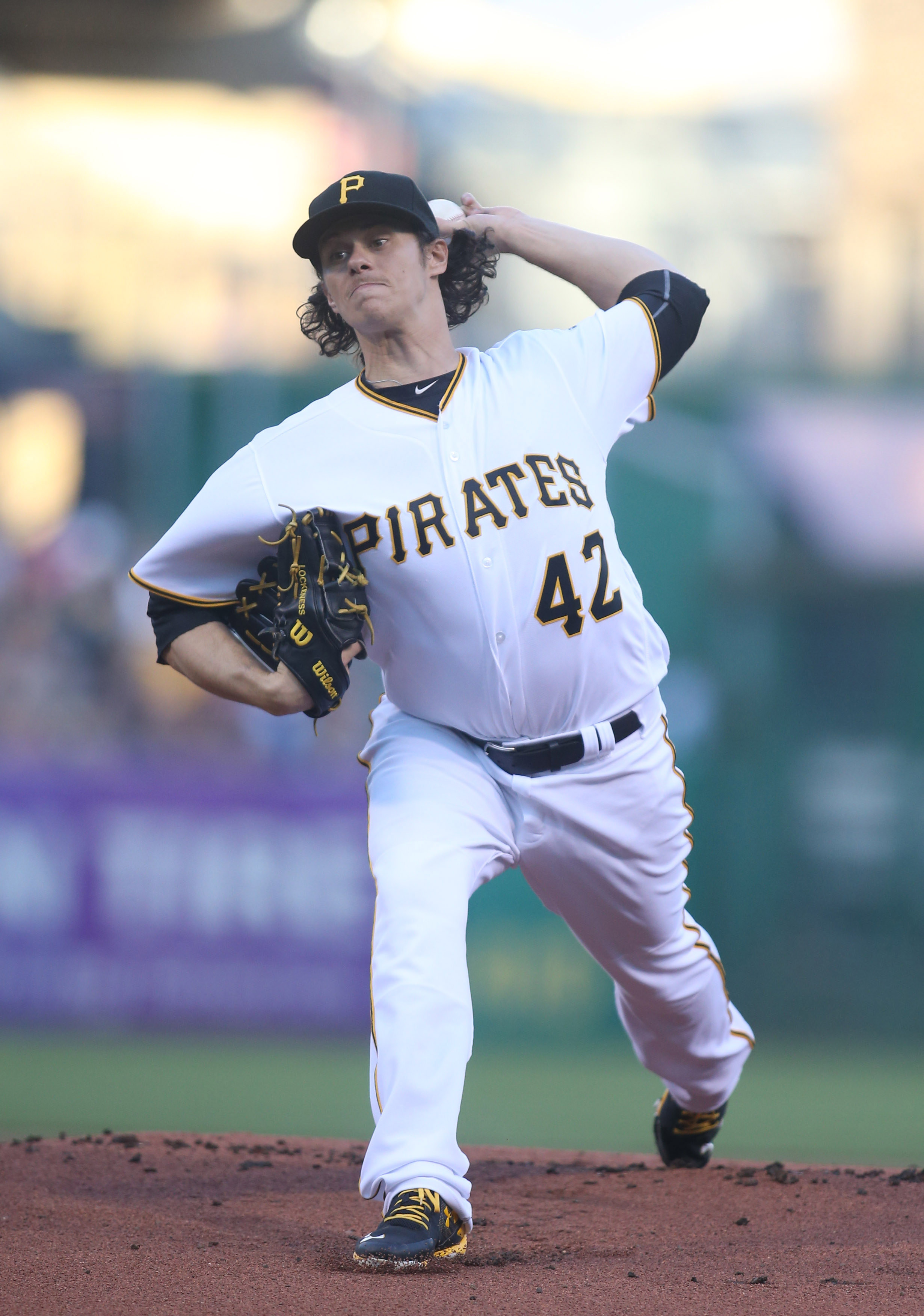
5:25pm: The Pirates announced on Tuesday that they’ve designated left-hander Jeff Locke for assignment and signed right-hander Lisalverto Bonilla to a Major League contract. The 29-year-old Locke has long stood out as a non-tender candidate due to his recent struggles and his projected $4.2MM salary for the 2017 season (via MLBTR contributor Matt Swartz).
 [Related: Updated Pittsburgh Pirates Depth Chart]
Locke functioned as a serviceable back-end starter for the Pirates from 2013-15, pitching to a 3.98 ERA with 6.6 K/9 against 3.6 BB/9 with a ground-ball rate north of 51 percent across 466 innings. However, Locke also averaged fewer than six innings per start in that time, and his numbers declined in 2015 before taking an even more drastic downward turn in 2016. This past year, Locke logged a lackluster 5.44 ERA with a diminished 5.2 K/9 against 3.1 BB/9 and a career-low 47.2 percent grounder rate. Right-handed opponents teed off against Locke this year as well, hitting him at a .299/.368/.508 clip in his 127 1/3 innings.
Presumably, the Pirates marketed Locke to other clubs to gauge interest in him and will continue to do so over the next week, but if no deal materializes then Locke will be released into a dismal market for free-agent starters. If it comes to that, it’s certainly plausible that Locke will end up with a 40-man roster spot and perhaps a smaller base salary than his arbitration projection represented in addition to some incentives based on innings pitched. There will be no shortage of teams on the hunt for cheap rotation arms, and Locke is just one year removed from that previously mentioned solid three-year run. (Speculatively speaking, the Marlins could make sense as a landing spot, as former Pirates special assistant/pitching guru Jim Benedict is now in the Miami front office.)
As for Bonilla, the 26-year-old once rated as one of the better prospects in the Phillies and Rangers organizations — he went from Philadelphia to Texas in the 2012 Michael Young trade — but saw his career stall in the upper levels of the Rangers’ system. He landed with the Dodgers on a minor league deal last winter and enjoyed a nice season pitching in the hitter-friendly Pacific Coast League, where he recorded a 3.97 ERA with a 118-to-40 K/BB ratio in 111 innings (13 starts, 18 relief appearances).
Photo courtesy of USA Today Sports Images.
Cubs Sign Jon Jay
The Cubs are in agreement with free-agent outfielder Jon Jay on a one-year, $8MM contract, according to Mark Gonzales of the Chicago Tribune (Twitter link). The team has now announced the signing as well. Jay, 32 next March, is a client of CAA Sports.
[Related: Updated Chicago Cubs Depth Chart]
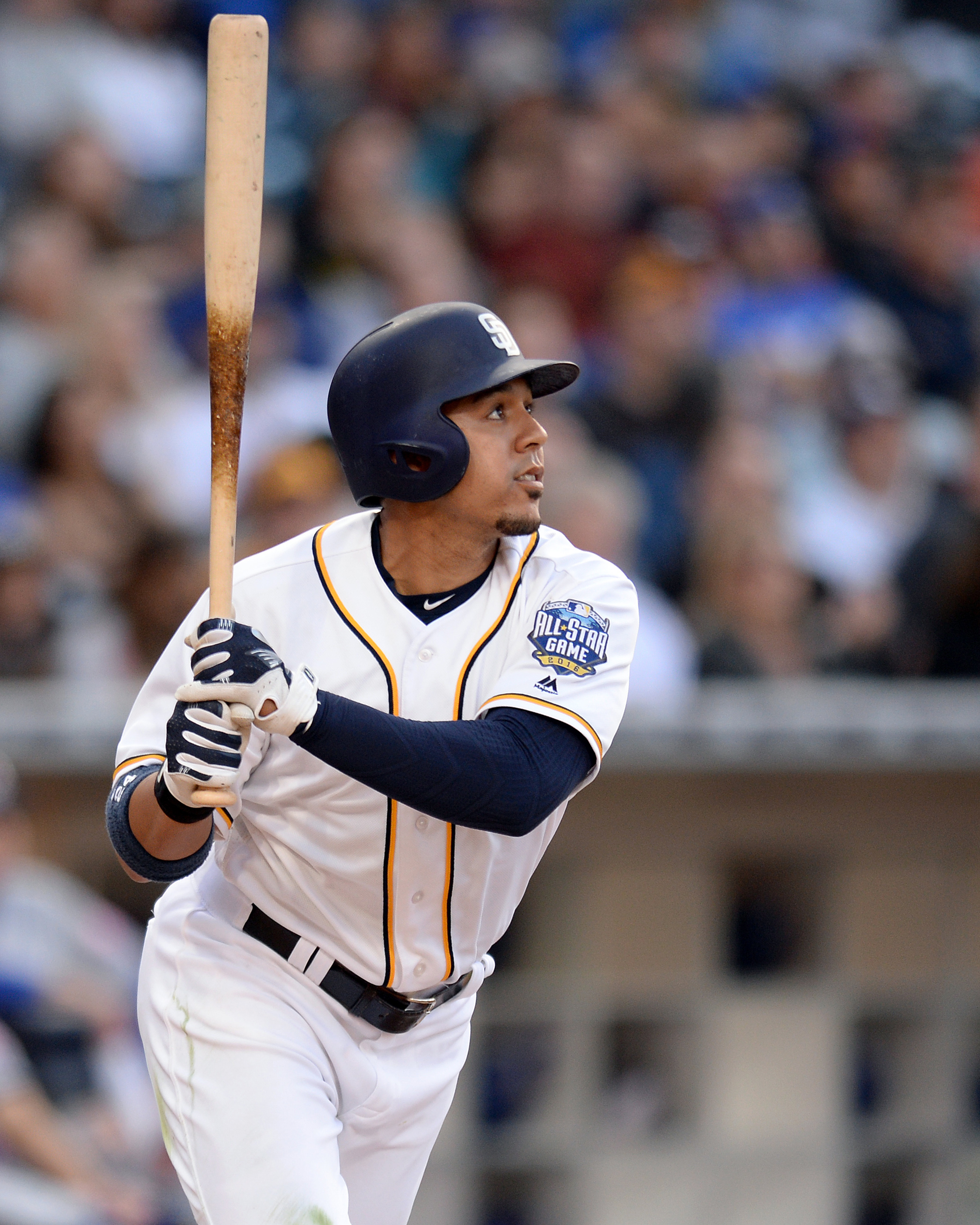
Jay missed nearly two months of the 2016 season with a broken forearm that was sustained when he was hit by a pitch, but he was productive when he was healthy enough to take the field. The longtime Cardinals center fielder batted .291/.339/.389 with a pair of homers and 26 doubles in 374 trips to the plate. Jay was leading the National League with 24 doubles at the time he sustained his injury, batting .296/.345/.407 to that point in the season, but he tallied just three extra-base hits over his final 84 plate appearances upon returning from the disabled list.
With Jay in the fold, it now seems likelier than ever that Dexter Fowler‘s time with the Cubs has drawn to a close. Jay joins an outfield contingent that also includes Kyle Schwarber, Ben Zobrist, Jorge Soler, Jason Heyward, Albert Almora Jr. and Matt Szczur. He’ll bring a left-handed bat that doesn’t have a significant platoon split to manager Joe Maddon’s roster and will pair well with the highly touted but inexperienced Almora, a right-handed hitter, in center field. Both Gonzales and CSN Chicago’s Patrick Mooney suggest that Jay will be paired with Almora in center field (Twitter links). Alternatively, Almora, who has just 80 games at the Triple-A level in his career, could get some additional seasoning in Iowa if it’s deemed necessary in Spring Training.
The addition of Jay gives manager Joe Maddon even more matchup options with his day-to-day lineup, and it also gives the Chicago front office more options to pursue on the trade market this winter. Addison Russell and Javier Baez look to have cemented themselves as the Cubs’ regular middle-infield duo, which should push Zobrist to the outfield more often than not. It’s also conceivable that Schwarber will do some catching for the Cubs again in 2017, freeing up some corner outfield at-bats on those days. Nonetheless, it certainly seems plausible that the Cubs could look to deal from their outfield surplus this winter. Soler has long stood out as a possible trade candidate, and the addition of yet another outfield bat to the mix further frees up president of baseball operations Theo Epstein and general manager Jed Hoyer to explore trade scenarios involving the former top prospect.
The exact machinations of the Cubs’ 2017 lineup can’t yet be determined, but as the 2016 team illustrated, cultivating this level of depth at the Major League level can prove vital in the event of a significant injury to a key player, as was the case when Schwarber suffered a pair of torn knee ligaments.
Photo courtesy of USA Today Sports Images.