
Mark Teixeira To Retire After 2016 Season
The Yankees announced a 3pm press conference with first baseman Mark Teixeira today, and while they didn’t list a reason for the call in their press release, ESPN’s Buster Olney reports (via Twitter) that Teixeira is expected to announce his retirement, effective at the end of the current season.
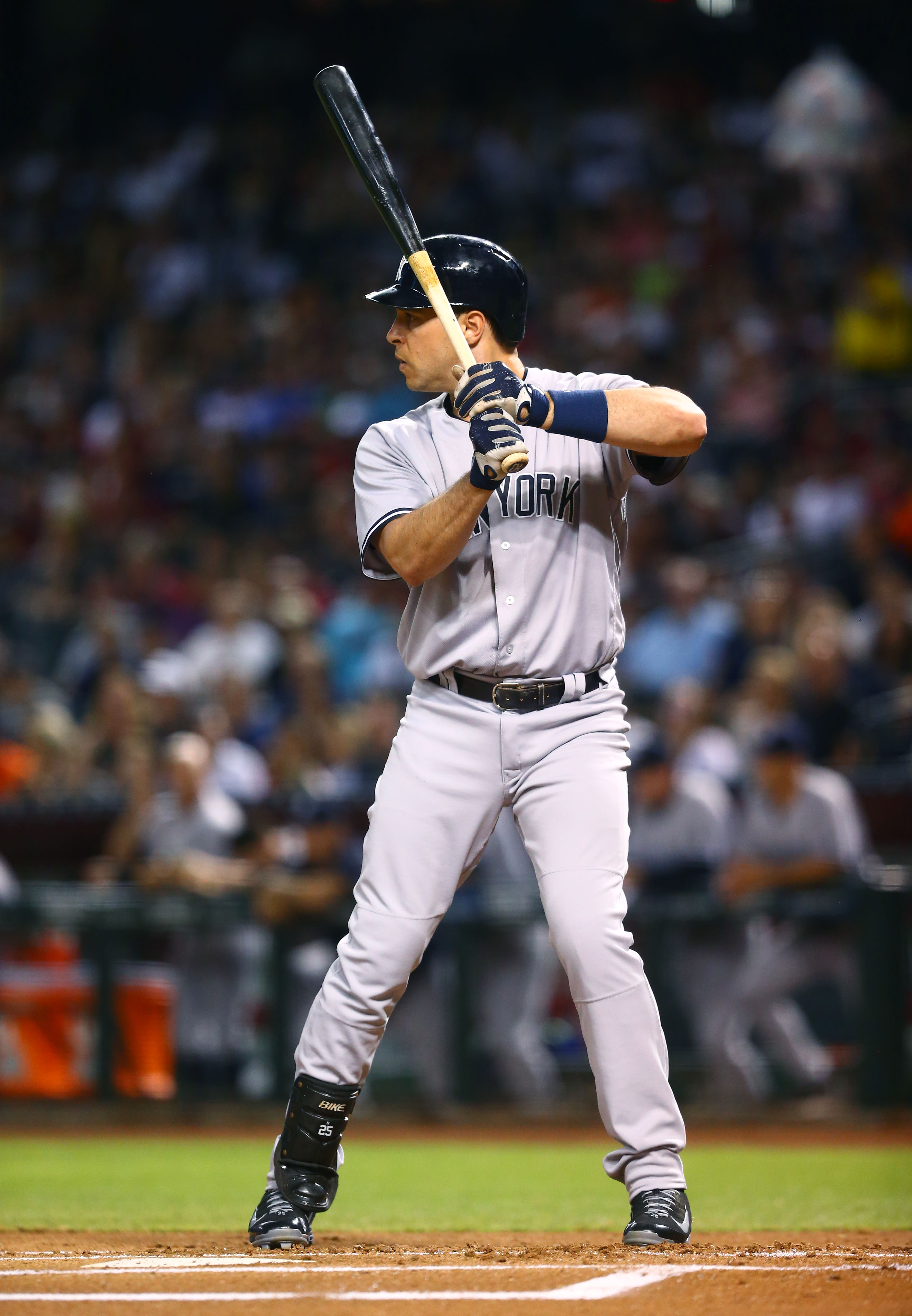
Teixeira, 36, expressed an interest in playing long beyond the current season earlier this year but has battled through torn cartilage in his right knee and some minor neck and foot issues this year while struggling at the plate. The switch-hitting slugger is in the final season of a huge eight-year, $180MM contract and is batting .198/.287/.340 with 10 homers on the season. Of course, one only needs to look at the 2015 campaign to find the most recent season in which Teixeira was not just an above-average performer but one of the more impressive sluggers in all the league. Tex swatted 31 home runs in 2015 and slashed a hefty .255/.357/.548 on the year, which translated to an adjusted OPS that was 46 percent better than the league-average hitter. While he hasn’t played up to his standards this season, Teixeira did crack his 400th career home run this year — becoming just the 55th player to ever reach that lofty total.
The 2016 season, it seems, will be the final chapter in what has been one of the most productive careers since the turn of the century. Teixeira was the fifth overall pick out of Georgia Tech back in 2001 and spent just one season in the minors before debuting with the Rangers in 2003 and never looking back. He’d finish fifth in the American League Rookie of the Year voting that season and go on to win five Gold Glove Awards and three Silver Slugger Awards in a 14-year Major League career. Somewhat surprisingly, Teixeira has only been an All-Star on three occasions, but his track record of dominance at the plate suggests that he probably should’ve participated in the Midsummer Classic on a few more occasions.
From 2004-11, Texiera was one of the more feared hitters in the league, batting .284/.377/.537 with per-season averages of 36 home runs, 37 doubles and 117 RBIs. His bat was 36 percent above the league average over that eight-year stretch, per OPS+, and his career totals to date (.269/.361/.511, 404 homers, 400 doubles) are similarly impressive. Teixeira was a major factor in the Yankees’ 2009 World Series victory in his first season in the Bronx, and he was also the subject of one of the largest trades in the past decade, going from Texas to Atlanta in exchange for Elvis Andrus, Neftali Feliz, Jarrod Saltalamacchia, Matt Harrison and Beau Jones. To this point, Teixeira has been worth 52 wins above replacement, per Baseball-Reference, and 45 WAR in the estimation of Fangraphs. He’ll wrap up a brilliant career with just over $213MM in total earnings.
MLBTR wishes Teixeira the best in what will be the final months of an illustrious career and continued happiness and success in his post-playing days.
Photo courtesy of USA Today Sports Images.
2017 MLB Free Agent Power Rankings
Pending free agents traded during the month of July included Josh Reddick, Aroldis Chapman, Mark Melancon, Rich Hill, Andrew Cashner, Steve Pearce, Carlos Beltran, Ivan Nova, and Jesse Chavez. Under the current Collective Bargaining Agreement, a midseason trade disqualifies a player from receiving a qualifying offer. The value of the one-year offer is expected to be around $16.7MM this winter. Since such an offer ties the player to draft pick compensation, avoiding one can be a big benefit for him.
The current CBA expires on December 1st of this year. The November qualifying offer and acceptance dates remain in place until a new agreement is reached. A new agreement could completely eliminate, modify, or maintain the current system. It’s an unknown at this point.
Below, I’ve ranked the 2016-17 free agents by earning power. You can view the full list of free agents here.
1. Yoenis Cespedes. Cespedes suffered a quad strain on July 8th, skipping the All-Star Game as a result. While he’s avoided a DL stint thus far, Cespedes will be used as a left fielder for the remainder of the season as a precaution. He’s expected to serve as the Mets’ designated hitter tonight against the Yankees, and doesn’t have to worry about playing the field until the team returns to National League contests on Tuesday. In his brief 48 plate appearances since the injury, Cespedes’ power has been missing. It remains to be seen how the injury will affect him over the Mets’ remaining 56 regular season games. Regardless, Cespedes seems very likely to opt out of the remaining two years and $47.5MM remaining on his contract after the season. If he does, he’ll likely retain his position as our top-ranked free agent.
2. Edwin Encarnacion. Encarnacion moves up a spot after a strong July. He’s on pace for a career-high 44 home runs, and with 29 bombs to date he’s one behind Mark Trumbo and Todd Frazier for the MLB lead. Since Encarnacion turns 34 in January, he seems limited to a four-year term in free agency. Still, that could be at a salary of $20MM or more.
3. Josh Reddick. Reddick and teammate Rich Hill were traded by the A’s to the Dodgers on Monday’s trade deadline. Reddick was a near-lock for a qualifying offer, so the trade boosts his earning power. He doesn’t turn 30 until February, so Reddick should be in line for a four or five-year deal. He had a strong July and has a chance to raise his profile as a key member of the Dodgers’ offense.
4. Aroldis Chapman. Chapman joins our top five for the first time. The Cubs’ new closer also finds himself ineligible for a qualifying offer. While I’ve felt Chapman’s October domestic violence incident could tamp down his free agent earning power, it didn’t seem to affect his trade value last month. There is only one Aroldis Chapman, a lefty capable of pumping 104 mile per hour fastballs in the ninth inning. The incident may have little bearing on his next contract. It will be interesting to see Chapman and Kenley Jansen jockeying for record relief contracts this winter, possibly five-year deals in excess of $70MM.
5. Kenley Jansen. Jansen’s excellent season continues, and he may be able to top his career-high of 44 saves. Just 29 in September, Jansen is a dominant ninth inning force. Some teams will prefer him to Chapman.
6. Ian Desmond. Desmond’s power resurgence may lead to his first career 30 home run season. Slotting in around the top of the Rangers’ order, which is more imposing with the trade deadline additions of Jonathan Lucroy and Carlos Beltran, Desmond could score 110 runs this year. He leads all pending free agents with 4.4 wins above replacement, as a fine center fielder with renewed power. Desmond will turn 31 in September. He’s about the same age as Cespedes, but older than Reddick. The comps don’t really matter though – free agency will be an auction for his services, and I imagine he’ll be seeking a five-year deal. If Desmond gets that fifth year, he’ll likely out-earn everyone on this list aside from Cespedes.
7. Jose Bautista. Bautista tumbles down the Power Rankings, as I’m currently pegging him for a three-year deal. 36 in October, Bautista returned from a toe injury on July 25th. He’ll need a strong finish to convince teams that his age 36-39 seasons are a strong investment, especially with a qualifying offer attached.
8. Wilson Ramos. Ramos posted a solid July and has already tied his career high of 16 home runs. He’s been the most valuable catcher in baseball this year at 3.4 WAR, and doesn’t turn 29 until next week. It’s time to start considering a five-year deal as a legitimate possibility for Ramos, whose earning power has skyrocketed with his well-timed breakout.
9. Mark Trumbo. Trumbo crushed seven more home runs in July. He was the first player to reach 30 this year, and is on pace for 46 longballs for the season. Like fellow free agent slugger Edwin Encarnacion, Trumbo is a liability on defense. Trumbo strikes out more and walks less than EE, and consistently posts a low on-base percentage. For some GMs, a 40 home run, 110 RBI right-handed bat for the middle of the order still speaks for itself. Trumbo’s agent will likely be vying for a fourth year.
10. Dexter Fowler. The tenth spot came down to Fowler, Justin Turner, and Michael Saunders. A case can be made for any of them, but I’ll take Fowler by a hair. Fowler ranks eighth in baseball with a .403 OBP, and he plays center field. Teams will be wary of going four years on a player with his injury history, but he’ll still do much better in free agency this time around.
Turner and Saunders each have a shot at their first 30 home run season. Both players have already set career bests in homers. Neither Turner nor Saunders has ever played 140 games in a season, so a four-year investment would be risky.
The 2016-17 free agent market looks historically bleak for starting pitching. You’ve got Rich Hill, who has been brilliant but turns 37 in March and has been limited to 14 starts this year due to injuries. One of the top starters might be Jeremy Hellickson, who turns 30 in April and has a 3.70 ERA in 22 starts for the Phillies. Barring an August trade, however, Hellickson seems likely to come with a qualifying offer attached. There’s also Andrew Cashner, the hardest-throwing free agent starter. 30 in September, Cashner is having another middling year and will try to finish on a high note with the Marlins.
Lucas Duda Suffers Setback, Could Miss Rest Of Season
Mets first baseman Lucas Duda will be fully shut down for thirty days after experiencing a “flare-up” in his back, GM Sandy Alderson told reporters including MLB.com’s Anthony DiComo (via Twitter). As DiComo notes, that may well mean that he won’t return by the end of the season.
The 30-year-old slugger had been expected to play a significant role this year for the defending N.L. champs. Instead, he lasted only 39 games before succumbing to a back injury that has proven more serious than initially believed. Though Duda was always expected to miss a couple of months, it had generally been assumed that he’d return at some point down the stretch.
That still may be possible, and it doesn’t appear that the team has yet ruled Duda out completely. But a month-long shutdown doesn’t leave much time at all to return to game speed, and it may not even be worth the risk to try.
After all, Duda remains a likely asset for the Mets in 2017. He’s earning $6.725MM this year in his second-to-final season of arbitration eligibility. While he’ll likely earn a slight raise on that, he hasn’t done much to drive a big increase.
Before going down, Duda contributed 145 plate appearances of .231/.297/.431 hitting with seven home runs. That is well off of the standard he had set over the prior two seasons, when Duda was good for a .249/.350/.483 combined slash and 57 total long balls.
So long as the big lefty is able to show progress before the non-tender deadline, there’s good reason to think that he’ll still represent a solid value. Duda is limited to first base, where he is an average defender, and has never really hit lefties outside of a 132 plate appearance sample in 2015. But as a reasonably youthful, established power bat, the market will likely value him above a one-year, $7MM (or less) commitment.
Viewed in that light, Duda should at least represent a plausible trade piece even if he’s not in the Mets’ plans. Really, though, it’s not clear that New York has an alternative lined up. David Wright could require time at first if and when he’s able to return, though it’s hard to imagine the team making moves in reliance on his availability. And though highly-regarded prospect Dominic Smith has finally developed some power in his first attempt at the Double-A level, he’s only 21 years old and isn’t exactly demanding a big league promotion with a .282/.343/.439 batting line.
New York had already been forced to line up a fill-in for the present season, of course, with James Loney having now seen far more time than Duda on the year. He has been quite useful, slashing .284/.336/.442 over 215 plate appearances.
How August Trades Work
Now that the August 1 trade deadline has passed, teams can still make trades, only with more restrictions than before. Here’s a look at how August trades work. This information has, of course, been shared elsewhere, most notably in an article by ESPN’s Jayson Stark from all the way back in 2004, and in greater detail at Cub Reporter. Since the rules surrounding August deals are confusing, though, they’re worth reviewing here.
- After the “trade deadline” — typically July 31st, but August 1st this year — a big-league player must pass through revocable waivers before his team can trade him without restriction. These waivers last 47 hours. If no one claims him in that period, his team can trade him anywhere.
- If a player is claimed, his team can do one of three things. It can trade the player to the claiming team, revoke the waiver request (in which case the player will remain with his original team), or simply allow the claiming team to take the player and his salary (although a player with no-trade rights can block this from happening).
- A recent example of an August trade that developed from a waiver claim was the Twins’ acquisition of Neal Cotts from the Brewers last year. Minnesota claimed Cotts and ultimately got him for a player to be named later or cash. An example of a claim that didn’t result in a trade occurred last year, when an unknown team claimed another Brewers reliever, Francisco Rodriguez. The two sides couldn’t strike a deal, so the Brewers revoked their waiver request, and K-Rod remained in Milwaukee. Examples of teams simply letting players go via revocable waivers are more rare, particularly with big-contract players. That being said, it is always possible; in 2009, the White Sox claimed Alex Rios from the Blue Jays, who simply let him go to Chicago without a trade. The White Sox were thus responsible for all of the approximately $62MM remaining on Rios’ contract.
- A team has 48.5 hours to trade a claimed player, and can only negotiate with the team awarded the claim on him.
- It’s common for teams to place players on revocable waivers, and their having done so does not necessarily mean they have serious plans to trade them. As Stark points out, teams commonly use waivers of certain players purely as smokescreens to disguise which players they really are interested in trading. In fact, sometimes teams place their entire rosters on waivers.
- If more than one team claims a player, priority is determined by worst record to best record in the league of the waiving team, followed by worst record to best record in the other league. For example, if an NL team places a player on revocable waivers, the team with the NL’s worst record will get first priority on claims, followed by every other team in the NL from worst to best, followed by AL teams from worst to best.
- If a team pulls a player back from waivers once, it cannot do so again in August. So if a team places a player on waivers for a second time, those waivers will be non-revocable.
- Players not on 40-man rosters are eligible to be traded at any time without passing through waivers.
- A player on the disabled list can only pass through waivers if his minimum period of inactivity has passed and he is healthy and able to play at his accustomed level.
- Teams can still make trades in September, but players acquired after August 31 can’t play in the postseason.
Players traded last August included Cotts, Mike Napoli, Austin Jackson, Alejandro De Aza, Fernando Rodney, Marlon Byrd, Chase Utley, Will Venable, Oliver Perez, Cliff Pennington, and — who could forget — the deal that sent Chris Johnson from the Braves to the Indians for Nick Swisher and Michael Bourn. There weren’t any blockbusters last year, although it’s not impossible for major deals to happen in August. The Dodgers acquired Adrian Gonzalez, Carl Crawford and Josh Beckett in a gigantic trade in 2012, for example.
This post is adapted from a prior series of posts.
Brewers Promote Orlando Arcia
The Brewers are promoting top prospect Orlando Arcia prior to today’s game, the team announced overnight. Rays outfielder Oswaldo Arcia — Orlando’s older brother — first suggested as much by welcoming his younger brother to the Majors on Instagram.

[Related: Updated Milwaukee Brewers Depth Chart]
Arcia, 21, will take over as the Brewers’ shortstop, as MLB.com’s Adam McCalvy writes, thereby pushing Jonathan Villar over to third base. Arcia ranked seventh, 13th, 14th and 16th on the respective midseason rankings of the game’s top overall prospects from Baseball Prospectus, MLB.com, Baseball America and ESPN. Arcia draws huge amounts of praise for his defense at shortstop, his speed and his hit tool, giving him the potential to be a top-of-the-order hitter with Gold Glove caliber defense at a premium position if all pans out. He hasn’t exactly forced his way onto the roster with outstanding play at the Triple-A level like many top-tier prospects do, as he’s batted a modest .267/.320/.403 in a very hitter-friendly environment (the Pacific Coast League’s Colorado Springs). He’s extremely young to already have spent several months in Triple-A, though, and his perhaps underwhelming 2016 results clearly didn’t cause him to slip down prospect rankings much.
“The thinking is it’s time to get him started,” manager Craig Counsell tells McCalvy. “We’ve still got [58] games left, a good chunk of the season left, where we’re hopeful that it gives him good experience going into next year. I think it’s a little shot in the arm for us, a little boost for us, as well.”
If he’s in the Majors for good, Arcia will accrue 62 days of big league service in 2016 and fall well shy of Super Two status down the line. He currently projects to be controllable through the 2022 season and wouldn’t be eligible for arbitration until the completion of the 2019 campaign.
Photo courtesy of USA Today Sports Images.
Red Sox To Promote Andrew Benintendi
The Red Sox are having top outfield prospect Andrew Benintendi meet the team in Seattle tomorrow, Evan Drellich of the Boston Herald writes. The move means Benintendi will skip straight from Double-A Portland, where he’s batted .295/.357/.515 in 263 plate appearances this season, to the big leagues.
Benintendi has relatively little minor-league experience, with just 657 career plate appearances on the farm, but it sounds like the Red Sox are confident his lack of repetitions won’t be a significant hindrance. As GM of the Tigers, Red Sox president of baseball operations Dave Dombrowski frequently moved top talents to the Majors quickly, whisking players like Justin Verlander, Andrew Miller, Rick Porcello and Jeremy Bonderman through the minors.
“Maybe,” Dombrowski had said Monday when asked whether Benintendi or fellow top prospect Yoan Moncada could join the team at some point this season. “It could be. They’re close enough that they could be. I’m not making that prediction, but they could be.”
Benintendi had been the subject of some speculation at this year’s trade deadline, but it’s unsurprising the Red Sox were apparently reluctant to move such a blue-chip player. Since the Red Sox picked him with the seventh overall selection in last year’s draft, the University of Arkansas product has rocketed through the Sox’ system, posting a .312/.392/.540 career line in four minor-league stops.
MLB.com currently rates Benintendi the second-best Red Sox prospect (behind only Moncada) and the game’s seventh-best overall prospect, praising him for his left-handed swing, plate discipline and all-around offensive game and noting that he could eventually hit .300 with 20 homers per season. (Heading into the season, Baseball America rated Benintendi the game’s No. 15 prospect.) Benintendi is a bit small, at 5’10 and 170 pounds, but there is no reason to think he can’t be an excellent big-league hitter.
It’s unclear how Benintendi will fit into the Red Sox outfield, which already features two top young players in Mookie Betts and Jackie Bradley. Benintendi, who has played mostly center field in the minors, could take over left field and free Brock Holt, who also plays infield, to play other positions. If Benintendi sticks in the big leagues, he could become eligible for arbitration after 2019 and free agency after 2022.
Rangers Acquire Jonathan Lucroy, Jeremy Jeffress
The first-place Rangers are all-in, acquiring All-Star catcher Jonathan Lucroy and reliever Jeremy Jeffress from the Brewers for outfielder Lewis Brinson, pitcher Luis Ortiz, and a player to be named later. Rangers slugger Joey Gallo had previously appeared to be part of the deal, but it turns out he was not included.
[Related: Updated Texas Rangers and Milwaukee Brewers Depth Charts]
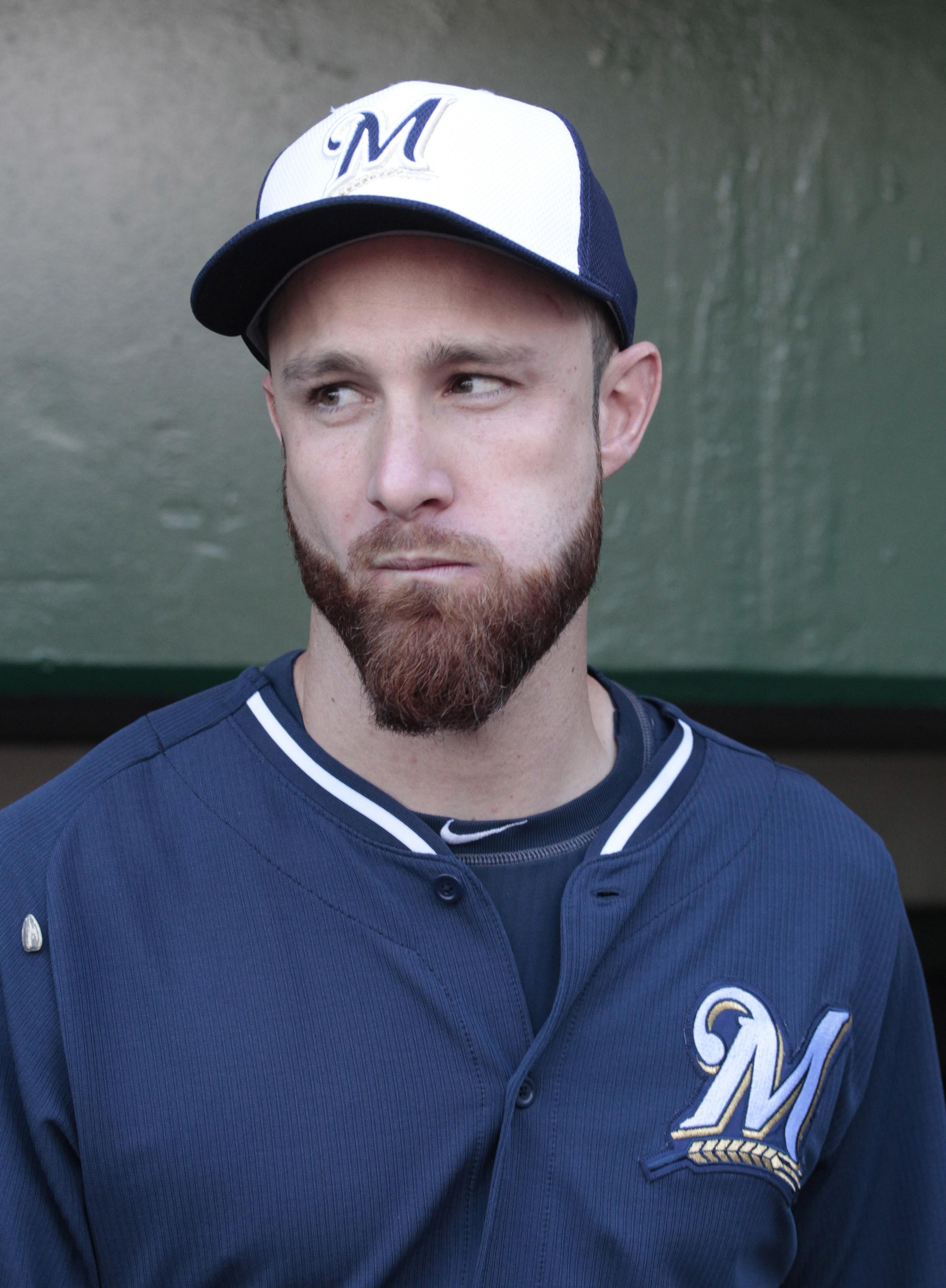 Lucroy, 30, provides the Rangers with a massive upgrade behind the plate over incumbents Robinson Chirinos and Bobby Wilson. Drafted out of the University of Louisiana in the third round in 2007, Lucroy spent his entire seven-year career with the Brewers. He made the All-Star team in 2014 and again this year, with a .299/.359/.482 line in 376 plate appearances in 2016. By measure of wins above replacement, the Rangers are getting the third-best catcher in baseball. After the 2011 season, when Lucroy had less than two years of Major League service, the Brewers signed him to a five-year, $11MM contract extension with a $5.25MM club option for 2017. That contract has turned out to be an incredible bargain for the Brewers. The Indians reached an agreement to acquire Lucroy on Saturday, but the catcher exercised his no-trade clause after Cleveland was reportedly unwilling to eliminate his bargain-priced club option. After that trade fell through, the Mets also made a play for Lucroy. The Rangers ultimately won the bidding, and have added both Lucroy and Carlos Beltran to their offense today.
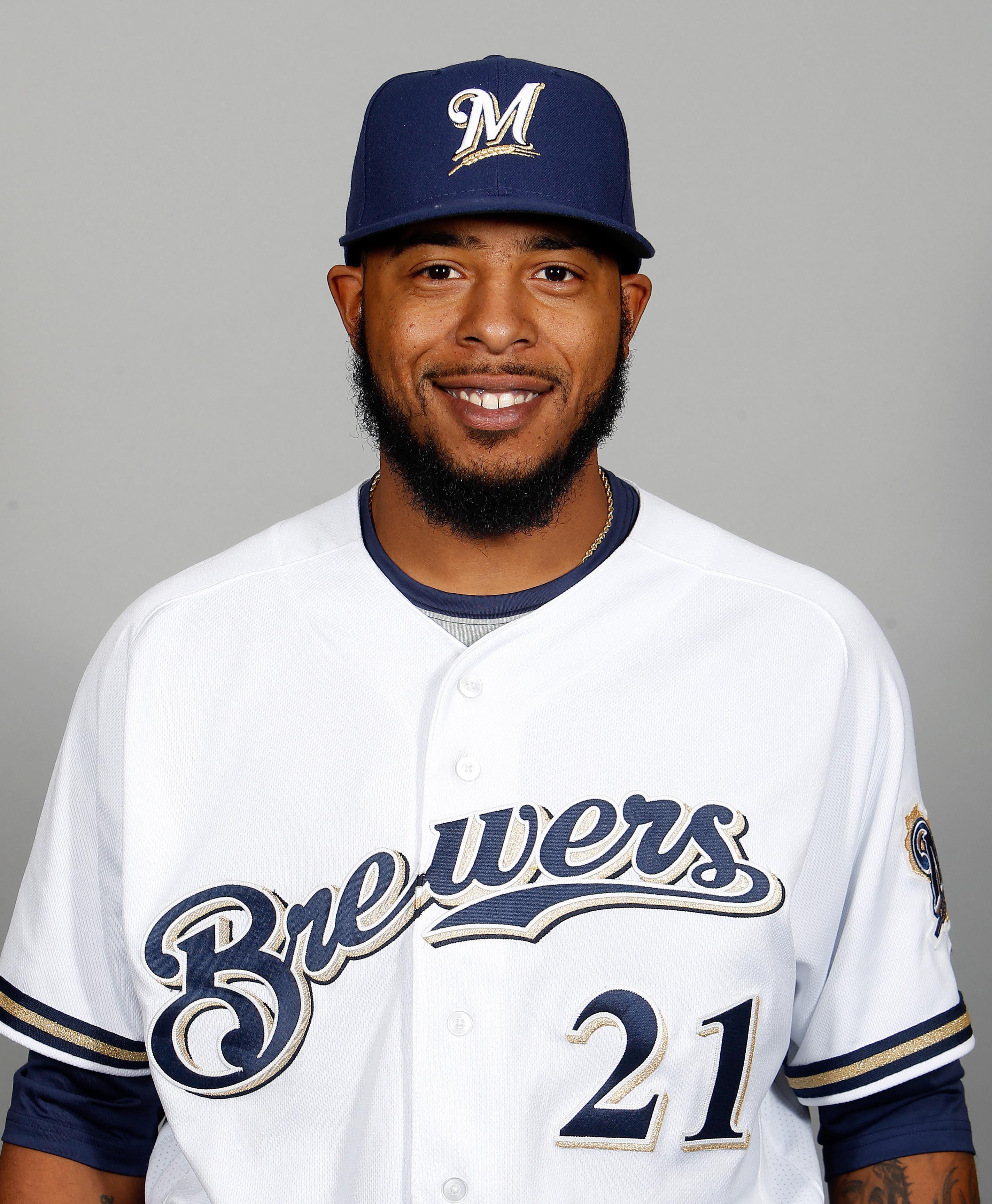 The Rangers also acquired Jeffress, a 28-year-old right-handed reliever with 27 saves on the season. Jeffress was drafted by the Brewers in the first round in 2006 and went to the Royals in the December 2010 Zack Greinke blockbuster. After struggling with that organization, the Blue Jays acquired Jeffress for cash considerations in November 2012. By April of 2013, he was removed from the Jays’ 40-man roster. After another stint on and off the Jays’ roster, Jeffress became a free agent and signed a minor league deal with the Brewers in April 2014. He joined the big league team in July of that year, and that’s when his career began to blossom. Armed with a fastball that averages over 95 miles per hour, Jeffress ascended to the Brewers’ closer job this year and has posted a 2.22 ERA in 44 2/3 innings. He’s controllable through 2019 for the Rangers. While the Rangers’ bullpen has struggled overall this year, Jeffress, Sam Dyson, Tony Barnette, Jake Diekman, and Matt Bush are a formidable unit.
In Brinson, the Brewers added a 22-year-old minor league outfielder universally regarded among the top 30 prospects in the game. He’s hitting just .237/.280/.431 at Double-A this year, battling a shoulder strain. Still, according to ESPN’s Keith Law, “Brinson is an elite defensive center fielder who doesn’t have to hit much to have value in the majors and who has All-Star potential if he hits enough to get to his plus-plus power.” The Rangers also added Ortiz, generally regarded as a top 60 prospect. The 20-year-old righty currently has a 4.08 ERA in Double-A, and Law says he “shows an above-average fastball, plus changeup, and above-average control already.”
Brewers GM David Stearns has had an active trading season as he looks to rebuild his team. Stearns has shipped out Aaron Hill, Will Smith, Lucroy, and Jeffress since the beginning of July.
Ken Rosenthal of FOX Sports, T.R. Sullivan and Jon Morosi of MLB.com, and Evan Grant of the Dallas Morning News broke the story. Photos courtesy of USA Today Sports Images.
Blue Jays Acquire Francisco Liriano, Two Prospects For Drew Hutchison
The Pirates have announced that they’ve received righty Drew Hutchison from the Blue Jays in exchange for lefty Francisco Liriano, outfielder Harold Ramirez and catcher Reese McGuire. The deal comes as a shock, as the Bucs gave up two legitimate prospects in exchange for a marginal rotation option and relief from the approximately $18MM remaining on Liriano’s contract.
[Related: Updated Pittsburgh Pirates and Toronto Blue Jays Depth Charts]
Liriano was a top performer in the Pirates’ rotation in 2013 through 2015, but he has struggled badly in 2016, with a 5.46 ERA and a league-leading 69 walks. The Bucs, much-praised for their reputations for fixing struggling pitchers, evidently felt they wouldn’t be able to fix Liriano, who is making $13MM both this year and next.
Hutchison, formerly a regular in the back end of the Jays’ rotation, has spent most of the 2016 season with Triple-A Buffalo, where he’s posted a 3.26 ERA, 9.7 K/9 and 3.1 BB/9. He’s had considerably less success in his four-year big-league career, with a 4.92 ERA, although with a reasonable 8.3 K/9 and 2.8 BB/9. He’s making $2.2MM this season. He’s eligible for arbitration for two more years after this one, should the Pirates choose to keep him.
The 21-year-old Ramirez was batting .306/.354/.401 for Double-A Altoona. He has a stocky build and hasn’t yet developed much home-run power, but is relatively close to the Majors at a young age and has always hit well for average. MLB.com ranks him the Pirates’ ninth-best prospect.
Ramirez’s inclusion in the deal was surprising enough, but the inclusion of McGuire is downright strange — McGuire’s bat hasn’t developed, but he’s a very highly regarded defensive catcher who rated as the Pirates’ No. 8 prospect. MLB.com notes that his plus defense makes him a likely future regular, with potential to be more than just a defensive-minded player depending on how his bat develops. The 21-year-old has batted .259/.337/.346 for Altoona this season.
Overall, the deal is reminiscent of the Diamondbacks’ 2015 trade of Bronson Arroyo and top prospect Touki Toussaint to the Braves for Phil Gosselin and relief from Arroyo’s salary. The Diamondbacks’ end of that trade was harshly criticized by most analysts, and the Pirates’ end of this deal seems likely to suffer a similar fate.
Robert Murray of Fan Rag was first to tweet that a deal had been struck. Shi Davidi of Sportsnet.ca tweeted that the Jays would receive two prospects. Gideon Turk of BP Toronto tweeted that Hutchison was involved, with Stephen J. Nesbitt of the Pittsburgh Post-Gazette noting Ramirez’s involvement.
Mets Acquire Jay Bruce
After a snag in the medical reviews of a Mets prospect derailed an earlier version of the trade, the Mets and Reds announced today that Jay Bruce has been traded to Cincinnati in exchange for minor league second baseman Dilson Herrera and minor league left-hander Max Wotell. Top outfield prospect Brandon Nimmo was originally said to be in the deal, and while he wasn’t the player whose medicals sank the first iteration of the trade, he is no longer included in this version.
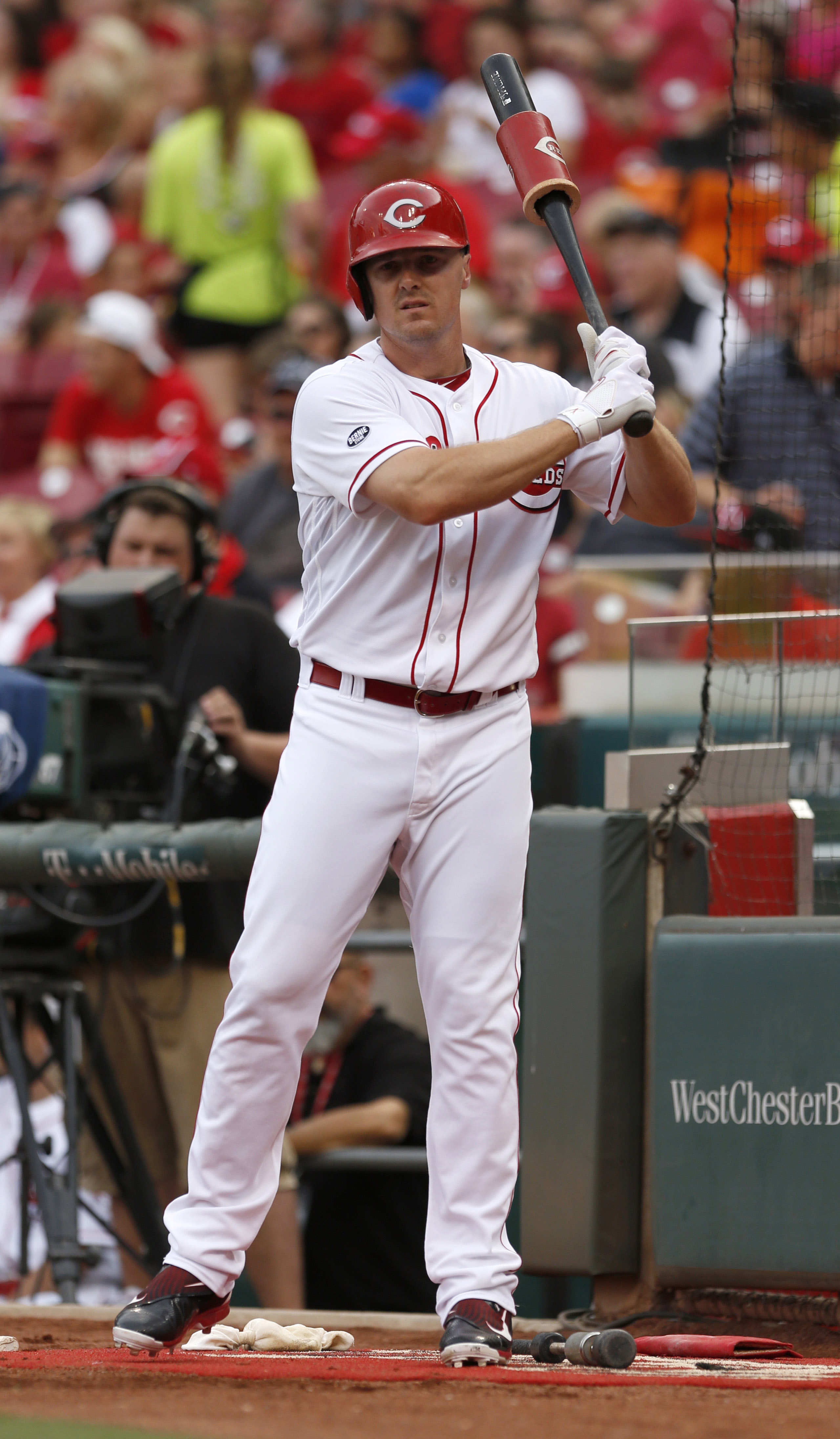
Bruce, 29, now has the chance to join Cespedes in the New York outfield. The career-long Red is in the midst of not just a resurgent season at the plate, but the finest offensive season he’s ever produced. Bruce is batting .265/.316/.559 with 25 homers, 22 doubles and six triples this season while playing on a reasonable $12.5MM salary. He’s still owed about $4.3MM of that sum through season’s end, and his contract comes with a $13MM club option for the 2017 season as well.
Cincinnati came close to moving Bruce during Spring Training in a supposed three-team deal, but medical reviews of some of the minor leaguers involved torpedoed the deal. That looks quite fortuitous for Cincinnati now, as Bruce’s huge season has rebuilt his trade stock substantially. Bruce underwent arthroscopic knee surgery early in the 2014 season and rushed back in less than a month, and he didn’t look like himself at the plate in either 2014 or 2015 (combined .222/.288/.406 slash line). Now, he’ll be moved for a stronger package of young talent than he’d have fetched about four months ago.
Bruce will provide the Mets with a power bat to slot into the corner outfield mix, although his acquisition likely pushes some combination of Curtis Granderson and Michael Conforto into center field due to Yoenis Cespedes‘ now-infamous preference to remain in left field. Certainly, that defensive alignment is sub-optimal, as Bruce’s defensive ratings have plummeted this season, but the Mets have long appeared more concerned with ratcheting up their offensive production (e.g. placing Yoenis Cespedes in center field, signing Asdrubal Cabrera to play shortstop) and seem content to live with a sub-par defensive alignment in order to achieve that end.
Herrera, 22, is no longer considered a “prospect” because he’s tallied 169 big league plate appearances, but he becomes a vital future piece for the Reds and is the unequivocal centerpiece of this deal. The 22-year-old has batted just .215/.308/.383 in his limited big league playing time, but he’s yet to receive an opportunity to play on a regular basis. One would imagine that the Reds will afford him with that opportunity in the near future, giving them a look at a player that has been pegged by many scouting reports as a possible big league regular. Herrera is a career .300/.354/.485 hitter in 753 Triple-A plate appearances, displaying a blend of power and speed that has resulted in 24 homers and 19 steals at that level. Brandon Phillips is blocking him at second base, but it’s conceivable that the Reds’ long-term middle infield tandem will consist of Herrera and Jose Peraza. Whether or not that duo lines up in the middle infield, they both figure to be key factors in the Reds’ emerging young core.
Wotell, 19, has already been slotted in as Cincinnati’s No. 22 prospect by Jonathan Mayo and Jim Callis at MLB.com. He’s yet to pitch above Rookie ball since being selected in the third round of last season’s draft, though he has a solid 3.57 ERA with 10.5 K/9 against 4.7 BB/9 in 40 1/3 innings between the Gulf Coast League and Appalachian League. Callis and Mayo write that he sits 90-91 mph with his heater but can touch 95 and has room to add to his 6’3″ frame. Wotell’s breaking ball has plus potential but he needs to smooth out his delivery and work on his command, the MLB.com duo notes.
Buster Olney and Jerry Crasnick of ESPN, FOX’s Ken Rosenthal and Joel Sherman of the New York Post did a great deal of the reporting on the initial trade. Olney reported that a restructured deal was close to completion (Twitter link). Yahoo’s Jeff Passan reported originally called the Mets the favorites and said that the restructured deal was done (via Twitter). Rosenthal tweeted that Herrera was in the deal instead of Nimmo. MLB.com’s Jonathan Mayo tweeted that Wotell was the second player going to Cincinnati.
Photo courtesy of USA Today Sports Images.
Orioles Acquire Steve Pearce
The Orioles acquired infielder Steve Pearce from the Rays, tweets ESPN’s Jerry Crasnick. The Rays will receive 21-year-old High-A catcher Jonah Heim in return, tweets Ken Rosenthal of FOX Sports. The Orioles have officially announced the deal.
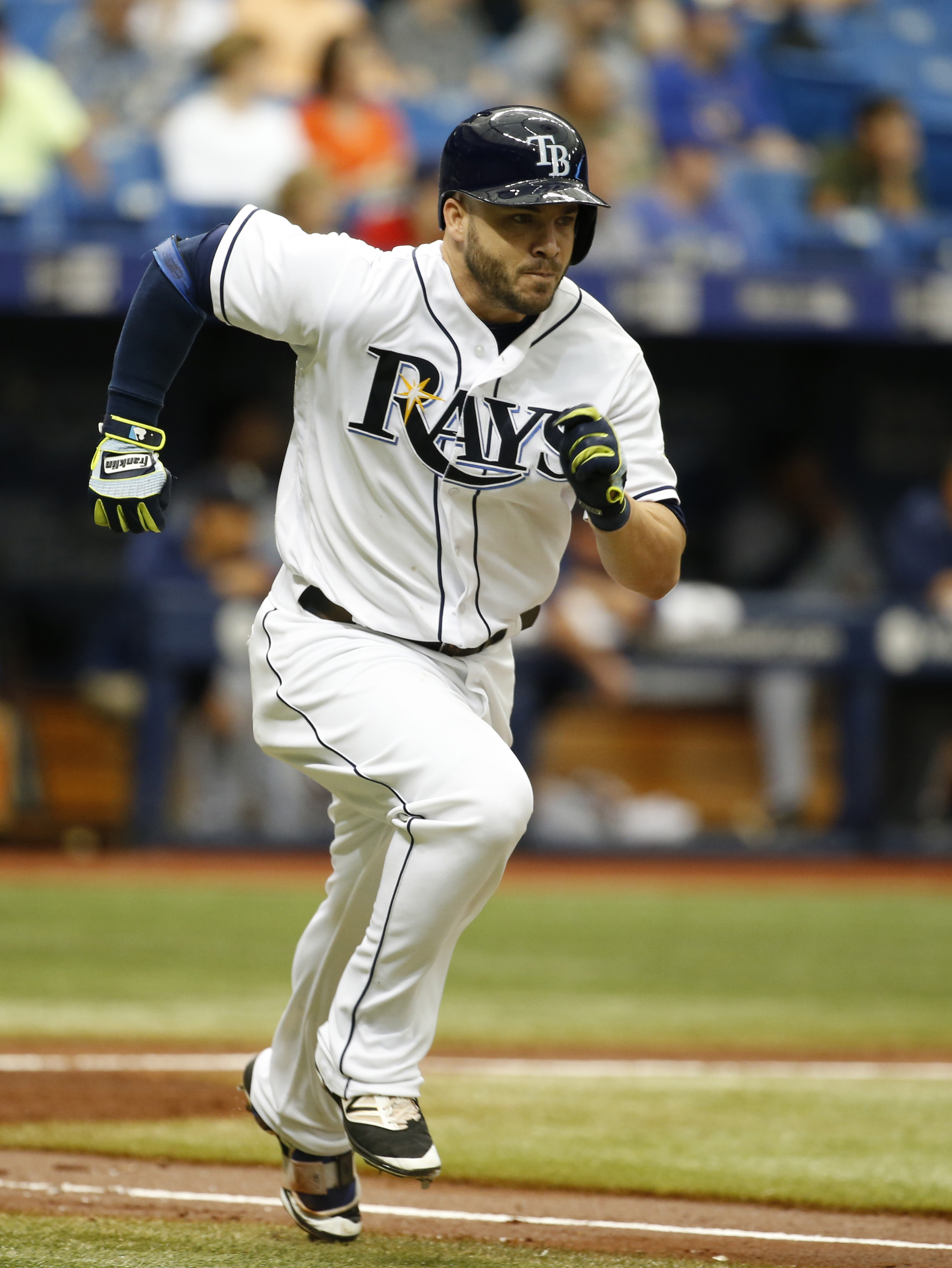 Pearce, 33, had a successful run with Baltimore from 2013-15 before signing with Tampa Bay on a one-year free agent deal. He’s owed about $1.6MM for the rest of the season, plus incentives once he reaches 400 plate appearances. Pearce, a right-handed hitter, has an excellent .309/.388/.520 line in 232 plate appearances on the season. He’s done a lot of damage against lefties, crushing five home runs and four doubles in just 63 plate appearances. For the Rays, Pearce has mostly served as a first baseman, second baseman, and designated hitter. He’s played the outfield as well, and Orioles executive vice president of baseball operations Dan Duquette said today on MLB Network Radio that the veteran’s versatility will allow the club to carry an extra pitcher. You can check out the Orioles’ updated depth chart here.
Heim has struggled offensively at High-A this year, hitting .216/.300/.344 in 329 plate appearances. MLB Pipeline ranked him 13th among Orioles prospects, praising his defense and makeup. The Rays will hope the switch-hitting Heim progresses offensively in the coming years. The Rays made two additional trade deadline deals today, sending Matt Moore to the Giants and Brandon Guyer to the Indians.
Photo courtesy of USA Today Sports Images.