
Padres Sign Jackson Merrill To Nine-Year Extension
The Padres announced that they have signed star outfielder Jackson Merrill to a nine-year contract extension that runs through 2034 with a club option for 2035. Reportedly, it guarantees the star $135MM. Merrill was previously slated to reach free agency after 2029, so this extends the club’s window of control by at least five years. The outfielder is represented by KHG Sports Management.
The salary breaks down as follows: $10MM signing bonus, $1MM in 2026, $6MM in ’27, $8MM in ’28, $10MM in ’29, $20MM annually between 2030-34. There are $30MM in plate appearance escalators that can push his salary earnings to $165MM. Each time Merrill gets to 500 plate appearances in a season, he adds $1MM to his future salaries for the 2030-2034 seasons. The deal can max out at $204MM and includes a $30MM club option for a tenth season that can be converted to a player option. The club option becomes a player option with a top five finish in MVP voting, while a top ten finish is also an escalator.

Merrill’s breakout was a stunningly impressive part of the 2024 season. It didn’t completely come out of nowhere, as Merrill was a first-round pick, selected 27th overall in 2021. He was one of the top prospects in baseball during his time in the minors. However, by the end of the 2023 season, his experience was still limited. He was drafted out of high school, meaning he had not played college ball. His minor league track record consisted of just 200 games. None of those were at the Triple-A level and only 46 were at Double-A. He wouldn’t celebrate his 21st birthday until April 19th of 2024.
On top of his youth and inexperience, the Padres were asking him to make a major defensive shift. He had primarily been a shortstop in the minors but the Friars had Ha-Seong Kim and Xander Bogaerts in their middle infield. In center field, Trent Grisham‘s bat had fallen off and the Padres sent him to the Yankees as part of the Juan Soto deal. The Padres tried Merrill there in the spring, liked the results and gave him the job.
In spite of his talents, it would have been understandable if there were some growing pains for a guy so young and learning a premium defensive position on the fly. But no such pains were evident, as Merrill flourished. He hit 24 home runs for the Padres last year. His 4% walk rate was low but he also kept his strikeouts down to a 17% clip. His .292/.326/.500 batting line translated to a 130 wRC+, indicating he was 30% better than league average. He stole 16 bases in 19 tries. Defensive Runs Saved considered him to be league average in center, no small feat given the circumstances. Even more impressively, he was credited with 11 Outs Above Average, a mark that put him in the top ten of center fielders last year.
The overall package was very strong. FanGraphs credited him with 5.3 wins above replacement and Baseball Reference 4.4. That would have made him a slam-dunk Rookie of the Year in many seasons, but Merrill was up against Paul Skenes and his incredible debut. Merrill got seven out of 30 first-place votes and finished second to Skenes in National League ROY voting. He also finished ninth in the NL Most Valuable Player vote.
Kim departed via free agency after 2024 and the Padres could have considered moving Merrill back to shortstop this year, though president of baseball operations A.J. Preller quickly shot that down in October. The move to center field had gone so smoothly that they didn’t want to mess with it. The 2025 season could hardly have started better. Merrill has a line of .400/.435/.600 through six games as the Padres are undefeated.
The Padres clearly love Merrill. That’s why they nabbed him with a first-round pick and promoted him so quickly. They also reportedly discussed an extension with him prior to his debut, showing tremendous faith in him before he had even proved himself in the majors.
After that breakout, they probably wished they had got something done ahead of time, as he only increased his earning potential last year. Broadly speaking, extension prices go up as guys get further into their arbitration years and closer to free agency. We can only guess what number it would have taken to get a deal done a year ago. The Padres have had plenty of financial pressures in recent years but Merrill’s price would likely only go up over time, so now is better than later.
In terms of pre-arbitration extensions, Merrill comes in a bit below the top guarantees but on a shorter deal that will still allow him to hit free agency with a lot of earning power. As shown on MLBTR’s Contract Tracker, the top guarantees for pre-arb extensions are for Fernando Tatis Jr., Bobby Witt Jr. and Julio Rodríguez. Tatis got $340MM but on a 14-year deal that essentially bought out his entire career. Witt got a guarantee of $288.8MM on an 11-year pact but he seems likely to opt out after seven years with with $148.8MM banked. Rodríguez got a $210MM guarantee over 12 years but with a complicated club/player option structure that could see him depart after seven seasons.
Merrill’s guarantee comes in a bit below that tier of players but on a shorter deal. The final guaranteed year of this pact will be his age-31 season, meaning he will still have a chance to secure another notable guarantee in the future via free agency. The option could keep him in San Diego another year but he also has a decent shot at converting it to a player option. As mentioned, he already finished ninth in MVP voting in his rookie season, so getting into the top five isn’t far-fetched. He has a decent shot of pushing up his salary earnings via those escalators. He also gets to bank huge money ahead of schedule, as he previously wasn’t slated to qualify for arbitration until after 2026.
For the Padres, they have had a budget crunch in recent years but they love their guys. Over the past five years, this is the sixth extension worth at least $80MM that they have put on the books, the others having gone to Tatis, Manny Machado, Joe Musgrove, Yu Darvish and Jake Cronenworth.
Since this deal starts in 2026, it won’t affect the club’s competitive balance tax number in 2025. The specific annual breakdown hasn’t been publicly reported but early-career extensions often involve gradually escalating salaries. Musgrove’s deal is done after 2027. Nick Pivetta can opt out of his deal after 2026 or 2027. Robert Suarez can opt out of his pact after 2025. Luis Arráez, Dylan Cease and Michael King are each making notable salaries and are slated for free agency after this year. Though the budget has clearly been tight recently, the Friars evidently felt that they had enough wiggle room in the future to make this work.
It still amounts to a large pile of future commitments. Between Merrill, Bogaerts, Tatis and Machado, they have four mega contracts on the books through at least 2033. In recent years, with the collapse of their TV deal, that’s led to some budget crunches. The front office has had to get creative, including trading away Soto. They got huge value from a $1MM investment in Jurickson Profar last year, though that now looks suspect in the wake of his recent PED suspension. This winter, they took similar low-cost fliers on players like Kyle Hart and Jason Heyward, as well as a back-loaded deal for Pivetta.
Perhaps more such maneuverings are in the club’s future, as they seem content to run an imbalanced payroll with heavily-paid stars while they look for upside plays elsewhere. For fans, that means they can look forward to watching the Merrill/Tatis/Machado/Bogaerts core for close to another decade, while the supporting characters might rotate. For Merrill, thanks to his quick ascent to the majors, he was able to put nine figures in the bank while still having a chance to hit the open market in his early 30s.
Robert Murray of Fansided first reported that the two sides were in agreement on a nine-year deal with a $135MM guarantee and $30MM club/player option that could max out at $204MM. Jon Heyman of The New York Post reported that it started in 2026. Dennis Lin of The Athletic reported the presence of the $30MM in plate appearance escalators that could bump the overall salary payout to $165MM. MLBTR’s Darragh McDonald reported the specifics on those escalators. Russell Dorsey of Yahoo reported the $10MM signing bonus, that the club option becomes a player option with a top five finish in MVP voting, and that a top ten finish is also an escalator. Heyman reported the salary breakdown.
Photos courtesy of Orlando Ramirez and Denis Poroy, Imagn Images
Reynaldo Lopez To Undergo Arthroscopic Shoulder Procedure
The Braves are sending Reynaldo López for an arthroscopic procedure on his injured shoulder, manager Brian Snitker told reporters (including Mark Bowman of MLB.com). The team won’t have a timetable for López’s return until after the surgery, as that will reveal whether there’s any structural damage. Snitker said the Braves are hopeful that the All-Star righty will return at some point this season.
While it’s not quite the worst-case scenario, it’s clearly concerning. Initial imaging on López’s shoulder has only revealed inflammation. Even in an ideal situation where the scope confirms that diagnosis, it’s going to be a long-term absence. Any kind of midseason procedure on a pitcher’s throwing shoulder is going to cost him a good chunk of the year.
Atlanta signed López to a three-year, $30MM free agent deal during the 2023-24 offseason. While he had worked in relief for the preceding three seasons, the Braves stretched him back out as a starter. When he’s been healthy, the results could hardly have been better. López managed a 1.99 earned run average across 26 appearances spanning 135 2/3 innings. He and Paul Skenes were the only pitchers to reach 100 innings while posting a sub-2.00 ERA. López deservedly earned an All-Star nod and placed 11th in NL Cy Young balloting.
López’s arm health unfortunately became a story in the second half. Forearm inflammation knocked him out for a couple weeks after the trade deadline. He returned relatively quickly from that issue but went back on the injured list in mid-September. The second placement was the result of shoulder inflammation. It was again a relatively brief IL stay, but it proved a precursor to this year’s shoulder discomfort.
The 31-year-old made his 2025 season debut in Atlanta’s second game of the season. He worked five innings of three-run ball in Friday’s loss to San Diego. López only recorded one strikeout and all of three swinging strikes. His velocity was fine — his 95.6 MPH average fastball speed was the same as it had been last season — but it was a tough outing. The Braves placed him on the 15-day injured list yesterday.
Atlanta recalled Bryce Elder to go opposite Blake Snell in Wednesday’s series finale against the Dodgers. Chris Sale will take the ball tonight against Dustin May as the Braves try to break a five-game losing streak. Spencer Schwellenbach, AJ Smith-Shawver and Grant Holmes occupy the other rotation spots for the moment. Spencer Strider is on a rehab assignment at Triple-A Gwinnett and could be back in the majors by the middle of next week. That’d likely push one of Elder or Smith-Shawver back to Triple-A. Strider’s return should be a huge lift, but the López injury is testing Atlanta’s already questionable depth beyond their top four starters.
The Braves reworked López’s contract at the beginning of the offseason. The pitcher agreed to trim this year’s salary from $11MM to $8MM in exchange for the club preemptively triggering an $8MM option for 2027.
Pirates Option David Bednar
The Pirates announced that they have optioned right-hander David Bednar to Triple-A Indianapolis and designated catcher Jason Delay for assignment. Those are the corresponding moves to add pitching prospect Thomas Harrington, a move which was reported earlier today.
The move highlights what a recent struggle it’s been for Bednar, who was once one of the most dominant closers in the league. From 2021 to 2023, he made 172 appearances for the Pirates. He had a 2.25 earned run average, 31.2% strikeout rate and 7.7% walk rate. He gradually took over the ninth inning in Pittsburgh in that time, with three saves in 2021, 19 the year after and then 39 in 2023.
That production would have been exciting for any club but it was enhanced by the “local kid makes good” angle. Bednar was born in Pittsburgh, went to Mars Area High School and attended Lafayette College in Easton, Pennsylvania. He was drafted by the Padres but made his way to his hometown club in January of 2021, just before his breakout, as part of the three-team trade that sent Joe Musgrove to San Diego.
But he’s been on a downward slide since then. He posted a 5.77 ERA for the Bucs last year. His strikeout rate fell to 22.1% and his walk rate climbed to 10.7%. He lost the closer’s role for the final month of the season.
His first three appearances in 2025 have gone poorly. On Opening Day against the Marlins, he was put into the bottom of the 9th in a 4-4 game. He allowed a triple, issued an intentional walk and then allowed a walk-off single. He got another chance the next day, getting the ninth with the Bucs up 4-1. A walk and a homer quickly made it 4-3, though Bednar then got three outs to record the save. On Sunday, he was again put into tie game in the ninth. A single, stolen base, throwing error and wild pitch quickly led to another loss.
It’s a frustrating mystery for Bednar and the Pirates, as his stuff doesn’t seem to have lost any zip. He averaged 96.6 miles per hour on his fastball in 2023 with opponents batting .188 and slugging .315 against it. Last year, his velo actually ticked up to 97.2 mph but the pitch allowed a .256 batting average and .459 slug. His splitter and curve didn’t seem to lose any velo either.
Bednar and the team have presumably been trying to find an explanation for his struggles without coming up with a clear solution, so the Bucs have taken the step of sending him to Indianapolis, perhaps with the idea of him having a chance to get into a good groove away from the pressures of the big leagues. In Bednar’s stead, the closing duties will perhaps fall to someone like Colin Holderman or Dennis Santana.
The move isn’t likely to impact Bednar’s trajectory to free agency. He came into this season with his service clock at four years and 76 days. That’s 96 days shy of the five-year mark and he’s already added five more days this year. That means he needs about three more months in the majors to get over that line. Assuming he gets beyond five years at some point here in 2025, he would have just one season of club control remaining.
If he stays down for longer than that, the Bucs could theoretically gain another year. But in that scenario, he likely didn’t pitch well in the minors, meaning they probably wouldn’t tender him an arbitration contract since he is making $5.9MM this year. The arbitration system is set up so that salaries almost never go down, even with poor performance.
It will surely lead to plenty of “what-if” questions. The Bucs haven’t been competitive for most of the recent past, so Bednar’s name came in a trade rumors from time to time. The Pirates never clicked on any deal. In hindsight, plenty will say that they should have taken whatever offers were on the table, but it’s hard to fathom anyone foreseeing this quick downfall.
Delay, 30, has seen a decent amount of time as Pittsburgh’s backup catcher in recent years. From 2022 to 2024, he hit .231/.295/.315 in 134 games with solid glovework. However, the catching depth for the club has become more crowded. Endy Rodríguez missed all of 2024 recovering from UCL surgery but is now back. While he was gone, the club took a flier on Joey Bart and saw him break out. Between those two and former first overall pick Henry Davis, Delay was likely fourth on the depth chart.
The Bucs will now have a maximum of one week of DFA limbo to figure out what’s next. The waiver process takes 48 hours so any trade possibilities would have to come together in the next five days. Delay still has options and hasn’t yet reached arbitration, so he could be an affordable depth addition for a club looking to bolster its catching corps.
Photo courtesy of Kim Klement Neitzel, Imagn Images
Red Sox Sign Garrett Crochet To Six-Year Extension
Today: The Red Sox have officially announced Crochet’s extension. The full breakdown was reported by Chris Cotillo of MassLive. Crochet gets a $4MM signing bonus followed by a salary of $24MM next year. He then gets $28MM annually from 2027 through 2030, followed by $30MM in 2031. Per Alex Speier of The Boston Globe, there’s also a $15MM conditional club option for 2032 if Crochet misses 120 days due to a significant arm injury. His opt-out after 2030 would also be void if such an absence occurs before then.
March 31: The Red Sox have reportedly reached agreement with new ace Garrett Crochet on a six-year, $170MM extension that goes into effect in 2026. The CAA client can opt out after the 2030 season. The deal, which does not have any deferred money, includes an additional $10MM in escalators based on Cy Young finishes and a $2MM assignment bonus in the event of a trade, though there is not any no-trade protection.
Crochet, who turns 26 in June, was on track to hit free agency after the 2026 season. The extension leaves unchanged his $3.8MM salary for this year. It buys out his final arbitration season and five free agent years, though the opt-out means it “only” extends the team control window by four seasons.
Boston acquired Crochet in one of the offseason’s biggest trades. They packaged four prospects, including their two most recent first-rounders Kyle Teel and Braden Montgomery, to land the All-Star lefty from the White Sox. Crochet had seemed likely to move at last summer’s deadline until a late revelation that his camp was seeking an extension if he were to continue pitching through a playoff race.
Crochet was wrapping up his first full season as a starting pitcher. The 6’6″ southpaw threw a total of 132 innings in college at Tennessee. His draft year was cut short by the cancelation of the 2020 college season. The White Sox selected him 11th overall and fast-tracked him to the big leagues as a reliever. Crochet pitched well in that role for his first year-plus but blew out his elbow in Spring Training 2022. He underwent Tommy John surgery that cost him that season and limited him to 12 2/3 innings the following year.
By the time he’d returned from the Tommy John rehab, the White Sox were in full rebuild mode. They took the high-upside play of giving Crochet a chance to start going into 2024. They probably didn’t expect him to pitch as well as he did. Crochet’s stuff was still overpowering as a starter. He struck out 35.2% of opposing hitters en route to a 3.02 ERA in 107 1/3 frames through the All-Star Break. Chicago dramatically pulled back his workload after the trade deadline. While they kept him on a regular rotation schedule, the White Sox limited him to 2-4 inning appearances for the final two months of the season. That was a prudent approach to keep him healthy after essentially two straight lost years.
Crochet finished the year with a 3.58 ERA across 146 2/3 innings. He struck out 209 hitters while issuing only 33 walks. No other pitcher with at least 100 innings posted a better strikeout rate than his 35.1% mark. On a per-pitch basis, only Blake Snell got more swinging strikes. Crochet’s already impressive ERA was probably a bit inflated by pitching in front of a poor White Sox defense. His swing-and-miss ability pointed to ace upside so long as he could maintain his stuff while working a regular starting workload for a full season.
The Red Sox clearly believe that’s realistic. They parted with a decent amount of prospect talent to acquire Crochet’s final two years of arbitration eligibility. They almost immediately opened extension conversations. Unlike last summer, there was never any doubt that Crochet would pitch into October this year (so long as he stays healthy) regardless of whether a deal got done. Crochet indicated he’d table discussions come Opening Day. That’s a common refrain among players, but it’s not unheard of for players to back off that self-imposed deadline if there’s only a narrow gap as the regular season begins.
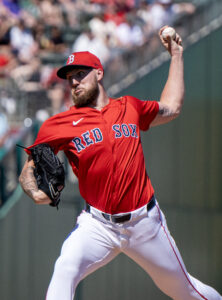
Crochet made his first start in a Boston uniform in the interim. He worked five innings of two-run ball with four strikeouts against Texas on Opening Day. While nothing got done last week, he told WEEI’s Rob Bradford on Friday that talks had gone “to the wire” and said that boded well for whenever they reopened discussions. They were evidently close enough to continue communications and get the deal done.
It will not have any impact on this year’s payroll calculations. Crochet is making a modest salary, as his arbitration earning potential had been limited by his lack of innings. That’ll jump beginning next year. The specific salary structure has not been reported, but the contract will count for roughly $28.33MM against Boston’s luxury tax ledger each season from 2026-31.
Crochet would likely have earned something in the $8-10MM range for his final year of arbitration. The Red Sox are valuing the would-be free agent seasons around $32MM annually. That’s a similar range to what Snell commanded in terms of net present value on his five-year free agent deal with the Dodgers. Corbin Burnes got $35MM per season on a six-year deal with Arizona, while Max Fried received a $27.25MM annual value and got eight years from the Yankees. The Red Sox valued Crochet’s free agent years the way they would for a #1/2 type starter.
Crochet technically sets a new standard for starting pitcher extensions in the 4-5 year service bucket. Jacob deGrom’s $120.5MM deal with the Mets from six years ago had been the only nine-figure contract for a pitcher in that service class. Crochet easily topped that. Still, his extension arguably fits better in the 5-6 year service bracket, since it doesn’t go into effect until his final year of arbitration. Nine-figure contracts for pitchers in that class are more common, but Crochet still handily beats the recent guarantees for Luis Castillo ($108MM) and José Berríos ($131MM).
This is the fifth significant contract that the Sox have on the books for at least two years beyond this one. Alex Bregman will make $40MM annually through 2027, though he can opt out after each of the next two seasons and a good portion of his money is deferred. Rafael Devers is signed through 2033 on salaries ranging from $27.5MM to $31MM. Trevor Story will make $25MM per season between 2026-27, assuming he doesn’t opt out next winter. Masataka Yoshida is under contract for $18.6MM annually for another two years.
It’s a risky move for the Red Sox, one that reaffirms their belief that Crochet will be a top-of-the-rotation starter for years to come. They’re buying what they expect to be his prime, as he’s signed from ages 26-32. If he stays healthy and lives up to the ace potential, Crochet could opt out before his age-32 season and potentially command another five- or six-year contract.
Jeff Passan of ESPN first reported that the Red Sox and Crochet agreed to a six-year, $170MM deal beginning in ’26 with the opt-out and no deferred money. Robert Murray of FanSided was first with the $10MM in escalators, which Mark Feinsand of MLB.com specified were based on Cy Young placement. Feinsand had the assignment bonus and absence of no-trade protection.
Image courtesy of Chris Tilley, Imagn Images.
Lance Lynn To Retire
Veteran starting pitcher Lance Lynn announced his retirement today on his and his wife’s podcast, Dymin in the Rough. In his own words, “I am officially retiring from baseball right here, right now… from Major League Baseball, I am done pitching.”
Lynn spent his final season with the Cardinals, pitching to a 3.84 ERA and 4.40 SIERA over 117 1/3 innings. The team went 15-8 in his starts. It was a fitting way to go out, pitching for the same team with whom he spent the first decade of his professional career. The Cardinals selected Lynn in the first round of the 2008 draft, and he made his big league debut just under three years later. He would quickly become a key contributor in the Cardinals’ bullpen, helping the team to a World Series championship in the fall.
Taking on a full-time starting job for the first time, Lynn was an All-Star in 2012. Overall, across six seasons in St. Louis from 2011-17, the right-hander threw close to 1,000 innings. He went 72-47 with a 3.38 ERA and 3.94 SIERA. He then spent most of his thirties bouncing between organizations, pitching for the Twins, Yankees, Rangers, White Sox, and Dodgers before returning to the Cardinals. Although Lynn had a couple of rough seasons in that time, he also had a few of his best. He earned Cy Young votes each year from 2019-21, finishing fifth, sixth, and third, respectively. He was also an All-Star in 2021, when he pitched to a career-best 2.69 ERA. All told, Lynn threw just over 2,000 MLB innings and collected just over 2,000 strikeouts. He pitched to a 3.74 ERA and won 143 games.
Some might have worried that Lynn was nearing the end in 2023, when he pitched to a bloated 5.73 ERA between the White Sox and Dodgers. It was only the second time in his career that he posted an ERA above 4.00. That being said, he still made 32 starts that year, and his respectable 4.33 SIERA was an encouraging sign. The Cardinals clearly had faith in Lynn, signing him to a one-year, $11MM guarantee with a club option for 2025, and he proved them right. While right knee inflammation limited him to 23 starts, he looked like a perfectly solid back-end starter in those games. Aside from one blowup outing in July (2 2/3 IP, 11 R), he gave St. Louis a chance to win each time he took the mound. However, the Cardinals declined his $12MM team option for 2025.
While Lynn did have some suitors over the winter, the Cubs were one team known to have interest, he says, “The money didn’t work out.” He adds that he wasn’t particularly interested in the possibility of signing with a team mid-season. In other words, prolonging his career was not his top priority. To that point, he might have also had a chance to prolong his career by transitioning into a reliever – an option he seemed at least somewhat interested in when he discussed the topic with Ken Rosenthal of The Athletic in January. Yet, his comments suggest he is quite happy with the way he ultimately went out.
Pirates To Select Thomas Harrington
The Pirates are poised to promote right-hander Thomas Harrington to the majors for today’s start against the Rays in Tampa, according to a report from Noah Hiles of the Pittsburgh Post-Gazette. Harrington is not yet on the 40-man roster, so the club will need to make a corresponding move to open up a spot for Harrington before he can officially be selected.
Harrington, 23, was a first-round pick by the Pirates in the 2022 draft. He was the 36th selection in the draft, the Pirates’ second pick after infielder Termarr Johnson went number four overall. After he posted an impressive 2.53 ERA and 30% strikeout rate in 15 starts for Campbell during his draft year, the Pirates held off on putting Harrington in pro games until 2023. He more or less picked up right where he left off despite the layoff with a 2.77 ERA and 26.7% strikeout rate in eight starts at the Single-A level. That got him a quick promotion to High-A, where he faced a bit more adversity but still managed a solid 3.87 ERA in 127 1/3 innings across 18 starts while punching out 28.2% of his opponents.
The right-hander built on that solid first season as a pro with a dominant one in 2024. Though a rotator cuff injury cost him some of his 2024 campaign, Harrington made the most of his opportunities when he was healthy enough to take the mound, with an incredible 2.24 ERA and a 27.4% strikeout rate in 68 1/3 innings of work at the Double-A level. That earned him a promotion to Triple-A, where his strikeout rate dropped to just 21.2% but he nonetheless managed to post a solid 3.33 ERA across eight starts. Harrington’s breakout performance last season and success at the highest level of the minors put him on the radar for a big league debut this year, and he’s now set to get that opportunity later today.
The righty’s strong performance in 2024 was also enough to make him a consensus top-100 prospect, rated as the #74 prospect in the sport by Baseball America and #79 by MLB Pipeline at the outset of the 2025 season. He’s since moved up a spot on both lists following the graduation of Nationals outfielder Dylan Crews yesterday. Harrington features a deep pitch mix headlined by a fastball that tops out at 95mph and an above-average slider, though he also features a cutter and curveball, both of which grade out as roughly average. The main selling point of Harrington’s overall package is pinpoint control, however; he walked just eight batters in 46 innings at Triple-A last year and has a tidy 6.1% walk rate across all levels of the minors.
When Jared Jones went on the injured list to open the season, Harrington was in the mix for the fifth starter job with the Pirates but ultimately lost out to right-hander Carmen Mlodzinski, a former first-round pick in his own right with a 2.91 ERA in 86 1/3 career innings at the big league level entering the 2025 season. With that being said, it still did not take long for Harrington’s call to the big leagues to occur. It’s unclear whether today’s appearance will strictly be a spot start for the youngster or a more significant opportunity, though it should be noted that Mlodzinski surrendered four runs on seven hits and two walks in 3 2/3 innings of work during his first start of the season last night.
That’s the sort of performance that could, at least in theory, open the door for Harrington to claim a rotation spot with a dominant outing. As a consensus top-100 prospect called up in the early days of the season, Harrington would be eligible to earn the Pirates a prospect promotion incentive draft pick if he sticks on the active roster for the rest of the 2025 campaign. Harrington would need to win the NL Rookie of the Year award or finish in the top three of NL Cy Young award (or MVP) voting during his pre-arbitration years in order to bring back a PPI pick for Pittsburgh.
Rotation depth is perhaps the biggest strength of the Pirates’ roster. An on-paper starting five of Paul Skenes, Jones, Mitch Keller, Andrew Heaney, and Bailey Falter is already one of the most solid rotations in the National League, and the presence of youngsters like Harrington, Mlodzinski, Braxton Ashcraft, and star pitching prospect Bubba Chandler serve to lengthen out the club’s depth chart significantly. That rotation depth is robust enough that the Pirates felt comfortable trading a controllable young arm in Luis Ortiz even after a season where he posted a 3.32 ERA in 137 2/3 innings of work. That trade netted the Pirates a comparably controllable young hitter in Spencer Horwitz, who opened the season on the injured list due to wrist surgery but figures to settle in as the club’s everyday first baseman once healthy.
Jurickson Profar Receives 80-Game PED Suspension
Major League Baseball has announced that Braves outfielder Jurickson Profar has been suspended for 80 games after testing positive for a performance-enhancing drug. Reporter Mike Rodriguez first relayed that Profar was to get a suspension due to a positive test. Jeff Passan of ESPN confirmed that it would be a PED suspension. Profar will be able to return during the season but won’t be eligible for the playoffs this year, as is true for all players in the year they serve a PED suspension.
MLB announced the suspension with the following statement: “The Office of the Commissioner of Baseball announced today that Atlanta Braves outfielder Jurickson Profar has received an 80-game suspension without pay after testing positive for Chorionic Gonadotrophin (hCG), a performance enhancing substance, in violation of Major League Baseball’s Joint Drug Prevention and Treatment Program. The suspension of Profar is effective immediately.”
The team also released a statement: “We were surprised and extremely disappointed to learn that Jurickson Profar tested positive for a performance-enhancing substance in violation of Major League Baseball’s Joint Prevention and Treatment Program. We fully support the Program and are hopeful that Jurickson will learn from this experience.”
Profar himself also released a statement through the MLBPA: “Braves fans, Today is the most difficult day of my baseball career. I am devastated to announce that I have been suspended for 80 games by Major League Baseball and the Commissioner’s office, for testing positive for a banned substance this offseason. This is especially painful for me because anyone who knows me and has seen me play knows I am deeply passionate about the game. There is nothing I love more than competing with my teammates and being a fan favorite. I want to apologize to the entire Braves organization, my teammates, and the fans. It is because of my deep love and respect for this game that I would never knowingly do anything to cheat it. I have been tested my entire career, including eight times last season alone, and have never tested positive. I would never willingly take a banned substance, but I take full responsibility and accept MLB’s decision. I am devastated that I won’t be on the field with my teammates for the next 80 games. I look forward to competing again at the highest level this season upon my return.”
The news will immediately cast a new light on Profar’s breakout campaign in 2024. A former top prospect, his big league career had been fairly inconsistent. His plate discipline had always been good, with above average strikeout and walk rates throughout most of his career, but generally with a lack of impact. At the end of the 2023 season, he had appeared in 961 big league games and was sitting on a .238/.322/.383 battling line. That production translated to a 92 wRC+, indicating he had been 8% worse than league average overall.
His stock had fallen far enough that he settled for a $1MM deal with the Padres going into 2024, barely above last year’s $740K league minimum salary. He went on to have the best season of his career at the age of 31. He hit 24 home runs for the Friars while drawing walks at an 11.4% clip and striking out just 15.1% of the time. His .280/.380 /.459 batting line translated to a 139 wRC+, easily the best of his career. Relative to 2023, his average exit velocity jumped from 86.5 miles per hour to 91.1. His hard hit rate went from 31.8% to 44.4%. In general, just about everything on his Statcast page got redder.
That made him a much hotter commodity this past offseason. He got interest from clubs like the Mets, Royals, Blue Jays and Astros before signing a three-year, $42MM deal with Atlanta in January. This news will naturally lead the baseball world to re-evaluate that breakout season.
Presumably, Atlanta had no idea about Profar’s test when they signed him or they wouldn’t have done the deal. Still, it will be a massive headache for them and looks like a big waste of resources. The club took a very measured approach this winter, seemingly working under specific financial restraints. They flipped Jorge Soler and the remainder of his contract to the Angels as soon as the offseason began. They later turned down a reasonable club option on Travis d’Arnaud. They renegotiated the contracts of Reynaldo López and Aaron Bummer, in both cases kicking a bit of money from 2025 to 2026.
In hindsight, it seems the club was trying to get the payroll down to a specific level and get themselves under the competitive balance tax. Per RosterResource, their CBT number is currently around $234MM. That’s about $7MM shy of this year’s $241MM base threshold, leaving them a bit of wiggle room to make in-season moves and reset their tax status this year. Assuming they indeed follow through on that, they could go into 2026 as “first-time” payors, after paying the tax in 2023 and 2024.
Around the frugal moves, Profar was their one big splash. They didn’t give out another deal worth more than $1.5MM. The outfield was an obvious target area. Last year’s acquisition of Jarred Kelenic didn’t work out, as he hit .231/.286/.393 in his first season in Atlanta. Ronald Acuña Jr. tore his left ACL in May and missed the remainder of the season. They made midseason acquisitions of Soler and Ramón Laureano but both were dispatched this winter for financial reasons. Soler was flipped to the Angels for Griffin Canning, with Canning later non-tendered. Laureano, who was projected for a $6.1MM salary, was himself non-tendered.
Considering all of that, it’s obviously a less than ideal development. The club tried to walk a fine line all winter, pinching pennies while hopefully keeping themselves in position to compete in 2025. Amid several subtractions, Profar was their most aggressive addition. Now he’s going to be out of action for a long while and it’s anyone’s guess what form he will be in when he comes back. He won’t be eligible for postseason play this year regardless.
He won’t be paid while serving his suspension, saving the club a bit of money, but they have few options for redirecting those funds now that the season has started. The team will now have to improvise a way to proceed. Harris is still a strong option in center but the corner options aren’t incredibly inspiring. Kelenic figures to get plenty of playing time, though as mentioned, he struggled last year and has a .154/.154/.385 line so far this year. Bryan De La Cruz and Eli White are also on the active roster. Stuart Fairchild was claimed off waivers today and will join the club shortly. Carlos Rodriguez is on the 40-man but on optional assignment.
In time, that picture should improve. Alex Verdugo was signed just over a week ago. He agreed to be optioned for now so that he could ramp up after missing spring training and should join the club in the coming weeks. Acuña could potentially be reinstated off the injured list in May. Profar will eventually return from this suspension but won’t be postseason eligible. Players on other clubs could become available as the trade deadline nears.
Nonetheless, it’s a gut check for a club that is already reeling a bit. They lost their first four games, getting swept by Profar’s old club in San Diego. There’s still a long season ahead, but they were set for a tough battle in a packed NL East. As mentioned, they tried to walk a tightrope this winter by cutting spending but still competing. Profar was the jewel of that offseason but the shine has come off real fast.
Photo courtesy of Mike Lang, Imagn Images.
Colton Cowser Out At Least Six To Eight Weeks With Broken Thumb
10:34am: Manager Brandon Hyde told the O’s beat this morning that Cowser will miss six to eight weeks at minimum (via Danielle Allentuck of the Baltimore Banner).
9:00am: The Orioles announced Monday that outfielder Colton Cowser has been placed on the 10-day injured list due to a fractured left thumb. A timetable for his return was not specified. Cowser suffered the injury last night while sliding into first base on a close play; he was ruled out (video link). Fellow outfielder Dylan Carlson has been recalled from Triple-A Norfolk in Cowser’s place.
It’s a sour start to the season for Cowser, last year’s runner-up in American League Rookie of the Year voting. He’s posted just a .125/.222/.313 slash through his first 18 plate appearances and will now be looking at an absence of some note while his hand mends.
Cowser enjoyed a monster spring, tallying 52 plate appearances with a .364/.462/.568 batting line, two homers and three doubles. The former No. 5 overall pick out of Sam Houston hit .242/.321/.447 with 24 homers, 24 doubles, three triples, nine steals, a 9.3% walk rate, a 30.7% strikeout rate and plus defense across all three outfield spots last year.
In Cowser’s place, the O’s will turn to Carlson, whom they signed over the winter on a one-year, $975K deal. Like Cowser, Carlson is a former top pick (No. 33 overall by the Cardinals in 2016) and top prospect. Things never fully panned out for the switch-hitter in St. Louis, however. Carlson looked on the cusp of a breakout in 2021 when he slashed .266/.343/.437 with 18 homers as a 22-year-old, but he followed that with a .225/.309/.341 output over the next three seasons. The Cards shipped him to the Rays in exchange for reliever Shawn Armstrong at last year’s trade deadline. Armstrong was designated for assignment by St. Louis in August. Carlson was non-tendered by Tampa Bay over the winter.
Still only 26 years old, Carlson can handle all three outfield spots. His status as a switch-hitter with versatility on the defensive side of things will give the O’s plenty of flexibility when writing out the lineup or making in-game substitutions. Carlson is a much, much better hitter from the right side of the plate (.285/.361/.431) than from the left side (.219/.300/.355), which could set the stage for a some form of platoon with Heston Kjerstad in left field. The O’s also have righty-swinging Ramon Laureano in the mix for outfield time, though either Carlson or Laureano could also see some DH time against lefties over Ryan O’Hearn.
Red Sox, Kristian Campbell In “Deep Talks” On Extension
The Red Sox and star prospect Kristian Campbell are in “deep talks” regarding a potential contract extension, according to a report from Chris Cotillo of MassLive. The terms of the potential deal between the sides are not yet clear. For his part, Campbell told reporters (including WEEI’s Rob Bradford) after this evening’s game that his camp is talking to the Red Sox about an extension but would not say whether or not he’d consider a deal to be “close” or not. While Campbell wouldn’t tip his hand about the negotiations, Cotillo reports that one source described the deal as “close” and adds that a source with the Red Sox described the team as “hopeful” that a deal would come together.
Campbell, 22, was Boston’s fourth-round pick in the 2023 draft. Despite his later-round draft status, he hit quite well in 22 games down the stretch in his draft year before exploding onto the prospect map last year. After starting the season at the High-A level, Campbell blitzed through the minor leagues to reach Triple-A by the end of the season, slashing a sensational .330/.439/.558 along the way with 20 homers, 32 doubles, and 24 steals in 115 games along the way while splitting time between shortstop, second base, and the outfield. Campbell’s incredible performance made him a consensus top-10 prospect in the sport over the course of a single season, as he had not cracked a single major top-100 list prior to the 2024 campaign.
After making to to Triple-A before the end of the year last season and doing well for himself there (.286/.412/.486 in 85 PAs), Campbell was bandied about throughout the winter as a potential option for the club’s Opening Day second base job. Those plans appeared likely to be scuttled when the club signed Alex Bregman to round out their infield last month, which led many to assume he would fill the void at the keystone with Rafael Devers entrenched at third base. The club’s desire to give Campbell a path to playing time in the majors changed things, however, and the Red Sox positioned Bregman as their Opening Day third baseman instead. That pushed Devers into a DH role and opened up second for a competition between incumbent options David Hamilton and Vaughn Grissom as well as prospects Campbell and Marcelo Mayer.
Hamilton’s solid 2024 and strong spring, Mayer’s blistering performance during camp, and struggles from Campbell himself during Spring Training all made the camp battle for the second base so competitive that just under 31% of respondents to an MLBTR poll last week selected Campbell as the club’s Opening Day second baseman. He departed camp with the keys to the position nonetheless after being viewed as the favorite for much of the spring. The Red Sox are, of course, only three games into the regular season at this point. Even so, rostering Campbell has looked like a wise decision so far as he’s collected five hits in ten at-bats with a double, a home run, and two walks while playing adequate defense both at second base and in left field.
With a player who could be a burgeoning star on their hands, the Red Sox appear to be wasting no time in attempting to lock him up beyond his standard six years of club control, which figure to keep him in town through the end of the 2030 season as things stand. The club reportedly had interest in exploring deals with their top prospects—Campbell, Mayer, and outfielder Roman Anthony— as far back as January. While the club appeared focused primarily on attempting to lock up ace southpaw Garrett Crochet during Spring Training, a pursuit they ultimately fell short in, the Red Sox demonstrated their comfort with continuing negotiations into the season just last year when they extended utility man Ceddanne Rafaela on an eight-year, $50MM deal.
It was part of an organizational shift towards locking up young talent earlier in their careers last spring, which also saw the club sign right-hander Brayan Bello to a six-year, $55MM extension. Campbell is generally viewed as being on another level compared to those two, however, even as Rafaela and Bello were impressive prospects in their own rights. It’s possible that prospect pedigree and offensive upside could translate to a healthier guarantee, with the eight-year, $82MM deal Jackson Chourio signed with the Brewers prior to the 2024 campaign serving as another potentially relevant point of comparison.
Whatever the financial cost ends up being, it will likely pale in comparison to what Campbell would make on the open market if he were to hit free agency ahead of his age-29 season after fulfilling his potential. That potential for an enormous discount would be offset by the considerable risk assumed by the Red Sox in the event of injury or under-performance on the part of Campbell. Jon Singleton and Scott Kingery are among the handful of examples of players who signed extensions at the outset of their MLB careers who went on to fizzle out in the majors, though the Red Sox surely have plenty of confidence in Campbell to avoid the same fate.
Diamondbacks Extend Brandon Pfaadt
The Diamondbacks announced that they have agreed to a five-year contract extension with right-hander Brandon Pfaadt. It runs from 2026 through 2030 with a club option for 2031 and a mutual option for 2032. Reportedly, he is guaranteed $45MM with the following breakdown: $2MM signing bonus, a $3MM salary in 2026 followed by subsequent salaries of $5MM, $8MM, $11MM and $15MM. Then there’s a $21MM figure on the ’31 club option and a $25MM mutual option in 2032, with each of those options having a $1MM buyout.
He will reportedly have a five-team no-trade from 2030 to 2032. Pfaadt was previously slated for free agency after 2029, so this buys out at least one free agent year and the club option extends the club’s window of control by another season. The deal also reportedly includes a five-team no-trade list covering the 2030-32 seasons. Pfaadt is represented by Frontline.
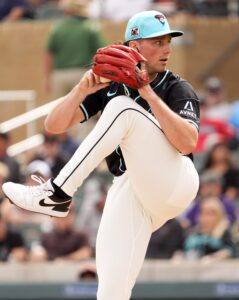
Pfaadt, 26, was a fifth-round selection of the Diamondbacks in 2020. He quickly raised his stock with some strong minor league numbers. In 2021, he tossed 131 2/3 innings over 22 starts, spread across Single-A, High-A and Double-A. He had a combined 3.21 earned run average, 30.2% strikeout rate and 5.3% walk rate. In 2022, it was 167 innings split between Double-A and Triple-A with a 3.83 ERA, 31.6% strikeout rate and 4.8% walk rate.
Going into 2023, he was considered one of the top prospects in baseball. He made his major league debut that year with 96 innings over 18 starts and one relief appearance. The 5.72 ERA doesn’t look amazing at first glance but Pfaadt’s 22.3% strikeout rate was around league average with a strong 6.2% walk rate. He held a spot in the rotation through the playoffs, making five postseason starts with a 3.27 ERA as the Diamondbacks took the National League pennant.
2024 was his first full season in the majors and he again performed better than his ERA would tell you. He allowed 4.71 earned run per nine over his 32 starts and 181 2/3 innings. His 24.3% strikeout rate and 5.5% walk rate were both strong numbers.
At this point, Pfaadt has a 5.06 ERA in 277 2/3 innings but that doesn’t tell the whole story. As mentioned, his strikeout and walk rates have been good. His .315 batting average on balls in play and 66.4% strand rate are both on the unlucky side. His 4.15 FIP and 3.86 SIERA point to him being roughly one run better than his ERA.
The Diamondbacks are presumably putting more stock in those under-the-hood numbers in committing to Pfaadt today. He was previously set to hit the open market after his age-30 season but they have instead locked him up through his age-31 season with a club option for his age-32 campaign as well.
Looking at MLBTR’s Contract Tracker, there have been a few recent extensions for pitchers in their pre-arb years. The top of the list has guys like Spencer Strider at $75MM, Brayan Bello at $55MM and Hunter Greene at $53MM. Those guys were all younger than Pfaadt is now and Greene also had the hype of being a second overall pick and high-profile prospect. Strider was just wrapping up a 2022 season with an insane 38.3% strikeout rate.
Pfaadt’s $45MM deal comes in just a hair under Tanner Bibee‘s recent $47.2MM deal. That’s understandable since Bibee has a 3.25 ERA, 25.3% strikeout rate and 6.9% walk rate in 315 2/3 innings. Those numbers all put him a bit ahead of Pfaadt. He’s also a year closer to free agency, which gives him a bit of extra earning power.
For Pfaadt, he is kicking his free agency down the road, which will presumably lead to less future earning power. However, unlike some top prospects, he hasn’t been sitting on a multi-million-dollar bonus. He only got $100K when he signed and wasn’t slated to qualify for arbitration until after the 2026 season. This deal allows him to lock up some life-changing money ahead of schedule and before his career gets derailed by an injury, an ever-present concern for a pitcher.
For the Diamondbacks, they have been aggressive in locking up their incumbent players. In the past six weeks, they have given notable extensions to shortstop Geraldo Perdomo, reliever Justin Martínez and now Pfaadt.
The current rotation in Arizona is overloaded but the long-term picture is more open. For the 2025 season, they have Zac Gallen, Corbin Burnes, Merrill Kelly, Eduardo Rodríguez and Pfaadt in five spots. Ryne Nelson is working in long relief even though he’s talented enough to pitch in the rotation of many other clubs.
But Gallen and Kelly are both impending free agents. Burnes has an opt-out after 2026. Rodríguez is guaranteed through 2027. As the next few years play out, it’s possible that each of those guys eventually leaves Arizona. Pitchers within the system could possibly replace them, with Nelson, Drey Jameson, Yilber Díaz, Cristian Mena and some other arms already in house. As that plays out, the Snakes are surely hoping that Pfaadt can be a constant in their rotation as one group potentially makes way for another.
The club is currently running a franchise-record payroll but has some decent money coming off the books. In addition to the aforementioned pitchers, Jordan Montgomery‘s deal expires after 2025. He’s making $22.5MM this year but won’t pitch at all due to Tommy John surgery. Eugenio Suárez is making $15MM this year and also slated for free agency. That will potentially create a hole at third base but it’s possible that prospect Jordan Lawlar could provide a cost-effective replacement. Lourdes Gurriel Jr. is only guaranteed through 2026 and Ketel Marte 2027.
Nick Piecoro of the Arizona Republic first reported the $45MM guarantee. John Gambadoro of 98.7 FM in Phoenix relayed the option values. Robert Murray of FanSided reported the limited no-trade protection and then the annual salary breakdown. Gambadoro then relayed that the no-trade covered five teams.
Photos courtesy of Joe Rondone and Rob Schumacher, Imagn Images