
Brewers Acquire Owen Miller, Designate Mario Feliciano
The Brewers announced they have acquired infielder Owen Miller from the Guardians in exchange for a player to be named later or cash. To make room on the 40-man roster, catcher Mario Feliciano has been designated for assignment.
Miller, 26, was originally drafted by the Padres but came over to the Guardians in the Mike Clevinger trade in 2020. He cracked the club’s 40-man roster in May 2021. Though he’s always hit well in the minors, he’s struggled at the big league level so far. In 190 MLB games, hit batting line is .231/.283/.338. That production is 26% below league average, as evidenced by his 74 wRC+.
The bulk of Miller’s major league experience came this past season. He hit .243/.301/.351 in 472 trips to the dish. Miller connected on just six home runs, but he rapped out 26 doubles and showed excellent contact skills. Miller put the bat on the ball on nearly 84% of his swings, well north of the 76.6% league average. He went down on strikes just 19.7% of the time, part of a broadly contact-oriented lineup in Cleveland.
Without much power and a meager 6.8% walk rate, however, Miller was a below-average offensive player overall. The Illinois State product has a much stronger minor league track record, hitting .305/.368/.450 in just under 1100 plate appearances.
Miller has a fair bit of defensive flexibility. He’s played mostly second and first base in the majors, but he has some experience at shortstop and third base at lower levels. He doesn’t have a particularly strong arm, indicating he’s probably best suited on the right side of the infield. He’ll add a right-handed bat to potentially jostle for playing time with lefty-hitting rookie Brice Turang at the keystone and lefty slugger Rowdy Tellez at first base.
With two remaining minor league option years, Miller can bounce between Milwaukee and Triple-A Nashville as a depth player for the next couple seasons if he holds his spot on the 40-man roster. He has between one and two years of MLB service, so he’ll be controllable through at least the end of the 2027 campaign. Miller won’t reach arbitration until after the 2024 season at the earliest.
Adding him to the roster bumps Feliciano, whose time in the Milwaukee organization could now be coming to an end. A supplemental second-round pick out of Puerto Rico in 2016, the righty-hitting backstop was regarded as a potential catcher of the future for the Brew Crew. Feliciano had a monster showing at High-A in 2019 and was named by Baseball America one of the top ten prospects in the Brewers system the next two seasons. After the canceled minor league season in 2020, however, his production has tanked.
Feliciano has spent the bulk of the last two years in Nashville. He has just a .256/.304/.367 line in 425 plate appearances. The 24-year-old has shown solid contact skills, but he doesn’t draw many walks and hasn’t hit for much power at the higher levels. Prospect evaluators have also raised concerns about Feliciano’s defense, and Milwaukee hasn’t given him much of a look at the big league level. He’s gotten into just three MLB games over the past two seasons despite holding a 40-man roster spot since the end of the 2020 campaign.
The Brewers will have a week to deal Feliciano or place him on waivers. He still has one option year remaining, meaning another team that claims him could send him back to Triple-A next year to see if he can right the ship at the plate.
Cardinals “Unlikely” To Meet Asking Price For Carlos Rodón
The Cardinals are one of the many teams to have been connected to free agent lefty Carlos Rodón. However, Katie Woo of The Athletic reports that it’s “unlikely the Cardinals would shell out the years and money” that Rodón is seeking.
The fact that the Cards have been priced out of Rodón’s market isn’t exactly shocking. The latest report on his asking price indicates that he’s looking for a guarantee over $200MM on a deal of seven years or longer. That’s extremely rarefied air for a pitcher, with only a handful ever reaching either that length or that kind of guarantee or both.
The Cardinals have never given out that kind of money to any player, a pitcher or otherwise. They’ve never really come close, in fact. The largest contract in franchise history is the five-year, $130MM extension they gave to Paul Goldschmidt in March of 2019. The largest guarantee they’ve given a free agent is the $120MM they gave to Matt Holliday in 2010. The largest contract they’ve given a pitcher was the $97.5MM extension given to Adam Wainwright in March of 2013, whereas the largest guarantee they’ve given to a free agent pitcher was $80MM for Mike Leake going into 2016.
A deal in the $200MM range for Rodón would dwarf any of those deals, meaning that the Cardinals have to set an aggressive new standard to get it done, even in a vacuum. Outside of the vacuum, there are other factors that also make it unlikely. The highest Opening Day payroll in club history is $164MM, per Cot’s Baseball Contracts. They are already effectively even with that record, according to the calculations of Roster Resource. The club’s president of baseball operations John Mozeliak has indicated that the club will increase payroll this season, but meeting Rodón’s asking price would mean going about $30MM beyond previous levels in 2023 while also adding significant long-term commitments. Between Nolan Arenado and Willson Contreras, the Cards already have over $40MM on the books for 2026 and over $30MM for 2027. Giving Rodón what he’s looking for would come close to doubling those figures and have the club committing a huge chunk of their payroll to three players who will each be in their mid-30s by then.
The Cardinals also don’t strictly need a starter right now, as they have a number of rotation options. Their current crop of starters includes Wainwright, Jack Flaherty, Miles Mikolas, Steven Matz, Jordan Montgomery and Dakota Hudson. There are some injury concerns in there but it’s still a solid group overall, with depth options like Matthew Liberatore and Zack Thompson available if needed. Adding Rodón would certainly be an upgrade, especially after 2023 when Wainwright will retire and Flaherty, Mikolas and Montgomery will all be free agents. However, that group is also decent enough for the club to compete in the National League Central this year.
It’s always possible that Rodón’s asking price will come down if he fails to find a deal that he likes. As mentioned, it’s quite rare for pitchers to crack $200MM. Only six pitchers have ever gone above that line: Gerrit Cole, Stephen Strasburg, David Price, Clayton Kershaw, Max Scherzer and Zack Greinke. Rodón has been quite good over the past two seasons but doesn’t have the track record to match up with those guys in their respective primes. Injuries have limited him to 847 1/3 innings so far in his career and he only just cracked 170 for a single season for the first time in 2022. Each of those other guys had multiple seasons of over 200 innings and well over 1,000 total innings. Starting pitcher usage has gone down in recent years but it’s still a significant difference.
There are many teams still interested, such as the Yankees, Twins, Giants and others. However, no one has met his asking price just yet. If it drops, perhaps the Cardinals will reconsider their pursuit, but it doesn’t seem to be the most probable course of events at the moment.
Dodgers Acquire J.P. Feyereisen
3:15pm: The Rays have officially announced the deal.
10:18am: The Rays are receiving minor league lefty Jeff Belge in the trade, Marc Topkin of the Tampa Bay Times reports.
10:10am: The Dodgers and Rays have agreed to a trade sending right-hander J.P. Feyereisen from Tampa Bay to Los Angeles, reports ESPN’s Jeff Passan (Twitter link). The Rays will receive a minor league pitcher in exchange for Feyereisen, who underwent shoulder surgery last week and is expected to be sidelined into late August. The Rays designated Feyereisen for assignment yesterday to make roster space for newly signed Zach Eflin.
It’s a long-term play for the Dodgers, as Feyereisen is still controllable through the 2026 season via arbitration. The Rays would surely have loved to keep Feyereisen until this spring, when they could place him on the 60-day injured list and free up his 40-man roster spot. However, Tampa Bay also has righties Shane Baz and Andrew Kittredge recovering from Tommy John surgery and in need of 60-day IL spots when camp opens. As such, carrying all three until Spring Training would’ve effectively amounted to Tampa Bay operating with a 37-man roster instead of a 40-man roster for the balance of the offseason.
Feyereisen’s DFA raised plenty of eyebrows yesterday, as the right-hander rattled off 24 1/3 scoreless innings for the Rays in 2022 before being shelved by the shoulder injury that eventually led to the recent operation to repair both his right rotator cuff and labrum. A year prior, Feyereisen had turned in 56 innings of 2.73 ERA ball, albeit with a bloated 14.1% walk rate that created some skepticism about his ability to sustain that pace.
The now-29-year-old righty (30 in February) not only improved his command in 2022 but sent his walk rate plummeting to 5.8% — a mark that’s leaps and bounds better than league average. All told, Feyereisen has 89 2/3 innings of experience at the big league level and has pitched to a 2.31 ERA with a 23.8% strikeout rate and 12% walk rate. However, if he can sustain any of the 2022 strides he made in terms of strikeout rate (29.1%) or walk rate, he has the potential to be a vital late-inning arm for the Dodgers for three-plus seasons. And, because he’s unlikely to pitch much this season, his first trip through the arbitration process next winter shouldn’t produce a particularly large salary.
Belge, 25, was the Dodgers’ 18th-round pick in 2019 and spent the 2022 season pitching for their High-A affiliate, where he logged a 3.66 ERA in 32 innings and fanned a whopping 36.7% of his opponents — albeit against a concerning 12.5% walk rate. Belge was older than the average competition in the Midwest League in 2022 — his second stint at that level — but has drawn praise from FanGraphs’ Eric Longenhagen for a 96 mph heater and above-average slider.
The Dodgers have a trio of open spots on the 40-man roster, so it’s far easier for them to roster Feyereisen for the time being, even if he’ll now bump them up to 38. They’ll part ways with a hard-throwing lefty who has a penchant for missing bats and could begin the 2023 season in Double-A. By the time 2024 rolls around, it’s possible that both Feyereisen and Belge are ready for work in their respective teams’ big league bullpens, though Belge is far from a sure thing given his shaky command and a history of eye troubles dating back to a freak injury in his childhood days.
Blue Jays Have Shown Interest In Johnny Cueto
The Blue Jays made a notable addition to their rotation this week by signing right-hander Chris Bassitt to a three-year deal, but they might not be done. Ben Nicholson-Smith of Sportsnet reports that the club is open to further additions and have shown recent interest in righty Johnny Cueto.
The club has four rotation spots now spoken for, with Alek Manoah, Kevin Gausman, José Berríos and Bassitt all locked in as long as they’re healthy. The final spot in the rotation is a bit less concrete, however. The club signed lefty Yusei Kikuchi to a three-year deal going into 2022 but saw him struggle badly, eventually getting bumped to the bullpen and finishing the year with a 5.19 ERA. Righty Mitch White had a 3.70 ERA with the Dodgers when the Jays acquired him at the deadline, but he posted a 7.74 ERA after the deal. Hyun Jin Ryu underwent Tommy John surgery in June and won’t be an option until the second half of the season even in a best-case scenario. Nate Pearson was once one of the top pitching prospects in baseball but he’s been limited by various injuries to less than 50 innings in each of the past three seasons. Given all that uncertainty at the back end, it’s unsurprising that a win-now club like the Jays would be open to adding a stable veteran.
Cueto, 37 in February, surely fits the bill having pitched in each of the past 15 MLB seasons with a career 3.44 ERA. One of the best pitchers in baseball earlier in his career, he’s falling from those incredible heights but has proven himself to still be quite useful of late. He dealt with injuries and was barely able to pitch in 2018 and 2019, then struggled in the shortened 2020 season. However, he’s had a solid return to form in each of the past two campaigns.
With the Giants in 2021, he tossed 114 2/3 innings with a 4.08 ERA. His 20% strikeout rate was a bit shy of average, but his 6.1% walk rate was quite strong. He reached free agency after that campaign and lingered on the market after the lockout. He eventually signed a minor league deal with the White Sox in early April, though one that would pay him a prorated $4.2MM salary once in the majors. After getting built up to a starter’s workload, he made it back to the big leagues in May and eventually tossed 158 1/3 innings for the Pale Hose with a 3.35 ERA. Similar to the year before, he didn’t rack up the strikeouts, finishing with a 15.7% rate. However, his control was even better, as he walked just 5.1% of batters faced. He got grounders on 42.6% of balls in play and limited hard contact, coming in the 67th percentile in terms of hard hit percentage and 69th percentile in terms of average exit velocity.
Given Cueto’s age, he will likely be limited to a one-year deal but he should still earn a decent salary. He’s coming off a stronger platform than he was one year ago and the market for starting pitching has been quite strong overall this year. The free agent market still has a few surefire starters in Carlos Rodón, Nathan Eovaldi, Noah Syndergaard and Michael Wacha, but Cueto is one of the more attractive options outside of that group. Others include Corey Kluber, Drew Smyly and Drew Rucinski.
Notably, the Blue Jays are now positioned to pay the competitive balance tax for the first time in franchise history. The recent signings of Bassitt and Kevin Kiermaier have nudged the team just barely over the $233MM threshold, according to Roster Resource. It’s always possible that they could make a trade that puts them back under, but it seems possible the club is willing to stay over the line by season’s end. If that is indeed the case, then perhaps they are willing to spend a bit more to add Cueto or someone similar to their pitching staff. Nicholson-Smith relays that president Mark Shapiro recently said that the CBT is “not an obstacle” for ownership. “The support and the growth of that payroll is unprecedented in the history of the franchise and it continues to be very strong.”
It’s unclear how high they plan on taking the payroll, but they appear to be targeting areas other than the rotation. Nicholson-Smith reiterates their known interest in outfielders and adds that they have been showing interest in “high-upside relievers” even after acquiring Erik Swanson in the Teoscar Hernández trade earlier this winter. No names are listed as specific targets, but some of the top relief names on the open market are Taylor Rogers, Andrew Chafin, Adam Ottavino and Michael Fulmer. Nicholson-Smith adds on Twitter that it’s possible the Jays are more likely to add in the bullpen than the rotation, despite the interest in Cueto.
Cubs Sign Cody Bellinger
December 14: The Cubs have officially announced the signing.
December 6: The Cubs are in agreement on a deal with outfielder Cody Bellinger. It will be a one-year deal with a $12.5MM salary and a $5MM buyout on a mutual option, bringing the guarantee to $17.5MM. Bellinger is represented by the Boras Corporation.
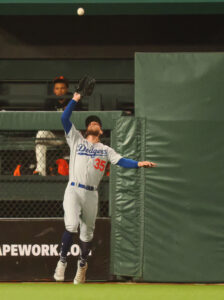
Bellinger, 27, has been one of the more interesting free agents this offseason, given that he has shown incredible upside in the past but has been in a dismal downturn in recent years. Over his first three seasons, 2017 to 2019, Bellinger hit 111 home runs and stole 39 bases. He walked in 12.4% of his plate appearances, leading to a batting line of .278/.368/.559 for a wRC+ of 140, indicating he was 40% better than league average during that time. That included a 2019 season where he hit 47 home runs, swiped 15 bags and produced a wRC+ of 161. He also provided excellent outfield defense, leading to a tally of 7.7 wins above replacement in the eyes of FanGraphs. He was awarded the National League Most Valuable Player award for that season.
Bellinger slid a bit from those heights in the shortened 2020 season. He hit .239/.333/.455, still above average with his wRC+ finishing at 112, but a significant drop-off from previous seasons. An ill-advised celebration in the postseason caused a shoulder injury that required surgery and he hasn’t seemed himself since. He hit just .165/.240/.302 in 2021 for a wRC+ of 47, then bounced back a bit in 2022 but still finished at .210/.265/.389, wRC+ of 83.
Despite those down years, Bellinger’s salary kept climbing for a few reasons. He reached arbitration for the first time going into 2020, on the heels of his MVP campaign, as a Super Two player. He quickly jumped up to $11.5MM in his first year of eligibility and then to $16.1MM for 2021 after having a diminished but still productive 2020. Since the arbitration system is designed to push salaries up, Bellinger jumped to $17MM for 2022 despite his poor performance in the prior season. MLBTR contributor Matt Swartz projected another jump to $18.1MM for 2023 but the Dodgers decided to cut bait and non-tendered Bellinger, sending him to free agency. With Bellinger now moving on to a new club, they will have to chart a new course in center field for 2023.
Despite the rough few years Bellinger has had, he still found robust interest as a free agent. At one point, Heyman reported that there were 11 teams at the table. That’s due to a couple of factors, one of them being that Bellinger was looking for a one-year deal so that he could potentially return to form and then go back to free agency in search of a better deal. That opened the door to many suitors who would normally be wary of a lengthy commitment but would happily take a short-term bet on a player with MVP upside. There’s also the fact that Bellinger provides a decent floor with his speed and excellent center field defense. Despite a subpar batting line in 2022, he still produced 1.7 fWAR by stealing 17 bases and producing six Outs Above Average in center field.
The Cubs were linked to Bellinger a few weeks ago and make plenty of sense as a landing spot for him. The rebuilding team had a rotating cast of characters playing center field for them this year, including Christopher Morel, Jason Heyward, Rafael Ortega, Nelson Velázquez and Michael Hermosillo. All of those players were subpar at the plate except for Morel, who is a natural infielder and produced poor defensive numbers on the grass. The Cubs have some intriguing outfield prospects that could fill this role in the long run, but Bellinger and Ian Happ are set to become free agents a year from now, meaning there’s plenty of long-term runway. Seiya Suzuki, who’s controlled through 2026, is the only outfielder penciled in for the long haul.
Financially, there’s no real impediment for the Cubs either. Bellinger’s contract pushes their commitments to just under $140MM for next year, according to Roster Resource. They had an Opening Day payroll of $143MM in 2022, per Cot’s Baseball Contracts, but have been over $203MM in recent seasons and should have plenty of space still to work with.
The Cubs have been rebuilding in recent years but could be aggressive this offseason in trying to return to contention in 2023. Whether they are successful or not, Bellinger could potentially be valuable to them. As mentioned, Bellinger can still be a useful ballplayer even if his bat doesn’t rebound to previous levels. If he and the team are both playing well, that’s a great outcome for all involved. If he’s playing well and the club is bad, his short-term deal means he should be able to be flipped at the deadline for prospects. As mentioned, even if Bellinger doesn’t truly bounce back, he can still be a useful player with his glovework and baserunning, meaning he could still be an interested trade chip regardless.
Jon Heyman of The New York Post was first with Bellinger going to the Cubs. Jeff Passan of ESPN first had the $17.5MM guarantee. Jorge Castillo of the Los Angeles Times first reported the structure of the $12.5MM salary with $5MM buyout on the mutual option.
Tigers Sign Matt Boyd To One-Year Deal
December 14: The Tigers have officially announced that they’ve signed Boyd to a one-year deal.
December 1: The Tigers and left-hander Matt Boyd are in agreement on a deal to bring him back to Detroit. Boyd will make a $10MM salary with $1MM in performance bonuses available to him. The deal is pending a physical.
Boyd, 32 in February, was drafted by the Blue Jays and made his MLB debut with them, but he went to the Tigers in the 2015 David Price trade and has spent the bulk of his career there. Boyd then established himself as a solid member of the rotation over the next four years, getting into 109 games over the 2016-2019 stretch. His 4.67 ERA wasn’t elite, but he limited walks to a 7.3% rate and struck out 23.4% of batters faced.
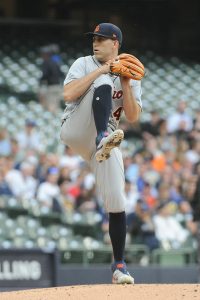 That latter number was boosted by a strong 30.2% strikeout rate in 2019, which was among the top 10 among qualified pitchers that year. With the Tigers enduring a miserable season, Boyd was frequently mentioned in trade rumors but the club never found an acceptable deal and held onto him. There was no real rush to secure a deal as they still had years of control over Boyd’s services. However, his performance nosedived in the shortened 2020 season, as the lefty posted a 6.71 ERA over 12 starts that year. He posted better results in 2021 but then dealt with arm injuries that eventually led to flexor tendon surgery in September.
The Tigers could have held onto Boyd for 2022 via arbitration but decided to non-tender him given that he was going to miss at least part of the season. He signed on with the Giants, who gave him a $5.2MM guarantee. As this year’s trade deadline rolled around, Boyd was still working his way back from that surgery and the Giants had slipped from contention. They flipped him to Seattle alongside catcher Curt Casali for a couple of prospects. Boyd ended up returning to a big league mound in September and pitched 13 1/3 innings for Seattle down the stretch. He posted a 1.35 ERA in that time with a 24.5% strikeout rate but a 15.1% walk rate in that small sample.
The Tigers clearly felt encouraged enough by Boyd’s return to take a flier on him. Evan Petzold of the Detroit Free Press has reported that the club intends to use Boyd out of the rotation. Boyd averaged 92.6 mph on his four-seam fastball in 2022, which matches his career high. He was pitching in relief this year and hasn’t proven himself capable of maintaining that velocity as a starter, but it’s possible he can continue building strength as he gets further from the surgery. He also struggled with control in his time this year, but it’s often said that is the last thing to return to a pitcher after a lengthy absence.
There’s risk involved in this signing, but it’s a fairly logical risk for a team in Detroit’s position. They hoped to return to contention in 2022 but just about everything went wrong and they finished 66-96. One of the major factors in their disappointing season was a parade of pitching injuries that they will still be dealing with next year. Casey Mize required Tommy John surgery in June and will likely miss most of the upcoming campaign. Tarik Skubal underwent flexor tendon surgery in August and seems likely to miss time as well. Spencer Turnbull should be able to return after missing all of 2022 due to Tommy John, but he’s an unknown after an entire year off.
There are question marks all over the roster that will make it difficult for the Tigers to compete in 2023, but they will still need some arms to fill out the rotation. Boyd should slot next to Eduardo Rodriguez, Matt Manning and Turnbull in four of the spots. The final position could go to internal options like Joey Wentz, Beau Brieske, Alex Faedo or others, though the club could also seek to find further additions. If Boyd returns to health and effectiveness, he can provide a stabilizing veteran presence for a group with a lot of uncertainty. If the Tigers are out of contention when the deadline rolls around again, Boyd and his one-year deal could perhaps finally net them the trade return they’ve failed to recoup in previous years, with Skubal or Mize perhaps ready to retake their positions by that time. Boyd’s salary brings the club’s commitments to $118MM, per Roster Resource. Last year’s Opening Day figure was $135MM, per Cot’s Baseball Contracts.
Jeff Passan of ESPN first reported the two sides were in agreement. Jon Heyman of The New York Post first reported the $10MM ballpark figure. Evan Petzold of the Detroit Free Press first laid out the $10MM salary with performance bonuses. Heyman added that the bonuses can be worth $1MM.
Minor MLB Transactions: 12/14/22
Teams have been quite active over the past couple of weeks and a few minor league deals slipped through the cracks. Here’s a quick roundup.
- The Giants signed infielder Donovan Walton to a minor league deal, according to his transactions tracker at MLB.com. Walton, 29 in May, began 2022 with the Mariners but was traded to the Giants in May. He spent the year as a frequently-optioned depth piece for the Giants, getting into 25 MLB games and hitting .158/.179/.303, wRC+ of 31. In the minors this year, he hit .248/.353/.403, wRC+ of 94. He was non-tendered at the end of the season but has now re-joined the organization in a non-roster capacity. He has some experience at all four infield positions and left field, giving the club a versatile depth option. If he makes it back onto the 40-man, he’s now out of options and will have to stick on the active roster or else be designated for assignment.
- The Braves signed catcher Joe Hudson to a minor league deal, according to his transactions tracker at MLB.com. Hudson, 32 in May, has 18 games of MLB experience stretched across three seasons from 2018 to 2020. He spent 2022 in the Rays’ system, getting into 49 games for the Triple-A Durham Bulls. He hit .226/.345/.489 in that time for a wRC+ of 119. The Braves recently acquired Sean Murphy to be their primary catcher, but sent William Contreras and Manny Piña packing as part of the deal. The club does still have Chadwick Tromp and the oft-injured Travis d’Arnaud but Hudson will give them a depth option with major league experience.
- The Twins signed first baseman Tyler White to a minor league deal, according to his transactions tracker at MLB.com. White, 32, played for the Astros from 2016 to 2019, and a brief stint with the Dodgers, but played in Korea in 2020. He came back to North America for the past two years but has been stuck in Triple-A. Though he generally hits well, his defense is essentially limited to first base at this point, aside from brief stints at third. With the Blue Jays’ system in 2021, he hit .292/.424/.476 for a wRC+ of 141. He split 2022 between the Triple-A teams of the Braves and Brewers, hitting .230/.357/.412, 108 wRC+.
- The Marlins signed infielder Alex De Goti to a minor league deal, according to his transactions tracker at MLB.com. De Goti, 28, has spent his entire career with the Astros thus far, getting into two big league games in 2021. He spent all of 2022 in Triple-A, hitting .253/.352/.377 for a wRC+ of 87. He’s played every position on the diamond in his minor league career except for catcher, even taking the mound for the occasional mop-up stint. He should serve as a versatile depth piece for the Fish.
- The Nationals have signed right-hander Ronald Herrera to a minor league deal, according to his transactions tracker at MLB.com. Herrera, 28 in May, has three innings of MLB experience, which came as a 22-year-old back in 2017 with the Yankees. He spent most of 2022 with the Double-A affiliate of the Nats, making 24 starts and throwing 129 innings. He posted a 4.40 ERA in that time with a 21.4% strikeout rate, 6.4% walk rate and 39.8% ground ball rate. The Nats had the worst rotation ERA in the majors in 2022, coming in at 5.97. They’ve signed Trevor Williams to help out but there’s a still a good chance they might have to rely on some depth options throughout the year.
- The Angels signed right-hander Nash Walters to a minor league contract, according to his transactions tracker at MLB.com. Walters, 26 in May, spent his entire career in the Brewers’ organization until getting sent to the Angels in a September 2022 trade. He made his major league debut with the Halos on the last day of the season, facing three batters, retiring one while surrendering one hit and one walk. His minor league work for 2022 amounted to 53 2/3 innings with a 4.70 ERA, 30.2% strikeout rate and 8.2% walk rate. He was non-tendered at the end of the year but has returned to the organization without taking up a spot on the 40-man.
- The Mariners signed right-hander Jose Rodriguez to a minor league deal, according to his transactions tracker at MLB.com. Rodriguez, 27, tossed 21 1/3 innings with the Angels over 2019 and 2020, posting a 2.53 ERA in that time. That number looks impressive but came with an unsustainable 100% strand rate and .226 batting average on balls in play. His 14.1% strikeout rate and 13% walk rate suggest he was lucky to allow so few earned runs. He spent 2022 in the Mets’ system, tossing 76 1/3 innings in Triple-A with a 4.95 ERA, 20.5% strikeout rate, 10.9% walk rate and 42.2% ground ball rate. If he’s able to crack Seattle’s 40-man roster, he still has two option years remaining and can be moved between the majors and minors with regularity.
Yankees Agree To Minor League Deals With Art Warren, Jake Bauers
The Yankees have agreed to minor league contracts with right-hander Art Warren and first baseman/outfielder Jake Bauers, as first indicated on the transactions log at MiLB.com. Warren’s contract is a two-year minor league deal that includes an invitation to Major League Spring Training in 2024, I’m told.
Warren, 30 in March, spent the past two seasons with the Reds and is expected to miss the 2023 season after undergoing surgery to repair the UCL in his pitching elbow back in September. Given that lengthy recovery period, the Reds non-tendered him earlier in the offseason. He’ll now latch on with a new club in hopes of rehabbing his arm and pitching his way into the Yankees’ bullpen plans in 2024, when he’s back at full strength.
While the 2022 season wasn’t a good one for Warren — 6.50 ERA, career-worst 13.3% walk rate and 1.50 HR/9 — it’s fair to wonder how much his elbow’s health (or lack thereof) contributed to those struggles. Warren’s average fastball sat at 95.3 mph with Cincinnati in 2021 but dipped to 93.6 mph in 2022, and his overall results in a healthy 2021 showing were outstanding. The 6’3″, 230-pound righty parlayed a big strikeout rate in Triple-A into a Major League look with the Reds and delivered a 1.29 ERA with an eye-popping 41.5% strikeout rate in 21 innings of work. Only four pitchers (min. 20 innings) managed to top Warren’s 19.2% swinging-strike rate in 2021: Liam Hendriks, Raisel Iglesias, Josh Hader and Jacob deGrom. Suffice it to say, when healthy, there’s plenty of intrigue surrounding Warren’s raw stuff.
Warren didn’t get a look in the Majors until his age-26 season with the Mariners, in part due to injuries, and he didn’t pitch in 2020 due to the canceled minor league season. The recent elbow issue will further cut into his opportunities, and he’ll be 31 by the time he has a legitimate chance to make the Yankees’ roster in 2024. If he makes the team at that point, he’ll be controllable for five years before he can become a free agent. For now, he won’t earn service time on the minor league deal but will be able to rehab at the Yankees’ facilities and with their training and medical staff.
As for Bauers, it’ll be his second stint with the Yankees, who signed him to a minor league deal last offseason as well and ultimately traded him to the Reds in exchange for cash over the summer. The 27-year-old former top prospect didn’t crack the big league roster with either club, hitting .226/.352/.406 with the Yankees’ Triple-A club and just .135/.276/.271 with the Reds’ top affiliate.
Bauers has appeared in parts of three Major League seasons, spending time with Tampa Bay, Cleveland and Seattle, but he’s managed a tepid .213/.307/.348 batting line in 1126 plate appearances. He’ll give the Yankees a left-handed depth option at first base and left field down in Scranton.
Red Sox Notes: Middle Infield, Rotation, Houck
With Xander Bogaerts headed to San Diego, the Red Sox face questions about their lineup. Boston has added Masataka Yoshida on a five-year deal to play left field, but they’re now dealing with a vacancy in the middle of the diamond.
Chief baseball officer Chaim Bloom told reporters this week the Red Sox are seeking someone who can play up the middle on either the infield or outfield (link via Alex Speier of the Boston Globe). As Bloom noted, the team has some positional flexibility in that regard thanks to Trevor Story and Enrique Hernández. Story played second base in deference to Bogaerts this past season, but the longtime Rockies shortstop now looks penciled in to move back to the left side of the diamond. Hernández is a quality defender at both second base and center field, and his ability to cover either spot gives Boston the freedom to look for players at either position and move Hernández around depending on subsequent additions.
In any event, the Red Sox figure to bring in another player with the athleticism to cover up the middle. As things stand, the team would likely open the season with Story at shortstop, Hernández in center and some combination of Christian Arroyo and Jeter Downs at second base. Neither Arroyo nor Downs should have a firm hold on an everyday job for a hopeful contender, but the available free agent options at important defensive positions are dwindling.
The center field market was almost completely barren from the start, with Brandon Nimmo the clear top option. Players like Kevin Kiermaier and Cody Bellinger got everyday jobs coming off disappointing seasons, while the Red Sox struck early to keep Hernández out of free agency on a $10MM extension in September. He’s not coming off a great year himself, but the lackluster free agent class no doubt played a role in Boston’s decision to take a shot on a bounceback.
Free agency in the middle infield is a bit more robust. Dansby Swanson is the top player still remaining. The Red Sox are reportedly part of that market, although they’ll face competition from teams like the Cubs, Twins, Dodgers and incumbent Braves. It’d be rather surprising to see the Sox pivot to Swanson — who looks likely to top $150MM on the open market — after watching their own star shortstop (and described “top priority”) depart. There’s a notable drop after Swanson, with Elvis Andrus the next-best remaining shortstop. At second base, Jean Segura and Brandon Drury are the top options available.
All those players hit right-handed, which could make them targets for the Boston front office. Speier writes the Sox are looking for a righty bat, a sensible pursuit considering their lineup skews towards the left side. Story, Hernández and Arroyo are the only three righties who currently look like regulars, and Arroyo could be supplanted by an outside addition. Rafael Devers, Alex Verdugo and Yoshida all hit from the left side, as do first base/DH options Triston Casas and Eric Hosmer. Boston has Bobby Dalbec in that mix as a righty alternative, but he’s struggled enough the past couple seasons they’ve reportedly made him available in trade.
The trade market obviously also offers a chance for the Red Sox to address some roster deficiencies. Bloom told Chad Jennings of the Athletic on Monday the club was open to consolidating minor league talent to add immediate MLB help. The front office leader downplayed the possibility of moving talented players at the MLB level (seemingly including Casas) as part of those efforts, but he expressed a willingness to move players who are further away from the majors.
There aren’t many up-the-middle players who look likely to be dealt this winter. The Guardians could part with shortstop Amed Rosario, while the Royals may field offers on center fielder Michael A. Taylor. Oakland’s Ramón Laureano has some center field experience and would add a righty bat to the outfield, but he’s coming off a dismal 2022 season and the A’s may prefer to hold him in hopes of a better year that rebuilds his trade appeal.
The rotation market offers more possibilities, both in free agency and trade. Noah Syndergaard, Johnny Cueto and old friends Nathan Eovaldi and Michael Wacha are among the free agent options still available. Viable rotation trade candidates include Trevor Rogers and Pablo López in Miami, Chris Flexen or Marco Gonzales of the Mariners and Pittsburgh’s JT Brubaker. Both Speier and Jennings write that Boston would like to add a starter, no surprise for a team that has seen Eovaldi, Wacha and Rich Hill hit free agency without bringing in outside help.
Boston does have a few players who can step into the rotation after not assuming much of a role last season. Chris Sale barely pitched in 2022, while James Paxton didn’t throw for the Sox at all. They’ll hopefully go into Spring Training healthy but have plenty of recent injuries and workload concerns. Brayan Bello could get a full season after breaking into the majors this past July. The Red Sox already announced Garrett Whitlock would join Nick Pivetta in the starting five after mostly working in multi-inning relief the last two years.
The Sox haven’t been as committal on Tanner Houck, but he’s also a rotation option after bouncing between starting and relief for a while. As Jen McCaffrey of the Athletic writes, the Sox’s offseason to date has seen them bring in a few bullpen options — Chris Martin, Kenley Jansen and Joely Rodríguez — without doing much to fortify the rotation. That could point towards an increasing likelihood of Houck competing for a rotation spot in Spring Training, although much depends on the team’s activity over the next three months.
Houck came out of the bullpen for 28 of his 32 appearances in 2022, including some time as the team’s closer. With Jansen now set to lock down the ninth inning, skipper Alex Cora can deploy Houck either in higher-leverage relief in the middle innings or as part of the starting staff. The former first-round pick started 13 of his 18 outings in 2021, and he has 20 MLB starts on his résumé. In that time, he’s worked to a 3.22 ERA with a 28.5% strikeout rate. Houck has a 2.68 ERA and a 25.9% career strikeout percentage when coming out of the bullpen.
Padres Were Finalists For Chris Bassitt
Chris Bassitt agreed to a three-year, $63MM deal with the Blue Jays earlier this week, but Jon Heyman of The New York Post reports that the Padres were in on the bidding and were one of the finalists. It’s not known if they made a formal offer or what it looked like, but the fact that they were somewhat close is nonetheless noteworthy.
The Padres were never really a financial powerhouse in the baseball world but they have changed that reputation in the past few years. They had never run an Opening Day payroll reaching $110MM, per Cot’s Baseball Contracts, until they shot up to $174MM in 2021 and $211MM in 2022, effectively doubling their previous franchise highs. It appears that we still don’t know where their limit is, as they have continued spending this winter.
After aggressive overtures to Aaron Judge and Trea Turner were turned down, the club pivoted and gave Xander Bogaerts a deal worth $280MM over 11 years. That’s brought the club’s payroll up to $235MM for next year, per Roster Resource, already more than $20MM beyond last year’s mark.
Perhaps more importantly, the club’s competitive balance tax figure is at $255MM, already beyond the second luxury tax tier of $253MM. The Padres paid the CBT in both 2021 and 2022, setting them up to be third-time payors in 2023. There are escalating penalties for teams that pay in consecutive seasons, with the Padres already looking at a 50% tax on all spending beyond $233MM with greater penalties at the three subsequent tiers that go up in $20MM increments. Going beyond $253MM, which they are already lined up to do, comes with a 62% tax while going beyond $273MM would come with a 95% tax hit and see their top pick in next year’s draft moved back ten spots.
We don’t know what kind of offer the Padres made to Bassitt, but if it was competitive enough to get near what he accepted from the Jays, it was likely at least near the $20MM range in terms of average annual value. That shows that the club has at least some willingness to add that kind of money to their payroll and CBT figure. Signing Bassitt, or any other player, to a $20MM salary would lead to the Padres also paying over $12MM in taxes.
If they do have that kind of money to spend, the fact they are considering a rotation upgrade is not surprising. They have a strong front three in Joe Musgrove, Yu Darvish and Blake Snell, but the back end is a bit less certain. The club re-signed Nick Martinez, who began 2022 in the rotation but was eventually bumped to the bullpen, where he proved to be more effective. He posted a 4.30 ERA as a starter and a 2.67 as a reliever. There’s also Adrian Morejon, though he’s an unknown commodity after undergoing Tommy John surgery in April of 2021. He returned in 2022 and tossed 34 innings over 26 relief appearances, which is encouraging but might make it hard for him to suddenly jump to 150 innings or more next year. There’s also the long-term picture to consider, as both Snell and Darvish are set to reach free agency after 2023, leaving Musgrove as the only true building block of the rotation. Adding a reliable starter makes plenty of sense for now and for the future.
Though Bassitt got away, the Padres still have options in free agency. If they truly want to go wild with the spending, Carlos Rodón is the top free agent pitcher available. Aside from him, other options include Nathan Eovaldi, Noah Syndergaard, Michael Wacha, Corey Kluber, Drew Rucinski, Johnny Cueto, Drew Smyly and others.