
KBO’s Kiwoom Heroes Re-Sign Eric Jokisch
The Kiwoom Heroes of the Korea Baseball Organization have re-signed lefty Eric Jokisch, per Jeeho Yoo of Yonhap News. The 32-year-old will make $1.3MM.
The southpaw has 14 1/3 innings of MLB experience, which came with the Cubs back in 2014. He had an ERA of 1.88 in that stint, but then bounced around the minors for the next four years without being given another shot at the big league level. He signed with the Heroes prior to the 2019 season and recently completed his third straight excellent campaign.
In 2019, he made 30 starts, throwing 180 1/3 innings with an ERA of 3.13. In 2020, in 159 2/3 innings over 27 starts, his ERA dropped all the way down to 2.14. His 18% strikeout rate was a bit low, but he succeeded largely because of his incredible groundball rate of 71.9%. After that excellent season, it was rumored that he was considering a return to MLB. However, he ended up re-signing with the Heroes.
In 2021, he made 31 more starts, logging 181 1/3 innings with an ERA of 2.93. Once again, his meager strikeout rate of 17.7% was offset by an incredible groundball rate, this time reaching an amazing 75.9%. As noted by Yoo, over the past three years, Jokisch leads the KBO in ERA and is third in both wins and innings. He’ll now look to build on that tremendous three-year run by suiting up for the Heroes for a fourth season.
Kyle Seager Announces Retirement
Kyle Seager has announced his retirement, according to a statement relayed by his wife on Twitter. He had the rare honor of spending his entire career with one organization, having been drafted by the Seattle Mariners and staying with them until reaching free agency at the end of the 2021 season.
Seager, 34, began his career as a third-round pick of the Mariners in 2009, climbing through the minors to make his MLB debut in 2011, getting into 53 games that year. In 2012, he had a breakout year that saw him hit 20 home runs in 155 games, slashing .259/.316/.423. In combination with his solid third base defense, he was worth 3.8 fWAR that year.
From that point on, he essentially took over and made himself a fixture at the hot corner in Seattle, playing at least 154 games for the Mariners for seven straight seasons from 2012 to 2018. A hand injury limited him to 106 games in 2019, but that would prove to be his only significant absence, as he played all 60 games in the pandemic-shortened 2020 campaign and then 159 games in 2021.
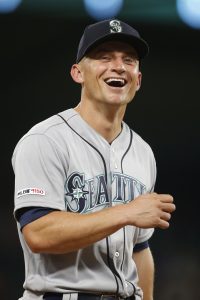 After a 2014 season in which Seager hit 25 homers, was selected to the All-Star game and won a Gold Glove, he and the Mariners agreed to a contract extension worth $100MM over seven years. That contract, which just concluded a few months ago, kept him a Mariner for life.
Over his 11 seasons, Seager played 1,480 games, notching 1,395 hits, 309 doubles and 242 home runs. His overall career slash line was .251/.321/.442. He was worth 34.8 wins above replacement in the estimation of FanGraphs, with Baseball Reference putting him at 36.9. A model of consistency, Seager produced at least 1.5 fWAR for ten straight seasons, from 2012 to 2021, hitting at least 20 home runs in each of those seasons, except for the shortened 2020 campaign. Despite his reliable durability, power production and defense, the Mariners were never able to build a postseason-worthy team around him, having not been to the postseason since 2001.
In 2021, the final year of his career, Seager set career highs in home runs and runs batted in, with 35 and 101, respectively. His slash line on the year was .212/.285/.438. Going into the offseason, MLBTR predicted that he could have earned himself a new contract worth $24MM over two years. Instead, he will hang up his spikes and enter the next chapter of his life.
Seager addressed his retirement with Ryan Divish of the Seattle Times this afternoon. The third baseman said he’d decided to retire by the end of the season, a year that ended with an emotional farewell from the fans at T-Mobile Park after the Mariners had been eliminated from playoff contention. “I knew if we got eliminated that would be the last time I played baseball. I knew it was my last at-bats, I knew it was my last ground balls, my last innings,” Seager texted Divish. “All those thoughts were in my head. I had so many emotions going on that day. My family being out for the pregame pitch was magical. I got very emotional very early in the day!”
Seager went on to tell Divish he’d been contemplating retirement as far back as Spring Training and said the ongoing lockout and labor uncertainty played no role in his decision. “It honestly was an easy decision. As much as I love baseball, it was time. I’m ready to be home with my family. I’ll miss a lot of people and aspects of the game, but I am ready to start the next chapter of my life.” Mariners fans in particular will want to check out Divish’s full piece, which also contains quotes from Seager on his appreciation for the Seattle fanbase as well as interest he’d received from other teams this winter after the M’s bought out his club option for 2022.
The MLBTR team would like to extend a heartfelt congratulations to Kyle for an incredible career and wish him the best of luck in whatever comes next.
The Giants Picked Up A Productive Outfielder In An Under-The-Radar Deal Last Winter
The Giants had quite a few unexpected contributors last year en route to a surprising franchise-record 107 wins. Among that group was a player quietly acquired a month before the start of Spring Training. An unheralded pickup at the time, LaMonte Wade Jr. turned out to be an impressive find who could be a valuable part of the San Francisco outfield for the next few seasons.
Last February, San Francisco picked up Wade from the Twins as part of a one-for-one swap that sent righty Shaun Anderson to Minnesota. Wade, 27, had briefly appeared in each of the prior two seasons for the Twins but had a grand total of 113 big league plate appearances under his belt. A .211/.336/.347 hitter in that time, he had an impressive strikeout and walk profile but little else on his MLB resume.
Yet the Giants saw something of interest in Wade, whether based on their scouts’ evaluations or his minor league numbers. He’d hit .246/.392/.356 in Triple-A in 2019. The left-handed hitter only popped five home runs, but his 14.4% strikeout rate and 16.8% walk percentage at the minors’ top level were both far better than the league average. It was an interesting showing, but Wade’s lack of power was concerning for a player whom most scouting reports suggested was best suited for the corner outfield.
It’s easy to understand why the Twins front office felt that moving Wade was subtracting a depth option from an area of organizational strength. They already had Byron Buxton and Max Kepler entrenched in the outfield, and top prospects Alex Kirilloff, Royce Lewis and Trevor Larnach all looked to be approaching themselves. (Kirilloff had debuted in the majors during the 2020 postseason). Wade wasn’t at the level of those other players, and he was entering his final minor league option year.
Yet the deal backfired for Minnesota essentially immediately. Anderson allowed 12 runs in 8 2/3 innings with the Twins before being designated for assignment. Claimed off waivers by the Rangers, he bounced around between a few organizations before finally clearing waivers last month. He’s a member of the Blue Jays now but no longer occupies a 40-man roster spot.
Wade, on the other hand, had a quality showing in his first extended MLB look. He hit .253/.326/.482 with 18 home runs over 381 plate appearances for San Francisco. He became a bit more aggressive at the plate, and his walk and strikeout numbers (8.7% and 23.4%, respectively) were actually fairly ordinary.
Instead, Wade hit for a surprising amount of power. In addition to the 18 homers, he rapped 17 doubles and three triples. That’s a 28-homer, 27-double pace over 600 plate appearances (roughly the equivalent of a full season’s worst of playing time). His .229 isolated power far outpaced the .171 league average. According to Statcast, his average exit velocity, barrel rate and hard contact rate were each a fair bit better than the league mark.
That’s not to say the Twins gave away a future star. The Giants deployed Wade almost exclusively against right-handed pitching, leveraging their strong depth to put him in position to succeed. As a result of the heavy platooning, his rate numbers were probably better than they’d have been had he been asked to play everyday and drawn more assignments against tough lefties. As scouting reports had suggested, Wade was also primarily limited to the corner outfield and first base, only picking up two starts in center field.
Not all deals have to bring back All-Stars, though. The Giants have already gotten the better end of the swap, and Wade looks to have a good chance of being a quality contributor within the San Francisco outfield mix over the next few seasons. If that proves to be the case, the deal will be a nice feather in the cap of president of baseball operations Farhan Zaidi and his staff — an example of a team successfully pulling from another organization’s area of depth to unearth a valuable addition to their roster.
KBO’s KT Wiz Re-Sign Odrisamer Despaigne, William Cuevas
The KT Wiz of the Korea Baseball Organization announced they’ve re-signed pitchers Odrisamer Despaigne and William Cuevas. Despaigne signed a one-year deal worth $1.1MM that comes with an additional $250K in possible incentives; Cuevas inked a one-year, $1MM guarantee with $100K available in incentives (h/t to Jeeho Yoo of Yonhap). Despaigne is represented by Charisse Dash of QC Sports.
This will be Despaigne’s third season with the Wiz, as he originally joined the franchise in advance of the 2020 campaign. He posted a 4.33 ERA across 207 2/3 innings that season, then re-upped on another deal last winter. The Cuba native pitched 188 2/3 frames in 2021, working to a 3.39 ERA with a 20.1% strikeout percentage and a 9.5% walk rate. That reliable production over a heavy workload impressed the Suwon-based club’s front office enough to bring him back for another year.
Despaigne, who turns 35 in April, is better known in the U.S. for his time in the big leagues, which spanned 2014-19. The bulk of that work came over his first two seasons, as Despaigne started 34 of 50 appearances with the Padres from 2014-15. His rookie campaign featured 96 1/3 frames with a 3.36 ERA and a very strong 52.1% ground-ball rate, but Despaigne couldn’t build off that solid debut showing. After two seasons in San Diego, the right-hander bounced between the Orioles, Marlins, Angels and White Sox. He’s made 109 MLB appearances (including 50 starts) and owns a 5.11 ERA over 363 major league innings.
Cuevas is back for a fourth year with the Wiz. The Venezuela native has been a capable rotation arm, tossing 140+ innings with an ERA around 4.00 in each of his first three years. That includes a 3.91 mark over 140 1/3 frames this past season, a year that saw Cuevas punch out 24% of opponents against an 8.9% walk rate. Before making the jump to South Korea, the 31-year-old spent time with the Red Sox and Tigers. He made 13 MLB appearances between 2016-18, working 22 1/3 innings of 8.06 ERA ball.
MLBTR Chat Transcript: 12/29/21
Click here to view the transcript of today’s chat with MLBTR’s Anthony Franco.
Teams That Want To Dump Salary Should Contact The Nationals
When a team wants to subtract some salary from its ledger, it can sometimes arrange a trade that packages a well-paid veteran player with some prospects. The team on the receiving end effectively “buys” the prospects by taking on the unwanted salary of that veteran. The most recent example of this was the trade that sent Hunter Renfroe to the Brewers, with the Red Sox receiving Jackie Bradley Jr., along with infield prospects David Hamilton and Alex Binelas.
Renfroe was projected by MLBTR contributor Matt Swartz for a salary of $7.6MM in 2022, while Bradley will earn $9.5MM in 2022 and then there is a mutual option for 2023 that comes with a $12MM salary and $8MM buyout. Given Bradley’s horrible season at the plate in 2021, the Brewers wanted to get rid of that contract, and were willing to part with a couple of prospects to do it while still getting back a useful piece. The Red Sox, for their part, will take on that salary, hoping for a bounceback from Bradley. But even if that doesn’t happen, they will have bolstered their farm at least.
For other teams that want to follow the Brewers and shuffle a contract around, they might want to start by contacting the Nationals. After a massive trade deadline selloff in 2021, their current payroll is the lowest it’s been in years. Jason Martinez of Roster Resource estimates that they’re currently lined up for an opening day number of $118MM. The last time they were below that was 2012, the year 19-year-old Bryce Harper made his debut. In the past four years, they’ve been between $180MM and $200MM, prorating 2020’s number. (Past figures from Cot’s Baseball Contracts.)
The club is looking to “reboot” for a year or two, but seems to want to return to competing before superstar Juan Soto reaches free agency after the 2024 season. That means they are in position for this type of deal, as long as it’s a contract of the short-term variety. They could add to the young talent they acquired in their 2021 fire sale, while not limiting their ability to make a big move or two for the 2024 campaign and beyond.
The White Sox ran a franchise-high payroll in 2021 and are currently lined up to blow past that in 2022. Trading Craig Kimbrel, who has one year and $16MM remaining on his contract, appears to be in their plans. Another option would be Dallas Keuchel, who will make $18MM in 2022. He also has a $20MM club option for 2023 with a $1.5MM buyout, although that option would also vest if Keuchel throws 160 innings in 2022. The White Sox finished dead last on Baseball America’s most recent Organization Talent Rankings, meaning that sending some prospects out the door might not be the top of their to-do list. (The Nats, despite their big deadline haul, came in 23rd.) However, Chicago’s window of contention is wide open, standing out as the current favourite in the AL Central, meaning their priority should be the present and not the future. For the Nationals, they have lots of question marks on their pitching staff after trading away so many arms. Their staff is mostly composed of unproven youngsters, to go along with veterans like Stephen Strasburg, Patrick Corbin and Will Harris, who come with question marks of their own.
The Rays have never been shy about moving their more expensive veteran players, trading away Blake Snell, Tommy Pham and many others in recent years. Kevin Kiermaier‘s name has been floated as someone else who could follow them out of The Trop, seemingly ever since they signed him to an extension in 2017. That extension is now entering its final guaranteed year, with Kiermaier set to make just over $12MM in 2022, though there’s also a $2.5MM buyout on a $13MM club option for 2023. The Nats don’t really have anyone who should be guaranteed an outfield job, other than Soto. Lane Thomas had a strong showing after coming over from the Cardinals, but that was a small sample of just 45 games.
The Reds are trying to thread the needle of dropping payroll yet staying competitive. Mike Moustakas is owed $38MM over the final two years of his contract, including the buyout of a 2024 club option, and he’s been somewhat crowded out by the breakout campaign of Jonathan India. By moving Moustakas, they could hold onto their highly-coveted starting pitcher trio of Luis Castillo, Sonny Gray and Tyler Mahle. The Nats probably want Carter Kieboom to get a long run of playing time at third, but Moustakas could split time at second with Cesar Hernandez and act as a fallback plan in the event Kieboom struggles to secure the job. The implementation of the DH for the NL would also help spread the at-bats around. Shogo Akiyama is another option, as he had a rough campaign in 2021 and still has one year and $8MM remaining on his contract.
There are dozens of other options, as most teams have a contract that they wouldn’t mind getting off the books a year or two early. Some other rapidfire examples: Jake Odorizzi, Carlos Santana, Justin Upton, Randal Grichuk, David Price, Wil Myers, Jurickson Profar, Paul DeJong.
With the Nats about $60MM to $80MM below their recent spending levels, they have a lot of room to work with. Though they’d surely like to keep payroll a bit lower during this rebooting phase, they’d also be wise to at least consider “buying” a few prospects to help them quickly build back up. After all, Soto won’t be interested in signing an extension until the club proves they’re trying to win. Spending some money now to improve the future could be one way of trying to convince him.
MLB Owners’ Net Worth
Whenever a baseball player agrees to a contract, the financials of the deal are quickly reported by various media outlets, including here at MLBTR. What gets discussed much less often, however, are the financial details of the people paying those paychecks. Here is each team’s primary owner, along with their net worth, with source links provided. (Quick caveat that financial numbers of this nature are fluid and subject to change.)
- Angels: Arturo Moreno – $3.6 billion. (Forbes link)
- Astros: Jim Crane – $1.4 billion. (Forbes link)
- Athletics: John Fisher – $2.6 billion. (Forbes link)
- Blue Jays: Rogers Communications, chairman Edward Rogers III – $11.5 billion. (L.A. Times link)
- Braves: Liberty Media, chairman John Malone – $8 billion. (Forbes link)
- Brewers: Mark Attanasio – $700MM. (L.A. Times link)
- Cardinals: William DeWitt Jr. – $4 billion. (L.A. Times link)
- Cubs: Ricketts family – $4.5 billion (Forbes link)
- Diamondbacks: Ken Kendrick – $600 million. (L.A. Times link)
- Dodgers: Guggenheim Baseball Management, controlling partner Mark Walter – $5 billion. (Forbes link)
- Giants: Charles B. Johnson – $5.8 billion. (Forbes link)
- Guardians: Dolan family – $4.6 billion. (L.A Times link)
- Mariners: John Stanton – $1.1 billion. (L.A. Times link)
- Marlins: Bruce Sherman – $500MM. (L.A. Times link)
- Mets: Steve Cohen – $15.9 billion. (Forbes link)
- Nationals: Lerner family – $4.9 billion. (Forbes link)
- Orioles: Peter Angelos – $2 billion (L.A. Times link)
- Padres: Peter Seidler – personal net worth unknown, Seidler Equity Partners estimated net worth of $3 billion. (ESPN link)
- Phillies: John Middleton – $3.4 billion. (Forbes link)
- Pirates: Bob Nutting – $1.1 billion. (L.A. Times link)
- Rangers: Ray Davis (co-chairman with Bob R. Simpson) – $2.2 billion. (Forbes link)
- Rays: Stuart Sternberg – $800MM. (L.A. Times link)
- Red Sox: John Henry – $3.6 billion (Forbes link)
- Reds: Robert H. Castellini – $400MM. (L.A. Times link)
- Rockies: Richard L. Monfort – $700MM. (L.A. Times link)
- Royals: John Sherman – $1.25 billion. (L.A. Times link)
- Tigers: Ilitch Holdings – $3.8 billion (L.A. Times link)
- Twins: Pohlad family – $3.8 billion (Forbes link)
- White Sox: Jerry Reinsdorf – $1.7 billion (Forbes link)
- Yankees: Steinbrenner family – $3.8 billion (Forbes link)
Sign Up For The Free MLBTR Newsletter
The MLB hot stove isn’t exactly isn’t exactly burning right now during the lockout, but that’ll change eventually. While you wait, why not check out the free MLB Trade Rumors newsletter? The newsletter is written by Cliff Corcoran, who has an extensive resume contributing to Sports Illustrated, The Athletic, Baseball Prospectus, and other outlets. Cliff will take you through the hot stove highlights of the previous day, boiling down MLBTR’s posts into the essential stories.
This free newsletter comes out Monday through Friday in the morning. Be sure to check your inbox and click the link in the confirmation email. If you’re not seeing the box to input your email, you can simply click this link to sign up.
Who’s Blocking Bobby Witt Jr.?
After a years-long rebuilding process, the Royals opened a competitive window for the middle portions of the previous decade. From 2013 to 2017, the club had five straight seasons of at least 80 wins, including back-to-back trips to the World Series in 2014 and 2015, emerging victorious in the latter season. In 2018, that competitive window slammed shut as the team lost 104 games, and then 103 games the following year.
Of course, one benefit of such miserable losing seasons is higher draft picks. In the 2019 MLB draft, the Orioles held the first selection on the heels of their 47-win season, opting for Adley Rutschman with that pick. The second pick went to the Royals, who chose Bobby Witt Jr., a shortstop from Colleyville Heritage High School in Colleyville, Texas who was still a couple of weeks away from his 19th birthday.
The Royals quickly agreed to terms with Witt and put him to work right away, as he got into 37 rookie ball games that year. After that short assignment, Witt was ranked the 24th-best prospect in the league by Baseball America. 2020 was a lost season, in a sense, due to the pandemic wiping out the minor league seasons. However, Witt was evidently so impressive at the team’s alternate training site and in next year’s spring training that he was under consideration to be called up to the big leagues to start the 2021 season. It would have been an incredibly ambitious move to call up a 20-year-old with no experience above rookie ball, but the club ultimately decided against it, assigning Witt to Double-A to get more in-game experience after the lost 2020 campaign.
While spending 2021 in the minors, Witt could scarcely have had a better year. In 61 Double-A games, he hit .295/.369/.570, wRC+ of 145. A promotion to Triple-A didn’t slow him down, as he slashed .285/.352/.581 for a wRC+ of 142 in 62 games. Baseball America now ranks him the third-best prospect in the sport, behind only Rutschman and Julio Rodriguez. While it’s unclear how serious the Royals were about promoting Witt a year ago, there’s no question he’s pounding on the door now.
Witt is primarily a shortstop, having played most of his games there so far, but the Royals also tried him out at third a bit. In 2021, he played in 102 games at shortstop and 18 at the hot corner. That extra bit of flexibility could help him crack the roster, as the big league team has far more question marks than answers at this point.
Adalberto Mondesi was supposed to be the team’s shortstop of the future after a tremendous breakout campaign in 2018. In that year, Mondesi hit .276/.306/.498, with 14 home runs and 32 stolen bases in just 75 games. However, that power seemed to slip away from him over the next two campaigns, as he hit 16 homers over 161 games between 2019 and 2020, producing a combined line of .260/.292/.421. He still had the speed, though, notching 67 stolen bases in that time. Then 2021 saw Mondesi sidelined by a series of injuries, limiting him to just 10 games over the first five months of the season. In an interview in August, Royals general manager Dayton Moore candidly admitted that the club no longer viewed Mondesi as an everyday player that they would expect to play 100-plus games a year. Mondesi returned to the club in September, having been moved to third base, seeing action in 25 more games before the season ended.
The reason Mondesi was moved to third was because, in his absence, Nicky Lopez had a nice season and took over the shortstop position. Lopez played 151 games, providing excellent defense and speed, racking up 22 stolen bases on the year. Although his bat was adequate enough to put up a wRC+ of 106, it was largely powerless and BABIP-driven, as evidenced by two homers on the season and his overall line of .300/.365/.378. Despite his excellent defense at short, he could move to second if needed, as he has 133 games of MLB experience there over the past three seasons.
Whit Merrifield spent most of 2021 at second base, but can also play the outfield. If Lopez, Witt and Mondesi are all healthy and lined up in the infield, Merrifield might become the regular right fielder, with Michael A. Taylor in center and Andrew Benintendi in left, and Kyle Isbel and Edward Olivares on hand for further depth.
When Mondesi returned in September and took over at third, he bumped off Hunter Dozier, who was in the midst of an incredibly inconsistent season. Dozier seemed to break out in 2019, hitting 26 home runs and slashing .279/.348/.522, wRC+ of 123. In 2020, his production dropped a bit but was still above average, coming in at .228/.344/.392, wRC+ of 104. In 2021, the first half of the season was dismal, as he was sitting on a line of .147/.214/.357 at the end of June. In July, he bounced back with a month of hitting .304/.389/.443. August saw him turn right around in the other direction and hit .216/.262/.330, but then he finished strong over September and October, with marks of .272/.346/.576 over the final month-plus. After losing the hot corner to Mondesi, he bounced between first base, designated hitter and the corner outfield spots.
Carlos Santana, signed to a two-year deal a year ago, had the worst year of his career in 2021, hitting .214/.319/.342. Some of that production could perhaps be attributed to a quad strain that was hampering him down the stretch, but his numbers before the injury weren’t great either. The team might consider moving the final year of his contract, which still guarantees him $10.5MM, but it won’t be easy after that tepid campaign, especially since he’ll turn 36 in April.
The first base situation could also be further crowded by the arrival of Nick Pratto. Much like Witt, he spent 2021 almost evenly between Double-A and Triple-A. He hit 36 home runs on the year, slashing .265/.385/.602, for a wRC+ of 156. He’s only ever played first base in the minors, except for three Triple-A games in right field this year.
Given all of this positional flexibility, the Royals can surely make it work one way or another. If they prefer Witt at third, he can play beside Lopez and Merrifield, with Mondesi becoming a super-utility option that can have his workload managed. If they want Witt at short, they could slide Lopez to the keystone and Merrifield to the outfield. The first base/DH mix might be a little crowded, but only temporarily, as Santana and Benintendi are free agents after 2022. As the season goes on, there will inevitably be injuries that make the game of musical chairs less crowded. But with the imminent arrival of both Witt and Pratto, along with Asa Lacy and many other young pitchers, Royals fans have reasons to be optimistic about the club topping the 74 wins they managed in 2021.
The Reds Have A Eugenio Suarez Problem
Reds GM Nick Krall kicked off the offseason by stating that “going into 2022, we must align our payroll to our resources and continue focusing on scouting and developing young talent from within our system.” While subsequent reports have indicated that the Reds aren’t entirely tearing things down, the team has already parted ways with such veterans as Wade Miley and Tucker Barnhart, and combined with last winter’s trade of Raisel Iglesias to the Angels, that marks three notable players given away for virtually nothing in salary-dump fashion.
Much to the dismay of Cincinnati fans, the gradual increase in spending that followed six losing seasons from 2014-19 now appears to be over. That rebuild resulted in winning records in both 2020 and 2021, but only a two-game appearance (without a run scored) in the expanded 2020 postseason to show for the Reds’ efforts. It is safe to say that the pandemic is in large part to blame for ownership’s apparent decision to limit spending, and yet it also can’t be ignored that some of the higher-paid members of the Reds roster have underachieved — a critical setback for any mid-market team.
Case in point, Eugenio Suarez.
The third baseman’s seven-year, $66MM extension in March 2018 was one of the early signposts that the Reds were getting ready to open the pocketbook and start building the core of their next contender. The extension covered Suarez’s three remaining arbitration years and up to five of his free agent years (Cincinnati has a $15MM club option on his services for 2025, with a $2MM buyout).
Suarez earned the extension after posting some solid offensive and defensive numbers over his first three seasons in the Queen City, and the Reds’ decision to lock him up looked even wiser considering how Suarez performed in 2018-19. Over his age 26-27 seasons, Suarez kicked up his production to another level, hitting .277/.362/.550 with 83 home runs over 1268 plate appearances, good for a 132 wRC+ and a 133 OPS+. Suarez received down-ballot MVP attention in both seasons, made the All-Star Game in 2018, and cracked 49 homers in 2019 to tie the second-highest single-season mark in Reds franchise history.
It certainly seemed as if Suarez was set to be one of the cornerstones of a now-loaded Reds lineup that added the likes of Nick Castellanos and Mike Moustakas in the 2019-20 offseason. However, Suarez simply hasn’t been the same since, and there are some unwelcome signs that 2018 and 2019 may represent his peak.
Some red flags even emerged during that 49-homer season. Suarez’s .351 xwOBA was well below his .381 wOBA, and his strikeout rate ballooned to 28.5%, after Suarez struck out at only a 23.8% rate over his first five MLB seasons. As per Statcast, 2019 also marked the lowest line drive (24%) and grounder (36%) rates of Suarez’s career, as he sustained the big increase in his fly-ball rate that began in 2018. Statcast’s “Expected Home Runs” data only covers the last three seasons, so while Suarez’s 2018 numbers can’t be analyzed, the xHR metric indicates that Suarez “should” have hit only 39.1 homers in 2019.
The other glaring trend was Suarez’s evolution into being a dead pull hitter. Since the start of the 2019 season, the right-handed hitting Suarez has hit the ball to left field 50.5% of the time, the fourth-highest pull rate of any qualified hitter in baseball. While teams increased their shift usage against Suarez in 2019, it didn’t hamper his offense too much thanks to that sky-high 29.5% homer rate. In fact, Suarez had a whopping .423 wOBA against the shift in 2019.
The shifts kept coming, however, with teams shifting against Suarez 69.6% of the time in 2020 and 55.2% of the time in 2021. With Suarez’s fly balls leaving the yard at a more moderate rate and his grounders now getting gobbled by opposing defenses, Suarez had only a .221 BABIP in 2020-21, contributing to that big dip in his offensive numbers.
Suarez followed up his big 2019 with almost exactly average (100 OPS+, 101 wRC+) production in 2020, as he batted .202/.312/.470 with 15 homers in 231 PA. After only a .504 OPS over his first 82 PA, Suarez had a .928 OPS in his last 149 trips to the plate, so the thinking was that Suarez might have just had a slow start. The third baseman also underwent surgery to remove some loose cartilage from his right shoulder in January 2020, though Suarez was expected to have been ready to go by sometime in April if the season had started on time.
That shoulder surgery stands out as an obvious demarcation line between Suarez’s peak production and his decline over the last two years. However, given the statistical question marks that began even in 2019, injuries can’t be considered the root cause for Suarez’s struggles. As his rough 2021 season played out, all of the warning signs that stood out in 2019-20 snowballed, resulting in what was essentially a replacement-level season. Baseball Reference gave Suarez a subpar -0.7 bWAR, while Fangraphs’ calculations were only a little more generous, calculating Suarez at 0.6 fWAR.
Suarez batted .198/.286/.428 over 574 plate appearances, hitting 31 home runs but contributing only an 80 OPS+/85 wRC+. His 9.8% walk rate was his worst since the 2016 season, and he had only a .301 wOBA against the shift. Really, considering Suarez had only a .313 wOBA when teams weren’t shifting on him, his pull hitting was less of an issue than the fact that he wasn’t making much hard contact at all. While Suarez still had one of the league’s better barrel rates, his 39.8% hard-hit ball rate was below the league average.
The strikeouts also just kept coming. There has always been a lot of swing-and-miss in Suarez’s game, yet among qualified batters, only Javier Baez and Wil Myers have a higher strikeout rate than Suarez’s 29.1% figure since the start of the 2019 season.
If these problems at the plate weren’t bad enough, Suarez’s defense is now also a question mark, though that could be more due to the Reds’ roster construction. With the team unable to land a shortstop in the 2020-21 offseason, the Reds planned to move Suarez to shortstop last year, thus moving Moustakas into the third base role and breakout rookie Jonathan India getting a shot at the everyday second base job. Suarez began his career as a shortstop and lost 15 pounds last winter in preparation to move back into his old position, and yet the defensive problems that triggered his move to third base in the first place continued.
Pretty much all of Suarez’s time at shortstop came in the season’s first six weeks, as he struggled enough that Cincinnati quickly pivoted away from the experiment. With Moustakas spending a big chunk of the season on the injured list, Suarez was able to move back to third base, with India enjoying a Rookie Of The Year campaign at second base and Kyle Farmer turning in a respectable performance as the regular shortstop.
Heading into 2022, it’s hard to know what to expect from Suarez. If the NL adopts the designated hitter as part of the new collective bargaining agreement, it will alleviate some of the infield logjam that stemmed from the Moustakas signing, but Suarez getting time at DH doesn’t help matters if he still can’t hit. It could be that some mental pressure might be lifted for Suarez if he doesn’t have to worry about a position switch, and yet defensive metrics have illustrated that Suarez has been an average third baseman at best for the last four years.
For a Reds team now looking to trim payroll, Suarez’s $11MM salary in each of the next three seasons (and the $2MM guaranteed via his club option) stands out as an expenditure that the club would probably prefer to not have on the books. Finding a suitor for Suarez in the wake of his 2021 down year won’t be easy, as teams may now see Suarez only as a one-dimensional power bat who doesn’t make much contact, and whose production can be kept in check by the shift.
It’s worth noting that Suarez drew some trade interest last offseason, with the Nationals in particular exploring a deal, though Washington wasn’t open to parting with its top pitching prospects. In hindsight, last winter may have been the Reds’ best opportunity to score a solid trade package in return for Suarez, as he still carried enough long-term value that Cincinnati wouldn’t have moved him in a salary dump.
The equation may have changed now, as the Reds might need to attach a prospect as a sweetener for another club to eat a bigger chunk of Suarez’s salary, or Krall might have to arrange some kind of a trade for another team’s unwanted contract. The Reds could also conceivably try to package Suarez along with one of their better veteran trade chips (i.e. Luis Castillo, Tyler Mahle, Sonny Gray), but giving up one of those pitchers essentially just to get Suarez’s salary moved wouldn’t be an optimal way to maximize return on a top trade asset.
Needless to say, a return to form for Suarez would be an enormous boon for Cincinnati next year, as Suarez would then essentially be replacing Castellanos (who is still a free agent but unlikely to re-sign given his big asking price) as another big bat alongside India, Joey Votto, and Jesse Winker. Since he doesn’t turn 31 until July, Suarez isn’t exactly over the hill, and players have rebounded from far worse declines by making changes to their swing or their approach at the plate. That said, Suarez may need something drastic to counteract the underlying statistical trends of the last three seasons, or else an extension that once looked pretty team-friendly may now be something of an albatross for the Reds going forward.