
MLBTR Poll: Best November Transaction
As we approach the winter meetings, most of the offseason action remains ahead of us, starting with Monday’s non-tender deadline. There has been some early movement, however, as two free agents signed their qualifying offers, we got an early need-for-need challenge trade, and 9 of our Top 50 MLB Free Agents have already left the board.
The splashiest signing of November was the White Sox snagging of Yasmani Grandal on a four-year, $73MM deal. MLBTR readers largely approved of the deal in this poll from Connor Byrne. The Southsiders also locked up their long-time lineup fulcrum in Cuban first baseman/designated hitter Jose Abreu. After he accepted the qualifying offer, GM Rick Hahn committed two more years to 2019’s AL RBI leader.
The Braves win November’s volume award, moving early on many fronts. They returned vets like Darren O’Day, Chris Martin, and Nick Markakis, solidified Tyler Flowers and Travis d’Arnaud as their catching tandem, and brought in the top bullpen arm on the market in lefty Will Smith.
The Padres also came to play this winter, signing Drew Pomeranz to a lengthy four-year contract. Pomeranz impressed in a 26-game stint in Milwaukee, and he’ll now pair with Kirby Yates at the back end of San Diego’s bullpen. The Rangers, meanwhile, turned three-year, $30MM rotation arms into a tradition when they signed former Twin Kyle Gibson.
Lest we forget, November also gifted us with an always-exciting pre-debut extension when the Mariners inked first baseman Evan White to a six-year, $24MM pact despite finishing 2019 in Double-A. On the flip side, we lost some players from the pool through the overseas departures of former major leaguers Gerardo “Baby Shark” Parra, Justin Bour, Tyler Austin, Mike Wright and Aaron Altherr.
November also gave us the rare controversial waiver placement. 28-year-old Jonathan Villar appeared in every game for the Orioles in 2019, putting up 4.0 bWAR with a .274/.339/.453 line while moving capably between second and short. He is likely due a somewhat heady $10.4MM through arbitration, but given Baltimore’s lack of financial commitments, stated desire for a veteran shortstop, and general need for talent of all shapes and sizes, it’s somewhat surprising to see them make Villar available for common claim.
As for the rest of the market, the Cards saved us the trauma of seeing Adam Wainwright in a non-Cardinals jersey, the Nats brought back Patrick Corbin‘s personal catcher Yan Gomes on an affordable two-year deal, the Mariners plucked a low-cost rotation flyer off the pile in Kendall Graveman, the Diamondbacks gave Carson Kelly a veteran partner behind the plate in Stephen Vogt, and a few vets conceded early to minor league deals: Ryan Goins (A’s), Blaine Hardy (Twins), Josh Harrison (Phillies), A.J. Cole (Blue Jays).
The rumors continue to swirl, and though there’s still more than 12 hours left in the month, it’s a good time to see what y’all think was the best move made in November.
(Poll link for app users)
What was the best move made in November?
-
White Sox sign Yasmani Grandal. 35% (4,874)
-
Braves sign Will Smith 17% (2,408)
-
White Sox extend Jose Abreu 13% (1,814)
-
Brewers trade for Luis Urias, Eric Lauer 10% (1,432)
-
Twins get Jake Odorizzi back on a one-year qualifying offer 6% (884)
-
Padres trade for Trent Grisham, Zach Davies 4% (512)
-
Rangers sign Kyle Gibson 3% (385)
-
Mariners sign Kendall Graveman 3% (369)
-
Mariners extend Evan White 3% (360)
-
Cards re-sign Adam Wainright 3% (354)
-
Padres sign Drew Pomeranz 2% (304)
-
Braves sign Travis d'Arnaud, Tyler Flowers 2% (258)
Total votes: 13,954
Offseason Outlook: Atlanta Braves
MLBTR is publishing Offseason Outlooks for all 30 teams. Click here to read the other entries in this series.
On the heels of their second straight NL East-winning campaign, the Braves have gotten off to an aggressive start this offseason. General manager Alex Anthopoulos, who’s trying to build an Atlanta team capable of winning a playoff series for the first time since 2001, has doled out an array of guaranteed contracts in the early stages of the winter. But the club’s still in danger of losing one of its top performers from 2019, free-agent third baseman Josh Donaldson.
Guaranteed Contracts
- Ronald Acuna Jr. OF: $99MM through 2026 (includes buyout of 2027 club option; contract also contains 2028 option)
- Freddie Freeman, 1B: $44MM through 2021
- Will Smith, LHP: $40MM through 2022 (includes buyout of 2023 club option)
- Ozzie Albies, 2B: $34MM through 2025 (includes buyout of 2026 club option; contract also contains 2027 option)
- Ender Inciarte, OF: $16.025MM through 2021 (includes buyout of 2022 club option)
- Travis d’Arnaud, C: $16MM through 2021
- Mark Melancon, RHP: $14MM through 2020
- Chris Martin, RHP: $14MM through 2021
- Tyler Flowers, C: $4MM through 2020
- Nick Markakis, OF: $4MM through 2020
- Darren O’Day, $2.75MM through 2020 (includes buyout of 2021 option)
Arbitration-Eligible Players (salary projections via MLBTR contributor Matt Swartz)
- Shane Greene – $6.5MM
- Mike Foltynewicz – $7.5MM
- Charlie Culberson – $1.8MM
- Adam Duvall – $3.8MM
- John Ryan Murphy – $1.2MM
- Dansby Swanson – $3.3MM
- Luke Jackson – $1.9MM
- Grant Dayton – $800K
- Johan Camargo – $1.6MM
- Non-tender candidates: Culberson, Murphy
Free Agents
- Josh Donaldson, Dallas Keuchel, Julio Teheran, Billy Hamilton, Josh Tomlin, Francisco Cervelli, Brian McCann (announced retirement), Adeiny Hechavarria, Matt Joyce
The Braves’ bullpen was unreliable during the season, which is why Anthopoulos started making over the unit in the summer. He swung pre-deadline trades for Shane Greene, Mark Melancon and setup man Chris Martin, who will return as key members of the group in 2020. Martin had been in line to leave, but the Braves instead brought back the nomadic 33-year-old right-hander on a two-year, $14MM contract a couple weeks ago. Likewise, they re-signed righty Darren O’Day this month, preventing his exit with a $2.75MM guarantee. Originally acquired from the Orioles before the 2018 deadline, hamstring and forearm injuries stopped the 37-year-old O’Day from pitching for the Braves until this September. But when O’Day finally retook the mound, he looked like the steady reliever he has been throughout his long career.
While the Martin and O’Day re-signings are hard to argue with, no move the Braves have made thus far should help more than the splashy addition of Will Smith. Once Aroldis Chapman stuck with the Yankees, the left-handed Smith, 30, became the undisputed premier reliever in this class. Previously with the Giants, Smith earned his first All-Star nod in 2019, during which he fired 65 1/3 innings of 2.76 ERA ball, posted 13.22 K/9 against 2.89 BB/9 and racked up 34 saves in 38 attempts.
As a result of his brilliant final season in San Francisco, MLBTR forecast a three-year, $42MM at the outset of free agency. The Braves, to their credit, paid a little less than that. They reeled in the Georgia-born Smith for $40MM over three years, though it seems they plan is to use him as a setup man to his former Giants teammate Melancon. Regardless, with the two of them, Greene, Martin and O’Day among its best late-game choices, Atlanta has remade its relief corps dating back to the summer. The Braves’ bullpen, although not particularly young, now looks like a strength.
While the bullpen has been Anthopoulos’ primary focus to this point, he has also overseen several moves on the position player side. First of all, outfielder Nick Markakis and catcher Tyler Flowers are back. The Braves bought out both players’ options for $2MM after the season, only to re-up them for guarantees of $4MM. The club still has to pay the pair $6MM apiece, but they’ll only count for $4MM in salary toward next year’s payroll. Whether that will actually matter remains to be seen, as the Braves aren’t typically a team that has to fear the luxury tax.
The lefty-swinging Markakis seems likely to platoon with the righty-hitting Adam Duvall in one of the outfield corners in 2020, continuing to bridge the gap toward promotions for high-end prospects Cristian Pache and Drew Waters. In the meantime, Markakis, Duvall, potential starter Ender Inciarte (if he’s not traded) and Austin Riley don’t make for the most confidence-inspiring quartet, though superstar Ronald Acuna Jr. is obviously well-equipped to keep serving as the rising tide that lifts all boats in the outfield.
Behind the plate, Flowers remained a decent option last season, once again combining adequate offense (relative to his position) with elite pitch-framing skills. He teamed with Brian McCann and Francisco Cervelli then, but the former retired after a stellar career and the latter is a free agent. With that in mind, the Braves needed a new partner for Flowers. They got one in Travis d’Arnaud, whom they signed to a two-year, $16MM deal last week.
A former Blue Jay, d’Arnaud is now reunited with Anthopoulos, Toronto’s ex-GM. It was Anthopoulos who traded d’Arnaud out of Canada, landing then-star knuckleballer R.A. Dickey in a 2012 blockbuster with the Mets. D’Arnaud was an elite prospect at that point, but he wound up enduring a somewhat disappointing Mets tenure that was consistently marred by injuries. The Mets finally had enough of d’Arnaud early last season, designating him for assignment, but he has enjoyed a career renaissance since. The 30-year-old rebuilt his stock as a Ray over the past several months, thus turning himself into either the second- or third-best catcher on the open market. MLBTR projected a two-year, $14MM deal, so his Braves payday hardly came as a surprise.
Every pact Atlanta has handed out so far looks reasonable, but it’s still worth wondering how much more ownership is willing to spend. Liberty Media CEO Greg Maffei has said the team still plans to “spend some money,” but it’s just about anyone’s guess what that means. The Braves began last season with a payroll in the $115MM range and have never spent more than $122MM-plus on a season-opening roster, per Cot’s. Now, according to the math of Jason Martinez of Roster Resource and FanGraphs, they already have about $127MM in commitments for next year. There’s room to cut some of that out via non-tenders and trades (Inciarte?), but those moves wouldn’t free up a windfall of cash.
While it’s unclear how much more money Atlanta’s willing to put into its roster, it’s inarguable the club remains in need of upgrades. Third base, such a strength a season ago, is now a massive question mark with Donaldson unsigned. The Braves and Donaldson have expressed a desire to stay together on multiple occasions. Problem is that his next contract could be fairly exorbitant (MLBTR projects $75MM over three years), and several other teams have been eyeing him since free agency commenced. No doubt, Donaldson’s the No. 2 third baseman on the market, trailing only Anthony Rendon. But if the Braves don’t want to pay Donaldson, they can probably forget about splurging on Rendon for $200-some mill. That could point them to Mike Moustakas, whom they’ve showed interest in and whose next deal should come in around $20MM. Moustakas is no Donaldson or Rendon, but he’d make for a nice stopgap and allow Riley to either continue in the outfield or head to Triple-A for further seasoning. Moose would also be an easy upgrade over Johan Camargo, who’s coming off a season in which he recorded disastrous numbers.
Aside from third, the Braves’ rotation sticks out as a sore spot, especially after the club bought out innings eater Julio Teheran and saw Dallas Keuchel hit free agency. Supreme young building block Mike Soroka‘s back, as are Max Fried and Mike Foltynewicz. The rest of the group is decidedly less proven, with Sean Newcomb potentially returning to a starting role after a year spent mostly as a reliever. Kyle Wright‘s a former top 40 prospect who could also factor in, but his MLB experience is limited (and his brief action in the majors hasn’t gone well). Meanwhile, promising prospects Ian Anderson, Kyle Muller and Bryse Wilson have logged few to no innings above the minors.
So now what? Well, there are several avenues the Braves could explore. Gerrit Cole and Stephen Strasburg look like pipe dreams, but the rest of this starting class appears far more realistic. Former Giant Madison Bumgarner is reportedly high atop the Braves’ wish list, though he won’t come cheap. Meanwhile, Zack Wheeler, Hyun-Jin Ryu, Cole Hamels and Keuchel are all poised to cash in to varying extents.
If the Braves don’t win the bidding for any starters near the head of the class, they could turn to the trade market, where they’d perhaps be able to take advantage of their impressive farm system to acquire proven, affordable, controllable talent. The Braves had interest in Tigers lefty Matthew Boyd during the summer. Boyd wound up staying put, but he once again sticks out as one of the most obvious trade candidates in the game. Aside from Boyd, the D-backs’ Robbie Ray, the Pirates’ Chris Archer, the Orioles’ Dylan Bundy, the Indians’ Corey Kluber and the Marlins’ Caleb Smith represent starters who made it to the Top 25 Offseason Trade Candidates list MLBTR’s Jeff Todd and Steve Adams just put together.
In terms of ideas that are of the pie-in-the-sky variety, would the Braves dare try to assemble a package for Indians shortstop Francisco Lindor or the Rockies’ Trevor Story? Picking up either could mean parting with stud prospects and incumbent shortstop Dansby Swanson, but either would be the type of acquisition who would place the Braves near the top of the league’s list of World Series contenders entering 2020. Of course, both players are only under control for two more years – the same amount of time as Braves franchise first baseman and extension candidate Freddie Freeman. Would the team be able to extend both? That’s one of several reasons it’s worth wondering whether the Braves would be interested in this sort of trade. Nevertheless, it’s at least worth bringing up as a possibility.
The offseason’s only a few weeks old, but Anthopoulos has already crammed an entire winter’s worth of action into the month of November. With third base seemingly open and at least one rotation spot potentially up for grabs, you can bet the GM isn’t done yet.
Phillies Interested In Dellin Betances, Austin Romine
The Phillies are reportedly expressing interest in reliever Dellin Betances and catcher Austin Romine, per George A. King III of the New York Post.
Along with their reported interest in free agent shortstop Didi Gregorius, that makes three former Yankees the Phillies have been connected to since their hire of Joe Girardi as their next manager. All three ex-Yankees played multiple seasons under Girardi’s tutelage.
Betances certainly makes sense for a Phillies’ bullpen that was middle of the pack by ERA and a bottom-10 unit by measure of FIP. MLBTR’s Steve Adams provided a more succinct review in his Offseason Outlook by noting: they were “not a strength in 2019.” The group dealt with their share of injuries, of course, but that’s cold comfort for a team keen on competing in a difficult NL East. The bullpen currently has a number of high-ceiling arms, but very few established roles after injuries derailed the seasons of David Robertson, Seranthony Dominguez, and Tommy Hunter. Nominal closer Hector Neris arguably put together a decent 28-save campaign, but he was not without his hiccups either. Not for nothing, with Girardi taking over, usage patterns could shift entirely for this unit. Betances’ career 2.36 ERA and 14.6 K/9 would be a good addition on paper, but after missing essentially all of the 2019 season, Betances’ shutdown back-end talent comes packaged with further uncertainty.
Romine is the less likely of the two to end up in Philly, as the backup catcher is coming off a career-best .281/.310/.439 campaign and there’s no shortage of catching opportunities elsewhere. The backup spot in Philly doesn’t have as much playing time to offer as most – J.T. Realmuto is one of the few frontline catchers that demands a heavy majority of playing time. Philadelphia can probably get by with any number of veteran backups. They also have Deivy Grullon, 24 this season, waiting in the wings after a strong .283/.354/.496 seasons in Triple-A. Presumably, Romine would look for a position with a more obvious path to playing time.
Top 25 Offseason Trade Candidates
We’ve seen some early free agent action, but with the exception of the recent deal between Milwaukee and San Diego, the trade market has been quiet to this point of the offseason. It’s an opportune time to canvass rosters around the game to find the most intriguing possible candidates to be swapped. The methodology, if you can call it that, is pretty straightforward. We’re ordering players based upon a combination of trade value and trade likelihood. In part due to the wide-open nature of the winter market, as opposed to the trade deadline, we’ll rank a relatively smaller number of players and then provide a list of some (but not all!) other notable possibilities.
In terms of trade value, we’re starting with overall on-field value — with a premium on an ability to make an impact in the current season — and then adjusting for contract and market factors. With contenders’ needs in relatively sharp focus, limitations such as future contract status, age, and niche role (platoon bats, relief-only pitchers) tend to have less of a drag on value — though obviously they still matter quite a bit.
With regard to trade likelihood, the focus is on potential selling teams’ motivation to deal, with contract status, near and long-term roster fit, and overall competitiveness all weighing heavily. Some teams simply aren’t presently in a position where it makes sense to include their top potential trade chips, but that will evolve over the coming weeks.
It’s subjective; it’s debatable; and that’s what makes it fun. Here’s our list:
1. Ken Giles, RP, Blue Jays: High-end rental relievers can hold quite a bit of appeal on the trade market. Though he has had some hiccups over the years, Giles was lights-out last year in Toronto and remains youthful and fairly affordable ($8.4MM projected). While the Jays are hoping to begin making some winning strides, it’s hard to imagine they’ll be better off overall if they keep Giles for half of his final season of control before striking a deal.
2. Starling Marte, OF, Pirates: Connect the dots: Lots of teams would love to add a quality veteran center fielder. There aren’t many available in free agency. The Pirates are coming off of a calamitous 2019 season and have lost some of their highest-upside players. Marte is still quite good and has two reasonably affordable seasons of control remaining. New GM Ben Cherington has quite a few tough decisions to make, but aggressively shopping Marte — and completing the best-available deal, unless there’s a surprising paucity of trade interest — seems like a fairly straightforward proposition.
3. Omar Narvaez, C, Mariners: Narvaez’s glovework isn’t well regarded, but he’s been one of baseball’s better-hitting catchers for the past two seasons (and was a low-power OBP machine even before that). Few catchers can match his offensive skill set, and despite the shaky defensive skills, that bat carries value. The “reimagining” Mariners, however, are reportedly not only listening to offers on Narvaez but somewhat motivated to move him. He’s controlled another three seasons, but with Tom Murphy controlled longer and prospect Cal Raleigh looming in the upper minors, ever-active GM Jerry Dipoto is apparently intent on capitalizing on that team control.
4. Jackie Bradley Jr., OF, Red Sox: Again, the demand up the middle is key here. Couple that with the Boston org’s preference to duck below the luxury line, and Bradley’s $11MM projected salary seems likely to end up on someone else’s books. He has a three-year run of below-average hitting and isn’t laden with value as a rental piece at that price tag, but he’d check some key boxes for quite a few teams.
5. Kirby Yates, RP, Padres: Yates was arguably baseball’s best reliever in 2019. He’s cheaper than Giles at a projected $6.5MM. But it seems a bit easier to imagine the San Diego organization deciding to hold onto him given that club’s mandate to begin winning now. It’s possible Yates will be held in hopes of helping to spur a big season, with the backstop of a mid-summer trade. Or he could be an extension target. There’s lots of value here, but the likelihood of a deal is tough to pin down.
6. Matthew Boyd, SP, Tigers: Many teams will be intrigued by Boyd’s strikeout-capable arm, despite his late struggles. And the Detroit organization should be motivated to sell. The club has held out for a big return to this point, and understandably so. But perhaps it’ll give a little if trade partners do the same. And with some big dollar signs floating around for the top pitchers on the open market, Boyd’s lower-cost profile suddenly starts to look pretty appealing. Even if he can’t tap into the ceiling he showed glimpses of in 2019, Boyd is a quality, durable hurler with good value to a contending team.
7. Robbie Ray, SP, Diamondbacks: It’s much the same situation as with Yates … man, it would sure hurt to trade a player like this in a season in which you wish to contend. But these NL West clubs are surely realistic about the odds of catching the Dodgers as the rosters are currently arrayed. So they have to contemplate swaps that boost the long-term outlook, even if it means something less than a full-throated attempt at winning right now. The Snakes have quite a few pitching possibilities to step in if they find a deal they like on the talented southpaw, though surely the club will not be overly anxious to get a deal done if the offers aren’t really significant.
8-9. Dominic Smith, 1B, Mets & Clint Frazier, OF, Yankees: Here we have a couple of recent top prospects entering their age-25 seasons after hitting well against MLB pitching in 1/3-season samples. Neither really fits on their current New York roster. (CHALLENGE TRADE?!?!) There’s no room at first base for the Mets owing to the presence of Peter Alonso. Throwing Smith in the outfield is sub-optimal since he’s not a good defender and the team already has two quality, left-handed-hitting options in Michael Conforto and Brandon Nimmo. Over in the Bronx, Frazier doesn’t seem like the most compelling fit with two big righty hitting corner outfield bats (Aaron Judge and Giancarlo Stanton) and a variety of other righty swinging possibilities for DH duties. It’s easier to see Frazier as part of the mix if the Yanks instead trade Gio Urshela or Miguel Andujar.
10. Chris Archer, SP, Pirates: We don’t need to revisit the full Archer backstory, but suffice to say he’s a guy who has shown real ability but struggled increasingly to get the job done. It would hurt to sell low on Archer given the exceedingly painful acquisition cost, but the new front office regime has to look forward. There’s certainly an argument for holding him in hopes that a strong first half will boost the trade value, but it may also be a situation where the Bucs decide to get what they can when they can. Plenty of teams would jump at the chance to employ Archer for $9MM — just think what that gets you in free agency — particularly with a $11MM club option (which comes with a cheap $250K buyout) providing additional upside. Archer’s strikeout rate jumped once he finally ditched the two-seamer the Pirates wanted him to throw, and his velocity is still well above average, although he remained susceptible to the long ball.
11. Dylan Bundy, SP, Orioles: There’s evidently some momentum towards a deal, so the likelihood of a swap seems relatively high in this case. Bundy has not reached the ceiling that some once believed he’d possess and the results haven’t been there of late. But he still knows how to get strikeouts and has actually been rather durable of late. Bundy’s projected $5.7MM arb tab isn’t a bargain, but is also quite manageable. It’s important that he’s controllable for another campaign. The O’s will be looking to deal with a team that needs a back-end starter and has some ideas for getting Bundy locked in.
12. Blake Treinen, RP, Athletics: Arguably the best reliever in the game in 2018, Treinen lost his grip on the closer’s role in Oakland this past season and may have pitched himself out of the organization. Treinen’s projected $7.8MM salary is a rather substantial dice roll for the perennially low-payroll Athletics to take. The velocity on the 31-year-old’s overpowering sinker dropped by a bit more than a mile per hour, and he saw his strikeout, walk, home-run and ground-ball rates all go in the wrong direction. That said, Treinen still whiffed more than a batter per inning with a respectable 12.5 percent swinging-strike rate and a ridiculous 37.9 percent opponents’ chase rate. A reliever with this type of upside at a projected $7.8MM price point is a gamble that clubs with deeper pockets should be happy to take. It’s possible to imagine a non-tender, but a trade feels likelier.
13. Keone Kela, RP, Pirates: Kela was part of a problematic clubhouse situation that can’t continue. He’s an affordable ($3.4MM projected) rental reliever who seems to have some upside. Teams may want a discount to account for Kela’s less-than-stellar reputation, but the Bucs may prefer to give it so that they can clear some salary, get a fresh start, and pick up some prospects.
14. Josh Bell, 1B, Pirates: It’s much the same here, except that the Bucs probably have greater reason to consider hanging onto Bell. For one thing, he’s only 27 years of age and is in his first season of arbitration eligibility ($5.9MM projection), so it’s possible to imagine him starring on a winning Pittsburgh club. For another, his monster early showing in 2019 ended in a somewhat tepid manner, so there’s an argument for allowing Bell some more time to boost his trade value. And then there’s the value of keeping a popular player around to boost fan interest and maintain some hope. (You might even squint and see an extension possibility, but good luck getting Scott Boras to bite.) But it’s actually rather a good time to be shopping a first baseman, all things considered. The Bucs can’t rule out a move if the right offer comes along.
15-16. Mychal Givens, RP, Orioles & Joe Jimenez, RP, Tigers: Have you looked recently at the state of the relief market? It isn’t exactly laden with guys that can generate a dozen strikeouts per nine. Givens and Jimenez each have that kind of swing-and-miss prowess. They each also coughed up nearly two dingers per nine innings — making them the most-2019 relievers in baseball? — and ended the year with substandard earned run averages. You can be sure there are multiple contending teams thinking about how to keep the Ks and reduce the long balls if they’re able to land one of these pitchers. Givens is more established, less youthful (29 vs 24), and costlier ($3.2MM arb projection vs pre-arb) than is Jimenez.
17. Corey Kluber, SP, Indians: The 33-year-old was highly effective in 2018 and struggled before a season-ending injury in 2019. Fortunately, the forearm fracture was a freak occurrence rather than a usage-based injury. But the outlook is unclear. His $17.5MM salary and remaining $18MM club option could be absolute bargains, or Kluber may be a shell of his former self. Another organization may be better situated to take on this risk/reward profile.
18. Nomar Mazara, OF, Rangers: Texas has a glut of left-handed-hitting outfield options with Mazara, Willie Calhoun, Joey Gallo and Shin-Soo Choo, though the latter is more of a DH candidate than an outfielder. Mazara only has two seasons of club control remaining, but he’s a 24-year-old former top prospect with some power who could pique the interest of other clubs. For teams who don’t want to pay a premium for the market’s top free agents, Mazara could be a reasonably priced alternative with yet-untapped upside.
19. Caleb Smith, SP, Marlins: Perhaps the Fish intend to hang onto their remaining young rotation pieces after swapping out Zac Gallen over the summer. But that deal also proved the Miami organization is willing to trade from its stock of controllable arms in some scenarios. Smith’s 2019 season had some parallels with that of the aforementioned Boyd, in that he showed intriguing strikeout ability but also succumbed to the long ball and faded down the stretch. Smith is also still a season away from arbitration eligibility, so there’s no rush to move him. (Fellow hurler Sandy Alcantara is a service class behind and even younger, so he seems less likely to be dealt.) But that could also make this an optimal time to swap Smith out for bigger value. The opportunity to generate bidding might increase if the aforementioned southpaws on this list end up staying put.
20-22. Mookie Betts, OF, Red Sox; Kris Bryant, 3B/OF, Cubs; Francisco Lindor, SS, Indians: What do you do when you’re a contending team with multiple remaining seasons of control over one of the best young players in baseball? Trade him, of course! That’s what many pundits would have us believe is actually possible, anyway. It’s somewhat easier to imagine in the case of Betts, since he’s so expensive ($27.7MM projection) and just one year from the open market. Then again, the Boston organization has some of the deepest pockets in the game and shouldn’t rule out a return to glory in 2020. It’d be awfully tough to justify moving Mookie unless new chief baseball officer Chaim Bloom pulls off a real stunner. Viewed another way, Lindor seems likeliest to go. Prior extension talks have failed and he’s already spendy ($16.7MM) for the low-budget Indians. But doesn’t that organization simply need to try to capitalize on the still-open window while it has such a young star (among others)? As for Bryant … well, I’ll admit I don’t quite understand why his name has circulated the rumor mill. There are two years to go before free agency and he’s expensive ($18.5MM projected) but not onerous for the North Siders. It’s not likely he’ll ink an extension, but … shouldn’t they just cross that bridge when they come to it? The whole premise of the rebuild was to find players just like this and ride them to multiple World Series rings. There’s time yet to make good on that.
23. Willson Contreras, C, Cubs: Cubs ownership didn’t give Theo Epstein and Jed Hoyer much latitude to spend last winter, and while that may not be the case this season, there’s also plenty of talk about some large-scale changes after another disheartening finish and a playoff miss. Contreras doesn’t rate as a quality defender behind the plate and is projected to earn a $4.5MM salary in 2020. If the Cubs feel that the defensive upgrade from Contreras to Victor Caratini is enough to offset the likely discrepancy between their offensive performances, there’s reason to look to move Contreras. Doing so would also be a means of acquiring young, controllable pitching — something the organization lacks — while freeing up some cash to perhaps add a bargain reliever or starter late in the winter.
24. Ian Kennedy, RP, Royals: The contract that the K.C. org gave Kennedy just hasn’t worked out as hoped. But there’s a chance to salvage something: a good portion of the $16.5MM still owed and perhaps some young talent to boot. The Braves took on Mark Melancon‘s $14MM annual salary over the summer. Kennedy was just as impressive in 2019, when he threw 63 1/3 innings of 3.41 ERA ball with 10.4 K/9 and 2.4 BB/9. And that came despite the fact that opposing hitters managed a .343 BABIP and produced a .291 wOBA that outstripped their .277 xwOBA. In other words, he may actually have been a bit unlucky. Kennedy’s stuff played way up in a relief role, as he pumped 95 mph heat and exhibited similar velo increases with his other offerings.
25. Charlie Blackmon, OF, Rockies: This may just be a pet theory, but it seems that shipping out Blackmon represents the cleanest, most-achievable, least-painful way for the Rockies to relieve their payroll crunch. The 33-year-old has been a strong performer at the plate for four-straight seasons now and is fresh off of a .314/.364/.576 campaign. Everyone else with a big salary in Colorado is either a star still in his twenties or a veteran who has underperformed his contract. Blackmon’s deal includes $21MM salaries in each of the next two seasons, followed by successive player options (at $21MM and then at a floating price based upon plate appearances). It’s a big commitment. And Blackmon’s declining athleticism — he was once a 75th-percentile runner and is now in the bottom half of baseball in sprint speed — and messy defensive grades provide some cause for concern. But much like Zack Greinke, who was moved for significant young talent by the division-rival D-Backs, the contract could hold real appeal to teams surveying a rather tepid outfield market.
Others To Consider
Premium targets: Andrew Benintendi, OF, Red Sox; Mike Clevinger, SP, Indians; Jon Gray, SP, Rockies; Trevor Story, SS, Rockies; Brad Hand, RP, Indians; Mitch Haniger, OF, Mariners; Trey Mancini, 1B/OF, Orioles; J.D. Martinez, DH/OF, Red Sox; Eduardo Rodriguez, SP, Red Sox; Kyle Schwarber, OF, Cubs; Marcus Semien, SS, Athletics
High-end targets whose GMs have declared unavailable: Mets GM Brodie Van Wagenen has plainly stated (on multiple occasions) that he has no intention of trading Noah Syndergaard, and Royals GM Dayton Moore recently reiterated that the club has made an “advance decision” not to trade second baseman/outfielder Whit Merrifield (video link). Both players will probably hear their names surface on the rumor mill all the same, but it’s notable to have seen such definitive, public declarations.
Younger veterans with multi-year control: Johan Camargo, INF, Braves; J.D. Davis, INF/OF, Mets; Niko Goodrum, INF/OF, Tigers; Austin Hedges, C, Padres; Maikel Franco, 3B, Phillies; Ender Inciarte, OF, Braves; Manuel Margot, OF, Padres; Hunter Renfroe, OF, Padres; Addison Russell, INF, Cubs; Albert Almora Jr., OF, Cubs; Domingo Santana, OF/DH, Mariners; Mallex Smith, OF, Mariners; Michael A. Taylor, OF, Nationals; Jose Urena, SP/RP, Marlins
Rental targets: Cesar Hernandez, 2B, Phillies; Jake Marisnick, OF, Astros; James McCann, C, White Sox; Joc Pederson, OF, Dodgers; Kevin Pillar, CF, Giants; Jurickson Profar, 2B, Athletics; Josh Reddick, OF, Astros; Jeff Samardzija, SP, Giants; Carlos Santana, 1B, Indians
Veterans on expensive, multi-year contracts: Brandon Belt, 1B, Giants; Matt Carpenter, 3B/1B, Cardinals; Brandon Crawford, SS, Giants; Wade Davis, RP, Rockies; Ian Desmond, OF/IF, Rockies; Dexter Fowler, OF, Cardinals; Dee Gordon, 2B, Mariners; Evan Longoria, 3B, Giants; Jake McGee, RP, Rockies; Bryan Shaw, RP, Rockies; Wil Myers, OF, Padres; David Price, SP, Red Sox
Kevan Smith Changes Agencies
Angels’ catcher Kevan Smith has changed agencies and will now be represented by Bryan Hamper of Fusion Sports Agency, MLBTR has learned. Smith, 31, entered the affiliated ranks as a seventh-round pick of the White Sox, with whom he spent the first eight seasons of his pro career. He made his way to the Angels via waivers after the 2018 season and totaled 211 plate appearances last year. Smith’s .251/.318/.393 line was strong for a catcher, although he hasn’t rated well as a pitch framer in his career.
Smith currently sits atop an uncertain catching mix in Anaheim. He’s eligible for arbitration for the first time this offseason. MLBTR’s Matt Swartz projects Smith to take home a $1.3MM salary. He’ll be eligible for arbitration twice more and is on track to reach free agency after 2022.
Smith’s change in representation will be reflected in MLBTR’s Agency Database, which contains agent info on thousands of Major League and Minor League players. If you see any errors or omissions within, please let us know: mlbtrdatabase@gmail.com.
Quick Hits: Mariners, Narvaez, Stewart, Padres, Pomeranz
Shake off your tryptophan coma with a few quick bursts of baseball-related action…
- The availability of catcher Omar Narvaez in trade talks can be directly linked to the Mariners‘ recent extension with first base prospect Evan White, suggests Greg Johns of MLB.com (link). While that may seem like a logical leap at first glance, White’s forthcoming presence on the club’s major league roster should allow GM Jerry Dipoto to utilize Austin Nola as a backup catcher. Nola, a catcher by trade, was mostly used in combination with Daniel Vogelbach at first last season. Johns also notes that the club’s recent signing of Patrick Wisdom, though minor in nature, gives the club yet another option at first in the event of an injury to White. As explored earlier, the bat-first Narvaez should only look more appealing as a trade target as this offseason progresses; as of Friday, open market catchers Yasmani Grandal, Travis d’Arnaud, Tyler Flowers, and Yan Gomes have all been spoken for.
- Carter Stewart‘s foray into the Nippon Professional Baseball ranks is covered in a recent profile from Jim Halley of Baseball America, with several interesting notes on the youngster’s on-and-off-field adjustments in Japan. Beyond the obvious cultural adjustments that a nineteen-year-old American would face in moving to Japan, Matt Skrmetta, a scout with Stewart’s Fukuoka SoftBank Hawks, relays that the right-hander is currently adapting to the league’s more contact-oriented hitters. For those who may not remember, the 6’6 Stewart was originally the 8th overall draft pick of the Braves in 2018, although a longstanding wrist injury led the club to only offer him a signing bonus at less than half of the pick’s $4.98MM slot value. The righty spurned that offer and spent a year pitching in the JuCo ranks before a lack of interest at the top of the 2019 draft led Fukuoka to come calling with an unprecedented long-term deal.
- For the time being, the Padres are penciling in Drew Pomeranz and Kirby Yates as their back-end bullpen options, conveys The Athletic’s Dennis Lin in a recent mailbag. While there were Twitter rumblings this week that Pomeranz’s acquisition only made an offseason trade of Yates more likely, Lin notes that an extension with the 32-year-old Hawaiian is still an entirely plausible scenario. For what it’s worth, Pomeranz and Yates compiled 89.1 innings of a combined 1.41 ERA as relievers last year, potentially setting San Diego out with a thoroughly effective–if pricey–backend. MLBTR projects Yates to receive a $6.5MM award in a final pass through arb, while Pomeranz’s deal included an $8MM signing bonus in advance of a $4MM 2020 salary.
MLBTR Poll: Grading The Kyle Gibson Deal
Wednesday’s reported agreement between Kyle Gibson and the Rangers to a three-year, $30MM deal will likely not go down as the most impactful free agent deal signed by a starting pitcher this offseason. Due to an assortment of early-career injuries, Gibson reached free agency relatively late, at 32 years of age, with the additional misfortune of doing so in the shadow of names like Gerrit Cole, Stephen Strasburg, and Zack Wheeler. While Gibson might not represent the flashiest name to find a new uniform this winter, his Texas signing represented part of an apparently ongoing talent acquisition strategy in Arlington.
As noted by our own Jeff Todd and Steve Adams, Gibson’s deal fit the mold of the organization’s recent signings of pitchers like Mike Minor and Lance Lynn. Those deals have worked out swimmingly for president of baseball operations Jon Daniels, with Minor and Lynn fronting a 2019 staff that helped lead Texas to a surprisingly solid 78-84 finish in 2019. Minor’s own spotty track record of health allowed Daniels to secure his services for a three-year, $28MM commitment prior to 2018; Lynn, fresh off of a disappointing 2018 following several years of solid performance, inked a three-year, $30MM accord with Texas prior to last season. In 2019, those economical signings provided Texas with a combined 418.2 innings of 3.63 ERA pitching.
Not one of these pitchers could be called a true reclamation project. Like Lynn and Minor, Gibson comes to the Dallas area with a few warts on his health report, some inconsistencies in performance, and a few flaws in his statistical profile; he also arrives with a fairly solid body of cumulative work and a few reasons to believe his best pitching may be yet ahead of him. While his early career Tommy John procedure goes a long way toward explaining his late entry to the free agency portal, Gibson’s made 25 or more starts in every season since 2014. Not every campaign has been brilliant, with an ERA exceeding 5.00 between 2016 and 2017, but the big righty was a sub-4.00 ERA starter in 2015 and 2018, while this past season saw him record career bests in K/9 and K/BB ratios (due, perhaps, to some measurable improvements in his repertoire). The Mizzou product won’t be confused with an ace, but he’s accumulated 5.2 fWAR over the past two seasons and could be called the archetype of a “back-of-the-rotation” arm. Meanwhile, Texas will roll out Gibson, Minor, and Lynn for a combined annual commitment of roughly $31MM next season–perhaps less than it will cost an acquiring team for one yearly serving of Cole.
Detractors of the deal, however, will point to a serving of Cole as having been an entirely realistic holiday season wish. After showing a willingness to sport a $160MM-plus Opening Day payroll in 2017, Texas ownership has since pared down OD payrolls bit-by-bit; 2020’s opening payroll, per Cot’s Baseball Contracts, is projected to fall at roughly $110MM as presently constructed. The Rangers, as you may have heard, are moving into a new ballpark in 2020, raising fanbase expectations in regard to on-field product. And as for that new stadium? Daniels will have to hope that Gibson can keep the ball within its confines, as the hurler’s 20.4% HR/FB rate from last season does not bode well for a pitcher performing in the dry Texas heat. If Gibson performs the way Minor and Lynn have as Rangers, this deal will look like another reasonable move in a market where reason can oftentimes lose out; if his struggles with the long ball lead to another up-and-down season, fans will likely wonder why the club didn’t aim higher in its search for starting pitching.
In your opinion, is the Gibson signing a shrewd continuation of a tried-and-true Texas trend or an underwhelming half-measure in light of 2020 expectations? (Poll link for app users)
Blue Jays Notes: Pitching, Pineda, Tsutsugo, Tellez
The Blue Jays have been connected to several free agent starting pitchers this offseason, with club GM Ross Atkins voicing a desire to “add significantly” to a staff that, as presently constructed, is relatively short on proven arms. With free agent starters beginning to trickle off the board, Toronto’s course from here forward may become increasingly tricky to plot, as noted in an exploratory piece from Gregor Chisholm of the Toronto Star (link). Kyle Gibson, a starter in whom Toronto was said to have an interest, has signed a multi-year deal with the Rangers, while Jake Odorizzi, another reported target, opted to accept his qualifying offer from Minnesota. In Chisholm’s view, many of the remaining available options offer an unpalatable mix of red flags. Zack Wheeler is a “massive risk” in the writer’s view, while arms like Madison Bumgarner, Cole Hamels, and Hyun-Jin Ryu are unlikely due to either age or their “expected desires to play for a contender”. While Chisholm is justified in being doubtful of a truly earth-shattering free agent acquisition, given the club’s history in the open market, an observer might note that Atkins could be able to sell a veteran pitcher on a near-term return to contention in Toronto, given the club’s ample payroll space and trove of quality young players. After all, last offseason saw Manny Machado settle in with San Diego based partly on the club’s general organizational direction, and Jays youngsters like Bo Bichette, Vladimir Guerrero Jr., and Nate Pearson could all make for appealing future teammates to any of the market’s higher-end starters.
More news from the north country…
- But what if Toronto’s front office does decide to eschew higher-priced free agent starters in favor of a few Black Friday bargains? That’s the question asked by Ben Nicholson-Smith of Sportsnet, who identifies three potential open-market additions who, for various reasons, may be willing to accept relatively marked-down deals. While Jordan Lyles and Wade Miley would each make for reasonable innings-eating inclusions into Toronto’s pitching corps, Nicholson-Smith tops his list of potential bargains with big righty Michael Pineda. By my own addition, it seems reasonable to conclude that Pineda could start garnering interest from clubs seeking value on their holiday shopping lists. Though some teams will surely be wary of a player who is slated to miss the first six weeks of 2020 due to a PED suspension, that pockmark on Pineda’s track record could theoretically help create a value proposition for an interested club; moreover, though Pineda’s bottom-line results in the bigs have largely been ho-hum–with a career 4.04 ERA in 800-plus innings with the Mariners, Yankees, and Twins–underlying metrics include a 3.67 career FIP and a career 4.47 K/BB ratio. With a four-seamer that dropped down to 92.5 mean mph in 2019, Pineda won’t be most imposing addition to a team’s front end, but he’s a known commodity who would certainly slot in well to a rotation like Toronto’s.
- The Jays have been said to have interest in former NPB player and MLB hopeful Yoshitomo Tsutsugo, leading Kaitlyn McGrath of The Athletic to forecast his potential fit into the Toronto position player mix. Atkins recently cited Tsutsugo’s versatility as one of his key benefits, in reference to the fact that the 28-year-old has played the corner outfield, first, and third in recent seasons with the Yokohama DeNA BayStars. However, scouting reports on Tsutsugo’s defense have generally been damning with faint praise. Of Tsutsugo’s 2019 stint at third base, veteran NPB scribe Jim Allen says: “It’s not that he could play it OK, but it didn’t bother his offense at all.” This type of hedging leads McGrath to conclude that Tsutsugo’s ultimate destination in Toronto would likely be first base, with his patient, left-handed bat likely pushing Rowdy Tellez to the margins of the roster. Tsutsugo would likely happily receive calls for Toronto, due to his stated lack of preference for geographical location, but interested teams will only have until Dec. 19 to agree to terms to a deal that will pay a dependent release fee to his parent club in Yokohama.
2019 Non-Tender Candidates
At the start of the offseason, 277 players were on 40-man rosters and eligible for arbitration. That number has been pared back substantially as all 30 teams have worked to trim the fringes of their rosters. For those who remain, the non-tender deadline is this coming Monday at 8pm ET. By that point, teams must inform arbitration-eligible players whether they will receive a (non-guaranteed) contract for the 2020 season, or else become free agents. Once a player is tendered a contract, the two sides will have another roughly two months to work out salaries before arbitration hearings kick off in February. Non-tendered players immediately become free agents who can sign with another team for any amount.
As we do each year at MLBTR, we’re providing a list of players whose teams could potentially elect not to tender them a contract, thus sending them into the free-agent pool earlier than expected. It should be emphasized that we’re not indicating that each of these players is likely to be non-tendered (though that’s certainly the case with some of them). Typically, we list any player for which we can envision at least a 10-20 percent chance of a non-tender.
It should also be noted that some of these non-tender candidates will be traded in the next few days rather than simply cut loose. Some could also be claimed by another team on waivers. Orioles second baseman Jonathan Villar, for instance, is currently on outright waivers and may land with another team. Other borderline candidates may be presented with an offer that is notably lower than their projected salary and could accept the “take it or leave it” ultimatum rather than being non-tendered.
Onto the list, with salary projections (included in parentheses below) coming courtesy of MLBTR contributor Matt Swartz.
Position Players
Tim Beckham, INF, Mariners ($3MM — Beckham still has 32 games remaining on an 80-game PED suspension)
C.J. Cron, 1B, Twins ($7.7MM)
Charlie Culberson, INF/OF, Braves ($1.8MM)
Cheslor Cuthbert, 3B, Royals ($1.8MM)
Elias Diaz, C, Pirates ($1.4MM)
Wilmer Difo, INF, Nationals ($1.2MM)
Brandon Drury, INF/OF, Blue Jays ($2.5MM)
Maikel Franco, 3B, Phillies ($5.7MM)
Erik Gonzalez, INF, Pirates ($800K)
Cesar Hernandez, 2B, Phillies ($11.8MM)
Caleb Joseph, C, D-backs ($1.2MM)
Jake Lamb, 1B/3B, D-backs ($5MM)
Luke Maile, C, Blue Jays ($800K)
Sandy Leon, C, Red Sox ($2.8MM)
John Ryan Murphy, C, Braves ($1.2MM)
Jose Peraza, INF, Reds ($3.6MM)
Josh Phegley, C, Athletics ($2.2MM)
Chad Pinder, INF/OF, Athletics ($1.8MM)
Kevin Pillar, CF, Giants ($9.7MM)
Jurickson Profar, INF, Athletics ($5.8MM)
Joey Rickard, OF, Giants ($1.1MM)
Addison Russell, 2B/SS, Cubs ($5.1MM)
Tyler Saladino, 2B/SS, Brewers ($1MM)
Domingo Santana, OF/DH, Mariners ($4.4MM)
Travis Shaw, 3B/1B, Brewers ($4.7MM)
Steven Souza Jr., OF, D-backs ($4.125MM)
Tony Wolters, C, Rockies ($2MM)
Starters
Tyler Anderson, LHP, Giants ($2.625MM)
Kevin Gausman, RHP, Reds ($10.6MM)
Aaron Sanchez, RHP, Astros ($5.6MM — Sanchez is recovering from shoulder surgery that’ll sideline him into 2020)
Jose Urena, RHP, Marlins ($4MM)
Relievers
Scott Alexander, LHP, Dodgers ($1MM)
Adam Conley, LHP, Marlins ($1.6MM)
Chris Devenski, RHP, Astros ($2MM)
Yimi Garcia, RHP, Dodgers ($1.1MM)
Javy Guerra, RHP, Nationals ($1.3MM)
Koda Glover, RHP, Nationals ($700K)
Derek Law, RHP, Blue Jays ($1.3M)
Chaz Roe, RHP, Rays ($2.2MM)
Hunter Strickland, RHP, Nationals ($1.9MM)
Blake Treinen, RHP, Athletics ($7.8MM)
Diamondbacks Sign Stephen Vogt
Nov. 29: Vogt will be paid $2.5MM in 2020 and has a $500K buyout of a $3MM option for the 2021 campaign, Nick Piecoro of the Arizona Republic reports. That option can trigger automatically depending on playing time, and the contract contains escalators (based on games started) that would boost Vogt’s salary in 2021.
Nov. 26: The Diamondbacks made a low-cost strike on the free-agent market, adding catcher Stephen Vogt on a one-year contract, the team announced Tuesday evening. The deal will reportedly promise Vogt a total of $3MM, and it also contains a vesting option for the 2021 season. Vogt is represented by All Bases Covered Sports Management.
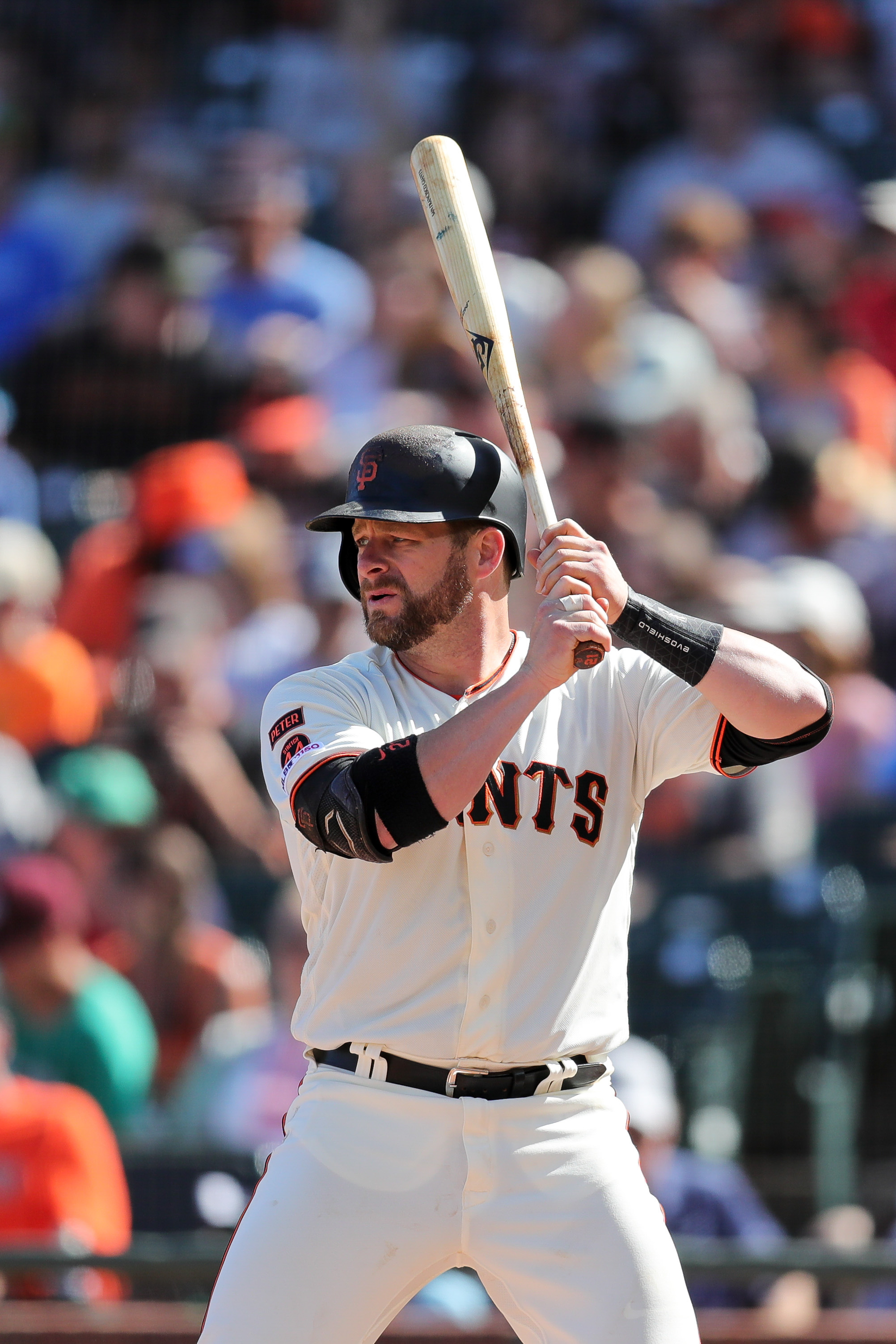
Vogt, 35, feared his career could be over following a 2018 shoulder surgery with the Brewers, but he landed with the Giants on a minor league pact and proved himself with a quietly strong rebound season. In 280 plate appearances spread over the life of 99 games, the former All-Star hit .263/.314/.490 with 10 home runs.
Arizona’s need for a backstop isn’t necessarily acute, but Vogt’s left-handed bat will pair nicely with the up-and-coming Carson Kelly, who hits from the opposite side of the dish — and does so quite well (.356/.462/.667 versus lefties in 2019). Vogt will also give the 25-year-old Kelly another veteran mentor under whom to study, replacing fellow free agent Alex Avila, who remains unsigned but now appears destined to land elsewhere.
The D-backs also have veteran catcher Caleb Joseph on the 40-man roster as a third option, and given the fact that they’ve previously carried three catchers at a time even with a 25-man roster, it seems plausible that they’ll do so again now that rosters are set to expand to 26 players for the 2020 season. Alternatively, Vogt’s acquisition could also spell the end of Joseph’s time with the Arizona organization. He’s arbitration-eligible this winter and projected to receive a $1.2MM salary, which the club may feel too steep to pay a third catcher who falls behind both Kelly and Vogt on the depth chart.
ESPN’s Jeff Passan first reported the agreement (via Twitter). Joel Sherman of the New York Post (Twitter link) and Zach Buchanan of The Athletic (Twitter links) added details on the financial structure.