
Dodgers Sign Steve Geltz To Minor League Deal
The Dodgers have signed righty reliever Steve Geltz to a minor league deal, Matt Eddy of Baseball America writes. The Brewers had claimed Geltz from the Rays earlier in the offseason, but he became a free agent once they outrighted him last month.
The 29-year-old Geltz pitched 102 1/3 innings for the Rays over the last three seasons, posting a 4.22 ERA, 8.6 K/9 and 3.5 BB/9. He’s always been an extreme fly ball pitcher, though, and those fly ball tendencies became a significant problem for him last season, when he allowed a staggering 11 home runs in 26 2/3 innings and was repeatedly demoted to Triple-A Durham. His more successful showing in 2015 (when he had a 3.74 ERA over 67 1/3 frames) perhaps demonstrates his upside under better circumstances, though, so it’s possible he could reemerge at some point as a big-league middle reliever. If he does, he comes with up to five more seasons of control remaining, including two pre-arbitration years.
Indians Sign Edwin Encarnacion
SATURDAY: Via Heyman (on Twitter), Encarnacion will receive $150K if the Indians draw two million fans in any year of his contract, with additional bonuses of $150K for 2.15MM, 2.3MM, 2.5MM and 2.75MM fans. He will receive $250K for 3MM fans.
THURSDAY 11:15am: MLB.com’s Anthony Castrovince reports that Encarnacion will receive a $5MM signing bonus and earn $13MM in 2017 (Twitter link). He’ll then make $17MM in 2018 and $20MM in 2019 before the Indians have to determine whether to exercise his $20MM club option or pay him a $5MM buyout. Interestingly, FanRag’s Jon Heyman tweets that Encarnacion has a unique clause that allows him to earn up to $1MM worth of incentives per year based on the Indians’ attendance.
8:42am: Improbable as it might’ve seemed when the offseason began, the Indians have landed arguably the best bat on the free-agent market, announcing on Thursday the signing of longtime Blue Jays slugger Edwin Encarnacion to a three-year contract with a fourth-year option. The Rep 1 Baseball client will reportedly be guaranteed $60MM and can see his contract max out at $80MM if his $25MM club option ($5MM buyout) for the 2020 season is exercised.
[Related: Updated Cleveland Indians Depth Chart / Cleveland Indians Payroll Info]
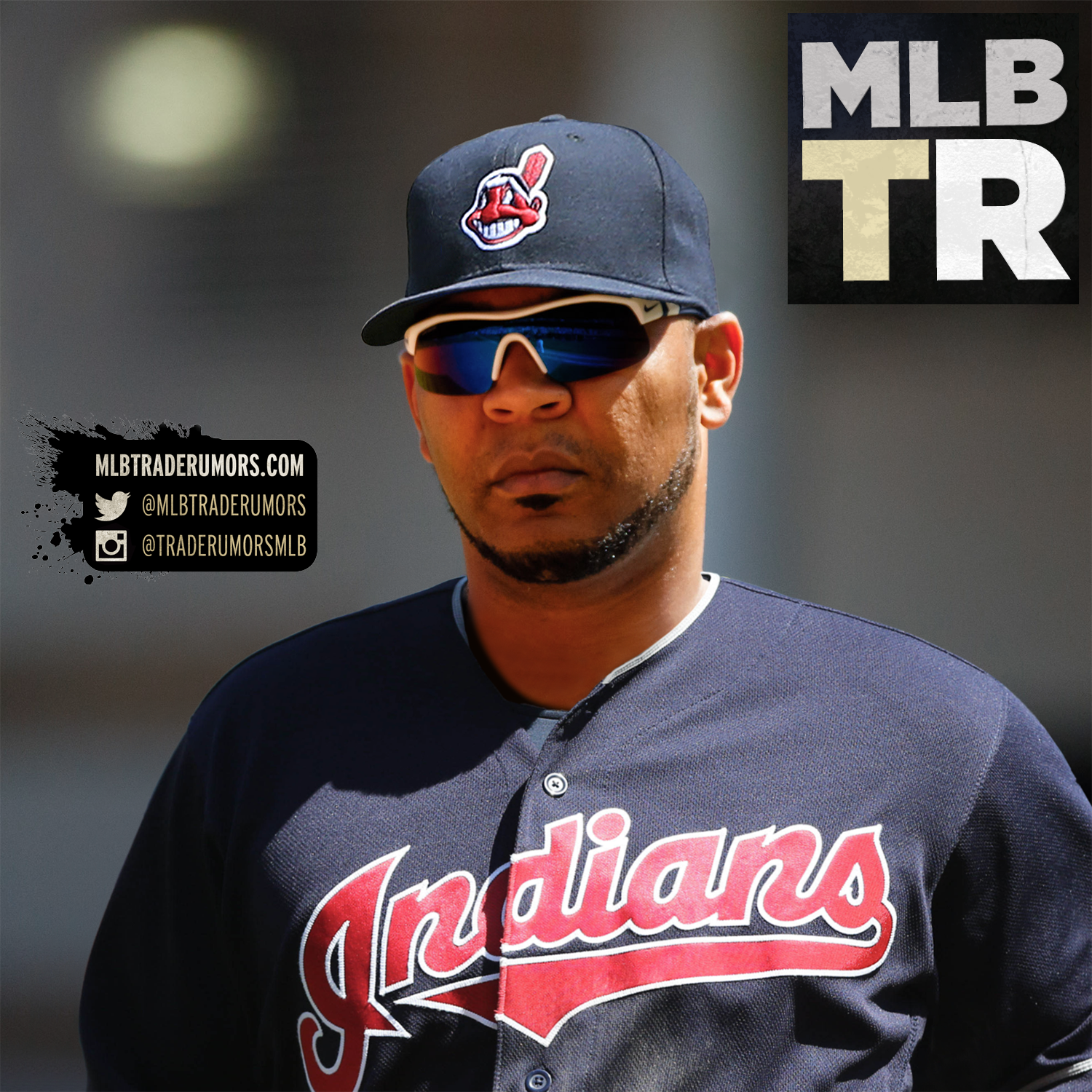
Encarnacion, who turns 34 on Saturday, will give Cleveland a younger and more productive replacement for the departed Mike Napoli — bolstering the lineup of a club that is fresh off an American League pennant and hoping for another deep postseason run in 2017. The former Blue Jays star slashed .263/.357/.529 with 42 home runs and a league-leading 127 runs batted in this past season. Over the past five years, Encarnacion has been one of Major League Baseball’s most feared hitters, compiling a stellar .272/.367/.544 batting line with 193 homers — an average of 39 big flies per year. In that time, Encarnacion trails only Chris Davis in total home runs, and he’s also ranked third in the Majors in isolated power (.273), fifth in slugging percentage and sixth in OPS (.912) among qualified hitters.
Adding a bat as potent as the one wielded by Encarnacion will give the Indians a formidable lineup to complement an outstanding rotation. Encarnacion should slot into the heart of the order, where he’ll be surrounded by Jason Kipnis, Francisco Lindor, Carlos Santana and a hopefully healthier Michael Brantley in 2017. Young Jose Ramirez took a massive step forward in terms of offensive production in 2016, and Tyler Naquin emerged as an unexpected power threat to further deepen the lineup. Encarnacion has spent the bulk of his time at DH in recent years, but he’s rated as a passable option at first base when in the field. He should split time at both positions with Santana next year, and following the 2017 season he can become a full-time designated hitter once Santana hits the open market.
The circumstances that led to Encarnacion’s arrival in Cleveland were somewhat surprising; the 33-year-old entered the offseason as one of the two best bats on the open market (alongside Yoenis Cespedes), but multiple clubs that looked to be fits either pivoted early due to his asking price or never engaged with Encarnacion at all. The Yankees signed Matt Holliday just as the Winter Meetings kicked off, for instance, while the Astros seemingly moved on just prior to that by signing Carlos Beltran. The Red Sox reportedly never made much of a run at all, preferring a short-term option at first base/DH (which proved to be Mitch Moreland).
Encarnacion’s former team, the Blue Jays, seemed to be one of the best on-paper fits to retain his services. Toronto GM Ross Atkins and president Mark Shapiro reportedly made an offer of roughly $80MM over four years to Encarnacion back in early November, but Encarnacion and his agent felt it best to explore the market a bit more before making a decision on that offer. Unfortunately for them, the Jays changed course almost instantly, signing Kendrys Morales to a three-year $33MM deal on Nov. 11 and striking a two-year pact with Steve Pearce just under a month later. While the decision to reject that $80MM guarantee is easy to question in hindsight, Encarnacion can still reach that total in the end if his option is exercised.
In addition to Encarnacion’s age and defensive limitations, the biggest hindrance on his market may well have been the fact that he rejected a qualifying offer and is thus subject to draft pick compensation. The Indians entered the offseason with the 27th overall pick but saw that selection move up to 25th overall after the Cardinals signed Dexter Fowler and the Rockies signed Ian Desmond. Cleveland will part with that top pick in order to sign Encarnacion, while the Jays will receive a compensatory pick at the end of the first round.
Surrendering that pick was no small feat for Cleveland — a low-revenue team that can rarely engage in this type of free-agent expenditure and must instead rely on drafts and trades to build contenders. However, Cleveland’s window to win is unquestionable open right now; in the rotation, Corey Kluber, Carlos Carrasco and Danny Salazar are all controlled through the 2019 season — the final guaranteed year of Encarnacion’s deal. Kipnis, too, is controlled through 2019, while relief aces Andrew Miller and Cody Allen are controlled through 2018. That collection of well-compensated veterans is manageable for Cleveland with Santana coming off the books next season, while younger stars Lindor and Ramirez have yet to reach arbitration. Cleveland is also sitting on something of a World Series windfall following their Game 7 run in this year’s Fall Classic, making the immediate commitment a bit easier for the team to stomach.
Whether Encarnacion can push the team over the top and help bring Cleveland its first World Series title since 1948 remains to be seen, of course, but with Encarnacion added to an already excellent roster, the Indians figure to enter the 2017 as the consensus on-paper favorite to take home their second straight American League Central Division title.
Jon Heyman of FanRag Sports first reported the agreement between the two sides (Twitter links). Yahoo’s Jeff Passan reported the guarantee and the option (Twitter links). He also tweeted that Encarnacion did not receive an opt-out clause.
Central Notes: Encarnacion, Dozier, Pirates
Agent Paul Kinzer said at this week’s press conference to introduce Edwin Encarnacion in Cleveland that the attendance bonuses that are built into the contract — worth upwards of $1MM per season, according to FanRag’s Jon Heyman — helped push the Indians‘ offer over the top, writes Paul Hoynes of the Cleveland Plain Dealer. However, it may be tough to meet those figures, as Hoynes points out that Cleveland hasn’t topped two million fans (the minimum threshold for Encarnacion to begin receiving incentives) since 2008 and haven’t drawn three million fans in a season since 2001. That type of clause is rare enough, Kinzer notes, that Cleveland president of baseball ops Chris Antonetti had to call the commissioner’s office just to see if the Indians would even be allowed to include such an incentive in the contract. While it’s unlikely that Encarnacion alone will drive the Indians’ attendance to those levels, MLB.com’ Jordan Bastian tweets that Cleveland has sold more than $1MM worth of season tickets since word of the agreement with Encarnacion broke — a 50 percent increase in new sales relative to last year’s offseason. A couple more notes on the Central divisions:
- Though this week’s report that Brandon Phillips nixed a trade to the Braves (via FOX’s Ken Rosenthal) lends some credence to recent connections between Atlanta and Twins second baseman Brian Dozier, Mike Berardino of the St. Paul Pioneer Press circled back with a source that characterized a Dozier-to-Atlanta deal as a “long shot” (Twitter link). It continues to appear as if the Dodgers are the only team that currently has a strong enough need to consider meeting Minnesota’s price for its excellent second baseman.
- Fastball velocity has increased throughout the game in the past several seasons, but it’s increased even faster within the Pirates organization during that time, Travis Sawchik of FanGraphs writes. The Bucs finished first in fastball velocity in 2015 (94.0 MPH) and second in 2016 (93.4 MPH). A key trait of many of the reclamation pitchers the Pirates have used in recent years — from starters like A.J. Burnett, Edinson Volquez and Francisco Liriano to relievers like Arquimedes Caminero, Neftali Feliz and John Holdzkom — is that they possess above-average velocity, as Sawchik points out. Bucs GM Neal Huntington notes that velocity gives pitchers more cushion for their mistakes, in that a poorly located pitch thrown in the mid-90s is less likely to yield poor results than a poorly located pitched thrown at a more modest radar reading. Now that other teams are also valuing velocity among free-agent pitchers, the Pirates are looking to develop hard-throwing pitchers of their own, like Tyler Glasnow, Jameson Taillon and Chad Kuhl.
Royals Sign Chris Withrow, Al Alburquerque, Brandon League To Minor League Deals
The Royals have signed veteran righties Chris Withrow, Al Alburquerque and Brandon League to minor league deals with Spring Training invites, Jeffrey Flanagan of MLB.com writes (Twitter links). Flanagan also notes the minor league signings of pitchers Bobby Parnell and Jonathan Sanchez, which had been previously reported; those two will combine with Withrow, Albuquerque and League to form a long list of formerly effective veterans who could compete for spots on the Royals’ pitching staff.
The 27-year-old Withrow was formerly a first-round pick of the Dodgers. After heading to Atlanta in a six-player deal involving Juan Uribe and Alberto Callaspo, Withrow spent 2016 with the Braves, where he posted a 3.58 ERA and an average fastball velocity approaching the mid-90s, but with an underwhelming 6.7 K/9 and 4.1 BB/9 in 37 2/3 innings. He ended last season with over three years of service time after spending 2015 on the shelf recovering from Tommy John surgery, and the Braves non-tendered him last month.
Alburquerque spent the 2016 season in the Angels and Mariners organizations, appearing briefly in the big leagues with the Angels and posting a 3.74 ERA, 9.4 K/9 and 4.5 BB/9 in 33 2/3 innings in the minors. The formerly hard-throwing Tigers reliever has seen his velocity dip to the low 90s in recent seasons. It’s possible some of that velocity drop might have some connection to his contraction of the Chikungunya virus in 2015, however, and the 30-year-old has proven to be an effective, if control-challenged, big-league reliever in the past.
League has not pitched since 2015, or in the big leagues since 2014, after struggling with shoulder trouble. The 33-year-old formerly served as a closer for the Mariners and Dodgers, but the Dodgers released him before the expiration of his three-year, $22.5MM contract with them. He has a 3.65 ERA, 6.3 K/9 and 3.1 BB/9 in parts of 11 seasons with the big leagues.
Padres Interested In Doug Fister
The Padres have interest in starting pitchers Doug Fister, Jake Peavy and Jered Weaver, with Weaver the least likely of the three, FOX Sports’ Ken Rosenthal tweets. The team’s interest in Peavy and Weaver had already been reported, but their reported interest in Fister is new.
Fister fits with the other two pitchers into the broad category of aging righty starters who have recently been down on their luck. He posted a 4.64 ERA, 5.7 K/9 and 3.1 BB/9 in 180 1/3 innings after signing a one-year deal with Houston for 2016. He made 32 starts, and there’s much to be said for that kind of durability, perhaps particularly for a Padres team that lacks established starting pitching behind Jhoulys Chacin. The 32-year-old Fister looks like a candidate for another short-term deal, however — his velocity rebounded somewhat last season but remains low for a righty, with an average fastball of 88.4 MPH, and his peripheral numbers offer few indications that the Fister who posted a 3.11 ERA in 750 2/3 innings from 2011 through 2014 is likely to return.
There haven’t been many whispers about Fister this offseason. He has briefly been connected to the Marlins, Pirates, and Mariners, although all those teams have since made starting pitcher acquisitions.
Arbitration Breakdown: Addison Reed
Over the next few days, I will be discussing some of the higher-profile upcoming arbitration cases. I will rely partly on my arbitration model developed exclusively for MLB Trade Rumors, but will also break out some interesting comparables and determine where the model might be wrong.
Modeling arbitration salaries is an inexact science, and sometimes “inexact” is too generous of a description. Setup man Addison Reed‘s projected $5.3MM raise to $10.6MM is clearly one of those times. Even worse is that the model was only saved by the “Kimbrel Rule,” which states that a player can only beat the record salary for their service class by $1M in the model. The raw model projected a $5.8MM raise. Reed is going to get a far smaller raise than he projected, because the peculiarities of his case confuse the model so much.
Reed’s case is unique because he has 106 career saves but had 40 holds this year in lieu of working as a closer. Further, he struck out 91 batters in 77.2 innings while posting a microscopic 1.97 ERA. Relievers who have a career of closing success behind them tend to out-earn those who have a single good year as closers. So the model gives credit to career save totals, which boosts Reed’s projection significantly.
He is, however, unlikely to get extra credit for those saves in real life. Remove those career saves, and the model projects him for a $3.6MM raise. That’s still large, but much more reasonable.
Reed’s 40 holds this year put him in elite company on their own. In the last decade, only three relievers entering their third year of arbitration eligibility have even accumulated 30 holds—David Robertson in 2014, Tyler Clippard in 2014, and Mike Adams in 2012. They had 33, 33, and 32 holds, respectively, and earned raises of $2.12MM, $1.88MM, and $1.87MM. Their ERAs were strong as well: 2.04, 2.41, and 1.47, as compared with Reed’s 1.97 ERA total. The extra holds suggest Reed’s raise will be worth significantly more than Robertson’s $2.12MM.
That establishes a floor for Reed, but looking for a ceiling is tricky with a lack of relievers amassing 40 holds or anything near it. To find a potential ceiling, we can look to closers who pitched similarly. Among closers who had ERAs under 2.00 like Reed, only one name emerges from the last five years—Aroldis Chapman. He had 33 saves and a 1.63 ERA in 2015, with 116 strikeouts in 66.1 innings. Chapman got a $3.27MM raise. Although Reed had seven more holds than Chapman did saves, he had a higher ERA and fewer strikeouts.
Putting this together, it makes sense that Reed should fall somewhere between a $2.12 and $3.27MM. I suspect right in the middle at $2.7MM would make sense, putting him at $8MM. It is a far cry from the model’s $10.6MM projection ($11.1MM ignoring the Kimbrel Rule), but it definitely would be a healthy raise for Reed’s third year of eligibility.
5 Key Stories: 12/31/16 – 1/6/17
Here are five key stories from this week at MLBTR.
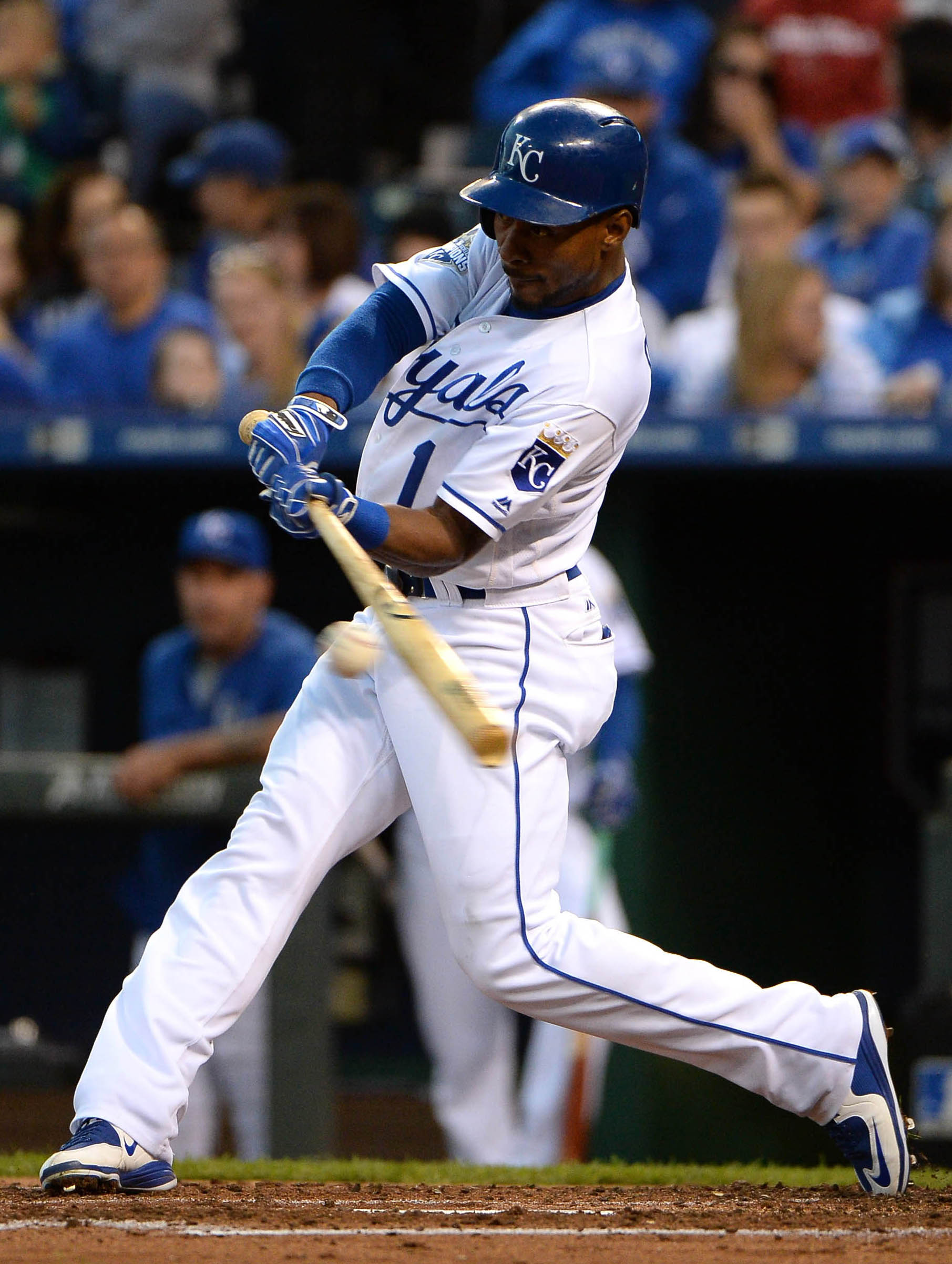 Mariners deal for Yovani Gallardo, Jarrod Dyson. Seattle acquired two veterans this week in a pair of related trades. First, they sent outfielder Seth Smith to Baltimore in exchange for starter Yovani Gallardo. Then, they shipped a starter, Nate Karns, to Kansas City for outfielder Jarrod Dyson. The deals give the Mariners a pair of short-term possibilities; Gallardo is signed through 2017 with an option for 2018 and Dyson can become a free agent at the end of the year, while Karns is controllable through 2020.
Rajai Davis returns to Athletics. After six years split between the Blue Jays, Tigers and Indians, speedy veteran Rajai Davis came back to Oakland this week, signing a one-year, $6MM deal to join an outfield group that will also include Khris Davis, Matt Joyce, Jake Smolinski and Brett Eibner. The Athletics could continue to add, too, as they’ve recently been connected to free-agent slugger Mark Trumbo.
Reds sign Drew Storen. The Reds made their first big-league signing of the year this week, and perhaps unsurprisingly, it’s for a former closer, as they inked former Nationals fireman Drew Storen to a one-year, $3MM deal that can include up to $1.5MM in incentives. In other Reds news, it also emerged this week that second baseman Brandon Phillips blocked a trade to the Braves this past November.
Twins expect resolution of Brian Dozier trade talks. Twins second baseman Brian Dozier has been a rumored trade candidate throughout much of the winter, but the Twins don’t expect that to continue, as they plan to soon resolve his status for 2017. The Dodgers have long been the team most strongly connected to Dozier, and that appears to continue to be the case, and they’re reportedly willing to include Jose De Leon and other prospects in exchange.
Royals, Cardinals begin Matt Adams trade talks. The Royals and Cardinals have reportedly begun trade talks on a deal that would send first baseman Matt Adams across the state of Missouri. With Kansas City, Adams would likely find playing time as a DH. The Royals also added another potential DH candidate this week when they acquired minor league slugger Peter O’Brien from the Diamondbacks for righty Sam Lewis.
Photo courtesy of USA Today Sports Images.
Arbitration Breakdown: Cole, Odorizzi, McHugh, Fiers
Over the next few days, I will be discussing some of the higher profile upcoming arbitration cases. I will rely partly on my arbitration model developed exclusively for MLB Trade Rumors, but will also break out some interesting comparables and determine where the model might be wrong.
As I discussed in my write-up on Jacob deGrom and Carlos Martinez, it has been difficult for starting pitchers to top Dontrelle Willis’ arbitration salary of $4.35MM in his first year of arbitration eligibility back in 2006. Dallas Keuchel finally broke that record last year, but otherwise many pitchers have fallen short. In many cases, pitchers have gotten close only to sign multi-year deals to remove themselves from the list of comparables, and other times they have settled for numbers at or just short of Willis’ old record.
My model has trouble with these symbolic barriers, and I have written many articles about why pitchers projected to earn slightly more than $4.35MM would earn slightly less. Mathematical modeling is a science, but it does not pick up on the psychological nuances of a precedent being broken. It remains to be seen whether Keuchel’s new record makes it easier for pitchers to out-earn Willis—and Carlos Martinez this year could be a great case. However, despite Gerrit Cole of the Pirates, Jake Odorizzi of the Rays, and Collin McHugh and Mike Fiers of the Astros all projecting near the $4.35 mark—Odorizzi and McHugh are projected slightly above it—I suspect all four will earn slightly less than their projections because of this barrier.
All four of Cole, Odorizzi, McHugh, and Fiers have at least 30 career wins, 500 career innings, 400 career strikeouts, and 100 platform year innings. All of them also have relatively average ERAs in the 3’s or 4’s. None won the Cy Young Award last year. There are only four such pitchers who met these criteria to receive one-year arbitration deals as first-year starting pitchers in the last three years, and all four earned in a tight range of $3.63MM to $4.35MM. These include Shelby Miller, Chris Tillman, Mike Minor, and Jake Arrieta. It is difficult to see any of these four pitchers falling out of that range.
Gerrit Cole is projected to earn $4.2MM, but his case is somewhat unique in that he had a relatively weak platform year despite a strong career. He went 7-10 last year, but his 47-30 in his career. His 3.88 last year is worse than his 3.23 career mark. He only threw 116 innings with 98 strikeouts last year, but he has thrown 579.1 innings with 538 strikeouts in his career. Good comparables will include players with high career wins but low platform year wins. Ivan Nova is a reasonable comparable, although he earned just $3.3MM three years ago. He had a 9-6 record with a 3.10 ERA in 139.1 innings, but was 38-20 in his career with 4.04 ERA in 517 innings. Cole’s career numbers are definitely much better than Nova’s, but Nova makes sense as a floor. I suspect Cole will get a raise over Nova’s salary plus some extra money for inflation and will end up in the $3.5MM to $4MM range, probably right in the middle—well short of his arbitration projection of $4.2MM.
Jake Odorizzi went 10-6 last season with a 3.69 ERA in 187.2 innings along with 166 strikeouts. He only has 30 career wins, fewer than the other three guys on this list, but he does have 562 career innings and a 3.75 career ERA, along with 516 strikeouts. His best comparable is probably Doug Fister four years ago, who also won ten games and had a similar ERA at 3.45. Fister also had 30 career wins and a 3.48 ERA in 610 career innings. Fister struck out over a hundred fewer batters in his career at the time he earned $4MM exactly, so adding in some salary inflation should be Odorizzi comfortably in the low 4’s. However, it is hard to find a reason why Odorizzi would top Matt Harvey, David Price, Shelby Miller, or Chris Tillman, all of whom earned between $4.32 and $4.35MM. My model projects Odorizzi at $4.6MM but my gut says $4.2MM.
Collin McHugh had a 4.34 ERA last year and has a 4.13 career ERA, so his run prevention resume is unimpressive compared to the other pitchers in this group and many other potential comparables. However, McHugh won 13 games last year and has won 43 in his career, which is a rare feat. There are only two pitchers in the last six years who have won at least 12 games in their platform years and 40 in their careers while having ERAs above 4.00. These include Ian Kennedy, who earned $4.26MM in 2013, and Tommy Hanson, who earned $3.72MM in the same year. Kennedy’s numbers are largely similar to McHugh’s, but slightly better in many aspects. Hanson was slightly behind McHugh in most categories. Given how stale these comps are, I think McHugh should pass the midpoint of around $4MM, but I also see him struggling to make a case for besting $4.35MM. I think something like $4.1MM or $4.2MM is likely, which is also below his $4.6MM projection.
Michael Fiers 4.48 platform year ERA will definitely dent his case, although his 3.87 career ERA is more impressive. He also has 11 platform year wins and 34 career wins, along with a platform year of 168.2 innings with 134 strikeouts. Jeremy Hellickson’s 2014 case is a great match. He had only one fewer loss, although Hellickson’s 5.17 ERA is definitely much worse than Fiers’ 4.48. His 39 career wins to that point best Fiers, but his 409 career strikeouts fall far below Fiers’ 542. Hellickson earned $3.63MM back in 2014, so with a more impressive platform year ERA plus three years of salary inflation, we would expect Fiers to easily top Hellickson’s salary. It is difficult to find much evidence that Fiers will hit his $4.3MM projection, though, since many of the pitchers in that range have much better cases than he does. I suspect he may be able to get close to $4MM, but probably not top it.
All four of these pitchers are likely to earn a few hundred thousand dollars less than they are projected to earn. My arbitration model tends to miss these sorts of subtleties, and a longstanding symbolic barrier at $4.35MM definitely has skewed salaries in this range down a few hundred thousand dollars. Keuchel’s new record is much higher than Willis’ old record, but several other pitchers will probably need to top $4.35MM before the model results are smooth enough that we can stop shaving money off these projections.
Nationals Hire De Jon Watson As Special Assistant
The Nationals announced on Friday that former Diamondbacks and Dodgers executive De Jon Watson has been added to their pro scouting staff and will serve as a special assistant to general manager Mike Rizzo.
Watson served as the Diamondbacks’ senior vice president of baseball operations from Sept. 2014 through Sept. 2016 before being dismissed in advance of a significant front office overhaul in Arizona. Though the 2016 struggles of the D-backs led to a considerable amount of criticism for all parties involved in that iteration of the front office, Watson has long been a respected executive and will bring a wealth of experience to the Washington front office.
With the D-backs, Watson’s duties included “[overseeing] the franchise’s professional, amateur and international scouting as well as all player development functions.” Prior to his time with the Diamondbacks, Watson spent eight seasons in the front office of the Dodgers, working in a variety of roles that included lengthy stints as an assistant GM and the team’s vice president of player development. He also served as the Indians’ director of pro scouting and the Reds’ director of scouting after first breaking into the business as an area scout with the Marlins.
Minor MLB Transactions: 1/6/17
Here are the day’s minor transactions:
- The Tigers have outrighted righty Angel Nesbitt to Triple-A after he cleared waivers, per a team announcement. Nesbitt, 26, was bumped from the 40-man recently to make way for the signing of Alex Avila. He has a bit fastball and drew grounders during his brief major-league action in 2015, but didn’t make it back to the bigs last year. Nesbitt ended up spending the entire season at Triple-A, where he worked to a 4.91ERA with 7.9 K/9 and 3.6 BB/9 over 47 2/3 frames.
- Also outrighted, per the MLB.com transactions page, was Pirates first baseman/third baseman Jason Rogers. He, too, was designated to clear roster space for a new addition — in his case, righty Nefi Ogando. The bulky 28-year-old has seen scattered time in the majors over the last three years, and hit well in 2015 for the Brewers, but didn’t enjoy a productive season in his first go-round in the Pirates organization. Pittsburgh acquired Rogers in a deal that sent Trey Supak and Keon Broxton to the Brewers last offseason. But he ended up seeing just 33 MLB plate appearances and struggled to a .263/.338/.371 slash with four home runs in his 420 trips to the plate at the highest level of the minors.