
MLBTR Podcast: Reds Talk With C. Trent Rosencrans
C. Trent Rosencrans of the Cincinnati Enquirer joins host Jeff Todd to discuss the state of the Reds. It was a fairly quiet winter, but the club still has plenty of intrigue entering the season. Among the many topics considered are Cincinnati’s offseason trades, the status of some key players looking to bounce back from injuries or under-performance, and the team’s interesting crop of young pitchers.
MLBTR’s Steve Adams then hops on the line to discuss the ramifications of early injuries around the league. While we don’t often see many notable spring swaps, the forthcoming DL stints of players like Jhonny Peralta, Brett Anderson, and Carter Capps raise questions for their respective teams.
Click here to subscribe to the podcast on iTunes, and please leave a review! The podcast is also available via Stitcher at this link. Download this episode directly here.
The MLB Trade Rumors Podcast runs weekly on Thursday afternoons.
MLBTR Live Chat: 3/10/16
Click here to read a transcript of today’s chat with host Jeff Todd.
AL West Notes: Weaver, Parker, Hill, Mariners’ Bullpen
Angels right-hander Jered Weaver experienced tightness in his neck this morning and underwent an MRI that is being described as precautionary, tweets MLB.com’s Alden Gonzalez. While a fair number of players have undergone such tests and checked out just fine early in spring, there’s been some added concern surrounding Weaver given the fact that his fastball didn’t top 80 mph in his second spring outing, during which he served up three homers and yielded a total of five runs on six hits and a walk without a strikeout in 2 2/3 innings. Pedro Moura of the L.A. Times was among the reporters to speak to Weaver following yesterday’s start, with Weaver telling the media, “I wake up every day hoping this is the day that it’s going to click, and it just hasn’t happened yet.” Weaver voiced confidence that he can retire hitters even with diminished velocity, but after averaging 83-84 mph on his heater last season, the former ace’s velocity figures to be an ongoing point of intrigue. Weaver is earning $20MM in the final season of a five-year, $85MM contract in 2016.
Elsewhere in the AL West…
- Jarrod Parker‘s uphill battle to return from a pair of Tommy John surgeries and a fractured epicondyle in his right elbow appears to have hit a snag, per Matt Kawahara of the Sacramento Bee. The Athletics right-hander, facing live hitters for the first time today, left the mound “yelling in pain” after throwing a pitch, Kawahara tweets. Pitching coach Curt Young, somewhat surprisingly, told Kawahara (Twitter link) that he “thinks” Parker will be OK, though he declined to go into any detail. A bullpen role for Parker had been the club’s preference for Parker, club sources told John Shea of the San Francisco Chronicle, but Young did term the incident a “setback,” and the A’s have announced the injury as a “lateral elbow impingement,” via John Hickey of the Bay Area News Group (Twitter link). Parker is headed for an MRI, per Hickey. MLB.com’s Jane Lee tweets that this injury is less severe than his previous maladies, as he currently has range of motion in his elbow.
- Ken Rosenthal of FOX Sports looks at the improbable (and that adjective is underselling the story) comeback of left-hander Rich Hill, who signed a one-year, $6MM contract with the Athletics this offseason on the heels of four brilliant September starts in Boston. Hill was granted his release from a minor league deal with the Nationals this past June and began working on throwing over the top for the first time after years of working more from a side-arm angle. Hill told his agent that he wanted an opportunity to start, and, finding no opportunities even with a Triple-A club, took to the independent Atlantic League to find a spot in the rotation. Hill parlayed that into a spot in the Red Sox’ Triple-A rotation and only received a call-up in September when Steven Wright suffered an injury. Four starts and a 1.55 ERA (with a 36-to-5 K/BB ratio in 29 innings) later, Hill says he received interest from 20 teams as a free agent and actually turned down an offer for more money than the $6MM he landed from the A’s.
- Mariners relievers Evan Scribner and Ryan Cook are likely ticketed for the disabled list to begin the 2016 season, reports Bob Dutton of the Tacoma News Tribune. Each right-hander is dealing with a strained lat muscle in his back, per GM Jerry Dipoto, who said the news was actually better than he’d been expecting.
- The outlook on Mariners lefty Danny Hultzen, however, is considerably less favorable, Dutton notes. The former No. 2 overall pick is again on the shelf due to shoulder pain, and manager Scott Servais said he “[doesn’t] see” when Hultzen could get into a game. Hultzen has been working exclusively as a reliever, but he experienced a setback recently, per Servais. One anonymous club official simply told Dutton that Hultzen’s status is “not good.” Dutton writes that the slew of injuries makes it easier for Joel Peralta to make the roster out of Spring Training, also reporting that Peralta is able to elect free agency late in camp if he is informed that he will not make the roster.
Cubs Release Rex Brothers
The Cubs have released left-handed reliever Rex Brothers, tweets Gordon Wittenmyer of the Chicago Sun-Times. Brothers was acquired in a November swap with the Rockies, and his release will open a spot on the Cubs’ 40-man roster.
The 28-year-old Brothers, once looked at as the potential closer of the future in Colorado, has seen his stock dip in recent seasons. While control has never been Brothers’ strong suit, he’s seen his walk rate rise considerably since 2013. From 2014-15, Brothers posted a 5.00 ERA in 66 2/3 innings with the Rockies, averaging 8.1 strikeouts and 6.3 walks per nine innings pitched. That walk rate is troublesome enough, but Brothers’ control was actually worse at the Triple-A level last season, where he walked a jarring 44 batters in 42 1/3 innings. Chicago picked him up in exchange for minor leaguer Wander Cabrera this winter, but Brothers’ stay on the team’s roster proved to be a brief one.
Brothers’ release isn’t without financial implications. The Cubs avoided arbitration with him by agreeing to a $1.42MM salary for the 2016 season. While arbitration salaries aren’t fully guaranteed, Chicago is on the hook for 30 days worth of termination pay, which will amount to $232,786. He’ll now be free to sign with a club for any amount, though a minor league deal certainly seems likely given Brothers’ recent struggles (which, I should add, include yielding three runs on three hits and three walks with four strikeouts in 2 2/3 innings this spring).
The Cubs still have plenty of left-handed bullpen options in camp, with both Travis Wood and Clayton Richard representing relatively well-compensated bullpen candidates at $6.175MM and $2MM, respectively. Waiver claim C.J. Riefenhauser represents another option on the 40-man roster, although he has a minor league option remaining and can thus begin the year at Triple-A. Additionally, veteran Manny Parra and well-traveled southpaw Edgar Olmos are in camp as non-roster invitees.
Offseason In Review: Milwaukee Brewers
David Stearns took the Brewers’ GM job in September and acted decisively to continue the organization’s rebuilding plan. The team won’t be very good in 2016, but its future suddenly looks bright.
Major League Signings
- 1B Chris Carter: one year, $2.5MM
Notable Minor League Signings
- Franklin Morales, Blaine Boyer, Chris Capuano, Cesar Jimenez, Eric Young Jr., Will Middlebrooks, Alex Presley, Jake Elmore
Trades And Claims
- Acquired SP Chase Anderson, SS Isan Diaz and IF Aaron Hill from Diamondbacks for SS Jean Segura and P Tyler Wagner
- Acquired C Jacob Nottingham and P Bubba Derby from Athletics for OF Khris Davis
- Acquired P Carlos Herrera, P Daniel Missaki and P Freddy Peralta from Mariners for 1B Adam Lind
- Acquired 2B Javier Betancourt and C Manny Pina from Tigers for P Francisco Rodriguez
- Acquired OF Rymer Liriano from Padres for P Trevor Seidenberger
- Acquired OF Keon Broxton and P Trey Supak from Pirates for 1B Jason Rogers
- Acquired OF Ramon Flores from Mariners for IF Luis Sardinas
- Acquired IF Jonathan Villar from Astros for P Cy Sneed
- Acquired 3B Garin Cecchini from Red Sox for cash
- Claimed SP Sean Nolin from Athletics
- Claimed C Josmil Pinto from Padres
- Claimed 1B Andy Wilkins from Rangers
- Claimed OF Kirk Nieuwenhuis from Mets
- Claimed P Junior Guerra from White Sox
- Selected 2B Colin Walsh from Athletics and P Zack Jones from Twins in the Rule 5 Draft
Extensions
- None
Notable Losses
Needs Addressed
This time last year, the Brewers were in a holding pattern. Their core was getting older and more expensive, and they were coming off an 82-80 2014 season and a second-half collapse. But their decent collection of veteran talent (Carlos Gomez, Jonathan Lucroy, Ryan Braun, and so on) and weak farm system meant that initiating a rebuilding process right away might have been more painful than just hoping for the team to be competitive in the short term and waiting to rebuild.
Their 2014-15 offseason was, accordingly, a tepid one. They traded Yovani Gallardo and Marco Estrada, but actually returned a veteran (Adam Lind) rather than young talent in the Estrada trade and generally didn’t make any dynamic moves to change the direction of their franchise.
That changed quickly when the 2015 season began and the Brewers found themselves in a 5-18 hole by May 1. The terrible start perhaps provided the organization with clarity it needed, and the team quickly replaced manager Ron Roenicke with Craig Counsell and began shipping out veterans (including Gomez, Mike Fiers, Gerardo Parra, Aramis Ramirez, Jonathan Broxton and Neal Cotts). They also hired the youthful David Stearns (who recently appeared on the MLBTR Podcast) to be their new GM, with Doug Melvin moving into an advisory role.
Stearns had already been part of one aggressive rebuilding project as assistant GM of the Astros, and at least at this early point, it looks like he at least has the fortitude to lead one in Milwaukee. His first offseason was a busy one, as he continued dealing veterans and adding to an increasingly impressive base of young talent while reshaping the organization to fit his vision.
It’s hard to tell what the Brewers’ Opening Day roster might look like. Holdovers Lucroy, Braun and Scooter Gennett will occupy familiar spots, but the rest of the lineup is in flux. First base will likely be occupied, at least in part, by Chris Carter, the only big-league free agent the Brewers signed this winter. Carter has tremendous raw power but strikes out constantly and is a defensive liability. He’s also 29 and doesn’t seem likely to age well. He should, however, bat closer to .220 or .230 than the .199 he hit last year. If he can get his average any higher than that, he might be a tempting trade-deadline acquisition for a contender. The Brewers could also take him to arbitration and keep him through 2018 if he’s successful. Given Carter’s power and the Brewers’ ability to control him beyond 2016, $2.5MM seems like a very reasonable price to have paid, particularly with the Orioles paying more than twice as much for Pedro Alvarez, who is in many ways a similar player.
Carter replaces Adam Lind and (to a lesser extent) Jason Rogers, who both headed elsewhere in trades. For one year of Lind, the Brewers got a trio of very young arms in Carlos Herrera, Daniel Missaki and Freddy Peralta. None of them have yet turned 20, but all have posted impressive peripheral numbers in the very low minors. None are yet highly rated, but it wouldn’t be a shock to see one of them emerge as a serious prospect within a year or two. For Rogers, they got Keon Broxton (a young outfielder who lacks offensive upside but has blazing speed, strong defensive ability and a fresh service-time clock) and Trey Supak, a 2014 second-round pick who will join Herrera, Missaki and Peralta among the Brewers’ growing group of interesting lottery-ticket arms.
2015 shortstop Jean Segura is also gone after a clever trade to the Diamondbacks. For their willingness to eat $5.5MM of the remaining contract of veteran infielder Aaron Hill (who Counsell says will get the first shot at the Brewers’ open third base job), the Brewers arguably got not only the best current big-leaguer in the deal (Chase Anderson, a fourth starter type who should help Milwaukee’s rotation get through the team’s rebuilding period) but also the highest-upside player (infielder Isan Diaz, who’s far from the Majors but hit brilliantly for both average and power last year as a 19-year-old in the Pioneer League). Segura, meanwhile, has not developed since his 2013 breakout, and his 93 strikeouts and 13 walks in 2015 suggest he has plenty of improving to do if he’s going to be an asset. The Brewers also gave up starting pitcher Tyler Wagner, who posted a good ERA last season at Double-A Biloxi but was somewhat old for the level and was not particularly impressive, either in terms of his stuff or his results, in a brief trial in the big leagues. Wagner’s ability to get ground balls could lead to a career as a back-of-the-rotation type in the Majors, and Segura is young and could perhaps turn his career around, but it doesn’t look like the Brewers gave up much.
Stearns also made two other trades involving potential utility infielders. First, he sent pitcher and 2014 third-round pick Cy Sneed to Houston for Jonathan Villar. Sneed hasn’t yet pitched at Double-A, although his numbers were promising in his first pro season. Villar, meanwhile, has never really hit much (his .284 average in a small sample in the big leagues in 2015 notwithstanding). He runs the bases well and can play multiple positions, though, and he has five years of service time remaining before free agency. The deal was Stearns’ only trade of a minor-leaguer for a big-leaguer this offseason and appears to run counter to much of what the Brewers tried to achieve this offseason, although that isn’t necessarily a big deal — Sneed is less than two years younger than Villar and isn’t a top prospect.
Stearns then shipped 2B/SS Luis Sardinas to Seattle. Sardinas had been in the Brewers organization for less than a year and is still just 22, but his recent track record (and especially his .282/.319/.359 line last season at hitter-friendly Triple-A Colorado Springs) raises questions about whether he’ll hit even as well as Villar currently does. In return, the Brewers received Ramon Flores, a young left-handed hitter with some on-base ability and offensive upside who could become a fourth outfielder. He could get that chance as soon as this year, since he’s out of options and is fully recovered from an ankle injury he suffered last August.
Questions Remaining
There are many, which isn’t surprising, given that the Brewers don’t figure to contend this year. Villar seems likely to win the shortstop job, but he could move to second once top prospect Orlando Arcia is promoted. That could bump default second baseman Gennett, who’s coming off a disappointing 2015 season, to the bench. At third, it’s hard to believe the Brewers will remain satisfied with Hill if he continues to perform as he has the last two seasons. If he falters, minor-league signee Will Middlebrooks or trade acquisition Garin Cecchini could take over; those players have been disappointing in recent years as well, but at least they’re younger. (Since none of those options look particularly inspiring, it might have been interesting to see the Brewers sign free agent third baseman David Freese, who could help out at the position and potentially return a prospect at the deadline.)
Left field and right field appear set with Braun and Domingo Santana, but what will happen in center is unclear. Brett Phillips, who was part of the Carlos Gomez trade package along with Santana, could be the long-term answer at the position. He has limited experience in the high minors (and is currently dealing with an oblique strain), however, so he’s unlikely to start the season in the bigs. That leaves a variety of potential center field options to start the season, including Kirk Nieuwenhuis, Broxton and perhaps Shane Peterson or Flores. One of the more interesting possibilities is Rymer Liriano, a former top prospect the Brewers acquired in a minor deal in January after the Padres designated him for assignment. Liriano hasn’t performed to expectations since he missed the 2013 season due to an elbow injury, but he’s still just 24, appears to have a bit of offensive ability and hit fairly well last year, albeit in a hitter-friendly environment at Triple-A El Paso. Getting Liriano for minor-league reliever Trevor Seidenberger could prove to be a small coup for the Brewers.
The Brewers’ rotation, in contrast, is relatively set, with Jimmy Nelson, Wily Peralta, Taylor Jungmann, Matt Garza and Anderson. (Zach Davies, one of last year’s trade acquisitions, did enough down the stretch to warrant consideration for a rotation spot, but could end up at Triple-A unless the Brewers clear space by, say, unloading a portion of Garza’s contract in a deal.) There will be competition in the bullpen, though, including at the closer spot. In November, the Brewers sent veteran fireman Francisco Rodriguez to Detroit for infielder Javier Betancourt and a player to be named, later revealed to be journeyman catcher Manny Pina. Betancourt is a tough player to evaluate — he didn’t hit much in 2015, but some of that is likely due to the fact that he was barely 20 and playing against older competition in the Florida State League. He could eventually become an everyday second baseman, but he doesn’t figure to contribute this season.
In K-Rod’s absence, Jeremy Jeffress and Will Smith will battle for the closer spot. There will be competition for bullpen spots elsewhere, but Michael Blazek and Corey Knebel appear likely to win jobs after having solid 2015 seasons.
In the meantime, the Brewers have only a handful of veterans left who might be tradable. Chief among them is Lucroy, whose terrific contract (which contains a cheap 2017 option) and strong track record make him a significant asset despite a disappointing and injury-shortened 2015 season. It’s still possible the Brewers could deal him before they break camp, and the timing of such a deal might make sense. Lucroy is now catching in Spring Training games, so any interested teams can confirm he’s healthy, and some teams might be slightly reluctant to trade for a starting catcher once a season has begun. (Lucroy has a limited no-trade clause that allows him to block deals to eight teams, although given his recent comments about preferring to play for a winning team, that might not be an obstacle.)
Braun could eventually be dealt, too, although the Brewers might have to pay some of the $95MM remaining on his contract. Now might not be right time to trade him, since had back surgery in October, but if he gets off to a good start this season, it wouldn’t be surprising to see him on the market this summer. Relievers like Jeffress, Tyler Thornburg and especially Smith could also attract interest, and Peralta could be a possibility as well if he pitches well for a few months.
Deal Of Note
 The offseason trade that netted the Brewers their most significant return was the deal that sent Khris Davis to Oakland for Jacob Nottingham and Bubba Derby. Davis has four years of control remaining and has significant raw power, belting 49 home runs in the past two seasons. He is, however, 28, and has obvious weaknesses, including generally weak on-base percentages and limited defensive value. It’s possible his increased walk total in only his second full season in the league last year indicates a promising future, but given his age, it’s more likely that the Brewers traded him somewhere near the peak of his value.
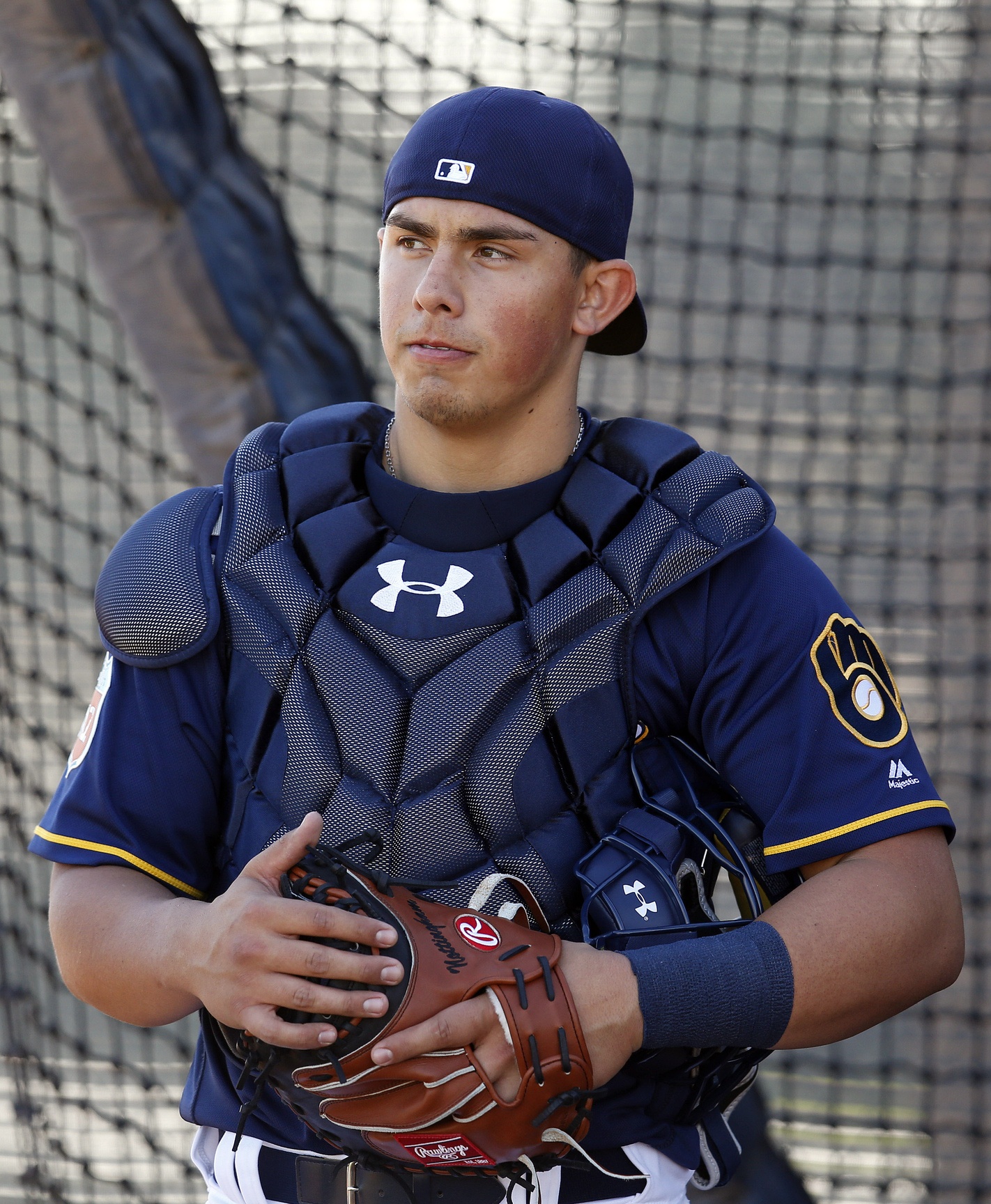
In return, they received Bubba Derby — a righty sixth-round pick from the 2015 draft who carved up short-season ball in his pro debut — and catcher Jacob Nottingham (pictured). Nottingham (who had already been traded once, going from Houston to Oakland in the Scott Kazmir deal) is currently the more valuable of the two pieces. He broke out in 2015 at Classes A and A+, posting a .316/.372/.505 line as a 20-year-old. If he can stick at catcher, his offensive ability could make him very valuable, although reports on his defense are mixed. Even if he has to move to another position, he has the chance to contribute, perhaps even as a first baseman if he can continue developing the power that helped him hit 17 home runs this season.
Overview
When Stearns arrived, the Brewers’ rebuild was already in progress, and he’s spent the offseason continuing what Melvin had already started. More than that, though, Stearns began to reconfigure the organization to suit his preferences. That was clear in his acquisition of former Astros players like Carter, Nottingham, Villar and minor-league signees Alex Presley and Jake Elmore, as well as Stearns’ plentiful waiver claims and Rule 5 selections this winter.
Time will tell how many of these acquisitions turn out to be important ones, but it’s clear that Stearns improved a farm system that was already getting better. In 2014, Baseball America ranked the Brewers’ farm system the second worst of any organization. This year, the Brewers ranked ninth best. That improvement is primarily due to prospects like Arcia, Phillips and Trent Clark, all of whom were acquired under Melvin.
Then again, most of Milwaukee’s best trade assets (like Gomez, who Melvin dealt to get a package that included Phillips) had already been dealt by the time Stearns arrived. Much of the talent Stearns had available to trade this offseason didn’t appear likely to return top-100-type prospects, so Stearns instead sought potential role players with a bit of upside (like Anderson, Liriano, Flores and Broxton) and interesting players from the low minors (like Diaz, Derby, Herrera, Misaki, Peralta and Supak). That approach wasn’t glamorous, but it seems likely to yield a couple competent complementary players in the short term, and in the long term, it wouldn’t be surprising if one or two of the very young players the Brewers acquired emerged as top prospects.
In the meantime, the Brewers will attempt to piece together which of their new players might be parts of their next competitive team. Given the talent they have on the way — with Arcia, Phillips, and righty Jorge Lopez all sticking in the big leagues this year or next and a raft of interesting players below them — they could become fun to watch reasonably quickly, even if it takes a few years for them to become competitive in a tough NL Central division.
Let’s turn it over to MLBTR readers with a poll (link to poll for mobile app users)…
How would you grade Milwaukee's offseason?
-
B 32% (1,151)
-
A 28% (1,000)
-
C 18% (630)
-
D 13% (463)
-
F 9% (310)
Total votes: 3,554
Photo courtesy of USA Today Sports Images.
NL East Notes: Amaro, Asche, Altherr, Span, Braves
Former Phillies GM Ruben Amaro Jr., now the Red Sox’ first base coach, discussed the perception that his regime in Philadelphia was well behind the curve in terms of analytics in an interview with David Laurila of Fangraphs. Amaro makes the claim that while his club may not have been as progressive as some of the most aggressive adopters of statistical analysis, the Phillies may also have been more up to speed than they let on. “You can’t ever deny the numbers,” said Amaro.“That’s true for every GM and every baseball person, regardless of whether you’re ‘old school’ or ‘new school.’ … I’ve always believed in analytics. I just didn’t make it all public (in Philadelphia). I thought it was more of a competitive advantage for me to keep our thought-process about analytics closer to the vest. … I didn’t think it was anybody’s business but our own as to how we evaluated.” That is, of course, a fairly bold claim to make, especially in the face of years of stories to the contrary, which highlighted the Phillies’ adherence to more traditional means of evaluation. Amaro goes on to discuss the balance between data and scouting as well as new data from Statcast and evaluating players at different age levels. Regardless of whether one believes his initial claims (and I’d expect that most will not), the issue the comments raise is interesting, as there certainly could be some value to keeping operational methodology close to the vest for a big league organization. The interview is well worth taking a few minutes to read.
Here’s more from the NL East…
- Cody Asche is in danger of opening the season on the Phillies‘ disabled list, writes Ryan Lawrence of PhillyVoice.com. The former third base prospect, who converted to the outfield last year to accommodate Maikel Franco, was originally shut down two weeks ago due to an oblique issue, and an MRI conducted on Wednesday showed little progress. Asche is battling a Grade 1 strain in his right oblique, and manager Pete Mackanin says that the 25-year-old is still not cleared to hit. Aaron Altherr‘s unfortunate injury — he’ll miss up to six months following wrist surgery — seemed to have created a window for Asche to get some more playing time, but his own health problems could now stand in the way of that. As a result, Lawrence notes, Rule 5 pick Tyler Goeddel‘s chances of sticking with the club become even stronger.
- Phillies GM Matt Klentak implied to MLB.com’s Todd Zolecki that it’s unlikely he’ll look outside the organization to replace Altherr. “We owe it to the guys in camp to give them that chance to fill that spot,” said Klentak. “We’ll survey the market. If there’s something out there, we’ll explore it, but we feel pretty good about the guys we have here.” As Zolecki notes, the Phillies do have top priority on the waiver wire, so they could add an outfielder late in camp if one becomes available in that manner. In addition to Goeddel, the Phillies have Odubel Herrera, Peter Bourjos Darnell Sweeney and Darin Ruf as 40-man options, with veteran David Lough in camp as a non-roster invitee.
- Denard Span, who signed a three-year, $31MM contract with the Giants this offseason, spoke fondly of his time with the Nationals to James Wagner of the Washington Post in a recent interview. Within, the 31-year-old Span reveals that he and former agent Joe Urbon of CAA Sports approached the Nationals about a potential extension back in 2014, but the team wasn’t interested at the time. Despite the fact that his interest was spurned, Span had nothing but glowing things to say about the organization. It’s not necessarily a surprise that the Nats weren’t keen on a long-term deal, as Bryce Harper is a fixture in the outfield, Jayson Werth is locked up through 2017, and the team undoubtedly hoped at the time (and still hopes) that Michael A. Taylor can shift into the center field slot as a more cost-effective long-term option.
- Braves general manager John Coppolella tells MLB.com’s Mark Bowman that he’s not ruling out Major League debuts for top outfield prospect Mallex Smith or shortstops Dansby Swanson and Ozhaino Albies in 2016. “They have all been very impressive, and I don’t think they could have shown any better than they have,” said Coppolella of the trio’s first week of Grapefruit League action. Coppolella went on to say that service time implications (i.e. delaying a player’s free agency) won’t be a factor for him if a player deems that he is ready for MLB action in 2016. “You can always sign young guys to long-term deals,” said the GM. “Sometimes, when you bring up prospects early, they’re more willing to sign long-term because they know you didn’t hold them hostage or try to manipulate them in any way.”
Jhonny Peralta Undergoes Thumb Surgery
MARCH 10: Peralta did indeed undergo thumb surgery this morning, Mozeliak confirmed to reporters, including Goold (Twitter link). Mozeliak added that clubs have called to gauge his interest in acquiring a shortstop, which he likened to “ambulance chasing.”
The aforementioned 10- to 12-week absence would point to a possible return in early June, but Mark Saxon of ESPN tweets that Peralta’s return will more likely be around the All-Star break. Peralta will be in a cast for at least the next four weeks, Saxon notes.
MARCH 8: Peralta says that he hasn’t yet decided but could well opt for a surgical route, as Rick Hummel of the St. Louis Post-Dispatch reports. That would hopefully avoid lingering issues, but would likely require at least a ten to twelve week absence.
MARCH 7: Cardinals shortstop Jhonny Peralta left camp today with an apparent injury to his left hand, writes Derrick Goold of the St. Louis Post-Dispatch. General manager John Mozeliak addressed the media minutes ago and told reporters, including MLB.com’s Jen Langosch, that the team’s early read is a torn ligament in Peralta’s left thumb which could result in an absence of two to three months (links to Twitter). Peralta is traveling back to St. Louis to receive a second opinion on the injury.
Any lengthy absence for Peralta would be a blow to a Cardinals club that some pundits felt was already light in terms of power production. The 33-year-old Peralta (34 in late May) appeared in 155 games for the Redbirds last season, batting .275/.334/.411 with 17 home runs. That line, while solid overall, masks what was a miserable second half of the season for the veteran infielder, though. Peralta was batting a robust .288/.345/.465 as late in the season as Aug. 4, and while the nature of that endpoint is entirely arbitrary in nature, admittedly, he slumped to a meek .246/.312/.291 batting line over his final 199 trips to the plate.
The Cardinals picked up Jedd Gyorko in an offseason swap with the Padres in part to help keep Peralta fresh and avoid a similar second-half decline. Gyorko has limited experience at shortstop but could be in line for significant playing time at the position in the event of a prolonged stint on the disabled list for Peralta. St. Louis also has infielder Greg Garcia as an option at short, and Aledmys Diaz, who signed a four-year deal as a free agent in 2014, could surface in the Majors after rebuilding his stock with a strong rebound campaign in 2015.
The timing of Peralta’s injury is terrible for the Cardinals not only in terms of proximity to the season but also because as recently as eight to nine days ago, a viable replacement sat on the free agent market in the form of Ian Desmond. Desmond, however, inked a one-year deal to play left field with the Rangers, removing him as a possible alternative.
Orioles Release Andrew Triggs
The Orioles announced that they have released minor league right-hander Andrew Triggs in order to clear a spot on the 40-man roster for the newly signed Pedro Alvarez, whose one-year deal is now official. As MASNsports.com’s Roch Kubatko points out (links to Twitter), players can’t be designated for assignment this early in Spring Training, so the O’s will likely try to re-sign Triggs on a minor league deal. Baltimore took the same approach with lefty Chris Jones two springs ago after signing Nelson Cruz.
Triggs, a relief prospect that will turn 27 next week, was acquired by the Orioles from the Royals in exchange for cash considerations last April. The former 19th-round pick posted a strong 2.90 ERA and very briefly reached Triple-A in his final full season with the Royals organization (2014), but his previously strong K/9 rate plummeted to 5.5. Triggs experienced a huge rebound in that department in 2015, recording not only a 1.03 ERA in 61 innings at the Double-A level but also posting excellent averages of 10.3 strikeouts and 1.6 walks per nine innings. Per MLBfarm.com, Triggs also posted a gaudy 61.15 percent ground-ball rate last season. Of course, Triggs was pitching at the Double-A level for the second full season and was older than the average competition that he was facing, so one would expect fairly successful numbers.
MLB.com’s Jim Callis and Jonathan Mayo recently rated Triggs as the 28th-best prospect in a weak Orioles farm system, noting that his sidearm delivery created deception on a 90-94 mph fastball. Paired with a sweeping slider for which he has good feel, that helps Triggs exhibit mastery over right-handed batters. Indeed, while his work against lefties was impressive (lefties hit just .218/.295/.244 against Triggs in 2015), opposing right-handers experienced even more futility, hitting just .184/.234/.206 against Triggs. MLB.com’s scouting report notes that despite a lack of experience at the Triple-A level, Triggs shouldn’t require much more minor league time before he’s ready for a look in the Majors.
Orioles Sign Pedro Alvarez
The Orioles have added some more punch to an already powerful lineup, as they formally announced a one-year contract with first baseman Pedro Alvarez on Thursday. Alvarez, a client of Scott Boras, will reportedly be guaranteed $5.75MM and can earn another $1.25MM in incentives tied to plate appearances. Specifically, he’ll receive a $200K bonus upon reaching 350, 400, 450, 500, and 550 turns at bat, plus an additional $250K if he gets to 600 plate appearances.
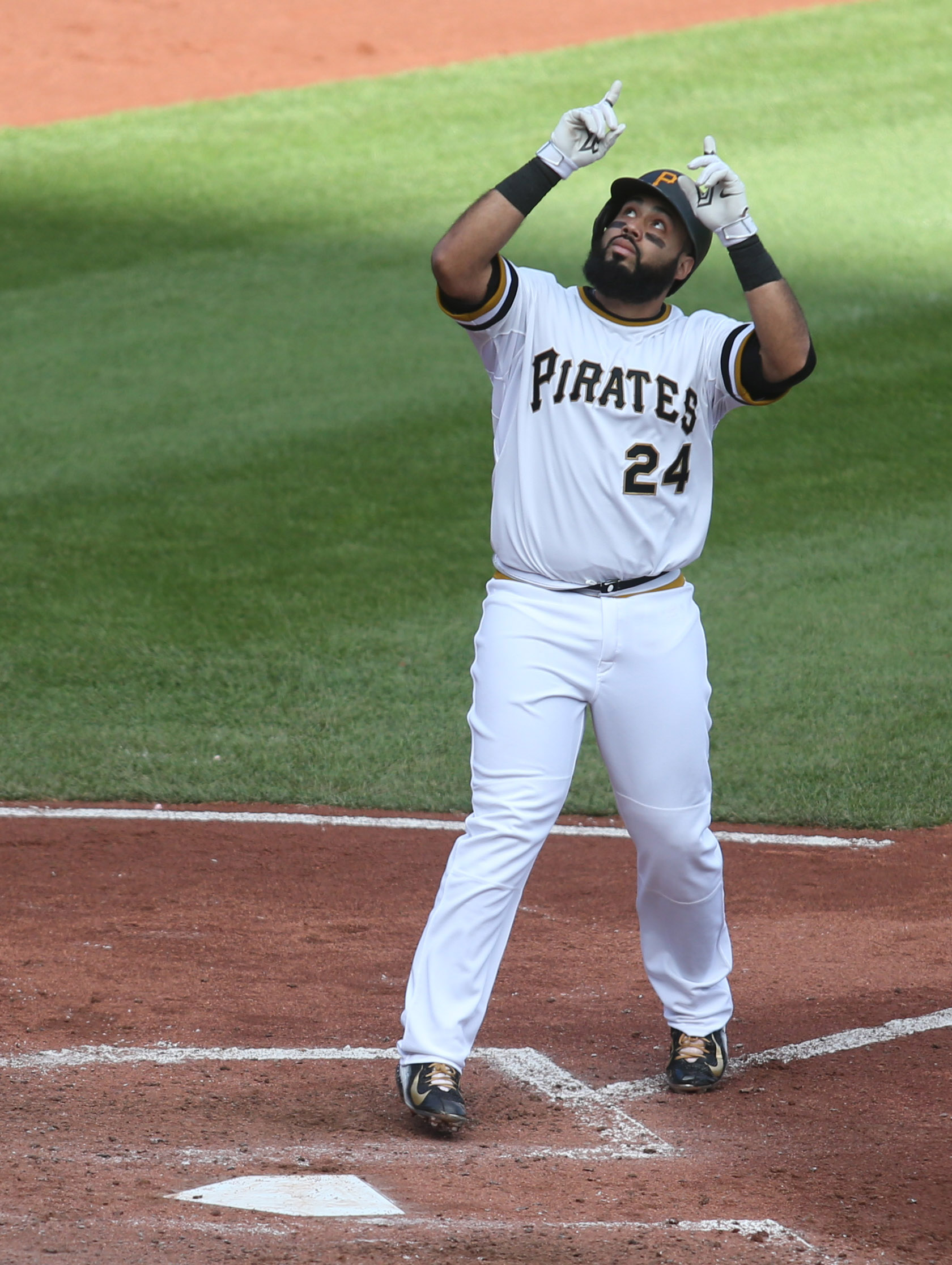
Alvarez, 29, just wrapped up a six-year run with the Pirates — the organization that chose him second overall in the 2008 draft — when he was non-tendered earlier in the offseason. He had moved across the diamond from third after his defensive struggles increased, but continued to receive poor reviews with the glove.
On the other hand, Alvarez’s power at the plate has never been in question. He swatted 27 home runs last year in 491 plate appearances, and has twice topped thirty bombs in a single season. Though he’s not much of an on-base threat, Alvarez’s overall batting line of .243/.318/.469 landed well above league-average in overall output.
That production is fairly typical for Alvarez, who strikes out quite a bit and doesn’t walk quite enough to make up for a low batting average. His left-handed bat should play quite well at Camden Yards, though, and he’ll join an impressive group of sluggers in the middle of the Baltimore order.
Presumably, Baltimore won’t utilize Alvarez much in the field, as Chris Davis and Manny Machado are entrenched at the corners. He’ll join fellow power hitter Mark Trumbo (a right-handed bat) as a DH option — both carry traditional platoon splits — though Trumbo will likely also see quite a bit of action in the corner outfield. Alternatively, Davis did see some time in the outfield last year, and it’s at least possible that the O’s will deploy him there and Trumbo at first base.
Orioles fans can expect to be treated to quite a show when the offense is clicking. Alvarez is one of six players on the roster who have cracked 30 homers in a single season, along with Davis, Machado, Trumbo, Adam Jones, and J.J. Hardy. Likewise, catcher Matt Wieters and second baseman Jonathan Schoop have shown plenty of pop for their respective positions. Rounding things out, new left fielder Hyun Soo Kim may not quite see his KBO production translate fully to the majors, but he delivered 28 long balls last season in Korea.
The O’s have long been said to be pursuing another bat, with Reds outfielder Jay Bruce a possible trade piece. While Alvarez won’t factor as an option in the grass, his addition likely brings that dalliance to an end by pushing Trumbo back into the field (at least against right-handed pitching).
It’s been an eventful winter in Baltimore, to say the least. Wieters’ decision to accept his $15.8MM qualifying offer may have set the course, as that one-year deal (and the loss of a chance at draft compensation) helped nudge the club towards its later investments. The Orioles also brought back reliever Darren O’Day (four years, $31MM) and re-signed Davis to a huge contract (seven years, $161MM), punted a pick to ink Yovani Gallardo (two years, $22MM), also added Kim (two years, $7MM) and Alvarez via free agency, and acquired Trumbo via trade. The aggregate outlay tops $250MM in new salary commitments (including Trumbo’s arb payday) and ultimately required the team to pass up or part with three selections in this summer’s amateur draft (including the one that Wieters might have delivered had he rejected the QO).
Dennis Lin of the San Diego Union-Tribune first reported the signing on Twitter. Ken Rosenthal of FOX Sports had the term (on Twitter), Joel Sherman of the New York Post the guarantee (in a tweet), Jon Heyman of MLB Network the total incentives (via Twitter), and Rich Dubroff of CSNmidatlantic.com the incentives breakdown (in his own tweet).
Photo courtesy of USA Today Sports Images.
Offseason In Review: Cleveland Indians
This is the fourth entry in the Offseason In Review series. You can also read our Reds, Rockies and White Sox entries. The full index of Offseason In Review posts can be found here.
The Indians saw longtime execs Mark Shapiro and Ross Atkins depart to head up the Blue Jays’ baseball operations department, leaving the subsequently promoted president of baseball operations Chris Antonetti and GM Mike Chernoff to fill out the roster around one of baseball’s best pitching staffs.
Major League Signings
- Mike Napoli, 1B: One year, $7MM
- Rajai Davis, OF: One year, $5.25MM
- Juan Uribe, 3B: One year, $4MM
- Tommy Hunter, RP: One year, $2MM
- Total Spend: $18.25MM
Notable Minor League Signings
- Will Venable, Craig Stammen, Ross Detwiler, Joe Thatcher, Tom Gorzelanny, Joba Chamberlain, Felipe Paulino, Robbie Grossman, Shane Robinson, Anthony Recker, Adam Moore, Michael Martinez
Trades
- Acquired OF Collin Cowgill from Angels in exchange for cash considerations
- Acquired RHP Dan Otero from Phillies in exchange for cash considerations
Waiver Claims
- Claimed OF Joey Butler off waivers from the Rays
Extensions
- Josh Tomlin, SP: Two years, $5.5MM plus $3MM club option ($750K buyout)
Notable Losses
- Chris Johnson (released), Mike Aviles (option declined), Ryan Raburn (option declined), Jerry Sands, Nick Hagadone, Gavin Floyd
Needs Addressed
Unlike most clubs entering the offseason, Cleveland didn’t feel an overwhelming need to search for pitching, as the club has three top-tier starters under control for the foreseeable future in the form of Corey Kluber, Carlos Carrasco and Danny Salazar (to say nothing of a high-ceiling fourth starter in Trevor Bauer and a pair of quality options for the fifth spot in Josh Tomlin and Cody Anderson). Rather, the question was whether the club would deal from its potential pitching surplus to address other needs around the diamond. With room for upgrades at both infield corners and a pair of outfield spots, there were a number of routes that the Tribe could take to improve an offense that finished 11th in the American League in runs scored.
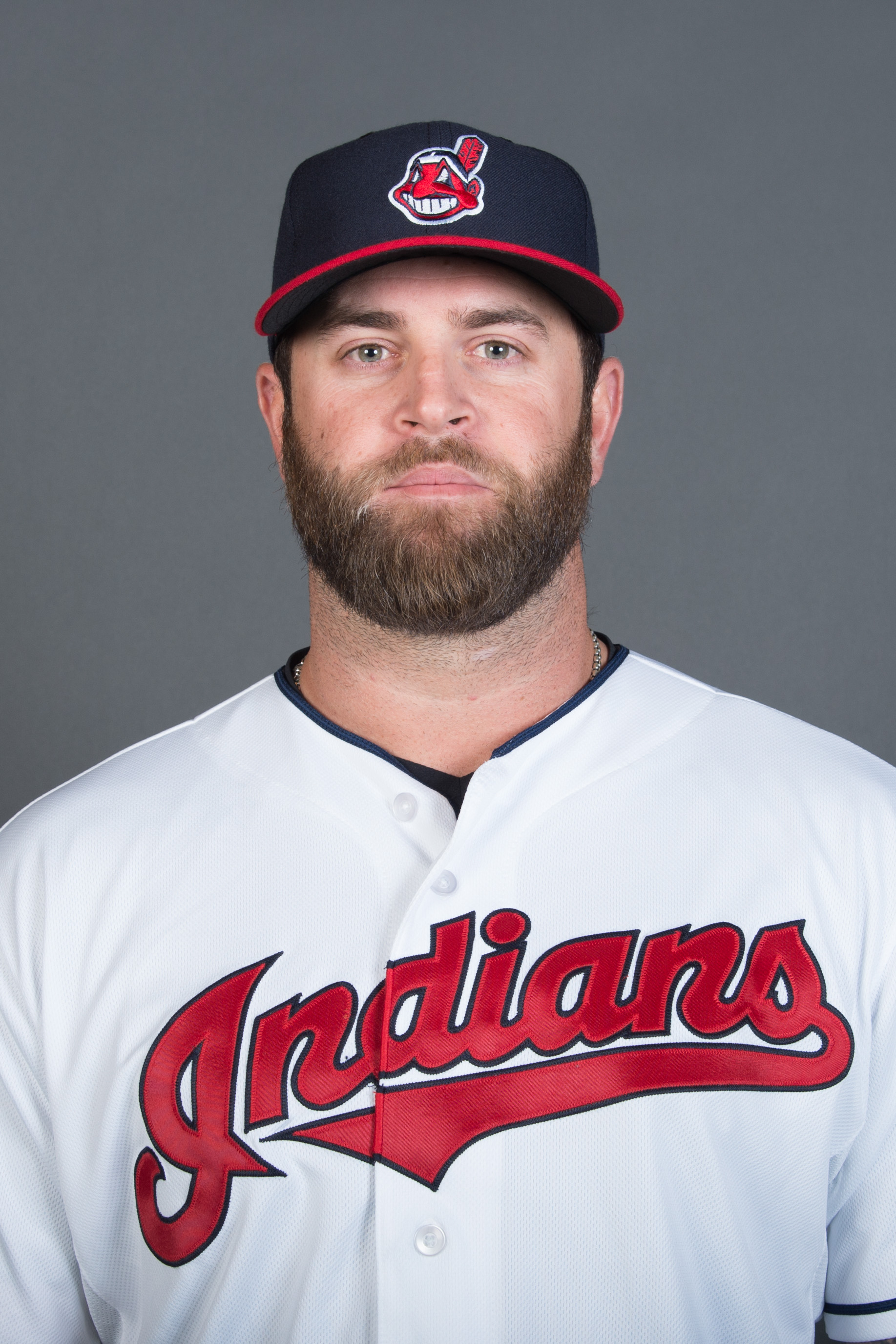
Mike Napoli was brought in to serve as an upgrade at first base, and he’ll provide the club with a strong glove there, pushing Carlos Santana to DH duty. Napoli didn’t hit much in Boston last season, but he batted .295/.396/.513 upon being acquired by the Rangers late in the year. The catcher-turned-first-baseman still crushed left-handed pitching last season, but at $7MM — a fairly notable sum that represents nearly 40 percent of the free-agent spending by the Indians — they’ll be expecting him to produce even against same-handed pitching.
The need across the diamond at third base was certainly more palpable than the need at first, and while the Indians waited awhile to address the position, the club’s late signing of Juan Uribe should serve as an upgrade. Though he’ll turn 37 later this month, Uribe continues to grade out well defensively at third base. While he might not yield the level of defensive value that a platoon of Jose Ramirez and Giovanny Urshela could have produced, Uribe should be average or better with the glove with a markedly superior bat. This past season, Uribe slashed .253/.320/.417 with 14 home runs in 397 plate appearances, thereby continuing a resurgence that began in 2013 with his age-34 campaign. Uribe almost certainly won’t return to his ways as a 20- to 25-homer threat, but a collective .281/.329/.432 batting line across three prior seasons suggests that there’s still life in his bat, and his personality should be a boon to the clubhouse.
Left-handed relief was perhaps the one area in which the Indians have some uncertainty on the pitching staff, and the front office added a number of veteran arms on minor league deals in the hopes of parlaying one or two into solid production. Lefties Joe Thatcher, Ross Detwiler and Tom Gorzelanny have all had success in the Majors within the past two seasons, and any could emerge as a complement to incumbent options like Kyle Crockett and Giovanni Soto. Alternatively, upper-level minor leaguers Shawn Morimando and Ryan Merritt could emerge as lefty relief candidates, and former fifth starter T.J. House remains on the 40-man roster (though he missed most of 2015 with shoulder injuries and struggled in a return to action in last year’s Arizona Fall League).
Questions Remaining
The outfield was already the Indians’ largest question mark heading into the offseason, and that uncertainty only became more pronounced with the news that Michael Brantley would require surgery to repair his ailing shoulder. However, despite a glaring need, the club’s only big league acquisition was veteran speedster Rajai Davis. While the fleet-footed Davis remained a productive player throughout his two most recent seasons with the division-rival Tigers, he’s a right-handed hitter that comes with a notable platoon split, making him best-suited for part-time work.
Losing Brantley was a sizable enough blow to the team, but the club lost projected center fielder Abraham Almonte to an 80-game PED suspension in the first week of Spring Training. That Cleveland was relying on the journeyman Almonte, a career .244/.297/.378 hitter that batted an improved .264/.321/.455 in 196 PAs with the Indians last year, was a questionable decision in the first place, as I noted in previewing the team’s offseason back in early October.
With Almonte and Brantley out of action, Cleveland will look to some combination of Davis, Lonnie Chisenhall, Collin Cowgill, Joey Butler and minor league signees like Will Venable and Robbie Grossman in the outfield. Prospect Tyler Naquin, too, could factor into the mix with a strong spring after a solid minor league showing in 2015. None of those options come with much certainty, though a few patchwork platoons could be forged. Davis has long handled left-handed pitching quite well, so he could be paired with newly converted outfielder Chisenhall (who posted brilliant defensive marks in a small sample last year) in right field or with Venable in center field. However, Venable has suffered through two dismal seasons, and at 33 years of age, it’s fair to wonder if there’s been some deterioration of his skills.
Cowgill and Butler are, like Davis, right-handed bats best-suited for part-time work; Cowgill comes with a more defensive-minded approach, whereas Butler provides more with the bat but less with the glove.
It should be pointed out that Austin Jackson remained available on the free agent market even after the Almonte suspension, but the Indians watched him sign a one-year, $5MM deal with the division-rival White Sox instead of bringing him into the fold. Cleveland reportedly showed interest in Jackson, but the payroll was long said to be tapped out. This is, of course, speaking with the glaring benefit of hindsight, but given the need in the outfield, the $7MM allocated to Napoli with the hopes that he can still hit right-handed pitching (which he failed to do in 2015) could arguably have been better spent helping to bolster Cleveland’s offer to Jackson. When Napoli signed, no one knew that Jackson would languish in free agency for this long, nor that Almonte would be suspended. But relying on Almonte was always a risk, and given the number of first base/DH types that signed late (or, in Justin Morneau‘s case, have yet to sign), there’s a good case to be made that prioritizing the outfield and pursuing a cheaper first base/DH option should have been Plan A all along.
All of this outfield uncertainty raises the question of whether the Indians should’ve dealt from their stockpile of controllable arms to add a bat into the mix. Top prospects Bradley Zimmer and Clint Frazier are both rising through the minor league ranks, so it’s understandable if the club feels that reinforcements are on the way. That, however, does little to improve the short-term outlook for a club that is otherwise well-positioned to contend within its division. The Indians were oft-connected to Marlins outfielder Marcell Ozuna, and we saw the Rockies part with a controllable corner option in Corey Dickerson without even securing a Major League ready starting pitcher. The D-backs, too, saw fit to part with five years of Ender Inciarte (and another pair of highly touted prospects) to add Shelby Miller to their rotation, and it can be argued that Cleveland has multiple arms that are superior to Miller. Other financially affordable names like Charlie Blackmon were said to be on the market, and there was even talk of the Astros being willing to entertain the thought of moving George Springer for a sizable enough return.
Cleveland boasts a rotation that would still look appealing even with one member subtracted, a solid bullpen and quality bench pieces in Jose Ramirez and Roberto Perez. (Any of the previously listed Butler, Cowgill or Venable would also make for a quality big league bench piece.) Relying on this outfield mix while also banking on returns to form from Napoli and Yan Gomes could very well create difficulty when it comes to scoring runs.
Deal of Note
Tomlin’s extension, while not the biggest headline-grabber, was one of the more peculiar multi-year deals in recent memory. Tomlin had already agreed to a one-year, $2.25MM contract to avoid arbitration, and he received the added perk of the Indians making that sum fully guaranteed (which is not the norm for arb salaries). His contract, however, guarantees him $5.5MM in total, including the upcoming season, meaning that Tomlin surrendered what would have been his first free-agent season for a total of $3.25MM. Beyond that, he gave the Indians control of his second free-agent season by virtue of a club option valued at $3MM (with a $750K buyout). If the option is picked up, Tomlin will receive $5.5MM for his first two free-agent years.
While he doesn’t come with a huge track record in the Majors, Tomlin showed promising gains in the strikeout department across the past two seasons, and we’ve seen teams throw around $5.5MM and more on one-year gambles (e.g. Rich Hill) with based on very small samples of success. The flipside, of course, is that he’s guaranteed himself some meaningful salary — something that was clearly important to Tomlin, as evidenced by the fact that his agents pushed for a fully guaranteed arb agreement. Still, if Tomlin enjoys even a reasonably healthy, successful season, his earning power would have vastly outpaced the extension’s modest guarantee.
Overview
At the outset of free agency, I wouldn’t have disagreed with the notion that the Indians didn’t need to do much to contend for the AL Central in 2016. I doubt, however, that I’d have anticipated such a strict adherence to that line of thinking on the team’s behalf. The Indians will once again have one of baseball’s best pitching staffs, but they’ll need plenty to go right in order to score enough runs to support those arms. An accelerated return for Brantley — which is the direction he’s reportedly heading — and contributions from a prospect such as Naquin or even Zimmer would go a long ways toward improving the team’s chances. That’s quite a bit to bank on, though, especially considering the other rebounds that will be hoped for around the rest of the roster (Napoli, Gomes, possibly Venable).
Questions aside, I’ll be surprised if the Indians aren’t in the mix in the AL Central this season. Beyond the team’s pitching depth, the pairing of Francisco Lindor (whom I felt should’ve landed Rookie of the Year honors over the also-excellent Carlos Correa) and Jason Kipnis creates one of baseball’s best double-play tandems, and a healthy Brantley is among baseball’s best outfielders. Nevertheless, many of the same offense-oriented questions that surrounded the team in 2015 figure to recur in 2016, and it’s not hard to envision them seeking a bat or two come July.
MLBTR readers that want to give their own take on the Indians’ offseason can weigh in with their grade in the following poll (link to poll for mobile app users)…
How would you grade the Indians' offseason?
-
C 44% (1,574)
-
D 22% (792)
-
B 22% (785)
-
F 8% (266)
-
A 4% (124)
Total votes: 3,541
Photo courtesy of USA Today Sports Images.