
Astros Among Teams With Interest In Josh Bell
Nationals first baseman Josh Bell is among the likeliest trade candidates on the market, and the Astros are among the teams interested in adding the slugger to their lineup, SNY’s Andy Martino tweets. The Mets are also said to have interest in Bell, who figures to appeal to just about any team in need of an offensive upgrade.
The 29-year-old Bell (30 next month) has been a force in Washington’s lineup for the past two seasons, coming over from the Pirates in a trade that sent Wil Crowe and minor league righty Eddy Yean to Pittsburgh in return. After an awful first month in D.C. last season, the switch-hitting Bell picked up the pace and hasn’t really slowed down. Since May 1, 2021 — a span of 902 plate appearances — Bell is hitting .293/.376/.503 with 38 long balls, 43 doubles and four triples.
Bell achieves that production with a combination of strong plate discipline and far better bat-to-ball skills than one might expect from a burly 6’4″, 255-pound slugger. He’s walked at an impressive 11.2% clip over that stretch of 902 trips to the plate and struck out in just 15.2% of them (including just 13.5% this season). Bell makes consistently strong contact (45.5% hard-hit rate, 91.1 mph average exit velocity), and although he puts the ball on the ground more than is ideal for someone with his power (51.3% ground-ball rate), he’s adept at spraying line drives. Also, while only 28.2% of Bell’s batted balls during this run have been classified as fly-balls, more than one in five of those flies (20.5%) has left the yard.
Bell once graded as a poor defender at first base but has improved his ratings in recent years. Public metrics like Defensive Runs Saved (+3) and Outs Above Average (+1) feel he’s been a solid option at the position this season — a far cry from early in his career when he was turning in full-season marks of -7 and -8. That defensive improvement is surely key for the Astros, who would have to play Bell at first base with a good deal of frequency given the presence of Yordan Alvarez at designated hitter. Alvarez is capable of playing left field and may do so more often with Michael Brantley out indefinitely due to a shoulder injury, but if the team ends up back at full strength, either Alvarez or Brantley would require some extra reps in the DH slot.
That scenario would likely push Astros stalwart Yuli Gurriel into a part-time role, which may be a bitter pill for both Gurriel and the organization to swallow. However, the 38-year-old Gurriel hasn’t performed up to his previous standards, hitting at a .235/.286/.386 clip through 329 plate appearances. He’s still making loads of contact (13.4% strikeout rate), but his walk rate, power output and batted-ball quality have all declined. Gurriel is popping the ball up to the infield at a higher rate than ever before and is sporting a career-low 17.9% line-drive rate. A Gold Glove winner at first base just last season, Gurriel has also posted negative marks in both DRS (-2) and OAA (-5).
Gurriel is still hitting lefties at a respectable .258/.298/.443 clip (110 wRC+), and he’s a fixture in the Houston clubhouse, so it stands to reason that he’d stick on the roster and be relied upon in a part-time role even if the Astros were to acquire Bell or another first base upgrade. It’s also worth pointing out that Gurriel has shown some signs of life after an awful run in April and May; dating back to June 1, he’s batted .255/.318/.418 in 154 plate appearances. That’s still a far cry from both his typical production and the numbers Bell has posted over the past couple seasons, however.
Bell is earning $10MM this season and will be a free agent at season’s end. The Astros’ $174MM payroll is down notably from last season’s franchise-record $188MM mark, and they’re more than $30MM shy of the new $230MM luxury-tax barrier. As such, there shouldn’t be any financial roadblocks to stand in the way of a deal if the two parties can agree on the young talent that would need to go back to Washington in return.
Mets Exploring Trade Market For DH Options
The Mets are exploring the market for a number of bats as they look to upgrade over what has been a generally unproductive tandem of Dominic Smith and J.D. Davis at designated hitter, reports Andy Martino of SNY. Nationals sluggers Josh Bell and Nelson Cruz, Colorado’s C.J. Cron and Baltimore’s Trey Mancini (as previously reported) are among the names in play.
Metsmerized’s Michael Mayer reported this week that the Mets have also had talks with the Pirates about left-handed-hitting Daniel Vogelbach, who is signed to a highly affordable $1MM contract with a $1.5MM option for the 2023 season. FanSided’s Robert Murray hears the same, though Murray notes that there are multiple teams inquiring about Vogelbach’s availability (as is surely the case with the Mets’ other reported targets). Martino describes conversations with the Pirates regarding Vogelbach as “active.”
The 29-year-old Vogelbach would surely be viewed as a platoon option in Queens, as he’s never hit lefties well and has again posted an inept .141/.267/.156 batting line against them. However, he’s crushed righties to the tune of a .260/.365/.532 batting line, swatting a dozen homers, nine doubles and a triple in just 203 trips to the plate when holding the platoon advantage this year. Vogelbach’s has long been a productive hitter against righties, and he’s not all that far removed from a smashing a career-high 30 homers with the 2019 Mariners.
There’s some appeal to Vogelbach beyond the strong platoon work and next year’s affordable club option, too. He entered the year with three-plus years of Major League service time, meaning that even after a club exercises next year’s option — which seems likely, whether it’s the Pirates, Mets or another trade partner — he’s still controllable through the 2024 season. Vogelbach would be arbitration-eligible in the 2023-24 offseason before reaching free agency in the 2024-25 offseason.
The 29-year-old Bell is hitting .311/.390/.504 with 13 home runs this season, striking out at a career-low 13.5% and drawing walks at a hearty 10.7% pace. He’s earning $10MM this season, and while the Nationals might be wary of sending long-term pieces to the division-rival Mets (e.g. Juan Soto), Bell is a free agent at the end of the year, which probably eliminates any such concerns from Washington’s vantage point.
It’s a similar story for the 42-year-old Cruz, who’s earning $15MM this season and has a mutual option for the 2023 campaign. Those are rarely exercised by both parties, however, and players with mutual options are generally considered rentals for this reason. Cruz got out to an awful start in 2022 but has produced a solid .283/.362/.425 batting line in his past 247 plate appearances. He’s only homered six times in that span, showing a decidedly uncharacteristic lack of power, but Cruz has still been a productive hitter if you’re willing to set aside a slow start to the year.
As for Cron, it’s understandable that the Mets would harbor interest, but a deal seems unlikely to come together. Although the Rockies are 19 games out of the NL West lead and six and a half games back of the NL’s third Wild Card spot, the organization has opted not to deal what look to be on-paper trade candidates for years now. Ownership in Denver steadfastly believes the foundation of a contending club is in place, as evidenced by the glut of extensions doled out over the past year (as well as the surprising signing of Kris Bryant to a seven-year deal).
One need look no further than last year’s deadline to see that Cron isn’t likely to be moved. The Rockies were in this position a year ago, when Cron was playing on a cheap one-year deal and looked like a slam-dunk candidate to be flipped to a contender. The Rockies instead kept him and inked Cron to a two-year, $14.5MM extension. To their credit, Cron has been overwhelming bargain, hitting .298/.350/.552 with 21 homers this year. That’s outstanding production, but if the Rox balked at moving him a year ago when he was a free-agent-to-be, it only stands to reason that they’d be further dissuaded from trading him now (even though the contract likely makes him more appealing to potential suitors). General manager Bill Schmidt said just last week that he does not expect to be a major seller this summer.
Any of the names listed here would likely serve as an upgrade over the combined .219/.300/.368 batting line that Mets designated hitters have put together this season. That production includes 90 very productive plate appearances by Pete Alonso as DH, which only underscores how rough the non-Alonso DH options have been at Citi Field this season.
As for what would happen with the current DH options the Mets have in-house, it somewhat unsurprisingly seems as though a change of scenery may be in the fold. Smith was just placed on the injured list due to an ankle sprain but could return by the middle of next week. The Cubs and Red Sox are among the teams to have talked to the Mets about a potential trade. Martino writes that the Mets are “working to trade Smith,” adding that Davis could be moved as well.
Smith has struggled in 2021-22 after a hugely productive 2019-20 showing, while Davis’ power numbers have tumbled this year despite eye-popping exit velocity and hard-hit numbers. Both are controllable for two years beyond the current campaign, which might make them appealing to a club that’s not a current contender but can afford to give Smith or Davis consistent playing time while showing a bit more patience than the Mets have the luxury of doing in a competitive setting atop the NL East.
Nationals Listening To Offers On Kyle Finnegan
With Juan Soto on the market, the Nationals will find themselves in plenty of headlines over the next two weeks. Soto is the crown jewel of this year’s potential trade candidates, and the Nats are also expected to part with impending free agent hitters Josh Bell and Nelson Cruz before the August 2 trade deadline.
While that trio (Soto in particular) will be the group that most intrigues fans of rival teams, they’re not the only trade candidates on the roster. The Nats are likely to be open to moving virtually any of their veteran role players, and Jesse Dougherty of the Washington Post reports they’re prepared to field offers on reliever Kyle Finnegan. One of Washington’s higher-leverage arms, Finnegan should hold some appeal to bullpen-needy contenders.
Signed to a major league contract over the 2019-20 offseason after a lengthy stint in the A’s farm system, Finnegan has spent the past few years in the nation’s capital. The right-hander has posted an ERA below 4.00 in all three big league seasons, and he’s generally been a durable arm for manager Dave Martinez. Aside from a two-week injured list due to a minor hamstring strain last year, Finnegan has avoided the IL as a big leaguer.
As for his appeal to rival clubs, that’s rather straightforward. Finnegan throws in the mid-90s, and he’s averaging a career-best 96.6 MPH on his sinker this season. Throughout his time in the big leagues, he’s posted slightly above-average strikeout and ground-ball marks, and he’s missing bats at a personal-best rate in 2022. Finnegan has punched out 28.3% of batters faced this year, a solid uptick over the 23.7% career mark he carried into the season. He has generated swinging strikes on 13.1% of his offerings, a bit above the 11.7% league average for relievers. His 47.9% grounder rate is also a few points higher than the typical mark.
While Finnegan has flashed the swing-and-miss and grounder upside in prior years, he’d been plagued by control issues from 2020-21. Finnegan doled out free passes to around 12% of opponents in each of his first two seasons, but he’s shown much improved strike-throwing through this season’s first few months. The Texas State product owns an 8.6% walk rate, a hair below the league average. A spike in home runs has resulted in a career-worst 3.93 ERA across 36 2/3 innings, but Finnegan’s combination of arm strength and solid underlying numbers make him an intriguing target for contenders.
His value is also buoyed by his affordability. Finnegan is making barely more than the league minimum salary, having not yet qualified for arbitration. He’ll reach arbitration for the first time at the end of the year and remains controllable through 2025. That window means the Nationals aren’t going to be as motivated to deal him this summer as they’ll be for some of their rental players, but there’s also little reason for general manager Mike Rizzo and his staff not to discuss him with other teams. Finnegan’s late-blooming status means he’s soon to turn 31 years old. That the Nats are discussing Soto with other clubs suggests they’re open to a multi-year rebuild — and a Soto trade, if it happens, would formally signify they’re embarking on that course — and a good but not elite reliever isn’t going to be the kind of player the franchise prioritizes as a building block.
That would’ve also been true of fellow high-leverage arm Tanner Rainey, a hard-throwing righty who’s likewise arbitration-eligible through 2025. Rainey’s trade candidacy was dashed last week when he landed on the 60-day injured list with a UCL sprain in his throwing elbow. Dougherty writes that the Nationals had been preparing to shop Rainey this month, but he’s not expected to return this season and could require Tommy John surgery. That saps virtually all of his trade value, making Finnegan the undisputed top player in the Washington bullpen.
Presumably, the Nationals will also make their other late-game arms available. Víctor Arano has excellent strikeout and walk numbers but a 5.01 ERA. Steve Cishek, who’s playing this season on a $1.75MM salary, looks likely to move for a modest return. He’s missing bats, holding right-handed hitters to a .212/.307/.313 line, and will hit free agency at the end of the year. Carl Edwards Jr., who cracked the roster after signing a minor league deal, has a solid combination of strikeouts and grounders and could draw a bit of interest himself.
Latest On Juan Soto’s Market
Ever since it emerged that the Nationals are willing to entertain trade offers on Juan Soto, the whole baseball world has been obsessed with trying to figure out where he could go and what a fair trade would even look like. That likely won’t change, with Soto rumors sure to continue flying every day until the August 2 deadline, unless a trade is completed sooner.
MLBTR’s Steve Adams recently took a look at the situation, outlining how Soto is arguably the most attractive trade chip in recent memory or perhaps ever. Given his talent, youth and remaining years of control, just about every team is going to be calling the Nats and getting a feel for what kind of deal they’re looking to make.
Bob Nightengale of USA Today reports that the discussions have begun and, unsurprisingly, Soto is drawing widespread interest. He lists the Mariners, Padres, Giants, Dodgers, Cardinals, Yankees and Mets as seven teams that have already opened up the lines of communication with Washington.
None of those are particularly surprising, with all seven of them having been listed by Adams as being among the best fits. There is a potential complicating factor in the talks, as Jim Bowden of The Athletic reports that the Nationals want to combine Soto with Patrick Corbin in trades, in order to get Corbin’s contract off their books. As an additional detail, Jesse Dougherty of The Washington Post looks at the pros and cons of including Corbin in the deal, adding that Corbin has a partial no-trade clause. Despite that, Dougherty adds that this won’t prevent a deal from coming together, implying that either Corbin’s clause is minimal enough to not include the primary suitors, or perhaps that he would be willing to waive the clause and move to a new club with Soto.
While the Nationals are surely open to moving Corbin and getting out from under his contract, it’s unclear how important that is to them. Signed to a six-year, $140MM contract prior to 2019, the first season was a resounding success. Corbin threw 202 innings with a 3.25 ERA, then added another 23 1/3 frames in the postseason as the Nats won the first World Series title in the history of the franchise. It’s been essentially all downhill since then, however, with Corbin’s strikeouts disappearing and ERA escalating. After strikeout rates of 30.8% in 2018 and 28.5% in 2019, he’s been hovering around 20% in the three subsequent seasons. His ERA shot up to 4.66 in 2020, then 5.82 last year and 5.87 this year.
As for Corbin’s contract, it was heavily backloaded. His salary this year is $23.42MM, leaving approximately $8MM to be paid out from the deadline onwards. Then he’ll make $24.42MM next year and a big jump to $35.42 in 2024. That’s the last year of the deal, though there’s also $10MM in deferred money to be paid out from November of 2024 to January of 2026.
The combination of Corbin’s poor performance and hefty salary give him negative trade value. As such, any Corbin-Soto combo trade will lead to the Nationals recouping a lesser prospect package than a trade involving Soto alone. On the surface, it seems strange that the Nats would be strongly motivated towards such a scenario. Trading Soto means giving up on being competitive through 2024 anyhow, so getting Corbin’s contract off the books for that season shouldn’t be a high priority. With Soto out of the picture, the only other meaningful salary they will be paying in 2024 and beyond is going to Stephen Strasburg, who’s getting $35MM per year through 2026. Spending $70MM to Strasburg and Corbin in 2024 surely isn’t ideal, but the rest of the roster will likely be filled out with pre-arb players or those who have just qualified and earned minimal raises. The club ran a payroll of $183MM as recently as last year, per Cot’s Baseball Contracts, and has already stripped it down to $135MM this year.
But if the Nats are indeed motivated to get that money off the ledger ahead of schedule, it will change the calculus of which teams make the most sense as trading partners. Teams on the receiving end will be taking on two meaningful salaries, as Soto is well-paid himself. He’s earning $17.1MM this year and will be due arbitration raises in the next two campaigns, possibly getting near the $25MM range next year and above $30MM for 2024, as long as he stays healthy. Even for the rest of this campaign, Soto will have about $6MM left to be paid out at the time of the deadline. Combined with the approximately $8MM owed to Corbin, that will add $14MM to this year’s payroll for any team acquiring both.
As Steve Adams highlighted in the piece linked above, all seven teams that Nightengale listed have marquee young players that could headline a return in a Soto deal. The prospect of taking Corbin in return might be more exciting to some than others, however. The Padres crossed the luxury tax line last year and have been right up against it this year, seemingly loath to cross it for a second straight season and therefore facing escalating penalties. They’ve been rumored to be trying to trade away one of their pitchers in order to create payroll space for additions elsewhere. Suddenly acquiring another expensive starter, and one who isn’t pitching well, would fly in the face of those plans. Although, perhaps Soto’s availability is such a unique situation that it makes them rethink everything.
The Cardinals had an Opening Day payroll of $155MM, per Cot’s, which is a bit shy of their $164MM record. Adding $14MM to get into record territory is likely an acceptable outcome this year, but would become complicated in the years to come. Adam Wainwright‘s $17.5MM is the biggest contract coming off the books at the end of the year, but there would likely be mutual interest in another deal, based on precedent. He’s having another excellent season and would likely command a similar contract. Yadier Molina‘s $10MM is coming off the books, though Soto and Corbin would add about $50MM onto it, and the Cards would still have to figure out a solution behind the plate.
The Mets already have a massive payroll but don’t seem to have any limitations in that regard. Owner Steve Cohen has expressed a willingness to spend beyond the fourth CBT barrier, which the club is already right on top of. Jason Martinez of Roster Resource calculates their CBT number as $290.1MM, a smidge over the $290MM barrier. Regardless of the financial picture, however, there’s the question of whether the Nats have any interest in trading Soto within the division. Andy Martino of SNY reports that Soto landing with the Mets is extremely unlikely, with the Nats not keen on seeing Soto return to Washington so frequently with a new uniform.
The Giants and Mariners might be in a better position than these other teams to take on meaningful salary in order to get Soto. The Giants had a payroll of $155MM on Opening Day, per Cot’s, but were up at $201MM a few years ago. They also have some decent money coming off the books this winter. Carlos Rodon is making $21.5MM and can opt out if he reaches 110 innings pitched. Given that he’s currently at 105 and having another excellent season, he’s a virtual lock to trigger that opt-out. Brandon Belt accepted the $18.4MM qualifying offer and will return to the open market in a few months. Brandon Crawford is making $16MM this year and next, but a free agent after that. The only guaranteed contract they have on the books for 2024 is the $12MM owed to Anthony DeSclafani. The Mariners opened the year at $104MM, per Cot’s, but have been in the $150-160 range in recent years.
As for the Yankees and Dodgers, they’re both running franchise-high payrolls but might still like the idea of Corbin’s contract being involved. Recent reporting has suggested both clubs are leery of decimating their farm systems in order to acquire Soto, despite his talents. Taking on Corbin and reducing the prospect hit should appeal to both clubs.
Of course, all this still seems to be exploratory on the part of the Nationals. Getting rid of Corbin’s money surely has appeal, but they will also have to weigh that against the offers they get that don’t involve Corbin. If one teams offers, say, six good prospects but doesn’t want Corbin, would the Nats really take a less package just to get Corbin out the door? There’s at least some precedent, given that the Red Sox included David Price in the Mookie Betts deal. However, the situations are not entirely analogous, as the Red Sox had gone over the luxury tax in the two previous seasons and were primarily interested in tearing down their roster for the cost savings. For the Nats, they are already operating with a budget well below previous seasons and should theoretically be more concerned with maximizing their prospect return in any Soto deal.
Boras On Juan Soto Extension Offer, Potential Trade, Rumored Nationals Sale
All eyes will be on Juan Soto over the next 13 days. With the annual amateur draft and All-Star Game now in the rearview mirror, what figures to be a frenzied and condensed summer trade market will be up and running. Soto’s recent rejection of a 15-year, $440MM contract extension has already drawn countless headlines, and his reported subsequent availability on the trade market will generate unprecedented intrigue.
Agent Scott Boras addressed Soto’s decision to turn down what would’ve been the largest total guarantee in MLB history this week, first in an interview with James Wagner of the New York Times and then with Joel Sherman and Jon Heyman of the New York Post on their podcast, “The Show.” There were plenty of factors in the decision, but Boras suggested that the average annual value, the potential sale of the franchise and uncertainty about the team’s direction all weighed heavily.
[Related: Looking for a Match in a Juan Soto Trade]
“I don’t think anybody wants to work for someone they don’t know,” Boras told Wagner. “So it’s kind of a ghost contract. We don’t know who’s going to pay it. Consequently, when you’re a player like Juan, you’re a winning player and you want to make sure there’s a lot more things than dollars and cents involved and who you’re going to work for and where you’re going to be for the majority.”
In his appearance with Sherman and Heyman, Boras spoke about the respect Soto has for the Lerner family and the commitment they’ve shown to winning over the years, but the direction of an incoming ownership group can’t be known at this time. Even if a swift return to contention is the goal, the Nationals’ bleak farm system, lack of big league talent on the current roster, and the strong division in which they play all coalesce to make an immediate rebound unlikely. Soto is surely aware of this.
“Juan Soto has a ring on his finger and he has had people that he knows and trusted ever since his inception with the franchise, but now that group of people has said, ‘We’re going to move on and assign this team to another group,'” said Boras, in reference to the Lerner family’s likely sale of the franchise. “…When you’re a player, you can talk about being offered things, but it doesn’t carry with it the intentions [of ownership] and the security of winning — the goals of the player that are beyond economic.”
As one would expect, the potential sale of the Nationals is a complicating factor in both extension and trade talks. It’s understandable if Soto prefers to wait to see what happens with the franchise to get a feel for a new owner’s mentality. Conversely, whether Soto is or isn’t with the team will have an impact on the sale of the team itself. Boras is, unsurprisingly, of the mind that Soto is an asset who’ll enhance the team’s appeal for prospective buyers, as “billionaires certainly like their choices” and will want the option of whether to build around Soto or commit to an early rebuild.
ESPN’s Buster Olney sees things differently, saying on yesterday’s Baseball Tonight podcast that executives around the game believe new owners will want the situation resolved one way or another before taking over. With an extension likely off the table, that would mean completing a trade before the sale of the team goes through. Of course, we don’t yet know who the new owners will be, so that’s a speculative view of the scenario (much like Boras’ belief that the new owners will want the chance to make the choice themselves).
Even in the absence of the current ownership uncertainty, however, Boras seemed to intimate that the Nationals’ offer simply wouldn’t have been sufficient. As we saw with Aaron Judge prior to the season, being paid at an annual rate that’s commensurate with baseball’s top stars appears important to Soto.
“The rarity of Juan Soto, this is from age 19 to 23, so he’s really separated himself to be in a very small group, among Major League history, of performance levels,” said Boras.”[Those players] are going to be at the highest order of average annual values, and yet the proposal placed him well below the top group, in the No. 15 or 20 range.”
All of that lines up to further cement the reality that Soto will at least be available in talks over the coming two weeks, but it’s wholly unclear whether any team will meet what will be a historic asking price. Olney suggested in that previously referenced segment that the Nationals are going to want Major League-ready talent to headline a return and, of note, added that the Yankees and Dodgers are at least somewhat wary of surrendering the type of enormous prospect value Soto will command. The Yankees, of course, also have the future of their own superstar outfielder (Judge) to consider in conjunction with any theoretical Soto scenarios, which only further complicates the equation on their end.
Looking For A Match In A Juan Soto Trade
We’re only six weeks removed from Nationals general manager Mike Rizzo publicly declaring that he had no intention of trading star outfielder Juan Soto. Rizzo’s comments seemed earnest — both at the time and even in light of recent reports — as the organization clearly had every intention of trying to extend the 23-year-old and build around him long-term. The Nationals reportedly offered Soto a guaranteed $440MM recently, which he rebuffed, presumably due to a combination of factors.
Firstly, the 15-year term of the deal left Soto’s $29.33MM annual value well shy of the rate at which the game’s brightest stars are paid. Whatever the size of the guarantee, Soto is going to be set for generations, but as we saw with Aaron Judge and the Yankees late in Spring Training, there’s a symbolic element to being paid at rates commensurate with (or in excess of) the Mike Trouts and Gerrit Coles of the game.
It also can’t help that the Nats are mired in a rebuild that leaves their near-term outlook bleak, even with Soto. The slugger recently told reporters that after getting a taste of winning in 2019 when the Nats took home a World Series title, he wants more. That looks unlikely in D.C. at any point in the near future. And with the team reportedly up for sale, Soto can’t know who’ll be signing the checks, what their long-term vision will be, and even who’ll be building the future rosters. Rizzo is under contract through the 2023 season, but new ownership groups often (albeit not always) come in and restructure the front office with their own hires.
With the Nationals now open to trade proposals for Soto, an already interesting deadline becomes one of the most fascinating in history. Soto has been so good for so long that it’s easy to forget he’s not yet celebrated his 24th birthday. Paradoxically, even while expressing how long he’s dominated opposing pitchers, it’s surprising to look up and see that he still has two full seasons of club control remaining beyond the current season. Soto was so good, so immediately, that it feels like he should be well into his 20s and/or on the very cusp of free agency. Neither is true.
A talent of this magnitude hasn’t hit the trade market this early in his career and with this much of a track record since the then-Florida Marlins sent Miguel Cabrera to the Tigers at the 2007 Winter Meetings for a six-player package headlined by Cameron Maybin and Andrew Miller. Both Maybin and Miller had been top-10 selections in the two prior drafts, and both were ranked inside Baseball America’s top 10 overall prospects in all of MLB at the time.
And yet, even that comparison may fall a bit shy. Heading into his age-25 season at the time of the trade, Cabrera was legitimately amazing — a perennial .300+ hitter with easy 30-homer power who had been, by measure of wRC+, 39 percent better than league average with the bat at that point in his career. Soto, however, will be 24 for the entirety of the 2023 season. By measure of wRC+, he’s been 55 percent better than the average hitter to this point in his career.
Obviously, the two situations differ beyond that fairly rudimentary comparison. The Marlins also sent Dontrelle Willis to the Tigers, which impacted the calculus of that deal. Speculatively speaking, the Nationals could try to dump Patrick Corbin on an acquiring team, but we don’t know whether that’ll be the case. (Stephen Strasburg has a full no-trade clause, for those thinking even bigger, which makes that scenario unlikely.) More broadly, the manner in which front offices value prospects has changed over the years. We shouldn’t look to the Cabrera deal as a concrete template, but it’s a the closest general barometer of how painful it might be to acquire a talent of Soto’s caliber at this juncture of his career.
Because Soto is such an elite talent, it stands to reason that virtually every team in baseball will at least be checking in. And, because he’s controlled so far beyond the current season, fans shouldn’t expect that only clear-cut buyers will be in the market for him. Teams like the Rangers and Cubs might not be in the playoff chase this year, but you can bet they’ll still be getting a feel for what it might cost them to acquire Soto.
The best fits for Soto are going to be teams with strong farm systems — be they balanced and deep or top-heavy with a few star names up front and more scarcity in the middle tiers. There are 29 other clubs who’ll have varying degrees of interest, although not everyone is going to be a legitimate fit.
Take the Athletics, for instance. Oakland tore down the bulk of its roster over the winter, which means they technically have the payroll space and a newly bolstered minor league system, but Soto could earn $55-60MM in arbitration over the next two seasons. The A’s would have little chance of extending him, and next year isn’t likely to be competitive for them anyhow. It’s a similar story over in Cincinnati, where the Reds have been aggressively cutting payroll.
The Pirates are still in a rebuild, and it’s unlikely ownership would ever sign off on the type of money it’d take to pay Soto, even when looking only at his arbitration seasons. The Marlins spent some money this offseason and have a wealth of pitching talent to dangle, but emptying your farm to a division rival to acquire a player whom they’d have almost no shot at extending seems like a reach. The Royals feel similar to the Marlins — a small-payroll team that’s trying to win but wouldn’t make this type of fiscal splash. They’ve never given out a contract larger than Salvador Perez‘s four-year, $82MM deal.
Composition of farm system is going to matter greatly in Soto talks, as well. The White Sox are an obvious on-paper fit for Soto, but they’re widely regarded as having the worst system in the game. That doesn’t mean their minor league ranks are devoid of talent, but it’d be hard for them to match the value offered by other teams. They could swing things by including Major League talent — I’m sure the Nats would love to get their hands on Michael Kopech — but that’s always less likely.
Other teams in similar scenarios include the Phillies, Brewers, Angels, Astros and Braves. The Halos and ‘Stros landed 28th and 29th in the sport in the offseason rankings from both Baseball America and MLB.com. The Braves entered the season widely regarded in the bottom-third or bottom-quarter of the teams in this area, and they’ve since seen their top two prospects (Michael Harris II and Spencer Strider) graduate to the big leagues.
Teams Nearing the End of a Rebuild Cycle
Orioles: Were it not for the overwhelming bad blood between the Nats and Orioles stemming from the years-long dispute over rights fees from MASN, this fit would be cleaner than most might think. Baltimore’s longstanding rebuild has left their farm system flush with high-end prospects and left the long-term payroll in pristine standing. There’d be room to shell out a huge prospect haul while still building around Adley Rutschman, Cedric Mullins, Austin Hays and others, and the blank-slate payroll would give the O’s a legitimate chance to test the threshold of Soto’s willingness to bet on himself in year-to-year fashion. This one isn’t happening, but it’s fun for O’s fans that the rebuild has even reached a point where it’s worth kicking around.
Tigers: It’s doubtful the team that made this work with Miguel Cabrera would recreate history, but it’s fun to think about. Outfielder Riley Greene recently ascended to the No. 1 spot on Baseball America’s list of the game’s best prospects, and the Tigers have a slew of both prospects and young Major Leaguers who could be pieced together. This would be more plausible if the current roster were playing at a level the front office hoped for heading into the season, however.
Cubs: The Cubs made some notable additions this past offseason, signing Marcus Stroman and Seiya Suzuki to multi-year deals. Those only cost the team money, however, and parting with the overwhelming slate of young talent that would be necessary to pry Soto loose would run contrary to the team’s current efforts to restock the farm system. The Cubs are a major-market team with the capacity for $200MM+ payrolls, so we probably shouldn’t expressly rule out the idea that they could sell off this summer’s chips (Willson Contreras, David Robertson, Mychal Givens, perhaps Ian Happ) and simultaneously pivot to acquire a new cornerstone around which to build … but it certainly feels like more of a reach than the following teams.
Payroll-Conscious Long Shots
Rays: Before you laugh off the notion of the Rays gutting the farm and paying Soto upward of $60MM from 2023-24, recall that they just doled out an 11-year extension to burgeoning star Wander Franco and then made a legitimate run at Freddie Freeman in free agency, offering a reported $150MM in guaranteed money. Tampa Bay almost certainly wouldn’t spend to the necessary levels to hammer out a Soto extension, but they were willing to take on a hefty Freeman salary and only have $21MM in guaranteed contracts on next year’s payroll.
Guardians: They shocked us once by extending Jose Ramirez. It’s almost impossible to fathom Cleveland signing Soto long term, but the team that acquires him doesn’t need to sign him long term. Installing Soto into the heart of the batting order alongside Ramirez for the next 26 months would give AL Central opponents bona fide nightmares, and the Guards have just $19MM on next year’s books and $25MM on the books in 2024. They also have one of the game’s very best farm systems, meaning they could both put together a tough-to-rival package to tempt the Nats while simultaneously supplementing Soto’s ever-growing salary with league-minimum (or close to it) talent.
D-backs: Arizona has one of the game’s best farm systems, headlined by outfield prospect Corbin Carroll and last year’s No. 6 overall pick Jordan Lawlar. The D-backs also have just $59MM on the books in 2023, $38MM in 2024 and $17.6MM in 2025 (which would be the first season of a highly improbable Soto extension). The organization’s hopes of competing in the NL West in the near future are low, however, which makes emptying the tank for Soto a tough sell at present.
Twins: The Twins bumped payroll to franchise-record levels to sign Carlos Correa at $35.1MM per year over an opt-out laden three-year pact, so maybe it’s unfair to put them in the “payroll conscious” bucket. However, barring a scenario where Correa surprises and forgoes his opt-out, the $55-60MM Soto stands to make in 2023-24 would be the most Minnesota has ever paid a player over a two-year term, and an extension would have to be at or in excess of Correa’s annual price range but more than four times the length. Minnesota has a decent farm system, but this just doesn’t feel feasible.
Rockies: Perhaps “payroll-conscious” is a misnomer here, too, given that Colorado has run its payroll as high as $145MM in the past. But the Rox already have $110MM on next year’s books, and that’s before Charlie Blackmon picks up a likely $18MM player option. Between that and the team’s arbitration class, the Rockies are going to be within arm’s reach of franchise-record spending before making a single addition. They’ve seen several prospects take big steps forward this year, placing five names on BA’s latest Top 100 list, and ownership seems convinced there’s a winning core here. I wouldn’t spend too much time dwelling on this possibility, but Soto at Coors Field would be fun.
The Best Fits (in no particular order)
Padres: Nary a marquee trade candidate hits the market without president of baseball ops AJ Preller pushing to acquire said superstar. Preller’s Padres are “in” on everything, and with names like C.J. Abrams, MacKenzie Gore, Robert Hassell III and more to dangle at the Nats — plus a glaring corner outfield need — the fit is too hard to ignore. I had the Friars in the “long shots” bucket while constructing much of this draft, but it’s just too on-brand for the Padres to find a creative way to dump Eric Hosmer and/or Wil Myers in order to bring in Soto while ducking just under the luxury-tax threshold. Frankly, bailing Preller out on either Hosmer or Myers would be a nice way for Rizzo to try to squeeze even more out of the Padres’ system.
It’s also fair to wonder whether Soto might be deemed such an exception that ownership just green-lights the move and pays the luxury tax for a second straight year. San Diego has plenty of luxury room in 2023 (at least for now), so ownership could reasonably feel confident that they’d be able to duck back under the line and avoid a three-year penalty.
Dodgers: For all their spending, the Dodgers only have $85MM on the books next year and $99MM in luxury commitments. No, the outfield isn’t a true “need” — at least not relative to the bullpen — but the Dodgers have the payroll and the perennially excellent farm system to be in on every opportunity like this. It’s how they landed Mookie Betts from the Red Sox and how they came away from last year’s deadline with another pair of Nationals stars: Trea Turner and Max Scherzer.
Los Angeles placed a whopping seven prospects on Baseball America’s recently published midseason Top 100 list, so there’s no doubting they have the requisite talent to get it done. They also took on half of David Price’s deal to grease the wheels on the aforementioned Betts trade, and that commitment to Price is up at season’s end. If the Nats really want to attach Corbin to Soto, the Dodgers are positioned as well as anyone to make that work.
Yankees: The Yankees don’t know how much longer Judge will be patrolling their outfield after he, like Soto, rejected the team’s final extension offer. Acquiring Soto would almost certainly cost the Yankees top shortstop prospect Anthony Volpe and then some, but the notion of pairing Judge and Soto in the middle of the lineup — even if only for a few months — would soften that sting. Acquiring Soto would also give the Yankees something of a safety net should Judge find offers well beyond owner Hal Steinbrenner’s comfort level.
Of course, adding Soto would double as quite the sales pitch to keep Judge in the Bronx. It’s tough to imagine a team paying Cole, Giancarlo Stanton, Judge and Soto the type of annual salaries that quartet will command through 2027 — the final season of Stanton’s deal — but the Yankees are one of the few that could plausibly do so. Including Volpe in just about any scenario has understandably been a nonstarter for the Yanks, but they don’t have another prospect on his level, and it seems likely that at least one other club would offer a prospect of that caliber to pry Soto away.
Rangers: Texas didn’t sign Corey Seager, Marcus Semien and Jon Gray to then sit back and hope the rest of a competitive team would bubble up from the farm system. The Rangers are going to be aggressive again this winter — but why wait until then? The outfield at Globe Life Field is bleak beyond Adolis Garcia, whose own woeful OBP issues give the Rangers all the more need to add some steady walks and hits to the lineup. Seager and Semien are going to cost $55-60MM annually on their own, and adding Soto’s final two arb years (plus any potential extension seasons) would give them $80-90MM annually in commitments to just three players. That’s not ideal, but Texas just got a new park and has run $160-165MM payrolls in the past.
Blue Jays: Soto’s prodigious bat would be the perfect cure for a Blue Jays lineup that has surprisingly underwhelmed. Toronto’s lineup skews heavily to the right side of the plate, too, which makes Soto all the more appealing for general manager Ross Atkins and his staff. If there’s a “problem” for the Jays, it’s that their clear top prospect, Gabriel Moreno, shares a position with young Keibert Ruiz, whom the Nationals hope will be their own catcher of the future. Of course, Ruiz hasn’t fully established himself yet, and having a pair of uber-talented catchers would fall squarely into the “nice problem to have” bucket for Washington.
Toronto’s system has been thinned out by trades for Jose Berrios and Matt Chapman (among others), which leaves them with probably the thinnest system of the teams mentioned in this “best fits” section.
Mets: Nats fans would recoil at the idea of Soto ever donning a Mets uniform, and the front office probably doesn’t feel all that differently. However, the Steve Cohen-owned Mets have shown a willingness to outspend any and all parties when the opportunity to acquire elite talent presents itself, and while their system isn’t as deep as some other top fits, they do have a handful of high-end prospects who could conceivably lead a package for Soto.
SNY’s Andy Martino recently wrote that the Nationals are intrigued by names like Francisco Alvarez, Brett Baty and Mark Vientos, though they’d likely seek even more talent beyond that trio. Acquiring Soto would put the Mets into the newly created fourth tier of luxury-tax penalization.
Mariners: President of baseball operations Jerry Dipoto never met a blockbuster trade scenario he didn’t like. The Mariners have thinned out their once-vaunted farm through graduations and trades in recent years, but the likes of Noelvi Marte, George Kirby and Matt Brash could form the compelling top end of an offer. Seattle has $67MM guaranteed to the 2023 roster, $66MM in 2024 and $49MM in 2025.
A Soto acquisition would be an incredible bow on top of a 14-game winning streak, and pairing him in the Seattle outfield alongside the burgeoning star he toppled in the Home Run Derby — Julio Rodriguez — would give the M’s one of baseball’s brightest one-two punches.
Red Sox: Would the same ownership group that balked at extending Betts turn around and give Soto over $100MM more than what Betts ultimately signed for in Los Angeles? Soto is younger, so perhaps the comfort with a mega-deal would be greater. The Sox also have plenty of high-end prospects to headline a deal (Marcelo Mayer, Brayan Bello, Triston Casas among them). They have $92MM on the 2023 books but will see that drop to $72MM once Xander Bogaerts opts out of his deal at season’s end. The contract status of Bogaerts and third baseman Rafael Devers are already major talking points in Boston, and Soto would add a third source of hand-wringing to that list. This, however, has been a risk-averse ownership group and front office for several years now.
Cardinals: Jordan Walker is the type of headline prospect you’d expect to see in a return for Soto, and the Cards could add value by including a current outfielder (e.g. Dylan Carlson) and several other pitching prospects. The notion of Walker, Carlson, Matthew Liberatore and then some might not sit well with St. Louis fans, but the Cards have a solid crop of quality prospects to pique Washington’s interest. Plus, if they were to seriously entertain a Soto extension, the first season of that theoretical contract would dovetail with the expiration of Paul Goldschmidt’s contract, which will trim an annual $26MM salary off the books.
Giants: The Giants have spent at $200MM levels in the past, but they have just $92MM on the books for the 2023 season. That’ll drop by another $22.5MM if Carlos Rodon opts out of his contact as expected, and Anthony DeSclafani is the only player with a guaranteed contract on the books for 2024. It’s a near blank slate financially, which would afford the Giants among as much opportunity as any club to offer a potential long-term deal. San Francisco has a pair of prospects — Marco Luciano and Kyle Harrison — who ranked among the top 25 in BA’s recent update, while young catcher Joey Bart could hold appeal as a secondary piece. San Francisco is likely to jockey with the Dodgers and Padres atop the NL West for the next few seasons, putting them in a firm win-now window.
—
It bears emphasizing that a Soto trade will be immeasurably complicated, even if the Nats are only parting with Soto in the deal. Add in an appealing reliever (e.g. Kyle Finnegan) or even more difficult, a contract like that of Corbin, and the deal is the type that requires overwhelming levels of effort to reach. The Aug. 2 trade deadline is all of two weeks away right now, and while it’s fair to imagine that Rizzo & Co. have had some preliminary talks already, the vast majority of the heavy lifting in any deal is unlikely to have been completed as of yet.
All of that is to say that while the Nats will be open to trades involving Soto, fans shouldn’t view a deal as inevitable. Waiting until the offseason wouldn’t radically reduce Soto’s value, and it’d open up the possibility of teams being able to include talent selected in this summer’s draft as part of the return, thus creating myriad new possibilities for the Nationals to ponder. By that point, there could also be further clarity regarding the potential sale of the team, and with a new owner would come the potential for a new valuation for Soto’s long-term value.
Soto will be one of the most hotly debated names in the game in the next 14 days, but a trade isn’t a given.
Note: The initial version of this post omitted the Giants in error. They’d intended to be included among the best fits; the post was updated after publishing.
Steven Souza Jr. Announces Retirement
Outfielder Steven Souza Jr. took to Twitter today to announce his retirement from baseball after almost a decade in the big leagues.
“It’s been an incredible journey that I dreamed as a kid I would be able to go on,” wrote Souza, before going on to give a heartfelt thanks to the many people whose lives touched his along the way.
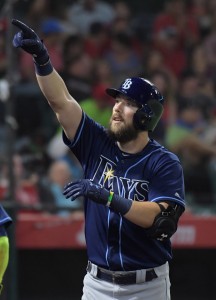 Souza, 33, was a third-round pick of the Nationals out of Cascade High School in 2007 and made his big league debut with the Nats in 2014. After getting into 21 games for Washington down the stretch, Souza went to the Rays in December 2014 as part of a convoluted three-team trade that saw Wil Myers go from Tampa to San Diego and Trea Turner go from the Padres to the Nats.
Souza would spent the next three seasons with the Rays, which will no doubt go down as the best stretch of his career. From 2015 to 2017, he played 378 games, hitting 63 home runs, 53 doubles, four triples, stealing 35 bases and hitting .238/.327/.426.
Incredibly, Souza was part of yet another three-team trade prior to the 2018 season. In this deal, Souza went to the Diamondbacks while Brandon Drury went to the Yankees, among other pieces changing hands. Unfortunately, Souza’s trip to the desert would be a disappointing one, with injuries preventing him from sustaining the production he showed in Tampa. He was limited to 72 games in 2018 due to pectoral issues and hit just .220/.309/.369 when on the field. In March of 2019, Souza sustained a far worse injury, slipping on home plate during a Spring Training game. The club would later announce that Souza tore or damaged multiple ligaments in his knee, which would require season-ending surgery.
After missing the entirety of the 2019 campaign, Arizona non-tendered him, allowing Souza to reach free agency for the first time in his career. He’d go on to see MLB action over the next three seasons with the Cubs, Dodgers and Mariners, respectively, but unable to recapture his previous form. Over those three seasons, he hit .152/.221/.291.
In the end, Souza was able to appear in 505 MLB games and make 1,895 plate appearances. He’ll head into retirement with a lifetime batting line of .229/.318/.411, 72 home runs, 71 doubles, eight triples, 383 total hits, 223 runs scored, 207 runs driven in and 42 stolen bases. He was able to earn more than $10MM over his big league tenure. MLBTR congratulates Souza on a fine career and wishes him the best of luck in his next chapter.
Image courtesy of USA Today Sports.
Stephen Strasburg Not Expected To Return This Season
Stephen Strasburg hasn’t pitched in over a month, and the Nationals transferred him to the 60-day injured list last week. That officially ruled him out until mid-August, and Jon Heyman of the New York Post reports that he’s likely to miss the remainder of the 2022 season dealing with a nerve issue.
It’s not a huge surprise, as the Nats have previously suggested they feared he’s suffered a recurrence of the thoracic outlet syndrome that cut his 2021 campaign short. That necessitated surgery last July, although Heyman writes that Strasburg fortunately will not need to undergo another procedure. Nevertheless, it seems even a non-surgical rehab won’t afford the veteran righty an opportunity to make it back to the mound this year.
It’s the third consecutive lost season for Strasburg, who has been limited to eight appearances since the 2019 campaign wrapped up. He missed most of the abbreviated 2020 season due to carpal tunnel syndrome. After pitching just twice that year, he made five starts before being shut down by TOS last season. Strasburg spent about 11 months working his way back to the big leagues, returning for a 4 2/3-inning against the Marlins on June 9. While he came out of that start feeling fine, he suffered renewed rib discomfort during a bullpen session a few days later.
Injuries to Strasburg are among the reasons the past three seasons have played out disastrously for the Nationals. The three-time All-Star was in peak form in 2019, tossing 209 innings of 3.32 ERA ball during the regular season. He continued to shine during the postseason, helping the Nats to a championship and winning World Series MVP honors. Washington kept him around on a seven-year, $245MM free agent contract the ensuing winter.
While it was easy to understand the Nationals’ desire to keep Strasburg around coming off such an excellent season, that signing looks like an unfortunate major misstep in retrospect. Not only have the injuries generally kept him off the mound, he’s looked nothing like his old self during his limited action. Strasburg averaged north of 94 MPH on his fastball in 2019, but he’s worked in the 90-92 MPH range over the past three years. Coupled with the Max Scherzer trade and Patrick Corbin’s massive performance downturn, the excellent top-end starting pitching that anchored the Nats perennial contenders of the last decade has abandoned them. Washington’s rotation has an MLB-worst 5.74 ERA through the season’s unofficial first half.
Strasburg, 34 on Wednesday, remains under contract for another four years. He’s due $35MM annually through 2026, although a good portion of that salary is deferred with interest.
Nationals To Entertain Trade Offers For Juan Soto After He Rejects $440MM Offer
TODAY: The Nationals aren’t planning to increase their offer beyond $440MM, The Washington Post’s Jesse Dougherty writes. Soto is reportedly looking for a deal that is at least a decade long, gives him the most guaranteed money in baseball history, and gives him an AAV at least close to the highest average annual values. In a Twitter thread, Dougherty suggests that the Nats could come closer to Soto’s demands by offering $440MM over 12 or 13 years rather than 15, though that scenario might not be palatable to the Nationals for luxury tax reasons.
JULY 16, 3:04PM: While the Nationals’ offer didn’t have any deferred money, the $440MM was “heavily backloaded” into the offer’s last six seasons, USA Today’s Bob Nightengale reports. The offer’s backloaded nature played a part in Soto’s decision, according to Jon Heyman of The New York Post, and other factors included the relatively low AAV and the uncertainty surrounding the Nats’ ownership situation.
11:21AM: In a somewhat shocking development, the Washington Nationals will now listen to trade offers for transcendent superstar Juan Soto, per the Athletic’s Ken Rosenthal. Soto reportedly rejected a $440MM extension offer, prompting the change of heart on the Nationals’ part.
The Nationals have long held the position that they would not be open to trading Soto, their 23-year-old superstar, who is already firmly listed among the best hitters in baseball. The Nationals have some time to make a decision, as Soto is under team control for another two seasons beyond this one. As of right now, however, the team is among the worst in baseball, and their farm system continues to be understocked.
All that said, the Nats have made consistent efforts to come to a contract extension with Soto’s agent Scott Boras, with no success. According to Rosenthal, the latest such offer – the third offer from the Nationals’ side – was for 15 years and a total of $440MM. Perhaps more shocking than the number itself is that the Nats did not include any deferred money in the deal. The Nationals are well known for deferring money in most of their long-term deals. That they were willing to avoid that practice shows some bend on the Nats’ part, but it was not enough to consummate a deal.
If those numbers are correct, the Nats’ offer would have given Soto an AAV of $29.33MM over that 15-year span, which falls a little shy of some of the game’s top contracts. While that’s nothing to scoff at, it would not be a record-setting number. The total dollar amount would, however, top MLB’s largest contracts.
The deal would have carried Soto through to his 38th birthday, effectively locking him in as a National for the entirety of his career. It’s certainly a large chunk of money to offer, but Soto might not be so ready to put a cap on his career earnings – even such a lofty one. Soto is currently making $17.1MM this season, with another two arbitration raises yet to come in his final two seasons. If he stays healthy, he’ll easily make more than $29.33MM AAV by his final season before free agency.
With their latest offer rejected, the Nats will now spend the next couple of weeks listening to trade offers for Soto ahead of the August 2nd trade deadline. Certainly, given the team control remaining, the Nationals would have to be floored by an offer in order to move him. The likelihood of a deal at this juncture still feels slim. An offseason deal is more likely. Still, interested parties now have a couple of weeks to begin making headway.
It’s difficult to fathom what exactly it would take to pry Soto loose from the Nationals. No matter what the return package, it’s sure to seem light in the eyes of local fans. Soto is the lone superstar and fan attraction at this point. The club has seen the departure of organizational mainstays like Max Scherzer, Trea Turner, and Ryan Zimmerman in the past calendar year alone. Without Soto, the club would be starting from scratch, especially given the state of the farm system. A player of Soto’s stature does not come along frequently, and it’s unlikely they could recoup anywhere close to equal value for Soto.
For the Nationals to deal him, they have to really believe they have no chance of signing him to a long-term contract extension. Perhaps this latest rejection makes that point for them. From the outside, there are certainly ways in which the Nats could improve their offer, namely with a larger AAV, which does seem to be something that matters to players. They have, as is often pointed out, crossed this bridge with Boras before, both in signing Stephen Strasburg to a long-term deal, and in not coming to terms with players like Bryce Harper and Anthony Rendon.
Complicating matters on both sides is the uncertain future of the Nats’ ownership situation. If the Lerners do, in fact, plan on selling the club, keeping Soto on the roster would seem to be positive, almost necessary. A new ownership group would likely rather have Soto than whatever handful of prospects would come back in a deal. And yet, Soto might be disinclined to commit to a new ownership group. How much can the team be sold for if part of the deal necessitates giving Soto more than $440MM? And yet, the franchise has to be far less attractive to potential buyers without Soto as a marketing centerpiece. How intent the Lerners are in selling the Nats might be the crux of this entire situation.
In many ways, it’s reasonable to expect an end to this saga – one way or the other – by the beginning of next season. Unlike a situation like, say, the Cubs had with Kris Bryant, the Nats have no hope of contending at this present moment, which might make them less inclined to suffer the constant trade rumors. When the Cubs held onto Bryant through years of rumors, they were, at least, competitive year-by-year, giving them cause to hold onto Bryant, even if it meant seeing him walk as a free agent. For the Nationals, Soto’s future is the only story in DC until it gets resolved.
For now, it’s going to be a tense couple of weeks for Nats’ fans as they await the trade deadline. Even if Soto stays beyond August 2nd, the trade rumors are going to continue to swirl. The Nationals have to be wondering if Soto’s uncertain future is a tenable situation. If they can’t find the right deal, however, they need to be willing to wait.
Nationals To Re-Sign Dee Strange-Gordon To Minors Deal
The Nationals are signing another minor league deal with utility player Dee Strange-Gordon, reports Jesse Dougherty of the Washington Post. He and the Nats agreed to a minor league deal in the offseason, with Strange-Gordon cracking the Opening Day Roster but getting released last month.
Strange-Gordon, 34, made his MLB debut in 2011 with the Dodgers and spent another three seasons there. He then spent three seasons each with the Marlins and Mariners, rarely hitting for much power overall but providing plenty of speed and athleticism. In 1,025 career games, he’s hit just 18 home runs but has stolen 336 bases, producing an overall batting line of .286/.319/.360.
With the Nats this year, he was used sparingly, getting into just 23 games over a two-month stretch on the roster, though a two-week stint on the COVID IL also played a part in that. As a National, he produced a nice .305 batting average but not a single walk or home run, leading to a slash line of .305/.305/.356, wRC+ of 82.
After getting designated for assignment in mid-June, he rejected an outright assignment and returned to free agency. Now, almost a month later, he’s returned to the Nats’ organization. Although he was squeezed off of the roster at that time, it’s possible that more openings are created in the coming weeks. With the August 2 trade deadline just over two weeks away and the Nationals holding the worst record in baseball at 30-63, they are obvious sellers. MLBTR’s recent list of trade candidates highlighted Josh Bell, Nelson Cruz, Cesar Hernandez and Victor Robles as guys who could potentially be subtracted from the lineup. Then there was a bombshell report yesterday that the club will consider trading superstar Juan Soto.
Regardless of how it plays out, it seems likely that at least a couple of guys will be on the move soon, which could provide a path for Strange-Gordon to return to the big league club as a bench/utility option. Earlier this year, he played shortstop, left field and center field, but has also spent most of his career at second base prior to this season.