
Rangers Agree To New Deal With Dillon Gee
APRIL 3: Gee will earn at a $2MM annual rate while playing in the majors and can achieve up to $1MM in incentives, according to Jon Heyman of Fan Rag (via Twitter). Also of note: Gee has agreed to a 45-day advance consent provision.
MARCH 31: The Rangers have agreed to a new contract with right-hander Dillon Gee, reports MLB.com’s T.R. Sullivan (all Twitter links). Gee triggered the opt-out clause in his minor league deal with Texas earlier this week, giving the team 48 hours to add him to the 40-man roster or grant him his release. Gee is a client of SSG Baseball.
Instead, the two sides have agreed to a new Major League pact with the understanding that Gee will open the year as a starter at Triple-A Round Rock and have a chance to quickly emerge as the Rangers’ fifth starter, according to Sullivan. Gee will be on the 40-man roster — Sullivan notes that Chi Chi Gonzalez will likely head to the 60-day DL in a corresponding move — and could potentially be called upon when Texas first needs a fifth starter, on April 15. It’s not known if right-hander Andrew Cashner, who is currently dealing with biceps tendinitis, will be ready to take the hill at that time, but Gee represents a solid alternative in the event that Cashner isn’t able to pitch by that point.
The 30-year-old Gee enjoyed a very nice Spring Training with Texas, putting him in position to force a decision out of the Rangers. In 19 2/3 innings during Major League camp, Gee logged a 3.20 ERA with a stellar 18-to-3 K/BB ratio. While he’s been tagged for 25 hits, only one of those has left the yard for a home run. His final outing, which came against his former Royals teammates, included six shutout innings with just two hits allowed and nine strikeouts.
Gee underwent surgery in October to alleviate thoracic outlet syndrome, though his high-quality Spring Training results suggest that he’s perfectly healthy now, of course. It’s not known to what extent that medical issue hampered Gee in 2015-16 (if at all), but the right-hander has struggled in the past two seasons with the Mets and Royals (4.97 ERA in 164 2/3 innings). Prior to that he’d logged a 3.91 ERA with 6.5 K/9 against 2.5 BB/9 in 639 1/3 innings for the Mets.
MLBTR Chat Transcript
Click here to view the transcript for MLBTR Live Chat With Jason Martinez: April 3, 2017
Minor MLB Transactions: 4/3/17
Here are the day’s minor moves from around the league…
- The Angels announced that right-hander Austin Adams has cleared waivers and been assigned outright to Triple-A Salt Lake. The 30-year-old Adams, not to be confused with the 25-year-old righty of the same name who was also with the Angels until being traded to the Nationals in the Danny Espinosa deal, was designated for assignment over the weekend. The elder Austin Adams has seen action in the Majors with the Indians in each of the past three seasons. He performed well in 2015 (3.78 ERA, 6.2 K/9, 3.5 BB/9, 46.8 percent ground-ball rate in 38 1/3 innings) but was rocked for 20 earned runs in 18 1/3 innings with Cleveland last year. The Indians shipped him to the Angels for cash or a player to be named later back in February.
Earlier Moves
- Infielder/outfielder Colin Walsh has signed a minor league pact with the Diamondbacks, as noted on the Diamondbacks’ transactions page and in Walsh’s own Twitter bio. A Rule 5 pick of the Brewers last season (out of the Athletics organization), Walsh made his big league debut in 2016 but struggled through 63 plate appearances, hitting .085/.317/.106 with 22 strikeouts. An on-base machine in the minors, the 27-year-old Walsh is a career .277/.394/.419 hitter in parts of seven minor league seasons, including a .264/.375/.368 line in 417 Triple-A plate appearances. Walsh has been primarily a second baseman in the minors but also has experience at third base and in the corner outfield, making him a potential bench piece down the line if he can carry some of his minor league production into the Majors.
Carlos Rodon Out Five To Six Weeks
White Sox left-hander Carlos Rodon, who opened the season on the disabled list due to bursitis in his left biceps, is currently on a throwing program and could be back with the team within five to six weeks, barring setbacks, general manager Rick Hahn tells Scot Gregor of the Daily Herald (Twitter link). While it was known that Rodon would open the season on the shelf, there’s yet to be much of an indication as to how long of a recovery timeline Rodon would face.
Suffice it to say, an absence of five to six weeks representing a seemingly best-case scenario isn’t ideal news for the South Siders, though the 2017 season is a rebuilding year for the Sox anyhow. Nonetheless, Rodon’s injury shorts one of the White Sox’ most promising young arms of some development time, even if no further issues arise. That’s somewhat discouraging for Sox fans, especially when considering the strong second half that the former No. 3 overall draft pick posted last year.
After logging a 4.50 ERA with 8.9 K/9 and 3.1 BB/9 in the first half last season, Rodon reeled off a 3.45 ERA in the second half with 9.5 K/9 against 2.7 BB/9. Rodon enjoyed a superlative month of August, and while the month of September was more uneven, he flashed his upside with eight shutout innings and 11 strikeouts in his penultimate start of the season against the World Series-bound Indians.
With Rodon sidelined, a number of his would-be innings could go to rookie Dylan Covey and veteran swingman Anthony Swarzak. The rest of the Chicago rotation is rounded out by Jose Quintana, James Shields, Derek Holland and Miguel Gonzalez, though certainly the Sox hope that some of the vaunted arms they picked up in the offseason trades of Chris Sale and Adam Eaton could impact that starting group sooner rather than later; Michael Kopech, Lucas Giolito and Reynaldo Lopez — each of whom has been regarded recently as one of the game’s top overall pitching prospects — are all set to open the season in the upper minors for Chicago and could eventually knock on the door in 2017.
Inside The Draft Room: The 1998 White Sox
Duane Shaffer was involved in many facets of the game during his 36-year stint in the Chicago White Sox organization. He was a pitcher, coach, roving instructor, manager, area scout, supervisor and scouting director after being selected by the club in the 11th round of the 1969 draft.
While he is the answer to the trivia question of “Who was manager Tony La Russa’s first pitching coach?” – Shaffer performed those duties for LaRussa at Double-A Knoxville in 1978 – he is best known in baseball circles for overseeing 17 White Sox amateur drafts from 1991-2007.
“I was fortunate enough to work for Jerry Reinsdorf during most of my time there,” said Shaffer, who is now a pro scout with the San Diego Padres. “He afforded me the opportunity to do pretty much anything I wanted to do. He was a tremendous owner. He was a great guy to work for, and I don’t want that to go unsaid. I appreciate what he did for me when I was there.”
Shaffer’s finest hour as the scouting director – and his greatest opportunity to thank Reinsdorf – took place in 1998, when his draft netted two of the most important pieces on the White Sox’s 2005 World Series championship club.
Heading into that draft, Shaffer had plenty of reasons to be optimistic about the White Sox’s draft position. Although the team wasn’t selecting until the 16th spot, Shaffer was certain that the guy he wanted was going to be sitting there for the taking.
The White Sox also received a supplemental first-round pick (No. 35 overall) and an extra third-round pick due to losing free agent outfielder Dave Martinez – who signed with Tampa Bay.
In 1998, Chicago’s first four selections – Kip Wells, Aaron Rowand, Gary Majewski and Josh Fogg – all went on to see extensive big league action, appearing in a combined 38 major league seasons. That in itself merits attention. But it was a 38th-round draft-and-follow selection named Mark Buehrle that turned this into an outstanding draft for the White Sox.
– – –
On the day of the draft, Shaffer’s plan was to select a college pitcher at No. 16 who could get to the majors quick. The player at the top of his draft board was Kip Wells, a right-hander out of Baylor University.
“Kip Wells was the guy we knew had the best chance of being there when we picked,” Shaffer recalled. “Obviously, you had 15 other guys in front, but doing your homework, you have a good idea who they’re going to take prior to you picking. When it came down to that, he was the guy that we wanted.
“He was a guy that you watched pitch, and he was 91-to-95. Good breaking ball. Had a decent feel for pitching. I saw him pitch a few times that year, and I recollect taking Ron Schueler, the general manager, to go see him. This was at the University of Arizona, down in Tucson. We went over and sat down the third-base line and watched him pitch six or seven innings. He was very impressive. You watched the ball come out of his hand. You watched the breaking ball – and the ease in which he did it. He was a big, loose, lanky kid that just impressed you watching him go about his business. He repeated that on a regular basis. That’s who we targeted.
“As it got closer to our turn, Jeff Weaver – who we had drafted the year before (second round in 1997) – went to the Tigers at No. 14. Then Clint Johnston went right in front of us – he was a Vanderbilt kid, left-handed pitcher, who the Pirates picked. Kip was sitting there for us when we picked. Actually, it ended up being a Kip Wells/Brad Lidge discussion when we got down to it. And we ended up selecting Kip.”
It turned out to be an immediate gratification selection, as Wells was in the majors by the end of the following season. In total, he pitched 12 major league seasons – mostly as a starter – with nine different teams. Lidge, meanwhile, was a big league reliever for 11 years.
Looking back, it’s hard not to notice that four of the 10 players selected immediately before Wells did not see a day in the majors.
Looking back, it’s also hard not to notice that four picks after Wells, the Indians selected a high school left-hander by the name of CC Sabathia.
“I went up and saw Sabathia, and he was a good-looking kid,” Shaffer said. “Hindsight is 20-20, obviously, and you’d love to have him. The problem is we thought he might have trouble throwing a breaking ball. At that particular time, we didn’t want to take a guy who had one pitch in the first round. We thought about him and we talked about him – he was a big strong kid – but we weren’t convinced as a group that he was going to have a really good breaking ball. He ended up doing it, obviously. So if you want to say we missed, yeah, we missed. But I’m happy with Kip Wells and I thought he was a good pick at that time.”
As the draft moved into the supplemental round, the future heart-and-soul of the White Sox’s 2005 championship team was there for the taking. And Shaffer was more than happy to take Cal State-Fullerton outfielder Aaron Rowand at No. 35 overall.

“When he got to us with that pick, I was extremely happy to get a kid like him,” Shaffer said. “I knew the physical tools, but it was the mental side for him. He was going to make himself a big leaguer – no matter what. This kid had tremendous determination to be a good major league player.
“You might ask why I didn’t take him first, and the answer is because I didn’t have to. I knew the market. I knew what was in front of him … I knew what was behind him. When he was there for the taking as the supplemental pick, we were extremely happy – because we knew we were getting a gamer, one of those guys that loved to put the uniform on and do whatever he could do to help a ball club win. Aaron was always like that.
“I just had a really good feeling about him … the way he went about his business … the competition level he played against and excelled in at the Division I level at Fullerton. He was one of those guys … you look at him, and you know this guy is a big leaguer.”
Rowand spent five seasons with the White Sox, two with the Phillies and four with the Giants, earning a pair of World Series rings (2005 with the White Sox and 2010 with the Giants).
Shaffer’s next two selections – right-handed pitchers Gary Majewski (St. Pius X High School in Houston, No. 59 overall) and Josh Fogg (University of Florida, No. 89) – had solid but unspectacular big league careers.
Majewski was a reliever with Expos, Nationals, Reds and Astros from 2004-2010, appearing in 231 games.
“Gary was a good-arm kid. He could let it fly. That’s what we liked about him,” Shaffer said. “Good loose arm, and the ball came out of his hand extremely well. Good, live fastball. This is the separator for me when you talk about the high school kid vs. the college guy at this point. His breaking ball wasn’t great; it was OK. He’d show you flashes. At that particular time of the draft, that’s when you might take a chance on a high school kid. Do you think he’s going to get a good breaking ball? Fortunately for us, he ended up developing a decent breaking ball, and he turned out to be a solid-average major league relief pitcher.”
Fogg had a cup of coffee with the White Sox in 2001 before being traded to the Pirates – along with Wells – as part of a five-player deal in which starter Todd Ritchie was acquired by Chicago. Fogg was mostly a starter with the Pirates, Reds and Rockies from 2002-2009 – with five double-digit victory campaigns to his credit.
“Josh Fogg showed you a good idea of how to pitch,” Shaffer said. “90-to-93. Good off-speed stuff. Repeated well – and that’s the part of it I liked the most. He was a great competitor, and he would be facing the University of Miami or whoever it was – and he’d just handle it as well as he could. He knew when and how to make pitches. I really liked the way he went about his business. And I thought that translated well into a major league pitcher.
“These are the kind of guys that we emphasized as you got down into the draft – and I know the third round is not deep. But at that particular time, when you had multiple picks or supplemental picks, the third round was farther down than it might sound. I liked Josh. I thought he was a good competitor. When he was on the board when we picked right there, I thought that was a good pick. He was a college guy we thought could move fast.”
Cardinals Extend Stephen Piscotty
The Cardinals have formally announced a new long-term pact with another key contributor: outfielder Stephen Piscotty has signed a six-year extension with an option for a seventh season.
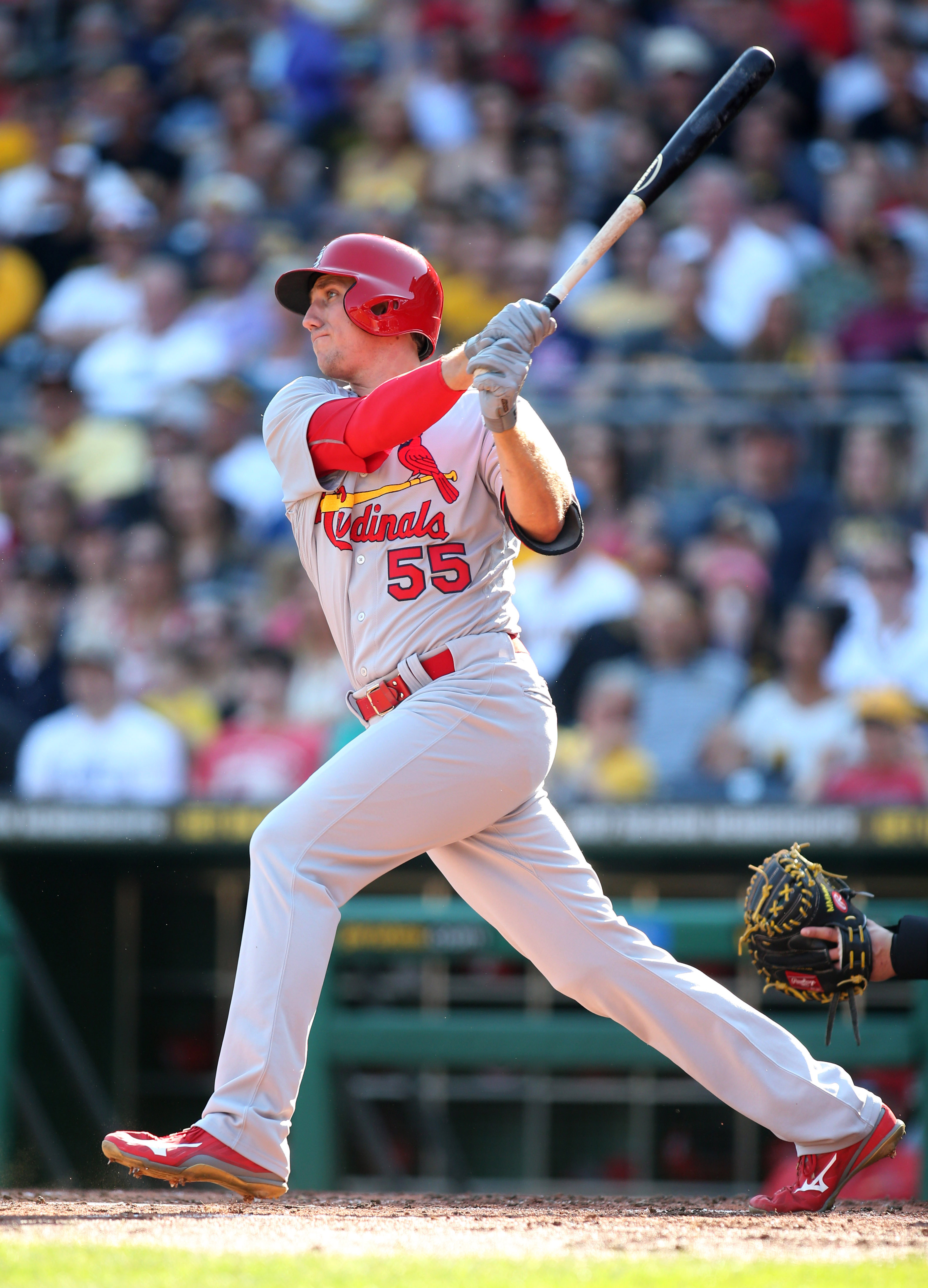
Piscotty, who is represented by CAA Sports, will reportedly be guaranteed $33.5MM on the deal. That includes a $2MM signing bonus, salaries of $1MM in 2017-18, $7MM in 2019-20 and $7.25MM in 2021-22. There’s also a $1MM buyout on a $15MM option for the 2023 season. Furthermore, Piscotty will earn $500K if traded prior to the completion of the 2021 season and $1MM if he is traded thereafter. Performance escalators can boost the value of the option, giving him a chance to top out at $50.5MM over seven years.
The Piscotty contract marks the third notable extension since the end of the 2016 campaign for Cardinals general manager John Mozeliak and his staff. St. Louis has also extended burgeoning ace Carlos Martinez this winter, and franchise icon Yadier Molina wrapped up a three-year contract extension of his own over the weekend.
The 26-year-old Piscotty was the 36th overall selection in the 2012 draft and has blossomed from one of the Redbirds’ top prospects to their everyday right fielder over the past two seasons. In that time, Stanford product has established himself as a well-above-average bat, hitting a combined .282/.348/.467 with 29 home runs through his first 216 MLB games (905 plate appearances).
From a defensive standpoint, Piscotty has been four runs above average in right field per both Defensive Runs Saved and Ultimate Zone Rating to this point in his young career. He’s also demonstrated a bit of versatility, logging 76 innings in center field and 57 at first base over his first two seasons. While he’s probably not going to see much time in center field moving forward — Dexter Fowler is signed to a five-year deal, and left fielder Randal Grichuk would probably slide over in the event of a Fowler injury — the ability to occasionally spot Piscotty there or at first base certainly carries a bit of value for the Cards.
Piscotty has just one year, 76 days of Major League service time, meaning he wouldn’t have been eligible for arbitration until the completion of the 2018 season and wouldn’t have been a free agent until the 2021-22 offseason. Piscotty falls shy of the current record for a player in the one-plus service class, which is held by Andrelton Simmons at seven years and $58MM (as can be seen in MLBTR’s Extension Tracker). Christian Yelich‘s seven-year, $49.57MM pact is tops among all one-plus outfielders. Piscotty falls shy of both of those marks, though he’s also two to three years older than either of those players were when they inked their respective deals.
Today’s extension means that Piscotty can’t become a free agent until the completion of his age-31 season and, if he remains productive, that he likely won’t reach the open market until he is entering his age-33 campaign. That certainly limits his future earning power, though one can hardly fault a 26-year-old that is still five full years from reaching the open market and two years from reaching arbitration for electing to lock in his first eight-figure payday. Piscotty’s deal is the eighth-largest ever signed by a player with one-plus years of service, so while he didn’t establish any new sort of precedent, the deal falls within the range of reasonably plausible outcomes.
Jon Morosi of MLB Network reported that the two sides were progressing on a deal (Twitter link). FanRag’s Jon Heyman tweeted that the two sides had reached an agreement and also tweeted the guaranteed portion of the contract. USA Today’s Bob Nightengale first suggested the six-year term (Twitter link). FOX’s Ken Rosenthal provided the year-to-year breakdown (Twitter links).
Photo courtesy of USA Today Sports Images.
East Notes: Red Sox, Yankees, Osuna, Marlins
With the likes of Mookie Betts, Jackie Bradley, Xander Bogaerts and Andrew Benintendi all controlled for at least another three seasons, the Red Sox are positioned to have an excellent core of young position players for the next several years. Team president Sam Kennedy spoke recently on the CSNNE Baseball podcast about his club’s desire to keep that core intact, and CSN’s Evan Drellich provides a number of highlights from that talk. Kennedy stated that extensions for that collection of young players is “something that we talk about a lot,” though he neglected to elaborate on any specifics. Kennedy further explained the various voices that weigh in on such matters, noting that CFO Tim Zue plays an integral part in evaluating the long-term financial ramifications for the team. Kennedy called Zue the Red Sox’ “Godfather of business analytics,” and Drellich adds that Zue works closely with the Red Sox’ baseball analytics head, Zack Scott, with regularity.
More from the game’s Eastern divisions…
- Yankees GM Brian Cashman tells Travis Sawchik of Fangraphs that he and Cubs president of baseball ops Theo Epstein agreed to the framework of last summer’s Aroldis Chapman trade about three days before the trade actually went through. According to Cashman, he had to wait 72 hours for ownership approval from Hal Steinbrenner as he mulled the situation over with his family and other key Yankees staffers. Cashman reveals to Sawchik that this past summer was not the first time he’s strongly recommended employing a rebuilding approach — within the column he suggests that the Yankees should have traded Robinson Cano before he hit free agency — but the 2016 campaign marked the first time in which ownership conceded. Cashman adds that he doesn’t fault Steinbrenner for not green-lighting past rebuilding efforts, telling Sawchik: “[Steinbrenner] says, ‘Cash, you’re the director of baseball operations, you get to look at things at 5,000 feet. But as a pilot, I’m in charge of network ratings, ticket sales, advertising commitments to our sponsors, a whole host of things.’ So he had to look at things at 30,000 feet. Sometimes those decisions don’t match up with what I’d recommend, and I understand and respect that. Being an owner is not easy.” The entire interview is well worth a full read for Yankee fans or any readers that are interested in the baseball operations/ownership dynamic.
- The Blue Jays aren’t expecting Roberto Osuna‘s stay on the disabled list to be lengthy in nature, tweets MLB.com’s Gregor Chisholm. Per general manager Ross Atkins, the Blue Jays don’t think Osuna will require more than the minimum 10-day stay that is provided by the new disabled list this season. That’s excellent news for a Jays team that, on paper, carries plenty of question marks surrounding its relief corps. In Osuna’s absence, veteran Jason Grilli and sophomore reliever Joe Biagini will handle whatever save opportunities arise.
- Clark Spencer of the Miami Herald reports that veteran outfielders Brandon Barnes and Matt den Dekker did not exercise the opt-out provisions in their minor league deals with the Marlins at the end of Spring Training (Twitter link). As such, both figure to head to Triple-A New Orleans, where they’ll serve as depth options that could surface in the Majors should the Fish incur an injury or look to add some versatility to the bench down the line. Barnes, a career .242/.289/.356 hitter, posted just a .426 OPS in Spring Training but was solid in Triple-A last season. Meanwhile, den Dekker hit .281/.306/.596 in Spring Training and is a lifetime .236/.318/.359 hitter in the bigs. Both can play all three outfield positions.
Offseason In Review: Colorado Rockies
This is the latest entry in MLBTR’s Offseason In Review series. The full index of Offseason In Review posts can be found here.
The Rockies obviously see an opportunity to contend in 2017, and made some hefty commitments over the winter to bolster that possibility. But ongoing pitching questions and a slate of spring injuries have clouded the outlook somewhat.
Major League Signings
- Ian Desmond, IF/OF: five years, $70MM (includes $2MM buyout of $15MM club option)
- Mike Dunn, RP: three years, $19MM (includes $1MM buyout of $6MM club/vesting option)
- Greg Holland, RP: one year, $7MM (includes $1MM buyout of mutual/vesting player option)
- Alexi Amarista, IF: one year, $1.25MM (includes $150K buyout of $2.5MM club option)
- Total spend: $97.25MM.
Trades And Claims
- Acquired RP James Farris from Cubs in exchange for SP Eddie Butler
Extensions
- Nolan Arenado, 3B: two years, $29.5MM (did not extend team control)
Notable Minor League Signings
- Domonic Brown, Matt Carasiti, Stephen Cardullo, Noel Cuevas, Chris Denorfia, Evan Grills, Ryan Hanigan, Mark Reynolds, Josh Rutledge (claimed in Rule 5 draft)
Notable Losses
- Butler, Jorge De La Rosa, Daniel Descalso, Nick Hundley, Ryan Raburn
Rockies Depth Chart; Rockies Payroll Information
Needs Addressed
After addressing the open managerial job with the hiring of Bud Black at the opening of the offseason, the Rockies had a wide-open slate of possibilities. The team could conceivably have pursued a variety of trade scenarios involving such established stars as Carlos Gonzalez and Charlie Blackmon. Instead, the club ended up keeping its core intact and adding the old-fashioned way: through some pretty big spending on the open market.
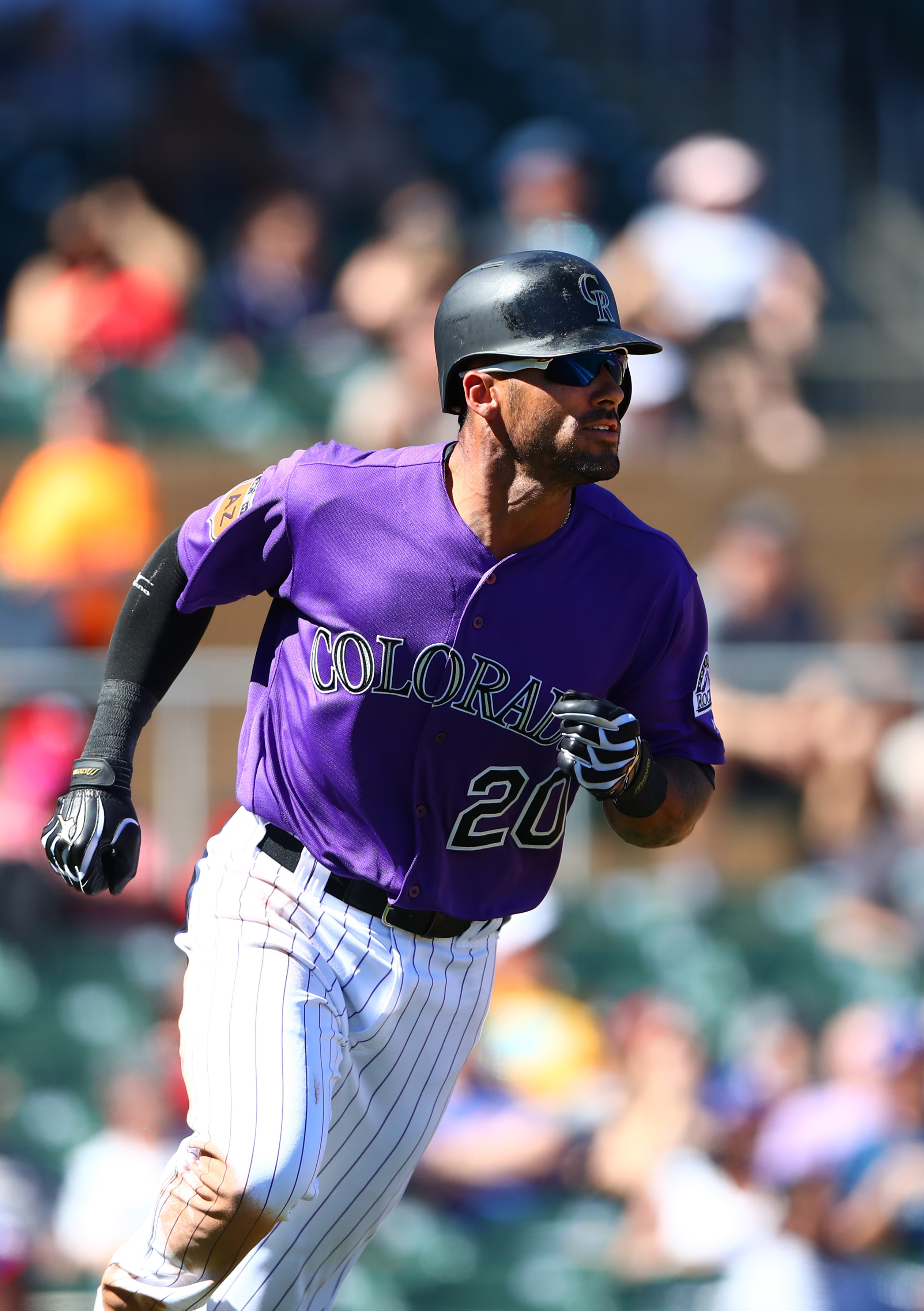
There were two major openings on the position-player side entering the winter: first base and catcher. Colorado elected to plunk down a lot of cash to add a productive veteran, but the player chosen came as quite some surprise. When the news broke that Ian Desmond was headed to the Rockies, it was generally assumed that he’d be playing in the outfield, with one of the team’s left-handed hitters — Gonzalez, Blackmon, Gerardo Parra, or perhaps even David Dahl — likely to be traded to address another need. Instead, the Rox stuck to their initial suggestion that Desmond would play first, though the organization notes that it values his versatility now and into the future. (More on that below.)
Behind the dish, the Rockies bypassed opportunities to pursue veterans via trade or free agency, where names like Matt Wieters, Jason Castro, Welington Castillo and (on the trade front) Brian McCann were available. Instead, the organization decided to rely on Tony Wolters, Tom Murphy, and Dustin Garneau. Murphy, who seems to have the greatest upside of the bunch, will be on the DL to open the year, so the Rockies made a late move to add veteran Ryan Hanigan.
Alexi Amarista was added to replace departing utilityman Daniel Descalso, but otherwise a bunch of friendly faces will be taking the field at Coors. In addition to the outfielders named above, high-power/high-strikeout shortstop Trevor Story is back from injury; Nolan Arenado and 2016 NL batting champion DJ LeMahieu will look to repeat their strong 2016 seasons at third and second base; and Mark Reynolds will return to first base (he re-signed on a minors deal) until Desmond, who suffered a fractured finger in Soring Training, is healthy. Rounding out the bench is Stephen Cardullo, an indy ball find who surprisingly spent time in the bigs last year.
Of course, the lineup was always seen as a strength for Colorado. Entering the winter, most expected the club to focus on pitching. Though the rotation finally had shown signs of life, it wasn’t exactly overloaded with established arms, and the bullpen had some clear holes.
The latter group got the attention that was expected, and then some. In addition to tendering a contract to Jake McGee despite his poor first year with the organization, Colorado gave Mike Dunn a surprising three-year deal and beat the market to roll the dice on Greg Holland, the once-elite reliever who’ll be returning from Tommy John surgery. That makes for one pricey relief corps. When you add the 2017 salaries of those three pitchers to what’s owed Adam Ottavino, Jordan Lyles, Chad Qualls, and the just-designated Jason Motte, the tab for this season alone lands just under $30MM.
But the rotation was another story. Content to keep its lefty-heavy outfield mix intact, and enamored of the relatively untested options on hand, the Rox did not add a single starter over the offseason.
Questions Remaining
The Rockies were arguably justified in staying their hand on adding another piece to the rotation. Entering camp, four spots were firmly accounted for (by Jon Gray, Tyler Anderson, Tyler Chatwood, and Chad Bettis). Beyond that quartet, there were quite a few contenders for the final job. Though adding a veteran to bolster the competition would have been nice, perhaps an appealing target couldn’t be enticed given the arms on hand and the prospect of pitching at Coors Field. And while the trade route surely was at least considered, either a lack of suitable matches or a differing strategy may simply have led the Rockies to a different approach.
Taking that course, though, always meant there’d be a lot of pressure on quite a few young pitchers. Teams know they’ll use more than five starters over the course of a season, so their depth charts must go at least eight or ten arms deep. In the case of the Rockies, outside of the top four arms listed above, the only potential starter in the organization who has more than eight MLB appearances under his belt is Chris Rusin, who thrived last year in a relief role. Prospects Jeff Hoffman and German Marquez are the only others who have seen any major league action at all, with each getting a taste of the bigs last year.
The situation worsened significantly with the terrible news that Bettis would require chemotherapy after his testicular cancer unexpectedly spread. Though he says it’s possible he could return this year, everyone’s first priority will remain Bettis’s well-being. Clearly, the team can’t count on a contribution from the steady performer in 2017.
Thus it was that the Rockies found it necessary to pluck two fresh arms from the farm to open the 2017 season. It seems that Antonio Senzatela (22) and Kyle Freeland (23) will get those jobs, with Marquez functioning as a swingman to open the season. The former was oustanding at Double-A in 2016, but he threw only 34 2/3 innings as the team exercised plenty of caution with a shoulder issue. While he had reached 154 frames in the prior season, asking for 32 starts would be a reach. Freeland, meanwhile, was the eighth overall pick in the 2014 draft. However, he only reached the upper minors last year and didn’t exactly dominate with a 3.89 ERA over 162 innings with 6.0 K/9 against 2.4 BB/9. Also of note: that innings tally represented a big jump after two consecutive partials seasons.
Whenever the next need opens up, the Rockies can turn to Rusin (once he’s healthy), Marquez, Hoffman, and perhaps Lyles. They’ll also be able to dip further into the farm, which includes pitchers such as 40-man members Shane Carle, Yency Almonte, and Zach Jemiola. That may well be sufficient depth, but the Rockies set to tap into an unusually youthful reservoir of starting pitching for an organization that has its sights set on contention.
The ‘pen faces its own questions, but they’re mostly of the typical kind. Overall, the unit has a fair bit of upside despite the recent health issues faced by pitchers such as Holland, McGee, Ottavino, and Qualls; those hurlers will be looking to return while others (Marquez, Carlos Estevez, and Miguel Castro, if he clears waivers) will try to convert impressive raw stuff into effectiveness.
You could say the same of the bulk of the lineup, which has a nice overall blend of stars, solid pieces, and role players. There may be minor quibbles about the lefty-heavy outfield mix — top prospect Raimel Tapia also hits from the left side — and the catching mix is as unestablished as any in baseball. The organization, though, seems to believe in the current catching options. And overall, the the collection of position players seems to be a good one.
Deal Of Note
That includes Desmond, the presumptive first baseman. He ought to be fine there, after all. If he’s a slightly above-average hitter and great baserunner, as he has been, and perhaps adds some value with the glove, he should be a solid-enough performer for the position.
But this is a club that enters the season with a record-setting $120MM payroll — prior to 2015, it had never even reached nine figures — and designs on more than competence. Desmond was the marquee addition, clearly. And teams generally accept that when they sign long-term deals with free agents — at least, those that aren’t abnormally youthful — they’re accepting that they’ll pay a premium later (in the post-prime years of the deal) in order to get a quality, established player on the MLB roster right away.
While we’ve heard plenty of explanations from the Rockies, and from observers, as to why Desmond will work at first base, it still seems an odd decision. Even granting that Desmond is a uniquely high-character player and that he could at least be an average hitter for the slugger’s position (though he’s only a league-average hitter for his career), the move represents a relatively enormous investment that just doesn’t come with much upside up front.
If the Rockies were so enamored of Desmond as a player and a person, perhaps the team ought to have lined up a trade for one of its left-handed-hitting outfielders. It’s reasonable to think that’d have had a reasonable chance of resulting in a pitching upgrade, at least. And it would have allowed the Rockies to take advantage of a free-agent market that was selling quality power bats for next to nothing.
While there’s admittedly some hindsight involved in that assessment, the awkward fit (barring trade) was apparent from the moment the deal was struck. And while Desmond’s future flexibility does carry value, but certainly not enough for that consideration alone to drive the signing. There’s still every chance that the contract will work out for Colorado. But every free-agent signing is a bet, and this one doesn’t seem particularly well-conceived.
Overview
This might all work out; even if not, it’s hard to criticize the Rockies too harshly for pushing some chips in. It’s always good to see a moribund franchise up its investment at an opportune time. And the unique circumstances of Coors Field certainly factor in, too, albeit in hard-to-discern ways. But from here, it doesn’t seem as if the organization got quite as much bang for its hundred-million bucks as perhaps it should have.
What’s your take on the Rockies’ winter? (Link to poll for mobile app users …)
How would you grade the Rockies' winter?
-
C 37% (643)
-
B 36% (624)
-
D 15% (265)
-
F 7% (122)
-
A 6% (103)
Total votes: 1,757
Quick Hits: Feeney, Zaidi, Blue Jays, Votto, Padres
Former MLB executive Katy Feeney passed away Saturday at age 68, the league announced. (There’s a remembrance by Richard Justice of MLB.com.) Feeney served as MLB’s senior vice president of scheduling and club relations until her retirement just last December. In that role, she worked on league scheduling and organized news conferences for big events such as postseason series. She grew up in baseball, as the daughter of Chub Feeney, the former Giants GM and National League president. “All of us at Major League Baseball are shocked and saddened by the news of Katy’s passing. She was one of the game’s most dedicated executives. Overseeing the schedule, Katy long held one of the most challenging positions in the sport,” said the league in a statement. Though Feeney wasn’t well known by the public, she was evidently greatly respected and liked by beat writers throughout the game, many of whom offered heartfelt tributes and expressions of sadness on Twitter. Our condolences to Feeney’s family and friends.
Here’s more from around the league.
- Rarely do we get as much insight into a baseball executive’s life as Andy McCullough of the Los Angeles Times divulges in a meticulously crafted profile of Dodgers GM Farhan Zaidi. Zaidi’s reputation is mostly that of a young, new-school GM in the same vein as his boss, Andrew Friedman. But here we also learn how Zaidi feels about being a Muslim living in the US; about a childhood spent in Canada, the Philippines, and Pakistan; and about his love for 1990s Britpop. Also included are details about Zaidi’s acumen within baseball, including, for example, the tidbits that it was Zaidi who, as an executive with the Athletics, pushed the team to sign Yoenis Cespedes and promote Brandon Moss. McCullough’s piece is well worth a read.
- As the season begins, executives from all 30 teams reveal their No. 1 concerns to ESPN’s Jim Bowden. Perhaps unsurprisingly, many of them say they worry most about their team staying healthy, but some execs relay concerns that are more specific, and more telling. Mark Shapiro of the Blue Jays, for example, says, “The drop-off from our top five starters to our sixth starter is a big one. And we have a gap in our high-ceiling prospects in starting pitching in Triple-A.” (The Jays currently have a rotation of Marcus Stroman, Aaron Sanchez, J.A. Happ, Marco Estrada and Francisco Liriano, with pitchers like Casey Lawrence, Lucas Harrell, Jarrett Grube and T.J. House as potential replacements.)
- The Reds are in the midst of a rebuild, but this year their lone superstar, Joey Votto, will play at age 33. Votto remains under contract through 2023 with a club option for 2024, but it’s unclear if he’ll still be producing superstar-caliber numbers by the time the Reds are ready to contend, as the Cincinnati Enquirer’s Zach Buchanan writes. Buchanan notes that it’s difficult to find comparable players for someone as good as Votto, but some of the more obvious ones — such as Jeff Bagwell, Todd Helton and Lance Berkman — suggest Votto could begin to wilt sooner rather than later, perhaps playing as a lesser version of his former self just as the Reds hope their young talent begins to blossom.
- About half the Padres‘ Opening Day payroll of around $67MM will be owed to players who aren’t with the team anymore, Dennis Lin of the San Diego Union-Tribune writes. Current members of the Padres’ active roster and DL make about $33MM, with 21 players making less than $1M. That’s partially a function of the youth of the roster, which we chronicled here earlier this weekend — the Padres are having three Rule 5 picks start the season with them, along with a host of other inexperienced players. Their highest-paid players are Wil Myers and Jered Weaver, both of whom are making just $3MM. The Padres are also paying a total of $34MM to James Shields, Melvin Upton Jr. and Hector Olivera. Shields is currently with the White Sox, while both Upton and Olivera are free agents. Lin notes, though, that the Padres have invested a remarkable total of about $80MM (plus taxes for exceeding their bonus pool) on international prospects since July.
Padres Release Brett Wallace
The Padres have released infielder Brett Wallace, Chris Cotillo of SB Nation tweets. The Padres had reassigned Wallace to the minors last week after he batted .179/.273/.256 in Spring Training.
That showing continued a run of poor recent hitting from last season, when he batted just .189/.309/.318 in 256 big-league plate appearances. The Padres outrighted Wallace last November, then re-signed him to a minor-league deal a month later.
Wallace, now 30, was once a first-round draft pick of the Cardinals, as well as one of the keys to the 2009 trade that brought Matt Holliday to St. Louis. Since then, though, Wallace has struggled to get established in the big leagues as he hasn’t balanced his below-average defensive performances at the corner infield spots with the level of offensive production once expected from him. In parts of five career seasons spent with Houston and San Diego, he’s batted a modest .238/.316/.389 with 40 home runs and a cumulative fWAR of -1.4.