
Red Sox Could Add Right-Handed Middle Infielder
The Red Sox continue to explore their options on both the rotation and bullpen markets, but they’re also looking around for a right-handed-hitting infielder who can factor into the mix at second base, Jen McCaffrey of The Athletic reports. Infielder Vaughn Grissom‘s minor league rehab window is up on Aug. 9, but McCaffrey suggests that Grissom could be optioned to Triple-A Worcester rather than plugged into the big league roster. Meanwhile, Sox skipper Alex Cora said after the acquisition of catcher Danny Jansen that fellow backstop Connor Wong could see additional time at second base; Wong hasn’t played a ton of second base recently but does have 227 innings there in his career.
The trade market isn’t exactly deep in right-handed-hitting infielders — or middle infielders in general — but there are nevertheless a handful of options who could fit the bill. Switch-hitting Angels infielder Luis Rengifo (who has torched lefties at a .373/.418/.529 rate) has reportedly been of interest to the Sox already. They’ve presumably at least held internal discussions on other options, including Colorado’s Brendan Rodgers, Detroit’s Gio Urshela, Oakland’s Abraham Toro (a switch-hitter) and Chicago’s Paul DeJong. The Reds’ Jonathan India has seen his name in trade rumors for the better part of a year, but Cincinnati has been reluctant to deal him. Within the Sox’ own division are Gleyber Torres and Isiah Kiner-Falefa, but Boston may be wary of sending any talent of note to a direct rival.
The mere fact that Cora suggested playing Wong at second base and declined to confirm that Grissom would be plugged right back into Boston’s second base slot speak to the fact that an addition is possible. Second base has been a black hole for the BoSox this season, as they’ve seen Grissom, Wong, Enmanuel Valdez, David Hamilton, Jamie Westbrook, Pablo Reyes, Romy Gonzalez, Ceddanne Rafaela and Zack Short combine to hit .192/.249/.293 at the position. The resulting 47 wRC+ is dead-last in the majors and suggests that Boston second basemen have been 53% worse than average with the bat.
The Red Sox actually depleted some of their middle infield depth yesterday when they traded Nick Yorke (notably, a right-handed hitter) to the Pirates in a swap of former first-rounders/top prospects that netted them right-hander Quinn Priester. That suggests that pitching is considered the more dire need, but it still shouldn’t come as a surprise if the Sox work multiple angles today and come away with another arm (or two) and a more established big league infielder than Grissom or the now-traded Yorke.
Boston was already known to be on the lookout for a right-handed bat — that much was reported last week — but at the time, it seemed a first base addition could also be possible. However, the Sox are now slated to send injured first baseman Triston Casas on a rehab assignment later today, per Chris Cotillo of MassLive.com (X link). That makes second base a far more likely spot to augment the lineup with a right-handed bat.
Garrett Crochet Rumors: Deadline Day
White Sox ace Garrett Crochet has been the hottest name on the trade market this month, both because of the Sox’ own failed attempt to extend him and because his camp has since indicated that the left-hander wants an extension before pitching in October for a new club. Crochet’s 114 1/3 innings this season have already eclipsed his prior career total. He’s said to be against a move to the bullpen, believing that staying on a starter’s routine is best for his health, and aiming for financial security before pushing his workload even deeper into postseason waters.
It’s rubbed many fans the wrong way to see such a business-like approach, and it’s taken many in the industry aback — White Sox GM Chris Getz included, apparently. Via Sox Machine’s James Fegan, Getz spoke with reporters yesterday and acknowledged that he was “surprised and taken back” by how Crochet’s camp handled the situation, particularly as he’d had a conversation with the left-hander’s agent at CAA just the night before.
“I think most fans and even players without knowing everything, it makes sense,” said Getz. “We understand why a stance would be taken. Now how you go about expressing that is what was a bit hurtful, quite honestly, considering I felt like we could have handled it a little bit differently and still I think everyone accomplished what they wanted to accomplish. … But Garrett and I are fine, we are good. I’ll continue to be one of his top supporters. In regard to how it affects the coming days, tough to tell.”
We’ll round up today’s Crochet chatter here and break out any major developments into their own posts…
- USA Today’s Bob Nightengale reports that the White Sox have become increasingly optimistic that they’ll find someone to meet their asking price on Crochet even in the wake of his extension revelation. Per Nightengale, the Sox believe that they’ll trade Crochet between now and the 5:00pm CT deadline but expect to hang onto center fielder Luis Robert Jr. — as was reported to be the case regarding Robert just last night.
- Both Ken Rosenthal of The Athletic and Bruce Levine of 670 The Score suggest that Crochet’s market remains strong. Rosenthal lists the Padres, Dodgers, Braves, Phillies, Red Sox and Orioles as teams with varying levels of interest. Levine echoes much of that same list and quotes an executive from a rival AL club stating the relative obvious: “You don’t get a chance to find a top pitcher like that often. You must get creative.”
- The Yankees inquired on Crochet at some point but were told in those initial talks that the two parties “didn’t match up” in a trade, reports Jon Heyman of the New York Post. The Yankees could always revisit talks, particularly with so many alternative rotation options off the board. New York has been tied to Tigers righty Jack Flaherty as well, and the Yankees are seeking a rotation upgrade as they simultaneously explore the possibility of moving Nestor Cortes in a separate deal.
The Opener: Crochet, Rooker, Flaherty, Rays, Twins, Nats, Angels, Jays, Surprise Deals
Deadline day is upon us! Rather than the usual three “outs,” today’s opener is going three innings and previewing nine of the countless scenarios to keep an eye on between now and the 5pm CT trade deadline:
1. Will Crochet move? And what else is in store for the White Sox?
Few names have generated as much conversation as emergent White Sox ace Garrett Crochet in the month leading up to the trade deadline. It’s long seemed like a foregone conclusion that the Sox would trade him after extension talks failed to progress, but Crochet threw a wrench into those plans when his camp indicated he wanted to remain in the rotation and hoped to sign a long-term deal (just apparently not with the rebuilding White Sox) if a new club was to pitch him in October. Crochet has already thrown more innings in 2024 (114 1/3) than he had in his entire career prior to the current season, so it’s understandable that he’s concerned about how a midseason role change and/or pitching deep into October could impact his health. At the same time, his all-business approach has complicated his trade outlook for the White Sox and rubbed many fans — plus some in the industry — the wrong way.
Crochet isn’t the only name the Sox have left to market. They were leaning against moving center fielder Luis Robert Jr. as of last night, although it takes all of one text message or phone call to get that train rolling again. Other trade candidates include lefty Tanner Banks and shorter-term pickups like Paul DeJong, Chris Flexen, John Brebbia and Nicky Lopez.
2. Will the A’s trade Rooker? …Or… anyone?
Robert isn’t the only marquee outfielder whose rebuilding club is wary of moving him. Brent Rooker has emerged as one of the top power hitters in all of baseball over the past two seasons and has drawn considerable interest, but the A’s are signaling reluctance to move him with three years of club control remaining beyond the current season. Perhaps that’s a smokescreen, but there’s little to no urgency for Oakland to move him right now. Rooker would still command a haul this offseason, when a potentially even larger number of teams might more seriously consider placing a bid.
Rooker aside, the A’s are rather incredibly one of only two teams (more on that later) not to make a single trade yet during the 2024 deadline bonanza. That seems overwhelmingly likely to change today. Candidates beyond Rooker include outfielders Miguel Andujar and JJ Bleday (also a long shot); right-handers Paul Blackburn and Ross Stripling; and relievers Lucas Erceg (who’s drawing immense interest), Scott Alexander, Austin Adams and T.J. McFarland.
3. Who’s getting Flaherty, Scott, and the other obvious rentals?
The Tigers scratched Jack Flaherty from last night’s start to safeguard against an injury that tanks his value. A deal didn’t come together at the time, but he’s a virtual lock to change hands before 5pm CT today. Marlins closer Tanner Scott is even more certain to finish today under control of a new team. Both pitchers are free agents at season’s end.
Many of the market’s other obvious rental chips have already changed hands, but not all of them. Trevor Richards (Blue Jays), Luis Garcia (Angels), Kevin Pillar (Angels), Elias Diaz (Rockies), Jacob Stallings (Rockies), Dylan Floro (Nationals) and the aforementioned Flexen, McFarland and Stripling are just some of the impending free agents who could be on the move today.
4. How many more deals do the Rays have in them?
The Rays have owned the trade market this month, shipping out Aaron Civale, Phil Maton, Randy Arozarena, Zach Eflin, Isaac Paredes and Jason Adam for a dozen known players (Christopher Morel and 11 prospects) and a player to be named later (from the Mariners as part of the Arozarena deal).
Even with all those deals, the Rays could still have a few more trades up their sleeve. At least four teams (Rangers, Yankees, Astros, Pirates) remain in play for first baseman Yandy Diaz. Right-hander Zack Littell has one extra year of control and has emerged as both a viable rotation arm and trade candidate for Tampa Bay. Second baseman/outfielder Brandon Lowe is in the final guaranteed season of his contract but has a pair of club options ($10.5MM and $11.5MM) that the frugal Rays might prefer to trade for longer-term value. Relievers Pete Fairbanks, Colin Poche, Garrett Cleavinger and Kevin Kelly have all been discussed as well.
5. Will the Twins do, um… anything?
As noted, Oakland is one of two teams in the league to do exactly nothing thus far. The other is Minnesota. The Twins have spent much of the season in comfortable playoff position and are said to be working with payroll limitations (just as they were in the offseason), but their complete silence on the trade front is nevertheless surprising. Minnesota has been eyeing rental arms for the back of the rotation and could look for another outfield bat or reliever, but thus far the reigning AL Central champs have simply stood pat. They’re 5.5 games back of the division lead — a closeable gap in theory, but so far they’ve watched the Central-leading Guardians add Lane Thomas in a trade with the Nationals and the third-place Royals make multiple veteran acquisitions without doing anything to improve their own club.
6. Finnegan still in Washington…
The Nats wasted little time trading one of their two late-inning arms with a year-plus of club control remaining when they moved Hunter Harvey to the Royals before the All-Star break. But closer Kyle Finnegan remains with the team despite standing as one of the most obvious trade candidates around the game. Last night’s blown save certainly didn’t raise his stock any, but Finnegan has been prone to hard contact all season even while saving 28 games with a 3.48 ERA, 24.6% strikeout rate and 7.2% walk rate. Teams know an outing like yesterday’s five-run meltdown is potentially in the cards for someone with a 50.4% hard-hit rate, but Finnegan has generally been excellent this year prior to that shellacking.
The Nats could hang onto Finnegan, but they’ve already traded Harvey, Jesse Winker and the previously mentioned Thomas. A deal of Finnegan seems likelier than not.
7. How far will the Angels go?
The Angels traded closer Carlos Estevez for a nice return over the weekend and have a handful of rental names left to peddle. They’ve reportedly been hesitant to move players controlled beyond the current season, but lefty Tyler Anderson (signed for $13MM next year), righty Griffin Canning (controlled via arbitration through 2025), infielder Luis Rengifo (controlled through 2025) and outfielder Taylor Ward (controlled through 2026) have all drawn interest.
8. Same question, now for the Blue Jays!
The Blue Jays have also held onto their big-name players controlled beyond the current season (though they did move a controllable reliever in former top prospect Nate Pearson). They’ve already traded impending free agents Yusei Kikuchi, Danny Jansen and Justin Turner. A trade of reliever Trevor Richards seems highly plausible, given that he’ll reach free agency this winter as well. But all eyes will be on the Jays to see if they soften their stance and listen to offers for Isiah Kiner-Falefa, Chris Bassitt or — even more interestingly — allow themselves to be blown away by an offer for Vladimir Guerrero Jr. Given the limited number of impact bats available, one would imagine the Jays could command a king’s ransom for Guerrero. I argued in favor of why they should be open to just such a scenario in a piece for MLBTR Front Office subscribers last Friday.
9. Deadline surprises!
The trade deadline tends to bring a surprise name or two every year. At this point, all talk about the Tigers/Tarik Skubal the Jays/Guerrero and Bo Bichette has been that those players will stay put. It would register as a surprise if any of that bunch moved, but there’s likely to be a name or two that hasn’t been out there at all who’ll be on the move. MLBTR’s Anthony Franco already profiled 11 long-shot trade candidates in a piece for subscribers, and there are surely some other under-the-radar names being bandied about. Feel free to voice your own guesses in the comments below, and happy deadline day to all! Let the madness begin.
Brewers Acquire Frankie Montas
The Reds and Brewers lined up on an intra-division trade Monday night. Cincinnati is reportedly sending right-hander Frankie Montas to Milwaukee for young outfielder Joey Wiemer, veteran right-hander Jakob Junis and cash.
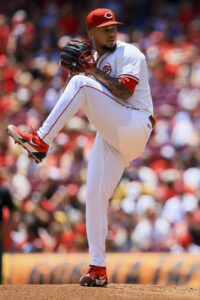
Montas, 31, gives the Brewers a veteran arm to plug into a rotation that’s been decimated by injury, although the big right-hander isn’t having anywhere close to his best season. The longtime A’s hurler signed a one-year, $16MM contract after missing nearly the entire 2023 season due to shoulder surgery and hasn’t recaptured the form that established him as a quality big leaguer from 2019-22, when he logged 480 1/3 innings of 3.67 ERA ball with a 25.4% strikeout rate against a 7.2% walk rate.
Rather, the 2024 version of Montas is sitting on a 5.01 ERA with a diminished 19% strikeout rate against a 10% walk rate that stands as his worst since 2017. His 95.3 mph average fastball is down 1.5 mph from its 96.8 mph peak back in 2019, and Montas has seen a huge dip in swinging-strike rate, falling from a peak 13.7% to 10.4% this season.
It’s been an ugly season for Montas, but the Brewers also have a history of getting more out of pitchers than one would expect at first glance. They’ve gotten strong results from righties Colin Rea and Tobias Myers this season despite minimal to nonexistent track records from both. Milwaukee presumably has a plan to get Montas back into form, but it’s nevertheless a modest surprise to see them deal a former top prospect (Wiemer) within the division to effectively rent Montas for the final two months of the 2024 season.
That said, Wiemer’s inclusion in the deal speaks to the manner in which his stock has dropped over the past year-plus. Entering the 2023 season, he was regarded by some as one of the sport’s top-100 prospects. However, the 2020 fourth-rounder stumbled through his first taste of the majors last year, hitting just .204/.283/.362 in 410 plate appearances. Wiemer pounded 13 homers and swiped 11 bags but also struck out in just under 29% of his plate appearances. He’s also shown glaring platoon splits in limited big league action, slashing .263/.290/.481 against lefties but registering a woeful .169/.271/.281 slash against fellow righties. Wiemer’s power has been missing in action this season in Triple-A Nashville, where he’s hit .242/.387/.358 with only three homers in 253 plate appearances.
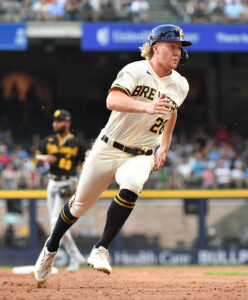
Wiemer’s platoon splits suggest that he could at the very least be a useful part-time player, and he’s also graded out exceptionally well in the outfield. In 1095 innings across all three outfield spots — primarily center — he’s been credited with six Defensive Runs Saved, seven Outs Above Average and a 5.8 Ultimate Zone Rating. Statcast pegged him in the 93rd percentile of MLB outfielders in terms of range and 96th percentile in terms of value generated with his arm.
If nothing else, Wiemer has the look of a short-side platoon fourth outfielder. He’s in the second of three option years and is under club control through at least the 2029 season. The Reds will hope there’s some more in the tank, but pulling a controllable MLB-ready outfielder — even one in the midst of a down season — in exchange for the rental of a struggling veteran starter had some understandable appeal for Cincinnati.
The Reds will also pick up their own veteran rental in the deal. The 31-year-old Junis is on a one-year, $7MM contract that contains a mutual option for the 2025 season. He’s spent most of the year on the injured list but returned in June and has a 2.42 ERA in 26 innings, working primarily as a long reliever. He’s fanned 18.8% of his opponents against a 5% walk rate. Had Junis been healthy this year, he might’ve gotten a look in the rotation, but the Brewers must not be bullish on his chances of holding up in that role. He hasn’t worked more than three innings since returning from the injured list.
Junis gives the Reds an experienced swingman who could potentially start some games or at least serve as a bulk option behind an opener. His inclusion in the swap also adds something of a financial counterweight; Montas is owed $4.7MM of his $14MM salary still, plus the $2MM buyout on a $20MM mutual option for next season. Junis is still owed $1.35MM of his $4MM salary plus a $3MM buyout on his $8MM mutual option. (Mutual options, it should be noted, are generally accounting measures and are almost never exercised; it’s been about a decade since the last time a player and team both agreed to exercise a mutual option.)
The Brewers are reportedly still sending about $1MM to the Reds in the deal to offset the gap in the option buyouts. In total, Milwaukee is taking on about $3.35MM in extra expenses in order to facilitate the trade.
Robert Murray of FanSided first reported the Brewers were acquiring Montas. MLB.com’s Mark Feinsand reported Junis and Wiemer were headed back to Cincinnati. Feinsand reported the cash considerations.
Yankees, Pirates, Astros In The Mix For Yandy Diaz
9:38pm: In addition to the Yankees, both the Pirates and Astros are engaged with the Rays on Diaz, reports Cuban journalist Francys Romero.
Both teams make some sense for Diaz, though the Astros’ fit is clearer and more straightforward. Houston released Jose Abreu earlier this summer and has received a middling .232/.316/.354 output from Jon Singleton in his stead. The ‘Stros already depleted the top end of a thin farm to acquire Yusei Kikuchi earlier tonight, however, making it tougher for them to win any kind of bidding war for a player of note.
The Pirates’ need at first base has quieted as they’ve enjoyed a resurgence from Rowdy Tellez since the calendar flipped to June. The lefty slugger touts a .331/.370/.595 line over his past 135 plate appearances. That said, Tellez has notable platoon splits in his career, and Diaz could also log time at both third base and designated hitter — particularly if the Bucs are comfortable playing Andrew McCutchen in the outfield more frequently. (Notably, outfielders Joshua Palacios and Ji Hwan Bae both exited tonight’s game with injuries.) More than anything, Pittsburgh simply needs more offense, so acquiring a quality hitter like Diaz and sorting out the playing time later has its own merits, even if the positional fit is less clean with Tellez’s recent hot streak and a franchise icon (McCutchen) serving as a near-everyday designated hitter.
8:35pm: The Yankees have been active in just about every facet of the trade market over the past week. They’ve landed Jazz Chisholm Jr. from the Marlins, looked into big-name starters like Giants lefty Blake Snell and Tigers righty Jack Flaherty, and simultaneously been gauging interest in lefty Nestor Cortes. Among the team’s other targets is Rays infielder Yandy Diaz, per The Athletic’s Brendan Kuty. The Yankees were also involved in the bidding for Isaac Paredes before he was traded to the Cubs, Kuty adds.
Adding some infield help makes good sense for the Yankees, who have Anthony Rizzo on the injured list while veterans Gleyber Torres and DJ LeMahieu have struggled throughout the season. Utilityman Jon Berti, acquired just prior to Opening Day, is on the injured list. Versatile Oswaldo Cabrera has faded after a hot start. Rookie Ben Rice has shown some power but entered play Monday hitting .196 with a .291 OBP (he’s since homered and bumped up those rate stats a bit). A brief look at veteran J.D. Davis didn’t work out.
Bringing Diaz aboard would give the Yankees an affordable veteran who can handle both infield corners, though he’s primarily played first base in recent seasons. The 32-year-old Diaz got out to a dreadful start in 2024 but turned things around emphatically after a slow first month. His season-long .270/.326/.397 line is more solid than it is eye-catching, but setting aside an uncharacteristic slump to begin the season, Diaz has turned in a robust .296/.348/.452 slash over a sample of just under 300 plate appearances. His superlative bat-to-ball skills have been on full display, as Diaz has fanned in a mere 13.7% of his plate appearances during that stretch and walked at a 7.5% clip. That walk rate is slightly below average, but Diaz has an 11.5% career mark in that regard.
Diaz’s approach is a particularly good fit with Yankee Stadium. Although he’s a right-handed hitter, he hits the ball to the opposite field at a hearty 30.3% rate — more than all but 16 hitters in baseball (min. 300 plate appearances). Diaz is batting .333 and slugging .505 when he goes the other way with the ball — numbers that would presumably tick up when playing half his games with that ever-alluring short right-field porch in the Bronx.
Diaz is in the second season of a three-year, $24MM contract. He’s earning $8MM on the year and is owed $10MM in 2025. There’s a $12MM club option for the 2026 campaign on the contract as well, which does not have a buyout. That backloaded contract is relatively steep for the Rays but far more palatable for the Yankees, even with their luxury-tax status. The Yankees are a third-time offender in the top tier of penalization, meaning they’d pay a 110% tax on the AAV of any contracts they add to the books. That creates some short-term pain, perhaps, but Diaz’s deal is more affordable than many free-agent options would be and the fact that he’s locked up through ’26 makes him an appealing multi-year option.
Cardinals Acquire Fedde, Pham; Dodgers Acquire Edman, Kopech In Three-Team Deal With White Sox
What’s a trade deadline without a convoluted three-team swap? The Cardinals, White Sox and Dodgers have announced a three-team, eight-player deal (possibly including up to 10 players) that breaks down as follows:
- Cardinals receive: right-hander Erick Fedde, outfielder Tommy Pham (both from White Sox), PTBNL or cash (from Dodgers), cash (from White Sox)
- Dodgers receive: right-hander Michael Kopech (from White Sox), infielder/outfielder Tommy Edman (from Cardinals), right-hander Oliver Gonzalez (from Cardinals)
- White Sox receive: infielder/outfielder Miguel Vargas, minor league infielder Alexander Albertus, minor league infielder Jeral Perez, PTBNL or cash (all from Dodgers)
It’s a massive exchange of veteran names that’ll have significant postseason implications for a pair of National League contenders. The Cardinals, in need of rotation help and a right-handed bat, checked two boxes with today’s swap, while the Dodgers added some needed positional versatility to help cover multiple weak spots in the lineup and a hard-throwing reliever with an extra season of club control.

Starting with the Cardinals, they’ll bolster their starting staff not just this season but also in 2025. Fedde, a former first-round pick and top prospect with the Nationals, flamed out in five seasons here in MLB before heading to the KBO’s NC Dinos for one year. He spent the 2023 season in South Korea, added a splitter and changed the shape of his breaking ball, and dominated KBO opponents en route to an MVP Award. He returned to MLB on a two-year, $15MM deal with the White Sox and has immediately established himself as a new and highly improved pitcher.
In 121 2/3 innings for the ChiSox, Fedde has pitched to a sharp 3.11 ERA. His 21.5% strikeout rate is shy of league-average by one percentage point, but his 6.8% walk rate is strong and his 44.7% grounder rate is also a bit better than average. He’s avoided hard contact (88.1 mph average exit velocity, 36% hard-hit rate) and kept opponents off balance with a four-pitch mix including a cutter, sinker, slider and split-changeup.
Fedde solidifies the back of a veteran Cardinals rotation that has been without lefty Steven Matz (back strain) since late April. The Cards have been relying on righty Andre Pallante to help patch things over, and while he’s been a godsend in that role (3.42 ERA in nine starts), the 25-year-old is also already just four innings shy of his 2023 total and can be a vital piece in the bullpen as well.
The addition of Fedde will prove vital for a Cardinals club that only had three starters signed through the 2025 season as well. Sonny Gray is being paid $25MM annually from 2024-26, while Miles Mikolas is owed $20MM next year. Matz will be in the fourth and final season of his own $44MM contract next year, but his ongoing health troubles make it tough to bank on him. The Cardinals hold club options over veterans Lance Lynn and Kyle Gibson, but neither is a lock to be picked up. Fedde, owed $7.5MM this year and next, gives the Cardinals some long-term stability at a highly affordable rate.
In addition to their desired rotation upgrade, the Cards will get the right-handed bat they’ve been seeking. It’ll come in the form of a reunion with Pham, whom they originally selected in the 16th round of the 2006 draft. Pham made his big league debut with the 2014 Cardinals and spent the next three-plus seasons in St. Louis before being traded to the Rays in a deal that brought Genesis Cabrera and Justin Williams back to the Cardinals.
Pham, now 36, has since played for six additional teams. The Rays traded him Padres after two seasons, and he’s since signed free-agent deals with the Reds, Mets and White Sox — getting traded at the deadline in three consecutive seasons. Pham has remained productive at the plate even as he’s become a year-to-year mercenary in his mid-30s. He slashed .256/.328/.446 between the Mets and D-backs in 2023 and owns a .266/.330/.380 output in 297 plate appearances with the White Sox.

Pham won’t receive everyday at-bats in his return to Busch Stadium, but Pham’s hefty .255/.377/.471 line against lefties will make him a useful part-time player for manager Oli Marmol. He’ll make for a nice platoon partner for glove-first center fielder Michael Siani (with Pham presumably taking over in left field and Lars Nootbaar manning center against southpaws).
In order to open a 40-man roster spot, the Cardinals designated catcher Nick Raposo for assignment. The 26-year-old signed with the Cards as an undrafted free agent after the truncated five-round draft in 2020. He was selected to the MLB roster earlier this summer to help account for some catching injuries, but he didn’t get into a big league game. He’s hitting .193/.251/.349 in Triple-A this season but turned in a more encouraging .241/.321/.386 slash last year between Double-A and Triple-A. The Cards could trade him before tomorrow’s deadline, and if not, he’ll be placed on outright waivers.
That the Cardinals were able to acquire both Fedde and Pham while only surrendering Edman and a 17-year-old they just signed as an international free agent earlier this year is somewhat remarkable. It’s a nice feather in the cap of president of baseball operations John Mozeliak, general manager Mike Girsch and the rest of the St. Louis baseball ops staff. The Cards added two big league contributors to a contending club and did so not only without sacrificing any prospects — but without sacrificing anyone who’s contributed to their second-place team at any point this season.
That’s not to denigrate Edman as a player, of course — far from it. The switch-hitting 29-year-old is as versatile as he is talented when healthy, and he’ll presumably be healthy enough to join the Dodgers in short order. Edman hasn’t played this season due to a longer-than-expected recovery process from offseason wrist surgery and an ankle sprain he suffered while rehabbing that wrist. Edman has played four games with the Cardinals’ Double-A affiliate on a minor league rehab assignment and figures to now continue his rehab work in the Dodgers’ system. He’ll have about two more weeks of rehab window before he needs to be activated, though Los Angeles can certainly do so sooner if they see fit.
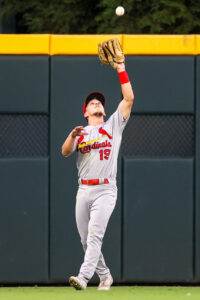
Edman has spent four-plus seasons in the big leagues, playing second base, shortstop, third base and all three outfield positions. He rather incredibly grades out as an above-average defender at each of those positions, per Statcast and Defensive Runs Saved alike. That jack-of-all-trades skill set is emblematic of the type of player the Dodgers try to roster as often as possible. Edman, once healthy, will give L.A. an option at shortstop or second base, helping to cover for the loss of Mookie Betts. Once Betts returns, Edman can either play shortstop (with Betts moving to second base), second base (with Betts at short and Miguel Rojas in a utility role) or anywhere in the outfield (with Rojas and Betts handling middle infield duties).
Beyond the defensive wizardry, Edman has proven himself a capable hitter. He’s yet to recreate the terrific .304/.350/.500 line he posted as a Cardinals rookie in 2019, but he’s a career .265/.319/.408 hitter in 2425 plate appearances. He’s not a big home run threat but has hit between 11 and 13 homers in all four of his full big league seasons (plus five homers in the shortened 2020 campaign). He doesn’t walk especially often (6.2%) but also rarely strikes out (16.5%). On top of that, Edman offers 88th percentile sprint speed (per Statcast) and has swiped 106 bags in 123 attempts at the MLB level (86.2%).
Edman signed a two-year, $16.5MM contract in the 2022-23 offseason, buying out his final two seasons of arbitration eligibility. He’s earning $7MM this season and another $9.5MM next year. The Dodgers are a third-time luxury tax offender in the top tier of penalization, so they’ll pay a 110% tax on the average annual value both of Edman’s contract and of Kopech’s one-year deal with the club.
Onto Kopech, the 28-year-old former top prospect gives the Dodgers one of baseball’s hardest-throwing relievers for the remainder of this year and all of 2025. He’ll be arbitration-eligible this winter and owed a raise on this year’s modest $3MM salary.
The White Sox have used Kopech both as a starter and reliever, but lackluster command of his dynamic arsenal has undercut his effectiveness in both roles. He’s been used exclusively out of the ‘pen in 2024 and saved nine games while pitching 43 2/3 innings of 4.74 ERA ball. The earned run average isn’t going to draw much fanfare, but Kopech has averaged a blistering 98.5 mph on his four-seamer, fanned 30.9% of his opponents and generated a gaudy 14.1% swinging-strike rate. He’s been plagued by a 12.6% walk rate and 1.65 HR/9, but Kopech has shown flashes of potential as a powerhouse, shutdown reliever.
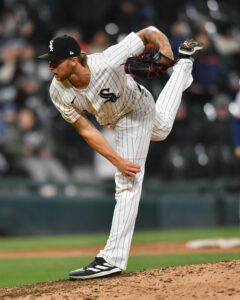
Kopech is currently in the midst of his best stretch of the season. After getting blown up for four runs back on July 7, he’s rattled off 5 2/3 shutout innings with an 8-to-1 K/BB ratio. The Dodgers, who have a knack for maximizing pitching performances, are surely thrilled to get their hands on a pitcher with Kopech’s blazing heater and hard slider. Whether they can coax the level of performance from him that has long seemed dormant in Kopech’s talented but inconsistent right arm remains an open question, but if they’re able to do so, he’s a high-octane weapon who can take on a leverage role in a bullpen that has seen closer Evan Phillips struggle of late.
Los Angeles will also pick up the 17-year-old Gonzalez, who’s not considered to be among the Cardinals’ top-ranked prospects but did command a relatively notable $400K signing bonus out of Panama just seven months ago. The 6’4″, 200-pound righty has pitched 21 1/3 innings for the Cardinals’ Rookie-level Dominican Summer League affiliate and posted a 4.22 ERA while punching out 28.6% of his opponents against a 7.7% walk rate.
Turning to the rebuilding White Sox’ end of the deal, their return is headlined by Vargas, who’ll presumably step right onto the big league roster. The 24-year-old ranked among the sport’s top 100 prospects heading into the 2023 season but has fallen down the depth chart in Los Angeles after struggling to carry his excellent minor league production over to the majors. Vargas has appeared in 129 big league games and taken 434 plate appearances, but he’s a .201/.294/.364 hitter in that time.
Rough as those numbers are, Vargas has continued to absolutely pummel Triple-A pitching this season. He’s hitting .290/.440/.556 in Oklahoma City and has a career .297/.412/.512 batting line there in 996 plate appearances. He’s played third base, second base, first base and left field in his career, with the bulk of his experience coming at third base and second base. Vargas has regularly been blocked by more veteran, more expensive players at those positions but should get a full run at third base or second base with his new team.
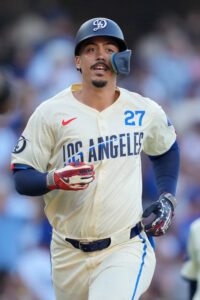
Some Sox fans may bristle at the notion of a former top prospect headlining this deal, rather than a current one, but Vargas still has five seasons of club control remaining and has already gotten his feet wet in the majors. He’s an on-base machine who’s walked at an impressive 11.1% clip even while struggling in the big leagues and has fanned in a below-average 20.7% of his MLB plate appearances. It’s not hard to envision a scenario where he improves on both of those rate stats as he gets more big league experience and begins to solidify himself as a bona fide MLB-caliber hitter.
Joining Vargas in the White Sox’ system will be Albertus and Perez: both 19-year-old infielders who signed with the Dodgers as international free agents in 2022 (Albertus out of Aruba, Perez out of the Dominican Republic). Baseball America ranked both players inside the Dodgers’ top-20 prospects heading into the 2024 season, and both currently reside in that same range on MLB.com’s updated list of the top 30 Dodgers prospects.
Albertus has split the season between the Dodgers’ Rookie-level Arizona Complex League affiliate and Class-A affiliate. He tore through the former at a .342/.479/.459 pace with more walks (18.9%) than strikeouts (14%) and is hitting .229/.317/.329 in 82 plate appearances against more advanced pitching. Baseball America credits him with a plus hit tool and the potential for average power, calling him a bat-first infield prospect who could see regular playing time across multiple positions. MLB.com lauds him for having one of the most disciplined approaches in a deep Dodgers system and calls him a potential regular at second or third.
Perez has spent the entire season in Class-A and carries a hearty .264/.380/.420 batting line with 10 homers in 350 trips to the plate. He’s walked at a huge 13.7% clip against a 22% strikeout rate despite being just over two years younger than the average player in the league. Both BA and MLB.com note that he lacks a true plus tool but is solid across the board. Like Albertus, he draws praise for an advanced approach at the plate that’s well beyond his years. Perez has good contact skills and the ability to play multiple positions.
For a White Sox club that is often characterized by low-OBP, all-or-nothing hitters, the focus on bringing in three infielders with huge on-base ceilings feels like a rather targeted focus. None of the three players are going to jump to immediately land among the top 50 prospects in the game — Vargas isn’t even prospect-eligible anymore — but they all have a relatively similar feel and offer a potential glimpse at the type of hitters that rookie GM Chris Getz would prefer to see populating his roster in future seasons.
KPRC-2’s Ari Alexander reported Sunday night that the Sox, Dodgers and Cards had engaged in some level of discussions on a three-team deal involving Fedde and Edman. Daryl Van Schouwen of the Chicago Sun-Times reported Monday that a three-team deal was nearing the finish line. Ken Rosenthal and Katie Woo of The Athletic reported that Fedde would go to the Cardinals and Edman to the Dodgers. USA Today’s Bob Nightengale first reported that Vargas, Perez and Albertus were headed to the White Sox. FanSided’s Robert Murray reported that Pham was going to the Cardinals. Derrick Goold of the St. Louis Post-Dispatch reported that the Cardinals were giving up an low-level minor leaguer.
Yankees Discussing Nestor Cortes In Trade Talks
The Yankees are firm deadline buyers, but they’ve also been discussing left-hander Nestor Cortes with other teams, reports Jon Heyman of the New York Post. He adds an unexpected name to the starting pitching market — presumably one for whom the Yankees would prefer to add big league talent. (Heyman adds that the Yankees have some interest in Cardinals utilityman Tommy Edman but does not go so far as to suggest the two sides have discussed a Cortes-for-Edman swap.)
On the one hand, it’s always a bit surprising to see a win-now club of this nature discuss an active member of its rotation in trades. On the other, the Yankees went down a similar path just two years ago with another left-hander, Jordan Montgomery, when they traded him to the Cardinals in exchange for center fielder Harrison Bader.
At the time, Montgomery was a quality fourth option in a deep Yankees rotation but not one who was going to make the team’s postseason rotation. There’s similar context here. The Yankees could go with a postseason rotation including a combination of Gerrit Cole, Carlos Rodon, Marcus Stroman, Luis Gil and/or a returning Clarke Schmidt. There’s also the possibility that GM Brian Cashman adds a more impactful arm to the group before tomorrow’s deadline.
Cortes, 29, is in the midst of a generally solid season but has floundered of late. He’s pitched to a 4.13 ERA in 124 1/3 innings, striking out 22.5% of his opponents (right on par with league average) and issuing walks at a tiny 5% clip along the way. However, he’s run into a rough patch of late, failing to complete five innings in each of his past three starts and serving up a total of 15 runs over the course of 13 2/3 innings during that mini-slump.
Like Montgomery in 2022, Cortes is affordable ($3.95MM salary) and controlled for one additional year. A new team would be able to retain him for the 2025 season via arbitration. He’ll be owed a raise of some note but should still see his salary fall well shy of $10MM.
This hasn’t been Cortes’ best season, but he’s solidified himself as a quality big league starter — and taken a unique path to getting there. The Orioles selected Cortes out of the Yankees’ system in the 2017 Rule 5 Draft but designated him for assignment that April and returned him to the Yankees. Just 18 months later, Cortes was designated for assignment by the Yankees, this time getting traded to the Mariners for international bonus allotments. Things didn’t pan out in Seattle, and Cortes returned to the Yanks as a minor league free agent in the 2020-21 offseason.
Since returning to the Bronx, Cortes touts a 3.38 ERA in 439 innings. He’s entrenched himself into the New York rotation, but with their control over the lefty dwindling and a solid collection of alternative options on the big league roster, flipping Cortes for some big league help in the infield — be it Edman or any number of other infield options presently on the market — or an outfielder who could push Jazz Chisholm Jr. to second base more regularly could work to the Yankees’ benefit.
All that said, it’d be somewhat surprising if the Yankees moved Cortes and didn’t backfill the rotation with a different addition. Cole has only made seven starts after spending the first two months of the season on the injured list with an elbow issue. Gil looks to have recovered from a rough patch he hit in June, but he’s up to 107 1/3 innings after pitching only four innings last year while mending from Tommy John surgery. Schmidt has been on the injured list since late May due to a lat strain. Rodon, like Gil, hit a rough spot in June and has righted the ship of late — but his track record in New York is spotty, to put things lightly. Stroman’s results have been solid (3.64 ERA) but he’s sporting career-worst strikeout, walk and ground-ball rates (leading to a 5.22 FIP and 4.85 SIERA).
There’s some sense to moving Cortes to address needs in another area — but only if they’re also adding a starting pitcher who’d more concretely slot into a playoff rotation and make up the remainder of Cortes’ innings for the balance of the regular season. That’s a tricky tightrope to walk, but it’s one the Yankees have navigated in the very recent past.
Reds Acquire Ty France
The Reds announced Monday that they’ve acquired first baseman Ty France and cash from the Mariners in exchange for minor league catcher Andruw Salcedo. Seattle designated France for assignment last week. Cincinnati also placed catcher Austin Wynns on the 10-day injured list due to a lat strain, selected the contract of catcher Eric Yang from Triple-A Louisville and transferred righty Graham Ashcraft to the 60-day IL to open a 40-man spot. Their 40-man roster is now at capacity. Seattle is reportedly sending around $1.29MM to cover part of France’s remaining salary.
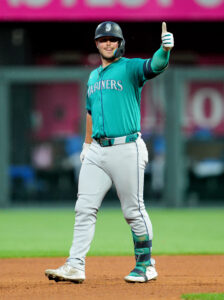
Entering the season, the notion of the Reds acquiring a first baseman would’ve seemed silly. Cincinnati had an infield surplus and a particular glut of first basemen, with Christian Encarnacion-Strand, Spencer Steer and offseason signee Jeimer Candelario all standing as options at the position. However, Encarnacion-Strand’s season ended early due to wrist surgery, while Steer has seen significant time in the outfield. Candelario has spent much of the year at third base but has been at first base more frequently since Noelvi Marte returned from an 80-game PED suspension. France figures to slide in at first base — certainly against left-handed pitching — while Candelario could see increased time at designated hitter.
Originally drafted by the Padres, France went to Seattle alongside Andres Munoz in the 2020 trade that sent catcher Austin Nola from Seattle to San Diego. He broke out immediately with the M’s and for several seasons was one of their most productive hitters — even earning a well-deserved All-Star nod in 2022. From 2020-22, France posted a combined .285/.355/.443 batting line. He belted 42 homers despite playing in the game’s most pitcher-friendly park, adding 68 doubles and three triples along the way. He didn’t walk much (6.5%) but also went down on strikes in only 16.7% of his plate appearances.
France’s bat took a step back in 2023, when he hit .250/.337/.366 with a dozen homers. His bat-to-ball skills remained strong, however, and his batted-ball metrics remained in line with those that he’d posted during that strong 2020-22 run. A dip in his homer-to-flyball rate was at least partially to blame, and the Mariners tendered France a contract despite the down year, understandably betting on his track record and the ostensibly fluky nature of his ’23 downturn.
The rebound the M’s had expected never manifested, unfortunately, and this year’s struggles are more alarming. France’s contact skills have dipped noticeably. After making contact on 91.2% of pitches in the strike zone in the three preceding seasons, his contact rate on balls in the zone has dropped to 87%. He’s chased off the plate less but also swung less in general as well, dropping from a 52.5% swing rate to a 48% mark. As he’s gotten more passive and made contact in the zone less often, pitchers have attacked him more (58% first-pitch strike rate in 2021-23; 61.2% in ’24). The change in approach hasn’t worked out, as France’s strikeout rate has spiked to a career-worst 24.4%.
The Reds, in dire need of an offensive jolt, will send a low-level catching prospect to the Mariners in hope of turning France around. He’ll move from one of the worst settings for a hitter (Seattle’s T-Mobile Park) to one of the best (Cincinnati’s Great American Ball Park) — and that swap alone should help France in the power department. The Reds will hope that the change in scenery and some new coaching input and new data from their front office can help France get back to his prior form. They’ve received an awful .215/.266/.363 slash from their first basemen this season, so France will have a low bar to clear when it comes to providing an upgrade..
If France is indeed able to return to form — or at least more closely approximate his peak form — he’ll be a multi-year option for Cincinnati. He’s not currently signed to a contract for the 2025 season but is arbitration-eligible one final time this winter. The Reds would owe him a raise on this year’s $6.775MM salary, though his early struggles in Seattle should tamp down the weight of any salary increase and keep him shy of $10MM. If not, France would be a trade or (likelier) non-tender candidate in the offseason.
As for the Mariners, they’ll bring in a 21-year-old catcher who’s played parts of four seasons in the Reds’ system. Salcedo carries a .246/.347/.330 batting line in a still-small sample of 98 professional games. He’s fanned in 27.5% of his plate appearances but also walked at a hearty 11.4% clip. He’s not regarded among the Reds’ top prospects, but that sort of low-level lottery ticket return is to be expected for a veteran player on a notable salary. In the meantime, they’ll continue to give regular playing time at first base to top prospect Tyler Locklear while also scouring the market for an additional bat to add to the mix after acquiring Randy Arozarena from the Rays last week.
Ronald Blum of the Associated Press reported the specifics of the cash considerations.
Padres Hoping To Add Starter, Have Discussed Jack Flaherty With Tigers
The Padres fortified their bullpen with their weekend acquisition of righty Jason Adam from the Rays, but they’re not done yet. Dennis Lin and Chad Jennings of The Athletic report that San Diego is hoping to add “at least” one starter and is still open to bringing in additional relief help. They’ve had discussions with the Tigers about Jack Flaherty, per the report, and have indeed at least checked in on a potential Blake Snell reunion (as was reported last night).
Flaherty, 28, stands as one of the likeliest trade candidates on the market. He’s on a one-year, $14MM contract with a Tigers club that faces a 12-game deficit in the AL Central and a 5.5-game gap in the chase for the final AL Wild Card spot (with four teams to leapfrog in that hunt). The Tigers could hold onto Flaherty and make him a qualifying offer — he’s a lock to reject and at least net them a draft pick it after his brilliant 2024 rebound — but the demand for pitching should allow Detroit to extract a better package than that potential comp pick.
In 106 2/3 innings since signing with Detroit, Flaherty boasts a 2.95 ERA with an exceptional 32% strikeout rate and an outstanding 4.6% walk rate. Among the 80 pitchers with at least 100 innings pitched in 2024, Flaherty has the fifth-best strikeout rate, the seventh-best walk rate and the second best differential between those two marks (trailing only White Sox ace Garrett Crochet). He’s also keeping the ball on the ground at a solid 43% clip, and this year’s 93.5 mph average fastball is his best since 2021. Flaherty also has the sixth-best swinging-strike rate among those 80 pitchers, trailing only Crochet, Cole Ragans, Tarik Skubal, Dylan Cease and Chris Sale — an impressive collection of some of the game’s top arms.
The Friars’ once-outstanding farm system has been thinned over the years by president of baseball operations A.J. Preller’s insatiable appetite for marquee trades. San Diego recouped some of the value they lost when trading five top prospects for Juan Soto in the offseason when they traded their final year of control over Soto to the Yankees. However, the headline prospect in that trade never threw a regular season pitch in the Padres organization; right-hander Drew Thorpe was instead packaged with three other farmhands in a trade to acquire Dylan Cease during spring training. Preller has since further thinned the system with trades for Luis Arraez and the aforementioned Adam.
Catcher Ethan Salas and young shortstop Leodalis De Vries still rank among the sport’s elite prospects, but all indications to this point have been that both are close to untouchable. Lin recently wrote a separate piece on that subject, and veritably any report connecting the Padres to a high-end trade target has suggested that Salas and De Vries aren’t expected to be in play. That’s likely all the more true when it comes to a rental like Flaherty (or a high-priced star with an opt-out clause, like Snell).
The Padres have been without right-hander Yu Darvish for weeks as he tends to an undisclosed personal matter. He’s on the restricted list indefinitely. Right-hander Joe Musgrove has been out since May due to a bone spur in his elbow and is on the 60-day injured list. They currently have Dylan Cease, Michael King, Matt Waldron and Randy Vasquez in the rotation, but Vasquez has spent much of the season flirting with a 5.00 ERA while King has already set a new career-high for innings pitched. Adding Flaherty or another arm to the mix would both help to bridge the gap until Musgrove and/or Darvish are ready to return and also give the Padres another impact arm for a potential postseason rotation. A theoretical group fronted by Cease, Flaherty, Musgrove and Darvish would be formidable, assuming all four are healthy and active.
Rangers Trade Michael Lorenzen To Royals
The Rangers announced Monday morning that they’ve traded right-hander Michael Lorenzen to the Royals in exchange for minor league lefty Walter Pennington. Jon Heyman of the New York Post reported shortly before the announcement that Kansas City had been showing interest in Lorenzen. Pennington is on the 40-man roster, so no corresponding moves were necessary.

A trade of Lorenzen isn’t a signal that the third-place Rangers are punting on their season. There’s been plenty of talk over the past couple weeks that with Max Scherzer, Dane Dunning, Tyler Mahle and eventually Jacob deGrom all getting healthy, Texas could move an arm from its current rotation. Lorenzen, playing on an affordable one-year contract and slated to become a free agent at season’s end, has stood as the most obvious of the bunch to change hands. With Lorenzen headed to Kansas City, the Rangers’ rotation will include Scherzer, Nathan Eovaldi, Jon Gray, Andrew Heaney and perhaps Dunning — although Mahle is on the cusp of wrapping up a minor league rehab assignment and could take that fifth spot.
Lorenzen, 32, has pitched 101 2/3 innings with the Rangers and turned in a very solid 3.81 earned run average, although the rest of his numbers aren’t as encouraging. Lorenzen’s 17.9% strikeout rate is well below the 22.3% league average, while his 11.5% walk rate is considerably higher than the 8.2% league average. He’s kept the ball on the ground at a nice 42.3% clip, but Lorenzen has also benefited from a .243 average on balls in play and 80.7% strand rate that are both considerably better than his career marks of .279 and 74.2%. Some regression on one or both is likely.
Even with some regression, however, Lorenzen is a solid enough back-end starter. This year’s numbers are a decent approximation of who he’s been since reaching free agency three years ago and pursuing a career as a starting pitcher after previously spending five seasons in the Reds’ bullpen. Lorenzen posted a 4.20 ERA, 18.9% strikeout rate and 8.8% walk rate in 250 2/3 innings between the Angels, Tigers and Phillies over the 2022-23 seasons. Add in this year’s work and he’s at a 4.09 ERA with strikeout and walk rates that are worse-than-average but not egregiously so.
That’s a good indication of what to expect moving forward for the Royals, and Lorenzen has shown some flashes of higher output at times. His first two starts following a trade to the Phillies last summer will always be memorable for Phils fans; he tossed eight innings of two-run ball in his team debut and followed it up with a no-hitter against the Nationals his next time out, in his home debut at Citizens Bank Park. However, Lorenzen faded down the stretch, as he was pushing to a career-high innings workload (and also tossed a career-high 124 pitches in that no-hitter). The Phils moved him to the bullpen late in the season.
Kansas City’s rotation is generally full, with Cole Ragans, Seth Lugo, Brady Singer, Michael Wacha and Alec Marsh representing a sound one through five. Marsh has been hit hard after a solid start to the season, however, yielding a 6.37 ERA over his past 10 starts. He’s had a few solid outings mixed in throughout that stretch, but since May 27 he’s given up at least three runs in eight of his 10 starts (and at least four in six of them).
Lorenzen could step into that rotation spot, perhaps pushing Marsh to the bullpen or even to Triple-A Omaha. Lorenzen has already pitched enough innings to boost his $4.5MM base salary to $5.5MM, and he’d earn bonuses of $300K, $350K, $400K and $450K for reaching 120, 140, 160 and 180 innings, respectively. The Royals could technically use Lorenzen in the bullpen — they just saw both John Schreiber and Hunter Harvey exit their most recent game due to injury — but that’d be somewhat of a surprising usage given that they traded a big league-ready reliever who’s in the midst of a terrific Triple-A season in order to acquire Lorenzen.

Pennington, 26, will join the Rangers and give them an immediate option out of the ‘pen. The Rangers haven’t been able to find a consistently effective lefty relief option this season, but Pennington could fit that bill. Undrafted in the shortened 2020 draft, the 6’2″, 205-pound southpaw signed out of the Colorado School of Mines — and earlier this season became just the second player from that school to ever reach the majors (and the first since Roy Hartzell back in 1906).
The Royals called Pennington up for a brief debut, but he threw just two-thirds of an inning before being sent back down to Omaha. He’s been lights-out with the Storm Chasers this season, pitching to a pristine 2.26 ERA with a 32.9% strikeout rate, an 8.3% walk rate and a 52.6% ground-ball rate in 59 2/3 frames. Pennington sits 92-93 mph with a sinker, 89-90 mph with his cutter and 83-85 mph with a slider, rounding out a trio of primary offerings. More than half of his pitches this year have been sliders, and he’s held both lefties and righties in check along the way, yielding near-identical batting lines of .198/.250/.286 (to righties) and .156/.262/.278 (to lefties).
Pennington is in the first of three minor league option years. He can’t reach a full year of big league service in 2024, meaning the Rangers will control him through the 2030 season at the very least (although future optional assignments could push that free agent trajectory back even further). He makes for a potential long-term option in the Texas bullpen — a nice pull for a rental starter whose spot in the rotation was in jeopardy given the sheer volume of veteran arms the Rangers have coming back from injury.