
Orioles Remove Mychal Givens From Closer’s Role
Orioles reliever Mychal Givens turned in his fourth straight rough outing Sunday in Colorado, where he walked two of the three batters he faced en route to a blown save. In light of Givens’ issues over the past few days, the Orioles are planning on using him in lower-leverage situations for the time being, manager Brandon Hyde told Steve Melewski of MASNsports.com and other reporters Monday. Hyde did not name a game-ending replacement for Givens.
Givens’ ERA sat at a solid 2.75 on May 17, when he posted his sixth straight scoreless outing. But the number’s now up to 5.56 after a nightmarish stretch in which Givens surrendered eight earned runs on seven hits, including three home runs, and six walks in a mere three innings. Baltimore lost all four of those games, during which Givens suffered a whopping three defeats and recorded a pair of blown saves.
The Orioles are in a rebuild and on pace to finish last in the majors for the second year in a row. As such, it doesn’t really matter who closes for the team. However, it is important for Givens to get back on track. On a club that doesn’t have many trade chips, Givens entered the season as someone who could net the O’s a decent package in a deal.
Cognizant of Givens’ value, the Orioles were reportedly listening to offers for the 29-year-old exactly one month ago. It wouldn’t have been surprising if he generated plenty of interest. After all, the right-hander combined for a 3.12 ERA/3.18 FIP with 10.42 K/9 and 3.36 BB/9 in 260 innings from 2015-18, totaling upward of 70 frames in each of the previous three years. He’s also cheap this season ($2.15MM salary) and under arbitration control through 2021.
Unfortunately for the Orioles and Givens, walks and home runs have plagued him across 22 2/3 innings in 2019. Givens’ BB/9 sits at 5.16 and his HR-to-fly ball rate is a bloated 25 percent. For comparison, he gave up HRs on a meager 8.4 percent of fly balls during his first four seasons. The uptick in dingers has come in spite of a career-best 46.4 percent groundball rate – a marked increase over his usual high-30s mark. Givens is also running personal-best swinging-strike and contact rates (14.4 percent, 69.6 percent), and his expected weighted on-base average against (.306) indicates there has been some poor fortune behind the .354 real wOBA hitters have mustered against him.
While Givens’ season hasn’t been devoid of encouraging signs, it’s obvious he’s going to have overcome his newfound control and gopher ball troubles in order to approach his previous levels. It doesn’t seem Hyde is pushing the panic button, as he said (via Melewski), “I think it’s just a command a confidence issue,” and added the Orioles “need Mike bad.”
Orioles Place Chris Davis On Injured List
The Orioles have placed first baseman Chris Davis on the 10-day injured list, according to an official team announcement. Right-handed pitcher Evan Phillips has been recalled from Triple-A to replace Davis on the active roster. Davis has been bothered by inflammation to his left hip.
Davis has not started a game since Thursday and last appeared for the Orioles on Friday, which might have been attributed to his recent struggles at the plate. However, it now appears that the lack of playing time was at least partly due to an injury.
The former slugger, who showed signs of a resurgence after his historic slump, has found that success sandwiched between bouts of poor performance; over his last ten games, Davis has struck out 22 times in 36 plate appearances, a frustrating development for a veteran who looked to have overcome some of the issues that held him hitless for the first 12 games of the season.
Evan Phillips, 24, is back with the big league team after a brief stint in the minor leagues. He has appeared in 11 games for the O’s, pitching 12 2/3 innings and striking out 16 batters against 10 walks.
Orioles Move Dan Straily To Bullpen
Righty Dan Straily is being shifted into the bullpen, the Orioles informed reporters including Roch Kubatko of MASNsports.com (via Twitter). It isn’t yet known who’ll step into his spot in the rotation.
This move wasn’t hard to see coming. The O’s added Straily for a low price at the outset of the year, with the idea that he’d help solidify the rotation. Unfortunately, that has just not happened.
While the 30-year-old has been a sturdy rotation piece for several years now, he has been drubbed in Baltimore. Over 34 2/3 innings, he carries a 9.09 ERA with just 18 strikeouts against 17 walks. Opposing hitters have already launched 14 long balls.
Straily is living outside of the zone (career-low 38.8%) in an effort to avoid that hard contact. He’s struggling to get swinging strikes (career-low 7.3%). Opposing hitters are putting the ball in the air against him more than ever before, with 20.6% of those flies leaving the yard.
While the O’s don’t have any particularly compelling replacement options, they are said to be browsing the market for pitching depth. If they can’t find a new arm quickly, they’ll need to look internally for at least one start. Just-claimed hurler Chandler Shepherd is one possibility. 40-man members Josh Rogers, Jimmy Yacabonis, and Luis Ortiz are also presently working at Triple-A. Southpaw Keegan Akin is there as well. He’s perhaps the most intriguing possibility, but would need a 40-man spot to be promoted.
Orioles Exploring Market For Rotation Depth
Although the Orioles are predictably at the bottom of the AL East as they embark on the first full season of their rebuild, the team’s front office is also looking at various ways to add some starting pitching depth, writes MASNsports.com’s Roch Kubatko. Alex Cobb and Nate Karns were recently moved to the 60-day injured list, while right-hander Dan Straily and David Hess have been hit particularly hard, leaving the club particularly thin at the moment.
Despite the struggles of Straily and Hess, manager Brandon Hyde stated that “this is what we have” in regard to the team’s current mix of starters. Hyde added that there are some pitchers in the minors who are generating some excitement among the team’s decision-makers but stressed the importance of not rushing a player at the expense of his development. Left-hander Keegan Akin, in particular, has had only nine starts in Triple-A (and barely more than 300 innings since being drafted).
Hyde also suggested that first-year GM Mike Elias and his staff are exploring other potential depth adds. “I know our guys are working hard to see what else is out there, also,” said Hyde. “I think we’re always keeping an eye on what’s going on around the league. “
As far as readily available rotation cadidates, though, there’s not much available in the way of players who’ve been designated for assignment. The Orioles themselves designated one potential starter for assignment yesterday in Yefry Ramirez and claimed another in Chandler Shepherd. The free-agent market has a few veterans still eyeing work. Baltimore isn’t in a position to add Dallas Keuchel, but James Shields reportedly threw for teams recently and Ervin Santana was cut loose by the White Sox not long ago.
A few options seem to hit the waiver wire every week, and while the O’s have passed on recently designated arms like Aaron Slegers (Rays) and Andrew Moore (Rays, Giants), Baltimore will still stand out as a decent speculative landing spot whenever a starting pitcher is designated for assignment. As the club with the game’s worst record, they’ll have first crack at any pitcher who hits waivers. For the time being, Straily and Hess will continue to pitch alongside Andrew Cashner, John Means and Dylan Bundy, but Cashner seems like an eventual trade candidate and the O’s will likely need additional arms to safeguard against further injuries.
Orioles Acquire Keon Broxton, Claim Chandler Shepherd
The Orioles have acquired outfielder Keon Broxton from the Mets and claimed righty Chandler Shepherd from the Cubs, per a club announcement. $500K in international signing bonus slots are headed to the Mets in the swap.
Those additions created a need for two 40-man slots. To do so, the team moved starter Alex Cobb to the 60-day IL and designated fellow righty Yefry Ramirez for assignment.
Broxton, 29, obviously drew some interest since it took a non-trivial trade return to add him. He’ll need to stay on the active roster since he’s out of options. It’ll be interesting to see whether the O’s give him an extended audition in center field. While the results just haven’t been there for Broxton at the game’s highest level, he also has not had much of a chance to get going since the 2017 campaign.
This year has been a wreck so far for Broxton, who saw action in 34 games but took only 53 plate appearances with the Mets. He struck out 22 times in that span while delivering just one extra-base hit. Broxton did still manage to swipe four bags and figures to be a strong contributor in the field and on the bases.
As for the 26-year-old Shepherd, he’s on the move again just days after being claimed by the Cubs from the Red Sox. The right-handed hurler has been hit exceptionally hard this year at Triple-A, allowing 33 earned runs on 53 hits (eleven of them long balls) in 29 2/3 innings. But he had previously been a solid performer in the upper minors. The O’s are in need of innings and may have some ideas for getting him sorted out.
In any event, the organization obviously preferred Shepherd to Ramirez, who has had his own struggles this year. In 10 1/3 MLB frames, Ramirez has issued nine walks against eleven strikeouts while coughing up eight earned runs. Though it had never been an issue in the minors, he also struggled with the free passes last year in the majors.
Orioles Select Josh Lucas
The Orioles announced Monday that they’ve selected the contract of right-hander Josh Lucas from Triple-A Norfolk. He’ll join the active roster in place of right-hander Yefry Ramirez, who was optioned to Norfolk last night. To make room on the 40-man roster, Baltimore transferred righty Nate Karns to the 60-day injured list.
Lucas, 28, joined the Orioles on a minor league deal last November and has already seen a bit of time with the team in 2019; he tallied 4 1/3 innings with a 4-to-1 K/BB ratio and a pair of earned runs allowed back in April. Lucas’ experience at the MLB level beyond that quick cup of coffee is limited, though he’s appeared in each of the past two big league seasons: with the Cardinals in 2017 and the Athletics in 2018. He’s tallied just 21 2/3 frames in that time, working to a 5.40 ERA with a 21-to-13 K/BB ratio and a promising 54.8 percent ground-ball rate. He’s allowed four runs on nine hits and a couple of walks with five strikeouts in 7 2/3 innings for the Orioles’ Norfolk affiliate since being outrighted there.
Karns has been on the 10-day injured list due to a forearm strain since April 9, and there’s no chance of a return in the short term now that he’s been moved to the 60-day IL. Karns was sent out on a minor league rehab assignment about two weeks after initially hitting the IL, but he pitched just 1 1/3 innings over a pair of rehab appearances before being shut down once again. He hasn’t appeared in a minor league game since that time. Karns, signed to a one-year deal worth $800K this winter, was the only players the Orioles signed to a Major League deal in the offseason. He missed the 2018 season as he attempted to work his way back from thoracic outlet surgery, but it seems he’s yet to get up to full strength.
Koji Uehara Retires
Veteran reliever Koji Uehara has retired, Jim Allen of the Kyodo News reports. The 44-year-old Uehara last pitched in the majors in 2017, after which he returned to his native Japan to join the Yomiuri Giants of Nippon Professional Baseball. It proved to be a full-circle move by Uehara, who began and ended his career with Yomiuri.
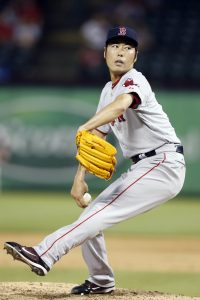
Uehara was often dominant as a starter for Yomiuri from 1999-2006 before mostly working out of the Giants’ bullpen from 2007-08. The right-hander then headed to the majors in 2009 when he signed a two-year, $10MM contract with the Orioles, who initially deployed him as a starter.
Uehara transitioned to the Orioles’ bullpen in 2010 and began a lengthy run as one of the majors’ most effective relievers. During a six-season, 324-inning span from 2010-15, Uehara’s pristine command helped him place first among relievers in two key categories – BB/9 (1.19) and K/BB ratio (9.56) – as well as seventh in ERA (2.08) and 19th in K/9 (11.42).
While Uehara’s major league excellence began with Baltimore, his tenure there was short-lived. The club traded him to the Rangers in July 2011 for reliever Tommy Hunter and a then-unproven slugger named Chris Davis, who later became the highest-paid Oriole ever and remains with the franchise today. Meanwhile, Texas clinched playoff berths in both of Uehara’s seasons with the team and won the American League the year it acquired him, though it wound up losing a classic seven-game World Series to the Cardinals.
Uehara returned to the World Series in 2013 with the Red Sox, who inked him to a one-year, $4.25MM contract prior to the season. It’s safe to say that deal ranks among the wisest the Red Sox have ever doled out, as it began a fruitful four-year union between the sides. Uehara was never greater than during his first year in Boston, where he logged 74 1/3 regular-season innings of 1.09 ERA ball and 12.23 K/9 against 1.09 BB/9. That brilliance carried into the playoffs, where Uehara earned ALCS MVP honors after combining for six shutout innings in a six-game victory over the Tigers. Uehara then totaled another 4 2/3 scoreless frames during the Red Sox’s World Series triumph over the Cardinals, whom he closed out in Game 6.
Although Uehara was never part of another title-winning team, he remained a quality reliever throughout his major league career – which concluded with a one-year stint with the Cubs. Across Baltimore, Texas, Boston and Chicago, the one-time All-Star produced 480 2/3 innings of 2.66 ERA ball with 10.7 K/9, 1.5 BB/9 and 95 saves, leading to upward of $50MM in earnings.
As great as Uehara was in the majors, he’s even more accomplished in his homeland. Uehara registered a 3.02 ERA and a 112-67 record over 312 appearances and 205 starts with Yomiuri, where he earned a slew of personal and team awards. MLBTR congratulates Uehara on two outstanding decades in pro baseball and wishes him the best moving forward.
Photo courtesy of USA Today Sports Images.
AL East Notes: Gurriel, Orioles, Pop, Pedroia
The latest from around the AL East…
- The Blue Jays have gotten little from their outfielders this season, though reinforcements could be on the way in the form of Lourdes Gurriel Jr. Sportsnet.ca’s Shi Davidi checks in on Gurriel’s development as a utilityman, after Gurriel was sent to Triple-A in mid-April following some rough defensive showings at second base. While Gurriel has continued to see a lot of time (10 games) as a second baseman at Triple-A, he has also been moved around to shortstop and left field. The latter position seems like Gurriel’s clearest route to playing time with the Jays, as the veteran combo of Freddy Galvis and Eric Sogard have performed well as Toronto’s middle infield duo, plus Brandon Drury and (when healthy) Devon Travis will be in the second base mix.
- The Orioles are facing more challenges than just an extensive on-field rebuild, as The Athletic’s Ken Rosenthal explores in a wide-ranging look at the organization. The piece touches on such topics as the ownership transition to John and Lou Angelos from their father Pete, the league’s displeasure at the Orioles continuing their longstanding legal dispute with the Nationals over MASN broadcast rights, and the team’s declining attendance, which reflects both the Orioles’ losing records and the larger economic realities facing the city of Baltimore as a whole. Despite the latter issues, it doesn’t seem likely that the Orioles would actually move out of Baltimore — Rosenthal notes that negotiations are already underway to secure a new lease for the team at Camden Yards, as the current deal expires in 2021.
- Orioles pitching prospect Zach Pop underwent Tommy John surgery earlier this week, sidelining the right-hander for the rest of this season and likely at least half of the 2020 season. As MASNsports.com’s Roch Kubatko notes, Pop was shut down in Spring Training due to a significant drop in velocity, though the 22-year-old did eventually take the field and post an 0.84 ERA over 10 2/3 relief innings at Double-A Bowie. Pop was one of the five prospects Baltimore acquired for Manny Machado last summer, and MLB.com (which ranked Pop as the 19th-best minor leaguer in the Orioles’ farm system) touted his high-90’s fastball and a “plus-plus” sinker in its scouting report.
- After his rehab assignment was shut down over the weekend, Dustin Pedroia will be back playing on Friday, Alex Speier of the Boston Globe tweets. Pedroia experienced some discomfort in his bothersome left knee, though things have improved enough for the longtime Red Sox second baseman to begin games at Triple-A (Pedroia had previously been rehabbing for Boston’s Double-A affiliate). Knee problems have kept Pedroia out of action for all but nine games since the start of the 2018 season, and with rookie Michael Chavis on fire at the plate, it will interesting to see how the Sox handle things when Pedroia is finally ready to resume regular duty.
Someone Should (Finally) Put Andrew Cashner In Their Bullpen
Back in 2017, Andrew Cashner posted a solid 3.40 ERA in 28 starts and parlayed that into a two-year, $16MM deal in Baltimore despite the fact that he ranked at the bottom of the league in terms of strikeout rate and swinging-strike rate in the season leading up to free agency. The contract almost seemed destined to be a misstep, and his 2018 campaign indeed looked regrettable. Cashner logged a 5.29 ERA with 5.8 K/9, 3.8 BB/9, a career-high 1.49 HR/9 and a career-low 40.4 percent ground-ball rate. His once blazing fastball checked in at a pedestrian average of 92.4 mph.
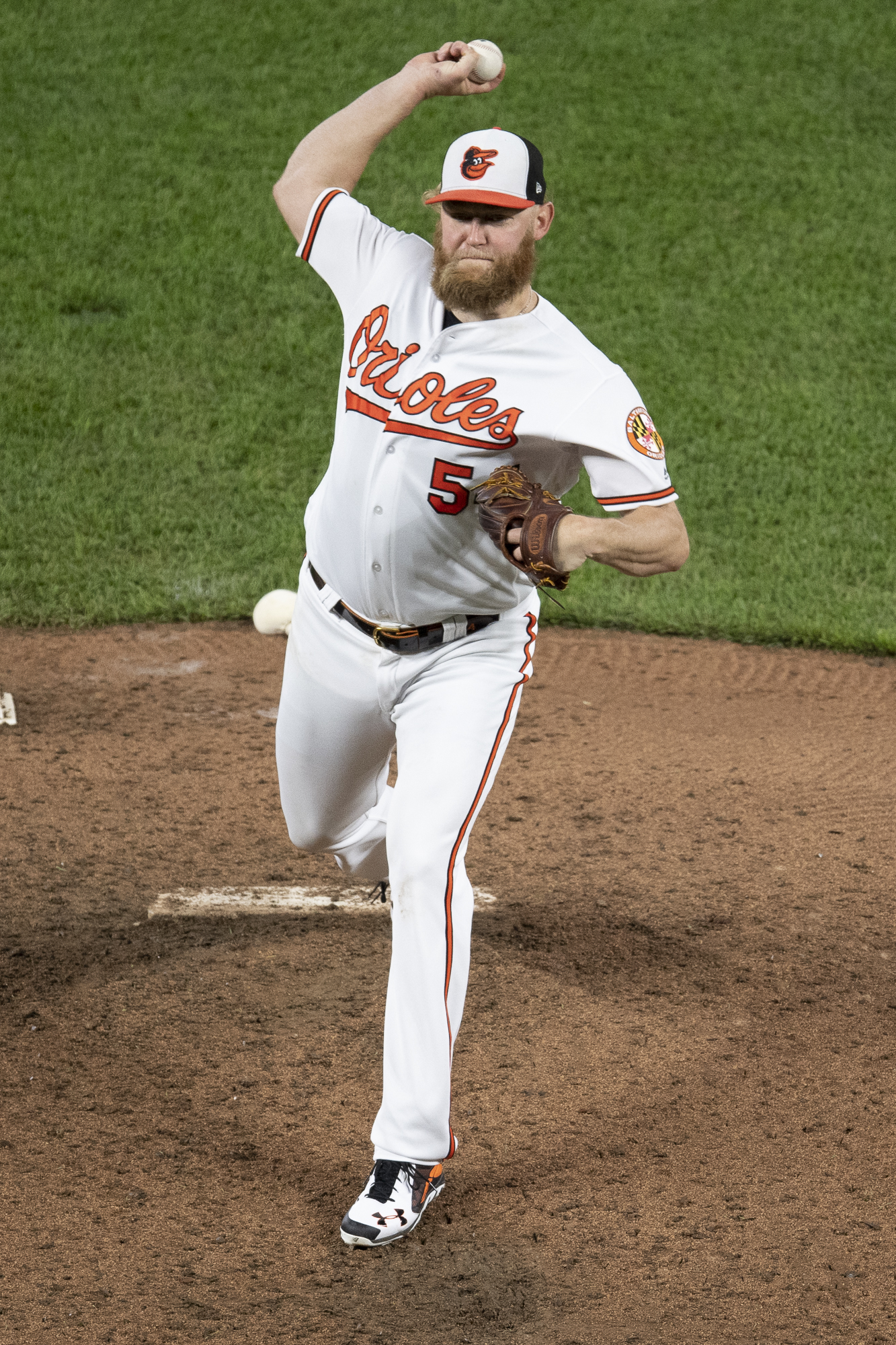
On the heels of that showing, the new Orioles front office, led by former Astros assistant GM Mike Elias, was understandably interested in clearing Cashner’s salary off its books. Cashner, after all, has a $10MM vesting option for the 2020 season that kicks in if he reaches 187 frames this year, and while that’d be a career-high for him, it’s not out of the realm of possibility. Given that context, it wasn’t much of a surprise when The Athletic’s Ken Rosenthal reported earlier this week (subscription required) that Baltimore was willing to eat virtually all of Cashner’s 2019 salary in Spring Training to facilitate a trade. Obviously, nothing came together.
The 2019 season is only a quarter through, but Cashner suddenly looks more like a passable fifth starter than he did a year ago. Through 48 1/3 innings, he’s averaged 7.5 K/9 against 3.4 BB/9 with a revitalized 51.7 percent grounder rate. His velocity is actually up to 93.5 mph on average, and Cashner’s 9.2 percent swinging-strike rate is the highest it’s been since way back in 2012. Cashner is throwing more four-seamers and more changeups, and he’s generally received more positive results. A contending club with a thin rotation could probably acquire Cashner for little more than a bit of salary relief and use him fifth starter. The upside in that scenario is minimal, however, and Cashner’s vesting option would be a deterrent for any interested team.
The more intriguing scenario would be for one of the many bullpen-needy teams — the Braves, Twins, Red Sox, Dodgers, Brewers or even the Cubs (his original club) — to acquire Cashner and drop him directly into the bullpen. This isn’t exactly a revolutionary concept. Putting Cashner in the bullpen has been a suggestion for years (hence this post’s title). But it’s also a fact that there are very few teams willing to sell at this point in the season, and the ones who are willing to do so would put a high price on most bullpen targets given the short supply of available arms in mid May. That’s unlikely to be the case with the Orioles and Cashner. Elias & Co. know full well that they’ll be summer sellers, and they’d be happy to shed whatever they can of the $5.89MM that remains on Cashner’s 2019 salary.
Beyond that is the fact that there’s some evidence to suggest that Cashner would thrive in shorter stints. Opponents are hitting just .212/.272/.347 against Cashner the first time through the order so far in 2019, and he’s struck out 24.7 percent of the hitters he’s faced the first time through as well. Cashner’s velocity will quite likely tick up even further in shorter stints, which could help him to improve on that ability to miss bats, but he’s already sporting a 3.50 xFIP when facing opponents for the first time in a game. That alone is worthy of intrigue, particularly given the minimal cost of acquisition. Putting Cashner in the ‘pen also mitigates any concern about his vesting option, and while he may prefer to work as a starter and have a chance to lock in that 2020 salary, he’d set himself up for a solid payday next winter if he can thrive in a multi-inning relief role.
This time of year, there are far more clubs looking for bullpen help than there are arms available. That’s not going to enhance Cashner’s trade value much — the O’s probably won’t get much beyond some salary relief — but the lack of available alternatives should still lead teams to explore the idea of finally converting him into a full-time reliever.
Latest On MASN Dispute
MAY 14: Court filings reveal that the recent arbitration ruling largely reflected the decision of the original panel, per a recent report from Jeff Barker of the Baltimore Sun. If the ruling is upheld, MASN will likely be required to disburse something on the order of $60MM to $70MM in back payments to the Nationals. (The panel awarded nearly $100MM in added rights fees, but the network’s profit recalculation would reduce the net dollar amount owed.)
APRIL 23: The Orioles and Nationals have long been embroiled in a dispute regarding TV rights fees from the jointly owned (but Orioles-controlled) Mid-Atlantic Sports Network. Sorting things out with finality has taken ages, but there are finally some new developments of note.
Another arbitration proceeding before MLB’s revenue sharing committee is finally in the books, though the results aren’t yet known, per Ben Strauss of the Washington Post (Twitter links). The Nats are seeking to have the results confirmed by the New York court that has overseen the related litigation between the ballclubs.
The sides originally went to court when the Orioles challenged the committee’s first award of rights fees to the Nats, successfully arguing that the D.C. organization’s counsel had a conflict of interest. Now, the revenue sharing committee has issued a new decision regarding what constitutes fair market value for the rights to televise Nationals games.
Typically, it’s quite difficult to upset an arbitration award in court, though that didn’t stop the Baltimore organization from securing a victory way back in the full of 2015. Whether and how the O’s will attack the new award isn’t known, but it seems likely that the club will keep up what has been an all-out battle until it has exhausted all its options.
Indeed, the Orioles recently opened up something of a new front, as Eriq Gardner of the Hollywood Reporter has covered (here and here). MASN began withholding “cash flow payments” to the Nats early in 2018, then balked at a MLB-run arbitration process. While that’s called for contractually, the Orioles have taken the position that the league has an interest in the dispute because it made the Nationals a $25MM advance to deal with the long-ongoing issue discussed above.
The Baltimore organization then launched a proceeding before the American Arbitration Association. Their unhappy partners to the south responded by putting the matter to the New York court. The initial decision was in favor of the O’s, but it’s of limited moment: the court determined that the AAA panel has the authority in the first instance to determine whether the matter is properly before it, since the contract contemplates a AAA proceeding in the event of a conflict of interest.
Head spinning yet? It should be, as this is all now several layers removed from the underlying issue: what’s fair market value for the Nats’ TV rights? The Orioles have successfully introduced quite a few procedural roadblocks to the D.C. organization’s ability to receive stepped-up pay-outs and even created some possibility of securing a friendlier forum to decide the matter. As things stand, there’s a competing arbitration proceeding even as an award has come down from the revenue sharing committee, with ongoing litigation overlaying things. When and how it’ll all be resolved remains anyone’s guess.