
Reds To Pursue Trading Players On Expiring Contracts
The Reds are looking to move their rental pieces, reports C. Trent Rosecrans and Ken Rosenthal of The Athletic. Cincinnati fell to 44-53 with a blowout loss to the Rockies this afternoon. The club is seven games out of the final NL Wild Card spot.
The report notes the Reds are intent on trading players with expiring contracts. It doesn’t mention whether the organization would be willing to part with players who still have team control. Sources also tell Rosecrans and Rosenthal that Cincinnati would consider bringing in big-league talent that would help the club in the near future. Here’s a rundown of the rental players up for grabs…
The 29-year-old righty is one of the most expensive players on the roster. He is making $12.75MM in his last year of arbitration. Singer has not covered himself in glory heading into free agency. He has a 4.56 ERA supported by a 4.41 xFIP and a 4.37 SIERA across 19 starts. Singer’s 19.2% strikeout rate is the second-lowest mark of his career.
Home runs have been a major issue for Singer this season. He’s been taken deep 21 times, tied for the fifth-most in the league. One might assume getting him out of hitter-friendly Great American Ball Park would help, but that actually hasn’t been the problem. Singer has a sub-3.00 ERA at home. His homers have been split almost evenly between GABP and road venues. Singer has been a workhorse, so his durability could intrigue teams in need of reliable innings.
[Related: Reds Trade Deadline Outlook]
The follow-up to Suarez’s 49-homer season has not gone as planned. He’d posted an 85 wRC+ through 271 plate appearances heading into Saturday. Suarez’s strikeout rate, which has always been elevated, has exploded to a career-worst 35.8%. He’s been a subpar defender at third base (-5 Defensive Runs Saved). An oblique injury cost the veteran a month of action.
Suarez returned to Cincinnati on a $15MM deal with a mutual $16MM option for next season. He’s almost certainly heading back to the free agent market this offseason. Trading for him would be blind faith that his power stroke returns over the final two months of the year.
The Reds added Lowe on a minor league deal. It looked like a huge win for a couple of months. The veteran first baseman carried an .895 OPS into June. He’s fallen back to earth since then, but his wRC+ still sits at a solid 114 before Saturday’s game. Lowe has been an above-average bat every season except last year, when he struggled in stints with the Nationals and Red Sox. He’d fit nicely as a platoon bat/bench option for a contender.
The longtime backstop has also stumbled ahead of his first foray into free agency. Stephenson is slashing .238/.318/.359 across 74 games. He’s posted -6 DRS behind the plate. Stephenson has shown some power in his time with the Reds, and he has a strong 21.6% pulled air rate this year. The home runs could be coming. Stephenson might be a nice fallback for teams who miss out on Ryan Jeffers.
The Relievers (Pierce Johnson, Caleb Ferguson, Brock Burke)
This seems like the most likely group to be moved. They’re all pitching reasonably well and should find themselves on playoff teams after the deadline. Johnson joined the club on a $6.5MM deal. He has a 4.23 ERA, though a 6.24 xERA is cause for concern. Johnson has picked up five holds and a save as a member of Cincinnati’s high-leverage mix.
Ferguson and Burke are likely to have the attention of teams looking for lefty help. The former shook off an early-season oblique strain to deliver a 1.76 ERA through June. Ferguson has been scored upon a few times in July, but he’s generally been reliable, despite a dip in velocity. Burke has been one of the most-used relievers in the league. Only Mason Fluharty of the Blue Jays has more appearances than Burke’s 48. The veteran has chipped in nine holds and a save. He has a sub-3.00 ERA, though it comes with a 4.48 xERA and a 5.07 xFIP.
Photo courtesy of Isaiah J. Downing, Imagn Images
The Reds’ Minor Acquisitions Have Kept Their Offense From Completely Spiraling
The Reds play in one of baseball’s most noted hitters’ havens, yet they’re well on their way to trotting out a below-average offense — as measured by wRC+ — for what would be a 16th consecutive season. Even setting aside park-adjusted figures like wRC+, Cincinnati has ranked in the top half of MLB in overall runs scored just five times in those 16 years and only placed in the top 10 on two occasions. The Reds haven’t ranked higher than ninth in runs scored in that time, which they’ve done twice (2021, 2023). They’re 18th in the majors in runs scored since 2024.
The Reds rank ninth in home runs but just 19th in runs scored this season. They’re near the bottom of the league in batting average (tied for 27th, at .229) and on-base percentage (25th, at .313). Their .396 slugging percentage is tied for 15th in MLB. Their overall 93 wRC+ sits 23rd.
There are plenty of culprits impacting their lackluster lineup this time around. Eugenio Suarez hasn’t yet found his footing in a return to Great American Ball Park. Catcher Tyler Stephenson hasn’t performed anywhere close to his career levels. Center fielder TJ Friedl‘s offensive struggles were so pronounced (.179/.259/.256) that he was optioned to Triple-A — as third-baseman-turned-right-fielder Noelvi Marte was earlier in the season. Marte is only playing right field because of the Reds’ surprising decision to acquire Ke’Bryan Hayes at last summer’s trade deadline; Hayes batted .142/.195/.225 in 147 plate appearances before landing on the injured list due to a continuation of the back troubles he’s battled for several seasons.
Star shortstop Elly De La Cruz and rookie Sal Stewart raced out of the gate to announce their presence as a formidable middle-of-the-order duo. Stewart, however, has cooled after a blistering start to his first full major league season. De La Cruz landed on the injured list due to a hamstring strain on the first of this month. He was given a two- to four-week timeline and appears to generally still be on that track.
Skipper Terry Francona tells the Reds beat that the plan for De La Cruz is to head out on a minor league rehab assignment this weekend (via C. Trent Rosecrans of The Athletic). The current plan is for De La Cruz to play five innings at shortstop Friday, a full game at designated hitter Saturday, and a full game at shortstop Sunday. He could be activated next Tuesday, but that’ll obviously hinge on how his hamstring responds to rehab work.
Cincinnati’s offense has struggled to push runs across the plate even with De La Cruz in the fold. The Reds rank 22nd in runs scored since De La Cruz was shelved. Second baseman Matt McLain has stepped up in a major way, playing shortstop regularly this month in place of De La Cruz and slashing .270/.413/.595 in a small sample of 46 plate appearances during June. If McLain can sustain anything close to that level of production at second base once De La Cruz has returned, it’d go a long way toward bolstering what has been a top-heavy offense that’s received little contribution from several positions.
Still, with so many regulars falling well shy of their expected level of contribution, it’s surprising that Cincinnati has managed to avoid ranking among the league’s very worst offenses. The front office’s biggest offseason swing — signing Suarez after the market didn’t produce a long-term deal for him — has been a miss so far. Their longshot effort to bring Kyle Schwarber back to his hometown fell short, presumably after ownership balked at the $150MM guarantee he received from Phillies. (The Orioles reportedly offered the same amount.)
Rather than from the big fish they targeted (Schwarber) or acquired (Suarez) in free agency or from the bulk of their previously steady regulars (e.g. Stephenson, Friedl), the Reds have instead been getting offense from unexpected sources. Cincinnati signed a pair of non-tendered veterans on the cheap — JJ Bleday, Nathaniel Lowe — and acquired Dane Myers from the Marlins in exchange for Double-A outfielder Ethan O’Donnell, who didn’t rank in the organization’s top 30 prospects. That trio of small-scale additions has proven to be a godsend.
Bleday, signed to a $1.4MM major league deal, leads the pack in terms of value he’s provided. He hasn’t simply been one of the Reds’ best hitters, the former top-five draft pick has been one of the most productive hitters in all of Major League Baseball. Among the 258 hitters this season with at least 150 plate appearances, Bleday ranks fifth with a .586 slugging percentage. He’s slashing .272/.367/.586 with 13 homers, 10 doubles, a triple, a huge 12.8% walk rate and a career-low 17.6% strikeout rate.
It’s the best stretch of Bleday’s big league career, though he did have a solid overall season in 2024, when he hit .243/.324/.437 with 20 homers for the A’s. Bleday is swinging the bat nearly three full miles per hour harder on average than he did during that 2024 season. He’s making harder contact as a result. His overall plate discipline profile is similar to his 2024-25 levels with the A’s. His 2026 chase rate and contact rates are extremely similar to those seasons, but Bleday is swinging a bit more frequently (particularly on pitches over the plate) and has cut his swinging-strike rate by a couple percentage points. In his own words, however, the improved results are due to “a little bit of everything,” as he tells Gordon Wittenmyer of the Cincinnati Enquirer:
“It’s hard to pinpoint exactly what it is,” says Bleday. “I worked really hard this offseason to be better than what I was last year. And I did everything I could to put myself in position to be an everyday big leaguer again. It’s hard to pinpoint exactly, but it’s cool seeing the results.” (Wittenmyer also chatted with A’s skipper Mark Kotsay and several of Bleday’s former A’s teammates, none of whom are surprised to see him thriving elsewhere; fans of both clubs are encouraged to check out the interviews in full.)
The Bleday signing has been a jackpot for the Reds. Not only has he been excellent in his new environs — he’s controllable for two additional years beyond the current campaign. The Reds can keep Bleday through 2028, though he’ll be owed a pair of arbitration raises along the way. If he can sustain even 75% or so of this output, that’ll be a no-brainer.
There’s no future control to be had over the 30-year-old Lowe, but that’s about the only possible complaint Reds fans could have with how his signing played out. Lowe stumbled through an ugly four months with the Nationals last season before being cut loose in August. He landed with the Red Sox shortly thereafter, and for the final six weeks of the season looked like the generally steady producer he’d been with the Rangers over the four prior seasons. Lowe’s track record gave him a projected arbitration price of $13.5MM, so the Red Sox non-tendered him. It seems no club was willing to give him a 40-man spot, as the Reds scooped him on a minor league deal with just a $1.75MM salary.
In all likelihood, several teams around the league are kicking themselves for passing. Lowe looks even better than he did with the Rangers from 2021-24. Over those four years in Texas, he slashed a combined .274/.359/.432. With Cincinnati, he’s at .257/.351/.493 in 174 plate appearances. It helps to be playing at a more hitter-friendly park, but Lowe’s .237 ISO (slugging percentage minus batting average) is considerably higher than the .158 mark he posted in four years as a Ranger. He’s popped nine homers on the season and walked in nearly 13% of his plate appearances.
Like Bleday, Lowe has seen a big uptick in his bat speed. On average, it hasn’t led to any major gains in exit velocity or hard hit rate, but Lowe is barreling far more balls than he ever has and swinging through fewer pitches than he has in the past. His production against four-seamers is actually down this year, but he’s been far better than usual against sinkers, cutters and splitters while bouncing back in a big way from a couple down seasons against changeups.
Myers, 30, hasn’t had as many plate appearances as his teammates and hasn’t been as productive in the 117 he’s amassed, but a .263/.368/.394 line out of someone who’s effectively been a fourth outfielder will still play just fine. He’s been used more against lefties than righties, but the righty-swinging Myers has been solid against pitchers of either handedness.
There’s probably some BABIP smoke and mirrors at work to some extent, but Myers is making way more contact against righties and walking at a far higher clip than at any point in his career. His 17.8% chase rate on balls outside the strike zone is tied for the fifth-lowest among the 339 hitters who’ve taken at least 100 plate appearances this season. Myers’ contact rate entering the season was 76.6%. This year, he’s at 83.9%. He hasn’t had the big jump in bat speed we’ve seen with Bleday and Lowe, but Myers is making far more contact both in the zone and off the plate on the rare instances he does chase.
Myers has even more remaining club control than Bleday. He’s not yet arbitration-eligible but will be for the first time this winter. Cincinnati can control him three additional years, up through the 2029 campaign. We’re looking at a pretty small sample that includes a .343 average on balls in play, so there’s no sense in getting carried away with the idea that Myers can be a key piece moving forward, but he’s a decent runner with 99th percentile arm strength in the outfield and solid range. He has the makings of a useful role player if he can sustain this year’s gains in plate discipline, pitch selection and contact.
The Reds haven’t taken many big free agent swings in recent years, particularly when it comes to the lineup. Those they’ve made — Suarez, Jeimer Candelario (three years, $45MM) — haven’t panned out nearly as well as hoped. Suarez still has time to turn that around and, to his credit, has homered three times in his past six games. However, the lack of high-profile additions and the scattershot track record of success with the larger-scale moves they do make in free agency makes it all the more important to have some successes when shopping in the bargain section.
The Reds have done well in that regard this year, and they’re not far from getting Hunter Greene back to join Chase Burns atop the rotation. That’ll be a big boost for the rotation, but Cincinnati feels like a team that’s going to need to add at least one bat at this year’s deadline. Even if they pivot toward selling, there’s some sense to bringing in a major league bat that’s controlled beyond the current season (as they tried to do last year with Hayes). The Reds currently only have six players who’ve produced league-average offense, by measure of wRC+: De La Cruz, Bleday, Stewart, Lowe, Myers and Spencer Steer. They surely have hope that some combination of Suarez, McLain and/or Marte can turn things around, but upgrading behind the plate, in the outfield or at designated hitter still seems prudent.
Reds Select Nathaniel Lowe’s Contract
March 23rd: The Reds made it official today, announcing that they have selected Lowe’s contract and placed Greene on the 60-day IL.
March 21st: Nathaniel Lowe has earned a spot on the Reds’ roster, reports C. Trent Rosecrans of The Athletic. The veteran first baseman signed a minor league deal with the club in mid-February. He’s set to make $1.75MM with the big-league squad, with an additional $250K available in incentives. Rosecrans notes that Lowe is expected to take the 40-man roster spot of Hunter Greene, who is headed to the 60-day IL after undergoing elbow surgery.
Cincinnati announced outfielders Rece Hinds and J.J. Bleday were optioned to Triple-A. Lowe and Dane Myers will round out the bench, along with backup catcher Jose Trevino and utilityman Spencer Steer. The Reds also sent right-hander Zach Maxwell to Triple-A. Left-hander Sam Moll has secured the final bullpen spot, per Rosecrans.
Lowe was dealt from the Rangers to the Nationals for reliever Robert Garcia last offseason. He hit just .216 in 119 games with Washington and was cut in mid-August. Lowe then latched on with the Red Sox. He recovered some value in Boston, slashing .280/.370/.420 across 119 plate appearances. The final result was still a career-worst 91 wRC+. The 30-year-old received minimal interest this winter, but a strong Spring Training will propel him to a major league gig. Lowe posted a 143 wRC+ in 15 spring games. He racked up seven extra-base hits, including three home runs.
Hinds did all he could to earn a job in the spring. He belted five home runs and drove in 11 across 43 plate appearances. The 25-year-old is known for his big power, but he also hit .410 in the limited Spring Training sample.
The Reds didn’t necessarily need to keep another first baseman, with Steer a capable backup behind Sal Stewart, but the decision came down to getting Hinds regular reps. “I was very careful with how I worded it with him,” manager Terry Francona said about breaking the news to the outfielder. “(Hinds) did enough to make the team, but the role is a bench role, and we want you to play.”
Bleday signed a one-year deal in late December. He made a strong case for a roster spot himself, launching four home runs and getting on base at a .364 clip. Bleday had seemingly emerged as a consistent contributor with the Athletics, slashing .243/.324/.437 with a career-best 20 home runs in 2024. He stumbled to a .656 OPS over the first two months of the 2025 campaign and found himself back in Triple-A. Bleday returned to the big-league club in August, but was designated for assignment at the end of the season. He and Hinds both have a minor league option remaining.
Maxwell, affectionately known as Big Sugar, will head back to the minors as the Reds opt for another lefty in the pen. The 6’6″, 275-pound righty with the triple-digit fastball delivered solid results in his first taste of the majors last year. Maxwell posted a 30.2% strikeout rate with an xFIP and SIERA just above 3.00. He punched out hitters at a 31% clip this spring, though a few shaky outings to begin Cactus League action led to a 5.40 ERA.
Moll is out of options, while Maxwell still has three left. The veteran gives the Reds another left-handed middle reliever while Caleb Ferguson is sidelined. Cincinnati also added Brock Burke in a trade this offseason. Brandon Williamson is in the pen, though he’ll be more of a long relief/piggyback starter option.
Photo courtesy of Frank Bowen IV of The Enquirer via Imagn Images
Reds, Nathaniel Lowe Agree To Minor League Deal
TODAY: The Reds officially announced Lowe’s contract. Sheldon reports that Lowe will earn $1.75MM if he makes Cincinnati’s active roster, with another $250K available in contract incentives.
FEBRUARY 13: The Reds and first baseman Nathaniel Lowe are in agreement on a minor league deal, per Mark Feinsand and Mark Sheldon of MLB.com. The SportsMeter client will be in big league camp as a non-roster invitee.
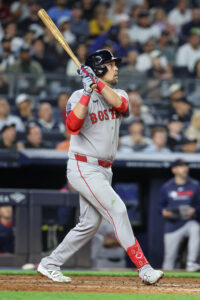
A year ago, the notion of Lowe settling for a non-roster deal would’ve seemed far-fetched. From 2021-24, the now-30-year-old Lowe was the Rangers’ everyday first baseman — and a good one, at that. He slashed a combined .274/.359/.432 (124 wRC+) with 78 home runs, 104 doubles, 10 triples, 13 steals, a strong 11.3% walk rate and a 23.3% strikeout rate that was only a bit north of average. Defensive metrics were bearish on his glove early in his MLB run, but he posted quality marks in both Defensive Runs Saved (4) and Outs Above Average (10) in 2023-24.
As the Rangers began the process of paring down their payroll, they traded Lowe and his $10.3MM salary to the Nationals for left-hander Robert Garcia. The change of scenery didn’t work out whatsoever for Lowe. He appeared in 119 games and tallied 490 plate appearances with a .216/.292/.373 batting line (86 wRC+) before being designated for assignment and released in August. Lowe’s walk rate in D.C. dipped to 9.6%, and his strikeout rate climbed to 26.5%. He was also a bit more prone to pop-ups and hit fewer line drives than he had during his Texas stint.
The Red Sox, needing help at first base, quickly scooped Lowe up and got better production out of the veteran’s left-handed bat. In a smaller sample of 119 plate appearances with Boston, Lowe turned in a .280/.370/.420 slash that pretty closely resembled the production from his time in Arlington. His production was buoyed by a .361 average on balls in play that he’s highly unlikely to sustain, but Lowe was also dogged by a .267 BABIP with the Nationals — a whopping 72 points south of the .339 mark he carried into the season.
With the Reds, Lowe will have a chance to win a prominent role in the lineup. Top prospect Sal Stewart is the presumptive front-runner at first base, but he has all of 18 big league games under his belt. The 2022 No. 32 overall pick belted five homers in that time and had a big year in Triple-A as well (.309/.383/.524, 152 wRC+) but some veteran competition for him won’t hurt. Also in the mix at first base are Christian Encarnacion-Strand and Spencer Steer. The former hasn’t hit in the majors since 2023 and has minor league options remaining, while the latter can play all over the diamond.
There could be occasional DH at-bats available, although the returning Eugenio Suárez will likely take the bulk of those reps in 2026. Suárez could also see time at the hot corner if the oft-injured Ke’Bryan Hayes hits the injured list, which would open up additional avenues to get both Stewart and Lowe into the lineup — assuming Lowe performs well enough to make the roster, of course.
Five Non-Tendered Hitters To Keep An Eye On This Winter
Every year, MLB’s non-tender deadline sees clubs allow some of their players who remain under team control to test the open market early, whether it be due to an increasing price tag in arbitration or a need for additional space on the club’s 40-man roster. Previous seasons have seen a number of high-profile players wind up non-tendered, with Kyle Schwarber, Cody Bellinger, and Brandon Woodruff all having been non-tendered at one point or another in their careers only to this year appear on MLBTR’s Top 50 Free Agents list.
While players of that caliber who reach free agency by way of a non-tender are extremely rare, plenty of others find themselves cut loose early by their clubs only to make an impact elsewhere down the line. That could be as a regular in the lineup or rotation or simply as a solid contributor off the bench or out of the bullpen. Let’s take a look at five hitters who hit free agency following last week’s non-tender deadline and could be worth keeping an eye on throughout the coming offseason. Players are listed in alphabetical order, with their age for the 2026 season in parentheses.
JJ Bleday (28)
Bleday has quite the pedigree behind him, as he was drafted fourth overall by the Marlins back in 2019. A consensus top-50 prospect in the game prior to his MLB debut in 2022, Bleday struggled for the Marlins and A’s across his first two seasons in the majors before enjoying what looked to be a breakout 2024 campaign. That year, he slashed .243/.327/.437 (120 wRC+), cut his strikeout rate to just 19.5% while maintaining a solid 10.4% walk rate, and showed enough pop in his bat to hit 20 homers and a whopping 43 doubles. He was a below average but not disastrous defender in center field, and that in combination with his strong offensive production allowed him to put together a 3.2 fWAR season.
Unfortunately, Bleday’s star fell back to Earth this year with a tough season where his strikeout rate ticked back up to 26.5% while his power dissipated, leaving him with a .212/.294/.404 slash line and a wRC+ of just 90. Things got bleak enough that the A’s actually optioned Bleday to the minors multiple times this season. Perhaps a change of scenery can help Bleday recapture the form he flashed in 2024, and it’s not hard to imagine an outfield-needy team like the Royals or Guardians scooping him up. One sign of optimism regarding Bleday is his performance over the season’s final two months, as he slashed .252/.306/.495 (115 wRC+) with six homers and seven doubles in 111 plate appearances after being recalled to the majors on August 2nd.
Nathaniel Lowe (30)
By far the most established hitter on this list, Lowe has a Gold Glove, a Silver Slugger award, and a World Series ring on his mantle for his work with the Rangers from 2021-24. Over that four-year stretch, he slashed a strong .274/.359/.432 with 78 home runs and a 124 wRC+. That’s the performance of a quality regular and left him good for around three WAR per season at first base. Lowe was shipped from Texas to D.C. last offseason, however, and his time with the Nationals left much to be desired.
He hit just .216/.292/.373 across 119 games before he was cut loose from the organization, and while his time with the Red Sox saw him rebound to a .280/.370/.420 slash line closer to what he’s posted in the past, that 34-game stint in Boston only brought his season-long wRC+ back up to 91. While Lowe is hardly likely to get the sort of attention pieces like Pete Alonso or even Luis Arraez will garner this winter, he’d still be an upgrade to a club in need of help at first base like the Padres, Diamondbacks, or Twins.
Christopher Morel (27)
The youngest player on this list by more than a year, Morel arguably has the highest upside of any player on this list but significant flaws that could hold him back from getting a starting job somewhere. The youngster’s big league career started with a bang in 2022, and over his first two seasons with the Cubs Morel slashed .241/.311/.471 with 42 homers in 220 games and a wRC+ of 115. While he struck out at a massive 31.6% clip and was a below-average fielder everywhere he played on the diamond, his impressive power and ability to take walks were enough to make him a well above average hitter.
The past two years have been brutal for the slugger, however, as his production has largely dissipated. Morel’s first half with the Cubs in 2024 was unusual, as his numbers dipped (91 wRC+) despite most of his peripherals trending in the right direction, including a strikeout rate that dropped to 24.5% while his walk rate climbed to 11.1% with 18 home runs. While the usual above-average production wasn’t quite there, the Rays were interested enough to make him a centerpiece of the return for Isaac Paredes at the trade deadline. Unfortunately, Morel’s production completely collapsed during his time with the Rays as he hit just .208/.277/.355 (79 wRC+) in 495 plate appearances over the past two years. While it wouldn’t be a surprise to see a team try to unlock the upside Morel flashed with the Cubs early in his career given his youth and three years of remaining team control, his lack of defensive ability could make him a tough fit for many teams.
Mike Tauchman (35)
Tauchman is the oldest player on the list, and returns after also being listed in last year’s edition of this post. Non-tendered by the Cubs last winter, Tauchman stayed in Chicago by way of a deal with the White Sox and generally made good on his contract with the South Siders, hitting .263/.356/.400 (115 wRC+) across 385 plate appearances. Tauchman may not still be the capable center field defender he was earlier in his career, but teams would be hard pressed to find a player who can more reliably provide on-base ability.
That’s especially true at his expected price tag, which could draw in suitors with tight budgets this winter. Among the 229 players to record at least 1000 plate appearances since the start of the 2023 season, Tauchman’s .359 OBP ranks 21st, sandwiched between Rafael Devers and Kyle Schwarber. His production naturally falls well short of those star players thanks to a lack of power, as he’s not hit even ten homers in a season since 2019. Even so, he’d be a valuable addition to a team like the Royals, Astros, or Rays in either a bench or platoon role.
Ramon Urias (32)
Urias stands out among this group as being the most valuable defender of the bunch. Bleday and Tauchman are both restricted to the outfield and profile poorly in center, while Lowe is a first base-only defender. Morel has experience at valuable positions like center field and third base, but has graded out terribly at them by defensive metrics and profiles best as a DH. Urias, by contrast, is a Gold Glove winner at third base who has substantial experience at both second base and shortstop as well. His +5 Outs Above Average around the infield this year ranked in the 88th percentile among all fielders.
Typically, Urias pairs that strong glove with a decent bat that makes him a solid second-division regular or high-quality part-time player. In parts of six seasons in the majors, Urias is a career .257/.321/.403 (104 wRC+) hitter who had consistently been at or above league average until this season. This year, however, Urias hit just .241/.292/.384 (87 wRC+). That performance is in part dragged down by a rough stint in Houston after being dealt to the Astros at the trade deadline, but even his mark with Baltimore was below league-average. Questionable as Urias’s numbers were this year, his overall track record and ability to provide solid infield defense should make him an attractive addition for a team, particularly given a thin infield market with few everyday options. The Yankees, Brewers, Mariners, and Tigers are among the many teams Urias could make at least some sense for.
American League Non-Tenders: 11/21/25
Every American League team has officially announced their non-tender decisions. It was a quiet evening in terms of subtractions, with only the Rangers parting with any marquee players. All players who were non-tendered are free agents without going on waivers. A few teams dropped pre-arbitration players from the back of the 40-man roster. It’s possible they preferred not to expose them to waivers and are hopeful of re-signing them to non-roster deals.
Here’s a full list of today’s activity in the AL, while the National League moves are available here. All projected salaries are courtesy of MLBTR contributor Matt Swartz.
- The Angels announced they’ve non-tendered outfielder Gustavo Campero and catcher Sebastian Rivero. Campero is a depth outfielder who has hit .202/.272/.346 over the past two seasons. Rivero operated as the club’s third catcher for most of the season but spent the final few weeks on the active roster. Neither player had been eligible for arbitration. All their arb-eligible players were easy calls to retain.
- The Astros technically made one non-tender, dropping infielder Ramón Urías after he was designated for assignment earlier in the week. He’d been projected at $4.4MM.
- The Athletics officially non-tendered outfielder JJ Bleday, the club announced. He’d been designated for assignment on Tuesday, so this was inevitable unless they found a trade partner. Bleday had been projected at $2.2MM.
- The only non-tenders for the Red Sox were first baseman Nathaniel Lowe and reliever Josh Winckowski, each of whom had been designated for assignment on Tuesday. Lowe was projected at $13.5MM, while Winckowski was at $800K.
- The Guardians non-tendered outfielder Will Brennan and relievers Sam Hentges and Nic Enright. The latter had been designated for assignment on Tuesday. Hentges hasn’t pitched since undergoing shoulder surgery in September 2024. He underwent a right knee procedure a few months ago and will be delayed this offseason. Brennan only appeared in six MLB games this year and underwent Tommy John surgery while in the minors in June. He’d been projected at $900K.
- The Mariners non-tendered reliever Gregory Santos, reports Francys Romero. He’d only been projected at $800K, narrowly above the MLB minimum, so the move was about dropping him from the 40-man roster. Seattle acquired the 26-year-old righty from the White Sox over the 2023-24 offseason. He has only made 16 MLB appearances with a 5.02 earned run average over the past two years because of lat and knee injuries. Seattle also non-tendered relievers Trent Thornton and Tayler Saucedo (the latter of whom was designated for assignment on Tuesday). Thornton had been projected at $2.5MM and is coming off a 4.68 ERA through 33 appearances. He suffered a season-ending Achilles tear in August.
- The Orioles non-tendered swingman Albert Suárez, the team announced. Everyone else in their arbitration class was offered a contract, surprisingly including first baseman Ryan Mountcastle (as first reported by ESPN’s Jeff Passan). Suárez, 36, was a solid depth starter in 2024. He was limited to five MLB appearances this past season by a flexor strain but is not expected to require surgery.
- The Rangers non-tendered each of Adolis García, Jonah Heim, Josh Sborz and Jacob Webb. MLBTR covered those moves in greater detail.
- The Rays only non-tendered outfielders Christopher Morel and Jake Fraley, each of whom had been designated for assignment earlier in the week. Marc Topkin of The Tampa Bay Times reported last night that the Rays were open to bringing back Fraley at a lower price than his $3.6MM arbitration projection.
- The Royals non-tendered outfielder MJ Melendez and reliever Taylor Clarke, per a club announcement. Melendez, who’d been projected at $2.65MM, was an obvious decision. The former top prospect never developed as hoped and is a career .215/.297/.388 hitter over parts of four seasons. Clarke isn’t as big a name but comes as the more surprising cut. He’d been projected at just $1.9MM and is coming off a 3.25 ERA with a 21.4% strikeout rate over 55 1/3 innings out of the bullpen.
- The Tigers are non-tendering utility player Andy Ibáñez, according to Romero. He’d been projected at $1.8MM. The righty-hitting Ibáñez had been a solid short-side platoon bat for Detroit between 2023-24. His production against southpaws dropped this year (.258/.311/.403), limiting his value. The Tigers optioned the 32-year-old to Triple-A in early June and kept him in the minors until shortly before the trade deadline. Detroit also dropped the six pitchers they’d designated for assignment earlier in the week: Tanner Rainey, Dugan Darnell, Tyler Mattison, Jason Foley, Jack Little and Sean Guenther.
- The only Twins non-tender was outfielder DaShawn Keirsey Jr., who’d been designated for assignment this morning to make room for the Alex Jackson trade. Everyone in the arbitration class was brought back.
- The White Sox non-tendered outfielder Mike Tauchman, as first reported by Bruce Levine of 670 The Score. The lefty hitter turned in a solid .263/.356/.400 line in 93 games this past season. Tauchman has gotten on base at plus rates in three straight years but was also non-tendered by the Cubs a year ago. The 34-year-old (35 next month) had been projected for a $3.4MM salary. The Sox also announced they’ve dropped lefty reliever Cam Booser and first baseman Tim Elko. Neither had been eligible for arbitration. The former posted a 5.52 ERA in 39 appearances after being acquired from the Red Sox last winter, while the latter hit .134 in his first 23 MLB games despite a 26-homer season in Triple-A.
- The Yankees announced five non-tenders. Relievers Mark Leiter Jr., Scott Effross, Jake Cousins and Ian Hamilton were all cut loose, as was pre-arbitration righty Michael Arias. Leiter, who’d been projected at $3MM, never clicked in the Bronx after being acquired at the 2024 deadline. He posted a 4.89 ERA in 70 innings as a Yankee. Hamilton, Effross and Cousins were all projected just above the MLB minimum but are cut to clear roster space. Hamilton was on and off the active roster and posted a 4.28 ERA in 40 big league frames this year. Effross was limited to 11 appearances and has been plagued by various injuries for the past three and a half years, while Cousins is working back from Tommy John surgery. Arias has never pitched in the big leagues and could be brought back on a minor league deal.
The Blue Jays tendered contracts to all unsigned players on the 40-man roster.
Red Sox Designate Nathaniel Lowe, Josh Winckowski For Assignment
The Red Sox announced that first baseman Nathaniel Lowe has been designated for assignment. Chris Cotillo of MassLive reported the move shortly before the official announcement. That opens a 40-man spot for Tristan Gray, who has been acquired from the Rays. The Sox are also designating right-hander Josh Winckowski for assignment, reports Ari Alexander of 7 News. That will open another 40-man spot, presumably for Boston to add someone ahead of today’s Rule 5 protection deadline.
The moves are effectively early non-tenders. Friday afternoon is the deadline for teams to decide whether or not to tender contracts to their arbitration-eligible and pre-arb players. But as mentioned, today is the deadline for adding players to the 40-man in order to protect them from the Rule 5 draft. By cutting these two players now, the Sox have made space for adding Gray and someone else in the coming hours.
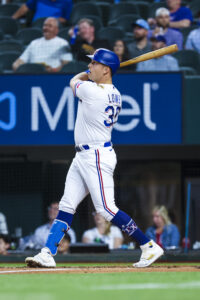 It’s not a surprise that Boston isn’t bringing Lowe back. He was a midseason desperation addition. The Sox lost Triston Casas to injury early in the season, leaving a hole at first base. They had been patching that over with guys like Romy González and Abraham Toro. Lowe became available in August when the Nationals released him. He has a good overall track record but was having a bad season. The Sox were able to grab him for essentially nothing to bolster their first base group down the stretch.
The Sox also could have kept Lowe for 2026 via arbitration but it never seemed likely they would do so. He qualified for Super Two status going into 2023, giving him four arb passes instead of the usual three. He had already raised his salary to $10.3MM in 2025. MLBTR contributor Matt Swartz projected him for a $13.5MM salary in 2026, which will be his age-30 season. The Sox presumably had no intention of paying that after Lowe hit .228/.307/.381 for a 91 wRC+ this year. They have Casas potentially coming back in 2026 and they could also pursue external additions.
Technically, Boston has some time to try to trade Lowe but other teams presumably aren’t keen on him at that $13.5MM price point either. He will likely stay in DFA limbo until Friday and then be non-tendered, becoming a free agent.
Once he’s officially on the open market, he will be an interesting bounceback candidate. As mentioned, his 2025 season wasn’t good, but he was a solid everyday first baseman for the Rangers for many years. From 2021 to 2024, he got into at least 140 games in four straight seasons, including at least 157 in the first three. He launched between 16 and 27 home runs in each of those. He also had a walk rate of 12.5% or higher in three of the four. He had a combined .274/.359/.432 slash line and 124 wRC+ for that span. FanGraphs credited him with 10.8 wins above replacement.
That strong performance helped the Rangers win the 2023 World Series and also pushed Lowe’s salary up into eight-figure territory. Those factors combined with his down year to make him a clear non-tender candidate.
Based on his track record, some club should give Lowe a big deal at some point, though at a lesser price point than his projected arbitration salary. He will jump into a first base market that has already seen Josh Naylor come off the board. Pete Alonso, Ryan O’Hearn, Luis Arráez and others are still out there, while Christian Walker and Willson Contreras are potential trade candidates.
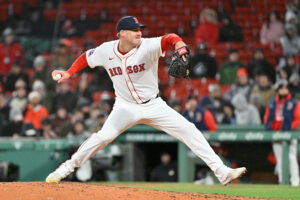
Winckowski, 28 in June, has spent the past few years working in a swing role for the Sox. He has logged 242 1/3 innings over 21 starts and 100 relief appearances, allowing 4.20 earned runs per nine. His 18.2% strikeout rate is subpar but his his 8.3% walk rate is around average and his 51.6% ground ball rate quite strong.
He only logged 11 2/3 innings in the majors in 2025. He spent most of the first half on optional assignment in the minors. In June, the Sox called him up and put him on the big league 60-day injured list due to a a flexor strain in his right elbow. That allowed them to open a 40-man roster spot. Winckowski stayed on the IL for the rest of the year, collecting service time along the way. The IL goes away five days after the World Series, so he retook a 40-man spot at that time.
His current health status is unknown but he was going to be on the roster bubble regardless. He exhausted his final option season in 2025. He also pushed his service time just over the three-year mark, therefore qualifying for arbitration. He is projected for a salary of $800K next year. That’s barely above the league minimum, which will be $780K next year. But for a guy who was hurt for most of 2025 and can’t be easily sent to the minors anymore, the Sox aren’t keen to pay him at that level.
While he’s in DFA limbo, they could try to trade him elsewhere. He can be controlled for another three seasons and is relatively cheap. But it’s also possible he gets non-tendered alongside Lowe on Friday and ends up a free agent.
Photos courtesy of Nathan Ray Seebeck, Kevin Jairaj, Eric Canha, Imagn Images
MLBTR Podcast: The Pohlads Aren’t Selling The Twins, Nathaniel Lowe, And Service Time Manipulation
The latest episode of the MLB Trade Rumors Podcast is now live on Spotify, Apple Podcasts, and wherever you get your podcasts! Make sure you subscribe as well! You can also use the player at this link to listen, if you don’t use Spotify or Apple for podcasts.
This week, host Darragh McDonald is joined by Steve Adams of MLB Trade Rumors to discuss…
- The Pohlad family taking the Twins off the market and what that could mean for the club’s future (2:10)
- Nathaniel Lowe getting released by the Nationals and signing with the Red Sox (18:35)
- The Astros losing Josh Hader due to a shoulder capsule sprain (29:25)
- The Phillies losing Zack Wheeler due to a blood clot (32:20)
- Why late August/September is prospect promotion season (36:00)
Plus, we answer your questions, including…
- Are there some notable relievers who could be on waivers this month? Also, what happens to a player when he is on waivers? (44:55)
- If I told you that the Dodgers signed Kyle Tucker, would you believe me? (52:40)
- What’s the craziest out-of-nowhere team to make the playoffs and could a team do it this year? (56:35)
Check out our past episodes!
- Walk-Year Performances, Roman Anthony’s Extension, And More! – listen here
- Sifting Through The Trade Deadline Deals – listen here
- Megapod Trade Deadline Preview – listen here
The podcast intro and outro song “So Long” is provided courtesy of the band Showoff. Check out their Facebook page here!
Photo courtesy of Bruce Kluckhohn, Imagn Images
Red Sox Designate Ali Sánchez For Assignment
1:57pm: The Sox have now officially signed Lowe and designated Sanchez for assignment. They also placed outfielder Rob Refsnyder on the 10-day injured list, retroactive to August 15th, due to a left oblique strain and recalled infielder/outfielder Nate Eaton.
1:26pm: The Red Sox will designate catcher Ali Sánchez for assignment today, reports Chris Cotillo of MassLive.com. The team has yet to announce the move, but they’ll need roster space for their reported agreement with veteran first baseman Nathaniel Lowe.
Sánchez, 28, appeared in only one game with the Red Sox and was hitless in his lone plate appearance. He was 5-for-21 with a couple doubles as a member of the Blue Jays before landing in Boston via waivers after being designated for assignment. Sánchez has appeared in parts of four major league seasons and suited up for five teams but has just 132 plate appearances in 47 games overall. He’s a .185/.222/.235 hitter in that tiny sample of scattershot playing time.
Unsurprisingly, Sánchez’s work in the upper minors has been far better. He’s played in parts of six Triple-A seasons and carries a .269/.340/.399 slash in 1266 trips to the plate. He’s a better-than-average defender who excels at blocking balls in the dirt and boasts a superlative 39% caught-stealing rate in his 12-year professional career.
Sánchez is out of minor league options, so any team that claims him off waivers will have to plug him right onto the big league roster. Waivers are the Red Sox’ only possible course of action with Sánchez, now that the trade deadline has passed. He’ll be placed on outright or release waivers within the next five days (very likely the former). He’s been outrighted multiple times in his career, so if Sánchez clears waivers, he’d be able to reject a minor league assignment in favor of free agency
Red Sox Finalizing Deal With Nathaniel Lowe
The Red Sox and first baseman Nathaniel Lowe are in the final stages of a contract, according to ESPN’s Jeff Passan. MassLive’s Chris Cotillo reported earlier that Lowe and the Sox were in discussions and were “working on getting it done.” Lowe is represented by SportsMeter.
The signing comes at little surprise, as reports linking the Sox to Lowe have been swirling since May, soon after Triston Casas was lost to what is likely to be a season-ending knee surgery. Boston continued to show interest in Lowe prior to the trade deadline but no deal was reached with the Nationals. After the Nats designated Lowe for assignment and placed him on waivers yesterday, Cotillo reported that the Sox were likely to make a play for the former Gold Glover, so it would appear that Lowe is now officially a free agent after clearing waivers.
Casas’ injury sparked quite a chain reaction in Boston’s season, as Rafael Devers‘ subsequent refusal to play first base was one of the factors that led to Devers being traded to the Giants in June. While the Sox looked around the market at Lowe and other trade options, the fill-in platoon of Abraham Toro and Romy Gonzalez performed respectably well, with Gonzalez in particular crushing left-handed pitching. Since Lowe is a left-handed hitter, it stands to reason that Gonzalez will still get his share of at-bats when a southpaw is on the mound, and Toro could be the odd man out of the playing time equation.
The question now facing the Sox is what version of Lowe are they getting — the solid veteran who was a fixture as the Rangers’ first baseman from 2021-24, or the much-less productive Lowe who hit only .216/.292/.373 over 490 plate appearances with Washington. These underwhelming numbers included a decent but uninspiring .235/.312/.421 slash line in 337 PA against right-handed pitching.
Even those splits represent an upgrade over Toro, plus there is more potential upside if the change of scenery returns Lowe to his past Rangers form. The Red Sox are one of baseball’s better-hitting teams overall, though the club is more productive against left-handed pitching. Boston’s collective 102 wRC+ against right-handers is tied for 15th among the 30 teams.
There is no financial risk for the Red Sox in adding Lowe since they’ll only be owing him the prorated portion of the MLB minimum salary. That total will be subtracted from the roughly $2.33MM remaining on Lowe’s $10.3MM salary for the 2025 season, with the Nationals covering the remainder. Lowe also has one final year of arbitration control remaining, but unless he goes on an absolute tear in Boston over the remainder of the season, the Sox are likely to non-tender him this winter rather than give him a raise on that $10.3MM figure.
It is safe to assume that the Red Sox probably just view Lowe as a stopgap for 2025, with Casas on the horizon for a return in 2026 and perhaps more of Boston’s up-and-coming prospects (i.e. Kristian Campbell, Jhostynxon Garcia) perhaps being viewed as first base candidates down the road. Signing Lowe addresses one of the few weak links on a roster that shares the top AL wild card slot with the Mariners, and sits five games back of the Blue Jays for first place in the AL East.