
David Carpenter DFA'ed, Joe Palumbo Called Up
- The Rangers have called up lefty Joe Palumbo from Double-A, while David Carpenter has been designated for assignment, per MLB Roster Moves. Palumbo, 26, will be making his major league debut after pitching to a 3.38 ERA across nine starts for the Frisco RoughRiders. Carpenter, 33, made just one appearance with the Rangers after collecting a 1.76 ERA in 15 appearances for their Triple-A club. The veteran righty has pitched for the Astros, Blue Jays, Braves, Yankees and Nationals, though his lone appearance with the Rangers on Tuesday was his first in the majors since 2015. He owns a solid 3.74 career ERA, earned across 219 career appearances from 2011 to 2015.
Mike Minor Isn’t The Only Interesting Rangers Starter
Mike Minor‘s future with the Rangers is drawing plenty of headlines and speculation, here included, as the summer trade season approaches — and rightfully so. He bounced back from multiple years that were ruined by shoulder injury to pitch well with the Royals’ bullpen in 2017, post a solid season in the Rangers’ rotation in 2018 and now pitch like one of the game’s best all-around arms in 2019.
It’d be totally understandable for a rival team to express significant trade interest on a starter controlled beyond 2019 who is averaging better than a strikeout per inning with career-high fastball velocity and a 3.18 FIP in 74 innings. But that pitcher isn’t Mike Minor. That pitcher is his teammate — Lance Lynn.
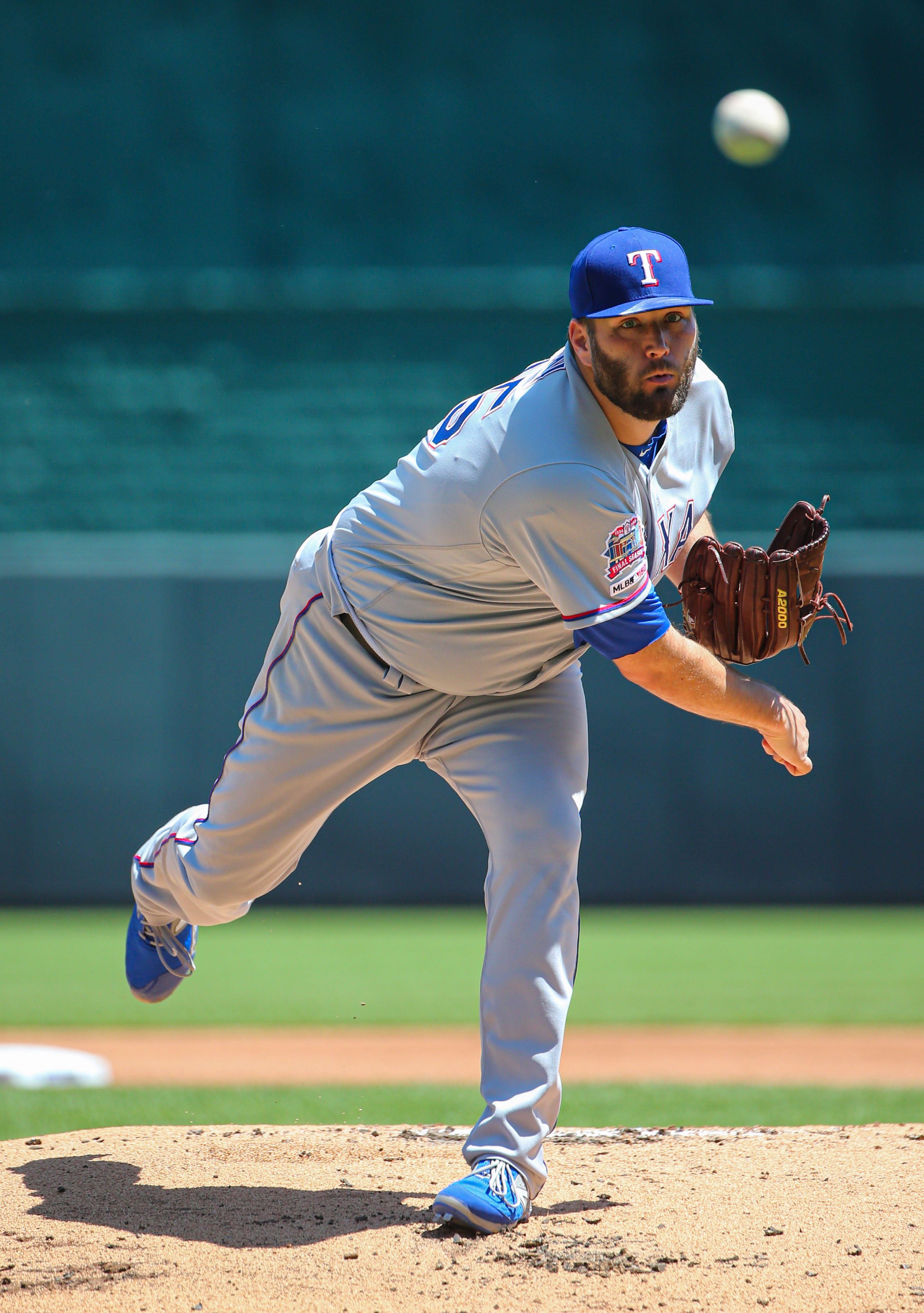
The Rangers opened more than a few eyes this winter when they signed Lynn to a three-year deal worth a guaranteed $30MM. Lynn signed a one-year deal with the Twins after the start of Spring Training 2018 and never really found his footing in Minnesota. He’s an oft-cited data point when teams express wariness over signing players after Spring Training has already begun. Lynn struggled to a 5.10 ERA in 20 starts for Minnesota, averaging a career-worst 5.5 BB/9 in that time before being traded to the Yankees over the summer. Signing him was a rather low-risk proposition for the Twins, but it went down as a largely failed move (and, perhaps, a notable factor in Minnesota’s decision to dismiss its pitching and bullpen coaches following the ’18 season).
Lynn’s ERA with the Yankees was unremarkable, but ERA is an oft-misleading stat. His K/BB numbers and fielding-independent metrics in the Bronx told another story and convinced Texas to spend aggressively despite Lynn’s middling bottom-line results. The early results in Texas weren’t much better. Lynn was tagged for five or more earned runs in three of his first seven starts — including a pair of clunkers that saw him surrender seven and eight runs.
His secondary numbers in March/April were better, though, and somewhere along the way Lynn began to find the same type of K/BB success he enjoyed in Texas. He’s been on an absolute tear over his past seven outings, pitching to a 3.30 ERA and 2.74 FIP with a 53-to-14 K/BB ratio through 46 1/3 innings. In fact, even with Lynn’s series of early-2019 meltdowns, if you look back to the time he was traded from Minnesota to New York, the numbers are eye-opening.
Beyond his pedestrian 4.35 ERA, Lynn has logged a 2.75 FIP with 9.7 K/9, 2.5 BB/9, 0.56 HR/9 (despite playing home games at Yankee Stadium and Globe Life Park) and a 42.8 percent ground-ball rate. This year’s 93.7 mph average fastball is the best of Lynn’s career, and his spin on the pitch has increased for the third straight season — to the point where it now ranks in the 86th percentile of MLB pitchers. Statcast pegs Lynn’s expected weighted on-base average at .304 against its actual .321 mark, suggesting that based on the quality of contact he’s allowed, he’s been a bit unlucky to get the results he’s generated so far. He’s also more than three years removed from undergoing Tommy John surgery.
The $30MM guarantee on Lynn’s deal suddenly looks far more like a bargain than it does an overpay. He’ll earn $4.95MM from today through season’s end, $11MM in 2020 and $8MM in 2021 on a contract that concludes with his age-34 season.
For all the talk of Minor’s trade value, Lynn would draw significant interest were the Rangers to put him out there at this point. It’s not common to see a player traded just months into a three-year free-agent contract, though, and Lynn’s excellence actually in many ways only further calls into question how Texas should approach the summer trade market. Minor and Lynn give Texas two high-quality arms around which to help build a rotation both this year and next.
While the Rangers don’t have much beyond that duo — Adrian Sampson has looked intriguing in his past handful of outings but is still unproven — they’re also four games above .500 and in possession of a Wild Card spot at the moment. The trend in baseball is for teams to either commit to aggressively trying to win at all costs or completely tearing down a roster in a painful, multi-year rebuild, but the Rangers have never committed to a full rebuild and find themselves in a decent position nevertheless. They’ve pared back their payroll, added some interesting pieces in trade over the past few years, signed some high-profile international talent and are at least a fringe contender with a new stadium on the horizon.
Lynn’s success has been somewhat under the radar, but it’s been so great that it could arguably be described as a breakout rather than a return to form. He’s being paid comparably to what a mid-rotation starter might expect toward the end of arbitration but pitching substantially better than that. (He’s also on the mound tonight — so my deepest apologies to Rangers fans for jinxing him.) If everything falls apart in Texas over the next two months, he could be an interesting trade piece. But if the Rangers remain in the Wild Card picture and give their fans an unexpected postseason chase down the stretch in 2019, Lynn will be nearly every bit as vital to that Cinderella story as his more talked-about rotationmate.
Rangers Acquire Tim Federowicz, Place Isiah Kiner-Falefa On IL
The Rangers announced today that they’ve acquired catcher Tim Federowicz from the Indians. The return is not yet known. His contract has been selected to the MLB roster.
Fellow receiver Isiah Kiner-Falefa was placed on the 10-day injured list. He’s dealing with a sprained ligament in his right middle finger, which explains the acquisition of Federowicz. To open 40-man space, the Rangers shifted injured pitching prospect Taylor Hearn to the 60-day IL.
For the Rangers, this move obviously wasn’t about installing offense into the lineup. The team simply wanted a reliable reserve catcher.
Federowicz, 31, has seen action in parts of seven MLB seasons. Through 360 plate appearances at the game’s highest level, he carries a .199/.247/.323 slash. He had been playing at Triple-A Columbus to open the year, carrying a .278/.353/.411 batting line in 103 trips to the dish.
The Offseason’s Best Minor League Signings (So Far)
The final two top-tier free agents are finally off the board — it only took until June! — but most clubs have long since begun to reap the benefits of their offseason additions from the open market. That includes those who partook in the annual grab bag of minor league contracts.
Each year, there are dozens upon dozens of recognizable names who settle for non-guaranteed pacts — perhaps more in this past winter’s frigid free-agent climate — and while most fail to yield dividends, there’s always a handful of gems unearthed. The Rangers, Reds and Pirates did particularly well in terms of signing players on minor league contracts this offseason, but there have certainly been other deals of note. It’ll merit revisiting this bunch after the season is over to see who maintained their pace and who stepped up in the final two thirds of the 2019 campaign, but to this point in the year, here’s a look at the most productive minor league signees of the winter.
Rangers: Hunter Pence, Logan Forsythe, Danny Santana
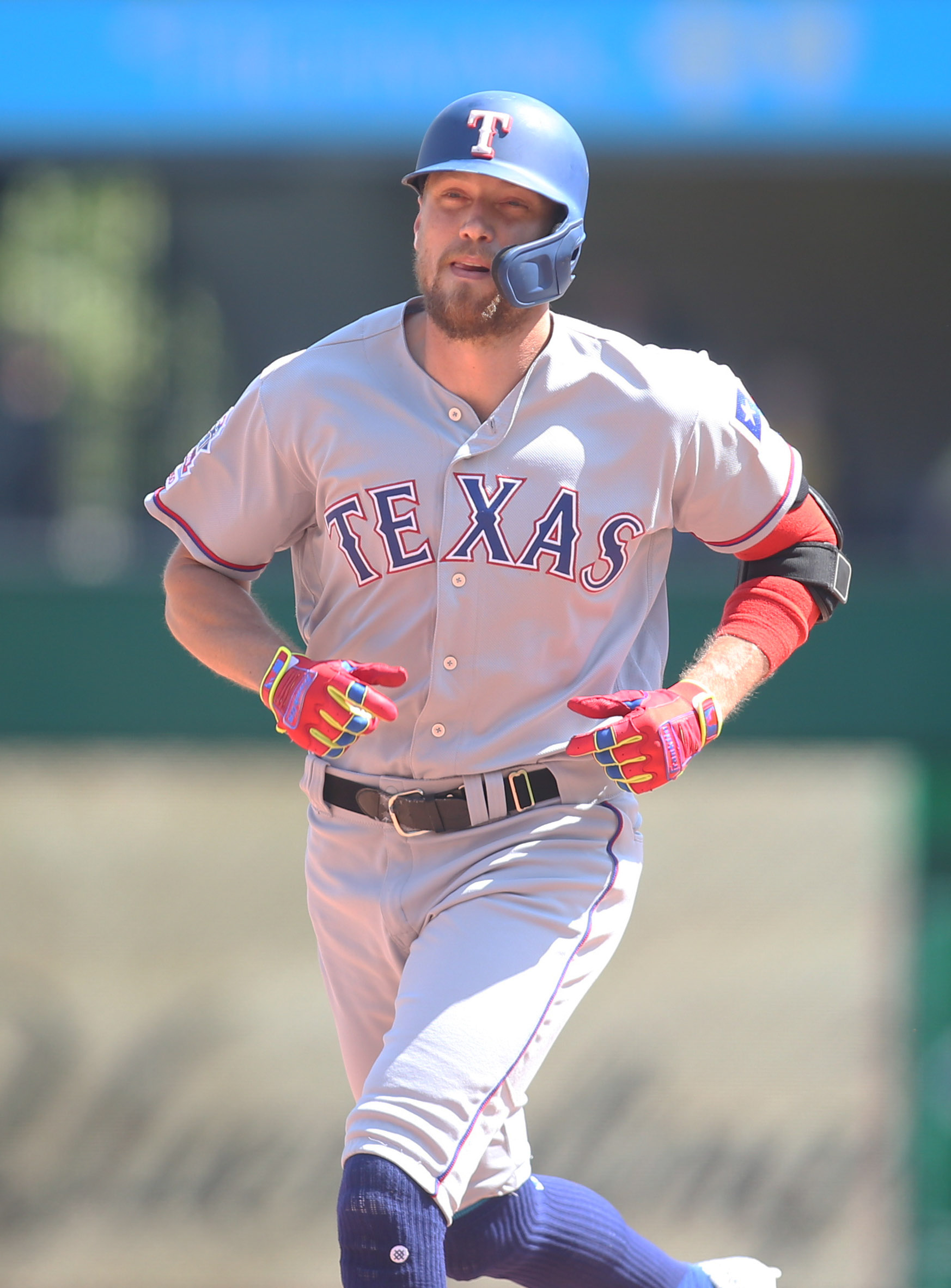
Much was made of Hunter Pence’s efforts to revamp his swing while playing winter ball in the offseason. Frankly, it’s not uncommon to hear of veteran players perhaps in the twilight of their career making alterations in an effort to stick around a bit longer. What is uncommon is for the results to be this eye-opening.
Pence hasn’t simply bounced back from a pair of awful seasons to close out his Giants tenure — he’s given the Rangers one of the best offensive performances of his 13-year Major League career. The 36-year-old has posted a resplendent .288/.341/.583 batting line with a dozen home runs, 10 doubles and a triple through 179 plate appearances. His 47.6 percent hard contact rate lands in the 91st percentile of big league hitters, per Statcast, and his average exit velocity of 92.6 mph is in the 96th percentile. Defensive metrics are down on Pence, which isn’t a huge surprise for a 36-year-old corner outfielder, but he’s hitting at a star level without benefiting from a gaudy BABIP (.299). If he can maintain this pace, he’ll have no trouble landing not just a 40-man roster spot this winter — but a solid salary to go along with it.
Pence alone would make for a terrific minor league add, but the Rangers are also getting the best form of Logan Forsythe we’ve ever seen (.299/.404/.472 through 172 PAs) and a strong showing from Danny Santana (.291/.333/.465 in 139 PAs). Those performances are a bit more dubious, as the pair improbably sports matching .388 averages on balls in play. But, Forsythe is walking at a 14 percent clip that he’s never previously approached outside of a 2017 season in Los Angeles where he logged ample time hitting eighth in front of the pitcher (with a 21 percent walk rate in such plate appearances). Santana can’t boast that same plate discipline — to the contrary, his longstanding inability to draw a walk is as pronounced as ever — but he’s making hard contact more than ever before while also stealing bases with great efficiency (7-for-8). Both Forsythe and Santana can move all over the diamond as well.
Reds: Derek Dietrich, Jose Iglesias
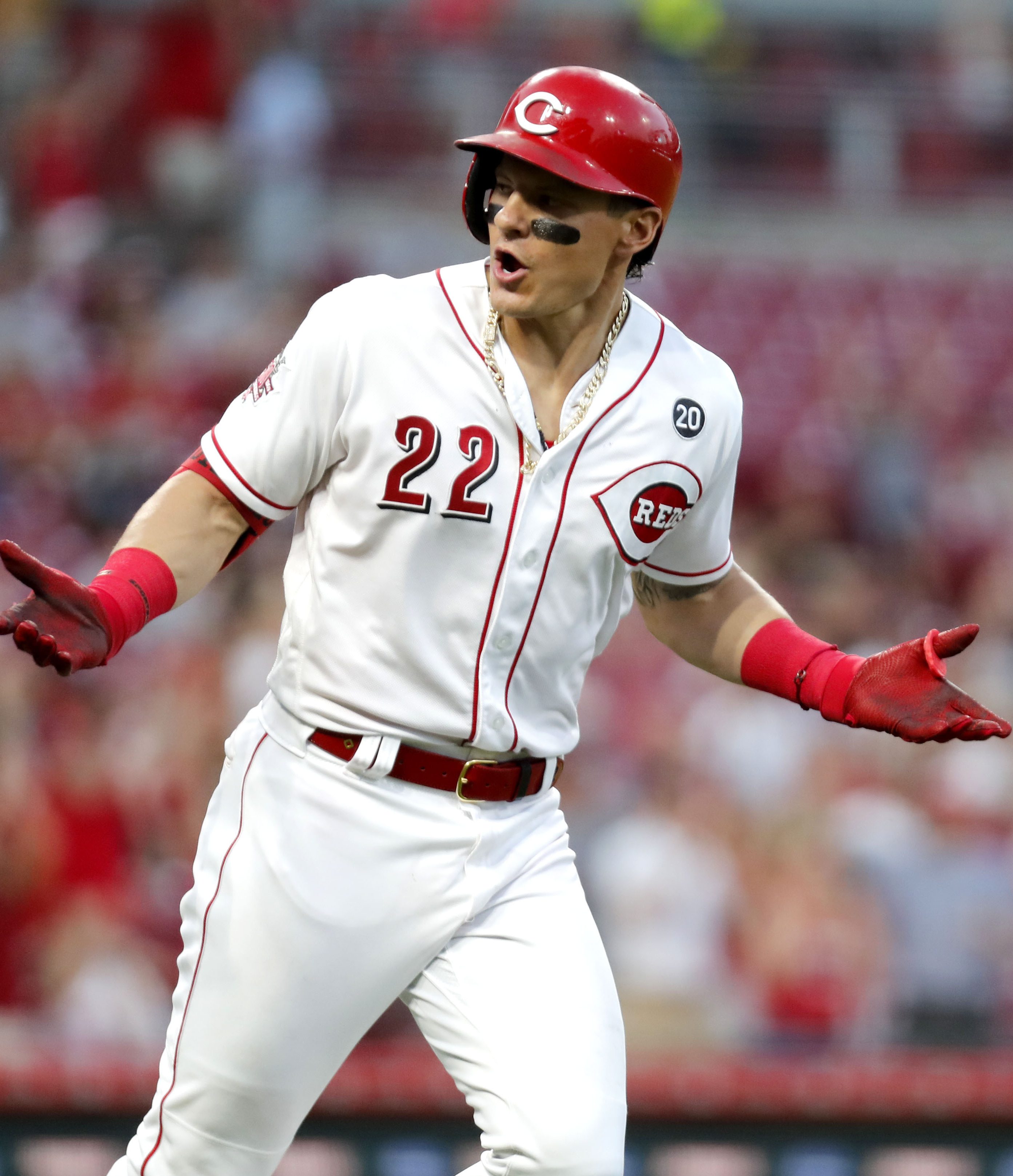
Cincinnati has gotten even more production out of its minor league deals than Texas, although the two player the Reds landed on non-guaranteed contracts both came as a surprise. Even after Dietrich was effectively non-tendered by the Marlins, he was expected to get a big league deal. Iglesias enjoyed a solid season at the plate and has long been regarded as a stellar defender at shortstop. The Tigers jumped on a one-year deal with Jordy Mercer worth $5MM in early December, seemingly believing Iglesias would command more.
That neither player found his asking price met by the time mid-February rolled around has been nothing short of a godsend for the Reds, who scooped up both on minor league pacts. Cincinnati couldn’t have known that a spring injury to Scooter Gennett would create even more at-bats for this pair early in the season, but Dietrich and Iglesias have each been sensational in capitalizing on the opportunity for unexpected levels of playing time.
Dietrich has already pounded a career-high 17 home runs despite accruing only 157 plate appearances. Detractors will point to his new hitter-friendly home park, but Dietrich has a .377 on-base percentage, .541 slugging percentage and six home runs on the road this year. Besides, it’s not as if every member of the Reds has belted 17 home runs simply by virtue of playing games at Great American Ball Park. Dietrich has a career-best 9.4 percent walk rate and career-low 20.4 percent strikeout rate as well.
Iglesias, meanwhile, has batted .294/.335/.421 with four homers and a characteristically low strikeout rate (13.5 percent) in 2019 plate appearances. He’s already tallied seven Defensive Runs Saved with a +3.3 Ultimate Zone Rating in 477 innings at shortstop, making Detroit’s decision to move on from look all the more egregious, considering they went out and signed a different veteran to man the position anyhow. He’s not running like he did in 2018, but Iglesias has been a flat-out steal.
Pirates: Melky Cabrera, Francisco Liriano
Cabrera has been forced into minor league deals in each of the past two offseasons and will turn 35 later this summer, but the Melk Man just keeps on hitting. Injuries to Corey Dickerson, Gregory Polanco and Lonnie Chisenhall created an opening for Cabrera, and he’s responded with a .335/.376/.467 line through 179 plate appearances. It’s true that he’s benefited from a .366 average on balls in play, but Cabrera’s 11.7 percent strikeout rate is excellent and represents a continuation of the elite bat-to-ball skills he’s demonstrated throughout his career. The defense isn’t pretty — it never really has been — but Cabrera’s bat has been a huge plus for the Bucs.
The Astros tried Liriano in the bullpen down the stretch in 2017 and weren’t able to get the results they’d hoped. Liriano returned to a starting role with the Tigers in 2018 and found middling results, but he’s been reborn in the Pittsburgh bullpen in his second go-around at PNC Park. In 29 1/3 innings, Liriano has a 1.21 ERA with 32 punchouts, 12 walks and a 47.3 percent grounder rate. He won’t maintain a 96 percent strand rate or a .233 BABIP, but Liriano’s 14.7 percent swinging-strike rate is the best of his career. Even if he takes what seems like an inevitable step back, FIP pegs him at 3.08 while SIERA checks in at 3.82. While the game’s highest-paid free-agent relievers have largely flopped, Liriano looks every bit the part of a viable bullpen option.
Others of Note
There have been successful minor league signings outside of Arlington, Cincinnati and Pittsburgh, of course. Eric Sogard, he of the former #FaceOfMLB and #NerdPower hashtag fame, has been a superlative pickup for the Blue Jays, hitting at a .290/.365/.481 pace with a career-high five homers in just 151 plate appearances. With several injuries and poor performances around the Toronto infield, his presence has been a boon to an otherwise disappointing lineup.
Sogard’s former teammate and fellow Oakland cult hero, Stephen Vogt, thought his career could be over at this time a year ago. Instead, he’s back in the Majors and enjoying a solid showing at the plate with the Giants. In 66 plate appearances, Vogt has hit .250/.318/.417, and Buster Posey‘s recent placement on the injured list will only create more opportunity for playing time. The Giants cycled through an all-you-can-sign buffet of veteran catchers earlier this spring, and Vogt is the last man standing.
As far as other catchers go, Matt Wieters landed the role of baseball’s most seldom-used backup: the Cardinals‘ second option to iron man Yadier Molina. Wieters has just 50 plate appearances on the year through June 6, but he’s going to see an uptick in playing time with Molina on the injured list for a bit. In his 50 trips to the dish, Wieters has connected with three long balls and slashed a very solid .277/.300/.511. His 15 strikeouts against just one walk could very well be a portent for struggles to come, but some more frequent playing time could also help the veteran find his rhythm.
Speaking of players who’ve succeeded in minimal playing time, right-hander Mike Morin has given the Twins 10 1/3 innings of terrific relief since having his contract selected in early May. He’s punched out seven hitters, hasn’t allowed a walk, is sitting on a career-high 56.7 percent ground-ball rate and has limited opponents to just one run (a solo home run). He’ll need to miss more bats, as he’s not going to maintain a .172 BABIP and will eventually walk a batter, but Morin’s newfound knack for keeping the ball on the ground is encouraging. (For those wondering where Ryne Harper is, he was technically signed in the 2017-18 offseason and is in his second year with the organization.)
In a similarly small sample of work — four games, 20 1/3 innings — left-hander Tommy Milone has given the Mariners some competitive starts to help out in their beleaguered rotation. Milone is sitting on a 3.10 ERA and 3.84 FIP, and while he’s never been one to miss bats in the past, he’s punched out 20 hitters against only five walks. His velocity hasn’t changed, but Milone is throwing more sliders at the expense of his four-seamer and changeup.
Over in Atlanta, the Braves have enjoyed their own bullpen find, as Josh Tomlin has pitched a team-high 32 innings of relief. Tomlin’s 3.94 ERA doesn’t exactly stand out, and fielding-independent metrics all suggest a mid-4.00s mark is more realistic, but he’s been a relief workhorse for a team whose rotation and bullpen have struggled mightily for much of the year. The 32 innings Tomlin has already soaked up have been vital for the Braves.
Elsewhere in the NL East, former Pirates and Blue Jays prospect Harold Ramirez is doing his best to continue earning playing time with the Marlins. He’s hit .329/.368/.427 through 87 plate appearances, and while that line has been buoyed by a .394 average on balls in play, Ramirez is making solid contact and isn’t striking out much. He batted .320/.365/.471 in 120 games with Toronto’s Double-A affiliate last season and .355/.408/.591 in 31 Triple-A games with the Marlins in 2019, so he’s earned a look at the game’s top level.
Rangers Notes: Minor, Leclerc, DeShields
Entering the season, it looked like a foregone conclusion that the Rangers would make Mike Minor available on the summer trade market, but their 31-28 record and current presence in the thick of the AL Wild Card picture has muddied things, writes Evan Grant of the Dallas Morning News. At the very least, despite the fact that Minor is 31 years old and signed through 2020, the Rangers will have to at least explore the possibility of extending him, Grant surmises. At present, the team is in a strong position regardless; it’s easy to point to their record and proximity to a Wild Card spot in telling other clubs that they’d need to be blown away to consider a move. And if they’re able to sustain this play through late July, of course, then Minor will become a vital piece to a more legitimate push toward an unexpected playoff berth.
Minor, through 81 1/3 innings this year, has a 2.55 ERA with 9.6 K/9, 2.9 BB/9 and 0.89 HR/9. As Grant notes, his dominance actually extends back into 2018, when he closed out the year with a terrific 17-start stretch. About two thirds of respondents in last week’s MLBTR poll on Minor’s future felt the organization should trade him; they’ve gone 4-2 in the six games since.
Here’s more out of Arlington…
- Minor himself addressed the situation when talking with Jeff Wilson of the Fort Worth Star-Telegram, acknowledging that he keeps up with trade rumors throughout the year. Minor feels that it’d be a mistake to make such a move with the Rangers playing well and voiced confidence that the team can continue to keep pace in its push for a postseason bid. “I know something could happen, but my honest opinion is if they do trade me, they’re going to go out there and buy a bunch of free agents this off-season,” said Minor. “Unless they’re getting young, controllable guys back.”
- Jose Leclerc is “getting close” to reclaiming the ninth-inning role, manager Chris Woodward said again this week (link via Wilson). Leclerc had an absolutely awful start to the season due to shaky control, but over the past month he’s notched a 1.76 ERA with a ridiculous 28-to-6 K/BB ratio in 15 1/3 innings of work (16.4 K/9). “I just love the kid so much,” said Woodward of Leclerc. “He wants to win so bad. He’s willing to do whatever we ask. He’s been pitching lights out. Just the command with his fastball and getting the weird swings with his changeup. Yeah, it’s getting close.”
- Delino DeShields connected with a walk-off single to cap a four-hit showing last night, and Wilson’s piece also looks at his chances of sticking on the roster. Woodward feels that DeShields’ swing “looks so much better and more efficient” after a brief reset in the minors. DeShields is getting another look at the moment due to injuries sustained by Joey Gallo and Willie Calhoun, but Texas will eventually have that trio, the resurgent Hunter Pence, Shin-Soo Choo and Nomar Mazara all in the mix for outfield and DH at-bats, creating a bit of a logjam. DeShields still needs to demonstrate that he can have some prolonged success, of course, but he’s off to a nice start in trying to force his way back into the mix. Notably, Wilson adds that Calhoun could begin a minor league rehab assignment next week.
Willie Calhoun Likely Out Until At Least End Of June
- Rangers outfielder Willie Calhoun landed on the 10-day IL on May 22 with a left quadriceps strain. It turns out the injury will likely keep him out of their lineup until at least late June, Evan Grant of the Dallas Morning News suggests. The 24-year-old Calhoun, a former top 100 prospect, was amid an encouraging season before he went to the IL. Not only did Calhoun hit .304/.416/.557 with eight home runs and more walks (22) than strikeouts (19) in 138 Triple-A plate appearances, but he got off to a .435/.458/.739 start with a pair of HRs in 24 major league PA.
Rangers Likely To Call Up Joe Palumbo This Weekend
It’s “likely” the Rangers will call up left-hander Joe Palumbo from Double-A Frisco to make his major league debut Saturday, Evan Grant of the Dallas Morning News reports. Palumbo, who’s already on the Rangers’ 40-man roster, would serve as the 26th man in their doubleheader against the Athletics.
Palumbo is six years removed from joining the Rangers as a 30th-round pick in 2013. Since then, the 24-year-old has made an impressive climb up the Texas organization’s farm system. While Palumbo underwent Tommy John surgery in 2017, FanGraphs (No. 6), MLB.com (No. 7) and Baseball America (No. 8) each regard him as one of the Rangers’ 10 best prospects two years later. Kiley McDaniel and Eric Longenhagen of FanGraphs laud Palumbo’s “timeless, rainbow curveball” and write he could develop into a No. 3-4 starter at the major league level.
So far in 2019, Palumbo has parlayed his fastball-curve-changeup mix into a 3.38 ERA/3.85 FIP with 11.55 K/9 and 4.26 BB/9 over 50 2/3 innings. It might be too optimistic to expect Palumbo to emerge as a capable big league starter right away – Grant notes he may only throw a few innings Saturday – but the need is there for playoff-contending Texas. The Rangers haven’t gotten anything out of offseason acquisition Drew Smyly, though they’re not yet willing to pull him from their starting five. However, if Palumbo shows well Saturday and Smyly’s struggles continue, the former could get a shot to join Texas’ rotation later in the season.
Drew Smyly Struggling In Return From Tommy John Surgery
After back-to-back injury-wrecked seasons in Seattle and Chicago, left-hander Drew Smyly joined the Rangers via trade with the Cubs last November. The transaction all but completed the teams’ midsummer deal centering on southpaw Cole Hamels, and it was a bit of an eye-opener that the Cubs parted with Smyly. The 29-year-old has been a more-than-capable big leaguer for most of his career, after all, but the Cubs – who wanted to cut unnecessary payroll – deemed him and his $7MM salary expendable.
Smyly never threw a pitch for Chicago after it signed him to a two-year, $10MM guarantee in December 2017. The Cubs’ hope at the time was Smyly would eventually recover from the Tommy John surgery he underwent as a member of the Mariners in June 2017 and return to his past form. The Rangers had the same hope when they acquired Smyly, but the union between the two sides hasn’t worked out to this point, as Evan Grant of the Dallas Morning News explains.
In his most recent start of the year, Smyly turned in 3 1/3 innings of seven-earned run, eight-hit ball and allowed three homers in a loss to the lowly Orioles on Tuesday. Smyly has now taken the ball 10 times (eight starts) with Texas, and most of his outings have been middling to poor. He’s now running a 7.93 ERA/7.35 FIP with 8.79 K/9, 6.21 BB/9, a 27.3 percent groundball rate and a 20.3 percent home run-to-fly ball rate in 42 innings. Those numbers are a far cry from the production Smyly registered with the Tigers and Rays from 2014-16, a 77-start, 388-inning span in which he managed a 4.01 ERA/4.16 FIP with 8.58 K/9 and 2.55 BB/9. Smyly didn’t generate many grounders then, as shown by his 34 percent rate, but he helped limit homers (11.9 HR/FB%) with the majors’ leading infield fly percentage (15.3). He’s down to 7.1 percent in that category this season.
Even though there hasn’t been a change in Smyly’s velocity from 2016 to this year, it’s clear nothing is working in his return from TJ surgery. And with the Rangers surprisingly sitting at 30-28 and in a tie for the American League’s second wild-card spot, they may have to bounce Smyly out of their rotation to make a Cinderella run. However, that’s not going to happen yet, manager Chris Woodward said after Smyly’s start Tuesday (via Jeff Wilson of the Star-Telegram). Woodward has shown a willingness to make such a move, having shifted Shelby Miller – another offseason addition with a notable injury history – to the Rangers’ relief unit last month. It’s a small sample, but Miller has logged much better results as a reliever than a starter this season.
The Rangers’ reluctance to pull the plug on the Smyly experiment stems from a lack of alternatives, suggests Grant, who names only Double-A starters Joe Palumbo and Jonathan Hernandez as realistic in-house replacements. Palumbo, a 24-year-old lefty whom MLB.com considers the Rangers’ seventh-best prospect, has produced good results this season. Hernandez has a 5.47 ERA, on the other hand, but the 22-year-old has racked up a solid amount of strikeouts and grounders. At No. 8, Hernandez falls right behind Palumbo on MLB.com’s list of Rangers prospects. Nevertheless, the team doesn’t seem inclined to rush either to the majors, even as it clings to a playoff spot.
In the event Texas stays in the race over the next month and a half but still doesn’t find an inside replacement for Smyly, it could consider the trade market. General manager Jon Daniels has made it known the Rangers will be aggressive spenders heading into a new ballpark next season, so it could make sense to acquire a starter who’s under control past this year. In doing so, the Rangers would ideally better their playoff odds this season while strengthening their roster for 2020. Blue Jays righties Marcus Stroman and Aaron Sanchez spring to mind as controllable upgrades who could be on the move in the coming weeks. Detroit lefty Matt Boyd would require a lot more than Stroman or Sanchez in return if the Tigers were to move him, but he’s someone who’d be worth inquiring about from the Rangers’ perspective.
For now, the Rangers will continue with the rotation they have. It’s not the most confidence-inspiring group, but there have been bright spots. Two of Daniels’ reasonably priced free-agent pickups, Mike Minor (two offseasons ago) and Lance Lynn (last winter), have lived up to their contracts. Ariel Jurado has pitched well, albeit over just three starts, and Adrian Sampson has been effective of late. But the Rangers’ starting five is difficult to trust after Minor and Lynn, especially because of Smyly’s struggles, and the unit’s shakiness will make it tough for the team to snap its two-year playoff drought this season.
Rangers GM Jon Daniels On Spending Outlook
It’s really not yet time for the Rangers to look to the coming offseason; after a surprisingly solid start to the season, they’re still in position to compete for a wild card spot. But the coming free agent market was a topic of conversation in a recent interview with Rangers GM Jon Daniels on 105.3 The Fan’s Ben and Skin show (audio and transcript via the Dallas Morning News).
Even as he preps for a potentially interesting summer trade market, Daniels says that he anticipates entering next winter with “a lot more [payroll] flexibility the next two years than we’ve had the last couple, the last, probably three or four.” That said, the long-time top baseball ops exec said that the club’s spending is “going to be player-specific” in that the club will be “ready to make [an] investment” in “the right guy” but won’t “spend just to say we spent.”
The Rangers have made moves of that sort already in recent years, giving out three-year deals to Mike Minor and Lance Lynn. But Daniels obviously sees some stepped-up possibilities for the near future as the organization has continued to steadily draw down its payroll commitments.
Reading between the lines and adding a dollop of speculation, it seems that the Texas club could be more aggressive in exploring higher-grade free agents. Perhaps the near-term spending availability will also expand the team’s trade possibilities this summer. There’s some room to spend with only $85MM or so on the books for 2020 (including the remaining money owed to Prince Fielder after the portions picked up by the Tigers and the contract insurer). And as Daniels acknowledges, “the new ballpark will play into it.” The club will surely want to maximize that revenue stream with a competitive product.
That said, it’s far too soon to address the potential needs and opportunities in detail. The needs on the fringes of the roster are all but impossible to know at this point, and indeed there are still some notable variables even in the nascent Texas roster core.
Daniels notes that future investment is premised upon the idea that the organization has “a good foundation” in place at present. “There’s some really good quality players that are going to be here for several years and we’ll have an opportunity to build on that,” Daniels says.
The Rangers GM obviously believes the club has the makings of a productive core unit, but the rotation still comes with rather gaping near- and long-term questions. And some key position players are still sorting through some issues.
Outfielder Nomar Mazara has yet to turn in a breakout, though he’s at least still producing at a roughly league-average at the plate. Second baseman Rougned Odor has been a mess at the plate; he’s still just 25 years of age, but his rollercoaster MLB track record is of increasing worry.
Daniels says there’s “still patience” with Odor, citing the recent comments of skipper Chris Woodward and noting that he’s still a hard-working and highly talented ballplayer. But Daniels also acknowledged that “there is a level of concern,” particularly given that “this is not the first time it has happened.” Indeed, Odor has had notable peaks and valleys throughout his career. He managed to post league-average offensive work last year, but that included a brutal start and finish. It also came on the heels of a rough 2017 showing.
Odor is off to a .166/.232/.331 slash to open the present campaign. He’s sustaining a walk-rate boost he showed last year, but suddenly has a whopping new swing-and-miss issue. Odor is striking out at a 33.7% clip on a 13.6% swinging-strike rate, both of which represent career-worst levels.
Whether and how Odor’s issues will be sorted remains to be seen, but Daniels notes it’d be preferable not “to make a habit of kind of getting into these deep holes and having to put a program together to get out of it.” The club must have “a sense of urgency” in getting Odor on track, Daniels says. Even if that occurs, one wonders whether the team can have confidence that the second bagger won’t fall into another funk.
Rangers Place Joey Gallo On IL With Oblique Strain
TODAY: Gallo has indeed been placed on the 10-day IL with a left oblique strain, as per a Rangers announcement. Delino DeShields has been recalled to take Gallo’s 25-man roster spot.
YESTERDAY: Rangers slugger Joey Gallo left the team’s game Saturday with tightness in his left oblique, according to the club’s executive vice president of communications, John Blake. Gallo will undergo an MRI.
Oblique injuries often lead to weeks-long stays on the injured list, which the Rangers certainly hope isn’t the case here. However, Evan Grant of the Dallas Morning News suggests an IL stint is likely for Gallo.
It would hurt for Texas to go without Gallo, who has been its best player in 2019. The 25-year-old outfielder’s currently on pace for his third straight 40-home run season, though Gallo wasn’t anywhere near this productive in the previous two campaigns. Gallo, who has slashed .272/.415/.633 in 212 plate appearances, ranks fourth in baseball in fWAR (2.9), fifth in homers (17) and seventh in wRC+ (169).
Thanks in large part to Gallo, the Rangers have been one of the majors’ surprise teams this year. The club’s 28-27 with an offense that stands among the league’s highest-scoring groups so far. Texas ranks second in the game in runs (317) and 12th in wRC+ (102).