
Transaction Retrospection: The Elvis Andrus Extension
In early April of 2013, the Rangers struck what was then described by GM Jon Daniels as “an unusual deal” with shortstop Elvis Andrus. Daniels was likely referring to the complicated structure, which included two opt-out opportunities (following the 2018 and 2019 campaigns), but it has proven unusual in other ways.
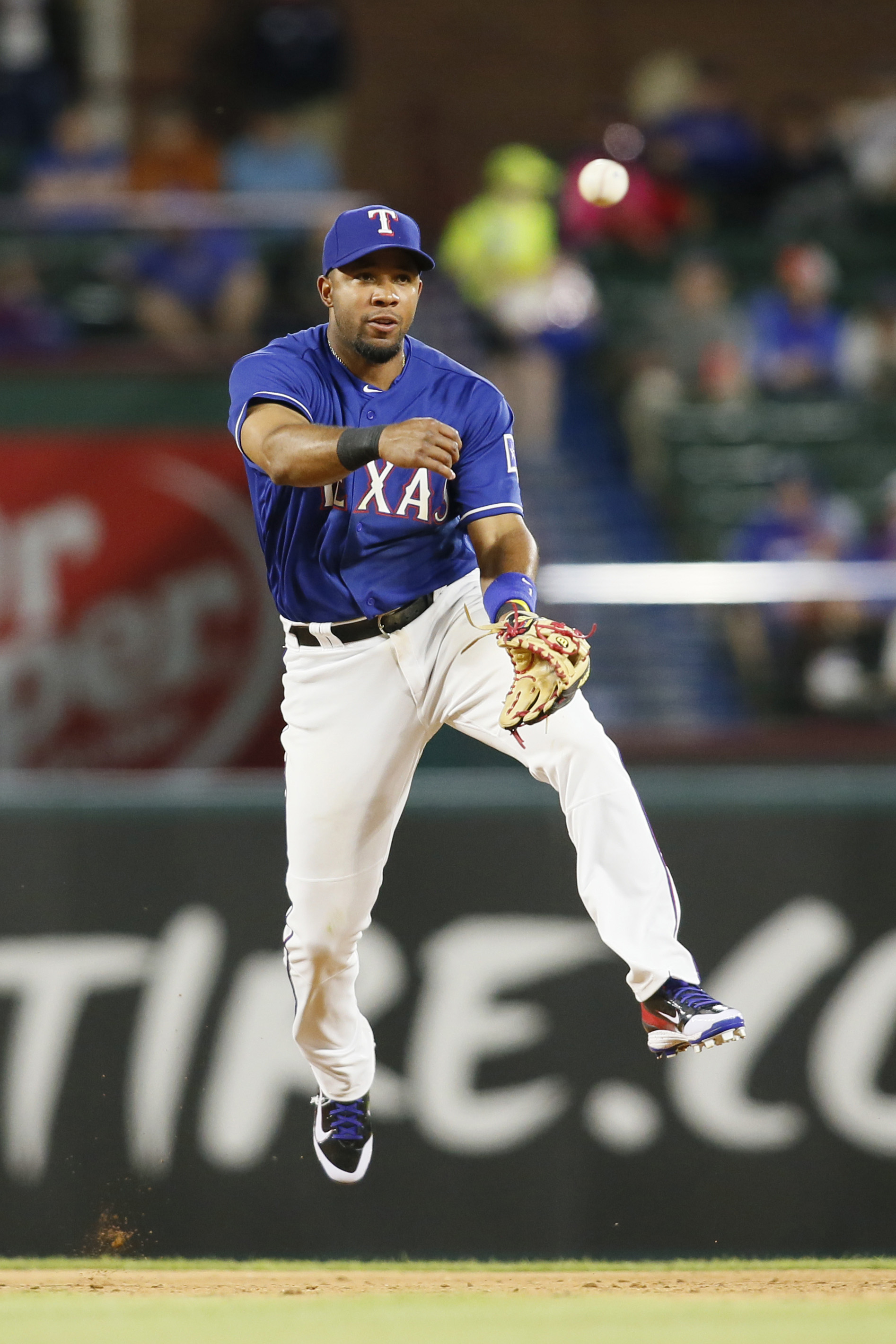
Opt-out provisions are now fairly common, particularly in large free-agent deals and extensions reached with players who already have significant service time. But contracts of the size of the Andrus deal — which guaranteed him $120MM over eight years (beginning in 2015) — are a rarity for players of that general service time. Andrus, who had already agreed to one prior extension, had just begun his 4+ service-class year. Since his deal was made, just two players with at least three but less than five years of service — i.e., experienced players who aren’t entering a contract year — have cleared $100MM in guaranteed money. Those other deals went to franchise faces Giancarlo Stanton and Freddie Freeman.
Indeed, Andrus looks like something of an outlier when you expand the terms further to include 2+ players and look a bit further back. In addition to the three players noted above, here’s the list of players who scored nine-figure guarantees when they had more than two but less than five years of service (within the time period covered by MLBTR’s Extension Tracker):
- Kyle Seager (2+): seven years, $100MM
- Evan Longoria (4+): six years, $100MM
- Ryan Braun (3+): five years, $105MM
- Ryan Howard (4+): five years, $125MM
- Mike Trout (2+): six years, $144.5MM
- Miguel Cabrera (4+): eight years, $152.3MM
- Troy Tulowitzki (4+): ten years, $157.75MM
- Buster Posey (2+): eight years, $159MM
- Joey Votto (4+): ten years, $225MM
Needless to say, these were all players who were (or, at least, were viewed by their organizations as) franchise-level talents. Andrus was certainly on the young side for this group; he was then entering his age-24 campaign. Only Trout and Freeman were younger, the latter only marginally so. And its fair to note that Andrus landed clearly on the low side of the total guarantees included in this somewhat arbitrary list.
Still, it was then and remains surprising to see Andrus in such company. Also, the opt-out opportunities weren’t present in those other contracts, which reduced the team’s upside. He had yet to post even a league-average batting line (and wouldn’t crack that barrier until 2016). And though he did rate as a high-quality fielder and outstanding baserunner, he graded out more as a quality first-division regular than a superstar. Fangraphs and Baseball-Reference each valued his 2011 season as his best, with the former crediting him with 4.0 WAR and the latter pegging the overall value at 4.2 WAR.
The first two years after the agreement weren’t kind to the team. Between 2014 and 2015, Andrus slashed just .261/.312/.345. While he swiped 52 bags, he was gunned down on 24 attempts. And his fielding grades took a precipitous tumble. Entering the 2016 season, Texas was still on the hook for $103MM over the following seven years. And it seemed rather unlikely that Andrus would bail on the contract’s back end.
Things did change for the better last year, however. Though Andrus didn’t recover his standing as a baserunner and gloveman, he did finally break through somewhat at the plate. Over 568 plate appearances, he slashed .302/.362/.439 — representing career-best marks in all three categories and working out to a 112 wRC+. There were some underlying changes at work, many of which represented carryovers from a shift that began the season prior. It was in 2015 that Andrus began to take a more aggressive approach, increasing his swing rate, producing a big drop in his groundball-to-flyball ratio and increasing the number of balls he pulled while largely maintaining his typically excellent contact skills.
Of course, Andrus wasn’t all that good with the bat in 2015. The biggest difference between that season and his strong 2016? Yep, a fifty point jump in BABIP (from .283 to .333). It’s an open question whether 2015 was weighed down by bad luck or whether 2016 was boosted by good fortune — perhaps the answer lies somewhere in the middle — but the Rangers will surely hope it’s the former. Andrus has hit well in the early going in 2017, despite carrying a .278 BABIP, though it’s far too soon to know whether that will continue.
As things stand, Andrus will open the current season with a six-year, $88MM deal that still includes the two opt-out chances. (Andrus can opt out of four years and $58MM or three years and $43MM.) It’s questionable whether he’d have received anything like that on the open market this past winter, though perhaps that depends in part upon how organizations view his current tools and how they value his 2016 season — which B-Ref values at a robust 3.7 WAR, but Fangraphs pegs at only 2.1 WAR.
It seems rather unlikely that the Rangers will get the kind of value they hoped for when they paid Andrus like a premier player. Indeed, they arguably didn’t even receive a fair ROI for the $15MM salaries Andrus took down in each of the past two seasons. But it’s still possible the deal could work out reasonably well over the long run, or even that he’ll find cause to opt out; after all, with two productive years, Andrus could conceivably expect to find yet more money on the open market in advance of his age-30 season.
Photo courtesy of USA Today Sports Images.
Offseason In Review: Texas Rangers
This is the latest entry in MLBTR’s Offseason In Review series. The full index of Offseason In Review posts can be found here.
Facing a number of high-profile defections and about as many big holes, the Rangers faced a tough task this winter. Their acquisitions are just talented enough to work out well for them, but they’ll need some luck to approach their 95-win total from 2016.
Major League Signings
- Carlos Gomez, OF: one year, $11.5MM
- Andrew Cashner, RHP: one year, $10MM
- Mike Napoli, 1B: one year, $8.5MM, including $2.5MM buyout on $11MM 2018 team option
- Tyson Ross, RHP: one year, $6MM
- Dillon Gee, RHP: Major League contract
- Total spend: $36MM
Trades And Claims
- Acquired RHP Tyrell Jenkins and LHP Brady Feigl for RHP Luke Jackson (the Rangers later lost Jenkins on waivers)
- Acquired RHP Eddie Gamboa from Rays for a player to be named
- Claimed RHP Tyler Wagner from Diamondbacks
- Claimed RHP Mike Hauschild from Astros
- Claimed RHP Brady Dragmire from Pirates (later outrighted)
Notable Minor League Signings
Josh Hamilton, James Loney (since released), Travis Snider, Will Middlebrooks, Allen Webster, Anthony Bass, Bobby LaFromboise
Extensions
- Rougned Odor, 2B: six years, $49.5MM, including $3MM buyout on $13.5MM option for 2023
- Robinson Chirinos, C: one year (2018), $2.35MM, including $100K buyout on $2.375MM option for 2019
Contract Options
- Jonathan Lucroy, C: $5.25MM or a $250K buyout (exercised)
- Derek Holland, SP: $11MM or a $1.5MM buyout (declined)
Notable Losses
Ian Desmond, Carlos Beltran, Mitch Moreland, Colby Lewis, Holland
Needs Addressed
Heading into the winter, the Rangers faced a number of potential high-profile defections, including those of Ian Desmond, Carlos Gomez and Carlos Beltran, and a limited amount of cash with which to address them — the Rangers’ budget was somewhat restricted by high-dollar, low-value contracts such as those of Prince Fielder and Shin-Soo Choo, as well as expensive deals for Cole Hamels, Adrian Beltre, Elvis Andrus and Yu Darvish.
In particular, the Rangers needed to replace key players in their outfield, upgrade their rotation and find a solution at first base and/or DH. In their rotation, the Rangers sensibly declined longtime starter Derek Holland‘s $11MM option, paying him a $1.5MM buyout after a season in which he posted a 4.95 ERA, 5.6 K/9 and 2.9 BB/9 while struggling with shoulder trouble. They also parted ways with another longtime starter, 37-year-old Colby Lewis, whose 3.71 ERA in 2016 masked lousy peripherals. Lewis remains a free agent.
The free-agent market for starting pitchers was poor, giving the Rangers limited opportunities to find another solid starter to complement Hamels, Darvish and Martin Perez. Instead, they gambled on two interesting former Padres arms, Andrew Cashner and Tyson Ross. Both are relatively young pitchers with tantalizing stuff, but they also both come with major question marks.
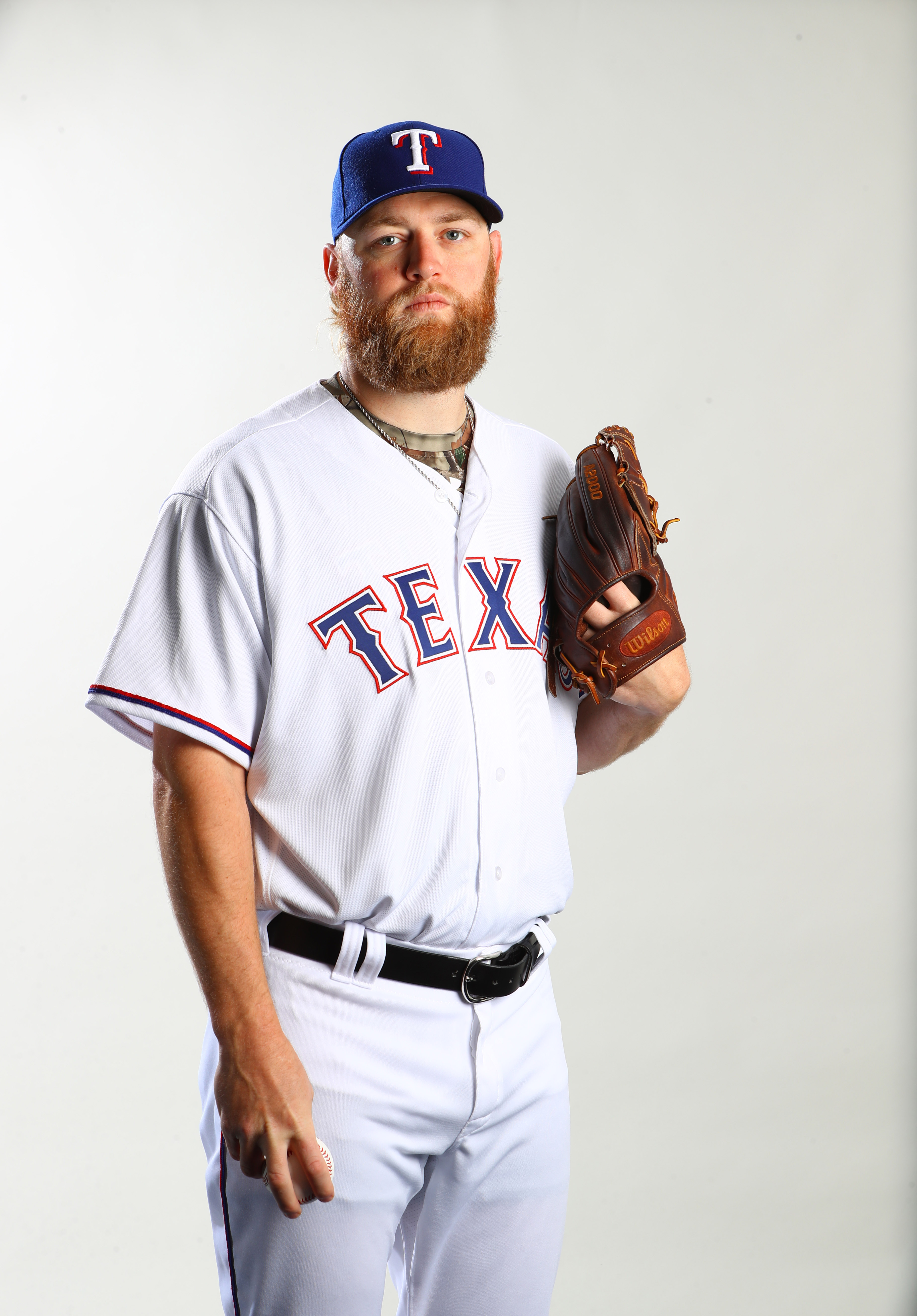 Cashner received $10MM and will enter the Rangers’ rotation as soon as he’s ready, likely sometime late this month. The 30-year-old brings mid-90s heat and a hard slider, but he’s never gotten the sorts of strikeout rates you’d associate with that repertoire, and he’s coming off a season in which he posted a 5.25 ERA, 7.6 K/9 and 4.1 BB/9 while fading down the stretch. It will be up to the Rangers to figure out why. Cashner has used his changeup less and less frequently over the years, and the pitch has been less effective when he’s thrown it; reestablishing that pitch might be a key to reviving his career. As Fangraphs’ Eno Sarris points out, Rangers catcher Jonathan Lucroy might be able to help Cashner with his quality pitch framing. In any case, Cashner’s an interesting gamble, although $10MM seems like a lot to pay given his recent performances. He’ll also begin the season on the DL due to biceps tendinitis.
The Rangers also added Tyson Ross, whose main problem is health. The 29-year-old had back-to-back excellent seasons in San Diego in 2014 and 2015, but pitched only one outing in 2016 due to shoulder trouble, and finally had offseason surgery to relieve thoracic outlet syndrome. The Padres non-tendered him in December, and the Rangers lured him away from the Cubs with a $6MM deal. He isn’t ready yet, but he’s progressed to throwing bullpens and simulated games, and could be ready to join the Rangers early in May. It remains to be seen whether the Rangers will be getting the pitcher who struck out a batter an inning and posted ground-ball rates in the 60% range in 2014 and 2015. Ross can help them if he’s even half that good, but it’s difficult at this point to project with any certainty that he will be.
The Rangers thus began the season with a rotation that features neither of the key starting pitchers they acquired. Darvish, Hamels, Perez and A.J. Griffin (who struggled to a 5.07 ERA, 8.1 K/9 and 3.5 BB/9 in 2016 after missing two full seasons to injury) will comprise the initial rotation, with Cashner perhaps joining in mid-April when the team needs a fifth starter. The Rangers initially signed Dillon Gee to a minor-league deal, and then, after he opted out, re-signed him to a big-league contract and optioned him to Triple-A; he represents an alternative if Cashner isn’t ready to go. Given the considerable question marks surrounding Cashner, Ross, Griffin and Gee (and, if we want to get really pessimistic, Perez, who posted a very shaky 4.7 K/9 last season), the Rangers’ rotation still looks iffy, although it’s also easy to see the upside if Cashner and Ross pan out.
In the outfield, the Rangers lost Desmond to the Rockies, who agreed to pay him $70MM over five years. The Rangers, meanwhile, received the No. 29 pick in this year’s draft as compensation. The Rangers had interest in Desmond, but were wise not to match the Rockies’ offer — Desmond’s resurgence in 2016 was fueled by a career-best .350 BABIP, and he’s already 31.
Instead, the Rangers retained another outfielder, re-signing Carlos Gomez to a short-term deal to man center field. Gomez’s career seemed to be falling apart when the Astros released him last August, but he caught on with the Rangers down the stretch and batted .284/.362/.543, numbers worthy of his brilliant 2013-2014 run with Milwaukee. That sort of production probably won’t continue, but for a mere $11.5MM, the Rangers can get a good deal even if Gomez’s offense tails off. His hitting is hard to predict, and his 30.0% strikeout rate for the 2016 season is a bad sign, but he has defensive and baserunning value going for him, plus a bit of home-run power. All things considered, he seems good for about two wins above replacement, which would rather easily make him worth the value of his contract.
For first base and DH, the Rangers turned to another familiar face, that of Mike Napoli. The Rangers faced the loss not only of Beltran, but also longtime first baseman Mitch Moreland, whose production faded in 2016. Minor-league über-slugger Joey Gallo looked like an obvious candidate to take over at first, but the Rangers made clear at the beginning of the offseason that they felt the 23-year-old Gallo, who whiffed in a ghastly 34.6% of his plate appearances at Triple-A last year, ought to start 2017 in the minors. (Gallo began the season in the Majors anyway, taking over at third for Beltre, who is nursing a calf injury.)
Napoli is coming off a 34-homer season in Cleveland. The 35-year-old has always fared well in Texas — he had two of the best years of his career there in 2011 and 2012, and also was productive after the Red Sox dealt him to the Rangers in August 2015. It’s not a given his third stint with the team will go as well, given his age and his seemingly limited ability to hit for average. He batted just .248 in 2014, .227 in 2015 and .239 in 2016, and if his ability to make contact declines at all, he might have trouble hitting enough homers to compensate. As with the Gomez deal, though, it’s hard to argue with the limited commitment the Rangers made, coughing up only $11MM guaranteed and getting a 2018 team option in the deal as well.
The Rangers also exercised Lucroy’s $5.25MM 2017 option (probably the easiest move they made this winter), and extended backup Robinson Chirinos. Chirinos’ extension bought out his 2018 season, which would have been his last season of arbitration eligibility, for just $2.35MM, likely less than he would have gotten had he been even modestly productive in 2017. The Rangers also received a cheap option for 2019, giving them a couple years of flexibility as they prepare for Lucroy’s possible departure to free agency next winter. Chirinos had never been paid more than $1.55MM in a season prior to the extension, and, at age 32, might never have gotten another shot at a multiyear, multimillion-dollar contract. His new deal thus provides him with a bit of financial security.
Questions Remaining
The Rangers never did acquire another player to help at DH, and it appears they’ll have Choo soak a number of plate appearances there. In a vaccum, that makes sense — Choo has rated as a below-average outfield defender in the past several seasons, and he’s had health problems to boot. With Nomar Mazara slated for the bulk of the time in right, that leaves left field open to one of the most wide-open time shares in baseball.
Delino DeShields arguably sits atop the depth chart at left field, which seems like a questionable proposition. DeShields is coming off an outstanding spring in which he posted a .442 OBP, but he’s coming off a miserable 2016 season in which he batted just .209/.275/.313. At just 24, DeShields is young enough to improve, and he’ll certainly make the Rangers’ defense better. But his bat is a question mark. Neither Ryan Rua nor Drew Robinson have established a track record of offensive production at the major league level, but they’ll also factor in the mix.
Then, there’s Jurickson Profar, once an elite prospect and now something of a super-utility option. Though there was reported trade interest over the winter, Texas elected to hang onto Profar to see if he can restore some of his lost luster. He will participate in the game of musical chairs in left and might also step into the infield wherever a need arises. Gallo, too, could theoretically shift to the corner outfield in addition to seeing time in the corner infield or at DH, depending upon how the season progresses. For both of these top prospects, it’s something of a make-or-break year for their futures with the Rangers.
Then there’s the Rangers’ pitching staff. It’s always hard to know how a bullpen will perform, but the Rangers’ looks fine — their 2016 ‘pen didn’t rate well overall, but they’re returning most of the relievers (including Sam Dyson, Matt Bush, Tony Barnette and Alex Claudio) who were key to their second half, when their bullpen did an outstanding job keeping the ball on the ground and were very effective overall. Another key reliever, Jake Diekman, will be out until at least the All-Star Break after having colon surgery. Jeremy Jeffress will need to keep his off-field issues in check to play his expected role; if he can do that and remain effective, then either he or Bush would represent alternatives at the closer role if Dyson’s early struggles continue.
They’ll have to get the ball to those pitchers, though, and their rotation looks like it could quickly boil down to Hamels, Darvish and then a bunch of uncertainties, particularly if Cashner and Ross don’t reemerge.
Deal Of Note
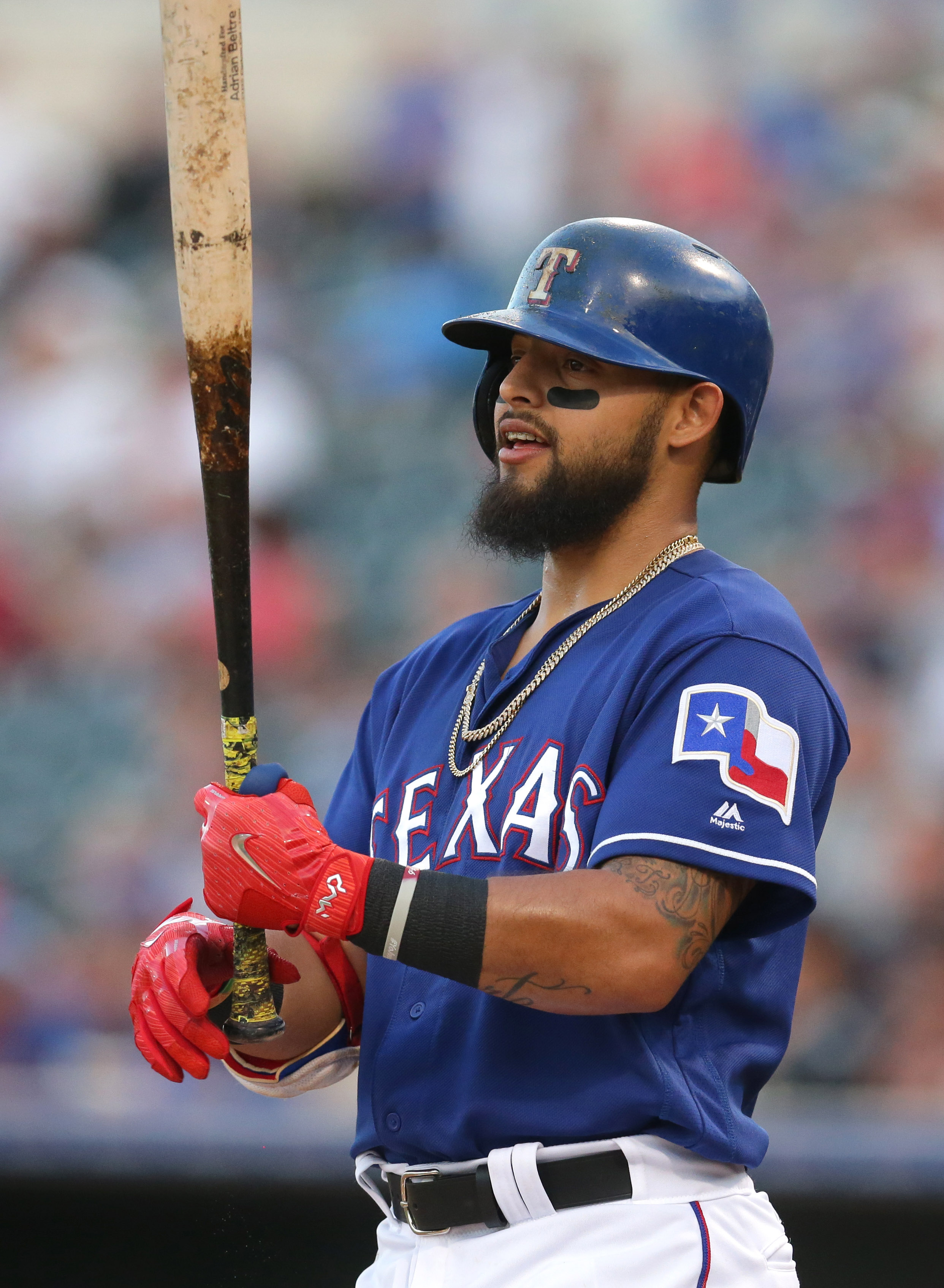 Late in Spring Training, the Rangers announced that they’d signed second baseman Rougned Odor to a six-year, $49.5MM deal with a club option for 2023. The deal buys out what would have been Odor’s first two free agent seasons, with an option for a third.
The deal is roughly comparable to recent six-year, one-option extensions for fellow second basemen Jason Kipnis and Matt Carpenter, who received $52.5MM and $52MM, respectively, when they had between two and three years of service time. It’s also interesting to compare Odor’s deal to that of another infielder’s recent extension: that of Jose Ramirez, who received just $26MM over five years and gave up two option years. Even if the Indians exercise Ramirez’s first option, he’ll only receive a total of $35MM, far less than Odor, Kipnis or Carpenter received.
It’s debatable whether Odor will be as valuable as Kipnis or Carpenter have proven to be — Odor produced a mere .296 OBP and questionable defensive numbers in 2016. But the outlier here is Ramirez’s contract, not Odor’s, and that ultimately isn’t surprising. Kipnis, Carpenter, Ramirez and Odor were all early enough in their careers at the time of their extensions that many of the yearly salaries their extensions covered would have been governed by the arbitration process, which values counting stats. While Odor doesn’t have the overall track record Kipnis or Carpenter did, his 33-homer total in 2016, if sustained, probably would have gotten him paid at a similar rate. That’s particularly likely since the Kipnis and Carpenter contracts are both now three years old.
Ramirez, meanwhile, had two uneven years before his breakout 2016 and hasn’t posted outstanding counting stats in any category. As a player, I’d probably prefer Ramirez to Odor, due to Ramirez’s defense and versatility, as well as the greater likelihood that he’ll continue to reach base at a palatable rate. But it makes sense that Odor was the one who got the big contract.
These are, of course, different questions than whether the Rangers should have extended Odor. Odor whiffed seven times as often as he walked in 2016, a worrying sign. He only recently turned 23, though, so there’s plenty of room for growth. And even if his career stagnates, his deal is still fairly cheap in the grand scheme of things despite being considerably more expensive than Ramirez’s, and his positional value, power and age insulate the Rangers somewhat against the possibility that the deal will go south.
Overview
The Rangers’ 95-win 2016 season was built on shaky ground — they only scored eight more runs than they allowed. This year, their weaknesses look fairly obvious, particularly in their rotation. They have enough marquee talent (including Hamels, Darvish, Beltre, and Lucroy, potentially along with players like Odor or young outfielder Nomar Mazara) to contend if things go well, however. Within that context, their signings of Cashner and Ross this offseason look like Hail Mary passes — those gambles don’t appear incredibly likely to produce huge dividends, but could be decisive for the team if they do. The Rangers might have a hard time topping the Astros this season. But it’s easy to see how they could.
If things don’t go as hoped, though, the front office will increasingly face questions about how to handle the next offseason. While the Rangers could revisit extension talks with Darvish and Lucroy, or pursue them on the open market, efforts at new deals fizzled this spring. That could leave two very notable holes on the roster at the end of the 2017 season.
How would you rate the Rangers’ offseason moves? (Link for app users.)
How would you grade the Rangers' offseason?
-
C 41% (701)
-
B 32% (547)
-
D 12% (209)
-
F 9% (155)
-
A 6% (109)
Total votes: 1,721
Rangers Keeping Adrian Beltre On DL
- Adrian Beltre is eligible to return from the 10-day DL today but the Rangers have decided against activating the star third baseman, Evan Grant of the Dallas Morning News reports. Beltre has been out of action due to a right calf strain and isn’t quite ready to play, though he has participated in batting practice and some running drills. Joey Gallo has been filling in at third in Beltre’s absence.
Rangers Unsure If They'll Activate Adrian Beltre On Sunday
This year’s Padres are turning “tanking” into an art form, Joel Sherman of the New York Post writes. The Padres feature three players selected in the Rule 5 Draft, plus an incredibly inexperienced outfield and three starting pitchers who have recently been released. GM A.J. Preller’s strategy this season, Sherman writes, amounts to a “more extreme version of, say, what the Astros and Cubs did” — essentially, being indifferent to winning in the short term in order to get choice draft picks. Notably, Sherman detects a personal tone to criticism of the Padres’ strategy from employees of other organizations, in part because of Preller’s failure to disclose some relevant medical information in past trades, including the deal last season that sent Drew Pomeranz to Boston.
- The Astros have liked what they’ve seen so far of Charlie Morton, who signed a two-year, $14MM deal with the team last winter, Tyler Kepner of the New York Times writes. “I do believe that Charlie Morton isn’t a back-of-the-rotation guy,” said GM Jeff Luhnow during Spring Training. “He hit 97 three times in the first inning yesterday, with a lot of sink on his pitches and good secondary stuff. A healthy Charlie Morton could work himself into the conversation with Dallas Keuchel and Lance McCullers at the top of our rotation.” Morton allowed just two runs and two walks while striking out six in his first start of the year against the Mariners this week, although, uncharacteristically, he allowed 11 fly balls. Morton is excited about his new team’s prospects, Kepner writes. “The whole team is strong,” he says. “I just don’t see how we’re not set up to win.”
- With Rich Hill on the disabled list, the Dodgers will reinsert left-hander Alex Wood into their rotation for Monday’s game against the Cubs, manager Dave Roberts announced Saturday (via Ken Gurnick of MLB.com). Wood wasn’t able to crack the Dodgers’ season-opening rotation, but he has enjoyed plenty of success as a starter. The 26-year-old has racked up 458 1/3 frames from the rotation and recorded a 3.40 ERA, 8.01 K/9 and 2.88 BB/9.
- Rangers third baseman Adrian Beltre is eligible to come off the 10-day DL on Sunday, but the team is unsure if it will activate him, per T.R. Sullivan of MLB.com. “The bottom line is, we are in the information-gathering stage, and how he feels,” manager Jeff Banister said of Beltre, who’s sidelined with a calf injury. “We’ll go from there.” Beltre took live batting practice Saturday, though he’s not yet able to run at full speed. Considering they’re off Monday, the Rangers could opt against activating the 38-year-old in favor of a couple more days of rest.
AL West Notes: Cintron, McHugh, Ross, Faulkner
Former big leaguer Alex Cintron has joined the Astros as an interpreter, as MLB.com’s Brian McTaggart reports. The nine-year veteran, who’s now 38, will primarily function as the club’s Spanish-language liaison while traveling with the team, though GM Jeff Luhnow says he’ll also provide some value “on the baseball operations side of things.” MLB and the player’s association installed a new rule last year requiring every club to carry such personnel, though it seems Houston has added a bit of a wrinkle by hiring a former big leaguer whose duties will extend further.
Here’s more from the AL West’s Texas contingent:
- Astros righty Collin McHugh is slated for a checkup after experiencing elbow and biceps tightness in his Triple-A rehab outing yesterday, as Jake Kaplan of the Houston Chronicle reports. The medical evaluation will obviously dictate how things progress, but as Kaplan writes, Houston must now consider the possibility that McHugh won’t be back for a few more weeks. He had been expected to return to the majors in the next few days, but was only able to work one inning before he was pulled.
- Things seemingly went better for Rangers righty Tyson Ross, who worked three innings in extended spring action, as Evan Grant of the Dallas Morning News reports on Twitter. Next up for Ross is a four-inning outing on April 12th. Obviously, it seems he’ll keep building up while working on a five-day schedule; given the progress thus far, perhaps he’ll be prepared to join the MLB roster in relatively short order. If and when he does, Ross will be throwing his first big league pitches since Opening Day of 2016.
- The Rangers‘ decision to trade lefty Andrew Faulkner yesterday came about after he fell well shy of expectations this spring, as Grant explains. Faulkner, 24, seemed set to compete for a pen job in camp, but never ironed out his mechanics. As Grant details, he lost his feel for the zone so much that he was not even appearing in minor-league games after departing major league camp. The Orioles evidently see some hope still, so for now he’ll take a 40-man spot in Baltimore. Meanwhile, Grant explains, Texas appears likely to utilize the roster spot that was cleared to add another reserve infielder or reliever.
Orioles Acquire Andrew Faulkner, Release Dariel Alvarez
The Orioles announced that they’ve acquired left-hander Andrew Faulkner from the Rangers and released outfielder/pitcher Dariel Alvarez to clear a spot on the 40-man roster. Baltimore will send cash or a player to be named later to the Rangers to complete the swap. The Orioles have optioned Faulkner to Triple-A Norfolk.
Faulkner, 24, has seen time in the Majors in each of the past two seasons, totaling 16 1/3 innings with the Rangers and pitching to a 4.41 ERA with an 11-to-7 K/BB ratio and a 43.4 percent ground-ball rate. He spent the bulk of the season in the bullpen with the Rangers’ Triple-A affiliate, tossing 45 1/3 innings with a 3.97 ERA 7.7 K/9 and 4.0 BB/9. MLB.com rated Faulkner as the No. 30 prospect in the Rangers’ system at the time of the swap, noting that he lost a couple of miles off his fastball in 2016.
When at his best, however, Faulkner is tough on left-handed opponents, as evidenced by the .175/.291/.238 line posted by opposing lefties (including both the Majors and minors) in 2015. The former 14th-rounder (2011) does have some experience in the rotation — nearly half of his 165 minor league appearances have been starts — but he’s worked primarily out of the bullpen across the past couple of seasons.
As for the 28-year-old Alvarez, it was reported earlier today that the outfielder-turned-pitcher is likely to require Tommy John surgery after suffering an elbow injury. The Cuban defector has been in the Orioles organization since the 2013 season but received just 35 plate appearances in the Majors. Alvarez has spent significant time at the Triple-A level in each of the past three seasons, and while he’s hit fairly well, he hasn’t exactly dominated the level; in 304 games with Norfolk, Alvarez has batted .285/.317/.409. Speculatively speaking, the O’s could re-sign Alvarez to a minor league deal, allowing him to rehab with the team and then to continue making his transition to the mound once he returns to health.
Pitching Notes: Kela, Gomez, Felix, Arroyo
As was reported recently, the Rangers have no interest in trading recently demoted power righty Keone Kela, who was optioned owing to his negative impact in the clubhouse. Both Evan Grant of the Dallas Morning News and Jeff Wilson of the Fort Worth Star-Telegram provide further detail on what went wrong, and you’ll want to check out those pieces for the full rundown. All said, it seems there’s plenty of space for Kela to work back into good standing with the organization, though it’s anyone’s guess how long he’ll be shelved in the minors and what it will take for him to return.
Here are a few more pitching notes from around the game:
- The Phillies took home an Opening Day win after Jeanmar Gomez shut the door in the ninth, but the closer role seems far from settled. As Ryan Lawrence of the Philly Voice reports, manager Pete Mackanin acknowledged after the game that he’s “concerned” with Gomez — who gave up a two-run home run and, in the skipper’s assessment, is struggling to work down in the zone. It seems the club will stick with him for now, but Mackanin suggested continue to evaluate and won’t hesitate to pull Gomez if he’s struggling.
- Long-time staff ace Felix Hernandez left his start yesterday for the Mariners with groin tightness, as Ryan Divish of the Seattle Times reports (Twitter links). But the expectation is that he won’t miss any time; the veteran righty says he’ll be ready for his next scheduled outing “for sure.” He did miss time last season with a calf strain that proved worse than initially suggested, though of course there’s no reason to believe this new injury will follow a similar course.
- Veteran hurler Bronson Arroyo is on track to return to the majors, as Mark Sheldon of MLB.com writes. After a sim game on Sunday resulted in “very, very positive reports,” in the words of manager Bryan Price, it seems Arroyo is slated to make his first MLB outing of the year on Saturday. Arroyo has battled injury ever since going he required Tommy John surgery in the middle of 2014, but has remarkably positioned himself to make it back to the hill at 40 years of age.
Rangers Agree To New Deal With Dillon Gee
APRIL 3: Gee will earn at a $2MM annual rate while playing in the majors and can achieve up to $1MM in incentives, according to Jon Heyman of Fan Rag (via Twitter). Also of note: Gee has agreed to a 45-day advance consent provision.
MARCH 31: The Rangers have agreed to a new contract with right-hander Dillon Gee, reports MLB.com’s T.R. Sullivan (all Twitter links). Gee triggered the opt-out clause in his minor league deal with Texas earlier this week, giving the team 48 hours to add him to the 40-man roster or grant him his release. Gee is a client of SSG Baseball.
Instead, the two sides have agreed to a new Major League pact with the understanding that Gee will open the year as a starter at Triple-A Round Rock and have a chance to quickly emerge as the Rangers’ fifth starter, according to Sullivan. Gee will be on the 40-man roster — Sullivan notes that Chi Chi Gonzalez will likely head to the 60-day DL in a corresponding move — and could potentially be called upon when Texas first needs a fifth starter, on April 15. It’s not known if right-hander Andrew Cashner, who is currently dealing with biceps tendinitis, will be ready to take the hill at that time, but Gee represents a solid alternative in the event that Cashner isn’t able to pitch by that point.
The 30-year-old Gee enjoyed a very nice Spring Training with Texas, putting him in position to force a decision out of the Rangers. In 19 2/3 innings during Major League camp, Gee logged a 3.20 ERA with a stellar 18-to-3 K/BB ratio. While he’s been tagged for 25 hits, only one of those has left the yard for a home run. His final outing, which came against his former Royals teammates, included six shutout innings with just two hits allowed and nine strikeouts.
Gee underwent surgery in October to alleviate thoracic outlet syndrome, though his high-quality Spring Training results suggest that he’s perfectly healthy now, of course. It’s not known to what extent that medical issue hampered Gee in 2015-16 (if at all), but the right-hander has struggled in the past two seasons with the Mets and Royals (4.97 ERA in 164 2/3 innings). Prior to that he’d logged a 3.91 ERA with 6.5 K/9 against 2.5 BB/9 in 639 1/3 innings for the Mets.
Rangers Could Push Andrew Cashner's Season Debut Back
- Rangers righty Andrew Cashner seemed likely to return from biceps tendinitis by April 15, the first time the team will need a fifth starter, but that’s n0w in doubt. Pitching coach Doug Brocail told Evan Grant of the Dallas Morning News that he’s “not real optimistic” Cashner will debut in two weeks, and noted: “I want to make sure that when we get him back, we get him back for the full year. I don’t want any setbacks.” In the meantime, Texas could turn to Dillon Gee and/or Nick Martinez to fill in for Cashner.
Rule 5 Pick Mike Hauschild Makes Rangers
- Righty Mike Hauschild has made the Rangers’ Opening Day roster, according to TR Sullivan of MLB.com. The Rangers took Hauschild from the AL West rival Astros in December’s Rule 5 draft. The 27-year-old is now in line to make his major league debut, having spent the previous five years in the minors after going to Houston in Round 33 of the 2012 amateur draft. He worked exclusively as a starter at Triple-A over the past two seasons and posted a 3.33 ERA, 7.9 K/9 and 2.7 BB/9 in 227 1/3 innings.