
Cubs Designate Sergio Alcantara For Assignment
The Cubs have designated infielder Sergio Alcantara for assignment, per a team announcement. His spot on the 40-man roster will go to veteran reliever Mychal Givens, whose previously reported one-year deal has now been formally announced by the team.
Claimed off waivers out of the Tigers organization in Feb. 2021, Alcantara wound up appearing in 89 games with Chicago — most of which came after the team had stripped down the roster with a July fire sale that saw Kris Bryant, Javier Baez and Anthony Rizzo traded (among others). The 25-year-old Alcantara logged 255 plate appearances with the Cubs but managed only a tepid .205/.303/.327 batting line during that stretch — his first extended look at the MLB level. He’d previously had a brief 10-game, 23-plate appearance cup of coffee with Detroit in 2020.
In addition to that lackluster showing in the big leagues, Alcantara owns a pedestrian .261/.340/.317 batting line in 822 plate appearances at the Double-A level. He did hit .305/.447/.451 in a small sample of 103 Triple-A plate appearances in 2021, but that’s an outlier relative to his overall body of work in the minors. Offense, however, has never Alcantara’s calling card anyhow. He’s regarded as a plus defensive player at shortstop who can also handle second base and third base. He’s also walked in 11.1% of his minor league plate appearances against a 17.1% strikeout rate, showing solid bat-to-ball skills and a good knowledge of the strike zone.
An above-average runner with a strong throwing arm and good defensive skills on the whole, Alcantara could potentially be of interest to clubs around the league as they evaluate bench options for the expanded 28-man roster early in the season. He has a minor league option year remaining as well, so he can provide some additional bench flexibility throughout the season. The Cubs will have a week to trade Alcantara or attempt to pass him through outright waivers.
Latest On Willson Contreras
The Cubs have overhauled a good portion of their roster this winter. Among the most impactful moves was bringing in veteran backstop Yan Gomes — the top catcher in this year’s free agent crop — on a two-year deal prior to the lockout.
That has naturally led to some trade speculation regarding incumbent catcher Willson Contreras, who’s entering his final year of club control. There hasn’t been much firm indication the Cubs have shopped the 29-year-old this winter, but they’d also yet to open talks regarding a possible long-term extension with his representatives as of last week.
Speaking with Bruce Levine of 670 The Score over the weekend, an emotional Contreras acknowledged the possibility he could either be dealt or depart the organization via free agency next winter. “This is something that is really tough for me,” the two-time All-Star said. “Personally, the relationships I have with the team, players and fans, (leaving would) be something that will be really tough to take. This is something very emotional for me, knowing all that I have had to go through to get to this point. It’s going to be really tough and very emotional.”
Levine reports that the Yankees and Padres are among the teams that have checked in with the Cubs to gauge Contreras’ availability, although it’s not clear if any discussions are currently ongoing. Chicago certainly doesn’t have to trade the right-handed backstop, as the implementation of the universal designated hitter could allow manager David Ross to pencil both him and Gomes into the lineup on a regular basis. The Cubs’ fairly active offseason suggests they’re not punting the 2022 campaign entirely, and keeping both players would give the team enviable depth behind the dish and the opportunity to lengthen the overall lineup.
That said, one could argue that having Contreras and Gomes as a 1A/1B tandem between catcher and designated hitter isn’t an optimal deployment of those players. Both are good hitters for catchers, but neither has the kind of offensive track record that’d make them great fits as regular options at the DH spot. Contreras is the better offensive player of the duo, but even he falls a bit shy of the typical output expected from the bat-only position.
Contreras has been an above-average hitter by measure of wRC+ in each of his six career seasons. Going back to the start of 2020, he owns a .239/.345/.429 line, numbers that check in nine percentage points above the league average. That’s markedly better than the .230/.307/.392 figure put up by catchers around the league, but it’s not elite middle-of-the-order output overall. Most American League teams have increasingly preferred to cycle various regulars through the DH spot as quasi-rest days unless they have an excellent bat-only player to plug in. Just seven hitters tallied 300+ plate appearances as a DH last year; of that group, only Miguel Cabrera didn’t outhit Contreras.
While he might not be a great fit for semi-regular DH time, Contreras should hold plenty of appeal to catching-needy teams. The Yankees make an unsurprising possibility after trading away Gary Sánchez. New York is presently slated to roll with Kyle Higashioka and Ben Rortvedt behind the dish. That duo figures to be capable defensively but doesn’t seem likely to come close to Contreras’ production at the plate.
The Padres making a run would be more surprising, as San Diego already has something of a logjam at catcher. Contreras’ price tag could also prove problematic for the Friars. MLBTR contributor Matt Swartz projects him for an $8.7MM salary in his final year of arbitration. That’d come with a matching luxury tax hit, and the Padres already have around $224MM in CBT commitments, in the estimation of Jason Martinez of Roster Resource. Acquiring Contreras would push the Friars right up against or perhaps past the $230MM base tax threshold, and Dennis Lin of the Athletic wrote last week the club would prefer to not surpass the CBT marker for the second straight season.
Aside from Contreras, there don’t seem to be many options for teams looking to upgrade behind the plate before the start of the season. Almost all the free agent options at the position have been signed, and there aren’t any other teams who seem likely to make regulars available in trade. The A’s might entertain the possibility of moving Sean Murphy, but that seems unlikely since he has yet to even reach arbitration eligibility. The trade market may just consist of depth types like Reese McGuire and Jorge Alfaro if the Cubs elect to hold onto Contreras.
Cubs, Robel Garcia Agree To Minor League Deal
The Cubs signed infielder Robel García to a minor league contract over the weekend, according to the transactions tracker at MLB.com. The switch-hitting infielder returns to the organization with which he began his MLB career.
García broke into pro ball with the Indians in 2010 but didn’t advance past Low-A in three-plus years in the system. He was out of affiliated ball entirely for some time, but García posted big numbers playing professionally in Italy between 2017-18. The Cubs were intrigued and brought him back to the affiliated ranks on a minors pact over the 2018-19 offseason.
Upon stepping into the high minors in the system, García picked up where he’d left off in Italy. He tore the cover off the ball for a month in Double-A, then hit .281/.361/.585 with 21 home runs over 296 plate appearances at Triple-A Iowa. The Cubs selected him to make his major league debut that July, and he appeared in 31 games. The Dominica Republic native hit five homers in 80 plate appearances, but he also struck out 35 times while drawing just seven walks.
Chicago waived García the following July, and he was claimed by the division-rival Reds. After spending the 2020 season at Cincinnati’s alternate training site, he bounced around the waiver wire from the Mets to the Angels to the Astros. García stuck in Houston for the bulk of last year, tallying a personal-high 117 plate appearances over 47 games. He hit only .151/.216/.208 with one homer in that time, though, and he struggled to a .162/.272/.368 mark over 32 games with Triple-A Sugar Land.
The Astros designated García for assignment and outrighted him off their 40-man roster last September. He elected minor league free agency and now returns to the place where he began the second act of his career. Swing-and-miss has been a clear problem for García, who has punched out in 33.1% of his Triple-A plate appearances and nearly 40% of his big league trips to the dish. Yet he’s capable of playing anywhere on the infield and has flashed some power potential in the past. The Cubs will take add him back to the organization, although it might be hard for García to crack an Opening Day infield mix that figures to include Andrelton Simmons, Nico Hoerner, Nick Madrigal, Jonathan Villar and Patrick Wisdom.
Cubs To Sign Steven Brault
March 21: Brault’s deal has been reworked as a minor league contract with a non-roster invite to Spring Training and a July opt-out opportunity, tweets Bastian. The veteran lefty is now dealing with an “injury setback” of some type, per Bastian — hence the restructured deal. He’d earn at a $1.5MM rate in the big leagues and can tack on up to $400K worth of incentives.
March 16, 11:30am: Brault is signing a Major League contract with the Cubs, tweets Jordan Bastian of MLB.com.
10:44am: The Cubs are close to a deal with free-agent lefty Steven Brault, tweets Robert Murray of FanSided. The longtime Pirates southpaw became a free agent earlier this offseason when Pittsburgh cut him loose just prior to the non-tender deadline. Brault is represented by Warner Sports Management.
Brault, 30 in April, has tallied 70 1/3 innings for the Pirates since 2020. He was occasionally deployed as an opener in the shortened 2020 season, though he did close out that year by allowing only one earned run over 16 innings across two starts. In March of 2021, Brault suffered a lat strain, pushing his season debut to August 4. In seven starts, he completed five innings only twice, with his velocity down 1.4 miles per hour from the prior year. The lat strain re-occured on September 10, ending his season and six-year career with the Pirates.
Brault’s career high in innings in an MLB season is 113 1/3, back in 2019. In his big league career, he’s generally struggled with walks and hasn’t missed bats. Brault was a two-way player at Regis University, and was drafted by the Orioles in the 11th round in 2013 and traded to the Pirates two years later. The athletic lefty managed to hit .333 in 50 plate appearances back in 2019, and which point the suggestion arose that he could occasionally pitch in in the outfield. If Brault is healthy, there could still be a potential back-end starter in there for the Cubs. They badly need the depth, especially with Adbert Alzolay starting the season on the IL.
Cubs To Sign Jonathan Villar
March 19: The latest breakdown from Feinsand marks the deal as a $4.5MM base with a $1.5MM buyout on a $10MM mutual option for the 2023 season. There are also $500K in incentives tied to the 2022 season.
March 17: The Cubs have reached an agreement with free-agent infielder Jonathan Villar, reports Robert Murray of Fansided. The ACES client’s contract is pending the completion of a physical. Villar’s deal with the Cubs is worth $6MM, tweets MLB Network’s Jon Heyman. The one-year deal also includes a mutual option for the 2023 season and performance incentives that can boost that $6MM base, tweets MLB.com’s Mark Feinsand.
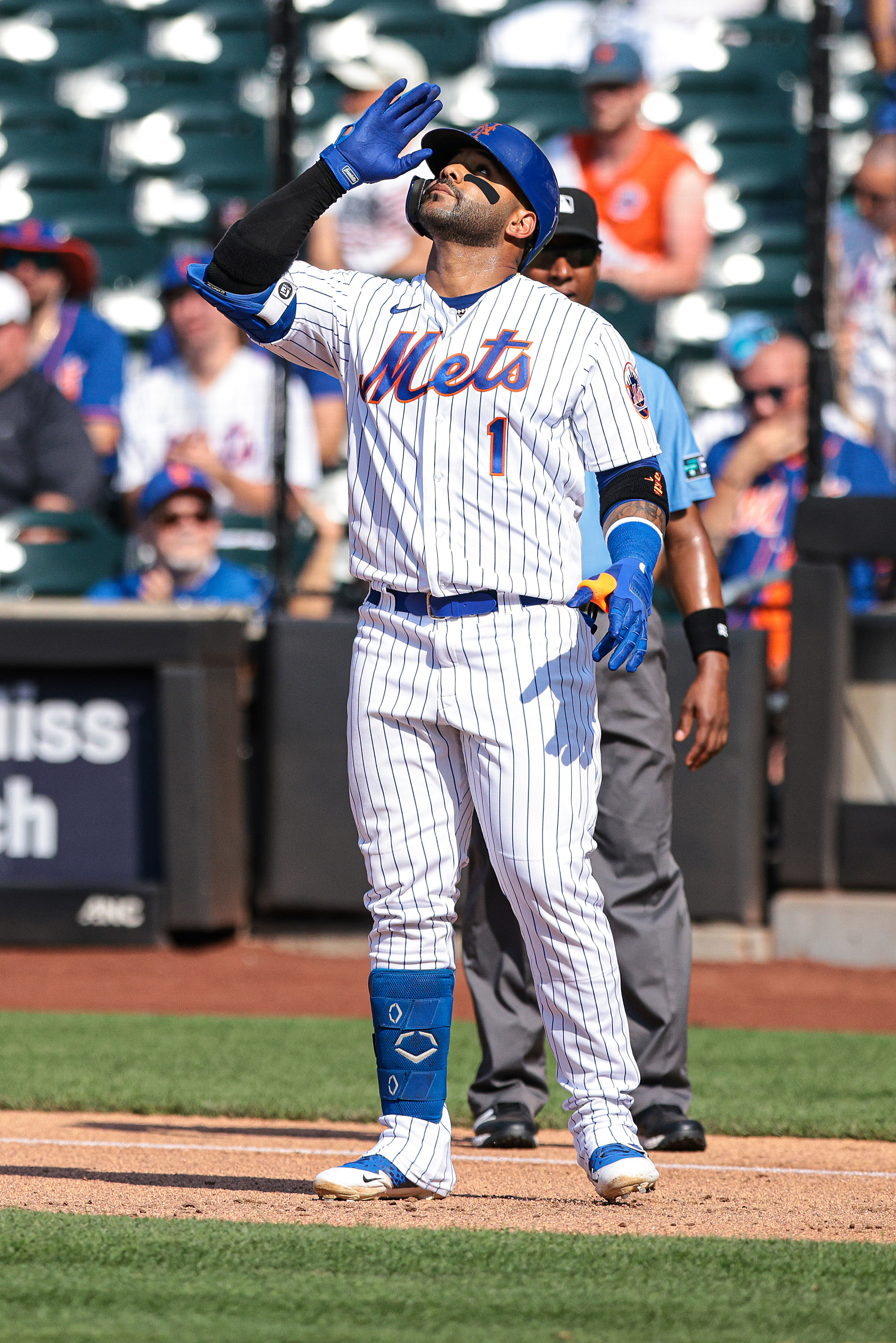
Villar, 30, spent the 2021 season with the Mets, where he put together a solid .249/.322/.416 showing with 18 home runs, 18 doubles, a pair of triples and a 14-for-21 showing in the stolen-base department. That marked the second straight season of solid production at the dish for the switch-hitting Villar, who also slashed .274/.339/.453 with 24 long balls and 40 stolen bases as a member of the Orioles.
Unfortunately for Villar, that pair of above-average seasons at the plate bookended a disastrous 2020 showing that has hampered his earning power in free agency to some extent. Splitting the 2020 campaign between Miami and Toronto, Villar posted a combined .232/.301/.292 line through 207 trips to the plate. Small sample or not, that marked the least-productive year of what is now a nine-year career as a big leaguer — and it came on the cusp of Villar’s first venture into free-agent waters.
The Cubs’ infield picture is largely up in the air at the moment, so it’s not yet clear just where Villar will slot in. He’s capable of playing second base, third base and shortstop, though he’s better suited for the former two positions than the latter. The Cubs are hopeful that former No. 4 overall pick Nick Madrigal, acquired from the White Sox for Craig Kimbrel at last year’s trade deadline, will be able to step up as their everyday second baseman. Madrigal, however, is recovering from surgery to repair a full tear of his hamstring last year, so it’s not a given that he’ll hit the ground running.
At third base, the Cubs currently look like they’ll rely primarily on journeyman Patrick Wisdom. Although Wisdom came out of nowhere to smash 28 home runs last season and post a .231/.305/.518 (115 wRC+) batting line as a rookie, he did so while striking out in a staggering 40.8% of his plate appearances. He can’t be counted upon to repeat last year’s surprising power display if he’s going to continue striking out at a near-41% pace, and Villar will give Chicago some cover at the hot corner if Wisdom takes a step back.
Looking to shortstop, the Cubs will hand things over to veteran Andrelton Simmons. The longtime Braves and Angels defensive standout struggled through an awful year at the plate in his lone season with the Twins last year (.223/.283./274) but remains one of the sport’s best gloves. He’ll probably log the lion’s share of innings at shortstop as he searches for a rebound to prior levels of offense.
Villar can back up any of the three positions, and the Cubs still have former first-round pick Nico Hoerner as an option to fill in around the infield as well. Hoerner, much like Madrigal has virtually no power but possesses excellent bat-to-ball skills and a sharp eye at the plate (14.7% strikeout rate, 10% walk rate in 2021). Each of Madrigal, Simmons, Wisdom and Hoerner hits right-handed, so Villar’s switch-hitting bat gives manager David Ross some more flexibility and additional matchup options.
Cubs To Sign Drew Smyly
The Cubs and starter Drew Smyly are in agreement on a one-year contract with a mutual option for a second year. The first year carries a $4.25MM base with a $1MM buyout on a 2023 mutual option. Smyly, then, is guaranteed $5.25MM over one season with an additional $2.5MM available in potential incentives. The two sides were reportedly close to coming to terms on a deal yesterday.
Smyly should actually get the opportunity to take the hill in Cubbie blue this time: he previously signed a backloaded two-year deal with the Cubs when recovering from Tommy John surgery prior to the 2018 season. He spent that year rehabbing with the organization without ever making an in-game appearance.
After the season, the Cubs dealt Smyly to the Rangers in a bit of financial acrobatics. At the time, the Cubs were trying to bring back Cole Hamels, who had a buyout option that Texas was on the hook to pay if the Cubs didn’t accept a team option. The Rangers were basically given the choice of paying Hamels’ $6MM buyout, or taking on Smyly and his $7MM, one-year deal.
The Rangers chose to avoid the dead money and add Smyly to their rotation. Even if Texas’ hand was forced to a certain degree, they needed pitching, and Smyly seemed a fair and affordable bet to rebound from Tommy John surgery. Unfortunately, he never found his footing with the Rangers, posting a 8.42 ERA across 51 1/3 innings, earning his release in June.
Since then, he’s become a mercenary swingman, finishing the 2019 season with the Phillies, spending the shortened 2020 year with the Giants, and then winning a World Series ring as part of the Braves last season. Smyly did not make the postseason rotation, but he did appear in three games during the run, including twice in the World Series.
During the regular season, he made 23 starts and appeared in 29 games for the Braves, logging a not-insubstantial 126 2/3 innings with a 4.48 ERA/5.11 FIP. Smyly continued a career trend in keeping the ball in the air with just a 39.2 percent groundball rate in 2021. He recorded a 21.4 percent strikeout rate and 7.5 percent walk rate, both numbers fairly close to average marks for a starting pitcher.
For the Cubs, Smyly can help fill out a rotation that’s improved from last year’s unit, but still facing a number of questions. Marcus Stroman, Kyle Hendricks, and Wade Miley make up a veteran front three, but there’s not much beyond that veteran trio, especially with the recent news that Adbert Alzolay will begin the year on the injured list. Smyly becomes the leading candidate for the fourth spot in the rotation, and given the guaranteed money on his deal, he’s a safe bet to at least start the season in the rotation.
Looking over his shoulder, Alec Mills, Steven Brault, Justin Steele, Keegan Thompson, Cory Abbott, Anderson Espinoza, and Brailyn Marquez are other potential rotation candidates. Down the line, Caleb Kilian, Ryan Jensen, Riley Thompson, and Alexander Vizcaino are prospects with some pedigree who could play their way into rotation minutes.
The Athletic’s Ken Rosenthal (via Twitter) broke the initial news of the deal, while MLB Network’s Jon Heyman (via Twitter) added the initial financial terms. MLB.com’s Mark Feinsand provided the details of the mutual option.
Cubs In Discussions With Drew Smyly
The Cubs are “deep in discussions” with free agent Drew Smyly, reports Bruce Levine of 670 The Score (on Twitter). If a deal were to get across the finish line, it’d technically mark Smyly’s second stint as a Cub. The left-hander signed with Chicago over the 2017-18 offseason, but he missed the entire season due to injury and was traded to the Rangers the following winter.
Smyly has bounced between four clubs in the three years since. He split the 2019 campaign between Texas and Philadelphia. After a terrible start to the year with the Rangers, he bounced back to provide the Phils with capable back-of-the-rotation production. The Giants signed Smyly that winter, and while he only worked 26 1/3 innings during the shortened schedule, he struck out an incredible 37.8% of opposing hitters.
That small-sample performance intrigued the Braves enough they rolled the dice on an $11MM guarantee for Smyly last offseason. He didn’t sustain the huge spike in whiffs, though, as his strikeout rate fell to a slightly below-average 21.4% mark. That was much more in line with his career rate, and Smyly struggled to keep the ball in the yard en route to a 4.48 ERA. He did make 29 appearances (including 23 starts) for the World Series champs, absorbing 126 2/3 innings.
There hasn’t been much buzz since Smyly hit the open market this time around, but he’s one of the more accomplished arms remaining in a free agent rotation class that has thinned out. The 32-year-old owns a 4.18 ERA in 837 1/3 innings over parts of eight big league seasons. He’s a generally productive back-end starter who has shown flashes of mid-rotation or better upside during his career. The Cubs don’t have a ton of certainty in the rotation beyond the top trio of Marcus Stroman, Kyle Hendricks and Wade Miley — particularly with righty Adbert Alzolay missing at least the first two months of the season.
Cubs Place Adbert Alzolay On 60-Day Injured List
MARCH 18: The Cubs announced that Alzolay is going on the 60-day injured list. The move clears 40-man roster for Seiya Suzuki.
MARCH 14: Cubs righty Adbert Alzolay, who had been penciled into a rotation spot for 2022, will start the season on the IL due to shoulder tightness, Cubs president of baseball operations Jed Hoyer told reporters today. Hoyer noted that it will not be a short stint on the IL. Unsurprisingly, then, Hoyer said the club is interested in adding more pitching. Overall, Hoyer said, “Certainly we’re going to add a lot more players.”
At present, the Cubs’ rotation projects as Marcus Stroman, Kyle Hendricks, Wade Miley, Alec Mills, and Justin Steele. All of the top free agent starting pitchers are off the board already, but plenty of back of the rotation hurlers remain available. Alzolay made 21 starts for the Cubs in 2021, posting a 5.16 ERA in that role.
Ian Happ, set to start the season as the Cubs’ regular left fielder, had a “clean out” elbow procedure in the offseason but is expected to be 100% soon, Hoyer told reporters.
The Cubs recently added shortstop Andrelton Simmons, and Hoyer commented, “We’re happy with our middle infield.” Nick Madrigal and Nico Hoerner will also figure prominently into that mix.
Cubs Sign Seiya Suzuki
The Cubs continue to show that their current retooling efforts won’t at all resemble the aggressive teardown of a decade ago, announcing on Friday that they’ve signed star NPB outfielder Seiya Suzuki to a five-year contract. Suzuki, a Wasserman client, will reportedly be guaranteed a hearty $85MM on the contract.
Under the NPB/MLB posting system, that means the Cubs will also owe Suzuki’s former team, the Hiroshima Carp, a posting fee of $14.625MM. That brings the total investment in Suzuki to $99.625MM — although only Suzuki’s actual contract (more specifically, its $17MM annual value) will count against the luxury tax. Suzuki will reportedly receive a $5MM signing bonus and be paid annual salaries of $7MM, $17MM, $20MM, $18MM and $18MM on the deal, which contains a full no-trade clause.
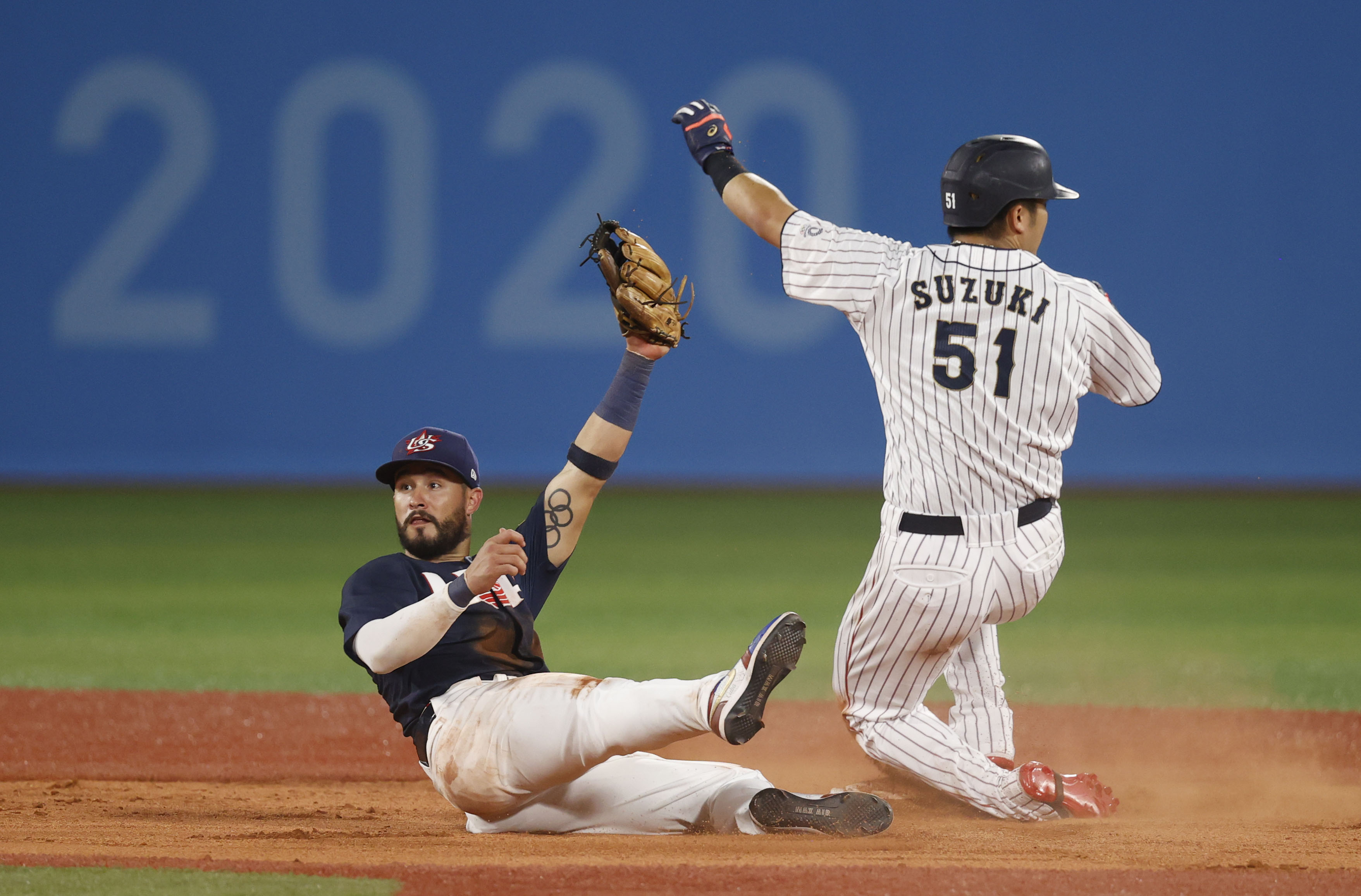
Suzuki hit .317/.433/.639 with 38 home runs in 533 plate appearances for the Hiroshima Carp this year. He’s been one of the best hitters in NPB dating back to 2016, with a career line of .309/.402/.541. He’s hit at least 25 home runs in each of the last six seasons and is a five-time NPB All-Star.
According to MLBTR’s Steve Adams, “The most bullish opinions we’ve gotten peg Suzuki as an everyday Major League right fielder — a solid defensive player with a strong arm and enough power to hit in the middle of a big league lineup.” In August, Dylan Hernandez of the L.A. Times spoke to a Major League scout who compared Suzuki to AJ Pollock, back when Pollock was playing for the Diamondbacks.
Though Suzuki has nine seasons under his belt, he’s still just 27 years old, which is rare for a posted player out of Japan. Suzuki explained to Hernandez, “I think everyone feels they want to play at the highest stage if they can get the chance.” Suzuki was only one year short of international free agency, so the Carp were motivated to be compensated for his departure.
In late November, the Carp posted Suzuki for MLB teams, beginning a 30-day window that was interrupted by the sport’s 99-day lockout. Suzuki was left with 20 days post-lockout to negotiate a deal with an MLB team. On top of his contract, the Cubs will owe the Carp a posting fee equal to 20% of the contract’s first $25MM, 17.5% of the next $25MM and 15% of any dollars thereafter. Only Suzuki’s $17MM average annual value will count toward the competitive balance tax, but the Cubs are a good $78MM short of the $230MM base tax threshold including Suzuki.
Suzuki is a strong-armed prototypical right fielder and a five-time NPB Gold Glove winner. The Cubs still have Jason Heyward under contract for another two years and $44MM, but given Heyward’s struggles at the plate, there’s a good chance Suzuki is taking over his position. Suzuki may spend most of his five-year tenure playing alongside center fielder Brennen Davis, Baseball America’s 16th-ranked prospect.
The news of the Suzuki signing comes on the heels of Anthony Rizzo‘s two-year, $32MM deal with the Yankees. It’s a fitting contrast and representation of the Cubs’ reboot, as Suzuki is five years younger than Rizzo and the Cubs reportedly once offered Rizzo the same contract before trading him and other stalwarts in July last year. Cubs fans will be watching many former stars in different uniforms this year, with Javy Baez having signed in Detroit, the Phillies reaching an agreement with Kyle Schwarber, and Kris Bryant signing with the Rockies. The Cubs’ other big splash came before the lockout, the signing of starting pitcher Marcus Stroman to a three-year, $71MM deal.
Interest was widespread in Suzuki. The Padres, Red Sox, Rangers, Giants, Mariners, Yankees, Blue Jays, Marlins, and Dodgers are among the other teams that were linked to the slugging right fielder.
Pitcher Masahiro Tanaka holds the record for a Japanese player signing in MLB, having landed a seven-year, $155MM deal with the Yankees in January 2014. On the position player side, Suzuki eclipses the four-year, $48MM deal outfielder Kosuke Fukudome signed with the Cubs in December 2007. The only position players to have sustained success in MLB out of Japan have been Ichiro Suzuki, Hideki Matsui, and of course, pitcher/designated hitter Shohei Ohtani.
Sankei Sports first reported the agreement. Ken Rosenthal of The Athletic reported the terms and the no-trade clause, while MLB.com’s Mark Feinsand provided the annual breakdown.
Cubs To Sign Mychal Givens
The Cubs are in agreement with reliever Mychal Givens on a one-year, $5MM guarantee, reports Jesse Rogers of ESPN (Twitter links). Givens will make a $3.5MM salary next season, and there’s a $1.5MM buyout on a 2023 mutual option. The right-hander can make up to $6.25MM in bonuses, Rogers adds.
It’s yet another bullpen pickup for the Cubs, who have revamped the relief corps in recent days. Chicago has also signed David Robertson, Chris Martin, Daniel Norris and swingman Steven Brault to big league deals since the lockout ended. They’ve also brought in Jesse Chavez, Robert Gsellman and Adrian Sampson as non-roster invitees to big league camp.
Givens has been a bullpen workhorse since debuting with the Orioles in 2015. He’s tied for fourth in relief innings pitched over the past six seasons, working 366 1/3 frames over 338 appearances. Givens hasn’t spent any time on the injured list since his rookie year, and he’s consistently provided his managers with an effective arm they can frequently call upon in the middle innings.
Part of an elite back-end group alongside Zack Britton and Brad Brach in his early days with the Orioles, Givens has settled in as “merely” a solid middle relief arm over the past few seasons. He hasn’t posted a sub-3.00 ERA since his 2017 campaign in Baltimore, but he has a mark below 4.00 in three of the last four years. That includes a 3.35 mark in 51 innings last year with the Rockies and Reds, for whom he combined to accrue eight saves.
Givens’ peripherals didn’t quite align with that ERA, though, no doubt contributing to his settling for a one-year pact. The former second-round pick struck out a marginally above-average 25% of batters faced, but his 12.5% walk percentage was a career-high. That’s a couple points north of the league average, and it marked Givens’ third consecutive season issuing free passes at greater than a 10% clip.
Spotty control notwithstanding, Givens adds a durable live arm to the mix for manager David Ross. He averaged 95 MPH on his fastball last season, and the high-spin offering generated plenty of swinging strikes. The low-slot righty has also been a nightmare for opposing right-handed hitters throughout his career, holding them to a .194/.271/.330 slash line. He wasn’t nearly that dominant against same-handed batters last year (.250/.306/.470) but Cubs brass presumably believes the 31-year-old can bounce back in that regard.
The Cubs have overhauled a good portion of the roster in the past few months, but they’ve regrouped and at least made the team much more competitive than it had been towards the end of last season. Chicago has added Seiya Suzuki, Jonathan Villar, Yan Gomes and Andrelton Simmons on the position player side; they’ve acquired Marcus Stroman and Wade Miley to strengthen the rotation and, as mentioned, have completely reshaped the bullpen. They’re still nowhere near the franchise-record $203MM payroll with which they opened the 2019 season, but the Givens pickup bumps them to around $152MM in projected player expenditures, in the estimation of Jason Martinez of Roster Resource. That’s a touch above last season’s $148MM season-opening mark.
Image courtesy of USA Today Sports.