
Cubs To Sign Pedro Strop
Free-agent reliever Pedro Strop is returning to the Cubs, Jesse Rogers of ESPN.com reports. The right-hander will go to their alternate training site.
This will be the second stint on the North Side for the 35-year-old Strop, who was a valuable part of Chicago’s bullpen from 2013-19. He accumulated 373 innings of 2.90 ERA/3.19 FIP pitching with 10.25 K/9, 3.55 BB/9 and a 53.2 percent groundball rate during that span, though Strop’s effectiveness waned last year during his final season of team control. He was unable to secure a multiyear contract in free agency as a result, instead signing a one-year, $1.825MM with NL Central rival Cincinnati.
The Strop-Reds union didn’t go well for either party, as he battled groin issues and only threw 2 1/3 innings with the club before it designated him for assignment Aug. 26. While Strop allowed just one earned run (three total) as a Red, he issued a whopping six walks and saw his average fastball, formerly in the 95-96 range, drop below 92. He’ll now try to work his way back to the majors with the Cubs, who lead their division by 3 1/2 games despite having received uninspiring production from their bullpen. The Cubs have, however, worked to upgrade their relief corps in recent days, as they landed Josh Osich and the currently injured Andrew Chafin at the trade deadline before reuniting with Strop.
White Sox Outright Ryan Goins, Release Drew Anderson
The White Sox have outrighted infielder Ryan Goins to their alternate site, James Fegan of The Athletic reports. Goins is now a member of their taxi squad. Additionally, Chicago released right-hander Drew Anderson.
The White Sox designated Goins for assignment on Monday, which came just over a month after they re-signed him to a minor league pact and selected his contract. The 32-year-old Goins took 14 trips to the plate as a member of the White Sox this season before they designated him, and he went hitless during that span. Of course, offense has never been a strong suit for Goins, who has combined for a .228/.278/.333 line across 1,690 plate appearances among the White Sox, Blue Jays and Royals.
The 26-year-old Anderson, formerly with the Phillies, was a minor league offseason pickup for Chicago who made just one appearance with the team this year. It went rather poorly for Anderson, who gave up six earned runs on four hits (including two homers) and two walks in 1 1/3 innings of an Aug. 8 loss to the Indians. The White Sox outrighted him shortly after that.
Cubs Release Cody Allen, A.J. Ramos; Outright Josh Phegley, Ian Miller
The Cubs have released right-handed relievers Cody Allen and AJ Ramos, Jesse Rogers of ESPN.com was among those to report. They also outrighted catcher Josh Phegley and outfielder Ian Miller to their alternate site after the pair cleared waivers, Jay Cohen of the Associated Press tweets.
Allen, who signed with the Cubs in July, was a dominant closer during his heyday. The former Indian logged a sub-3.00 ERA in each season from 2013-17 and racked up 122 saves during that span. Allen totaled another 27 saves in 2018, his final season with the Indians, but his production tailed off significantly then and continued to worsen during a 23-inning run with the Angels in 2019. The Halos signed Allen to an $8.5MM contract before last season, but after he struggled to a 6.26 ERA/8.38 FIP with 7.83 BB/9 and a career-worst 92.3 mph average fastball velocity, they released him in June. The 31-year-old hasn’t pitched in the majors since then.
Ramos, who will turn 35 on Sept. 20, had a terrific run in Miami from 2012-17, when he notched 99 saves and posted a 2.78 ERA in 327 1/3 innings. They traded him to the Mets in the last of those seasons, though, and Ramos proceeded to slump to a 5.59 ERA in New York over 38 2/3 frames in parts of two seasons. Ramos hasn’t pitched in the majors since May 2018 after undergoing shoulder surgery, though he hoped to make a return to the bigs as a member of the Cubs. He’ll now have to try to latch on elsewhere if he still plans on continuing his career.
Both Phegley and Miller became Cubs on minor league contracts last offseason, but the team designated the two for assignment in recent days. Phegley, formerly the A’s starting catcher, went 1-for-16 as a Cub before they kicked him off their roster. The fleet-of-foot Miller appeared in one of Chicago’s games, but he didn’t record a plate appearance.
Cubs Place Jose Quintana On 10-Day Injured List
The Cubs are placing southpaw Jose Quintana on the 10-day injured with left lat inflammation, Jesse Rogers of ESPN.com reports. They recalled righty Jason Adam to take Quintana’s place on their roster, per Sahadev Sharma of The Athletic.
This continues a year to forget for Quintana, who had to undergo left thumb surgery at the beginning of July and was unable to debut until Aug. 25. Quintana has since thrown six innings of four-run ball with nine strikeouts and two walks over a pair of relief appearances. He’ll now rejoin righty Tyler Chatwood as Cubs starting options on the injured list. The NL Central leaders still have Cy Young contender Yu Darvish, Kyle Hendricks, Jon Lester and Alec Mills around to fill rotation spots, but there’s nobody with a track record rivaling Quintana’s to take his position, and the Cubs can’t look for established outside help now that the trade deadline has passed. For now, it seems the Cubs will turn to righty Adbert Alzolay, who has three MLB starts on his resume.
Quintana is only several weeks from reaching the free-agent market, so it’s far from ideal that he’ll shop his services around the majors off an injury-ruined season. The 31-year-old, previously with the White Sox, has typically been quite durable since his career began in 2012. In fact, from 2013-19, he made 30-plus starts every season and logged 171-plus innings in each of those campaigns.
Cubs Activate Kris Bryant, Steven Souza Jr.
The Cubs have activated Kris Bryant and Steven Souza Jr. off the 10-day injured list amidst a flurry of roster moves this afternoon. To make room for Bryant, Souza, and their trade deadline acquisitions, the Cubs also placed right-hander Tyler Chatwood on the 10-day IL with a right forearm strain, optioned outfielder Albert Almora to their alternate training site, and designated righty Casey Sadler for assignment.
Bryant hasn’t played since August 17, as he suffered a sprained left ring finger (the official cause for his IL stint) and a wrist injury while trying to make a diving catch five days prior. This was the latest in rather a long list of minor health problems for Bryant this season, as he had also previously dealt with some stomach issues as well as back and elbow soreness. Given all of these problems, it probably isn’t surprising that Bryant hasn’t been himself at the plate, hitting only .177/.271/.323 over his first 70 plate appearances.
The Cubs are in first place in the NL Central even without much of a contribution from Bryant, and they’re also hoping to finally get some kind of extended look at Souza, as injuries (a right hamstring strain) and his part-timer status have limited him to just 24 PA this season. Injuries have plagued Souza throughout his career, most notably a major knee operation that sidelined him for the entire 2019 season. The right-handed hitting Souza and new acquisition Cameron Maybin are likely to get some playing time when a left-handed starter is on the mound, spelling the lefty-swinging Kyle Schwarber and Jason Heyward in the outfield.
Chatwood’s placement is retroactive to August 31, and he left his start on the previous day in the third inning due to elbow discomfort. While any forearm problem will be closely monitored, the Cubs do have some expectation that Chatwood will be back before the end of the season, though manager David Ross described Chatwood’s situation as “a long wait-and-see” in a chat with reporters (including Mark Gonzales of the Chicago Tribune) today. The righty has a 5.30 ERA over five starts and 18 2/3 innings for Chicago this season.
Sadler appeared in 10 games for the Cubs in 2020, posting a 5.79 ERA and almost matching his walk total (8) with his strikeout total (9) over 9 1/3 innings of work. The 30-year-old was acquired in a trade with the Dodgers over the winter, and hasn’t been able to replicate in Chicago what he achieved over 46 1/3 innings with Los Angeles and Tampa Bay in 2019 — a 2.14 ERA, 6.0 K/9, and only a 2.5 BB/9, though advanced metrics were less impressed by Sadler’s overall performance.
NL Central Trade Deadline Recap
With the deadline in the rearview mirror, we’ll look back at each NL Central team’s trade activity over the past month.
Chicago Cubs
- Acquired 1B/DH José Martínez from Rays for two players to be named later or cash considerations
- Acquired LHP Andrew Chafin from Diamondbacks for a player to be named later
- Acquired LHP Josh Osich from Red Sox for a player to be named later
- Acquired OF Cameron Maybin from Tigers for INF Zack Short
Cincinnati Reds
- Acquired a player to be named later from Astros for LHP Brooks Raley
- Acquired OF Mark Payton from Athletics for cash considerations
- Acquired RHP Riley O’Brien from Rays for LHP Cody Reed
- Acquired OF Brian Goodwin from Angels for LHP Packy Naughton and a player to be named later or cash considerations
- Acquired RHP Archie Bradley from Diamondbacks for INF Josh VanMeter and OF Stuart Fairchild
Milwaukee Brewers
- Acquired three players to be named later (reportedly RHP Brandon Ramey, RHP Israel Puello and RHP Juan Geraldo) from Phillies for RHP David Phelps
Pittsburgh Pirates
- Acquired RHP Tyler Bashlor from Mets for cash considerations
- Acquired LHP Austin Davis from Phillies for a player to be named later and cash considerations
- Acquired international bonus pool space from White Sox for OF Jarrod Dyson
St. Louis Cardinals
- None
Deadline Day DFAs: Phillies, White Sox, Cubs, Marlins
Given the flurry of transactions around the deadline, a number of players have been designated for assignment. This is, of course, the natural consequence of such a dramatic amount of shuffling to the roster via trade. These players will be available to the 29 other teams via waiver claim. We’ll use this post to track some of the more recent DFAs around baseball.
Latest Updates
- The Marlins have designated left-hander Adam Conley for assignment, MLBTR has learned. The 30-year-old hasn’t pitched this season after going on the injured list in the wake of Miami’s clubhouse COVID-19 outbreak. Conley was a prominent member of the pitching staff, recently as a pure reliever, from 2015-19. He struggled to a miserable 6.53 ERA/5.19 FIP last season, although he posted much more palatable 4.09/3.60 marks the year prior.
Earlier Today
- In perhaps the most surprising DFA of the day, the Phillies designated catcher Deivy Grullón for assignment, per the team. Grullon had been the Phillies presumptive third catcher after J.T. Realmuto and backup Andrew Knapp. The 24-year-old has long appeared on Philly prospect boards, making his first big-league appearance last season, going 1 for 9 in limited action. Rafael Marchan and Logan O’Hoppe are the other catchers in the Phillies’ 60-man player pool.
- Philadelphia also DFA’ed right-hander Reggie McClain. The 27-year-old McClain had appeared in 5 games this season with a 5.06 ERA across 5 1/3 innings. These moves came as a consequence not of trades, necessarily, but because Jay Bruce and Ranger Suárez both were reinstated from the injured list.
- The White Sox designated infielder Ryan Goins for assignment after activating Yolmer Sanchez, per Scott Merkin of MLB.com. Goings, 32, is a veteran of the Blue Jays and Royals. He appeared in 14 games for the White Sox this season, often as a pinch-runner. At the plate, he was 0 for 9 with a walk and a strikeout. Sanchez rejoins the White Sox after being designated for assignment by the Giants. Sanchez spent 2014 to 2019 with the White Sox.
- The Cubs DFA’ed Ian Miller and Hernan Perez, per Mark Gonzales of the Chicago Tribune (Twitter links). Miller and Perez are making room for Andrew Chafin and Josh Osich, respectively, the pair of lefties acquired from the Diamondbacks and Red Sox. Miller, 28, is a speed specialist who appeared in just one game for the Cubs as a pinch-runner. Perez never cracked the rotation in Chicago after several years of regular reps with the Brewers. He appeared in just 3 games for the Cubs, going 1 for 6.
Cubs Notes: Almora, Chafin, Chatwood, Bryant
The Cubs had an active deadline, picking up outfielder Cameron Maybin from the Tigers and a pair of relievers- Andrew Chafin and Josh Osich– from the Diamondbacks and Red Sox, respectively. With Maybin in the fold, outfielder Albert Almora will be optioned to the alternate training site, per Sahadev Sharma of the Athletic (Twitter link). The 26-year-old has only gotten 34 plate appearances in 2020 after a poor showing in 2019, when he hit just .236/.271/.381.
Maybin and Osich will step right onto the active roster, but Chafin will not. The southpaw has been on Arizona’s injured list since August 19 with a finger sprain, and he’s not quite ready to return. Cubs’ GM Jed Hoyer says the organization hopes he’ll be back on the field within “a couple weeks” (via Jordan Bastian of MLB.com).
Likely to join Chafin on the IL is fellow hurler Tyler Chatwood. The right-hander actually just returned from the IL but left yesterday’s start in the third inning with discomfort in his throwing elbow. He’s undergone an MRI and is awaiting results, per Mark Gonzales of the Chicago Tribune. While that sounds ominous on the surface, the Cubs expect Chatwood will be able to return this season, notes Patrick Mooney of the Athletic. Fortunately, Chicago has José Quintana on hand as a potential Chatwood replacement.
In more encouraging injury news, Kris Bryant is seemingly nearing a return from his own finger sprain. Indeed, it’s possible he could be activated before tomorrow’s game against the Pirates, per Mooney. It’s been a disappointing year for Bryant, who has mustered just a .177/.271/.323 line over 70 plate appearances, with a significant drop in his batted ball metrics along the way. Hand injuries can sap a hitter’s contact quality, so the hope is certainly that the time off will allow Bryant to return to his past levels of elite power production.
Cubs Acquire Cameron Maybin
The Cubs have acquired outfielder Cameron Maybin from the Tigers, tweets ESPN’s Jeff Passan. The Cubs will send infielder Zack Short to the Tigers in return, according to Chris McCosky of The Detroit News.
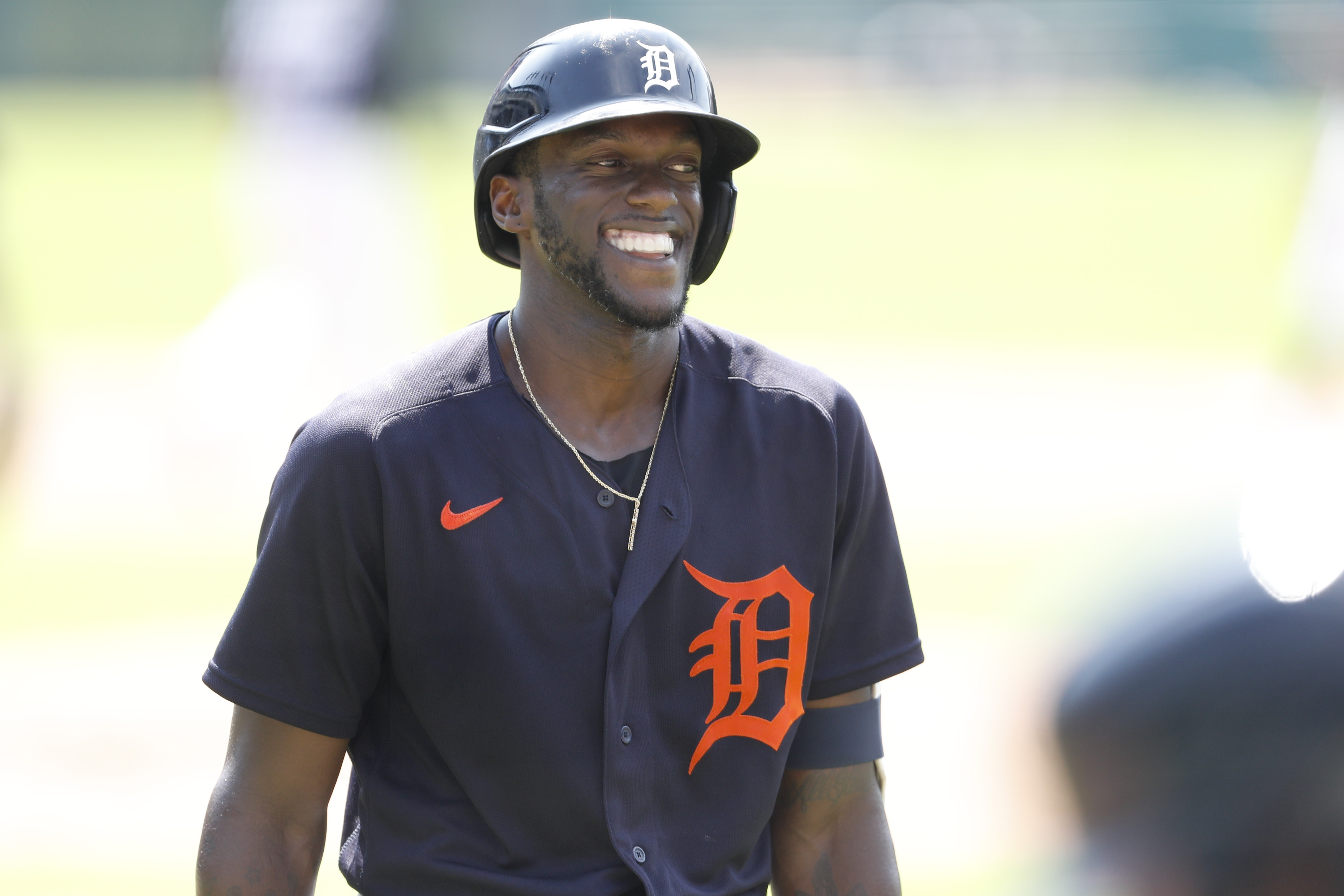
Maybin, 33, has been about league average in his brief 45 plate appearances for the Tigers this year after signing as a free agent in February. He missed time early in the month with a quad strain. The Tigers’ 10th overall pick way back in 2005, Maybin has created value in a utility role in recent years. He posted a 127 wRC+ for the Yankees in 2019, and is able to handle all three outfield positions. A 14-year veteran, Maybin is owed about $225K on the season.
Maybin is the Cubs’ second bench bat addition in two days, as they picked up Jose Martinez from the Rays yesterday. The Cubs’ depth was a bit compromised with Steven Souza Jr. on the IL for a hamstring strain and Kris Bryant out with a sprained finger and sore wrist. The first-place Cubs have been otherwise focused on the bullpen today, adding lefties Andrew Chafin and Josh Osich in trades.
Short, 25, reached Triple-A in 2019 as a middle infielder. Prior to the season, Baseball America ranked Short 28th among Cubs prospects, citing “a consistent blend of strong defensive skills and sneaky impact at the plate.”
Photo courtesy of USA Today Sports Images.
Cubs Acquire Josh Osich
The Cubs have acquired left-handed reliever Josh Osich from the Red Sox for a player to be named later, per Jon Heyman of MLB Network. Ken Rosenthal of The Athletic first suggested Osich would likely end up as a Cub.
This is the second lefty pickup of the day for Chicago’s bullpen, which previously grabbed Andrew Chafin from the Diamondbacks. Osich, whom the Red Sox claimed from the White Sox last fall, has posted 11.87 K/9, 2.87 BB/9 and a 50 percent groundball rate over 15 2/3 innings this season, but he has still struggled to prevent runs despite those impressive figures. The 31-year-old owns a 5.74 ERA and has seen his average fastball velocity drop from the 94-95 mph range to 92.4.
In 2019, Osich was one of the game’s more effective relievers against left-handed hitters. Among those with at least 100 left-handed batters faced, Osich allowed a .229 wOBA, punching out 30 against four walks. That success hasn’t continued in the brief 2020 sample, as Osich has allowed homers to lefty batters Chance Sisco and Michael Conforto.