
Universal DH Could Revitalize Former NL MVP
If and when the baseball season resumes in 2020, it’s expected to do so with the oft-debated universal DH implemented. With than in mind, we’re running through each NL team’s DH options . Today, we’re looking at the innovative Milwaukee Brewers, who’ve demonstrated their willingness to get creative with personnel under manager Craig Counsell.
Counsell’s club looks pretty well-positioned to adapt to the rule change, though it seems like they won’t need to rely on just a single player to handle the DH duties; rather, they’ve got a host of capable players at their disposal, and should be able to adjust their lineup on a matchup basis.
The first name that comes to mind for Milwaukee is Ryan Braun. With the addition of Avisail Garcia, Braun has likely been pushed out of a regular role in the outfield. And with Justin Smoak on the roster, he probably won’t see too much time at first base, either—though a platoon is possible. So it make sense that Braun should get first dibs on DH at-bats in Milwaukee, and it’s a timely development for him given his fall down the defensive spectrum. He’s still a solid hitter (.849 OPS last year), but the rise of Christian Yelich and acquisition of Garcia has rendered him somewhat marginal in the Brewers’ plans.
Keston Hiura, who’s encountered concerns about his defense in his brief career, would be a fine DH on days where he needs a rest from the field. But the new rule shouldn’t impeach on his role as the everyday second baseman; despite the defensive concerns, it would probably be unwise to abandon hope for him as a passable defender so early in his career—especially if the universal DH doesn’t wind up a permanent change.
Jedd Gyorko is maybe the next-best option after Braun, though he frankly doesn’t offer much that Braun can’t do himself. Both he and Braun are righties, which isn’t a bad thing, but both perform considerably better against left-handed pitchers. Logan Morrison was brought aboard on a minor league deal, so he lurks as a possible lefty DH candidate. But the fact of the matter is that Morrison is more than two years removed from reliable production, failing to muster even a .700 OPS in either of the previous two seasons. Still, depending on the maximum roster allowance this year, Morrison might be worth rostering in a pinch.
Otherwise, Omar Narvaez is noted for his reputation as one of the stronger offensive catchers in baseball, but he lacks the defensive chops to make him a top-flight catcher. On days when Manny Piña suits up behind the dish, it might not hurt to give Narvaez, a lefty hitter, some run in the DH role. He tallied an .813 OPS last year, which is right about on par with the other Brewers we’ve mentioned, so Counsell could still enjoy Narvaez’s offensive output without sacrificing anything on the defensive end. Narvaez should get plenty of looks against right-handed pitching, which makes up for some of the aforementioned overlap between Braun’s and Gyorko’s skillsets.
In addition, the Brewers have a host of versatile infield options that can rotate in and out of the lineup. Between Gyorko, Brock Holt, Eric Sogard, and Luis Urias, the Brewers accumulated a number of utility-type players in the winter. Those acquisitions might seem a bit redundant, but they should combine to offer much-appreciated versatility. In a vacuum, none of those names are particularly ideal candidates to fill the DH role, but their availability will allow Counsell to optimize his defensive alignment while maintaining his offensive firepower. Neither Gyorko nor Sogard owns a particularly robust defensive track record, so look for them to assume DH duties as needed.
All things considered, the Brewers look to be in good shape should MLB move forward with the universal DH, and they could get creative with the way they deploy their catchers and infielders. Ryan Braun will get his fair share of at-bats as probably the best bench bat on the roster, but others like Jedd Gyorko, Eric Sogard, Omar Narvaez, and even Keston Hiura could get a crack. If anyone falters, the Brewers will have a wealth of alternatives to whom they can turn.
This post is the latest in an ongoing series on MLBTR in which we examine every National League team’s designated hitter options. Previously, we looked at the Cardinals, Reds, Dodgers, Diamondbacks, Nationals, and Braves.
When CC Sabathia Put A Team On His Back
We’re 12 years removed from one of the highest-impact trade deadline deals in recent history. On July 7, 2008, the Indians parted with homegrown star and pending free agent CC Sabathia, sending the left-hander to the Brewers for first baseman/outfielder Matt LaPorta, southpaw Zach Jackson, righty Rob Bryson and a player to be named later who became outfielder Michael Brantley. In hindsight, it may have been a win-win transaction.
When the Brewers made the bold move to acquire Sabathia, they were mired in a seemingly interminable playoff drought that went back to the early 1980s. But the team and then-general manager Doug Melvin saw a way out when they picked up Sabathia, who joined a roster that was 49-40 at the time. There were some terrific players on that club – Prince Fielder, Ryan Braun, Mike Cameron, J.J. Hardy and Ben Sheets were among them – but Sabathia became the face of the franchise down the stretch and all but willed the Brewers to the postseason.
Already a three-time All-Star and the reigning AL Cy Young winner when he became a Brewer, the 28-year-old won 11 of his 13 decisions and posted a 1.65 ERA with 8.8 K/9 and 1.7 BB/9 after heading to Milwaukee. His workload was enormous, too, as Sabathia amassed 130 2/3 innings across 17 starts in Milwaukee and piled up seven complete games in the process. Sabathia’s final complete game of the year came when he pitched the Brewers to the playoffs in their regular-season finale with nine innings of one-(unearned) run ball in a victory over the Cubs (here are Bob Uecker and Brian Anderson‘s calls of that triumph for Milwaukee).
The Cubs did take the National League Central with ease, finishing with 97 wins to the Brewers’ 90, which set the Brew Crew up to face the Phillies in the NLDS. That proved to be the end of the line for the Brewers, who were no match for the eventual World Series winners and fell in four games. As excellent as he was during the season, Sabathia had nothing left against the Phillies, who battered the workhorse for five earned runs in 3 2/3 innings in Game 2 – his lone appearance of the series. That proved to be the final Brewers outing for Sabathia, as he left for a far bigger payday than they were able to offer in the next offseason. Sabathia signed with the Yankees for seven years and $161MM, and the now-retired 39-year-old further continued to make a resounding Hall of Fame case while wearing pinstripes.
While Sabathia wasn’t a Brewer for long, they don’t regret his magical run in their uniform or the long-awaited return to respectability he helped provide as a member of the team. That’s not say they came away from the trade unscathed, though. None of LaPorta (a once-promising prospect), Jackson or Bryson were impactful in the majors, but Brantley has been outstanding for the most part. A seventh-round draft pick of the Brewers and now a soon-to-be 33-year-old member of the Astros, Brantley has put together a lifetime line of .297/.354/.439 in 5,120 plate appearances. The majority of the damage has come in an Indians uniform, but they weren’t contenders in 2008 and weren’t going to re-sign Sabathia, so selling him for the best possible return made sense.
Losing Sabathia certainly hurt for Cleveland, but getting several productive seasons out of Brantley made for a nice consolation prize. Conversely, it must have stung the Brewers to see what Brantley turned into, but neither they nor their fans will ever forget what Sabathia gave them over a couple incredible months.
Eric Lauer Hires CAA Sports
Brewers lefty Eric Lauer has hired CAA Sports to represent him moving forward, per MLB Network’s Jon Heyman (Twitter link). He’d previously been with Meister Sports Management (Lauer’s initial agency, Pro Star Management, merged with Meister Sports back in November).
Lauer, 25 next month, was acquired by the Brewers alongside shortstop/second baseman Luis Urias in the November trade that sent outfielder Trent Grisham and right-hander Zach Davies to the Padres. He’d been competing with Freddy Peralta and Corbin Burnes for the final spot in the Milwaukee rotation during Spring Training. Brandon Woodruff, Adrian Houser, Josh Lindblom and Brett Anderson were slated to occupy the first four spots of a starting staff that is light on proven names but has its share of upside.
A first-round pick of the Padres back in 2016 (No. 25 overall), Lauer made his MLB debut as a 22-year-old in 2018 and has since racked up 261 2/3 innings at the big league level. In all, he’s pitched to a 4.40 ERA with 8.2 K/9, 3.3 BB/9, 1.20 HR/9 and a 38.9 percent ground-ball rate with the Friars. He’s just 12 days shy of two years of Major League service time, which proved the difference between him being controlled through the 2023 season (had he accrued those 12 days) and the 2024 season (as he is now). He’s on track for arbitration eligibility as a Super Two player next winter.
Lauer’s change in representation has been updated in MLBTR’s Agency Database, which contains representation info on a few thousand players. If you see any omissions or players in need of an update, please let us know via email: mlbtrdatabase@gmail.com.
An Under-The-Radar Brewers Hurler
For the sake of this discussion, let’s say a 2020 Major League Baseball season will occur. If it does, the Brewers will enter the campaign with a relatively anonymous group of starters. That’s nothing new for Milwaukee, though, as the team and its ace-less staffs managed to clinch playoff berths in each of the previous two seasons. However, just because the Brewers may not have a Cy Young-type starter on their roster, that doesn’t mean they’re devoid of capable options.
Brandon Woodruff had a terrific 2019 and seemed to be turning into a front-line type before injuries cut him down. The hope is that offseason pickups Brett Anderson and Josh Lindblom (the latter dominated in Korea before returning stateside in the winter) should at least be able to competently eat innings. Eric Lauer, who joined the Brewers in a November trade with the Padres, has shown himself to be a passable big league starter. And then there’s Adrian Houser, who has demonstrated rather promising signs of late.
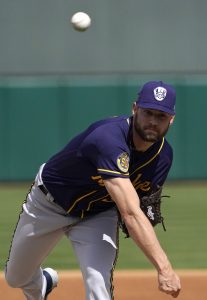
A second-round pick of the Astros in 2011, Houser joined the Brewers in a blockbuster 2015 trade – one that also delivered star reliever Josh Hader to Milwaukee. In regards to Houser, MLBTR’s Steve Adams wrote at the time: “Houser has a 5.10 ERA split across two levels (Class-A Advanced and Double-A) this season, and he’s worked as both a starter and a reliever. He’s averaged 8.5 K/9 and 3.8 BB/9 this year, and MLB.com rated him 21st among Houston prospects prior to the trade. Their scouting report praises his mid-90s fastball and ability to generate grounders but notes that the 22-year-old’s control has plenty of room for improvement.”
Houser is now 27 years old, and while not a ton has changed about his profile since the deal, he has bettered his control. He walked fewer than two batters per nine across 21 1/3 Triple-A innings last season and posted a respectable 2.99 BB/9 over a major league sample of 111 1/3 frames.
Houser divided his first extensive year in the majors between the Brewers’ rotation and bullpen (35 appearances, 18 starts, including work as an opener), and the results were encouraging. He parlayed a 94 mph-plus fastball into 9.46 K/9, a 3.72 ERA/3.88 FIP and a stellar 53.4 percent groundball rate. Out of 130 pitchers who amassed 100 innings or more, Houser finished eighth in grounder rate, 37th in strikeouts per nine (Clayton Kershaw and Eduardo Rodriguez were in a similar vicinity), and FanGraphs graded his fastball as the 14th-best of its kind, placing him between Max Scherzer and Chris Paddack. Moreover, Statcast was a big fan, ranking Houser at least above average in hard-hit rate, strikeout percentage, mean fastball velo, expected weighted on-base average and average exit velocity, among other categories.
There’s plenty to like about Houser, though concerns exist. Mainly, it’s in question whether he can go deep in games, as he only exceeded the five-inning mark four times last season; plus, his numbers were much better as a reliever. Regardless of role, Houser has at least developed into a useful contributor for the Brewers, and the fact that he has two more pre-arbitration years left and five seasons’ control remaining makes him even more of an asset for the low-budget franchise. Maybe Houser will never make the type of impact Hader has, but he has turned into a nice piece for the Brewers – one who still may have some untapped potential.
Photo courtesy of USA Today Sports Images.
Quick Hits: Metrics, Wilmer, Draft, Short Season
Even in the absence of baseball, there are plenty of interesting things being written about the game. Here are a few recent favorites …
- Defensive metrics are now widely circulated, but we lack broad-based understanding of how to value them. At Baseball Prospectus, Jonathan Judge and Sean O’Rourke provide an interesting examination of the relative strengths and weaknesses of varying systems. The BPro FRAA measure turns out quite well in measuring outfielders, while Statcast’s OAA metric performs best in the infield. It’s not for the statistical faint of heart, but you’ll want to read the whole article (or at least its full conclusion section!) to gather up the necessary nuance.
- MLB.com’s Anthony Castrovince provided a fascinating oral history of the 2015 trade deadline swap that would’ve sent Carlos Gomez from the Brewers to the Mets for Zack Wheeler and Wilmer Flores — an agreed-upon trade that fell apart in controversial and very public fashion. It’s essential reading for any hot stove aficionado, featuring a trove of recollections of many of the key actors. By happenstance, we recently did our own examination of the butterfly effects of that non-trade.
- The MLB draft will go forward in 2020, albeit in a modified form. It remains to be seen just how many rounds will be held, but there are sure to be less players chosen than usual. And with amateur spring sports cut short, teams haven’t had recent looks at many prospects. That makes prior scouting assessments all the more important to teams looking to navigate a one-off amateur intake situation. Baseball America has released its updated top-400 ranking of draft prospects, featuring all the names that have moved onto and up the board most recently.
- We don’t yet know whether we’ll have a season or what one would even look like, but there’s no question the 2020 campaign will be shortened if it’s held at all. At Fangraphs, Craig Edwards examines the volatility of relief pitchers and how that could play into a ~half-season campaign. While it’d be tougher than ever to predict performance, Edwards notes that it may actually be even more important to carry a slate of highly capable relievers in a short-season format, particularly if the postseason tournament is expanded as part of the (sure-to-be) unusual schedule that is ultimately arranged.
NL Central Notes: Yelich, Burdi, Moore
Brewers star Christian Yelich is drawing plaudits for his charitable efforts during the coronavirus pause, as Tom Haudricourt of the Milwaukee Journal-Sentinel writes. He’s playing an active role in both Milwaukee and his native California, with the latter effort an extension of prior work in his home state. “We’re in a fortunate position,” Yelich says of he and his partners in the California Strong foundation (including teammate Ryan Braun). “Not everybody has the ability to have the same reach. We understand that. In tough times, people understand if they can help, they should and they will.”
More from the NL Central:
- While he’s a total health wild card at this point, Pirates reliever Nick Burdi had shown some signs of a rebound in camp, as Mike Persak of the Pittsburgh Post-Gazette reports. His eye-popping fastball has returned after his latest rehab effort — occasioned by surgery that followed a hard-to-watch mid-game injury. Burdi may benefit from an extended layoff, though it seems he was largely back to full strength. The Pirates will have plenty of flexibility in utilizing him once the season gets underway. Burdi still has options remaining and it’s likely that we’ll see temporarily expanded rosters regardless, so he can be handled with care. If the season ends up being wiped out, the 27-year-old will get a full season of service and quality for arbitration, though he’d also have limited earning capacity given his thin MLB track record (just ten innings).
- The work stoppage has presented an unusual situation for everyone, but it’s actually a continuation for one pitcher. Andrew Moore had thrown remotely after signing a minors deal with the Reds, as Steve Mims of the Register Guard writes. The plan was for the 25-year-old to show up later in spring before heading to one of the top Cincinnati affiliates. Moore is instead continuing to send in his video and other data to the club. You won’t be surprised to learn that he has prior experience with Reds pitching coordinator Kyle Boddy, who has links with many of the hurlers that the organization has inked this winter. Moore is a former second-round pick of the Mariners. He has thrown 63 2/3 total innings of 5.51 ERA ball in the majors with the Seattle club, but was left searching for a career reset after a brutal 2019 showing in which he bounced between multiple organizations and compiled an 8.02 ERA in 101 upper-minors frames.
Mark Reynolds Announces Retirement
Veteran slugger Mark Reynolds, who enjoyed a 13-year big league career split between the Diamondbacks, Rockies, Orioles, Indians, Cardinals, Nationals, Yankees and Brewers, announced in an appearance on Mad Dog Sports Radio on SiriusXM that he’s officially retired (Twitter link, with audio).
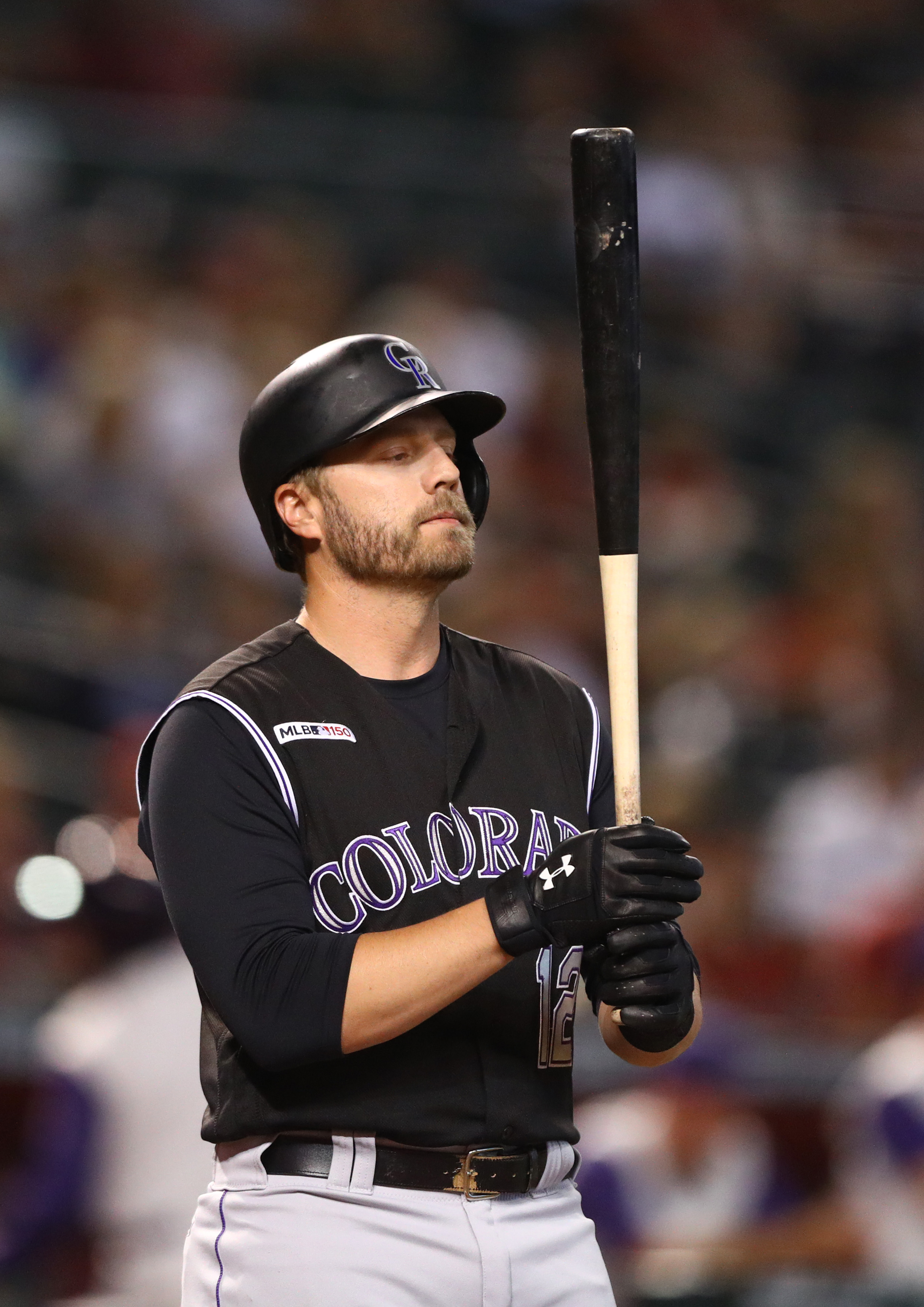
“I’ve moved beyond that,” Reynolds said when asked if he planned to seek another contract once MLB’s transaction freeze has been lifted. “I’ve retired. … I’m really enjoying time with my family, and it’s time for me to move on and find something else to do.”
The 36-year-old Reynolds spent the majority of the 2019 season in the Rockies organization, serving as a part-time first baseman and a bench bat until he was cut loose on July 28. He’d enjoyed a quality season with the Nationals a year prior in 2018, but Reynolds struggled to the lowest offensive numbers of his career with the Rox last year.
Originally a 16th-round pick of the Diamondbacks out of the University of Virginia back in 2004, Reynolds made his big league debut less than three years after being drafted. Reynolds was never considered one of the organization’s premier prospects — his No. 7 ranking on Baseball America’s list of D-backs prospects prior to the ’07 campaign was the only time he broke their top 30 — Reynolds hit the ground running. He was promoted to the big leagues in mid-May and closed out the remainder of the season as a regular in the lineup, hitting .279/.349/.495 with 17 home runs.
By 2008, Reynolds was Arizona’s everyday third baseman. His power was unquestionable, although the same could be said of his questionable contact skills. Reynolds became one of the game’s quintessential boom-or-bust players, regularly headlining home run and strikeout leaderboards alike. From 2008-11, he averaged 35 big flies per season but also led his league in strikeouts each year along the way. At that time, a player who was punching out in roughly a third of his plate appearances was an alarming anomaly; the league average strikeout rate back in Reynolds’ first full year was 17.5 percent — a full six percent lower than 2019’s mark.
Reynolds had a rough year in 2010, prompting the D-backs to trade him to the Orioles in return for reliever David Hernandez and prospect Kam Mickolio. He bounced back with the Birds and helped them to the postseason in 2012, but Baltimore declined an $11MM club option over Reynolds’ final arbitration year that offseason and non-tendered him, making him a free agent for the first time in his career.
Reynolds would bounce from Cleveland to New York to Milwaukee to St. Louis to Colorado to D.C. and back to Colorado on a series of one-year and minor league deals from that point forth. He delivered some productive seasons along the way and even popped 30 homers for the 2017 Rockies before giving the Nationals an absurd 5-for-5, two-homer, 10-RBI day in 2018 (video link).
Reynolds will conclude his playing career with a .236/.328/.453 batting line over the life of 6243 plate appearances and 1688 Major League games. In that time, he belted 298 home runs, 253 doubles, 14 triples and stole 64 bases while also scoring 794 times and knocking in 871 runs. The slugger took home nearly $30MM in career earnings while providing a litany of tape-measure home runs on which we can all fondly look back. Best wishes to Reynolds and his family in whatever lies ahead.
These Players Can Exit Their Contracts After 2020
No matter if a Major League Baseball season takes place in 2020, there are certain players who will be in position to decide whether to exit their current contracts next winter. Whether it be by way of an opt-out clause or a mutual option, here’s a look at the players who will be able to choose to take their chances in free agency…
Opt-Outs
Back when the Marlins extended outfielder Giancarlo Stanton on a historic pact worth $325MM over 13 years in 2014, they included a one-time opt-out for next winter. Stanton has put up at least one phenomenal season since he signed that deal – he won the NL MVP and hit 59 home runs in 2017 – but injuries have hampered him on a regular basis. He’s now a member of the Yankees, who acquired him in a December 2017 deal, but Stanton played in just 18 games last season. He’ll still be owed $218MM for seven years after this season, and for at least the time being, it’s very tough to think of Stanton leaving that money on the table to test free agency.
Designated hitter J.D. Martinez, a member of the Yankees’ archrival in Boston, will have two years and $38.75MM remaining on his contract after this season. He’ll be 33 then, and will continue to be someone who’s known as a defensive liability, so should be opt out? It’s up for debate. The big-hitting Martinez remains an offensive standout, but his production last season fell (granted, he did still slash .304/.383/.557 with 36 home runs in 657 plate appearances). He subsequently chose not to opt out after last season, as doing so would have cost him his $23.75MM salary for this year.
One of Martinez’s former Tigers teammates, outfielder Nicholas Castellanos, will also have to choose whether to revisit free agency next offseason. Castellanos is another defensively challenged slugger, one whom the Reds guaranteed $64MM over four years this past winter. He’ll be 29 by the time the 2021 season rolls around, and by saying goodbye to his Reds pact, he’d be leaving $48MM on the table (including a $2MM buyout in 2024). It’s not easy to determine whether that will happen; some of it depends on how well Castellanos fares in 2020, if a season occurs. Carrying over the tremendous production he posted late last season after the Cubs acquired him from the Tigers may make Castellanos more inclined to try his luck on the market again, but his output at the plate has been more good than great throughout his career.
Mutual Options
For the most part, mutual options don’t get picked up. Either a player’s so effective that he opts for free agency or he’s not useful enough for his team to exercise the option. Rockies first baseman Daniel Murphy and reliever Wade Davis are among those who have mutual option decisions waiting after the season, but they’ve struggled in the club’s uniform so far. With that in mind, Murphy’s on track for a $6MM buyout (as opposed to a $12MM salary), while Davis figures to receive a $1MM buyout instead of a $15MM payday.
Brewers outfielder Ryan Braun ($15MM mutual option, $4MM buyout), Diamondbacks right-hander Mike Leake ($18MM mutual option, $5MM buyout) and Cubs lefty Jon Lester ($25MM mutual option, $10MM buyout) could also find themselves looking for new contracts next winter. The same goes for Mets reliever Dellin Betances, though it’s tougher to say in his case. The former Yankee barely pitched at all season on account of injuries, and if there isn’t a season in 2020, would he turn down a guaranteed $6MM in 2021? And would the Mets buy him out for $3MM? That’s one of the many interesting questions we could face next offseason.
Wilmer’s Tears: The Butterfly Effects Of A Collapsed Trade
Wilmer Flores cried. It was the eighth inning, and the Mets were trailing the Padres by five runs. The non-waiver trade deadline was 36 hours away, and the only organization he’d ever known had agreed to trade him and teammate Zack Wheeler to the Brewers in exchange for two-time All-Star Carlos Gomez. The 23-year-old Flores learned of the reported agreement between innings … but he was left in the game to hit in the seventh inning … and to return to the field to play second base in the top half of the eighth.
In a whirlwind span of 15 to 30 minutes, Flores went from being traded to staying put among friends and teammates; the Mets had backed out of the reportedly agreed-upon trade once talks progressed to medical reviews. Tom Haudricourt of the Milwaukee Journal-Sentinel reported that an issue with Gomez’s hip and perhaps some hesitance over Wheeler, who was on the mend from Tommy John surgery at the time, had torpedoed the deal.
Two nights later, with the deadline behind him, Flores pumped his fist as he rounded first base and thumped the Mets logo across his chest as he approached home plate after hitting one of the most emotional walk-off home runs in recent memory. It was the last standing ovation in a day that saw Mets fans rise to their feet to embrace Flores on multiple other occasions. Flores went on to have a fine Mets career, calling Citi Field home up through the 2018 season. He’ll always hold a special place in the hearts of most Mets fans.
The memory of that unusual and emotional scene, however, is only the surface of a much more layered “what if” scenario. If the Mets had gone through with that trade, the ripple effects would’ve radically altered the future of several teams and — in a more roundabout way — perhaps the very fabric of the game.
How so? Let’s examine:
The Mets
Imagine a world where the Mets weren’t issuing statements to the press about their highest-paid position player being injured in a freak wild boar accident. If the Mets had gone through with the Brewers trade, it’s quite possible that Yoenis Cespedes never would’ve played a game for them. The deal bringing Cespedes to Queens was a buzzer-beater just seconds before the deadline — not 48 hours after Flores’ outpouring forever endeared him to the Mets’ fanbase.
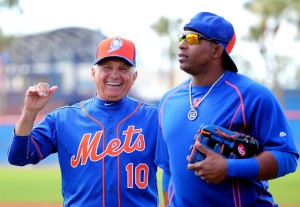
Cespedes was an absolute juggernaut for the Amazins down the stretch, fueling their torrid finish to the season with an outstanding .287/.337/.604 with 17 home runs in just 57 regular-season games. Mets fans clamored for the then-Sandy-Alderson-led front office to re-sign the slugger. While he initially looked to be outside their price range, Cespedes didn’t see his market develop the way he’d hoped and ultimately opted for a compromise deal that promised him $75MM over three years but came with opt-outs after years one and two. Following a terrific 2016 season, Cespedes indeed opted out, and the two sides brokered a more concrete four-year, $110MM pact covering the 2017-20 seasons.
But what if the club had acquired Gomez on July 30? Curtis Granderson was productive in right field. Juan Lagares was a world-beating defensive center fielder even if his bat was characteristically flimsy. Michael Cuddyer was still on the roster, and a top prospect named Michael Conforto had made his MLB debut just days earlier, on July 24. With Gomez added to that bunch, would the Mets have gone through with Cespedes trade? You can argue there was still room — put Gomez in center, Cespedes in left and use Lagares off the bench — but the urgency obviously would’ve been lessened and the Mets surely would’ve been more protective of their prospect assets. And without that magical stretch run erased from history and Gomez signed through 2016, the Mets’ motivation to sign Cespedes would’ve likely been wiped out.
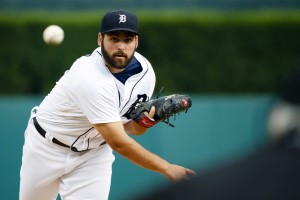
Furthermore, with Cespedes then sure to have been traded elsewhere, might the pitcher they traded to Detroit have instead won a Rookie of the Year Award in New York? It’s impossible to say, but dropping Michael Fulmer into the mix of quality Mets arms in place of Wheeler would’ve maintained their enviable stash of arms for a longer time. Fulmer, Jacob deGrom, Matt Harvey (prior to his regression), Noah Syndergaard and Steven Matz is clearly a talented enough group on which to build a contending staff. And the “what ifs” only continue if you stop to wonder what precise course Fulmer’s career would’ve taken a different setting.
The Tigers
Speaking of Fulmer, well, Tigers fans wouldn’t be left to wonder whether the club should’ve traded him prior to all of his injury troubles. Fulmer had a masterful rookie season but has since undergone an ulnar nerve transposition procedure, Tommy John surgery and knee surgery. They could’ve pulled the trigger on a trade for him early in his big league tenure, but doing so would’ve meant trading four-plus years of control over the right-hander. Tigers fans can voice frustration with the benefit of hindsight, but trades of quality, established starters with that much club control remaining are of the utmost rarity.
It’s likely that Cespedes would’ve been moved elsewhere. The Astros, Orioles, Giants and Pirates were among the teams on the hunt for outfield upgrades that trade deadline, and then-Detroit GM Dave Dombrowski was committed to a rare sell-off, evidenced not only by the Cespedes swap but the David Price blockbuster with the Blue Jays. If you want to get truly hypothetical, though, let’s say no Cespedes trade materializes. …Would late owner Mike Ilitch still have moved on from Dombrowski shortly after the trade deadline? Would Dombrowski ever have ended up in Boston?
The Brewers
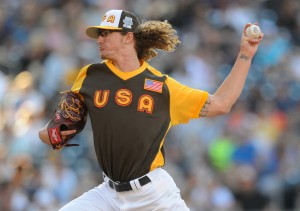
Sayonara, Josh Hader. In this hypothetical world, you were never a Brewer, because Gomez was traded for Wheeler and Flores. Corey Knebel and Jeremy Jeffress surely could’ve formed a potent back-of-the-pen duo while their peaks overlapped, but the three-headed monster that propelled the team to the 2018 NLCS would never have come to be. Hader would’ve been dominating in Houston or elsewhere, depending on whether the Astros traded him. Could a Wheeler-fronted rotation have made up for his absence?
The ripple effect doesn’t stop there. Also coming to Milwaukee in the Astros swap that did happen were Brett Phillips, Domingo Santana and Adrian Houser. Phillips was flipped for Mike Moustakas in 2018, so without his presence in Milwaukee, who knows whether Moose would’ve been acquired via trade or subsequently re-signed in the winter? Santana’s 30-dinger season in 2017 doesn’t happen, nor do the Brewers eventually trade him for Ben Gamel. Houser, meanwhile, doesn’t show promise of a late-blooming breakout with the ’19 Brewers, for whom he turned in 111 1/3 innings of 3.72 ERA/3.88 FIP ball with 9.5 K/9, 3.0 BB/9, 53.4% grounder rate. The Brewers’ 2020 rotation is short another arm in that instance, as Wheeler still would’ve been a free agent, barring an extension.
Of course, the Brew Crew would’ve enjoyed Wheeler’s renaissance since he reemerged from arm troubles. And that brings us to…
The Astros
The craziest part of this entire butterfly effect isn’t that Josh Hader might’ve been closing out games for Houston. In fact, it doesn’t involve Hader or Gomez at all. It’s that the other player traded to the Astros alongside Gomez in exchange for Hader, Phillips, Santana and Houser was none other than right-hander Mike Fiers. Fiers joined the Houston rotation, promptly threw a no-hitter in his fourth outing, made 67 starts for the ‘Stros over the next two and a half seasons … and ultimately proved to be the whistleblower who outed a sign-stealing scandal that led to the firing of manager A.J. Hinch and president of baseball operations Jeff Luhnow.
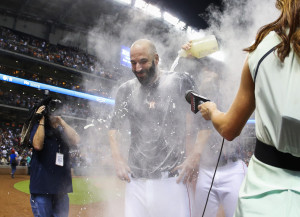
Perhaps the Astros were enamored of Fiers enough that they’d have found a way to acquire him from Milwaukee in a different swap. But it’s eminently plausible that had the Wheeler/Flores/Gomez trade between Milwaukee and New York gone through, we’d still have no firm knowledge of the Astros’ nefarious scheme. True, we might’ve had some inkling of wrongdoing; Jeff Passan, after all, reported for Yahoo back in 2017 that two players told him they believed Houston had banged on a trash can to convey signs. Athletics GM David Forst has acknowledged asking the league to investigate the Astros for improper use of technology. But without the smoking gun that was Fiers’ testimony, the league was either unable or unmotivated to bring the scandal to public light.
Peeling the onion back further — imagine if Hader had become every bit as dominant in Houston as he did in Milwaukee. Would the Astros have ever acquired Roberto Osuna to shut down games? Would since-fired assistant GM Brandon Taubman’s belligerent locker room taunting ever have led to his dismissal? Would the Astros have libeled Sports Illustrated’s Stephanie Apstein, calling her report of Taubman’s actions “misleading and completely irresponsible” before accusing her of attempting to “fabricate a story where one does not exist”?
To be clear: the Astros’ scandals reflect the indefensible choices of many individuals associated with the organization, for which they’re fully responsible collectively and individually. But the counter-factual scenarios do at least suggest that these matters might have occurred and/or been brought to light in quite different ways.
The Red Sox
Depending on the previous Dombrowski question I raised, who knows what state the front office would be in? We do know, definitively, that without the Astros’ sign-stealing scandal coming to light last fall, Alex Cora would not have been fired as the team’s manager. Ron Roenicke would still be his bench coach.
All that brings us back to…
The Mets
Carlos Beltran‘s debut as the Mets’ manager would’ve been delayed by the COVID-19 pandemic, but it wouldn’t have been outright wiped out of existence by virtue of his own involvement in the Astros scandal. Luis Rojas would be a quality control coach and not a big league manager.
Whether the Mets would’ve been better off in the long run with Gomez and Fulmer in the organization as opposed to Wheeler, Flores and Cespedes is debatable. Cespedes was again their best hitter in 2016 when the club secured a Wild Card postseason berth, but they were unable to advance beyond that initial round, falling to the Giants. The subsequent four-year deal has been a disaster. Cespedes has been extremely productive when on the field, but he of course hasn’t been on the field much. He’s played 119 games through the first three seasons of that deal and agreed to have his contract restructured this winter after the surreal wild boar injury.
Wheeler didn’t pitch again until 2017 and wasn’t very good that year. But his 2018-19 seasons were strong, as he posted a combined 3.65 ERA in 377 1/3 innings with a strikeout per frame and a total of roughly eight wins above replacement. The Mets didn’t make the postseason either year, though, and they’re left with a draft pick to show for their decision to hang onto him.
Flores hit .272/.317/.409 after the trade-that-wasn’t, taking another 1275 plate appearances as a Met before signing with the D-backs in free agency in the 2018-19 offseason and then inking a two-year deal with the Giant this past winter.
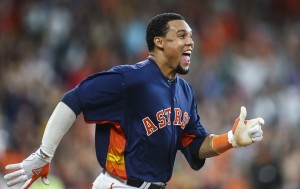
Adding Gomez in 2015 probably wouldn’t have cost the Mets the division — they won the NL East by seven games — but it’d have made things much closer. He’d already seen his 2013-14 All-Star form begin to fade, and his production worsened following his eventual trade to Houston. In 2016, Gomez played so poorly with the Astros that they simply released him in mid-August. A late surge with the Rangers served to remind that Gomez was still talented, so perhaps had he never gone to Houston in the first place, he could’ve remained a solid bat — but he was never going to hit at Cespedes’ level.
Fulmer, meanwhile, would still be controlled by the Mets through at least 2022 — if not 2023 (depending on when they promoted him). Virtually every prominent Mets starter has had Tommy John surgery in recent years (all of deGrom, Harvey, Wheeler, Matz and now Syndergaard), and it’s likely that Fulmer would’ve still eventually required his own surgery. But the other injuries that have dogged him and the timing of the procedure can’t be known. Marcus Stroman, acquired last July as an advance means of “replacing” Wheeler once it was clear an extension wasn’t happening, might not be a Met. Anthony Kay, traded in that deal, could be projected in the 2020 rotation.
The exact manner in which rosters would’ve been impacted can be speculated upon ad nauseam, but will never be known to any real degree of confidence. It doesn’t seem like the Mets cost themselves any playoff opportunities, but the effects of that near-trade were extremely broad reaching — and it seems certain that without Fiers being traded to Houston, we’d still be lauding the 2017 Astros as the most dominant team in recent history (at least until the shocking news emerged in some other manner).
Photos courtesy of USA Today Sports Images.
How To Get A Job In Baseball, According To GMs
Working in baseball operations for a Major League team is a dream job for many baseball fanatics. If front office job-seekers are being honest, the pinnacle would be to one day land in the GM’s chair and call the shots on trades, free agent signings, and draft picks. But in such a competitive field, how do you stand out? What should you focus on to become as appealing as possible to an MLB team in a job interview?
Seven years ago, I polled many MLB executives on their advice for high school students with front office aspirations. With so many new executives in the game since then, I decided to move a bit further down the career path and ask this question:
What one piece of advice would you give to a college student who hopes to work in baseball operations one day?
I posed this question to many of MLB’s top-ranking baseball operations executives. Just like the rest of us, these people are currently sheltered in place with their families trying to get some work done in these difficult and strange times. The following ten execs kindly took the time to answer my question: Ross Atkins of the Blue Jays, Jeff Bridich of the Rockies, Ben Cherington of the Pirates, James Click of the Astros, Mike Elias of the Orioles, Derek Falvey of the Twins, Matt Kleine of the Brewers, Dayton Moore of the Royals, Brodie Van Wagenen of the Mets, and Dick Williams of the Reds. Their answers are below.
I always think of the creative examples of how several of the current team’s GMs and Presidents got their foot in the door when asked this question. Without sharing those ideas specifically, I tell the individual who asked to think of something that they can bring to the table today that would be beneficial for a baseball operations team. Is there something that they do or can do that would have an immediate impact even if very small. It could be data analysis, programming, scouting, performance coaching, or leadership/communication application but ideally in the form of a project or deliverable and in a perfect world something that the organization doesn’t already have.
I believe that if those looking to get into baseball have excelled in other arenas they should think about how they have done that and share that in a way that is applicable to baseball as that is usually an attractive approach to those who are deciding to add to their operations teams. – Ross Atkins, Blue Jays Executive Vice President, Baseball Operations & General Manager
In terms of trying to trying to get into the world of baseball operations out of college, mindset and attitude will determine a lot. Create for yourself a mindset built around relentlessness, flexibility and hard work. The typical college school year and/or graduation timeframe do not lineup perfectly with when most Major League teams are hiring. So there could be some lag time between leaving college and getting hired.
Also, there usually are hundreds, maybe thousands, more applicants for jobs than there are jobs available. So chances are you’ll hear a bunch of “Nos” before you hear a “Yes”. That’s where relentlessness, flexibility and work ethic come into play. Your first opportunity in the baseball industry may not come in the perfect shape, size and package that you desire – but that’s OK. Be flexible in what you are willing to do and where you’re willing to work (be that departmentally or geographically).
At some point in your job search, you may feel like you are being annoying or that you’re bothering team employees too often. But know that relentlessness and persistence often pay off. It’s tough to count up how many times we have said over the years, “You have to give that person credit for his/her persistence,” whether we hired that person or not. If the worst outcome is that you are not hired (yet) but you are given credit for your relentless desire to work in the game, then it’s worth it.
Finally, look at the job search process like it is a job in itself. Put in the time. Make sure your resume is as good as it possibly can be. Ask thoughtful questions of any and all people who could help you. And always be ready – after you’ve sent off your resume and applied for a job, you never know when a team might call you. Those people who are ready for an in-depth discussion at a moment’s notice usually make a good first impression. – Jeff Bridich, Rockies Executive Vice President & General Manager
It’s hard to narrow down to one but if I had to I’d say finding opportunities to solve complicated problems in groups. Almost all of the work we do in baseball operations focuses on assessing, predicting, or improving human performance. Human performance is complicated. Almost none of the work we do in baseball is done by ourselves. Just about everything we do is done by teams of people. So I’d say the more practice combining those two things the better. – Ben Cherington, Pirates General Manager
There’s no magic bullet, no secret code to getting into baseball. All of us have a unique story about how we got here, so play to your strengths and put yourself in as good a position as possible to take any job that you’re offered, even if – especially if – it’s not in the area in which you see yourself long term. Every job is an opportunity to show what you can do, a chance to gain valuable experience and perspective on how the game works, and to make sure that this lifestyle is something you want to take on. Finally, don’t get discouraged! It took a lot of us a long time to get into the game, but it’s worth it. – James Click, Astros General Manager
I think there are so many public forums today to showcase your work online. Whether it’s contract analysis, data analysis, or scouting evaluation that you want to do, you can start to build this body of work on your own, before anyone hires you. It is so helpful when we are interviewing when someone has a portfolio already started. It shows how you work and think, but also shows initiative and that you are truly passionate about this line of work. – Mike Elias, Orioles Executive Vice President and General Manager
I’d recommend that you don’t wait around for the perfect opportunity to come your way and instead find a way to create one. People who want to work in baseball will reach out and say they’re just waiting for that “break” to come their way. It’s not uncommon that a year later we’ll hear from them again still waiting for that opening to show up.
My suggestion – dive into a topic within the game that interests you, learn as much as you can about it, and then generate a work product that shows you have the baseline skills and passion to impact a baseball operation as soon as you walk through the door. Don’t be afraid to try something because you might fail. Of all the resumes we get, it’s the ones that are accompanied by a work product (and therefore a willingness to put yourself out there) that generate the most interest. – Derek Falvey, Twins President of Baseball Operations
My advice to students is to create baseball-specific opportunities for yourself. Don’t wait for them to come to you. Volunteer to capture video, analyze data or operate pitch tracking software for your school’s team. Connect with your Sports Information Director and ask how you can help. Learn SQL. Learn Spanish. Contact baseball-centric websites and volunteer your time. Devise your own work product that attempts to solve meaningful questions you believe are currently unanswered within the public sphere. This is especially important because providing MLB clubs with examples of self-driven work product showcases your curiosity, thought process, and reasoning. It’s equally as important – if not more so – than a strong resume.
Students should also understand that our approach to hiring is shaped by our constant pursuit of the next marginal win. How can the next hire help us win games both today and in the future? Students who approach us with hard skills, novel work product and a strong resume quickly move to the front of that line. – Matt Kleine, Brewers Vice President – Baseball Operations
As it pertains to teams and front office, compatibility is the most important trait. This will only exist if you have an above and beyond attitude with the commitment to do the jobs that others simply find meaningless. You must have an “others first” mindset and model that behavior. Finally, never stop looking at this game from the eyes of your youth. – Dayton Moore, Royals Senior Vice President – Baseball Operations/General Manager
1. When interviewing with a prospective employer/executive, be specific about the area in which you want to work. Prove to your audience that you have you done the research in his/her area of focus. This will enable you to be versed enough to hold a meaningful conversation. Those who want a “PARTICULAR job” are much more compelling than those who simply just want “a job.”
2. Be willing to work in any city that has an opportunity to further your pursuits. Don’t let geography limit your search. – Brodie Van Wagenen, Mets Executive Vice President & General Manager
The best way to get your foot in the door is to figure out how you can solve a problem for me that I may not have even known I had. It makes for a much more effective cold call when you email your resume into an organization if you can articulate what you can do that the Reds are not doing today that could make us better. At least it makes us more likely to read further.
Keep abreast of the evolving trends in the industry and tailor your coursework accordingly. If you have baseball experience, focus on adding database management or machine learning or something technical. And if you are technically skilled, work on adding the baseball experience however you can. – Dick Williams, Reds President of Baseball Operations