
Rebound Candidate: Lorenzo Cain
Lorenzo Cain has unquestionably been one of Major League Baseball’s elite center fielders over the past several years. During his greatest stretch – a five-year run divided between the Royals and Brewers from 2014-18 – Cain racked up four seasons of better than 4.0 fWAR, ranked fifth among all outfielders in that statistic (22.7), fourth in Defensive Runs Saved (67) and fifth in Ultimate Zone Rating (43.7). He was also an indispensable piece for the Royals in 2014, an American League pennant-winning campaign, and even more productive the next season during a year in which the team won its first World Series since 1985.
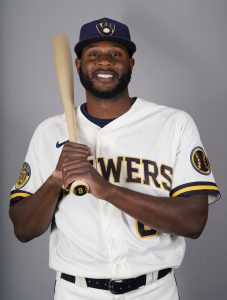
The Royals haven’t been nearly as successful since they last took the crown, but Cain remained a quality contributor for the club over the next two years. His overall track record convinced the small-market Brewers to splurge on Cain entering 2018, handing him a five-year, $80MM contract.
The Cain gamble couldn’t have worked out much better in 2018 for the Brewers, who saw him slash .308/.395/.417 (good for a career-best 124 wRC+) with 10 home runs and 30 stolen bases across 620 plate appearances. And Cain continued to take hits away from opponents in the field, where he totaled 18 DRS, 8.7 UZR and 22 Outs Above Average (No. 1 among outfielders). The entire package was worth 5.7 fWAR. FanGraphs valued it at just over $45MM, more than half the total of his contract.
Cain helped lead the Brewers to an NL Central title in 2018, and while they did return to the playoffs last year, he wasn’t nearly as helpful to their cause. Owing in part to thumb, wrist and oblique problems, the 33-year-old turned in one of the worst offensive seasons of his career, hitting .260/.325/.372 (83 wRC+) over 623 PA.
Cain has never been much of a power hitter, so that wasn’t the culprit for his decline (in fact, he ended up with even more homers – 11 – than he did in the previous season). But Cain stole 12 fewer bases (18 on 26 attempts) and went from one of FanGraphs’ highest-graded base runners to merely mediocre. It didn’t help that Cain plummeted on the Sprint Speed leaderboard, going from a tie from 84th in the majors in 2018 to a tie for 185th last season. That’s an alarming one-year drop, though he did still rank in the game’s 72nd percentile in the Sprint Speed category.
It goes without saying that if you’re going to maximize your potential as a runner, you have to get on base first. Cain wasn’t able to do that nearly as much as usual last year, in part because of a walk rate that sunk by 3.5 percent from the prior season and a strikeout rate that climbed by almost 2 percent. More importantly, when Cain put the ball in play, his BABIP fell off to a noticeable extent. He put up a .357 BABIP during his excellent 2018, and his speed has helped him to a lifetime .339 mark, but he checked in at just .301 in 2019.
The good news is that there’s still enough data to suggest Cain can at least be a passable offensive player going forward. For one, his .330 expected weighted on-base average last season outdid his real wOBA (.302) by 28 points. He also upped his hard-hit rate by about 2 percent from ’18, ranking in the league’s 69th percentile, and ended in the 88th percentile in expected batting average (.290). Cain’s power wasn’t there, but again, that hasn’t been his bread and butter anyway.
Defensively, there was no let-up at all. Cain placed third among all outfielders in OAA (14), trailing the much younger Victor Robles and Kevin Kiermaier, fourth in DRS (22) and ninth in UZR (7.0). Despite his advanced age (relative to outfielders, that is), it’s hard to argue that Cain isn’t still a world-class defender at the very least.
Cain’s marvelous defense and his above-average speed will continue to give him a decent floor this year even if he’s unable to revisit his best form as a hitter. But if he can even go back to being a league-average offensive player in 2020, Cain should return to being a highly valuable member of Milwaukee’s roster.
Photo courtesy of USA Today Sports Images.
Rookie Radar: NL Central
We’ve already run through the NL West, the NL East, the AL West and the AL Central in our look at some of the up-and-coming talent that figures to step into the Major League spotlight whenever play resumes. Let’s take a run through the NL Central…
Chicago Cubs
Nico Hoerner is the most interesting name to watch. The 2018 first-rounder skyrocketed through the system to make his MLB debut late last season, and while his .282/.305/.436 output didn’t exactly set the world on fire, it capped an impressive rise for a 22-year-old in his first full pro season. The Cubs hope there’s a potential everyday option at second base here. We could also see 27-year-old Robel Garcia and his light-tower power get another audition, though his contact skills (or lack thereof) are a notable red flag.
The organization lacks high-end, MLB-ready pitching prospects, but it wasn’t that long ago that righty Adbert Alzolay was considered to be just that. He was limited by a triceps injury last year and pitched just 81 2/3 innings between the minors and a brief MLB call-up, but his strikeout numbers are intriguing. Other rotation options include Cory Abbott, Tyson Miller and Justin Steele, but no one from the bunch is regarded as a blue chipper.
In the ‘pen, expect some combination of James Norwood, Dillon Maples and Duane Underwood Jr. to be called into action as injuries arise. All three are on the 40-man roster.
Cincinnati Reds
Shogo Akiyama will be one of the most interesting “rookies” to watch this season. He’s of course new to the MLB circuit but no stranger to playing professionally, having starred for Japan’s Seibu Lions over a nine-year career in Nippon Professional Baseball. A career .301/.376/.454 hitter in Japan, Akiyama hit .296 or better with at least a .385 OBP in each of his final five seasons with the Lions.
The Reds are suddenly a somewhat veteran club, so there aren’t many rookies who’ll be trusted with an Opening Day role. Well-regarded catcher Tyler Stephenson could be summoned in the event of an injury to Tucker Barnhart or Curt Casali. Shortstop Jose Garcia drew some eyes with a big spring showing but has yet to reach Double-A. He probably needs some more minor league time.
If a starter goes down, right-hander Tony Santillan has steadily climbed the ranks, although he struggled in a pitcher-friendly Double-A setting a year ago. Still, with the Reds set to potentially lose both Trevor Bauer and Anthony DeSclafani to free agency next winter, they’ll probably want to get a look at Santillan at some point.
The bullpen has a host of potential options — Vladimir Gutierrez, Reiver Sanmartin, Joel Kuhnel and Tejay Antone among them. Gutierrez has worked as a starter but struggled enormously in Triple-A, and his power fastball would seemingly play well in relief. Kuhnel has already made his MLB debut.
Milwaukee Brewers
The Brewers signed 10 Major League free agents this winter, traded for several players who’ll be on the Opening Day roster and don’t have a particularly well-regarded farm. All of that is to say — their rookie contributions might be few and far between. (To be fair, there are some semantics at play here; neither Keston Hiura nor Luis Urias is technically a rookie despite lacking a full season in the Majors. Both are highly intriguing young players.)
Jacob Nottingham might be called upon should Omar Narvaez or Manny Pina fall to injury. Outfielder Tyrone Taylor made his MLB debut last year but is buried behind a host of more experienced options. Former first-round pick Corey Ray has yet to debut but also finds himself on the wrong end of that deep outfield mix. Milwaukee picked up Mark Mathias in a small trade with the Indians and kept the versatile infielder on the 40-man roster, but it might take multiple injuries and/or a huge Triple-A showing to get to the Majors.
Righty Devin Williams leads the pack of bullpen candidates, having debuted with a 3.95 ERA in 13 2/3 frames last year. Right-handers J.P. Feyereisen and Angel Perdomo figure to emerge at some point, too, and waiver claim Eric Yardley provides a left-handed option who posted big numbers in Triple-A with the Padres last season. Rotation candidates include righty Drew Rasmussen, who had a nice year in Double-A in ’19. Trey Supak was rocked in seven Triple-A starts after a solid Double-A showing himself.
Pittsburgh Pirates
Right-hander Mitch Keller barely still qualifies a a rookie and should have a rotation spot for much of the season. Keller, long one of MLB’s premier prospects, was clobbered in his debut effort, but it’ll be interesting to see how he fares without the juiced ball and (presumably) without the prior front office/coaching staff’s emphasis on a two-seam fastball.
The Bucs have already talked extension with third base prospect Ke’Bryan Hayes — one of the game’s best defensive minor leaguers. Hayes didn’t have a great year at the plate in Triple-A in 2019, but he’ll open the season there and should break into the big leagues this year. As the club’s potential third baseman of the future, he’s a definite name to watch.
After that pairing, there’s a drop. Jason Martin and Jared Oliva might get some time in the outfield, and depending on injuries middle infielder Kevin Kramer and first baseman Will Craig are possibilities.
It feels like Nick Burdi has been a prospect forever, but the 27-year-old was healthy and opened some eyes this spring with a good showing. He’s undergone both Tommy John and thoracic outlet surgery but boasts a triple-digit heater when healthy. Blake Cederlind and Cody Ponce could see time in the ‘pen, as JT Brubaker could in the rotation.
St. Louis Cardinals
Among NL Central prospects who could plausibly debut in 2020, outfielder Dylan Carlson is perhaps the most highly regarded. A consensus top 20 minor leaguer who belted 26 home runs, stole 20 bases and posted a combined OPS north of .900 between Double-A and Triple-A last year, Carlson is viewed as a potential cornerstone piece. He’ll have to stave off Tyler O’Neill, Lane Thomas and fellow rookie Justin Williams, but Carlson has the highest ceiling of the bunch.
Yadier Molina just keeps on going, so there’s little hope of Andrew Knizner seeing meaningful time unless there’s an unfortunate injury to Molina. But Knizner is touted as a potential starting catcher himself and is more or less MLB-ready. Likewise, infielder Edmundo Sosa is ready for an MLB look but lacks an obvious path given the team’s veteran infield mix.
Left-handers Genesis Cabrera and Kwang-Hyun Kim give the Cards a southpaw option both in the rotation and in the bullpen. Kim, long one of the better pitchers in the Korea Baseball Organization, had an eye-opening spring showing. Right-hander Junior Fernandez tops the list of intriguing bullpen candidates thanks to a sub-2.00 ERA in the minors last year and a heater that averaged nearly 97 mph on a brief MLB cup of coffee.
Brewers Option Five Players
The Brewers have answered the last call for optional assignments, sending down a handful of players to their top affiliates. Jim Goulart of Brewerfan.net tweeted the news.
Catcher Jacob Nottingham is on his way down, indicating he’s not expected to crack an eventual Opening Day roster. Soon to turn 25, Nottingham has seen brief MLB action in each of the past two seasons but faced an uphill battle to earn a job with Omar Narvaez and Manny Pina locked in behind the plate.
Also sent out on options were four hurlers: southpaw Angel Perdomo and righties Bobby Wahl, Eric Yardley, and J.P. Feyereisen. Only Perdomo has ever actually appeared in regular-season action with a Milwaukee affiliate. He worked to a 4.28 ERA with a hefty 13.9 K/9 but equally voluminous 6.0 BB/9 in 69 1/3 upper-minors innings last year.
Yardley received his first ten MLB appearances last year with the Padres. The Brewers claimed him off waivers in the offseason. Wahl also has seen the majors, receiving brief looks with the A’s and Mets. He came to Milwaukee in the Keon Broxton swap but ended up missing the 2019 season due to a torn ACL. As for Feyereisen, he landed with the Brewers in a rare September swap with the Yankees, who obviously didn’t expect to have room for him on the 40-man roster in advance of the 2019 Rule 5 draft.
Offseason In Review: Milwaukee Brewers
The Brewers’ offseason featured a large number of small-scale additions — a hallmark of the current front office regime — and the richest contract in club history for the face of the franchise.
Guaranteed Contracts
- Avisail Garcia, OF: Two years, $20MM
- Josh Lindblom, RHP: Three years, $9.125MM
- Justin Smoak, 1B: One year, $5MM (includes $1MM buyout of $5.5MM club option)
- Brett Anderson, LHP: One year, $5MM
- Eric Sogard, 2B/SS: One year, $4.5MM
- Brock Holt, INF/OF: One year, $3.25MM (includes $250K buyout of $5MM club option)
- Jedd Gyorko, 2B/3B/SS: One year, $2MM (includes $1MM buyout of $4.5MM club option)
- Alex Claudio, LHP: One year, $1.75MM
- David Phelps, RHP: One year, $1.5MM (includes $250K buyout of $4.5MM club option)
- Ryon Healy, 1B/3B: One year, $1MM (split contract; $250K salary in minors)
- Total spend: $53.125MM
Trades and Claims
- Traded RHP Chase Anderson to the Blue Jays in exchange for minor league 1B Chad Spanberger
- Acquired C Omar Narvaez from the Mariners in exchange for minor league RHP Adam Hill and a Competitive Balance Draft Pick (Round B)
- Acquired 2B/SS Luis Urias and LHP Eric Lauer from the Padres in exchange for OF Trent Grisham and RHP Zach Davies
- Acquired minor league INF Mark Mathias from the Indians in exchange for minor league C Andres Melendez
Option Decisions
- Declined $7.5MM club option on 1B/OF Eric Thames (Brewers paid $1MM buyout)
- 2B/3B Mike Moustakas declined his half of $11MM mutual option (Brewers paid $3MM buyout)
- C Yasmani Grandal declined his half of $16MM mutual option (Brewers paid $2.25MM buyout)
Extensions
- Christian Yelich, OF: Seven years, $188.5MM (in addition to preexisting two years, $26.5MM)
- Freddy Peralta, RHP: Five years, $15.5MM (contains two club options)
Notable Minor League Signings
- Logan Morrison, Shelby Miller, Keon Broxton, Justin Grimm, Mike Morin, Jace Peterson, Andres Blanco, Tuffy Gosewisch
Notable Losses
- Yasmani Grandal, Mike Moustakas, Chase Anderson, Zach Davies, Trent Grisham, Drew Pomeranz, Gio Gonzalez, Jordan Lyles, Matt Albers, Travis Shaw (non-tendered), Jimmy Nelson (non-tendered), Hernan Perez (non-tendered), Junior Guerra (non-tendered)
The 2019 Brewers reached the postseason for a second straight year, although unlike their division-winning 2018 season, last year’s group limped to the postseason and narrowly secured a Wild Card victory. Christian Yelich’s early-September knee fracture was a major blow to a club that had already lost bullpen powerhouse Corey Knebel to Tommy John surgery and watched as shoulder and elbow troubles again wiped out the season of one of its most talented pitchers (Jimmy Nelson). Milwaukee still appeared poised to advance to the NLDS before a heartbreaking eighth-inning collapse saw the eventual World Series champion Nationals erase a three-run deficit against the likes of uber-reliever Josh Hader.
That bitter pill became even harder to swallow as Brewers fans watched Yasmani Grandal and Mike Moustakas decline their halves of their respective mutual options and sign elsewhere in free agency — Moustakas with a division rival over in Cincinnati. Those departures combined with several other Milwaukee decisions — the trade of Chase Anderson to the Blue Jays, the buyout of Eric Thames’ option and the decision to non-tender Nelson, Travis Shaw and Hernan Perez — to leave many fans with the impression that the team was scaling back and cutting payroll.
In some ways, those concerns proved to be true. The Brewers’ payroll projects to drop by more than $18MM from its 2019 levels. Then again, Milwaukee signed more Major League free agents than any other club this winter, diversifying their risk portfolio by making small-scale investments in a slew of veteran assets. That’s been a common approach under president of baseball operations David Stearns — the Lorenzo Cain signing being a notable exception — and it’s one that has worked well to this point.
Oh… and the Brewers also doled out a franchise-record $188.5MM extension for the aforementioned Yelich. The contract will ostensibly keep Yelich in Milwaukee for the remainder of his career, giving the Brewers an MVP-caliber threat in the heart of their order for the foreseeable future. Yelich isn’t likely to remain that productive at the tail end of the deal, considering it runs through his age-36-campaign, but the contract looks to be a considerable win for the team. At a time when players like Mike Trout, Nolan Arenado and Anthony Rendon are all commanding over $30MM annually, Yelich’s $26.9MM annual value looks like a relative bargain. Of course, that comment can’t be made without underscoring that Yelich was three years from reaching the open market — two guaranteed campaigns and a third-year club option — and it also seems he had a clear desire to stay in Milwaukee.
[MLBTR On YouTube: The Yelich Extension]
So, how did the Brewers do in terms of addressing the many holes on their roster entering the winter? Opinions vary. The Brewers parted with relatively little in terms of long-term value in order to acquire three years of control over Narvaez — one of the game’s better-hitting catchers. The draft pick they surrendered is a lottery ticket that could certainly sting, but Narvaez and the .277/.358/.448 slash he’s compiled over the past two seasons will go a long way toward replacing the offense lost with Grandal’s departure. Defensively, Narvaez is a considerable downgrade, but few catchers in the game can match Narvaez’s value with the bat.
The Brewers’ biggest free-agent signing didn’t even come at a position of dire “need.” With Cain, Yelich, Ryan Braun and Ben Gamel on the roster, the outfield wasn’t exactly lacking. But Milwaukee moved Trent Grisham (and solid starter Zach Davies) in an effort to find a long-term answer at shortstop, and Avisail Garcia effectively replaces him on the roster. Garcia will likely see the bulk of playing time in right field, and the Brewers clearly believe he’s closer to the 2017 and 2019 versions of himself than the 2018 iteration that struggled across the board. He is deceptively fast and makes plenty of hard contact, but he’s been an inconsistent all-around performer.
Speaking of that Grisham/Davies trade, the Brewers managed to parlay a big year in the minors from Grisham into the acquisition of a prospect who one year ago was considered to be one of baseball’s premier minor league infielders. Luis Urias hasn’t hit in the big leagues yet, and the manner in which the Padres continued to acquire veteran options to play ahead of him perhaps suggests that they were never as high on him as prospect rankings seemed to be. Urias is still only 22 and has crushed Triple-A pitching (.305/.403/.511 in 867 plate appearances). Losing Grisham could potentially sting, but the Brewers felt more confident in their ability to capably replace an outfielder via free agency than to find a much-needed middle infielder. On the pitching side of that trade, the Brewers came away with the more controllable arm — but one that has yet to find the success Davies has enjoyed in the Majors.
Elsewhere in the infield — things are a bit of a hodgepodge. Not only did Milwaukee acquire Urias, they signed veterans Justin Smoak, Eric Sogard, Jedd Gyorko, Brock Holt and Ryon Healy. The additions put pressure on incumbent shortstop Orlando Arcia to finally tap into the potential that made him an elite prospect several years ago. That collection of veterans will surround second baseman Keston Hiura and, occasionally, Braun (when he plays first base). Smoak adds some thump and quality glovework at first base. Gyorko, Sogard and Holt can play all over, adding the type of versatility that the Brewers have emphasized in recent seasons. Sogard and Holt, in particular, offer plus defense at multiple positions.
The pitching staff lost a glut of arms — Davies, Chase Anderson, Drew Pomeranz, Gio Gonzalez, Jordan Lyles and Junior Guerra — from a team that graded in the middle of the pack across the board. Milwaukee starters and relievers both ranked between 13th and 18th in terms of ERA and FIP. Clearly, some help was needed, but while many fans pined for a major splash, the Stearns regime has never demonstrated a willingness to sign a pitcher to a lucrative, long-term deal. The two-year, $15MM contract inked by Jhoulys Chacin two winters ago is the most expensive contract given to a pitcher by this iteration of the front office, and the three-year, $9.125MM deal given to wildcard Josh Lindblom this winter is the longest contract to which Stearns has ever signed a free-agent starting pitcher.
The Lindblom deal was the first and most interesting of several smaller-scale additions to the Milwaukee staff. The 32-year-old Lindblom was a second-round pick of the Dodgers back in 2005 but never solidified himself in the big leagues. Stints with Los Angeles, Philadelphia, Texas, Oakland and Pittsburgh didn’t pan out, and Lindblom went to South Korea on multiple occasions to pitch in the KBO.
As I detailed at greater length early in the offseason, Lindblom dove headfirst into a more analytical approach to pitching in his most recent KBO tenure and overhauled his pitch repertoire, adopting a splitter that proved to be a knockout offering. He won consecutive Choi Dong-won Awards — South Korea’s Cy Young equivalent — in 2018-19 and was named the KBO MVP this past season. Lindblom isn’t overpowering in terms of velocity and will turn 33 this June, but he’s posted highly appealing strikeout rates, control, spin rates and exit velocities in Korea.
Veteran ground-ball savant Brett Anderson represents the only other rotation addition for the Brewers, who’ll rely on a combination of Brandon Woodruff, Anderson, Adrian Houser, Lindblom, Eric Lauer, Freddy Peralta and Corbin Burnes to start games early on. As explored early in camp, it’s a group that’s light on name recognition — Anderson excluded — but one with a good bit of upside. The Brewers will also surely leverage some openers and generally unorthodox deployments of their pitchers. Few teams play matchups and shuffle the deck with their pitching staff as much as Milwaukee. It’s a strategy that regularly draws criticism from onlookers — but one that has produced generally favorable results in recent years.
In the ‘pen, the Brewers brought back Alex Claudio on a low-cost one-year deal and inked righty David Phelps to an even more affordable pact that comes with a 2020 option. The 28-year-old Claudio has been clobbered by right-handed hitters in his career, making his return a bit curious given the impending three-batter minimum. He’ll surely still be deployed against lefties as often as possible, but an increase in disadvantageous matchups against righties feels almost inevitable. Phelps, meanwhile, will hope to bounce back to his pre-Tommy John form, when he looked to be emerging as a high-end setup piece between Seattle and Miami (142 1/3 innings, 2.72 ERA, 11.1 K/9, 4.0 BB/9).
Corey Knebel’s return could be the biggest upgrade for the Brewers’ bullpen, though. The 28-year-old was on par with Josh Hader in terms of bullpen dominance in 2017, when he posted a 1.76 ERA in 76 2/3 innings with just under 15 strikeouts per nine innings pitched. Tommy John surgery wiped out his 2019 season, but pairing a healthy Knebel with Hader would create a dominant one-two punch at the back of games. Some combination of Phelps, Claudio, Brent Suter, whichever of Peralta or Burnes isn’t starting games and perhaps the flamethrowing Ray Black could create a quality all-around unit.
Speaking of Peralta, his own extension is certainly worth highlighting. The young righty’s five-year, $15.5MM deal carries minimal downside for the club and comes with enormous potential for surplus value, particularly when considering a pair of club options that would total an eminently reasonable $14MM. It’s the sort of deal that makes agents cringe — Peralta himself even acknowledged that his own representatives advised against the deal — but it’s also hard to see how a 23-year-old who is still more potential than production would find it impossible to say no to that type of life-changing payday. Whether he’s in the ‘pen or rotation, Peralta should be able to easily justify the investment with even moderate productivity. For a typically low- to medium-payroll club that just went beyond its traditional comfort zone to extend the face of the franchise, the potential cost efficiency such a contract creates is vital.
2020 Season Outlook
Questions about the Brewers’ pitching staff abound, but that’s nothing new for Stearns, manager Craig Counsell and the rest of the organization’s top decision-makers. Woodruff has demonstrated top-of-the-rotation potential, and Anderson has generally been a quality rotation stabilizer when healthy (which, admittedly, has been sporadic). There’s reason to dream on any of Houser, Lindblom, Peralta, Burnes or Lauer as a quality mid-rotation piece.
On the offensive side of things, it’s similarly difficult to forecast how things will play out. Milwaukee was a middle-of-the-road club in terms of total runs scored and wRC+ in 2019, and they’re losing both Grandal and Moustakas. At the same time, they’ll subtract an unthinkably poor chunk of at-bats from Travis Shaw, whose abrupt downturn at the plate caught everyone by surprise. Narvaez himself brings a pretty nice bat to the equation, and Garcia adds some production and upside to the mix. Smoak has plenty of power and a steady glove. It’s easy to see the infield as a strong group if things break right, but there’s readily apparent risk in relying on a group of options that has demonstrated such high levels of volatility in recent seasons.
The Brewers arguably have a wider range of plausible outcomes for their 2020 season than any club in the National League. That’s to be expected for a team whose offseason consisted on short-term, relatively low-AAV bets on what amounts to nearly half its roster. It’s a bulk approach to offseason acquisition the likes of which we haven’t seen in recent years, but perhaps one that was necessary for a team with minimal upper-level depth in the minors after depleting the farm via trades in recent years.
How would you grade the Brewers’ 2020 offseason? (Link to poll for Trade Rumors mobile app users)
How would you grade the Brewers' offseason?
-
B 44% (1,084)
-
C 33% (810)
-
A 10% (250)
-
D 9% (228)
-
F 3% (70)
Total votes: 2,442
GM Trade History: Brewers’ David Stearns
It’s not always fair to judge baseball operations leaders for free agent signings. In many cases, the biggest contracts are negotiated to varying extents by ownership. The same can hold true of major extensions. It’s just tough to know from the outside.
There’s obviously involvement from above in trade scenarios as well. But when it comes to exchanging rights to some players for others, it stands to reason, the role of the general manager is all the more clear.
In any event, for what it’s worth, it seemed an opportune moment to take a look back at the trade track records of some of the general managers around the game. After covering the Diamondbacks’ Mike Hazen and former Astros GM Jeff Luhnow, today we’ll move to David Stearns of the Brewers. (In chronological order and excluding minor deals. Full details at transaction link.)
2019-20 Offseason
- Acquired C Omar Narvaez from Mariners for RHP Adam Hill and competitive balance draft pick
- Acquired INF Luis Urias and LHP Eric Lauer from Padres for OF Trent Grisham and RHP Zach Davies
- Acquired 1B Chad Spanberger from Blue Jays for RHP Chase Anderson
2019 Season
- Acquired LHP Drew Pomeranz and RHP Ray Black from Giants for INF Mauricio Dubon
- Acquired RHP Jake Faria from Rays for 1B Jesus Aguilar
- Acquired RHP Jordan Lyles from Pirates for RHP Cody Ponce
2018-19 Offseason
- Acquired RHP Bobby Wahl, RHP Adam Hill and INF Felix Valerio from Mets for OF Keon Broxton
- Acquired OF Ben Gamel and RHP Noah Zavolas from Mariners for OF Domingo Santana
- Acquired LHP Alex Claudio from Rangers for competitive balance draft pick
2018 Season
- Acquired LHP Gio Gonzalez from Nationals for 1B/C KJ Harrison and INF Gilbert Lara
- Acquired OF Curtis Granderson from Blue Jays for OF Demi Orimoloye
- Acquired LHP Xavier Cedeno from White Sox for OF Bryan Connell and RHP Johan Dominguez
- Acquired INF Jonathan Schoop from Orioles for INF Jonathan Villar, INF Jean Carmona and RHP Luis Ortiz
- Acquired INF Mike Moustakas from Royals for OF Brett Phillips and RHP Jorge Lopez
- Acquired RHP Joakim Soria from White Sox for LHP Kodi Medeiros and RHP Wilber Perez
- Acquired INF Brad Miller from Rays for 1B Ji-Man Choi
2017-18
- Acquired OF Christian Yelich from Marlins for OF Lewis Brinson, OF Monte Harrison, INF Isan Diaz and RHP Jordan Yamamoto
2017 Season
- Acquired INF Neil Walker from Mets for RHP Eric Hanhold
- Acquired RHP Jeremy Jeffress from Rangers for RHP Tayler Scott
- Acquired RHP Anthony Swarzak from White Sox for INF/OF Ryan Cordell
2016-17 Offseason
- Acquired C Jett Bandy from Angels for C Martin Maldonado and RHP Drew Gagnon
- Acquired INF Travis Shaw, INF Mauricio Dubon, RHP Josh Pennington and INF Yeison Coca from Red Sox for RHP Tyler Thornburg
2016 Season
- Acquired RHP Phil Bickford and C Andrew Susac from Giants for LHP Will Smith
- Acquired OF Lewis Brinson, RHP Luis Ortiz and INF/OF Ryan Cordell from Rangers for C Jonathan Lucroy and RHP Jeremy Jeffress
2015-16 Offseason
- Acquired C Jacob Nottingham and RHP Bubba Derby from Athletics for OF Khris Davis
- Acquired RHP Chase Anderson, INF Aaron Hill, INF Isan Diaz and cash from Diamondbacks for INF Jean Segura and RHP Tyler Wagner
- Acquired OF Keon Broxton and RHP Trey Supak from Pirates for INF/OF Jason Rogers
- Acquired RHP Freddy Peralta, RHP Carlos Herrera and RHP Daniel Missaki from Mariners for 1B Adam Lind
- Acquired INF Jonathan Villar from Astros for RHP Cy Sneed
- Acquired C Manny Pina and INF Javier Betancourt from Tigers for RHP Francisco Rodriguez
—
How would you grade Stearns for his overall work on the trade front? (Poll link for app users.)
Grade David Stearns's Overall Track Record In Trades
-
B 42% (1,660)
-
A 40% (1,569)
-
C 14% (564)
-
D 3% (105)
-
F 2% (62)
Total votes: 3,960
Rebound Candidate: Justin Smoak
The Brewers entered the free-agent period with a void at first base. They let go of their top option from last year, Eric Thames, declining his $7.5MM club option for 2020 in favor of a $1MM buyout. Months before that, the Brewers traded right-handed complement Jesus Aguilar to the Rays. The Brewers are now set to rely on former Mariner, Ranger and Blue Jay Justin Smoak, whom they signed to a $5MM guarantee in December. Smoak’s contract also includes a $5.5MM option for 2021. Both prices are eminently fair, and there’s reason to believe that Smoak will justify Milwaukee’s investment.
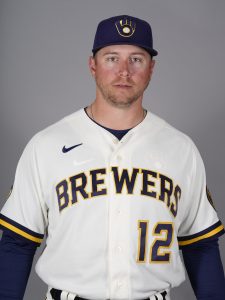
To start off, it’s worth noting how Smoak got to this point. He’s a former standout prospect who has seldom matched the hype. The switch-hitting 33-year-old owns a mediocre .231/.324/.420 line with a 104 wRC+ (the league-average mark is 100) and 6.2 fWAR across 4,618 plate appearances. However, Smoak did somewhat begin to realize his potential in recent years. He put up in the best years of his career from 2017-18, a 1,231-PA stretch in which he batted .256/.353/.495 (128 wRC+) with 63 of his 191 home runs and posted almost all of his lifetime fWAR (5.3).
On the heels of his two consecutive strong seasons, there wasn’t reason to think Smoak would fall off in 2019. Unfortunately for him and the Blue Jays, it happened. He took 500 trips to the plate and could only muster a line of .208/.342/.406 (101 wRC+). Smoak did amass another 22 homers, but his overall production (0.2 fWAR) rendered him a replacement player. So, if you’re a Brewers fan who isn’t expecting much from Smoak in 2020, that’s understandable. However, it does appear that he deserved better a season ago, which could bode well for this year.
Despite his so-so output in his last campaign in Toronto, Smoak did manage much better strikeout and walk numbers than the typical hitter. He drew a free pass 15.8 percent of the time, almost doubling the MLB mean of 8.5 percent, and struck out in 21.2 percent of plate appearances (the league average was 23 percent). Additionally, he upped his hard-hit rate by almost 9 percent from 2018, according to FanGraphs. Smoak also swung and missed in just 8.9 percent of PA (the normal hitter checked in at 11.1) and rated as one of Statcast’s favorite under-the-radar offensive players from last season. He ranked in the league’s 72nd percentile in average exit velocity (90.3 mph), its 76th percentile in expected slugging percentage (.495, crushing his actual mark of .406) and its 86th percentile in expected weighted on-base average (.366, far outdoing his real wOBA of .323).
None of the above guarantees Smoak will rebound in 2020. That said, when you combine his bottom-line production from 2018-19 with his under-the-hood numbers from last year, he looks like a logical bounce-back candidate for this season. From the low-budget Brewers’ perspective, it was worthwhile to take a chance on Smoak.
Photo courtesy of USA Today Sports Images.
Quick Hits: Howard, International Prospects, Smith, Pirates
A shortened 2020 season would make Spencer Howard a larger factor in the Phillies‘ plans, according to Scott Lauber of the Philadelphia Inquirer. Since Howard threw only 71 minor league innings in 2019 due to shoulder problems and was shut down at midseason, the Phils were going to ease him back into action this year under an innings limit at both the minor league and (if all things progressed well) Major League levels. If the 2020 season ends up being something of an abbreviated sprint, however, the right-handed prospect could end up pitching for Philadelphia as early as the new Opening Day, working in a starting or relief role and still potentially not approaching an innings cap that Lauber estimates could be around 130 frames of work.
A few more items as we kick off Sunday…
- Baseball America’s Ben Badler (subscription required) looks at five prospects who are lined up to join Major League teams when the international signing window opens on July 2. The Padres, Brewers, Braves, Indians, and Rangers have already been respectively connected to each of the five youngsters, with Atlanta and Cleveland each prepared to give out bonuses in the $1MM range.
- Fraidel Liriano, another shortstop from the Dominican Republic, is expected to land the largest bonus of the quintet, as Badler writes that the Rangers will give Liriano around $1.5MM. Liriano could eventually wind up at third base or second base rather than shortstop, though some scouts were intrigued by his hitting potential, with Liriano’s “strong hands and quick wrists, producing whippy bat speed.”
- Twelve teams contacted Kevan Smith during the catcher’s free agent stint this winter, Smith tells John Perrotto of the Pittsburgh Tribune-Review, though he was surprised to be on the open market at all. The Angels non-tendered Smith rather than go through the arbitration process with him (MLBTR projected Smith to earn a $1.3MM salary in 2020), a decision that left Smith feeling “pretty stunned…I thought I was on solid footing there.” Smith ended up signing a minor league deal with the Rays after surveying his options, saying, “You start looking around and see what’s going to be your best opportunity and what team you’re most comfortable with. You pick and choose, and it comes down to who’s the most interested. I definitely felt the Rays wanted me to be here.” Playing in Tampa Bay also brings Smith to the East Coast and at least a bit closer to his home in Pennsylvania, though the Pittsburgh native said he didn’t hear from the Pirates this winter, despite the Bucs’ need for catching.
Recently Optioned Players Of Note
In case you haven’t noticed, transactions aren’t exactly plentiful since the league shut down Spring Training. There have still been a few batches of moves in the past few days, however, with a trio of Central Division clubs sending some players to their minor league ranks.
- The Brewers optioned corner infielder Ryon Healy to Triple-A, per the MLB.com transactions log. The 28-year-old slugger’s 2019 season with the Mariners came to an end when he underwent August hip surgery, and he opted for free agency in the winter when Seattle removed him from its 40-man roster (as was his right as a player with three-plus years of service time). Healy signed a one-year deal with the Brewers and, assuming he’s healthy, should factor into Milwaukee’s mix at both corner-infield slots and as a right-handed bench bat. He notched a .282/.313/.475 slash through 888 plate appearances with the A’s in his first two big league seasons but never matched that production in Seattle (.236/.280/.423 in 711 plate appearances). Healy was healthy enough to play in 10 spring games, but he went 4-for-23 with a walk and seven strikeouts in 24 trips to the dish, which didn’t exactly help him stand out from a crowded group of infield options. Milwaukee also optioned catcher David Freitas and infielders Mark Mathias and Ronny Rodriguez.
- Catcher Zack Collins was optioned to Triple-A Charlotte by the White Sox. The former No. 10 overall pick out of Miami, Collins is now blocked long-term by Yasmani Grandal at catcher. James McCann‘s presence on the roster eliminates the possibility of Collins serving as a backup, and the organization would surely prefer him to get everyday at-bats rather than toiling away on the bench anyhow. Collins could potentially see some increased reps at first base down the road, particularly if Jose Abreu transitions to more of a DH role in 2021 and beyond. Collins struggled with a .186/.307/.349 slash in 102 MLB plate appearances in his debut last season, also striking out at an alarming 38.2 percent clip. But he ripped Triple-A pitching apart with a .282/.403/.548 slash, 19 home runs and a massive 17 percent walk rate in 367 trips to the plate with Charlotte. Chicago also optioned fellow catcher Yermin Mercedes and right-handed reliever Jose Ruiz to Triple-A.
- The Tigers announced this week that catcher Jake Rogers was optioned to Triple-A Toledo. That move shouldn’t come as a surprise, particularly after Detroit signed longtime Yankees backstop Austin Romine earlier this winter. The Tigers hope that Rogers can be the catcher of the future, but he floundered in 128 big league plate appearances upon debuting last year. Rogers is only 24 and only had 191 career plate appearances in Triple-A when he was summoned to the Majors last year, so there’s still plenty of hope — particularly considering the manner in which he ripped through Double-A competition last year (.302/.429/.535 — 179 wRC+). Tigers general manager Al Avila suggested this winter that Rogers needs some more seasoning in Triple-A, though, so he’ll get that while Romine and Grayson Greiner comprise the catching tandem at the MLB level.
Extension Candidates: NL Central
We don’t really know whether or to what extent extension talks will continue during the coronavirus hiatus. But as I wrote yesterday, it seems reasonable to think they’ll be explored. Some may already have advanced nearly to completion before the global pandemic intervened.
While we may have to wait to learn who the targets are and see what deals get done, there’s a silver lining: more time for rampant speculation! Okay, we’re not going to speculate here; rather, we’ll tick through some interesting possibilities on paper. Remember, we’ve seen an increasing prevalence of deals with less-experienced players (even some without any MLB service) and with new player types (early-career relievers and utilitymen).
In the present MLB environment, value is king and the old forms are fading. Here are some names to chew on from the NL Central …
Brewers
The Brew Crew already reached two deals this winter, both of which are quite interesting for very different reasons. The Milwaukee organization reached a big new extension (that still feels team-friendly) with superstar Christian Yelich. And it placed a upside bet on young hurler Freddy Peralta, whose ERA hasn’t quite yet matched his talent.
Scanning the rest of the roster, the name that jumps off the page is Josh Hader. True, he just lost an arbitration hearing to the team. But he’s still got a big $4.1MM starting point to build from for three more seasons and his salary could go wild if the Brewers keep him in the closer’s role. Perhaps there’s a path to a deal, even if it doesn’t expand the Brewers’ control rights past arbitration much (if at all).
Likelier, perhaps, are highly talented youngsters Keston Hiura and Brandon Woodruff. The former isn’t even close to arbitration but seems like an easy bet to keep hitting. The latter is a year away from Super Two qualification, so this might be the best opportunity to get him locked in at a palatable price. Given the aggressive stance the Brewers took in the Peralta deal, you can’t rule out negotiations with fellow hurlers Adrian Houser and Corbin Burnes.
Cardinals
The Cards are known to be interested in working something out with franchise pillar Yadier Molina. It’s pretty likely they’ll get a deal done at some point given the obvious mutual interest.
Of greater long-term intrigue is the situation of staff ace Jack Flaherty. But odds of an agreement seem long, particularly after the club renewed his contract at a rather meager rate this spring. Perhaps fellow starter Dakota Hudson is a likelier target. If the club gets creative in exploring deals with the staff, relievers Giovanny Gallegos and John Brebbia might be approached, though neither is terribly youthful.
Two years out from free agency, Kolten Wong is a conceivable but hardly pressing potential target. It’s more interesting to contemplate an early pact with emerging utilityman Tommy Edman. But most intriguing of all? A pre-debut pact with top prospect Dylan Carlson. That would free the club to promote him whenever it wishes and perhaps secure a potential new franchise star for his entire prime.
Cubs
If you can’t trade ’em, extend ’em? Perhaps not in all cases, but the Cubs have a lot of quality players that could be targeted for extensions — now that the team has elected not to deal them over the winter and likely won’t have a chance to revisit its decision in the middle of the 2020 season. Kris Bryant, Willson Contreras, and Kyle Schwarber could in theory all fall in this bucket.
The likeliest candidate, though, is shortstop Javier Baez. He was never really on the block, so far as anyone knows, and there’s clearly mutual interest in a deal. Baez is two years from free agency but already well into bigger earnings via arbitration. Talks have been up and down thus far.
Otherwise, the Cubbies could explore ways of locking in lower prices on non-stars for the foreseeable future. What if — and believe me, this is a hypothetical — but what if the team saw some value in the right arrangement with a younger, less-established player? The most interesting possibilities: infielder Nico Hoerner, backstop Victor Caratini, and center fielder (for the time being, anyway) Ian Happ. Having already done a deal with David Bote, this sort of possibility can’t be ruled out.
Pirates
Thankfully, in this case the team has more or less provided its own list (through unnamed sources that spoke with reporters). Younger big leaguers Bryan Reynolds, Kevin Newman, and Joe Musgrove are all said to be of interest, as is top prospect Ke’Bryan Hayes. Now that we know talks have been initiated, it’s a matter of seeing if anything gets done.
Notably absent from that group? Slugging first baseman Josh Bell. The 27-year-old is in his first season of arbitration eligibility after a big 2019 season. The absence of reporting doesn’t necessarily mean that Bell isn’t of interest, though he may be a bit spendy for the Bucs to commit to.
Beyond that, it gets pretty speculative. The Pirates have big hopes for high-upside youngsters Mitch Keller and Oneil Cruz, but probably want to see them develop more before thinking about a long-term contract.
Reds
The Cincinnati ballclub has made a host of interesting moves of late. But there’s still potential for greater contractual action with regard to a few in-house players.
Excellent right-hander Luis Castillo is easily the top target. He’s in classic starting pitcher extension territory as a 2+ service-class player with two full seasons of increasingly productive moundwork. The team can surely envision quite a lot of upside and he has some real incentive to dodge the risk of another MLB campaign before getting paid.
Perhaps there’s also an argument for considering talks with lefty Amir Garrett or reliever/pinch-hitter/CF Michael Lorenzen. If teams can strike deals with pitchers like Peralta and Aaron Bummer, then these guys can’t be ruled out.
It’s awfully intriguing to think about a deal for everywhere-but-nowhere man Nick Senzel. But his precise place in this organization has yet to be determined. While the team would probably buy in at the right price, he’s probably not going to sell himself short and buy into an uncertain situation. There are a few other conceivable candidates on this roster — outfielder Jesse Winker; starter Anthony DeSclafani — but it’s quite a bit harder to see a path to a mutually agreeable deal in those cases.
9 NL Central Pitchers Looking For Bounce-Back Years
Nobody knows when the 2020 Major League Baseball season will begin, but we can still look forward to its start. With that in mind, we’ll continue our series on potential bounce-back players from each division, this time focusing on notable National League Central pitchers whose production fell off from 2018 to ’19.
Craig Kimbrel, RHP, Cubs:
Undoubtedly among the greatest relief pitchers in baseball history, Kimbrel’s numbers careened off a cliff in his first season as a Cub. In fairness, though, Kimbrel didn’t have a normal offseason before finally joining the Cubs on a three-year, $43MM contract. The 31-year-old flamethrower went without a deal until the first week June, and he never really got on track after debuting later that month. Kimbrel battled elbow issues and threw just 20 2/3 innings, over which he allowed 15 earned runs on 21 hits (including a whopping nine home runs) and 12 walks. Although Kimbrel did strike out 30 hitters and continue to throw upward of 96 mph, it wasn’t enough to overcome the other problems. Considering what the Cubs have invested in him, not to mention the losses their bullpen suffered in free agency, it’s a must for him to return to form this year.
Jeremy Jeffress, RHP, Cubs:
Jeffress was a lights-out part of the Brewers’ bullpen in 2018, but last season represented an enormous step backward. In fact, it went so badly for Jeffress that the Brewers – then vying for a playoff spot – released him during the first week of September. Jeffress wound up with a ghastly 5.02 ERA in 52 innings and saw his typical fastball go from 95.3 mph in 2018 to 93.8. He also lost 4 percent on his swinging-strike rate, almost 10 percent on his strikeout rate, and 8 percent on his groundball rate. Consequently, he was only able to secure an $850K guarantee in free agency.
Trevor Bauer, RHP, Reds:
Bauer went from one of the absolute best pitchers in the sport two years ago to someone whom the opposition shelled after the Reds acquired him from the Indians at last summer’s trade deadline. The 29-year-old kept throwing hard, averaging about 95 mph on his fastball, but yielded 57 hits (including 12 home runs) en route to a 6.39 ERA in 56 1/3 innings as a Red. Between the two teams, his combined 4.48 ERA and 4.34 FIP were each more than two runs worse than the production he logged in 2018. Bauer also experienced an almost 7 percent fall in groundball rate, and he wasn’t any kind of Statcast hero, ranking near the middle of the pack in multiple important categories.
Pedro Strop, RHP, Reds:
Strop, 34, had several terrific years with the Cubs, but last season wasn’t one of them. His average fastball dropped by 1.5 mph (93.6), his walk rate spiked to its highest level since 2012 (4.32 BB/9) and he gave up more home runs than ever (1.3 per nine). All of those factors helped lead to career-worst run prevention totals for Strop (4.97 ERA/4.53 FIP), which came at a less-than-ideal time for the pending free agent. Strop’s subpar output last year stopped him from cashing in on the open market, but if he can rebound, the Reds will have a bargain on their hands at $1.825MM.
Chris Archer, RHP, Pirates:
MLBTR’s Steve Adams just took a more in-depth dive into the surprising struggles Archer has gone through as a Pirate. The former Rays standout has been a shell of himself since Pittsburgh acquired him from Tampa Bay in a July 2018 trade that looks incredibly lopsided in the Rays’ favor. But not all hope is lost for Archer, who – at the Pirates’ behest – grew too reliant on a sinking fastball that the opposition hammered. Archer bagged the pitch last summer and proceeded to post far better numbers during the second half of the season than he did before then, making the 5.19 ERA/5.02 FIP, 4.14 BB/9, 1.88 HR/9 and 36.3 percent groundball rate he put up over 119 2/3 innings look somewhat deceiving.
Derek Holland, LHP, Pirates:
Holland resurrected his career two years ago in San Francisco, only to fall apart between the Giants and Cubs last season. While Holland made 30 starts in 2018, he had such a rough time a year ago that he spent most of it in the bullpen, where he amassed 43 of 51 appearances. The 33-year-old limped to a 6.10 ERA/6.08 FIP with 8.75 K/9, 4.8 BB/9 and 2.13 HR/9, forcing him to settle for a minor league contract with Pittsburgh in the offseason.
Andrew Miller, LHP, Cardinals:
The first season as a Cardinal didn’t go well for Miller, whom they signed to a two-year, $25MM pact beforehand. The majority of his numbers, including a 4.45 ERA/5.19 FIP in 54 2/3 innings, went the wrong way. Miller, who barely walked more than one hitter per nine during his career-best season back in 2016, issued almost four and a half free passes last season. Moreover, he endured a 10.5 percent dip in groundball rate from 2018 and saw his home run-to-fly ball rate skyrocket to 21.6 percent. The 34-year-old has since dealt with some health troubles this spring, though the latest update on his status was encouraging.
Corbin Burnes, RHP, Brewers:
Burnes had a promising debut from Milwaukee’s bullpen in 2018. However, the spin rate darling’s propensity for surrendering homers proved to be his undoing last season. Burnes, 25, gave them up on 38.6 percent of fly balls, leading to an awful 8.82 ERA/6.09 FIP in 49 innings and canceling out a strong strikeout rate of 12.86 per nine and a borderline elite swinging-strike percentage of 17.2.
Corey Knebel, RHP, Brewers:
Knebel’s on the list for injury reasons, not ones related to performance. He was a huge piece of the Brewers’ relief corps from 2017-18, but Tommy John surgery kept him off the mound a season ago. Knebel, who underwent the procedure just under 12 months ago, had been lining up for an early May return before the game shut down, according to Adam McCalvy of MLB.com. So, the longer baseball’s hiatus last, the better Knebel’s odds are of returning to his past role as a Brewers contributor over a full season.