
Twins Set Lofty Asking Price On Jose Berrios
The Twins’ woeful season has them positioned as deadline sellers, but there’s no guarantee they’ll move anyone controlled beyond the 2021 campaign. Minnesota entered the season on the heels of a pair of division titles, and the Twins have ample payroll space this winter as well as a core of controllable young players. The toughest choices for the Twins’ front office will be how to proceed with a group of players controlled only through the 2022 season — right-hander Jose Berrios chief among them.
Berrios has already drawn interest from multiple teams, and with good reason. The 27-year-old has pitched to a 3.48 ERA with a career-best 25.9 percent strikeout rate and a seven percent walk rate (the second-lowest of his career) through 108 2/3 innings. That innings tally ranks sixth in the American League and underscores the durability of Berrios, who is tenth in all of baseball in innings pitched dating back to 2017 and has never been on the Major League injured list.
The Twins have tried in the past to sign Berrios to a long-term deal, but he’s been vocal about wanting to advance the market for starting pitchers and now, 15 months from reaching free agency, sounds as though he’s far from inclined to take any sort of deal on an extension.
“[I will have been] waiting six years, almost seven, to get where every player wants to be — a free agent, able to maximize our value,” Berrios told Phil Miller of the Minneapolis Star-Tribune this weekend. “So it’s different now. We are in a good position, and we’ll see what the best deal is going to be.”
Berrios added that there haven’t been any extension talks but said he likes Minnesota and would be open should the Twins approach him with another extension scenario at some point. Putting together what would need to be a market-value extension before the July 30 trade deadline seems unlikely — particularly with the front office dedicating a good chunk of its time to exploring trades for rental players and also talking extension with center fielder Byron Buxton. Berrios, who has a 3.76 ERA with strong strikeout and walk rates over the past five seasons, surely took notice when Zack Wheeler inked a five-year, $118MM deal with the Phillies on the heels of a similar statistical track record (but with less durability).
Even if the two sides don’t come to terms on a contract extension, however, a Berrios trade is far from a foregone conclusion. Again, the Twins likely hope to contend in 2022, and Berrios would be a big part of that effort while pitching at an affordable rate. He’s earning $6MM in 2021, and even when that number soars beyond $10MM in his final offseason of arbitration, he’d be a bargain relative to his open-market value.
That makes him a highly desirable trade piece but also gives the Twins the ability to set a high asking price. The Athletic’s Dan Hayes reports that the Twins’ initial ask in return for Berrios from one interested team was a pre-arbitration player on the Major League roster and a pair of top 100 prospects. That meshes with reports from the St. Louis Post-Dispatch and the New York Post that the Twins’ asking price on Berrios has been sky-high. Given the general dearth of impact starters on the trade market and the Twins’ outlook for the 2022 season, it’s understandable that they’d effectively be asking for a king’s ransom to relinquish Berrios.
Broadly speaking, it’d be a surprise it the Twins didn’t at the very least move rental pieces like Nelson Cruz, Michael Pineda and Hansel Robles in the coming weeks, but the asking price on Berrios will be as high as the asking price on any player who has a chance of being traded between now and July 30.
Twins Reportedly Disinclined To Trade Players Controllable Beyond 2021
The Twins have indicated to opposing teams they’re not keen on trading players under team control beyond this season, reports Buster Olney of ESPN (Twitter link). That’s not to say Minnesota’s cutting off talks on longer-term assets entirely, but it casts increasing doubt about the likelihood of stars like Byron Buxton and José Berríos — both of whom are controllable next season via arbitration — changing uniforms within the next couple weeks.
That’s a defensible and generally unsurprising position for the Twins front office to take. While the 2021 season has been a disaster for Minnesota, there’s little reason to think the club needs to embark on any sort of rebuild. The Twins won the AL Central in each of the last two years, and much of the core of those teams is controllable for 2022. At 39-52, the Twins are almost certainly not playoff-bound this season, but there’s enough talent on the roster to reasonably expect a bounceback next year.
The Mets and Cardinals are among the teams to have reached out to gauge Berríos’ availability. Both clubs have come away from those talks feeling the asking price to be extremely high, a reflection of Minnesota’s comfort hanging onto Berríos with an eye towards 2022.
Ken Rosenthal of the Athletic reported this week that the Twins had also recently opened extension talks with Buxton. Rosenthal suggested a Buxton trade could be a possibility if the two sides don’t agree on a long-term contract, but the upcoming offseason might be a more opportune time to market him to other clubs. That’d give the front office more than a couple weeks to field offers on the Gold Glover, and there’s still no clear timetable for Buxton’s return from a late June hand fracture. (If the Twins were to make Buxton available before July 30, the Phillies would be among the teams with interest, reports Jon Heyman of MLB Network).
Berríos and Buxton are far from the only prominent controllable players on the Twins roster. Third baseman Josh Donaldson still has a pair of guaranteed seasons beyond the year (and a 2024 club option) on his free agent deal. The Mets were loosely linked to Donaldson last month, but it doesn’t seem those talks gained much traction.
Minnesota has a trio of productive, controllable relievers (Taylor Rogers, Tyler Duffey, Caleb Thielbar) who would draw attention from contenders, even though both Rogers and Thielbar have struggled this month. Given the year-to-year volatility of bullpen arms, there’s a case to be made the Twins should look to trade one or more of that group, but the front office certainly doesn’t have to do so. There’s never been much expectation of a deal involving Kenta Maeda, Max Kepler or Jorge Polanco, each of whom is under control through at least 2023 on extremely affordable contracts.
Even if the Twins wind up trading only impending free agents, they should still be active over the next two weeks. Michael Pineda’s strike-throwing acumen will make him a target for contenders in need of starting pitching, even as his swinging strike rate has taken a step backwards this season. The market for Nelson Cruz will probably be limited to American League clubs, but he remains an impact bat to plug into the middle of a lineup. Andrelton Simmons isn’t hitting much, but he’s still one of the game’s best defensive shortstops. Hansel Robles is an affordable middle relief target, and someone could take a flyer on Alex Colomé as a change of scenery candidate.
Minnesota’s disinclination to trade controllable players doesn’t entirely foreclose the chance of such a deal coming together. It remains possible another club meets the lofty ask for Berríos, and the front office probably wouldn’t be so absolute as to make a player like Buxton completely untouchable. But their broad reluctance to move long-term foundational pieces of the roster reinforces that the organization sees 2021 more as an aberration than as a suggestion their window of contention with that group is closing.
The Twins have ample financial flexibility moving forward, with just $49.3MM in guaranteed contracts on the books for 2022, in the estimation of Cot’s Baseball Contracts. Minnesota looks likely to invest in the pitching staff this offseason and hope to get healthy, productive seasons from their still-strong position player group to contend next year in what might again be a relatively weak division.
Twins Place Derek Law On 10-Day Injured List, Move Randy Dobnak To 60-Day Injured List
The Twins announced a number of roster moves today, per Betsy Helfand of the Pioneer Press (Twitter links). First and foremost, Derek Law has been placed on the 10-day injured list with a shoulder impingement. Danny Coulombe also steps away from the team with a trip to the paternity list.
To take their roster spots, Beau Burrows was recalled from Triple-A and Juan Minaya had his contract selected. Charlie Barnes also joins the club to make his Major League debut as the 27th man to start game one of today’s doubleheader. The 25-year-old southpaw has a solid 3.88 ERA across 13 starts in Triple-A this season.
To make room on the 40-man roster, the Twins moved Devin Smeltzer and Randy Dobnak to the 60-day injured list. Smeltzer has already been out for more than 60 days, so his movement was largely clerical.
Dobnak, however, has been out since just June 21st with a finger strain. He’s now likely to miss most of the rest of the season. He won’t be eligible to come off the injured list until late August. All in all, it’s been a disappointing season for Dobnak, whom the Twins signed to a five-year, $9.25MM extension back in March. It was a modest deal, but Minnesota still likely expected more from Dobnak than 43 2/3 innings with a 7.83 ERA/6.19 FIP.
Burrows, 24, was claimed off waivers earlier this year after making just one appearance for the Tigers. The right-hander made five appearances for Detroit last season, all out of the bullpen. He throws a fastball, slider, change-up mix, occasionally going to a sinker and curveball, too. Mostly a starter coming up, it will be worth watching to see if Burrows scales back his pitch mix while working regularly in relief.
Minaya, 30, has made four appearances for the Twins this season after getting relatively regular time out of the White Sox bullpen from 2016 to 2019. In that time, Minaya appeared in 125 games while pitching to a 3.93 ERA across 128 1/3 innings.
Law, 30, has nine appearances spanning 15 innings with a 4.20 ERA/4.64 ERA. His strikeout and walk rates aren’t knocking anyone’s socks off, but his ability to soak up multiple innings at a time has been an asset for a Twins team that has struggled at times to get length from their starters. He does not have any options remaining, though he could theoretically see time in the minors on a rehab stint before returning.
Twins Discussing Extension With Byron Buxton
Byron Buxton is currently on the injured list due to a fractured hand, but the Twins have given him something to think about while he mends. Ken Rosenthal of The Athletic reports that Minnesota is hoping to sign Buxton long-term and recently offered him a deal that guarantees him more than $70MM and also includes escalators and incentives — presumably based on health and days spent on the active roster.
Now 27 years old, Buxton was the No. 2 overall draft pick back in 2012 and at various points topped prospect rankings at Baseball America, MLB.com, Baseball Prospectus and ESPN. There were some early growing pains at the plate as Buxton struggled with strikeouts and was unable to tap into his considerable raw power, but in recent years he’s shown the all-around talent that made such a high draft pick and such a vaunted prospect.
Dating back to 2019, Buxton has batted .282/.322/.581 with 33 home runs, 44 doubles, four triples and 21 stolen bases (in 25 attempts). That includes an otherworldly showing so far in 2021, when he’s slashed .369/.409/.767 with 10 home runs and 11 doubles in just 110 plate appearances. Given that Buxton is arguably the best defensive player in baseball, regardless of position, that production at the plate makes him one of baseball’s most valuable players on a per-game basis.
The problem for Buxton, of course, has been staying on the field. That outstanding 2019-21 output came over a sample of just 540 plate appearances, thanks to a barrage of injuries. Some have been fluky in nature — his current injury came when he was hit by a pitch; his 2018 fractured toe happened when he fouled a ball into his foot — but as Rosenthal points out, Buxton has made 11 career trips to the injured list. That number doesn’t even include a quartet of minor league IL placements for various injuries, including a pair of left wrist strains.
There isn’t one nagging injury that continues to hamper Buxton, which is both encouraging and frustrating at the same time. He’s dealt with migraines and concussion symptoms after all-out plays in the outfield, a partially torn a ligament in his thumb while sliding into the bag on a stolen base, surgery to repair the labrum in his left shoulder, and also landed on the IL due to a variety of strains and sprains over the years.
Because of that litany of injuries, Buxton is one of the toughest players in baseball to assess from a contractual standpoint. The aforementioned .282/.322/.581, 33-homer, 44-double output came in a span of 153 games — roughly one full season’s worth of play. Very few players could put together a stretch that impressive over a full season — and certainly not with comparable defensive value — but Buxton has only played 100 games in a Major League season on one occasion. It’s easy to argue that even a half season of Buxton is worth $10MM-plus, but it’s also understandable if the Twins are reluctant with the extent of their guarantee.
One piece of context that ought to be addressed when looking at any potential extension for Buxton is service time. He’ll be a free agent after the 2022 season and is arbitration-eligible for the final time this winter, but that’s due largely to the fact that Buxton wasn’t given a September call-up back in 2018.
Buxton landed on the Major League injured list early in 2018 with what was hoped to be a minimal stay due to migraine issues, but he fouled a ball into his foot during a rehab assignment and suffered a hairline fracture. He attempted to play through the injury at the MLB level but had perhaps the worst three-week stretch of his career while doing so. Buxton was eventually placed back the IL and, upon being activated, was optioned to Triple-A. He then incurred the aforementioned wrist strains, further prolonging his stay in the minors.
Buxton returned from the minor league IL to hit .356/.400/.596 in 12 games down the stretch with Triple-A Rochester, but he wasn’t included among the Twins’ September call-ups. That omission kept Buxton from crossing the threshold from two years of MLB service to three years and pushed his path to free agency back by a year.
GM Thad Levine acknowledged at the time (link via The Athletic) that Buxton’s representatives at Jet Sports Management were “displeased” and “disappointed” with the decision. Buxton himself told the Minneapolis Star Tribune the following December that his omission from the team’s collection of September call-ups “didn’t go over well,” though he later added that he still hoped to spend his entire career with the Twins organization.
The Twins did give Buxton a healthy raise for a Super Two player coming off an injury-decimated season that winter ($1.75MM), but it’s hard to imagine that the September 2018 issue wouldn’t resurface to some extent during present-day extension talks. That doesn’t mean a deal can’t be worked out, of course. It merely adds another layer to what already figured to be an immensely complex set of negotiations.
There aren’t many recent examples of a center fielder with five-plus years of big league service time forgoing free agency and signing an extension, although Aaron Hicks and Charlie Blackmon do serve as potential points of reference. Hicks signed a seven-year, $70MM contract in the spring of 2019 (six years, $64MM of new money). Blackmon signed a six-year, $108MM contract just after Opening Day 2018 (five years, $94MM in new money). Both had five-plus years of service time at the time of their extensions, as Buxton does now, but both were considerably older than Buxton is now. Buxton is also further from the open market at present by virtue of the fact that he’s negotiating midseason rather than during Spring Training of his walk year. Hicks and Blackmon could very well be talking points raised during discussions, but those data points are far from direct parallels.
Notably, Rosenthal suggests there’s a chance the Twins could trade Buxton if the two parties can’t come to terms on a contract extension, though such a move would seem likelier in the offseason than when Buxton is on the injured list with a broken hand. That’s something of a surprise in and of itself, as even in spite of their poor 2021 showing, the Twins have a promising young core of controllable hitters and ample payroll flexibility to reload their pitching staff this offseason. There’s no indication that the Twins are gearing up for a lengthy rebuilding effort, and it’d be hard for them to simultaneously trade Buxton prior to Opening Day 2022 and still claim to be aiming to contend next year.
Injury Notes: Nationals, Twins, Braves
Nationals catcher Yan Gomes left yesterday’s ballgame in the second inning with what appeared to be a strained oblique, per Bobby Blanco of MASNsports.com. Losing Gomes would be a significant blow for the Nationals, who already placed his backup, Alex Avila, on the injured list earlier this week. Yadiel Hernandez would currently be the Nats’ emergency catcher, though a roster move could come later today if Gomes is expected to miss any amount of time. Tres Barrera is the other option currently on the active roster. He figures to start today’s ballgame at the very least. The Nats could try to get by with just Hernandez backing up Barrera for the next couple of days with the All-Star break starting on Monday.
Now, let’s check on a couple other injury updates from around the game…
- Twins catcher Mitch Garver caught a bullpen session on Friday. Both Garver and Jake Cave could begin rehab assignments in Triple-A next week, writes MLB.com’s Do-Hyoung Park (via Twitter).Cave’s return would be particularly notable for the Twins, so long as Kyle Garlick, Rob Refsnyder, and Byron Buxton all remain on the injured list. Rookies Gilberto Celestino and Nick Gordon have been pushed into action in centerfield, where the 28-year-old Cave has seen the majority of his playing time over his four years with Minnesota. Cave started slowly at the dish this season, slashing just .167/.239/.262 in 93 plate appearances before a back injury sent him to the injured list on May 15th. He will be eligible for activation after the All-Star break.
- Speaking of Refsnyder and Garlick, manager Rocco Baldelli touched on their progress as well, Park adds. Refnsyder could be nearing a return from a hamstring strain, but Garlick hasn’t made much progress. He could still be facing surgery. Garlick has been out for the past month with a sports hernia after logging a perfectly average 100 wRC+ in 107 plate appearances.
- Braves right-hander Mike Soroka recently underwent successful surgery to repair a torn Achilles for the second time since he last appeared in the Majors, per The Athletic’s David O’Brien (via Twitter). It was Soroka’s third surgery in total. Soroka figures to be out until at least July 2022, though an official timetable for his recovery has not yet been made public.
The Best Fits For Nelson Cruz
As the Twins’ miserable season has continued, there’s been increasing talk of them operating as a deadline seller over the next three weeks. Nearly every contender will ask about Jose Berrios. There’s been speculation about the availability of Taylor Rogers. Josh Donaldson has been connected to the Mets. Michael Pineda is a pending free agent who could help quite a few rotations.
Over the course of the next few weeks, though, Nelson Cruz will be one of the highest-impact trade candidates to monitor. The seemingly ageless slugger is having yet another excellent season, slashing .299/.372/.553 (147 wRC+) with 18 home runs, 11 doubles and his first triple since 2018. Cruz’s 18.8 percent strikeout rate is the lowest it’s been since 2010. He just celebrated his 41st birthday, but he remains one of the game’s top threats at the plate.
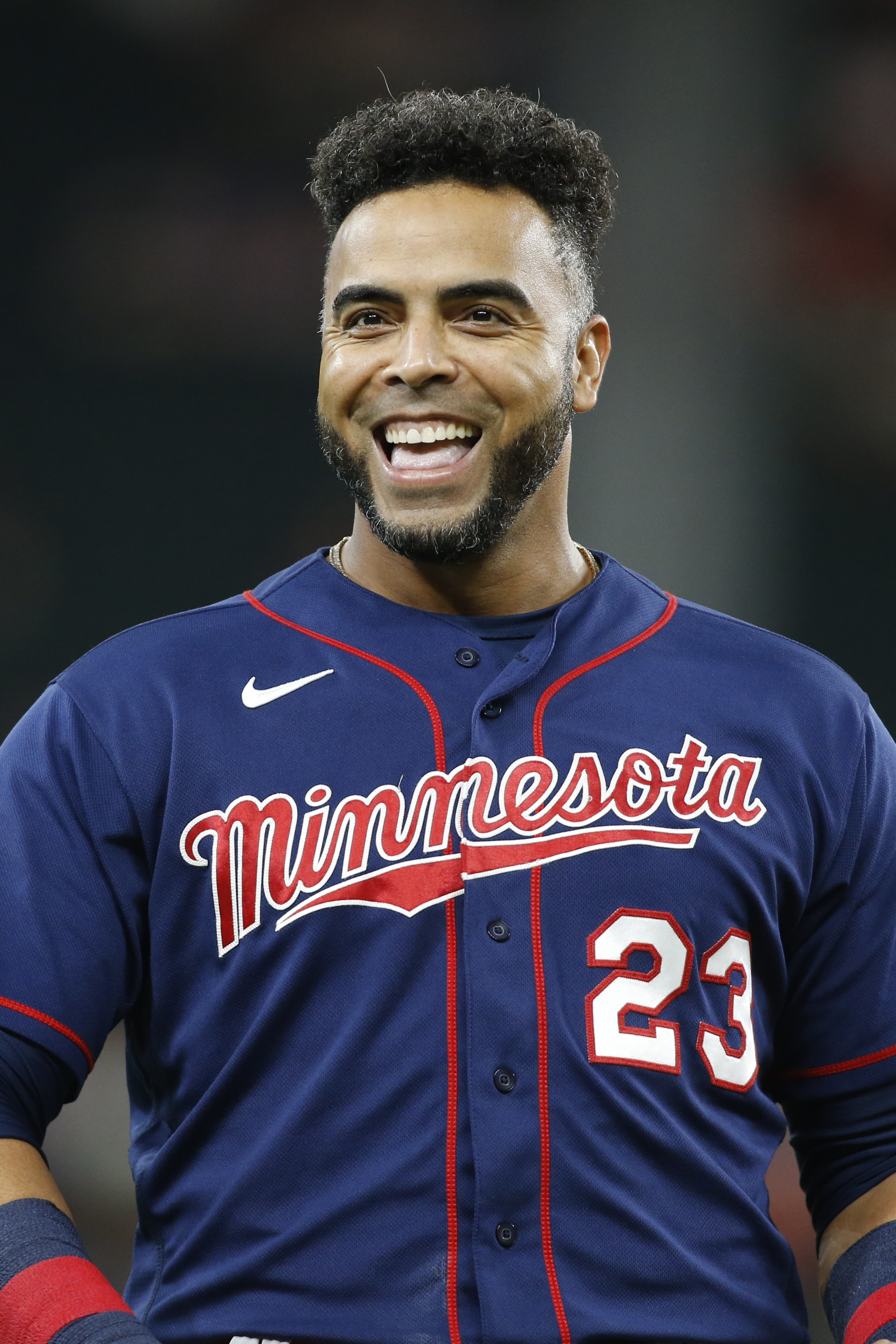
Cruz is a free agent at season’s end, playing out the 2021 campaign on a one-year, $13MM contract. As of this writing, there’s about $6MM remaining to be paid out on that pact. By the time the deadline rolls around, Cruz will be owed about $4.5MM for the remainder of the season.
A bat of Cruz’s caliber will surely be in demand, but perhaps not to the extent one would imagine at first glance. As a pure designated hitter, he’ll face a more limited market than most trade candidates.
A National League club could technically acquire Cruz to DH during interleague play and serve as a vastly overqualified pinch-hitter, but it’s unlikely anyone is going to put Cruz in the outfield with any regularity. He hasn’t played an inning of defense since 2018 and has just 54 innings in the field since the conclusion of the 2016 campaign. It’s hard to ever fully rule something out as front offices get increasingly creative, but it seems overwhelmingly likely that if Cruz is moved, it’ll be to an American League club.
Of course, not all 14 American League clubs will be in play. None of the Rangers, Royals, Tigers or Orioles are in contention. The Angels aren’t going to displace Shohei Ohtani from the DH slot, nor will the Astros do so with Yordan Alvarez. The Yankees have Giancarlo Stanton serving as a primary DH. The Red Sox are enjoying the heck out of a resurgent J.D. Martinez campaign. The Indians have Franmil Reyes, and the Twins may not want to ship Cruz to a division rival anyhow.
On that note, it’s worth pointing out that there’s a decent fit with the AL Central-leading White Sox. Yermin Mercedes faded considerably after a torrid start to the season and was optioned to Triple-A this week. But the Sox have Eloy Jimenez on a rehab assignment, and he’s likely to see at least some time at DH as he eases back into the mix after surgery to repair a ruptured pectoral tendon. It’s also generally hard to imagine the Twins trading Cruz to the White Sox in order to help the South Siders seal up a division title for which Minnesota originally hoped to contend.
There are a few clubs that seem like the clearest fits if the Twins move Cruz. Here’s a look at what each of these teams has received from the DH spot in its lineup in 2021, followed by a more thorough look at the potential fit.
- Athletics: .220/.289/.381, 88 wRC+
- Rays: .226/.314/.411, 103 wRC+
- Blue Jays: .240/.321/.429, 104 wRC+
- Mariners: .237/.320/.421, 108 wRC+
Athletics: No contender in the American League could use a DH upgrade more than Oakland. Their offseason signing of Mitch Moreland has resulted in a .238/.286/.388 batting line through 175 plate appearances to date. As a team, the A’s rank 12th in MLB with 394 runs scored — 94 fewer runs than the MLB-leading Astros, whom Oakland happens to be chasing in the division.
The question with the A’s, as always, is one of payroll capacity. For most of this past offseason, it looked as though the A’s wouldn’t spend much of anything on the 2021 roster. Their late signings of Moreland, Sergio Romo, Yusmeiro Petit and Trevor Rosenthal boosted payroll up to $86MM — still well below the league average but not quite the threadbare levels seen in Pittsburgh, Baltimore, Tampa Bay and Cleveland. Whether ownership would dish out another several million to rent Cruz for two-plus months remains to be seen, but even if the salary is deemed steep, the A’s could always pay a little more in terms of prospect capital in order to get Minnesota to cover some (or all) of the contract.
Rays: The financial element is perhaps even more notable with the Rays, who are currently operating on just a $62MM payroll. Tampa Bay also has a better in-house option than Oakland in the form of Austin Meadows. The 26-year-old Meadows can and has played some corner outfield this season, but the Rays have more defensively gifted options in Kevin Kiermaier, Manuel Margot, Randy Arozarena and Brett Phillips.
Meadows has been the club’s primary designated hitter this year, logging 53 percent of the the Rays’ total DH plate appearances. On the whole, Meadows has been a productive hitter with a .243/.335/.485 batting line, 16 home runs, 23 doubles and a triple. However, he’s been mired in a down stretch at the plate, batting .231/.300/.374 over the past month. Cruz is an upgrade even over Meadows at his absolute best, but the Rays’ “need” for Cruz feels less acute than that of the Athletics.
Blue Jays: Adding Cruz to a lineup that already features Vladimir Guerrero Jr., Bo Bichette, George Springer and Marcus Semien doesn’t really feel fair. Bringing Cruz into the fold would likely push Randal Grichuk back into a fourth outfielder role behind Springer, Lourdes Gurriel Jr. and Teoscar Hernandez. Early in the year, it would’ve been difficult to justify taking at-bats from Grichuk. He got out to a blistering start, batting .289/.322/.497 through the first two months. Since the calendar flipped to June, however, Grichuk is hitting .220/.244/.423 with a 29.1 percent strikeout rate in 127 plate appearances.
The Jays’ priority to this point has been the bullpen, and that will likely continue to be a point of focus for general manager Ross Atkins. That said, it never hurts to further strengthen an already potent lineup. If the prospect price for Cruz is to the Jays’ liking, they’re one of the few AL clubs that is both contending and has an easy path to carve out regular at-bats for the Boomstick. Unlike the A’s and Rays, money shouldn’t be an issue for them.
Mariners: A Cruz reunion tour with an unexpected contender in Seattle would make for a fun story for the final months of the season. Seattle is far from a postseason lock, but the Mariners are four games over .500 and just three and a half games out of a Wild Card spot. Much of the focus surrounding the Mariners has been on whether they’ll trade Mitch Haniger, but if they continue their hot streak — they’re 15-7 over their past 22 games — this is a club that could actually look to add some pieces.
The focus for Seattle would probably be on more controllable players who can help in 2022 and beyond. Starting pitching, in particular, will be the Mariners’ primary desire — as manager Scott Servais suggested this week. But if the Mariners can acquire Cruz without paying a price they feel will compromise a very promising long-term outlook, he’s a sensible upgrade. The move would be overwhelmingly popular with fans, and the Mariners have taken a potpourri approach at designated hitter this year anyhow. Ty France leads the team with an even 100 plate appearances as a DH, but he could be slotted into the lineup regularly at first base/second base for the balance of the 2021 campaign.
Little Current Traction Between Mets, Twins In Donaldson Trade Discussions
JULY 9: There’s currently little traction between the Mets and Twins in discussions regarding either Donaldson or right-hander Jose Berrios, writes Dan Hayes of the Athletic.
JULY 4: While the Mets are expected to pursue upgrades in advance of the deadline, a Donaldson trade is not under consideration at this time, hears Jon Heyman of MLB Network (Twitter link). Martino, however, reiterates that the Mets continue to contemplate a potential Donaldson acquisition.
JULY 2: The Mets are targeting third base upgrades as the deadline approaches, and while many of their fans are likely hoping Kris Bryant becomes available, they’re understandably exploring every avenue. SNY’s Andy Martino writes today that the Mets have approached the Twins and “engaged in very preliminary talks” regarding Josh Donaldson.
As always, it’s worth noting that teams inquire on a wide variety of targets every year at the trade deadline and in the offseason, but preliminary talks don’t necessarily portend serious negotiations. Donaldson is in the second season of a four-year, $92MM contract signed in the 2019-20 offseason, so he’d make for an expensive acquisition for the Mets or any other club. As Martino points out, the Donaldson contract would push the Mets beyond the luxury-tax barrier, though owner Steve Cohen hasn’t been shy about his willingness to cross that threshold.
Roster Resource’s Jason Martinez currently has the Mets at about $13.5MM shy of the $210MM luxury barrier. Donaldson’s $23MM annual value — the luxury tax is based on contracts’ average annual value — would bring the Mets about $9.5MM north of the tax line. However, as a first-time offender, their penalty would be rather minimal: a 20-percent tax on the first $20MM by which they exceed the barrier, a 32 percent tax on the next $20MM and a 62.5 percent tax on anything thereafter. (Obviously, at this point in the season, it’s overwhelmingly unlikely that the Mets would take on so much salary that they’d cross the barrier by $40MM or more.)
The penalty on Donaldson alone would, in theory, be about $1.9MM. That’s not prohibitive in and of itself, necessarily, and even if the Mets were to make subsequent additions and cross the tax line by, say, $20MM, they’d still only be paying $4MM in penalties. The greater concern could be that under the current system, penalties increase in the second and third consecutive seasons of crossing the tax line. Taking on Donaldson — or any other players who bring them north of the line, Bryant included — would set the Mets up for stiffer penalties in 2022 and perhaps in 2023. Of course, that assumes the current luxury-tax system will remain in place with the next collective bargaining agreement, and with the current CBA set to expire Dec. 1, we can’t know that to be the case.
Turning to the player himself, Donaldson has been somewhat of a lightning rod in recent weeks (and at various other points in his career) for his outspokenness about pitchers’ usage of foreign substances. The slugger called out Yankees ace Gerrit Cole and pointed to his spin-rate drops following the league’s implementation of umpire checks, and he drew the ire of the White Sox and their fanbase for shouting “It’s not sticky anymore!” after belting a home run against Lucas Giolito this week.
Being outspoken is nothing new for Donaldson, of course, nor is the productive stretch in which he currently finds himself. The 35-year-old went down with a hamstring injury in the first game of the season for the Twins, but he’s been healthy since and has been on a tear at the plate for the past month. Donaldson is hitting .250/.345/.486 with 13 home runs overall, but he’s been on absolute fire since Memorial Day weekend, slashing .291/.383/.646 with eight homers and four doubles in his past 94 plate appearances. From a defensive standpoint, he’s not posting the elite marks that he has in recent years, but he’s been about average at the hot corner in the estimation of most metrics (-1 Defensive Runs Saved, -1 Ultimate Zone Rating, +1 Outs Above Average).
Donaldson’s contract pays him $21MM in 2021, 2022 and 2023, and he’s also owed at least the $8MM buyout of a $16MM club option for the 2024 campaign. We’re at the halfway point of the 186-game regular season today, so as of this moment, Donaldson is owed $10.5MM more on this year’s salary. Notably, his contract does include limited no-trade protection, though it’s not yet clear whether the Mets are on that list.
For the Mets, third base has been an issue all season long, due largely to injuries. J.D. Davis opened the year as the top option at the hot corner, and he posted a mammoth .390/.479/.610 slash in 48 plate appearances through his first 14 games. However, Davis is a sub-par defensive option there and drew some criticism for some key miscues (three errors in 94 innings) before going down to a hand/finger injury from which he’s yet to return. Jonathan Villar, Luis Guillorme, Brandon Drury, Jose Peraza, Jeff McNeil and even backup catcher Tomas Nido (for two innings) have all been part of the Mets’ third base carousel this season.
Donaldson would, of course, help to stabilize that roller coaster — provided he can remain healthy. He’s been on the injured list in three of the past four seasons, owing primarily to calf injuries. He did stay healthy for the duration of the 2019 season with the Braves, however, and Donaldson’s early trip to the injured list in 2021 wound up lasting just 11 days.
It’s been a miserable season for the Twins, who opened the year as expected contenders but instead find themselves at 33-46 — fresh off a sweep at the hands of the AL Central-leading White Sox. With the Twins now 14.5 games back from the division lead and 13 games out of an American League Wild Card spot, they look increasingly likely to be deadline sellers. Donaldson’s contract probably makes him too costly for most teams to consider, but the deep-pocketed Mets are at least a plausible suitor in a potential swap.
Twins Reinstate Michael Pineda From Injured List
The Twins have reinstated Michael Pineda from the 10-day injured list, and the right-hander is scheduled to start this afternoon’s game with the White Sox. Righty Griffin Jax was optioned to Triple-A in the corresponding move.
Right elbow inflammation sidelined Pineda back on June 14, though fortunately his elbow issue ended up being relatively minor enough for him to get back to action prior to the All-Star break. (Pineda also had a minimal IL stint in May after a minor procedure to remove an abscess from his thigh.) It also provides time for Pineda to essentially audition for other teams, since the Twins are going to be selling at the trade deadline and Pineda is a free agent after the season.
In terms of bottom-line numbers, Pineda has a solid 3.70 ERA/4.23 SIERA over 56 innings for Minnesota. Pineda has always been good at limiting walks through his career, and his 6.5% walk rate in 2021 is comfortably above the league average. Beyond that, however, there isn’t much to like about Pineda’s Statcast metrics, and his .343 xwOBA is much higher than his .299 xOBA. There are enough teams looking for starting pitchers, however, that Pineda will surely draw interest, and likely some teams will suspect that his overall performance might turn around with a change of scenery.
Mets Exploring Rotation Market, Open To Rentals
As injuries continue to mount on the Mets’ pitching staff — young lefty David Peterson is out up to eight weeks with an oblique strain — acting general manager Zack Scott spoke with reporters about his team’s approach at the trade deadline (links, with video, via MLB.com’s Anthony DiComo and SNY’s Andy Martino). While Scott took a generally open-minded approach, he did acknowledge the opportunity for upgrades in the starting rotation, given the health woes that have plagued the Mets’ staff this year.
“It’s like we’ve gone the reverse of where we were earlier, where we had several position player injuries early,” said Scott. “…I think the same thing could be said, especially for the starting pitchers. There’s uncertainty, so we need to make sure we put our best foot forward there.”
The Mets came to Spring Training with visions of an Opening Day rotation featuring Jacob deGrom, Carlos Carrasco, Marcus Stroman, Taijuan Walker and likely Peterson. In a best-case scenario, rehabbing flamethrower Noah Syndergaard would be back from Tommy John surgery by early summer.
That, of course, hasn’t been the case at all in 2021. Carrasco still hasn’t thrown a pitch thanks to recurring hamstring troubles. The Mets’ current hope is that he’ll return by month’s end, but Carrasco’s timeline has proven to be quite tenuous to this point in the season. Syndergaard, meanwhile, is not expected back until early September. The team’s top depth option, southpaw Joey Lucchesi, will miss the next year-plus due to Tommy John surgery. Right-hander Jordan Yamamoto is on the 60-day IL due to shoulder issues.
Given that context, Scott’s mention of starting pitching upgrades is perfectly sensible. However, Martino reports that the Mets are “reluctant” to move the top-tier talents from their minor league system in trades. That curbs the quality of pitcher the Mets can reasonably hope to acquire. Scott voiced a willingness to acquire rental players, noting that the cost of impending free agents is “most of the time fairly reasonable” due to that lack of club control.
The Mets will surely gauge the price of more controllable arms, but if they’re indeed reluctant to part with their very best prospects, such names will be difficult to obtain. For instance, the New York Post’s Ken Davidoff writes that the Mets have at least gauged the Twins’ asking price on right-hander Jose Berrios but consider it to be “sky-high.” The Mets have also been linked to Minnesota’s Josh Donaldson, so it’s only natural that they’d also see where things stand with Berrios. (Some fans will inevitably speculate about eating the Donaldson contract to get Berrios at a lower prospect cost, but there’d be little sense in the Twins tanking the value of their most appealing trade asset and instead leveraging him to dump the salary of a veteran who is performing quite well.)
A Berrios-caliber arm may be tough for the Mets to line up given their apparent reluctance to deal from the top of the farm, but Scott noted that the brilliant performance of his team’s top three starters also means he doesn’t need to prioritize a top-of-the-rotation arm. “It could be just someone that helps us stabilize things until we get healthier,” he said of a potential rotation acquisition.
Given the performances of deGrom, Stroman and Walker to this point in the season, it’s only natural that the Mets don’t feel pressured to pursue another high-caliber starter. They’ll surely keep themselves informed of the market for such arms. But with deGrom looking once again like the runaway Cy Young favorite and both Stroman (2.59 ERA, 3.64 FIP) and Walker (2.44 ERA, 3.05 FIP) both thriving, there’s an argument that a steady fourth starter — even a rental — is the most logical piece to prioritize for now. Speculatively speaking, available rentals in that mold would include the Twins’ Michael Pineda, the Rockies’ Jon Gray or the Pirates’ Tyler Anderson. D-backs righty Merrill Kelly also fits that general description, and he has an affordable club option for the 2022 campaign as well.
Twins Outright Matt Shoemaker
Twins right-hander Matt Shoemaker has cleared outright waivers and accepted an assignment to Triple-A St. Paul, reports Dan Hayes of the Athletic (Twitter link). Minnesota designated him for assignment last week.
The Twins signed Shoemaker to a one-year, $2MM deal over the winter in the hope he’d stabilize the back of the rotation. That’s not how things have played out, though, as Shoemaker has been one of the least effective pitchers in the league this season. The 34-year-old has taken the ball sixteen times (including eleven starts) but the results haven’t been there. Shoemaker has been tagged for an 8.06 ERA/5.37 SIERA across 60 1/3 innings. He has struck out just 14.1% of batters faced — by far the worst mark of his career — and he’s given up fifteen home runs. It’s the second consecutive season in which Shoemaker has given up more than two longballs per nine innings pitched, an untenable mark.
Nevertheless, there’s little harm for the Twins in giving Shoemaker a chance to try to work things out in Triple-A. Prior to 2020, he’d carved out a nice career as a solid back-of-the-rotation arm when healthy. His velocity is still in line with its range from recent seasons. Despite the lack of strikeouts, Shoemaker’s 10.3% swinging strike rate is only a little worse than league average.
As a player with more than six years of major league service, Shoemaker had the right to refuse a minor league assignment while still collecting the remainder of his guaranteed salary. He’s instead decided to stick around in the Twins system and hope to pitch his way back to Target Field before the end of the season.