
Crane: Justin Verlander Seeking Deal Similar To Max Scherzer’s
Justin Verlander is a free agent without much precedent. A favorite to claim his third career Cy Young award this evening, he’s back on the open market after bypassing a $25MM player option with the Astros.
Verlander’s a fascinating case for teams. He turns 40 years old in February, which’ll certainly cap the length of his next deal. Yet he’s still among the top handful of pitchers in the sport, which sets him up for one of the largest per-year salaries in MLB history. Astros owner Jim Crane — who has taken a very hands-on role in the Houston front office and played a key role in bringing Verlander back last winter — told Brian McTaggart of MLB.com that Verlander has looked to last winter’s biggest free agent pitching contract as precedent. His former teammate Max Scherzer inked a three-year, $130MM guarantee with the Mets — a deal that also allowed him to opt out after the 2023 season.
“I know him well, so we’ve been pretty candid,” Crane told McTaggart. “He’s looking at the comp, which I think there’s only one or two. … J.V.’s probably got a few years left, and he wants to make the most of it. I think he’s going to test the market on that.”
The Scherzer deal indeed seems the closest comparison to Verlander, although their situations aren’t perfectly analogous. While both are all-time great pitchers still pitching near the top of their games deeper into their careers, a three-year bet on Scherzer was probably easier for a team to stomach than that same term for Verlander. Scherzer signed in advance of his age-37 season, while the latter will be three years older at the start of his next contract. Verlander’s two years removed from a Tommy John procedure that cost him almost all of the 2020-21 campaigns, but he’s bounced back to pitch at pre-surgery levels this year. Scherzer had avoided any injury of that magnitude in the past decade, topping 170 innings in every full season since 2008 before this year.
While that seems to tip things in Scherzer’s favor, their pure performance track records are mostly without complaint. Verlander had a 1.75 ERA across 175 innings this past season; Scherzer posted a 2.46 mark in 2021. The latter missed more bats, striking out 34.1% of opponents against Verlander’s 27.8% mark. Fanning just under 28% of opponents is still excellent for a starting pitcher, though, and Verlander maintained top-tier control while sitting in the mid-90s with his fastball.
To no one’s surprise, Crane suggested the Astros hope to bring Verlander back. However, there appears to be a notable gap between the two sides on contract terms right now. While Crane didn’t specify the lengths the Astros are willing to go to retain the nine-time All-Star, Chandler Rome of the Houston Chronicle reports Crane has thus far been reluctant to go past a two-year guarantee in the $60MM – $70MM range. That’s certainly not to say the Houston owner couldn’t later raise the offer, but Rome characterizes that as a rough line the team has set at present and suggests the Astros are very unlikely to offer a third guaranteed year.
Whether another team would be willing to go three years is one of the most interesting storylines of the offseason, and MLBTR forecasts Verlander for a three-year, $120MM guarantee. In any event, it doesn’t seem as if the Astros and Verlander are going to come to any agreement within the first few days of the offseason. The right-hander has spoken a number of times about his respect for Crane and affinity for the organization generally, but the owner’s comments don’t suggest the future Hall of Famer is looking to take a notable discount to stick around for a fifth full season with the defending World Series champs.
One could argue the Astros are better off letting Verlander walk and reallocating their spending capacity. They’re sure to face competition from a number of big-market, win-now teams. Clubs like the Yankees, Dodgers, Mets and Phillies figure to check in; Andy Martino of SNY wrote yesterday the Mets have discussed internally the possibility of a Verlander pursuit, presumably as an alternative if Jacob deGrom departs in free agency.
Houston is one of the sport’s biggest spenders themselves, and they don’t figure to be facing acute budgetary limitations coming off a championship. Yet Rome points out the Astros under Crane have tended to shy away from long-term free agent commitments. They also have questions at first base, at one of left field or designated hitter (depending on the team’s plans for Yordan Alvarez) and, to a lesser extent, in the bullpen.
Roster Resource projects their 2023 commitments just under $164MM with a luxury tax number around $179MM. Topping this year’s approximate $174MM Opening Day payroll feels like a given, and they’re around $54MM away from the $233MM base luxury tax threshold. Houston could certainly make a Verlander deal work, but an annual salary approaching or topping the $43.333MM Scherzer secured would push them fairly close to CBT territory without addressing anywhere else on the roster. Even if Verlander departs, a rotation of Framber Valdez, Cristian Javier, Lance McCullers Jr., Luis Garcia, José Urquidy and top prospect Hunter Brown (plus any external additions) would be among the best in the sport.
As far those other needs go, Crane tells McTaggart he’s interested in bringing back Yuli Gurriel at first base. He was less committal on Michael Brantley, whom Crane said could need to wait until March until there’s clarity on his recovery from this summer’s right shoulder surgery. Crane also pointed to a desire to add a left-handed bullpen arm, an obvious question after the team bought out Will Smith at the start of the offseason. He didn’t speak on free agent catcher/DH Willson Contreras, to whom the club has previously been linked, but Rome reports that Houston indeed has “strong interest” in the former Cubs backstop.
Bryce Harper To Undergo Elbow Surgery Next Week
Phillies star Bryce Harper will undergo elbow surgery to repair his damaged ulnar collateral ligament next Wednesday, president of baseball operation Dave Dombrowski announced today (Twitter link via Scott Lauber of the Philadelphia Inquirer). Imaging hasn’t conclusively determined whether Harper will require a full Tommy John surgery (i.e. ligament replacement) or whether an internal brace procedure could suffice, so the team won’t have a timeline until the surgery is performed.
Harper was diagnosed with a UCL tear back in May but was able to continue his 2022 season as the Phillies’ primary designated hitter. Position players who sustain UCL tears are often able to continue hitting, but throwing is obviously not an option with such an injury. Even in the event of a full Tommy John surgery, it should be noted that Harper could very likely return to the field as a DH for a notable portion of the 2023 season.
Shohei Ohtani, for instance, spent only the first five weeks or so of the 2019 season on the injured list before returning as a designated hitter. His surgery was performed in early October of 2018 — some seven weeks earlier in the offseason than Harper will go under the knife. Every player’s rehab is different, of course, but a summer return would seem plausible even in the worst-case scenario for Harper. If an internal brace procedure is sufficient, Harper could conceivably return in even shorter order.
Even with the damaged UCL, Harper remained a force in the middle of the Phillies’ lineup. Harper homered in three consecutive games following the diagnosis and batted .295/.381/.510 the rest of the way after learning of the tear. A broken thumb sustained when he was hit by a pitch sidelined him for a notable portion of the summer, but neither injury could prevent Harper from mashing when healthy enough to play. His postseason teetered on historic, as Harper slashed .349/.414/.746 with six home runs and seven doubles in just 71 plate appearances. His NLCS-winning home run against the Padres will forever be etched in Phillies lore.
Harper is still only four years into the 13-year, $330MM contract he signed as a free agent prior to the 2019 season, but to this point it’s hard to call the contract anything other than a roaring success. Since putting pen to paper and making Philadelphia his long-term home, Harper has batted a combined .282/.384/.546 (not including this year’s postseason exploits), won an NL MVP Award and helped bring the Phillies back to the postseason for the first time since 2011. He’s still owed $222MM over the remaining nine years of the deal, though with the typical AAV for premium players now well north of $30MM, that $24.667MM AAV looks like a bargain for Harper.
Blue Jays Trade Teoscar Hernandez To Mariners
Mariners president of baseball operations Jerry Dipoto wasted little time making his first big splash on the trade market this offseason, as the Mariners announced Wednesday that they’ve acquired All-Star right fielder Teoscar Hernandez from the Blue Jays in exchange for setup man Erik Swanson and pitching prospect Adam Macko.

Hernandez, who turned 30 a month ago, will give the Mariners a heart-of-the-order slugger who’s posted a stout .283/.333/.519 batting line with 73 home runs and 71 doubles through 1337 plate appearances over the past three seasons. Hernandez has been a Statcast darling since the time of his big league debut, regularly posting top-of-the-scale exit velocity and hard-hit rates; that was no different in 2022, when Statcast ranked him in the 94th percentile or better in hard-hit rate, average exit velocity, max exit velocity, barrel rate and expected slugging percentage.
That penchant for elite contact and plus power output from Hernandez comes at something of a cost. While he’s curbed his once-sky-high strikeout totals to an extent, Hernandez still fanned in 28.4% of his plate appearances last season. He got the strikeout rate all the way down to 24.9% in 2021, so there’s perhaps hope for some further gains, but as of right now that number is an outlier with regard to the rest of his career. His walk rate, meanwhile, has steadily clocked in between six and seven percent over the past few seasons — a good bit shy of league average.
Beyond the huge power, Hernandez possesses deceptive speed. He’s only tallied 24 steals (in 32 tries) over the past three seasons, including just six in 2022, but Hernandez’s sprint speed ranks in the 84th percentile of MLB players, per Statcast. With slightly larger bases expected to perhaps spur a bit more running in 2023, Hernandez is among the many players who could conceivably begin to take off with a bit more frequency. Hernandez is also known for having one of the game’s strongest throwing arms. Despite that speed and arm strength, however, he draws consistently below-average grades for his glovework in right field; Defensive Runs Saved and Outs Above Average have pegged him as a negative defender in each of the past four seasons. In 2022, he tallied minus-3 DRS, minus-5 OAA and a minus-3.1 Ultimate Zone Rating.
Even if his speed and arm don’t translate to plus right field defense, Hernandez has been a well above-average all-around player in recent years, when looking at the sum of his parts. Both FanGraphs and Baseball-Reference peg him right at eight wins above replacement in his past 324 games. Those 324 games have come across three seasons, though one was the shortened 2020 campaign. Generally speaking, Hernandez has avoided major injuries. He missed three weeks this season due to an oblique strain and was sidelined in 2021 by a positive Covid test (plus three games on the paternity list). Overall, however, he’s played in 84.3% of his team’s possible games since 2020.
Barring an extension, Hernandez will be a one-year rental for the Mariners — and a relatively pricey one, at that. Hernandez will reach six years of service time in 2023 and become a free agent next winter. MLBTR contributor Matt Swartz projects a sizable $14.1MM salary for him this season.
Dipoto said at last week’s GM Meetings that he sought at least one outfield upgrade this winter, if not two. Hernandez should slot into right field alongside center fielder and AL Rookie of the Year Julio Rodriguez, but his presence in Seattle creates some additional questions. The club opted not to make a qualifying offer to Mitch Haniger, for instance, and while Hernandez’s acquisition doesn’t squarely rule out Haniger returning to rotate through the outfield corners and DH, today’s trade inherently makes a reunion feel less likely.
The Mariners will have to determine whether they’re comfortable with a combination of former top prospects Jarred Kelenic, Kyle Lewis and Taylor Trammell in left field. Jesse Winker is another left field/DH option, though as of yesterday, the Mariners were discussing trade packages involving Winker. It’s easy enough to envision that group, with some help from utilitymen Dylan Moore and Sam Haggerty, holding down the fort in the corners and at DH, but further additions shouldn’t be ruled out.
The Mariners, after all, are squarely in win-now mode. And even with Hernandez aboard, they have ample payroll capacity; acquiring Hernandez is an approximate $12.7MM net add to the payroll, as Swanson had been projected by Swartz to be paid $1.4MM. They’re projected by Roster Resource for a $143.5MM payroll following the swap, and that’s a ways shy of the $162MM peak they trotted out in 2018. A return to the playoffs has likely boosted revenue a bit, and MLB has agreed to various lucrative streaming deals that afford each team considerable annual payouts in the five years since that previously established record payroll.
Turning to the Blue Jays’ side of the deal, they’ll simultaneously add a much-needed power arm to the bullpen and shed that aforementioned (and approximate) $12.7MM in payroll. They’re still projected for what would be a franchise-record Opening Day payroll in the $176MM range, but the trade gives them some more flexibility while adding a crucial arm to the relief mix. Swanson, originally acquired by the Mariners in the trade that sent James Paxton to the Yankees, struggled as a starter but has broken out as a powerhouse in the Seattle bullpen.

The 3.31 ERA, 24.3% strikeout rate and 6.9% walk rate Swanson logged in 35 1/3 innings during the 2021 season were a step in that direction, but it wasn’t until this past season that he became a dominant late-inning force. Swanson’s 2022 campaign resulted in 53 2/3 innings of 1.68 ERA ball with a massive 34% strikeout rate against just a 4.9% walk rate. In all, since establishing himself in 2021, Swanson owns a 2.33 ERA in 89 innings of relief — a mark that is largely supported by fielding-independent metrics (2.59 FIP, 2.87 SIERA).
Swanson is an extreme fly-ball pitcher, so some may have concern about his transition from a pitcher-friendly setting at T-Mobile Park to the homer-happy confines of Toronto’s Rogers Centre, but the fact is that very few of the fly-balls he yields are hit with authority. Among the 385 pitchers with at least 80 innings over the past two seasons, Swanson has induced infield pop-ups at the sixth-best rate in MLB.
Swanson was also a batted-ball deity on the mound in 2022, ranking near the top of the league in terms of average exit velocity (98th percentile), hard-hit rate (96th), expected ERA and wOBA (97th), expected slugging percentage (94th), overall strikeout rate (96th) and opponents’ chase rate on pitches off the plate (93rd). He may not be a household name, but for the 2022 season at least, Swanson can lay claim to legitimately being one of MLB’s most dominant relievers.
Unlike Hernandez, who’ll be a free agent next winter, Swanson is a relatively long-term piece for the Blue Jays. With three-plus years of Major League service time under his belt, he’s controllable through the 2025 season. And, because his breakout was of the “late blooming” variety, he didn’t build up the type of long track record that would reward him handsomely in his first trip through the arbitration process. The Jays will almost certainly pay Swanson less over the next three seasons than they’d have paid Hernandez in 2023 alone.
It’s the same timeline to free agency shared by Toronto closer Jordan Romano, who’s also controlled through 2025. Swanson figures to serve as the primary setup option to Romano, though he’ll be joined by veterans Yimi Garcia, Anthony Bass, Adam Cimber and Tim Mayza in what already looks like a deeper and more formidable relief corps.
Also heading to Toronto in the trade is the left-handed Macko, a significant addition to the team’s prospect base. Baseball America and FanGraphs both rated the 21-year-old as Seattle’s eighth-best prospect, touting his curveball as anywhere from a plus pitch (60-grade, FanGraphs) to a plus-plus (70, Baseball America) offering on the 20-80 scale. His fastball is another above-average offering, climbing as high as 98 mph, and his slider gives him the potential for a third average or better pitch.
Injuries — most notably a shoulder issue — and spotty command have been red flags in Macko’s development thus far. He pitched just 38 1/3 frames at High-A in 2022, logging a 3.99 ERA with a massive 35.9% strikeout rate but also a concerning 12% walk rate. It’s a pair of major “ifs,” but if Macko can get healthy and refine his command to even just shy of league average, the potential for a quality big league starter is present. Failing that, the fastball velocity and wipeout breaking pitch have obvious late-inning relief potential. Baseball America’s scouting report on Macko notes that he was one of the Mariners’ most sought-after targets in recent trade talks, too, and the Jays themselves could very well be asked about him in talks with other teams moving forward.
Overall, trading a popular and gregarious middle-of-the-order hitter for a reliever, even an ostensibly excellent one, could be a tough pill for Jays fans to swallow. That said, there’s clear potential to come out ahead in the gambit, as they’ll add three years of a bargain-priced, high-end reliever and a prospect with potential to quickly rise up national rankings with some better luck in the health department. The $12MM+ in payroll savings figures to be reallocated to free-agent pursuits or perhaps to additional targets on the trade market, too, so this will be but one step in a layered process that could ultimately benefit both teams.
As for the Mariners, they’ll add a thunderous bat to the heart of a lineup that also includes Rodriguez, Ty France and Eugenio Suarez. Dipoto and his charges, however, figure to continue to add to the lineup as they seek to take the Mariners beyond the ALDS heights they reached in 2022. Parting with Swanson thins out the bullpen, though Seattle is deep in that regard. Parting with Macko subtracts yet another quality prospect from a farm system that has been depleted, but not emptied, by recent trade activity (Luis Castillo, most notably). That said, even if the M’s can’t extend Hernandez, he’ll be a clear qualifying offer candidate next offseason, so they could potentially recoup a 2024 draft pick in the event that he proves to be a one-and-done case in Seattle. And for the time being, there’s no denying that the team’s 2023 lineup looks decidedly more formidable with Hernandez aboard.
ESPN’s Jeff Passan first reported that Hernandez had been traded to Seattle (Twitter link). TSN’s Scott Mitchell reported that the Jays were getting bullpen help, and Ryan Divish of the Seattle Times first reported the specific names involved.
Rockies Acquire Nolan Jones From Guardians
The Guardians have traded infielder Nolan Jones to the Rockies for infield prospect Juan Brito, according to an announcement from Cleveland. It’s an out-of-the-blue swap of talented young players.
Jones, a former second-round pick, appeared among Baseball America’s list of the game’s top 100 prospects each season from 2019-21. He consistently put up quality numbers in the minor leagues, posting some of the game’s highest walk rates to run top-tier on-base marks. Jones struggled a bit during his first crack at Triple-A in 2021 but still entered this year among BA’s top ten Cleveland prospects.
The 24-year-old started the season back at Triple-A, but he performed better in his second go-around at the level. In 248 plate appearances, he put up a .276/.368/.463 line with nine home runs. The Guardians called him up for the first time in July, and he picked up his first 92 big league trips to the plate. Jones hit only .244/.309/.372 while striking out a third of the time in that limited look, but there’s still plenty to be intrigued about in his long-term profile.
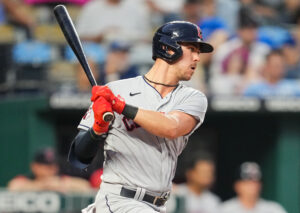
Jones owns a .252/.361/.443 mark across 655 plate appearances at the Triple-A level. He’s walked in 13.7% of his trips to the dish there while connecting on 22 home runs and 36 doubles. A lofty 28.4% strikeout rate leads to some questions about his bat-to-ball skills, but the combination of power and plate discipline makes him an intriguing addition for the Rox.
The Philadelphia native came up as a third baseman, although he increasingly saw more action in the corner outfield this year. Prospect evaluators have long suggested he could be an adequate defender at the hot corner, but the position was obviously spoken for long-term in Cleveland by José Ramírez. The Rockies already have a franchise third baseman of their own — albeit not one of Ramírez’s caliber — in Ryan McMahon. With McMahon playing elite defense at the hot corner, Jones will probably factor more immediately into the corner outfield and designated hitter mix. The Rockies have Charlie Blackmon for another year to split time between right field and DH, while Kris Bryant will hopefully stay healthy and lock down left field. C.J. Cron is the presumptive starter at first base, but Colorado can rotate Jones’ left-handed bat into the mix alongside Cron while also keeping Blackmon off his feet more often.
Turning to Cleveland’s end of the swap, they land an interesting lower-level prospect from an improving Colorado farm system. Brito, who recently turned 21, spent the entire 2022 season in Low-A. He hit .286/.407/.470 with 11 home runs through 497 plate appearances, walking in an excellent 15.7% of his trips against a meager 14.3% strikeout percentage. Baseball America only placed the Dominican Republic native 30th on its midseason ranking of the Colorado farm system, but Guardians evaluators are clearly far more bullish on his upside.
Brito has played almost exclusively second base in the minors. He’s not regarded as a particularly impressive defender or athlete, but he’s a switch-hitting middle infielder with an excellent minor league track record. The Guardians have prioritized players with impressive bat-to-ball skills and the ability to play a key defensive position, and Brito certainly fits that mold.
With Brito already eligible for the Rule 5 draft, Cleveland immediately selected him onto the 40-man roster. The Guardians often navigate roster churn around the Rule 5 date as they swap out depth types or players who are becoming more costly via arbitration for further away talent. This is not that kind of move, however. Both players occupy a 40-man spot, and neither is within two years of reaching arbitration. Both can still be optioned to the minor leagues — Jones for one more year, Brito three times. Brito surely won’t factor into the MLB mix right away, but this marks a fascinating swap of unproven young players — one seemingly motivated by each team simply valuing the player they’re bringing in more than the player they’re shipping away, not by contractual provisions or roster reshuffling.
Image courtesy of USA Today Sports.
Rays Designate Ryan Yarbrough For Assignment
The Rays announced a number of roster moves in advance of tonight’s deadline to set the 40-man roster before the Rule 5 draft. Tampa Bay made a trio of trades and, in perhaps their most notable transaction, designated left-hander Ryan Yarbrough for assignment. The Rays also designated reliever Javy Guerra and outfielder Bligh Madris for assignment. Joining the 40-man roster are infielders Curtis Mead, Osleivis Basabe and Greg Jones and pitchers Taj Bradley and Colby White, who’d all have been eligible for the Rule 5 draft.
The move officially brings to an end Yarbrough’s four-plus year run in Tampa Bay. The southpaw debuted in 2018 and spent his first three seasons as a productive innings-eater on the staff. While he wasn’t a traditional starting pitcher, Yarbrough frequently soaked up innings as a bulk pitcher behind an opener. Through the end of the 2020 campaign, he carried a 3.94 ERA in 344 2/3 career innings.
Things have gone off the rails for Yarbrough over the past two seasons. He’s been tagged for an ERA at 4.50 or above in both years, while his average fastball speed has ticked down around 87 MPH after sitting just under 90 earlier in his career. He still throws plenty of strikes and excels at generating soft contact, but his run prevention marks have gone in the wrong direction. Going back to the start of the 2021 campaign, the Old Dominion product has a 4.90 ERA through 50 appearances and 235 frames. The 2022 campaign was particularly challenging, as he was optioned to Triple-A on a couple occasions and missed time with groin and oblique issues.
Yarbrough was in his penultimate offseason of arbitration eligibility. Projected by MLBTR contributor Matt Swartz for a $4.2MM salary if tendered a contract, he’s looked like a trade or non-tender candidate for the past few months. Tampa Bay reportedly shopped him at last week’s GM meetings, but they evidently didn’t find a taker. They can still look to deal him over the next few days, or he can be non-tendered and sent to free agency for the first time.
The Rays acquired Guerra from the Padres in April. He was outrighted off the roster not long after but made it back to the big league club midseason. He provided the Rays with 16 innings of 3.38 ERA ball, but he only managed a 12.9% strikeout rate while walking 11.4% of opponents. The 27-year-old former shortstop throws very hard but hasn’t found much success missing bats at the upper levels.
Madris, 26, was snagged off waivers from the Pirates in September. He didn’t suit up at the big league level in Tampa Bay. He hit .177/.244/.265 through his first 39 MLB games in Pittsburgh. Madris had a much more impressive .297/.366/.510 showing between the two teams’ Triple-A affiliates. He still has a pair of minor league option years remaining, so he could find some interest via trade or waiver claim in the next few days.
As far as the players making it onto the Tampa Bay roster, Mead was one of the easiest calls any team in the majors had to make. A former amateur signee from Australia, the righty-hitting infielder has broken out as one of the sport’s top prospects. Mead slots in 23rd on Baseball America’s most recent top 100, the latest in a long line of excellent infield talents coming up through the system. He hit .298/.390/.532 across 311 plate appearances between Double-A Montgomery and Triple-A Durham and should factor into the MLB mix early next season.
Bradley is a top prospect in his own right, appearing 15th on BA’s list. A fifth-round selection out of a Georgia high school in 2018, he’s flown to Triple-A. The right-hander split his age-21 season between Montgomery and Durham, combining for a 2.57 ERA across 133 1/3 innings while striking out 26.5% of batters faced. He draws praise for his fastball-slider combination and should factor into the rotation mix early next season.
Basabe was originally signed by the Rangers out of Venezuela. Dealt to the Rays in the trade that landed Nate Lowe in Arlington, he’s played his way to Double-A. The 22-year-old has experience all around the infield and combined for an excellent .324/.385/.462 mark between High-A Bowling Green and Montgomery this year.
Jones was a first-round pick in 2019 out of UNC-Wilmington. A switch-hitting shortstop/center fielder with blazing speed, he had a rough year in Montgomery. Jones hit .238/.318/.392 with eight homers and a huge 35.8% strikeout percentage in Double-A. He stole 37 bases, though, and the Rays didn’t want to chance losing his defense and athleticism.
White was a sixth-round selection from Mississippi State in that same draft. The 24-year-old is a pure reliever but has an excellent fastball and could factor into the big league bullpen next year. He spent all of this past season on the injured list.
Marc Topkin of the Tampa Bay Times first reported Yarbrough had been DFA.
Marlins To Acquire JT Chargois, Xavier Edwards From Rays
The Rays are dealing reliever JT Chargois and infielder Xavier Edwards to the Marlins for prospects Marcus Johnson and Santiago Suarez, reports Joel Sherman of the New York Post (Twitter link).
Chargois will step directly into the Miami bullpen. The hard-throwing righty owns a 2.49 ERA through 76 innings split between the Mariners and Rays over the past two seasons. He’s fanned a solid 23.2% of opponents against a manageable 8.3% walk rate, missing bats at a roughly league average clip. Chargois missed a couple months this past season due to tightness in his left oblique, but he managed a 2.42 ERA with a huge 59.7% ground-ball percentage when healthy.
It’s unlikely Chargois will continue to strand upwards of 80% of baserunners, as he has the last two years. ERA estimators have pegged his performance more in the mid-3.00s range, but he should still be an affordable power arm in the middle innings for first-year manager Skip Schumaker. Chargois held right-handed batters to a woeful .200/.235/.385 line this year. He’s in the first of three seasons of arbitration eligibility and projected by MLBTR contributor Matt Swartz for a $1MM salary.
Edwards, a former Padres draftee, was a key piece of the deal that sent Blake Snell to San Diego. A switch-hitting infielder, he draws praise for his top-of-the-line speed and has played almost exclusively in the middle infield as a professional. Edwards appeared among Baseball America’s Top 100 prospects during the 2019-20 offseason and ranked among the top ten in the strong Tampa Bay system as recently as this year.
The 23-year-old seemed to stall out at Triple-A Durham this season, however. Over 400 trips to the dish, he hit just .246/.328/.350 with five home runs. A 10.8% walk rate and 18.8% strikeout percentage are each solid, but the Florida native didn’t find much extra-base impact. He also swiped a career-low seven bases in 11 attempts.
Edwards would have been eligible for the Rule 5 draft if not added to the 40-man roster this evening. Tampa Bay apparently wasn’t planning to do that, so they’ll deal him to a club that ostensibly is willing to put him on the roster. Moving Chargois clears a roster spot, and while it subtracts a productive big league reliever, it’s the kind of churn at the back of the 40-man roster to which the Rays have been accustomed.
In return, they’ll add a pair of further-away players to the farm system. Johnson was Miami’s fourth-round pick this year out of Duke. A 6’6″ right-handed pitcher, he signed for just north of $507K. Baseball America’s draft report noted the high spin rate on his slider and added that the 21-year-old sits in the 92-95 MPH range with his fastball. Suarez, 17, just signed with Miami as an amateur prospect from Venezuela. He made 11 starts in the Dominican Summer League this year.
Yankees To Re-Sign Anthony Rizzo To Multi-Year Deal
The Yankees and Anthony Rizzo are in agreement to reunite on a two-year deal with a $40MM guarantee. That comes in the form of a $17MM salary in 2023 and 2024, followed by a $17MM club option for 2025 with a $6MM buyout.
Rizzo, 33, spent many years with the Cubs, a key part of the club’s core that broke the 108-year curse by winning the 2016 World Series. From 2014 to 2019, he was remarkably consistent and productive, hitting between 27 and 32 home runs in each of those six years. His wRC+ was always between 126 and 155, indicating he was between 26% and 55% above league average at the plate. His wins above replacement tally, according to FanGraphs, was between 3.2 and 5.3 in each of those campaigns.
The next two seasons saw Rizzo slide from those great heights somewhat, though he was still a strong performer. In the shortened 2020 campaign, he hit .222/.342/.414 for a wRC+ of 103. The next year, which included a midseason deal to the Yankees, came in at .248/.344/.440 and a wRC+ of 113.
Despite the slight downturn, he was still above-average at the plate and is generally considered a solid defender at first base. He was ineligible for a qualifying offer because of the midseason trade. He and the Yankees agreed to a deal that would keep him in the Bronx, with Rizzo earning $32MM over two years, though he could opt out of the final year and its $16MM salary.
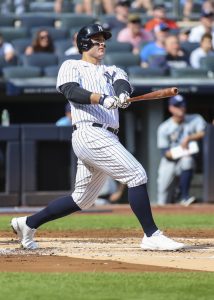
Despite dealing with various ailments throughout 2022, he ended up having a nice bounceback campaign. His 32 home runs matched a career high and his .224/.338/.480 batting line amounted to a wRC+ of 132. Based on that strong showing, he triggered his opt-out and returned to free agency in search of a larger deal. It’s also been speculated that the upcoming ban on aggressive defensive shifts will help him, given that his left-handed bat and low speed make him particularly vulnerable to those. The Yankees extended a $19.65MM qualifying offer to him, which he could have accepted and locked in a slight raise over his expected salary. But it seemed he had other suitors, with the Astros being one club known to have interest in him.
3pm Central time today was the deadline for players to accept or reject qualifying offers, with Rizzo among the 12 who declined, though reports emerged shortly thereafter that he and the Yankees agreed to a longer pact. Rizzo will return to his post at first base and earn $17MM per year, so very close to the QO, but he’ll actually have an AAV slightly ahead of it thanks to the buyout. His $40MM guarantee over two years comes out just barely ahead of the two years and $36MM projected by MLBTR.
By getting Rizzo to put pen to paper, the Yanks have prevented a key bat from departing in free agency. Of course, Rizzo is only the second most important player in this camp, as all eyes are squarely focused on Aaron Judge and whether the Yanks can convince him to stay. With Rizzo’s contract on the books, the club’s 2023 payroll is now around $207MM in the estimation of Roster Resource. Last year, they opened the season at $246MM, per Cot’s Baseball Contracts, leaving them about $40MM in space before they’re caught up to that difference. Of course, if they are willing to increase their spending beyond last year’s levels, they should have even more to work with.
Ken Rosenthal of The Athletic first reported that Rizzo and the Yanks were reuniting on a multi-year deal. Andy Martino of SNY first relayed the two-year plus a club option framework. Jack Curry of YES Network was first on the dollars.
Image courtesy USA Today Sports.
12 Players Reject Qualifying Offers
Twelve of the 14 players who received qualifying offers have rejected those one-year, $19.65MM contracts in favor of testing the open market, tweets Mark Feinsand of MLB.com. Martin Perez and Joc Pederson are the only two who accepted a QO. Each of Aaron Judge, Trea Turner, Xander Bogaerts, Dansby Swanson, Jacob deGrom, Carlos Rodon, Brandon Nimmo, Willson Contreras, Anthony Rizzo, Chris Bassitt, Nathan Eovaldi and Tyler Anderson have rejected the deal. Anderson is already in agreement on a three-year contract with the Angels.
None of the news is all that surprising, aside from perhaps Anderson’s early multi-year strike with the Halos. Perez and Pederson were two of the three most likely candidates to take the QO. That the Giants tagged Pederson at all was a move few saw coming, and most believed he’d indeed take the QO once it was put forth.
None of Judge, Turner, Bogaerts, Swanson, deGrom, Rodon, Nimmo, Bassitt or Contreras likely gave much thought to the possibility. Eovaldi and Rizzo were more borderline candidates, but the latter quickly returns to the Yankees on a multi-year deal that’ll pay him around the QO rate over two guaranteed seasons. Eovaldi has yet to sign, but he’ll presumably continue to search for a longer-term contract after taking advantage of the five days to scour the market.
The clubs that saw a free agent decline a qualifying offer now stand to receive draft compensation if that player signs elsewhere. The value of the compensatory pick depends on a team’s status as a revenue sharing recipient and/or whether they paid the luxury tax in 2022. That’s also true of the draft choices and potentially international signing bonus space a team would have to forfeit to sign a qualified free agent from another team.
MLBTR’s Tim Dierkes broke down the forfeiture each team would have to surrender to sign a qualified free agent earlier this month. MLBTR’s Mark Polishuk looked at the compensation each club would receive if one of these players signed elsewhere.
Joc Pederson Accepts Qualifying Offer
Outfielder Joc Pederson has accepted the $19.65MM qualifying offer he received from the Giants, per Mark Feinsand of MLB.com.
Pederson was drafted by the Dodgers and spent seven seasons there, largely serving as a productive member of the lineup. He had an ill-timed down year in 2020, just as he was about to reach free agency. That led to him settling for a one-year, $7MM deal to join the Cubs for 2021. He bounced back slightly that year but was still below average at the plate overall, leading to another one-year deal for 2022, this time getting $6MM from the Giants.

He was able to get back on track in a huge way this year, having the best offensive season of his career. His .274/.353/.521 slash line included career highs in both batting average and on-base percentage. The resulting wRC+ of 144 means he was 44% above league average, and that was 16 points beyond anything he’d done previously in his career.
Despite that huge showing with the bat, it was somewhat surprising to see him extended the QO, given his recent struggles and poor defensive metrics. Nonetheless, the Giants felt good enough about his output to make a $19.65MM bet that he could have another strong performance in 2023. They would have received draft pick compensation if Pederson had declined the offer and signed elsewhere, but that’s a moot point now as he’ll return to the Giants next year, earning a salary almost three times as high as his previous best.
For the Giants, it’s possible that this is the first of many moves for them, with rumors swirling that they are going to be very active this winter. For now, Pederson will join an outfield/designated hitter mix that includes Mike Yastrzemski, LaMonte Wade Jr., Luis Gonzalez and Austin Slater, though the club tends to favor players with defensive versatility and have several infielders that could move to the grass.
With Pederson’s $19.65MM added to the ledger, the 2023 payroll is now sitting at $134MM, in the estimation of Roster Resource. They began last year with an Opening Day mark of $155MM and have been above $200MM in the recent past, according to figures from Cot’s Baseball Contracts. If they are willing to get back up to those levels, they should have plenty to work with. Rumors have connected them to the top free agent shortstops as well as Bay Area native Aaron Judge, making for a very interesting offseason ahead. But for now, they’ve brought back a very productive hitter for another season in black and orange.
Image courtesy of USA Today Sports.
Willson Contreras To Decline Qualifying Offer
Catcher Willson Contreras will reject the Cubs’ qualifying offer and instead test the open market this winter, ESPN’s Jesse Rogers tweets. The Cubs, who surprisingly did not trade Contreras at the deadline — a deal sending him to Houston was reportedly nixed by Astros ownership — made the easy call to instead make the one-year, $19.65MM qualifying offer to their longtime catcher. Contreras always appeared overwhelmingly likely to decline the offer. He’ll now seek a multi-year deal in free agency.
The 30-year-old Contreras will head into free agency on the heels of his fourth career season of 20-plus homers and 20-plus doubles. The three-time All-Star and 2016 World Series champion slashed .243/.346/.466 in what seems likely to be his final season as a member of the Cubs. Chicago had multiple opportunities to extend Contreras over the years, with the player himself publicly expressing his desire to stay along the way. It never appeared that the team made a strong effort to sign Contreras for the long haul, however, and with veteran Yan Gomes signed through 2023, the Cubs have at least one alternative option (though there’s a good chance they add another via free agency or trade).
Contreras’ defense has become something of a talking point going back to the trade deadline, though some of that talk is perhaps overblown. It’s generally rare for starting catchers to change hands at the deadline, as learning an entirely new staff on the fly and in the middle of a postseason push is a difficult task for any backstop. That concern, of course, won’t exist with a free-agent signing, as Contreras will have an entire offseason and Spring Training to familiarize himself with a new team’s staff.
In terms of actual defensive metrics, Contreras boasts a 30% caught-stealing rate that’s comfortably above league average and is regarded as having one of the best throwing arms of any catcher in the game. Statcast credits him for the 11th-best poptime of any catcher in baseball and also feels that his framing has been average or slightly above over the past three seasons. Defensive Runs Saved pegged him at -1 in 2022 but credited him with a +8 mark just one year prior. It’s fair to say that Contreras isn’t an elite defensive backstop, and over the course of a multi-year deal that stretches into his mid-30s, he may spend additional time at DH or another position, such as first base. None of that means he’s a defensive liability in the short term, however.
Because Contreras rejected a QO, any team that signs him will have to forfeit at least one draft pick. Luxury-paying clubs will forfeit their second- and fifth-highest selections in next year’s draft and will see their international bonus pool reduced by $1MM. Teams that were neither luxury tax payors nor revenue-sharing recipients will surrender their second-highest pick and see their international pool reduced by $500K. Revenue-sharing recipients would “only” have to surrender their third-highest pick. The Cubs, as a team that neither paid the luxury tax nor received revenue sharing, would receive a compensatory pick between Competitive Balance Round B and Round 3 in next year’s draft (typically in the No. 75 overall range).