
Kyle Schwarber Out For Year With Torn Knee Ligaments
Cubs catcher/outfielder Kyle Schwarber will miss the season after being diagnosed with full tears to the anterior cruciate and lateral collateral ligaments of his left knee, the club has informed reporters including Jesse Rogers of ESPNChicago.com (Twitter link). Schwarber suffered the injury in an outfield collision last night.
Schwarber was initially diagnosed with only a significant ankle sprain, with x-rays negative for fractures. But the force of the impact with center fielder Dexter Fowler obviously caused much more significant damage to his knee. Now, his ACL and LCL will require surgery and extensive rehab.
Needless to say, it’s a major blow for the high-powered Cubs offense and the rising 23-year-old star. Schwarber was expected to see significant action in the outfield this season, sharing time with right-handed hitting youngster Jorge Soler after the club added Jason Heyward and re-signed Fowler over the winter. He was also set to see limited time behind the plate — his natural position — behind top two options Miguel Montero and David Ross, in hopes that he’d be eased into a more regular catching role in the future.
While losing Schwarber’s high-quality bat is a big loss, Chicago is better positioned to absorb the blow than the Diamondbacks were when they saw A.J. Pollock go down. Soler, Kris Bryant, Matt Szczur, and perhaps Javier Baez provide rather promising options, though they all swing from the right side. The club dealt away left-handed-hitting outfielder/infielder Chris Coghlan in conjunction with the re-acquisition of Fowler, taking away their top platoon option against right-handed pitching.
The biggest impact, in some ways, could be down the line. Schwarber has shown the athleticism to turn into a big league catcher, but is said to need to add polish to that element of his game. Of course, he’s also new to the outfield. Losing the chance to continue to hone his skills on defense — and to see more left-handed MLB pitching, which posed a challenge last year — could impact his development. That’s all before considering the possible long-term impact of what is unquestionably a significant knee injury.
With Schwarber unable to resume his progress as a backstop, top prospect Willson Contreras becomes an even more important asset. His own development has been a significant sub-plot for a Cubs organization that is full of major storylines. Montero is nearing 33 years of age and will be a free agent after 2017, while Ross is set to retire after the season. The door is now open next year — if not sooner — for the 23-year-old Contreras, who will open at Triple-A after a big 2015 in his first run at the Double-A level.
A.J. Pollock Undergoes Elbow Surgery
APRIL 5: The D-backs announced that Pollock underwent surgery today and had a plate placed at the tip of his right elbow as part of the procedure (links to Twitter). Per the announcement, there is no projected timetable for Pollock’s return.
APRIL 2: There hasn’t been any timeline provided on Pollock’s return, but Pollock himself says he hopes to come back at some point this season, MLB.com’s Steve Gilbert writes (Twitter links). Also, Diamondbacks manager Chip Hale says Owings will likely start in center field on Opening Day.
APRIL 1: Diamondbacks center fielder A.J. Pollock will undergo surgery for a fractured right elbow, the club announced. Pollock suffered the injury sliding into home in tonight’s spring action.
Pollock has emerged as one of the game’s least-known premium performers, and his loss represents an enormous blow to the organization’s hopes to challenge for a division title in 2016. It’s unclear how long he’ll be out, but any significant stretch would be nothing short of devastating for a club that had pushed in its chips but still needed some things to go its way to contend.
The 28-year-old had already dealt with some elbow issues this spring, but seemed to be on track for Opening Day. But the injury is all the more concerning given that Pollock missed all of 2010 with a fractured growth plate in the same elbow, back when he was still a rising prospect.
Pollock had a short but highly promising 2014 season, and followed up with an outstanding campaign last year. He ended the season with a .315/.367/.498 slash over 673 plate appearances while contributing twenty home runs and 39 steals. And Pollock also rated as a top-notch defender, making for an overall package — valued last year at 7.4 rWAR and 6.6 fWAR — that is all but impossible to replace, particularly with the season set to begin in a matter of days.
Even as the D-Backs set out to re-make their rotation this winter, they understandably remained entirely unwilling to part with Pollock. Instead, the club explored long-term extension talks before ultimately settling on a two-year, $10.25MM pact. He is still controllable for one more season after that contract concludes.
While the club held onto Pollock, it parted with the emergent Ender Inciarte (and other notable assets) to acquire Shelby Miller. Certainly, Inciarte would be an invaluable depth option to have on hand now, though the club does have interesting youngster in Socrates Brito on hand. He had already challenged for a roster spot and looked to be an option if Yasmany Tomas does not take a step forward, but may need to take on a bigger role while Pollock recovers.
Other options for playing time include young slugger Peter O’Brien and even infielder Chris Owings — who slid into the corner outfield for some action tonight. Utilityman Rickie Weeks and backup catcher/outfielder Chris Herrmann could also help carry the load. Of course, none of those players look like options in center, and Tomas is already stretched in the corner outfield. Presumptive left fielder David Peralta has played in 15 MLB games up the middle over the last two years, though he was almost exclusively a corner option in the minors; he could conceivably take over if the team isn’t confident enough in Brito, or at least make some starts there in some kind of timeshare.
Of course, a veteran addition of some kind can’t be ruled out, and plenty of players could be available as rosters continue to be trimmed. (Veterans in the mold of Sam Fuld and Drew Stubbs come to mind; Alejandro De Aza of the Mets seems at least a hypothetical option, though Arizona may already have pushed its payroll to the max.) Trade efforts at this stage are not terribly likely to result in a high-quality solution, but the right player could at least help hold down the fort while the D-Backs await Pollock’s return.
Pirates Extend Gregory Polanco
2:42pm: Heyman has the full breakdown, via Twitter: after a $3MM signing bonus, Polanco will receive a $1MM salary next year, then consecutive paydays of $3.5MM, $5.5MM, $8MM, and $11MM. The options are for $12.5MM (with a $3MM buyout) and $13.5MM ($1MM buyout).
10:50am: In a move that seemed years in the making, the Pirates have announced a five-year extension with outfielder Gregory Polanco. The Beverly Hills Sports Council client receives a reported $35MM guarantee in the contract, which includes two option years (with performance escalators) that could boost its total value to $60MM over seven seasons.
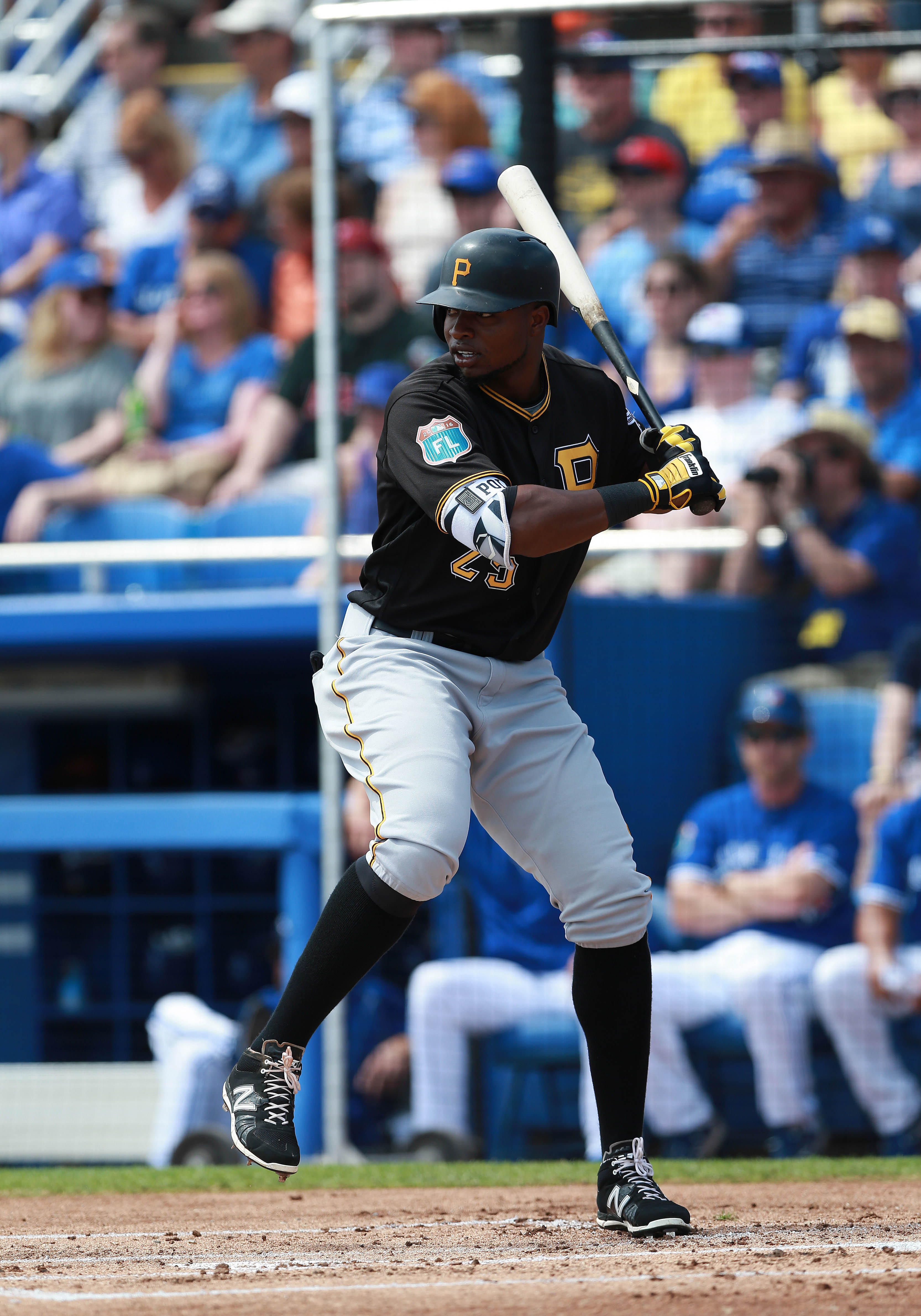
Polanco, 24, was previously controllable through the 2020 season. The extension, which begins with the 2017 campaign, will guarantee those seasons and extend control through the 2021 campaign, thus buying out his first season of free agency. If Pittsburgh picks up both options, he can reach free agency after the 2023 season, when he would be headed into his age-32 season.
The first option year is for $12.5MM and includes a $3MM buyout, while the second is priced at $13.5MM ($1MM buyout). Both could increase by a combined total of $2MM if Polanco can reach the as-yet unreported escalators.
Polanco is entering his third Major League season, though he has not yet reached two full years of service time. He’s a career .249/.316/.369 hitter in 964 plate appearances. Scouts expect him to grow into his fledgling power. A center fielder in the minors, Polanco has mostly played right field due to the presence of Andrew McCutchen and Starling Marte. Polanco drew rave reviews for his right field defense last season, rating at 6.8 runs above average per Ultimate Zone Rating and 11 runs above average per Defensive Runs Saved.
Considered a consensus Top 25 prospect league-wide prior to the 2014 season in which he was promoted, Polanco has certainly shown flashes of promise but hasn’t yet emerged as the star many believed him to be capable of becoming. In particular, he’s displayed some potentially concerning struggles against left-handed pitching. Same-handed opponents have held Polanco to a paltry .183/.239/.264 batting line in 228 big league plate appearances. Clearly, he’s young enough to make some strides in that department, but the tight-budgeted Pirates will hope that Polanco doesn’t continually require a platoon partner and can instead combine with McCutchen and Marte to form one of the league’s best outfield trios.
The Pirates are known for locking up pre-arbitration eligible talent. McCutchen and Marte both inked similar extensions early in their careers. McCutchen signed a six-year, $51.5MM extension with one option while Marte accepted $31MM over a six-year term with two options. The club also worked out a four-year, $27.3MM extension with Josh Harrison prior to the 2015 season. That deal also includes two options.
This is far from the first time in which the Pirates have attempted to lock up Polanco. Pittsburgh, in fact, reportedly made a seven-year offer to Polanco before he was even promoted to the Major Leagues, and those talks continued into the summer following his promotion that June. The Bucs took another run at extending Polanco last spring but ultimately tabled extension talks early in the season. With this new agreement in place, the Pirates now control Polanco longer than any other member of the active roster.
Jeff Passan of Yahoo Sports first reported the deal on Twitter. Ken Rosenthal of FOX Sports (via Twitter) had financial parameters, while MLB Network’s Jon Heyman (Twitter links: 1; 2; 3; 4; 5) added finalized value and details on the pact.
Photo courtesy of USA Today Sports Images.
Cuban Second Baseman Jose Miguel Fernandez Declared Free Agent By MLB
Cuban second baseman Jose Miguel Fernandez, who left Cuba in search of a big league deal back in December, has now been officially declared a free agent by Major League Baseball, reports Ben Badler of Baseball America. He’s free to sign with a Major League club at any time.
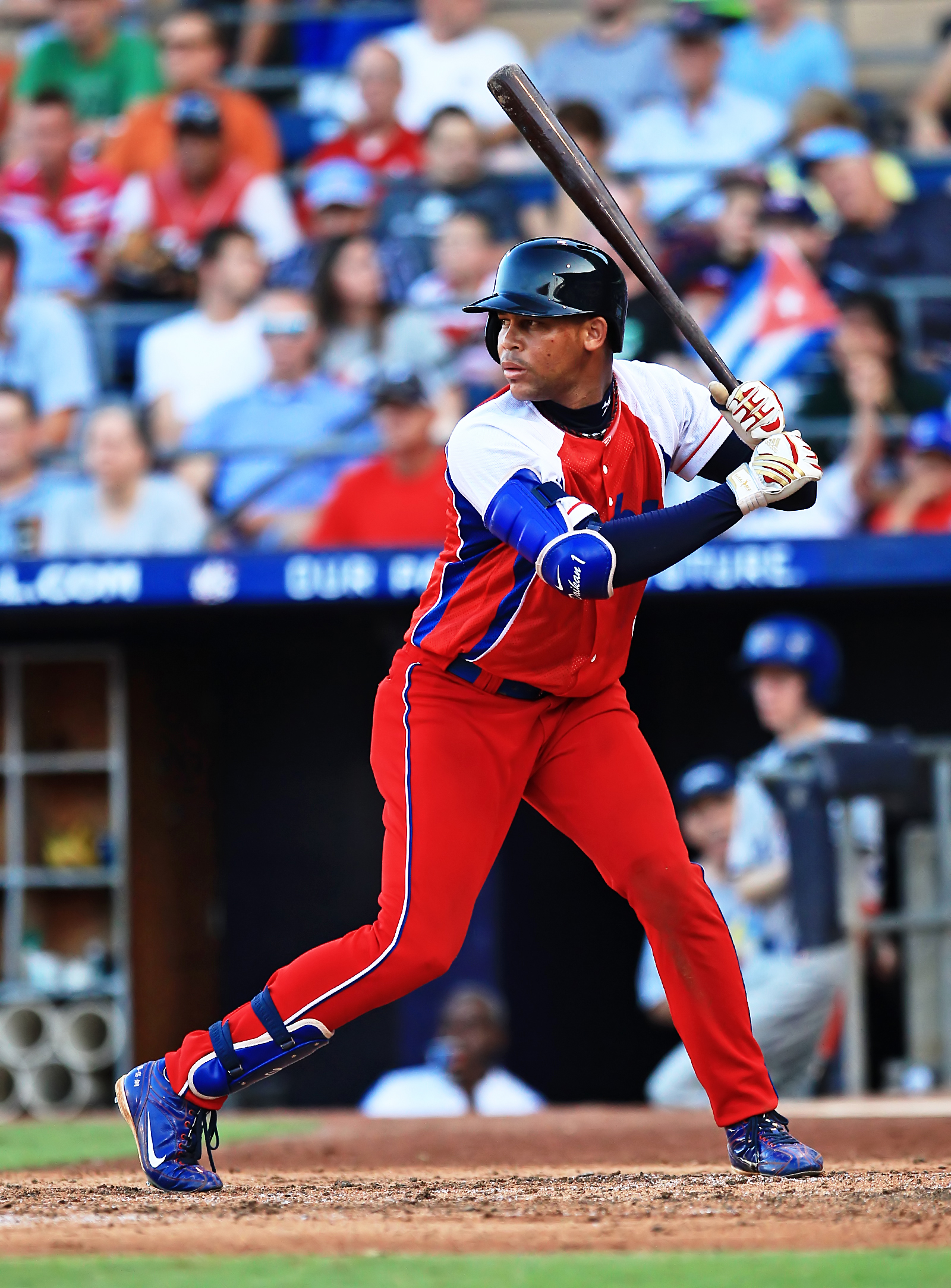
Because of his age (27) and extensive professional experience in Cuba’s Serie Nacional (eight seasons), Fernandez is exempt from international bonus pools. It’s been quite some time since he’s played regularly in game action — Fernandez’s last full season in Cuba was the 2013-14 campaign — but he’ll host a showcase for teams later this month, according to Badler, who notes that scouts are “eager” to see him. A showcase in February was canceled after Fernandez was said to have come down with dengue fever, Badler adds.
Fernandez is the owner some fairly gaudy stats from Cuba and is known as an on-base machine with excellent bat-to-ball skills. The left-handed hitter has authored a lifetime .319/.403/.423 batting line in 2580 plate appearances in Cuba’s top league, and he batted an outstanding .326/.482/.456 in the aforementioned 2013-14 campaign. (Cuba’s season is played in the winter, hence the listing of two years.) Fernandez played in 15 games during the 2014-15 season, prior to his first attempt at defecting, and batted .315/.415/.426 in 65 trips to the plate. However, he was detained in his attempt to leave the country and was reported at one point thereafter to be heavily guarded by the police.
Badler has previously reported that Fernandez has below-average pop and is merely an adequate defender at second base. As such, he profiles as a high-on-base and low-strikeout option at second upon reaching the Majors. Indeed, he struck out in a stunningly low 4.4 percent of his plate appearances in Cuba — just 113 times in his 2580 trips to the plate. Even if he lacks the power and defensive upside to become a star-caliber player, Fernandez is a more or less MLB-ready option at second base that could step into a big league lineup in short order, though it stands to reason that given his incredibly long layoff from in-game activity, some minor league seasoning figures to be in order.
About a month ago, MLB Network’s Peter Gammons reported that rival clubs believe the Padres are the heavy favorites to sign Fernandez, though we certainly could see other teams enter the mix with Fernandez now officially on the market. From my vantage point, the Royals, Angels, Braves, Phillies and Brewers could all use some second base help in addition to the rumored favorites in San Diego, though that list is of course highly speculative in nature.
Photo by Alyson Boyer Rode.
White Sox To Sign Miguel Gonzalez
The White Sox have agreed to sign right-hander Miguel Gonzalez to a minor league deal, according to Eduardo A. Encina of The Baltimore Sun (on Twitter).
Gonzalez was released by the Orioles late last week. The Orioles made the right-handed hurler a “competitive” offer to pitch in the minors, but he apparently felt that he had a better opportunity waiting for him in Chicago. Gonzalez also received interest from the Yankees, but it was the White Sox who made the strongest push for his services.
The 31-year-old has been a member of the Orioles’ starting five since his MLB debut in 2012. From 2012 through 2014, Gonzalez pitched to a strong 3.45 ERA with a so-so showing in K/9 (6.4) and BB/9 (2.9). However, he was unable to replicate those results in 2015 when he posted a 4.91 ERA with 6.8 K/9 and 3.2 BB/9. 144 2/3 innings. Whether Gonzalez was the beneficiary of good luck in his first three big league seasons or he just suffered a down year in ’15, he’ll look to get back to his old form in the White Sox organization.
Hyun Soo Kim’s Agency Says He Won’t Accept Minors Assignment
Orioles outfielder Hyun Soo Kim will not accept a minor league assignment from the club, according to an announcement from his Korea-based agency (via Jeeho Yoo of Yonhap News Agency and Daniel Kim of KBO Sports; Twitter links). His contract includes language preventing the organization from sending him down without his approval.
“Kim would like to see his contract honored and executed faithfully,” the agency said in a statement (link via Yoo). “He also hopes to receive fair opportunities to continue his career as a major leaguer with Baltimore.”
There had been some suggestion that Kim would consider opening the year at Triple-A, where he might gain some seasoning and ready himself for the majors. That now appears to be a long shot, however.
Kim, whom the Orioles signed to a two-year, $7MM deal during the offseason, is in this position because of a highly disappointing spring. The 28-year-old hit an ugly .182/.229/.182 with one walk and no extra base hits in 44 plate appearances. Kim’s offense isn’t the only concern, though, as a scout told Dan Connolly of BaltimoreBaseball.com that his defense also leaves much to be desired (Twitter link).
The offensive numbers Kim amassed this spring are a far cry from the stats he compiled in the pitching-challenged Korea Baseball Organization, where he slashed .318/.406/.488 in nine seasons. One reason for Kim’s success in Korea was his outstanding plate discipline, and he was supposed to use that to serve as a high-OBP presence in Baltimore’s lineup. Kim’s inability to get on base this spring opened the door for Rule 5 pick Joey Rickard, who parlayed a .390/.463/.576 line into a big league roster spot. Despite their vastly different springs, general manager Dan Duqette called the move to carry Rickard over Kim “a razor thin roster call” (Twitter link via Brittany Ghiroli of MLB.com).
Given their decision, the Duquette-led O’s are now in a tough spot. If Kim won’t relent and accept a place in the minors, the choices are limited. The team seems to have decided Kim’s not major league-ready, with Duquette saying that “the player needs more at-bats to prepare for the season.” Baltimore could next follow the route that got them out from under the failed contract of fellow Korean Suk-min Yoon by finding a KBO club to pick up some or all of the Kim’s contract. But it’s not clear whether there is sufficient interest in this case, and Kim expressed a desire earlier this week to continue his career in North America, as Roch Kubatko of MASN.com reported. Otherwise, the O’s would presumably have no choice but to eat the entire contract. Duquette, of course, hopes it doesn’t come to that and expressed optimism about Kim’s future with the Orioles.
“We all look forward to his contributions to the club after Kim has more time to adjust to his new surroundings,” Duquette said.
Rangers, Indians Discussing Reliever-For-Starter Scenarios
The Rangers have yet to declare a fifth starter as they work to assess possible trade scenarios for adding another rotation piece, according to Evan Grant of the Dallas Morning News. Most recently, the club has engaged the Indians in talks about a swap that would send a reliever from Texas to Cleveland in exchange for a starting pitcher.
Texas appears to have interest in improving over A.J. Griffin for the final rotation slot while strengthening its long-term depth. As for Cleveland, the team’s pen currently projects to include several reclamation arms — including Joba Chamberlain, Ross Detwiler, and Dan Otero — and could certainly benefit from an acquistion.
As Grant notes, there’s little question that the top three Indians’ arms aren’t changing hands. But the next three men up — Cody Anderson, Josh Tomlin, and Trevor Bauer — are seemingly in play. Bauer, of course, was just bumped to the pen in a surprising move after a strong spring. It’s not clear which of the three is under discussion.
It’s also not apparent which member of the deep Texas pen could be parted with. Grant says that the club had previously talked about both Shawn Tolleson and Keone Kela with the Diamondbacks, though that was in an effort to get Archie Bradley. Other Rangers’ late-inning arms with appeal include Tom Wilhelmsen, Sam Dyson, and lefty Jake Diekman.
Of course, it’s also possible that a less significant match-up could make sense. Cleveland has other rotation options — T.J. House comes to mind — that could probably be had for less. And Texas has a number of other pen candidates, including just-designated southpaw Sam Freeman.
Rays Inform James Loney He Won’t Make Opening Day Roster
Rays first baseman James Loney has been informed that he won’t make the team’s Opening Day roster, Marc Topkin of the Tampa Bay Times reports (Twitter links). He has been informed he’ll either be traded or released.
Loney is owed $8MM this year in the final season of the three-year pact he signed to return to Tampa Bay before the 2014 campaign. He was displaced by the team’s addition of several players, including fellow left-handed hitters Logan Morrison and Corey Dickerson, over the winter.
It remains to be seen whether the Rays can find a taker for any of that salary, though the failure to do so thus far suggests it may not be a viable option.
Though he’s a high-average hitter, Loney doesn’t draw a ton of walks and doesn’t have much pop. His production at the plate has tailed off in each successive year he’s been with the Rays, and he hit at a below-average clip (.280/.322/.357) in an injury-limited 2015 season. Loney has traditionally rated well with the glove, though metrics have seen him as very slightly below average in the last two seasons.
Criminal Charges Against Jose Reyes To Be Dropped
The criminal charges filed in Hawaii against Rockies shortstop Jose Reyes will be dropped, Jennifer Sinco Kelleher of the Associated Press reports. The domestic abuse trial that had been schedule for Opening Day will not go forward, per the prosecuting attorney, because Reyes’s wife — the alleged victim — was not willing to cooperate in the case.
Of course, the termination of criminal proceedings does not mean that Reyes will necessarily avoid discipline from the league under its domestic violence policy. Commissioner Rob Manfred recently handed Yankees hurler Aroldis Chapman a 30-game suspension despite the fact that — unlike Reyes — he was not arrested or charged in the incident in question. Chapman and the MLBPA also agreed not to appeal that ban, which some have suggested may have reduced its duration.
The charges stemmed from an incident on Halloween night last fall in which Reyes allegedly assaulted his wife in their hotel room. According to reports at the time, Reyes’s wife accused him at the time of grabbing her throat and pushing her into a sliding glass door. He was arrested as she was taken to a hospital for treatment.
Reyes has already been placed on paid administrative leave by the league pending the outcome of his case. He did not appear in Spring Training with the Rockies as a result. Now, Manfred faces the difficult matter of investigating and reaching a resolution on the matter with the regular season set to open in less than a week.
The Rockies, who acquired Reyes in last summer’s Troy Tulowitzki deal, owe the veteran shortstop $48MM over the next two years, including a buyout of a 2018 club option. Colorado would stand to avoid paying a pro-rated portion of that for whatever length of time, if any, Reyes is unavailable due to suspension. The Rockies seem set to utilize prospect Trevor Story at shortstop in Reyes’s absence; needless to say, the future outlook for Reyes and the club remain unclear at this time.
Valuing 2016 Opt-Out Clauses
Back in January, I wrote an article in which I approximated the dollar value of the opt-out clauses in the contracts for David Price, Johnny Cueto, and Jason Heyward. Since then, five more contracts with opt-outs have been signed, so I have extended this analysis to put values on these opt-outs as well. These include contracts for Yoenis Cespedes, Justin Upton, Scott Kazmir, Ian Kennedy, and Wei-Yin Chen. Remember, these values are approximations of what these contracts would have cost without opt-outs. (Please reference the above-linked post for further explanation of the methodology.)
Too many people talk as though opt-outs are just bad decisions on the part of teams, without considering how much more expensive contracts would be without them. This logic would imply that no financial firm should ever sell a put—of course they should, but only at the right price.
The earlier three contracts were larger than almost all of the five more recent contracts. Other than Justin Upton, the other recent contracts were under $100 million, so the opt-out values are generally lower than the $17-22 million that I found for Price, Cueto, and Heyward. However, all five opt-out values all range between 10 and 15 percent of the full contract value, similar to the prior three deals.
The following table shows the assumptions surrounding the opt-outs, like the one in January’s article. (Mobile app users can click here to see it.)
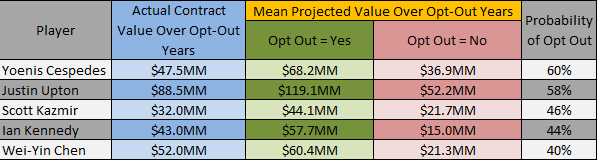
Yoenis Cespedes received a three-year contract for $75 million, but it is really a $27.5 million one-year contract with a player option of a two-year, $47.5 million deal. Few players actually sign one-year deals for that much money, but as we saw a decade ago with Roger Clemens, one-year deals for superstars have an AAV much higher than the AAV superstars receive on longer deals. In this case, Cespedes would probably have been worth about $31.7 million on a one-year deal. At this stage, a reasonable estimate of Cespedes’ value for 2017-18 would be around $55.1 million. However, like with all of these deals, we know that it is very likely that Cespedes’ market value will change significantly by next year. Chances are that if he is good enough to opt-out, then he will have had a strong 2016 campaign, and his market value will be higher. I estimate this would be around $68.2 million for 2017-18 in that case. If he does not opt-out, then he probably has disappointed in 2016 and probably has lowered his two-year value for 2017-18 down to $36.9 million. With an estimated 60% chance of opting out, that puts Cespedes’ opt-out at about $11.8 million. In other words, a regular three-year deal for Cespedes would be for $86.8 million instead of $75 million.
Justin Upton’s contract six-year, $132.5 million contract with the Tigers amounts to a two-year, $44.25 million deal with a four-year, $85 million player option. As a relatively young free agent, Upton has the potential to remain very valuable by the time he reaches his opt-out, but as a unique talent he is a risk to regress to the mean significantly—there is more room for him to fall than mediocre players. I estimate that if he has opted out after 2017, he has played well enough over 2016-17 that his market value will be about $119.1 million over 2018-21, and if he has not opted out then it stands to reason he has played poorly enough that his market value for 2018-21 would be about $52.2 million. Further, I estimate that he has a 58 percent chance to opt out. As a result, Upton’s opt-out is worth about $19.7 million, meaning that his value in a six-year deal without an opt-out would be $152.2 million.
Scott Kazmir had a relatively small deal for one that included an opt-out. His deal amounts to a $16 million one-year deal with $32 million two-year player option. I estimate that if he has opted out after this year, then he must have played well enough in 2016 that his market value for 2017-18 probably reached around $44.1 million. On the other hand, if he has played poorly enough that he does not opt out, then I estimate his market value for 2017-18 must have fallen to around $21.7 million. I think there is a 46 percent chance he opts out. As a result, his opt-out value is only worth $5 million—so a regular three-year deal without an opt-out would probably have been for about $53 million.
Ian Kennedy’s $70 million five-year contract is actually a $27 million two-year deal with a three-year, $43 million player option. His contract values him significantly higher than his Steamer or especially his ZiPS projection on FanGraphs would suggest, making it challenging to estimate his value. However, it is safe to assume that the Royals are placing more value on him than the projection systems and that they probably expect that his 2016 value is higher. Furthermore, there must have been at least some pressure for another team (real or imagined) that caused the Royals to believe they had to offer as much as they did. So we need to estimate the equivalent value of a contract based on the what the Royals paid, rather than what ZiPS or Steamer (and up to 28 other teams potentially) seem to think. Based on this, if he has opted out after 2017, then there is a good chance that the Royals (and potentially the other team they imagined themselves outbidding) were right about him, but if he does not then there is a good chance the projection systems were right. I estimate that his value over 2018-20 would only be $15 million conditional on not opting out, while it would be about $57.7 million if he played well enough to justify opting out. I think the Royals estimate a 44 percent chance that he will opt out (again, another team bidding presumably thought something similar), making his opt-out value about $7.1 million. A five-year deal without an opt-out would probably be worth about $77.1 million.
Wei-Yin Chen has a tricky deal. Nominally he has a 5 year deal worth $80 million, but it is really a $28 million deal over two years, with a player option for $52 million over the following three years. However, if he does not opt out, then the team has an option for 2021 that will actually vest if he pitches a sufficient number of innings and is healthy. Putting a value on a vesting option that is conditional on having a low value after 2017 is tricky, but I believe I have come up with a reasonable estimate. I think that if he does opt out, his value for 2018-20 is probably about $60.4 million, while his conditional value if he plays poorly enough to not opt out would be $21.3 million over 2018-20. His vesting option at the end is essentially worth under $2 million to the team. I think that on a normal five-year contract for 2016-20, Chen would have gotten about $82 million, which means his opt-out value was about $12 million.
As these deals become more common, it becomes more important to properly value these put options. I estimate that these five deals would each have cost about 10 to 15 percent more for teams if they did not provide the players with opt-out clauses. Players with more years post opt-out and higher talent levels will generally have a larger value to opting out, while the inverse is true for players with fewer years post opt-out who are less talented. While these opt-outs are risky, they definitely provide an opportunity for teams to save money relative to mutually guaranteed longer contracts.