
Rangers To Select Curtis Terry
The Rangers are expected to select the contract of first baseman Curtis Terry to the big league roster this weekend, according to Kennedi Landry of mlb.com.
Terry, a 13th round pick in the 2015 draft, is currently ranked the 26th best prospect in the Rangers’ system, according to MLB Pipeline. FanGraphs has him further down, at number 61 among Texas farmhands. The 24-year-old first baseman is having an excellent year at the plate. Through 269 plate appearances at Triple-A, he’s slashing .294/.375/.583, producing a wRC+ of 129. This is his first year in the upper levels of the minors, having reached High-A in 2019, before the 2020 minor league season was wiped out.
Terry has consistently put up great offensive numbers in his minor league career, with that being his most exciting tool. The scouting report at MLB Pipeline describes him as “an all-bat player” because he is a “well below-average runner with limited range at first base.” With a profile like that, Terry will have to be well above-average hitter to stick in the big leagues. The scouting report at FanGraphs has similar concerns about the overall profile but notes that he could have a saving grace with “his excellent breaking ball recognition.”
For the Rangers, there’s no harm in calling him up and seeing how he handles big-league pitching. The team is in last place in the AL West and fully in rebuild mode. Nate Lowe has been getting the bulk of first base playing time this year and has been hitting well, with a wRC+ of 115 on the year. But since the team doesn’t have a regular DH and has been using that lineup slot on a rotating basis, it should be easy enough to get both Lowe and Terry into the lineup when they want to. And speculatively speaking, it’s possible they could split time on a platoon basis, as Lowe hits from the left side and Terry from the right. It’s also possible that the lineup could lose Joey Gallo this week, as he has been one of the hottest names on the trading block this year, with the Padres and Yankees among the team to have known interest.
Regardless of whether a trade is in the works or not, a transaction of some kind will be required since Terry is not currently on the 40-man roster.
Dodgers Considering Ian Kennedy
The Dodgers are interested in acquiring Ian Kennedy, according to Ken Rosenthal of The Athletic.
This isn’t terribly surprising news, as every contending team is always interested in improving their pitching arsenal as the trade deadline approaches. What is surprising is that the Dodgers find themselves three games behind the Giants in the NL West, a team that few picked as division favorites at the start of the season. And that divisional alignment is at least somewhat attributable to the fact that the Dodgers have lost to the Giants by blowing ninth-inning leads the past two nights.
Overall, the bullpen hasn’t been a glaring weakness for the club this year. The Dodgers’ relievers, as a whole, have an ERA of 3.73, the 10th best in the Majors. But they’ve also taken some hits lately, with Jimmy Nelson and Scott Alexander heading to the Injured List. David Price has also had to move from the bullpen to the rotation, in order to cover for the recent injury to Clayton Kershaw.
For Kennedy, it seems to be a foregone conclusion that he will be changing jerseys in the coming week. He is a free agent at year’s end and is currently playing for a Rangers team that is 35-62, behind every team in the American League except the Orioles. Thus far, he’s pitched 31 1/3 innings for Texas, accumulating 15 saves with an ERA of 2.59. Advanced metrics are somewhat skeptical, with xERA, FIP and xFIP pegging him at 3.40, 3.80 and 3.88, respectively. But he has excellent strikeout and walk rates of 26.8% and 5.7%.
Kenley Jansen has been the Dodgers closer for a decade now, and will probably continue in that role. But there are reasons for pessimism in his profile this year. Despite 21 saves, an ERA of 3.05 and a strikeout rate of 27.2%, Jansen has a ghastly walk rate of 16%, more than double his career rate. That’s probably why some advanced metrics think his ERA is a mirage, with xFIP placing him at 4.79 and SIERA at 4.56.
It’s possible this is just small sample noise, since we’re only talking about 38 1/3 innings and Jansen’s Statcast profile still looks quite healthy. But since Jansen is in the last year of his contract and will be 34 years old by season’s end, the Dodgers don’t have to be invested in Jansen for the long term and could certainly pivot to an alternative such as Kennedy if they felt they had to.
On the money side, Kennedy’s is playing on a salary of $2.15MM this year, leaving less than a million still to be paid out. The Dodgers don’t have to worry about tiptoeing under the luxury tax, since they’ve already blown past the top threshold of $250MM. (Roster Resource currently has their luxury tax calculation at $262MM.) But that means that they’re paying a whopping 62.5% tax on any additional salary they take on, which could make a modest contract like Kennedy’s more appealing than a costlier addition such as Craig Kimbrel, who is still owed over $6MM of his $16MM salary this year.
Cleveland Indians To Change Name To Cleveland Guardians
The Indians announced in a video package on Twitter this morning that their new franchise name will be the Cleveland Guardians. It was reported last night that a decision had been reached and an announcement could be forthcoming. The name change will formally go into effect after the 2021 season.
The franchise announced early last July that a name change was under consideration, and by December it had become clear that the organization would move forward with a new name in the near future. The team selected “Guardians” from a list of nearly 1200 initial possibilities and has provided some insight into its selection process in conjunction with today’s announcement.
The new “Guardians” moniker is a nod to the eight sculptures along Cleveland’s Hope Memorial Bridge, referred to as the “Guardians of Traffic.” The name has been among the reported favorites for some time now. Others that were popular speculative possibilities included the Spiders (a callback to the late-1800s Cleveland baseball franchise) and the Rocks or Rockers (a nod to the Rock & Roll Hall of Fame).
It’s not the first name change in franchise history — far from it — but it is the first in more than a century. The franchise was founded as the Grand Rapids Rustlers in 1894 and very briefly changed its name to the Lake Shores upon moving to Cleveland in 1900. After a series of one-year stints for Lake Shores, Bluebirds and Broncos, the team renamed itself the “Naps” — after star infielder Nap Lajoie — from 1903-1914.
The “Indians” moniker has been in place since that time. There were inklings of change on the horizon long before the announcement of a forthcoming name change. The organization phased out the former “Chief Wahoo” logo from its caps, jerseys and official merchandise beginning in 2019, and talks about potential names and/or branding changes predate that logo’s departure by several years.
“We are excited to usher in the next era of the deep history of baseball in Cleveland,” owner/chairman Paul Dolan said Friday morning in a press release announcing the change. “Cleveland has and always will be the most important part of our identity. Therefore, we wanted a name that strongly represents the pride, resiliency and loyalty of Clevelanders. ‘Guardians’ reflects those attributes that define us while drawing on the iconic Guardians of Traffic just outside the ballpark on the Hope Memorial Bridge. It brings to life the pride Clevelanders take in our city and the way we fight together for all who choose to be part of the Cleveland baseball family. While ‘Indians’ will always be a part of our history, our new name will help unify our fans and city as we are all Cleveland Guardians.”
Rays Acquire Nelson Cruz
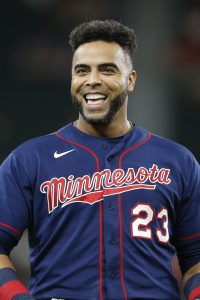
With just over a week before the trade deadline, the Rays have made a big move in acquiring slugger Nelson Cruz from the Twins as part of a four-player swap. Cruz and minor league righty Calvin Faucher will head to Tampa, while Minnesota will pick up right-handers Joe Ryan and Drew Strotman.
With the Twins in the midst of a nightmare season, Cruz became a natural trade chip, as the 41-year-old slugger can be a free agent this winter. Cruz re-signed with Minnesota last offseason on a one-year, $13MM contract, and Cruz has roughly $4.87MM remaining in owed salary.
 There was no announcement made of cash considerations being involved, so it appears as though the Rays will be taking on all of Cruz’s remaining salary. This is no small matter for a Rays team that always has an eye on the budget, and even with Cruz now in the fold, the club’s payroll is still under the $67MM threshold. Tampa Bay can (and likely will) make other moves before the July 30 deadline that could move some other dollars off the books, but as it stands, the Cruz deal is a sign that Rays ownership is willing to stretch a bit financially to bolster a team that looks like a contender to return to the World Series.
Despite Cruz’s age and seeming lack of defensive value, his bat has remained so dangerous that even some National League teams were reportedly including him in trade considerations, with an eye towards deploying Cruz in the outfield for the first time since 2018. While the Rays’ penchant for roster maximization could lead to Cruz getting at least a bit of time in the outfield, it’s a very safe bet that he’ll slot in as Tampa’s new everyday DH, bringing some big-time pop to a lineup that is solid overall but middle-of-the-pack in terms of power.
Austin Meadows had received the bulk of Tampa’s DH at-bats, though Meadows now looks to move into the outfield mix with Randy Arozarena, Kevin Kiermaier, Brandon Lowe, and (when he returns from the IL) Manuel Margot. Lowe can also be utilized at second base, and between any other injuries or even trades that might emerge, the Rays shouldn’t have much issue in finding enough playing time to keep everyone fresh and ready for another postseason push.
Cruz will suit up for the sixth different team over what has been a very impressive 17-year career. Named to his seventh All-Star team just this season, Cruz is showing no signs of slowing down, hitting .294/.370/.537 with 19 homers over 346 plate appearances in 2021. This production is actually a dropoff from the .308/.394/.626 slash line he posted over 735 PA for Minnesota in 2019-20, but “decline phase” doesn’t really seem like an applicable description.
Neither Ryan and Strotman are in the upper crust of Tampa prospects, though MLB Pipeline did have them solidly ranked (Ryan 10th, Strotman 17th) on their list of the Rays’ best minor league talents. Both are starting pitchers with solid performances at Triple-A this season, and it wouldn’t be surprising to see their make their Major League debuts before 2021 is finished. Since the Twins are looking to return to contention next year, landing two big league-ready arms will help their rotation depth, considering Michael Pineda and J.A. Happ are both free agents this winter (and either could be moved before July 30.
Ryan is 25 years old and was a seventh-round pick for the Rays in the 2018 draft. He cracked Baseball America’s top 100 list (at 98th) prior to the 2020 season, and Ryan has continued his rise up the ladder by posting a 3.63 ERA over 57 innings at Triple-A Durham this year. At all levels, Ryan has been great at missing bats (36.65% strikeout rate over 217 minor league IP) and avoiding walks (6.05% walk rate), thanks in large part to an excellent four-seamer. MLB Pipeline’s scouting report isn’t as enamored with his other pitches, but Ryan’s slider did merit a 55 grade on their 20-80 scouting scale.
The 24-year-old Strotman was a fourth-rounder in the 2017 draft, though his pro career has been limited to 179 innings thanks to the canceled 2020 minor league season and a Tommy John surgery that kept him out of action for big chunks of the 2018 and 2019 campaigns. The Rays saw enough from Strotman that they added him to their 40-man roster last winter to protect him from the Rule 5 Draft, and Strotman has looked solid in posting a 3.39 ERA over 58 1/3 Triple-A innings this year. His walks have increased as he has moved up the minor league ladder, topping out at an unimpressive 13.15% walk rate at Triple-A this year. Pipeline notes that command has been a strength for Strotman in the past, however, and the right-hander’s fastball, cutter, and slider are all ranked as above-average to plus pitches.
Faucher is the other name in the deal, a 25-year-old righty who has struggled in his first taste of Double-A baseball, posting a 7.04 ERA with six homers and 24 walks in 30 2/3 innings this season. After consistently posting big strikeout numbers earlier in his minor league career and in college (at UC Irvine), the hard-throwing Faucher has continued that trend with a 27.63% strikeout rate amidst his difficulties this season.
ESPN.com’s Jeff Passan (Twitter link) was the first to report that the Rays were acquiring Cruz, while Marc Topkin of the Tampa Bay Times (Twitter links) was the first to report that it was a four-player deal also involving Strotman.
Photo courtesy of USA Today Sports Images
Yankees Interested In Trevor Story
The Yankees are looking at one of the top position players that might be available at the trade deadline, as ESPN.com’s Buster Olney tweets that New York is one of the teams interested Rockies shortstop Trevor Story. Roughly six to eight teams have reportedly contacted the Rockies about Story, with the White Sox being one of the names linked to the All-Star.
There have already been a few unique turns to Story’s status as a trade candidate, such as Chicago’s openness to moving Story from shortstop to second base, or an unnamed team looking into Story as a center fielder. While the Yankees have a center field need of their own, it is probably safe to presume their interest in Story is pretty straight-forward — Story would take over shortstop from Gleyber Torres, with Torres moving to second base, DJ LeMahieu playing first base regularly, and Gio Urshela playing third base when he returns from the COVID-IL. Luke Voit would presumably factor into the first base mix when healthy, though it isn’t known when he might return from his current knee problems.
Story is only under contract through the remainder of the 2021 season, but it would be safe to imagine that his acquisition might mark the long-term end of Torres as a shortstop. Torres has delivered consistently below-average defense at the shortstop position, and since taking over the position full-time prior to the 2020 season, Torres’ offensive production has significantly dropped. After batting .275/.338/.511 in 1088 PA in 2018-19, Torres has since hit only .241/.337/.348 in 497 plate appearances.
Should the Yankees be looking for a new shortstop come the offseason, they’ll have many options to pick from amidst a very star-studded shortstop class that will include Story himself. The Yankees would certainly use their two-plus months with Story as a recruiting pitch to perhaps interest him in a long-term commitment this winter, and there would be no better enticement than if Story could help the team get into the postseason.
Playing on a $17.5MM salary for 2021, Story has about $6.97MM remaining. It isn’t a huge sum unto itself, though it does weigh heavily for a Yankees team that has prioritized staying under the $210MM luxury tax threshold this season, and thus resetting their penalty status. New York is already within roughly $4MM of the threshold, and the Yankees also have holes to fill in the outfield and within the pitching staff. As MLBTR’s Steve Adams noted today, the Rockies could opt to maximize their return for Story by offering to eat the rest of his salary in exchange for a better prospect return, which would certainly get the Yankees’ attention and would be a canny move to increase the trade value of a rental player.
That said, there is also some doubt that Colorado will move Story at all, since the team will get a compensatory draft pick should Story reject the qualifying offer and sign elsewhere in free agency. The Yankees would have to top the value of that compensatory pick, which New York might not be willing to do for a rental player, and if the team is ultimately competing just for a one-game wild card playoff at this point (given the eight-game gap between the Yankees and the first-place Red Sox in the AL East standings).
Joey Bart “Most Likely” Giants Top Prospect “To Be Available” In Trades
The Giants are known to be busy exploring upgrades on the pitching and lineup fronts as the trade deadline approaches, with such names as Starling Marte and Danny Duffy known to be of interest to the NL West leaders. As to what San Francisco is willing to give up in a potential trade, one of the game’s top prospects might be somewhat available, as Susan Slusser of The San Francisco Chronicle writes that “among the team’s most high-profile minor-leaguers, catcher Joey Bart is the most likely player to be available.”
It’s worth noting that this falls well short of the Giants actually dangling Bart in trade talks, nor does it indicate that the club has any particular inclination to move Bart. But, in a trade market where it has become increasingly rare to see blue chip prospects moved in any sort of deal (particularly at the deadline), it is certainly noteworthy that such a highly-touted minor leaguer could be available at all for the right price.
Marco Luciano, Heliot Ramos, and Bart are only the Giants prospects on all of the current top 100 prospect rankings for MLB Pipeline, Fangraphs, and Baseball America, while outfielder Luis Matos appears on the Fangraphs and BA lists. At 24, Bart is the oldest of this group, and the only one to have reached the big leagues, posting a .612 OPS over 117 plate appearances in the last two seasons. Thanks to the canceled 2020 minor league campaign, Bart was promoted to the Show without any Triple-A experience and barely even any Double-A experience, but has been mashing Triple-A pitching this year.
In short, Bart likely hasn’t done anything to have lowered his stock in the eyes of the Giants front office. However, San Francisco’s catching situation has been altered by two factors — Buster Posey‘s re-emergence as a star, and the club’s selection of Patrick Bailey with the 13th overall pick in the 2020 draft. It now seems at least plausible that the Giants could exercise their $22MM club option on Posey for the 2022 season, or the Giants could perhaps work out a multi-year extension with the longtime face of the franchise. That could make Posey into a bridge to Bailey as the catcher of the future, leaving Bart somewhat expendable.
Needless to say, the Giants wouldn’t move Bart in just any trade. It is very safe to say that Bart wouldn’t be moved for a rental player, or perhaps even a player only controlled through 2022. But, he stands out as a major trade chip to aid the team in acquiring players who are under longer-term control, or conceivably as part of a multi-player trade that would see the Giants hypothetically land multiple players controlled through 2022.
With a top prospect potentially on offer, it gives Zaidi yet another asset at the trade deadline, beyond the advantage the Giants already have in future payroll commitments. With less than $31MM in payroll committed for the 2022 season, the Giants can certainly absorb a big contract or two. If the Giants can take such a deal off another team’s books, Slusser notes that they might not have to move any top-tier prospects at all, as the other team might accept lesser minor leaguers as the return for the financial relief.
Draft Signings: 7/22/21
The latest on some notable Day Two draft signings. For more on the 2021 draft, check out the prospect rankings and scouting reports compiled by Baseball America, Fangraphs, MLB Pipeline, The Athletic’s Keith Law, and ESPN’s Kiley McDaniel. As well, here is MLB Pipeline’s breakdown of the slot values assigned to each pick in the first 10 rounds, as well as the bonus pool money available to all 30 teams.
- The Twins agreed to deals with Competitive Balance Round A pick Noah Miller and second-rounder Steve Hajjar, the team announced. As the 36th overall pick, Miller had an assigned slot price of $2,045,400, and Betsy Helfand of the St. Paul Pioneer Press (via Twitter) reports that the high school shortstop’s bonus was under slot at $1.7MM. Hajjar’s bonus hasn’t yet been reported, but the 61st overall pick has an assigned price of $1,129,700.
- The Rockies announced the signing of second-round pick Jaden Hill, with MLB Pipeline’s Jim Callis reporting the LSU righty signed for the $1,689,500 slot price attached to the 44th overall pick. Also from Callis, the Rockies agreed to another at-slot deal with Ohio University southpaw Joe Rock, whose deal is worth the assigned $953,100 price for the 68th overall pick.
- The Mets signed 46th overall pick Calvin Ziegler for a $910K bonus, MLB Network’s Jon Heyman reports. The Canadian right-hander’s deal falls significantly below the $1,617,400 slot value, so the Mets gained some significant pool savings that were necessary for the above-slot deal in the works with tenth overall pick Kumar Rocker.
- The Brewers signed second-rounder Russell Smith for a $1MM bonus, Callis tweets. A left-hander out of TCU, Smith was the 51st overall pick, which has a slot value of $1,436,900.
- The Cubs agreed to a $2.1MM bonus with second-round pick James Triantos, according to Callis. It’s an overslot deal for Triantos, a high school third baseman from Virginia, as the 56th overall selection had an assigned price of only $1,276,400.
- The Rays reached a deal with second-rounder Kyle Manzardo, with Callis reporting that the Washington State first baseman signed for $750K. The 63rd overall pick (and the final pick of the second round proper) has a slot price of $1,076,300.
- The Astros went well over slot to sign third-rounder Tyler Whitaker, as Callis reported that the high school outfielder landed a $1.5MM bonus. That is more than double the $689,300 slot price for the 87th overall pick. Of note, Whitaker was Houston’s first pick of the 2021 draft, due to their punishment from the sign-stealing scandal.
- The Yankees also more than doubled the slot price on a third-round selection, as Callis writes that prep left-hander Brock Selvidge received $1.5MM. The 92nd overall pick has a recommended value of only $637.6K. The Yankees have now signed all their draft picks from the first 10 rounds, going underslot on eight of the 10 players.
Latest On Padres’ Trade Targets
Locked in a tight NL West race, the Padres are known to be looking for starting pitching and lineup help at the deadline. This leaves a wide range of possibilities open for an aggressive general manager like A.J. Preller, and Kevin Acee of the San Diego Union-Tribune hears that Preller’s front office has “has talked with other teams about scenarios ranging from the seemingly obvious to the implausible.”
That gamut might be reflected in two hitters Acee links to the Padres, as he reiterates that the club continues to be interested in Joey Gallo, long mentioned as a target for San Diego. Beyond Gallo, however, Acee also notes that the Padres were one of the NL teams who had an interest in Nelson Cruz, before Minnesota sent the veteran slugger to the Rays in a trade earlier tonight. It would’ve been bold to put Cruz (a DH-only player for the last three seasons) back in line for regular outfield duty, which might be why the Twins ultimately found the most interested suitor in an AL team that could deploy Cruz in his normal DH spot.
On the pitching front, the Padres are looking for multiple arms to aid a rotation that had been hit with injuries. Acee writes that the targets are “both a potential innings eater and a starter who could be a viable option to start early in a playoff series.” The Padres’ talks with the Rangers and Twins also involved such names as Kyle Gibson, Jordan Lyles, and Kenta Maeda. San Diego has also had interest in Rockies right-hander Jon Gray and Royals left-hander Danny Duffy, though it is unclear if Duffy is still a consideration after he was placed on the 10-day injured list earlier this week.
Gray, Duffy, and Lyles are all pure rentals, as free agents after the season. Duffy and Gray have pretty comparable overall metrics, and while Duffy’s 2.51 ERA is significantly better than Gray’s 3.68 ERA, Gray has 93 innings pitched to Duffy’s 61, as Duffy is in the midst of his second IL stint of the season. Duffy also has full no-trade protection but the California native might be open to agreeing to be dealt back to his home state. Gray has no such trade protection, though the Rockies’ willingness to move a notable player to a division rival could be a potential obstacle.
The biggest issue with acquiring Lyles is likely that the 30-year-old simply hasn’t pitched well over his two years in Texas, posting a 5.84 ERA in 165 innings since the start of the 2020 season. A change of scenery could help Lyles regain the effectiveness he displayed in 2018-19, and Lyles is a familiar face for Preller, as the righty pitched for San Diego during the 2017 and 2018 campaigns.
A trade could also help Maeda escape the doldrums of a tough 2021 season, though the right-hander far from struggled in his first year in Minnesota, finishing second in 2020 AL Cy Young Award voting. Maeda missed a little over three weeks with a groin injury this year, and has pitched better over his last three starts, with a 1.69 ERA over his last 16 innings.
Maeda is no stranger to the NL West after spending his first four MLB seasons with the Dodgers, and he also has the most contractual control of any of the five pitchers known to be on San Diego’s radar. Maeda is owed only $3MM in guaranteed money in each of the 2022 and 2023 season, but several millions more are available in incentives based on innings pitched and games started. The overall price tag is still quite reasonable, and as much as Maeda hasn’t been a front-of-the-rotation type in 2021, his contract and his past track record make him a good trade chip. Of course, this assumes that Minnesota would be open to a trade for anything more than a very generous offer, as the Twins are reportedly not very interested in dealing anything beyond rental players.
Gibson is also controlled beyond 2021, as he still has a full year remaining (worth $7MM) on the three-year, $28MM free agent deal he inked with the Rangers in the 2019-20 offseason. With a 2.86 ERA over his first 107 innings, Gibson is on pace for a career year, and he already was named an All-Star for the first time in his nine MLB seasons. Gibson doesn’t miss many bats, however, and both his Statcast profile and overall career numbers don’t much help the argument that he can keep up this borderline ace production over the course of a full season, or into 2022.
What the Padres would be willing to give up for any of these players (or any deadline target) is still up in the air. The club is close to the $210MM luxury tax threshold already but they reportedly have the ability to cross that threshold, so money might not be the most pressing issue for deadline acquisitions. In regards to moving prospects, Acee hears that the Padres aren’t willing to move any of their top four minor leaguers — presumably MacKenzie Gore, CJ Abrams, Luis Campusano, or Robert Hassell — and might even look to add some more young talent in deals, though obviously the Padres wouldn’t be “deadline sellers” by any stretch of the imagination.
Speculatively, San Diego could look into some type of complex multi-player deal that would see them acquire a package that includes at least one notable MLB player that can help them win now, as well as a minor leaguer or two. The inclusion of prospects could perhaps make it easier for the Padres to move one of their better minor leaguers as part of a trade.
Cleveland Indians Decide On New Team Name
The Cleveland Indians have decided on a new name for their franchise, according to Paul Hoynes of the Cleveland Plain Dealer. It remains to be seen exactly when the new name will be revealed, as “a source would neither confirm nor deny” if the organization would soon be making any sort of official announcement.
It was just over a year ago that the Tribe announced that “ongoing discussions” were taking place within the organization about potentially changing the team name, and news broke last December that a name change was in the works. While owner Paul Dolan indicated in March that the decision might have to be pushed back to 2023, it now looks like Cleveland’s club will indeed have their new nickname in place for the 2022 season.
There hasn’t been any official indication of what the new team name might be, apart from Dolan stating in December that the Indians wouldn’t simply become “the Tribe” or anything else related to Native Americans or Native American culture. Reports last month stated that the franchise had a final list of name candidates, though none of the potential choices were leaked. Of course, public acknowledgement of any choices on the short list could lead to further complications in trademarking the new nickname — as Dolan said in March, “There aren’t many words in the English language that somebody doesn’t own in some shape or form. Particularly in the sports realm, that’s a real challenge.”
Close to 1100 name choices were on the Indians’ initial list, a sign of just how exhausting the process has been in landing on a new nickname for the organization. Countless more selections have been floated by fans, ranging from past names for the franchise (i.e. the Grays, Naps, Bronchos) prior to the adoption of the “Indians” name in 1915, references to other teams in Cleveland’s baseball history (i.e. the Spiders), references to local Cleveland landmarks (i.e. the Guardians or the Rockers), tributes to past players (i.e. the Dobys or the Fellers), or even references to modern pop culture (i.e. the Avengers).
Mariners Sign Top Three Draft Picks
7:40PM: The Mariners have also signed second-round shortstop Edwin Arroyo and third-round right-hander Michael Morales to above-slot deals, according to Mayo (Twitter links). The 48th overall pick has an assigned price of $1,543,600, but Arroyo (a Florida State commit) signed for $1.65MM. Morales had been committed to Vanderbilt, but he’ll now begin his pro career after seeing to a $1.5MM bonus that is more than double the $733.1K slot price for the 83rd overall pick.
3:54PM: The Mariners have agreed to sign 12th overall pick Harry Ford, MLB.com’s Jonathan Mayo reports (via Twitter). Ford signed for $4,366,400, matching the slot value assigned to his pick.
Ford is an 18-year-old high school catcher from Georgia, and he’ll now begin his pro career after being originally committed to attend Georgia Tech. Ford was the consensus choice as the draft’s second-best catching prospect, behind only Henry Davis (who went to the Pirates as the first overall pick). Draft pundits all had Ford within roughly the same range on their rankings, with The Athletic’s Keith Law placing Ford highest at eighth, while Baseball America was comparatively the lowest at 17th.
While Ford was drafted as a catcher, there is some doubt he’ll remain at the position — not necessarily due to a lack of ability behind the plate, but rather because Ford is a good enough athlete to potentially fit at multiple other positions. Ford has 60-grade speed and also a plus throwing arm that some scouts feel could make him a possible future option as a center fielder. At the plate, Ford has excellent bat speed and is very strong, making him a good candidate for more power potential in the future.