
MLB Player Contracts In A Shortened Or Canceled Season
It seems there’s still a good deal of confusion out there surrounding just what will happen to player contracts given the disruptions to the 2020 MLB season. We’ll do our best to explain the situation in this post, based upon what has been reported to this point.
Background
In the wake of the suspension of Spring Training and the 2020 season, MLB and the MLB Players Association wisely engaged in immediate bargaining to address the massive and sudden changes to the expected state of affairs. The sides have already agreed upon modifications to the Basic Agreement governing league affairs. The full agreement hasn’t yet been released, but the key parameters are largely known (see here and here).
Related Matters
Numerous player salary determinations have been reached that do not specifically bear upon MLB contracts as typically covered here at MLBTR. The union has authorized stipends to certain players and the league has announced team payments to minor-league players. Other employees and contractors have also been addressed, if not fully accounted for on an ongoing basis: league staff, salaried team employees, and hourly employees. At least some teams have also provided some manner of financial assistance to independent contractors that have lost anticipated wages. There are numerous changes afoot to the 2020 amateur intake process (draft and international signings).
MLB Service Time
The key union bargaining priority, by all indication, was to preserve the anticipated player movement through arbitration and into free agency. That was secured in the aforementioned agreement, which assured players of the chance to accrue a full year of MLB service in 2020.
In the event of a shortened season, players will be awarded service time on a pro-rated basis. Players that accrue service for the entirety of the truncated campaign — those on the active roster and/or MLB injured list — would still get a full year of service. In the event of a canceled season, players will be credited MLB service in the same amount they accrued it in 2019.
The agreed-upon system is obviously far from a perfect approximation of what would theoretically have occurred had the 2020 campaign been played as planned (to the extent that can even be guessed at). But it does largely preserve what we’d have anticipated before the pandemic arose, at least in terms of the overall volume of service that will recognized. And while the distribution of service time will differ, it was surely necessary to utilize some sort of crude-but-objective mechanism.
As a practical matter, then, we will still see the same 2020-21 free agent class that had been expected — with Mookie Betts leading the way, even if the Dodgers never see him play a game in their uniform. Those that missed time in 2019 on the 10-day or 60-day MLB injured list will still get full credit for another year of service. Players will qualify and move through arbitration as normal, with Walker Buehler and Juan Soto among the potential Super Two qualifiers.
The major impact, in the event of a cancellation, will be on certain recently arriving big leaguers that had less than a full service in 2019 and on prospects who had expected to debut in 2020. Keston Hiura may actually not be hurt at all — with 114 service days last year, he wouldn’t have been a likely future Super Two qualifier and will still go into the 1+ service class. But Bo Bichette logged only 63 days in 2019, so he’d end up well shy of a full season if there’s no 2020 campaign. That would push back his eventual arbitration and free agent qualification by a full year. Top prospects such as Jo Adell wouldn’t have a chance to break into the majors in 2020.
MLB Player Salaries
Under the very same agreement that sorted out the service-time issues, the players gave up an immense amount of potential earnings in the 2020 season. In the event of a season cancellation, MLB players will receive just $170MM in total from teams — less than one-twentieth what their contracts would otherwise call for.
Should a partial season take place, players will earn on a pro-rated basis. Whether that’s based upon days of the season or games played isn’t entirely clear; that would make a difference if a compressed schedule is attempted. Regardless of the details, the main point stands: a player’s actual 2020 earnings will be quite a bit lower than expected if the season is shortened. But players would still earn a typical check for that portion of the campaign that is staged — if, at least, fans are in attendance. Since this post was originally published, a disagreement between the league and union has emerged. The league claims that the original agreement does not cover a situation in which games are played without spectators; the union contends that the pro rata system should hold regardless.
Future Earnings
There are some initial agreements already in place that will impact the near future. The word on 2021 arbitration salaries remains ambiguous. ESPN.com has reported that “The arbitration system will be adjusted to consider lessened counting statistics because of the shorter season, and salaries secured during the 2021 offseason through arbitration won’t be used in the precedent-based system going forward.” It sounds as if there’s an anticipation of a reduction in raises, though precisely how it is expected to work just isn’t evident.
There’s greater clarity with respect to the luxury tax. No penalty payments will be owed if the season isn’t played. If there’s a partial season, competitive balance payments will be prorated. But the luxury tax system will not automatically reset in the event that the 2020 season is canceled. We recently explored the ramifications of that here.
Of course, the competitive balance system operates primarily to constrain player spending by large-market teams … in a typical market setting. There’s little question that the immediate and long-term economic impact of the pandemic will have an even greater impact on free agent spending. Precisely how the coronavirus will impact the future is still largely unknown, both broadly and with respect to Major League Baseball.
As more is learned about the virus and the international response to it, that information will surely impact negotiations. The sides have much to discuss — not only about 2020 and 2021, but beyond, as the Basic Agreement expires after the 2021 season. At this point, there is no indication of an effort to reduce previously guaranteed salaries for future seasons, but they represent a major future liability to teams and could play an interesting role in the bargaining to come.
Yankees Co-Owner Hank Steinbrenner Passes Away
Yankees co-owner Hank Steinbrenner has passed away at 63 years of age, Joel Sherman of the New York Post reports. His death was caused by a long-running illness and “was not related to COVID-19,” per the report.
Hank Steinbrenner, the eldest child of long-time Yankees owner George Steinbrenner, had been listed as general partner and co-chairperson of the team along with his brother, Hal Steinbrenner. As Sherman explains, it once seemed that Hank would ultimately take over operation of the team.
When the patriarch passed away in July of 2010, his four children — including Jennifer Steinbrenner Swindal and Jessica Steinbrenner, each listed by the team as vice chairpersons — became general partners in the ownership of the Yankees. Hal was ultimately tabbed as the managing general partner and has chiefly operated the ballclub over the past decade.
MLBTR extends its condolences to the Steinbrenner family and the Yankees organization.
MLB Informs League Staff Of Payroll Commitment
As the coronavirus pandemic continues to cast a shadow over the game, Major League Baseball has made a commitment to its employees regarding their near-future earnings. Commissioner Rob Manfred issued a memo today assuring league personnel of their salary through at least the end of May, Jeff Passan of ESPN.com reports (Twitter links).
As ever, this sort of news is both reassuring and worrisome. While it’s nice to see the league providing staffers with a clear commitment in an uncertain time, it’s also yet another acknowledgement of the ongoing uncertainty regarding the staging of professional sports contests.
MLB and its teams have obviously experienced a drastic reduction in revenue owing to the suspension of the 2020 season. Even if it’s re-launched, it’ll be far less lucrative than anticipated. And it is fair to wonder about expected earnings in coming campaigns as well.
In recognition of the economic realities, Manfred indicates that the league’s top executives have accepted pay cuts of approximately 35%. Presumably, the intention is for those reductions to be temporary.
The league’s belt-tightening effort will help enable it to carry on with the expected team distributions over the first two months of the season, Passan notes. Manfred explains that those funds will be utilized in part to pay out the previously negotiated player advances ($5.67MM per team). That’s all that players are entitled to in 2020 if the season ends up being cancelled.
Steve Pearce Announces Retirement
Veteran infielder Steve Pearce is officially hanging up his spikes, he tells WEEI’s Mike Mutnansky (writeup via Rob Bradford). He was not currently under contract with any MLB organization.
Pearce, who turned 37 yesterday, had already indicated he was unlikely to resume his playing career. Though he kept the door open late last year, he has now put to rest any possibility of a surprise return.
Last year turned out to be an injury-ruined disappointment — hardly the only time that Pearce’s body has betrayed him over the years. He managed to appear in 13 campaigns and achieve a full decade of MLB service in spite of his many health woes, but was limited to 2,555 plate appearances over that span.
Now that he has formally wrapped up his playing career, we can put a final wrap on it. Pearce owns a cumulative .254/.332/.440 batting line with 91 home runs. He appeared with seven organizations at the game’s highest level: the Pirates, Orioles, Red Sox, Blue Jays, Rays, Yankees, and Astros.
Pearce will be remembered most for his surprising breakout years in Baltimore and his brief but notable late run in Boston. He entered his age-30 season with a completely unremarkable record in the majors. He ended up making virtually his entire contribution at the game’s highest level over the ensuing six-year stretch (2013-18), over which he recorded a .266/.347/.479 slash (123 OPS+).
After moving to the Red Sox at the 2018 deadline, Pearce delivered a monster effort down the stretch before a three-homer showing in the 2018 World Series that earned him the MVP award for the series. In his recent comments, Pearce rejected the notion that the 2018 Red Sox benefited from illicit sign-stealing efforts — a matter that still remains unresolved by league investigation, at least publicly.
MLBTR Poll: Potential Season Length
With the coronavirus continuing to wreak havoc across the globe, nobody knows whether a Major League Baseball season will take place in 2020. Even if it does, it’s just about guaranteed that it will span for fewer than the customary 162 games; beyond that, it’s entirely possible the contests will happen at neutral sites with no fans in the stands, and that the National and American Leagues will go away for at least this season. At what point, though, would it be worthwhile to simply give up on a potential 2020 campaign?
MLBTR’s Jeff Todd spoke on the subject of a potentially canceled season Monday, arguing that it’s too soon for the league to make such a decision. I agree, but there may sadly come a time in the next few months when MLB will have to shut down completely until at least 2021 because of this pandemic. Granted, that sort of doomsday scenario should be at least a few months away from coming to fruition. If we’re lucky, for example, things will restart by June or July. That should enable the league to squeeze in at least half of a typical 162-game schedule, and that doesn’t even factor in the possibility of an increase in doubleheaders or a season taking longer than usual on the calendar.
Unfortunately, the way things have gone of late, it seems just a 100-game campaign would be a welcome outcome for everyone with a real interest in MLB. Even that would be a historical occurrence, however, as Sports Illustrated’s Tom Verducci noted a few weeks back that the shortest year on record is the 1981 season. A strike cut off around a third of that season and limited teams to an average of 106 games apiece.
There isn’t much doubt that the shorter a season goes, the better the chances are of strange results. The cream tends to rise to the top over a full 162, but if we’re guaranteed to see 100 or fewer games in 2020, teams that never would’ve been looked at as realistic contenders in a whole season (or those that were supposed to push for glory) could finish far from expectations. Would that be good for the game, though, or would it would tarnish the results? Feel free to vote in the poll (link for app users) and share your thoughts in the comments section…
How many regular-season games would be too few to make a season worthwhile?
-
Fewer than 70 (specify in comments) 29% (2,224)
-
70-79 28% (2,132)
-
80-89 21% (1,653)
-
100 14% (1,088)
-
90-99 8% (609)
Total votes: 7,706
A Potential Breakout Slugger For Yankees
Despite the myriad injuries they faced a year ago, the Yankees amassed 103 wins and boasted the majors’ highest-scoring offense. There were many unsung heroes along the way for the Bronx Bombers, including hulking first baseman Mike Ford, a former undrafted player out of Princeton University who went on a tear during his first stint in the bigs in 2019.
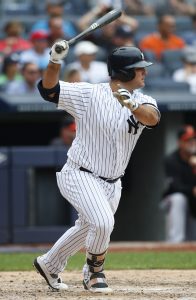
Ford, soon to turn 28, has been a member of the Yankees organization for just about all of his pro career, but he did spend some time with the Mariners last year. That came after Seattle chose Ford 11th overall in the December 2018 Rule 5 Draft. But the Mariners determined in late March they didn’t have a place for Ford, so the Yankees got him back. It was a fortunate turn of events for New York, with which Ford slashed .259/.350/.559 (134 wRC+) and smacked 12 home runs over 50 games and 163 plate appearances. Among 411 hitters who totaled at least 150 PA, Ford ranked 15th in isolated power (.301, tying him with Reds 49-homer man Eugenio Suarez).
Was Ford’s outburst just the product of a small sample size? It’s quite possible – after all, it’s not atypical for a player to come out of nowhere to succeed in.a low number of at-bats, only to crash to earth thereafter. But there are plenty of promising signs that go beyond Ford’s bottom-line numbers from 2019.
For one, Ford has a history of quality production in the minors. Just last year, for example, Ford hit .303/.401/.605 with 23 homers in 349 PA in Triple-A ball. Even in an offensively charged environment, his output was an eye-popping 51 percent above average, according to FanGraphs’ wRC+ metric. And Ford collected nearly as many unintentional walks (46) as strikeouts (55), which has been a trend throughout his pro career. Ford, unlike many hitters, doesn’t sell out for power at the expensive of strikeouts. He only fanned 17.2 percent of the time in the majors last year (compared to a solid 10.4 percent walk rate) and swung and missed at a meager 8.1 percent clip. For reference, the average MLB hitter posted a 23 percent strikeout rate, an 8.5 percent walk rate and an 11.2 percent swinging-strike rate.
Digging deeper, Ford was a Statcast hit, as he logged an expected weighted on-base average (.365) that almost matched his real wOBA (.372). In terms of batted-ball profile, his main comparables included Mookie Betts, Justin Turner, Max Kepler, Marcus Semien and Kyle Seager. That’s pretty good company. Ford accomplished those feats despite an abnormally low .243 batting average on balls in play, but it’s worth pointing out that he isn’t fleet of foot – not to mention that HRs don’t factor into BABIP. He’s not an ideal candidate to put up a high number in that category, anyway.
Looking ahead, if we’re lucky enough to get a 2020 season, Ford seems to have the potential to at least serve as a useful part of the Yankees’ offense for the second straight year. He doesn’t have the clearest path to extensive playing time, however. The Yankees also have the offensively capable Luke Voit–Miguel Andujar tandem as first base possibilities. And they, Aaron Judge, Giancarlo Stanton and Gary Sanchez could eat into DH at-bats (though Ford’s the lone left-handed hitter of the group). It’s tough to argue with what Ford did last season, though, and he just may prove to be another keeper for their offense if that carries over.
Photo courtesy of USA Today Sports Images.
Quick Hits: Metrics, Wilmer, Draft, Short Season
Even in the absence of baseball, there are plenty of interesting things being written about the game. Here are a few recent favorites …
- Defensive metrics are now widely circulated, but we lack broad-based understanding of how to value them. At Baseball Prospectus, Jonathan Judge and Sean O’Rourke provide an interesting examination of the relative strengths and weaknesses of varying systems. The BPro FRAA measure turns out quite well in measuring outfielders, while Statcast’s OAA metric performs best in the infield. It’s not for the statistical faint of heart, but you’ll want to read the whole article (or at least its full conclusion section!) to gather up the necessary nuance.
- MLB.com’s Anthony Castrovince provided a fascinating oral history of the 2015 trade deadline swap that would’ve sent Carlos Gomez from the Brewers to the Mets for Zack Wheeler and Wilmer Flores — an agreed-upon trade that fell apart in controversial and very public fashion. It’s essential reading for any hot stove aficionado, featuring a trove of recollections of many of the key actors. By happenstance, we recently did our own examination of the butterfly effects of that non-trade.
- The MLB draft will go forward in 2020, albeit in a modified form. It remains to be seen just how many rounds will be held, but there are sure to be less players chosen than usual. And with amateur spring sports cut short, teams haven’t had recent looks at many prospects. That makes prior scouting assessments all the more important to teams looking to navigate a one-off amateur intake situation. Baseball America has released its updated top-400 ranking of draft prospects, featuring all the names that have moved onto and up the board most recently.
- We don’t yet know whether we’ll have a season or what one would even look like, but there’s no question the 2020 campaign will be shortened if it’s held at all. At Fangraphs, Craig Edwards examines the volatility of relief pitchers and how that could play into a ~half-season campaign. While it’d be tougher than ever to predict performance, Edwards notes that it may actually be even more important to carry a slate of highly capable relievers in a short-season format, particularly if the postseason tournament is expanded as part of the (sure-to-be) unusual schedule that is ultimately arranged.
2020-21 Free Agent Class: Catchers
We have long carried a running list of 2020-21 free agents. With the offseason now completed, it has been updated to feature the players presently scheduled to reach the open market at the conclusion of the 2020 season (whether or not it is played).
We’ll take the opportunity to run through the class of players by position … starting with the catchers (season-age for 2021; alphabetical order within category):
Top of the Class
- J.T. Realmuto (30) – The Phillies haven’t been able to work out a long-term deal with the star receiver, who is still in his prime. He could challenge for a record-setting free agent deal for a backstop.
Other Regulars (based upon 2019 playing time)
- Robinson Chirinos (36) – The late-bloomer keeps hitting and laying claim to more and more playing time.
- James McCann (31) – Despite a breakout 2019 season, the White Sox pushed McCann into a secondary role when they inked Yasmani Grandal.
- Yadier Molina (38) – There’s virtually no chance the Cards’ icon will make it to free agency, let alone end up with another team.
- Roberto Perez (32) ($5.5MM club option with a $450K buyout) – The Indians won’t allow Perez to become a free agent if he repeats his strong 2019 showing.
- Wilson Ramos (33) ($10MM club option with a $1.5MM buyout) – The bat is still legit but questions remain about how much the Buffalo can handle behind the dish. It’s possible the Mets could retain him after a big season, but Ramos could be a better fit in the American League going forward.
Top Timeshare Candidates
- Alex Avila (34) – High-OBP lefty hitter is still a nice complimentary piece, especially with a 26-man active roster.
- Welington Castillo (34) – He’s in need of a bounceback after a rough showing in ’19.
- Jason Castro (34) – The well-regarded defender just turned in an above-average year with the bat.
- Francisco Cervelli (35) – He struggled in 2019 but was a high-end hitter in the prior campaign.
- Tyler Flowers (35) – Flowers is a well-rated pitch-framer whose bat has faded a bit.
- Chris Iannetta (38) – The long-time veteran decided to keep going in 2020, but the season freeze puts his future in question.
- Sandy Leon (32) – A strong defensive backstop, Leon is going to have to show he can do something with the bat if he’s to keep getting chances.
- Jeff Mathis (38) – Mathis made his money on an unparalleled reputation for overall defensive value, but he may not get another MLB offer if he can’t improve on last year’s showing at the plate (.158/.209/.224).
- Austin Romine (32) – He got paid a fairly hefty sum by the Tigers after perking up offensively in the past two seasons.
- Kurt Suzuki (37) – The second act as a flyball-heavy home run hitter has had legs, as Suzuki has delivered three-straight above-average offensive seasons, but his inability to control the running game is a concern.
- Stephen Vogt (36) (2021 vesting/club option) – Vogt came back strong in 2019, but he’ll probably have to keep hitting at an above-average clip to hold onto a timeshare.
- Mike Zunino (30) – When he’s going with the bat, Zunino is a high-quality all-around performer. But he has never been consistent and the arrow pointed straight down (.165/.232/.312) in 2019.
Prospect Faceoff: 2 Future AL Central Stars?
The Twins’ Royce Lewis and the Royals’ Bobby Witt Jr. are among the jewels of their respective clubs’ farm systems, and if we’re to believe prospect gurus, there isn’t much separation between the two. Both players are regarded as top 30 prospects, MLB.com ranking Lewis ninth, FanGraphs placing him 13th and Baseball America putting him in the No. 26 spot. Witt checks in at Nos. 10, 23 and 24 on those lists.
Lewis, now 20 years old, entered the professional ranks as the No. 1 overall pick in 2017. At $6.725MM, Lewis received what was then the largest bonus ever given to a player drafted out of high school. Lewis came roaring out of the gates at the lower levels that year and the next season, though his production has dropped of late. He made his debut in Double-A ball last season and batted .231/.291/.358 (88 wRC+) with just two home runs in 148 plate appearances, though it’s worth noting that he was much younger than the typical player at that level. And Lewis, to his credit, did absolutely thrive dominate during the autumn in the Arizona Fall League, where he earned Most Valuable Player honors. There are some concerns about his “cacophonous” swing, as FanGraphs’ Eric Longenhagen explained in February, but he added that “the star-level talent will eventually shine through.”
Just where Lewis will line up in the majors remains to be seen. He’s versatile enough to play multiple positions (including center field), and the Twins seem to have found a long-term answer at short in Jorge Polanco. Likewise, the Royals are in nice shape at short with Adalberto Mondesi, so it’s up in the air where Witt will fit if he does arrive in Kansas City someday. They and the Twins can worry about how best to align their defenses at a later date, though.
[RELATED: When Will The Royals Contend Again?]
Witt, the son of former MLB hurler Bobby Witt, joined the Royals as the No. 2 pick in last year’s draft. He, like Lewis, got to the majors after a tremendous performance as a high school shortstop, and wound up signing for an almost $7.8MM bonus. But Witt endured his struggles during his initial taste of pro ball last summer, hitting .262/.317/.354 (85 wRC+) with only one homer in 180 PA in rookie ball. Nevertheless, Longenhagen compared Witt to Rockies star Trevor Story just a couple weeks ago, writing, “There are going to be some strikeouts but Witt is a big, athletic specimen who is very likely to not only stay at shortstop but be quite good there.”
Whichever positions these two play, we’ll be looking at a couple AL Central standouts if they develop according to plan in the coming years. Which prospect would you choose?
(Poll link for app users)
Royce Lewis or Bobby Witt Jr.?
-
Lewis 50% (1,630)
-
Witt 50% (1,630)
Total votes: 3,260
Latest On Trey Mancini’s Recovery
Orioles GM Mike Elias provided an update on outfielder Trey Mancini, who is recovering from surgery to remove a malignant tumor. Among those to cover the discussion was Rich Dubroff of BaltimoreBaseball.com.
Mancini is said to be “doing well” now, one month after the tumor was removed. But the timeline for his return to regular baseball activities will be measured in “months rather than weeks,” per the O’s GM.
Mancini’s personal well-being would be the top priority regardless, but there’s certainly no reason now to accelerate his return with the season on pause. That Mancini’s baseball career is even a reasonable topic of discussion is itself a good sign. Elias emphasizes that it was not only a “major procedure” but also a “major life event” for the 28-year-old.
Fortunately, the broader outlook seems to be about as good as could be hoped given the underlying condition. Elias explains: “His health status personally, the way that the operation went and the demographics age-wise and health-wise that he resides in going into this puts him in a really good spot to make a 100 percent recovery both from a general health standpoint, but also a baseball sense.”
Mancini is coming off of his best of three full MLB seasons. In 2019, he swatted 35 home runs and turned in an excellent .291/.364/.535 batting line in 679 plate appearances. Hopefully he’ll have a chance to build off of that strong performance sooner than later.