
Phillies Fire Gabe Kapler
Changes are coming in Philadelphia. Gabe Kapler will not return as manager of the Phillies in 2020, the team announced on Thursday. His dismissal creates a nearly unprecedented eighth managerial vacancy around the Major Leagues.
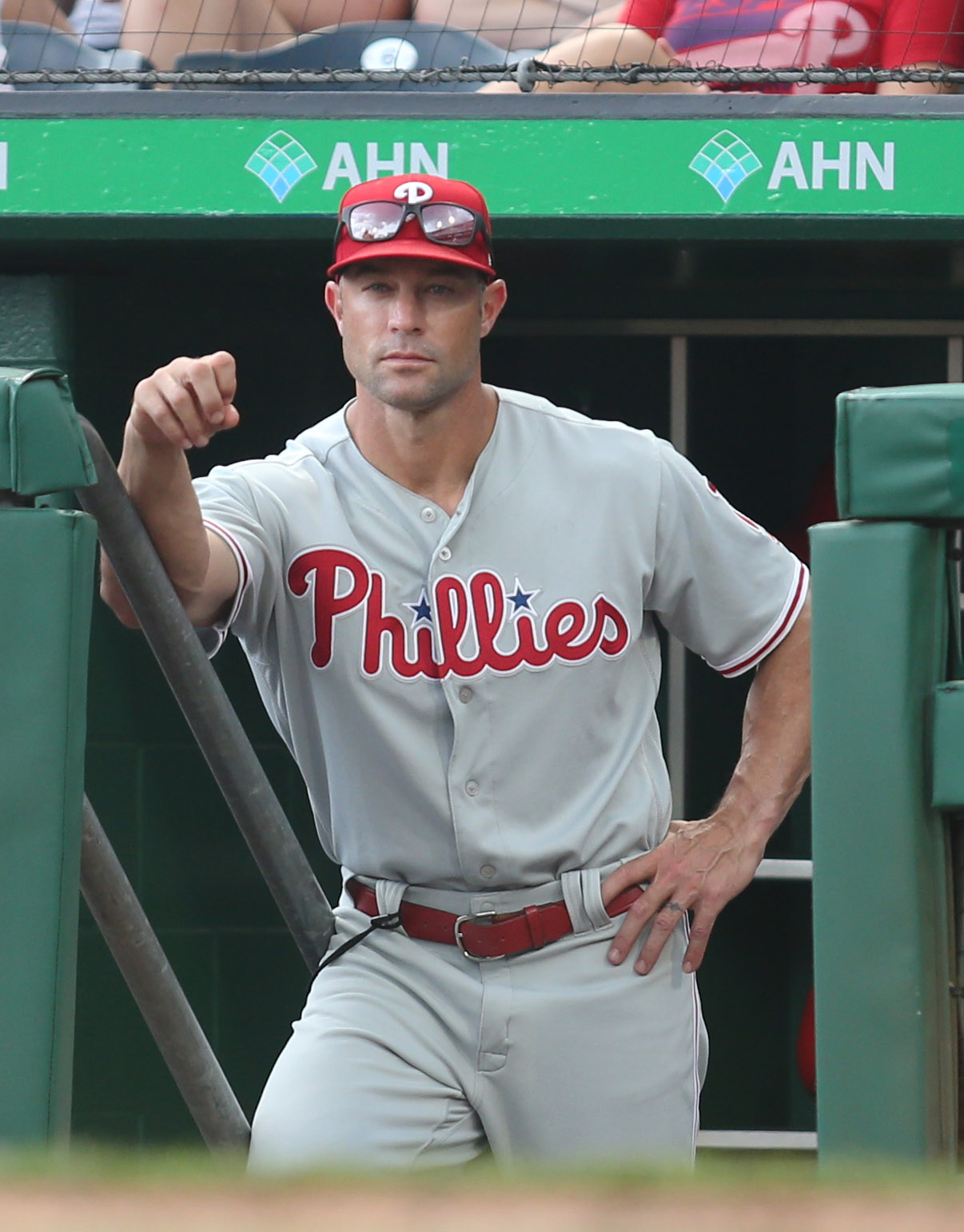
The Phillies also confirmed previous reports that Chris Young won’t return as the pitching coach in 2020 and announced that interim hitting coach and franchise legend Charlie Manuel will return to his role as a senior advisor to the GM.
Not only will the Phillies be looking for a new manager, pitching coach and hitting coach — they’ll also be looking to revamp their training staff, as neither head athletic trainer Scott Sheridan nor assistant athletic trainer Chris Mudd will have his contract renewed for 2020, per the club. The rest of the coaching staff has been invited back for next season, although it’s certainly possible that the change atop the dugout hierarchy could lead to eventual changes down the pecking order.
Phillies owner John Middleton offered the following statement on Kapler, who had been under contract through next season:
Several years ago, I promised our loyal fans that I would do everything in my power to bring a world championship team to our city. I will never waver from that commitment. During the second half of this season and continuing into this week, I have evaluated our organization extensively, a process that included talking to many people both internally and around the league. Reassuring to me was the endorsement that people outside the Phillies gave to the progress we have made recently, both organizationally and on the field. Nevertheless, with the knowledge that I have gained from my evaluation, combined with my personal reflection on the 2019 season, I have decided that some changes are necessary to achieve our ultimate objective. Consequently, we will replace our manager. I am indebted to Gabe for the steadfast effort, energy and enthusiasm that he brought to our club, and we are unquestionably a better team and organization as a result of his contributions. With [general manager Matt Klentak] leading our search for our next manager, I am confident that we will find the right person to lead us.
The Phillies organization debated the decision at great length. The Inquirer’s Matt Breen reported earlier this week that Middleton had been seeking opinions from players and front office execs alike as he seemed to genuinely wrestle with whether to bring Kapler back for the final contract of his season. Ultimately, the organization will go in a new direction after a pair of disappointing playoff misses in Kapler’s first two seasons at the helm.
Of course, team record is hardly the be-all and end-all in determining the fate of a manager these days. Managerial changes are also linked to how one maintains order in the clubhouse, aligns with the organization’s vision for the future, oversees the a coaching staff and incorporates input from a club’s front office/analytics department into game flow. The team’s lackluster records in both 2018 and 2019 surely played a role in the eventual decision but were surely just a few of the innumerable factors Middleton weighed in making today’s announcement.
Kapler, 44, played in parts of a dozen Major League seasons and managed in the Red Sox’ minor league system before embarking on a player development trajectory with the Dodgers (where, notably, he worked with current Giants president of baseball operations Farhan Zaidi, who is also on the hunt for a new manager). Kapler spent three seasons as the Dodgers’ director of player development prior to being hired by the Phillies — a role in which he placed great emphasis on analytics, player nutrition and mental wellness.
During his time with the Dodgers, Kapler was viewed as a fast-rising managerial candidate, and although things didn’t pan out in Philadelphia, he’ll quite likely garner consideration from other clubs. It’s hardly uncommon for rookie managers to be dismissed from one club before finding success with another — as A.J. Hinch can attest — and MLB Network’s Jon Heyman tweets that Kapler would like to continue his managerial career.
Bob Brookover of the Philadelphia Inquirer first broke the news of Kapler’s dismissal (via Twitter).
Phillies Expected To Announce Decision On Gabe Kapler Today
With the Phillies’ 2019 season long in the books, observers have been waiting and watching to see what the team will do with manager Gabe Kapler. A final decision and announcement on Kapler’s fate is expected today, per Jim Salisbury of NBC Sports Philly (via Twitter).
While other clubs are fully engaged in pursuit of new skippers, or have announced the retention of their old ones, the Philadelphia organization has taken its time assessing Kapler’s status. Owner John Middleton is said to have engaged deeply in the matter personally, even visiting players for input.
At this point, it’s still anyone’s guess whether Kapler will be brought back. The organization was obviously disappointed to finish out of the postseason and with a middling .500 record after major offseason investments. But it seems there’s significant support for Kapler in some quarters, perhaps including the locker room.
Projected Arbitration Salaries For 2020
As explained here, Matt Swartz and MLB Trade Rumors have developed an accurate model to project arbitration salaries. This is the ninth year we’ve done these projections, and I’m proud to present the results for 2020. Official service time is in parentheses next to each player. The Super Two cutoff has been confirmed as 2.115. For players’ actual arbitration salaries, check out our tracker here.
Angels (9)
- Tommy La Stella (5.057) – $2.9MM
- Cam Bedrosian (4.153) – $2.8MM
- Andrew Heaney (4.150) – $5.0MM
- Hansel Robles (4.119) – $4.0MM
- Dylan Bundy (4.026) – $5.7MM
- Max Stassi (3.049) – $800K
- Brian Goodwin (3.019) – $2.1MM
- Keynan Middleton (2.150) – $800K
- Noe Ramirez (2.139) – $1.0MM
Astros (8)
- George Springer (5.166) – $21.4MM
- Brad Peacock (5.165) – $4.6MM
- Lance McCullers Jr. (4.140) – $4.1MM
- Carlos Correa (4.119) – $7.4MM
- Roberto Osuna (4.097) – $10.2MM
- Chris Devenski (4.000) – $2.0MM
- Joe Biagini (3.134) – $1.5MM
- Aledmys Diaz (3.100) – $2.4MM
Athletics (8)
- Liam Hendriks (5.164) – $5.5MM
- T.J. McFarland (5.164) – $2.1MM
- Marcus Semien (5.118) – $13.5MM
- Robbie Grossman (5.060) – $3.3MM
- Mark Canha (4.092) – $4.9MM
- Sean Manaea (3.157) – $3.5MM
- Chris Bassitt (3.130) – $2.8MM
- Chad Pinder (3.047) – $1.8MM
Blue Jays (4)
- Matt Shoemaker (5.166) – $3.8MM
- Ken Giles (5.113) – $8.4MM
- Anthony Bass (5.010) – $1.7MM
- Brandon Drury (3.165) – $2.5MM
Braves (7)
- Shane Greene (5.075) – $6.5MM
- Mike Foltynewicz (4.134) – $7.5MM
- Adam Duvall (3.151) – $3.8MM
- Dansby Swanson (3.047) – $3.3MM
- Luke Jackson (3.019) – $1.9MM
- Grant Dayton (3.007) – $800K
- Johan Camargo (2.137) – $1.6MM
Brewers (6)
- Corey Knebel (4.151) – $5.125MM
- Omar Narvaez (3.089) – $2.9MM
- Orlando Arcia (3.047) – $2.7MM
- Ben Gamel (3.029) – $1.6MM
- Brent Suter (2.161) – $900K
- Josh Hader (2.115) – $4.6MM
Cardinals (1)
- John Gant (3.004) – $1.4MM
Cubs (7)
- Kris Bryant (4.171) – $18.5MM
- Javier Baez (4.089) – $9.3MM
- Kyle Schwarber (4.086) – $8.0MM
- Willson Contreras (3.108) – $4.5MM
- Albert Almora (3.073) – $1.8MM
- Jharel Cotton (2.158) – $800K
- Kyle Ryan (2.139) – $1.1MM
Diamondbacks (7)
- David Peralta (5.120) – $8.8MM
- Nick Ahmed (5.054) – $7.0MM
- Jake Lamb (5.053) – $5.0MM
- Andrew Chafin (5.020) -$3.2MM
- Robbie Ray (5.007) – $10.8MM
- Archie Bradley (4.112) – $3.6MM
- Matt Andriese (4.071) – $1.4MM
Dodgers (12)
- Pedro Baez (5.059) – $3.3MM
- Enrique Hernandez (5.054) – $5.5MM
- Joc Pederson (5.028) – $8.5MM
- Chris Taylor (4.037) – $5.0MM
- Corey Seager (4.032) – $7.1MM
- Ross Stripling (3.115) – $2.3MM
- Austin Barnes (3.098) – $1.3MM
- Scott Alexander (3.097) – $1.0MM
- Max Muncy (3.027) – $4.6MM
- Cody Bellinger (2.160) – $11.6MM
- Julio Urias (2.117) – $1.7MM
Giants (3)
- Donovan Solano (4.081) – $1.2MM
- Alex Dickerson (3.120) – $1.2MM
- Wandy Peralta (2.168) – $800K
Indians (5)
- Sandy Leon (5.144) – $2.8MM
- Francisco Lindor (4.113) – $16.7MM
- Nick Wittgren (3.071) – $1.3MM
- Mike Clevinger (3.041) – $4.5MM
- Tyler Naquin (3.033) – $1.8MM
Mariners (3)
- Mallex Smith (3.125) – $2.7MM
- Sam Tuivailala (3.082) – $900K
- Mitch Haniger (3.048) – $3.0MM
Marlins (4)
- Jonathan Villar (5.113) -$10.4MM
- Jose Urena (4.040) – $4.0MM
- Adam Conley (3.147) – $1.6MM
- Jesus Aguilar (3.082) – $2.5MM
Mets (9)
- Marcus Stroman (5.148) – $11.8MM
- Jake Marisnick (5.132) – $3.0MM
- Noah Syndergaard (4.149) – $9.9MM
- Steven Matz (4.099) – $5.3MM
- Michael Conforto (4.043) – $9.2MM
- Edwin Diaz (3.121) – $7.0MM
- Seth Lugo (3.082) – $1.9MM
- Brandon Nimmo (3.042) – $1.7MM
- Robert Gsellman (3.042) – $1.2MM
Nationals (6)
- Hunter Strickland (4.163) – $1.9MM
- Michael A. Taylor (4.129) – $3.25MM
- Roenis Elias (4.069) – $1.9MM
- Joe Ross (4.018) – $1.4MM
- Trea Turner (3.135) – $7.5MM
- Wilmer Difo (3.016) – $1.2MM
Orioles (5)
- Mychal Givens (4.069) – $3.2MM
- Hanser Alberto (3.085) – $1.9MM
- Miguel Castro (3.079) – $1.2MM
- Richard Bleier (3.074) – $1.1MM
- Trey Mancini (3.015) – $5.7MM
Padres (10)
- Jurickson Profar (5.165) – $5.8MM
- Kirby Yates (5.021) – $6.5MM
- Greg Garcia (4.083) – $1.7MM
- Zach Davies (4.020) – $5.0MM
- Austin Hedges (3.166) – $2.9MM
- Luis Perdomo (3.086) – $1.0MM
- Matt Strahm (3.064) – $1.5MM
- Manuel Margot (3.012) – $2.1MM
- Hunter Renfroe (2.165) – $3.4MM
- Dinelson Lamet (2.130) – $1.7MM
Phillies (7)
- J.T. Realmuto (5.038) – $10.3MM
- Jose Alvarez (5.035) – $3.0MM
- Vince Velasquez (4.086) – $3.9MM
- Hector Neris (4.068) – $4.7MM
- Adam Morgan (4.017) – $1.6MM
- Zach Eflin (3.018) – $3.0MM
- Andrew Knapp (3.000) – $800K
Pirates (9)
- Keone Kela (5.000) – $3.4MM
- Michael Feliz (3.169) – $1.2MM
- Jameson Taillon (3.110) – $2.3MM
- Chad Kuhl (3.079) – $1.4MM
- Adam Frazier (3.075) – $3.2MM
- Joe Musgrove (3.063) – $3.4MM
- Josh Bell (3.053) – $5.9MM
- Trevor Williams (3.027)- $3.0MM
- Erik Gonzalez (3.007) – $800K
Rangers (6)
- Danny Santana (4.140) – $3.9MM
- Delino Deshields (4.109) – $2.4MM
- Nomar Mazara (4.000) – $5.7MM
- Rafael Montero (3.138) – $900K
- Nick Goody (3.105) – $1.1MM
- Joey Gallo (3.103) – $4.0MM
Rays (6)
- Mike Zunino (5.165) – $4.9MM
- Tommy Pham (4.107) – $8.6MM
- Chaz Roe (4.094) – $2.2MM
- Oliver Drake (3.045) – $1.1MM
- Tyler Glasnow (2.158) – $1.9MM
- Daniel Robertson (2.134) – $1.1MM
Red Sox (7)
- Jackie Bradley Jr. (5.150) – $11MM
- Mookie Betts (5.070) – $27.7MM
- Brandon Workman (5.051) – $3.4MM
- Eduardo Rodriguez (4.130) – $9.5MM
- Matt Barnes (4.110) – $3.0MM
- Heath Hembree (4.106) – $1.6MM
- Andrew Benintendi (3.062) – $4.9MM
Reds (6)
- Trevor Bauer (5.158) – $18.6MM
- Anthony DeSclafani (5.062) – $5.2MM
- Michael Lorenzen (4.159) – $4.2MM
- Curt Casali (3.151) – $1.7MM
- Travis Jankowski (3.148) – $1.2MM
- Matt Bowman (3.021) – $900K
Rockies (7)
- Scott Oberg (4.063) – $2.0MM
- Jon Gray (4.062) – $5.6MM
- Trevor Story (4.000) – $11.5MM
- Tony Wolters (3.161) – $2.0MM
- Carlos Estevez (3.022) – $1.2MM
- David Dahl (2.162) – $3.0MM
- Kyle Freeland (2.144) – $2.4MM
Royals (2)
- Jorge Soler (4.143) – $11.2MM
- Mike Montgomery (4.089) – $2.9MM
Tigers (5)
- Daniel Norris (4.073) – $2.9MM
- Michael Fulmer (3.157) – $2.8MM
- Matthew Boyd (3.136) – $6.4MM
- Buck Farmer (3.083) – $1.1MM
- JaCoby Jones (2.125) – $1.4MM
Twins (9)
- Ehire Adrianza (5.131) – $1.9MM
- Trevor May (5.012) – $2.1MM
- Eddie Rosario (4.120) – $8.9MM
- Miguel Sano (4.066) – $5.9MM
- Byron Buxton (3.160) – $2.9MM
- Taylor Rogers (3.145) – $3.9MM
- Tyler Duffey (3.074) – $1.1MM
- Jose Berrios (3.044) – $5.4MM
- Matt Wisler (3.042) – $1.0MM
White Sox (5)
- Alex Colome (5.118) – $10.3MM
- James McCann (5.028) – $4.9MM
- Leury Garcia (5.025) – $4.0MM
- Carlos Rodon (4.168) – $4.5MM
- Evan Marshall (3.090) – $1.3MM
Yankees (9)
- James Paxton (5.151) – $12.9MM
- Tommy Kahnle (4.131) – $3.0MM
- Gary Sanchez (3.086) – $5.6MM
- Aaron Judge (3.051) – $6.4MM
- Chad Green (3.050) – $1.4MM
- Jordan Montgomery (2.153) – $1.2MM
- Luis Cessa (2.131) – $1.1MM
- Gio Urshela (2.127) – $2.2MM
- Jonathan Holder (2.124) – $800K
MLBTR Poll: Astros-Rays Game 5
Last night’s contests delivered high drama — one at the very outset, the other at the end. That left three of the four championship series spots claimed, with the Nationals joining the Cardinals in the NLCS and the Yankees already ticketed for the ALCS. But who’ll square off against New York’s savages? That’ll be decided tonight.
The pressure is on the Astros, who have already squandered two opportunities to clinch the series. Two of Houston’s three exceptional starters failed to close it out, so they’ll hand the ball to the final member of the trio. Gerrit Cole doesn’t have the Hall of Fame resume that his teammates do — yet, at least — but he’s at top form and is arguably the best of the group right now. The Rays have only scored runs in bunches once in this series, but their pesky and balanced group of hitters will try to scratch out some runs against the dominant Cole. If he had a soft spot this year, it was — like so many others — in the long ball department. Cole allowed 1.23 per nine on a 16.9% HR/FB rate during the regular season. Houston skipper A.J. Hinch may ultimately face some nervy decisions late in this game, but he’ll surely ride Cole as long as possible.
Tampa Bay counters with pure power of its own in the form of Tyler Glasnow. While he hasn’t come close to Cole, his former Pirates teammate, in overall output over the past two seasons, Glasnow has the ability to dominate as well. He’ll also have a chance to further extend his pitch count after throwing 76 pitches and lasting 4 1/3 frames in the first game of this series. That’s just the first step of the Rays’ strategy, which is sure to involve a parade of relievers once Glasnow exits. The club pushed several of its best arms hard in game four, but an intervening rest day should leave plenty of options at the disposal of manager Kevin Cash. He and the staff will be trying to navigate an almost laughably talented Houston run-production machine.
It’s hard not to like the battle-tested, star-studded Astros at home with Cole on the mound, but the Rays have already proven they won’t back down. Who do you think will take it tonight and book a date with the Yanks?
(Poll link for app users)
Astros-Rays: Who Wins Game 5?
-
Astros 59% (4,963)
-
Rays 41% (3,442)
Total votes: 8,405
Offseason Option Decisions: Pitchers
Earlier tonight, we took a look at hitters whose clubs will soon have to decide whether to exercise their options for 2020. We’ll do the same here with pitchers…
Starters
- Chris Archer, Pirates ($9MM club option or $1.75MM buyout): Archer has undoubtedly been a major letdown for the Pirates since they sent Tyler Glasnow, Austin Meadows and Shane Baz to the Rays for him in July 2018. Nevertheless, it’s difficult to envision the Pirates turning down Archer’s option this offseason. Even for a low-budget club, it’s worth gambling on to see if Archer puts up any kind of a rebound year in 2020.
- Kendall Graveman, Cubs ($3MM club option): The Cubs signed Graveman, a former Athletic, last offseason knowing he probably wouldn’t pitch in 2019 as he recovered from Tommy John surgery. Graveman did indeed wind up sitting out the entire season, and now the Cubs have to decide whether he has progressed enough behind the scenes to justify a $3MM guarantee for next year.
- Corey Kluber, Indians ($17.5MM club option or $1MM buyout): Even though Kluber just went through an injury-ravaged season in which he didn’t pitch past May 1, and even though his option for 2020 is rich, the Indians plan to exercise it. Understandable on their part, as the soon-to-be 34-year-old Kluber’s a two-time Cy Young winner who was a force as recently as last season.
- Martin Perez, Twins ($7MM club option or $500K buyout): During the first half of the season, when Perez looked like one of the steals of last winter’s free-agent class, it appeared he was well on his way to having his option exercised. But the 28-year-old Perez’s bubble burst as the season advanced, making his option decision trickier for the Twins. He seems like a decent bet to return to the market after logging a 5.12 ERA/4.66 FIP over 165 1/3 innings this season.
- Jose Quintana, Cubs ($11.5MM club option or $1MM buyout): Although Quintana hasn’t provided the type of production the Cubs were probably expecting when they acquired him from the crosstown rival White Sox in July 2017, the North Siders still figure to keep the lefty in the fold for 2020. The 30-year-old Quintana’s coming off a 171-inning season in which he notched a 4.68 ERA (with a far better 3.80 FIP) and 8.0 K/9 against 2.42 BB/9.
- Julio Teheran, Braves ($12MM club option or $1MM buyout): This could be an agonizing call for the Braves, who’ve seen the 28-year-old Teheran post mostly strong bottom-line production (and eat plenty of innings) since his first full season in 2013. At the same time, the fact that Teheran’s ERA indicators have consistently fallen short of his actual run prevention, not to mention that he’s coming off a second consecutive high-walk season, could influence the Braves to go in another direction. They did leave him off the initial version of their NLDS roster this month.
- Jason Vargas, Phillies ($8MM club option or $2MM buyout): The 36-year-old Vargas’ output fell flat after the Phillies acquired him from the Mets over the summer. He’ll likely don a different uniform in 2020 as a result.
Relievers
- Tony Barnette, Cubs ($3MM club option): The Cubs will go in another direction here, as Barnette barely pitched this year on account of injuries and personal issues.
- Jared Hughes, Phillies ($3MM club option or $250K buyout): The grounder-heavy Hughes, 34, is probably bound for free agency after an unspectacular season divided between two teams. He didn’t survive the year with the Reds, who parted with him in August, and then joined the Phillies via waivers.
- Nate Jones, Rangers ($5.15MM club option or $1.25MM buyout): Injuries have laid waste to the once-great Jones’ career, having limited the righty to 30 or fewer innings in five of the past six seasons. He threw just 10 1/3 frames in 2019, and though Texas picked up Jones from the White Sox at the trade deadline, the Rangers may buy him out before he ever throws a pitch in their uniform. TR Sullivan of MLB.com suggested that would be the case at the time of the trade, though the team’s official plans in regards to Jones still aren’t known.
- Shawn Kelley, Rangers ($2.5MM club option or $250K buyout): This is hardly a bank-breaking sum, though Kelley didn’t do himself any favors by floundering over the final two months of the season. The 35-year-old ended 2019 with a 4.94 ERA/5.52 FIP, 8.18 K/9, 2.09 BB/9 and a paltry 29.3 percent groundball rate over 47 1/3 innings. If the Rangers don’t bring Kelley back for next season, he has said he’ll retire.
- Brandon Morrow, Cubs ($12MM vesting option or $3MM buyout): The Cubs obviously won’t be picking up Morrow’s option after the 35-year-old suffered through yet another injury-plagued season in 2019. The formerly dominant Morrow hasn’t thrown a pitch in the majors since July 15, 2018.
- Pat Neshek, Phillies ($7MM club option or $750K buyout): This should be an easy buyout for the Phillies, as the 39-year-old Neshek struggled through his second injury-shortened season in a row in 2019. Neshek underwent right hamstring surgery a month ago.
- Dan Otero, Indians ($1.5MM club option or $100K buyout): The Indians are moving on from the once-effective Otero, who’s fresh off back-to-back seasons of dismal production.
- Yusmeiro Petit, Athletics ($5.5MM buyout or $1MM buyout): After Petit’s third straight high-inning, low-ERA, low-walk season (and second in Oakland), you’d think the A’s would bring him back for another reasonably priced season. To this point, though, there hasn’t been any official word on whether Petit will be an Athletic for his age-35 season in 2020.
- David Phelps, Cubs ($5MM club option): MLBTR’s Steve Adams recently explored the Cubs’ looming decision in regards to Phelps. At the time (mid-September), Phelps was seven appearances away from totaling 40 on the year and boosting the value of his option from $3MM to $5MM. The 33-year-old, whom the Cubs acquired from the Blue Jays at the deadline, ultimately got to 41. Phelps recorded a solid 3.41 ERA with 9.44 K/9 in that 34 1/3-inning span, though he also walked 4.46 per nine and saw his velocity, groundball percentage and swinging-strike rate trend downward in his return from 2018 Tommy John surgery. His future could be a tough call for Chicago.
- Adam Warren, Padres ($2.5MM club option or $500K buyout): The Padres seem likely to reject Warren’s option. Not only did the 32-year-old disappoint over the season’s first few months, but he didn’t pitch after June 7 on account of a forearm injury.
- Jake Diekman, Athletics ($5.75MM mutual option or $500K buyout): This could be too steep a price for the low-budget Athletics, with whom Diekman’s already shaky control spiraled after the A’s got him from the Royals in July. The hard-throwing 32-year-old walked 16 batters in 20 1/3 innings as an Athletic.
- Sean Doolittle, Nationals ($6.5MM club option or $500K buyout): Doolittle just closed out the Dodgers to help deliver a long-awaited playoff series victory for the Nationals. Although Doolittle didn’t have a banner regular season before that, he still looks worthy of a $6.5MM investment for 2020.
- Wade LeBlanc, Mariners ($5MM club option or $450K buyout): LeBlanc’s likely done in Seattle, having stumbled to a 5.71 ERA/5.49 FIP over 121 1/3 innings this year.
- Aaron Loup, Padres ($2MM club option): Loup dealt with elbow issues nearly all season and didn’t take a major league mound after April 7. A buyout’s probably on its way.
Angels To Interview Buck Showalter, John Farrell
Joe Maddon is reportedly the front-runner to take over as the Angels’ next manager, but they’re not going to hand him the job without first doing their due diligence on at least a few names. The club’s conducting interviews with three other candidates this week, including former managers Buck Showalter and John Farrell, per reports from Maria Torres of the Los Angeles Times and Jeff Fletcher of the Orange County Register. The fourth contender’s unknown, but it’s not Angels special assistant Eric Chavez, according to Torres.
Like Maddon, both Showalter and Farrell have managed multiple major league teams apiece to this point. The 63-year-old Showalter is a three-time Manager of the Year who oversaw the Yankees, Diamondbacks, Rangers and Orioles for a combined 20 seasons from 1992-2018. The O’s parted with Showalter after last year, a 47-win season in which they launched a full rebuild.
Farrell, 57, is an ex-major league right-hander who was a member of the Angels from 1993-94. He’s better known for his post-playing career, though, having managed the Blue Jays and Red Sox between 2011-17. In his greatest accomplishment in the role, Farrell helped the Red Sox to a World Series title in his first year atop the club in 2013. The rest of Farrell’s tenure with the team produced mixed results. The Red Sox finished below .500 twice in a row from 2014-15, but they took home AL East crowns in each of the next two seasons.
Despite its regular-season success under Farrell from 2016-17, Boston parted with him after back-to-back first-round knockouts in the playoffs. Farrell has stayed in the game since then by working as a scout and a pitching consultant for the Reds.
Padres Interview Brad Ausmus
The Padres have narrowed their managerial search down to “no more than five men,” Kevin Acee of the San Diego Union-Tribune writes. The club interviewed experienced major league manager Brad Ausmus for the role on Wednesday, according to Acee. Jon Heyman of MLB Network previously reported the two sides would likely meet to discuss the job.
It’s been a whirlwind couple weeks for the 50-year-old Ausmus, whom the Angels fired Sept. 30 after just one season in the position. The Angels mustered a horrid 72-90 record under Ausmus in 2019, though it would be unfair to place all the blame on him after the team dealt with so much adversity that was out of his control. Injuries to key players weighed the Angels down throughout the season, but there was no worse blow than the death of one of their top starters, Tyler Skaggs, on July 1.
Before Ausmus’ lone year running the Angels’ dugout and clubhouse, he managed the Tigers to a 314-332 record with one playoff berth from 2014-17. Ausmus is also well-known for a long run as a major league catcher from 1993-2010, during which he played his first three-plus seasons with the Padres. He now has a home in San Diego, Acee notes.
Along with Ausmus, Rangers player development field coordinator Jayce Tingler and former Rangers manager/current Braves third base coach Ron Washington are reportedly among the Padres’ candidates. But it’s not clear whether they’ve interviewed anyone other than Ausmus yet.
Latest On Ryan Zimmerman’s Future
Longtime National Ryan Zimmerman is slated to reach free agency after the season, but it doesn’t appear he’ll retire or wind up in another uniform in 2020. Odds are Zimmerman and the Nationals will hammer out a new agreement prior to next season, Mark Zuckerman of MASNsports.com suggests.
The Nationals already control Zimmerman for another year, but they’re sure to decline his $18MM club option in favor of a $2MM buyout. That’ll bring an official end to the six-year, $100MM extension the Nationals gave Zimmerman in 2012 when he was their franchise player and one of the premier third basemen in the game. Unfortunately, injuries have been an all-too-common problem for Zimmerman since his deal kicked in during the 2014 season – the last time he lined up at the hot corner.
Zimmerman transitioned to first base in 2015 and has since offered up-and-down production, with 2019 sure to count among the least effective campaigns of his career. The 35-year-old is coming off yet another injury-limited regular season, in which he amassed 190 plate appearances and hit .257/.321/.415 with six home runs.
Zimmerman did come up with a heroic swing in the Nationals’ Game 4 win over the Dodgers in the NLDS, though it’s still fair to say his output has typically fallen short since the club made a long-term commitment to him. Nevertheless, the affinity he and the Nationals have for each other seems as if it will pave the way to another contract, per Zuckerman.
A Nat since they chose him fourth in the 2005 draft, Zimmerman told Zuckerman his time in Washington has been “special,” and added “my family’s close. My wife is from here. So I’m lucky: I get to see my kids for 81 games. A lot of guys are on the road. So I look at it more as I’m lucky to be in this situation. I think a lot of guys would love to have this situation, but don’t really have the opportunity that I’ve had. So I think I feel more lucky than anything.”
Regardless of whether Zimmerman does remain a National, he’ll go into the offseason as an obvious candidate for an inexpensive short-term deal. At the moment, he’s one of a few Nationals first base options with uncertain futures ahead. Matt Adams also has a club option (for $4MM), but the team seems likely to buy him out for $1MM. Meanwhile, Washington’s control over soon-to-be free agents Howie Kendrick and Gerardo Parra is about to expire.
Twins Will Pursue “Impact” Pitching — And They Can Afford It
The Twins’ best season in nearly a decade ended with yet another first-round playoff exit, and the front office now has its focus shifted to the offseason. Chief baseball officer Derek Falvey and general manager Thad Levine met with reporters today and expressed a need to add some high-caliber pitching to the ranks (link via La Velle E. Neal III of the Minneapolis Star Tribune).
Specifically, Falvey indicated that the Twins will “target impact pitching” both in free agency and on the trade market. While the Twins haven’t typically been big spenders in free agency — Ervin Santana‘s four-year, $55MM contract is the largest they’ve ever issued to a free agent or to a pitcher in general — Levine voiced a need for him and Falvey to approach owner Jim Pohlad about “being a little more aggressive” in terms of spending.
Certainly, Minnesota figures to have the funds available to do so. Nelson Cruz‘s $12MM option is being picked up, but even with that sum added to the books, the Twins only have about $32MM in guaranteed money on next year’s ledger. That number shrinks to just shy of $11MM in 2021 when Cruz and Marwin Gonzalez come off the books.
A look at today’s just-released arbitration projections from MLBTR contributor Matt Swartz reveal another $46.2MM to 10 players, but Sam Dyson ($6.4MM) will surely be non-tendered following last week’s shoulder surgery and C.J. Cron is a non-tender candidate at $7.7MM as well. Subtracting that pair from the 10 arb-eligible players leaves the Twins with a projected $64.1MM on next season’s books at the moment. Exercising Martin Perez‘s option would tack on another $7.5MM, but Perez didn’t make the team’s ALDS roster and struggled down the stretch, so Minnesota could instead opt for a $500K buyout.
That theoretical $64.1MM baseline covers 12 players, and the Twins have several other pre-arbitration assets to help round out the roster. Luis Arraez could very well be the everyday second baseman next season, Mitch Garver will surely be the primary catcher and Zack Littell looks to have seized a bullpen spot. Jake Cave is a likely fourth outfield candidate, and the pitching staff will include some combination of pre-arbitration arms like Brusdar Graterol, Devin Smeltzer, Ryne Harper, Cody Stashak and Randy Dobnak — though perhaps not all to open the season.
Minnesota’s Opening Day payroll in 2019 weighed in at nearly twice that $64.1MM mark, and the Twins began the 2018 season with a $128MM payroll. There’s already ample room to spend fairly aggressively this winter even if they’re only comfortable returning to that previous $125-130MM threshold. If owner Jim Pohlad agrees with any assertion from Falvey and Levine that the team’s metaphorical window is open — Levine joked of “feeling a breeze” from said window today — then the available pool of resources will only grow.
As for where they’ll need to target that pitching, specifically, the answer clearly lies in the rotation. Jose Berrios is the only surefire candidate to return in 2020, as each of Jake Odorizzi, Michael Pineda, Kyle Gibson and Perez (depending on his option decision) are free agents this winter. Graterol, one of baseball’s top pitching prospects, could eventually find himself in the rotation but is still lacking in terms of overall experience.
The Twins have never made a major splash in free agency in the past. The most aggressive offer they’re reported to have put forth came to Yu Darvish prior to his six-year deal with the Cubs. Minnesota was said to have offered Darvish $100MM or more, though, so while they haven’t actually gotten such a deal done, they’ve at least expressed some willingness. They’d need to catapult themselves into another stratosphere to even get in the ballpark for Gerrit Cole, who could break David Price‘s $217MM record for a pitcher this offseason. But the next tier of arms features the likes of Stephen Strasburg (if he opts out the heavily deferred four years and $100MM remaining on his current deal), Madison Bumgarner and Zack Wheeler. Odorizzi, a qualifying offer candidate, could potentially return as well.
Outside of the eight-year, $184MM contract for hometown star Joe Mauer — who was the reigning AL MVP and a year from free agency as the Twins entered a new stadium when he inked that deal — Minnesota has never been considered to be a particularly big spender. At some point, however, that will inevitably change. Whether they’ll be able to convince a top-tier free agent to come to the Twin Cities this offseason and whether they’ll be willing to part with draft picks to sign pitchers who reject qualifying offers (i.e. Cole, Strasburg, Bumgarner, Wheeler) remains to be seen. But with a 101-win season fresh in the rear-view mirror, a relatively small number committed to the 2020 payroll and at least two teams in the division still rebuilding (Kansas City, Detroit), it would seem there’s plenty of reason to push the boundaries heading into 2020.
Giants’ Joey Bart Suffers Fractured Thumb In Arizona Fall League
8:40pm: The Giants further announced that Bart has been diagnosed with a non-displaced fracture that will not require surgery. He’s expected to be recovered within four to six weeks. That’ll put an end to his AFL run but should allow him a mostly normal offseason.
5:40pm: Top Giants catching prospect Joey Bart suffered a fractured right thumb during last night’s Arizona Fall League game, the Giants announced Wednesday. The injury came during Bart’s eighth game in the AFL, where he’d batted .400/.559/.920 with four homers and a double in 34 trips to the plate.
There’s no indication that the injury will impact Bart’s readiness for the 2020 season. He’s meeting with a specialist today, per the team’s announcement. But the broken thumb certainly figures to put an end to bring an early end to Bart’s 2019 Fall League stint and comes on the heels of a season that was shortened by a fracture in his other hand. Bart sustained a broken left hand back in April and missed nearly two months as a result of the injury. Both fractures were sustained when he was hit by a pitch.
The two hand fractures notwithstanding, the 2019 campaign has to be considered a success for Bart, whom the Giants selected with the No. 2 overall pick in the 2018 draft. The former Georgia Tech star reached Double-A as a 22-year-old, closing out the season with 22 games at that level and hitting .316/.368/.544. In a combined 338 plate appearances between Class-A Advanced and Double-A — both pitcher-friendly settings — Bart slashed .278/.328/.495 with 16 homers, 14 doubles and three triples.
Bart ranks prominently on most top prospect lists at this point, sitting 19th on MLB.com’s midseason update, 15th on Baseball America’s Oct. 1 update and 17th on Fangraphs’ latest rankings. A promotion late in the 2020 season doesn’t seem out of the question, though this season’s injuries have perhaps slowed his trajectory a bit. A 2021 arrival at the MLB level might be a safer bet. That would mark the final season of franchise icon Buster Posey‘s nine-year, $167MM contract and present Bart with ample opportunity to learn from one of the best backstops in recent memory.