
Week In Review: 1/2/16 – 1/8/16
Here’s a look back at the past week at MLBTR.
Key Moves
- The Royals re-signed outfielder Alex Gordon to a four-year deal with a mutual option.
- The Dodgers signed NBP pitcher Kenta Maeda to an unusual eight-year contract.
Trades
- Nationals – acquired OF Ben Revere and a PTBNL from Blue Jays for P Drew Storen and cash
- Blue Jays – acquired P Arnold Leon from Athletics for a PTBNL or cash
Signings / Re-signings
- Giants – OF Denard Span (three years plus option)
- Brewers – 1B Chris Carter (one year)
- Dodgers – P Brandon Beachy (one year)
- Pirates – P Neftali Feliz (one year), P Trey Haley (link)
- Braves – UT Kelly Johnson (one year)
- Marlins – P Edwin Jackson (link)
Avoided Arbitration
- Indians – P Zach McAllister (link)
- Rockies – P Jordan Lyles (link)
Claimed
- Orioles – IF/OF Joey Terdoslavich (from Braves)
- Yankees – P Kirby Yates (from Indians)
- White Sox – OF Daniel Fields (from Dodgers)
Designated For Assignment
- Dodgers – IF Ronald Torreyes (link)
- Brewers – C Josmil Pinto (link)
- Royals – OF Lane Adams (link)
- Nationals – P Taylor Hill (link), P Erik Davis (link)
- Pirates – C Tony Sanchez (link)
Released
- Mariners – P Anthony Bass (link)
Key Minor League Signings
- Padres – IF Adam Rosales (link)
- Mariners – P Ryan Cook (split contract) (link)
- Rangers – P Cesar Ramos (link)
Jimmy Rollins Drawing Interest As Second Baseman
“Multiple teams” have some interest in signing veteran infielder Jimmy Rollins as a second baseman, Ken Rosenthal of FOX Sports reports on Twitter. For now, though, the 37-year-old is waiting to see if an opportunity arises for him to continue as a shortstop.
In the sixteen seasons he’s logged to date, Rollins has spent exactly one third of an inning in the field at a position other than short. (That notable moment came back in 2002, and according to Baseball-Reference he was indeed standing at the second base position.) Of course, there’s a good reason for that: Rollins has long delivered solid-to-excellent glovework up the middle — though UZR has generally preferred him more than has DRS as he’s aged.
Last year was, by many measures, the worst in Rollins’ dignified career. He put up a career-low 78 OPS+ last year with a .224/.285/.358 slash line, logged less than twenty steals for the first time since an injury-shortened 2010 season, and finished with a negative BsR rating (Fangraphs’ baserunning component of WAR) for the first time ever. Though Rollins is still as sure-handed as ever, declining range left him with poor defensive marks. Indeed, the Dodgers gave the bulk of the playing time down the stretch and in the divisional series to freshly-promoted youngster Corey Seager (due in part to injury).
That all sounds like a less-than-promising combination. And there’s little doubt that Rollins is no longer the outstanding player of yesteryear. But he’s also just one campaign removed from a ~3.5 to 4-WAR season.
The concept of utilizing Rollins at second base actually makes a good bit of sense, from my perspective. As noted above, he remains a sound fielder, and could well rate as an excellent overall defender at second. With approximately league-average offensive lines in three of the last five years, there’s still cause to hope that he’ll approach that level of production at the plate while returning to contributing on the bases.
The free agent supply at second is, of course, rather light outside of Howie Kendrick, and it doesn’t hurt at all that Rollins would also function as a reserve shortstop. While it’s always tough to guess at possible suitors, I’d peg the Angels as the club that makes the most sense for this sort of arrangement, at least on paper, and some other teams may have interest in setting up a time share of some kind.
Nationals Acquire Ben Revere From Blue Jays For Drew Storen
The Nationals and Blue Jays have officially struck a deal that will send outfielder Ben Revere to the Washington and reliever Drew Storen to Toronto, as Jon Heyman first reported on Twitter. A player to be named later will also head to D.C., and the Nats will kick in cash sufficient to offset the differences in the players’ anticipated 2016 salaries, Ken Rosenthal of FOX Sports tweets.
MLBTR projects Revere to earn $6.7MM this year in arbitration. He’s also eligible for one more season of arb control thereafter. Storen, meanwhile, projects at a $8.8MM salary in his final year of eligibility.
While it isn’t quite a blockbuster, this move certainly rates as a significant trade for both clubs. As I noted in breaking down the Nats’ offseason back in November, a deal along these lines between these two clubs has long made conceptual sense — though it’s also understandable that both wanted to explore other possibilities before pulling the trigger. Much like the deal that sent Jon Niese to the Pirates for Neil Walker earlier this winter, this trade involves two similarly-priced assets being exchanged as each organization seeks to address their respective needs.
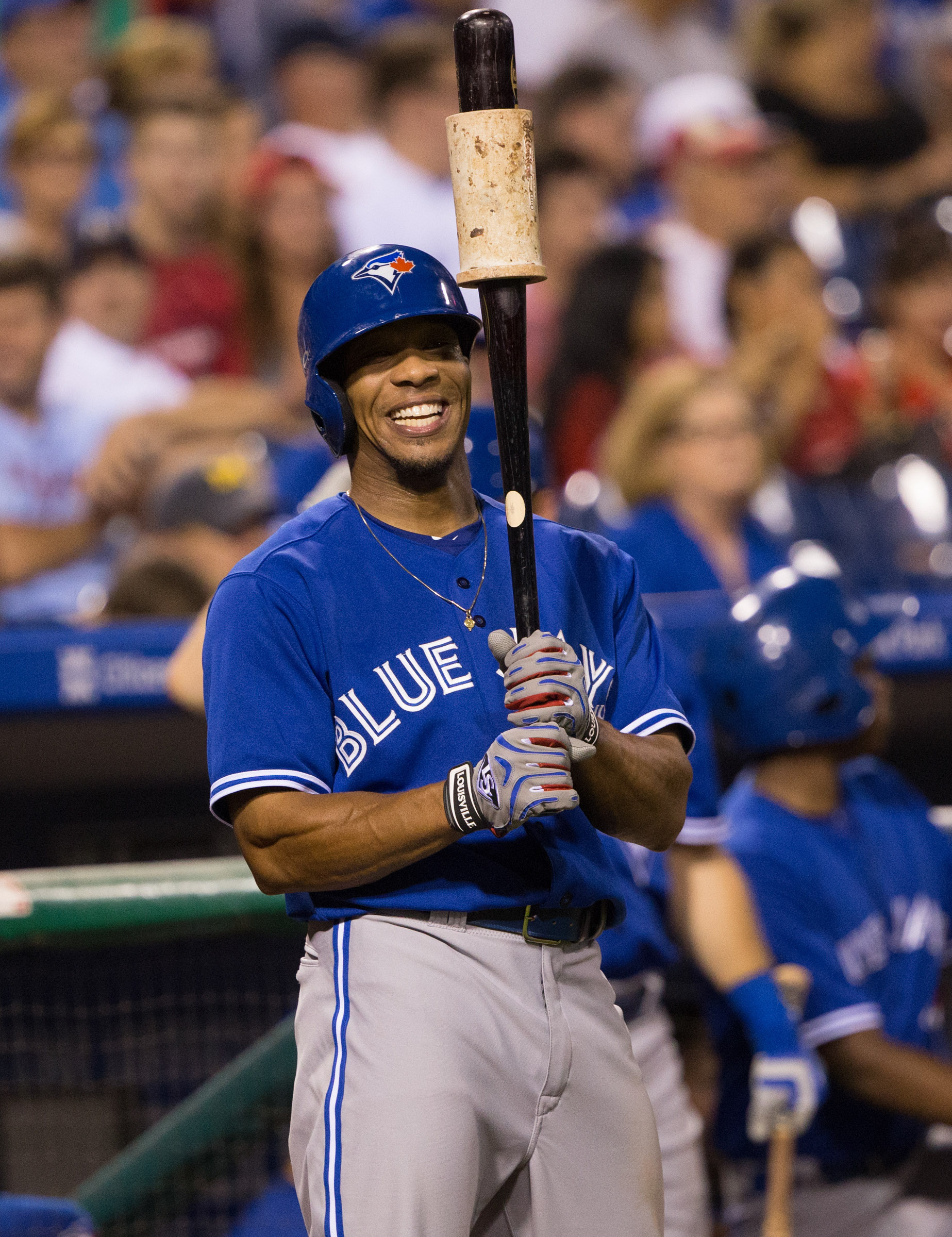
For the Nats, adding a left-handed-hitting outfielder who is capable of playing center field has long been a priority. While there have been suggestions at times that the club might have looked for a more significant piece to build out its outfield, it ultimately settled on a solid option in Revere who can share time in center with Michael Taylor and spell Jayson Werth in left, potentially creating a three-man rotation for two slots that should function well alongside Bryce Harper. In some ways, he’s a faster, younger, lighter-hitting version of the just-departed Denard Span, though it’s certainly arguable that the former Nat had a better glove.
The team’s relationship with Storen had long seemed destined to end. After replacing him once in the closer’s role with Rafael Soriano, the Nats ruffled some feathers by adding Jonathan Papelbon down the stretch last year. Needless to say, that move blew up in spectacular fashion, and seemingly created some tension between the organization and its former first-round draft pick.
On the Jays’ side of the equation, Revere was something of a luxury. Acquired at the trade deadline last summer, his essential role can be filled by Michael Saunders, who missed all of last year but is expected to return to full strength in 2016. And Dalton Pompey also joins Kevin Pillar in the outfield mix (along with superstar Jose Bautista, of course).

By bringing in Storen, the Jays have added a big arm to the back of the pen without taking on a lengthy commitment. There’s no denying that the 28-year-old has struggled at times, but he’s also been dominant for lengthy stretches. Whether he’s serving in a set-up capacity in front of Roberto Osuna or even taking the 9th himself, there’s good reason to believe that Storen can be a valuable late-inning arm.
Of course, both players in this trade come with their share of demerits. Revere, 27, doesn’t hit for power or draw walks. Though he’s always made a ton of good contact and doesn’t strike out much, any dip in contact ability or speed could spell trouble. And he’s a mystery on the defensive side of the equation. After garnering strong defensive metrics at times with the Twins, Revere has looked lost at times on his routes and generally received quite poor ratings in recent seasons.
So long as he can get on base enough, though, Revere seems a good bet at least to function as a solid fourth outfielder. He’s still plenty young, and delivers serious value with his legs. He has 80 steals on the ledger over the last two years and is second only to speed demon Billy Hamilton in Fangraphs’ total baserunning value measure (BsR) over those seasons. Notably, Revere has also generally posted neutral platoon splits, though he was quite a bit more effective last year against right-handed pitching.
And Storen has been somewhat fickle on the mound, with his general excellence sometimes punctured with ill-timed lapses. It’s all but impossible to know whether that’s a genuine cause for concern or just a sample blip, but there is a perception that he’s faltered in the brightest lights. Of course, he’s also locked up 95 saves, so it isn’t as if he’s a stranger to succeeding in high-leverage spots.
All told, Storen owns a 3.02 ERA in his 334 big league frames. He’s struck out an average of 8.6 and walked 2.6 batters per nine for his career, but his K rate jumped significantly last season. Storen’s average fastaball velocity trended up, topping 94 mph for the first time since 2012, and he got big results with his slider. He ended the season with a 12.2% swinging-strike rate that was the second best of his career. On the other hand, Storen also put up wider-than-usual platoon splits.
There are broader impacts here, too. For one thing, it now seems rather unlikely that the Nats will re-enter the outfield market. The move seemingly takes them out of the running for Gerardo Parra and would make a play for Justin Upton or Yoenis Cespedes seem even more remote. On the other hand, Washington could still stand to add to the bullpen and has been rumored to be considering moves in the starting staff as well. The Jays seem less likely to tinker at this point, though making a bullpen upgrade without taking on more salary could in theory open some creative options.
Photos courtesy of USA Today Sports Images.
Nationals, Blue Jays Nearing Swap Of Ben Revere For Drew Storen
9:20pm: The Nationals and Blue Jays are nearing a deal that would send Revere to D.C. in exchange for Storen, Heyman reports on Twitter.
9:13pm: Washington’s interest is “very strong,” Heyman tweets, who says it is indeed “possible” that Storen could be a key piece in a trade scenario. The Jays are looking to add to their relief corps in a deal involving Revere, per the report.
8:57pm: The Nationals are at least considering making a play for Blue Jays outfielder Ben Revere, Jon Heyman reports on Twitter. Washington has long been said to be seeking a center-field-capable outfielder, especially one that swings from the left side.
Obviously, Washington just saw precisely such a player — incumbent starter Denard Span — leave by way of free agency. It never seemed there was much of a chance of a reunion, particularly after the Nats decided not to make him a qualifying offer.
Revere, 27, is projected by MLBTR to earn a healthy $6.7MM through arbitration this year and can be controlled for another season thereafter through the arb system. He’s coming off of his best overall season at the plate as a big leaguer, having posted a .306/.342/.377 slash over 634 plate appearances split between the Phillies and Blue Jays. Revere rarely strikes out, but also doesn’t walk much at all, making him highly dependent on sustaining a high batting average — which he’s done by making loads of solid-enough contact and then turning on the jets.
Of course, Revere’s biggest assets are his legs. Not only has he swiped eighty bags over the past two years, he’s also been second in all of baseball in total value on the basepaths in that span. Curiously, though, he’s seen his defensive valuations plummet despite his obvious athleticism. Revere rated as a well-above-average outfielder during his last two years with the Twins, but has ranged between below average and rather awful over his three most recent campaigns. Poor routes have often been cited as an explanation, though it remains curious that Revere was able to draw high marks from metrics previously.
Obviously, any effort to add Revere would require the Nats to dangle something appealing to the Blue Jays. Toronto certainly seems to be in a position to ship him out, as the team could rely upon players such as Kevin Pillar, Michael Saunders, and Dalton Pompey to occupy center and left. But sacrificing that depth, after having given value to get Revere last July, would surely come at a price.
One concept that I’ve seen floated as a hypothetical possibility would be to structure a swap around Nationals reliever Drew Storen. He’s projected to take home $8.8MM via arbitration before hitting the open market after the season, and Barry Svrluga of the Washington Post tweeted today that he’s still very much available.
There are certainly other ways to imagine a deal coming together, depending on the respective motivations of each team to move these not-inexpensive pieces, but the pen is one area that the Jays could stand to upgrade. And the concept of exchanging players with roughly similar salaries often holds appeal. (Consider, for instance, the recent Jon Niese–Neil Walker swap or the Nationals’ own deal last year sending Tyler Clippard for Yunel Escobar.)
Market Notes: Davis, Parra, Angels, Span
Scott Boras is “pushing to create options” for his power-hitting client, Chris Davis, according to ESPN.com’s Buster Olney (via Twitter). Per Olney, Boras has been “selling” teams on Davis’s ability to be an everyday corner outfielder as well as a first baseman. We’ve heard that suggestion previously, of course — including from Boras himself — but it’s certainly interesting to hear that the super-agent is still pressing the concept this late in the offseason.
Here’s more on the free agent market:
- We’ve heard that the Rockies have continued interest in Gerardo Parra, with Jon Heyman saying yesterday that the team is pushing to add him. Indeed, says Chris Cotillo of SB Nation, Colorado is aggressively pursuing the veteran outfielder. (Twitter links.) The Nationals and Angels are among the other teams that are at least dabbling in Parra’s market, he adds. Obviously, a signing by Colorado would be doubly interesting, as it could suggest that the team is lining up a deal involving one of its incumbents.
- Jeff Fletcher of the Orange County Register, on the other hand, hears that the Angels are “still not really involved” in the top of the free agent outfield market. (Twitter link.) That includes Parra as well as players like Justin Upton, Yoenis Cespedes, and Dexter Fowler. Fletcher adds that he sees a trade for a lower-cost option, such as Charlie Blackmon of the Rockies, to be a more realistic outcome.
- Denard Span said in his introductory press conference today that he feels good and is well on track to be at full speed this spring, as CSN Bay Area’s Alex Pavlovic reports. He chose San Francisco, per Boras (who is also his agent), because the team met his three-year ask and were “a priority because of the fit for them and the fit for Denard.” Club CEO Larry Baer, meanwhile, said that “Denard has been on our radar for a long time.“
- Span drew real interest from the Orioles, according to Roch Kubatko of MASNsports.com, but Baltimore was never going to guarantee more than a single season. Unsurprisingly, the O’s weren’t alone in that regard, as Boras says that fully eleven teams had interest in Span on a one-year arrangement, as Andrew Baggarly of the Mercury News reports.
Giants Sign Denard Span
The Giants have announced the signing of free agent outfielder Denard Span to a three-year contract. He’ll reportedly receive a $31MM guarantee in the deal, which includes a fourth-year mutual option at $12MM with a $4MM buyout. After taking home a $6MM signing bonus and a $3MM salary for 2016, Span will earn two consecutive $9MM annual payouts.
Span, who turns 32 in February, can also earn incentives of up to $5MM. He can tack $1MM onto his salary in 2016, and up to $2MM apiece in the following two years, by hitting plate appearance thresholds that culminate at 525 turns at bat annually. Span is a client of the Boras Corporation.
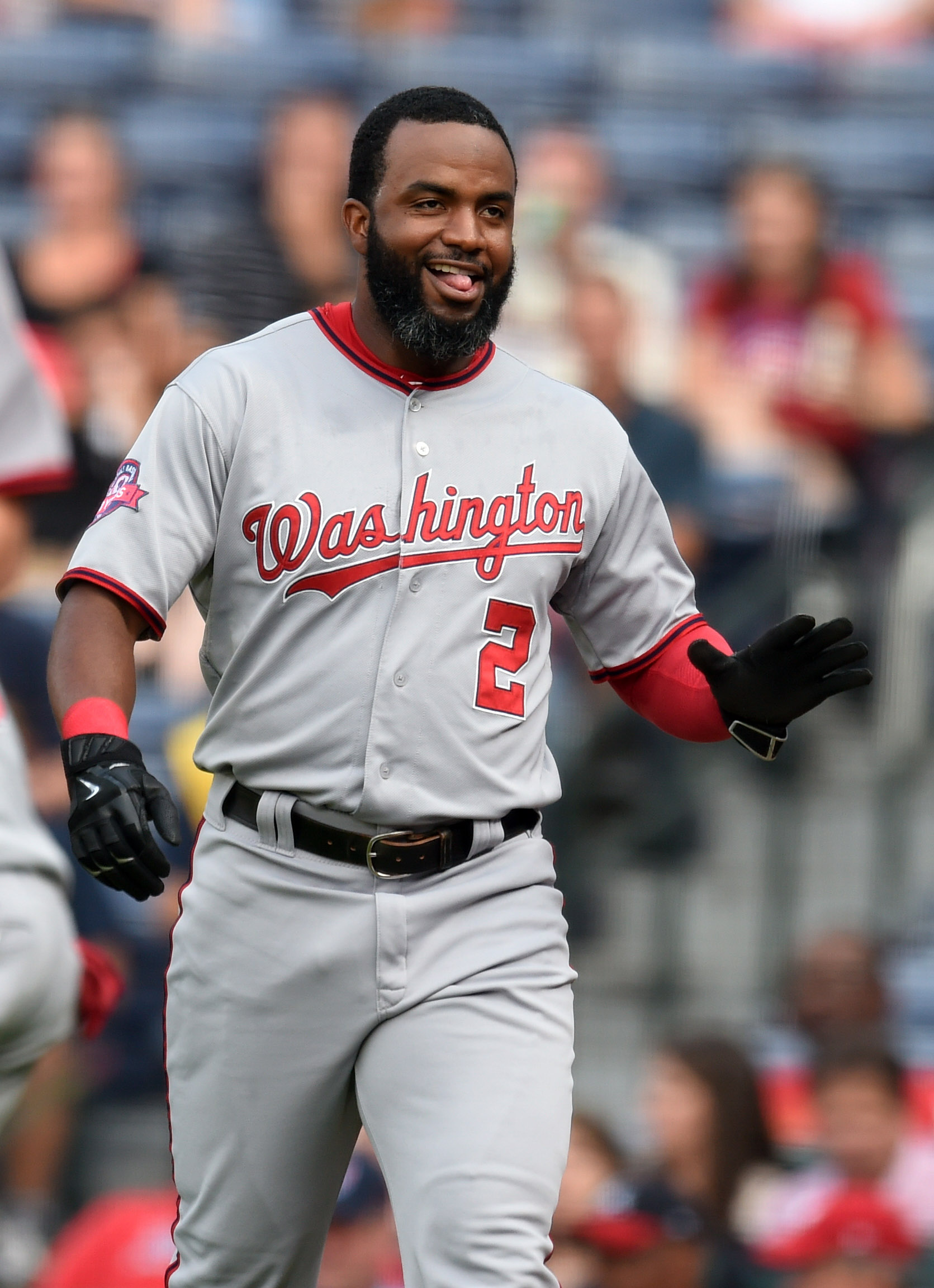
With the move, San Francisco is set to add yet another significant free agent after previously inking Johnny Cueto and Jeff Samardzija. The first two signings upgraded the rotation, of course, while the move to bring on Span will bolster an outfield corps that had looked in need of an addition. While the club previously chased Ben Zobrist, who might have provided some infield depth as well as a regular option in left, it seems plausible to think that Span’s signing will wrap up the club’s major offseason business.
It’s unclear at present what precise role Span will play. He’s spent the bulk of his time in center, but could also be an option in left. Angel Pagan has been the team’s regular option up the middle in recent years, but he (like Span) has dealt with quite a few injuries. And Gregor Blanco is also capable of playing there.
All three of those players ought to cover things in center and left, with Hunter Pence likely getting the bulk of the action in right. But he, too, could also be spelled at times against right-handed pitching. While Pagan is a switch-hitter, he’s performed better from the left side over his career. (The same holds true, unsurprisingly, for the left-handed-hitting Span and Blanco, though none have dramatic platoon splits.)
The overall mix has its share of upside but also comes with some risk. All three of the returning players missed time last year, and Span has battled through core muscle and hip surgeries in the last year. It’s notable, too, that Span is the youngest of the bunch. But the presence of a high-quality fourth outfielder in Blanco, as well as some younger options in the system, certainly helps.
In Span, the Giants will get one of the best contact hitters in all of baseball. Over the last three years, Span ranks second — behind Michael Brantley and in front of just-departed Giants left fielder Nori Aoki — in overall contact rate.
And that approach has translated into results. While he doesn’t leave the yard very often, Span delivers plenty of extra-base hits with his line-drive and ground-ball heavy stroke. Since joining the Nationals via trade before the 2013 season, he has posted a sturdy .292/.345/.404 batting line, good for a 109 wRC+. And those numbers trended up over his time in D.C.
Of course, the fleet-footed Span also contributes quite a bit on the bases. He’s a significant stolen base threat — his 62 steals dating to the start of 2013 rank 22nd in baseball — but the value goes beyond that as well. Span has received positive marks from Fangraphs’ BsR metric in every season of his career, making him one of the game’s thirty best overall runners in that time frame.
Defensively, Span is a tough player to value. Metrics once valued him as a well-above-average center fielder. But the more recent results suggest that his range has declined. Last year, UZR hit Span with his worst-ever rating and DRS charged him with a rather remarkable -10 defensive runs saved over just 523 innings in the field.
The contract falls somewhat shy of the three-year, $39MM pact predicted by MLBTR’s Tim Dierkes at the outset of the winter, but Span’s market was always tough to call given that he ended the season on the DL. If nothing else, the fact that he reached a third guaranteed year shows that there’s still plenty of demand on the market.
Jon Heyman first reported that a deal was close, via Twitter, and added details on the incentives clause (on Twitter), as did Bob Nightengale of USA Today (in a tweet). Alex Pavlovic of CSN Bay Area tweeted the guarantee. Andrew Baggarly of the Mercury News first noted that there were incentives (Twitter link). Baggarly (on Twitter) and John Shea of the San Francisco Chronicle (in a tweet) had details of the mutual option. Jeff Passan of Yahoo Sports had the full breakdown of the deal on Twitter.
Photo courtesy of USA Today Sports Images
Players Avoiding Arbitration: 1/8/16
With the start of the new year, it’s likely there will be an increased flow of arbitration agreements. We’ll keep tabs on the day’s relatively minor arbitration agreements in this post. As always, all arbitration projections are via MLBTR and contributor Matt Swartz.
- Righty Zach McAllister has agreed to a $1.3MM salary with the Indians, Jon Heyman reports on Twitter. That represents a nice bump up over the $1MM he had been projected for. The first-time-eligible, 28-year-old hurler has put up much greater innings totals in previous seasons than he did last year, when he transitioned full-time to the pen. That could be a cause for the increased earnings. Of course, the move to a relief role proved rather fruitful for all involved, as he turned in a 3.00 ERA with 11.0 K/9 against 3.0 BB/9 in his 69 frames.
- The Rockies have agreed to avoid arbitration with righty Jordan Lyles, as Jeff Passan of Yahoo Sports previously reported.* He’ll receive a $2.975MM deal for the 2016 season, which comes in slightly above his $2.8MM projection. The small raise isn’t a surprise given that Lyles only threw 49 frames in ten starts in the 2015 campaign. The righty, who only just turned 25, had something of a breakout season in 2014, when he put up a 4.33 ERA in 126 2/3 innings. While he notched only 6.4 K/9, with a 3.3 BB/9 walk rate, Lyles was able to induce grounders on better than fifty percent of the balls put in play against him. And that earned run mark means more for a Colorado-based pitcher, of course. But ERA estimators viewed Lyles as a low-4.00 ERA contributor even in 2014. And the time missed remains somewhat concerning, although the injuries that caused it — a fractured hand and toe ligament tear — may not be indicative of his durability going forward.
*Editor’s Note: this arbitration agreement was mistakenly re-posted after previously being reported.
Angels Avoid Arbitration With Hector Santiago
The Angels have avoided arbitration by agreeing to a one-year deal with lefty Hector Santiago, the club announced. He’ll receive a $5MM salary, per Mike DiGiovanna of the Los Angeles Times (via Twitter).
Santiago was projected by MLBTR to earn $5.1MM in his second season of arbitration eligibility after taking home $2.29MM last year. Obviously, he’ll land right in the range of that projection.
The 28-year-old southpaw has had some hiccups at times, but it’s hard to argue with his overall results. Since being acquired by the Halos as part of the pre-2014 Mark Trumbo deal, Santiago owns a 3.65 ERA over 308 innings with 7.9 K/9 against 3.6 BB/9.
On the other hand, metrics are not big fans of Santiago’s work thus far in Los Angeles. He’s never been a darling of ERA estimators, but he reached a new low last year with a 4.77 FIP, 5.00 xFIP, and 4.50 SIERA mix going onto his resume.
Latest On Astros-Cardinals Computer Breach Matter
There’s been a lot of action surrounding the guilty plea entered today by former Cardinals scouting director Chris Correa, in which he admitted to certain charges brought against him for an improper accessing of the Astros’ “Ground Control” database. The complaint against Correa revealed several important alleged details, as did his statements today in open court.
In particular, Correa suggested — when asked by the judge — that he had found proprietary Cardinals’ information in the Astros’ systems. (David Barron of the Houston Chronicle was on hand, and his Twitter timeline is chock full of information on the proceedings.) Of course, former Cardinals executive Jeff Luhnow moved from St. Louis to become the Astros’ general manager, which Correa says was the cause for his look into the competitor’s databases.
The Astros have issued a statement in response. Per Houston general counsel Giles Kibbe, the club is withholding comment on “the details” at present. But he did make clear that Houston “refute[s] Mr. Correa’s statement that our database contained any information that was proprietary to the St. Louis Cardinals.”
In theory, then, there are still at least two open matters for the league to consider: first, any punishment and/or compensation relating to the breach by a (now-former) Cardinals employee. And second, the question whether the St. Louis organization actually was harmed as well.
The league has made clear that it is not prepared to act on either or both subjects at present. Per a league statement:
“Major League Baseball appreciates the efforts of federal law enforcement authorities in investigating the illegal breach of the Astros’ baseball operations database, and identifying the perpetrator of this crime. We anticipate that the authorities will share with us the results of their investigation at the appropriate time, and we will determine what further actions to take after receiving all the relevant information.”
While it remains to be seen how things will proceed, preliminary indications are that a quiet resolution is more likely than a public battle between the organizations. Kibbe’s statement on behalf of the ‘Stros also hinted as much. “We have a great amount of respect for Bill DeWitt and the Cardinals organization,” he said. “And, we are confident that Commissioner Manfred will guide MLB through this process in the best way possible.”
MLB’s constitution specifically provides that teams may not file suit against one another, but must instead take any disputes to the commissioner as an arbitrator. (H/t to Nathaniel Grow of Fangraphs.) While a lawsuit could still theoretically be pursued, if Houston were to identify some loophole that it might argue for as an exemption from the arbitration requirement, that seems as unlikely to succeed as it is to be attempted.
Per the proceedings and the complaint (via Wendy Thurm, on Twitter), the government alleged as a result of its investigation that Correa had done quite a bit of significant snooping. According to the government, he accessed the system at least during the time frame of March of 2013 through June of 2014, and also made his way into the e-mail accounts of two unnamed (but easily assumed) “victims” — executives who had moved from the Cardinals to the Astros.
Among other things, Correa is alleged in May of 2013 to have peaked at the Astros’ ranking of 2013 draft-eligible players; large swaths of other draft-related scouting and assessment data; scouting information relating to the Cardinals’ system; and logs of Houston’s trade talks. He is said to have accessed the system again during the draft. And he allegedly went back to check the trade notes on the morning of the 2013 trade deadline.
While the Astros made significant changes to their database security after the Ground Control system was publicized early in 2014, Correa was allegedly able to find the new password information because of the aforementioned email access. He is charged with again checking in on the team’s trade logs, draft information, international evaluations, and other information in March of 2014.
Ultimately, of course, whether or not Correa was able to find the Cardinals’ information on the Astros’ system, that was never going to be much of a legal defense, as prosecutor Kenneth Magidson explained to Derrick Goold of the St. Louis Post-Dispatch. As reported earlier today, Correa pleaded guilty to five (out of twelve total) counts of unauthorized access to computer information, which come with a maximum of up to a five-year prison sentence, plus fines and restitution. While sentencing will not take place until April 11th, Goold explains that Correa will likely receive three or four years of jail time. That’s due to the terms of the plea deal, under which Correa acknowledged that the value of the information taken was around $1.7MM and that he had attempted to conceal his identity in accessing the system.
Justin Upton’s Agent: “Not Considering Shorter-Term Deals At This Time”
Larry Reynolds, the representative of free agent outfielder Justin Upton, tells Jon Heyman that his client is not interested in a short-term deal as things stand. (Twitter links.) While there’s been some buzz recently that the 28-year-old could be forced to take a pillow contract with an eye on re-entering the market next year, that seems not to be a present consideration.
Here’s the full quote from the veteran agent: “We are not considering shorter-term deals at this time. The goal has been and will continue to be a long term contract for Justin Upton.”
From my perspective, it would indeed be rather premature for Upton and his representatives even to entertain the idea of a pillow contract — let alone a deal that would promise away a few prime seasons and put Upton back on the market in his early thirties. As MLBTR’s Tim Dierkes argued entering the winter, a seven-year, $147MM contract seemed a reasonable outcome for the still-youthful, power-hitting Upton.
And it’s not yet clear that the situation has changed drastically. The two biggest free agent outfield pieces to sign thus far — Jason Heyward and Alex Gordon — went to clubs that probably weren’t ever going to factor in the market for Upton (or fellow top option Yoenis Cespedes). It’s arguable, then, that most of the plausible suitors for Upton entering the offseason still remain plausible landing spots.
That’s not to say that a short-term arrangement is out of the question. The qualifying offer hurts any free agent, and we’ve seen sluggers like Nelson Cruz forced to settle in the past. But Upton’s age and consistent production make him quite a different investment opportunity than was Cruz in the 2013-14 winter, when he was also coming off of a PED suspension.