
Braves Sign Kenley Jansen
The Braves have a new closer, as they announced agreement Friday evening with Kenley Jansen on a one-year, $16MM contract. (Atlanta discloses their own contract terms). The Wasserman client had spent his entire career with the Dodgers, but he’s headed to one of the National League’s other powerhouses this season. In order to clear space on the 40-man roster, Atlanta placed reliever Jay Jackson on the 60-day injured list to a right lat strain.
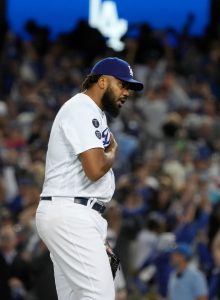
A three-time All-Star and two-time Hoffman Award winner (as the National League’s top reliever), Jansen is one of the best late-game arms in recent memory. The consistently excellent closer has never posted an ERA above 3.75 in his 12-year big league career, and he’s put up an ERA below 3.00 in eight separate seasons.
Jansen remained great last season, pitching to a 2.22 mark in 69 outings. He saved 38 games and struck out a stellar 30.9% of batters faced. That wasn’t quite at the level of his peak — when Jansen was punching out more than two-fifths of opponents while allowing fewer than two earned runs per nine — but it was nevertheless among the league’s best production. Among the 138 relievers with 50+ innings pitched, Jansen checked in 15th in ERA and 29th in strikeout percentage. He generated swinging strikes on 15.2% of his pitches, the 22nd-highest mark among that same group.
In addition to his ability to miss bats, Jansen has consistently excelled at limiting hard contact. Possessing an excellent cutter that stays off barrels, he consistently ranks among the league’s best in terms of checking opponents’ exit velocities and rates of solid contact. That continued last season, with opponents making hard contact (defined as a batted ball with an exit speed of 95 MPH or higher) on only 26.1% of balls in play against him. That’s nearly ten points lower than the 35.4% league average, although it’s par for the course for Jansen.
If there was anything to nitpick in Jansen’s performance, it’s that his once-stellar control got a bit wobbly. He walked 12.9% of opponents last year, his highest rate since his 2010 rookie season. That marked the fourth consecutive year in which Jansen’s walk percentage climbed relative to the year prior, and it was his first season in a decade walking more batters than the average reliever did. That didn’t prevent him from having plenty of bottom-line success, though, and the Braves aren’t locking themselves into a long-term investment.
The 34-year-old reliever signs a one-year deal, shy of MLBTR’s two-year, $26MM projection entering the offseason. The deal brings the Braves payroll to an estimated $185MM, according to Jason Martinez of Roster Resource. That’s uncharted territory for the organization, but Atlanta brass has maintained throughout the winter they’d push their spending upwards on the heels of a World Series run. Their luxury tax ledger, meanwhile, sits around $208MM — about $22MM shy of the base threshold.
Jansen’s signing is the most important step in what has been something of a bullpen makeover in Atlanta. The Braves also added Collin McHugh and Tyler Thornburg, both of whom can step into immediate work. McHugh, coming off an excellent season, seems likely to take on high-leverage innings for manager Brian Snitker. Former closer Will Smith now steps into that mix as well, as Jansen’s signing bumps him from the ninth inning. Speaking with reporters (including Justin Toscano of the Atlanta Journal-Constitution) this evening, president of baseball operations Alex Anthopoulos confirmed Smith was willing to cede the ninth inning in order to strengthen the overall roster. Smith, McHugh, Tyler Matzek, Luke Jackson and A.J. Minter form the core of what could be a very difficult late-innings mix to crack for opposing lineups.
That’s before even considering the presence of former All-Star closer Kirby Yates, whom the Braves signed before the lockout. The righty is still on the mend from a March 2021 Tommy John surgery, but he’s expected to factor into the mix down the stretch. Atlanta no doubt envisions playing meaningful games into September and October as they reload for what they hope will be another title run.
Along the way, they very well may come up against the Dodgers. There’d be plenty of intrigue if the clubs meet again in the playoffs, as they’ve now poached franchise icons from one another in recent days. Atlanta brass certainly didn’t allow the Dodgers’ finalization of a six-year deal with Freddie Freeman this afternoon to influence their pursuit of Jansen, but the fanbase and some in the organization probably feel some amount of satisfaction in poaching a marquee player from L.A. There was already going to be plenty of intrigue every time the two teams met this season. Jansen heading to Atlanta will only take that up another notch.
Image courtesy of USA Today Sports.
Padres Sign Ian Krol To Minor League Deal
The Padres announced this afternoon that they’ve signed left-handed pitcher Ian Krol to a minor league contract. The deal includes an invite to Major League Spring Training.
Krol, 30, joined the free agent market last November following the Tigers’ decision to outright him from their 40-man roster. After scattering usable results throughout his career and his inclusion in a few notable trades over the years, the former 7th-rounder is now set to join his ninth organization in San Diego. This comes on the heels of an 18-plus-inning run out of Detroit’s bullpen where Krol contributed a useful 4.34 ERA, albeit with opposing hitters batting .303/.365/.474 off him in that limited showing.
The Padres will look to coax a sharper performance out of Krol in the next few weeks at Major League camp. Given the left-hander’s general excellence in the minors it’s not out of the question that he can build off of last year’s performance. It would certainly behoove San Diego if he did, as the team is currently projected (per RosterResource) to start the season with only one healthy, established lefty in the bullpen— Tim Hill.
Krol hasn’t exactly mystified left-handed hitters in his career, but their collective OPS is more than 70 points lower than right-handed hitters’ OPS against the pitcher. If the veteran can crack the club’s Opening Day roster it will provide manager Bob Melvin a wider variety of tools to use out of a bullpen that was a top-5 run prevention unit last season.
Diamondbacks Release Zack Burdi
The Diamondbacks released right-handed pitcher Zack Burdi earlier this week according to MLB.com’s transaction tracker. Arizona frees up a spot on its 40-man roster, which currently has 39 spots filled.
Acquired in an October waiver claim out of the Baltimore organization, Burdi’s time in the desert will prove practically nonexistent. A former first-round pick with the White Sox, Burdi has endured a trying handful of years since a scintillating minor league debut in 2016. After he skyrocketed all the way up to Triple-A in his first minor league season, the one-time relief prospect has endured a number of health issues, headlined by Tommy John surgery in July 2017.
While Burdi has shown promise when taking the (predominately minor league) field in recent seasons, hitting the mid to upper 90’s with his fastball and striking out batters in droves, he’s also proven awfully susceptible to walks and home runs. Last season proved no different, unfortunately, as the 27-year-old was rocked in Triple-A and in the Majors. Between a Chicago call-up and a cameo out of the Orioles bullpen Burdi sported a 5.40 ERA, with his three home runs and five walks allowed through 10 innings actually looking better than his work in 28 plus Triple-A frames.
Given his pedigree, it’s likely Burdi can latch onto another organization via a minor league deal. Teams who feel they can tap into the right-hander’s potential may also find his remaining minor league option year appealing, given that they can shuttle him between the big leagues and minor leagues if he can stick on a team’s 40-man roster.
Dodgers Sign Tyler Anderson
The Dodgers continue to add to their roster, announcing this evening they’ve agreed to terms with Tyler Anderson on a one-year deal. It’s reportedly an $8MM guarantee that also contains an additional $500K in incentives if he exceeds 100 innings next season.
Anderson was one of the better remaining options in a free agent rotation market that has been mostly picked through. The southpaw is coming off a decent season split between the Pirates and Mariners, in which he combined for a 4.53 ERA over 167 innings. Anderson only averaged a bit more than five innings per start, but he took the ball 31 times and was generally successful with regards to keeping his team in games. He allowed three or fewer earned runs in all but five of his outings.
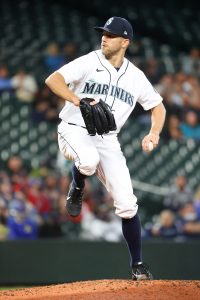
Signed by Pittsburgh to a $2.5MM guarantee last offseason, he settled in as perhaps the most reliable member of the Bucs’ starting staff. Over 18 outings, Anderson worked 103 1/3 frames with a 4.35 ERA. He was an obvious trade candidate as an impending free agent on a rebuilding team. After a reported agreement with the Phillies fell through due to concerns about the medical evaluation of one of the prospects involved, the Pirates pivoted and flipped him to Seattle for prospects Carter Bins and Joaquin Tejada at the deadline. Anderson spent the final couple months with the M’s, performing alright until a nine-run blow-up against the Angels tanked his overall numbers.
Anderson isn’t the most overpowering arm on the market. His fastball averaged 90.6 MPH last season, and he struck out a below-average 19.1% of opposing hitters. Yet he was adept at getting opponents to chase pitches outside the strike zone, and his mediocre strikeout percentage belied a solid 11.5% swinging strike rate. That’s partially because batters swung so often against him — among pitchers with 100+ innings, only Michael Wacha had a higher opponents’ swing rate — but Anderson nevertheless generated more whiffs per swing inside the strike zone than the average starter.
In addition to getting opponents to frequently chase, Anderson threw pitches in the zone at a higher-than-average rate. Those contributed to keep his walks down, as he doled out free passes at just a 5.4% clip. He’s been a low-walk arm throughout his career, and he’s posted an ERA between 4.37 and 4.55 in each of his last three seasons (excluding a 2019 campaign in which he was limited to five starts by left knee issues). A fly-ball pitcher, Anderson has been prone to the home run ball throughout his career. He also generates his fair share of pop-ups, though, and he’s typically adept at avoiding hard contact.
Anderson has started all but four of his 117 MLB appearances. He’ll presumably join the back-of-the-rotation mix in Los Angeles, joining offseason signee Andrew Heaney, David Price and Tony Gonsolin among the options for Dave Roberts. Walker Buehler, Julio Urías and Clayton Kershaw will be the top three options from the outset of the season. Trevor Bauer remains on the roster, but his paid administrative leave was recently extended through April 16.
The $8MM guarantee only adds to an ever-mounting payroll in Los Angeles. The Dodgers now have an estimated $282MM in actual payroll, according to Jason Martinez of Roster Resource. Their luxury tax ledger is up to $284MM, just $6MM shy of the highest tier of penalization.
Because they exceeded the CBT last season, the Dodgers will be subject to escalating fees as a second-time payor. They’ll be taxed at a 30% rate for every dollar spent between $230MM and $250MM, a 42% clip on overages between $250MM and $270MM, a 75% rate on overages between $270MM and $290MM and a 90% tax on all expenditures north of $290MM.
Robert Murray of FanSided first reported the Dodgers and Anderson had agreed to a deal. Fabian Ardaya of the Athletic reported it was a one-year pact. Jeff Passan of ESPN reported the $8MM guarantee, while Jon Heyman of the MLB Network was first with the incentives.
Image courtesy of USA Today Sports.
Rays Acquire Luke Raley From Dodgers
The Rays and Dodgers agreed to a deal this afternoon, announcing that corner outfielder Luke Raley has been traded to Tampa Bay. Los Angeles is acquiring pitching prospect Tanner Dodson in return. In order to clear space on the 40-man roster, the Rays placed Yonny Chirinos on the 60-day injured list.
Raley made his major league debut this past season. He didn’t perform well over his first 72 plate appearances, striking out 25 times while drawing just a pair of walks. The 27-year-old has a much better minor league track record, as he’s hit .289/.367/.489 in five minor league campaigns since being drafted in the seventh round in 2016. That includes a .297/.384/.553 showing over 456 plate appearances in Triple-A.
A lack of defensive value has limited Raley’s prospect appeal, but he’s ranked near the back half of the Dodgers’ top 30 farmhands for the past few seasons in the estimation of Baseball America. The outlet credits Raley with big raw power, albeit with some trepidation about an aggressive approach at the plate. Tampa Bay isn’t the only other organization who has tried (and succeeded) in prying Raley away from the Dodgers. The Twins acquired him from Los Angeles at the 2018 trade deadline in exchange for Brian Dozier. Minnesota sent him back to L.A. a year and a half later in the three-team Mookie Betts/Kenta Maeda trade.
Raley is affordable and can step right into the big league mix for Tampa Bay. He still has a minor league option year remaining, so the Rays needn’t carry him on the active roster. Yet he’ll bolster the organizational depth and could see a more immediate path to playing time if Tampa Bay pulls the trigger on an Austin Meadows trade. Recent reports have indicated the Rays are considering shipping Meadows elsewhere.
The move clears a spot on the 40-man roster for the Dodgers, who have signed each of Jimmy Nelson, Danny Duffy and Freddie Freeman in recent days. They’ve devoted just one immediate roster spot to that trio — Los Angeles purposefully waited to finalize Freeman’s deals until after signing Duffy and Nelson so they could put both pitchers on the 60-day injured list — but they’ve also agreed to terms with Tyler Anderson. They’ll need to clear another roster spot to accommodate Anderson’s arrival.
In addition, Los Angeles picks up Dodson, whom the Rays selected 71st overall in the 2018 draft. A two-way player at Cal, he continued to work in both capacities early in his professional career. Scouts have long questioned how much offensive upside he’d have due to a lack of raw power, though, and he’s worked primarily off the mound in recent years. He tallied just 30 plate appearances in High-A last season but worked 56 1/3 innings as a reliever.
Between High-A Bowling Green and Double-A Montgomery, Dodson combined for a 3.20 ERA. He struck out a solid 26.3% of opponents against a 9.5% walk rate. The Rays declined to add him to their 40-man roster to protect him from the Rule 5 draft (which never ended up taking place) this offseason. He didn’t appear among Baseball America’s top 30 organizational prospects this winter, but Eric Longenhagen of FanGraphs wrote in January 2021 that his low-mid 90s fastball and slider could make him a viable big league reliever.
Chirinos, meanwhile, hasn’t pitched since undergoing Tommy John surgery in August 2020. The righty fractured his elbow last year, a setback that was always expected to prevent him being ready for Opening Day. Precisely when he might return isn’t clear, but he’ll miss at least the first two months of this season.
Jeff Passan of ESPN first reported the terms of the trade.
Astros Outright Jairo Solis
MARCH 18: Solis has cleared waivers and been outrighted to Triple-A Sugar Land, tweets Chandler Rome of the Houston Chronicle. He’ll remain in the organization but no longer occupies a spot on the 40-man roster.
MARCH 15: The Astros announced this afternoon they’ve designated right-hander Jairo Solis for assignment (relayed by Jake Kaplan of the Athletic). The move clears 40-man roster space for the signing of utilityman Niko Goodrum, which has been made official.
Solis, 22, has yet to pitch above Low-A. Signed for a $450K bonus during the 2016-17 international signing period, he quickly elevated his prospect status with a velocity spike in pro ball. Baseball America wrote in 2019 that he’d run his fastball up to 98 MPH and slotted him among the top half of Houston’s top 30 prospects every year from 2018-20. Eric Longenhagen of FanGraphs ranked him third in the Houston farm system as recently as last year, while his colleague Kevin Goldstein wrote in February that Solis could emerge as a top 100 overall prospect with a breakout performance in 2021.
Unfortunately, Solis’ past few seasons have been destroyed by injuries. He underwent Tommy John surgery late in 2018, missing all of the following campaign. The cancelation of the 2020 minor league season prevented Solis from pitching in game action, then he suffered another elbow injury last year. He underwent a second Tommy John procedure in June, likely costing him most or all of the upcoming season.
If Solis indeed misses the entire 2022 season, he won’t have pitched in a single affiliated game between 2019-22. Houston added him to their 40-man roster during the 2020-21 offseason to keep him from being poached in the Rule 5 draft, but after another health setback, they’ll now make him available to other clubs. The Astros could have elected to place him on the 60-day injured list to open a roster spot, but doing so would’ve required paying him a major league salary and granting him MLB service time. Instead, they’ll presumably try to pass him through waivers in hopes that he can be kept in the system without requiring either a roster spot or MLB pay.
Red Sox, Derek Holland Agree To Minor League Deal
Veteran lefty Derek Holland is headed to the Red Sox, as Holland himself strongly hinted this afternoon on Twitter. MLBTR has confirmed that Holland will join the Red Sox on a minor league deal, although the team has yet to officially announce the move.
Holland has pitched in each of the past 13 MLB seasons, spending time with the Rangers, White Sox, Giants, Cubs, Pirates and Tigers. He is probably best known for his time in Texas from 2009 to 2016, appearing in 179 games, including 158 starts. He threw 985 innings with a 4.35 ERA, 18.9% strikeout rate and 7.4% walk rate.
A one-year, $6MM deal with the White Sox in 2017 didn’t go as planned, with Holland’s ERA shooting up to 6.20 over 135 innings. His 16.6% strikeout rate and 12% walk rate also didn’t inspire much confidence. However, he had a terrific bounceback in 2018 after signing a minor league deal with the Giants. He eventually made 30 starts and came out of the ‘pen six times, throwing 171 1/3 innings with a 3.57 ERA, 23.2% strikeout rate and 9.2% walk rate.
That was enough for the Giants to bring him back for 2019 with a one-year deal that came with a $7MM guarantee. Holland’s pendulum swung back the other way, though, as his ERA went back up to 6.08. Despite still getting strikeouts at a healthy rate of 21.8%, his walk rate went back up to 12% on the year.
The past two years have seen Holland sign minor league deals with rebuilding clubs, then soaking up innings throughout the year, primarily out of the bullpen. Between his 2020 season with the Pirates and 2021 season with the Tigers, he logged 90 1/3 total innings, with a 5.88 ERA, 23.8% strikeout rate and 8.7% walk rate.
The Red Sox don’t have a strong need for southpaws in their bullpen, as they recently added Jake Diekman and Matt Strahm to a relief corps that already had Josh Taylor and Darwinzon Hernandez. However, the rotation has some uncertainty, as it was recently revealed that Chris Sale is going to be sidelined with a stress fracture in his rib. Nathan Eovaldi has been healthy the past couple of years, but has dealt with his share of injuries prior to that. Rich Hill threw 158 2/3 innings last year, the second-highest mark of his career, but has frequently been injured before and is now 42 years old. Michael Wacha hasn’t topped 130 innings since 2017. Holland, on the other hand, has only been on the MLB injured list three times in his career, and never for more than about a month, giving the Red Sox as a veteran safety net, should they need one over the course of the season.
Cubs Sign Seiya Suzuki
The Cubs continue to show that their current retooling efforts won’t at all resemble the aggressive teardown of a decade ago, announcing on Friday that they’ve signed star NPB outfielder Seiya Suzuki to a five-year contract. Suzuki, a Wasserman client, will reportedly be guaranteed a hearty $85MM on the contract.
Under the NPB/MLB posting system, that means the Cubs will also owe Suzuki’s former team, the Hiroshima Carp, a posting fee of $14.625MM. That brings the total investment in Suzuki to $99.625MM — although only Suzuki’s actual contract (more specifically, its $17MM annual value) will count against the luxury tax. Suzuki will reportedly receive a $5MM signing bonus and be paid annual salaries of $7MM, $17MM, $20MM, $18MM and $18MM on the deal, which contains a full no-trade clause.
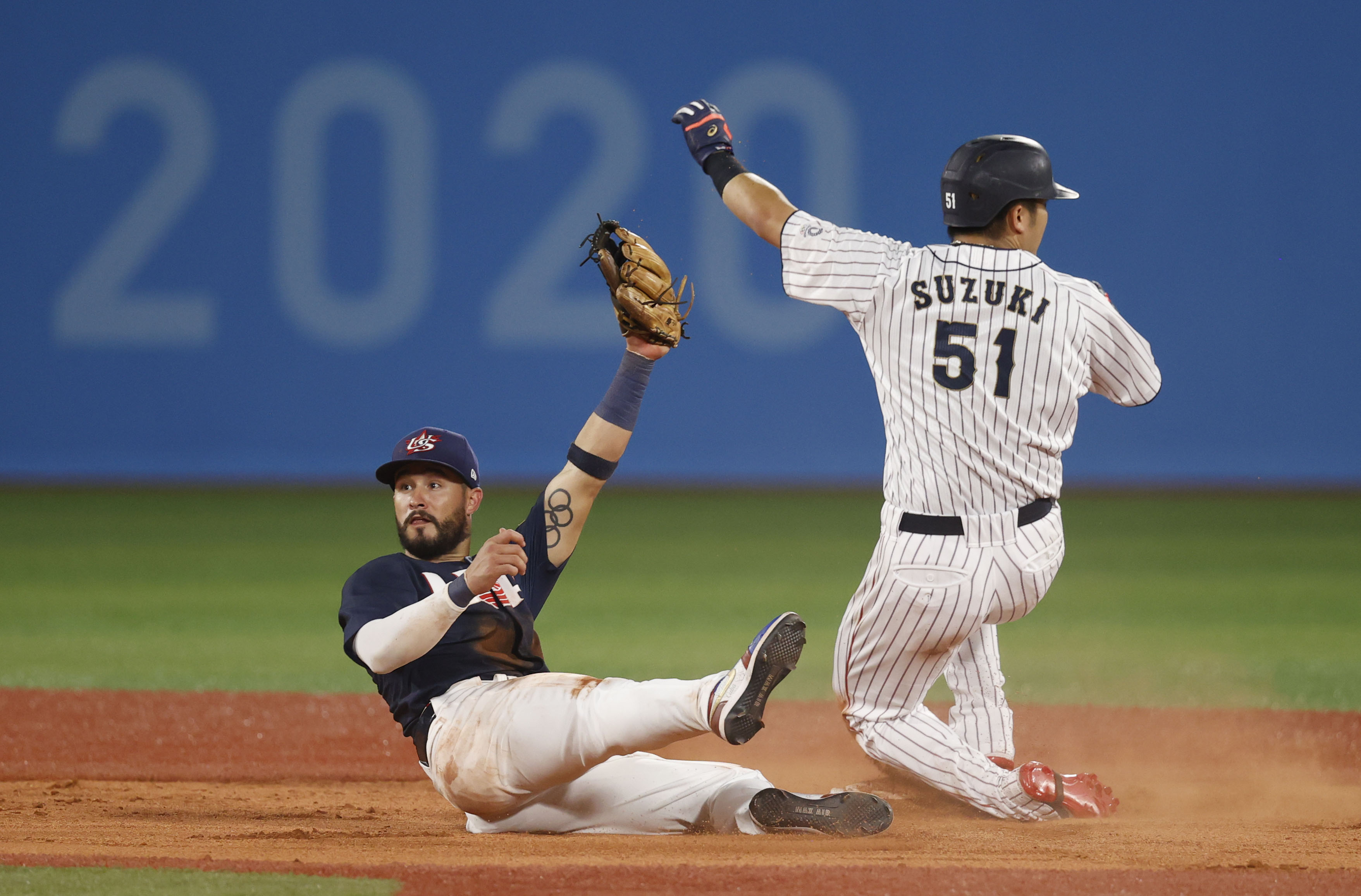
Suzuki hit .317/.433/.639 with 38 home runs in 533 plate appearances for the Hiroshima Carp this year. He’s been one of the best hitters in NPB dating back to 2016, with a career line of .309/.402/.541. He’s hit at least 25 home runs in each of the last six seasons and is a five-time NPB All-Star.
According to MLBTR’s Steve Adams, “The most bullish opinions we’ve gotten peg Suzuki as an everyday Major League right fielder — a solid defensive player with a strong arm and enough power to hit in the middle of a big league lineup.” In August, Dylan Hernandez of the L.A. Times spoke to a Major League scout who compared Suzuki to AJ Pollock, back when Pollock was playing for the Diamondbacks.
Though Suzuki has nine seasons under his belt, he’s still just 27 years old, which is rare for a posted player out of Japan. Suzuki explained to Hernandez, “I think everyone feels they want to play at the highest stage if they can get the chance.” Suzuki was only one year short of international free agency, so the Carp were motivated to be compensated for his departure.
In late November, the Carp posted Suzuki for MLB teams, beginning a 30-day window that was interrupted by the sport’s 99-day lockout. Suzuki was left with 20 days post-lockout to negotiate a deal with an MLB team. On top of his contract, the Cubs will owe the Carp a posting fee equal to 20% of the contract’s first $25MM, 17.5% of the next $25MM and 15% of any dollars thereafter. Only Suzuki’s $17MM average annual value will count toward the competitive balance tax, but the Cubs are a good $78MM short of the $230MM base tax threshold including Suzuki.
Suzuki is a strong-armed prototypical right fielder and a five-time NPB Gold Glove winner. The Cubs still have Jason Heyward under contract for another two years and $44MM, but given Heyward’s struggles at the plate, there’s a good chance Suzuki is taking over his position. Suzuki may spend most of his five-year tenure playing alongside center fielder Brennen Davis, Baseball America’s 16th-ranked prospect.
The news of the Suzuki signing comes on the heels of Anthony Rizzo‘s two-year, $32MM deal with the Yankees. It’s a fitting contrast and representation of the Cubs’ reboot, as Suzuki is five years younger than Rizzo and the Cubs reportedly once offered Rizzo the same contract before trading him and other stalwarts in July last year. Cubs fans will be watching many former stars in different uniforms this year, with Javy Baez having signed in Detroit, the Phillies reaching an agreement with Kyle Schwarber, and Kris Bryant signing with the Rockies. The Cubs’ other big splash came before the lockout, the signing of starting pitcher Marcus Stroman to a three-year, $71MM deal.
Interest was widespread in Suzuki. The Padres, Red Sox, Rangers, Giants, Mariners, Yankees, Blue Jays, Marlins, and Dodgers are among the other teams that were linked to the slugging right fielder.
Pitcher Masahiro Tanaka holds the record for a Japanese player signing in MLB, having landed a seven-year, $155MM deal with the Yankees in January 2014. On the position player side, Suzuki eclipses the four-year, $48MM deal outfielder Kosuke Fukudome signed with the Cubs in December 2007. The only position players to have sustained success in MLB out of Japan have been Ichiro Suzuki, Hideki Matsui, and of course, pitcher/designated hitter Shohei Ohtani.
Sankei Sports first reported the agreement. Ken Rosenthal of The Athletic reported the terms and the no-trade clause, while MLB.com’s Mark Feinsand provided the annual breakdown.
Angels Designate Packy Naughton For Assignment
The Angels announced Friday that they have designated left-hander Packy Naughton for assignment in order to create a spot on the 40-man roster for right-hander Archie Bradley. The Halos also confirmed the terms of Bradley’s one-year, $3.75MM contract.
Originally drafted by the Reds, Naughton came over to the Angels just before the 2020 trade deadline, as part of the Brian Goodwin trade. Last year, he was able to make his MLB debut with the Halos, making five starts and appearing in seven total games, throwing 22 2/3 innings with a 6.35 ERA, 11.1% strikeout rate and 13% walk rate. He fared a bit better in the minors, however, throwing 60 2/3 innings between Double-A and Triple-A. His 4.90 ERA in the minors last year came with a 20.7% strikeout rate and 5.3% walk rate.
Despite those shaky numbers on the season, southpaws are always in high demand. Naughton is also still just 25, turning 26 next month, with a couple of option years remaining. A team with a particular need for left-handed depth could grab Naughton and send him to Triple-A, adding some depth while allowing him to continue getting some work in.
Rockies Designate Yoan Aybar For Assignment
The Rockies have designated left-hander Yoan Aybar for assignment, per a team announcement. His spot on the 40-man roster will go to outfielder/third baseman Kris Bryant, whose seven-year contract with the Rox has now been officially announced.
Aybar got his start in the Red Sox system as an outfielder but didn’t hit much. That led Boston to try him out on the mound, beginning in 2018. After a decent showing that year, he had an impressive season in 2019. Over 56 2/3 innings at A-ball and High-A, his 4.61 ERA wasn’t great, nor was his 16.2% walk rate. However, he racked up strikeouts at a 27.7% rate, showing enough promise for the Red Sox to add him to their 40-man roster after that season.
After the minor leagues were canceled due to the pandemic in 2020, he was sent to Colorado in a minor trade. In Double-A last year, he still got decent strikeout numbers at a 23.7% rate, but the walks were still high at 14.7% and his ERA shot up to 6.22.
Despite that rough season, there are reasons he could draw interest from other clubs. He’s still just 24 and has one option year remaining. Given that he’s only really been committed to pitching for four years, with one of those being wiped out by the pandemic, it’s possible a team could believe that there’s still a quality pitcher there, after smoothing out some of the rough edges.