
Yankees, Kevin Smith Agree To Deal
Infielder Kevin Smith has a deal in place with the Yankees. The player posted on X a picture of a kid, presumably Smith himself, in Yankee gear. The picture came with the caption “Headed Home for 2024.” The client of The Bledsoe Agency was born and played high school ball in East Greenbush, New York. Jon Heyman of The New York Post confirms that the two sides agreed to a deal, which Martín Gallegos of MLB.com reports to be a minor league contract. Hat tip to Gary Phillips of the New York Daily News for passing along the post from Smith.
Smith, 27, spent the past two years with the Athletics after coming over from the Blue Jays in the Matt Chapman trade. Between those two clubs, he’s received 333 plate appearances at the big league level over the past three years but has hit just .173/.215/.301 in that time. He exhausted his final option year in 2023. The A’s non-tendered him at season’s end even though he was still two years away from qualifying for arbitration.
He has hit much better in the minor leagues and that continued in 2023. In 183 Triple-A plate appearances, he put up a huge batting line of .324/.372/.653. That came in the hitter-friendly Pacific Coast League but it still amounted to a wRC+ of 137. He also stole nine bases in that time and lined up defensively at second base, third base and shortstop for the Aviators.
In the big leagues, his glovework at shortstop hasn’t received amazing grades but he has been given strong marks at third. He’s also seen some very limited time at left field and first base.
The Yankees project to have Anthony Volpe at shortstop and DJ LeMahieu at third base. There have been some rumors of Gleyber Torres trades, which would free up second for LeMahieu, but Torres is still on the roster. The club also has Oswald Peraza, Oswaldo Cabrera and Jeter Downs on the roster as utility/depth options. If Smith is able to crack the roster at any point, he has just one year and 63 days of service time, meaning the Yankees could keep him around beyond 2024 if they would like.
Marlins, Jonathan Davis Agree To Minor League Deal
The Marlins have agreed to a deal bringing outfielder Jonathan Davis back to the organization, as Davis himself announced on Instagram. Miami outrighted Davis off the 40-man roster at season’s end rather than tender him a contract in arbitration. The team has yet to announce the signing, but it’s a minor league contract with an invite to spring training, per Daniel Alvarez Montes of El Extra Base. Davis is represented by the Beverly Hills Sports Council.
Davis, 31, spent the bulk of the 2023 season with the Marlins organization after coming over in a May trade with the Tigers. He appeared in 34 games and tallied 104 trips to the plate, batting .244/.307/.378 with a pair of homers, four doubles, a triple and a steal in that time. He’s one of the game’s speedier options in the outfield, clocking in at an average sprint speed of 28.9 feet per second, according to Statcast, which places him in the 89th percentile of MLB players.
In parts of six big league seasons, Davis is a .198/.295/.276 hitter. He’s upped his walk rate considerably in recent seasons, however, drawing a free pass in 11.1% of his plate appearances dating back to 2021. Davis is also a lifetime .260/.362/.433 hitter in parts of five Triple-A seasons and is plenty experienced in all three outfield slots. Statcast pegs him as a plus defender in center, where he’s been credited with 11 Outs Above Average in 982 innings.
The Marlins have lefty hitters in center (Jazz Chisholm Jr.) and right field (Jesus Sanchez), with righty-hitting Bryan De La Cruz in left. Switch-hitting utilitymen Xavier Edwards and Vidal Brujan are also in the mix for outfield time, as is right-handed-hitting Peyton Burdick. Davis, another righty bat, doesn’t exactly profile as a platoon option for either Chisholm or Sanchez, as he’s a career .214/.338/.313 hitter even against lefties. However, if he makes the roster, he’d be an option to give either player an occasional breather (ideally against lefties) or rest day at designated hitter, and his speed makes him a viable pinch-running threat or late-game defensive upgrade.
Rays Sign Rob Brantly To Minor League Deal
The Rays announced Monday that they’ve signed veteran catcher Rob Brantly to a minor league contract and invited him to big league camp in spring training. He’ll compete with fellow non-roster invitee Alex Jackson and any subsequent catching additions for playing time alongside Rene Pinto.
Brantly, 34, has appeared in parts of eight big league seasons but never tallied more than 243 plate appearances in a single MLB campaign. He hasn’t appeared in more than six MLB games in a season since 2017 and didn’t appear in the Majors at all last year, spending 2023 with the Blue Jays’ Triple-A club in Buffalo.
In 456 trips to the plate as a big leaguer, Brantly carries a .225/.287/.326 batting line. He’s also suited up for a whopping 11 Triple-A seasons and delivered a .267/.325/.390 output in more than 2500 plate appearances. Brantly sports a career 29% caught-stealing rate, and Baseball Prospectus has credited him with strong framing marks in the upper minors dating back to 2019.
It still seems quite likely that additional catching help will be brought in by the Rays. Pinto is the only backstop on the team’s 40-man roster at present, and although he’s a talented defender he’s also a 27-year-old with just 188 big league plate appearances and a career .235/.255/.399 batting line in that tiny sample. Brantly is a long shot to crack the Opening Day roster, but he’s an experienced hand who can work with catching prospect Dominic Keegan and the team’s young pitchers in spring training and/or in Triple-A Durham this season.
Dodgers Sign Teoscar Hernandez
The Dodgers have continued their free agent spending spree, announcing a one-year, $23.5MM deal with outfielder Teoscar Hernandez. Only $15MM of that salary will be paid to Hernandez this year, as the rest is deferred and will be paid out in installments from 2030-39. Hernandez is represented by Republik Sports.
Reports about the Dodgers’ interest in Hernandez surfaced soon after the free agent market opened back in early November, and L.A. maintained that interest all the way up until today’s agreement. The Dodgers were known to be still be looking for a right-handed bat, and they’ve now addressed that need in a big way with a former All-Star and Silver Slugger who has hit 147 home runs over 3002 plate appearances since the start of the 2018 season.
After a string of productive years with the Blue Jays, Hernandez was dealt for Erik Swanson and Adam Macko last offseason, and Hernandez’s move to Seattle resulted in a downturn in his production. While he still went yard 26 times, Hernandez batted only .258/.305/.435 over 678 plate appearances, and his 105 wRC+ was well below his 133 wRC+ from 2020-22. Since Hernandez’s underlying metrics were largely the same as his career norms, it seems possible that the biggest culprit was simply T-Mobile Park. Hernandez hit only .217/.263/.380 in the Mariners’ home ballpark last season, as opposed to a much stronger .295/.344/.486 slash line on the road.
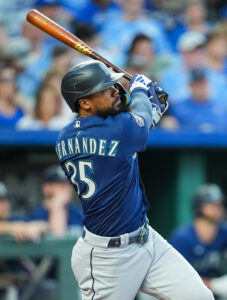 While Dodger Stadium has something of a pitcher-friendly reputation itself, it stands to reason that the 31-year-old Hernandez might get back on track in a new environment, and this one-year deal might reflect his desire to re-establish himself before committing to a longer-term contract. MLB Trade Rumors ranked Hernandez 12th on our list of the winter’s top 50 free agents and projected him for a four-year, $80MM deal, under the logic that the offseason’s lack of premium bats would still lead to a big contract for Hernandez even in the wake of an underwhelming 2023 campaign.
It could also be the case that Hernandez was open to a one-year pact specifically to join the Dodgers, as the outfielder is now joining arguably baseball’s most loaded lineup. Los Angeles already racked up plenty of runs in their 100-win 2023 campaign, and that powerful collection of position players has now added Shohei Ohtani to the DH spot and Hernandez to a corner outfield role.
Hernandez now gets to join a contender and possibly win a World Series ring, while ideally posting a better platform year that would allow him to score a big multi-year contract next winter. The Angels and Red Sox were two other teams known to be in the running for Hernandez’s services, and reporter Francys Romero and MassLive.com’s Chris Cotillo (X links) each relayed that those teams had interest in the outfielder on two-year deals. In Boston’s case, Cotillo wrote that the Sox were interested in something akin to a two-year, $28MM pact.
Hernandez now looks to be the Dodgers’ everyday option primarily in left field, though he could slide over to right field when a left-hander is on the mound (thus sending Jason Heyward to the bench). L.A. is still perhaps a little unbalanced with left-handed hitters in its first-choice lineup, yet Hernandez now joins Mookie Betts and Will Smith as big righty swingers, plus the Dodgers have other right-handed bats in Chris Taylor, Manuel Margot, and Miguel Rojas available off the bench.
Margot was also recently acquired as part of the Tyler Glasnow trade with the Rays but is known more for his defense than his bat. Taylor can fill in at multiple positions, and his hitting also became a question mark after a down year in 2022, though he did bounce back with a 104 wRC+ over 384 PA last season. Having Taylor as a supersub around the diamond is perhaps a better use for his skillset than a regular spot in left field, even if defensive metrics have been mixed at best about Hernandez’s outfield glovework during his career.
Hernandez has never drawn many walks during his career, and his high strikeout totals add even more swing-and-miss to a team that already saw Taylor, James Outman, Max Muncy, and even Ohtani rank well below the league average in strikeout rate in 2023. Still, the relative lack of contact is something of a minor flaw compared to the huge upside provided by the Dodgers’ overall offensive attack.
The deferred money will lower the luxury tax number on Hernandez’s $23.5MM salary, but his signing represents yet another big expenditure for a Los Angeles team that has basically lapped the rest of the league combined in offseason spending. Led by Ohtani’s $700MM deal and Yoshinobu Yamamoto‘s $325MM contract, the Dodgers have now spent slightly under $1.067 billion on free agents alone this winter, to say nothing of the extra money taken on when L.A. acquired and then extended Glasnow. As per Roster Resource, the Dodgers’ tax number for 2024 now sits at roughly $302.32MM, well over the Competitive Balance Tax’s highest penalty threshold of $297MM.
Even with the luxury tax bill continuing to escalate, there is little reason to think L.A. is done making moves, as starting pitching continues to be a need even after adding Yamamoto and Glasnow. More signings obviously can’t be ruled out, or the Dodgers could move more young talent in other trades for another starter. The sky is basically the limit for Los Angeles at this point, as the Dodgers have outpaced even their usual high-spending ways (with the many deferrals kicking the financial can down the road to some extent) in building a veritable superteam with Ohtani, Betts, Yamamoto, and Freddie Freeman among the cornerstones.
Reporter Moises Fabian (via X) was first with the news that Hernandez had signed with Los Angeles, and ESPN’s Jeff Passan (X links) reported details about the one-year term, the salary, and the deferred money.
Photo courtesy of USA Today Sports Images
Mets Sign Harrison Bader
TODAY: Bader’s $10.5MM guarantee breaks down as a $1MM signing bonus and a $9.5MM salary in 2024, according to Jon Heyman of the New York Post (X link). Up to $350K in incentive bonuses is also available.
JANUARY 5: The Mets have officially announced that they have signed Bader.
JANUARY 4: The Mets are signing Harrison Bader, reports Andy Martino of SNY. It’s a one-year deal worth approximately $10MM, per Martino. Joel Sherman of The New York Post reports the salary as $10.5MM for the Vayner Sports client.
 Bader, 30 in June, is an elite defensive outfielder who has had mixed results as a hitter and has also struggled to stay consistently healthy. Since his debut in 2017, he has racked up 52 Defensive Runs Saved, 68 Outs Above Average and a grade of 46.6 from Ultimate Zone Rating. All three of those figures place him in the top 10 among all outfielders in the league in that time. He’s also stolen 77 bases in 95 tries.
The offensive side of his game is less impressive, however. He’s hit .243/.310/.396 in his career for a wRC+ of 92, indicating he’s been 8% below league average overall. He has been above average at times, posting a wRC+ of 107 in 2018 and a 108 in 2021, but the past two years have been rough. He split 2022 between the Cardinals and Yankees, getting flipped for Jordan Montgomery at the deadline. He finished that year with a batting line of .250/.294/.356 and a wRC+ of just 85. His production fell even further in 2023, as he hit .232/.274/.348 on the year for a wRC+ of 70, going to the Reds late in the year as the Yankees looked to dump salary by putting Bader on waivers.
Health has also been a concern in each of the past three seasons, with Bader getting into 287 games over that stretch, never getting into more than 103 in any of those seasons individually. Those past three seasons have seen him hit the injured list due to a right rib hairline fracture, right foot plantar fasciitis, a left oblique strain, a right hamstring strain and a right groin strain.
The Mets have been planning for 2024 to be a sort of transition year, signing players to modest deals and making other depth moves as new president of baseball operations David Stearns evaluates the organization before likely ramping up aggressiveness next winter. Luis Severino, Joey Wendle, Jorge López, Austin Adams and Michael Tonkin have all joined the roster via one-year pacts, while the club also acquired Adrian Houser and Tyrone Taylor from the Brewers. They have claimed Penn Murfee, Zack Short, Tyler Heineman and Cooper Hummel off waivers and given out a number of minor league deals.
Bader will fit into that strategy while bolstering the outfield mix. His strong defense will allow Brandon Nimmo, whose defensive grades dipped in 2023, to spend a bit more time in a corner. Bader also has notable platoon splits, which could perhaps allow the Mets to deploy him selectively. He has hit .262/.330/.494 against lefties in his career for a wRC+ of 121, but .236/.304/.364 against righties for a wRC+ of 82. Nimmo hits from the left side but also fares well against pitchers of either handedness. DJ Stewart is a lefty hitter who mashes righties and is a poor defender to boot, meaning he and Bader could nicely augment each other’s weaknesses.
The outfield picture now includes Bader, Nimmo, Stewart, Taylor and Starling Marte. Nimmo and Marte have injury histories of their own, so perhaps the Mets will use the designated hitter slot to give out occasional rest days and keep everyone healthy over the course of the season.
MLBTR predicted Bader for a two-year, $20MM deal, perhaps with an opt out that would allow him to return to the open market with a better offensive platform. Instead, he lands a straight one-year pact at roughly the same average annual value. The one-year, $10.5MM framework is the exact same as the deal between Kevin Kiermaier, another glove-first outfielder, and the Blue Jays.
Despite the relatively modest offseason, the Mets are still way into competitive balance tax territory. Roster Resource has their CBT figure at $307MM, north of the fourth and final bracket of $297MM. As a third-time payor, they are set to pay a 110% tax on any spending above that line, meaning they could end up paying over $20MM for one year of Bader’s services. However, the tax payments aren’t calculated until the end of the year. If the Mets don’t find themselves in contention this summer, they could move some salary by trading players such as Pete Alonso or José Quintana and alter their final tax status.
KBO’s KIA Tigers Sign Wil Crowe
The Korea Baseball Organization’s KIA Tigers announced last night that they’ve agreed to terms with right-hander Wil Crowe on a one-year deal worth $800K guaranteed with incentives that could take the deal to $1MM (h/t to Dan Kurtz of MyKBO). Crowe spent the 2023 season with the Pirates but was outrighted off the club’s roster over the summer and released back in November.
Crowe, 29, was selected by the Nationals in the second round of the 2017 draft and made his debut with the club during the shortened 2020 campaign. The righty struggled during his cup of coffee in D.C. with a 11.88 ERA in 8 1/3 innings of work across three appearances. That would ultimately prove to be Crowe’s only appearances in a Nationals uniform, as the right-hander was shipped to Pittsburgh alongside fellow right-hander Eddy Yean on that offseason in a deal that netted the Nationals first baseman Josh Bell.
Upon joining the Pirates, Crowe was placed into the club’s rotation for the 2021 season. The assignment did not go well, as the right-hander posted a 5.48 ERA and 5.67 FIP in 116 2/3 innings of work across 26 appearances (25 starts). While he struck out a respectable 21.2% of batters faced in 2021, the right-hander struggled with his command and walked opposing hitters at a 10.9% clip. The struggles in the rotation prompted a shift to the bullpen in 2022, and Crowe found success in that role for much of the season.
Crowe posted a solid 3.12 ERA and 3.41 FIP in his first 51 appearances (66 1/3 frames) in 2022 as he strikeout and walk rates improved to 22.1% and 9.8%, respectively. Unfortunately, Crowe ran out of gas late in the year and struggled to a whopping 13.03 ERA over his final nine appearances, walking 11 and striking out just seven in 9 2/3 innings of work. The brutal finish to an otherwise solid season saw opposing hitters tee off against Crow to the tune of a .378/.500/.689 slash line as his ERA ballooned to 4.38 on the season. While he returned to the Pirates in 2023, the right-hander made just five appearances before being sidelined by shoulder discomfort and outrighted off the roster in July.
Going forward, the right-hander will get the opportunity to revitalize his career overseas. By joining the Tigers, Crowe will make more than the major league minimum while occupying one of three spots on the team the club can offer to foreign players. Outfielder Socrates Brito occupies another of those spots, while right-hander Thomas Pannone departed in favor of a minor league deal with the Cubs last month after spending the 2023 campaign with the Tigers overseas.
Mets Sign Sean Manaea To Two-Year Deal
The Mets announced the signing of left-hander Sean Manaea to a two-year contract. It’s reportedly a $28MM guarantee for the Boras Corporation client, who can opt out following the 2024 season. Manaea will make $14.5MM next season, leaving him with a $13.5MM call on the ’25 option.
Manaea, 32 in February, was a first-round pick by the Royals back in 2013 and was swapped to the A’s alongside Aaron Brooks in the 2015 deal that brought Ben Zobrist to Kansas City. The southpaw made his big league debut in Oakland early in the 2016 season and fashioned a solid rookie year for himself with a 3.86 ERA and 4.08 FIP across 144 2/3 innings of work. Manaea continued to provide mid-to-back end of the rotation consistency for Oakland over the next few seasons, and he owned a career 3.94 ERA (105 ERA+) and 4.15 FIP in 464 innings by the end of the 2018 season. Unfortunately, the lefty’s success was interrupted by shoulder surgery late in the 2018 campaign and he missed nearly all of 2019.
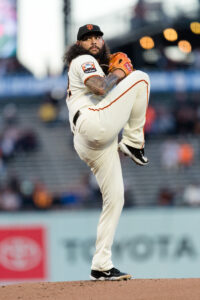
Upon his return to action late in the 2019 season, Manaea more or less picked up right where he left off. In 48 starts from 2019-21, the left-hander posted a solid 3.73 ERA (111 ERA+) with a strong 3.64 FIP. During this stretch, Manaea saw his strikeout rate climb considerably. Though he entered the 2019 season with a rate of just 19.2% for his career, the lefty struck out 24.8% of batters faced over the next three seasons while walking just 5.2% and generating a 43.8% groundball rate that was a near match for his 44.1% figure in the first three seasons of his career. With just one year left before the lefty would hit free agency and the team going nowhere in 2022, the A’s shipped Manaea to San Diego as the Padres in a four-player deal, netting a pair of prospects for the left-hander’s services.
Unfortunately, Manaea began to struggle upon departing Oakland. The lefty’s lone season in San Diego was something of a disaster as he struggled to a 4.96 ERA, 24% worse than league average by ERA+, with a 4.53 FIP. Manaea’s strikeout rate dipped to 23.2%, his walk rate climbed to 7.5%, and he generated grounders at a career-worst 38.2% clip. While the southpaw mostly looked like himself in the first half of the season, with a 4.11 ERA and 4.07 FIP in 100 2/3 innings of work (17 starts), that production fell off a cliff down the stretch as he allowed a whopping 6.44 ERA over his final 13 contests. Those struggles led Manaea to sign a two-year, $25MM deal with the Giants last offseason that gave him the option to return to the free agent market this winter.
At first, Manaea’s time with the Giants saw similarly disastrous results as his final outings with the Padres the previous year. The lefty was booted from the club’s rotation in early May and by mid-June had put together a 5.84 ERA in 49 1/3 frames as opposing batters teed off to the tune of a hefty .474 slugging percentage. However, as MLBTR’s Darragh McDonald noted in a recent profile of Manaea, the lefty added a sweeper to his repertoire at the end of May and found massive success with it. Hitters struggled to a .140/.161/.163 slash line against the pitch, swinging and missing at it 35.1% of the times it was thrown.
After adding the sweeper, Manaea quickly found more success with the Giants. He pitched to a solid 3.78 ERA with a fantastic 3.26 FIP in his final 81 frames of the season, and excelled in a late-season return to the rotation with a 2.25 ERA and 3.21 FIP in four September starts. After adding the sweeper midseason, Manaea punched out 24.2% of batters faced while walking 6.6% and generating grounders at a 44% clip reminiscent of his days in Oakland. While the majority of that success came in multi-inning relief, the lefty nonetheless flashed the form that made him a successful mid-rotation arm earlier in his career.
The strong late-season results led Manaea to decline his $12.5MM player option with the Giants and return to the open market. The decision worked out well for the southpaw, as his $28MM pact with the Mets comes with an AAV of $14MM and the ability to return to opt out of the deal once again next winter should he choose to do so. Manaea slightly outperformed the two-year, $22MM prediction MLBTR offered when ranking him 35th on our annual Top 50 MLB free agents list, earning an additional $3MM annually over the same term. The deal is mostly in line with the market for back-end starters this offseason, which has seen the likes of Nick Martinez ($26MM) and Kenta Maeda ($24MM) earn similar guarantees on two-year arrangements.
By adding Manaea, the club adds another veteran arm to a rotation mix that parted ways with both Max Scherzer and Justin Verlander at the trade deadline last summer. The southpaw figures to return to starting full-time in joining the Mets, slotting into the middle of the club’s rotation behind incumbents Kodai Senga and Jose Quintana and ahead of fellow offseason additions Luis Severino and Adrian Houser. The addition of Manaea allows the club to utilize the likes of Tylor Megill, Joey Lucchesi and Jose Butto as depth options at the Triple-A level or in the club’s bullpen. The same figures to go for lefty David Peterson when he returns from offseason hip surgery sometime next summer.
The Mets were already over the highest luxury tax threshold of $297MM prior to signing Manaea, That means his full $14MM is part of the Mets’ overage coming into 2024. Assuming they remain over the highest tax threshold all season, the club figures to pay $15.8MM in taxes on Manaea’s salary next season, meaning the club effectively figures to pay $29.8MM for the lefty’s services in 2024. Of course, that’s unlikely to be much of a concern for the Mets as the club paid over $100MM into the luxury tax this past season. With the club’s rotation mix now likely settled, the Mets figure to continue searching for help at third base, DH and in the bullpen going forward.
Jon Heyman of the New York Post reported the Mets were signing Manaea to a two-year, $28MM guarantee with an opt-out. The Associated Press reported the salary breakdown.
Reds Re-Sign Alan Busenitz
The Reds and right-hander Alan Busenitz agreed on a minor league deal earlier this week, according to the transactions log on Busenitz’s MLB.com profile page. Busenitz hit minor league free agency earlier this winter but now is set to return to Cincinnati for a second season in the organization.
A 25th-round pick by the Angels in the 2013 draft, Busenitz made his MLB debut with the Twins back in 2017, pitching out of the club’s bullpen for two seasons with a 4.58 ERA and 5.49 FIP. After being granted his release by the Twins prior to the 2019 season, Busenitz landed with the Rakuten Golden Eagles of Japan’s Nippon Professional Baseball. Busenitz’s first season in Japan was a dominant one, as he posted a sterling 1.69 ERA in 64 innings of work. Busenitz’s run prevention numbers regressed someone over the next two seasons, with a 3.51 ERA in 82 innings of work with a strikeout rate of just 18%, but he rebounded in 2022 to post a 2.14 ERA over 33 2/3 frames while punching out 21.1% of batters faced.
Busenitz’s strong 2022 campaign and generally solid NPB track record earned him a look from the Reds on a minor league deal last offseason. After posting a 2.83 ERA through 155 2/3 career innings overseas, the right-hander’s return to stateside ball saw him shuttled on and off the club’s 40-man roster throughout the season, though he ultimately posted a strong 2.57 ERA across his six appearances in the majors with five strikeouts against one walk in seven innings of work. His minor league numbers were also strong to start the season, as the righty posted a 2.48 ERA in 40 innings at the Triple-A level through mid-August. He struck out 25% of batters faced during that time, though his 12.8% walk rate stood out as a potential red flag.
The wheels came off for Busenitz after being sent to the minors for the final time in 2023 in late August. The right-hander struggled terrible to a 13.91 ERA in his final 11 minor league appearances last year, dragging his overall minor league numbers last season down to a mediocre 4.94 ERA in 51 innings. If Busenitz can avoid a late season slump in 2024, he could provide the Reds with a valuable depth arm in 2024 and help to support a relief corps that the club relied on for a whopping 652 1/3 frames last year, a figure that was second to only the Giants in the NL. Busenitz figures to compete with the likes of Fernando Cruz and Buck Farmer for a spot in the Reds bullpen this spring.
Angels Outright Adam Kolarek
The Angels have outrighted left-hander Adam Kolarek off their 40-man roster, the team announced. The move creates a 40-man roster spot for Zach Plesac, whose one-year deal with the Halos is now official.
Kolarek is a recent signing in his own right, joining the Angels on a one-year deal worth $900K back in November. Because Kolarek has been previously outrighted in his career, he would have the right to reject this assignment and re-enter free agency, though he would also be walking away from that $900K salary. It seems like this transaction might be something of a paper move that gives Los Angeles some roster flexibility but won’t impede Kolarek’s path to competing for a bullpen job this coming spring.
The groundball specialist has a 3.62 ERA over his 149 1/3 innings in the majors, a tenure that includes a World Series ring with the 2020 Dodgers. Kolarek had a 3.07 ERA over 108 1/3 innings with the Rays and Dodgers from 2018-20, though some control problems have both limited his results and his time in the majors altogether, as he has posted a 4.68 ERA over 32 2/3 frames since the start of the 2021 season. Kolarek spent that time with the Athletics, another stint with the Dodgers, and a brief four-game stretch with the Mets last season, plus some time in the Braves farm system without a big league call-up.
Angels Sign Zach Plesac
TODAY: The deal is official, and MLB.com’s Rhett Bollinger (X link) reports that Plesac signed a one-year contract worth $1MM in guaranteed money.
DECEMBER 30, 10:34pm: Murray reports that it’s a major league deal between the Angels and Plesac, though the specific terms of the contract are still not known.
10:14pm: The Angels are in agreement with right-hander Zach Plesac on a deal, according to a report from Jon Heyman of the New York Post. Robert Murray of FanSided first reported that a deal between the two sides was close.
Plesac, 29 next month, made just five starts for the Guardians last offseason before being demoted to Triple-A and eventually outrighted off the club’s 40-man roster in June. The right-hander posted a disastrous 7.59 ERA across 21 1/3 innings of work in those five contests, and his performance at the Triple-A level last season did little to inspire confidence: Plesac mustered just a 6.08 ERA with a 17.9% strikeout rate in 19 appearances at the level. While those brutal numbers surely make Plesac something of a surprising choice for any club to add to their pitching staff to those unfamiliar with the right-hander, it’s worth noting that Plesac had established himself as a solid middle-to-back of the rotation starter in the years prior to his disastrous 2023 campaign.
Initially drafted in the 12th round of the 2016 draft, Plesac made his big league debut as a 24-year-old back in 2019, when he made 19 starts in the majors for Cleveland. At the time, he had the look of a solid mid-rotation starter with a 3.81 ERA (126 ERA+) across 21 starts in his rookie season even as his 4.94 FIP and lackluster 18.5% strikeout rate both left much to be desired. Plesac then took a major leap forward during the shortened 2020 season. The right-hander posted an incredible 2.28 ERA that was 96% better than league average by measure of ERA+ and a strong 3.39 FIP.
During the truncated campaign, Plesac’s peripherals caught up to his performance as he struck out 27.7% of batters faced while walking just 2.9%. That strikeout-to-walk ratio placed Plesac between Brandon Woodruff and Clayton Kershaw for the 13th best figure among starters that year, while only Kyle Hendricks and Marco Gonzales allowed less free passes. The strong performance set him up to be a key cog in Cleveland’s rotation for years to come headed into the 2021 season.
Unfortunately for both the Guardians and Plesac, that future as a key piece of Cleveland’s pitching corps did not come to pass. Plesac instead reverted to his previous, low-strikeout rate form in 2021 and has stayed that way ever since. Unlike his rookie campaign in 2019, however, his results fell back down to Earth alongside his peripherals. The diminished results with a 4.49 ERA (90 ERA+) and a 4.59 FIP across 274 1/3 innings between 2021 and 2022. Although his walk rate remained at a strong 6.2% during that time, he struck out a measly 17.2% of batters faced. That figure was the fifth-worst punchout rate among starters with at least 250 innings pitched between the two seasons.
Of course, it’s worth noting that even in those 2021 and ’22 seasons where Plesac offered diminished production relative to his previous heights, the right-hander’s results were only around 10% below league average. A team can do far worse than 25 starts at that level of production for their fifth- or sixth-best starting option; 31 starters posted an ERA- of 110 or higher while throwing at least 100 innings in the majors last season, or more than one per team in the league. If the Angels believe Plesac’s 2023 campaign was an anomaly and his 2021-22 performance is a more accurate baseline, the right-hander could be a valuable depth option for a club that saw 14 different pitchers draw starts in 2023.
After losing Shohei Ohtani to the Dodgers in free agency earlier this month, the Halos have plenty of work to do as they look to retool their roster and return to contention in 2024 on the heels of back-to-back 89-loss seasons. Though the specific terms being discussed between Plesac and Anaheim are not yet clear, a deal for Plesac figures to be either a minor league pact or perhaps a relatively inexpensive major league deal that won’t prevent the Angels from making other additions to the roster, including in the rotation. Either way, Plesac has options remaining headed into 2024 and would likely compete for a spot in the Angels’ starting rotation this spring before potentially starting the season as depth at the Triple-A level should he be unable to secure a starting spot.