
Royals Acquire Tucker Davidson
The Royals acquired left-hander Tucker Davidson from the Angels in exchange for cash, the teams announced. Davidson, whom the Angels designated for assignment over the weekend, will be added directly to Kansas City’s big league roster. He’s out of minor league options.
Davidson, 27, was long one of the more promising farmhands in the Braves’ farm system and made his way to the Rangers by way of last summer’s Raisel Iglesias trade. That swap was more about the Angels shedding Iglesias’ salary than it was about adding either Davidson or veteran Jesse Chavez — also in the trade — but the organization had surely hoped to get Davidson back on track after a rough year in Triple-A.
Things haven’t played out that way, however. Davidson made eight starts with the Angels following the trade last year but struggled to a 6.87 ERA in 36 2/3 innings. A move to the bullpen this season didn’t bring about meaningful improvement; in 31 2/3 innings across 18 relief appearances, the lefty has a 6.54 ERA with a 20.9% strikeout rate and 7.4% walk rate. A .412 average on balls in play points to some bad luck, but Davidson has also seen his average fastball dip from 93.1 mph to 91.6 mph — despite the fact that he’s now been working in short relief stints.
Davidson provides the Royals with some nearly free depth on the pitching side of things at a time when the rest of their once-touted young arms have seen their development stall. None of Brady Singer, Daniel Lynch, Jackson Kowar, Kris Bubic, Asa Lacy or the other college arms on which Kansas City’s rebuild has been riding have established themselves as consistent big league starters. The Royals recently bought low on lefty Taylor Hearn in a deal with the Braves and will add Davidson to their pile of once highly regarded arms. It’s not clear whether they’ll use him in relief or in the rotation, but the Royals’ pitching staff could use help in both areas.
Diamondbacks Acquire Jace Peterson
The Diamondbacks acquired infielder Jace Peterson and cash from the A’s for minor league pitcher Chad Patrick, the clubs announced. Arizona had an opening on the 40-man roster after dealing Josh Rojas and Dominic Canzone in this afternoon’s Paul Sewald trade.
Peterson is largely a Rojas replacement. He’s a left-handed hitting infielder who splits most of his time between third and second base. Between Rojas’ departure and the recent injury to Evan Longoria, the D-Backs had lost some depth at the hot corner. Emmanuel Rivera is the primary starter. He’s a right-handed hitter who has been quite a bit better against southpaws, so Peterson makes sense as a matchup complement.
The 33-year-old joined the A’s on a two-year, $9.5MM free agent deal last winter. He’d been a roughly league average hitter — albeit with minimal exposure to left-handed pitching — over three seasons with Milwaukee. Peterson hasn’t maintained that form over a more regular role in Oakland. He’s hitting .221/.313/.324 with six homers over 324 trips to the plate.
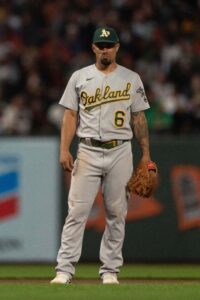
That below-average offense is largely thanks to a dip in batted ball quality. Peterson is still walking at an excellent 11.1% clip, while his 23.8% strikeout rate is in line with prior marks. Yet he’s making hard contact on only 28.4% of batted balls — well below the 35-36% range of the prior couple seasons.
Much of those poor numbers are attributable to a dreadful start. The 10-year veteran carried a meager .192/.289/.278 batting line into June. He’s a .254/.340/.377 hitter over the last two months with more typical batted ball metrics. The Arizona front office isn’t much concerned by the slow start and adds Peterson to the infield mix.
Peterson is playing on a $4.5MM salary for 2023, $1.5MM of which is still to be paid out. He’s due $5MM for next season. The A’s will reportedly pick up $2M of next year’s salary while Arizona takes on what remains of this year’s sum. The deal pushes Arizona’s projected payroll just shy of $123MM, per Roster Resource.
In return for their relatively modest free agent investment and willingness to pay down some of the deal, the A’s add minor league rotation depth. Patrick was a fourth-round draftee out of Purdue-Northwest in 2021. The 6’1″ righty carries a 4.71 ERA with roughly average strikeout and walk numbers (22.9% and 9.2%, respectively) over 19 starts in Double-A. Eric Longenhagen of FanGraphs suggested last month he profiled as a spot starter on the strength of his slider command. Patrick turns 25 in August and won’t be eligible for the Rule 5 draft until after next season.
Bob Nightengale of USA Today reported the financials.
Image courtesy of USA Today Sports.
Reds Acquire Sam Moll From Athletics
The Reds have acquired left-hander Sam Moll and international cap space from the Athletics, according to announcements from both clubs. The A’s will receive pitching prospect Joe Boyle in exchange. To make room for Moll on their 40-man roster, the Reds transferred Hunter Greene to the 60-day injured list.
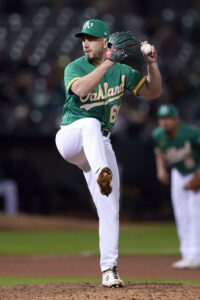
Moll, 31, has spent the past three years serving as an effective reliever in the Oakland bullpen. From 2021 to the present, he’s made 106 appearances, allowing 3.65 earned runs per nine innings. His 24.9% strikeout rate and 50.6% ground ball rate are both strong, though his 11.5% walk rate is a few ticks higher than league average.
2023 has been a strange season for him, as his 4.54 ERA is higher than the previous two campaigns despite so much stuff going right in terms of his under-the-hood numbers. His 27.1% strikeout rate, 11.2% walk rate and 52% grounder rate are each improvements over recent years. It seems a .340 batting average on balls in play and 68.2% strand rate have helped some extra runs across the plate, as his 3.25 FIP and 3.71 SIERA are both career bests.
MLBTR’s Steve Adams recently took a look at Moll’s season and highlighted his increasing use of a four-seam fastball. Dating back to mid-May, he has a 3.80 ERA in 23 2/3 innings, striking out 30.9% of opponents against an 8.2% walk rate, still getting grounders on over half the balls allowed in play. He has a 2.35 FIP in that time and a 2.97 SIERA.
The Reds have leapt into contention this year on the strength of their young core of position players, currently sporting a record of 58-49 that has them atop the National League Central, half a game ahead of the Brewers coming into today’s action. Left-handed relief was an obvious area for the club to add, since Alex Young has been their only southpaw reliever for much of the year. Reiver Sanmartin recently underwent UCL surgery and won’t be back any time soon. Moll is a long-term option for the Reds, as he is slated to finish this season with between two and three years of service time, meaning he can be retained for four seasons beyond the current campaign and isn’t even slated to reach arbitration until after 2024.
The A’s had little reason to hang onto Moll, despite those years of control. He didn’t establish himself at the big league level until his age-29 season and is now 31. The A’s have been leaning hard into a rebuild recently, with their 30-77 record the worst in the majors. Ownership is going to be focused on moving the team to Las Vegas in the immediate future and might not make the necessary investments to get the club back into competitive shape for a while.
Instead, they have exchanged him for Boyle, a 23-year-old right-hander who is listed at 6’7″ and 240 pounds. He was drafted by the Reds in the fifth round of the 2020 draft and got a brief professional debut in the lower levels of their farm system in 2021. He split last year between High-A and Double-A, tossing 100 2/3 innings over 23 outings with a 2.86 ERA. He struck out 36.5% of batters but also issued walks at an eyebrow-raising 20% clip. He’s made 19 more Double-A starts this year with similar results, striking out 31.5% of opponents while walking 19.4%, leading to a 4.50 ERA.
Both Baseball America and FanGraphs currently list Boyle as the #20 prospect in the Reds’ system. The book on him seems to be that he has excellent stuff but worrisome control, which matches the stat line. He has a triple-digit fastball and quality breaking stuff as well, but will need to greatly rein in his command in order to be effective.
Greene will now be ineligible to return until 60 days from his placement on the injured list due to hip pain, which was on June 18, officially keeping him out until August 17. He’s expected to make a rehab start this weekend with a planned return in late August.
Image courtesy of USA Today Sports.
Outrights: Calhoun, Ruiz
A pair of players recently designated for assignment have gone unclaimed on waivers, per the transaction log at MLB.com.
- The Yankees assigned outfielder Willie Calhoun outright to Triple-A Scranton/Wilkes-Barre. New York DFA him last Friday after his time on a minor league rehab stint lapsed. Calhoun hit .239/.309/.403 with five homers in 149 plate appearances between his contract selection in early April and the left quad strain that sent him to the injured list towards the end of June. He’s a .240/.300/.404 hitter in more than 1000 plate appearances over parts of seven big league campaigns. Calhoun has cleared waivers three times in his career, giving him the right to elect minor league free agency in lieu of an outright assignment.
- Diamondbacks reliever José Ruiz was outrighted over the weekend. The right-hander had lost his spot in the Arizona bullpen last Tuesday. Acquired from the White Sox in an April trade, Ruiz pitched 34 times with the Snakes. He allowed a 4.33 ERA with a below-average 19.8% strikeout rate over 40 2/3 innings. The hard-throwing hurler carries a 4.51 ERA across 219 1/3 career frames. Ruiz has multiple career outrights and sufficient service time to test free agency, though he’d forfeit the remainder of his $925K salary to do so. That seems unlikely, so he’ll presumably head to Triple-A Reno and try to get back on the big league roster before season’s end.
Cubs, Royals Swap Jose Cuas For Nelson Velazquez
The Cubs and Royals have exchanged reliever José Cuas for outfielder Nelson Velázquez, the teams announced. It’s a one-for-one swap.
Cuas, 29, bounced around the minors before cracking Kansas City’s roster last summer. He has made 92 appearances in middle relief over the past two seasons. The right-hander owns a 4.08 ERA across 79 1/3 career innings. He has seen a big jump in whiffs year-over-year, pushing his strikeout rate from a modest 18.9% as a rookie to 27.1% this season. He’s picking up swinging strikes on an above-average 13.3% of his offerings.
The University of Maryland product works with a sinker-slider mix from a lower arm slot. He doesn’t throw especially hard but has missed plenty of bats with his low-80s slider. He’ll step into the middle innings mix and can bounce between Chicago and Triple-A Iowa for a while. He still has two minor league options year remaining and won’t be eligible for arbitration until at least after the 2024 campaign.
In exchange, the Royals get a look at Velázquez. A right-handed hitting outfielder, he picked up some prospect attention on the strength of his power potential early in his career. The former fifth-round draftee struggled to a .205/.286/.373 line while striking out almost 32% of the time in 77 games as a rookie last season. He has mashed in a small big league sample this year but spent the bulk of the season with Iowa.
Over 330 trips to the dish there, the 24-year-old Velázquez owns a .253/.333/.469 batting line. He’s connected on 16 home runs but struck out in just under 30% of his plate appearances. He’s playing mostly center field but has generally been viewed as a better fit for a corner by prospect evaluators.
In recent years, the Royals have rolled the dice on a few upper level outfielders with above-average tools but swing-and-miss concerns. Kansas City has given looks to the likes of Edward Olivares and Drew Waters. Velázquez has a generally similar profile and will compete for reps in an uncertain outfield at Kauffman Stadium. He has one minor league option beyond this season and is at least two years away from arbitration.
Brewers Acquire Mark Canha From Mets
The Brewers have acquired first baseman/outfielder Mark Canha from the Mets, with pitching prospect Justin Jarvis going the other way, per announcements from both clubs. The Brewers opened a 40-man roster spot earlier when Jake Cousins was lost to the Astros off waivers. The Mets are paying Canha’s salary this year, with the Brewers only responsible for the prorated league minimum portion, though Milwaukee will be on the hook for the option or buyout when they make their decision on that.
This is the second offensive upgrade of the deadline for the Brewers, who already acquired Carlos Santana from the Pirates last week. It was reported earlier today that the club was still looking to upgrade its lineup and has done so here.
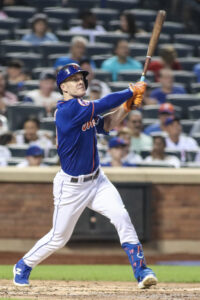
Canha, 34, spent many years as a solid outfielder for the Athletics before reaching free agency after 2021. He was able to secure himself a two-year, $26.5MM deal going into 2022, with an $11.5MM club option for 2024 that comes with a $2MM buyout. He hit .266/.367/.403 for the Mets last year, a line that translated to a wRC+ of 128, indicating he was 28% above league average.
This year, Canha’s production has slipped a bit, though he still an above-average hitter. His .245/.343/.381 line thus far on the season amounts to a 107 wRC+, seven percent better than par but a dip from a year ago. It’s possible there’s some bad luck in there, as his .279 batting average on balls in play is well below last year’s .309 mark, despite the fact that his barrel rate, hard hit rate and exit velocity have all gone up in 2023 relative to 2022. Perhaps he’s due for some positive regression, though he’s a solid hitter even without it.
Defensively, Canha is primarily an outfielder, though he has some versatility. He’s played more left field than anywhere else but he’s capable of playing all three outfield slots, in addition brief spells at the infield corners. Milwaukee has been using an outfield of Christian Yelich, Joey Wiemer and Sal Frelick in recent days. Yelich is having a terrific season whereas Wiemer’s contributions have been mixed. His defense has been highly rated and he has 11 steals on the year, but he’s hitting just .209/.289/.381 for a wRC+ of 82. Frelick was called up just over a week ago but has started his major league career with a .304/.438/.478 showing. Tyrone Taylor and Blake Perkins haven’t hit much in reserve roles.
Frelick played plenty of center field in the minors so perhaps he could move there with Canha taking right and Yelich in left. Frelick also hits left-handed and Wiemer right-handed, so perhaps they could platoon up the middle. Wiemer is hitting .282/.315/.576 against lefties but just .180/.280/.304 without the platoon advantage. The club also doesn’t have a regular designated hitter and could perhaps get all of these players in the lineup if that seems like the best option at the time. Though Santana figures to be the regular at first base, Canha’s ability to play there gives them some extra flexibility. Brian Anderson could also be in the mix at some point with Andruw Monasterio playing well at third, though the latter could also move over to second and bump out the struggling Brice Turang.
The Brewers are generally a fairly low-spending club, so the Mets’ willingness to pay down the deal surely appealed to them. They will have to decide on that option versus that buyout, which could depend on Canha’s performance to finish the year. The Brewers will still have Yelich, Frelick and Wiemer next year, along with hopefully getting Garrett Mitchell back after he’s missing most of this year due to shoulder surgery. There’s also the looming presence of Jackson Chourio, one of the top prospects in the league, who is currently in Double-A.
Next year’s outfield seems a bit more crowded, though perhaps first base is different. The Brewers are set to lose Santana to free agency, which could make their Rowdy Tellez situation significant. He can be retained for one more season via arbitration but has been terrible here in 2023, hitting .213/.285/.388 and is currently on the injured list, making him a non-tender candidate this winter. If Canha proves to be a good fit, perhaps they pick up that option and keep him around at first.
However it plays out down the road, it should help the Brewers now. They are currently 57-49, just half a game back of the Reds in the National League Central and currently in possession of a Wild Card slot. That’s largely come on the backs of their pitching, as the team as a whole has hit .232/.312/.377 for a wRC+ of 88, leading to their additions of Santana and Canha.
For the Mets, this is the latest in their deadline selloff, something that would have seemed shocking a few months ago. This winter, they ran up the biggest payroll in MLB history to try to build upon their 101-win season last year. But they disappointed badly enough that they have been aggressively selling. They’ve already flipped out Eduardo Escobar to the Angels, David Robertson to the Marlins, Max Scherzer to the Rangers and now this deal. In most cases, they have eaten significant money in order to effectively buy prospects. Canha is making a salary of $10.5MM this year, with about $3.5MM left to be paid out, the majority of which will be swallowed by the Mets.
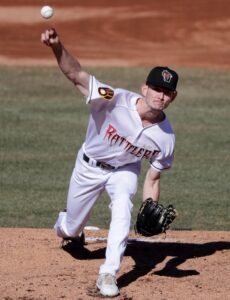
Their return for surrendering Canha and eating that money will be Jarvis. The 23-year-old right-hander was selected by the Brewers in the fifth round of the 2018 draft and has shown some signs of progress recently. Last year, he split his time between High-A and Double-A, throwing 141 innings with a 3.83 ERA, 25% strikeout rate and 11% walk rate. He returned to Double-A to start this year and posted a 3.33 ERA through 14 starts, striking out 28.6% of opponents while walking just 8.2%. He recently got bumped to Triple-A and has been shelled, but in a small sample of just three outings.
Based on those strong Double-A results, he was recently ranked the #12 prospect in the Brewers’ system by Baseball America, who highlighted his four-pitch mix as giving him a chance to stick in a big league rotation. He’ll give the Mets some upper level rotation depth, though he’ll need to be added to the 40-man roster this winter or else he’ll be available to be selected in the upcoming Rule 5 draft.
Before tomorrow’s deadline, the Mets figure to continue adding to their farm system with similar deals. Tommy Pham, Brooks Raley, Adam Ottavino, Carlos Carrasco, José Quintana and Omar Narváez all seem like possibilities. Justin Verlander has been speculated upon, though his large contract complicates things. The Brewers could also look to make further additions before tomorrow’s deadline, which is at 5pm Central.
Will Sammon of The Athletic first reported the Brewers were acquiring Canha. Andy Martino of SNY first reported that Jarvis was going the other way. Martino relayed that the Mets were paying down Canha’s salary and Sammon added that the Brewers would be on the hook for the buyout/option.
Giants Acquire AJ Pollock, Mark Mathias From Mariners
The Giants announced they’ve acquired outfielder AJ Pollock, utility player Mark Mathias and cash considerations from the Mariners. Seattle receives a player to be named later or cash in return. San Francisco optioned Mathias to Triple-A, placed Mike Yastrzemski on the 10-day injured list, and transferred right-hander John Brebbia to the 60-day injured list in corresponding moves.

Jon Morosi of MLB.com tweeted this afternoon that San Francisco was among the teams looking for right-handed hitting. They add a pair of righty bats in this trade, although neither is necessarily a surefire offensive upgrade.
Mathias, whom the Mariners acquired off waivers from the Pirates earlier this month, departs the organization without ever joining the big league roster. The 28 year old offers experience all around the diamond, though he has primarily played second and third base throughout his career. Initially drafted by Cleveland in the third round of the 2015 draft, Mathias has bounced around the league since making his big league debut with Milwaukee in 2020, with stints in Pittsburgh and Texas over the past calendar year.
In 68 career games at the big league level, Mathias’s .249/.323/.402 slash line is good for a slightly above average wRC+ of 104, though that overall line is primarily carried by an excellent 24-game stretch with the Rangers where he slashed a whopping .277/.365/.554 in 74 trips to the plate. While the journeyman has yet to stick in the big leagues for a significant period of time, that hot stretch in Texas and a career slash line of .289/.383/.458 at the Triple-A level indicate Mathias has the potential to be a useful big league utility piece.
The veteran Pollock, 35, has struggled considerably to this point in the season, slashing a brutal .173/.225/.323 in 138 plate appearances. He’ll provide the Giants with outfield depth as they look to weather injuries to Mitch Haniger and Yastrzemski, the latter of whom is expected to miss a couple weeks with a left hamstring strain.
Pollock had mashed left-handed pitching as recently as a season ago. He provides an outfield rotation option and experienced clubhouse presence alongside the presumptive starting group of Michael Conforto, Luis Matos, and Austin Slater, at least while Yastrzemski gets healthy.
The Mariners continue to move some short-term players following this afternoon’s trade of closer Paul Sewald to Arizona. The player to be named headed back to Seattle figures to be a relatively minor piece. Of greater import is that San Francisco might be taking on some of Pollock’s $7MM salary. The precise amount of the cash being sent from Seattle to the Giants remains unreported. Pollock is owed around $2.33MM through season’s end, at which point he’ll be a free agent.
Jeff Passan of ESPN first reported the Giants were finalizing a deal for Pollock and Mathias. Daniel Kramer of MLB.com reported the M’s could receive a player to be named later.
Image courtesy of USA Today Sports.
D-Backs Acquire Paul Sewald
The Diamondbacks have added a key arm to the bullpen. Arizona and Seattle announced a trade sending Paul Sewald to the Snakes for infielder Josh Rojas, rookie outfielder Dominic Canzone and infield prospect Ryan Bliss.
Sewald was one of the top bullpen arms available. The right-hander has broken out as one of the game’s best relievers since landing in Seattle two and a half years ago. A minor league signee over the 2020-21 offseason, Sewald cracked the Seattle roster by May ’21. He had an excellent run in the Pacific Northwest, pitching to a 2.88 ERA over 171 2/3 innings. He kept his ERA at 3.06 or better in all three seasons.
He has paired that run prevention with very strong swing-and-miss numbers. Sewald punched out just under 35% of opposing hitters with Seattle. That includes a 35.5% strikeout percentage with a 2.93 ERA over 43 innings this year. His fastball only sits in the 92-93 MPH range but has well above-average spin despite a lower arm angle. That movement profile has translated into big whiff tallies. Sewald has gotten swinging strikes on over 14% of his offerings in each of the past three seasons.
Among 176 relievers (minimum 30 innings), Sewald ranks 10th in strikeout rate and 39th in whiffs. His 8.3% walk rate is acceptable and he has dominated hitters from both sides of the plate. Sewald is a fly-ball pitcher who has given up some homers in past seasons, but this year’s 1.05 HR/9 rate is almost exactly league average for a reliever. That well-rounded, consistent production quickly pushed him up a strong bullpen hierarchy. He has worked as the M’s primary closer this season, collecting 21 saves in 24 attempts.
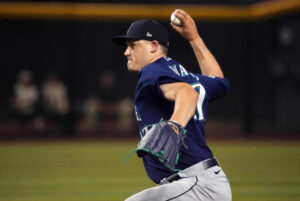
Arizona has searched for that kind of reliability late in games for a while. The Snakes had one of the league’s worst bullpens in 2021-22. It hasn’t been quite so disastrous this season, thanks in part to free agent additions of Andrew Chafin, Miguel Castro and Scott McGough that have all worked out reasonably well. The D-Backs didn’t have anyone of Sewald’s caliber to lock things down, though. Kevin Ginkel and Drey Jameson (the latter of whom is out for a while with an elbow injury) are the only Arizona relievers with a sub-3.00 ERA. Left-handers Chafin and Kyle Nelson are the only pitchers with a strikeout rate above 30%.
Bolstering the pitching depth has been a priority for an Arizona club that has dropped eight of its last 10 to hold a 56-50 record. The D-Backs have fallen out of the projected playoff picture after leading the NL West for a good chunk of the season. They’re only a game out of the final Wild Card spot, though. Sewald will presumably step into the ninth inning for skipper Torey Lovullo. USA Today’s Bob Nightengale tweets that Arizona could look for another bullpen addition and is unsurprisingly still searching for rotation help over the next 24 hours.
Seattle’s position in that standings isn’t that dissimilar from Arizona’s. The Mariners are 54-51 and 4.5 games out in the AL Wild Card picture. They’re certainly not buried, though president of baseball operations Jerry Dipoto acknowledged two weeks ago the club hasn’t played well enough to be aggressive deadline buyers. They’re reportedly open to offers on the likes of Teoscar Hernández and Ty France and have given some consideration to dealing from their stock of talented young starting pitching.
The primary purpose in all those talks is to subtract from an area of surplus to add controllable offensive help. The bullpen certainly qualifies as a strength. Seattle relievers are fourth in ERA and trailing only Houston in strikeout rate. Sewald was a big part of that success, of course, but the likes of Andrés Muñoz and Matt Brash are thriving in high-leverage capacities. Muñoz seems likely to take over the ninth inning with Sewald headed out.
In exchange, Seattle nets the kind of upper level hitting talent they’d been seeking. There’s perhaps no clear “headliner” of the deal, but all three players could factor into the mix in relatively short order. Rojas and Canzone have big league experience, while Bliss had recently worked his way to Triple-A.
Rojas, 29, is the most well-known of the trio. Originally acquired in the Zack Greinke 2019 deadline blockbuster with Houston, Rojas developed into a productive bat-first utility option. The left-handed hitter combined for a .266/.345/.401 batting line in over 1000 plate appearances between 2021-22. He’d never rated especially highly as a defender at any stop but had enough flexibility to move throughout the infield and into the outfield corners.
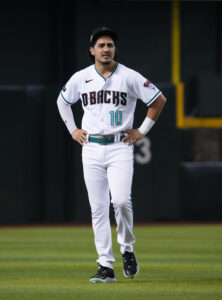
While not a franchise building block, Rojas looked like a quality role player. However, he has had a difficult 2023 campaign that pushed him into more a depth capacity of late. Rojas has hit only .228/.292/.296 over 216 trips to the plate and remains without a home run on the season. A walk rate that had sat north of 10% is down to 8.3%, while his strikeouts are up a few points to 23.6%. The D-Backs optioned him last month; he spent the bulk of his Triple-A time on the minor league injured list before returning to the majors when Evan Longoria went on the IL over the weekend.
Rojas has primarily played third base in Arizona but has a clearer path to playing time at the keystone in Seattle. Kolten Wong’s struggles have left the M’s with very little out of second base this season. Righty-swinging José Caballero has had a fine debut campaign but is nearly 27 and was never a top prospect. Rojas adds a left-handed complement to Caballero and Dylan Moore and could occasionally see some reps behind Eugenio Suárez at third base.
It’s a buy-low flier for Seattle that also helps to balance the trade financially. Sewald is making $4.1MM this season, his second-to-last year of arbitration. Around $1.37MM remains to be paid out. Rojas is playing on a $2.6MM arbitration salary, his first of four arb years as a Super Two player. He’s still owed around $867K through season’s end. Arizona will take on roughly $500K in salary, thereby preserving a decent amount of financial flexibility for further deadline pickups.
Rojas could be a non-tender candidate after the season, though he’ll get a couple months to try to secure his roster spot at T-Mobile Park. He could be joined immediately by Canzone, a left-handed hitting outfielder nearing his 26th birthday. He has struggled over his first 41 big league plate appearances but has had a monster year in Triple-A. Canzone mashed at a .354/.431/.634 clip with 16 homers through 304 trips to the dish in Reno, making him one of the top hitters even in a favorable offensive environment.
Canzone is limited to the outfield corners but clearly an accomplished minor league hitter. He could factor into the short-term left field mix. Jarred Kelenic is out into September after breaking his foot, while AJ Pollock is on his way to San Francisco. Canzone still has all three minor league option years remaining.
Bliss is not yet on the 40-man roster. A 2021 second-round pick of Auburn, he’s a right-handed hitting second baseman. Bliss struggled in his first full professional season but had a monster .358/.414/.594 showing in Double-A this year. That earned him a spot in the Futures Game and a recent bump to the top minor league level. Baseball America had ranked him the #16 prospect in a strong Arizona farm system, crediting the 5’9″ infielder with a hit-over-power approach and quality range as a defender.
Arizona gets a year and a half of control over the impact late-game arm they’ve been seeking for some time. Seattle is clearly open to reshuffling some veteran talent on the roster but is following through on their stated goal of adding upper level hitting. The M’s aren’t completely throwing in the towel on 2023 while adding more controllable talent.
Nick Piecoro of the Arizona Republic first reported the D-Backs were making progress on a Sewald trade. Jeff Passan of ESPN reported the deal as being finalized, while Piecoro first had the return of Rojas, Canzone and Bliss.
Images courtesy of USA Today Sports.
Cubs Acquire Jeimer Candelario
Jeimer Candelario is headed back to Chicago. The Cubs announced they acquired the switch-hitting third baseman from the Nationals for prospects DJ Herz and Kevin Made. The Cubs had an open 40-man roster spot after outrighting Edwin Ríos yesterday.
Candelario was one of the best rental hitters on the market after a strong four months in Washington. It was exactly what the Nats had envisioned when signing him to a one-year, $5MM free agent contract last winter.
Originally signed by the Cubs as an amateur more than a decade ago, Candelario made his big league debut with Chicago. His first stint on the North Side was short-lived. He played in five games in 2016 and 11 more the following season before being dealt to the Tigers in the Justin Wilson trade, as the Cubs pushed in young talent for veterans while trying to defend their World Series title.
Candelario got his first extended run down the stretch in Detroit and was an everyday player by the following season. He was a below-average regular for the first two years but took a significant step forward in 2020. Candelario carried that over a full schedule the following season, when he led the majors in doubles. Between those two seasons, he hit .278/.356/.458 in more than 800 trips to the plate.
As was the case for essentially everyone in the Detroit lineup, things fell apart in 2022. Candelario slumped to a .217/.272/.361 line over 124 games. The Tigers non-tendered him in lieu of paying around $7MM for his final season of arbitration eligibility. While it’s a move Detroit probably wishes they had back in hindsight, the subsequent $5MM free agent deal indicates the market didn’t value Candelario as a $7MM player just a few months ago.
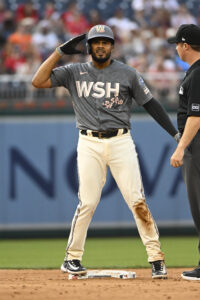
The 29-year-old has certainly elevated his stock since that point. He has more or less regained his 2020-21 form. Candelario hit .258/.342/.481 through 419 plate appearances with Washington. He connected on 16 homers and 30 doubles, ranking fifth in the majors in the latter category. He’s walking at a roughly average 8.6% clip against a decent 21% strikeout rate.
Candelario has been better from the left side of the plate this season, a departure from his early-career work. He’d typically fared better against southpaws but now has similar platoon splits overall. Since the start of 2020, he’s a .253/.334/.438 hitter against right-handed pitching and owns a .256/.330/.437 line versus lefties. That well-rounded offensive production adds to a Chicago lineup built mostly on strong depth as opposed to impact talent aside from Cody Bellinger.
While his profile has mostly been built on offense, Candelario has also gotten solid reviews from public metrics for his third base defense this year. Defensive Runs Saved has pegged him two runs above par in 834 1/3 innings of hot corner work, while Statcast has estimated him as four runs above average. Candelario had gotten mixed to below-average marks throughout his time in Detroit but should at least be a solid gloveman in Chicago.
He has some experience at first base as well but hasn’t played anywhere aside from third since 2020. The Cubs could plug him in at either spot but will presumably use him more often at the hot corner. Nick Madrigal, Patrick Wisdom, Christopher Morel and Miles Mastrobuoni have been part of a revolving door at the position. Morel has raked but isn’t a good defender. Wisdom hits for power but doesn’t consistently put the ball in play; Madrigal has the opposite profile. Candelario is the most balanced of the group.
It’s a modest financial addition for Chicago. Candelario is due around $1.67MM in salary through year’s end. He’d tack on another $200K in incentives if he reaches 600 plate appearances, though that’s also fairly modest. As calculated by Roster Resource, the Cubs have a luxury tax number a bit north of $228MM.
That’s a little less than $5MM shy of the $233MM base threshold. It had seemed the Cubs were trending towards staying below that mark and selling away veteran pieces, but a recent eight-game win streak completely changed the calculus. The addition of one of the top rental hitters available affirms their status as buyers, which had already become clear when they took Bellinger off the trade market yesterday. They also added some middle relief depth tonight in acquiring José Cuas from Kansas City and figure to look for more impactful bullpen upgrades in the next 24 hours.
Candelario’s time in Washington proved fruitful for both parties. He revitalized his stock and now looks positioned for a much more lucrative free agent trip. He’ll be one of the top hitters available in a below-average class for bats. The Nats never seemed likely to issue him a qualifying offer, but the trade officially takes that off the table. Players dealt midseason are ineligible for the QO, so Candelario will hit the market unencumbered by draft compensation.
The club adds a pair of players to a continually improving farm system. Made, 20, is a right-handed hitting shortstop from the Dominican Republic. He didn’t appear on Chicago’s midseason top 30 prospects at Baseball America but ranked 19th on the organizational list at FanGraphs. The outlet credited the 5’9″ infielder with roughly average tools and suggested he has an outside shot to be an everyday shortstop. He’s hitting .240/.328/.355 over 300 plate appearances with High-A South Bend. He hit just three homers there but walked at a solid 10% clip against a lower than average 18% strikeout rate.
Herz, 22, has gotten 14 starts with Double-A Tennessee. The former eighth-round pick owns a 3.97 ERA across 59 innings, striking out an excellent 30.4% of opponents but walking 14% of batters faced. He was 19th among Cubs’ prospects at Baseball America and 22nd at FanGraphs. He sits in the low 90s with his fastball and has an excellent changeup, but the obvious control woes lead most evaluators to point to a bullpen future. There’s little harm for the Nats in letting him continue to start in the minors. Herz and Made will have to go on the 40-man roster this offseason to stay out of the Rule 5 draft.
It’s the first of likely multiple deadline deals for the rebuilding Nats. Candelario was their most obvious trade chip. Middle reliever Kyle Finnegan could be on the move as well. Washinton’s top realistic trade piece would be outfielder Lane Thomas, though it remains to be seen how eager they are to deal him.
Michael Cerami and David Kaplan of Bleacher Nation reported the Cubs and Nationals were in discussions about Candelario. Ken Rosenthal of the Athletic first reported Candelario was being traded to Chicago. Cerami was first with Herz and Made going back to Washington.
Image courtesy of USA Today Sports.
Rays Option Taj Bradley
The Rays are optioning right-hander Taj Bradley to Triple-A Durham, reports Marc Topkin of the Tampa Bay Times (Twitter links). Reliever Ryan Thompson will be recalled to take his roster spot for now, though a spot will soon be required for Aaron Civale, having been acquired from the Guardians earlier today. The Rays have now announced the moves. The club also selected righty Erasmo Ramírez yesterday, optioning righty Calvin Faucher in a corresponding move.
Tampa has dealt with a number of injuries to its rotation this year, with Jeffrey Springs and Drew Rasmussen both out for the remainder of the season due to their injuries. Josh Fleming is also on the 60-day injured list and has an uncertain timeline. That has seen them roll with a rotation of Tyler Glasnow, Shane McClanahan, Zach Eflin and Bradley of late. Eflin recently required an MRI on his left knee, which was an ominous development given his history of knee issues, but he’s been cleared to start Tuesday.
Around that foursome, the Rays have been occasionally deploying some bullpen games, but they added Civale into the mix with a trade today. That could have still left room for Bradley to stick around, but it seems that Tampa would prefer to send him to Durham to get some work in there. He came into this season as one of the top prospects in the league but hasn’t quite made a smooth transition to the big leagues. He has allowed 5.67 earned runs per nine innings through 16 starts so far, though there seems to be a lot of bad luck in there. He’s striking out 30% of opponents while walking 7.9%, both of those numbers being better than league average, but his .342 batting average on balls in play and 64.8% strand rate and both on the unlucky side.
ERA estimators such as his 4.15 FIP and 3.53 SIERA paint a nicer picture of Bradley’s debut season thus far, but he will be bumped off the active roster nonetheless. This won’t impact him from a service time perspective, as he had already been optioned a few times earlier in the season and wasn’t going to get a full year of service time here in 2023 even before this move. With tomorrow’s trade deadline looming, there’s still a chance for the Rays to add another starter, with hurlers like Jack Flaherty, Michael Lorenzen and Eduardo Rodriguez just some of those thought to be available.
But for now, it seems the rotation spot will go to Zack Littell, as Topkin relays the righty will start on Friday. Littell had been working as a reliever earlier in the year but recently made some starts as an opener, with his workload gradually increasing. Seven of his last eight outings have been longer than a single inning and he tossed five frames in yesterday’s contest, allowing two earned runs on eight hits, striking out four while walking none.
He was a starter in the minors earlier in his career but has been a primary reliever since 2019. It’s unclear if the Rays plan on him moving to a starter’s role permanently, but it wouldn’t be the first time they went down this road. Both Springs and Rasmussen were working out of the bullpen before the Rays started stretching them out, successfully moving them both to rotation jobs before their current injuries. On the season as a whole, Littell has a 4.85 ERA in 29 2/3 innings, though with a .376 BABIP, 22.7% strikeout rate, 3.8% walk rate and 46.9% ground ball rate.
Ramírez, 33, signed a one-year deal with the Nationals in the offseason. But he posted a 6.33 ERA though 23 appearances and got released, landing with the Rays on a minor league deal. He worked a multi-inning role for the Bulls, tossing 23 innings over nine appearances with a 5.87 ERA. His .383 BABIP and 68% strand rate point to some bad luck while his peripherals were strong, with a 28.7% strikeout rate, 7.9% walk rate and 45.2% ground ball rate.