
Butterfly Effects & The Jason Heyward Signing
‘Twas the winter of 2015-16. Jason Heyward wasn’t the best-available player in a well-stocked free agent class. But he was a high-quality performer and still tantalizingly young (26). While hardly a traditional corner outfield star due to his middling power, Heyward was well-established as a quality hitter and superlative defender and baserunner.
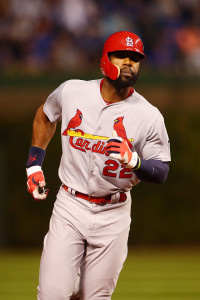
The debate raged long before the offseason arrived: how much can you really pay for a player like this? All agreed he was good. But the traditionalists howled at the notion of a right fielder who hadn’t even hit forty home runs over the prior three seasons landing a premium contract. The analytically minded countered that, well, runs are runs regardless of how they’re added or prevented. Heyward was a 6.9 rWAR / 5.6 fWAR performer in 2015. With exceptional glovework and a steady OBP, Heyward seemed to be a high-floor player who might have some ceiling as well.
[RELATED: Jason Heyward & Chris Davis Have Two Of The Worst Free Agent Contracts … In Different Ways]
We predicted that Heyward would earn $200MM over a full decade — second-most in a rather well-stocked free agent class. That didn’t quite happen, but the real deal was actually more favorable to Heyward than the one we had guessed. He landed $184MM over an eight-year term and also got two opt-out opportunities (which was worth something at the time the deal was struck, even if they weren’t exercised). The deal delivered a nice $23MM AAV over quite a lengthy term.
Now that we’re all reacquainted with the contract as it turned out … let’s try to remind ourselves of the state of play in the market when it was struck. At the time of the pact, there were hints that the Cubs may not have been the high bidder. The Nationals supposedly had the top offer on the table, though we may presume it’d have been deferred. The incumbent Cardinals were also known to be in pursuit. And the Angels and Giants were still involved in rumors right up until the end.
So … what would things have looked like if Heyward had landed elsewhere?
Nationals
Whoa … would the Nats have hoisted the commisioner’s trophy last fall had they signed Heyward? That’s obviously not something that can be assessed fairly given the innumerable butterfly effects potentially at play. But the counter-factual does actually present a pretty similar situation to what actually happened in 2019. In right field, the Nationals got solid but hardly otherworldly work out of Adam Eaton — another left-handed hitter whose skillset is rather similar to that of Heyward.
More interesting to consider is the fact that the Nats probably wouldn’t ever have dealt for Eaton had they already acquired Heyward. Eaton landed in D.C. after the team missed on its effort to acquire Chris Sale for the White Sox. The swap cost the Nationals pitchers Lucas Giolito (reimagine 2019 with him on the staff), Reynaldo Lopez, and Dane Dunning. Of course, Eaton has been much more affordable than Heyward this whole time. Who knows if the Nats would’ve inked Patrick Corbin last winter had Heyward been on the books.
Ultimately, the Washington organization has deep enough pockets that it would’ve been just fine with an underperforming $23MM salary on the books — not unlike the Cubs. At the same time, also not unlike the Cubs, the Nats have been focused on getting and staying just under the luxury tax line, so this deal would’ve been a constant nuisance that would’ve interfered with any number of lower-cost veteran signings and acquisitions over the past several seasons.
Cardinals
Much like the Nats, the Cards eventually made a big deal for a somewhat similar player. One winter after missing on Heyward (despite reportedly offering as much or more as the arch-rival Cubbies), the Redbirds reversed the talent flow by inking former Chicago center fielder Dexter Fowler. The switch-hitting Fowler wasn’t nearly as expensive as Heyward, but his own five-year, $82.5MM deal has worked out about as poorly. The Fowler contract probably wouldn’t have been signed had Heyward been around, but this is probably to the Cardinals’ benefit since the Heyward deal features a bigger and longer hit. Perhaps the Cubs would’ve ended up retaining Fowler had they missed on Heyward. You could argue over the details, but it’s probably not far from a wash.
Of course, the Cards went without either of those players in that 2016 campaign … which helped open the door to the memorable shooting star of Jeremy Hazelbaker. It’s tough to say whether there were significant long-term effects on the way the Cards’ outfield picture developed. Going without Heyward in 2016 opened more playing time for outfielders Randal Grichuk, Stephen Piscotty and, to a lesser extent, a pre-breakout Tommy Pham. Perhaps one or more would’ve been shipped out of town earlier had Heyward been retained. Maybe Pham’s breakout would’ve occurred elsewhere, thus eliminating his successive trades (to the Rays and then to the Padres), though it’s impossible to say that with any degree of confidence.
Angels
We don’t know whether the Halos were really strong pursuers of Heyward, but it’s worth considering what might’ve been. The club ended up foregoing any big free agent splashes that winter. (It had already acquired Andrelton Simmons.) Adding Heyward surely wouldn’t have forestalled the string of four-straight losing seasons, given the way he has played. But it might’ve prevented the Angels from eventually trading for and then extending Justin Upton. And it certainly could’ve gummed up this winter’s signing of Anthony Rendon.
Giants
Likewise, it’s not entirely clear that the Giants were heavily involved in bidding up Heyward’s price, but the team clearly had some real interest. The San Francisco org splashed a lot of regrettable cash that winter regardless. It had already inked Jeff Samardzija and ended up signing Johnny Cueto after Heyward landed with the Cubs. The Giants did find a rather direct alternative to Heyward, inking Denard Span to a three-year, $31MM pact. That didn’t quite go as hoped but was hardly a significant disaster. Suffice to say that having Heyward on the books would’ve further complicated an already difficult stretch for the organization.
Cubs
Ah, yes. The Cubs. Lauded at the time by some for landing Heyward for less than others would’ve paid — really, the deal was probably right at the market rate, give or take — the Cubbies have obviously not benefited from the signing.
Remember how we started this post? The debate over paying out a non-slugging right fielder. Consider these contemporaneous comments. On the one hand …

On the other …

To some degree, neither turned out to be right. And the lack of power was largely beside the point. Heyward did top twenty long balls in 2019, but he was still an average-or-worse hitter for the fourth-straight year. It was certainly his best offensive season for the Cubs … but also the team’s own worst effort in this four-year span. No, the Cubbies haven’t exactly dominated the National League over the span of this deal, but they did capture that elusive crown in 2016.
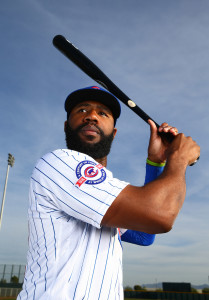
So does the World Series justify it? Eh … this isn’t as clean an analysis as the Gleyber Torres-for-Aroldis Chapman “you do what it takes!” situation. Heyward was terrible in 2016 and even worse in the postseason, when he contributed just five hits and a walk over fifty plate appearances.
There’s no two ways about it: the deal hasn’t worked out at all as hoped. Heyward has by all accounts worked hard and been a total class act, as ever. And he has trended back up with the bat, which is somewhat promising with regard to the final three seasons of the deal. But the net return to the Cubs — 7.1 rWAR and 6.0 fWAR — has not remotely justified the outlay.
Anybody that has watched the Chicago organization operate these past two winters can see the effects of this contractual miss. The Cubs have decided not to move past the luxury tax line, so every dollar going to Heyward has been another buck that couldn’t be allocated elsewhere. Of course, the Heyward whiff isn’t the only one that has stung in recent years, as MLBTR’s Tim Dierkes recently examined. And it’s worth emphasizing the he’s still just 30 years of age and still capable of contributing. It’s not outside the realm of possibility that he could even morph back into a quality regular. All things considered, this contract certainly didn’t single-handedly obstruct the Cubs’ dynasty-that-wasn’t … but it certainly played a leading role.
Photos courtesy of USA Today Sports Images.
Video: The Best Extension Candidates For Each NL East Team
Who is the best extension candidate for the Mets, Nationals, Braves, Marlins, and Phillies? Jeff Todd suggests the Polar Bear, Childish Bambino, and a few players you might not expect in today’s video.
Jump to a team:
- Braves – 1:23
- Marlins – 3:17
- Mets – 4:57
- Nationals – 7:07
- Phillies – 9:36
Latest On Orioles-Nationals MASN Television Dispute
The television rights fee battle between the Orioles and Nationals is still generally on track for potential resolution — at least, in significant part. But the ever-expanding saga has grown so massive that it now comes with a range of complications. Its ultimate outcome will ultimately carry widespread implications, especially in the D.C.-Baltimore region.
Dan Connolly and Britt Ghiroli of The Athletic (subscription link) recently examined the underlying dispute and its more recent developments. It’s a worthwhile overview of a contentious issue that has turned an acronym for the Mid-Atlantic Sports Network into the name of a monster with a mind of its own: The MASN Dispute.
To be clear, there really isn’t a new development on the legal or the negotiation front. The teams are still at an apparent standstill while they await the outcome of the latest round of litigation.
In terms of the convoluted legal roadmap, it’s best to focus on where things are now rather than looking back … to the extent that’s possible. Last summer, a court upheld an arbitration award in the Nationals’ favor. That judicial decision is presently being appealed. If it’s not upheld, we’re back to square one. If it is upheld, in theory, the initial dispute will in large part be resolved.
Unfortunately, there’s quite a bit more to the situation. The Orioles have injected new legal claims and even launched a separate arbitration proceeding. The initial five-year TV rights fee period has already passed, so even as it remains under dispute there’s another one to consider. And as Connolly and Ghiroli write, there are other complications: tens of millions in legal fees and costs that continue to pile up; the need for the Nats to repay the league a $25MM loan; and a need to recalculate and distribute back revenue-sharing payments from the D.C. organization.
The aforementioned post documents the genesis of the dispute and its connection to the fortunes of these two organizations. The O’s benefited from a near-term cash injection as they controlled MASN and broadcast Nats games at a bargain rate. But the long-term concerns that the Baltimore organization raised at the outset seem largely to be coming to fruition. The Nationals are turning in a consistently competitive product and just captured the 2019 World Series, creating a rosy outlook for drawing new fans from the broader capital region. Meanwhile, the O’s are gasping for air after going all out to take advantage of those aforementioned competitive years, trotting out a low-grade roster and seeing franchise-low attendance figures.
The major question remains whether the two clubs can both thrive at the same time in the same geographic region. They both drew well in successful 2014 seasons, but has the balance shifted south? Connolly and Ghiroli discuss the recent downturn in the fortunes of the Orioles and concerns about the team’s profitability should the Nationals receive a full market rate for their TV rights. There’s no indication at the moment that the O’s are in financial trouble or can’t operate just fine in Baltimore, but the organization’s long-term outlook isn’t clear — particularly with the Nats’ draw creeping northward.
This surely isn’t a zero-sum game; the teams play in separate leagues and could in theory benefit from a friendly rivalry. Cooperation between these teams seems like the best path to mutual success. Orioles owner Peter Angelos and Nationals owner Ted Lerner have handed the operations of their respective franchises off to their sons, which presents some hypothetical opportunity to set aside personal misgivings. But we haven’t seen evwidence of a detente just yet. A return to competitive baseball from the Orioles would obviously help. Baltimore GM Mike Elias says he sees the D.C. organization as a model to follow in building back up the roster.
So … how to sum things up? There’s reason to expect some clear decision points from the courts that will bind both parties. And there are some conceivable pathways to a “more business-like way” of determining rights fees in the future (to reference the words of commissioner Rob Manfred). But it remains largely unclear precisely when and how these ever-broadening relationship problems will be resolved.
Nationals Release Hunter Strickland, David Hernandez
The Nationals released right-handers Hunter Strickland and David Hernandez today, as announced by their PR department via Twitter.
Strickland, 31, was acquired by the Nats at last year’s trade deadline. The move was notable for two reasons: in part because he’d made only 4 appearances for the Mariners at the time of the deal after coming back from injury, but more notably because of the interpersonal implications of adding Strickland to the clubhouse given his, shall we say, complicated history with the club (recapped here by Scott Allen of the Washington Post).
Of course, if there were any ill effects, it didn’t hinder the club as they went on to win the World Series, and the Nats spoke highly of Strickland during his time in Washington. Strickland, for his part, contributed as a middle-innings reliever when the Nats were most desperate for one, putting up a 3.14 ERA in August. Unfortunately, the good times did not last for Strickland, whose season came off the rails as he finished the year with a less-than-impressive 5.14 ERA/6.31 FIP as the Nats turned to Daniel Hudson, Sean Doolittle, Tanner Rainey and Fernando Rodney for important innings down the stretch.
A propensity for surrendering long balls eventually cost Strickland his spot on the playoff roster. Strickland gave up 3 home runs in two appearances against the Dodgers in the NLDS, raising his playoff total to a somewhat remarkable 9 home runs against in just 13 career playoff innings. After his release, MASN’s Mark Zuckerman notes that the Nats will remain on the hook for about one-quarter of his $1.6MM contract signed this offseason.
Hernandez, 35, was brought in on a minor league deal after a tough season last year with the Reds. Hernandez racked up an 8.02 ERA over 47 appearances, though a 4.34 FIP certainly paints a much different picture of his season.
The Nationals also optioned Jake Noll, Aaron Barrett, Ben Braymer and Kyle McGowin to Triple-A. Jacob Wilson, Brandon Snyder, Taylor Gushue, JB Shuck, Dakota Bacus, Bryan Bonnell and Wil Crowe were reassigned to minor league camp.
It’s worth noting, the announcement of roster moves at this time is a little surprising, given the state of affairs. There was talk of a freeze on roster moves, but there was not a formal directive to do so.
14 NL East Pitchers Looking For Bounce-Back Years
We took a look Tuesday at 10 position players from the National League East who are hoping 2020 goes better than last year did. Let’s now explore an even larger selection of pitchers seeking rebound efforts this season…
Mike Foltynewicz, RHP, Braves:
Foltynewicz was an indispensable part of the Braves’ rotation two years ago, but the beginning of last season went so poorly for him that the team optioned him to Triple-A in late June. Upon his return in August, Foltynewicz was a much better pitcher, his horrid performance in the Braves’ NLDS elimination game against the Cardinals notwithstanding. The two-time defending division champion Braves will need his August-September to carry over, as their rotation’s dealing with some uncertainty because of Cole Hamels‘ shoulder problems.
Noah Syndergaard, RHP, Mets:
To be clear, last season was not a poor one for Syndergaard by any means. He amassed a personal-high 197 1/3 innings, continued to average upward of 97 mph on his fastball and posted 9.2 K/9 against 2.28 BB/9. Moreover, Syndergaard was a Statcast darling, ranking near the top of the majors in average exit velocity against, expected weighted on-base average and hard-hit percentage, among other categories. On the other hand, his normally stellar run prevention hit career-worst levels. Syndergaard wound up with a 4.28 ERA/3.60 FIP. That’s fine, but it’s not the front-of-the-rotation type of production we’ve grown accustomed to seeing him log.
Rick Porcello/Michael Wacha, RHPs, Mets:
We’ll lump these two together because they’re both offseason signings who could factor into the back of the Mets’ rotation. Porcello, a former Cy Young winner with the Red Sox, continued to chew up innings last year (174 1/3), but he couldn’t keep runs off the board. His ERA (5.52) was dead last among qualified starters, while his 4.76 FIP checked in as the game’s seventh-worst figure. But the Mets took a $10MM gamble on the durable 31-year-old. That came after they spent $3MM on Wacha, a former Cardinal who – contrary to Porcello – has not been the picture of durability. Wacha has typically stopped runs at a quality clip, but that wasn’t the case last season – a year in which he shuffled between the Cardinals’ rotation and bullpen and concluded with a 4.76 ERA/5.61 FIP over 126 2/3 frames. Career-worst walk and home run-to-fly ball rates of 3.91 and 22 percent, respectively, dragged him down.
Edwin Diaz/Jeurys Familia/Dellin Betances, RHPs, Mets:
Lots of Mets on this list, aren’t there? Diaz was supposed to be the team’s end-of-game savior last season after coming over in a blockbuster trade with the Mariners. He turned in one of the greatest seasons in the history of relievers the year prior, so you can’t blame the Mets for expecting his excellence to continue. Instead, opposing hitters tattooed the 25-year-old for a 5.59 ERA/4.51 FIP and 2.33 home runs per nine across 58 innings, leading to seven blown saves in 33 attempts (Diaz went 57-of-61 in those situations in 2018). But if the HR rate and the .377 batting average on balls in play return to earth in 2020, Diaz should be OK. He did, after all, strike out 15.36 hitters per nine (against 3.41 walks) and average almost 98 mph on his fastball last year.
Like Familia, Diaz came to the Mets as a ballyhooed offseason pickup a year ago. As someone who pitched well for the Mets in his prior stint with the team, Familia was already a known commodity to the club. However, New York didn’t get the version of Familia it expected in 2019. He continued to throw hard (in the 96 mph range), but a bloated walk rate of 6.3 per nine contributed to an awful 5.70 ERA/4.88 FIP in 60 frames. Like Diaz, an inflated BABIP (.346) was among the contributors to Familia’s struggles, though he earned that to some degree with a 7 percent increase in hard-hit rate.
Betances is the lone member of this trio who’s not coming off a poor season. The longtime Yankee, whom the Mets signed to a $10.5MM guarantee on Christmas Eve, is just trying to bounce back from an injury-wrecked year. Betances only made one appearance last year after battling shoulder troubles. And when he was leaving the mound following that September outing, the four-time All-Star suffered a partial tear of his left Achilles tendon.
Sean Doolittle/Roenis Elias, LHPs, Nationals:
Doolittle was incredibly dominant for the Nationals two years ago, and though he helped the team to a World Series last fall, his regular season wasn’t as productive. His ERA and FIP (4.05/4.25) each increased by more than two runs, while his strikeout, walk and groundball rates (9.9 K/9, 2.25 BB/9, 25.3 percent) were also markedly worse than they were during the previous season. Elias experienced a similar drop-off, and injuries limited him to four appearances for the Nats after they acquired him from the Mariners at the July 31 trade deadline. But he and Doolittle will head into the new season as the top two southpaws in Washington’s bullpen.
Adam Conley, LHP; Drew Steckenrider, RHP, Marlins:
The hard-throwing Conley was a fairly solid piece out of the Marlins’ bullpen in 2018. That wasn’t the case last season – a 60 2/3-inning campaign in which he pitched to a 6.53 ERA/5.19 FIP with 7.86 K/9, 4.3 BB/9 and a 37.9 percent grounder rate. Conley also saw his swinging-strike rate fall by more than 4 percent, though he did give up fewer hard-hit balls, and a .351 BABIP didn’t help matters.
Steckenrider joined Conley two seasons ago in seemingly emerging as a respectable late-game arm for Miami. However, thanks in part to elbow troubles, he never really got off the ground last year. Steckenrider only tossed 14 1/3 innings, in which he yielded 10 earned runs on nine hits – including six home runs.
Jake Arrieta, RHP, Phillies:
Arrieta’s a former Cy Young winner with the Cubs who hasn’t performed as hoped since the Phillies signed him to a three-year, $75MM guarantee entering 2018. The 34-year-old dealt with a serious elbow injury last season, holding him to 135 2/3 innings (his fewest since 2013) and a 4.64 ERA/4.89 FIP.
Seranthony Dominguez/Victor Arano, RHPs, Phillies:
These two relievers were terrific out of the Phillies’ bullpen in 2018, but their health failed them last year. They combined for just 29 1/3 innings, most of which came from Dominguez. Whether they rebound this season will obviously depend in part on whether they’re actually able to take the mound with consistency. Arano, whom elbow surgery largely kept off the hill in 2019, does look as if he’s trending toward Opening Day readiness. That’s not the case for Dominguez, who just suffered a setback in his own recovery from elbow woes.
10 NL East Hitters Looking For Bounce-Back Years
With the regular season approaching, we’re taking a look at hitters and pitchers from each division who are seeking bounce-back years in 2020. We’ve already covered the American League, so let’s head to the Senior Circuit and begin with 10 NL East hitters hoping to rebound from subpar 2019 showings this year.
Didi Gregorius, SS, Phillies:
With a one-year, $14MM guarantee, Gregorius was one of the Phillies’ highest-profile acquisitions during the offseason, though the former Yankees star landed the contract off a less-than-ideal platform year. After returning from Tommy John surgery on his right elbow in June, the 30-year-old hit a below-average .238/.276/.441 and totaled only 0.9 fWAR over 344 plate appearances. Gregorius also wound up under the league average in several important Statcast categories. Nevertheless, as someone who put up no worse than 4.0 fWAR in both 2017 and ’18, the Phillies are banking on a rebound; otherwise, they can simply move on after the season.
Johan Camargo, 3B, Braves:
The switch-hitting Camargo was a 3.0-fWAR player two seasons ago, but he fell flat last year, turning in a minus-0.5 effort with a dismal .233/.279/.384 line in 248 plate appearances. Despite that, he’s in the running (along with Austin Riley) to start at third base this season for the Braves, who lost previous No. 1 option Josh Donaldson in free agency.
Yan Gomes, C, Nationals:
Gomes earned the lone All-Star nod of his career in 2018, his final season with the Indians, but saw his offensive production dip in Year 1 with the Nationals. A slow start doomed Gomes to a .223/.316/.389 line in 358 PA, though he did experience a major offensive rebound in the second half. Defensively, while Gomes did throw out 31 percent of would-be base thieves, his pitch-framing numbers fell off a cliff. Still, the Nationals brought him back for two years and $10MM to once again team with Kurt Suzuki.
Robinson Cano, 2B, Mets:
Cano was supposed to be the long-term answer at second for the Mets, who paid a pretty penny for him and closer Edwin Diaz in a trade with the Mariners in December 2018. Instead, the longtime star turned in the worst season of his excellent career, batting .256/.307/.428 in 423 trips to the plate during an injury-shortened campaign. Cano recorded far better numbers during the second half of the season, though, and ranked near the top of the league in multiple Statcast categories (average exit velocity and hard-hit percentage). So, it may be too soon to declare the 37-year-old done; at least, the Mets hope that’s the case.
Wilson Ramos, C, Mets:
Ramos was yet another of the Mets’ hyped pre-2019 pickups whose first season with the team didn’t go as hoped. The 32-year-old did notch a respectable batting line for his position, slashing .288/.351/.416 across 524 PA, but it paled in comparison to what he did the previous season. And Ramos wasn’t exactly a strength defensively. He threw out just 15 percent of would-be base stealers and ended up near the bottom of the league in Baseball Prospectus’ Fielding Runs Above Average metric.
Jed Lowrie, INF, Mets:
There may not have been a more ill-fated addition for the Mets last offseason than Lowrie. Signed to a two-year, $20MM contract after back-to-back terrific seasons with the Athletics, multiple injuries limited Lowrie to nine games and eight plate appearances. The 35-year-old isn’t even a lock to participate this season, as he continues to deal with leg troubles. Even if Lowrie does play, he’s not slated to be anything more than a backup right now. Perhaps that will change as the season goes along, but Lowrie will have to get healthy first.
Yoenis Cespedes, OF, Mets:
Hey, another Met! Cespedes is coming off an injury-ravaged couple years – including an ailment he suffered during a run-in with a wild boar – but seems to be making progress now. The talent’s there for a bounce-back campaign, but if your stance is “I’ll believe it when I see it,” you’re not alone.
Brandon Nimmo, OF, Mets:
Maybe we should change the name of this list to “Mets Hitters Who Are Looking For Bounce-Back Seasons.” Nimmo was the most productive of this group last year, at least offensively, but his output fell shy of his coming-out party in 2018. Injuries held the on-base machine to 69 games, 254 PA, a .221/.375/.407 line and 1.3 fWAR. Meanwhile, his hard-hit percentage plummeted by seven points and his expected weighted on-base average dropped from .352 to .330, per Statcast.
Jesus Aguilar, 1B, Marlins:
Aguilar was among the game’s most prolific sluggers as a member of the Brewers in 2018, when he registered a 134 wRC+ and amassed 35 home runs. But he was unable to follow it up during a 2019 divided between Milwaukee and Tampa Bay. Aguilar concluded with an uninspiring .236/.325/.389 line and 12 homers across 389 trips to the plate. However, according to Statcast (.334 xwOBA versus .307 real wOBA), he may have deserved better. The Marlins are banking on that after plucking the 29-year-old off waivers over the winter.
Francisco Cervelli, C, Marlins:
Like Aguilar, Cervelli’s production dropped precipitously in 2019. The 34-year-old’s longtime concussion problems came to the forefront again, holding him to 160 PA of replacement-level production. But Cervelli was a very good contributor just two seasons ago, and for $2MM, Miami’s hoping he’ll serve as a solid complement and mentor to Jorge Alfaro.
Max Scherzer Dealing With Side Discomfort
Star Nationals hurler Max Scherzer said today that he’s dealing with some discomfort in his side, as MLB.com’s Jessica Camerato (links to Twitter) was among those to report.
The issue led the team to give him a break from a scheduled competitive spring outing. But the excellent right-hander was still capable of throwing a 60-pitch pen session.
Scherzer says he’s dealing with an “ailment,” not an injury. The muscles in that region are a bit over-taxed after his last start, he explained, but he’s “absolutely not” concerned.
“There’s not even a strain,” Scherzer said, emphasizing that he won’t need to undergo an MRI. “This is purely just a fatigue, endurance thing,” he said.
Scherzer has been one of the game’s ultimate workhorses in recent seasons, but did miss a handful of starts in 2019. The long-dominant hurler also dealt with a neck issue during the World Series.
The champion Nats pushed their top arms to the limit last October, so they’ll need to mindful as they ramp back up in camp. Scherzer is 35 years of age, it’s fair to note, though he obviously pushes himself to remain in peak shape and he says his elbow and shoulder are in great form.
Camp Battles: Nationals’ No. 5 Starter
When it comes to the Nationals’ rotation, this much is a near certainty: If healthy, it should be among the game’s premier starting staffs in 2020. That was the case last year when Max Scherzer, Stephen Strasburg, Patrick Corbin and Anibal Sanchez combined for 123 regular-season starts of high-end production to help the team to a playoff berth. Those four were also important contributors during the Nationals’ first-ever run to a World Series championship in the fall, and all of them are set to reprise their roles in the club’s staff this season. The last position in the starting five is up for grabs, though, and it’s a three-way battle to win the spot. Two of those players are out of minor league options, meaning one of the runners-up could end up in a different organization soon if he doesn’t at least land in the Nationals’ bullpen. Here’s a look at the contenders…
- Joe Ross, RHP (out of options): Ross delivered terrific results as a member of the Nationals’ rotation from 2015-16, but injuries helped cut him down in the ensuing two seasons. He did amass 64 innings last regular season, though most of that work came from the bullpen, and Ross wound up with an unspectacular 5.48 ERA/4.59 FIP. However, as MLBTR’s TC Zencka pointed out over the weekend, Ross was far more impressive in his nine starts than during his 18 relief appearances. Despite just 7.66 K/9 against 4.43 BB/9 in a starting role, the 26-year-old pitched to a stingy 3.02 ERA (with a solid 3.86 FIP) in 44 2/3 innings. For what it’s worth, Ross has picked up where he left off this spring, having yielded two earned runs on four hits and four walks (three strikeouts) over 7 1/3 frames.
- Erick Fedde, RHP (one option remaining): Fedde totaled the fifth-most starts (12) among Nationals last year, but the results weren’t all that pleasing. He logged a 4.50 ERA/5.34 FIP with 4.73 K/9 and 3.81 BB/9 across 78 frames. That continued a trend of unspectacular major league production for Fedde, Washington’s first-round pick in 2014. Fedde has shown a penchant for inducing ground balls (52.8 percent), though, and has joined Ross in tossing 7 1/3 effective innings this spring. So far, the 27-year-old has given up two earned runs on five hits and four walks (seven strikeouts). But the fact that Fedde has an option left may not do him any favors in the fight for a roster spot in D.C.
- Austin Voth, RHP (out of options): Voth, 27, was quietly effective out of Washington’s rotation in 2019, when he recorded a 3.30 ERA/3.79 FIP and excellent strikeout/walk numbers (9.07 K/9, 2.68 BB/9). An uptick in velocity helped – after averaging 91.4 mph on his fastball the previous year, the mean climbed to 92.8, helping lead to an almost 5 percent increase in swinging-strike rate. Likewise, Voth held his own over 61 1/3 innings in Triple-A ball, where he notched a 4.40 ERA/3.85 FIP, struck out just under 10 hitters per nine and only walked a bit more than two. And Voth has continued to impress this spring, with one run allowed, six strikeouts and one walk through seven frames.
Minor Signings: Barnes, Peterson, Stassi, Webster
Here are the latest minor signings of note from around the game, courtesy of Chris Hilburn-Trenkle of Baseball America …
- The Orioles inked righty Danny Barnes. He’s a 30-year-old reliever who has spent his entire career to date in the Blue Jays organization. Barnes saw only limited action last season but was in the majors for each of the three prior campaigns. In 120 2/3 career frames at the game’s highest level, he carries a 4.33 ERA with 8.5 K/9 and 3.8 BB/9.
- Outfielder Dustin Peterson has joined the Angels. Still just 25 years of age, Peterson has a bit of MLB experience but has spent most of his time in recent seasons in the upper minors. The former second-round pick carries a .267/.320/.389 batting line in 1,107 total plate appearances at Triple-A.
- The Athletics have signed first baseman/outfielder Brock Stassi. He got a shot in a reserve role with the Phillies in 2017 but wasn’t able to take advantage, slashing just .167/.278/.295 in ninety plate appearances. Stassi has kicked around the indy ranks, Mexican League, and upper minors since.
- Former MLB righty Allen Webster is on board with the Nationals. He’ll be looking to crack the majors for the third-straight season at 30 years of age. The former top prospect has never managed to carve out a steady role at the game’s highest level, but he has registered 134 1/3 total innings, working to a cumulative 6.03 ERA.
Nationals Renew Juan Soto’s 2020 Contract
The Nationals have renewed Juan Soto‘s contract and will pay the outfielder $629.4K in 2020, USA Today’s Bob Nightengale reports (Twitter link). The two sides were unable to agree on a salary for 2020, and thus the Nationals simply set their own figure for Soto’s contract in the coming season, as is the team’s right since Soto is a pre-arbitration player.
Each club has its own methodology for determining how much beyond the $563.5K minimum salary pre-arb players can earn, usually based on some type of formula that assigns extra money for service time and/or significant achievements. Pre-arbitration players can’t really negotiate since the club controls their rights, so the large majority of pre-arb players simply agree to whatever figure is offered. Some pre-arb players coming off particularly outstanding seasons, however, feel they should be better rewarded for this performance, and sometimes opt to turn down the team’s offered raise rather than accept what they feel is simply inadequate compensation.
Needless to say, Soto has delivered far above and beyond the slightly more than $1.1MM in salary he has earned over his first two MLB seasons. As Soto enters his age-21 season, the phenom has already hit .287/.403/.535 with 56 homers over 1153 plate appearances, and played a primary role in the Nationals’ 2019 World Series championship. As per Fangraphs’ evaluations, Soto has already delivered $67.9MM worth of production with his 8.5 career fWAR.
The Cardinals’ Jack Flaherty was another young star who took a renewal this spring rather than accepting his club’s terms, and several other notable players (including Mike Trout, Mookie Betts, Carlos Correa, Blake Snell, Josh Hader, and even Soto’s Nats teammate Ryan Zimmerman) have also their pre-arb deals renewed over the years. Flaherty described his decision to turn down the Cards’ offer as a matter of “principle,” and a protest against baseball’s salary structure rather than against his particular team.
As we saw with Trout, Snell, and Zimmerman, contract renewals didn’t lead to hard feelings that prevented those players from signing lucrative multi-year extensions with their teams. There seemingly hasn’t been much news about a potential extension between Soto and the Nationals, though since Soto is controlled through the 2024 season, there isn’t any huge urgency on Washington’s part.
That said, Soto will become arbitration-eligible next winter and is sure to qualify as a Super Two player, so he’ll take four trips through the arb process instead of the usual three. That will only make Soto’s price tag rise even higher if he continues to perform at his elite level, and thus the Nats would certainly have interest in gaining some cost certainty over the young superstar. Scott Boras, Soto’s agent, is usually more likely to advise his clients to test free agency rather than accept an extension, and Soto would potentially be in line for a record-setting contract since he is scheduled to be a free agent in advance of his age-26 season. Boras does have a long history of doing business with the Nationals, however, so it wouldn’t be surprising if a deal was indeed worked out to keep Soto in the District.