
More Than A Decade Of Mike Rizzo Trades
Expectations weren’t all that lofty when Mike Rizzo took over D.C. baseball operations back in 2009. It’s safe to say he has exceeded them. His first roster matched the ’08 outfit with a brutal 59-win effort. That ramped to 69-93 and then 80-81 in the ensuing two seasons. The Nats broke out in 2012 and haven’t had a losing campaign since. There has been quite a lot of drama over the years, but the D.C. organization finally broke through a postseason curse with a stunning run to a title in 2019.
Rizzo’s history on the trade market includes some duds, but also quite a few slam dunks. He’s still not under contract beyond the 2020 season, though the expectation remains that he’ll end up working out another extension to remain at the helm.
2009 Season
- Acquired RHP Logan Kensing from the Marlins for RHP Kyle Gunderson
- Acquired 1B/OF Mike Morse from the Mariners for OF Ryan Langerhans
- Acquired LHP Sean Burnett and OF Nyjer Morgan from the Pirates for OF Lastings Milledge and RHP Joel Hanrahan
- Acquired LHP Aaron Johnson from the Marlins for 1B Nick Johnson
- Acquired RHPs Ryan Mattheus and Robinson Fabian from the Rockies for LHP Joe Beimel
- Acquired OFs Daryle Ward and Norris Hopper from the White Sox for cash
- Acquired RHP Luis Garcia and a PTBNL (LHP Victor Garante) from the Dodgers for INF Ronnie Belliard
- Acquired C Jamie Burke from the Mariners for cash
2009-10 Offseason
- Acquired RHP Brian Bruney from the Yankees in exchange for Rule 5 pick Jamie Hoffman
2010 Season
- Acquired C Wilson Ramos and LHP Joe Testa from the Twins for RHP Matt Capps
- Acquired RHPs Tanner Roark & Ryan Tatusko from the Rangers for INF Cristian Guzman
- Acquired SS Brian Bixler from the Pirates for cash
2010-11 Offseason
- Acquired RHP Henry Rodriguez and OF Corey Brown from the Athletics for OF Josh Willingham
- Acquired LHP Tom Gorzelanny from the Cubs for RHP A.J. Morris, LHP Graham Hicks and OF Michael Burgess
- Acquired RHP Adam Olbrychowski from the Yankees for OF Justin Maxwell
- Acquired INF/OF Cutter Dykstra and cash from the Brewers for OF Nyjer Morgan
- Acquired RHP Erik Davis and cash from the Padres in exchange for INF Alberto Gonzalez
2011 Season
- Acquired OF Gregor Blanco from the Royals for cash
- Acquired OF Jonny Gomes and cash from the Reds for OF Bill Rhinehart and LHP Chris Manno
- Acquired SS Zach Walters from the Diamondbacks for RHP Jason Marquis
- Acquired OF Erik Komatsu from the Brewers for INF/OF Jerry Hairston Jr.
2011-12 Offseason
- Acquired RHP Ryan Perry from the Tigers for RHP Collin Balester
- Acquired LHP Gio Gonzalez and RHP Robert Gilliam from the Athletics for RHPs A.J. Cole and Brad Peacock, C Derek Norris and LHP Tommy Milone
2012 Season
- Acquired C Kurt Suzuki and cash from the Athletics for C David Freitas
2012-13 Offseason
- Acquired OF Denard Span from the Twins for RHP Alex Meyer
- Acquired RHPs A.J. Cole and Blake Treinen and LHP Ian Krol from the Athletics in a three-team deal that sent 1B/OF Mike Morse from the Nats to the Mariners and C John Jaso from the Mariners to the Athletics
2013 Season
- Acquired RHP Ian Dickson from the Cubs for RHP Henry Rodriguez
- Acquired OF Scott Hairston from the Cubs for RHP Ivan Pineyro
- Acquired OF David DeJesus from the Cubs for cash
- Acquired LHP Matthew Spann from the Rays for OF David DeJesus
- Acquired RHP Dakota Bacus from the Athletics for C Kurt Suzuki
2013-14 Offseason
- Acquired OF John Wooten from the Athletics for LHP Fernando Abad
- Acquired RHP Doug Fister from the Tigers for LHP Robbie Ray, INF Steve Lombardozzi and LHP Ian Krol
- Acquired LHP Jerry Blevins from the Athletics for OF Billy Burns
- Acquired C Jose Lobaton, LHP Felipe Vazquez and OF Drew Vettleson from the Rays for RHP Nate Karns
- Acquired INF Brandon Laird from the Royals for cash
2014 Season
- Acquired 2B/SS Asdrubal Cabrera from the Indians for SS Zach Walters
- Acquired LHP Matt Thornton from Yankees for cash
2014-15 Offseason
- Acquired RHP Abel De Los Santos and INF Chris Bostick from the Rangers for LHP Ross Detwiler
- Acquired SS Trea Turner (as a PTBNL) and RHP Joe Ross from the Padres in three-team deal that sent OF Steven Souza Jr. and LHP Travis Ott to the Rays
- Acquired INF Yunel Escobar from the Athletics for RHP Tyler Clippard
- Acquired C Dan Butler from the Red Sox for LHP Daniel Rosenbaum
- Acquired OF Matt den Dekker from the Mets for LHP Jerry Blevins
2015 Season
- Acquired OF Darin Mastroianni from the Phillies for cash
- Acquired RHP David Carpenter from the Yankees for INF Tony Renda
- Acquired RHP Jonathan Papelbon from the Phillies for RHP Nick Pivetta
2015-16 Offseason
- Acquired RHPs Trevor Gott and Michael Brady from the Angels for INF Yunel Escobar and cash
- Acquired OF Ben Revere from the Blue Jays for RHP Drew Storen
2016 Season
- Acquired LHP Marc Rzepczynski from the Athletics for INF Max Shrock
- Acquired C Taylor Gushue from the Pirates for SS Chris Bostick
- Acquired RHP Mark Melancon from the Pirates for LHPs Felipe Vazquez and Taylor Hearn
2016-17 Offseason
- Acquired RHP Jimmy Cordero from the Phillies for a PTBNL (RHP Mario Sanchez)
- Acquired C Derek Norris from the Padres for RHP Pedro Avila
- Acquired OF Adam Eaton from the White Sox for RHPs Lucas Giolito, Reynaldo Lopez and Dane Dunning
- Acquired RHPs Austin L. Adams and Kyle McGowin from the Angels for 2B/SS Danny Espinosa
- Acquired LHP Enny Romero from the Rays for RHP Jeffrey Rosa
- Acquired OF Ryan Raburn from the White Sox for cash
2017 Season
- Acquired LHP Sean Doolittle and RHP Ryan Madson from the Athletics for RHP Blake Treinen, LHP Jesus Luzardo and 2B Sheldon Neuse
- Acquired INF Howie Kendrick and cash from the Phillies for LHP McKenzie Mills and international bonus pool space
- Acquired RHP Brandon Kintzler from the Twins in exchange for LHP Tyler Watson and $500K of international bonus pool space
2017-18 Offseason
- Acquired INF Matt Reynolds from the Mets for cash
2018 Season
- Acquired RHP Kelvin Herrera from the Royals for 3B Kelvin Gutierrez, OF Blake Perkins and RHP Yohanse Morel
- Acquired RHP Jacob Condra-Bogan from the Royals for OF Brian Goodwin
- Acquired RHP Jhon Romero from the Cubs for RHP Brandon Kintzler
- Acquired INF Andruw Monasterio from the Cubs for 2B Daniel Murphy and cash
- Acquired RHP Andrew Istler from the Dodgers for Ryan Madson
- Acquired C/1B KJ Harrison and INF Gilbert Lara from the Brewers in exchange for LHP Gio Gonzalez and $250K of international bonus pool space
2018-19 Offseason
- Acquired RHP Kyle Barraclough from the Marlins for $1MM of international bonus pool space
- Acquired C Yan Gomes from the Indians for RHP Jefry Rodriguez, OF Daniel Johnson and a PTBNL (INF Andruw Monasterio)
- Acquired RHP Tanner Rainey from the Reds for RHP Tanner Roark
2019 Season
- Acquired LHP Nick Wells from the Mariners for RHP Austin L. Adams
- Acquired RHP Daniel Hudson from the Blue Jays for RHP Kyle Johnston
- Acquired LHP Roenis Elias from the Mariners for LHP Taylor Guilbeau and RHP Elvis Alvarado
- Acquired RHP Hunter Strickland from the Mariners for LHP Aaron Fletcher
2019-20 Offseason
- Acquired RHP Ryne Harper from the Twins in exchange for RHP Hunter McMahon
—
With that exhausting exercise out of the way — it’s time for MLBTR readers to weigh in! What grade does the president of baseball operations of the reigning World Champs get for his trading efforts? (Link to poll for Trade Rumors mobile app users.)
Grade Mike Rizzo's trades as Nationals GM:
-
B 50% (1,605)
-
A 27% (887)
-
C 18% (585)
-
D 3% (99)
-
F 2% (62)
Total votes: 3,238
Curious to look back on additional GMs and their trade histories?
We’ve already polled on Diamondbacks GM Mike Hazen, recently fired Astros president Jeff Luhnow, Brewers president of baseball ops David Stearns, Angels GM Billy Eppler, Rockies GM Jeff Bridich, Tigers GM Al Avila, Braves GM Alex Anthopoulos, Blue Jays GM Ross Atkins, Mariners GM Jerry Dipoto, Phillies GM Matt Klentak, Padres GM A.J. Preller, Dodgers president of baseball operations Andrew Friedman, Rays GM Erik Neander, ex-Red Sox front office leader Dave Dombrowski, Mets GM Brodie Van Wagenen, Reds GM Dick Williams, Orioles GM Mike Elias, former Diamondbacks GM Dave Stewart, and Giants president of baseball operations Farhan Zaidi.
Giving The Sixth Man Of The Year Award To Howie Kendrick
For those in the Mid-Atlantic, the Nationals and Astros road warrior World Series is airing on MASN this week. For the rest of us, the 7-game battle has hardly disappeared from memory, as it remains the most recent non-exhibition game played in Major League Baseball. Still, when a player steps up his game on the biggest stage and raises his profile like Howie Kendrick did last fall, it’s hard not to look back early and often to re-live the heroics.
Strictly by definition, Kendrick wasn’t even an “everyday player” for the Nationals last season. Coming off an achilles injury and playing in his age-35 season, manager Dave Martinez was rigid about giving Kendrick enough rest to keep him fresh throughout the season. No matter the volume of clamor from Nationals fans, Martinez refused to deploy Kendrick indiscriminately, starting him in only 70 of the team’s 162 games (with liberal usage off the bench). Kendrick was the designated hitter of choice for Martinez in 7 of 10 interleague road games, and he also called upon Kendrick 41 times as a pinch-hitter.
While Kendrick found himself on the bench more often than not, he still added value as a versatile defender. Of the games he did start, 35 came at first base, 18 at second, and 10 at third. Unlike years past, Kendrick wasn’t utilized in the outfield, but it’s hard to know if that was a strategic decision made to shelter Kendrick. The Nats simply had no need to deploy him in the grass having gotten uncharacteristically stable play from their trio of outfielders. Juan Soto started 147 games in left, Victor Robles made 147 starts between center and right, and even the previously-fragile Adam Eaton made 143 outfield starts in 2019 (his most since 2016).
Whatever the reason, it’s hard to knock the Nationals’ prudent use of Kendrick. Not only did he stay healthy, but he came through time and time again, finishing with an otherworldly slash line of .344/.395/.572 across 370 plate appearances. If baseball had a sixth man award, it would be intended to spotlight a season exactly like Kendrick’s 2019. He was Lou Williams: high-energy, low-maintenance, instant offense off the bench.
And like Williams, Truck could close. Without a true sixth man award, Kendrick took the postseason as his opportunity to shine. It’s hard to imagine a player of Kendrick’s pedigree seizing quite so many opportunities for heroics in a single postseason (I see your hand, David Freese, but I’m not calling on you). As in his career on the whole, Kendrick wasn’t perfect. He made a couple of errors, looked foolish on the bases at times and finished the postseason with a slash line (.286/.328/.444) that one could easily overlook.
But in terms of peak value, Kendrick made his hits count. First, there was the series-winning, 10th-inning grand slam in the winner-take-all game five to vanquish the Dodgers. Considering this was just the Nationals second win in a winner-take-all-game in their history (coming a week after their first), Kendrick’s grand slam was, at the time, no doubt the biggest hit in Nationals’ team history. No longer could the Nats be shrugged aside as a franchise without a postseason series win (Mets fans on Twitter will have to find something new). With a history as long and storied as baseball’s, it’s rare these days to have the opportunity to watch in-real-time as moments exists in a self-actualized vacuum wherein each big hit instantly supplants its prior as the biggest in team history – but that was the case for the Nats this postseason, and Kendrick was the guy who kept outbidding himself with greater and greater moments.
Kendrick didn’t get that scene-stealing moment in the NLCS, but he did capture MVP honors by hitting .333/.412/.600 with four doubles. Kendrick was great against the Cardinals, but let’s be clear, he was not the most valuable piece of the Nats’ NLCS puzzle. That would be the starting pitchers, who didn’t allow an earned run until game four, yielding just 7 hits across those three games while striking out 28. When everyone is an ace, no one is an ace, so Kendrick took home the hardware for continuing to put together quality at-bats and driving home important runs.
But there’s no such thing as a transcendent playoff performance that doesn’t include the World Series. Pitching again took centerstage for the Nats, especially as the bats went ice-cold at home. The Nats scored just one run apiece in each of their home games, taking the L in all three. Kendrick went one-for-eight at home while only starting in games four and five. He had a good game two in Houston, but it was a relatively punchless series for Kendrick by the time he came to the dish in the top of the seventh inning of game 7, his club trailing by one. Kendrick’s biggest moment of the postseason – of his career – gave the Nats their fifth come-from-behind victory of the playoffs – the most ever – and it solidified his place in the baseball canon.
What made Kendrick’s postseason play so impressive, really, was how late it came it a good-but-not-great career. The bulk of Howie’s career took place on good-but-not-great Angels teams that, like Kendrick himself, were often quite good, but failed to make a lasting impact on the baseball landscape.
Kendrick himself went from productive regular to bench contributor for the Dodgers and Phillies before making his way to Washington. Now, you’ll be hard-pressed to find an announcer in the game who hasn’t referred to Kendrick as a “professional hitter.” To their collective credit, they’re not wrong. Kendrick is a career .294 batter who consistently puts the bat on the ball, never striking out in more than 20.4% of his plate appearances. Most seasons his strikeout rate hovers around 16-17%, though in 2019 he was even better, striking out a career-low 13.2% of the time.
Kendrick can hit, but that’s far and away his best skill. His 9.2% walk rate in 2016 with the Dodgers was easily a career-high. His career rate is 5.4%. He runs okay, but not great, notching double-digit stolen bases in 8 different seasons, but never more than 14, a high he reached four times. Generally speaking, he’s about a 14-stolen-bases level defender as well, sure-handed as a second baseman, but never threatening as a top shelf defender. Power-wise, his career .137 ISO leaves a lot to be desired, but he hit for just enough power to leverage the rest of his skillset. He was an All-Star once (2011) when he finished with 4.6 bWAR, and his “best season” earned him an 18-spot in MVP voting. That came in 2014, his last with the Angels, when he put up 6.1 bWAR/4.6 fWAR, which is impressive considering it was one of his worst power outputs, finishing .293/.347/.397 with just 7 home runs.
But in 2019 everything clicked for Kendrick. He managed 17 home runs while easily notching career highs in many rate metrics (ie, .228 ISO, 146 wRC+). Before last season, he’d never been more than 23% better than league average. But achilles surgery clearly agrees with Kendrick, because at age-35, not only was he 46% better than average, but he put a bow on his career year with the final game-winning hit of the season. More than any award, that’s the type of thing baseball remembers.
Revisiting The Nats’ “Steal” Of A Deal
Back in the 2013-14 offseason, the Tigers were looking to move a veteran starter … but not because they were in a rebuild. The club had taken three consecutive AL Central titles (and would add another in the ensuing campaign).
The issue was quite the opposite: with Justin Verlander, Max Scherzer, Doug Fister, Rick Porcello, Anibal Sanchez, and Drew Smyly all on the staff, the Detroit organization felt it had depth to spare. Looking ahead at the cost to retain the team’s stars — they ultimately failed to reach a deal with Scherzer but inked a monster extension with Miguel Cabrera later that offseason — the decision was made to trim some costs where possible and bring back some long-range talent.
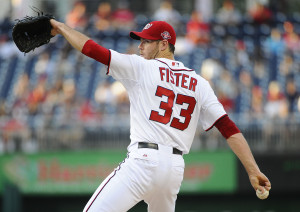
Meanwhile, the Nationals were in search of a quality arm to plug into would land Fister in a swap that sent a largely underwhelming three-player package back to the Tigers. Utilityman Steve Lombardozzi and lefty reliever Ian Krol were each young players with MLB experience but little in the way of apparent ceiling. The Tigers hoped that they’d be affordable contributors, but neither carved out a career in Detroit. The most interesting long-term piece was a notable but not overly heralded lefty pitching prospect by the name of Robbie Ray.
This wasn’t quite how the Tigers wanted talks to play out. The club reportedly wanted a different young hurler to headline the deal: Taylor Jordan, who had emerged out of obscurity in 2013. Jordan utilized his decidedly Fister-esque skillset to compile 51 2/3 innings of 3.66 ERA work in 2013, averaging just 5.1 K/9 but limiting the walks (1.9 BB/9) and homers (0.52 HR/9) while generating lots of groundballs (57.5%). It seemed Jordan might well be a long-term rotation piece, even if it was unlikely he’d ever really dominate.
Ray, a 22-year-old former 12th-round pick, hadn’t yet reached the highest level of the minors, let alone the bigs. But he was perhaps a higher-ceiling young hurler than Jordan. In 2013, Ray worked to a 3.68 cumulative ERA over 142 frames at the High-A and Double-A levels while racking up 10.1 K/9 against 3.9 BB/9.
For good reason, the Nationals were widely lauded for their acquisition. I characterized the deal as a value-laden, well-timed strike. Dave Cameron of Fangraphs said the Nats had paid “a shockingly low price, considering that Fister is one of the game’s most underrated pitchers.” While anything but flashy, the tall right-hander had a nice track record of high-quality rotation work — over 800 frames of 3.53 ERA ball — and came with two seasons of remaining arbitration control. The thievery metaphor was popular, beginning with the title of Cameron’s post. Plenty of people termed the swap a “steal,” especially after Fister turned in an outstanding 2014 campaign.
There’s no discounting Fister’s excellence in his first year in D.C. Though he missed some action, he still managed to spin 164 innings of 2.41 ERA ball. But as it turned out, that would be the last truly productive campaign of his career. Fister struggled with a lat injury at the start of the ensuing campaign and never really got going. He did manage a useful 4.19 ERA in 103 frames in 2015, so it was hardly a minimal contribution, but the peripherals didn’t support the results and the output didn’t account for his final arbitration salary of $11.4MM. Any thoughts of recouping draft compensation by issuing a qualifying offer went right out the window.
On the other side of the swap … well, the Tigers didn’t quite get what they hoped for either, but they only had their own ensuing actions to blame. After watching Ray struggle in a brief 2014 debut, Detroit ended up sending him out in a memorable three-team trade that really didn’t work out for the Motown side. That deal, which also cost the Tigers a decent infield prospect in Domingo Leyba, returned righty Shane Greene. While he had his moments in Detroit, they came after he transitioned to a relief role. Greene was swapped out last summer. The arrangement would have gone better had the Tigers simply taken shortstop Didi Gregorius, who ended up with the Yankees.
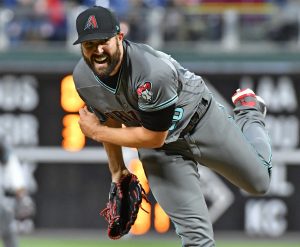
By that point, Ray was ready for a full test at the MLB level. He turned in a very strong debut in 2015. And while the results have taken a bit of a rollercoaster ride since, he has produced huge strikeout numbers and generally fared well in the eyes of advanced metrics. Ray has contributed 762 innings of 3.96 ERA ball in Arizona while racking up 11.3 K/9 against 4.1 BB/9. The long ball has been an issue, but it hasn’t stopped him from compiling 10 rWAR and a dozen fWAR — well over twice what Fister ended up providing to the Nats (4.5 rWAR / 1.7 fWAR) — in advance of his final season of arbitration eligibility.
Photos courtesy of USA Today Sports Images.
Do The Nats Have Yet Another High-Quality Starter On Their Hands?
The trio of Max Scherzer, Stephen Strasburg and Patrick Corbin is enough to make almost any club enviable — not necessarily of the price tags but of their raw abilities on the mound. When the Nats added Anibal Sanchez to that bunch on the heels of a resurgent 2018 season, it almost seemed as though it didn’t even matter who the fifth starter was. With Strasburg re-upping on what was briefly a record deal at this year’s Winter Meetings, that same thought might’ve crossed the minds of some. And while it’s true that the Nats’ rotation will be stacked with or without a decent fifth starter, they might have a better option on their hands than most realize.
Austin Voth is already 27 years old (28 in June) and only pitched 43 2/3 innings for the Nationals in 2019. He and fellow righty Joe Ross were set to battle it out for the final rotation spot in camp this spring, and while I was personally all aboard the Ross train back in 2015-16, it’s Voth who now looks like the breakout candidate in the making.
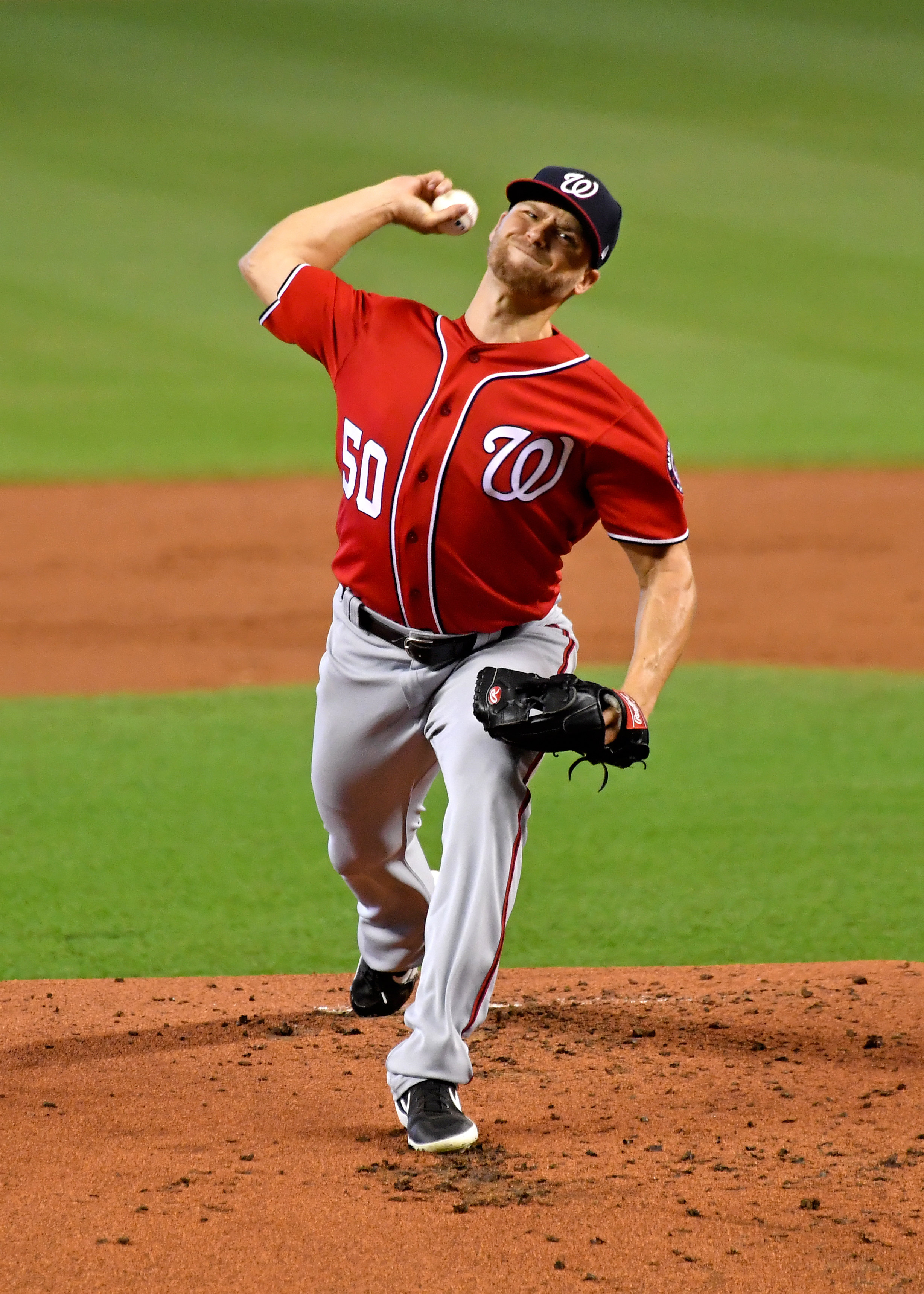
A former fifth-round pick of the Nationals (2013), Voth isn’t exactly new to their rotation radar. Back in 2016, he spent his age-24 season in Triple-A and spun 157 innings off 3.15 ERA ball with 7.6 K/9, 3.3 BB/9, 0.63 HR/9, a 49.7 percent ground-ball rate and near-identical marks in FIP (3.53) and xFIP (3.55). He wasn’t ranked among baseball’s elite prospects, but he was a strong Triple-A performer with a decent draft pedigree who looked ready for a big league rotation chance.
The 2017 Nationals, though, had Scherzer, Strasburg, Gio Gonzalez and Tanner Roark in their top four rotation spots. Ross had posted a 3.52 ERA and 3.46 FIP in 35 games across the two preceding seasons. With no immediate room in the rotation, Voth headed to the minors and looked like he’d be the first line of defense in the event of an injury. But when Ross went down with a torn UCL, Voth was in the midst of a catastrophically bad season in Syracuse. Through his first 13 starts, he’d pitched to a ghastly 6.38 ERA before going down with an injury himself. He never recovered his footing upon returning and finished the season with a 5.94 ERA. He rebounded with respectable showings in Triple-A in 2018-19, but he never appeared to recapture that 2016 form… until he got his first extended run in the big leagues last year.
In 43 2/3 frames last season, Voth worked to a 3.30 ERA with 44 strikeouts against 11 unintentional walks. His 92.8 mph average fastball was up 1.4 mph over the velocity he’d shown in a briefer 2018 cup of coffee, and Voth leaned heavily on a wipeout curveball to complement that improved heater. Voth induced chases outside the zone at a healthy 31 percent clip and recorded a 12.7 percent swinging-strike rate. His curve, which sits in the 90th percentile among MLB hooks in terms of spin rate, came with a gaudy 20.9 percent whiff rate. Opponents hit .176/.222/.265 when they put the pitch in play, and the .207/.295/.424 slash against Voth’s fastball wasn’t much better.
Not only was Voth adept at creating swings and misses — he also induced plenty of hapless contact. His 29.2 percent opponents’ hard-hit rate, per Statcast, was the 41st-best mark of the 558 pitchers who had 50-plus balls put into play against them last year. Opponents hit 47 fly-balls against Voth in 2019, and 10 of them were infield flies — effectively automatic outs. Voth’s .276 xwOBA ranked 55th in the game (min. 150 plate appearances against), placing him directly alongside the likes of Luis Castillo (.277), Walker Buehler (.275) and Chris Paddack (.275). That’s pretty nice company for a 27-year-old rookie-eligible hurler to keep after posting a combined ERA over 4.00 in the prior three Triple-A seasons.
Voth was off to a fine start this spring prior to the shutdown, tossing seven innings and allowing just one run with six strikeouts and one walk allowed. He obviously needs to prove that he’s capable of sustaining this type of output over a sample greater than last year’s eight starts (and one relief outing), but Voth showed the type of promise in 2019 that his chief rotation competitor, Ross, hasn’t flashed since prior to Tommy John surgery. That’s not to disparage Ross, who was very clearly on a fast-rising upward trajectory prior to getting injured and could yet recapture some of that form. But if the Nats were to choose one starter to plug into the rotation based on recent performance, Voth’s 2019 had the makings of not just a serviceable fifth starter but perhaps yet another high-quality arm on which the club can lean.
That’s certainly the hope for the Nationals organization, as an affordable rotation cog to slot alongside the massive salaries of their top three starters would certainly help with long-term payroll flexibility. (Sanchez is controllable for 2021 via club option.) Voth has yet to accrue even a full year of service, meaning he’s controlled all the way through 2025 and won’t even reach arbitration until the 2022-23 offseason.
Both Voth and Ross are out of minor league options, so they’ll almost certainly both make the roster if play is able to resume in 2020. And with a shortened season likely to feature fewer off-days and plenty of doubleheaders, perhaps they’ll each be afforded some opportunities to start games. If you’re taking a longer-term look at the Nationals’ starting staff or scouring the NL for breakout candidates, though, Voth’s strong showing in 2019 has placed him squarely in the mix.
What If Max Scherzer Stayed A Tiger?
The Tigers were unable to get a contract extension done with ace righty Max Scherzer before the 2014 season. What if they had ponied up the cash? Jeff Todd explores that alternate universe in today’s video.
Mark Reynolds Announces Retirement
Veteran slugger Mark Reynolds, who enjoyed a 13-year big league career split between the Diamondbacks, Rockies, Orioles, Indians, Cardinals, Nationals, Yankees and Brewers, announced in an appearance on Mad Dog Sports Radio on SiriusXM that he’s officially retired (Twitter link, with audio).
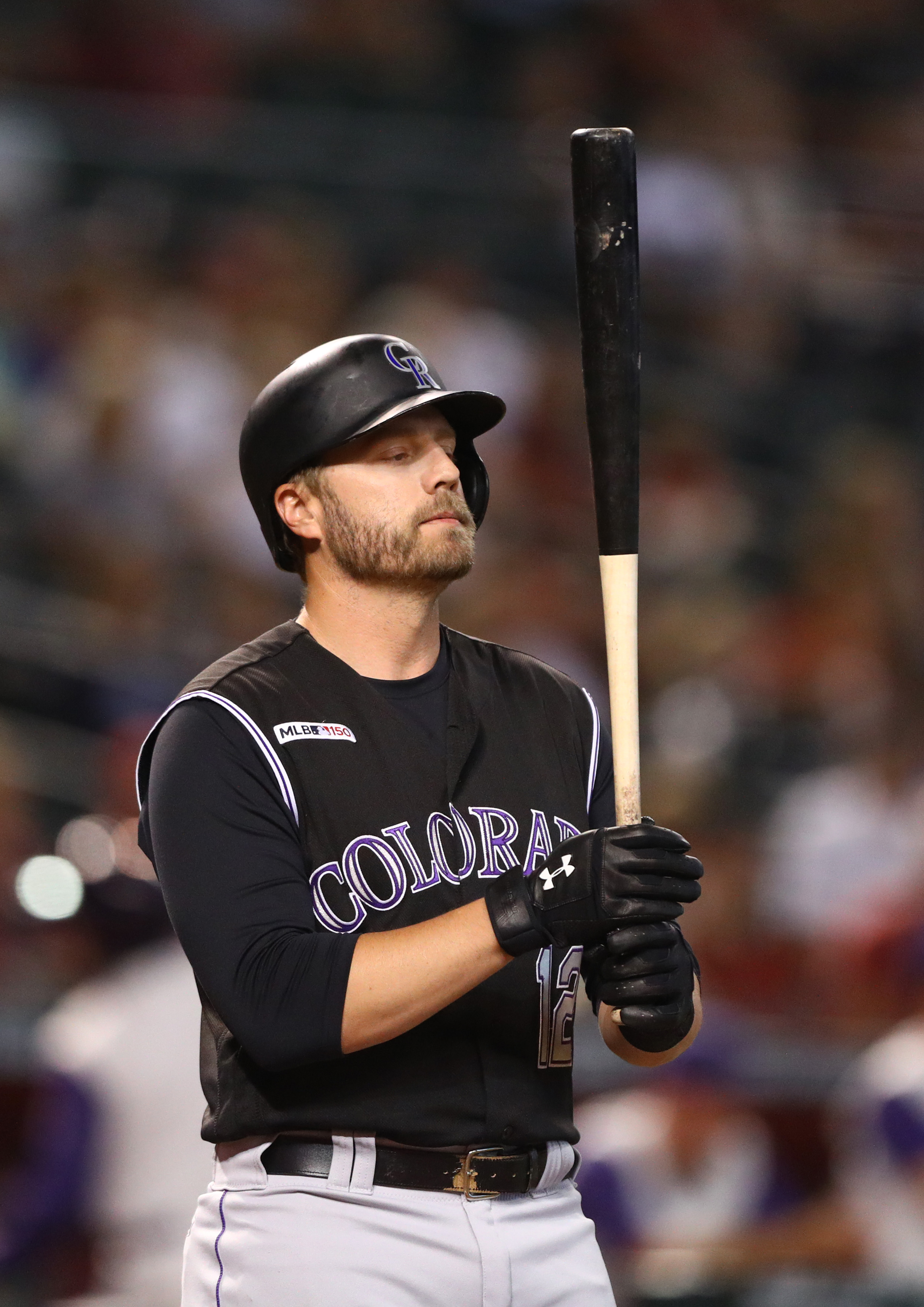
“I’ve moved beyond that,” Reynolds said when asked if he planned to seek another contract once MLB’s transaction freeze has been lifted. “I’ve retired. … I’m really enjoying time with my family, and it’s time for me to move on and find something else to do.”
The 36-year-old Reynolds spent the majority of the 2019 season in the Rockies organization, serving as a part-time first baseman and a bench bat until he was cut loose on July 28. He’d enjoyed a quality season with the Nationals a year prior in 2018, but Reynolds struggled to the lowest offensive numbers of his career with the Rox last year.
Originally a 16th-round pick of the Diamondbacks out of the University of Virginia back in 2004, Reynolds made his big league debut less than three years after being drafted. Reynolds was never considered one of the organization’s premier prospects — his No. 7 ranking on Baseball America’s list of D-backs prospects prior to the ’07 campaign was the only time he broke their top 30 — Reynolds hit the ground running. He was promoted to the big leagues in mid-May and closed out the remainder of the season as a regular in the lineup, hitting .279/.349/.495 with 17 home runs.
By 2008, Reynolds was Arizona’s everyday third baseman. His power was unquestionable, although the same could be said of his questionable contact skills. Reynolds became one of the game’s quintessential boom-or-bust players, regularly headlining home run and strikeout leaderboards alike. From 2008-11, he averaged 35 big flies per season but also led his league in strikeouts each year along the way. At that time, a player who was punching out in roughly a third of his plate appearances was an alarming anomaly; the league average strikeout rate back in Reynolds’ first full year was 17.5 percent — a full six percent lower than 2019’s mark.
Reynolds had a rough year in 2010, prompting the D-backs to trade him to the Orioles in return for reliever David Hernandez and prospect Kam Mickolio. He bounced back with the Birds and helped them to the postseason in 2012, but Baltimore declined an $11MM club option over Reynolds’ final arbitration year that offseason and non-tendered him, making him a free agent for the first time in his career.
Reynolds would bounce from Cleveland to New York to Milwaukee to St. Louis to Colorado to D.C. and back to Colorado on a series of one-year and minor league deals from that point forth. He delivered some productive seasons along the way and even popped 30 homers for the 2017 Rockies before giving the Nationals an absurd 5-for-5, two-homer, 10-RBI day in 2018 (video link).
Reynolds will conclude his playing career with a .236/.328/.453 batting line over the life of 6243 plate appearances and 1688 Major League games. In that time, he belted 298 home runs, 253 doubles, 14 triples and stole 64 bases while also scoring 794 times and knocking in 871 runs. The slugger took home nearly $30MM in career earnings while providing a litany of tape-measure home runs on which we can all fondly look back. Best wishes to Reynolds and his family in whatever lies ahead.
Victor Robles Joins Newly-Founded Republik Agency
Word broke earlier this month that agent Rafa Nieves was leaving the Wasserman Agency, and Nieves tweeted yesterday from his personal account that he had finalized his departure. The next step appears to be his own firm, as Nieves’s Twitter bio identifies himself as the CEO and founder of Republik Sports.
As per Jesse Dougherty of the Washington Post (Twitter link), “many players” currently represented by Nieves are leaving Wasserman for Republik. A look at Republik’s Instagram page gives hints about some of those names, and the TalkNats blog tweets that Nationals outfielder Victor Robles will indeed be joining Nieves at the new agency. This change has been reflected in MLBTR’s Agency Database.
It was less than three years ago that Nieves joined Wasserman, bringing several well-known clients (including Robles, Jose Ramirez, Gregory Polanco, Alex Colome, Francisco Cervelli, Frankie Montas, and Kelvin Herrera) along with him to the agency. Nieves, a 36-year-old Venezuela native, has already become a notable figure in the representation business, as detailed by The Athletic’s Marc Carig in a profile from last August.
The 22-year-old Robles became an everyday player for the first time in 2019, hitting .255/.326/.419 with 17 homers over 617 plate appearances for Washington. While Robles’ hitting (88 OPS+, 91 wRC+) was nothing to write home about, he was a major plus on the basepaths and especially in the outfield. Robles immediately established himself as one of the sport’s top defensive center fielders, posting a +6.1 UZR/150, +23 Defensive Runs Saved, and a league-best 23 Outs Above Average. This performance earned Robles a sixth-place finish in NL Rookie Of The Year voting, and his emergence helped the Nats make up for the departure of Bryce Harper in the outfield as the franchise went on to capture its first World Series title.
Between his age, glovework, and a solid offensive track record in the minors that hints at more progress to come at the plate, Robles looks like a foundational player for Washington. He is still two years away from arbitration eligibility and is under team control through the 2024 season. Though teams are unable to discuss contract extensions during the league-wide roster freeze, it stands to reason that the Nats would have interest in locking Robles up in a long-term deal. It’s worth mentioning that Nieves has a couple of prominent early-career extensions on his record, negotiating Ramirez’s current contract with the Indians and Polanco’s ongoing deal with the Pirates.
Rookie Radar: NL East
MLBTR’s Jeff Todd has recently taken a look at some potential impact rookies throughout the AL Central and AL West. Steve Adams handled the NL West. Now let’s move on to the NL East, which was one of the strongest divisions in baseball in 2019, with four teams finishing .500 or above. 2020 figures to be just as competitive. Perhaps a strong rookie season could be a difference-maker for one of these teams. Who could it be? Let’s take a look at some of the contenders.
Braves
The Braves already have a crowded outfield at the big league level. But if any kind of opportunity should present itself, Cristian Pache is going to be waiting in the wings. The 21-year-old has received more praise for his defense and speed than for his offense. But his bat seemed to turn a corner in 2019. Over 433 plate appearances at Double-A, he put up a slash line of .278/.340/.474, good enough for a wRC+ of 134. His Triple-A numbers aren’t as strong, with a line of .274/.337/.411 and a wRC+ of 92. That was over a smaller sample of 105 plate appearances, though, and he was only 20 years old.
Pache could have competition in the form of fellow outfield prospect Drew Waters, who is following a similar trajectory. Waters was also 20 last year and spent the bulk of the season at Double-A, where he managed a lofty 144 wRC+. He also had a cup of coffee at Triple-A, where his wRC+ dropped to 84 at Triple-A. While both Pache and Waters while played 26 games at Triple-A, Waters dwarfed Pache in the strikeout column, 43 to 18.
On the pitching side, the Braves have a pile of young arms who are slated to be in Triple-A to start the year, fighting to be the first one to get the call. The 24-year-old Kyle Wright has electric stuff but hasn’t been able to translate it into success at the big league level yet. It’s a similar story for 22-year-old Bryse Wilson. Ian Anderson is only 21 and isn’t on the 40-man, but he has already been bumped up to Triple-A after dominating in Double-A.
Marlins
The rebuilding Marlins already have lots of promising youngsters on the roster right now, and there are more on the way. Sixto Sanchez hasn’t reached Triple-A yet, but after dominating in Double-A with a 2.53 ERA over 103 innings, it’s possible he won’t need too much time there. Same goes for Edward Cabrera, whose Double-A ERA was just a smidge higher at 2.56, though in a smaller sample of 38 2/3 innings. Evaluators are split as to which of the two should be ranked higher. If you’re the Marlins, that’s a good problem to have.
In terms of position players, the most exciting options are outfielders. Jesus Sanchez has a tremendous bat but lacks plate discipline. Monte Harrison‘s defensive skills give him a decent floor. But the bat will need to take another step for him to reach his ceiling. He put up a decent line of .274/.357/.451 in Triple-A in 2019, good enough for a wRC+ of 97, just below league average.
Mets
The Mets’ rotation took a big hit when it was announced that Noah Syndergaard will undergo Tommy John Surgery. And while they may turn to veterans like Michael Wacha or Seth Lugo to pick up the slack, they could also look to some of the rookies they have in the minors. David Peterson hasn’t reached Triple-A just yet, but he threw 116 Double-A innings in 2019, with an ERA of 4.19 and 9.47 K/9. Franklyn Kilome missed all of last season after undergoing Tommy John surgery in 2018, but he was the Mets’ fifth-best prospect at that point. Stephen Gonsalves was once a highly-touted prospect in the Twins’ system, though an injury-plagued 2019 led to them losing him to the Mets on waivers. He’s still 25 and could be a wild-card factor if he can get healthy and regain his form.
As far as position players go, shortstop Andres Gimenez is an exciting prospect (mostly because of his speed and defense). The 21-year-old swiped 66 bags from 2018-19, so the big question is how he’ll do with the bat. Gimenez spent 2019 at Double-A, slashing a mediocre .250/.309/.387, but he’s still young. And since the Mets have plenty of middle infield options such as Amed Rosario, Robinson Cano, Jeff McNeil and maybe even Jed Lowrie, it will be difficult for Gimenez to contribute as soon as 2020.
Nationals
For the Nats, the most important rookie is definitely Carter Kieboom, one of the best prospects in baseball. The infielder had an excellent 2019 at the Triple-A level, slashing .303/.409/.493 for a wRC+ of 123. The 22-year-old wasn’t able to carry those numbers into his MLB debut last season, but it was only an 11-game sample size.
With Anthony Rendon moving to California, there’s an opening for Kieboom to be the everyday third baseman. He’ll have to earn it because the Nats brought back Asdrubal Cabrera as a fallback option, but they’d surely prefer for the 22-year-old Kieboom to take the job. That would enable the Nats to use Cabrera in a utility role.
Phillies
Alec Bohm‘s calling card is his bat. As a 22-year-old in 2019, he played 22 games in A-ball and produced a wRC+ of 196. In A+, he played 40 games with a wRC+ of 165. In 63 games at Double-A, the wRC+ was 146. If he can keep hitting in Triple-A, the question will be where to put him. Bohm mostly plays third, but many evaluators feel that his defense is too weak for the hot corner and suggest a move to first. The Phillies would surely love for Bohm to prove those evaluators wrong because they have Rhys Hoskins entrenched at first. Their current plan for the rest of the infield is to deploy Jean Segura at third, Didi Gregorius at short and Scott Kingery at second. But since Segura can also play shortstop or second, Bohm could nudge his way into the picture if any one of them goes down with an injury.
On the mound, the big name to watch is Spencer Howard. Despite injuries limiting his total output in 2019, he still put up great numbers when healthy. In 30 2/3 innings at Double-A, his ERA was 2.35. And Howard, 23, capped off his season with 21 1/3 innings of 2.11 ERA ball in the Arizona Fall League. The Philly rotation is a bit flimsy, with guys like Vince Velasquez, Zach Eflin keeping a tenuous hold on back-end spots, so a healthy Howard could shove his way into the equation.
Nationals Option Six Players To Minor Leagues
The Nationals optioned six players to their Triple-A and Double-A affiliates, as per a team announcement. Right-hander Erick Fedde and catcher Tres Barrera are heading to Triple-A Fresno, while outfielder Andrew Stevenson, infielder Adrian Sanchez, and right-handers Kyle Finnegan and James Bourque are all going to Double-A.
Finnegan is the only member of the group who hasn’t seen any Major League action, with Barrera (two games) and Bourque (one game) each getting a cup of coffee in the bigs last season while Fedde, Sanchez, and Stevenson have all been somewhat regular members of Washington’s roster.
Fedde is perhaps the most prominent name in the group, owing to his status as the 18th overall pick of the 2014 draft. His pro career got off to a delayed start due to the Tommy John surgery he underwent just a month before that draft, and despite some solid numbers in the minors, Fedde has yet to break out after pitching in parts of the last three seasons. Over 143 2/3 career MLB innings, Fedde has a 5.39 ERA, 1.62 K/BB rate, and a 6.4 K/9. That latter statistic is largely fueled by a 4.73 K/9 over 78 innings in 2019, as Fedde missed very few bats but still managed a 4.50 ERA due to an impressive 51% grounder rate. Fedde has consistently posted high grounder rates both in the majors and minors, though he has also run into problems with the long ball against big league hitters, with a career 20.9% homer/fly ball rate.
The Nationals went into Spring Training with Fedde, Joe Ross, and Austin Voth all competing for the fifth starter role, though Fedde was facing something of an uphill battle since he was the only one of the trio who still had a minor league option remaining. Fedde did at least help his cause with some good spring numbers, posting a 2.45 ERA and seven strikeouts over 7 1/3 innings of work.
It seems very likely Fedde will still play a notable role in the Nationals’ 2020 title defense season, as the shortened schedule will require every team to deploy a number of pitchers to keep everyone fresh. The same will also be true on the position player side, so Stevenson and Sanchez (and quite possibly Bourque, Barrera, and Finnegan) are likely to factor into Washington’s plans.
East Notes: Sale, Mets, Nats, Jays
Boston’s rotation took a hit it may not recover from in 2020 with this week’s news that ace Chris Sale will undergo Tommy John surgery. Chief baseball officer Chaim Bloom, who has been faced with no shortage of adversity during his first several months atop the Red Sox’s baseball department, addressed the surgery decision this week, as Jason Mastrodonato of the Boston Herald details. The left-handed Sale dealt with elbow problems last season, but Bloom and the Red Sox don’t regret putting off his procedure. “Based on everything that went on last summer, the symptoms, the imaging, it seemed very reasonable to me to take that time off and try to rest, strengthen everything and hope for a successful path forward,” Bloom said. “Obviously up until (he felt pain) in early March, there was every indication that he was doing great.” Indeed, it was just this Wednesday that Sale seemed to be progressing in his recovery from a flexor strain. That changed a day later, and now Boston will have to go without its best pitcher until sometime in 2021.
- The Mets have optioned shortstop Andres Gimenez, right-hander Tyler Bashlor and catcher Ali Sanchez to Triple-A Syracuse, Mike Puma of the New York Post tweets. Bashlor’s the lone member of the trio with major league experience, but he endured immense struggles as a Met last year. The most promising player in the group is the 21-year-old Gimenez, whom MLB.com ranks as the sport’s 84th-best prospect. Gimenez could be a long-term factor in the Mets’ infield, though he hasn’t advanced past Double-A ball yet. He batted .250/.309/.387 with nine home runs and 28 stolen bases over 479 plate appearances at that level last season.
- The Nationals released reliever Hunter Strickland last weekend, and it turns out that the move was somewhat costly for the club. Had the Nats cut ties with Strickland a week earlier, they would have only had to pay him one-sixth of his $1.6MM salary, Mark Zuckerman of MASNsports.com notes. By parting with Strickland when it did, though, Washington had to fork over a fourth of his money; as a result, it lost $133K or so, per Zuckerman.
- The coronavirus led the Criminal Court Complex in Clearwater, Fla., to push back Blue Jays catcher Reese McGuire‘s court date to April 20, Shi Davidi of Sportsnet relays. McGuire had been scheduled to appear in court Monday as a result of his Feb. 7 arrest on a charge of “exposure of sexual organs,” a first-degree misdemeanor. He could face one year in jail and fines up to $1K.